Think different Denim Jacket (black, XXL, c. 1998)

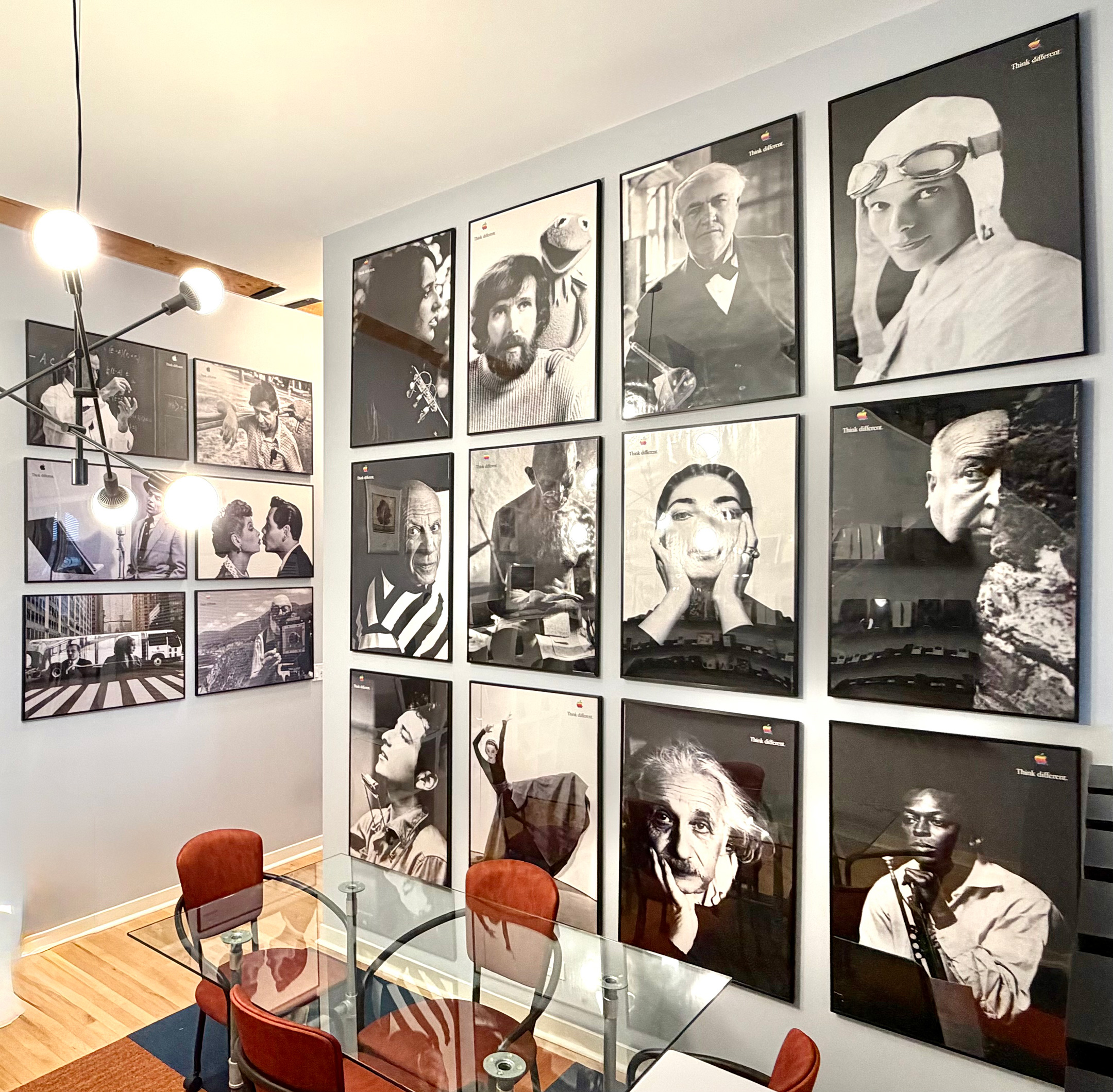
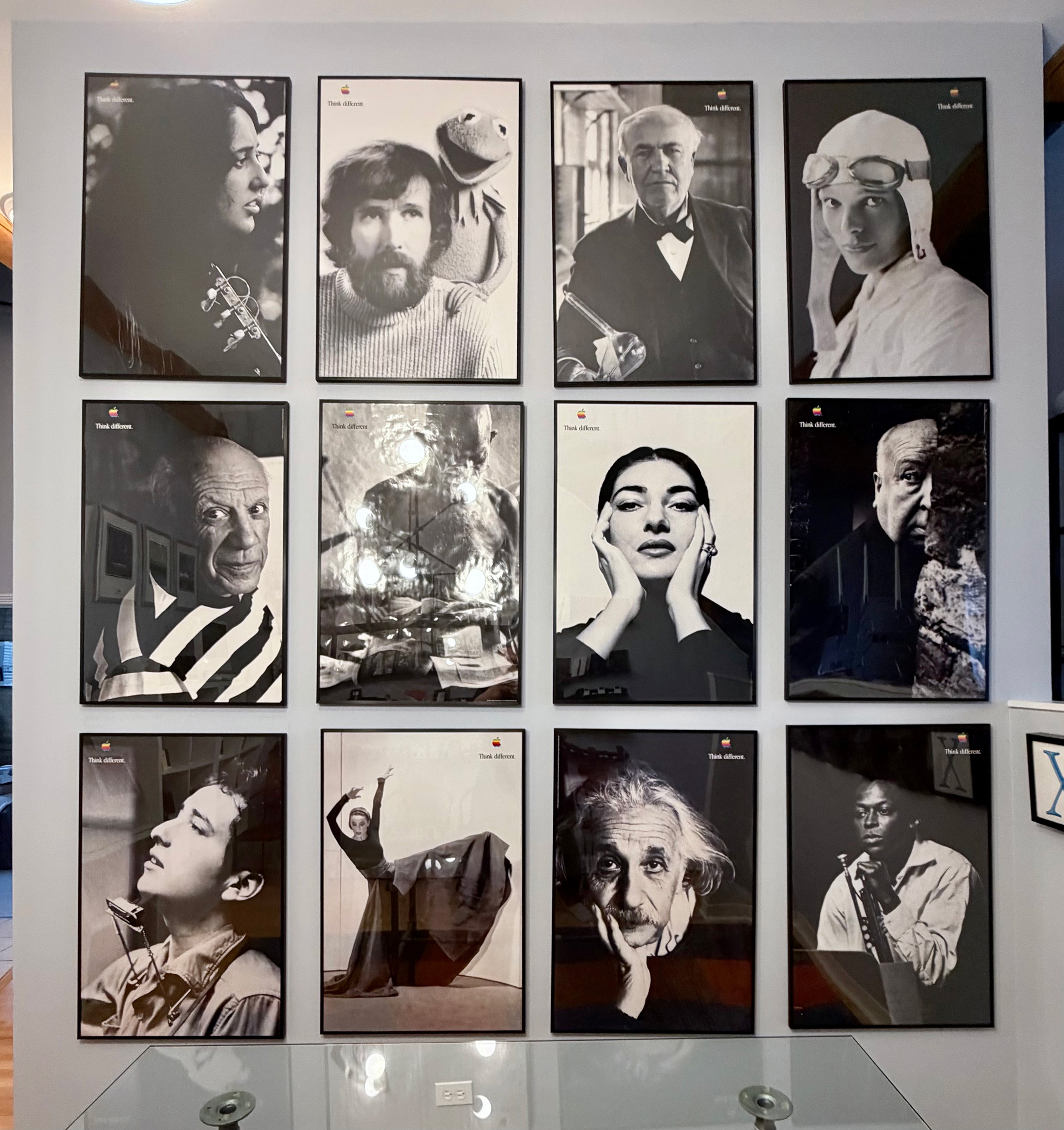
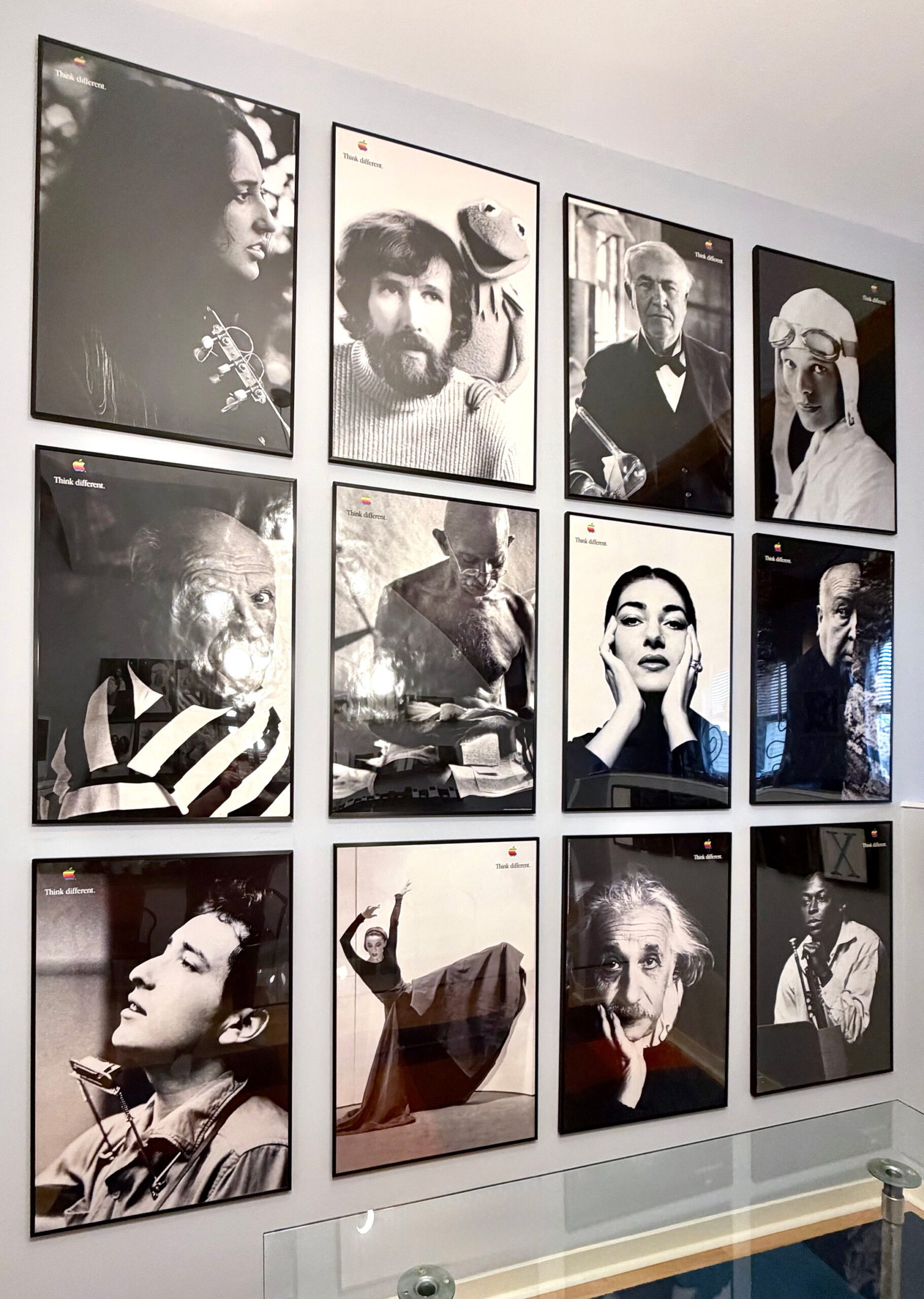
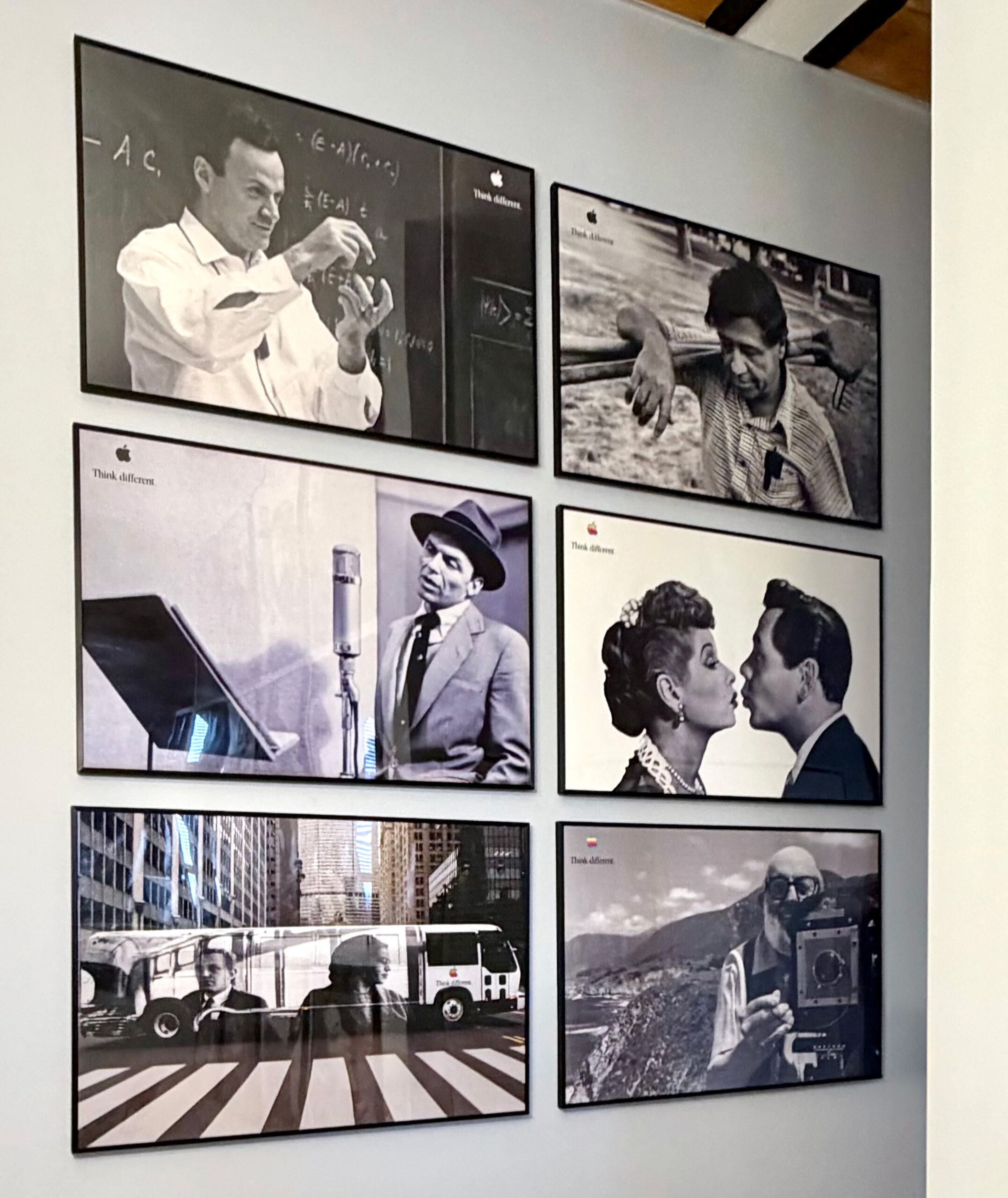
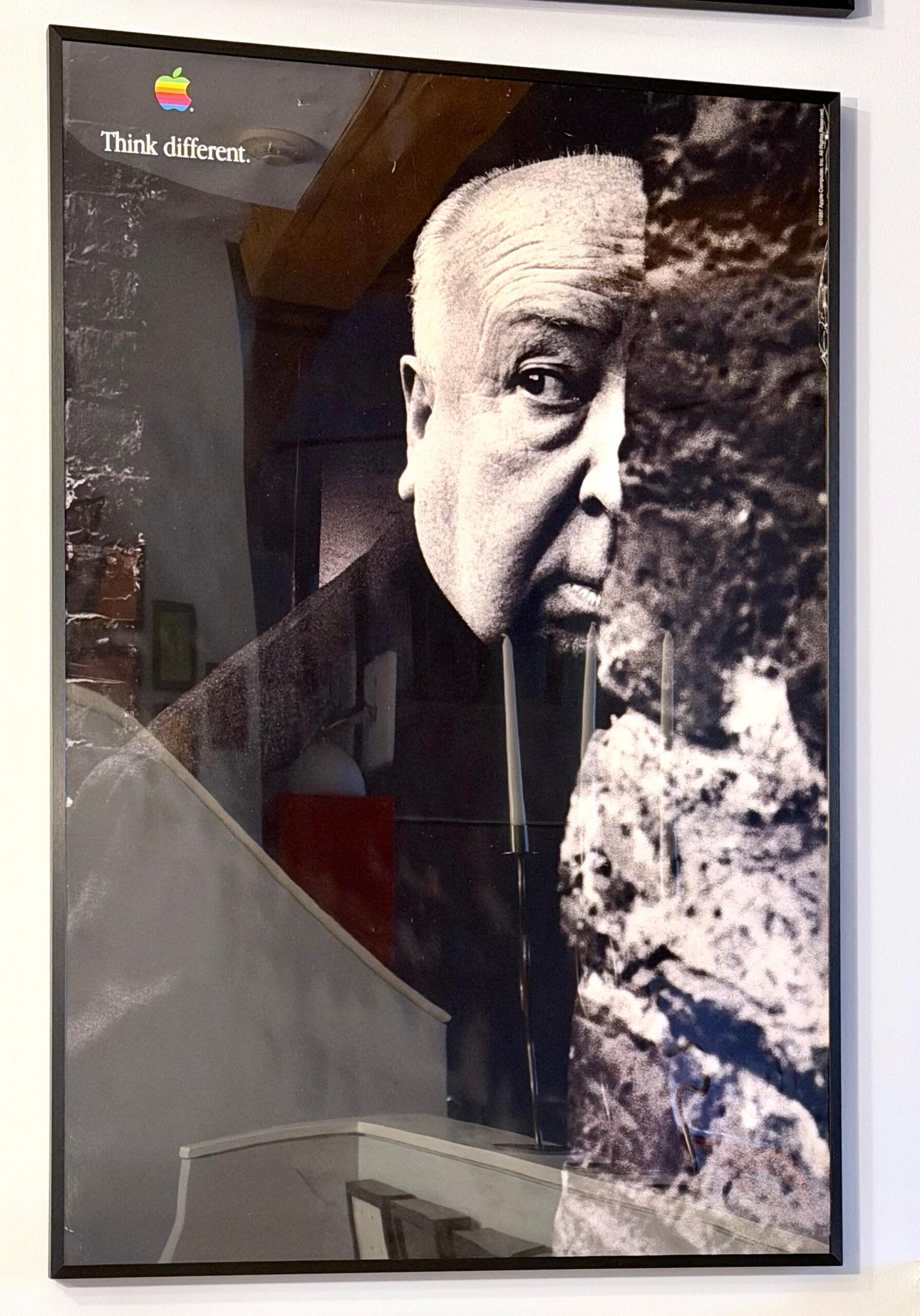
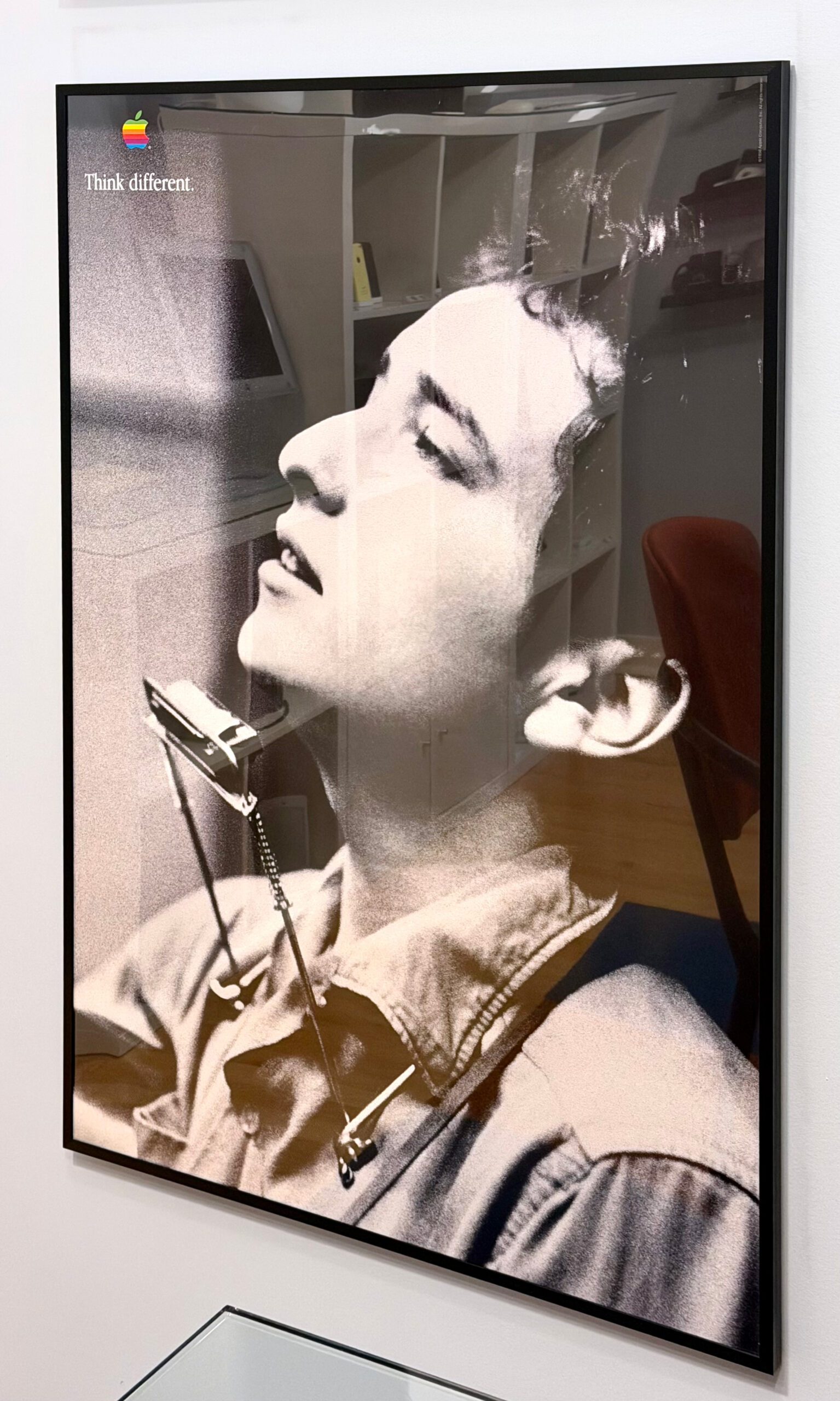
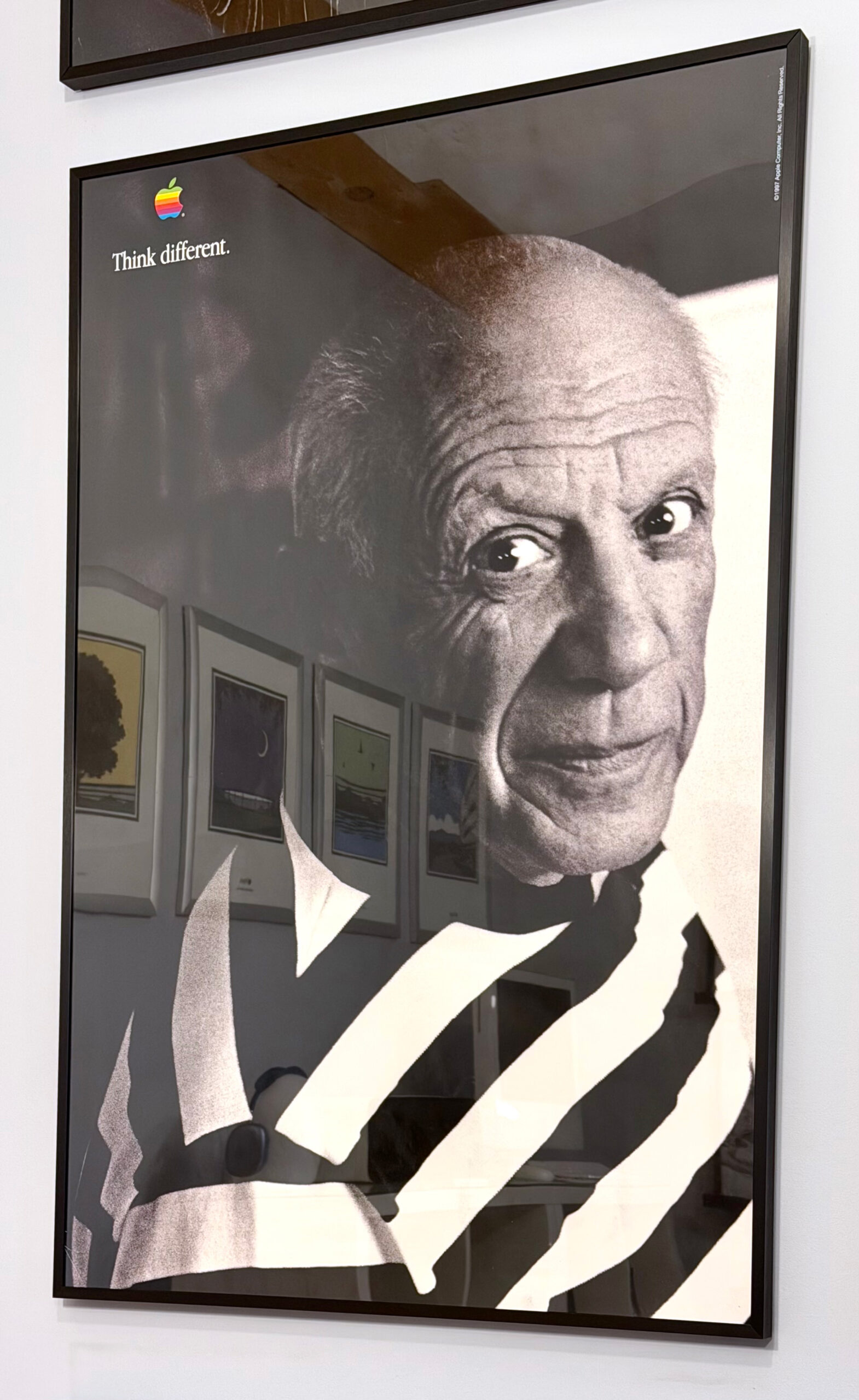
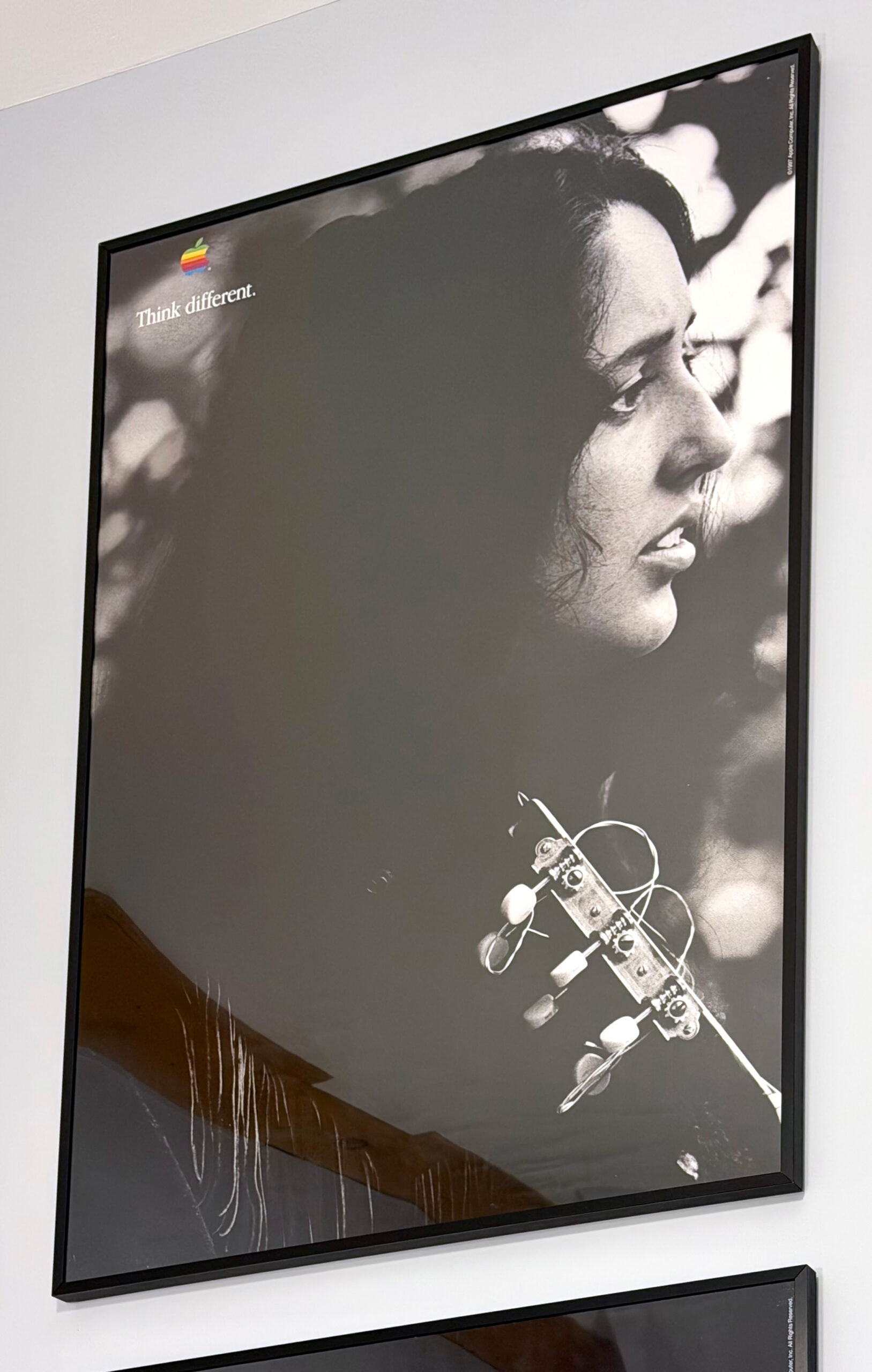
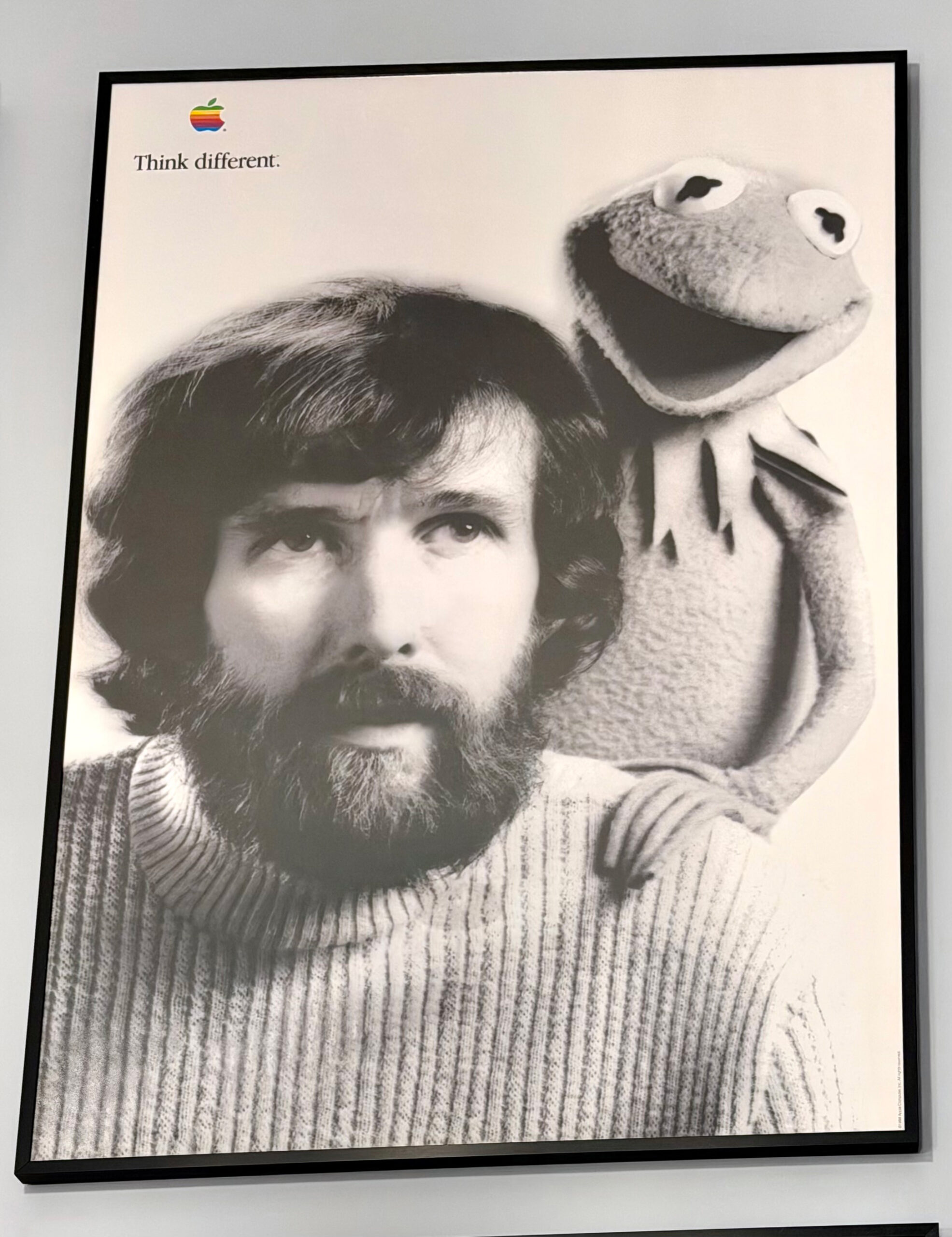
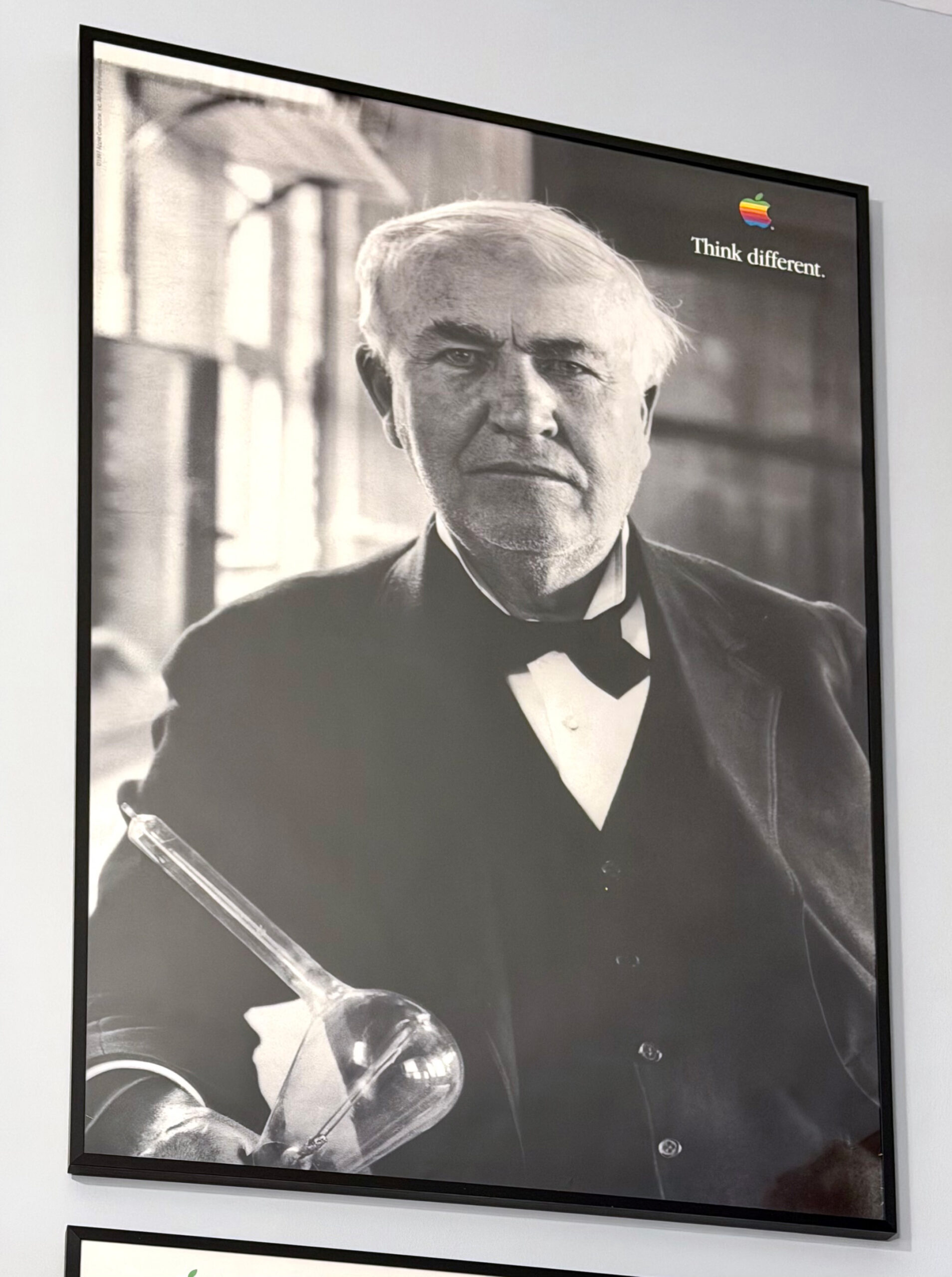
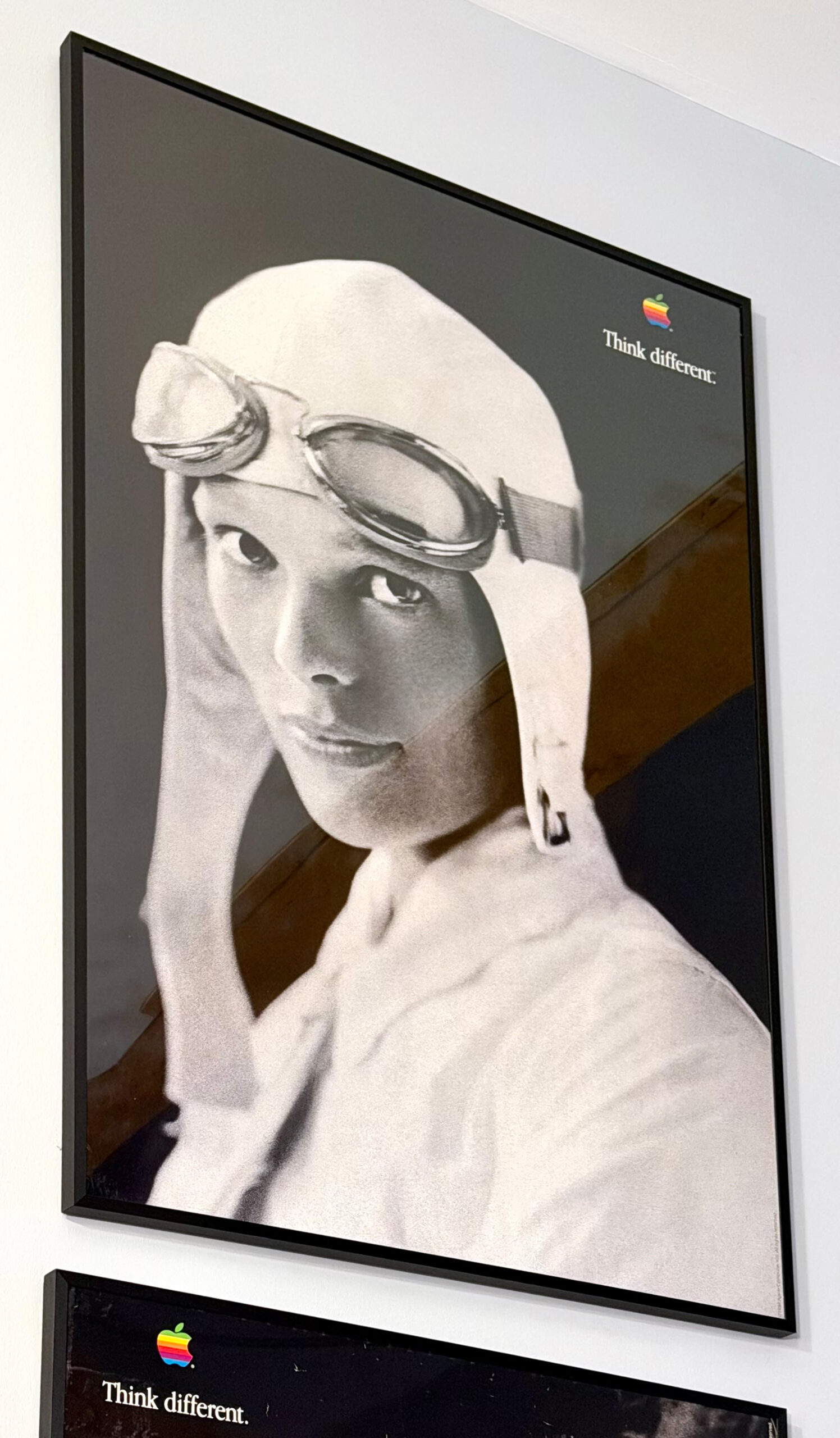
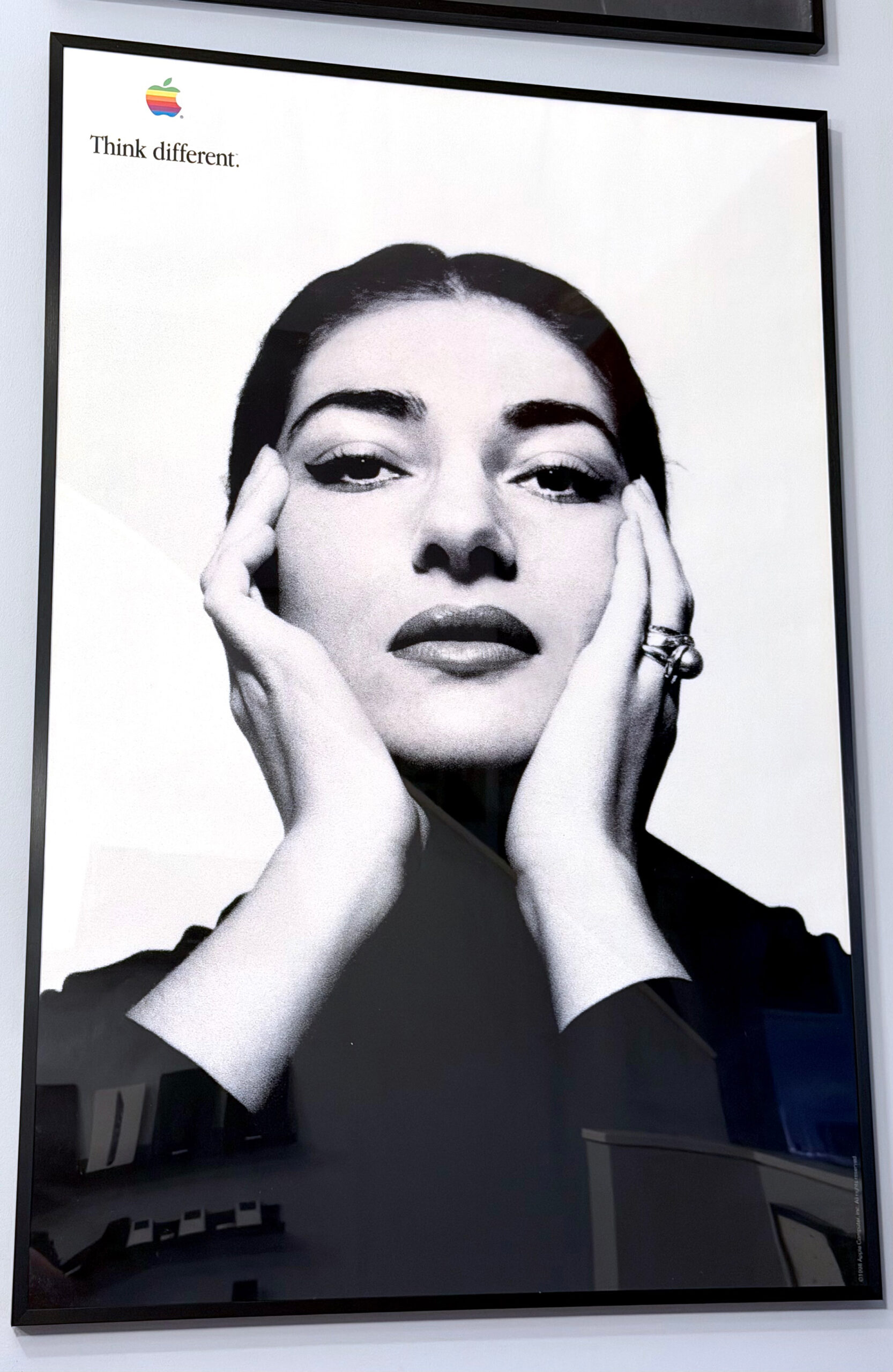
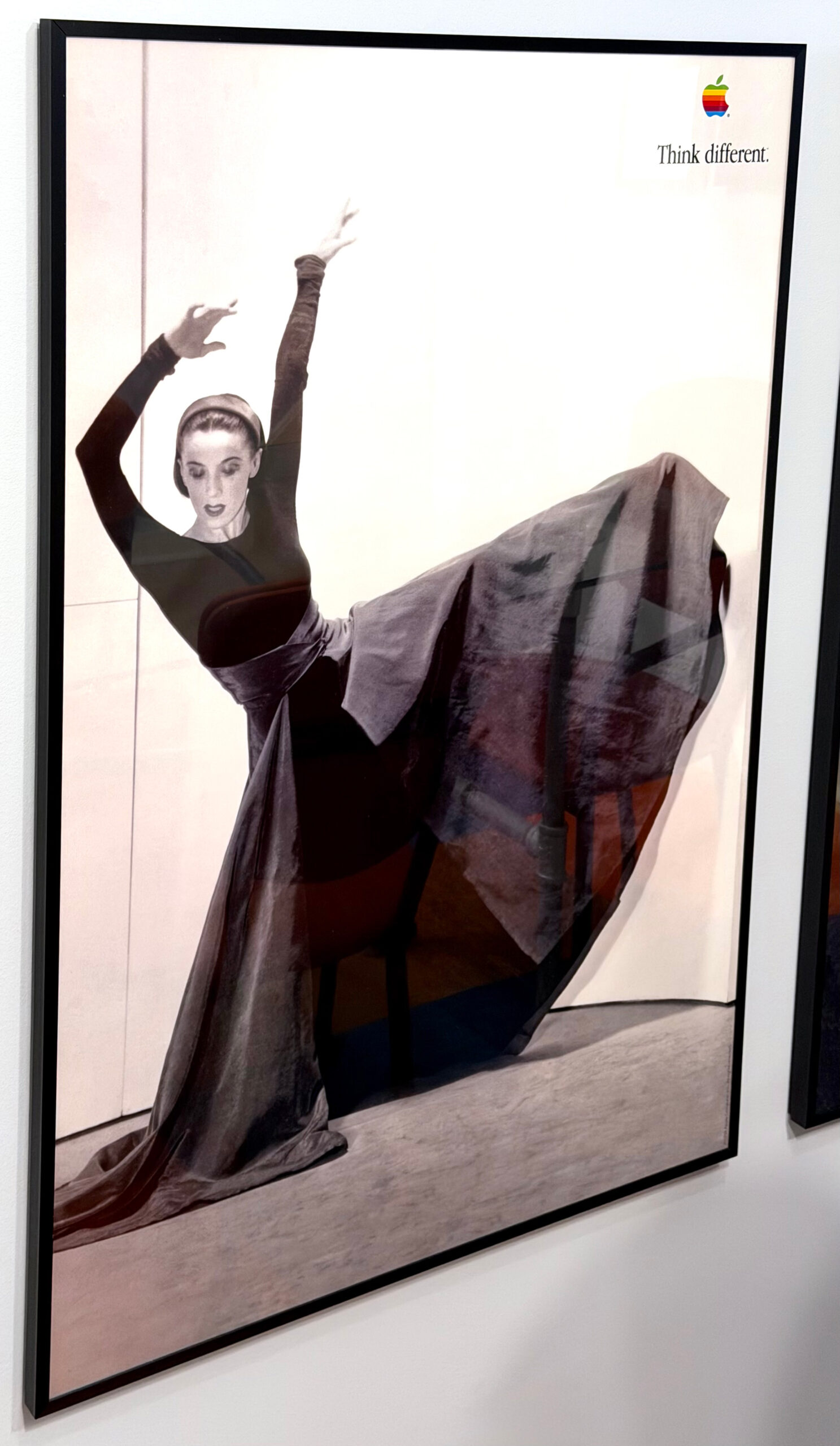
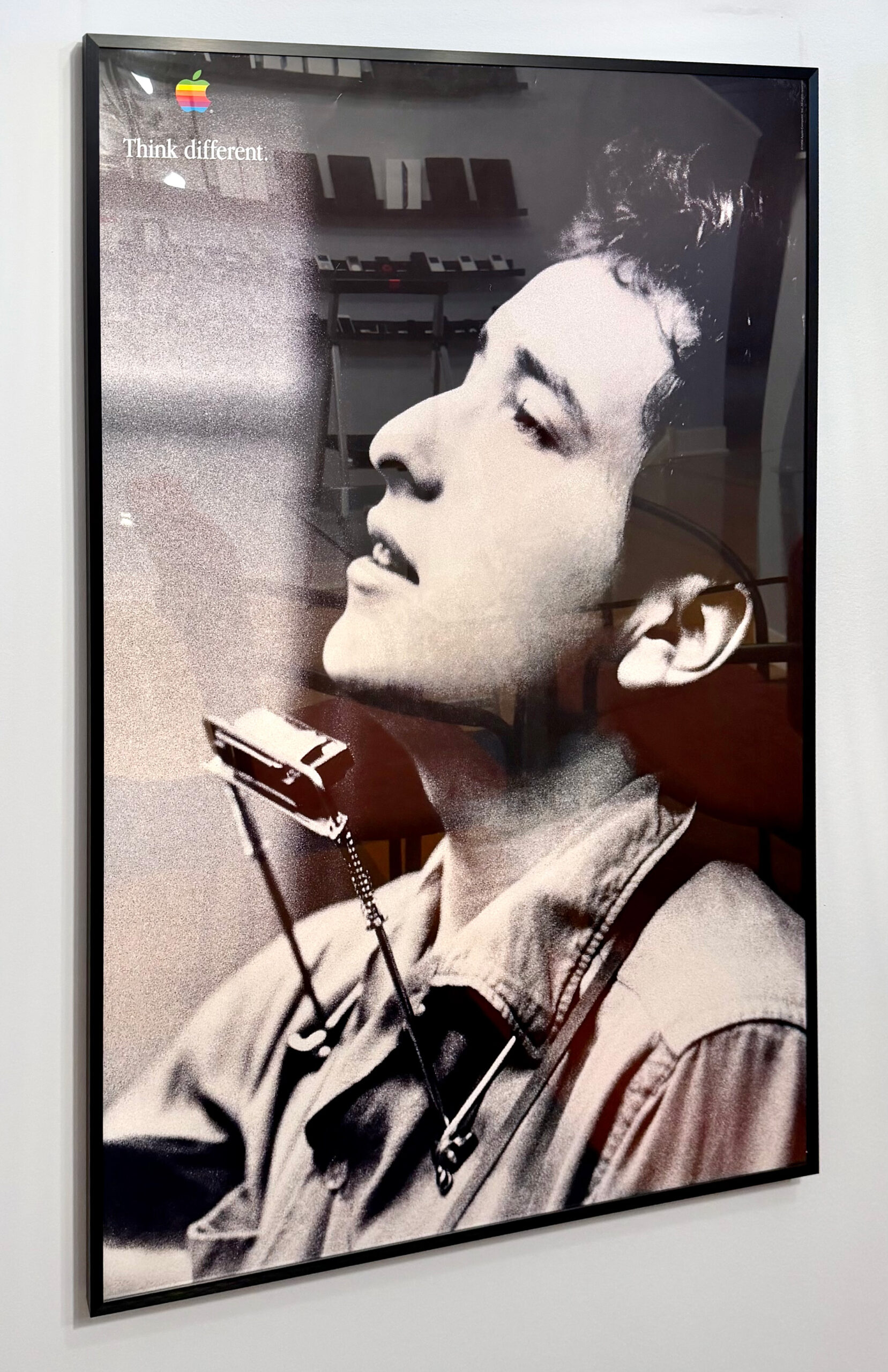
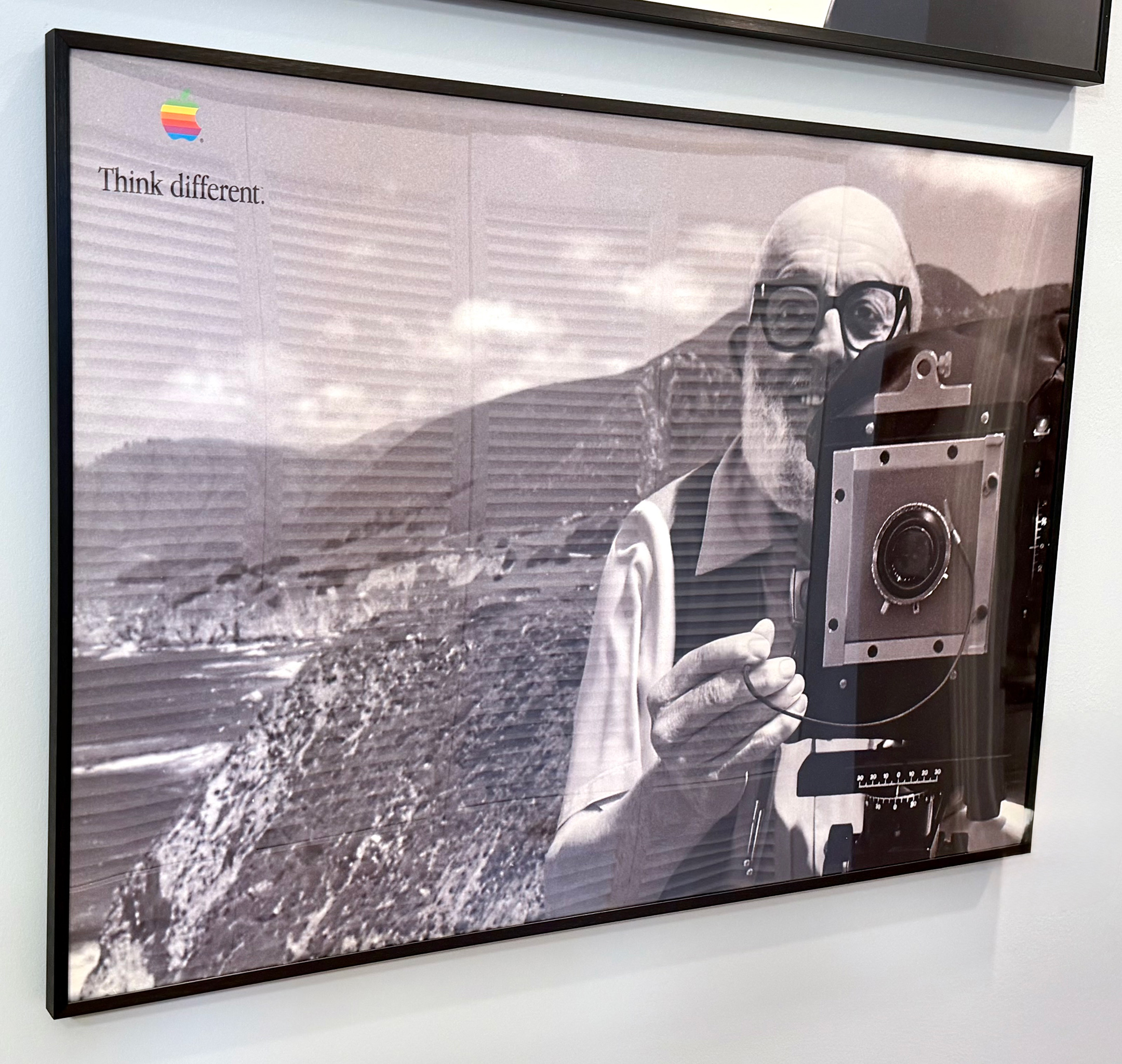
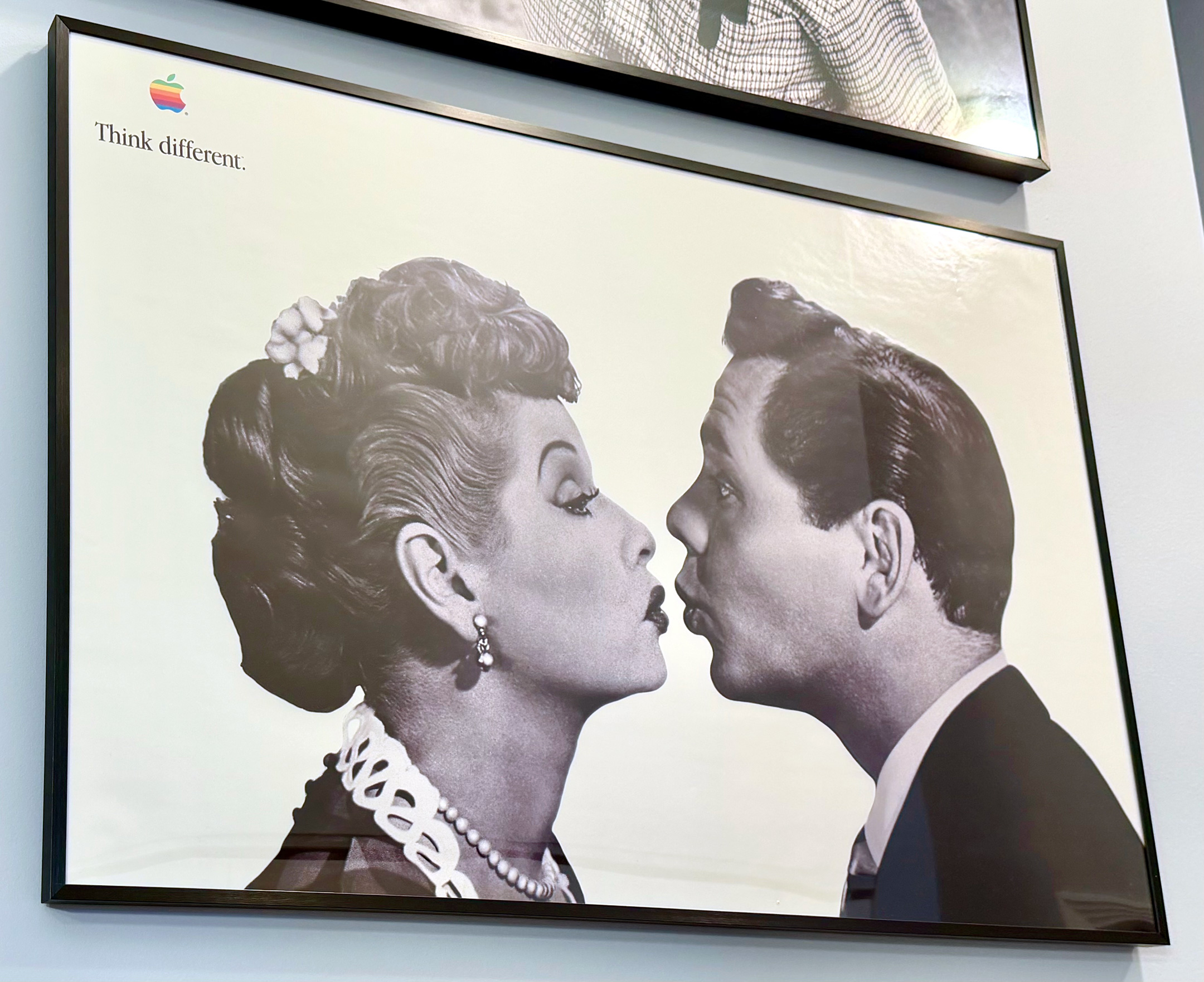
“Think different” was the slogan used by Apple in advertising 1997–2002, and is still used in some circumstances as of 2024. The “Think different” concept was created by advertising agency TBWA\Chiat\Day while working with Apple and Steve Jobs. “Think different” was used in its original concept in a TV commercial and in print/digital advertisements, and the “Think different” slogan was used as part of many TV commercials, print/digital ads, and on product packaging.

The Think different concept started with a “manifesto” that began famously with “Here’s to the crazy ones.”
Here’s to the crazy ones.
The misfits.
The rebels.
The troublemakers.
The round pegs in the square holes.
The ones who see things differently.
They’re not fond of rules.
And they have no respect for the status quo.
You can quote them, disagree with them,
glorify or vilify them.
About the only thing you can’t do is ignore them.
Because they change things.
They push the human race forward.
While some may see them as the crazy ones,
we see genius.
Because the people who are crazy enough to think
they can change the world, are the ones who do.
Think different.

Apple’s print and digital “Think different” ads did not feature Apple devices, just the Apple logo and the words “Think different.” One of the creative team who worked on the campaign described the print concept: “The rainbow-colored logo served as stark contrast to the black and white photography, and, to me, it seemed to make the ‘Think different’ statement all the more bold.”
This black denim jacket was made by Canadian manufacturer International Denim. The style has been described in other sources as a “varsity” style jacket. Its main body is made from high-quality black denim, with the cuffs and bottom band made from black rib knit elastic fabric.

Overall, the jacket is in excellent condition. The back of the jacket is embroidered in white with the words “Think different.” in Apple’s Garamond logotype that was used in the Think Different ad campaign. Apple’s classic six-color logo is embroidered and centered above the logotype.

The tag on the inside of the jacket includes the following information:

ID Sport by International Denim
100% Cotton
Made in Canada
CA05976 RN42206

Sources: Wikipedia, Forbes

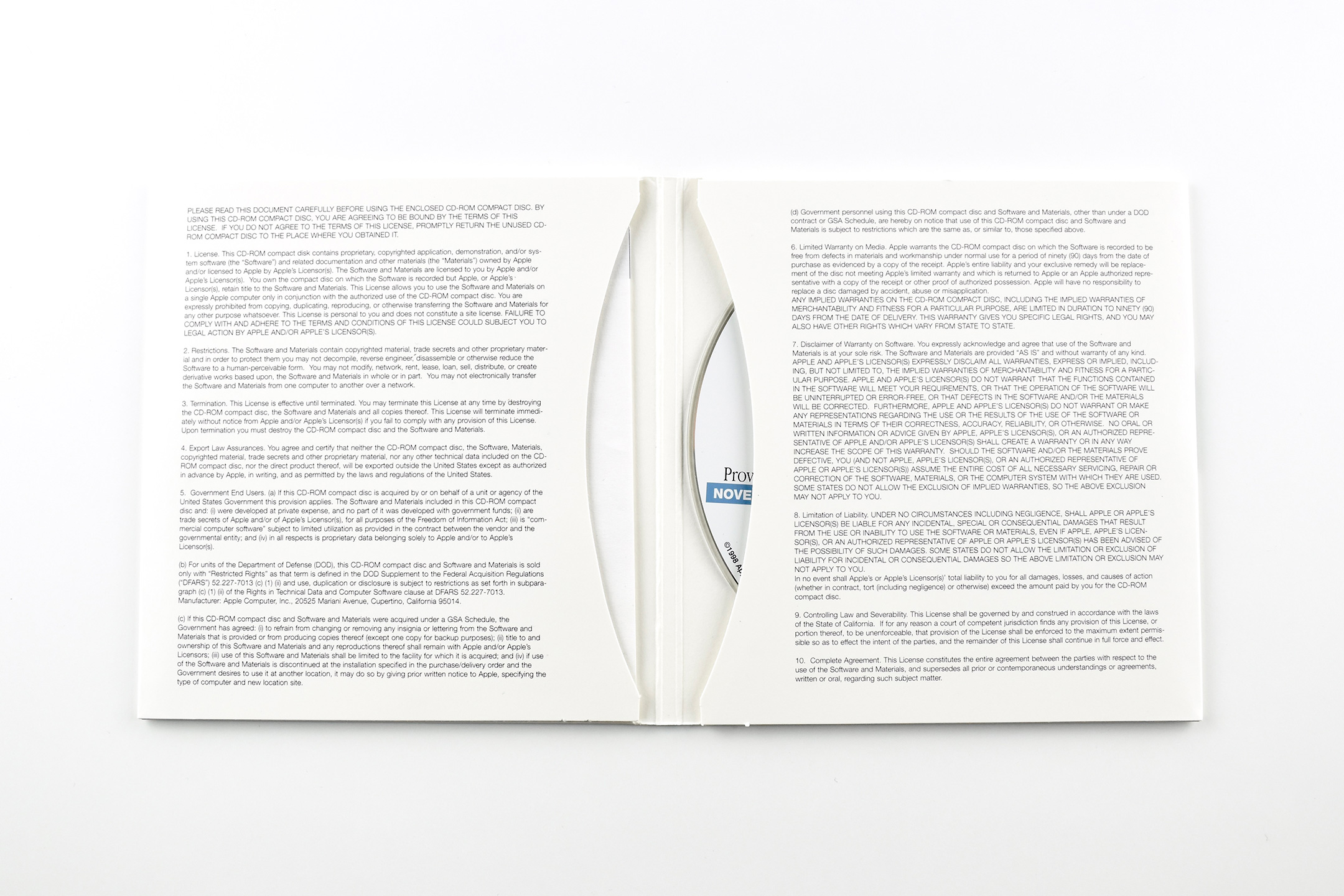
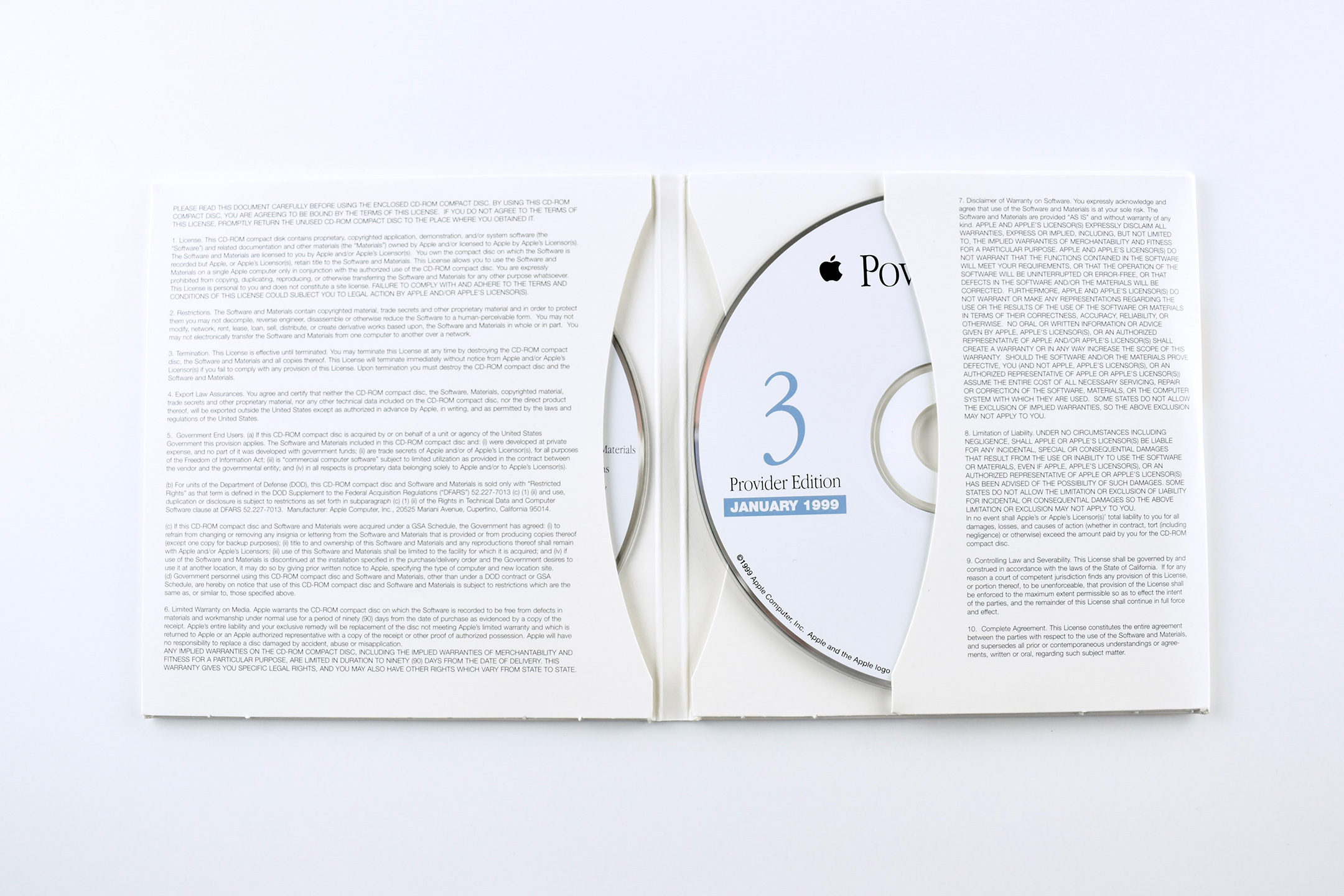
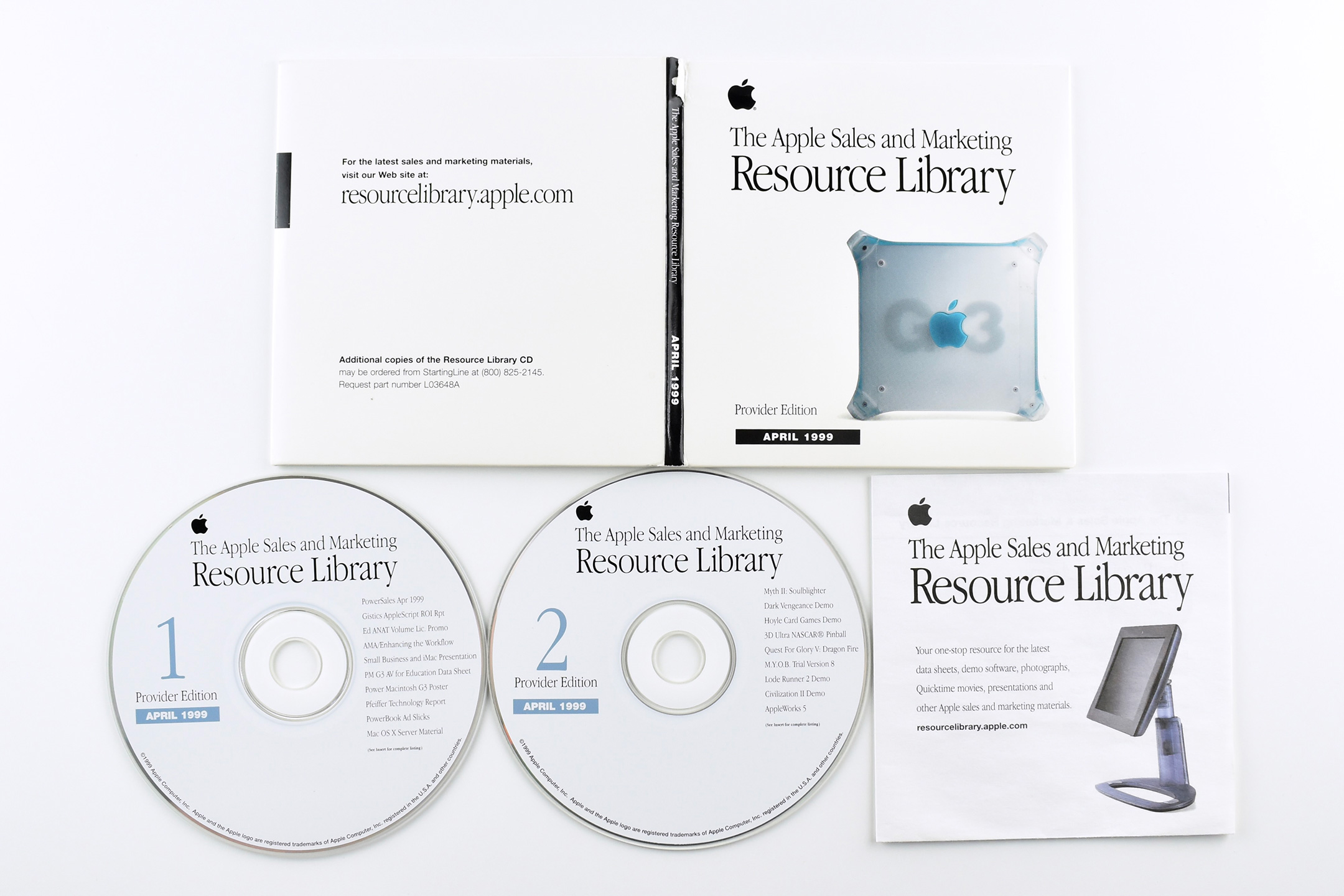
Resource Library CDs, set 1 (1998, 1999)

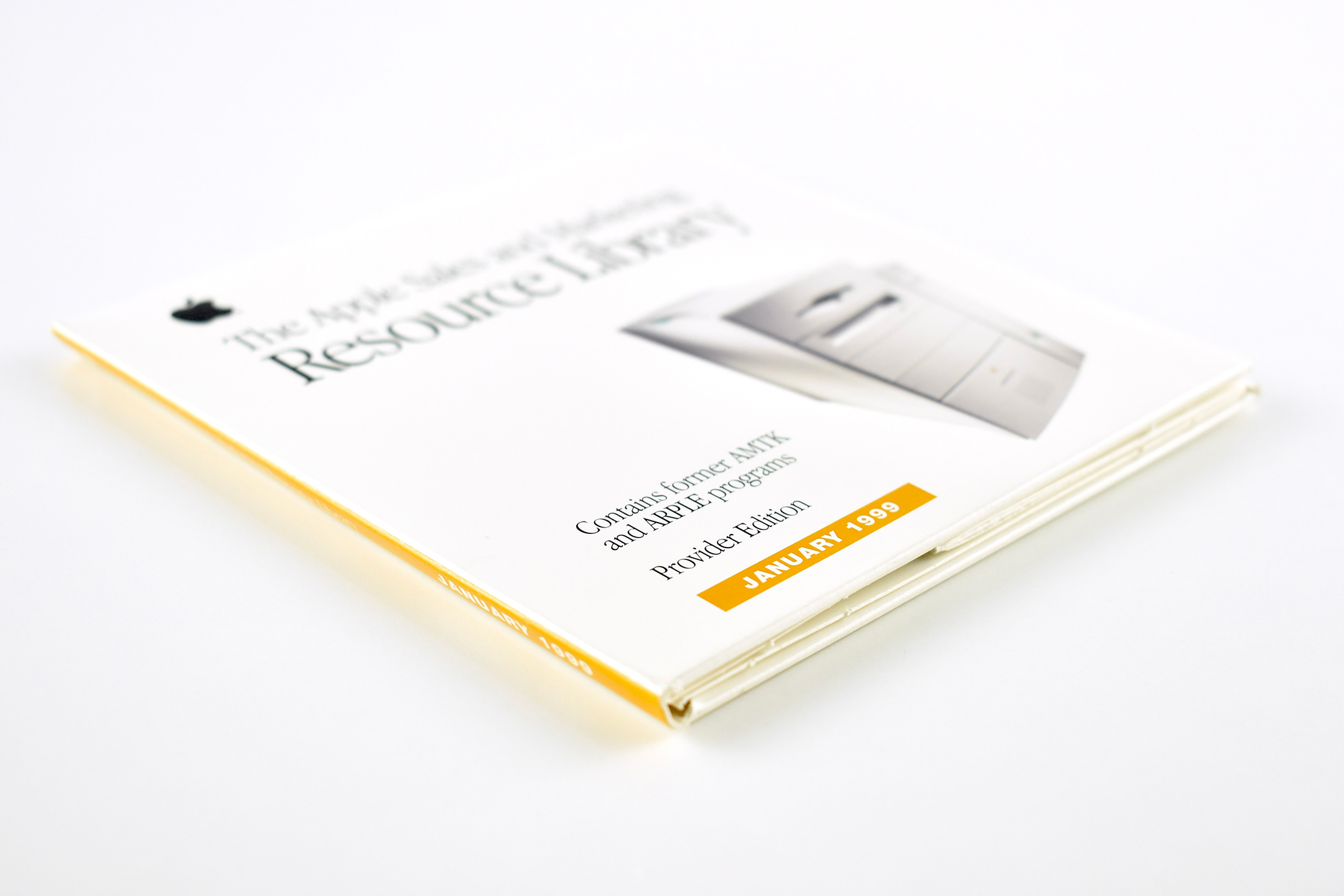
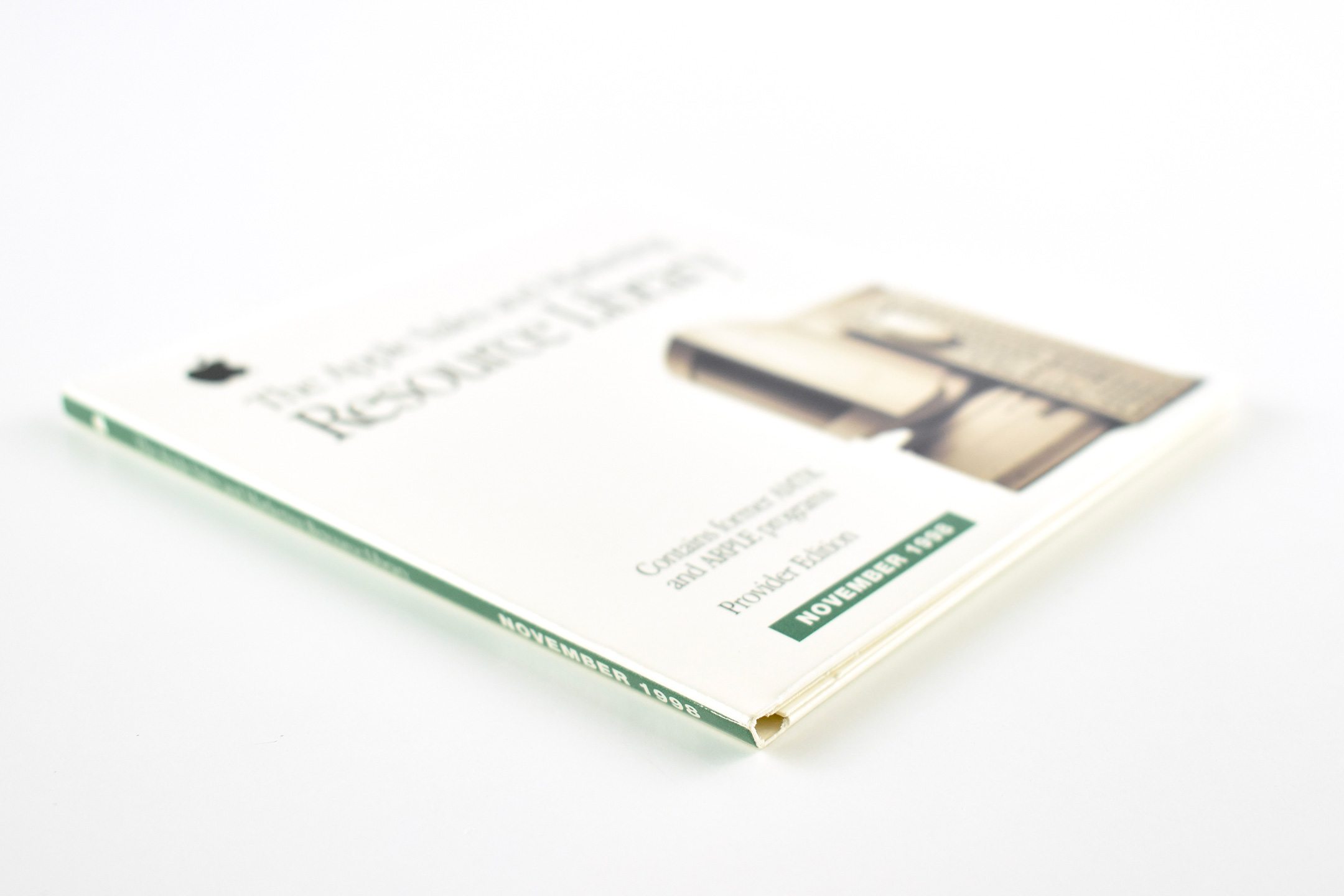
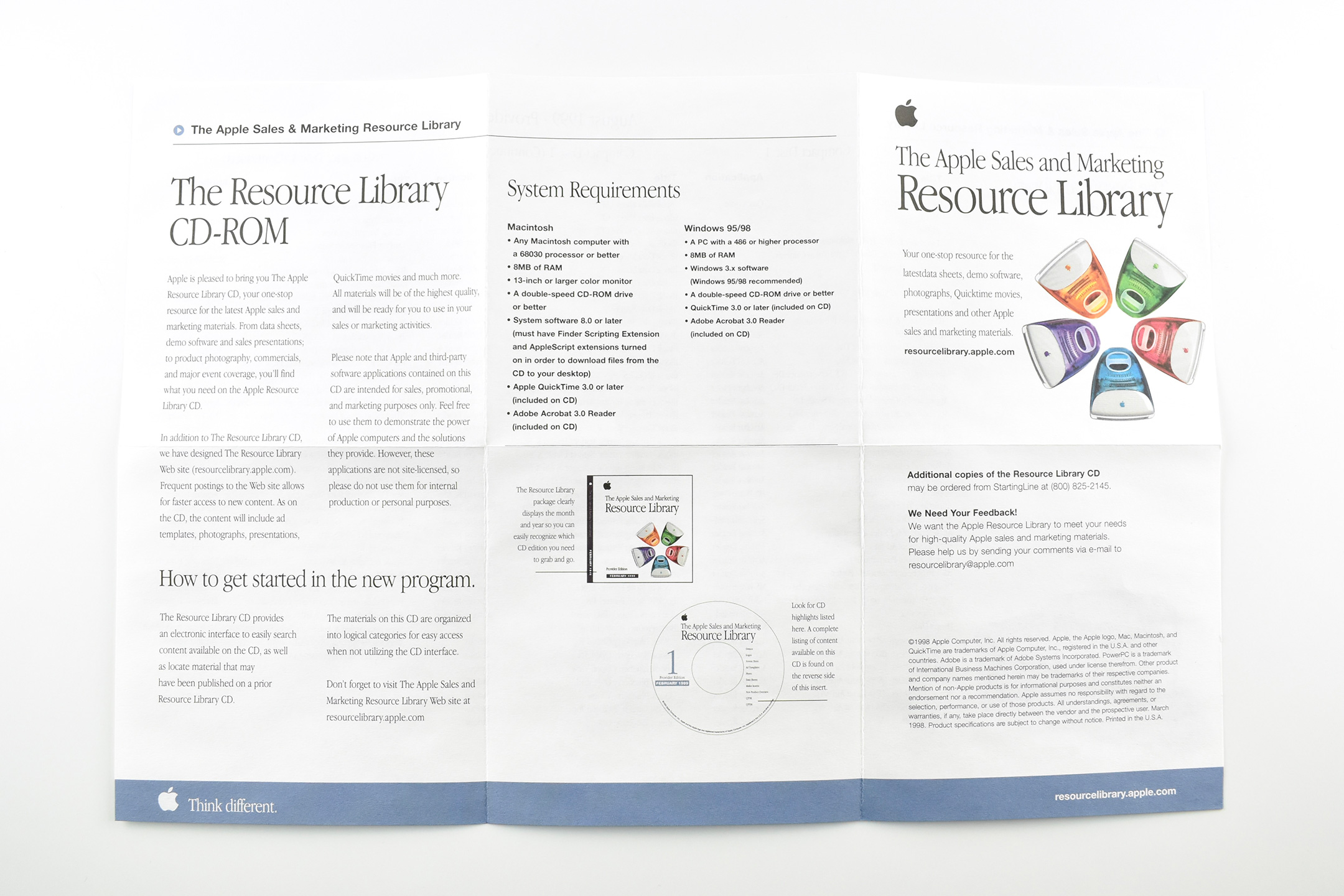
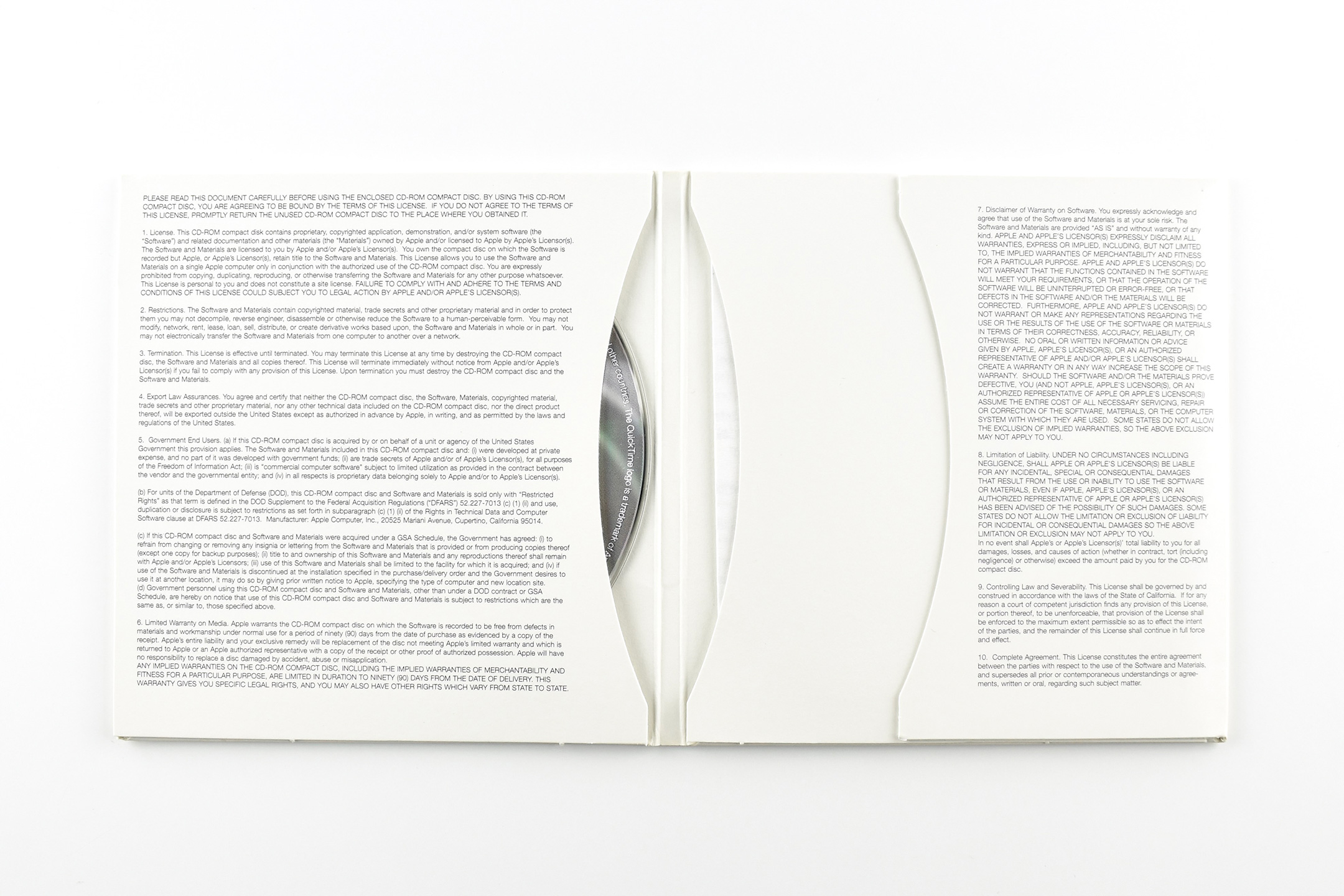
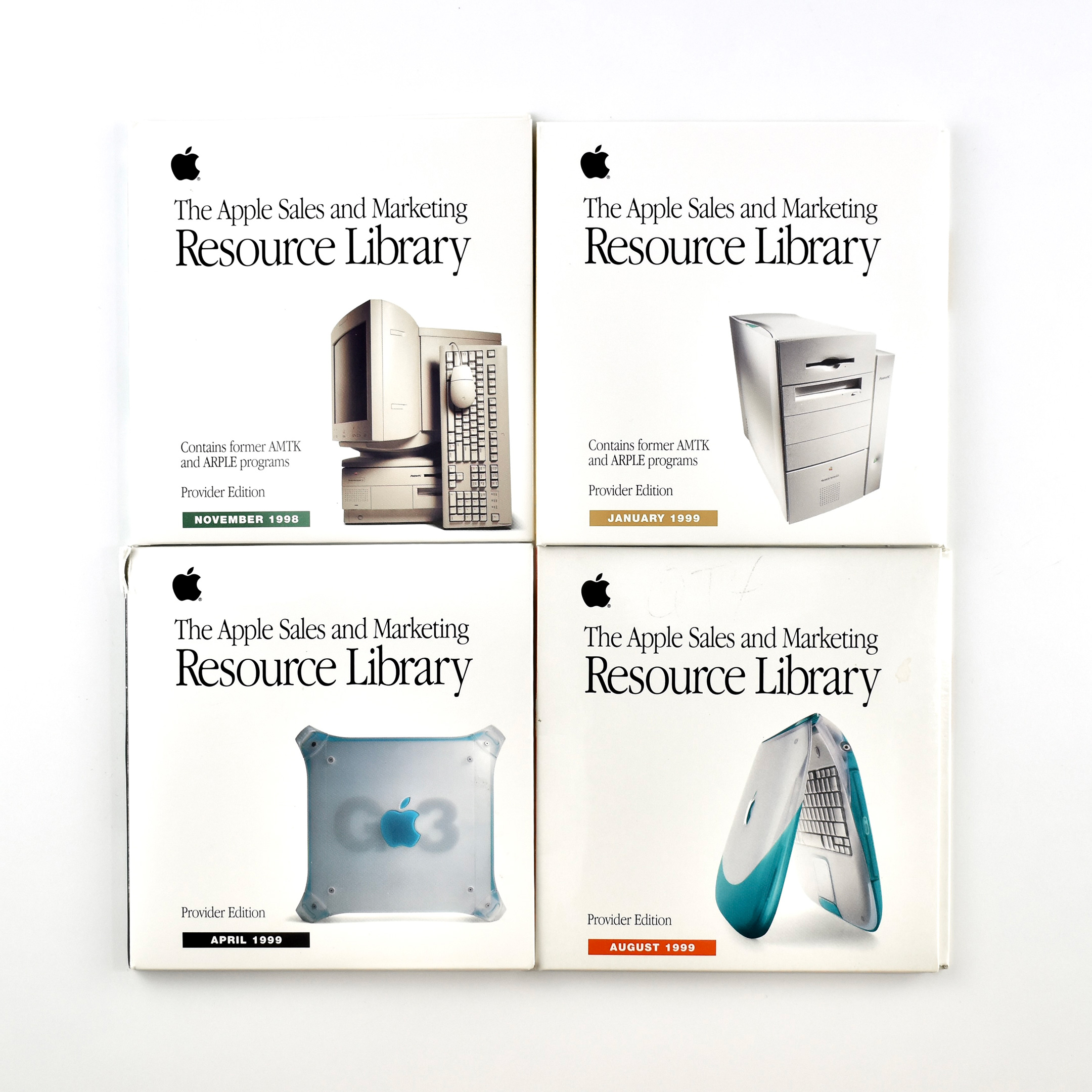
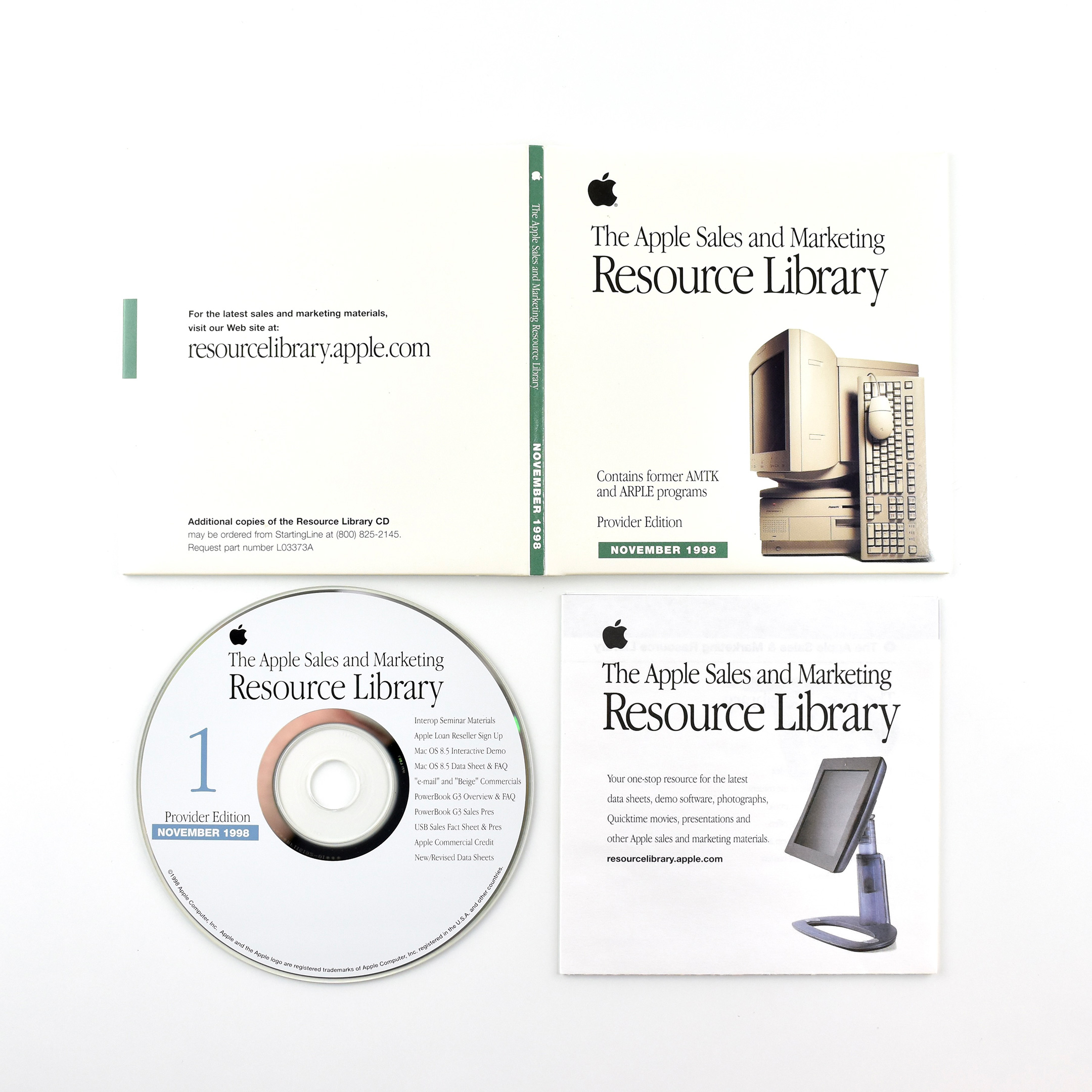
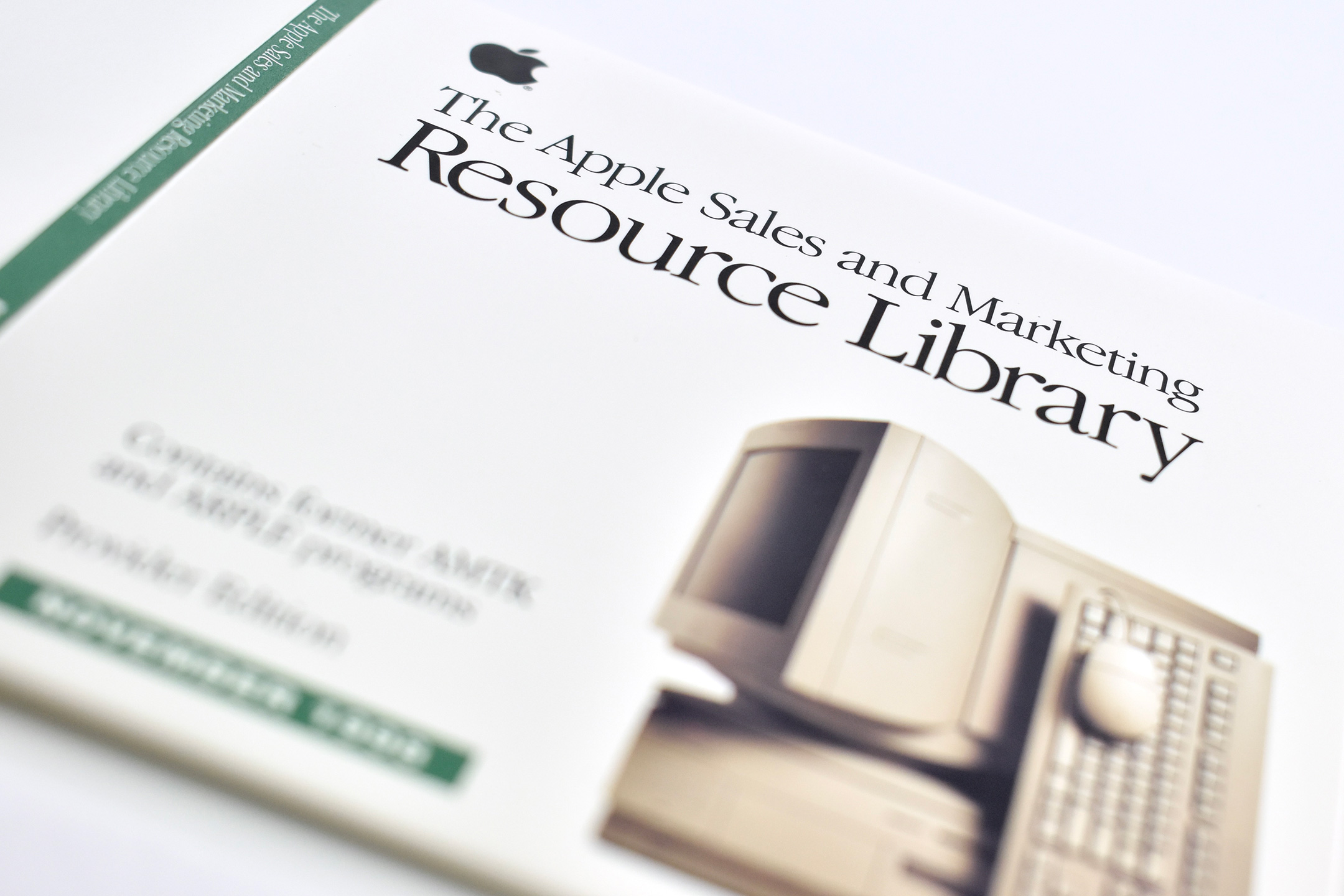
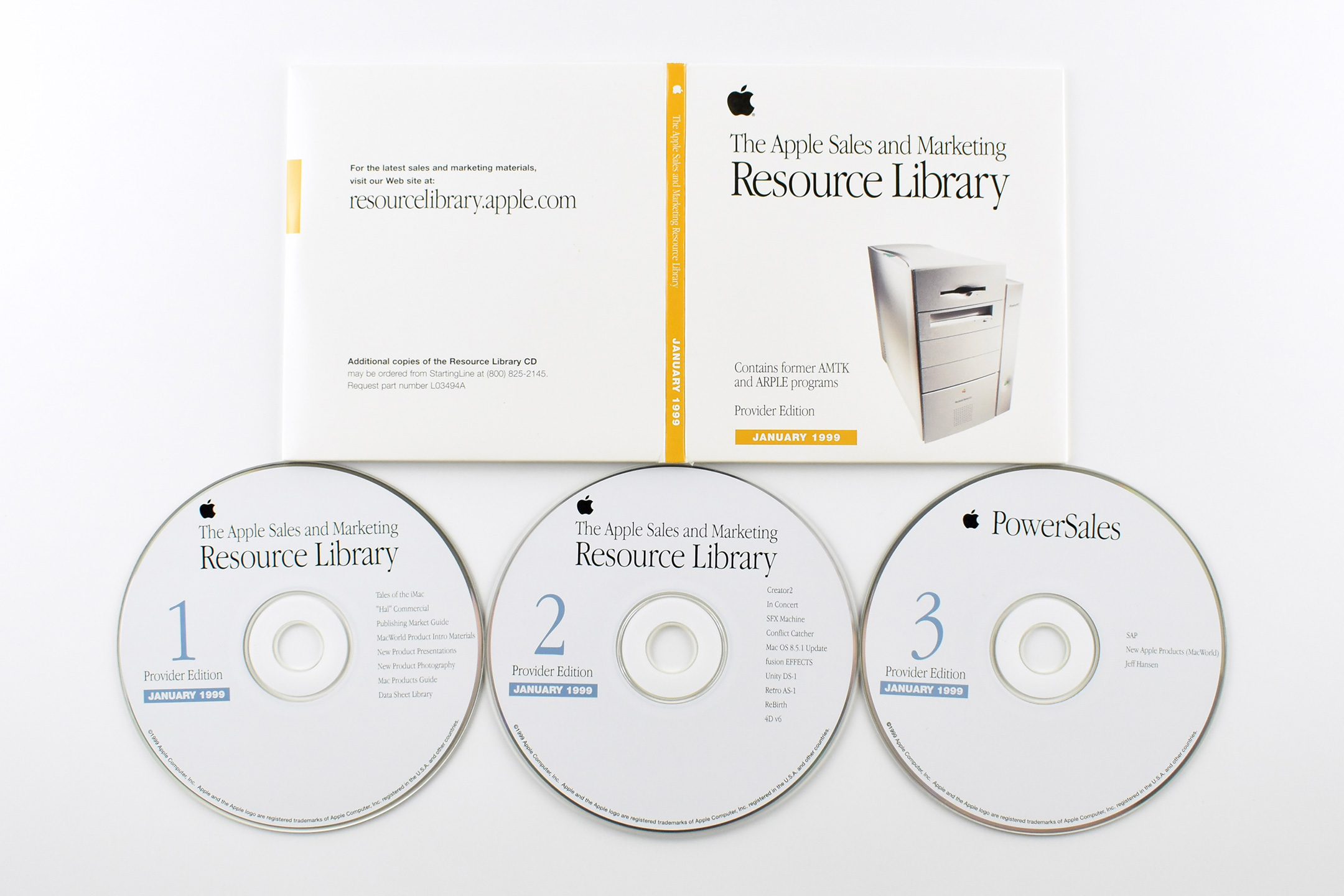
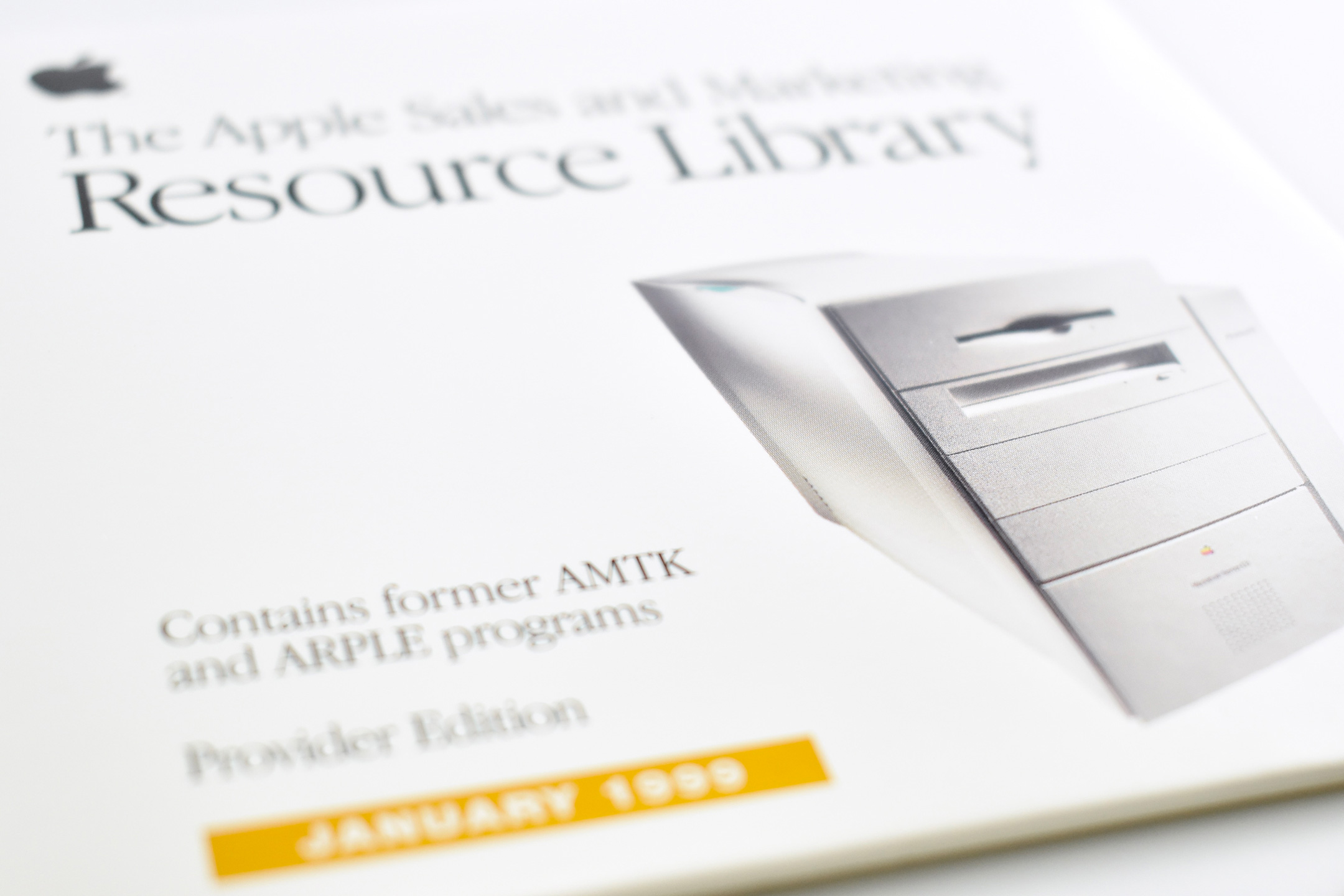
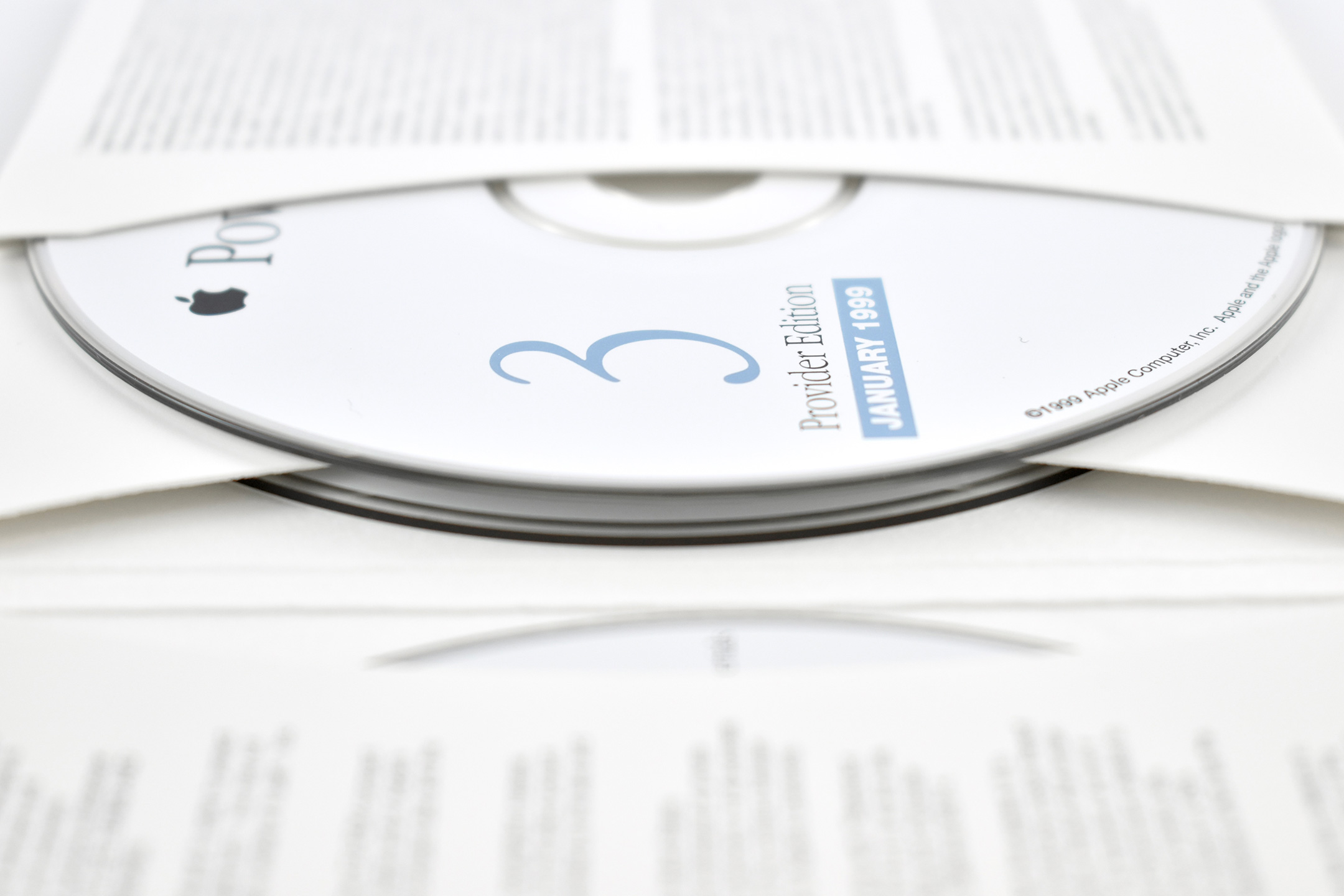
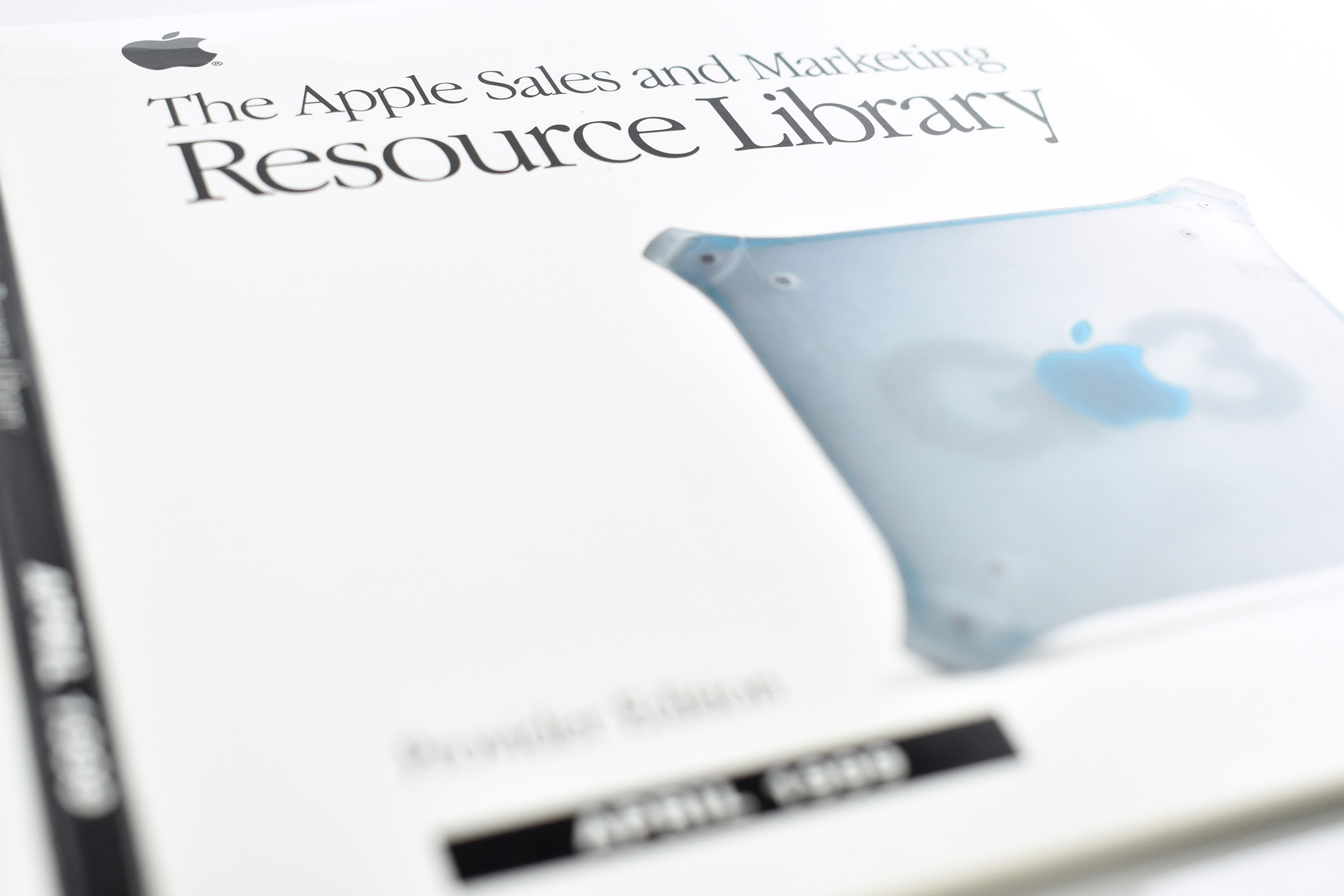
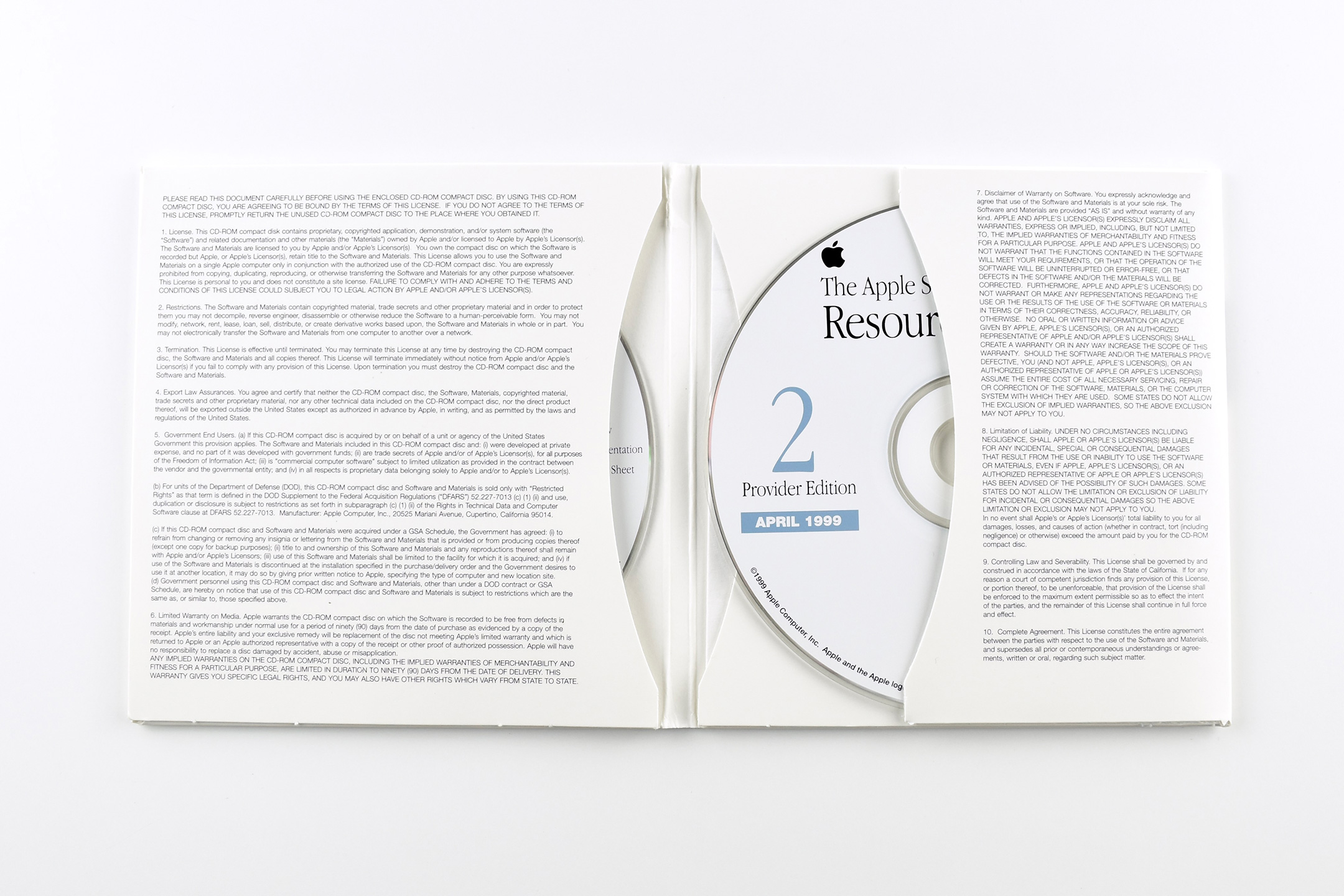
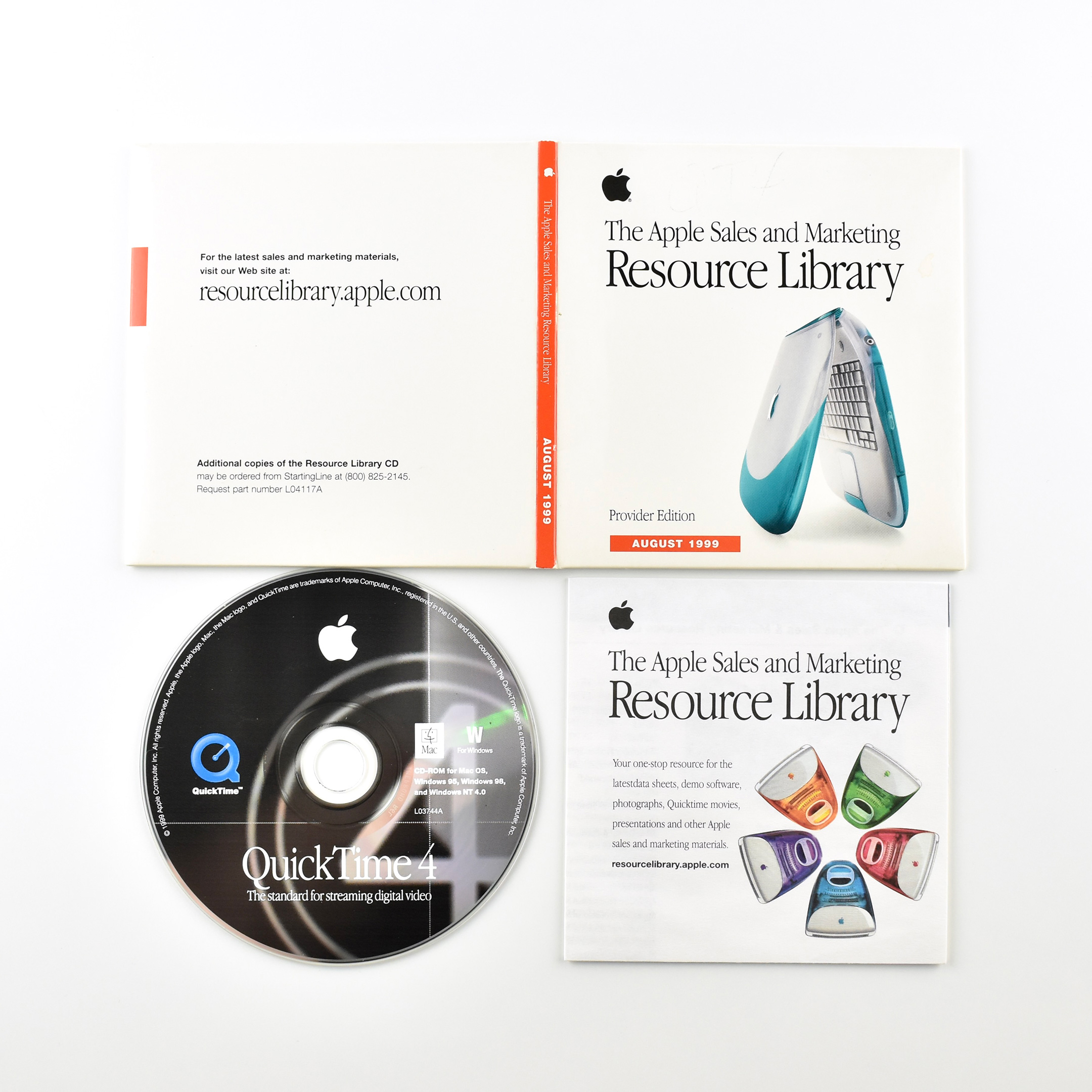
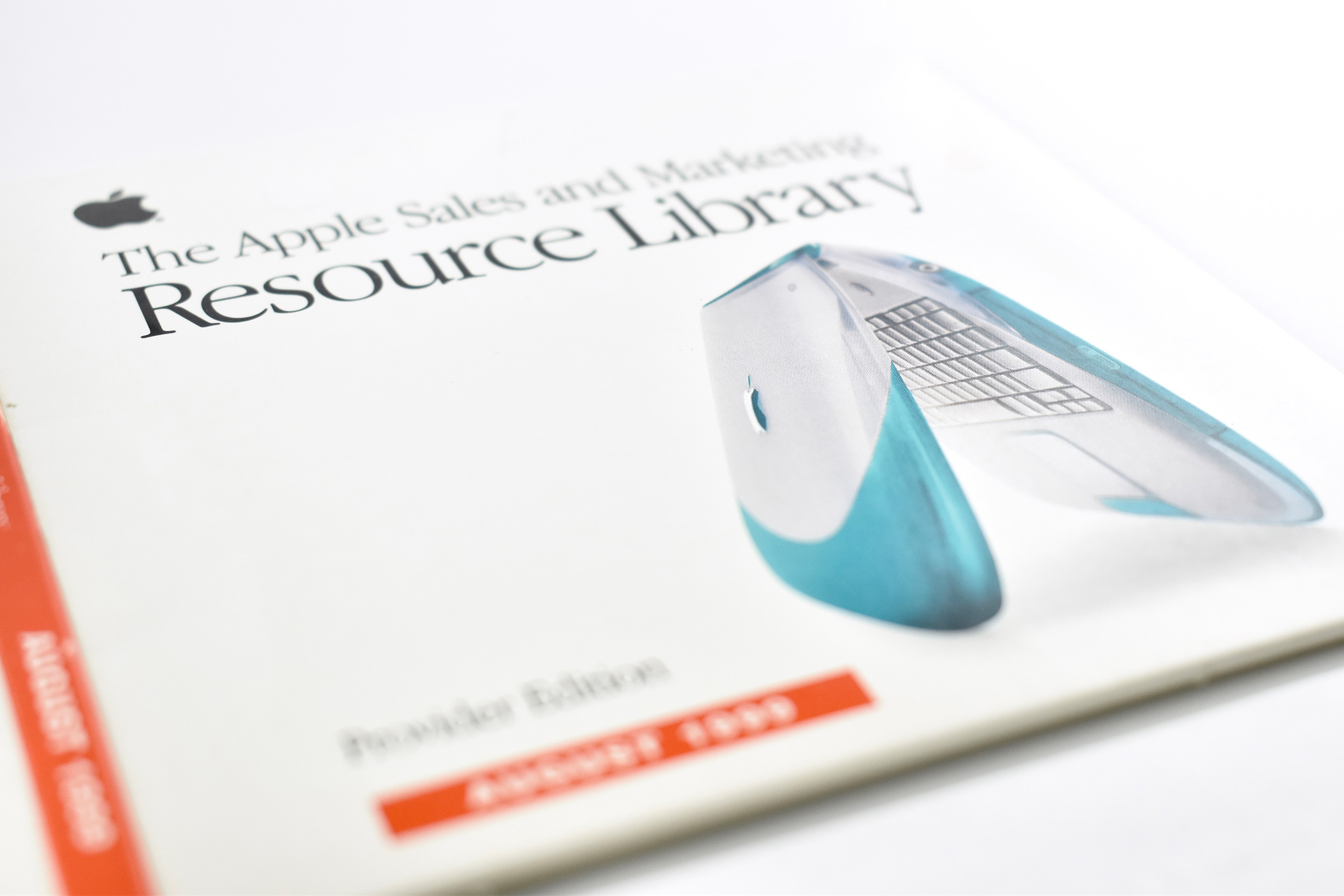
This collection of CDs include original cardboard packaging with each package containing 1–3 CD-ROM discs. Each CD package is titled “The Apple Sales and Marketing Resource Library” and features a color photo of an Apple computer. Each package is also dated.

The CD contents include:

November 1998 (1 CD)
Pictured: Power Macintosh G3 (beige desktop) with keyboard, mouse, and monitor
CD 1
Interop Seminar Materials
Apple Loan Reseller Sign Up
Mac OS 8.5 Interactive Demo
Mac OS 8.5 Data Sheet & FAQ
“e-mail” and “Beige” Commercials
PowerBook G3 Overview & FAQ
PowerBook G3 Sales Pres
USB Sales Fact Sheet & Pres
Apple Commercial Credit
New/Revised Data Sheets

January 1999 (3 CDs)
Pictured: Macintosh Server G3 (tower)
CD 1
Tales of the iMac
“Hal” Commercial
Publishing Market Guide
MacWorld Product Intro Materials
New Product Presentations
New Product Photography
Mac Products Guide
Data Sheet Library
CD 2
Creator2
In Concert
SFX Machine
Conflict Catcher
Mac OS 8.5.1 Update
fusion EFFECTS
Unity DS-1
Retro AS-1
ReBirth
4D V6
CD 3 (Apple PowerSales)
SAP
New Apple Products (MacWorld)
Jeff Hansen

April 1999 (2 CDs)
Pictured: G3 Tower (blue and white)
CD 1
PowerSales Apr 1999
Gistics AppleScript ROI Rpt
Ed ANAT Volume Lic. Promo
AMA/Enhancing the Workflow
Small Business and iMac Presentation
PM G3 AV for Education Data Sheet
Power Macintosh G3 Poster
Pfeiffer Technology Report
PowerBook Ad Slicks
Mac OS X Server Material
(and more)
CD 2
Myth II: Soulblighter
Dark Vengeance Demo
Hoyle Card Games Demo
3D Ultra NASCAR® Pinball
Quest For Glory V: Dragon Fire
M.Y.O.B. Trial Version 8
Lode Runner 2 Demo
Civilization II Demo
AppleWorks 5
(and more)

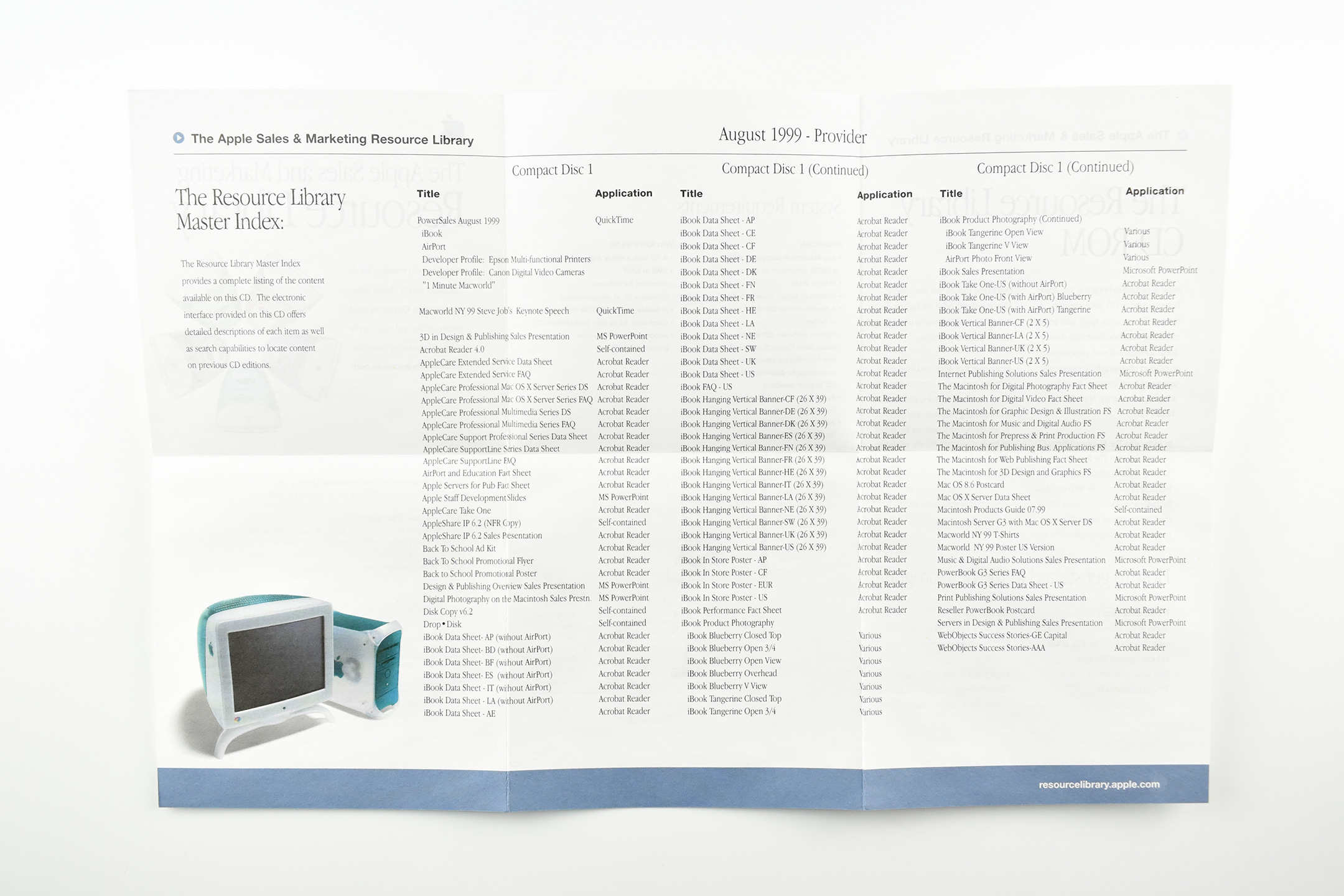
August 1999 (1 CD)
Pictured: iBook (blueberry)
CD 1
QuickTime 4
[Resource Library CDs appear to be lost]

My collection also contains the May 1999 Resource Library CDs without the packaging.

Source: Apple

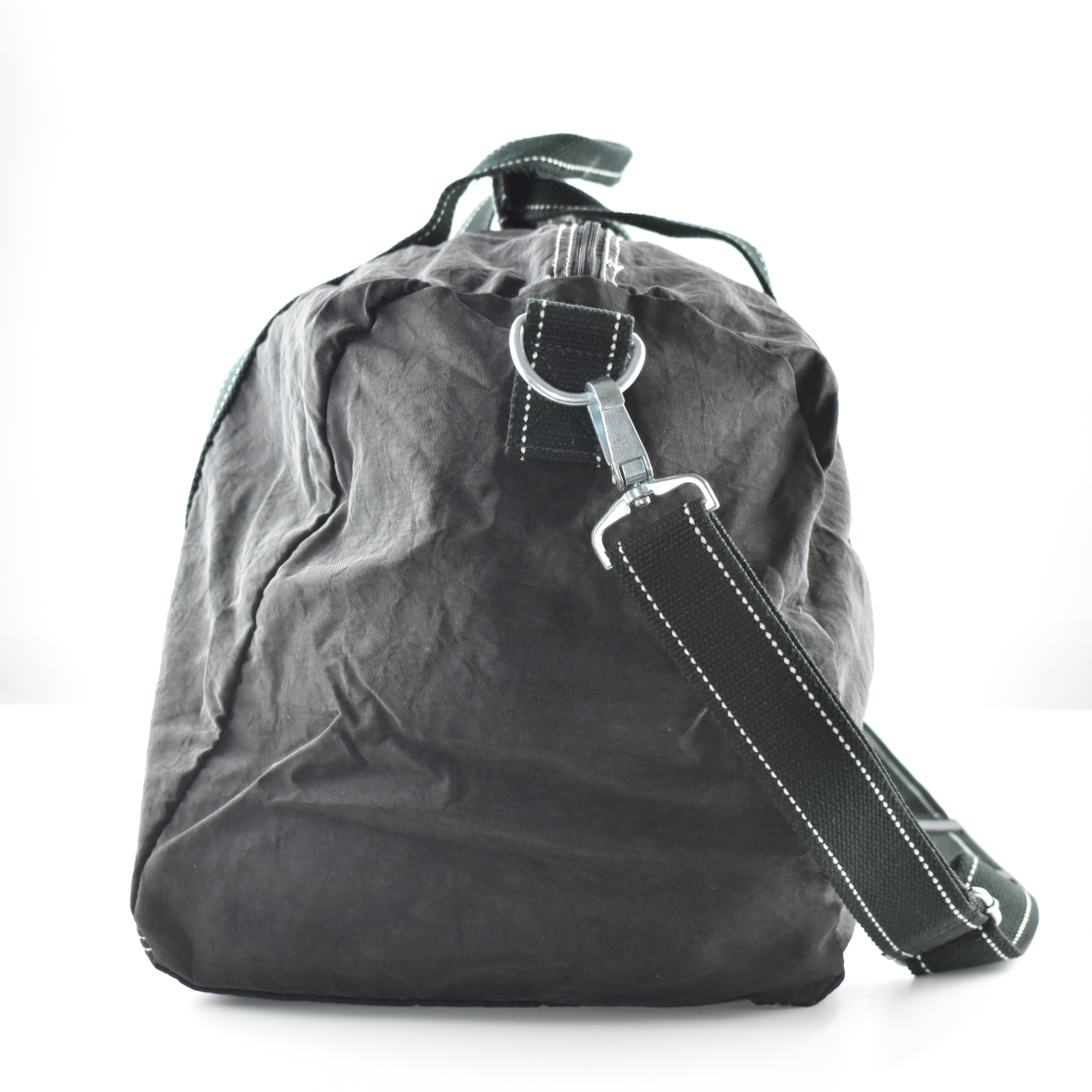
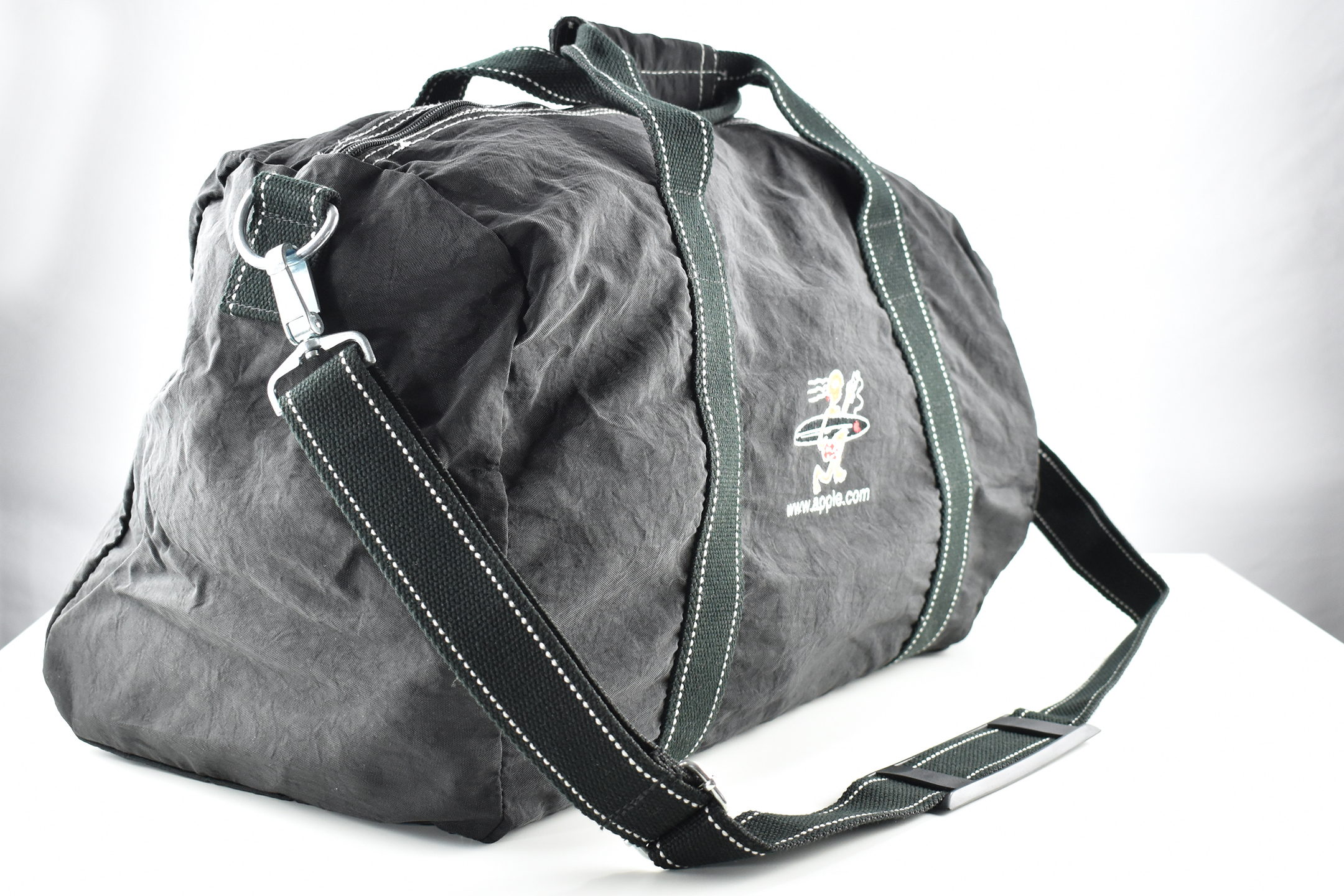
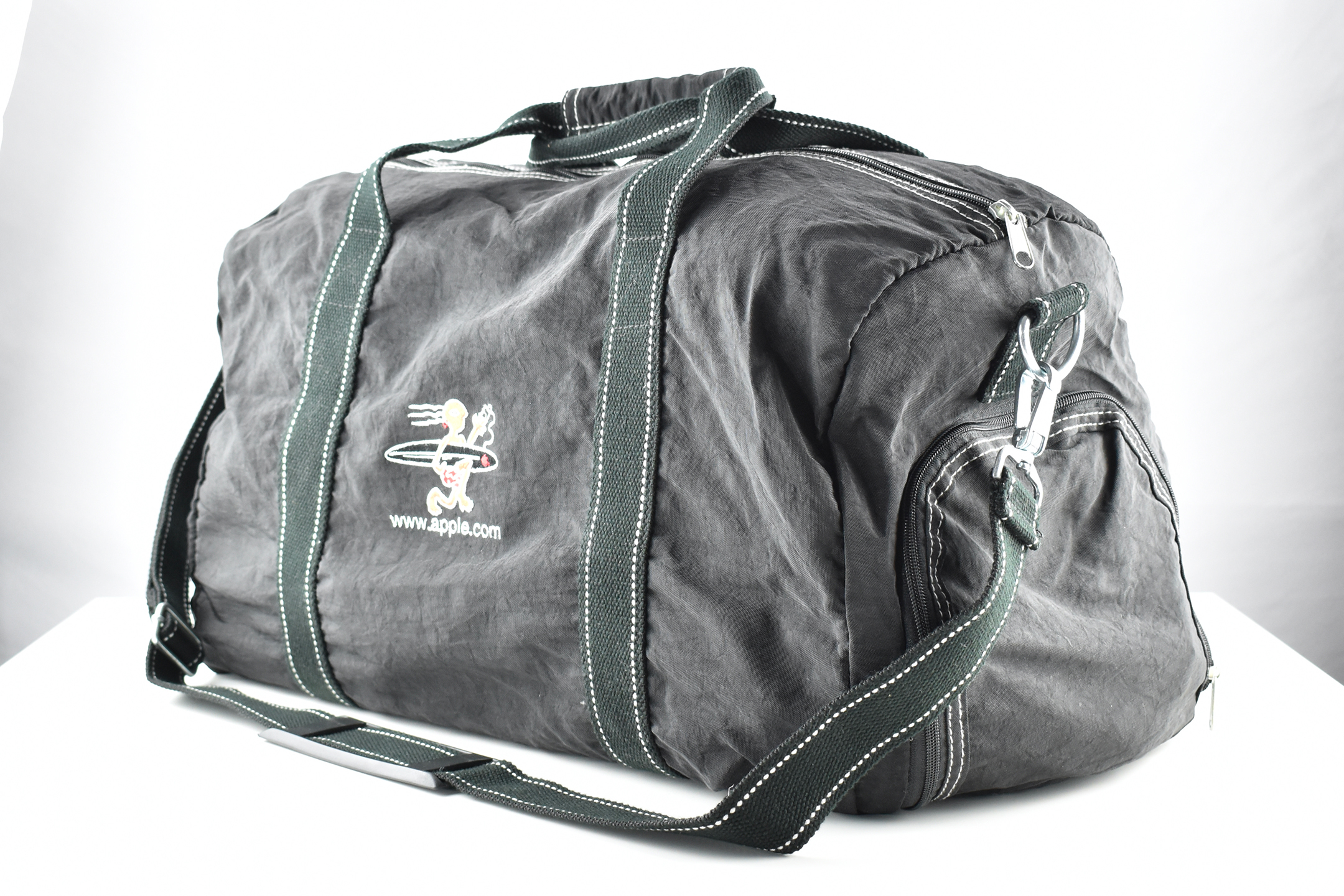
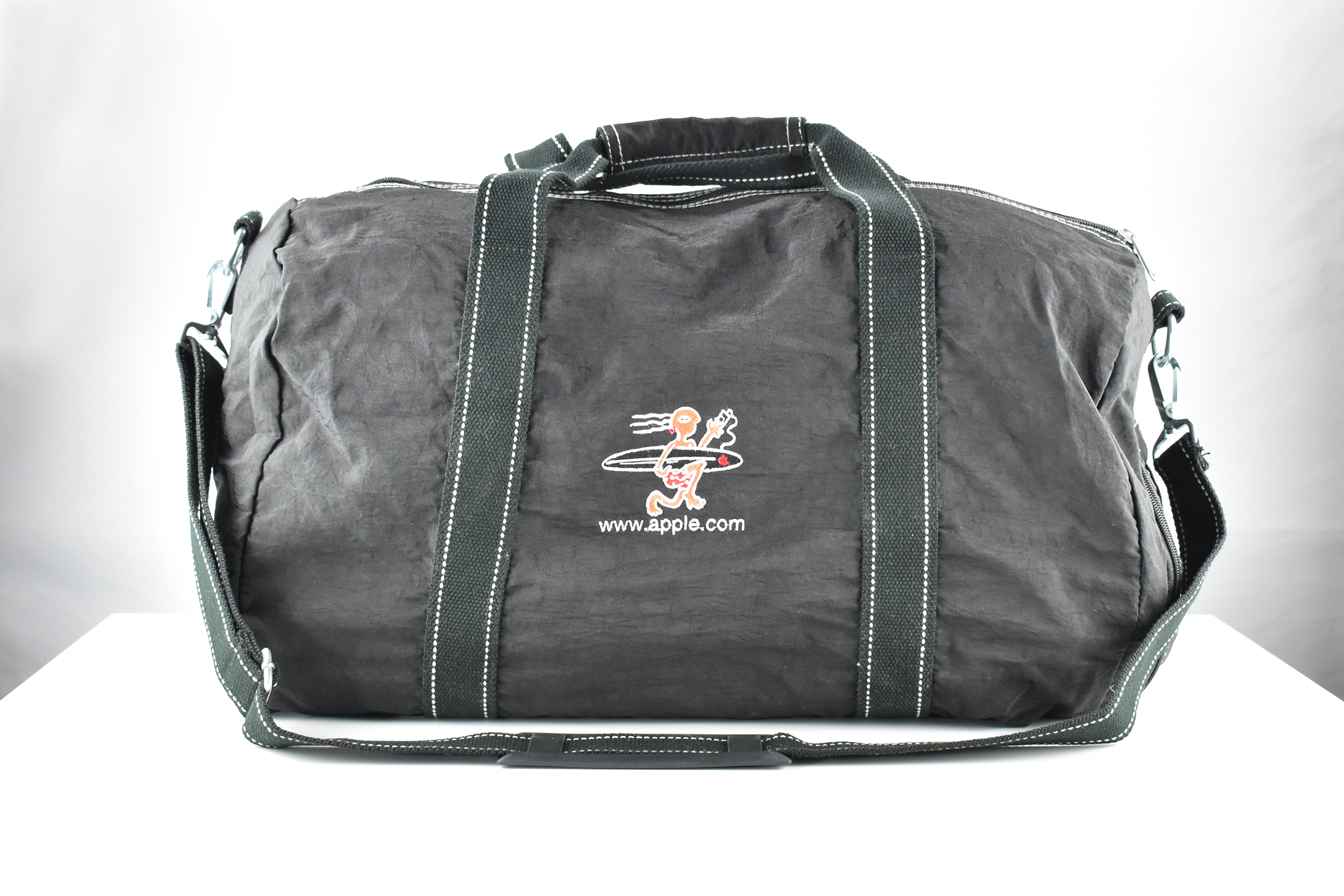
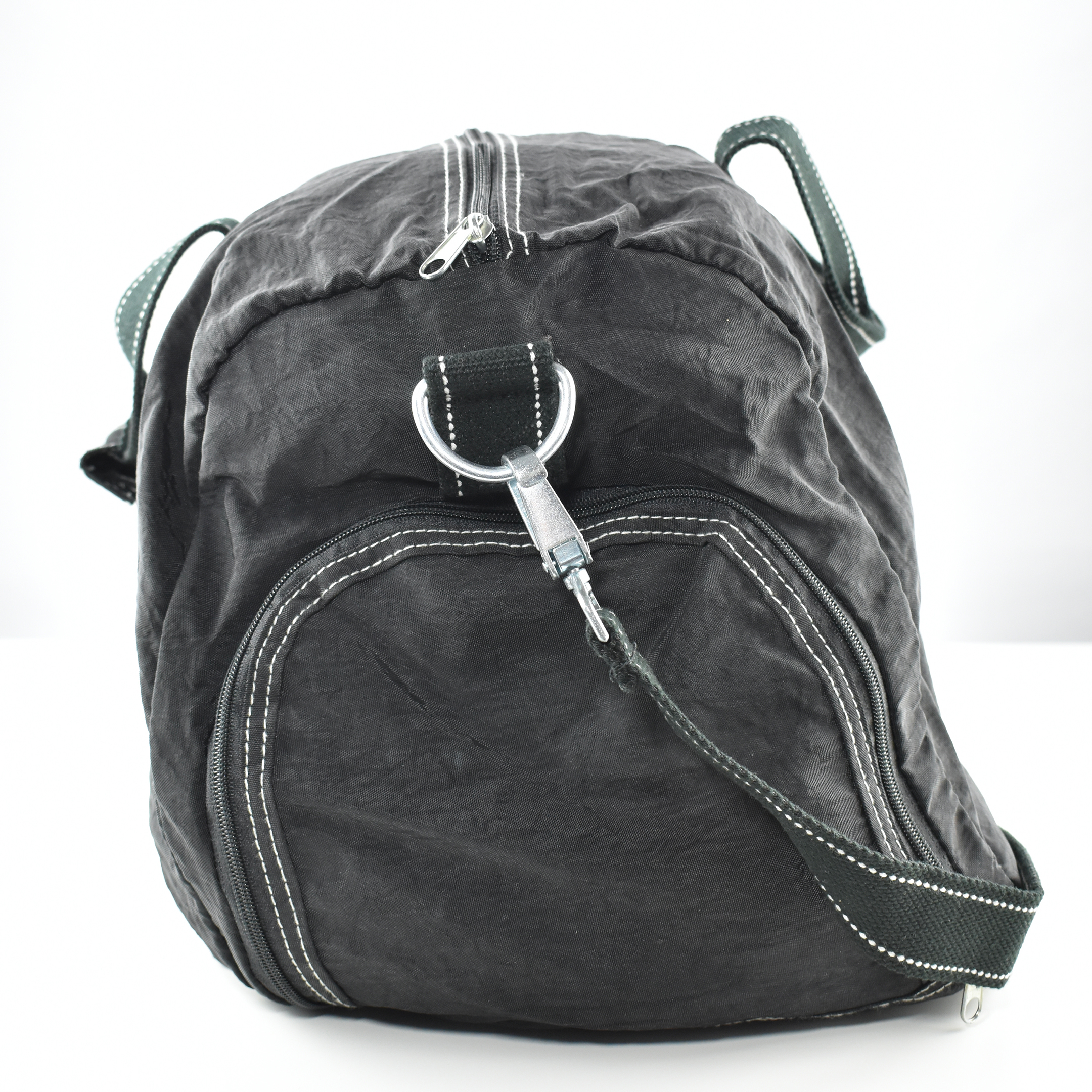
Duffel Bag (c. 1998)

This duffel bag is from the late 1990s when the Internet was still considered “new” to most users. The bag is made of black nylon with stitched straps and features a zippered side panel with a plastic enclosure to separate shoes or clothing. It also has a clip-on shoulder strap with silver metal hardware.

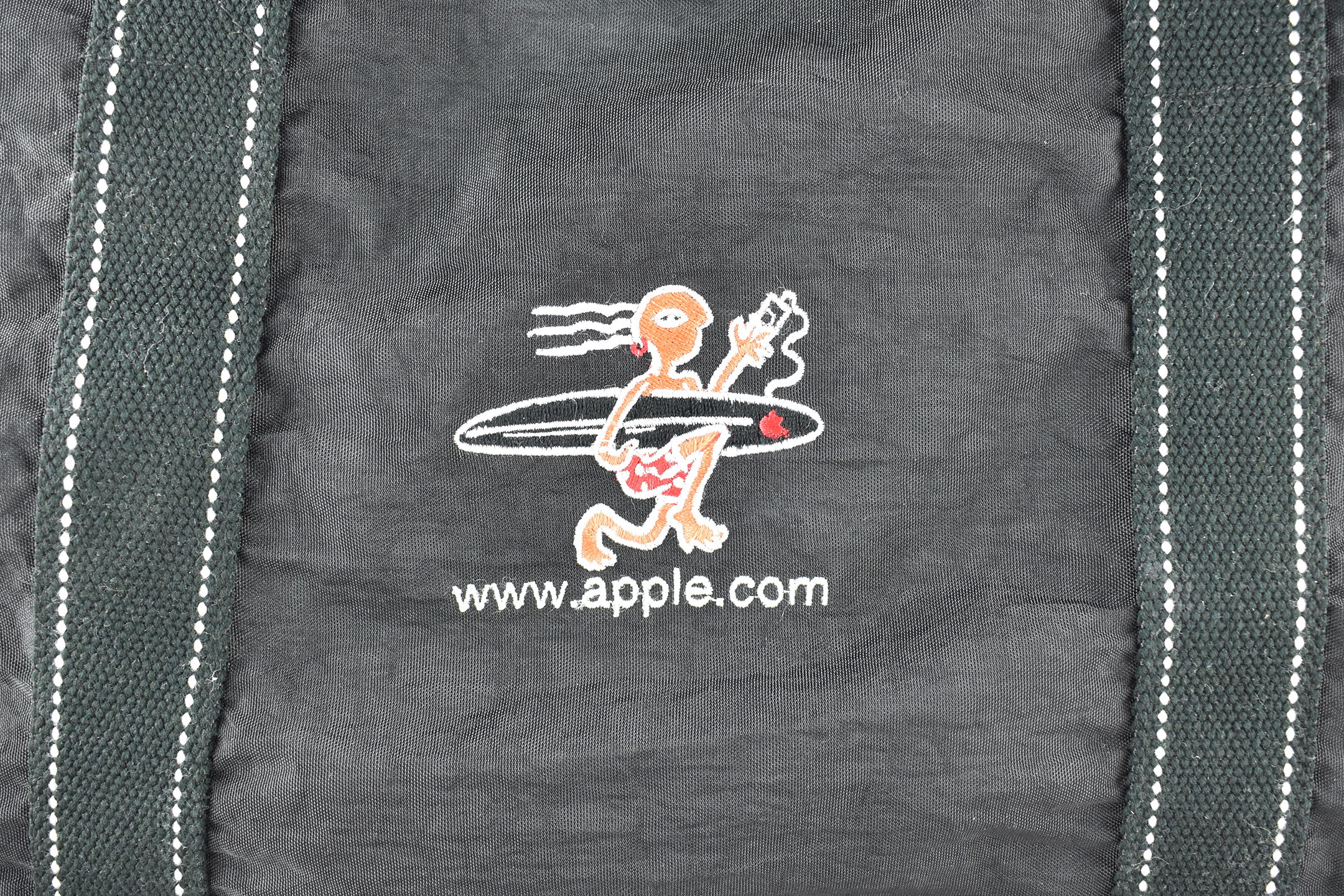
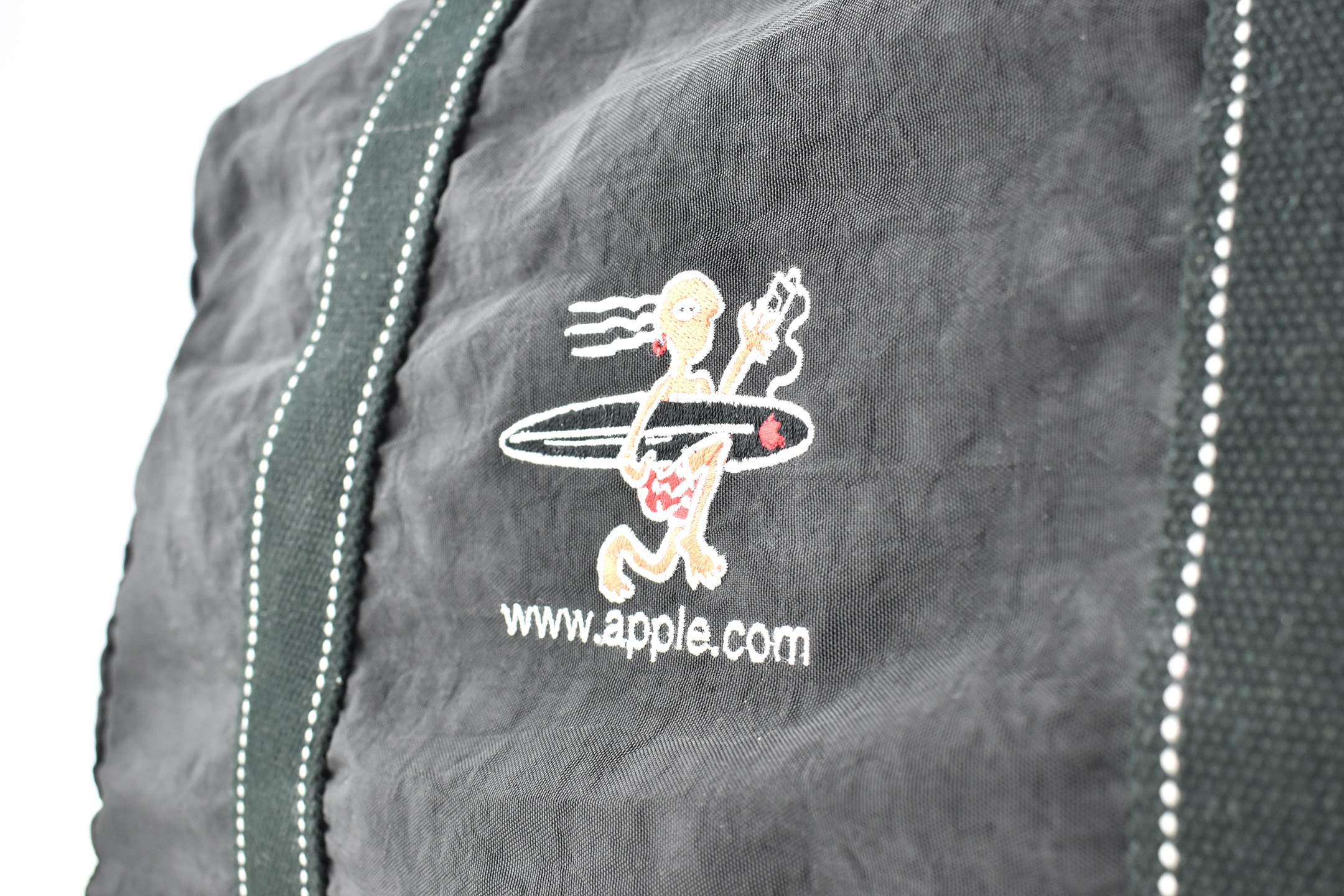
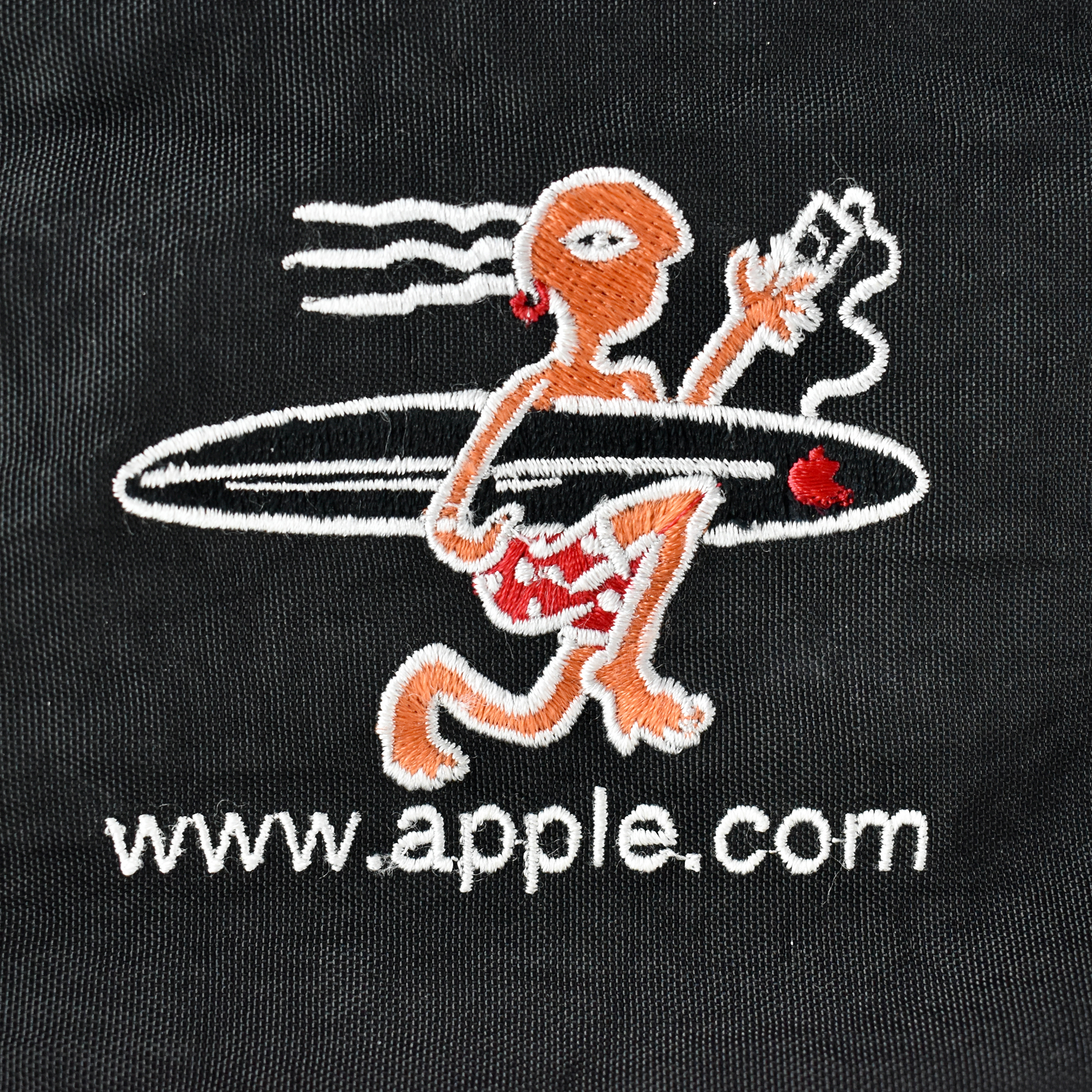
The cartoon-style embroidery logo is a stylized surfer carrying a surf board with a tiny red Apple logo. The figure is holding a cable that is likely a “surfboard leash”—a cord attached to the deck of a surfboard to a leg strap that prevents the board from being swept away or hitting other surfers. Although the cord at first glance appears to be a music player, this duffel bag predates the iPod by several years, and Apple sold no other portable devices with this design.

Under the surfer are the embroidered letters www.apple.com in a sans serif type that resembles Helvetica.

In my research, I have never seen another duffel bag of this design. Please contact me if you have additional history or information on this item.

Source: Wikipedia

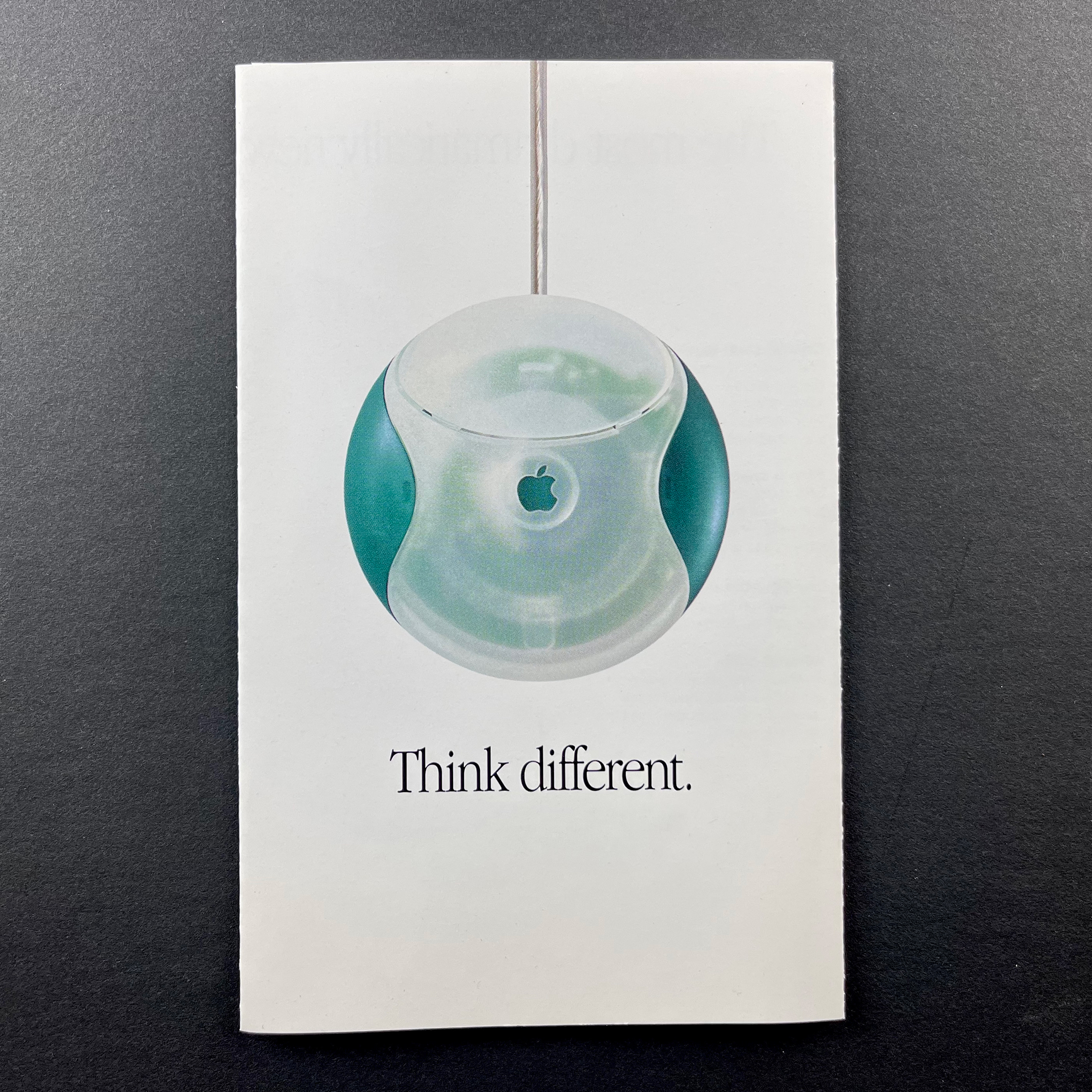
Think different. brochure (original iMac, 1998)

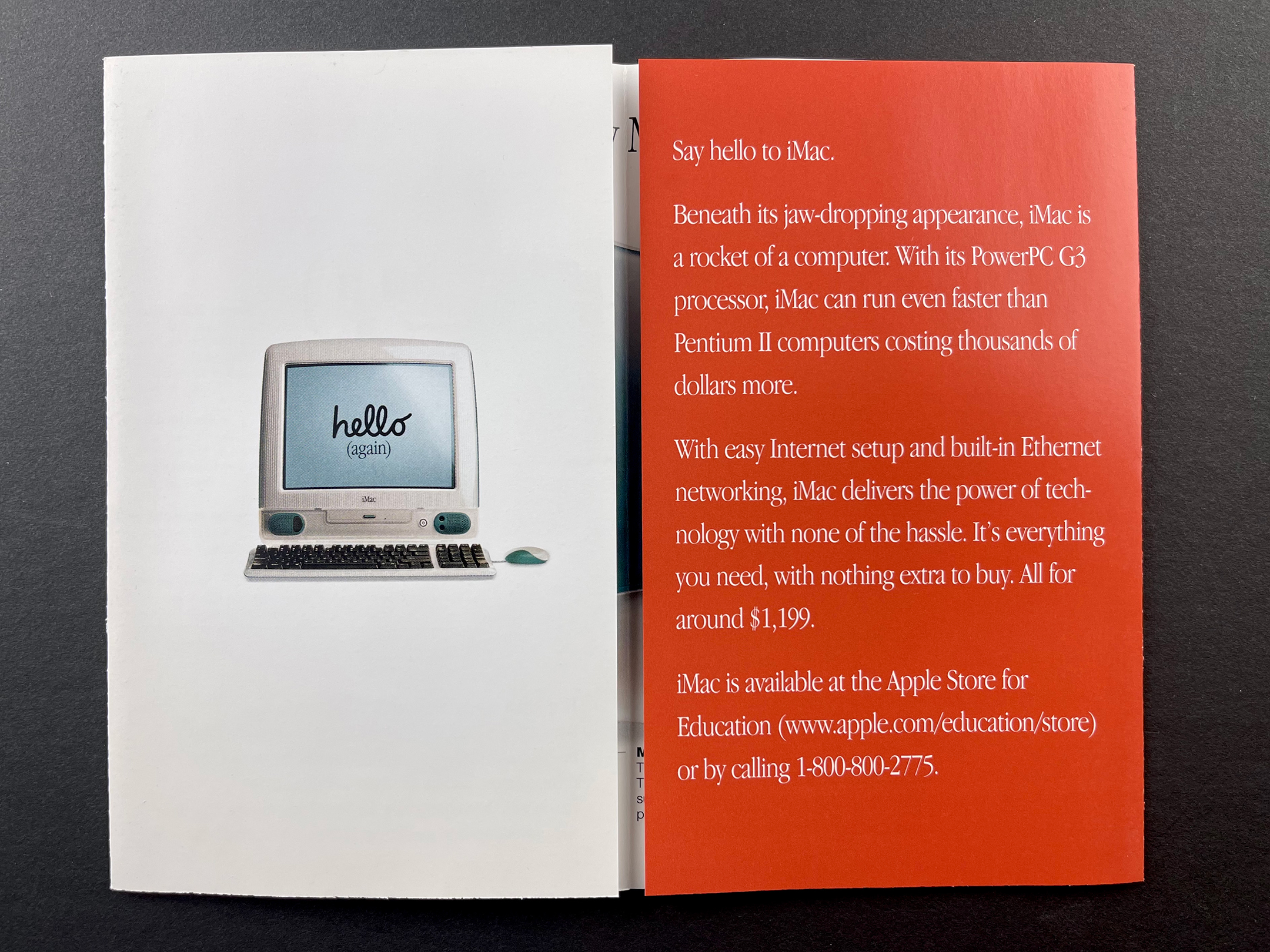
This “Think different.” brochure features Apple’s round USB Mouse from the original iMac on the cover. When opened, a two-page spread reveals the original iMac with the iconic “hello (again)” screen and a facing page in bright orange with white text that begins “Say hello to iMac.”

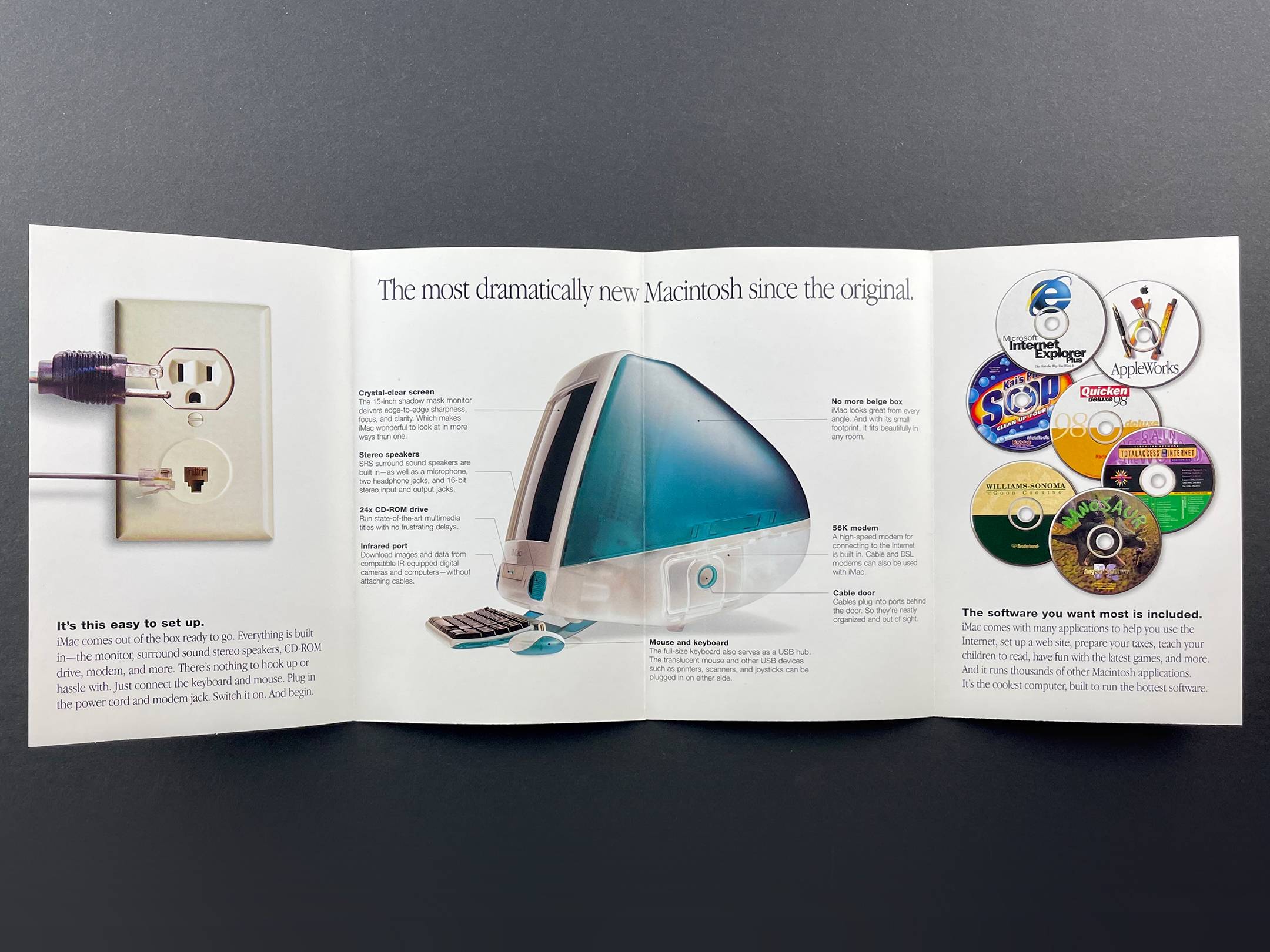
Fully unfolded, a four-panel horizontal spread shows a side view of the original iMac with several labeled features, a two-plug setup showing power and a phone line (Internet at this time was delivered through a built-in dial-up modem using a telephone land line), and a collage of the many third-party CD titles that shipped with the iMac.

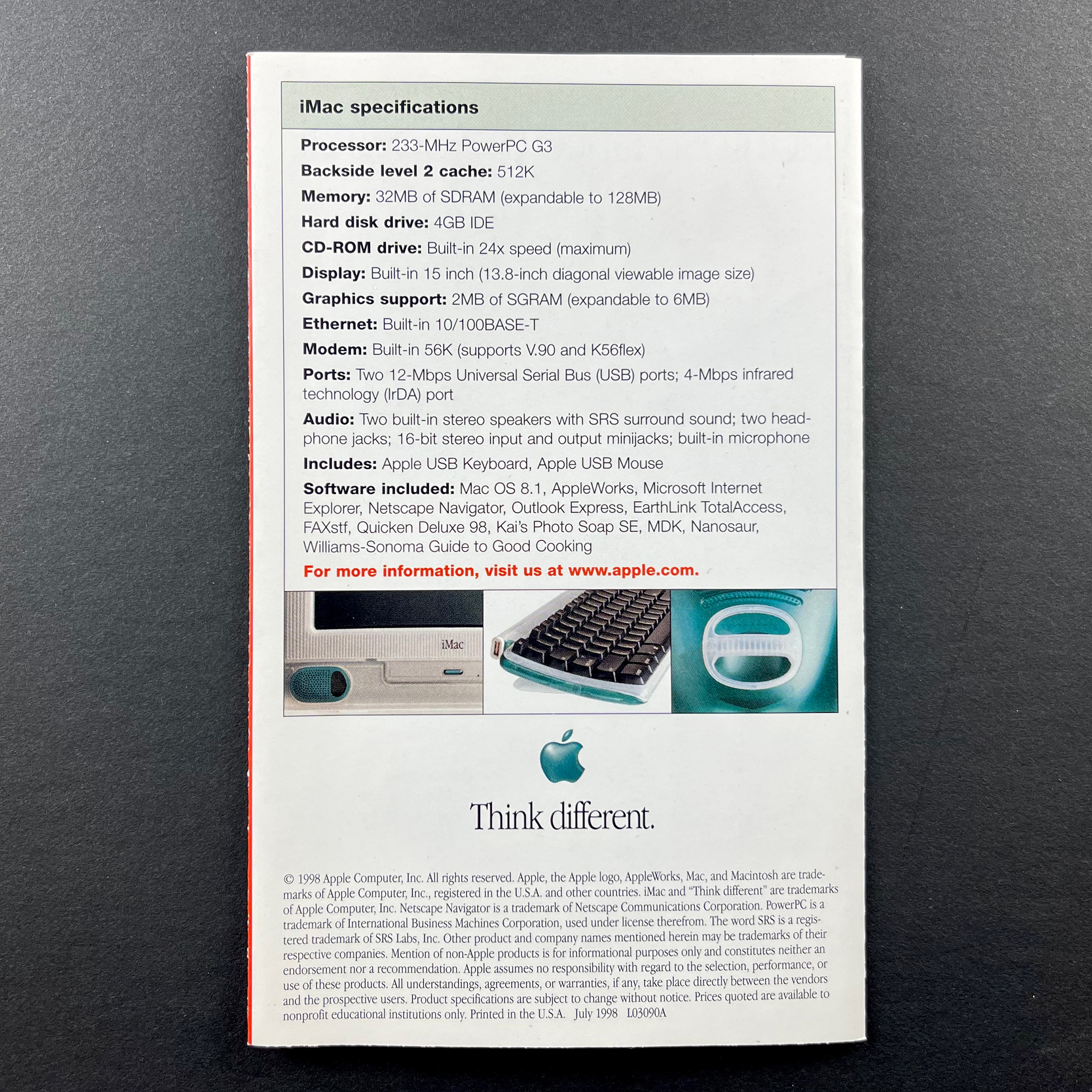
The back page of the brochure included iMac specifications.
This brochure measures 3.75 x 6 inches folded.

We rewrote the book magazine insert (PowerBook G3, 1998)

In the late 1990s and early 2000s, part of Apple’s print advertising included magazine inserts. These inserts were “mini-magazines” within magazines. They were glued with a pliable rubber cement that could be easily removed.
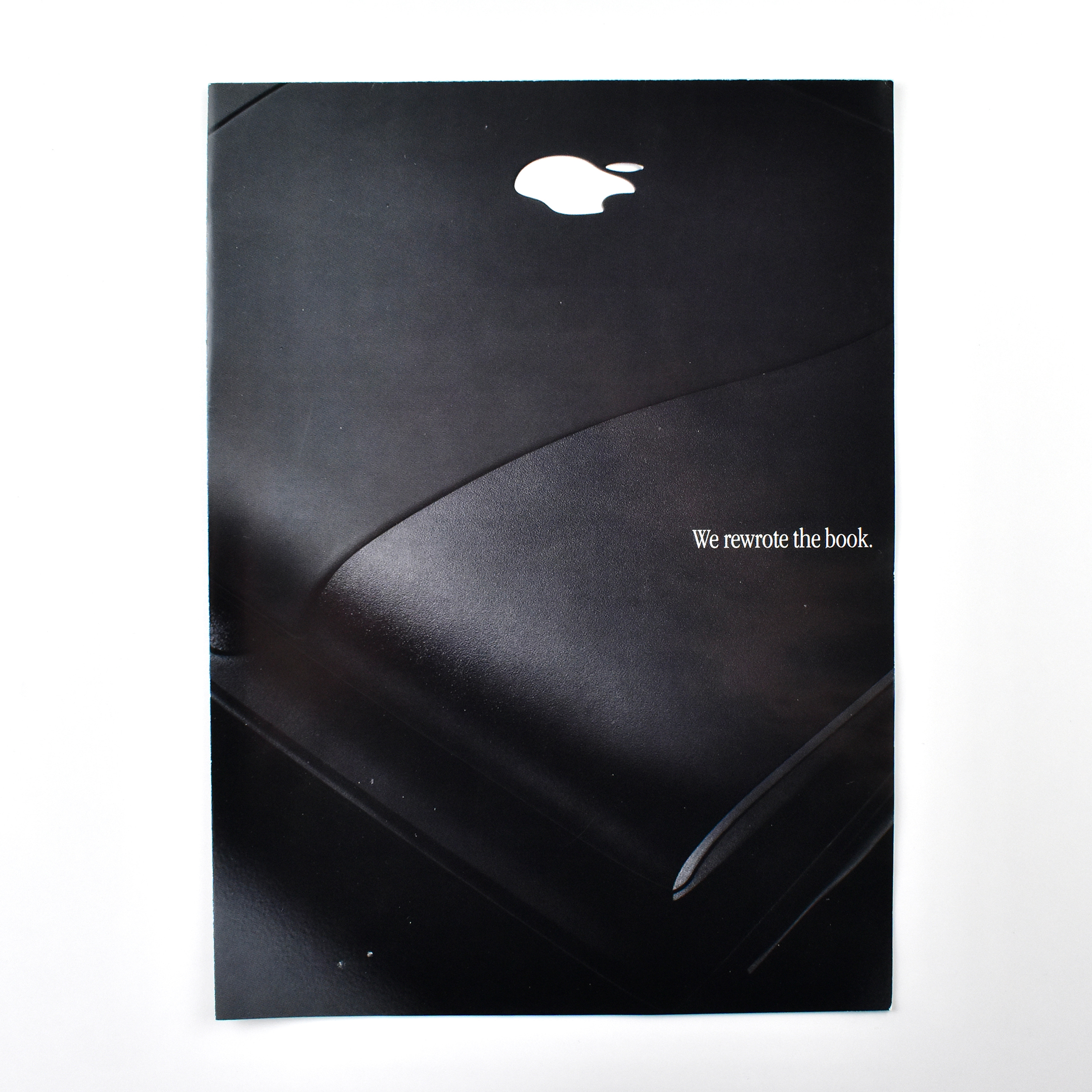
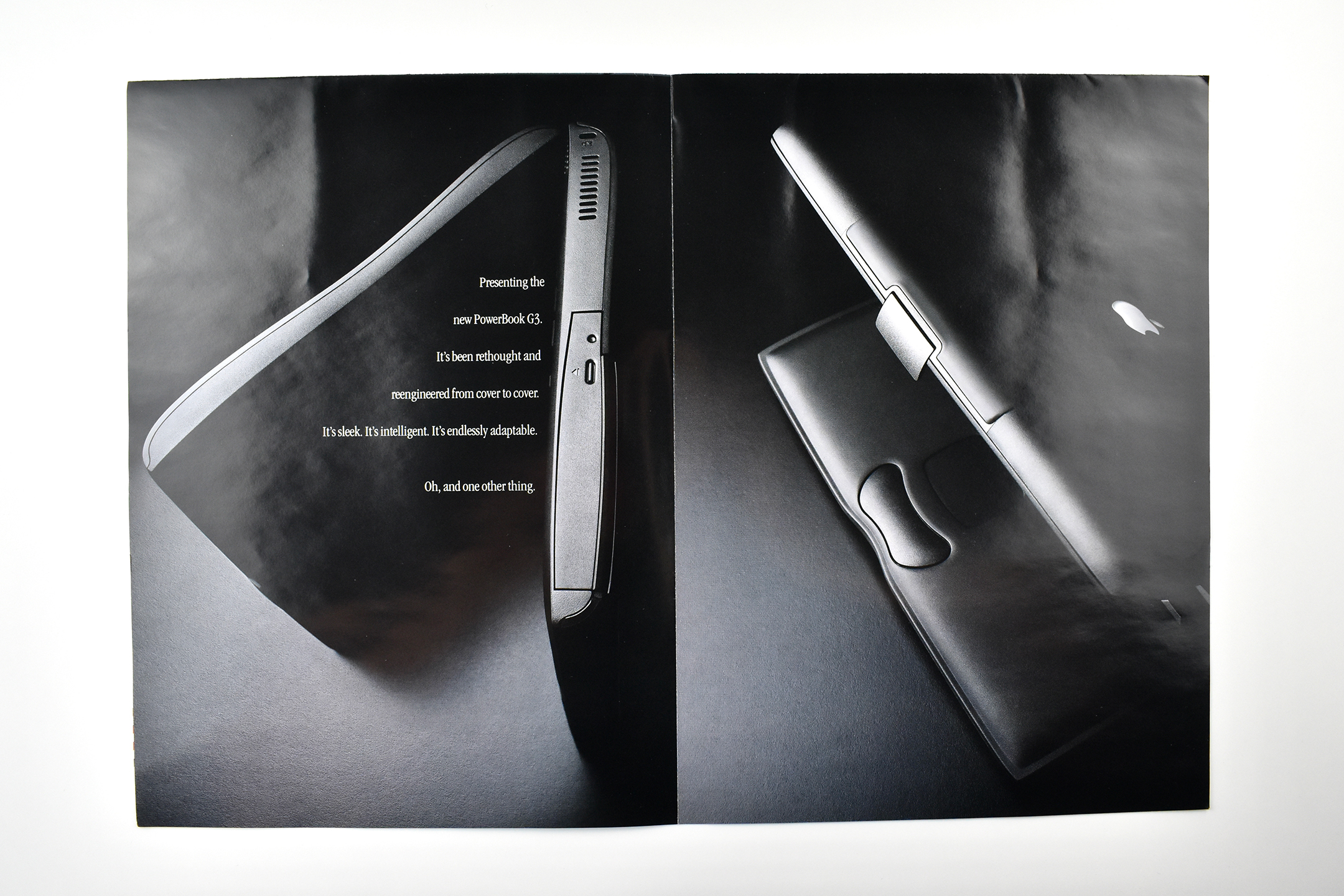
This early magazine insert example is an advertisement for the Macintosh PowerBook G3 laptop. The images on the front, back, and inside covers are photographed with stunning black backgrounds using shadows and light to reveal interesting aspects of the laptop’s design. The cover reads, “We rewrote the book.”

Open, the 2-panel spread includes the copy: “Presenting the new PowerBook G3. It’s been rethought and reengineered from cover to cover. It’s sleek. It’s intelligent. It’s endlessly adaptable. Oh, and one other thing.”

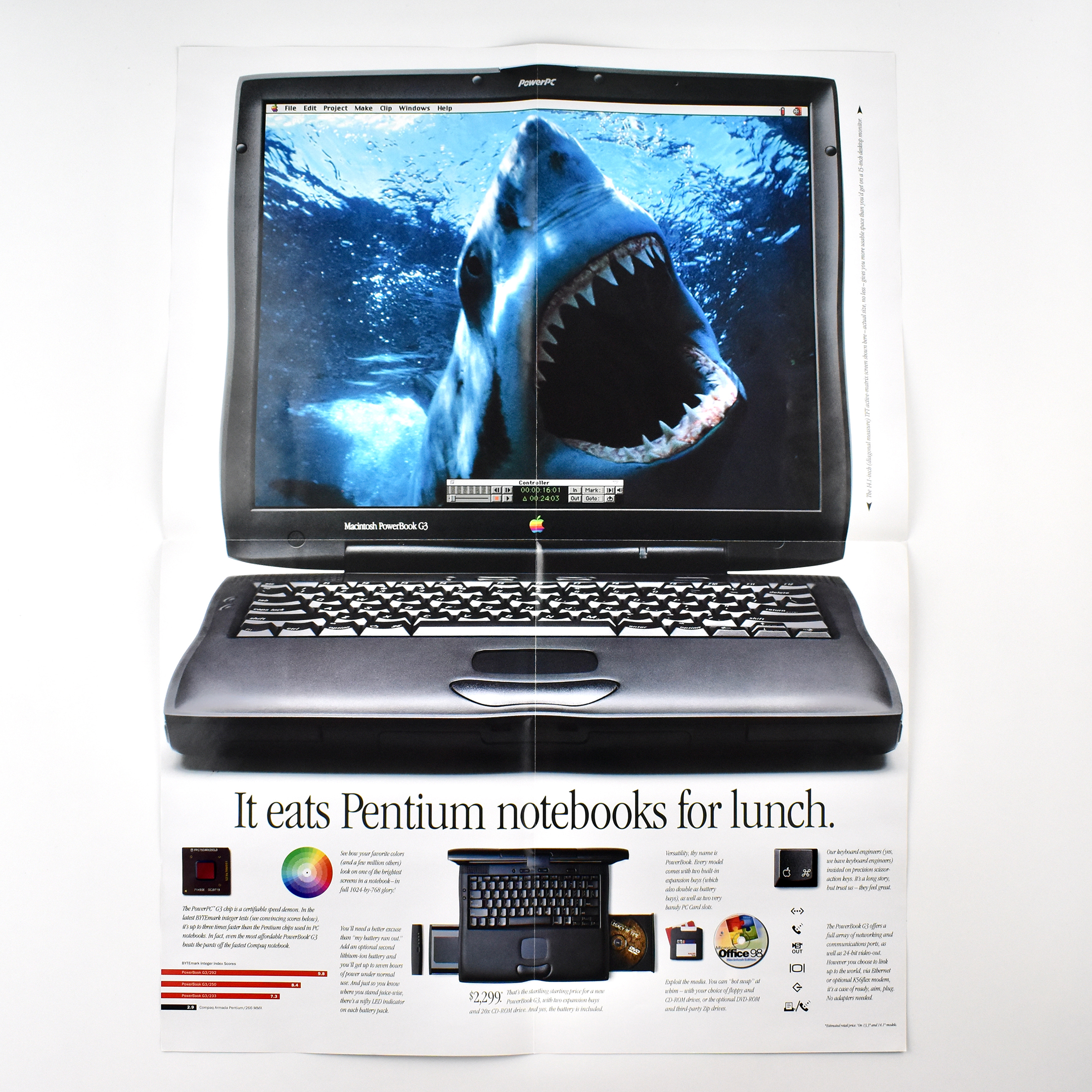
The insert fully opens to reveal a mini-poster with a white background that shows an open PowerBook G3 with a screen showing a shark with teeth bared and the headline, “It eats Pentium notebooks for lunch.”

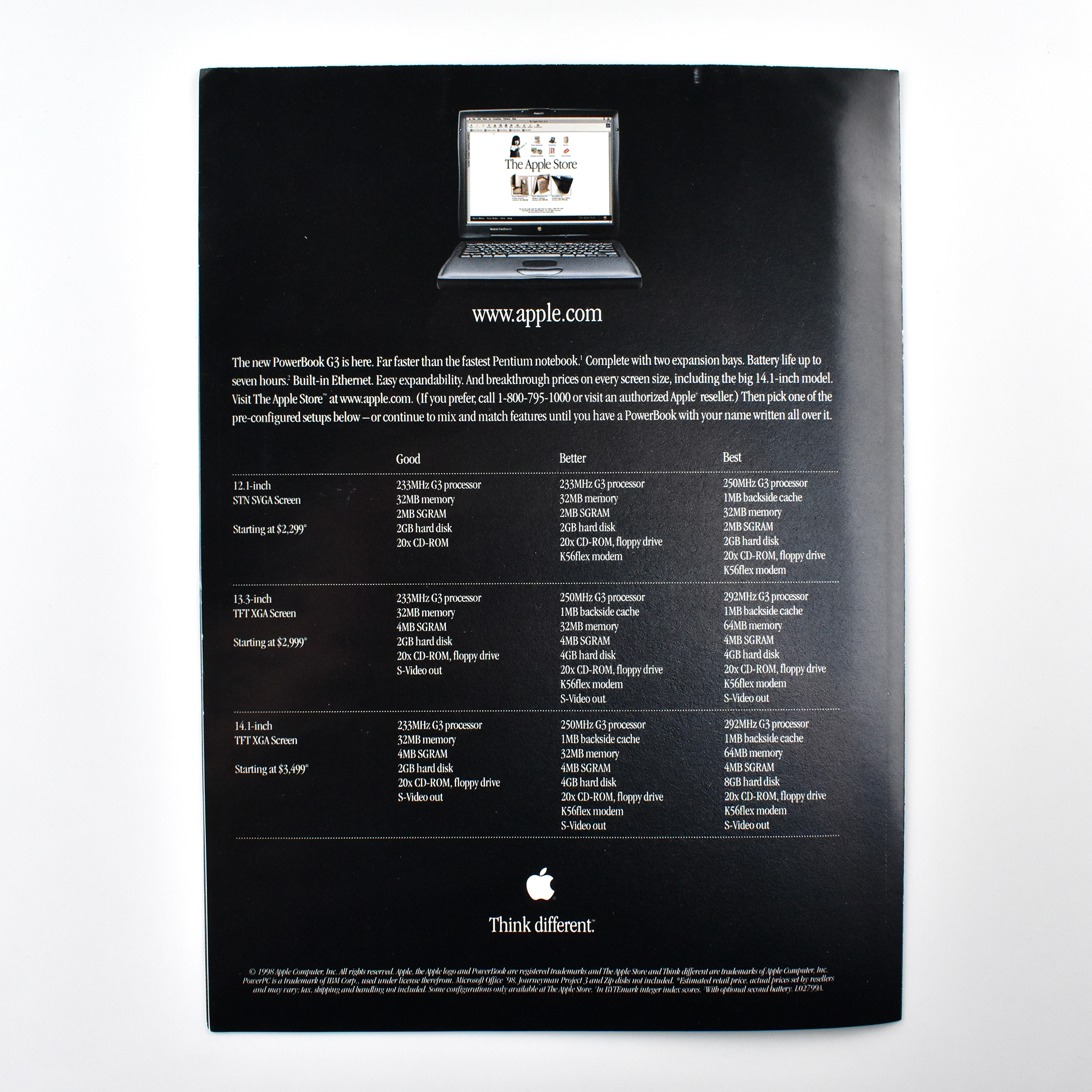
The back page lists product specifications with the headers “Good,” “Better,” and “Best” to represent the three configurations available.

Folded, the size of the insert is 7.5 x 10.25 inches. Fully unfolded the mini-poster is 15 x 20.5 inches.

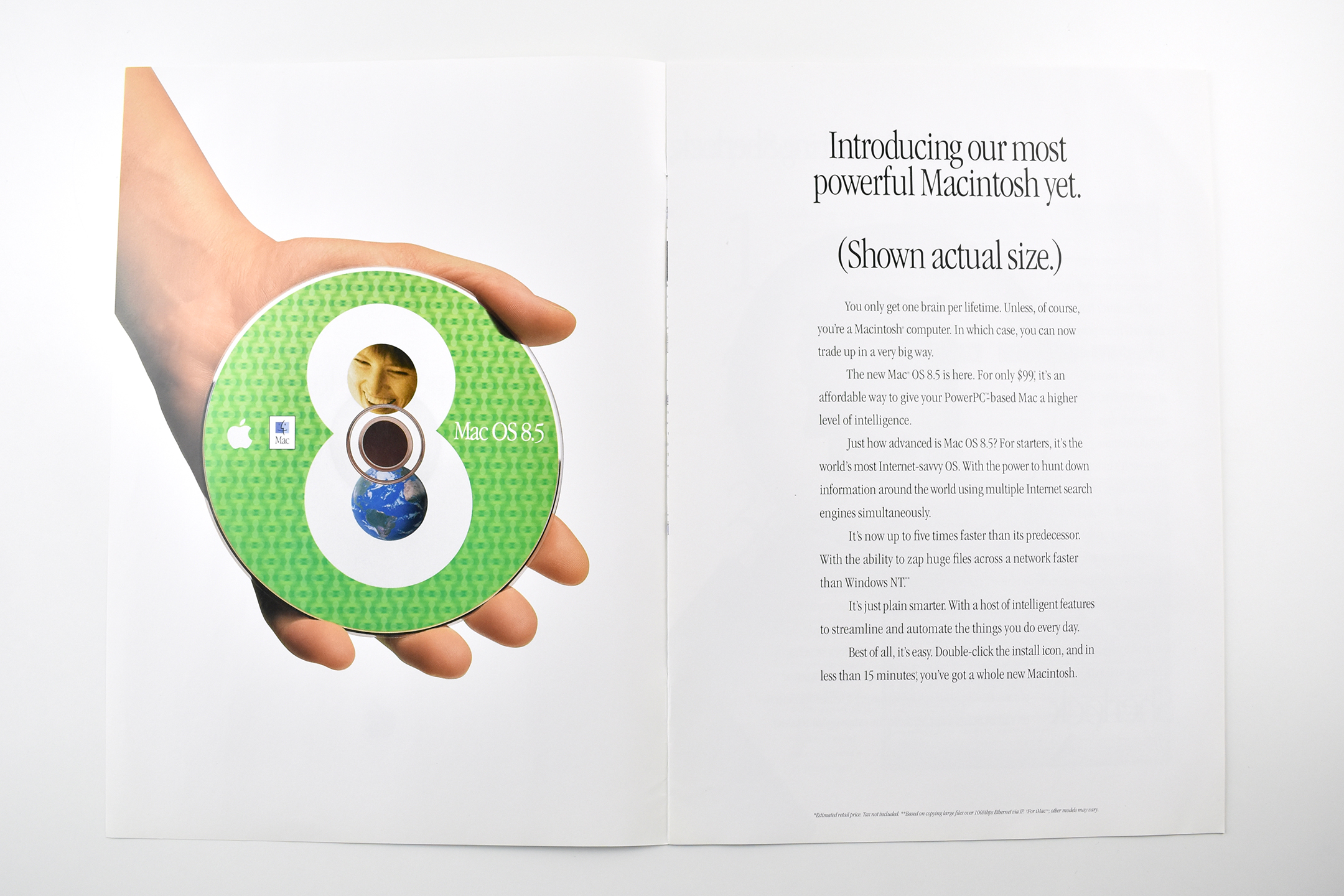
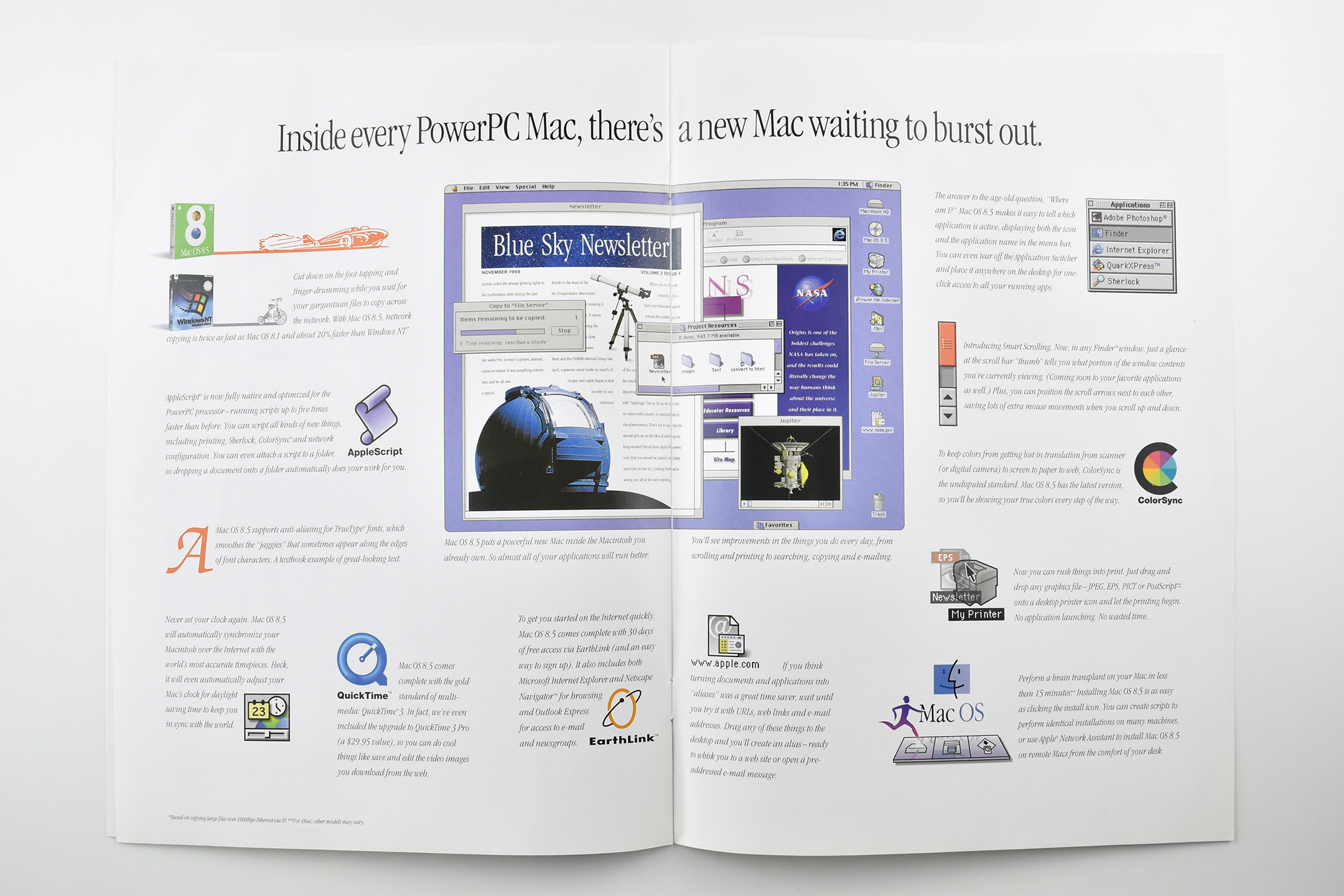
Get a new Mac for $99. magazine insert (Mac OS 8.5, 1998)

In the late 1990s and early 2000s, part of Apple’s print advertising included magazine inserts. These inserts were “mini-magazines” within magazines. They were glued with a pliable rubber cement that could be easily removed.

The front page of this advertisement is just the words (in the Apple Garamond font) “Get a new Mac for $99.” with the Apple logo.

The 8-page folded and stapled insert opens to the first 2-page spread showing a Mac OS 8.5 CD in a hand with the headline, “Introducing our most powerful Macintosh yet. (Shown actual size.).” The center spread highlights Sherlock, Apple’s then-new search tool. The final spread highlights new Mac OS features for PowerPC Mac models.

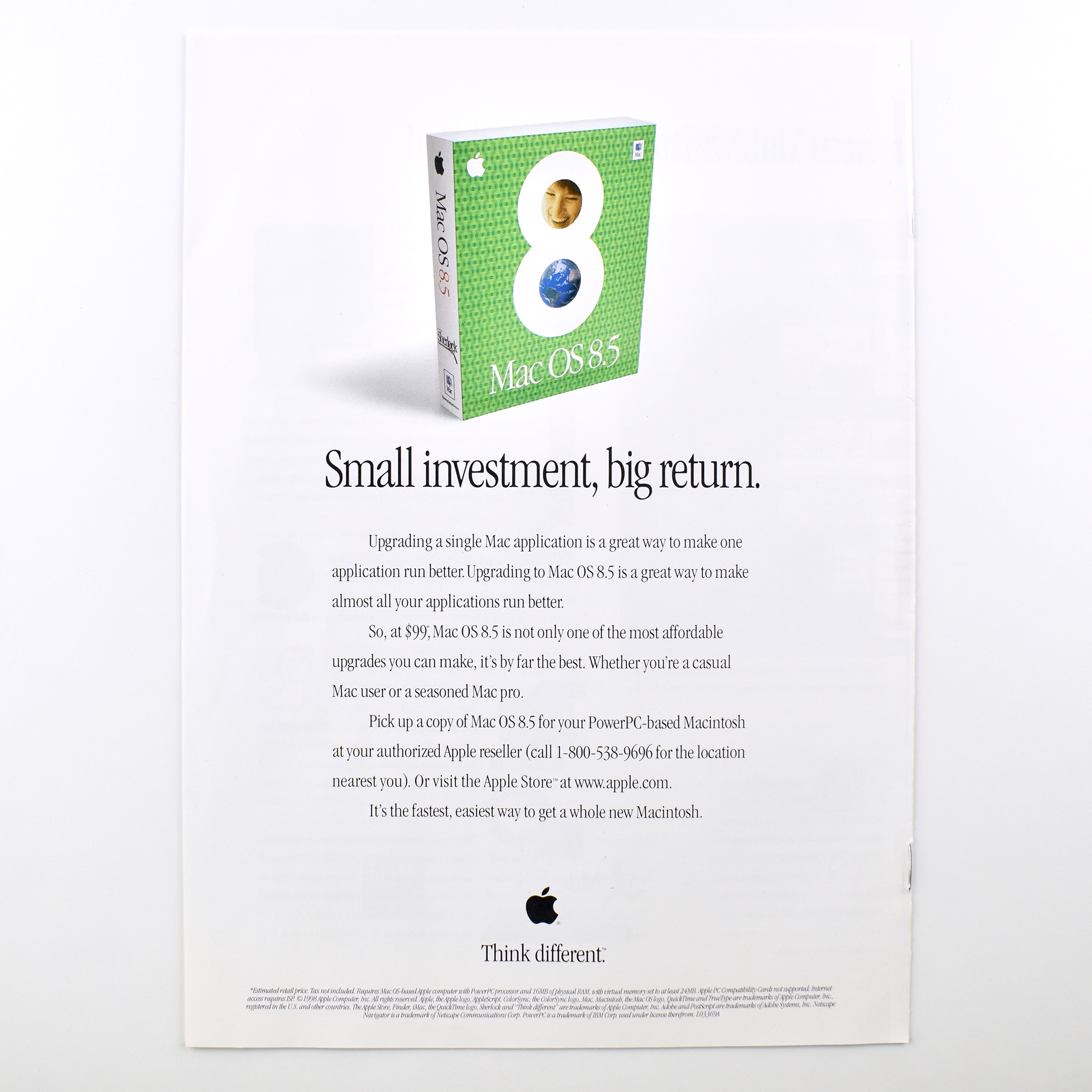
The back cover shows the software box and the headline, “Small investment, big return.”

Folded, the size of the insert is 7.5 x 10.5 inches.

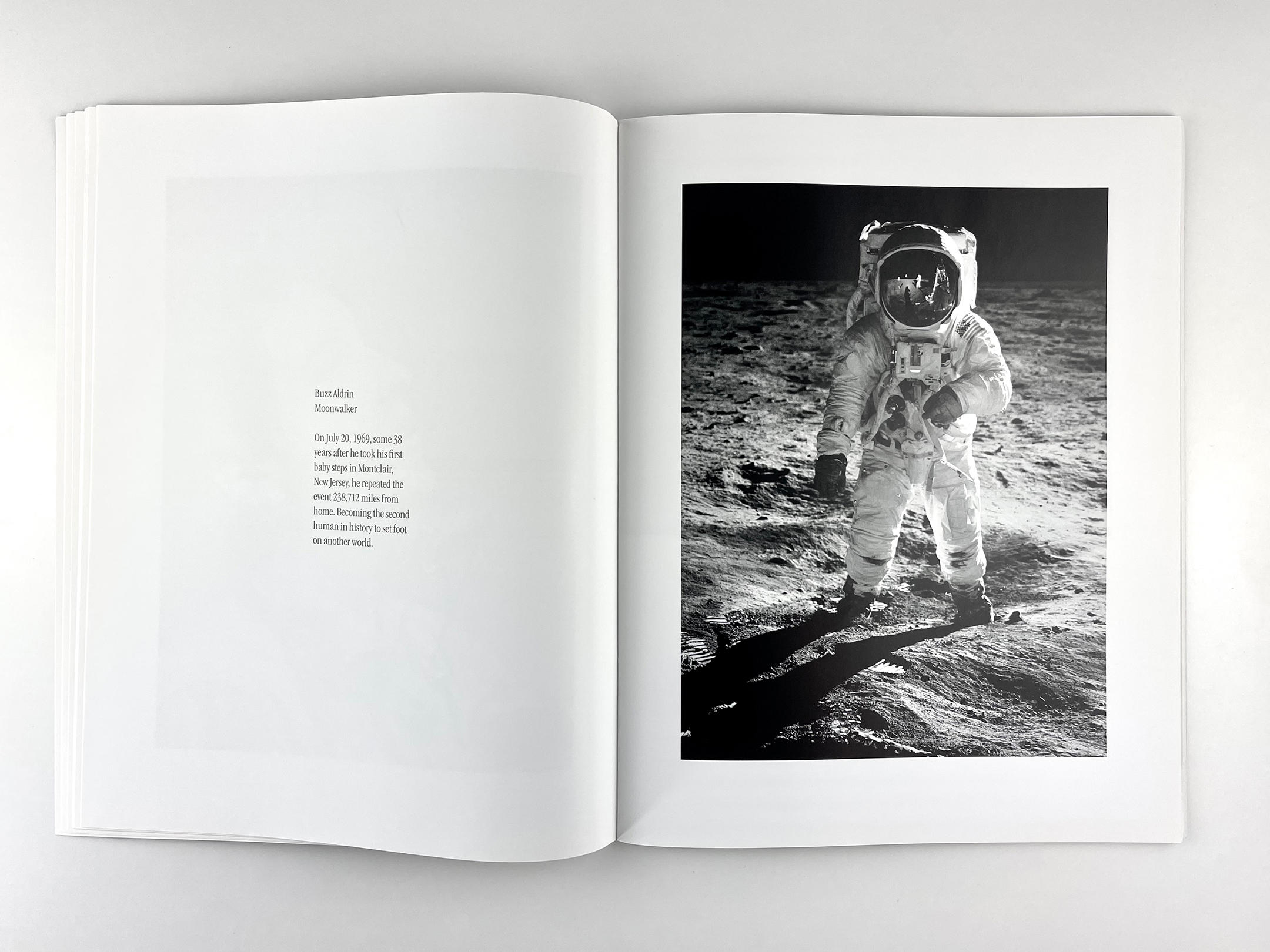
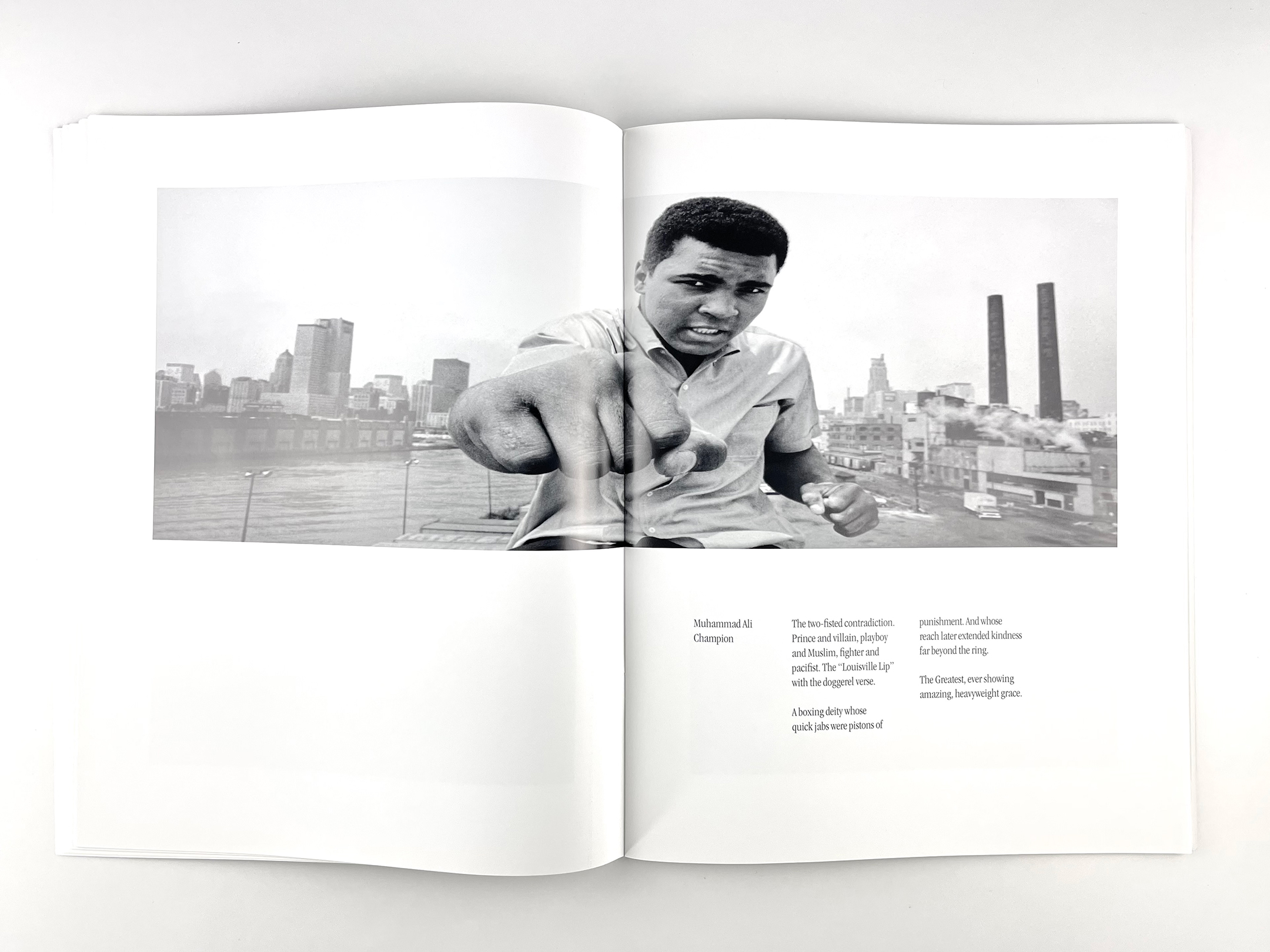
1998: The Year of Thinking Different. book (1998)

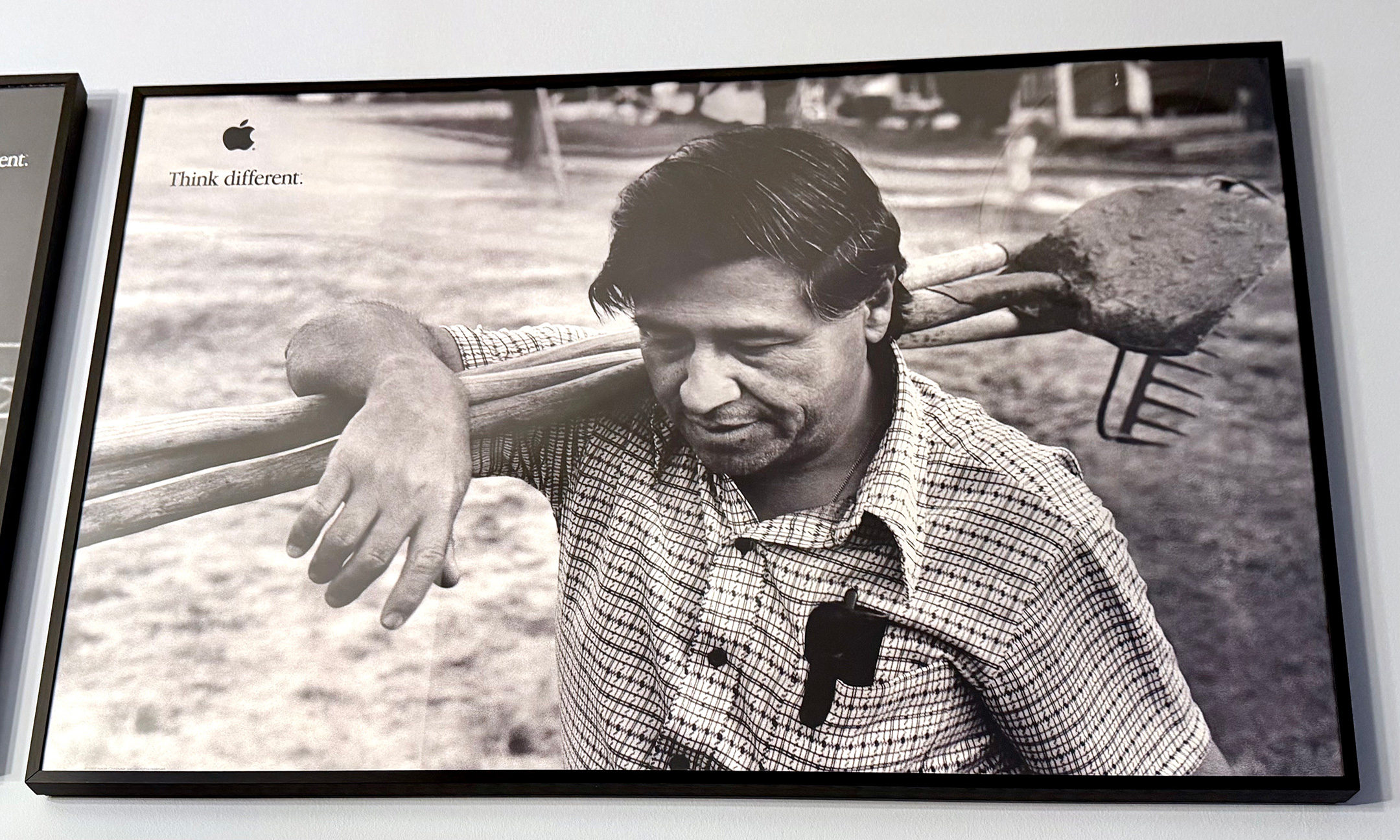
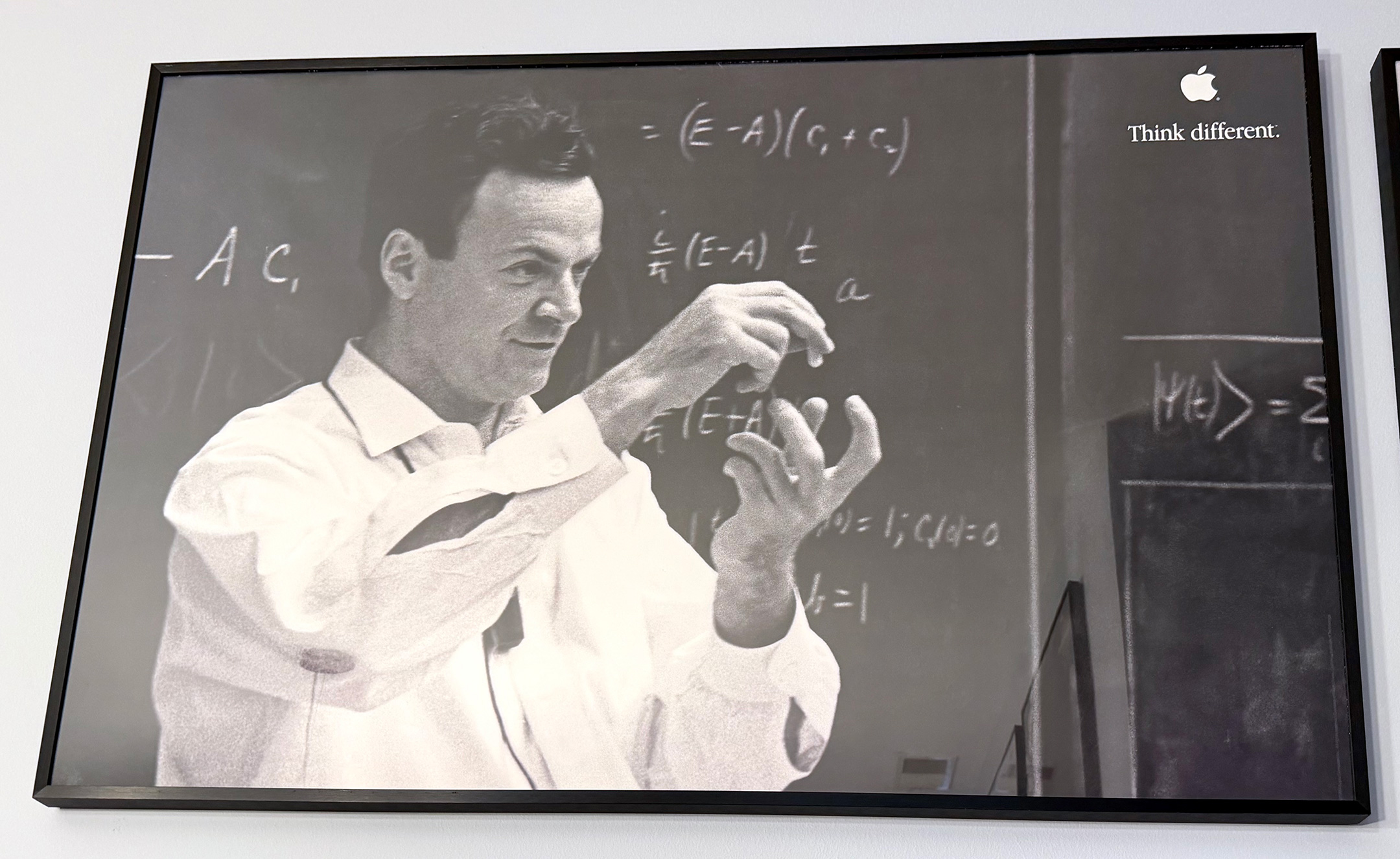
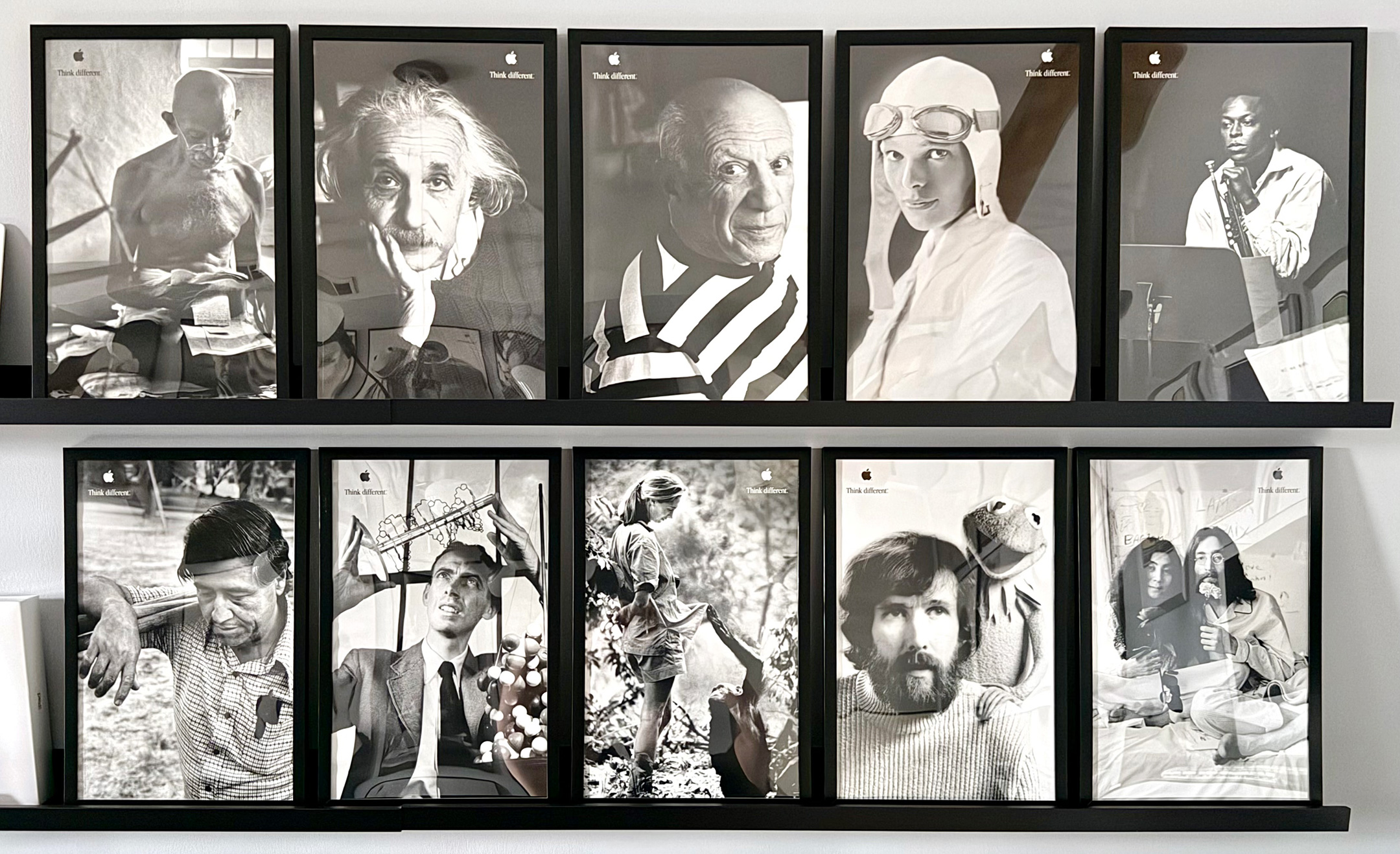
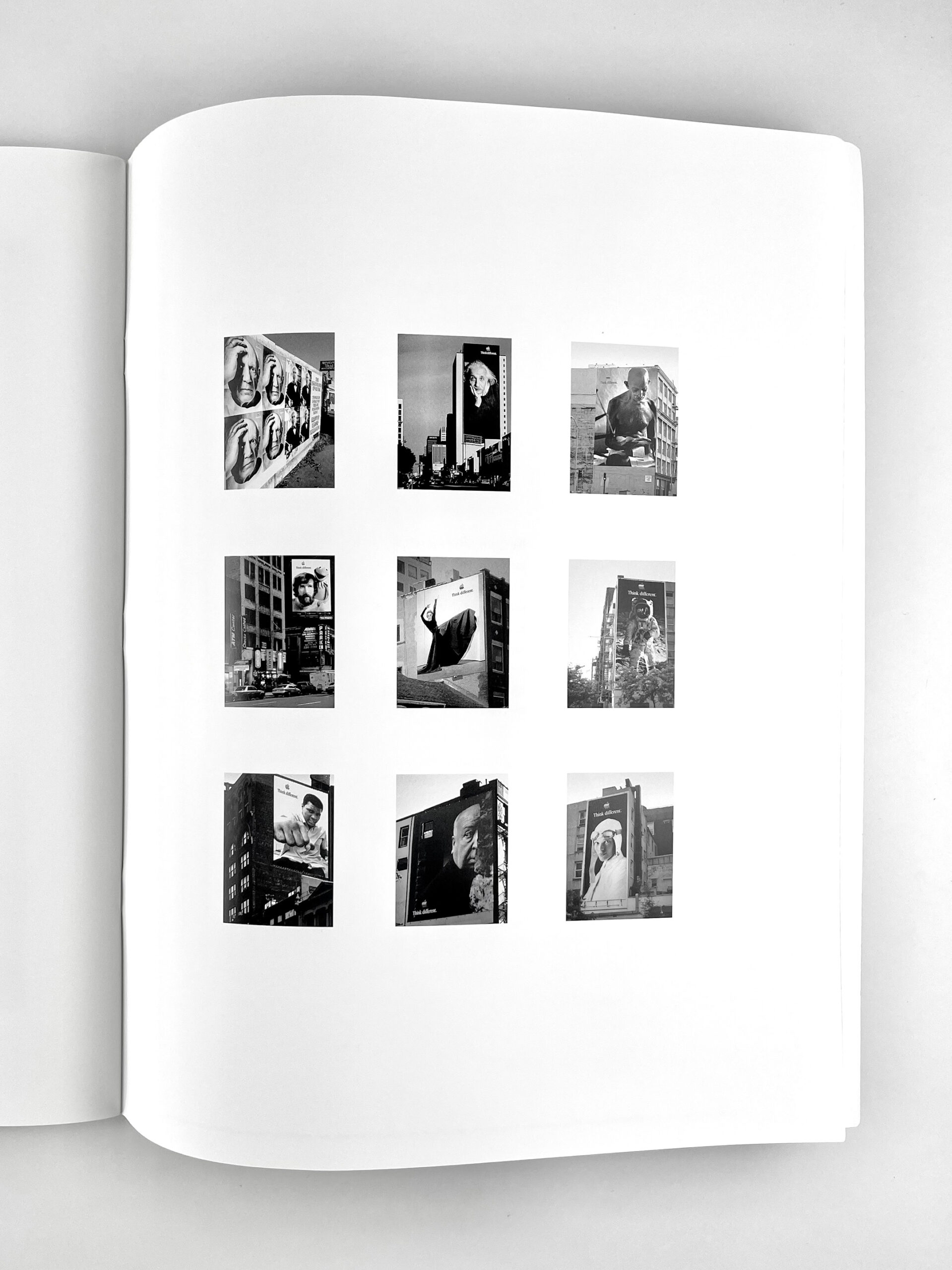
With a foreword by Steve Jobs, the book “1998: The Year of Thinking Different.” features the Think different manifesto and two-page layouts of many of the Apple Geniuses (cultural icons) featured in the Think different series.

The book begins with the full Think different “manifesto” in a 2-page layout:

The book includes the following Apple Geniuses:

Albert Einstein
Mahatma Gandhi
Pablo Picasso
Alfred Hitchcock
Rosa Parks
Bob Dylan
Buzz Aldrin
Muhammad Ali
Thomas Edison
Martha Graham
Jim Henson
Maria Callas
Dalai Lama
Amelia Earhart
Ansel Adams
Joan Baez
Paul Rand
Miles Davis
Lucille Ball & Desi Arnaz
John Lennon & Yoko Ono

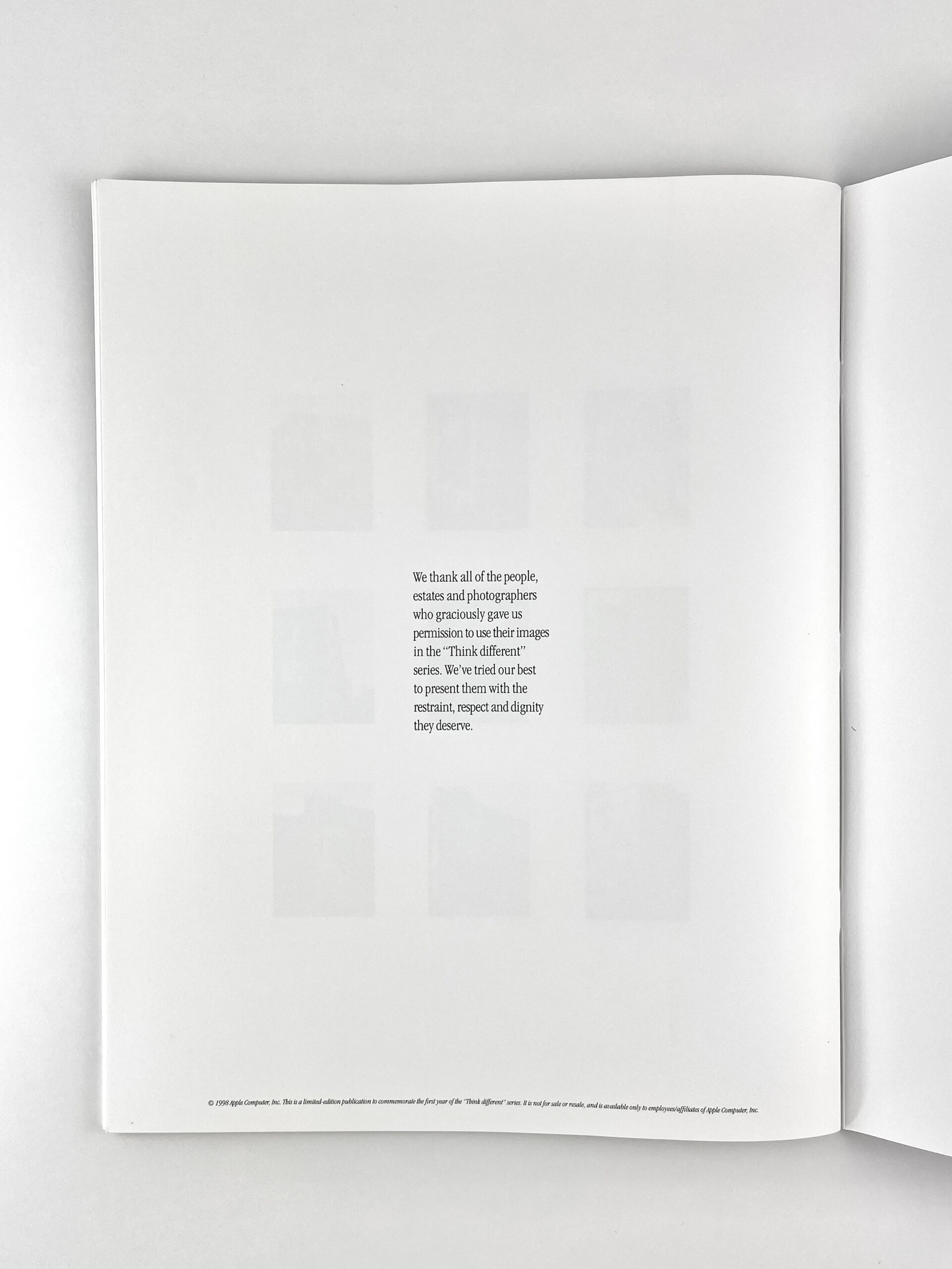
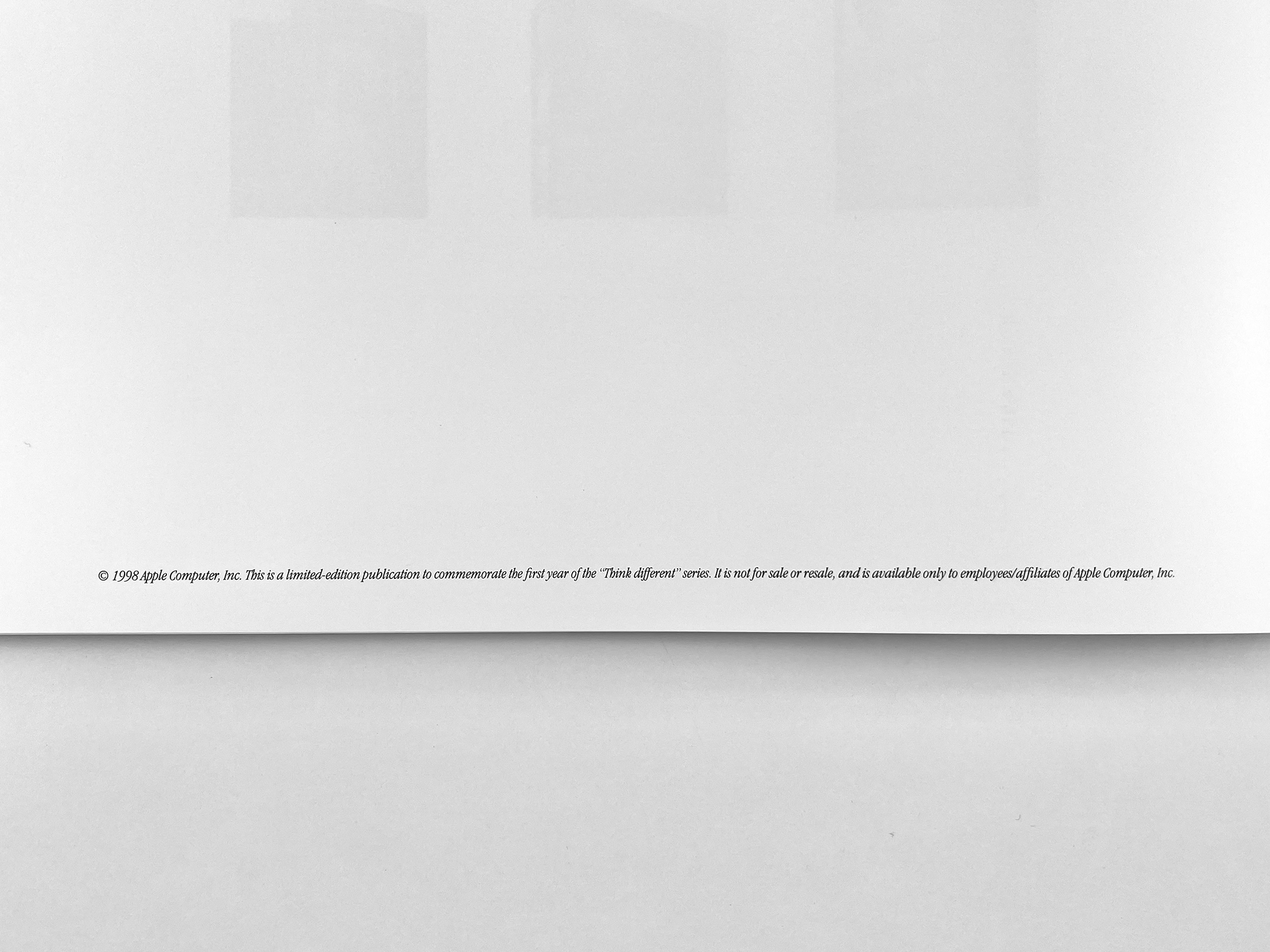
The final page of the book states, “This is a limited-edition publication to commemorate the first year of the ‘Think different’ series. It is not for sale or resale, and is only available to employees/affiliates of Apple Computer, Inc.”

The book is paperback, measures 11 x 14 inches, and is printed in black and white.

Source: Apple (this book)

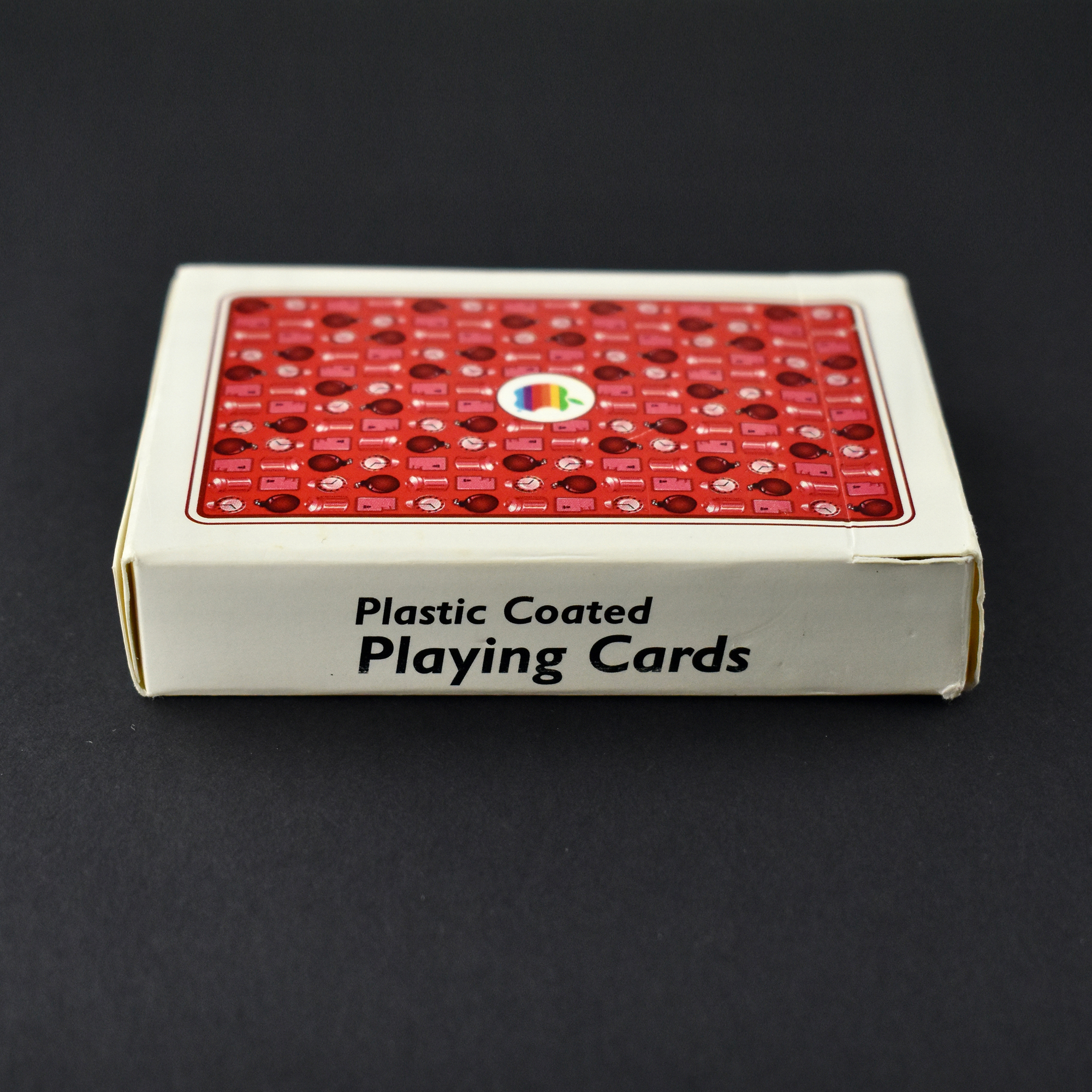
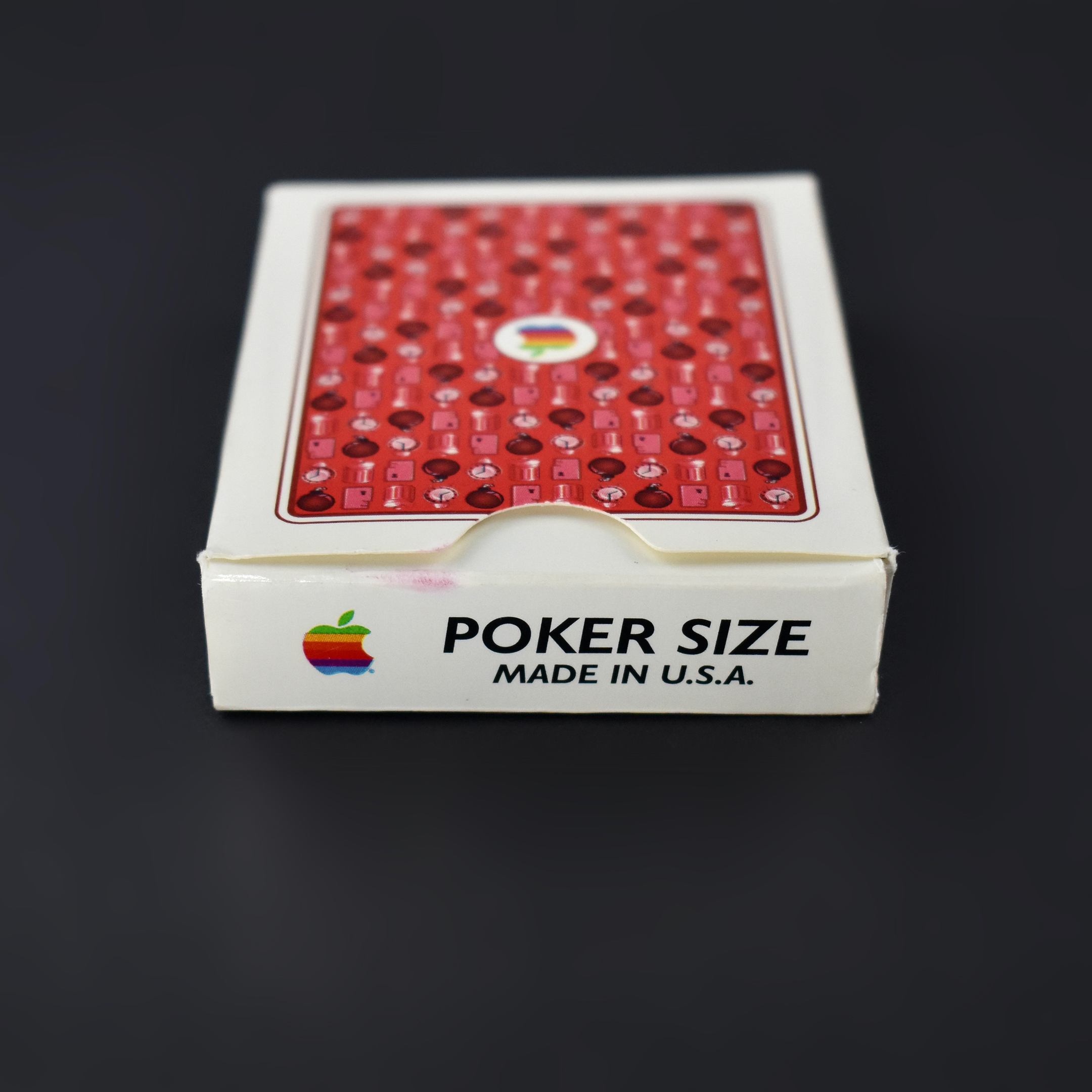
Plastic Coated Playing Cards (poker size, c. 1998)

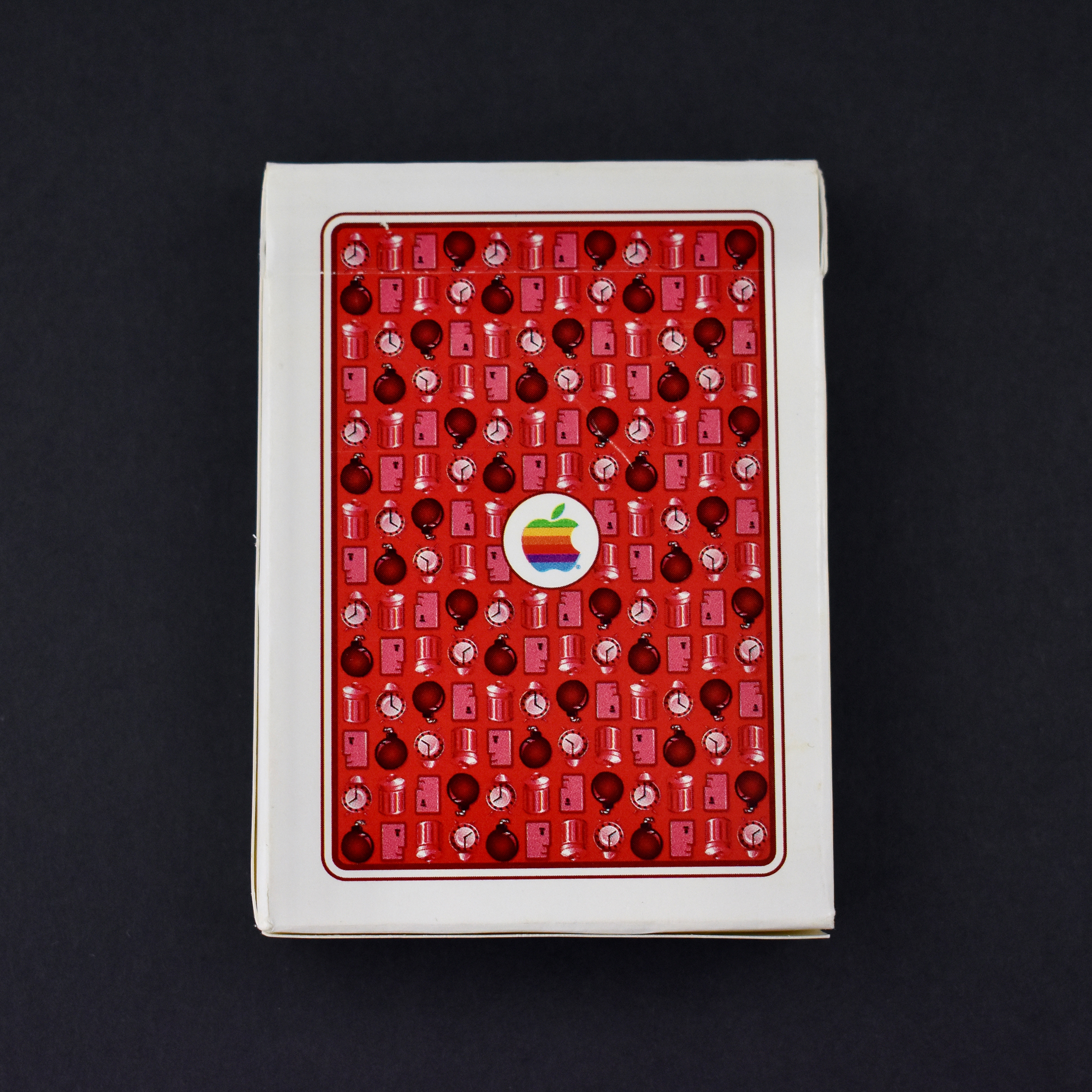
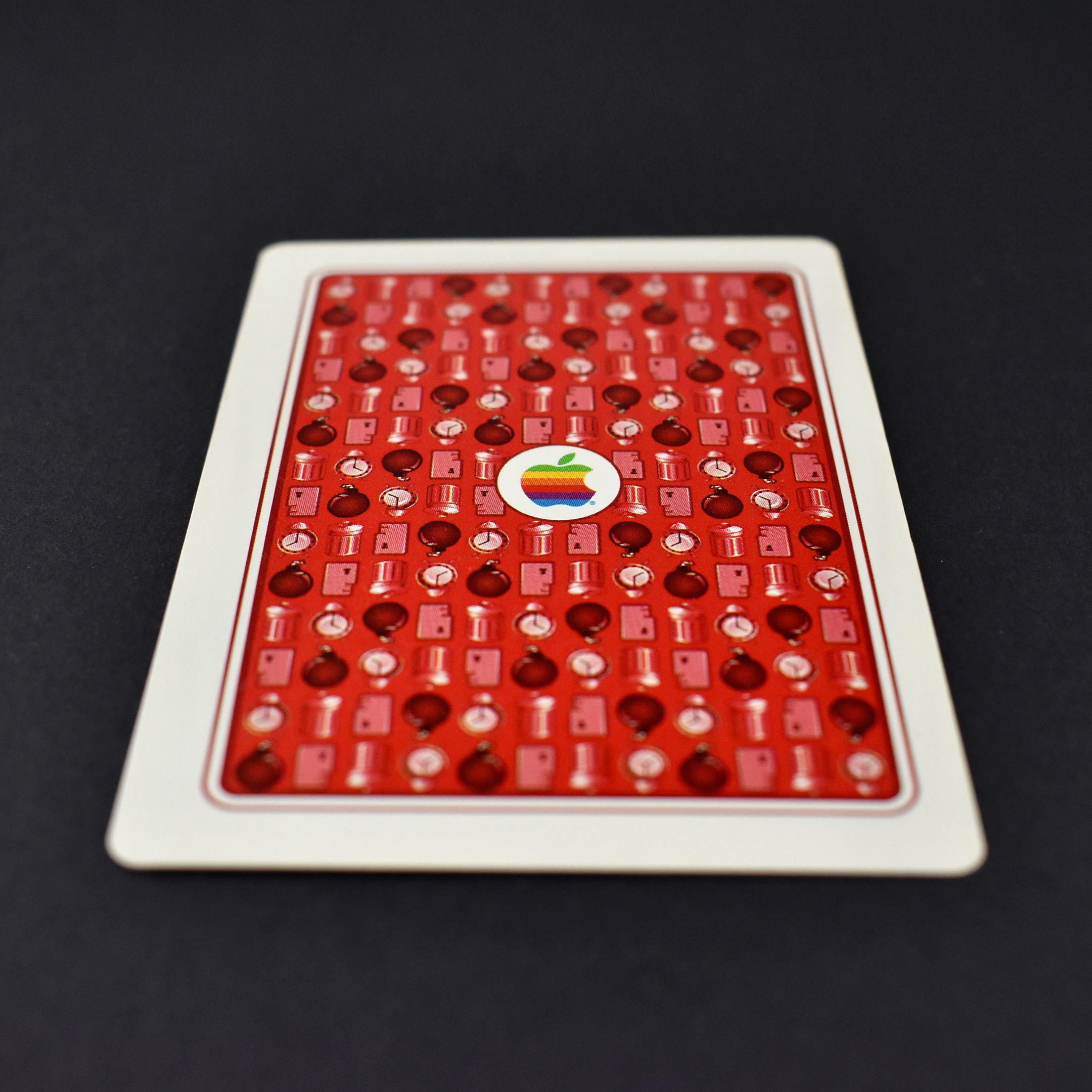
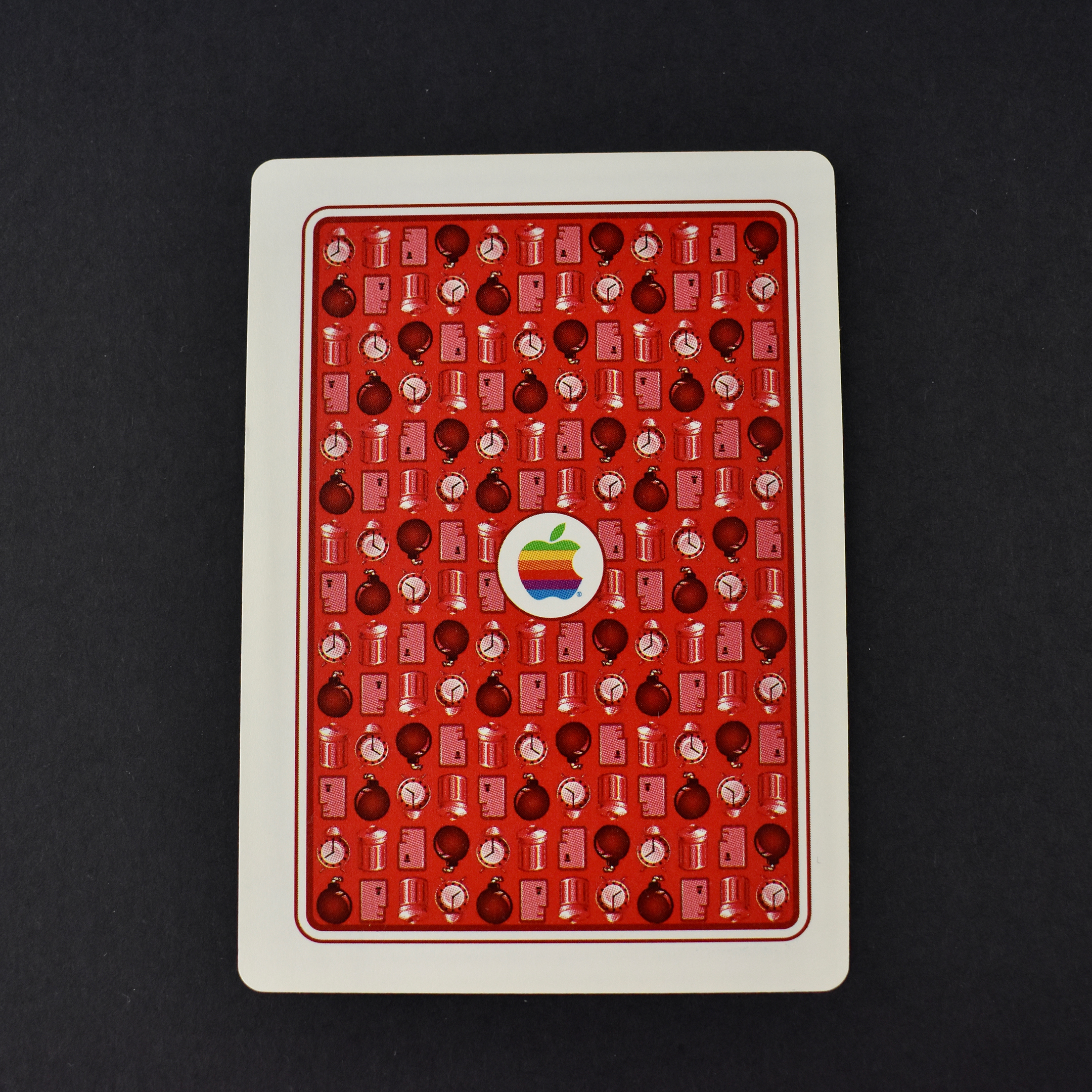
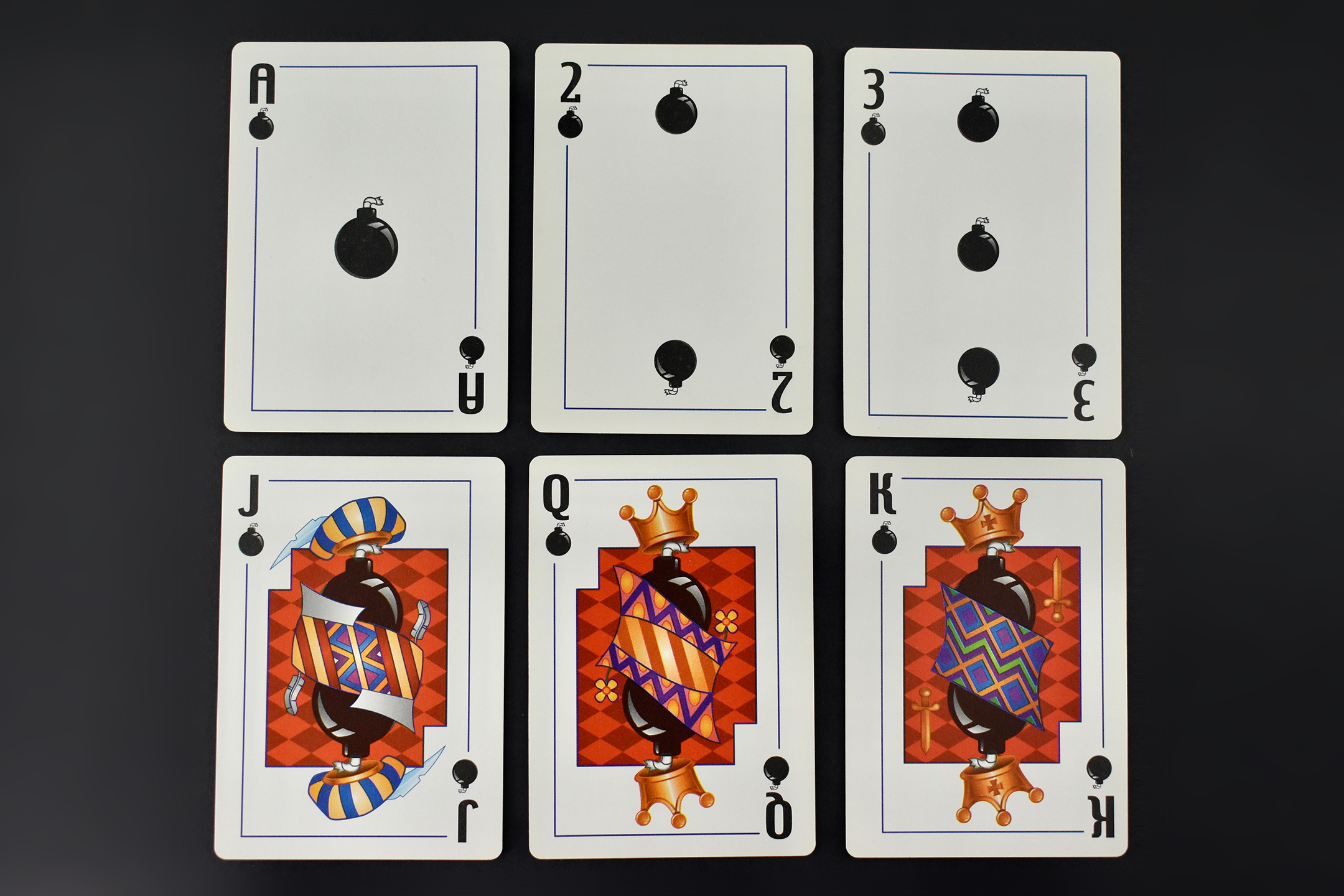
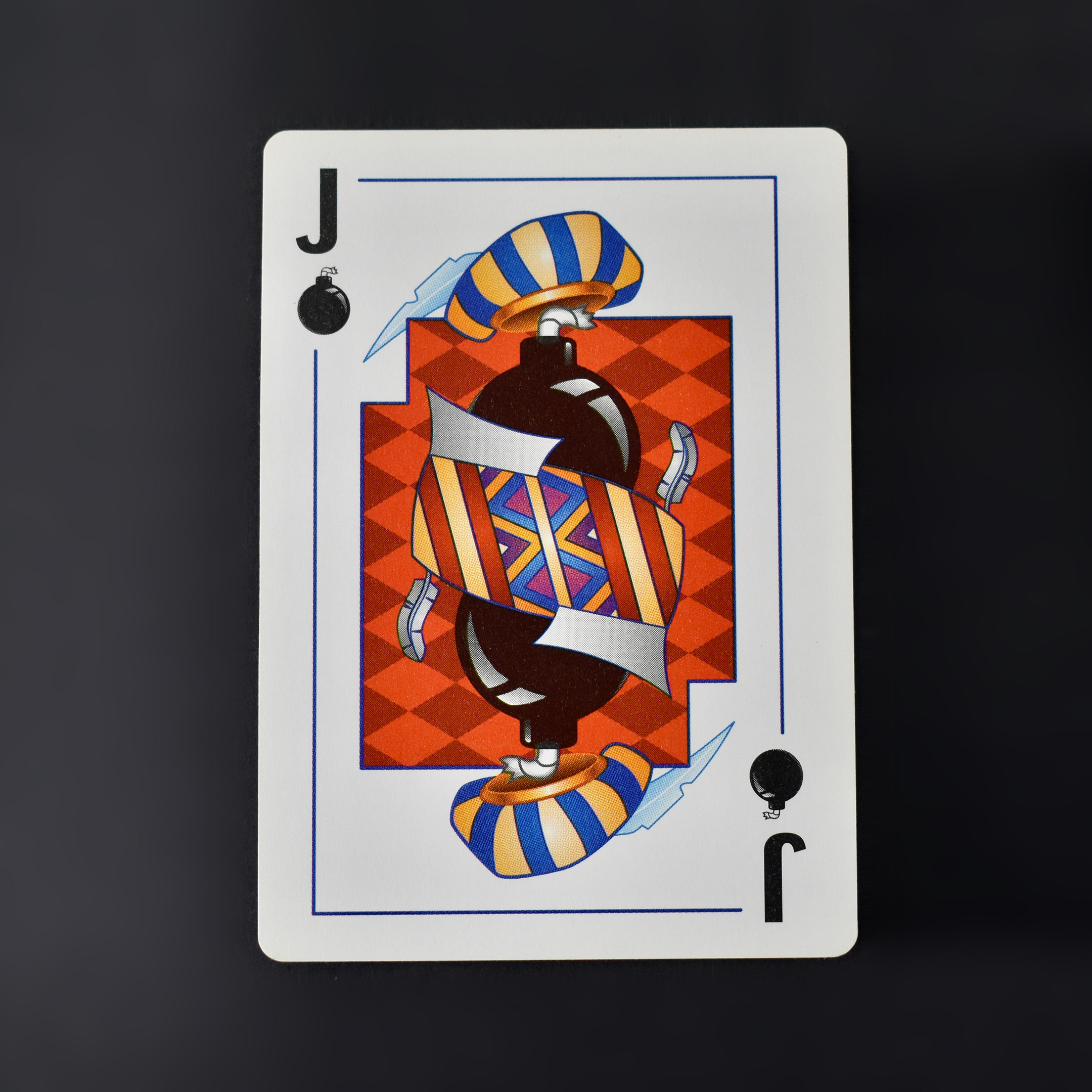
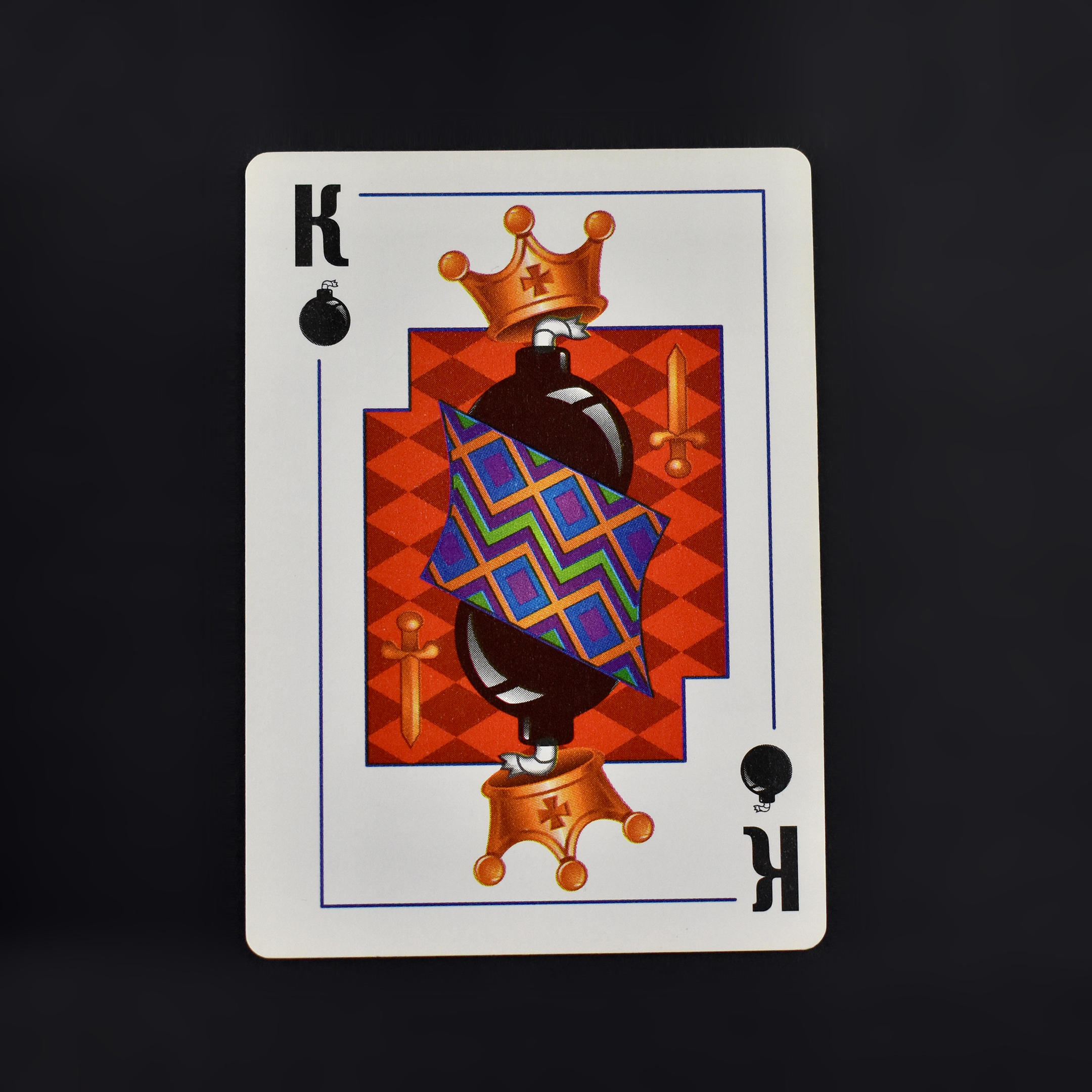
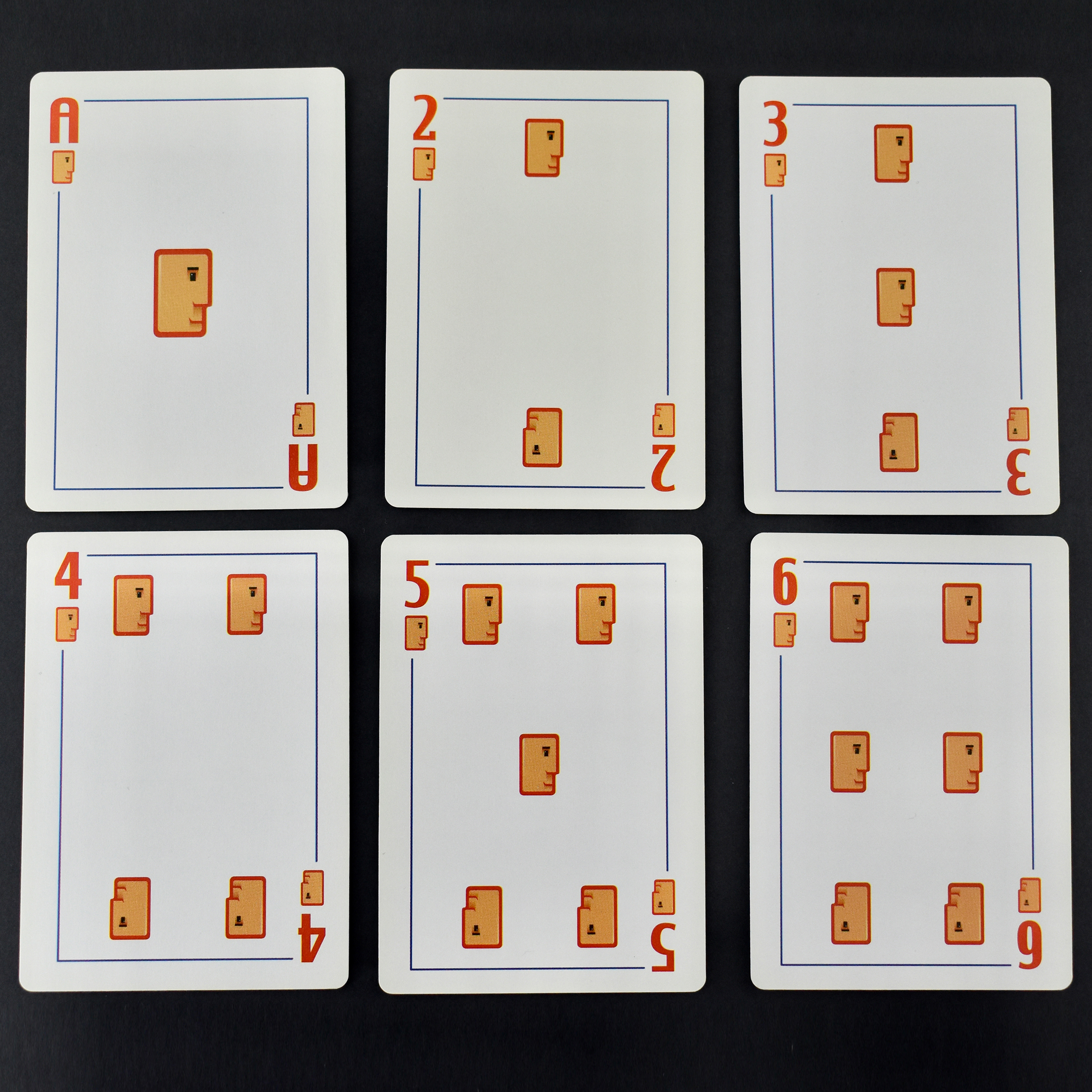
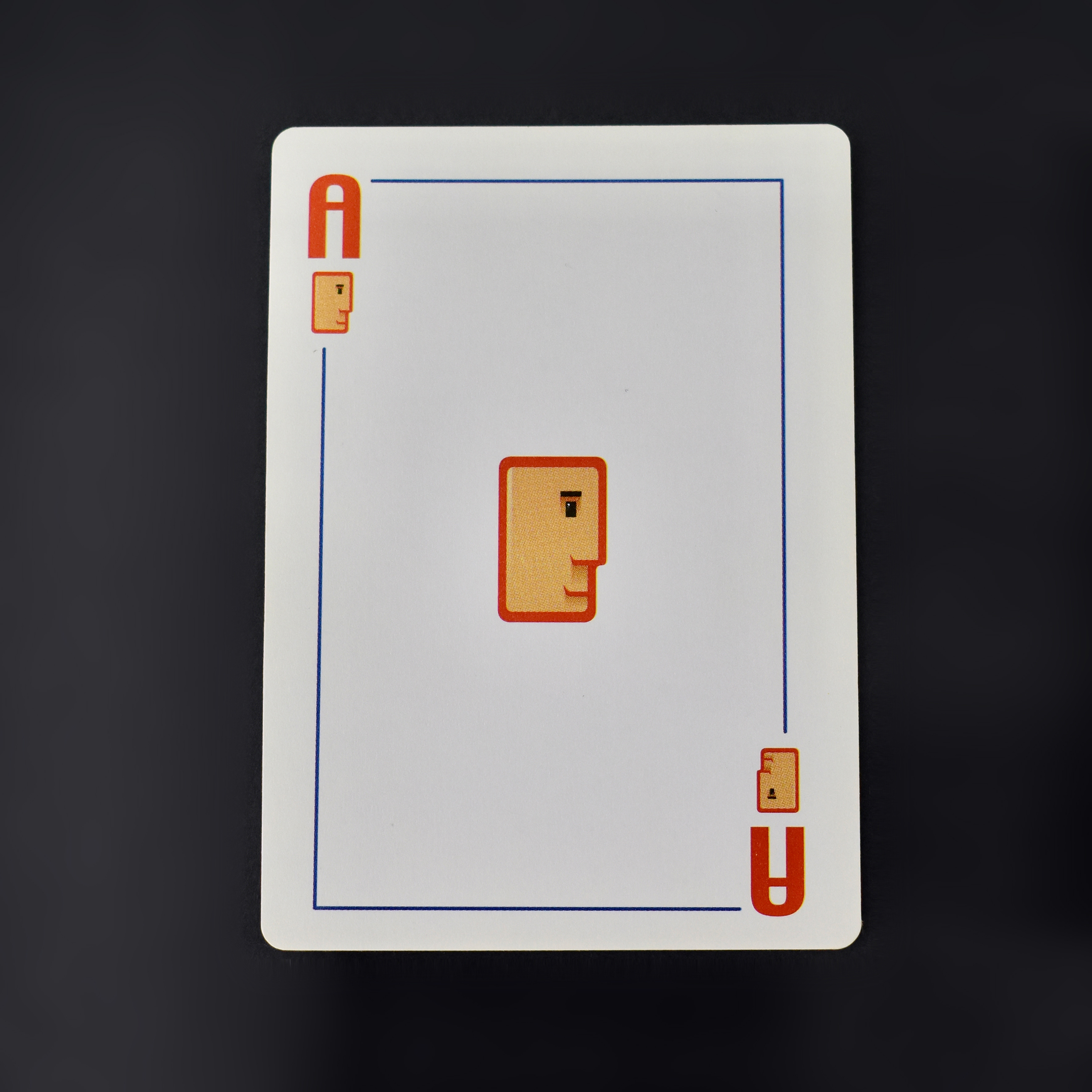
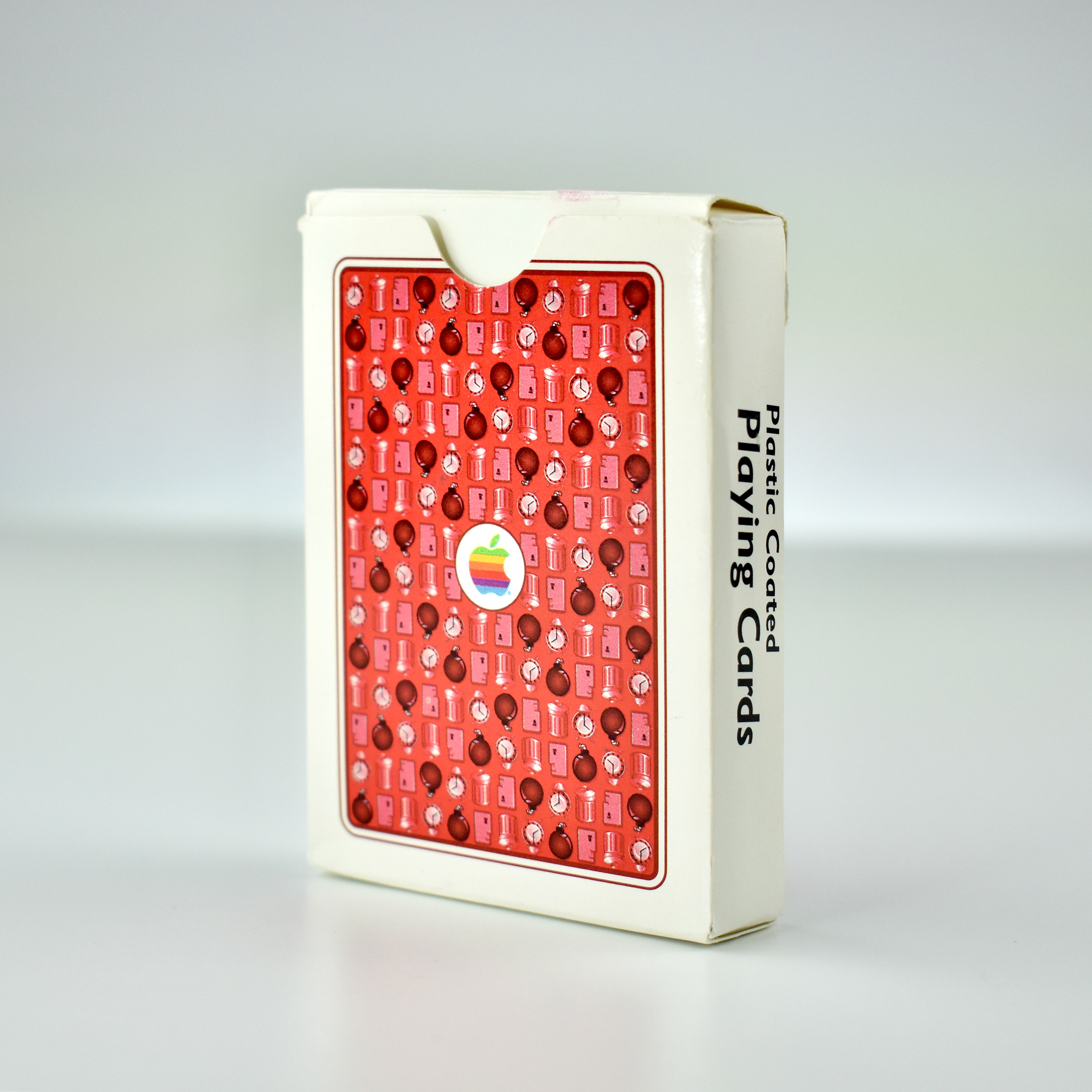
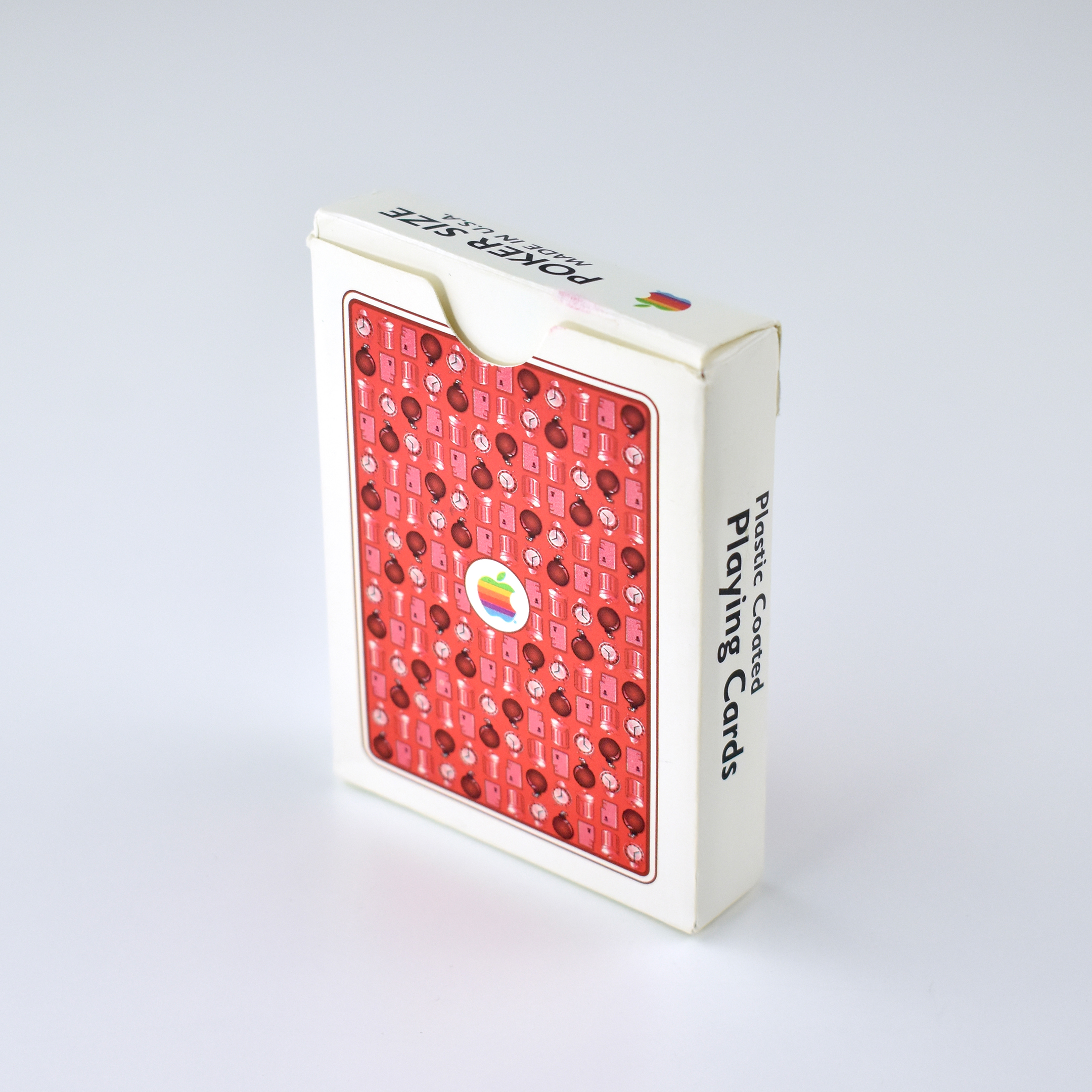
These Apple playing cards feature Macintosh operating system imagery reminiscent of Mac OS 8 and the never-released Rhapsody operating system of the mid- to late-1990s. At the time, Mac OS 8 (beginning with Mac OS 8.5) used 32-bit icons and supported 24-bit color (16.7 million colors). The design of the playing cards uses the design aesthetic of the time, but the art does not appear pixelated.

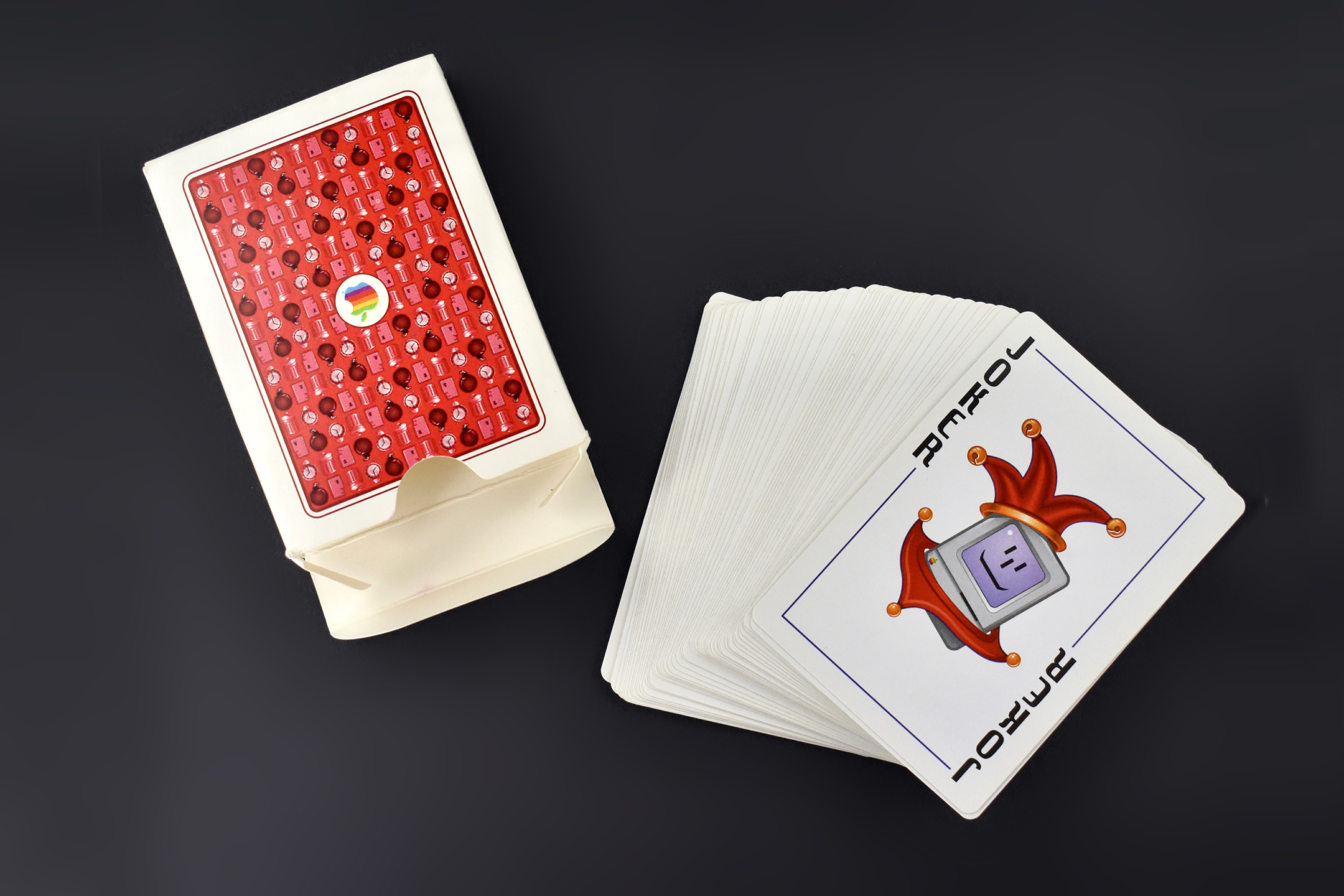
The playing cards originally shipped in a plastic wrapper with a plastic pull that allowed for easy unwrapping. Although this deck is not sealed, photos of sealed decks show the plastic pull printed with “HOYLE,” the card manufacturer, in gold.

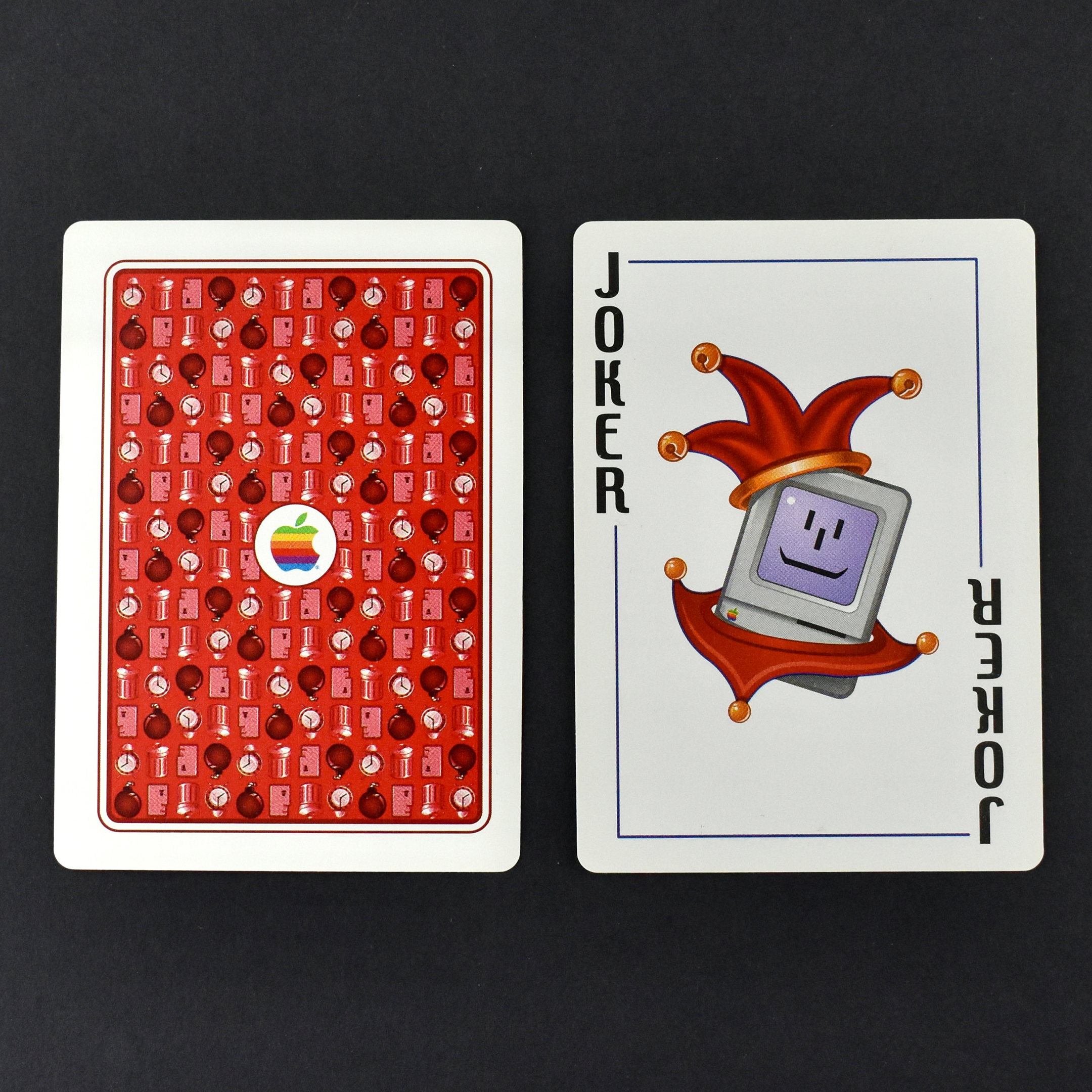
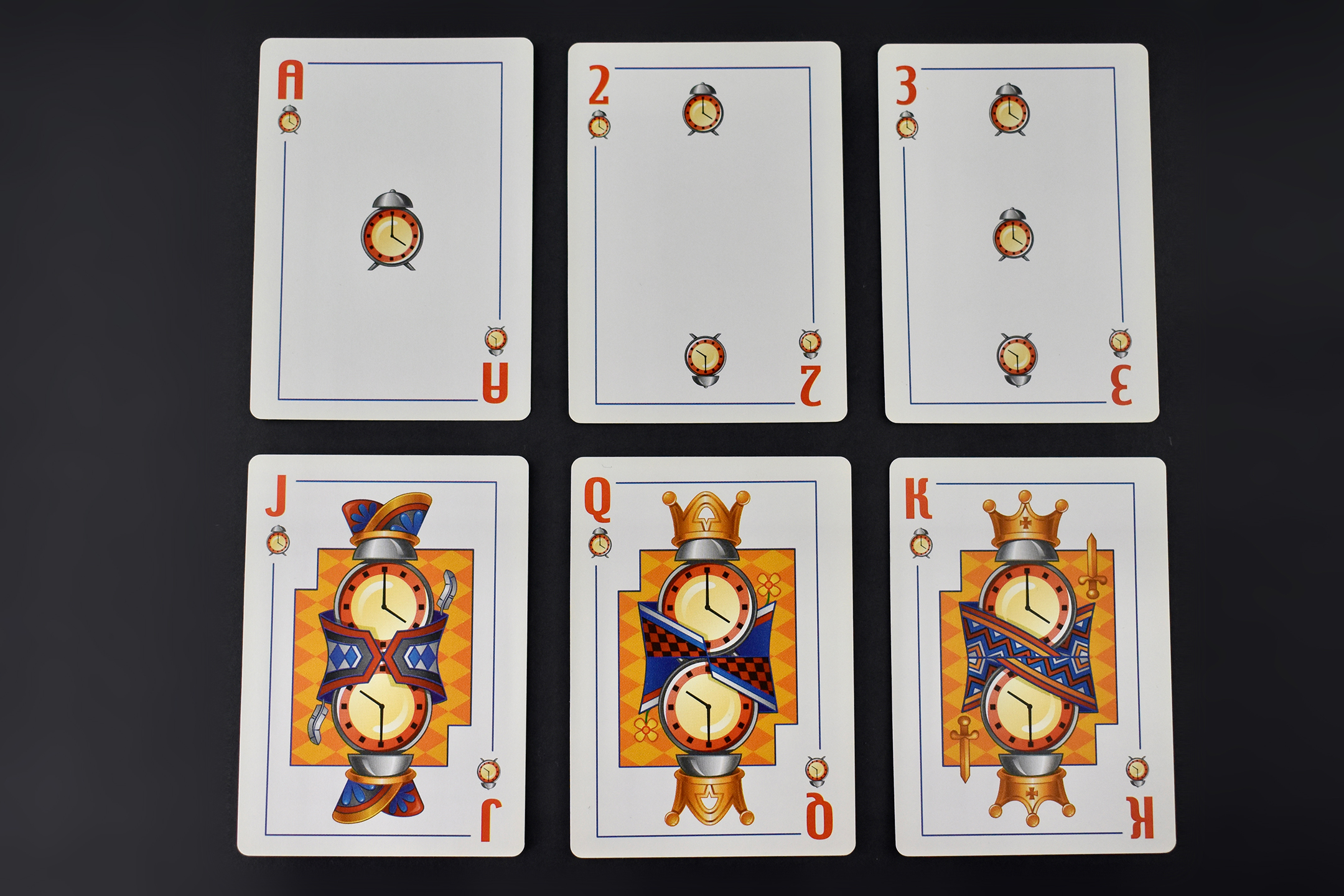
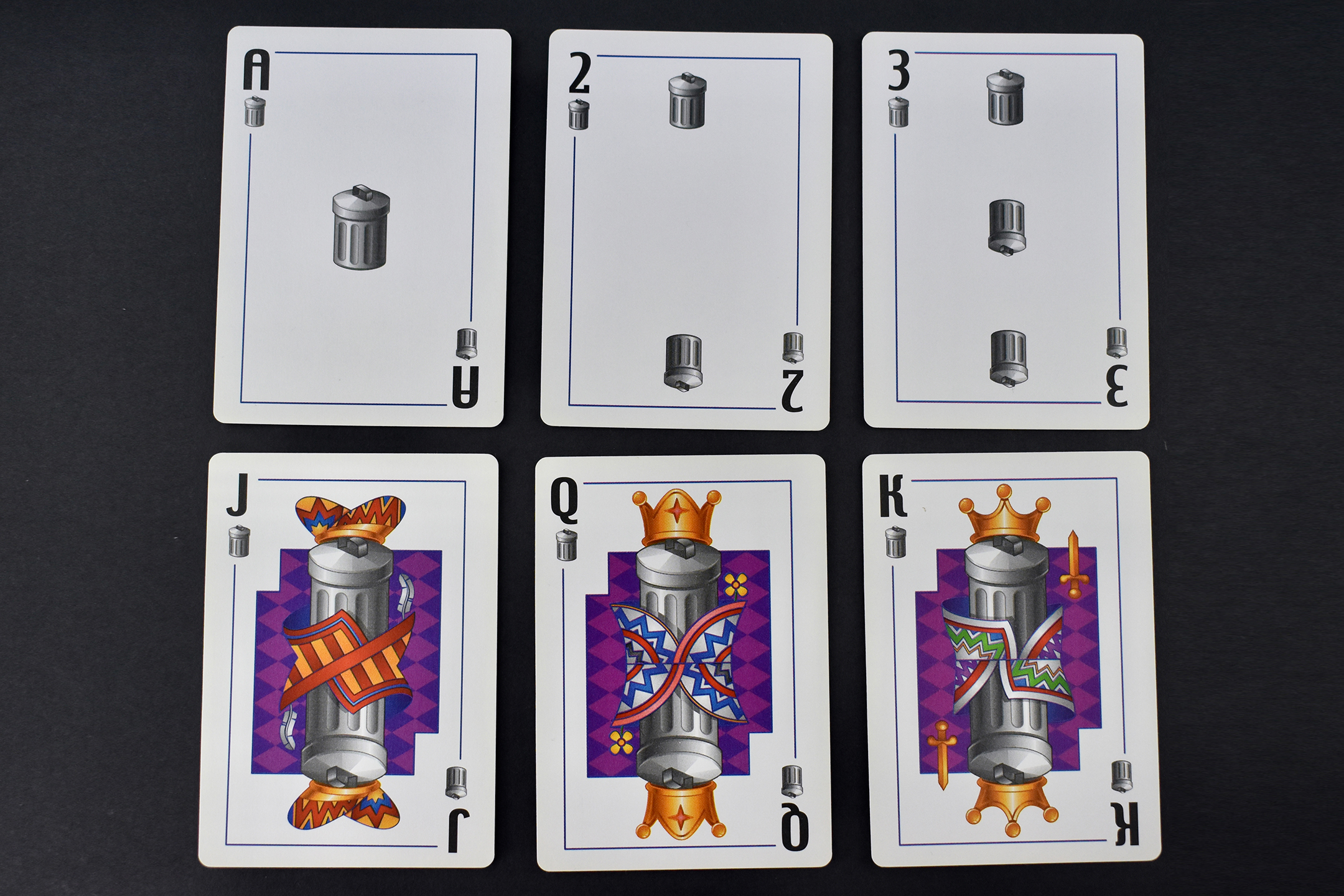
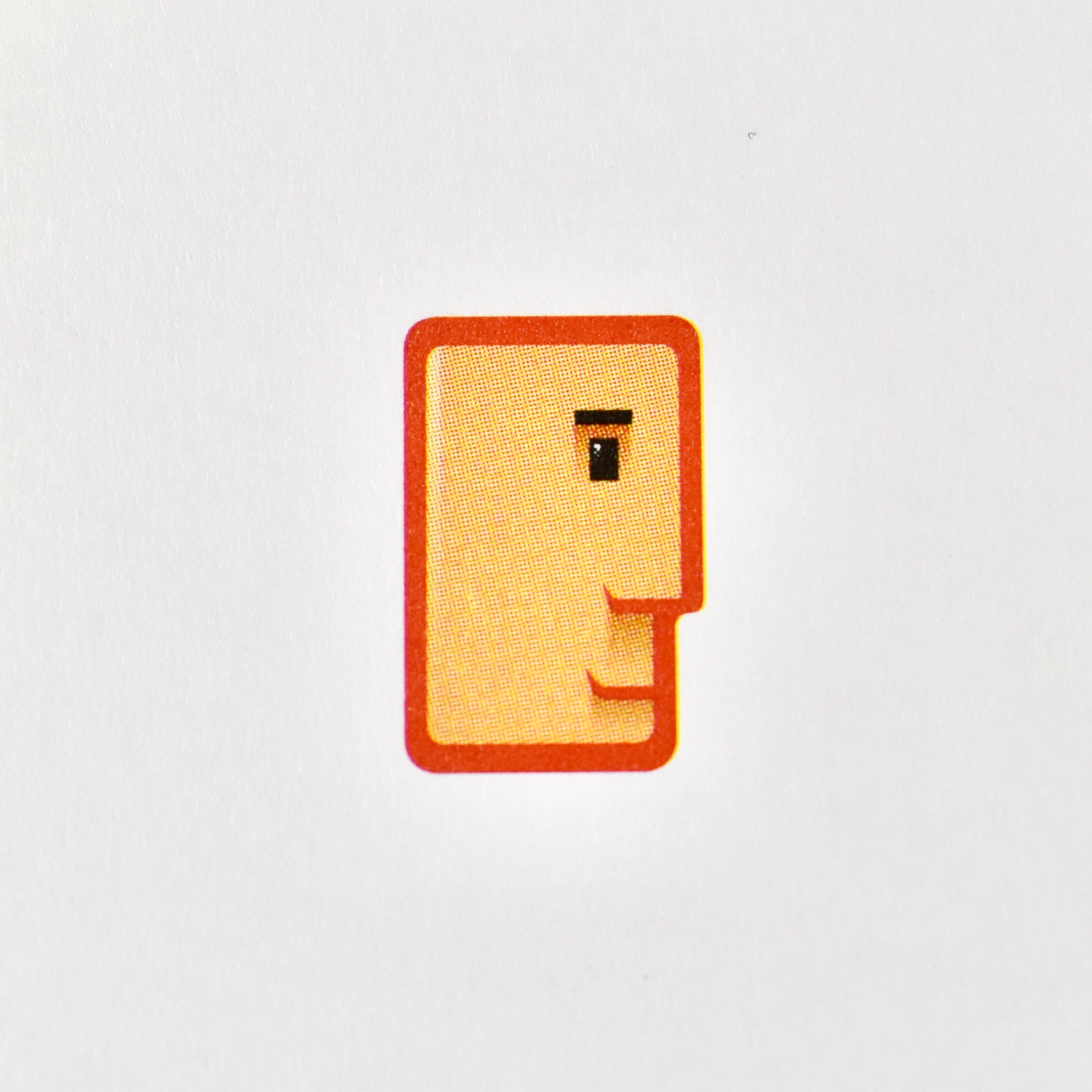
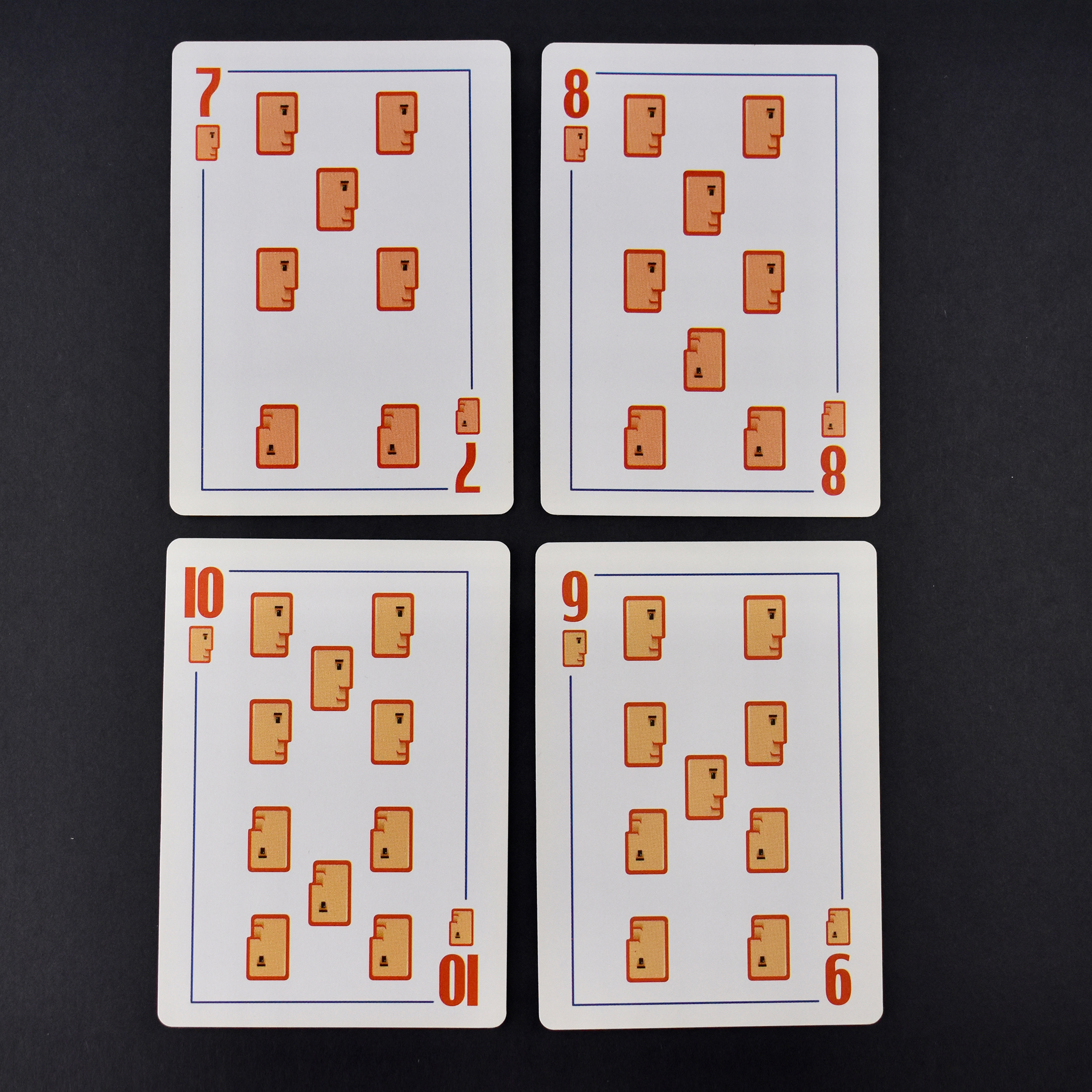
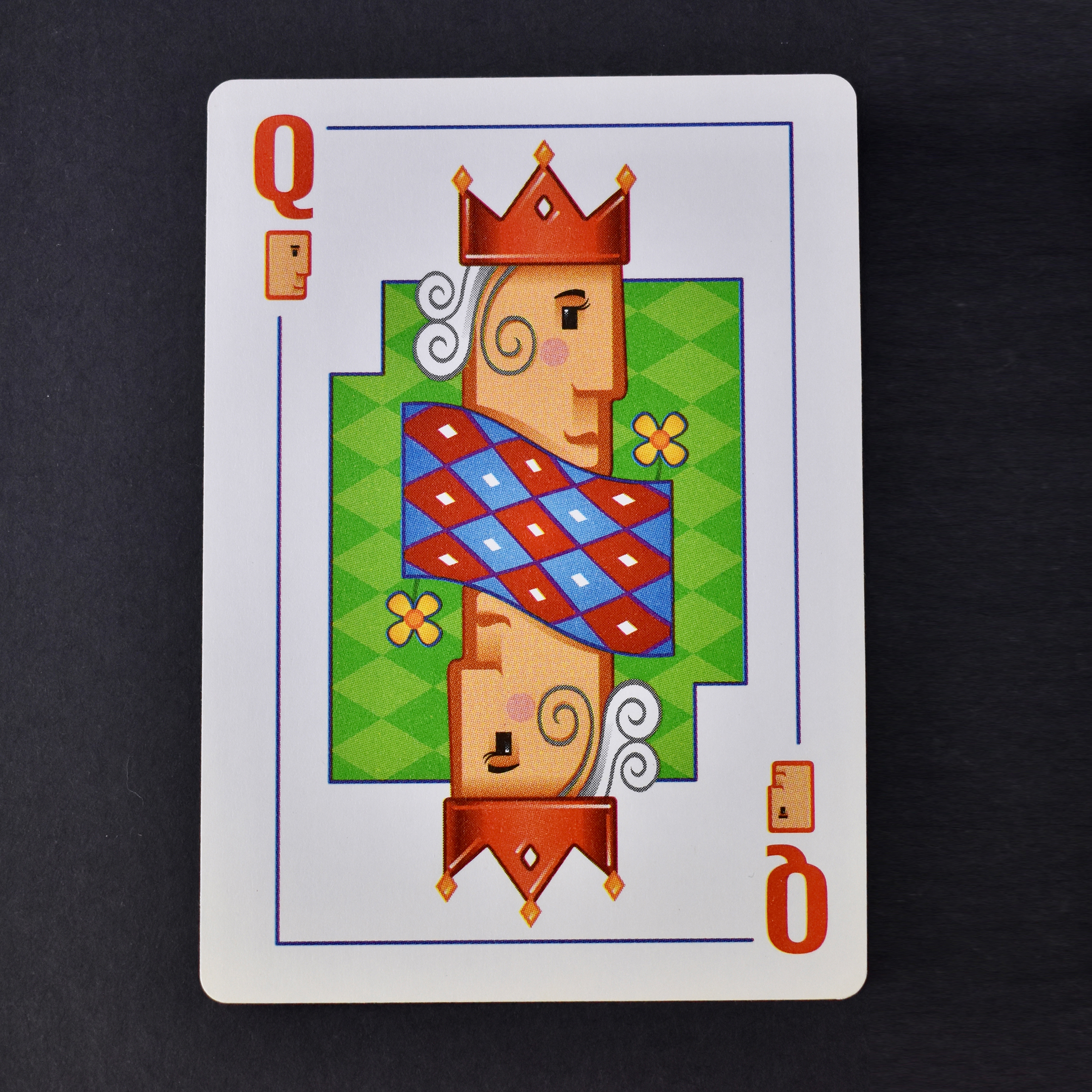
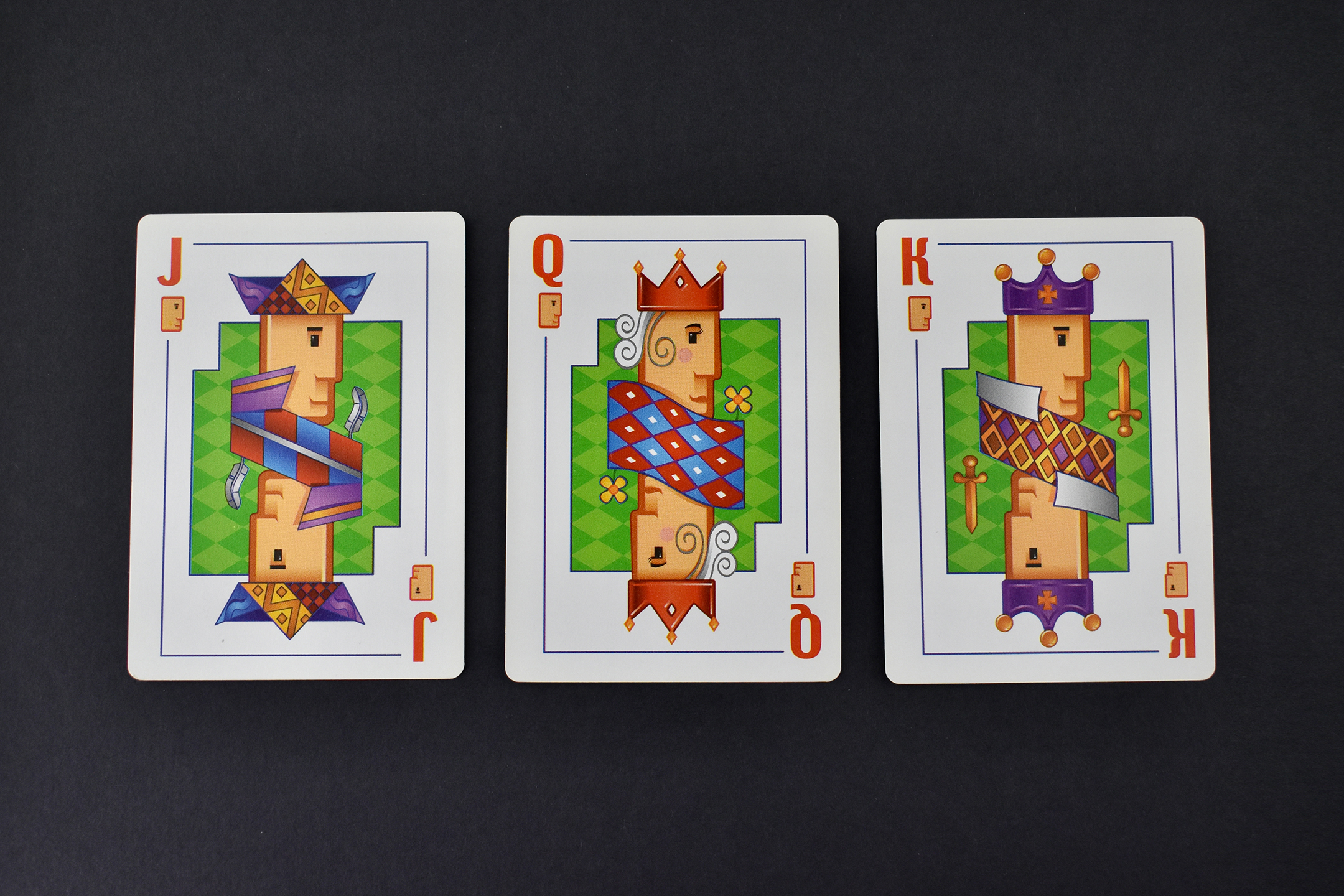
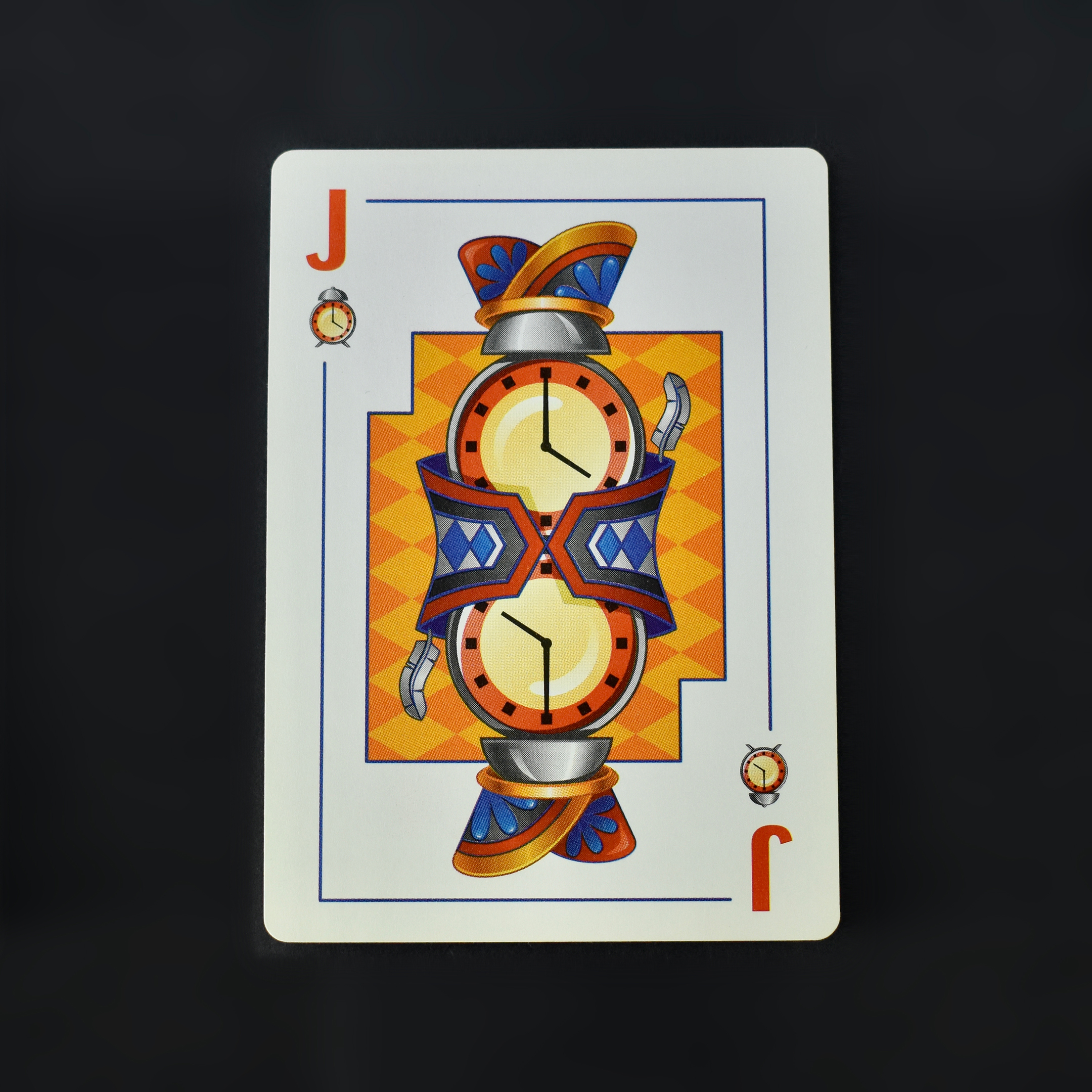
The deck contains 54 cards in four suits with two Jokers. Each suit is labeled traditionally as Ace, 2–10, Jack, Queen, and King. However, these cards to not use traditional suits of diamond (red ♦), heart (red ♥), club (black ♣), and spade (black ♠). Instead, the deck uses an alarm clock icon (red symbols), user profile icon (stylized face profile, red symbols), trash can icon (black symbols), and bomb icon (black symbols). The Jack, Queen, and King of each suit have a unique design, although each Jack holds a feather and wears a hat, each queen holds a flower and wears a two-pointed crown, and each king holds a sword and wears a three-pointed crown. The Joker is an original-style all-in-one Macintosh wearing a three-pointed jester hat.

The font used on the cards is similar to Chicago, the Mac OS system font of the time, but is more customized.

The card backs use all four suits in a repeating pattern and displayed primarily in red. The back center of each card features the multi-color Apple logo in a white circle.

Sources: Wikipedia (card deck, Mac OS 8), Worthpoint

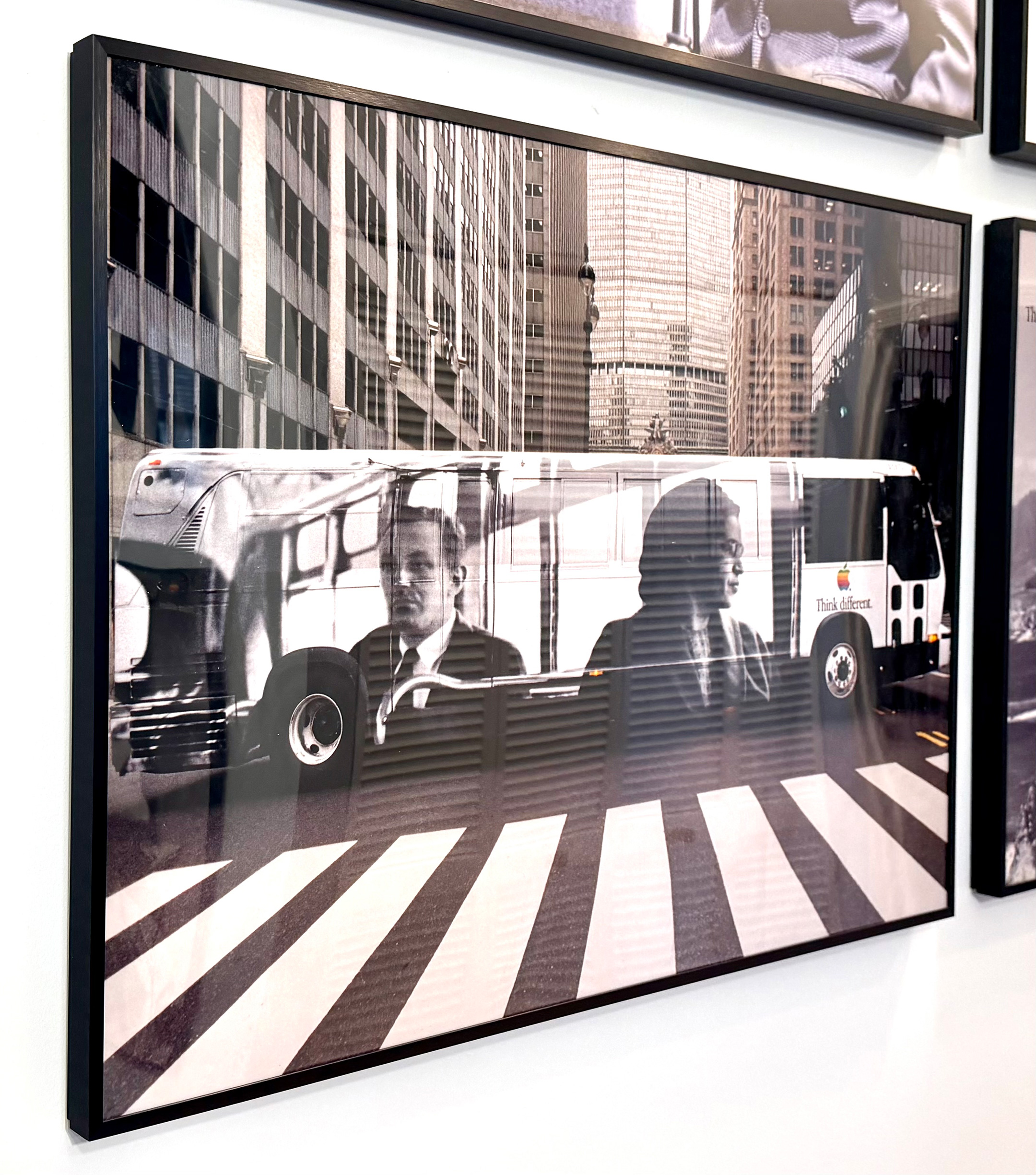
Think different. Poster (Rosa Parks bus, 36 x 24 inches, 1998)

“Think different” is the slogan used by Apple in advertising 1997–2002, and is still used in some circumstances as of 2021. The “Think different” concept was created by advertising agency TBWA\Chiat\Day while working with Apple and Steve Jobs. “Think different” was used in its original concept in a TV commercial and in print/digital advertisements, and the “Think different” slogan was used as part of TV commercials, print/digital ads, and on product packaging.

The “Think different” advertising campaign was notable in that its original concept did not feature Apple products. The original version began with a “manifesto” that began famously with “Here’s to the crazy ones.” During the commercial, voiced by Richard Dreyfuss, black-and-white footage of iconic personalities served as visuals to accompany the voiceover. Personalities included Albert Einstein, Bob Dylan, Martin Luther King Jr., Thomas Edison, Muhammad Ali, Mahatma Gandhi, Amelia Earhart, Alfred Hitchcock, Jim Henson, Pablo Picasso, and others.

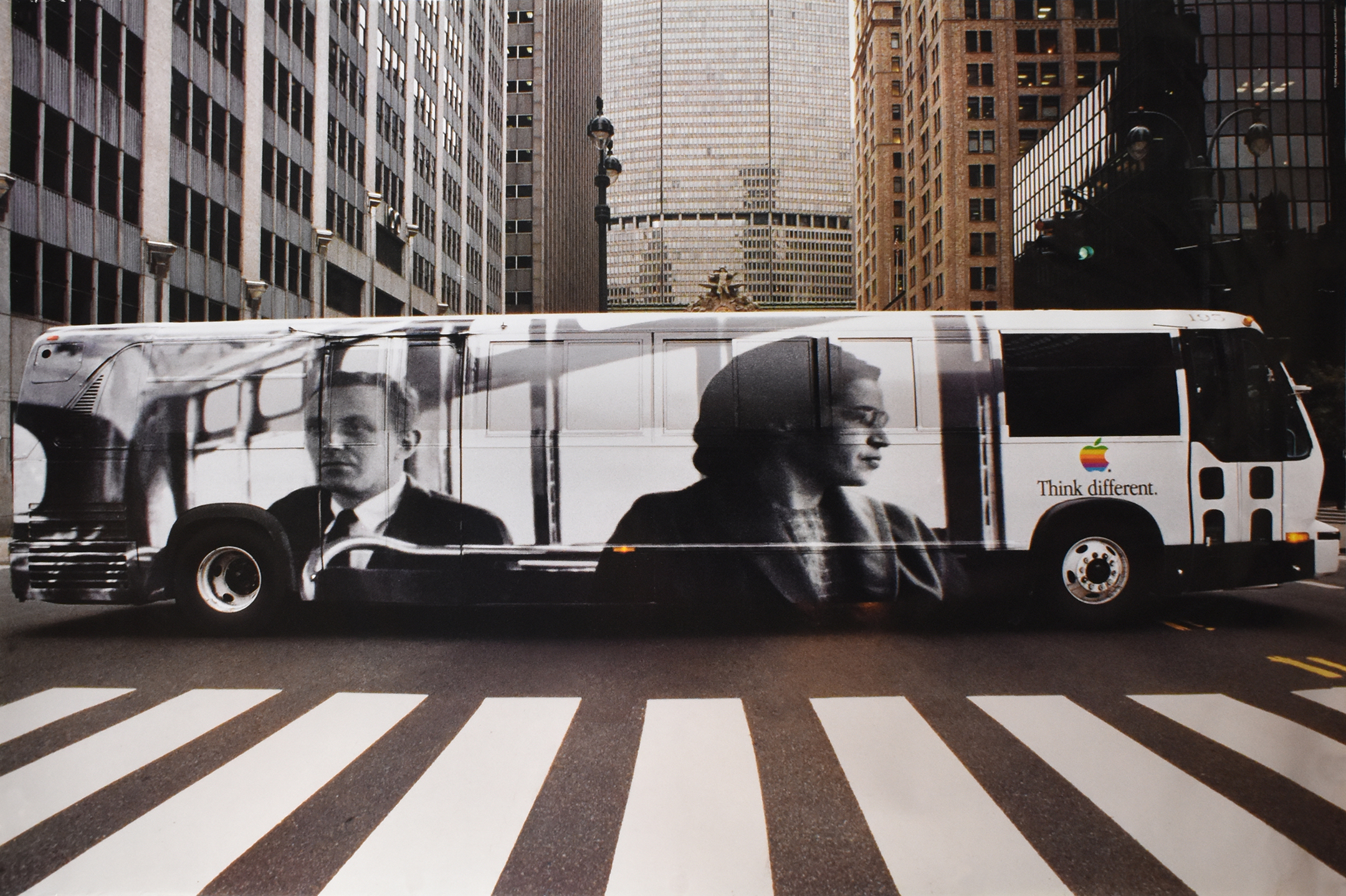
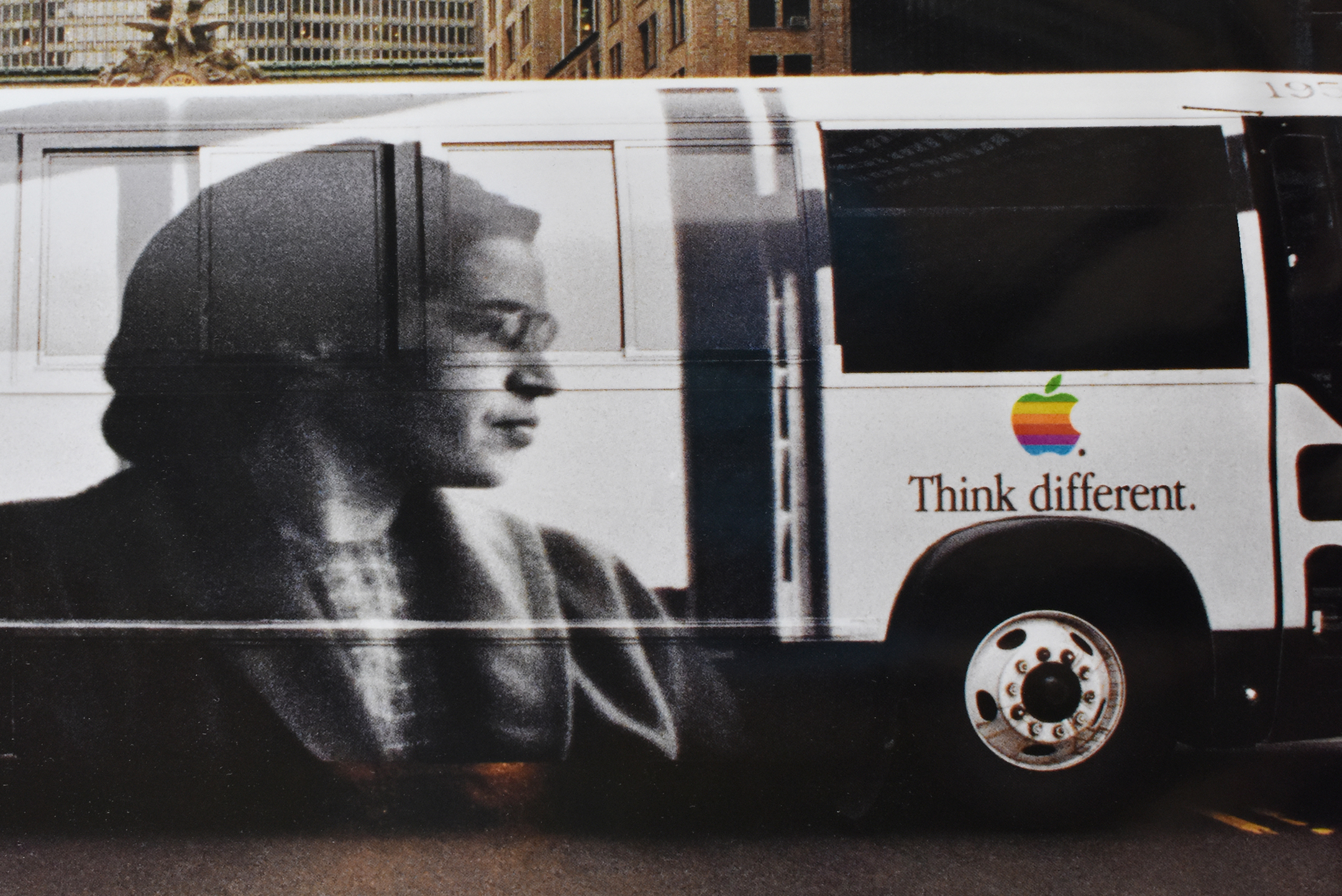
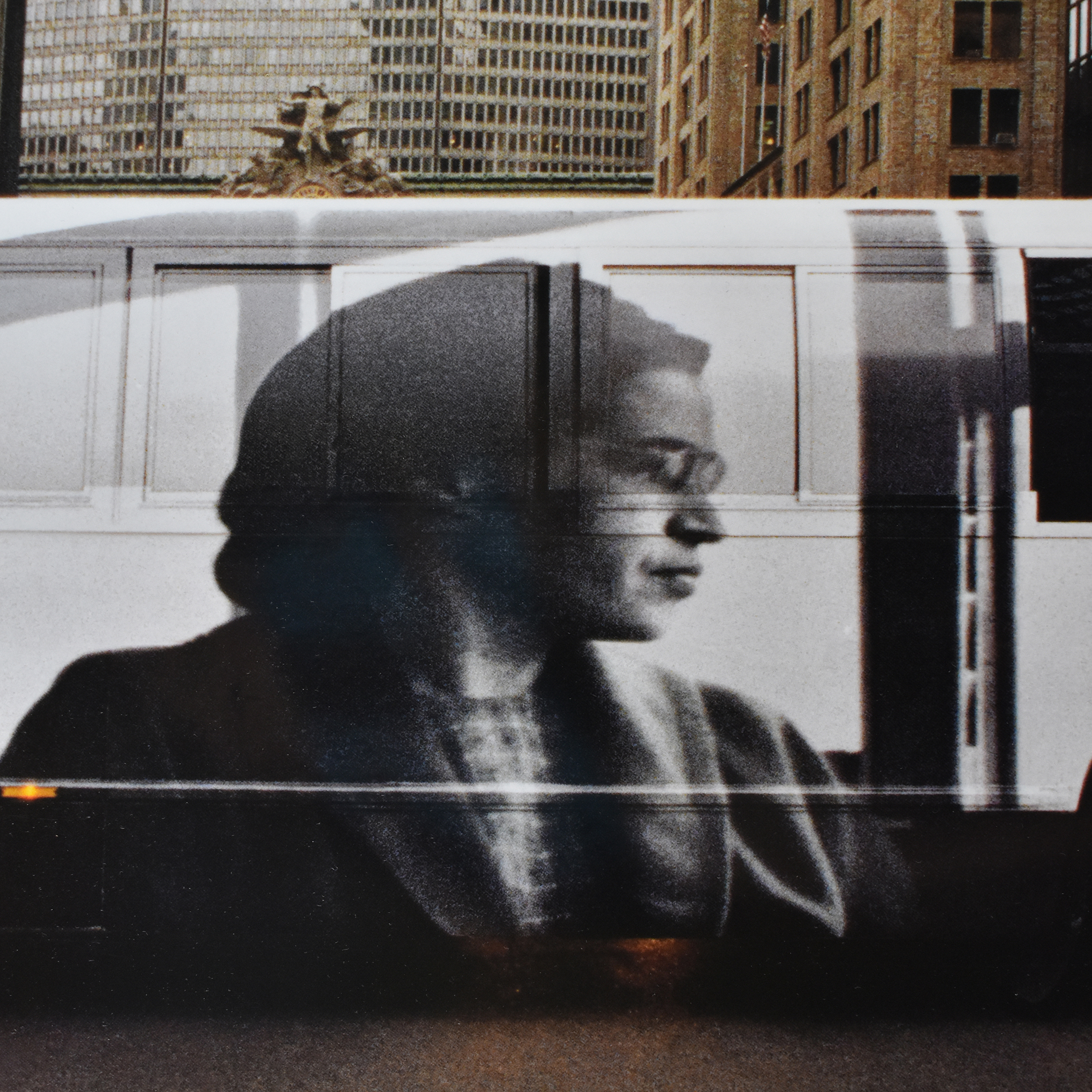
This poster is 36 x 24 inches (landscape) and features a black-and-white photo of Rosa Parks sitting on a bus, printed, appropriately, on the side of a bus. The only text on the poster is also printed on the side of the bus and features the classic multi-color Apple logo and the words “Think different.” printed in the Apple Garamond font. Small text in the lower-left corner reads “©1998 Apple Computer, Inc. All rights reserved. L03065A.”

Although the image depicted on the bus follows the black-and-white photo convention of the Think different series, the poster itself is printed in color. Incidentally, the name of the man in the original iconic photo of Rosa Parks is Nicholas C. Chriss, according to the New York Times. The original photo can be viewed in the Library of Congress digital archive.

Sources: Wikipedia, Forbes, New York Times, Library of Congress