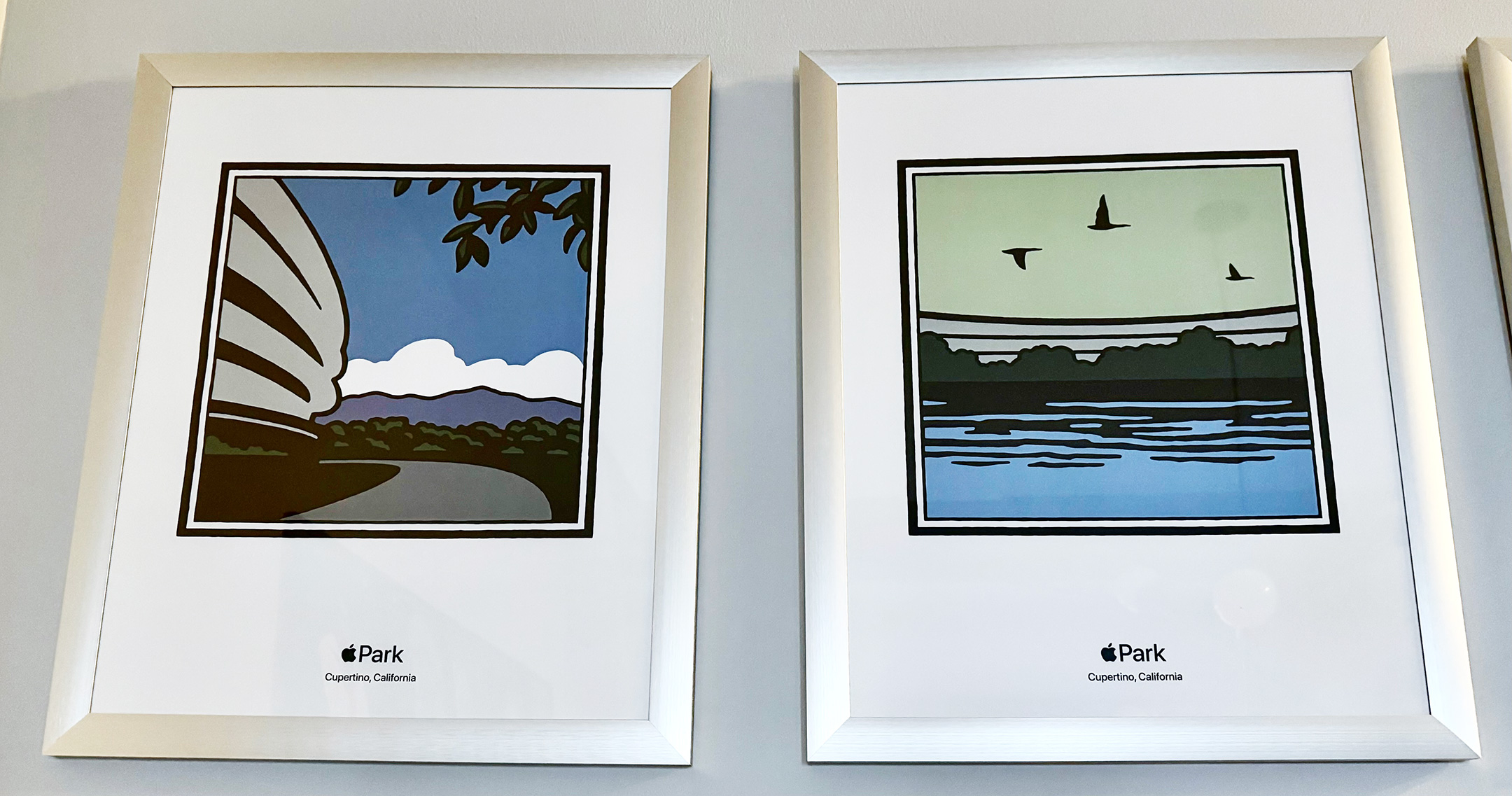
This set of posters was sold at the Apple Park Apple Park Visitor Center in 2022. The set includes four different designs by the graphic artist Michael Schwab. The posters were packaged in a white cardboard tube with a label that read, “Apple Park M. Schwab Poster Set (4pk) HP932LL/A.” Each poster measured 16 x 20 inches.
The designs included the following representations:
Apple Park office structure (a partial view)
Reflecting pool in the outdoor center of the Apple Park office structure with three birds flying above
Steve Jobs Theater at night with a crescent moon above
An apple tree, reminiscent of those growing in the outdoor center of the Apple Park office structure
This set is presented in the order that the posters were hanging in the Apple Park Visitor Center Apple Store. The poster designs were also available on white t-shirts (one design per shirt). In fact, when I first saw the posters in the Visitor Center Apple Store, it was not obvious to me that they were available for sale because they appeared to only show the details of the t-shirt design. An Apple employee let me know the posters were available.
According to Michael Schwab’s website, he was born in Oklahoma in 1952 and now lives and works in northern California. His biography states:
“From his studio in Marin County, he has established a national reputation as one of America’s leading graphic artists.
He has created national award-winning logos and posters for a remarkable list of prestigious clients, including Apple, Amtrak, The Golden Gate National Parks, Major League Baseball, Robert Mondavi, Muhammad Ali, Nike, Pebble Beach, Polo Ralph Lauren, Robert Redford, San Francisco Opera, Sundance, Sunset Books, and Wells Fargo, among others.
Having attended school in Texas, New York and California, Michael has a broad array of visual, cultural, and geographic references to which he regularly turns for ideas.
His work is easily recognized by his signature use of large, flat areas of color, dramatic perspectives and bold, graphic images of archetypal human forms.”
Please note, the photography style of this entry is very different from my typical posts because this set of posters hangs in my home. These photos were captured with iPhone 17 Pro in situ with inconsistent lighting, angles, and reflections.
“Think different” was the slogan used by Apple in an advertising campaign during the years 1997–2002, and is still used in rare circumstances as of 2025. The Think different concept was created by advertising agency TBWA\Chiat\Day while working with Apple and Steve Jobs. Think different was first rolled out as a TV commercial and was followed by additional TV commercials, print/digital ads, and as part of Apple’s product packaging.
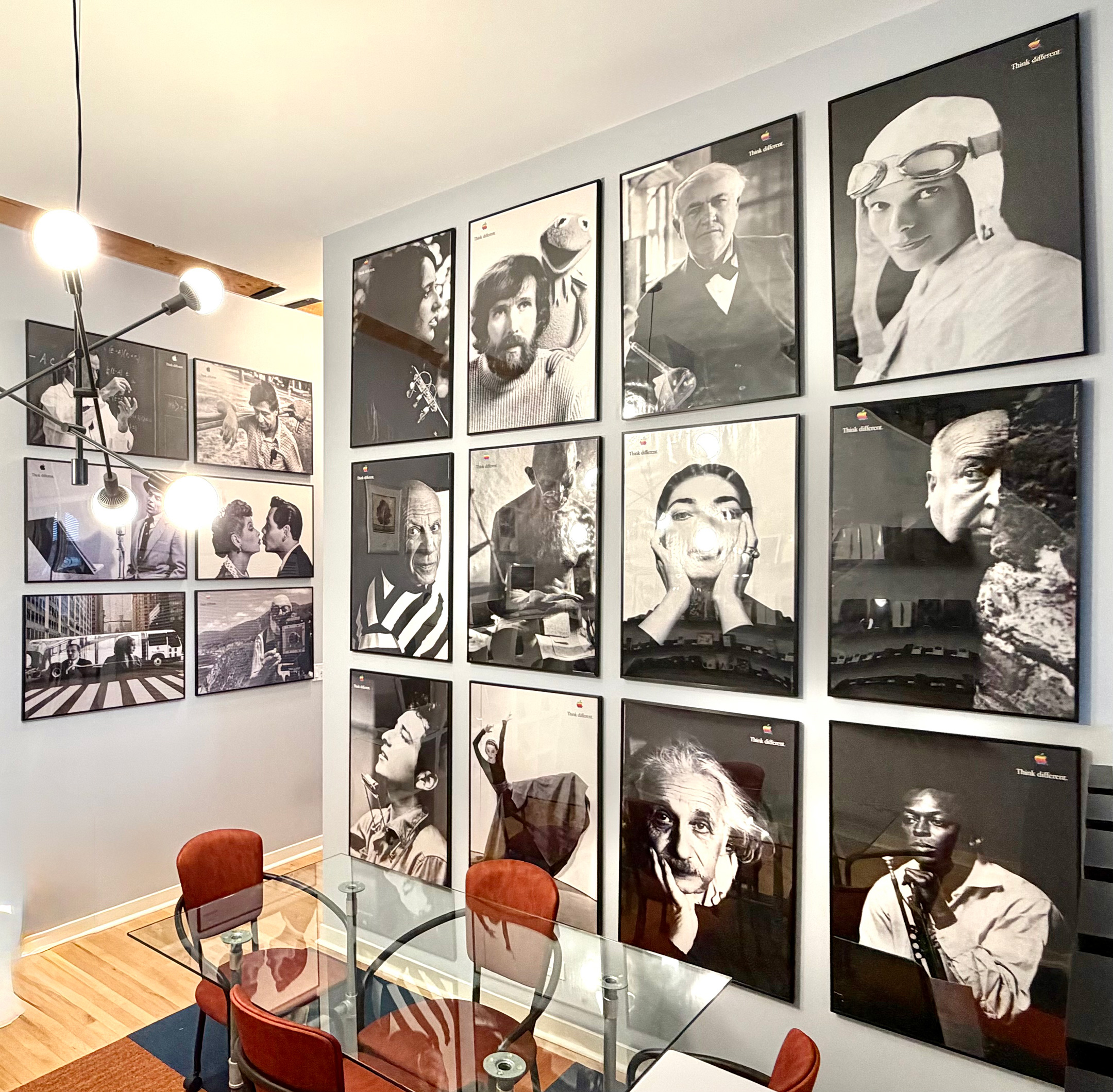
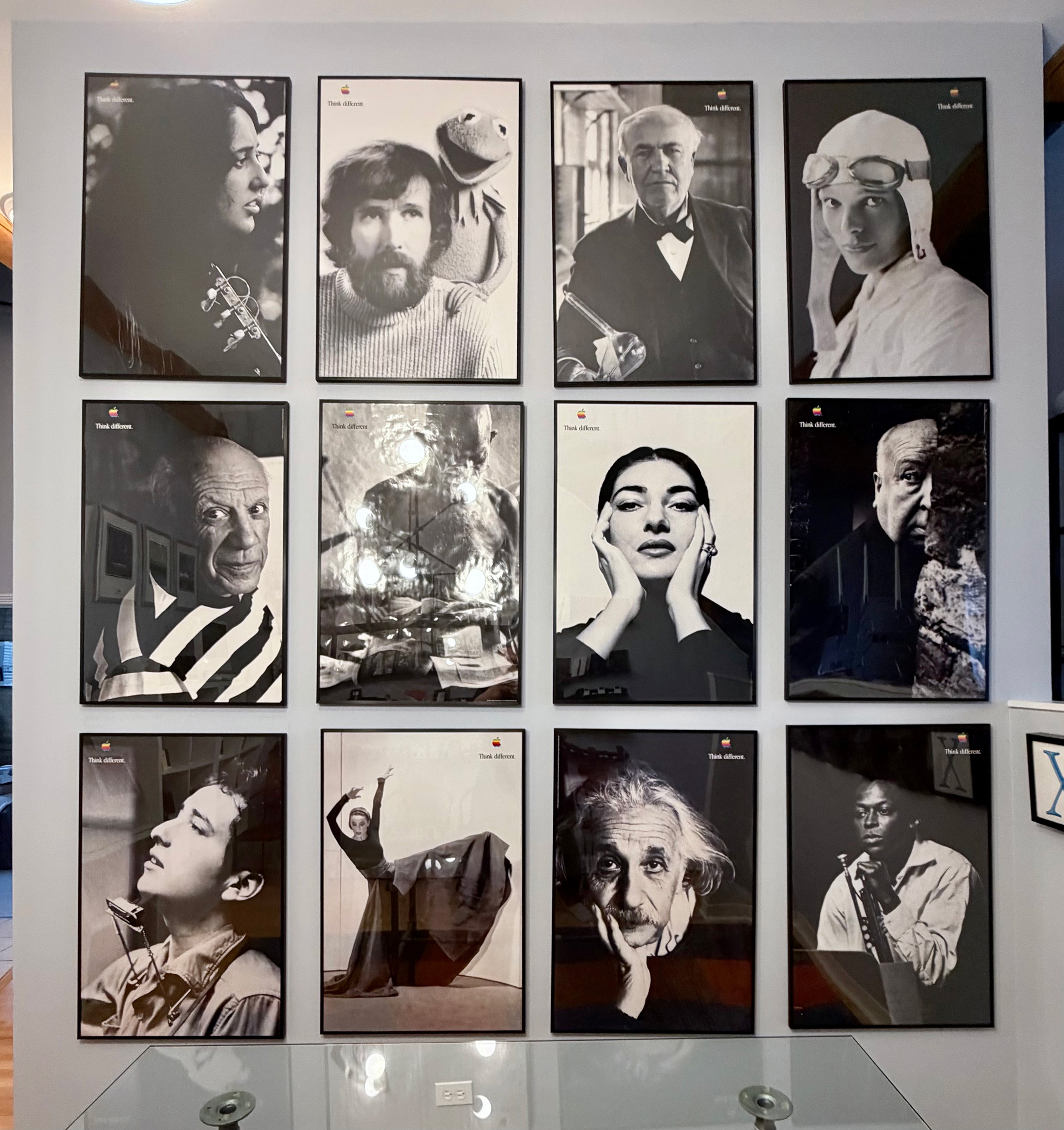
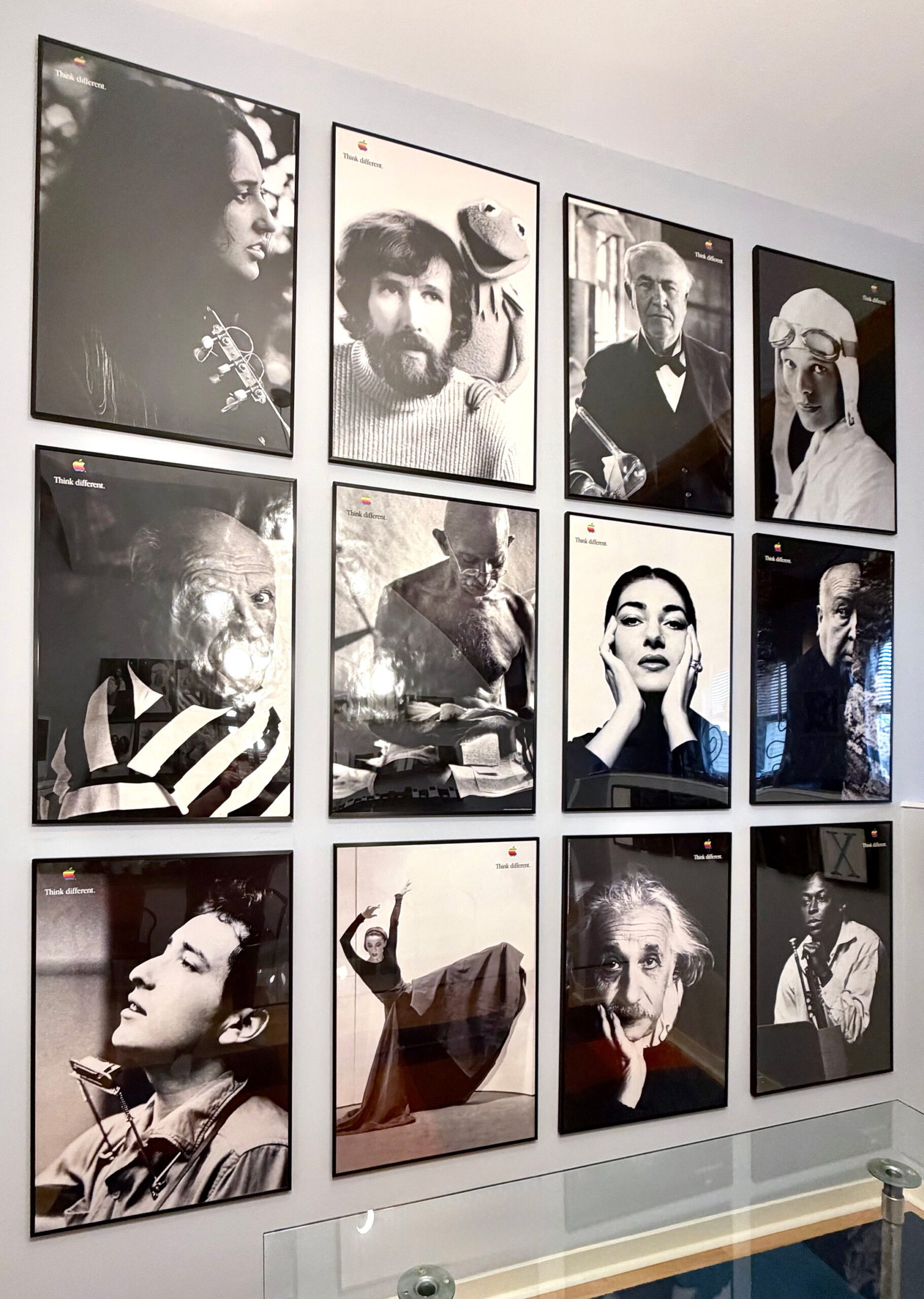
Posters in this set include:
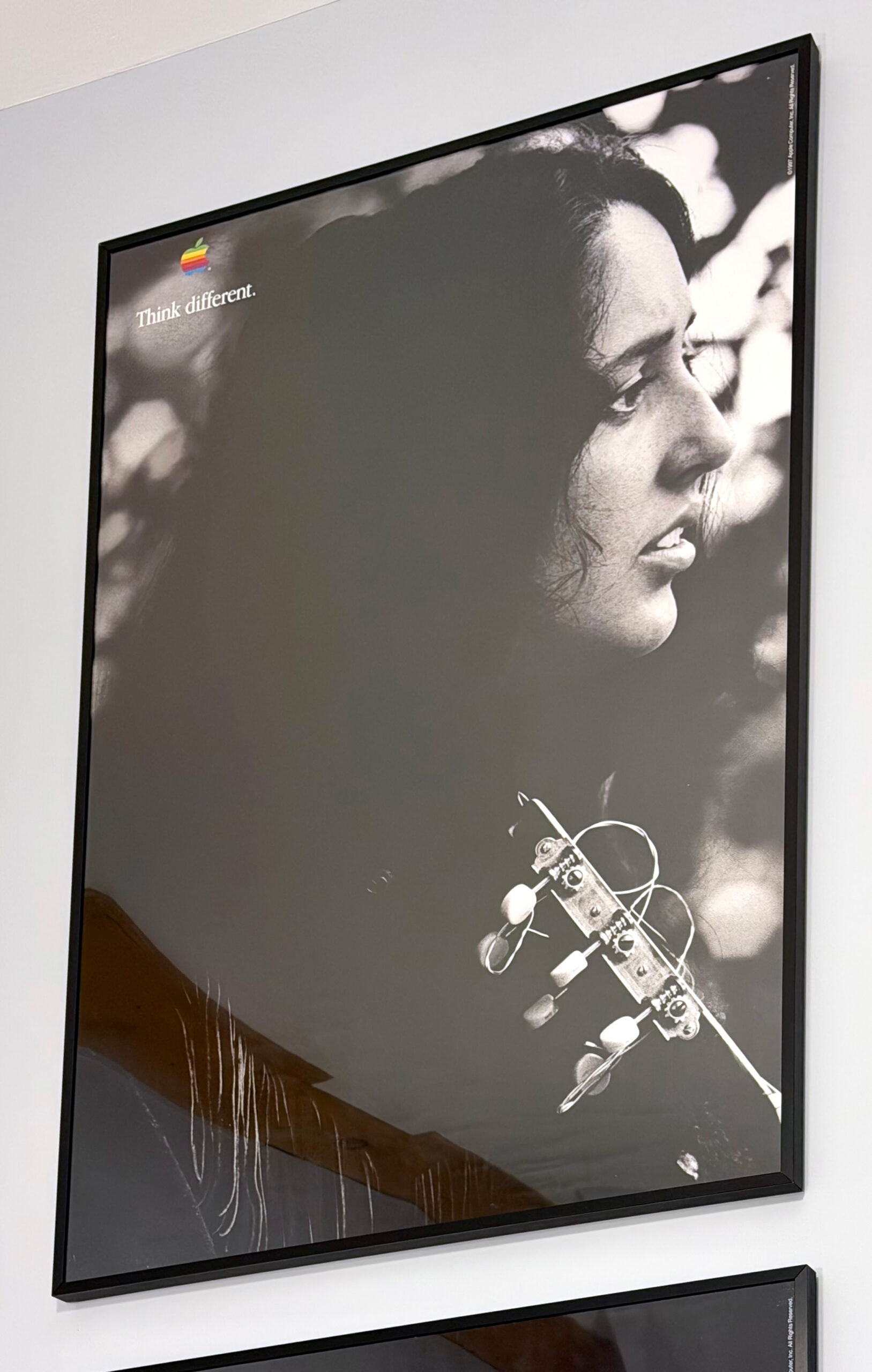
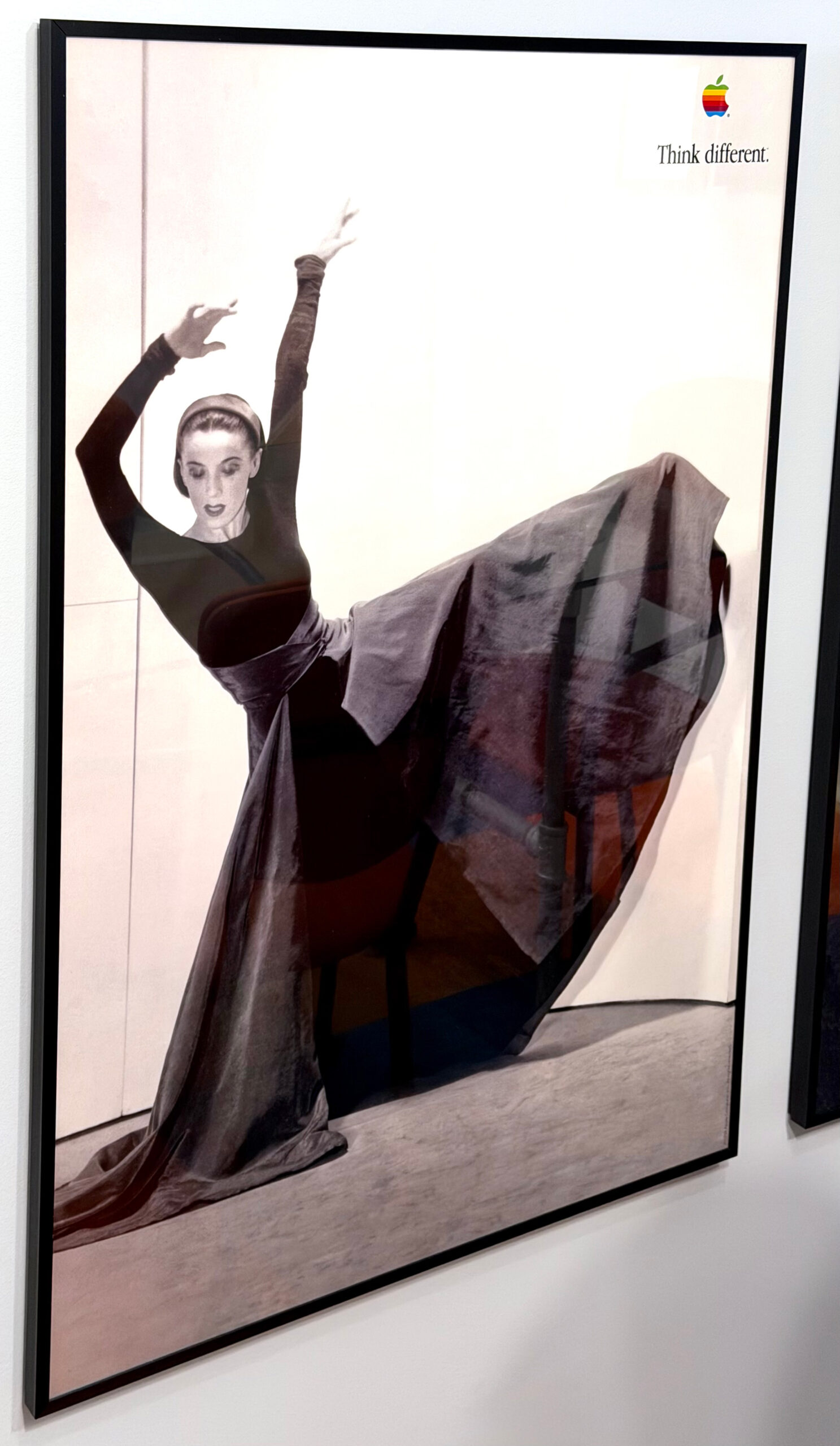
Joan Baez (24 x 36 inches, 1997). From poster set 2.
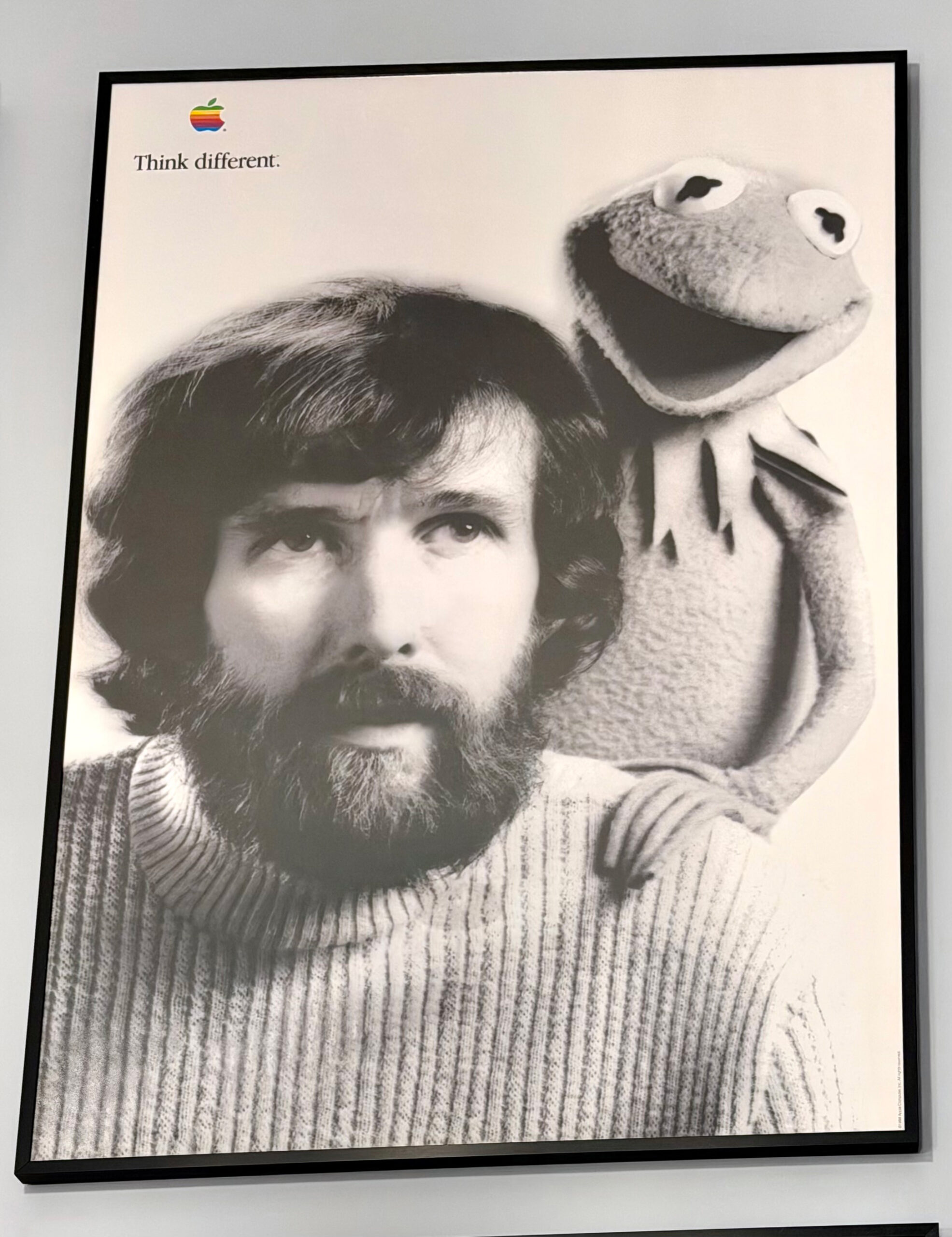
Jim Henson with Kermit the Frog (24 x 36 inches, 1998). From poster set 3.
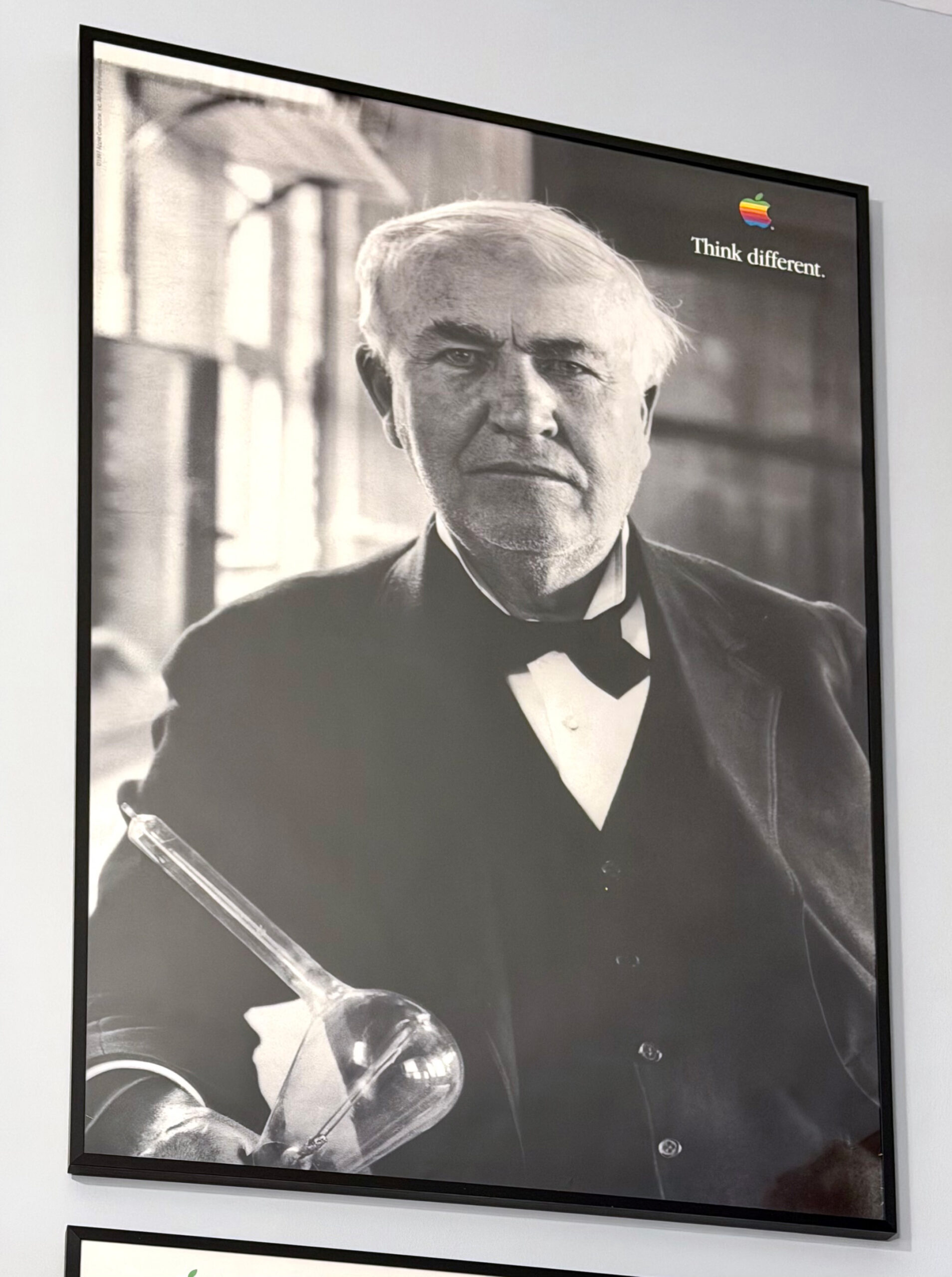
Thomas Edison (24 x 36 inches, 1997). From poster set 1.
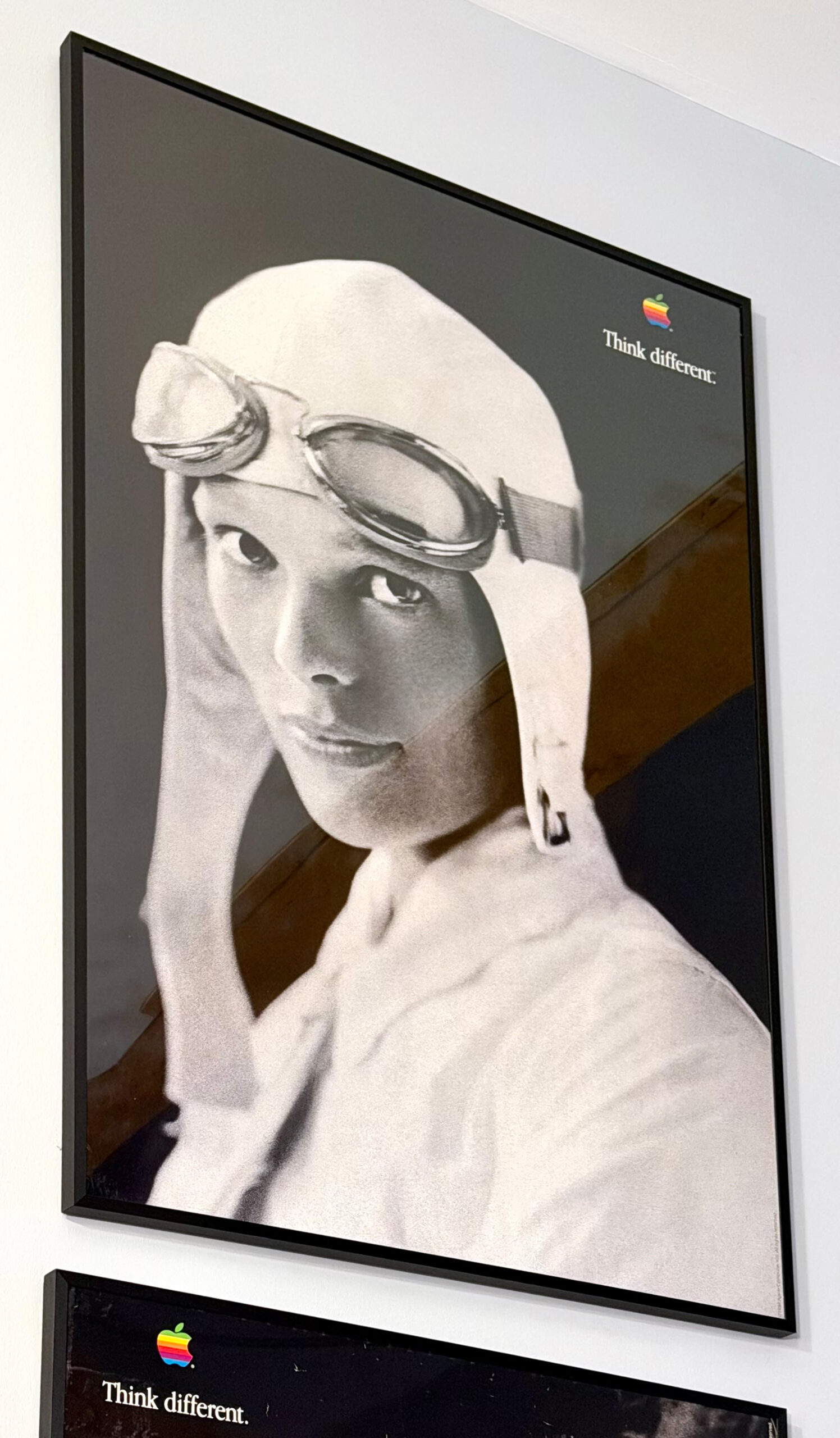
Amelia Earhart (24 x 36 inches, 1998). From poster set 1.
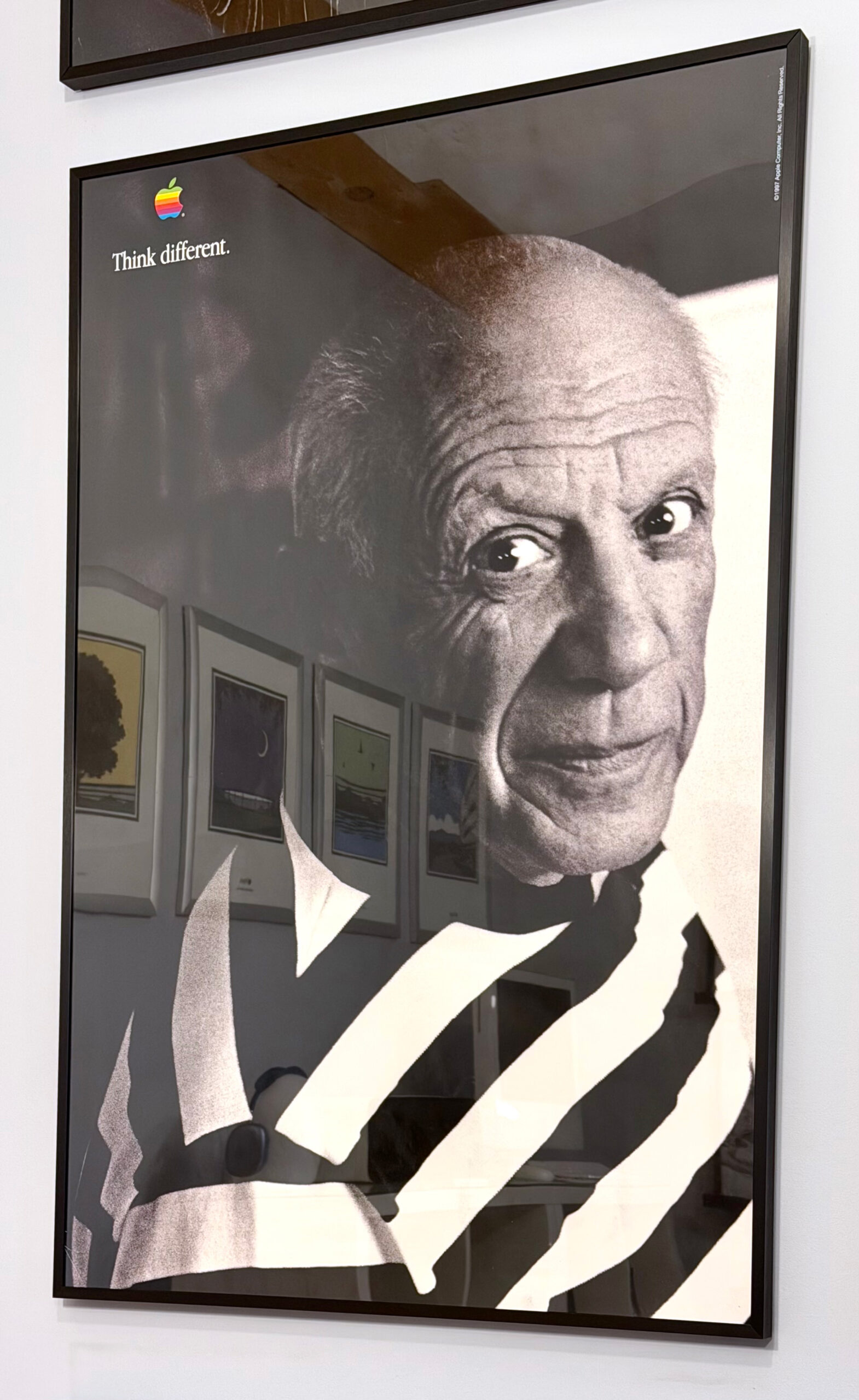
Picasso [side facing] (24 x 36 inches, 1997). From poster set 1.
Gandhi (24 x 36 inches, 1997). From poster set 1.
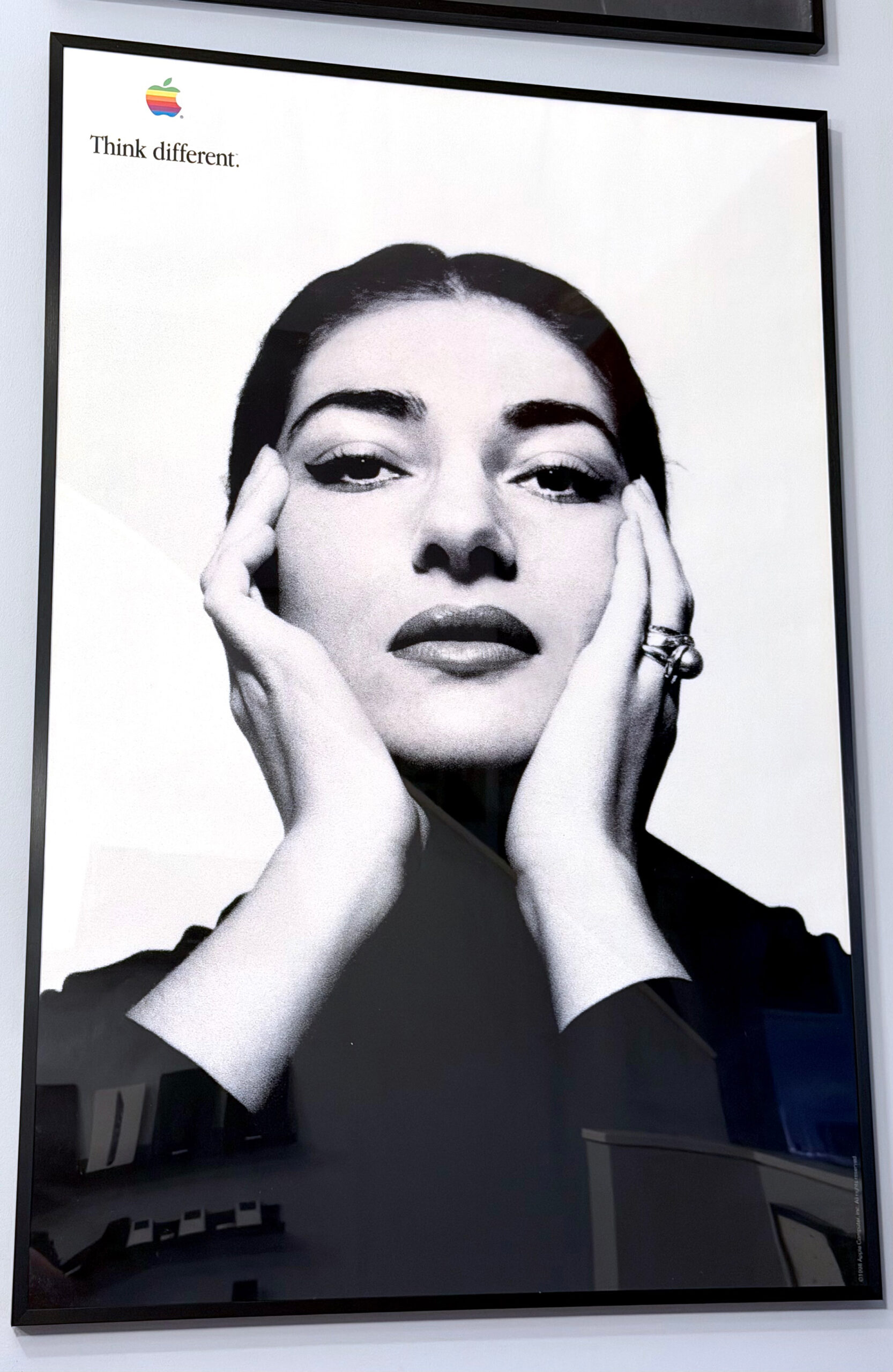
Maria Callas (24 x 36 inches, 1998). From poster set 2.
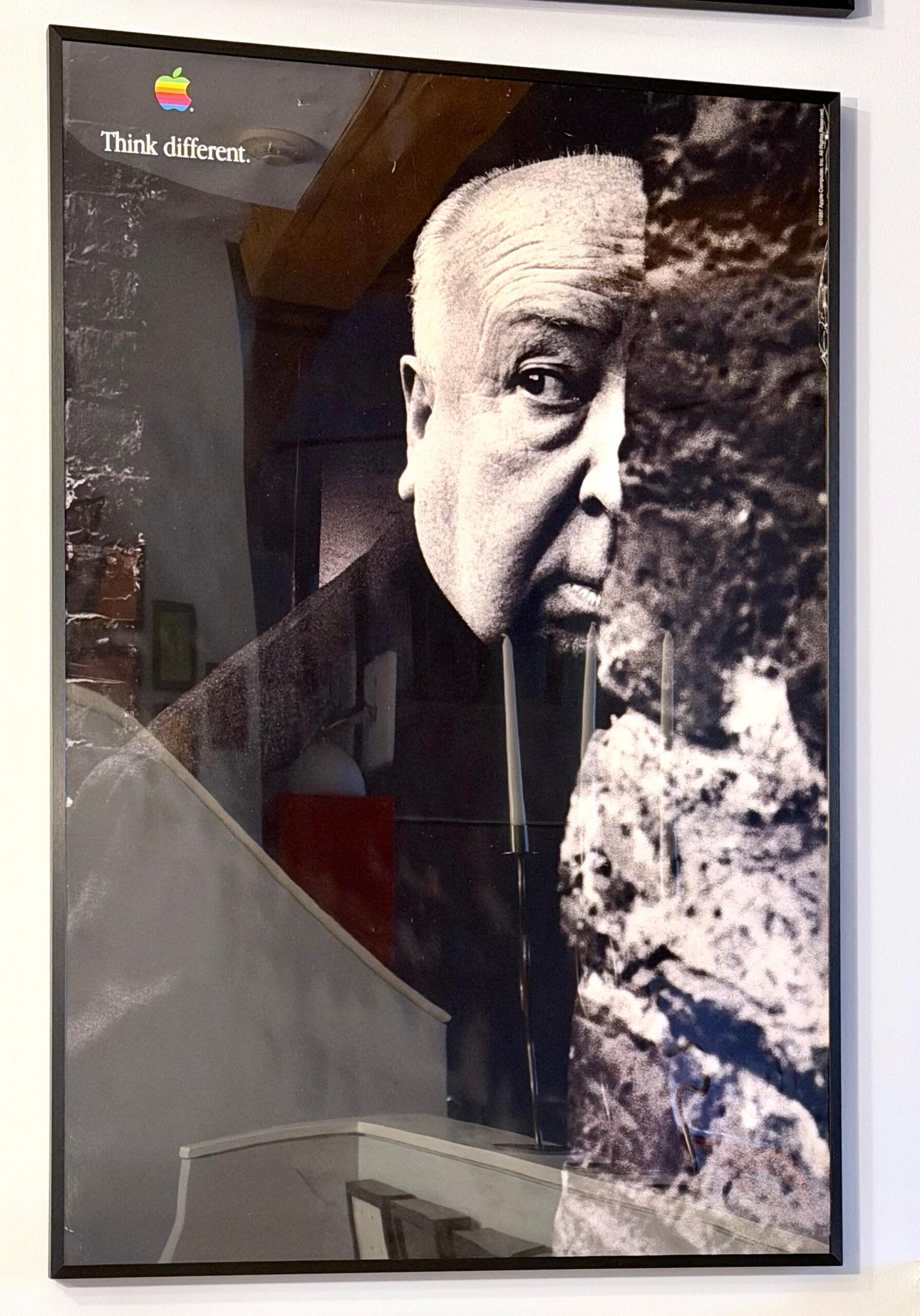
Alfred Hitchcock (24 x 36 inches, 1997). From poster set 1.
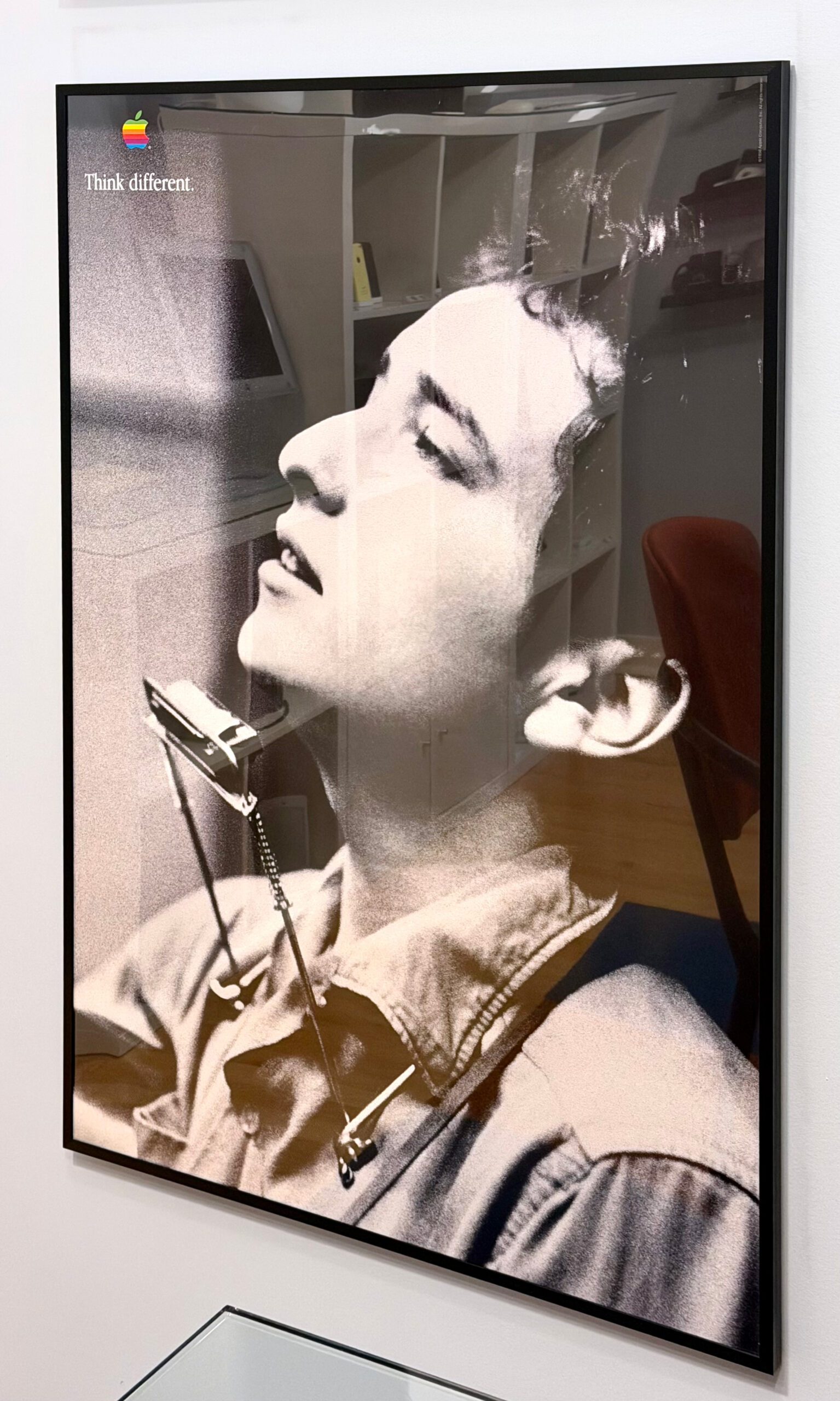
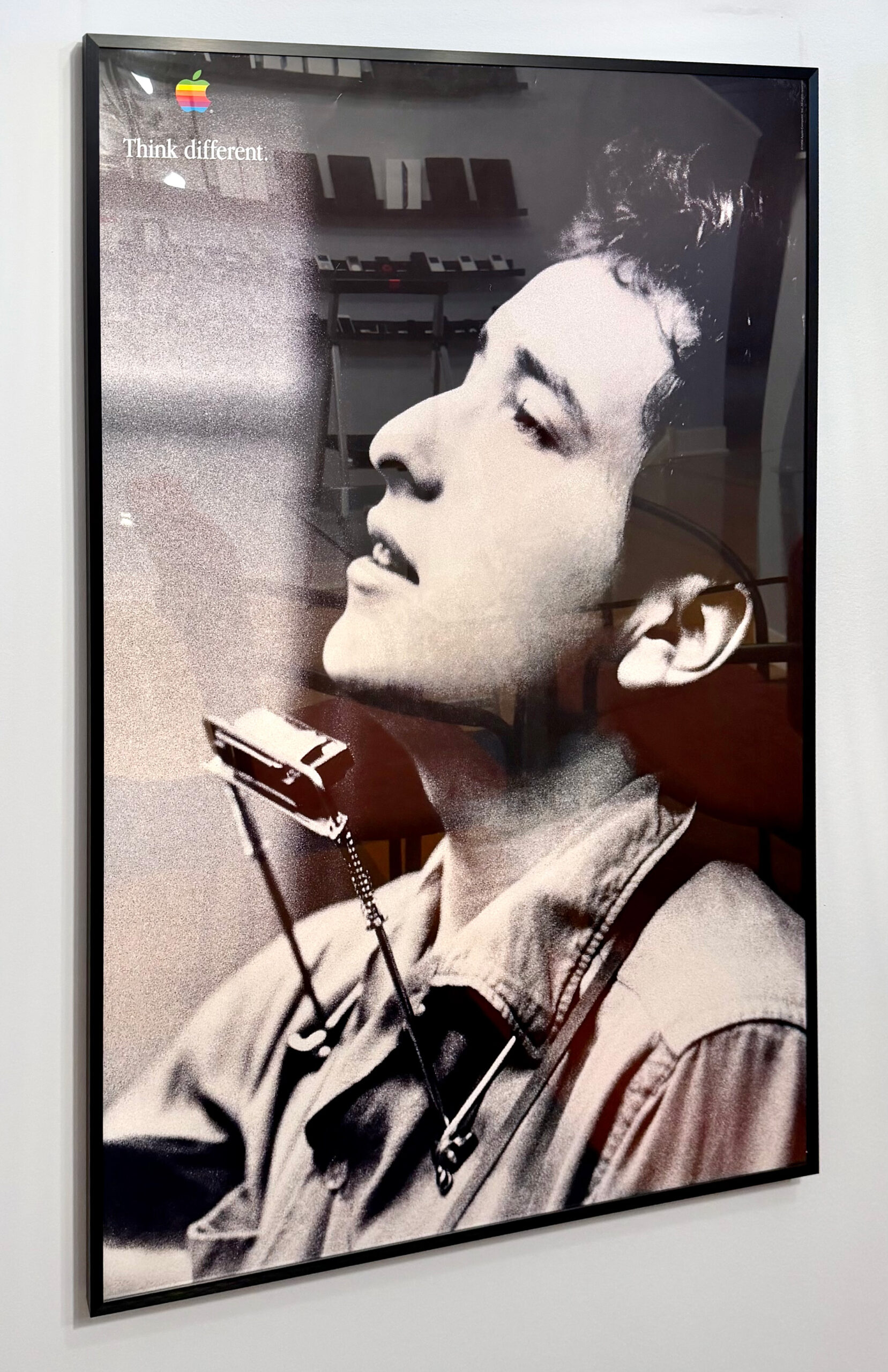
Bob Dylan (24 x 36 inches, 1998). From poster set 3.
Martha Graham (24 x 36 inches, 1997). From poster set 2.
Albert Einstein (24 x 36 inches, 1997).
Miles Davis (24 x 36 inches, 1998). From poster set 3.
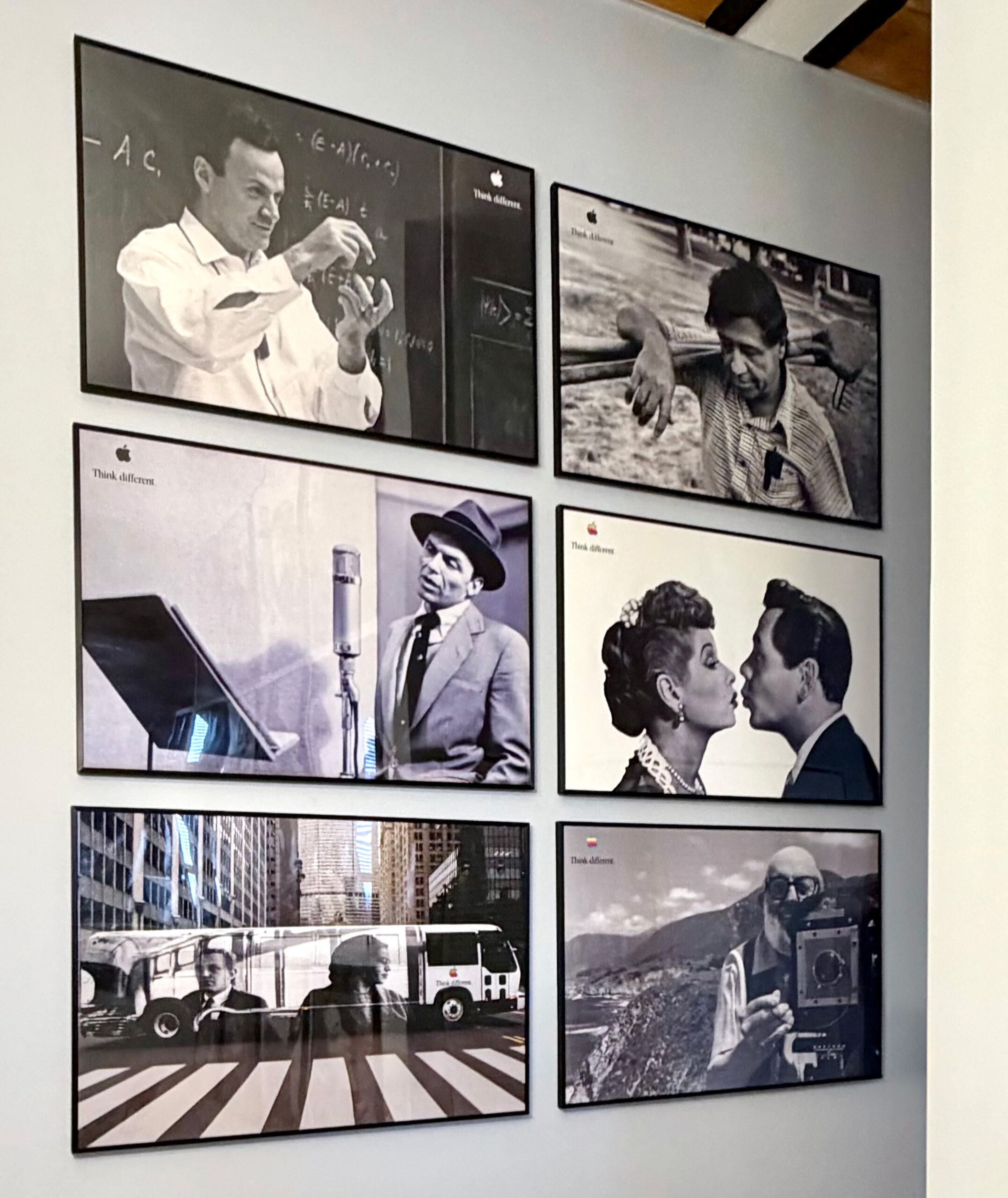
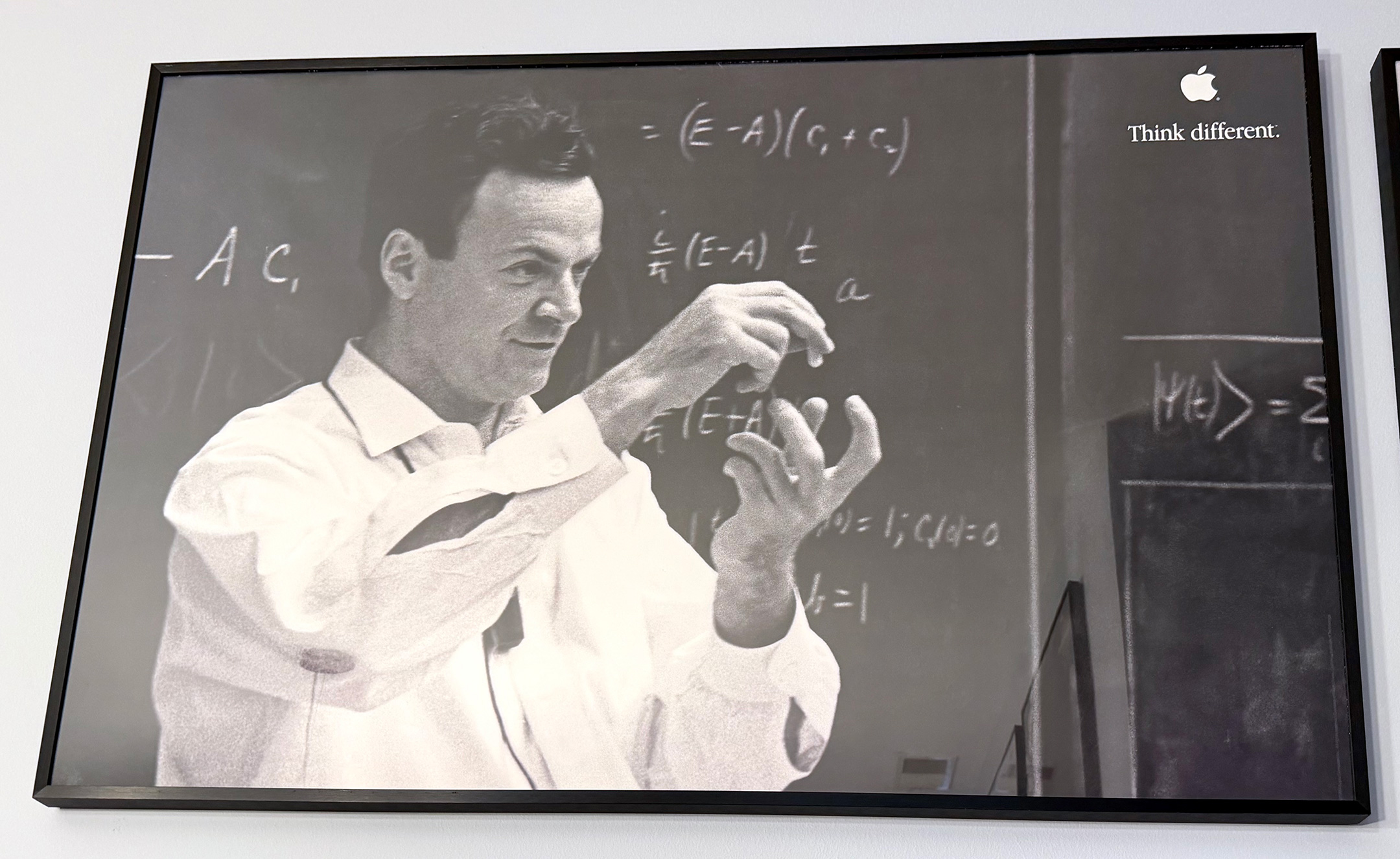
Richard Feynmann (36 x 24 inches, 1999). From poster set 4.
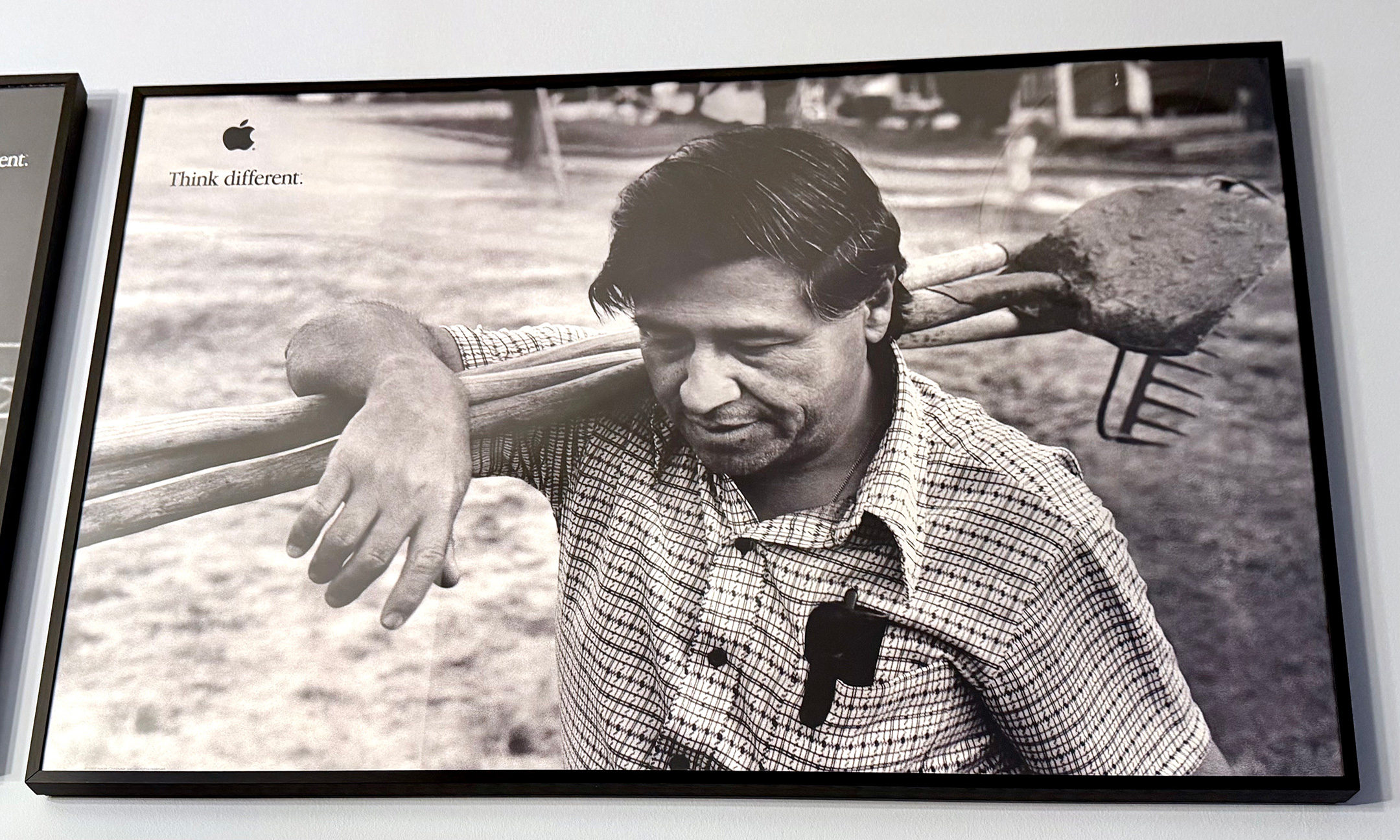
Cesar Chavez (36 x 24 inches, 1998). From poster set 4.
Frank Sinatra (36 x 24 inches, 1999). From poster set 4. [Print faded]
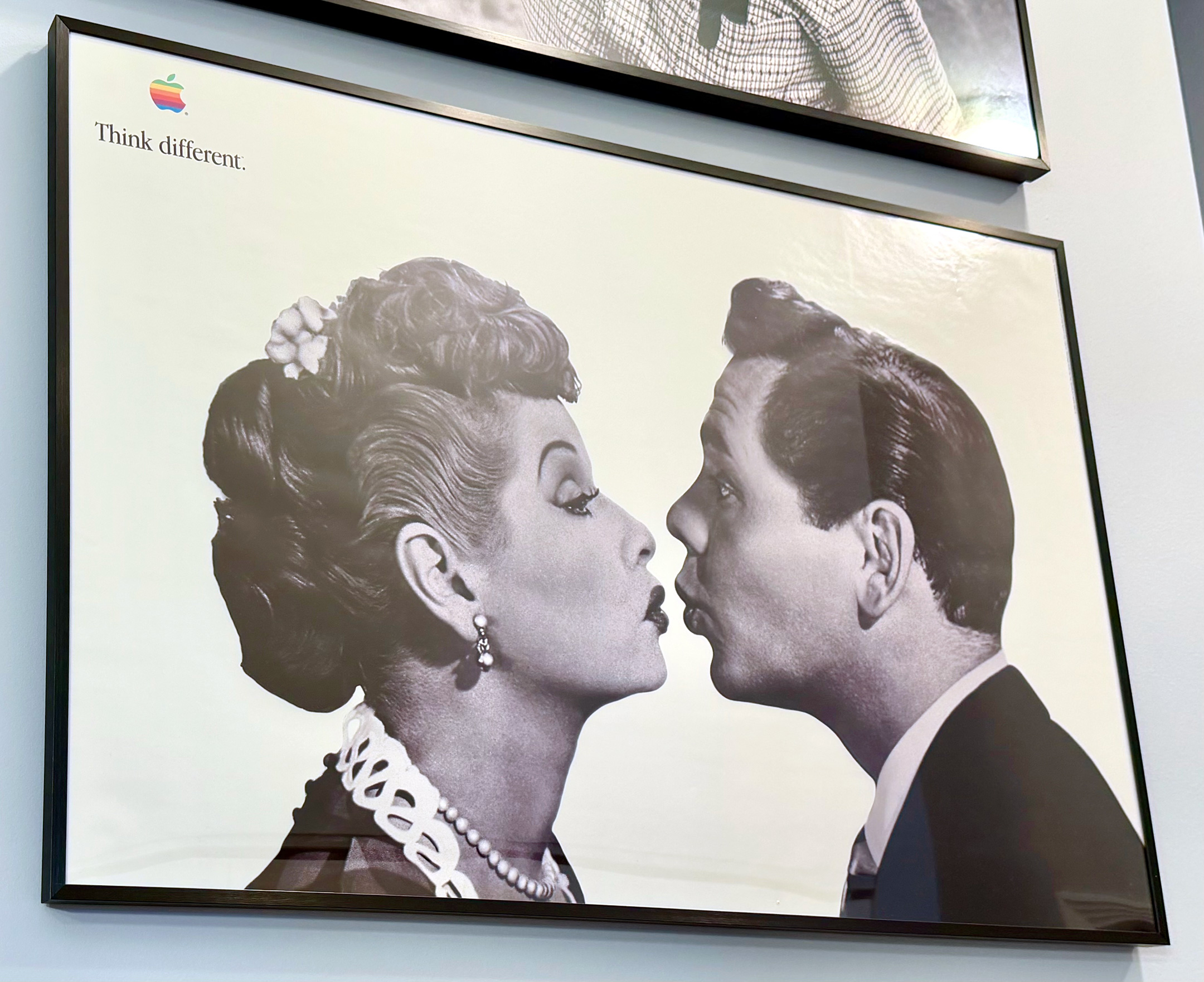
Lucille Ball & Desi Arnaz (36 x 24 inches, 1954/1998). From poster set 3.
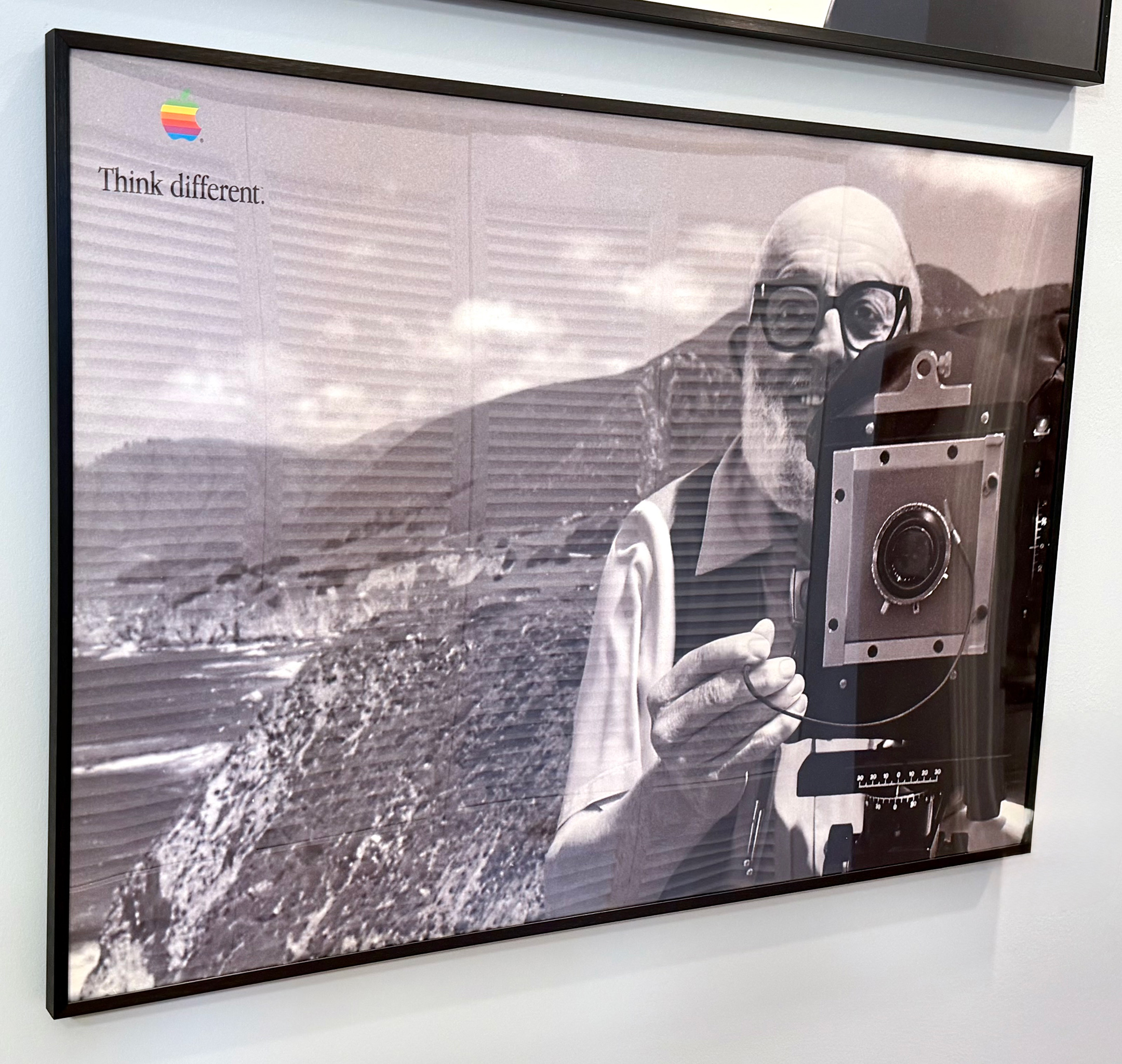
Ansel Adams (36 x 24 inches, 1998). From poster set 3.
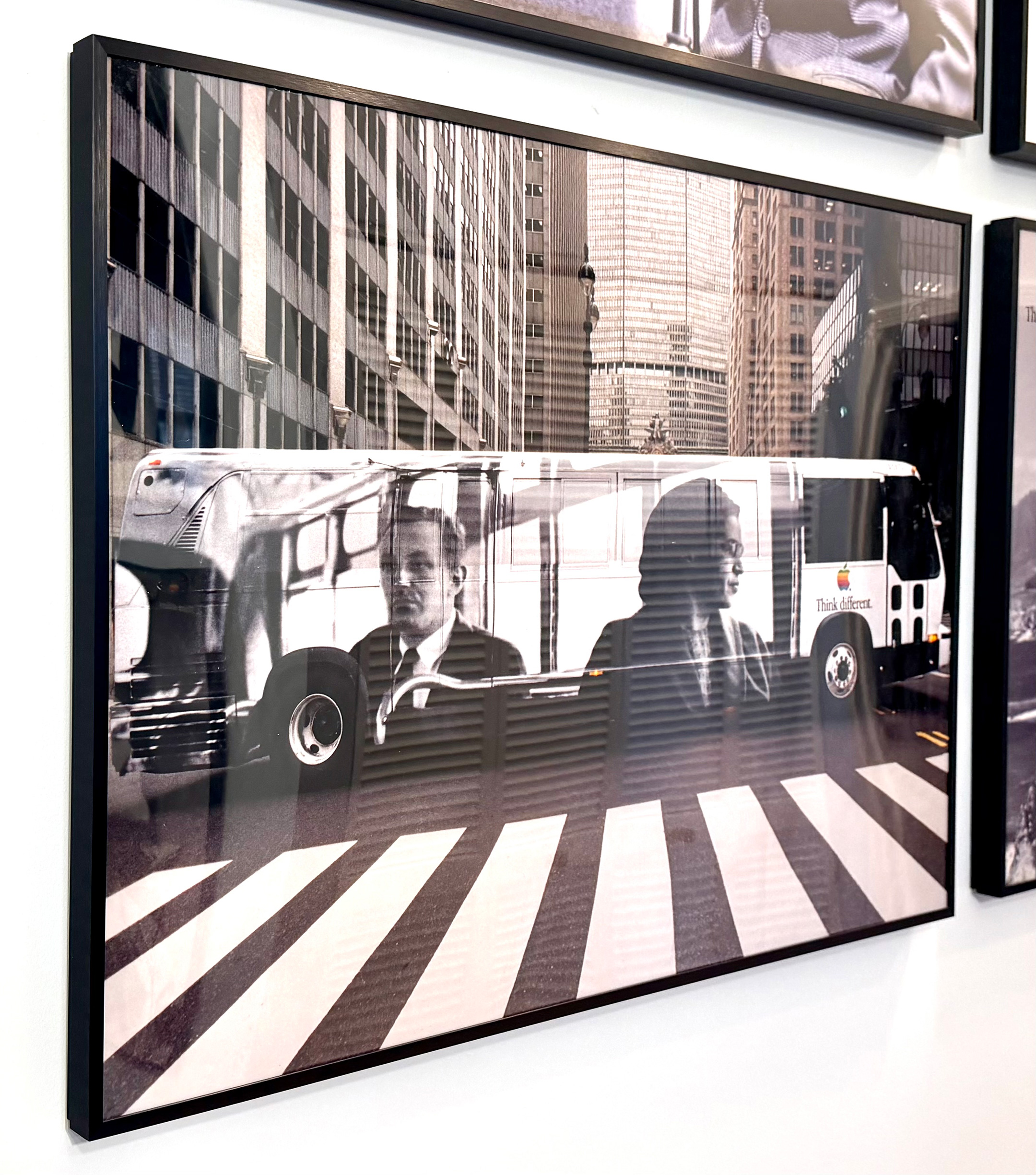
Rosa Parks bus (36 x 24, 1998). Education poster.
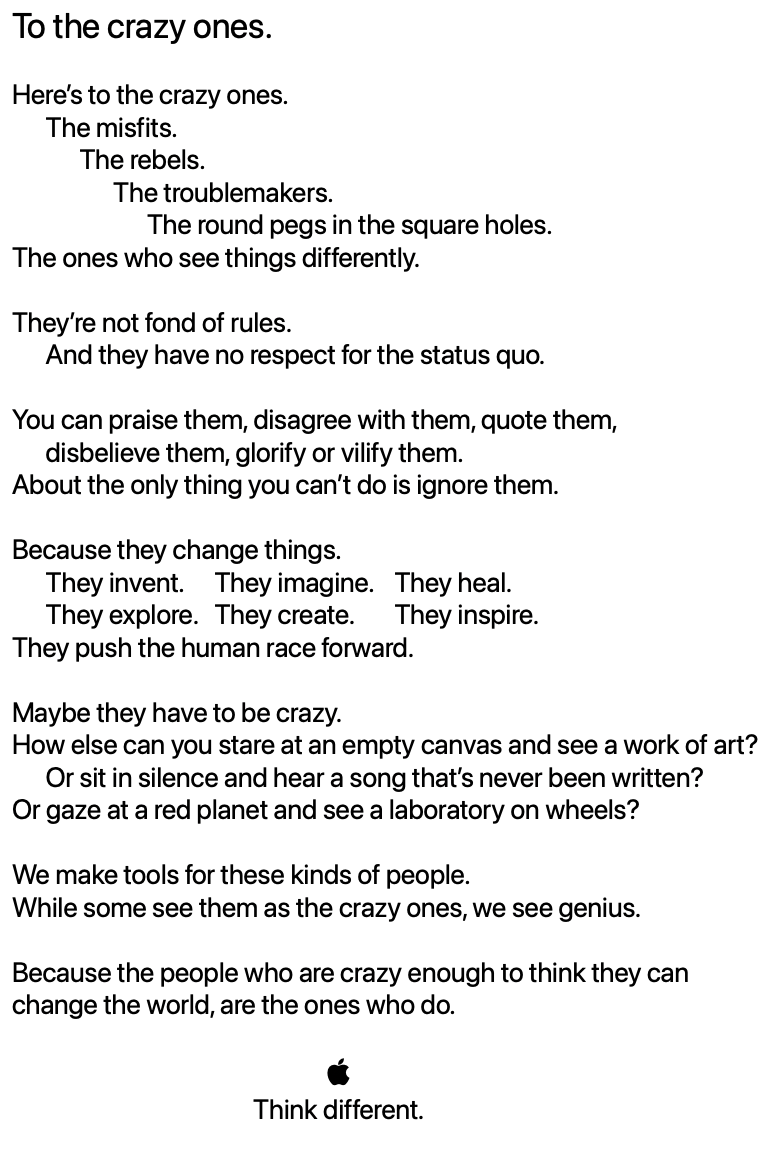
This advertising campaign was notable because it did not include imagery or mentions of any Apple products. The Think different idea was based upon a “manifesto” that began famously with “Here’s to the crazy ones.”
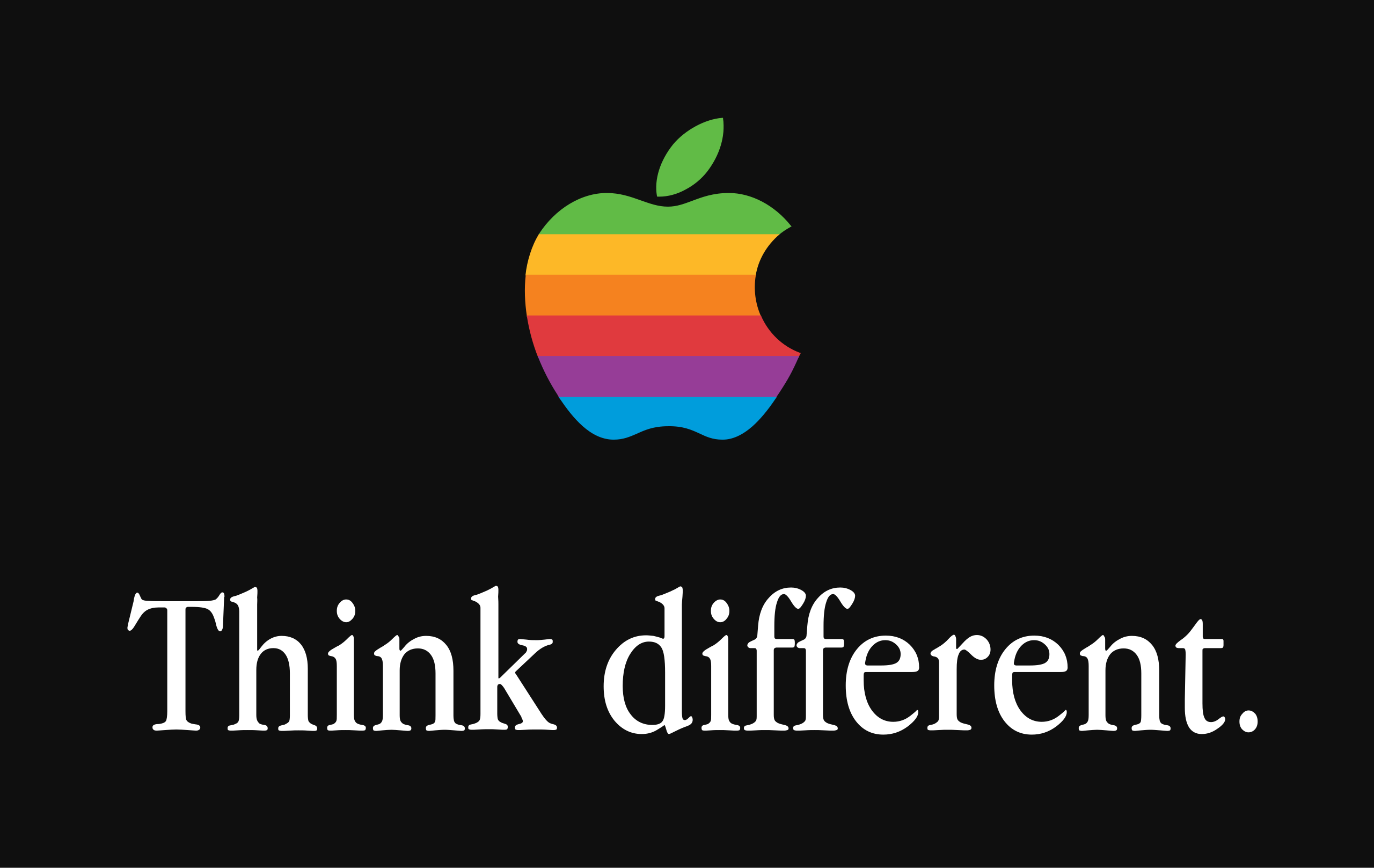
During the original TV commercial, voiced by Richard Dreyfuss, black-and-white film footage of iconic figures served as visuals to accompany the voiceover of a shortened version of the manifesto. Luminaries in the commercial included Albert Einstein, Bob Dylan, Martin Luther King Jr., Thomas Edison, Muhammad Ali, Gandhi, Amelia Earhart, Alfred Hitchcock, Jim Henson, Pablo Picasso, and others. The commercial ended with the multi-color Apple logo on a black background with white text (in the Apple Garamond font) Think different.
The print and digital ads also did not feature Apple products, just a black-and-white photo, the multi-color Apple logo, and the words “Think different.” One of the creative team members who worked on the campaign described the print concept: “The rainbow-colored logo served as stark contrast to the black and white photography, and, to me, it seemed to make the ‘Think Different’ statement all the more bold.”
In her 2011 book Design by Nature: Using Universal Forms and Principles in Design, Maggie Macnab described the concept of the Think different campaign:
“By identifying Apple’s core philosophy with the rebels and geniuses that changed the world by ‘thinking differently,’ the campaign established Apple as the ideology of the future. Apple was perceived as saving the day by making technology accessible to anyone. This move repositioned it well above its competition and far beyond the status of ‘product’ by connecting the user into a world of possibility.”
From the debut of Think different, the grammar of the slogan has been debated. Would-be grammarians cited the adverbial rule and admonished the slogan stating that “standard” English grammar dictates that adverbs must modify verbs—making “think differently” the “correct” usage. However as in this case, “different” can be used as an adjective that modifies the object “think”—suggesting a command to think in a different way. Thus, the slogan is parallel to other uses, such as “think big,” where “big” is used as an adjective. Using this logic, “think big” cannot be corrected to “think bigly,” just as “think different” could not be changed to “think differently” without changing its meaning.
In the United States, four sets of 24 x 36 inch Think different posters were released. Set 1 included Amelia Earhart, Alfred Hitchcock, Pablo Picasso, Mahatma Gandhi, and Thomas Edison. Set 2 included Maria Callas, Martha Graham, Joan Baez, Ted Turner, and the Fourteenth Dalai Lama (not officially released due to licensing). Set 3 included Miles Davis; Ansel Adams (landscape orientation); Lucille Ball and Desi Arnaz (landscape orientation); and Bob Dylan (not officially released due to licensing). Paul Rand and Jimi Hendrix were part of Set 3, but not included in all sets that were shipped (also likely due to licensing). Set 4 included Frank Sinatra, Richard Feynman, Jackie Robinson, and Cesar Chavez.
An unofficial Set 5 included film directors that was never released, including Charlie Chaplin, Francis Ford Coppola, Orson Welles, Frank Capra, and John Huston.
The 36 x 24 inch Rosa Parks bus poster is unique in this set as it was created and distributed to education customers and not part of a larger set. Further, the poster is a color photo of a black-and-white photo on the side of a New York City bus.
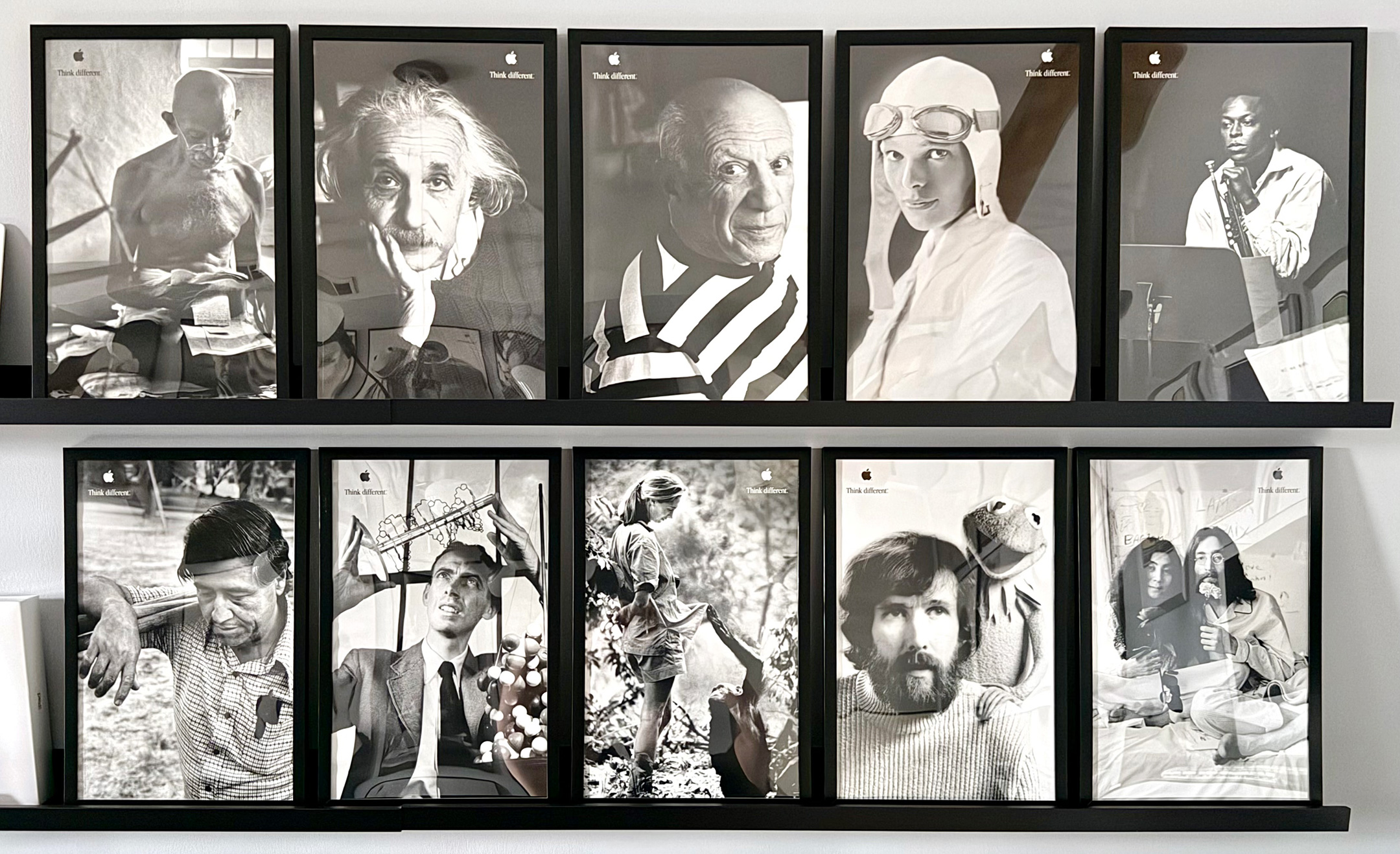
I have collected many of Apple’s Think different posters, print ads, and other materials, including a set of 10 posters that measure 11 x 17 each and were distributed to educators. Some designs in this Think different education set are cropped versions of the 24 x 36 posters.
The 24 x 36 posters photographed here are displayed in my dining room on two walls to create a gallery effect. I also included a photo of the 11 x 17 posters on the facing wall. You will note that the photography style of this entry is very different from my typical posts. These photos were captured with iPhone 17 Pro in situ with inconsistent lighting, angles, and reflections.
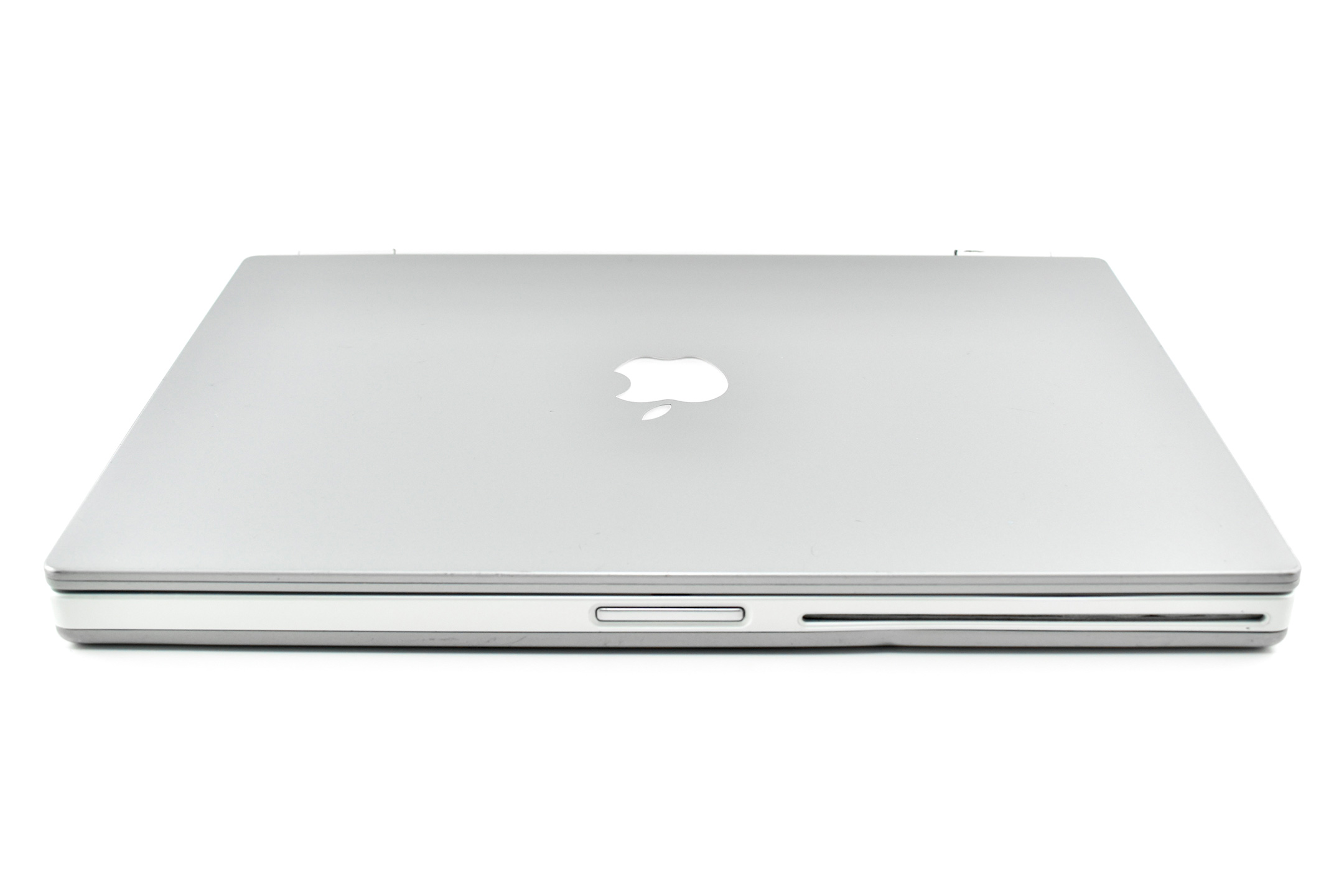
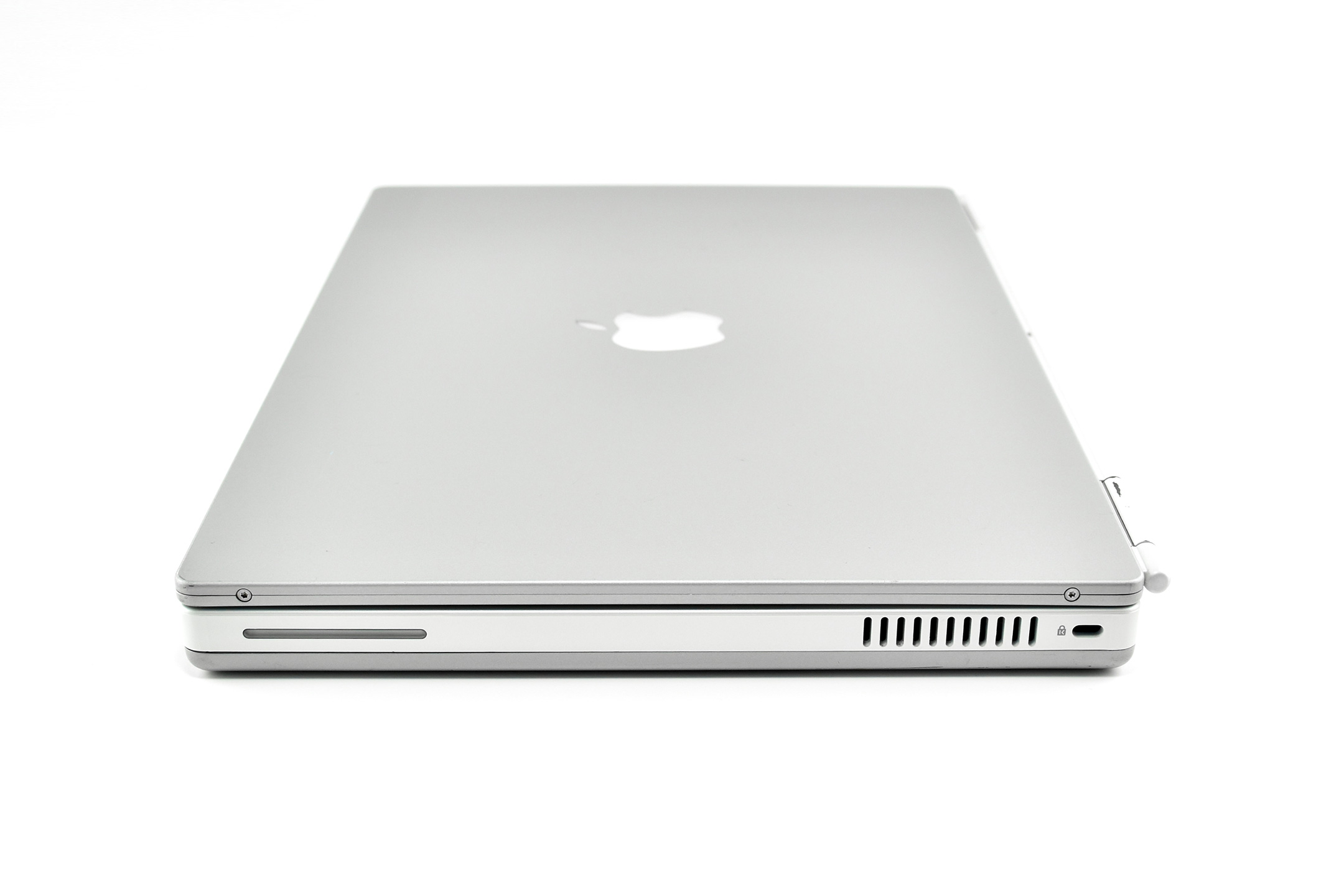
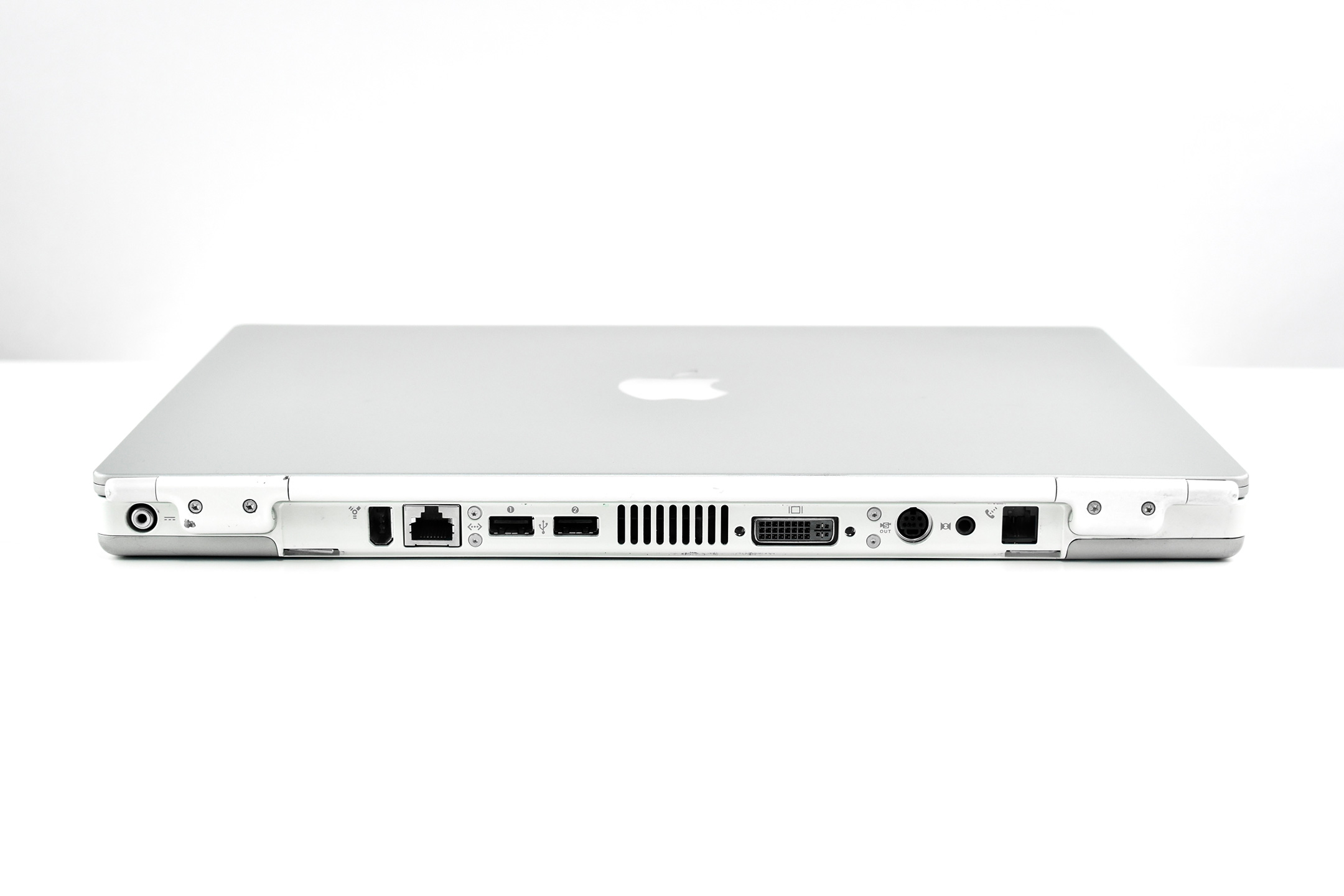
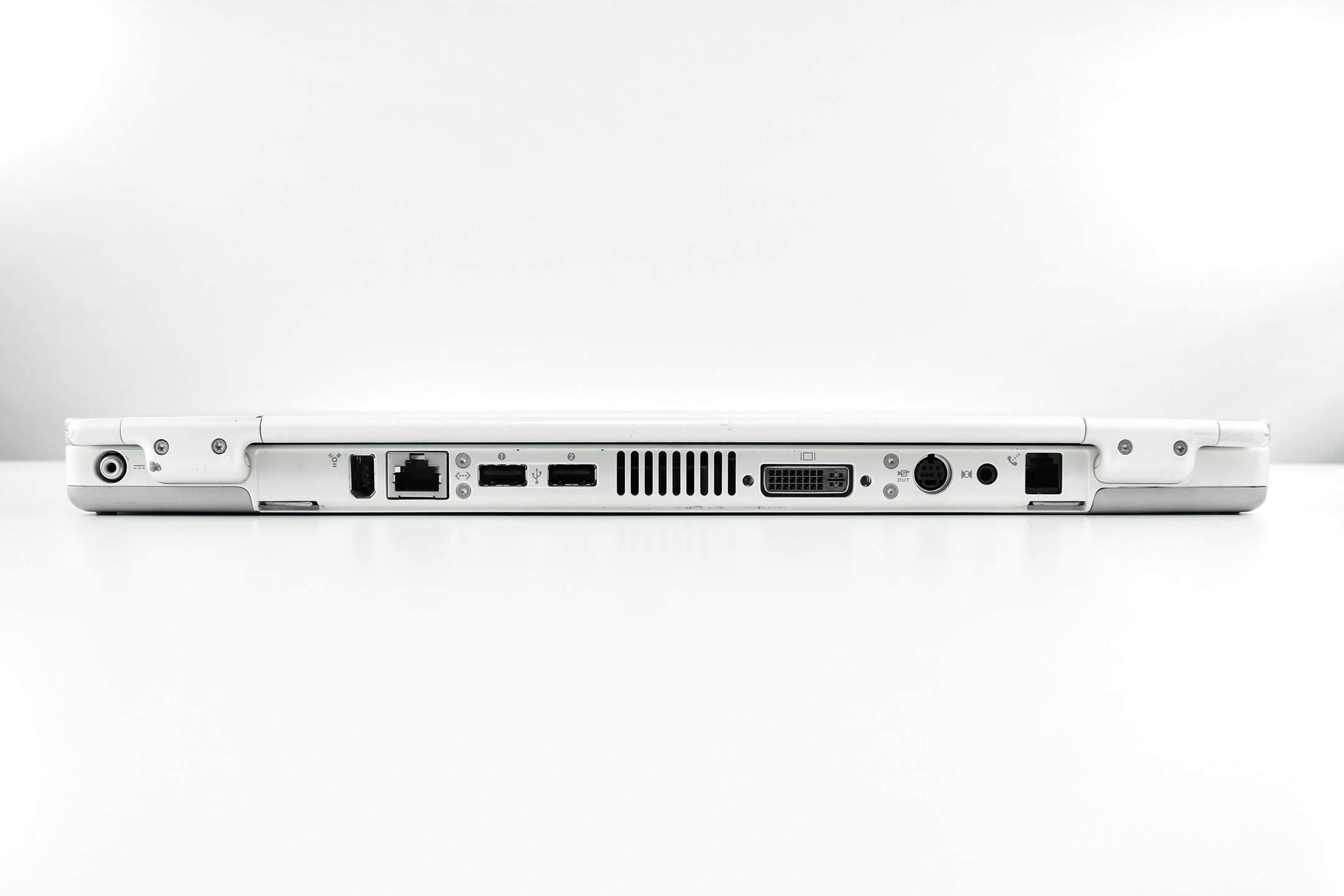
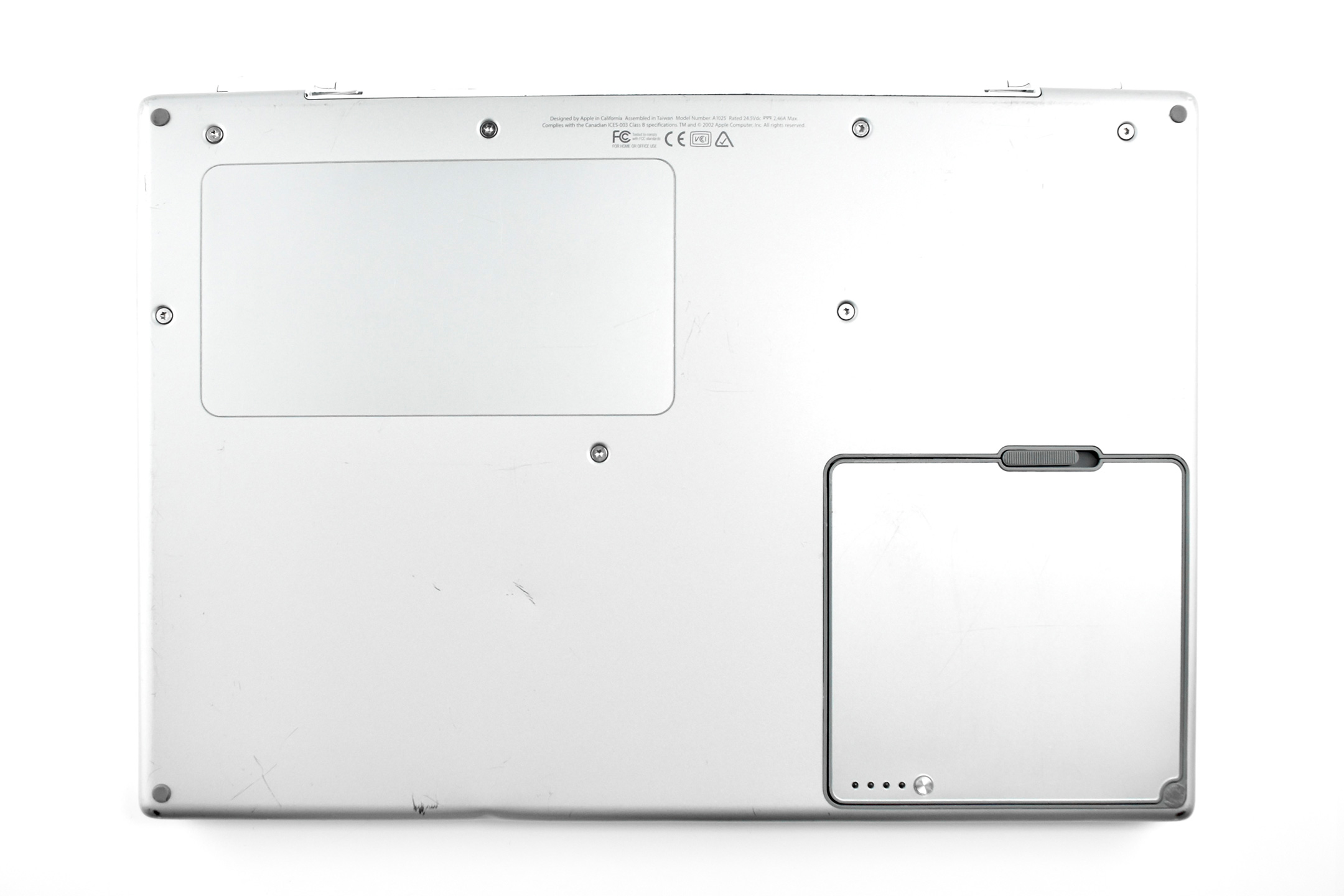
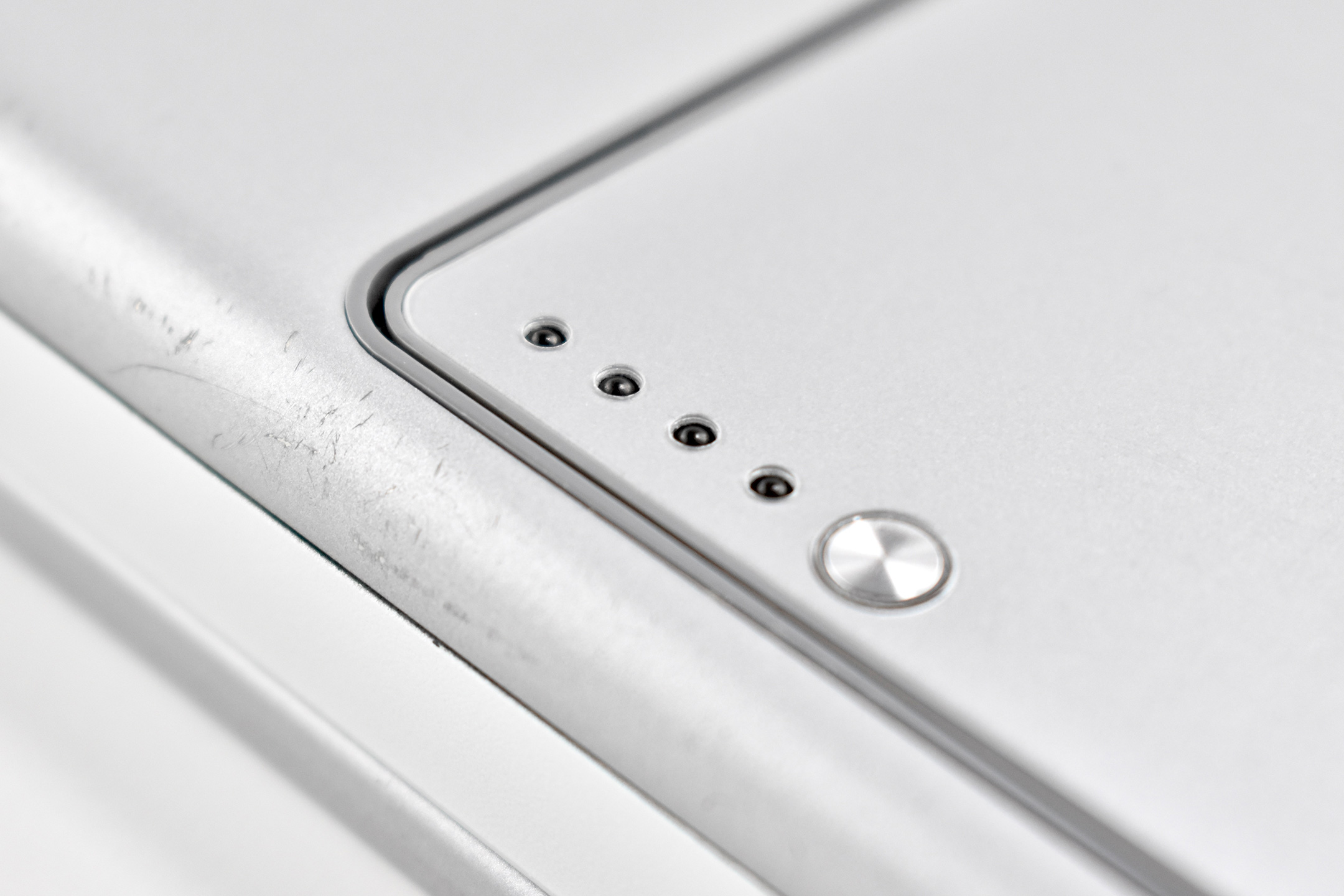
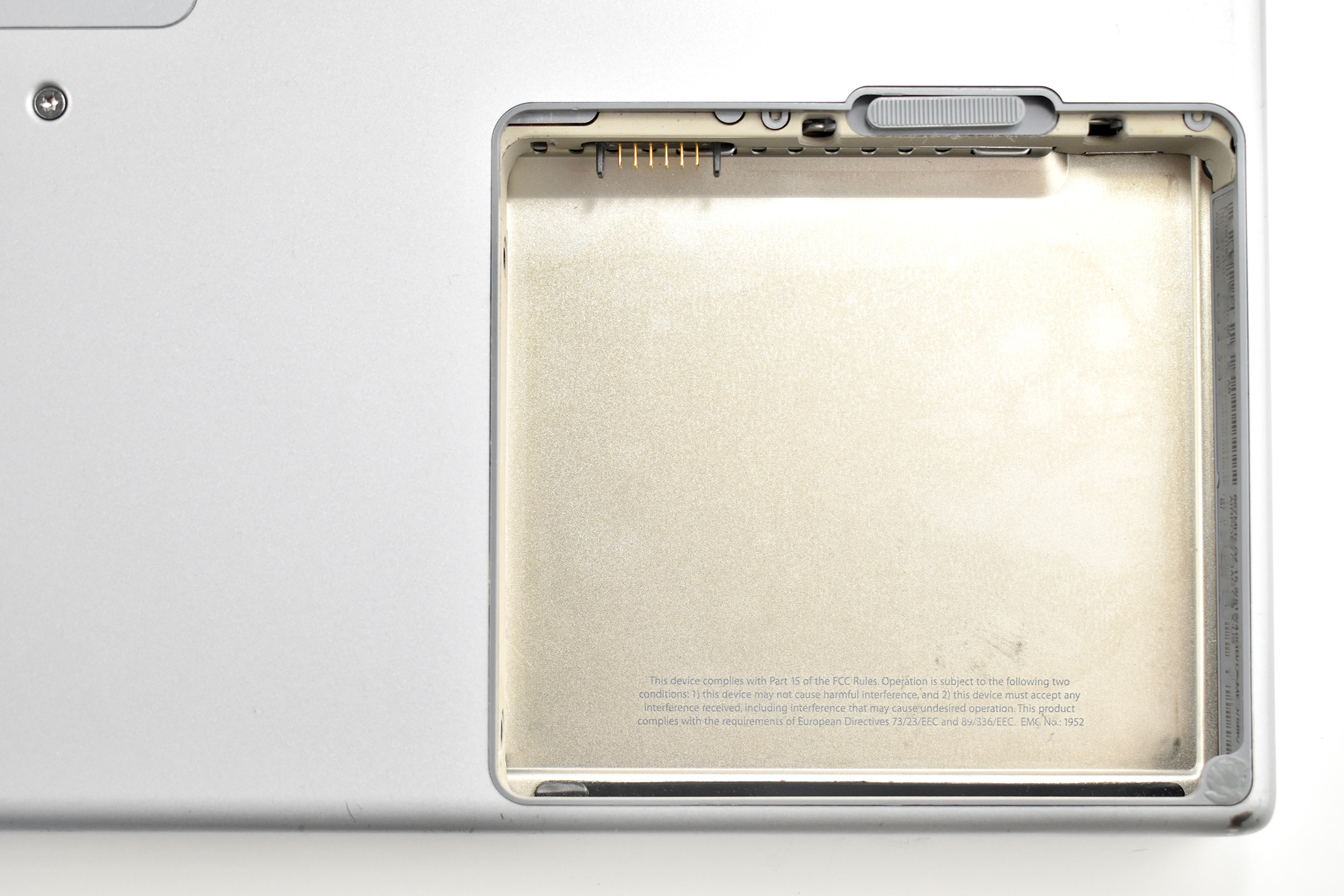
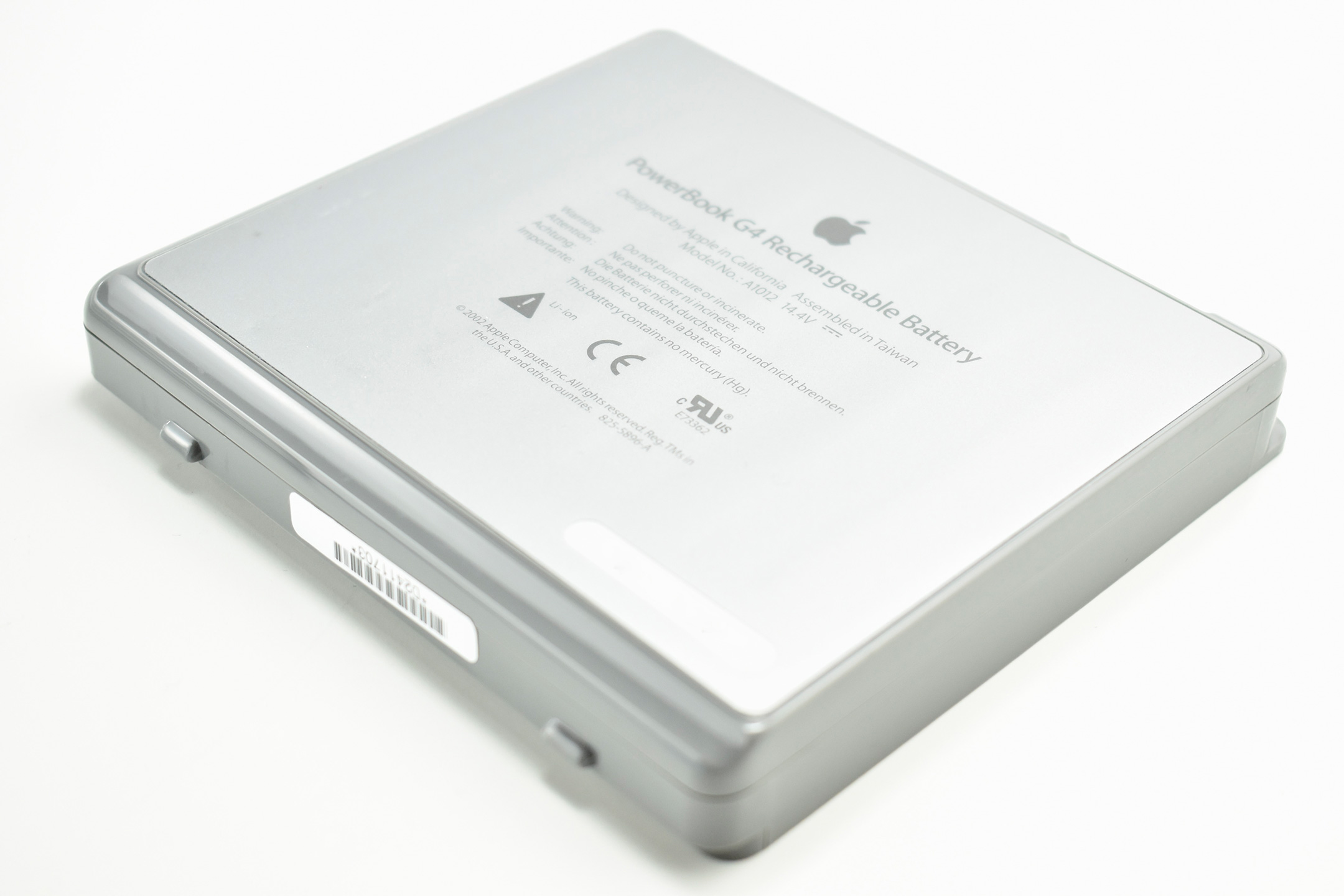
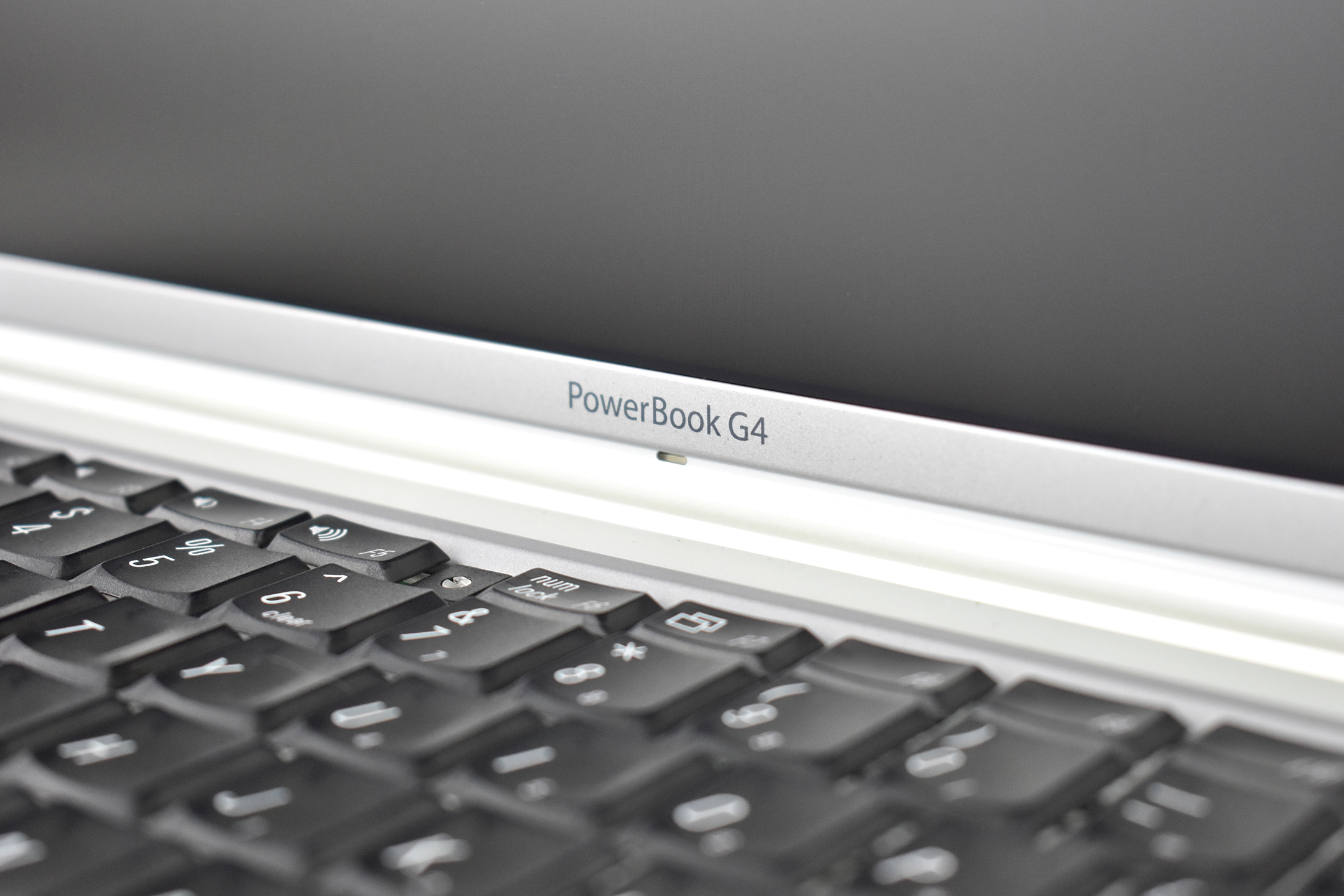
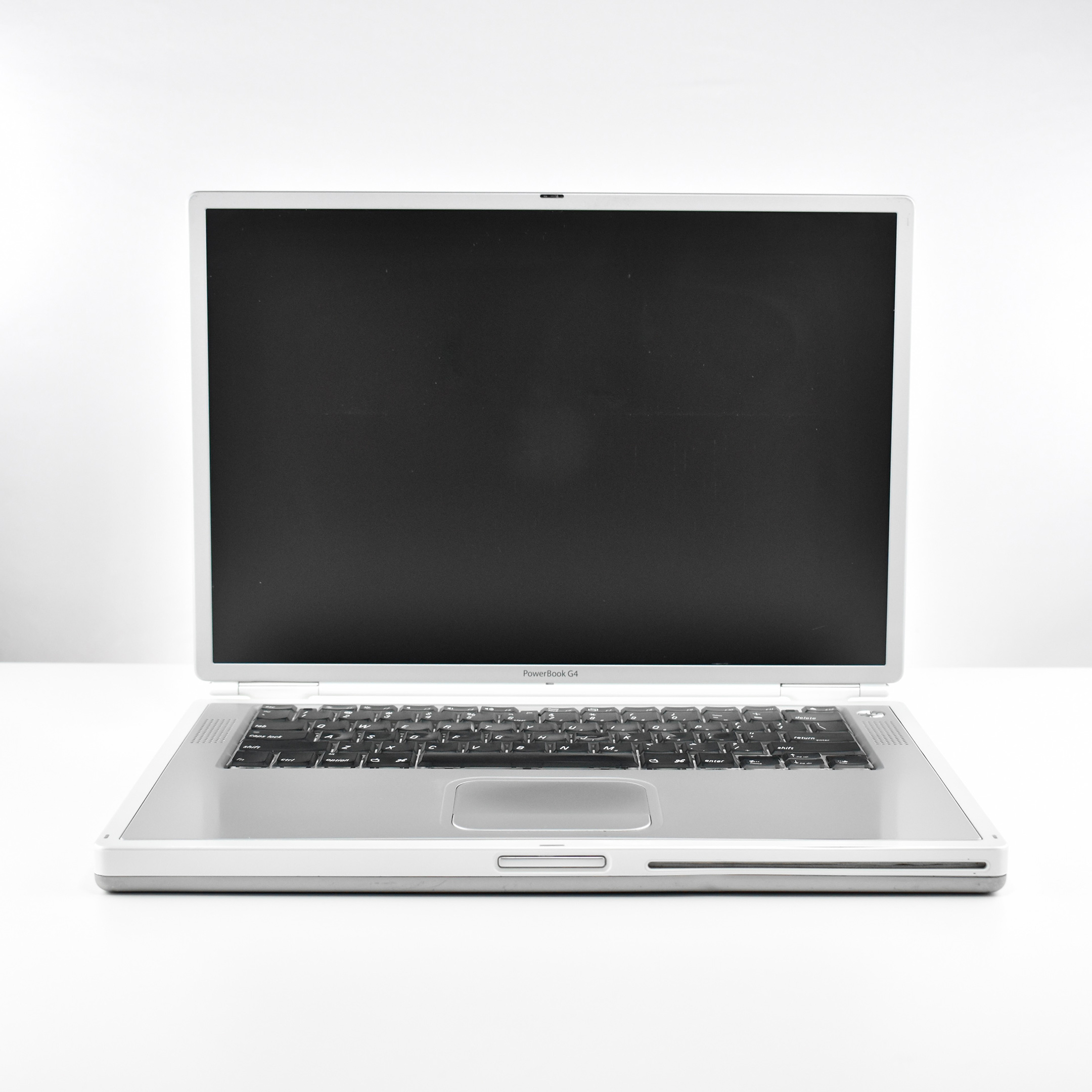
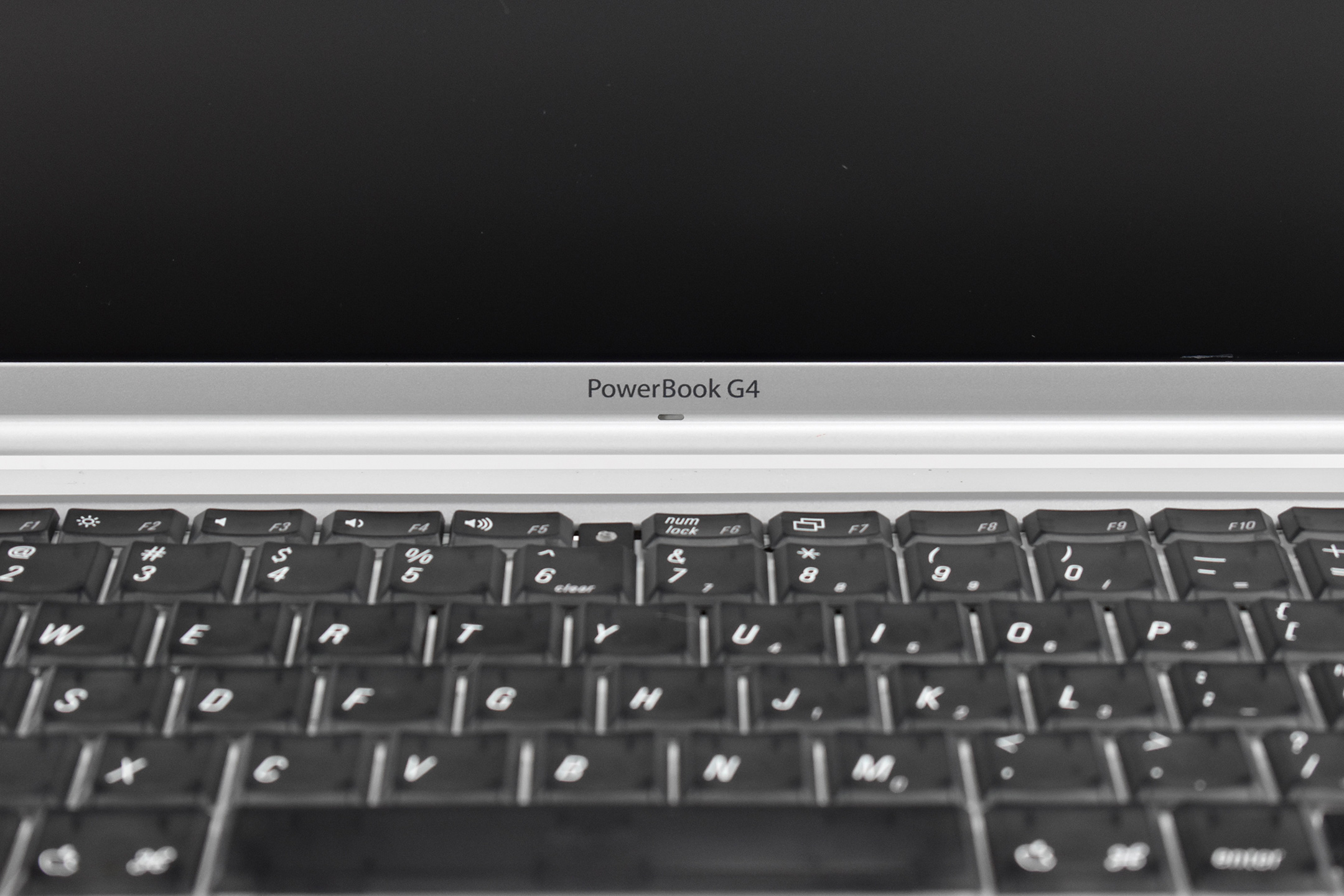
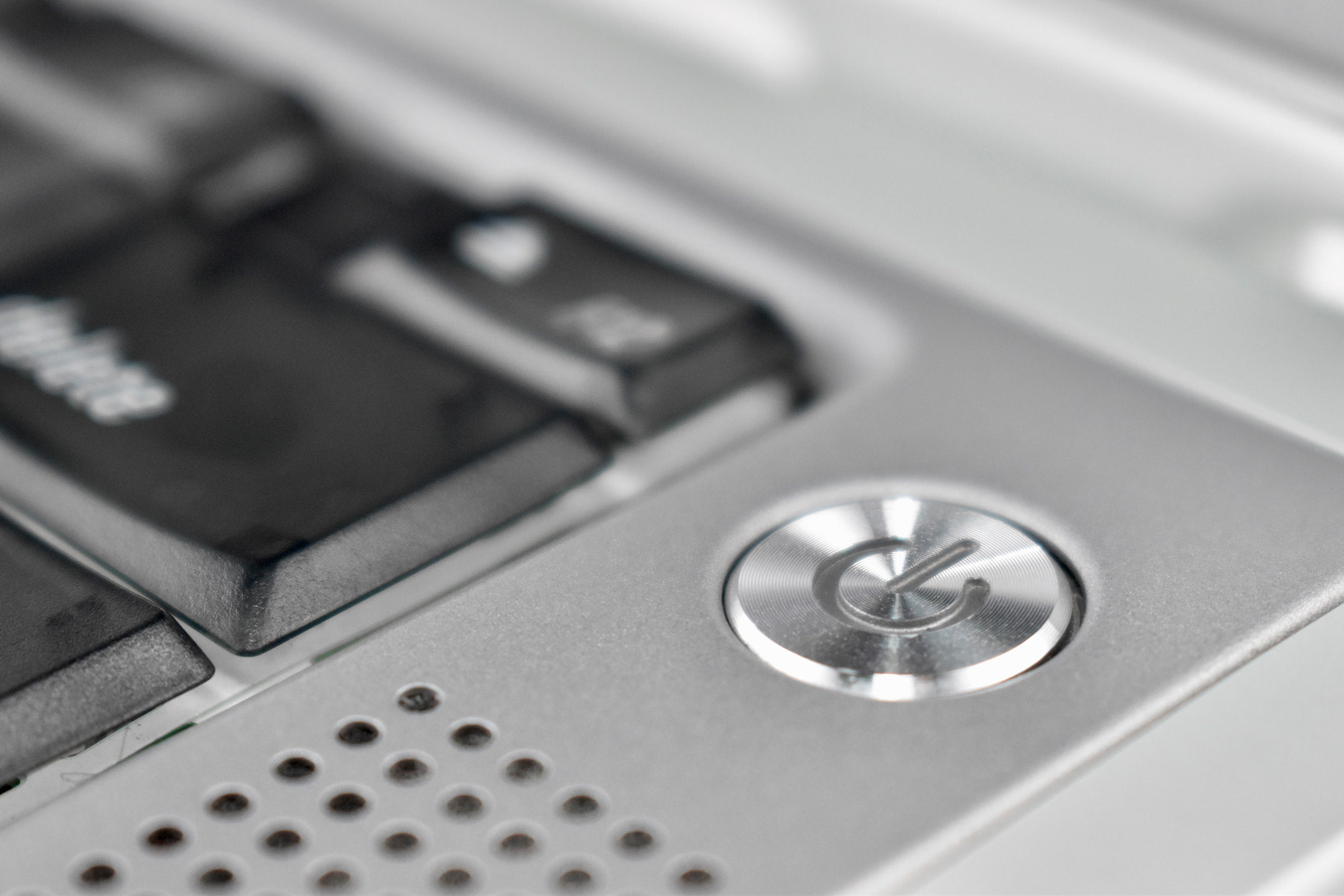
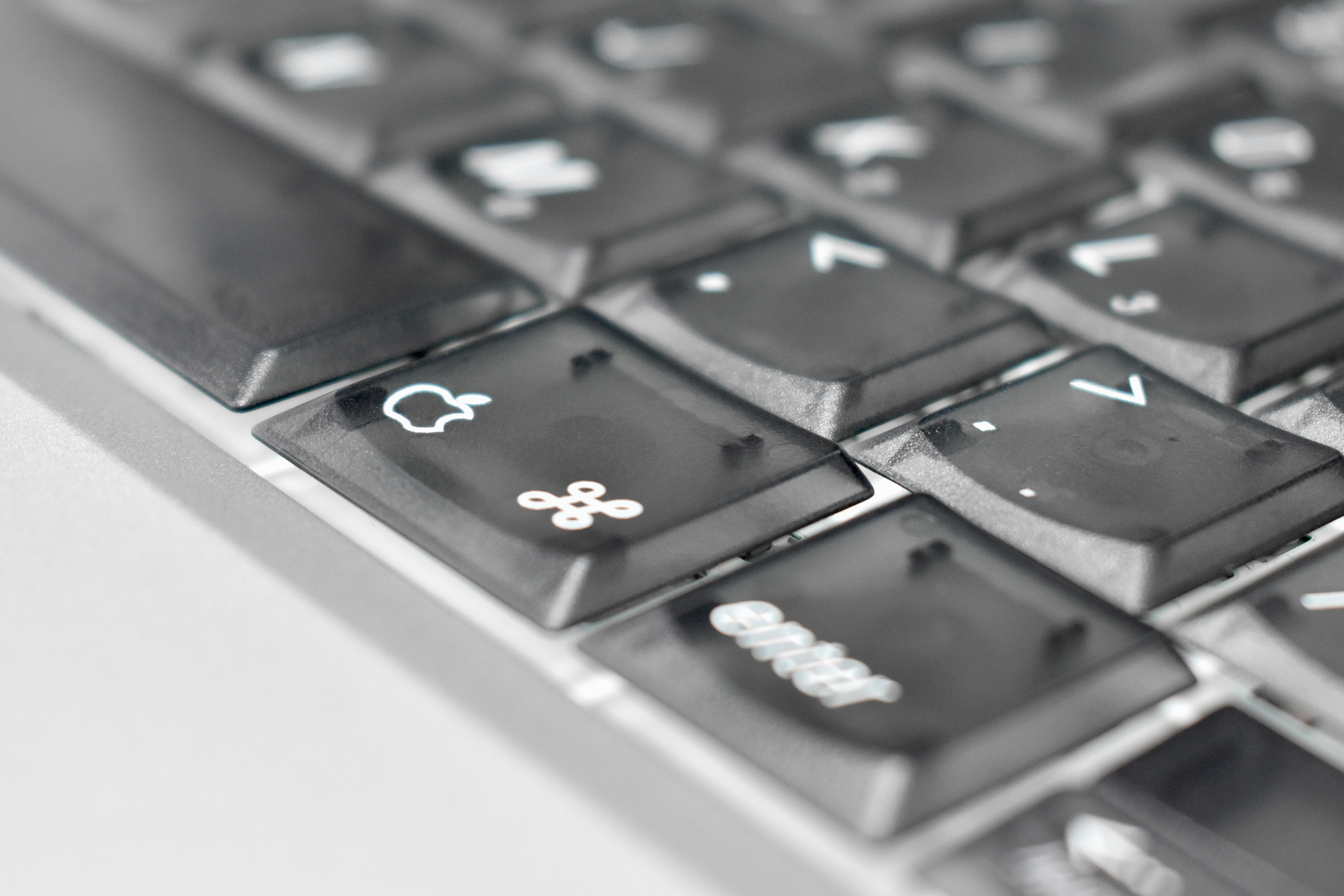
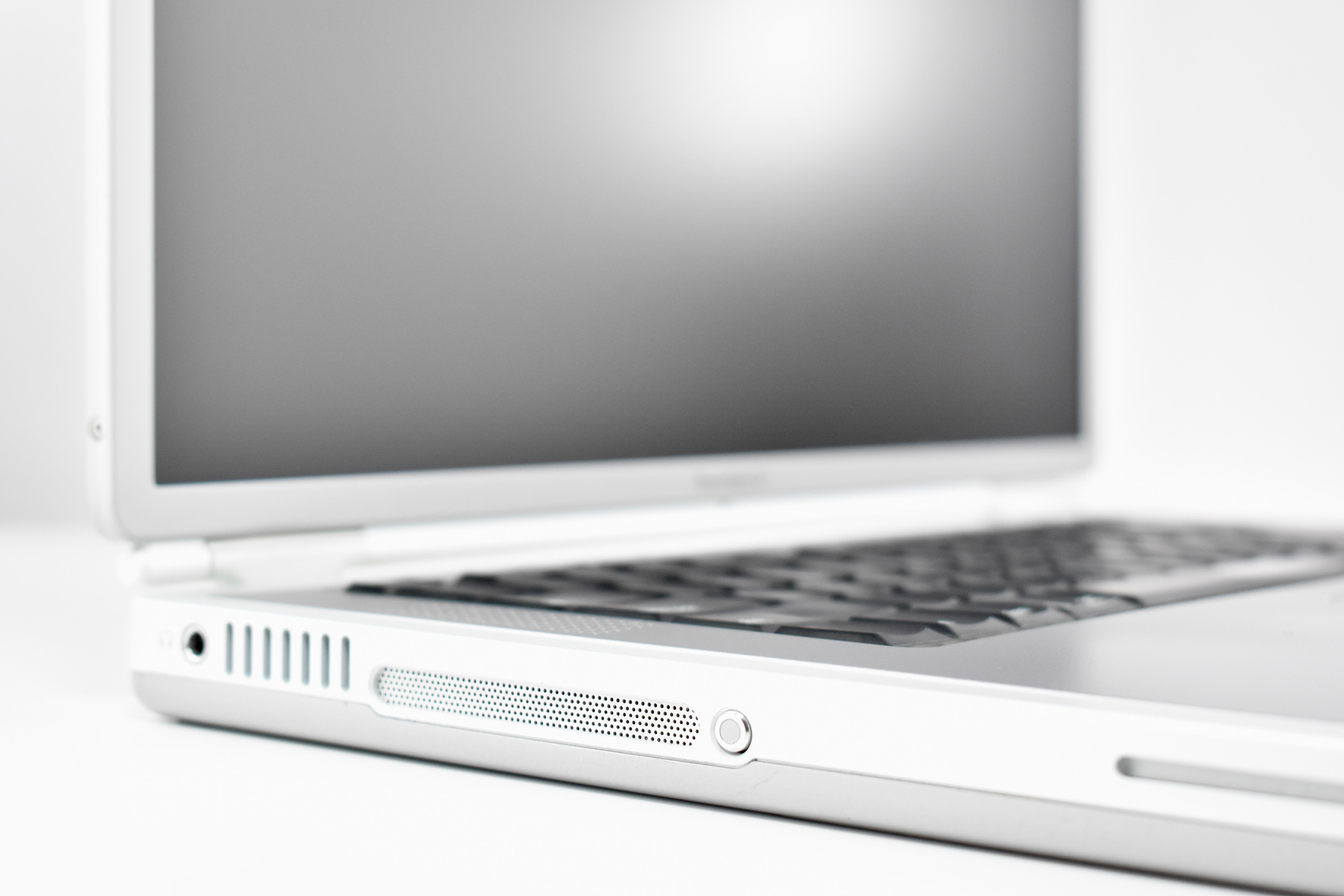
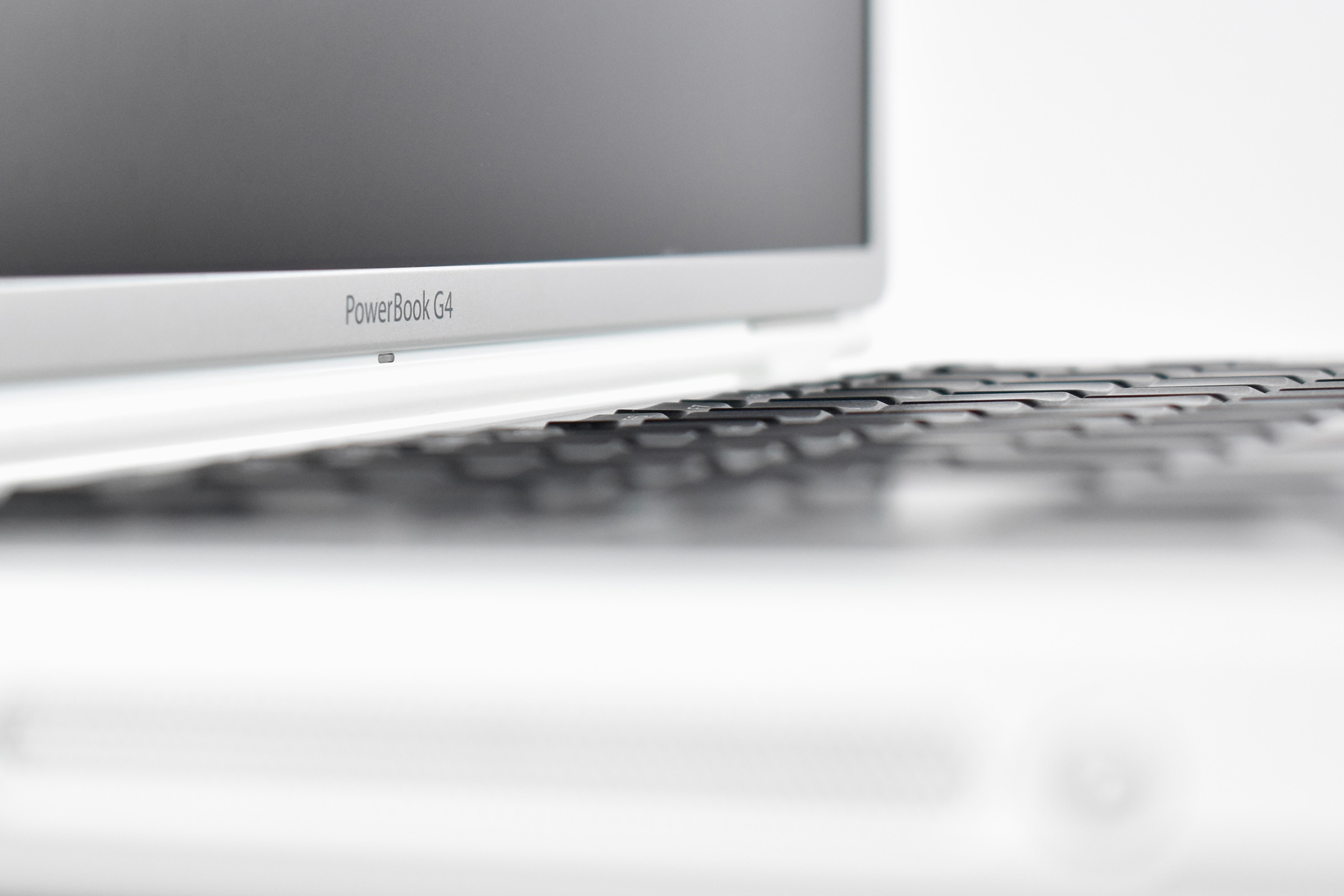
The Titanium PowerBook G4 with DVD burning SuperDrive was introduced on November 6, 2002. The laptop had the industry’s first slot-loading SuperDrive optical drive that allowed reading and burning both CDs and DVDs. It included integrated 802.11 wireless networking and the fastest mobile graphics processor until that time (ATI Mobility Radeon 9000). It weighed 5.4 pounds in a 1-inch-thick Titanium enclosure with a widescreen 15.2-inch display.
Apple touted the Titanium PowerBook G4’s speed as equal to or faster than desktop computers of the time:
“Combined with the power of Apple’s UNIX-based Mac OS X version 10.2 ‘Jaguar,’ the new PowerBook G4 runs professional applications including Adobe Photoshop up to 44 percent faster than a 2.2 GHz Pentium 4-based notebook. The fastest PowerBook ever now offers even more incredible 3D graphics performance with the ATI Mobility Radeon 9000 graphics processor featuring up to 64MB of dedicated Double Data Rate (DDR) video SDRAM and advanced capabilities such as programmable pixel and vertex shading for lighting and shadow effects, photorealistic 3D performance and cinematic-quality video.”
This laptop version included a 867MHz G4 processor, 512MB RAM, a 40GB hard drive, 56K modem, and AirPort wireless networking. The Apple model number is A1025. When released, it was “aggressively priced at only $2,299.”
A LoweEndMac review noted that this PowerBook now offered “Closed Lid Mode,” and described the feature:
“TiBooks support ‘lid closed’ (or clamshell) mode, which leaves the built-in display off and dedicates all video RAM to an external display.” The same website indicates that this laptop was also nicknamed the “TiBook,” short for “Titanium PowerBook.”
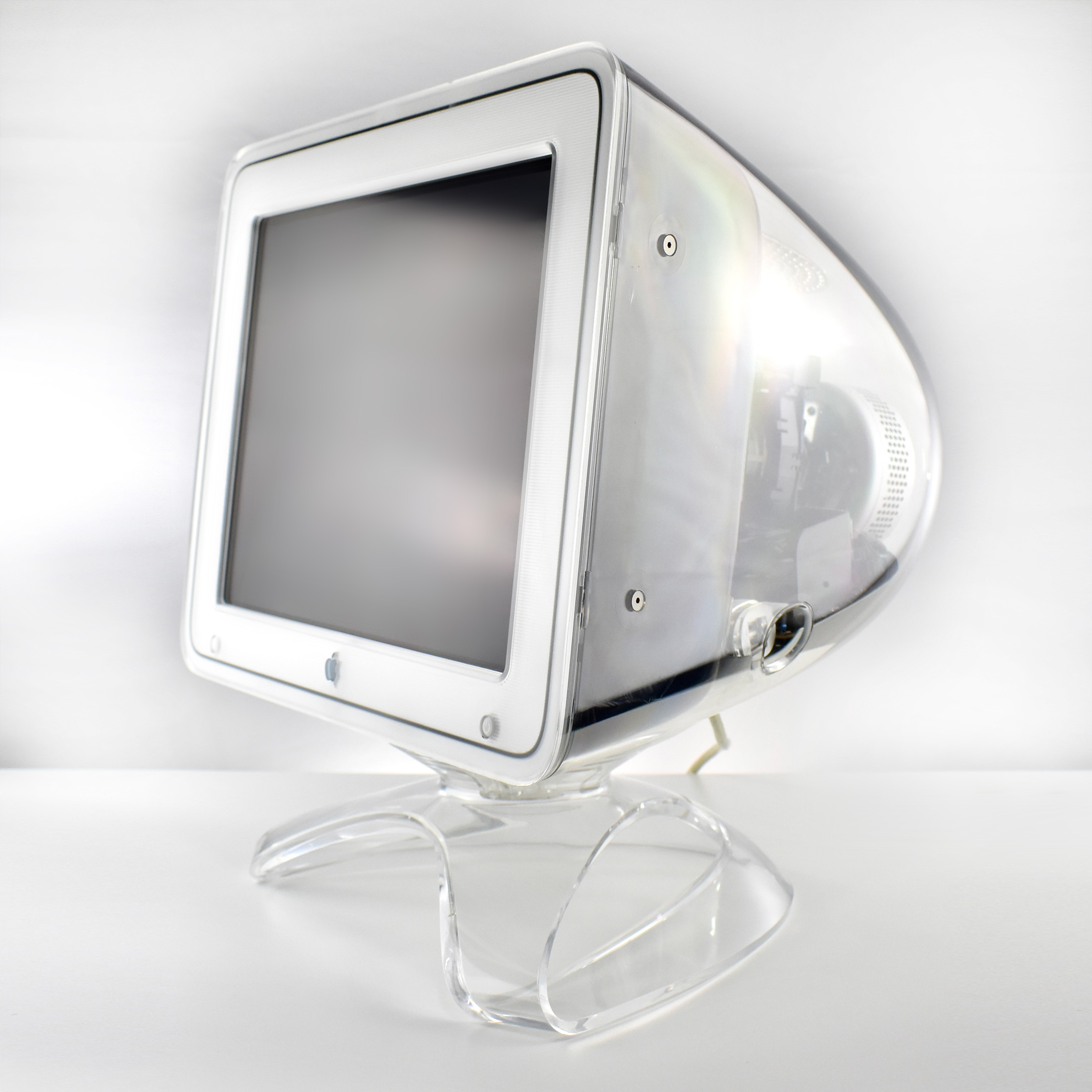
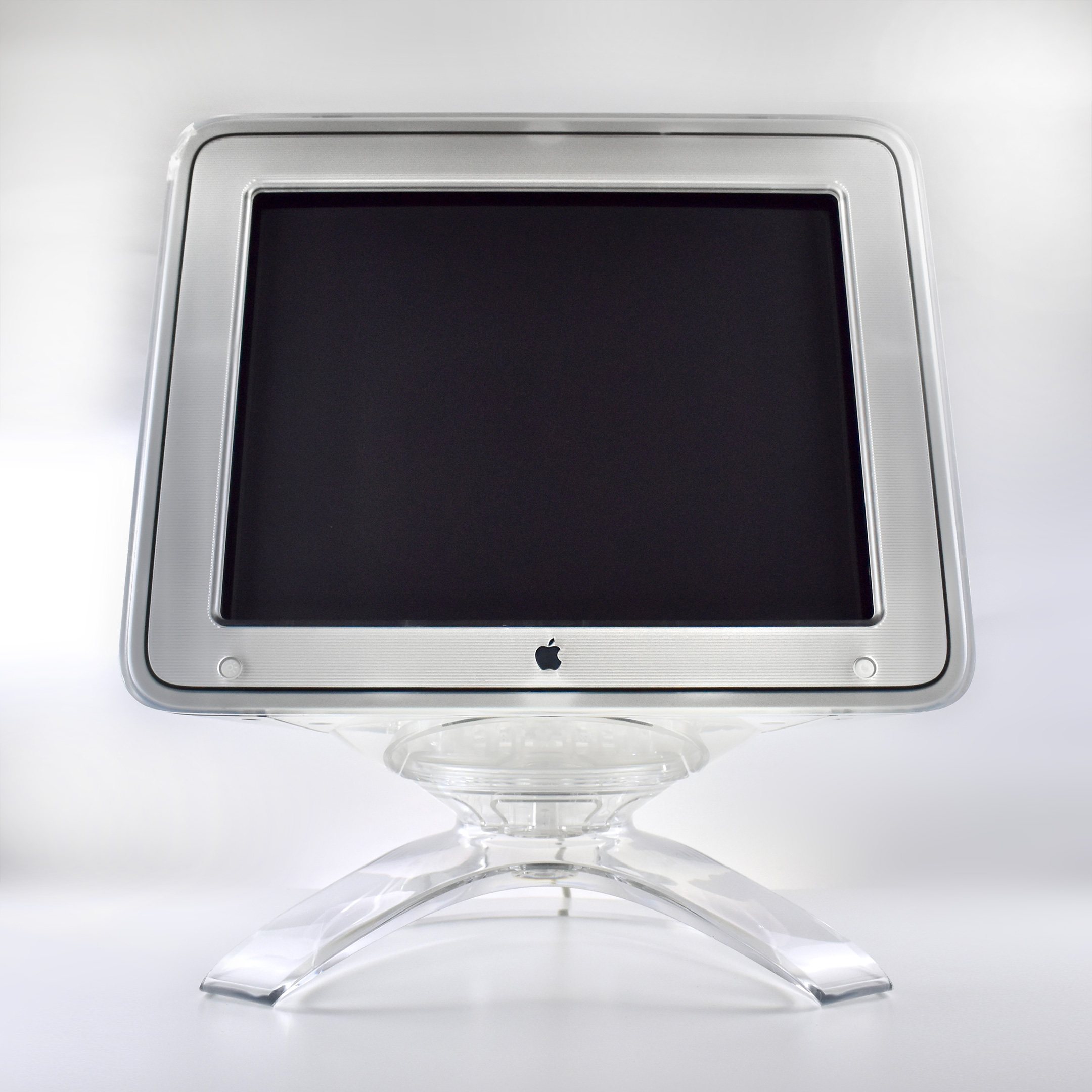
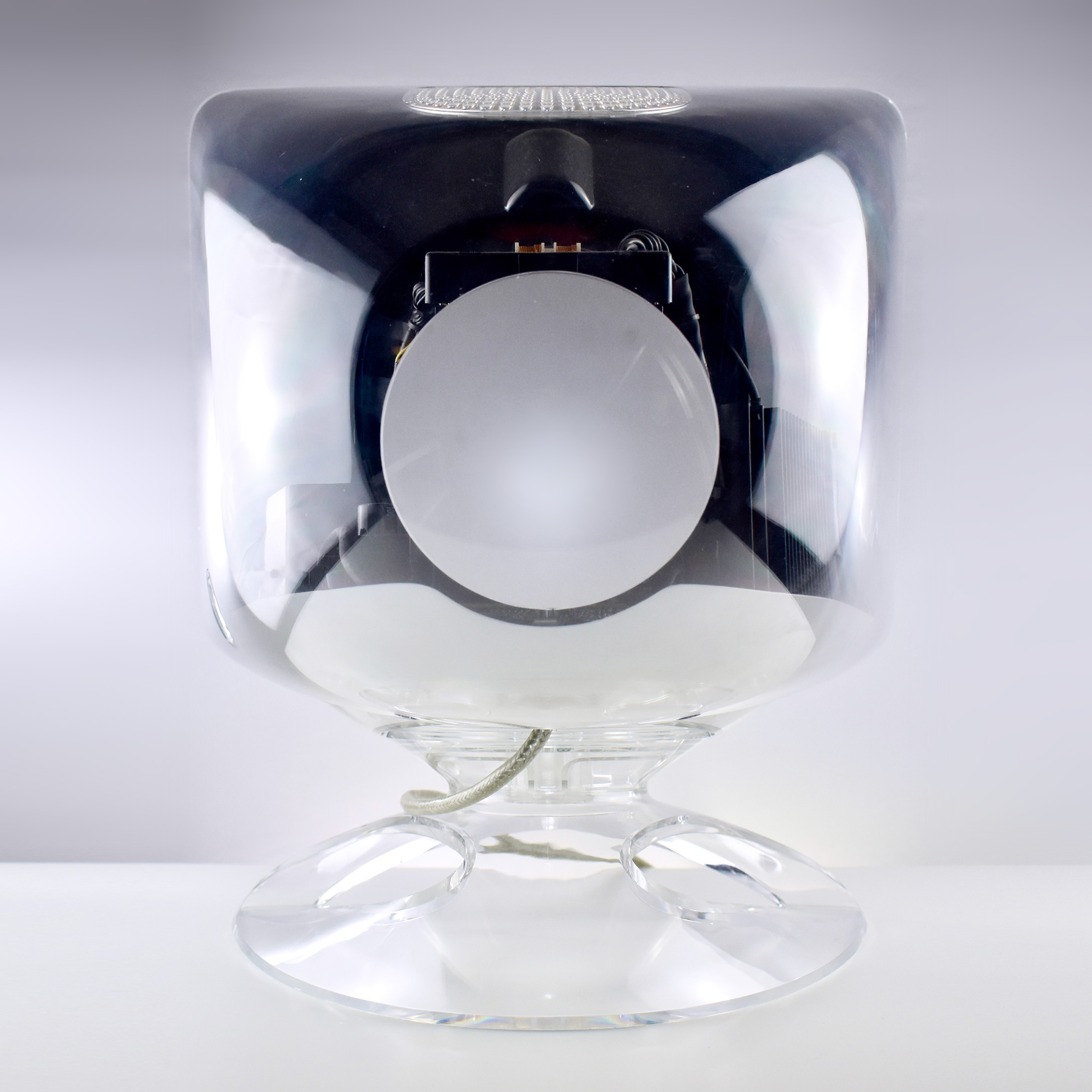
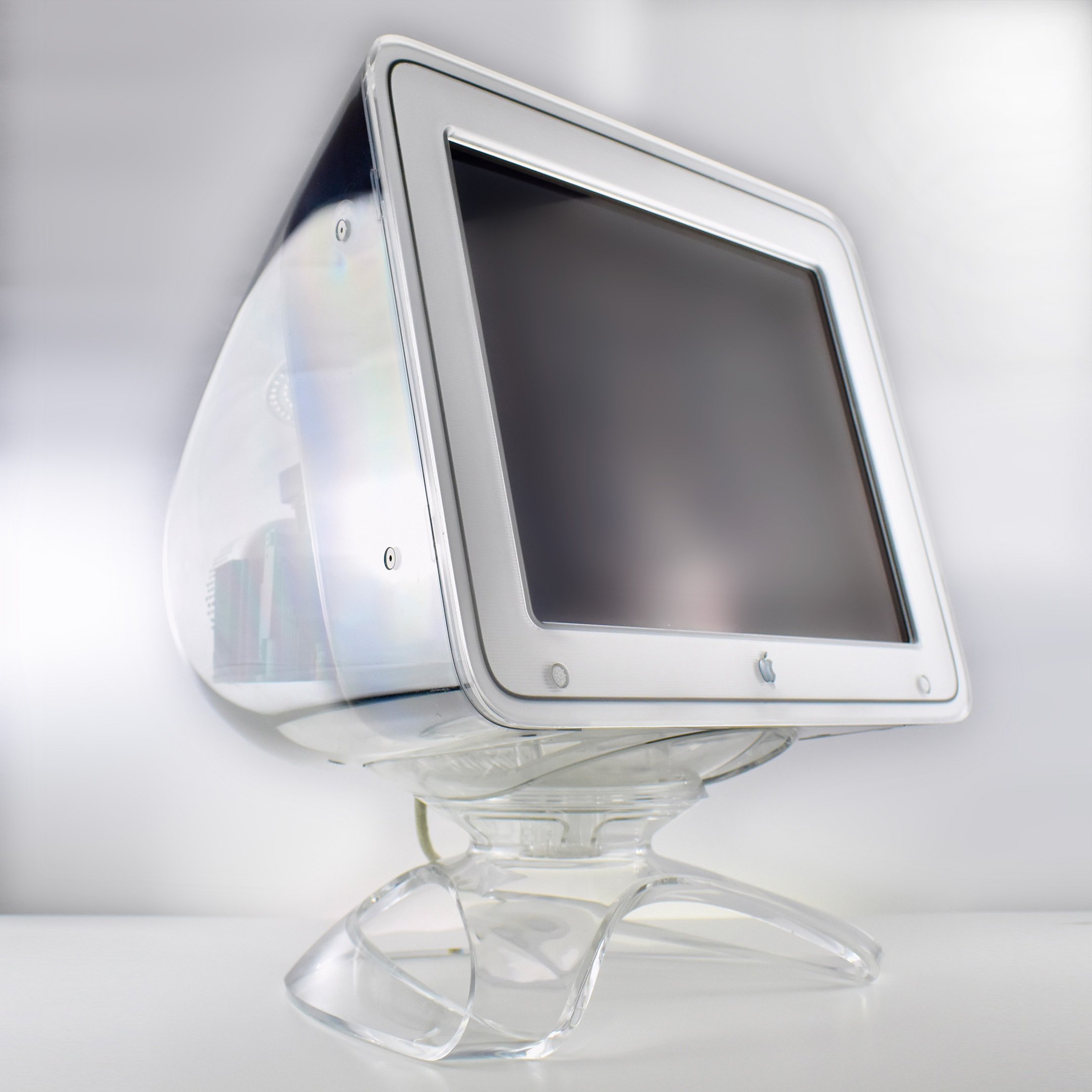
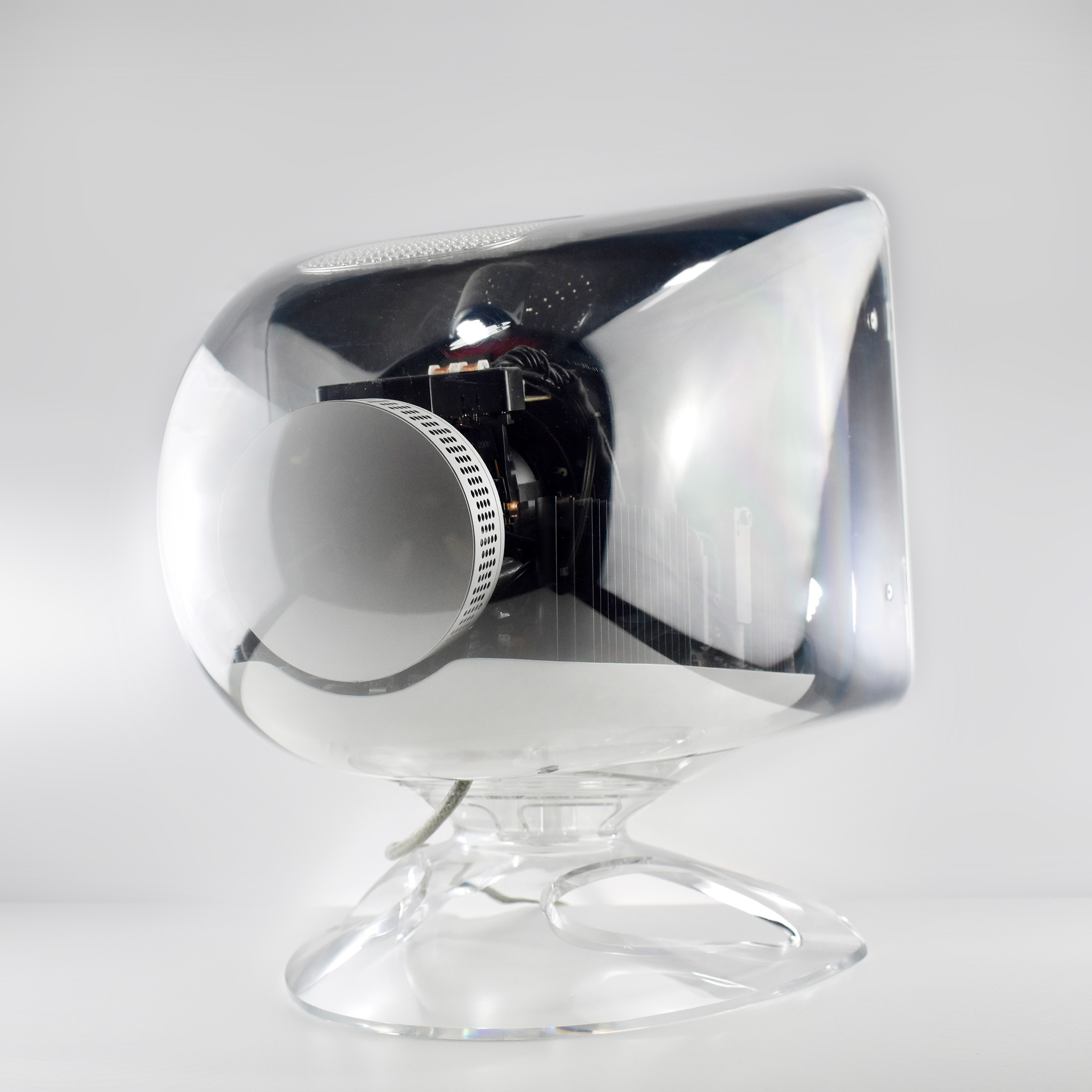
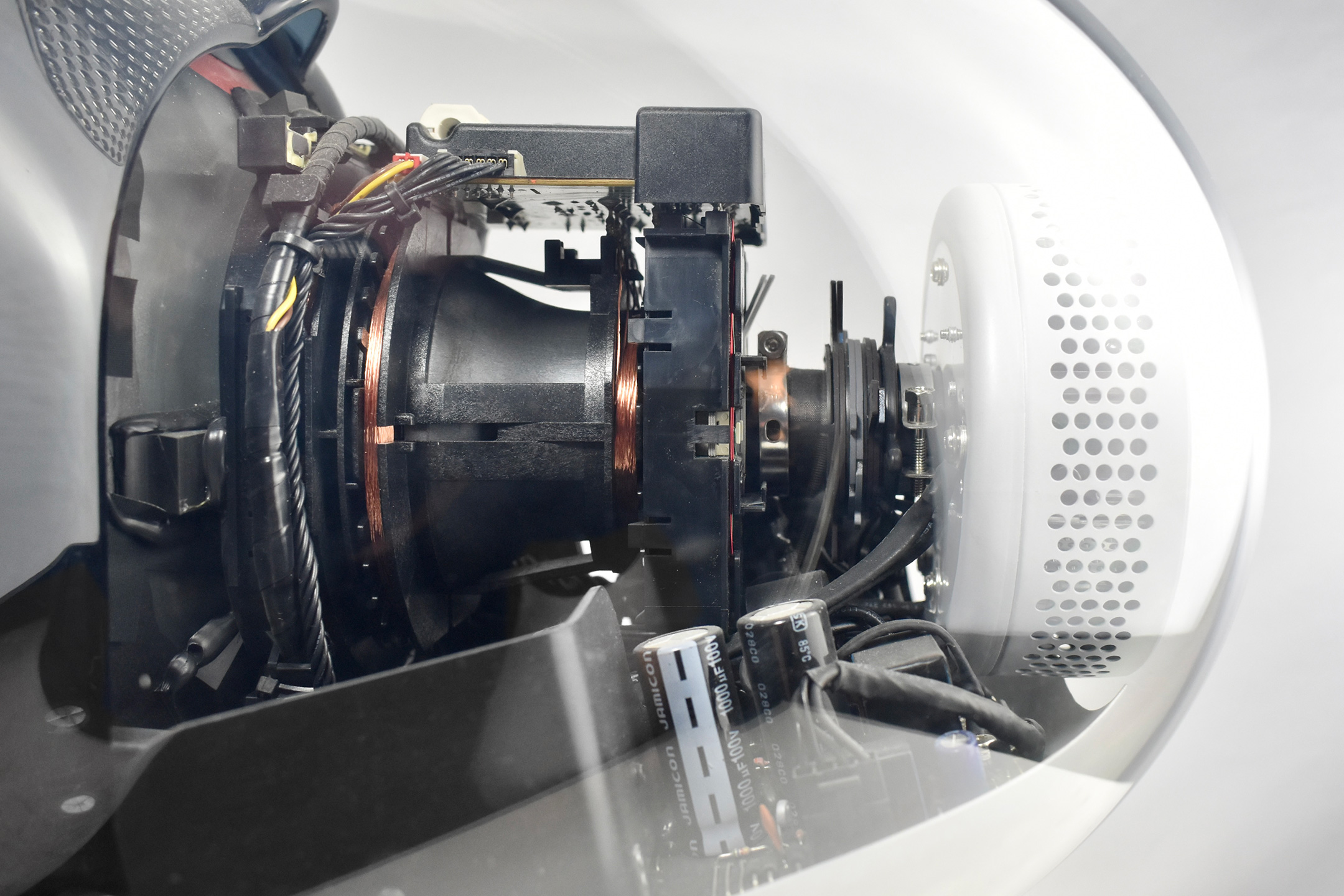
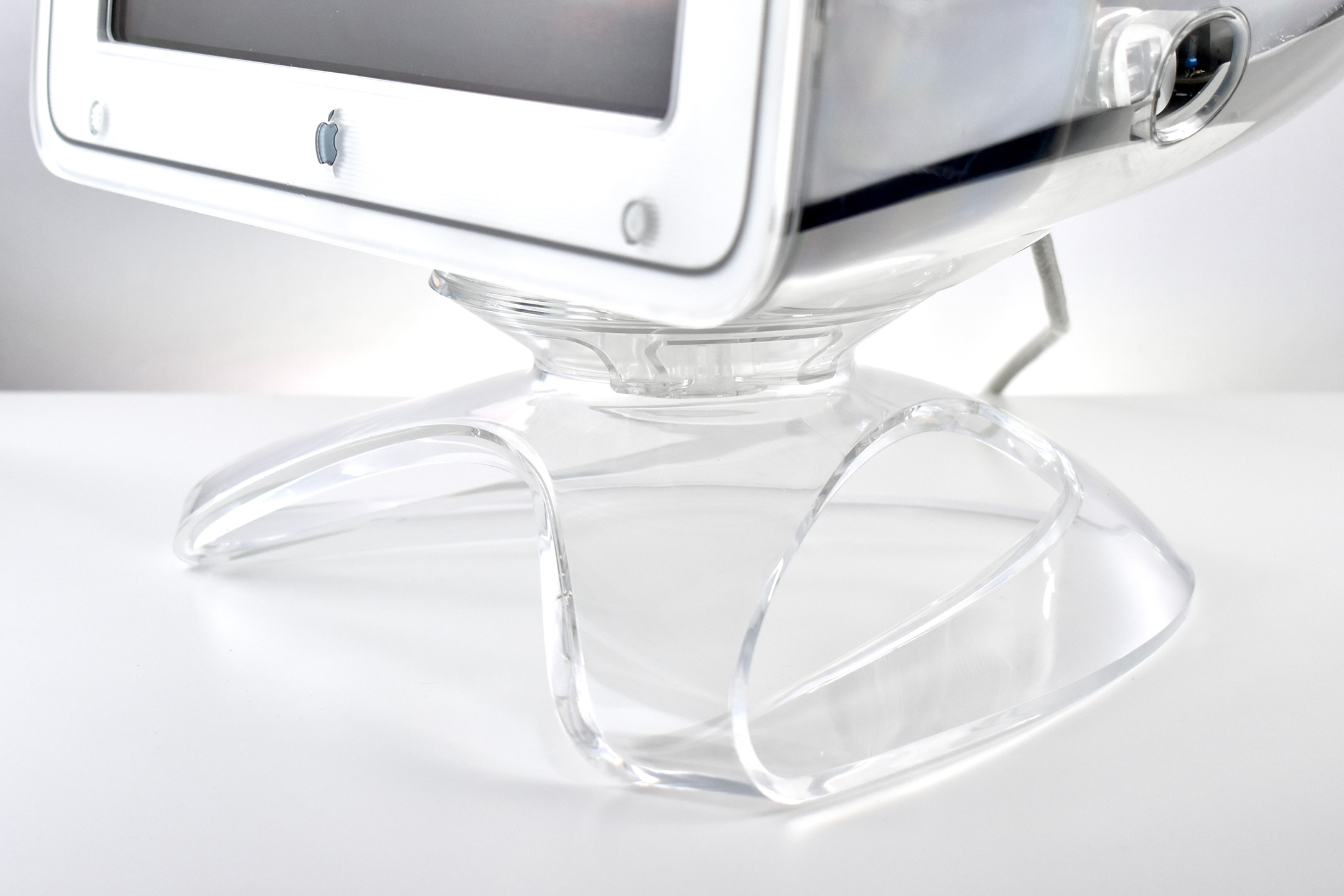
At the Macworld Expo in New York CIty on July 19, 2000, Apple announced three new Studio Display designs “in stunning crystal-clear enclosures”—two flat panel displays and this CRT (Cathode Ray Tube) Apple Studio Display.
The displays, designed to complement Apple’s Power Mac G4 Cube and Power Mac G4 professional desktops, shared three distinct features:
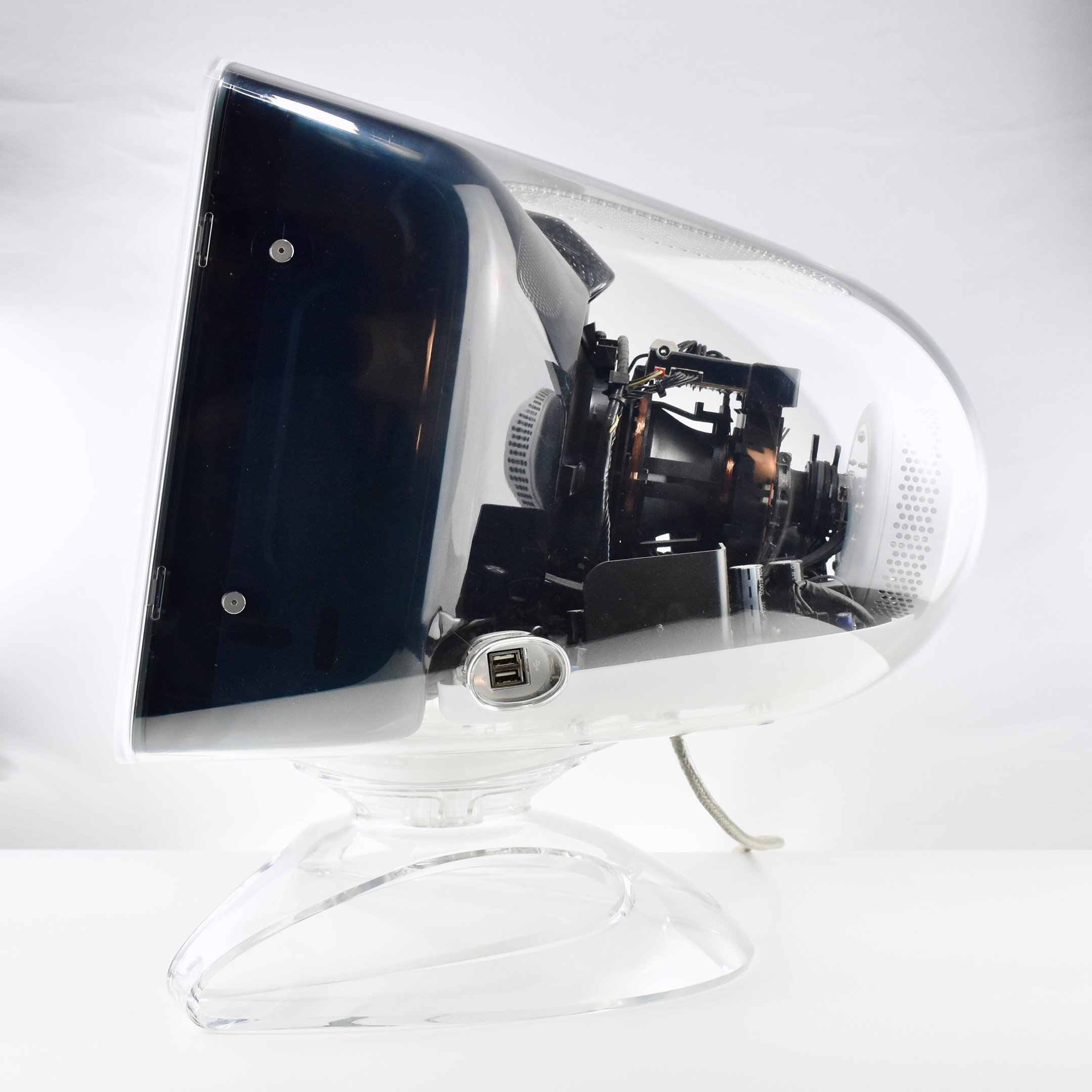
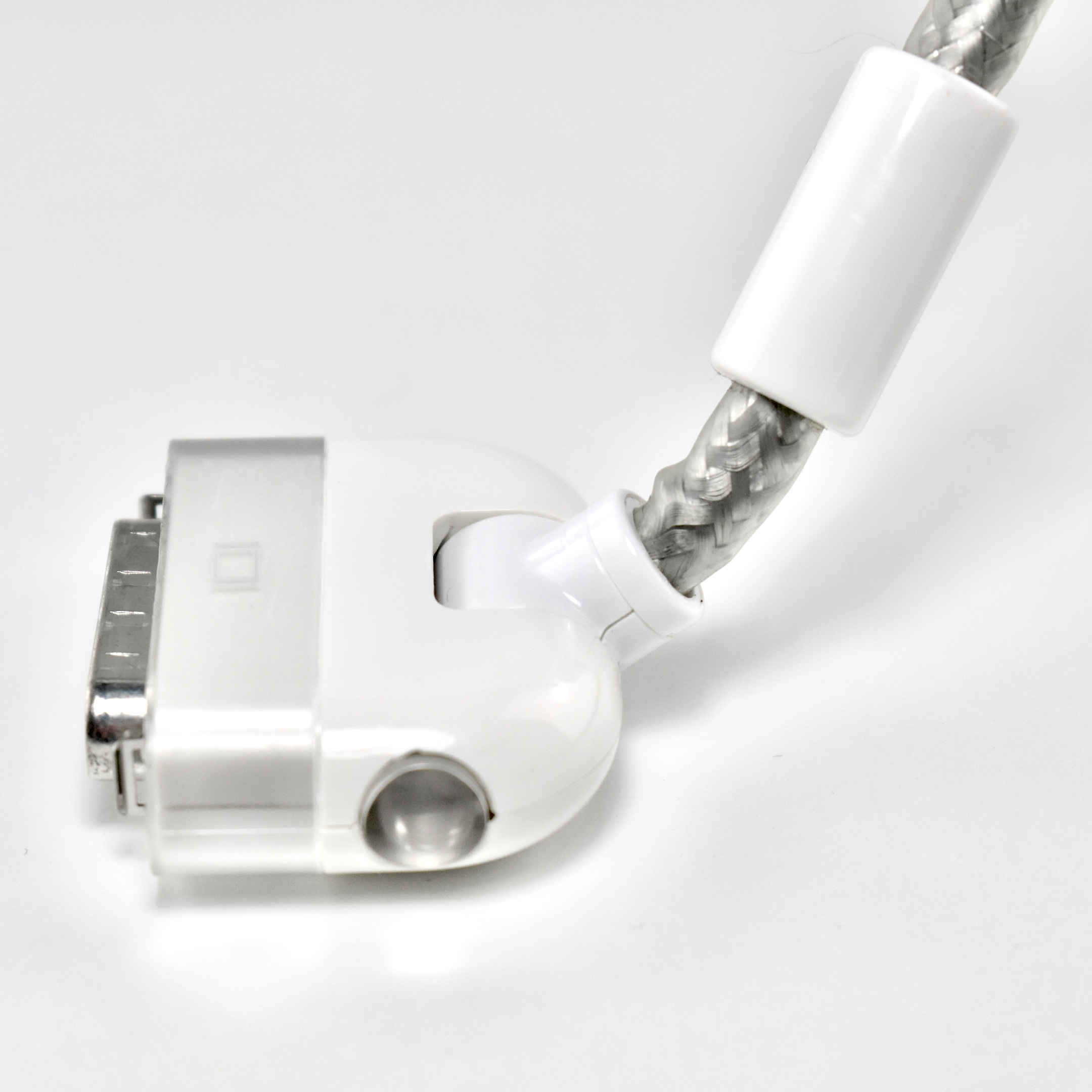
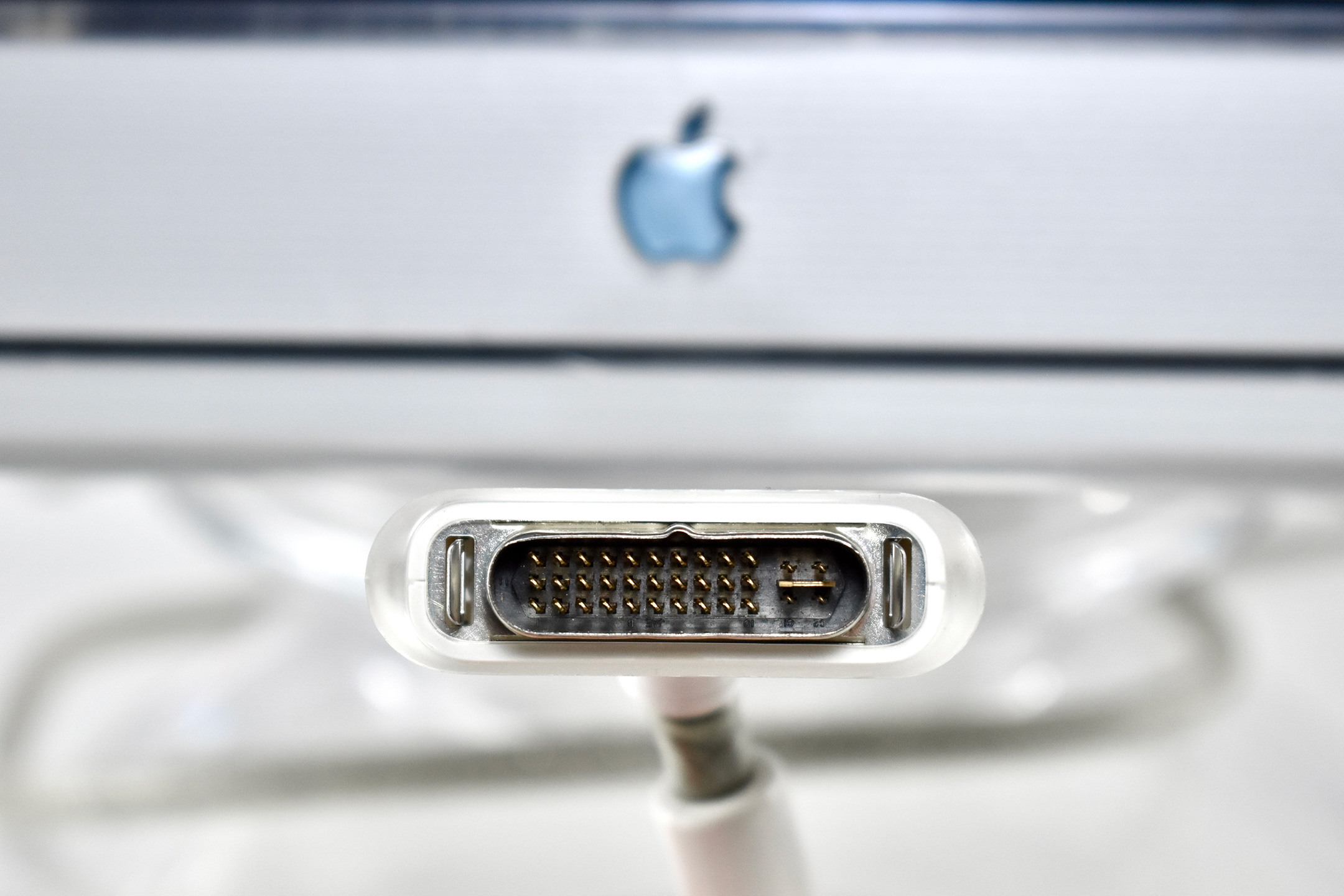
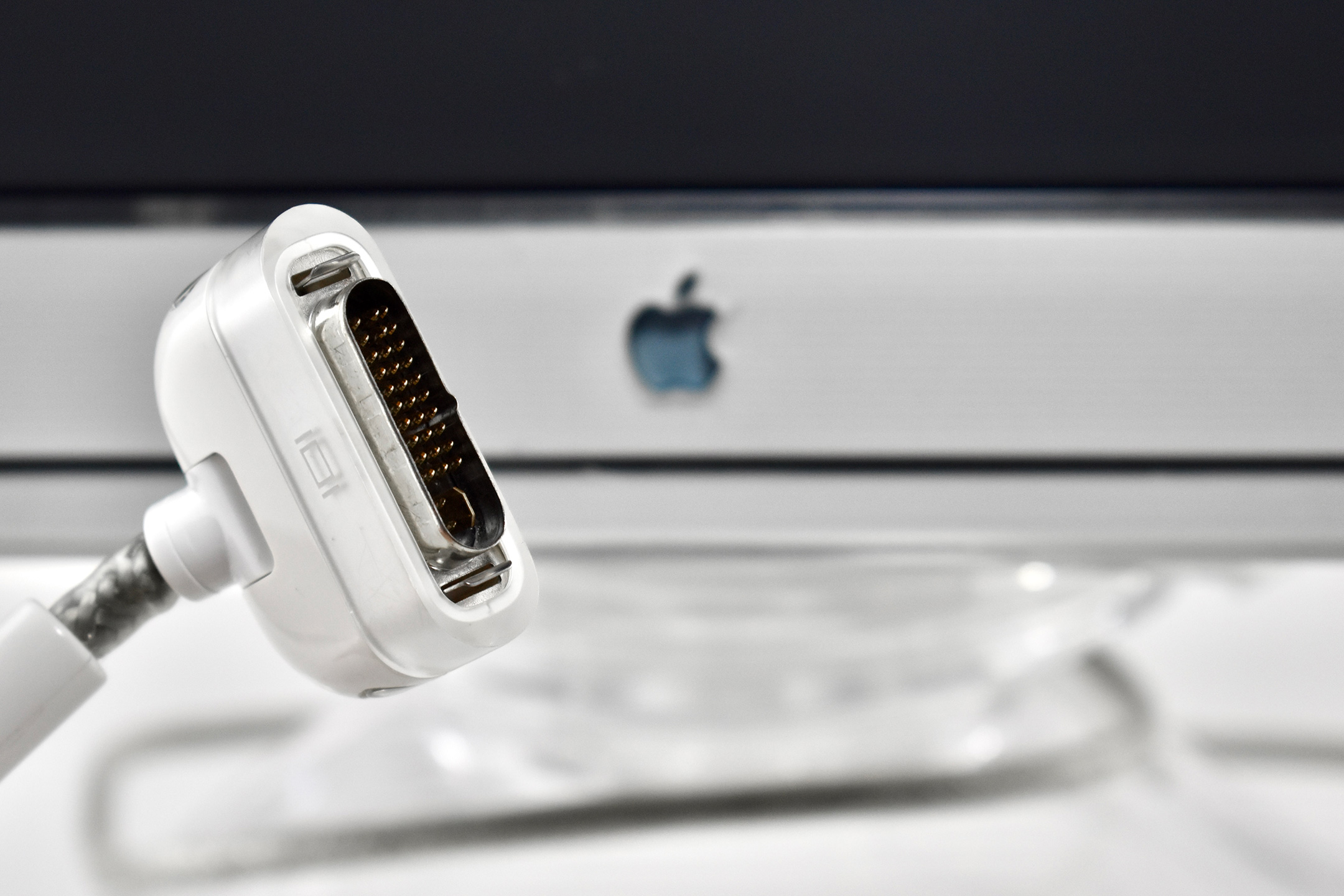
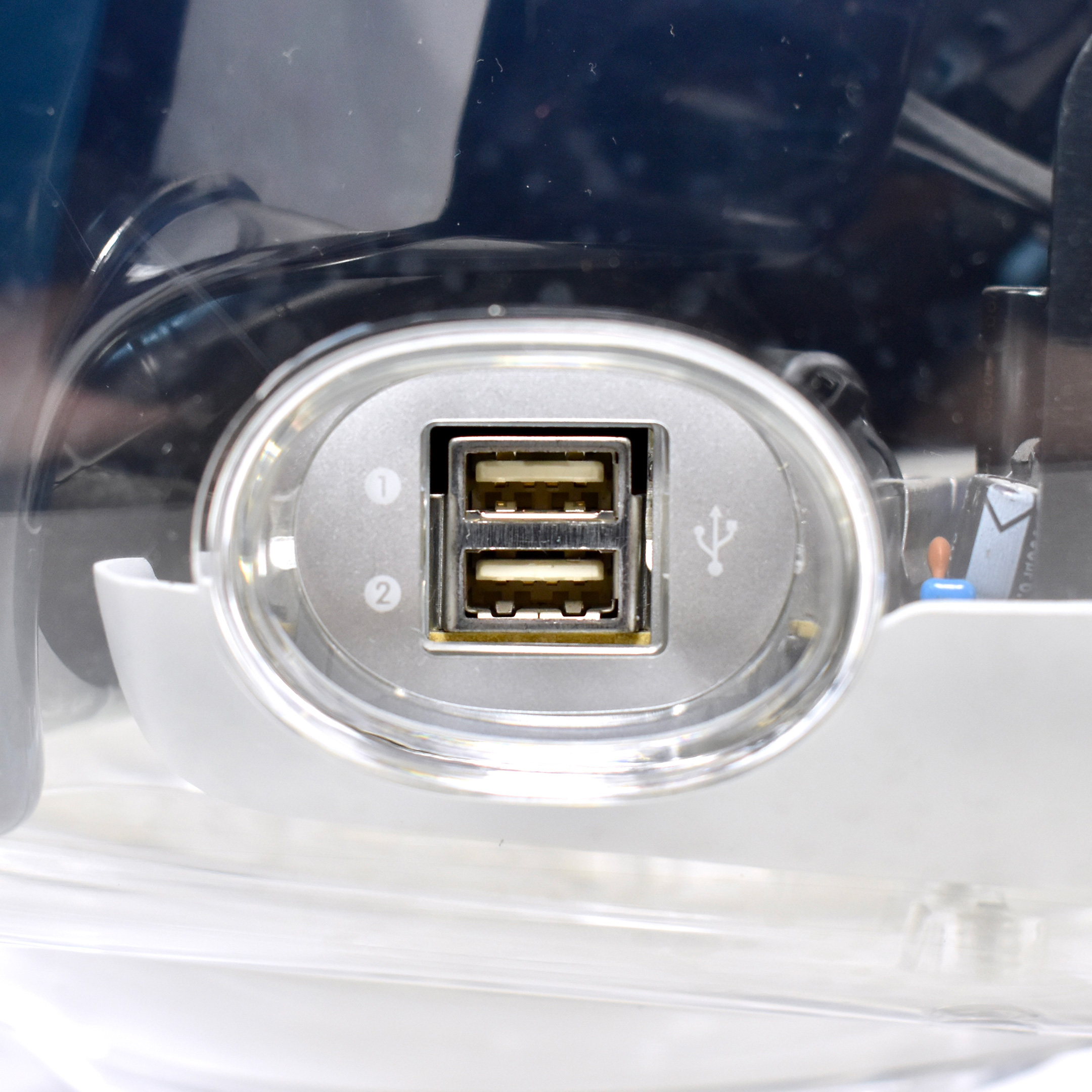
“each is powered from the computer, eliminating the need for a separate power cord; each has a two port powered USB hub for convenient connection to desktop USB devices, such as keyboards, USB speakers and digital cameras; and each utilizes the Apple Display Connector, a revolutionary new cable that carries analog and digital video signals, USB data and power over a single cable and features a quick latch connector.”
Steve Jobs noted that “These new beautiful displays perfectly complement our new extraordinary computers. Their innovative design helps clean up desktop cable clutter, and makes set-up a breeze.”
According to Apple’s press release, “The 17 inch (16 inch viewable) Apple Studio Display features a Natural Flat Diamondtron CRT, extraordinarily sharp text and ColorSync internal calibration to keep colors accurate over time. [The] Display…features both futuristic styling and a unique electrical design that supports multiple resolutions at over 100Hz vertical refresh rate.”
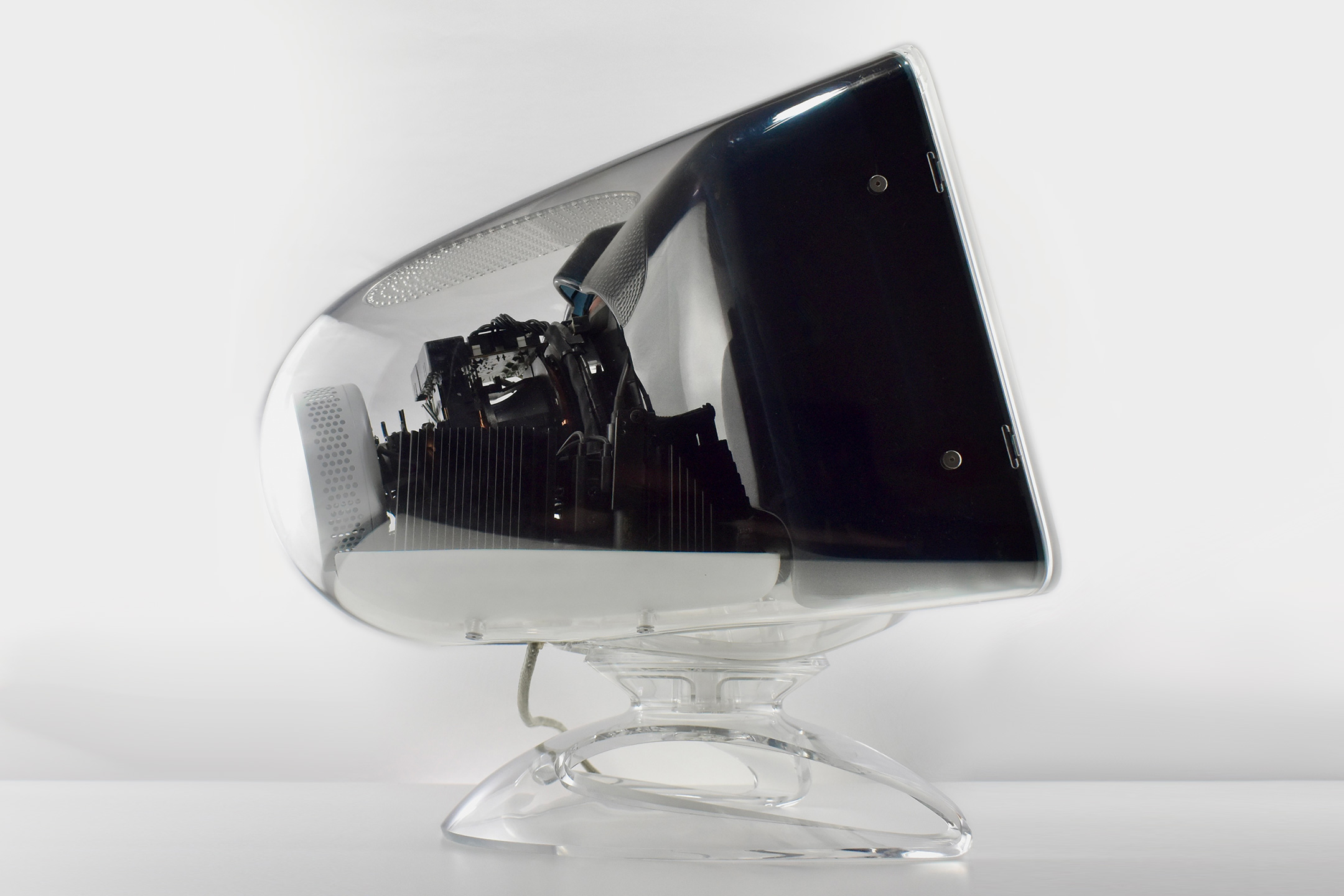
The site 512 Pixels provided several additional comments, writing that the “Studio Display (17-inch ADC) was the last standalone Apple display to feature a CRT. At 17.4 inches it was deeper than it was wide. At 45.8 pounds, it was heavier than a iMac G3.” They also comment on the industrial design of the display:
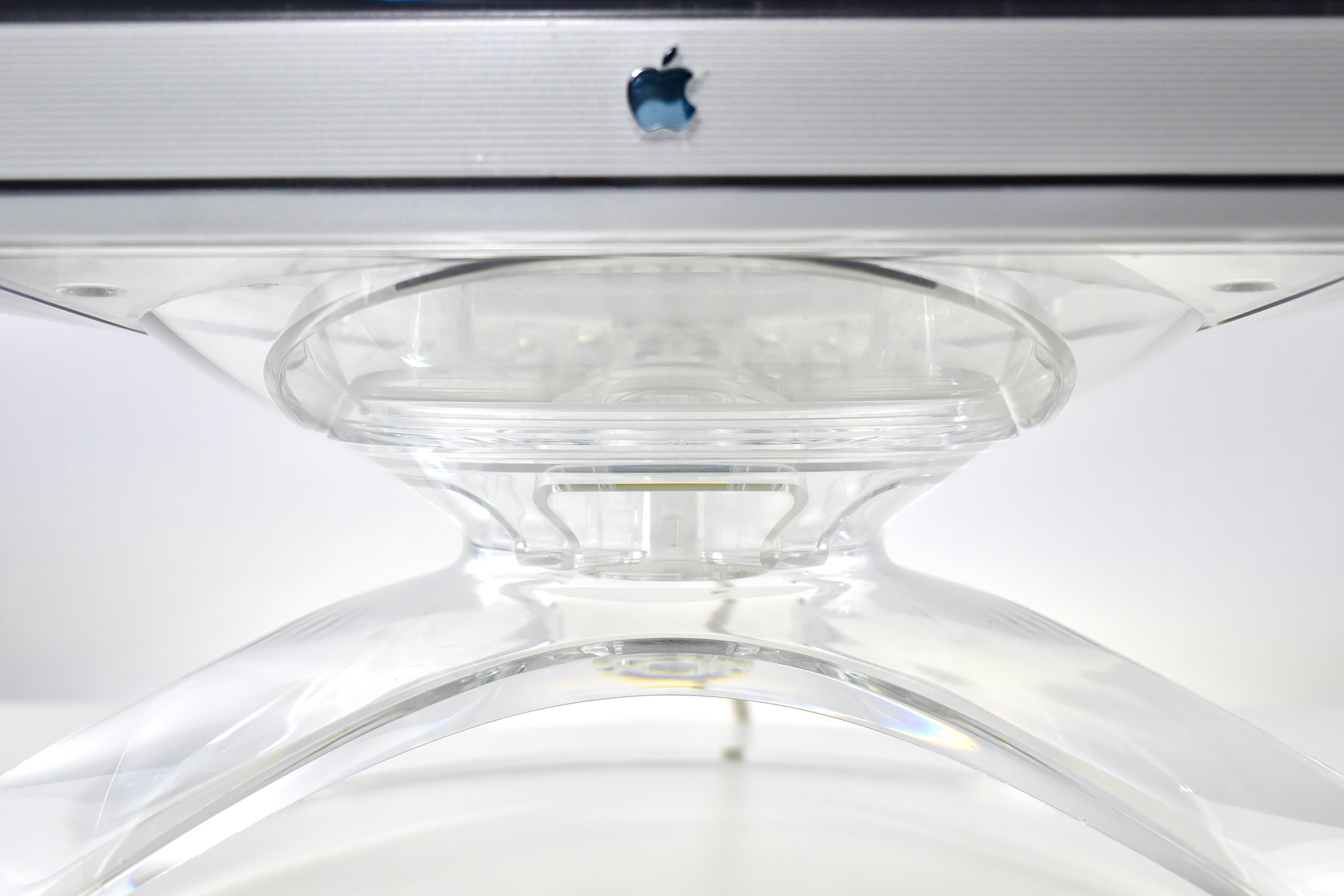
“Instead of hiding the display’s guts inside opaque plastics and metal shield, the 17-inch ADC has a crystal clear case that allows anyone to see the internal workings of the Naturally Flat Diamondtron CRT suspended inside. By revealing all, the Studio Display (17-inch ADC) has nothing to hide. Its transparency and minimalism is pure Apple.”
According LowEndMac, the Apple Display Connector (ADC) used in this display is a proprietary display and data connector developed by Apple. It is a modification of the DVI (Digital Visual Interface) connector that combines analog and digital video signals, USB, and power all in one cable. This connector was used by Apple between 2000–2004.
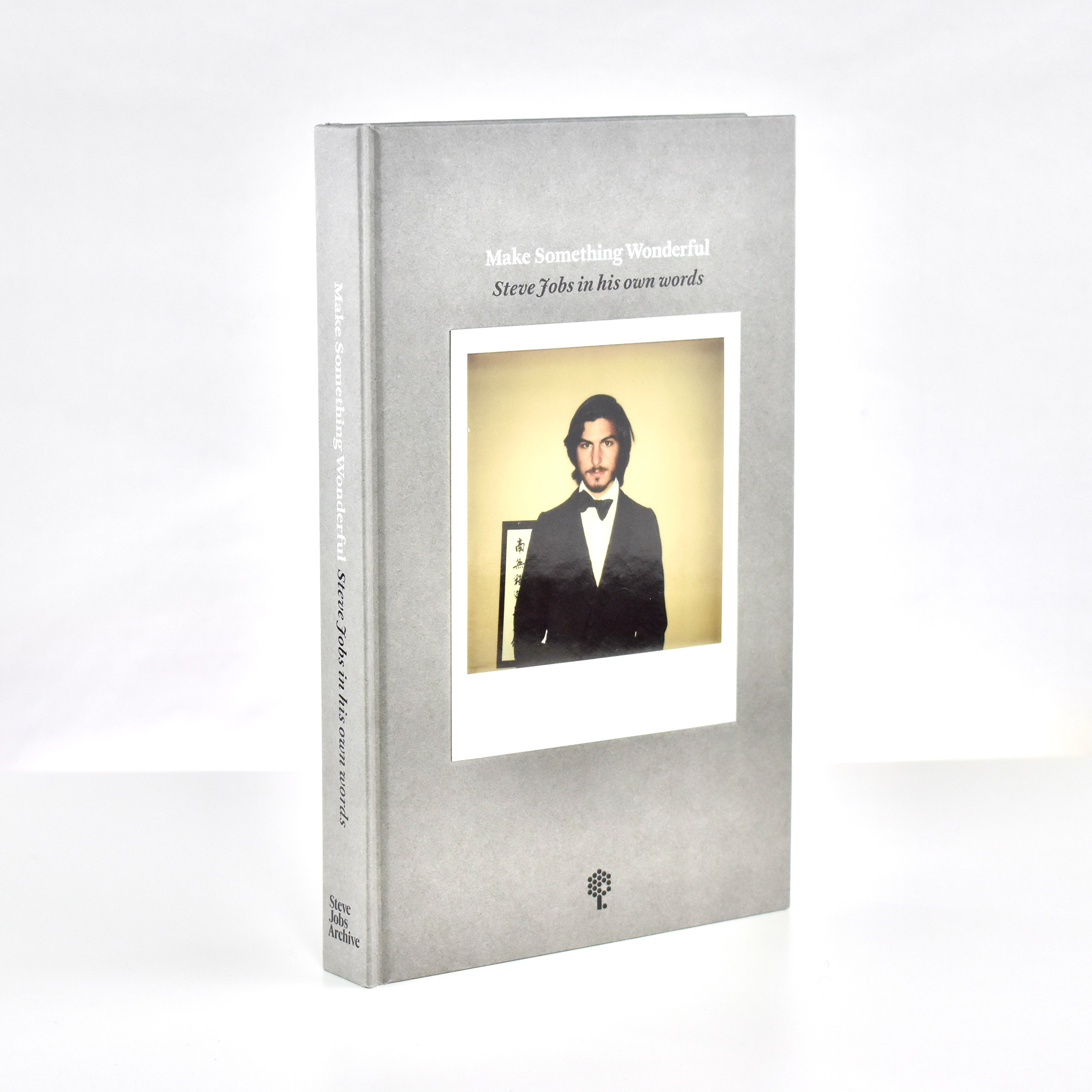
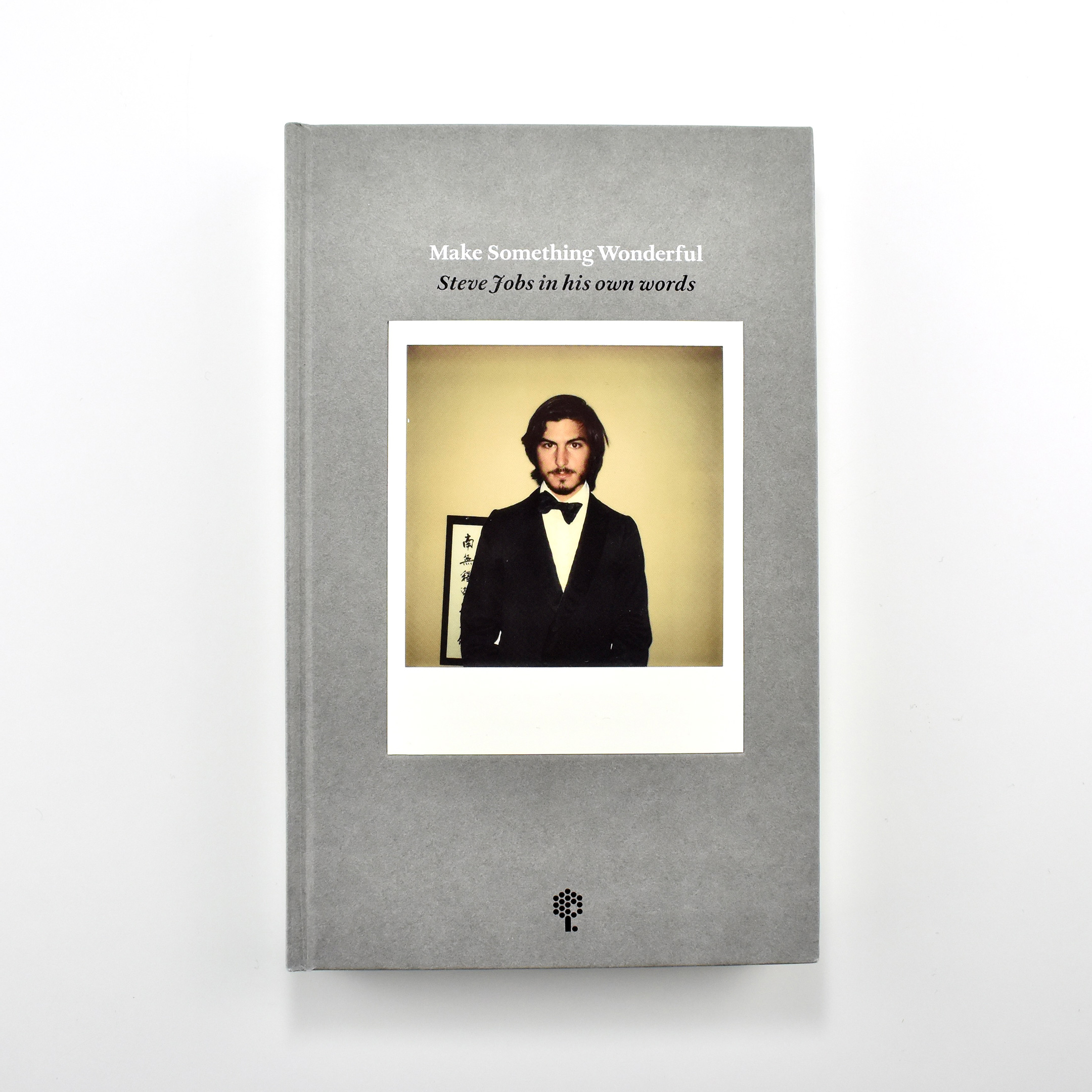
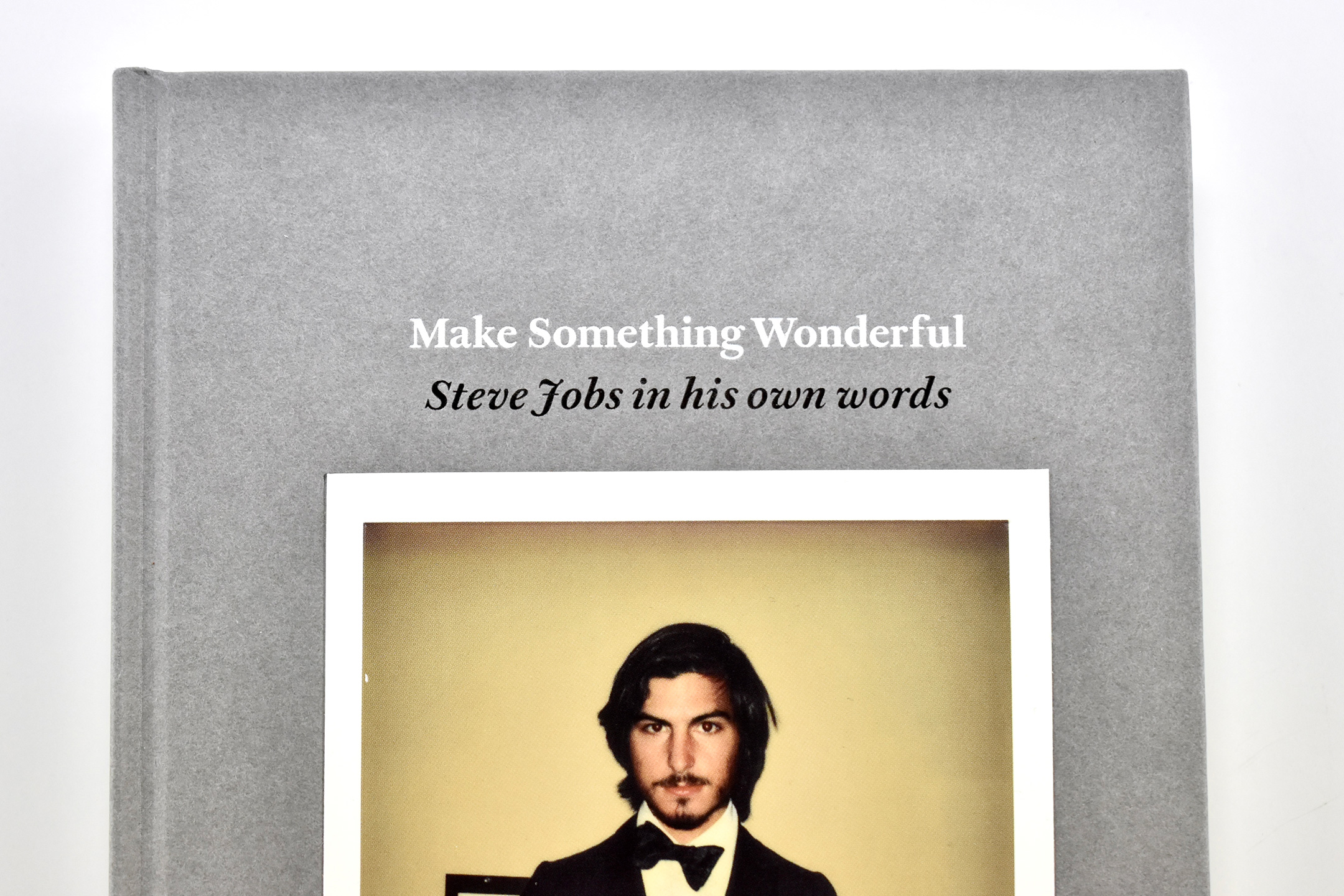
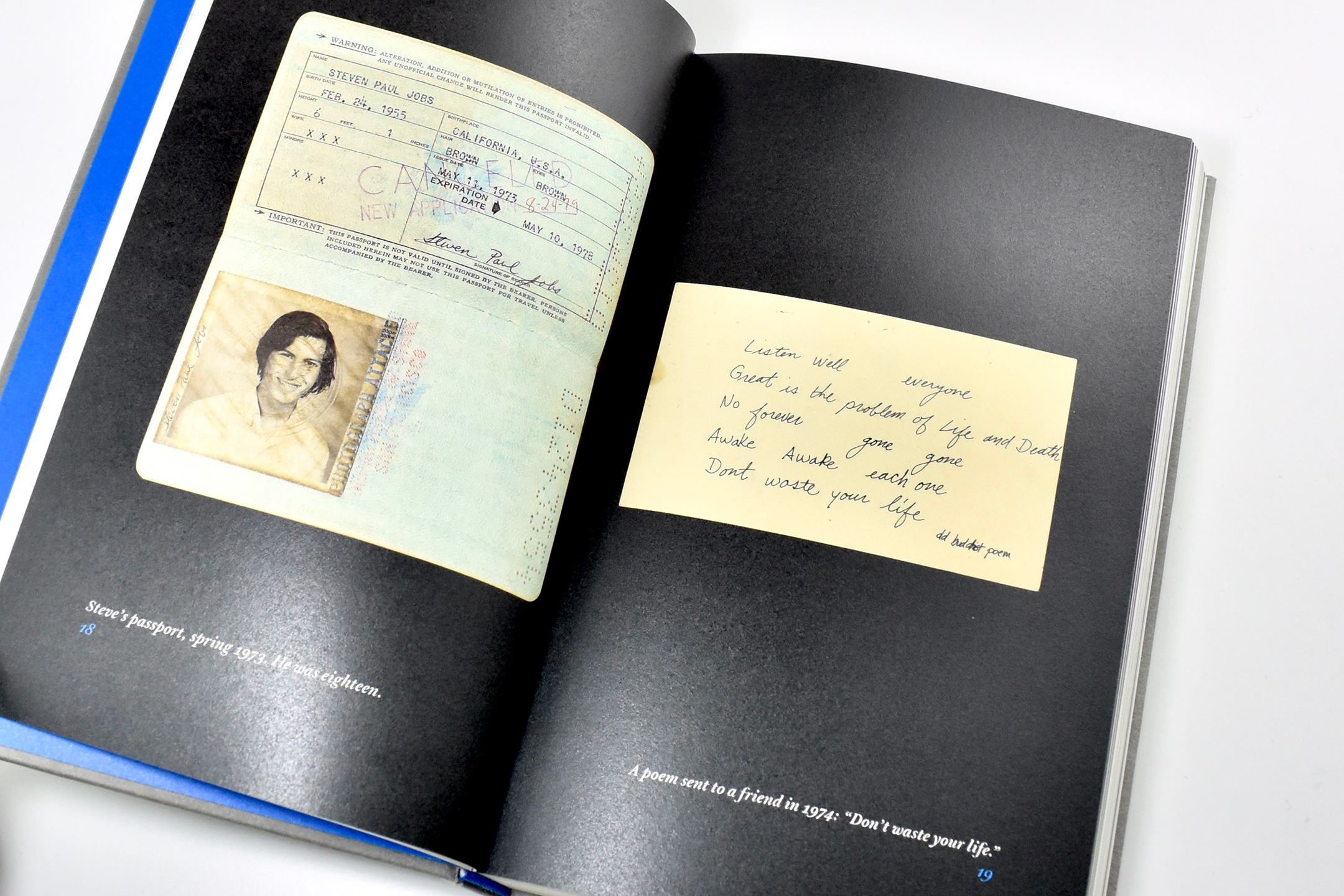
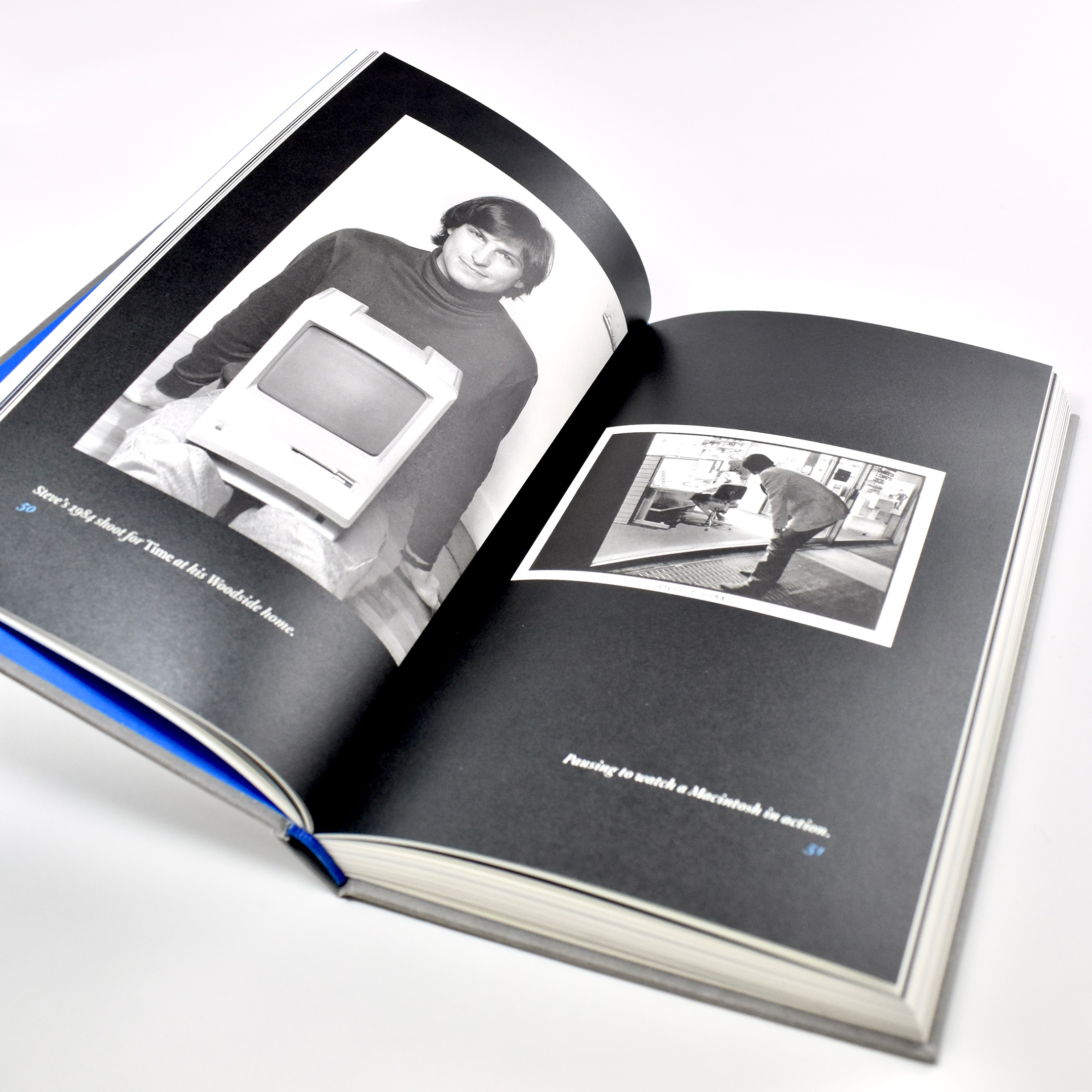
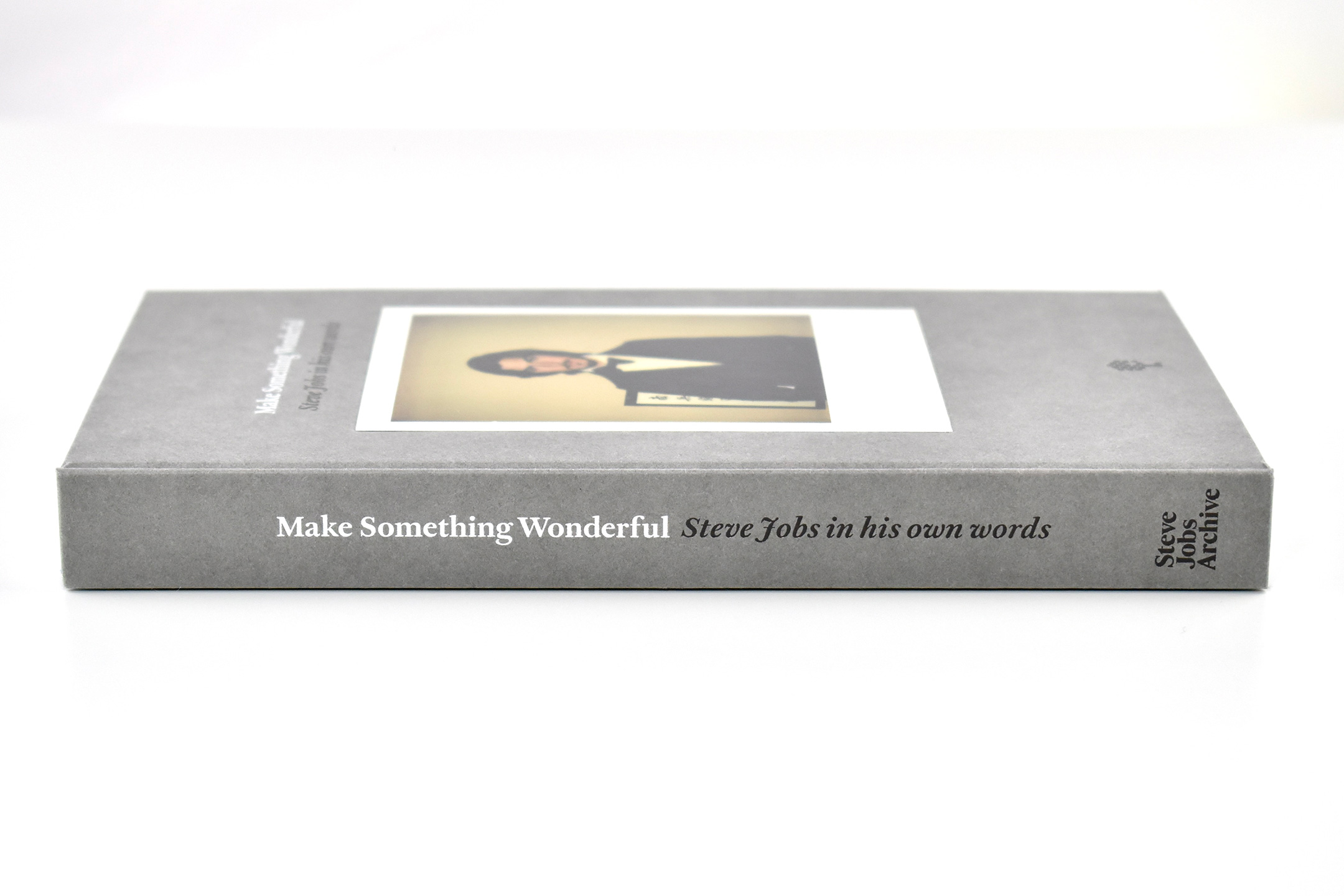
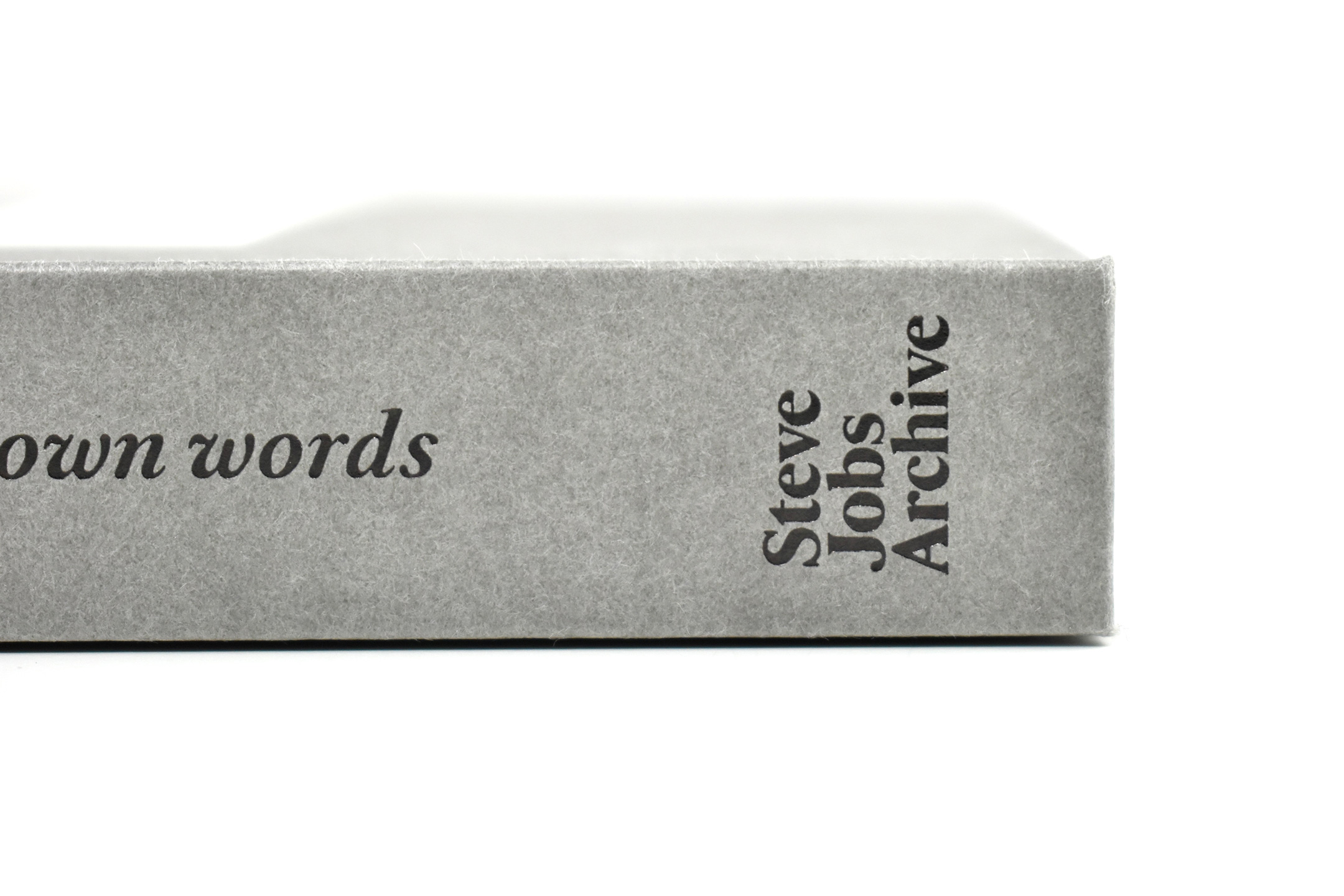
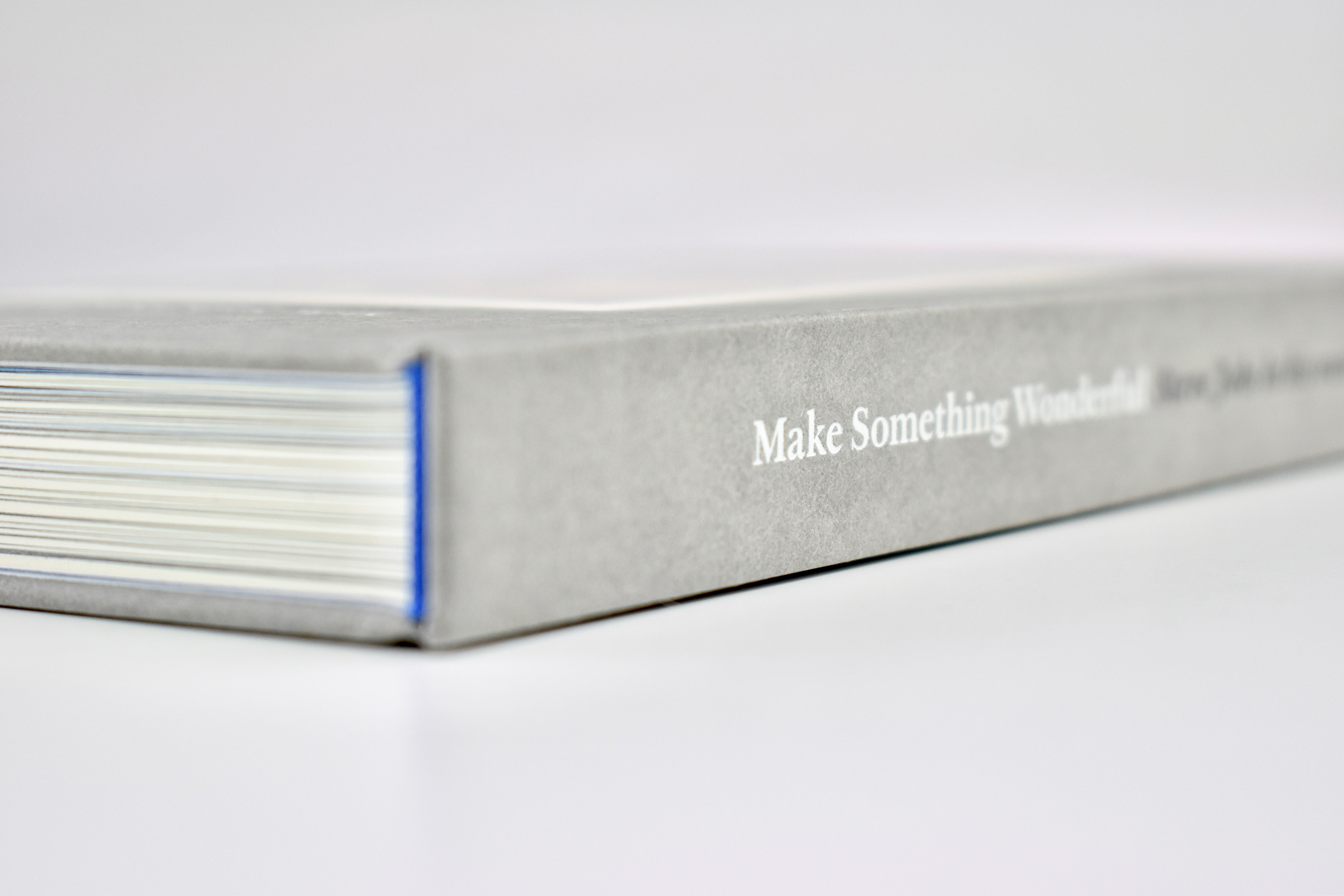
Make Something Wonderful: Steve Jobs in his own words is a book created by the Steve Jobs Archive. The book was offered as a free download on the Steve Jobs Archive and a hardcover edition was sent to Apple and Disney employees.
According to an article about the book at 9to5mac, the phrase “make something wonderful” was used by Steve Jobs at an internal meeting at Apple:
“One of the ways that I believe people express their appreciation to the rest of humanity is to make something wonderful and put it out there.”
The Steve Jobs Archive described the book as:
“A curated collection of Steve’s speeches, interviews and correspondence, Make Something Wonderful offers an unparalleled window into how one of the world’s most creative entrepreneurs approached his life and work. In these pages, Steve shares his perspective on his childhood, on launching and being pushed out of Apple, on his time with Pixar and NeXT, and on his ultimate return to the company that started it all.”
Featuring an introduction by Laurene Powell Jobs and edited by Leslie Berlin, this beautiful handbook is designed to inspire readers to make their own ‘wonderful somethings’ that move the world forward.”
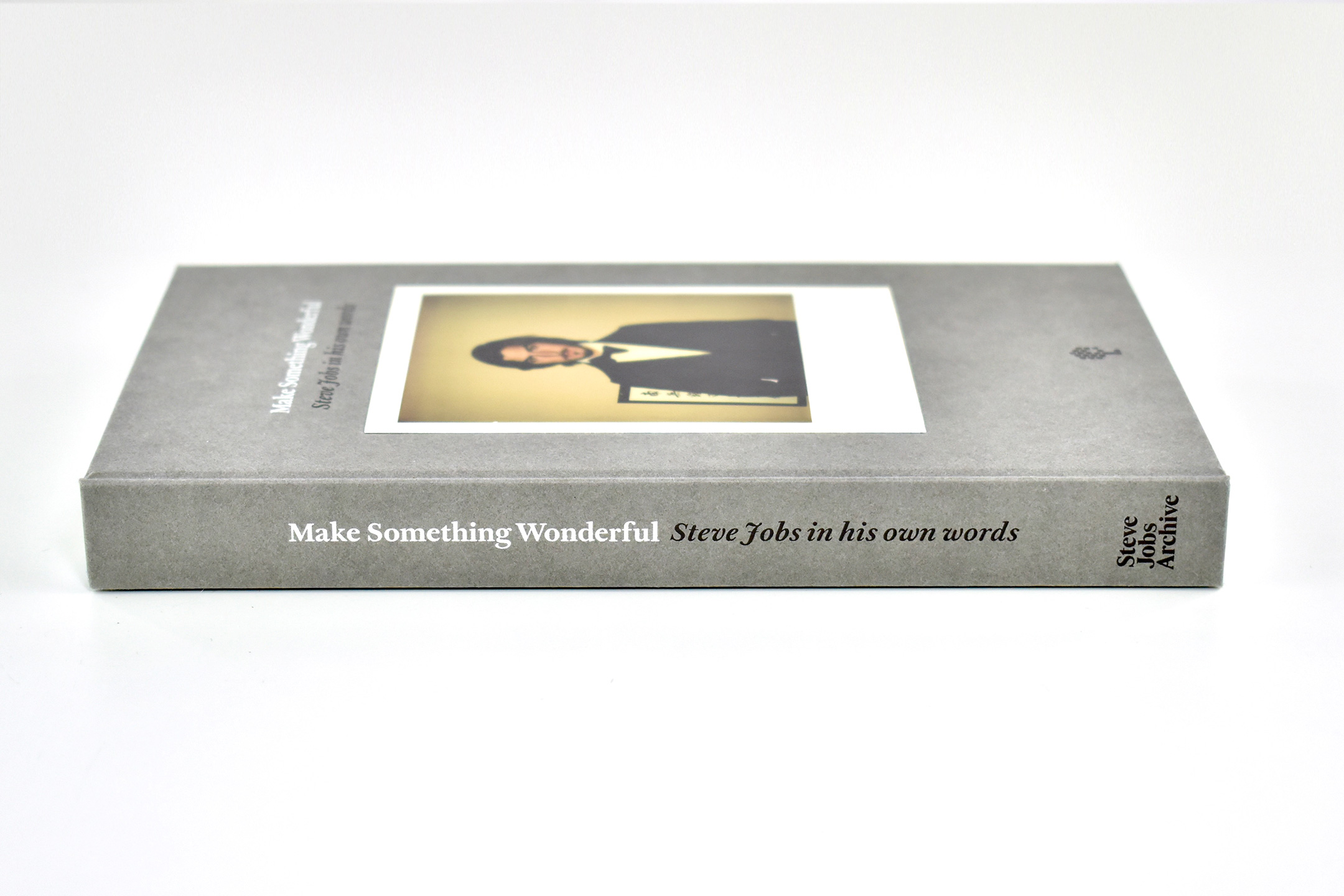
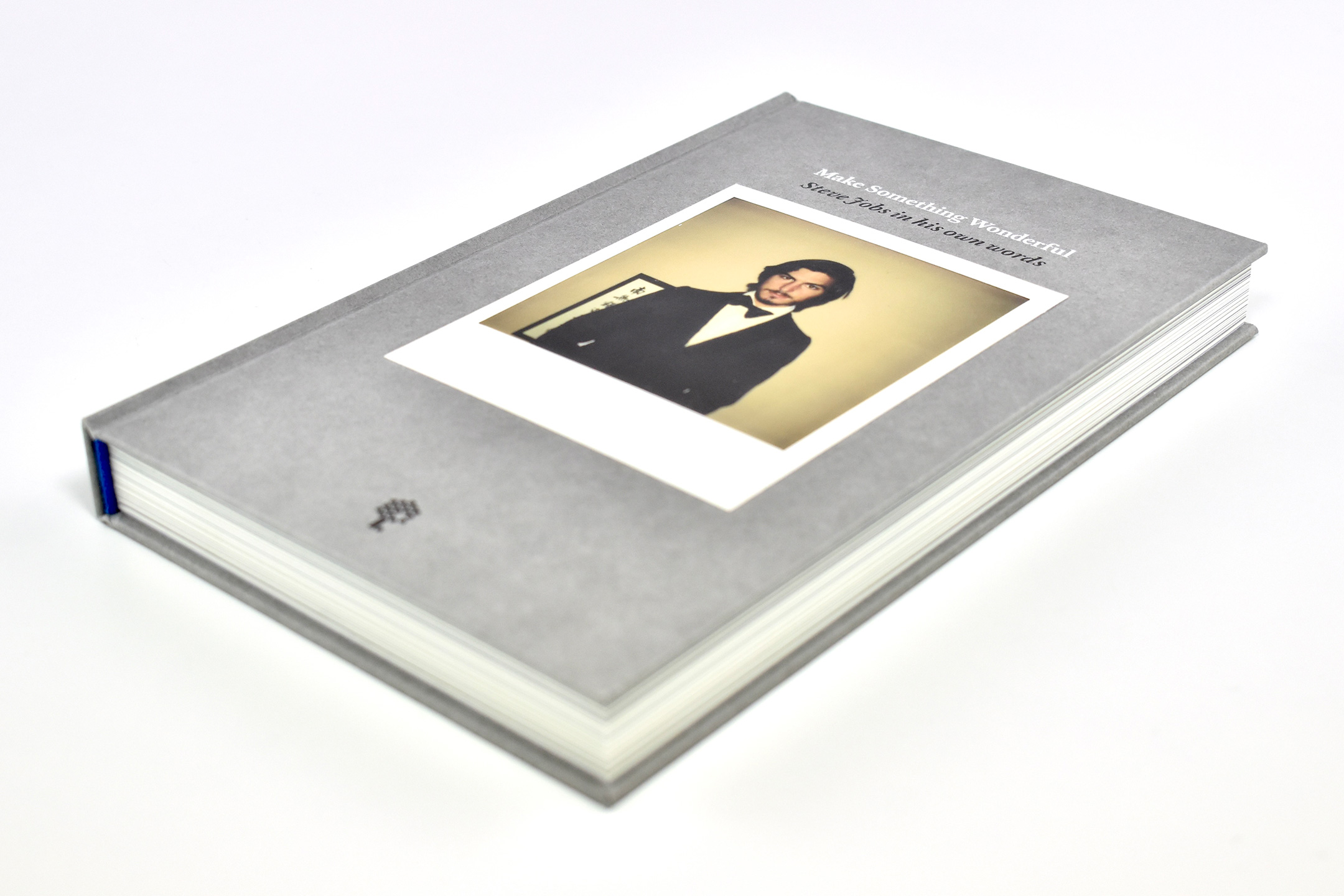
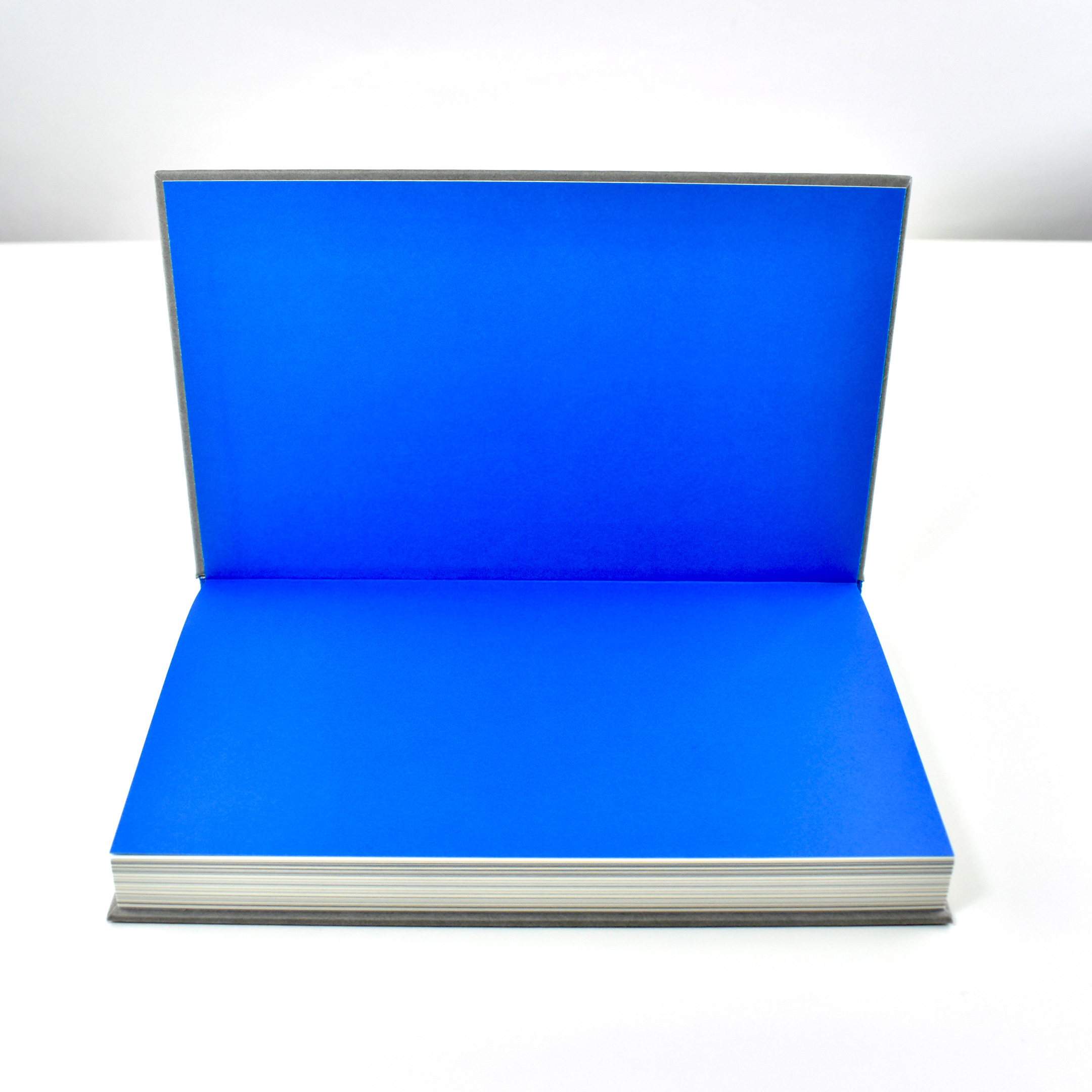
The physical book measures 21.1 cm x 13.3 cm, and is 2.2 cm thick. The dark gray hard cover has an uncoated paper texture and an embossed title. The front cover features a glossy Polaroid-style photo of Steve Jobs wearing a tuxedo with a crooked bow tie.
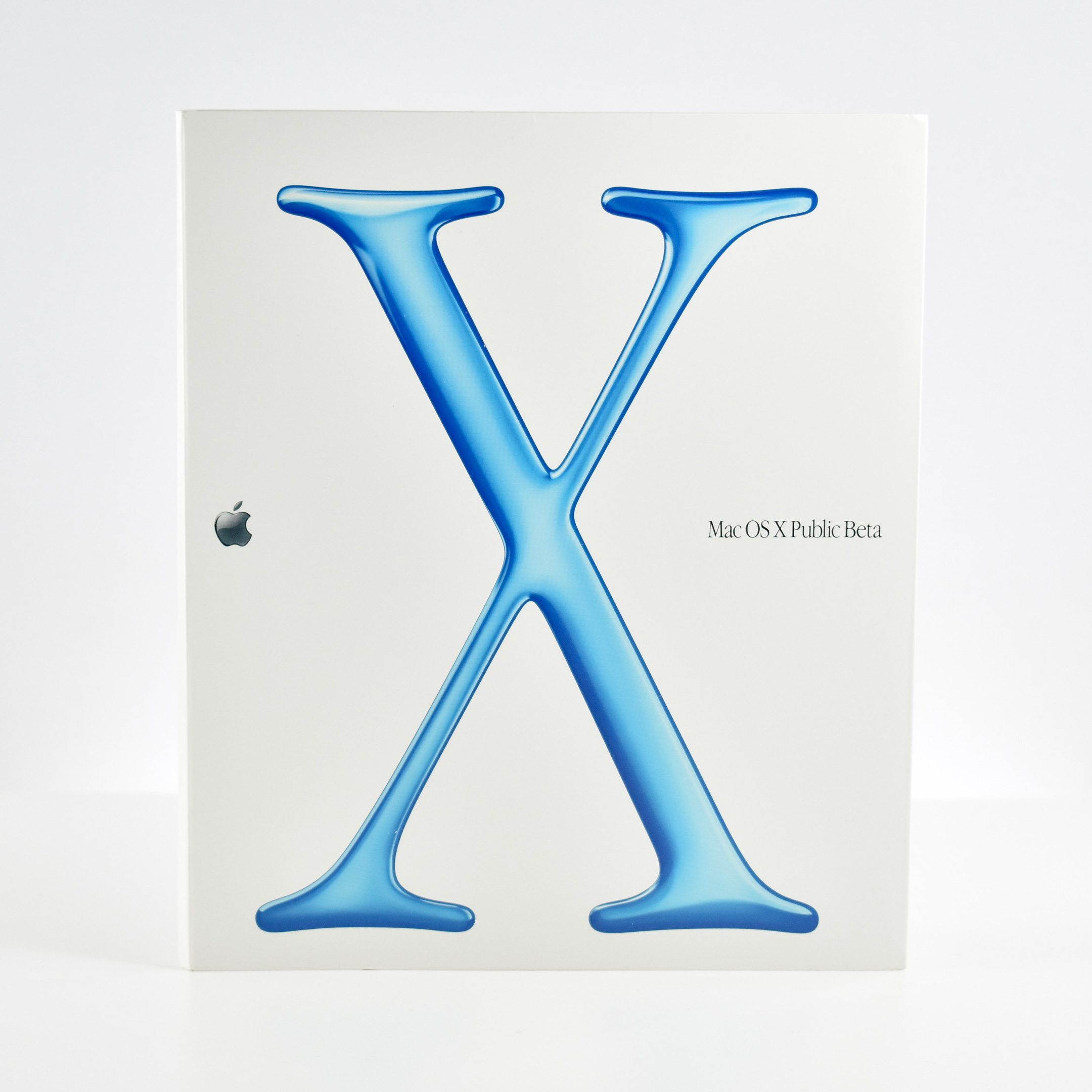
On September 13, 2000, Steve Jobs released the Mac OS X Public Beta at Apple Expo in Paris. During the unveiling, Jobs said:
“Mac OS X is the future of the Macintosh, and the most technically advanced personal computer operating system ever. We’re excited to have our users test drive this public beta version and provide us with their valuable feedback.”
Somewhat controversially, Apple charged $29.95 for the software—a Beta version that was known to be buggy and not quite finished. The issue was not that the operating system was buggy and unfinished—that is the definition of a software “Beta”—but that Apple was charging faithful users to get an early look at the future of their products while testing it for the purpose of improving the final release. In an article at the time, a writer at Ars Technica provided a balanced opinion:
“Taken all together, ‘Mac OS X Public Beta’…means that for $29.95 you get an unfinished, buggy version of Apple’s next generation operating system. Charging for public beta software is increasingly common among the big software companies… If you don’t want to pay for buggy software, don’t buy the beta.”
The Mac OS X public beta was a completely new operating system for the Mac and provided the foundation of the macOS we still use today—over 20 years later. Apple’s press release described some highlights of Mac OS X:
“Mac OS X features true memory protection, pre-emptive multi-tasking, and symmetric multiprocessing when running on the new dual-processor Power Mac G4 line. Mac OS X includes Apple’s new Quartz 2D graphics engine (based on the Internet-standard Portable Document Format) for stunning graphics and broad font support; OpenGL for spectacular 3D graphics and gaming, and QuickTime for streaming audio and video. In addition, Mac OS X features Apple’s new user interface named ‘Aqua,’ which combines superior ease-of-use with amazing new functionality such as the ‘Dock,’ a breakthrough for organizing applications, documents and miniaturized windows.”
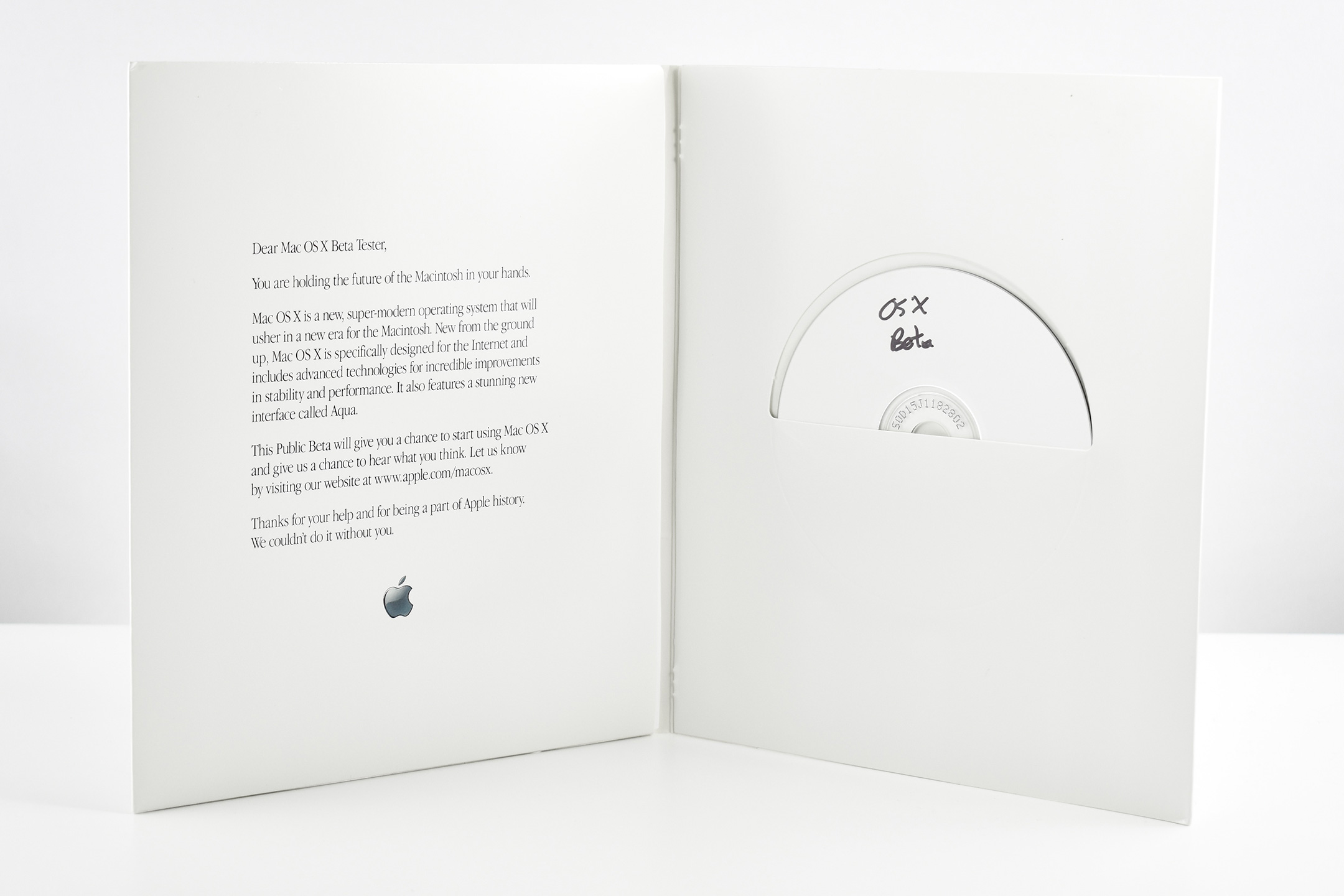
This white cardboard folder measures 8 x 9.5 x 0.25 inches and opens to reveal a compartment for a single CD. Unfortunately, the original installer CD is not included in this folder. The welcome message in the folder reads:
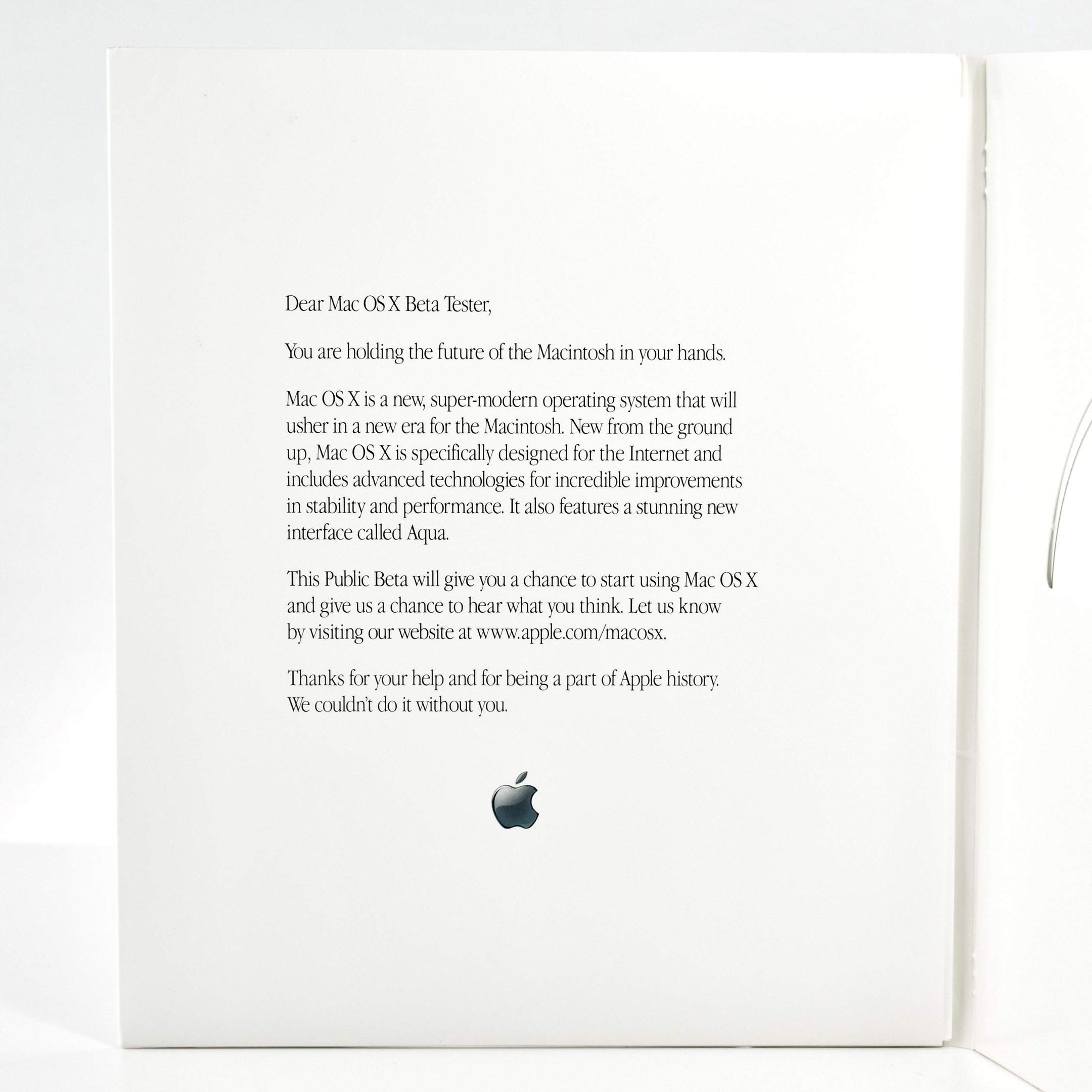
“Dear Mac OS X Beta Tester,
You are holding the future of the Macintosh in your hands.
Mac OS X is a new, super-modern operating system that will usher in a new era for the Macintosh. New from the ground up, Mac OS X is specifically designed for the Internet and includes advanced technologies for incredible improvements in stability and performance. It also features a stunning new interface called Aqua.
This Public Beta will give you a chance to start using Mac OS X and give us a chance to hear what you think. Let us know by visiting our website at www.apple.com/macosx.
Thanks for your help and for being a part of Apple history. We couldn’t do it without you.”
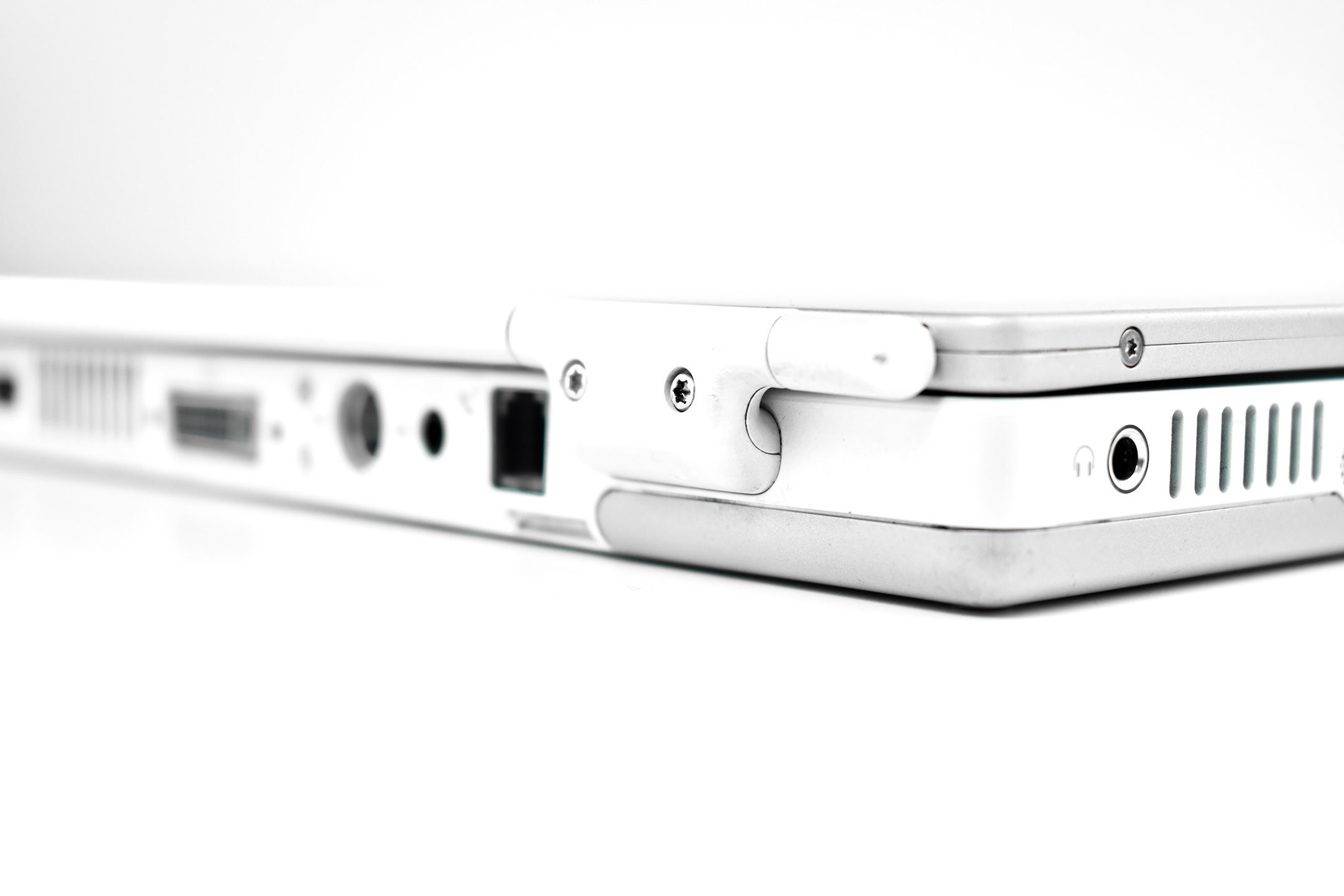
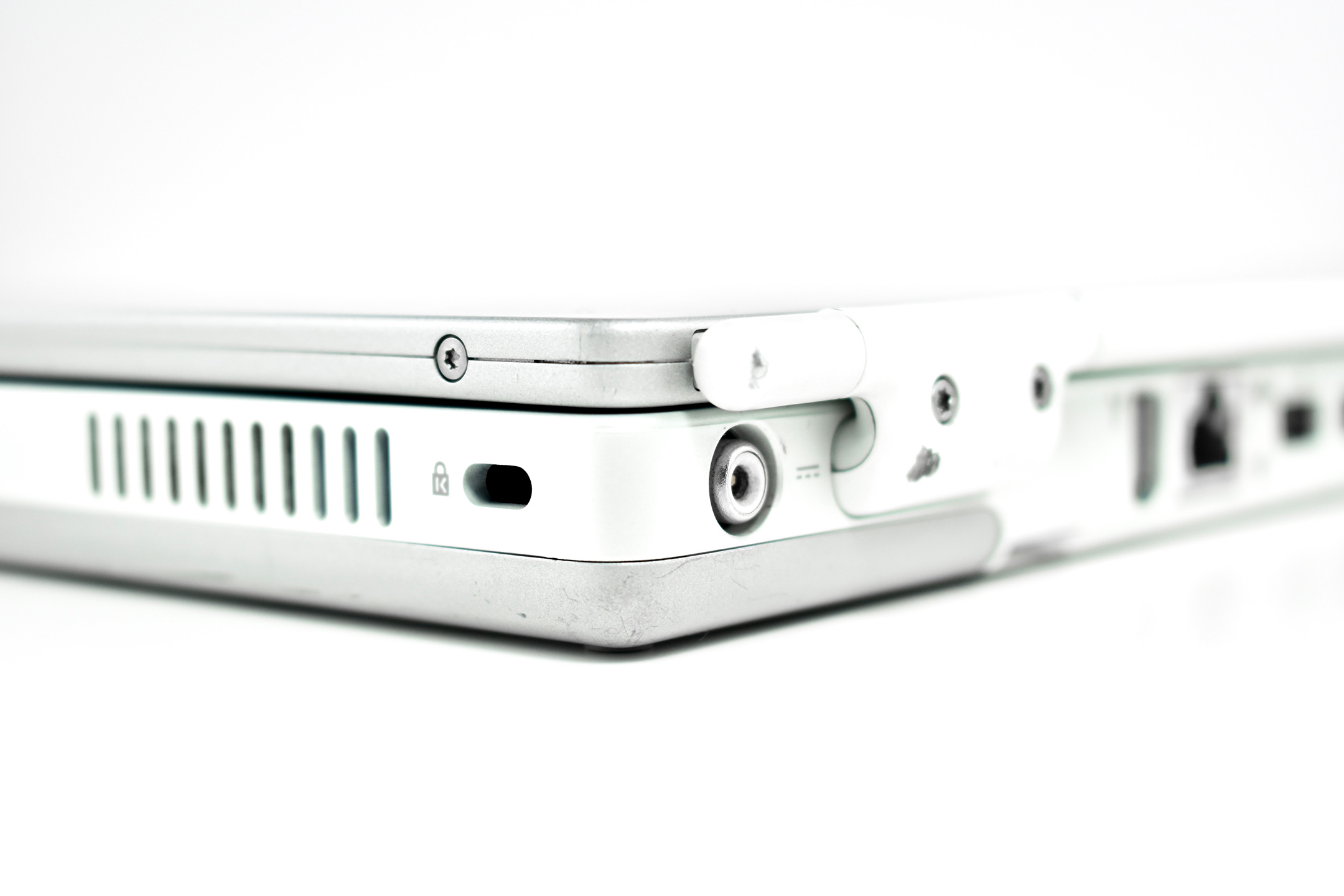
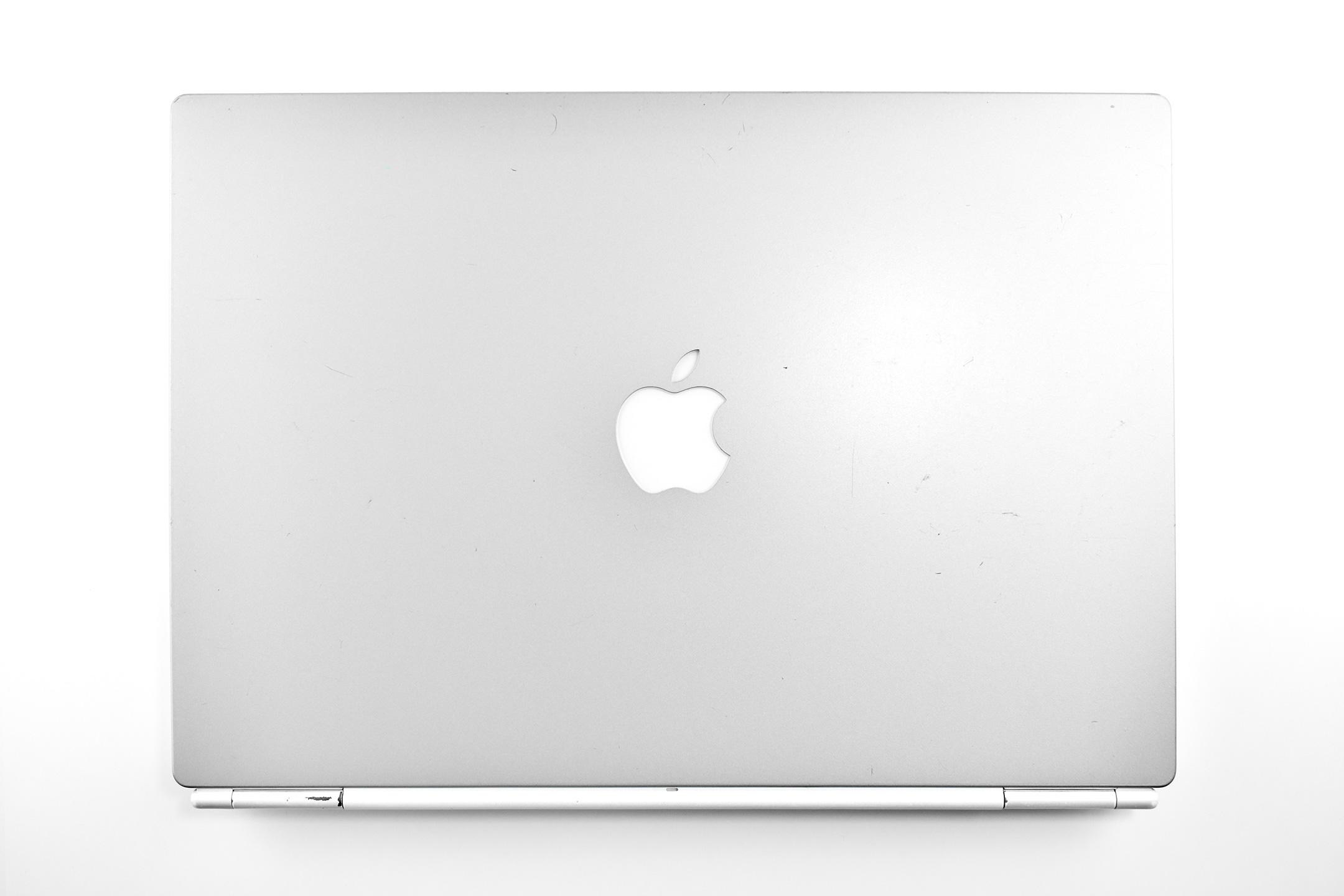
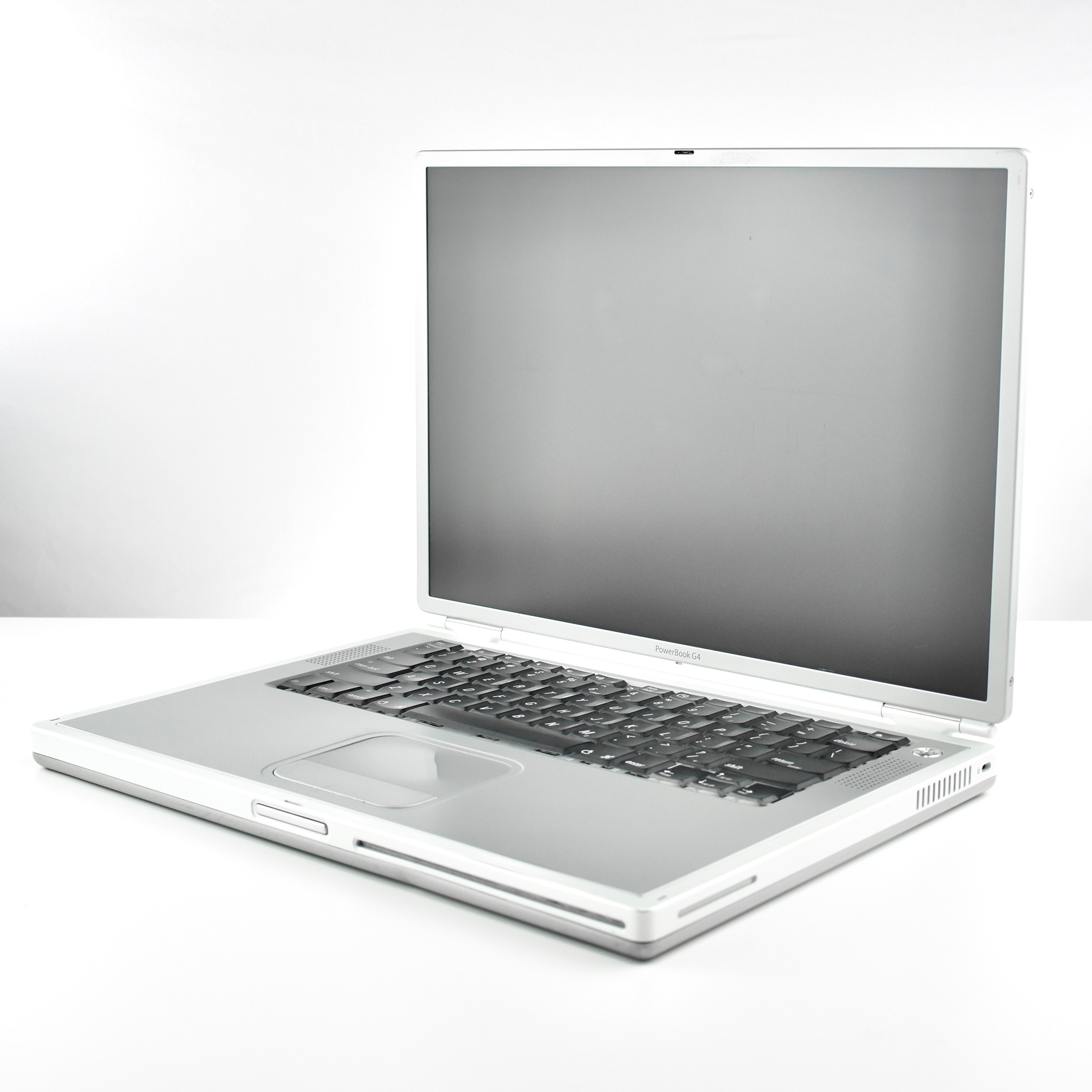
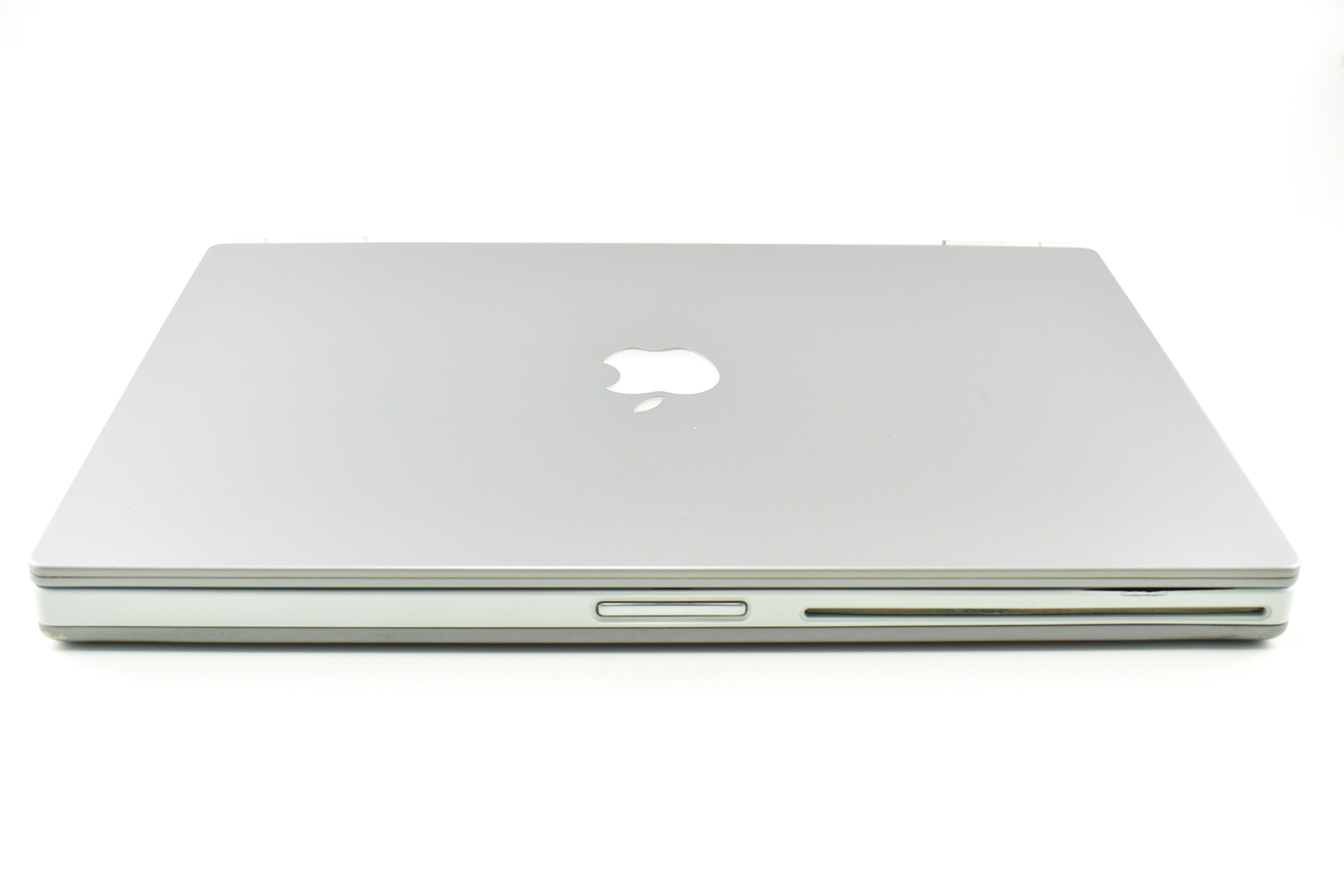
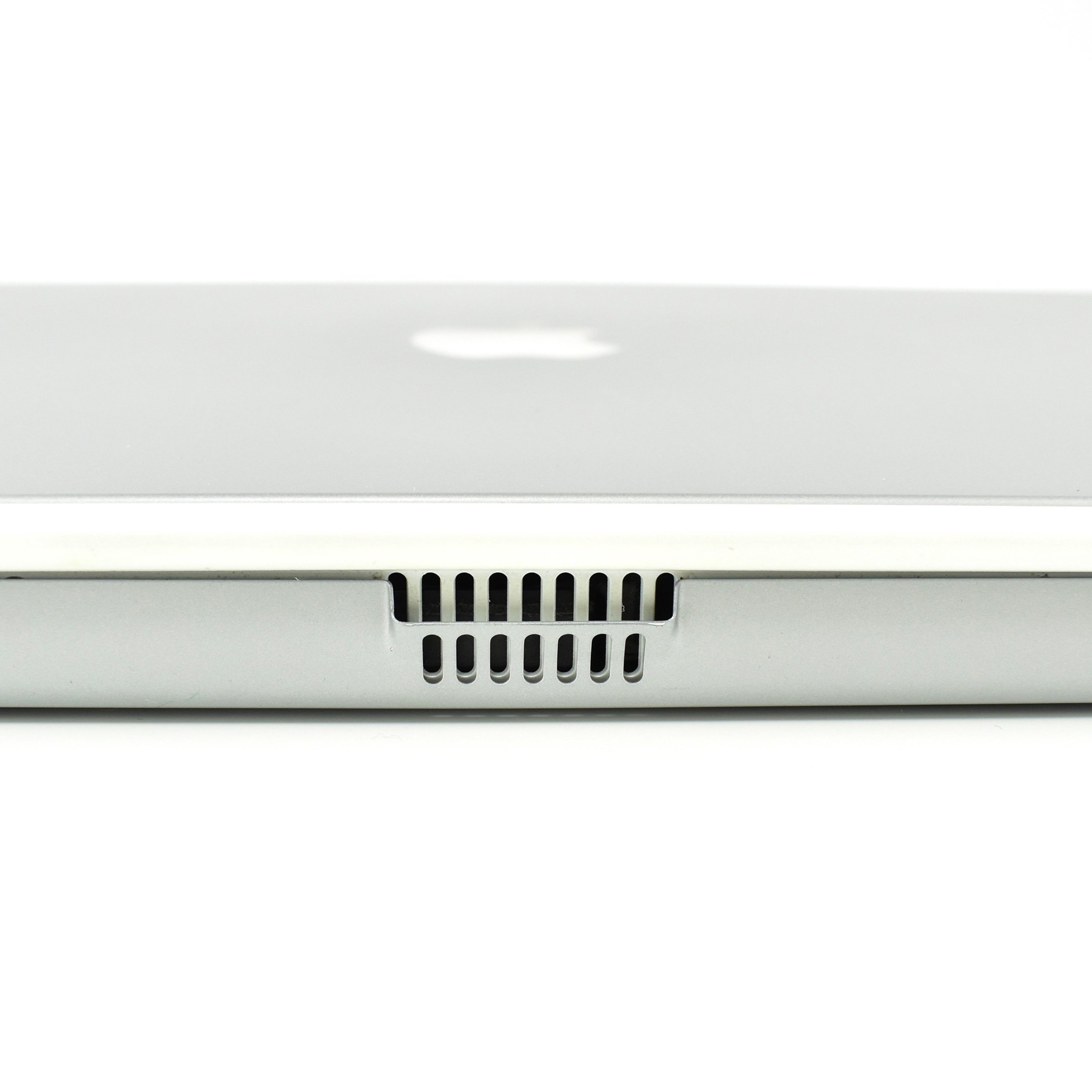
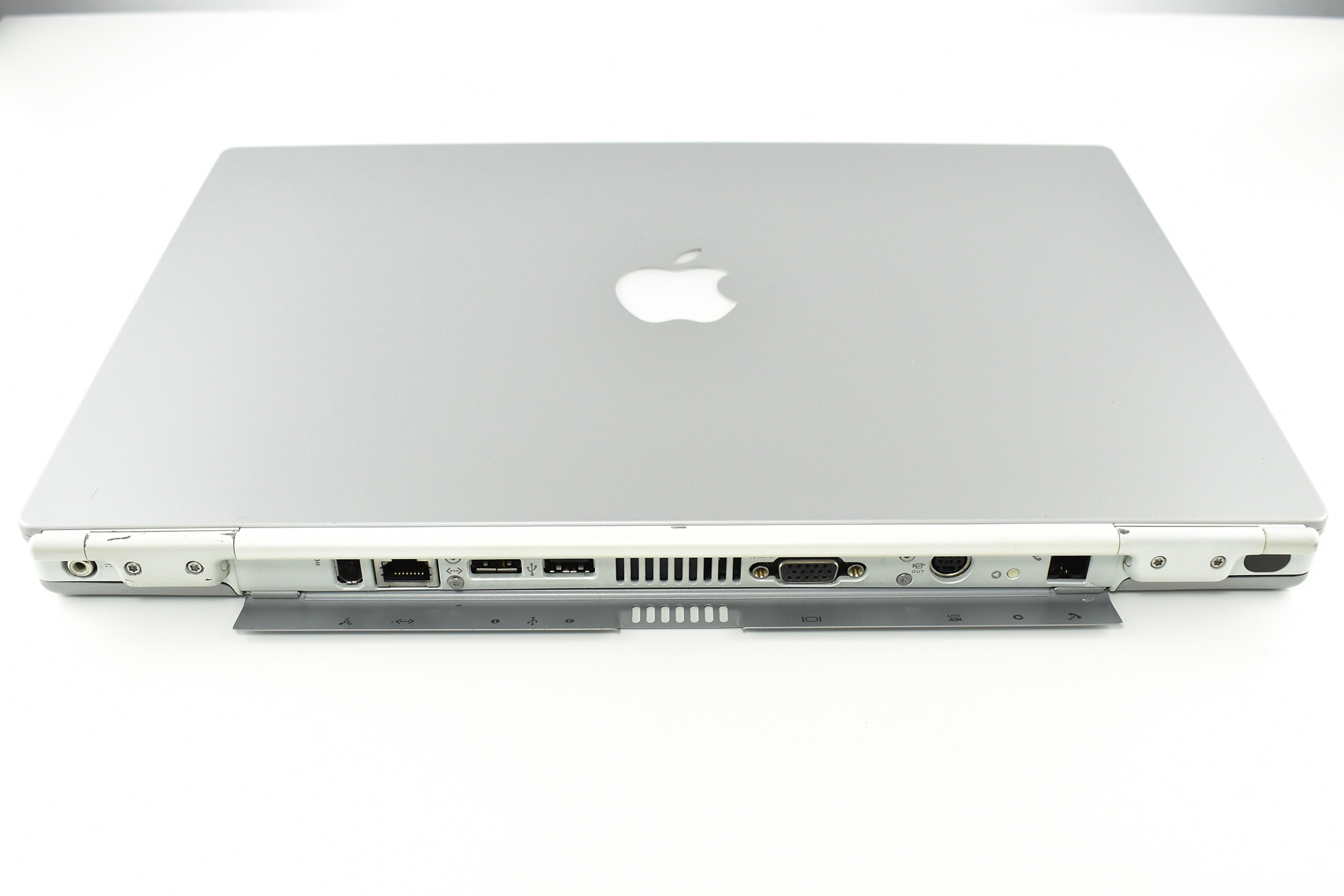
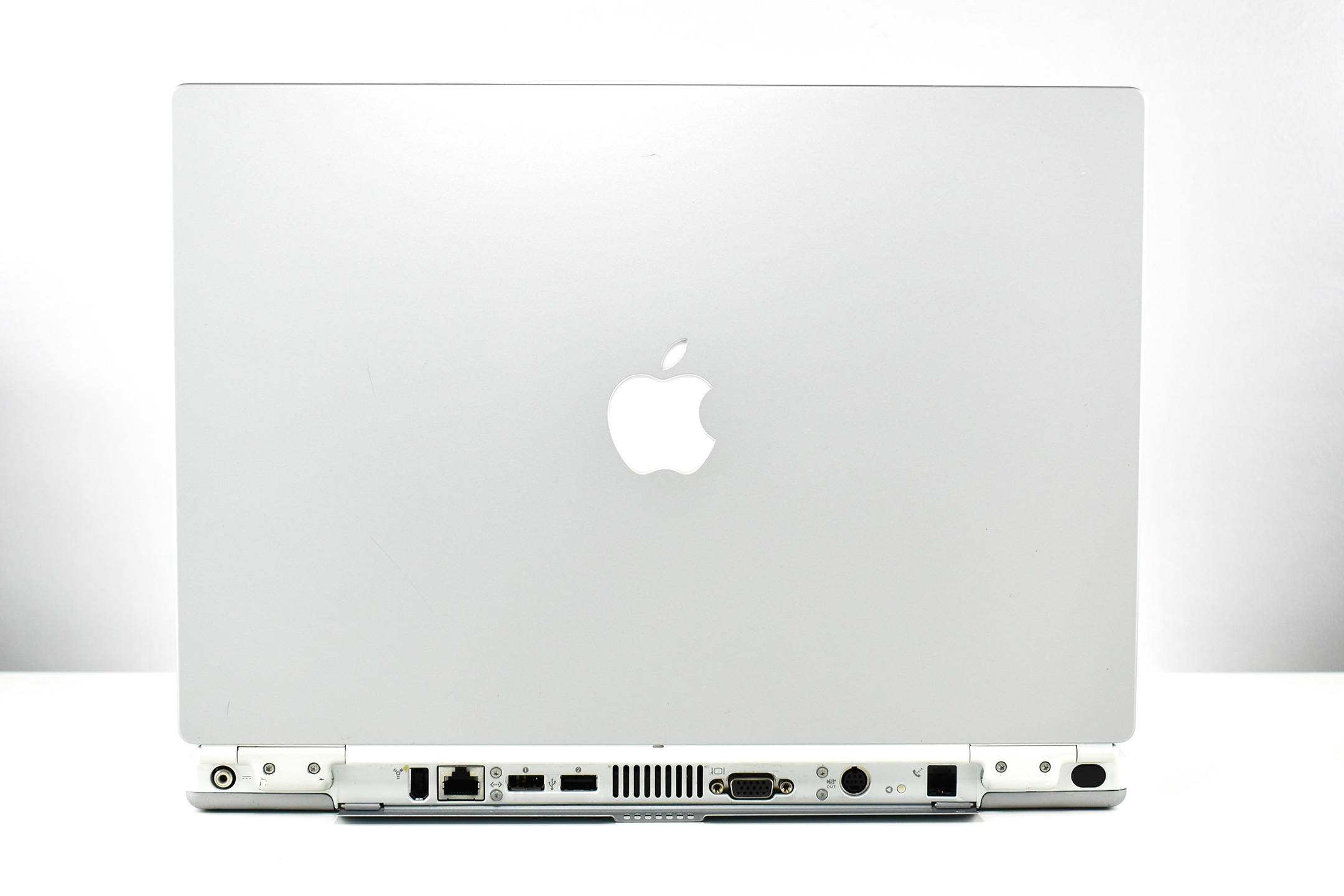
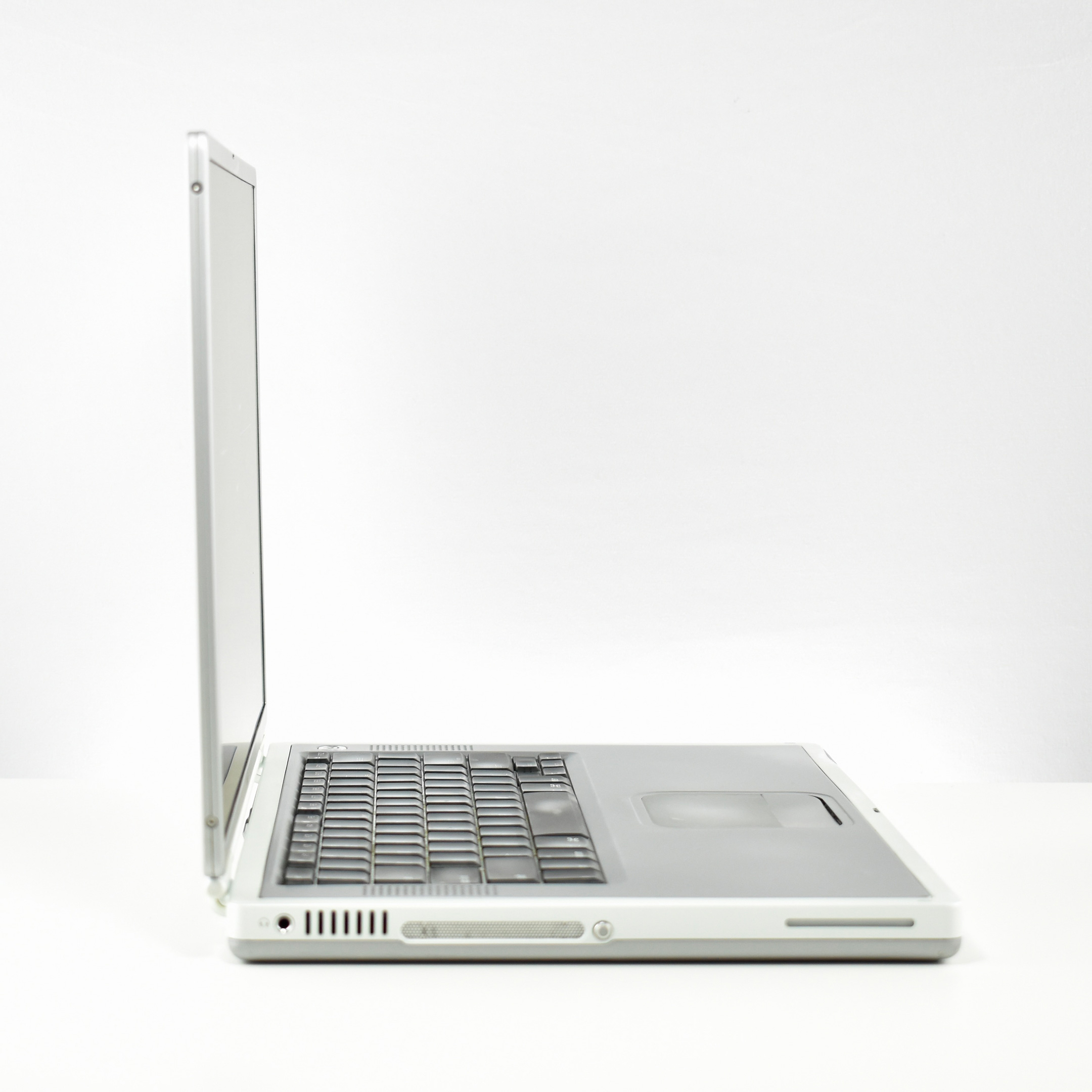
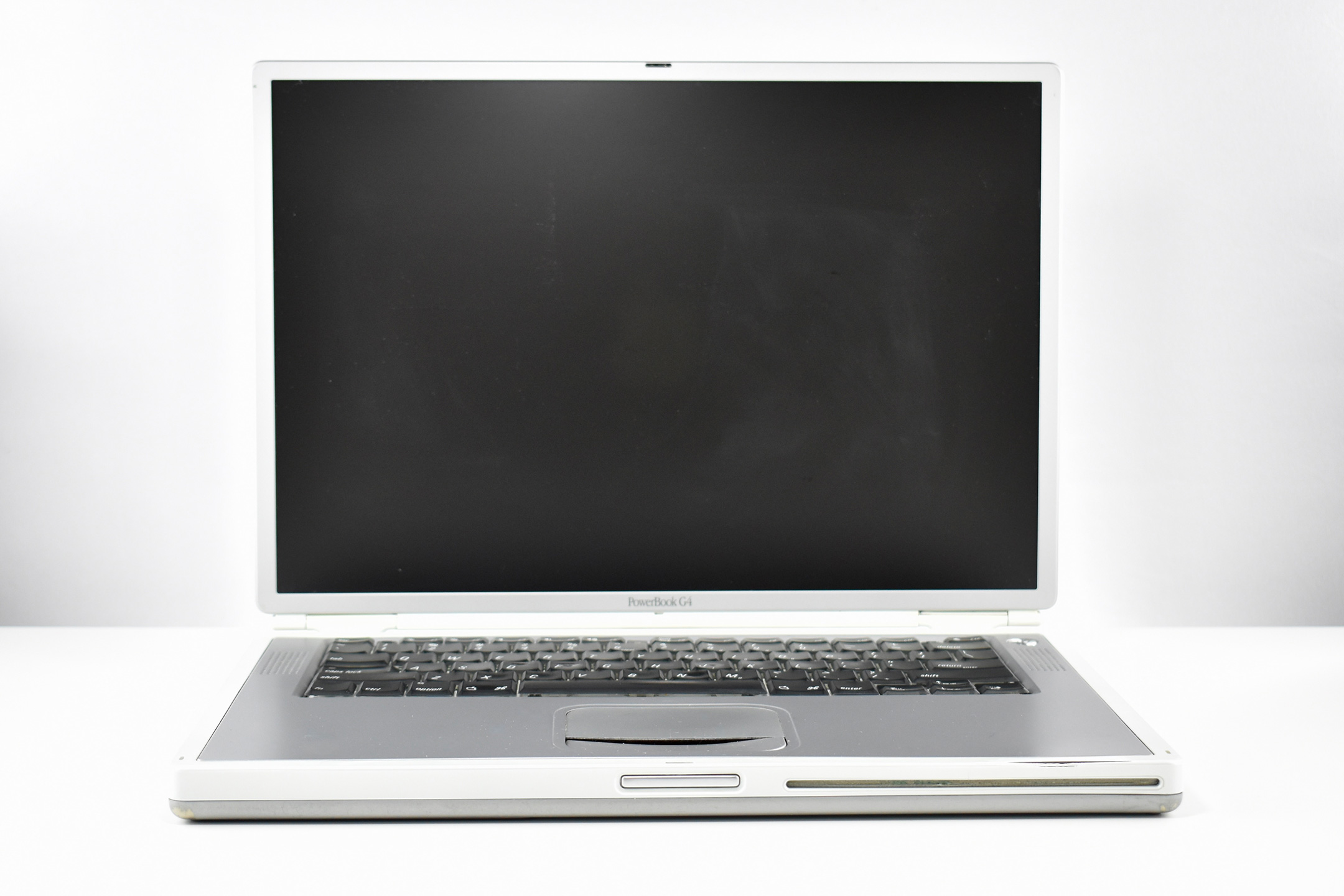
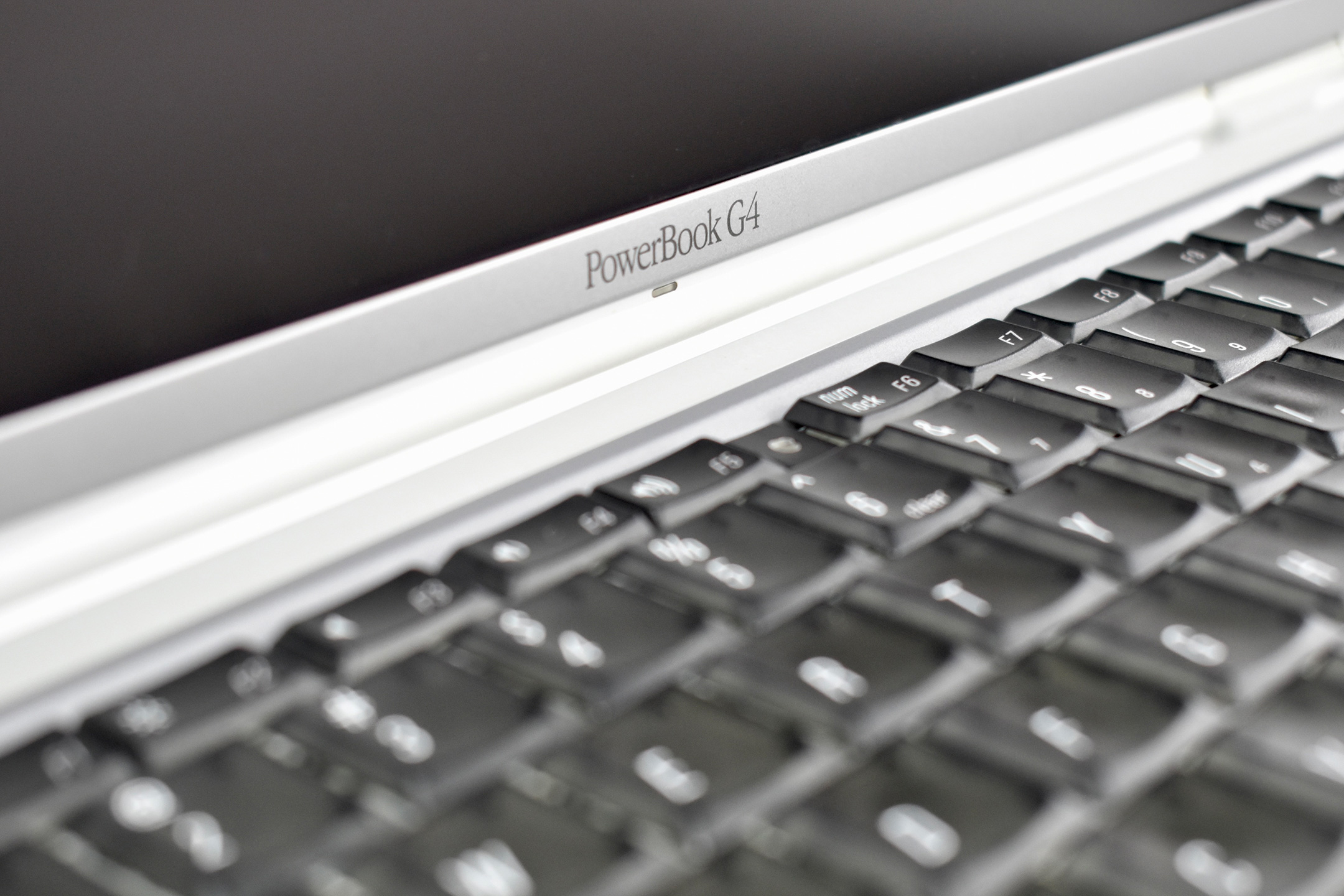
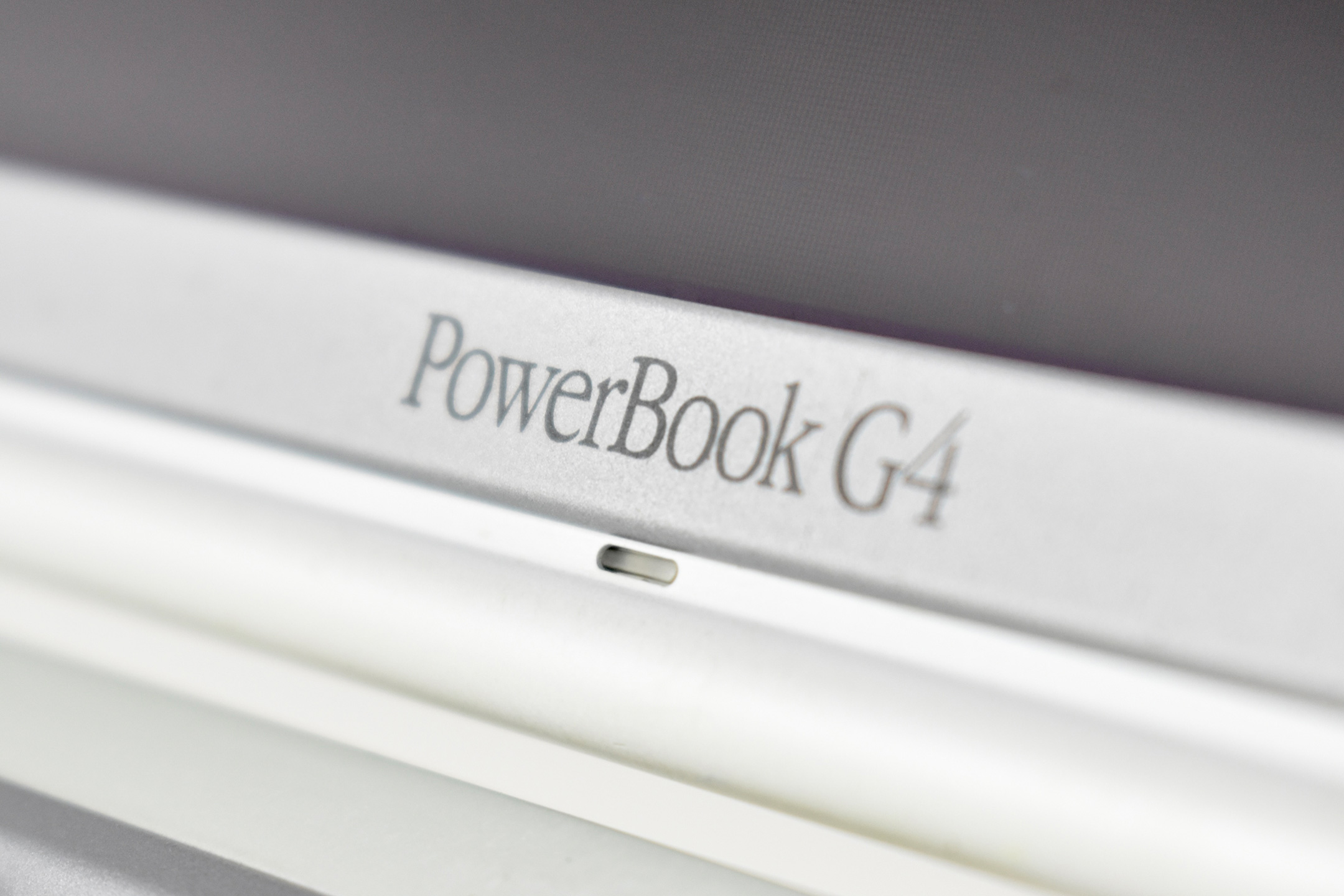
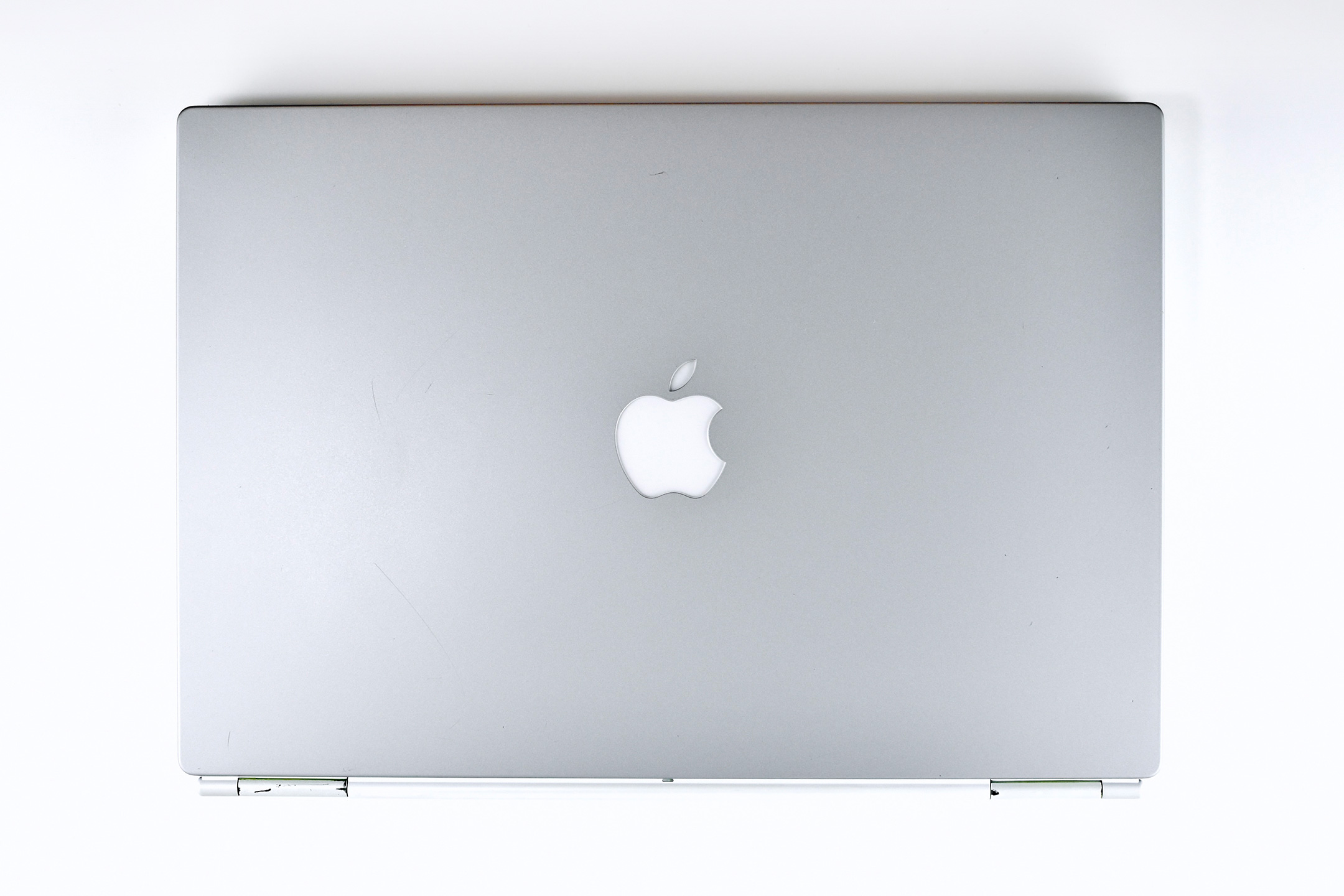
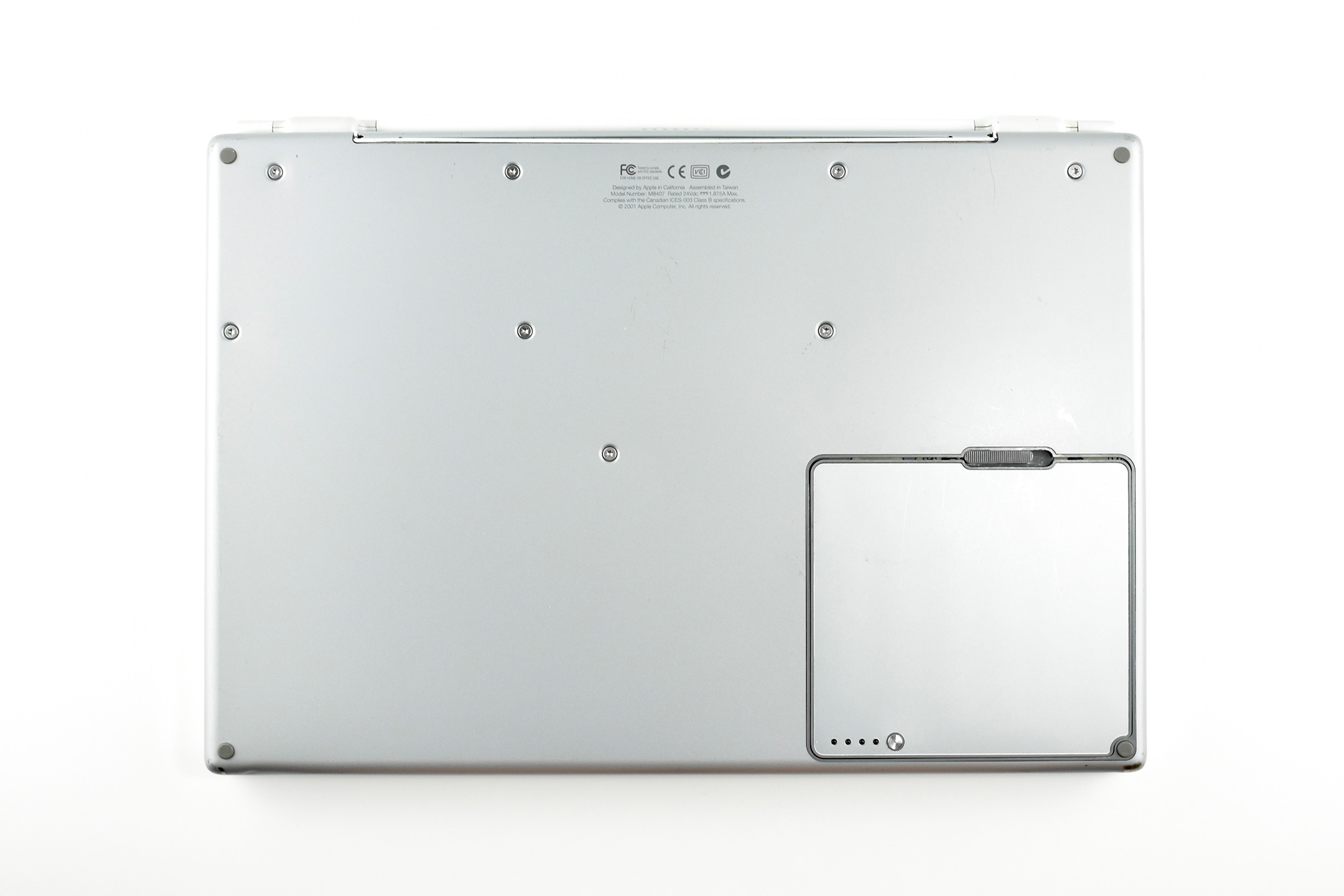
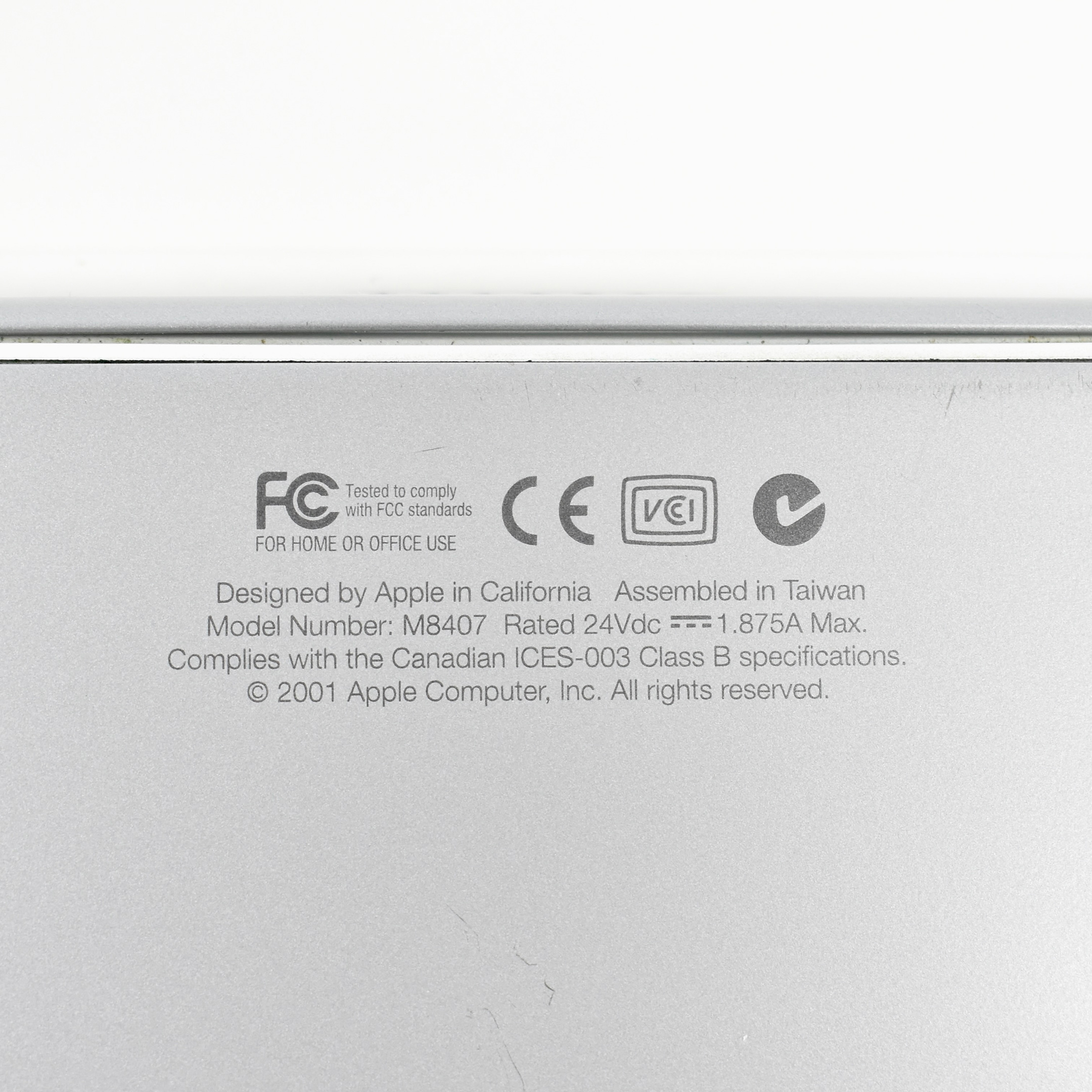
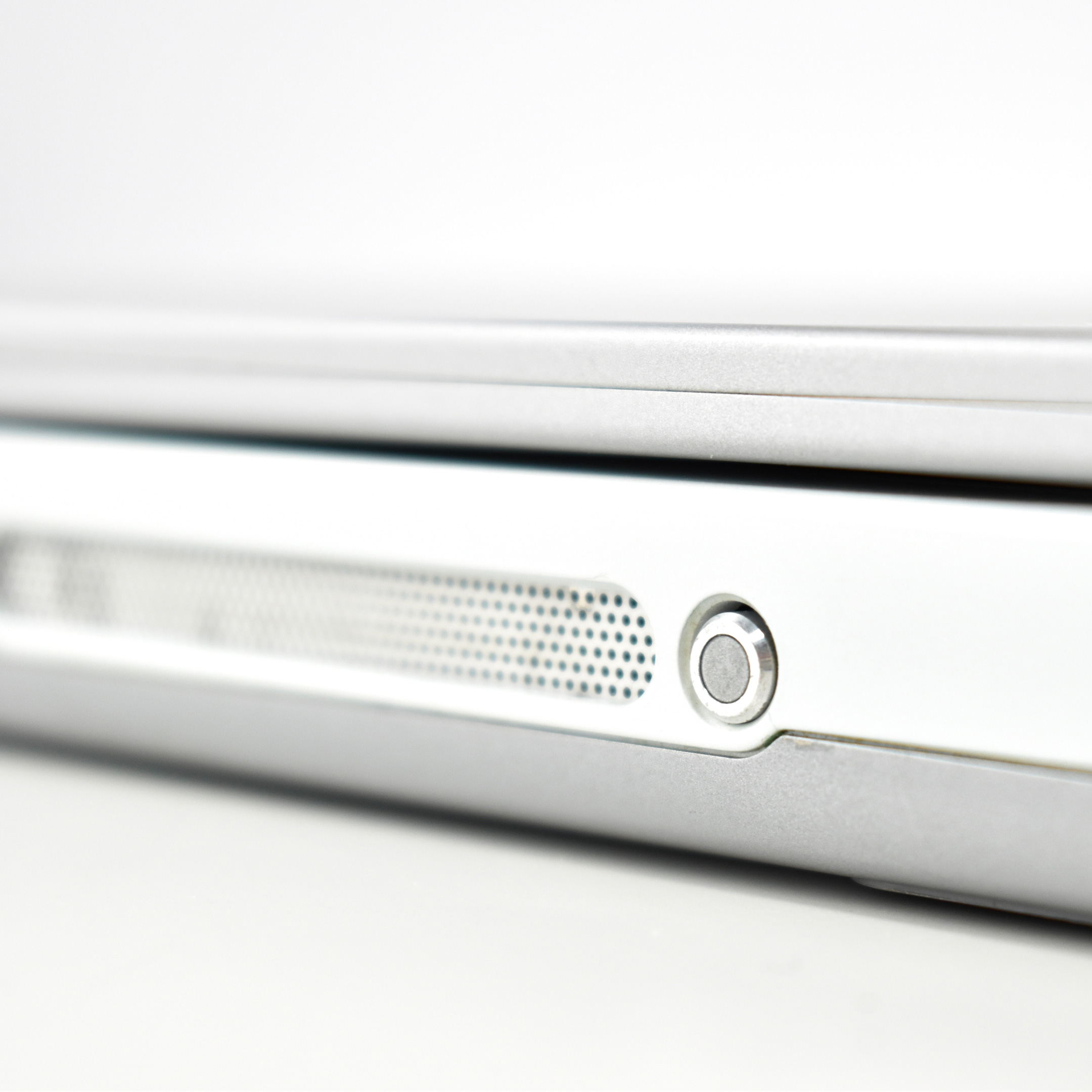
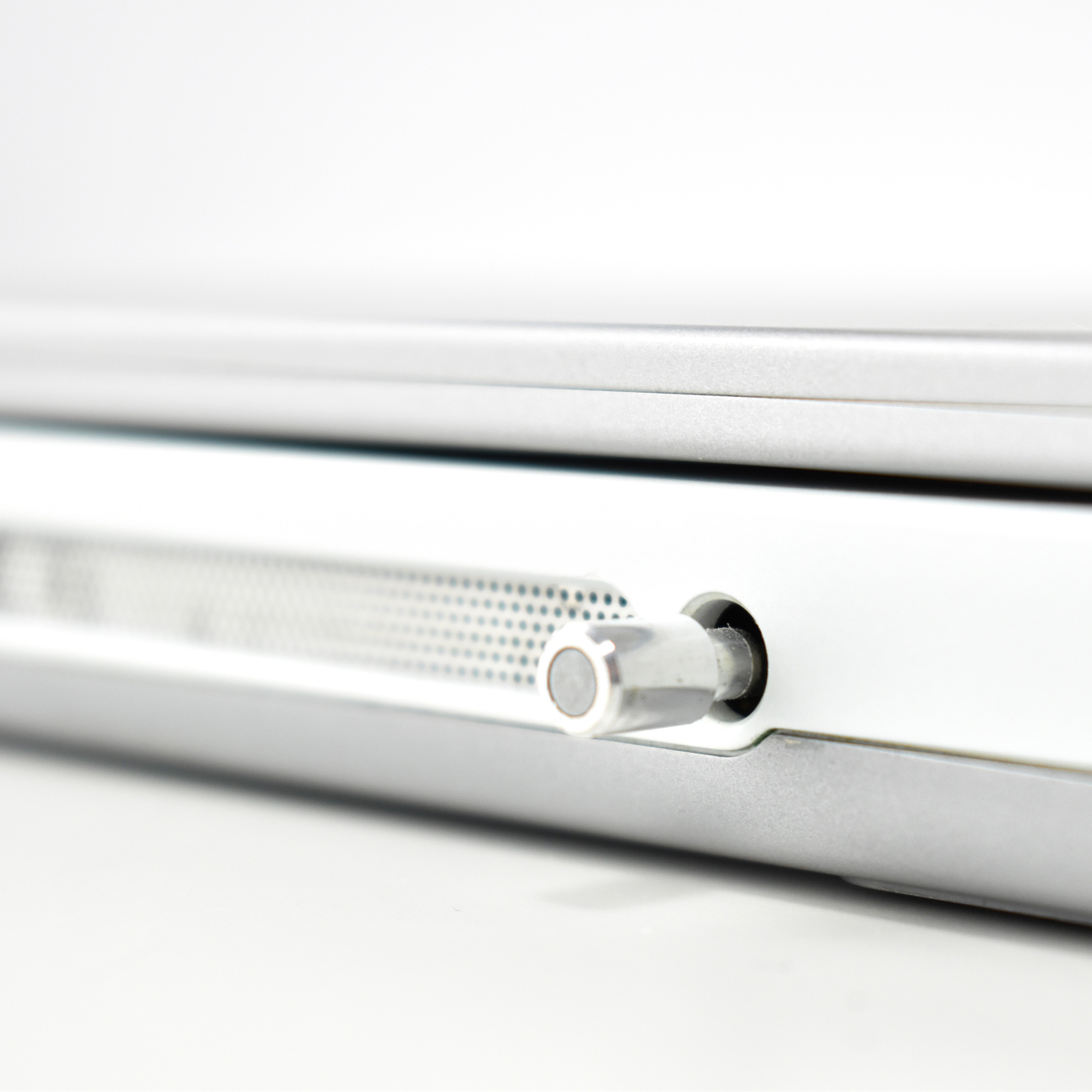
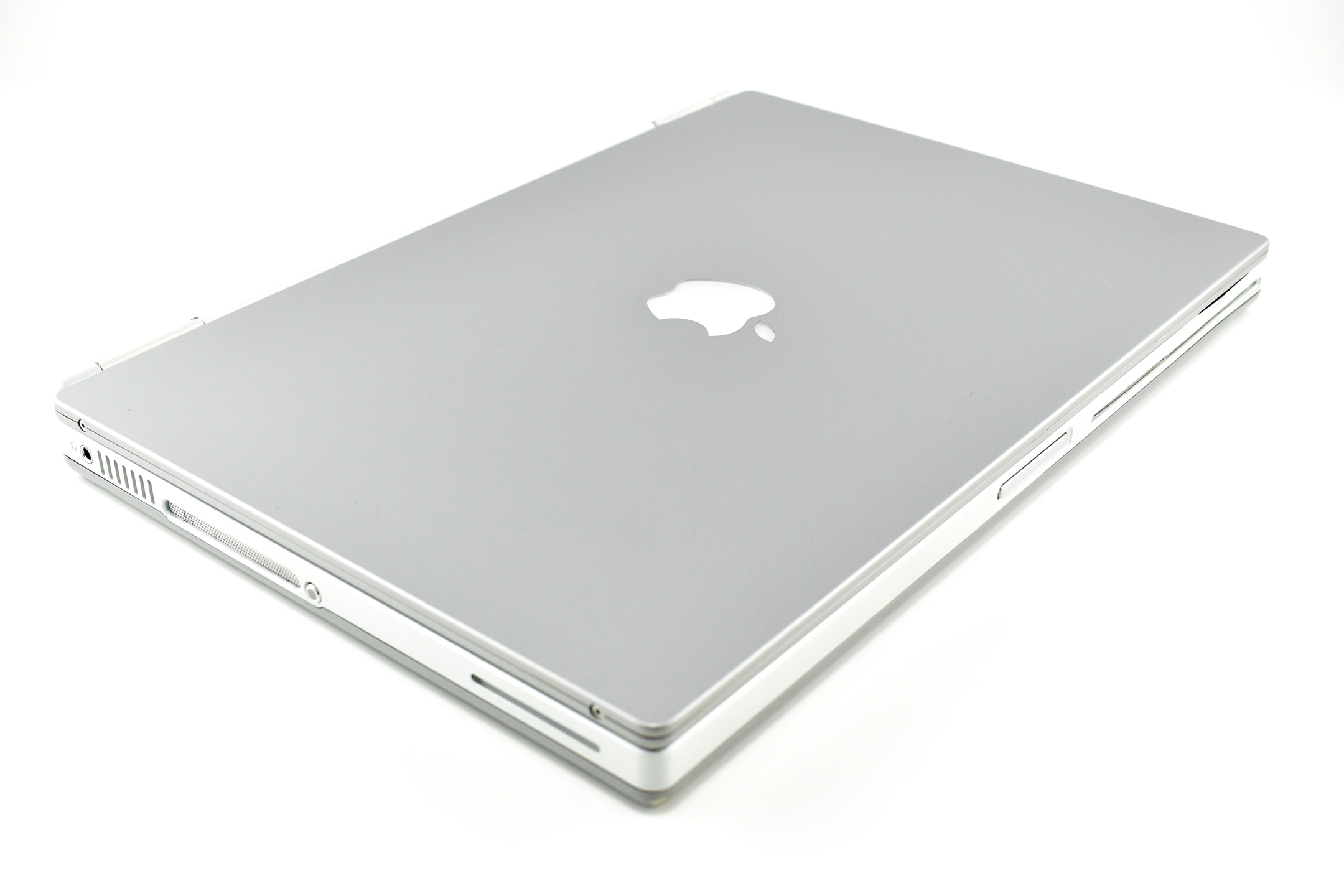
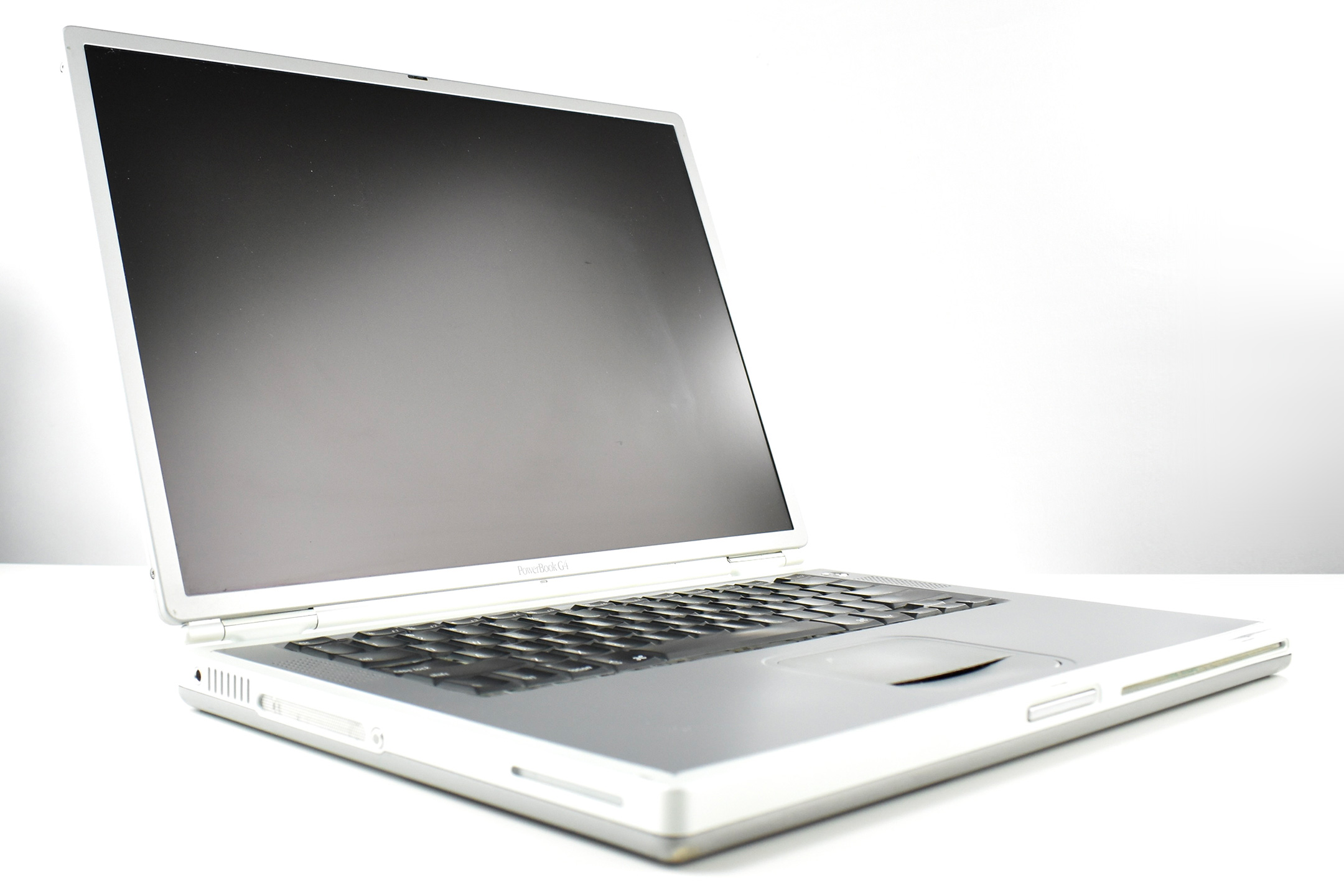
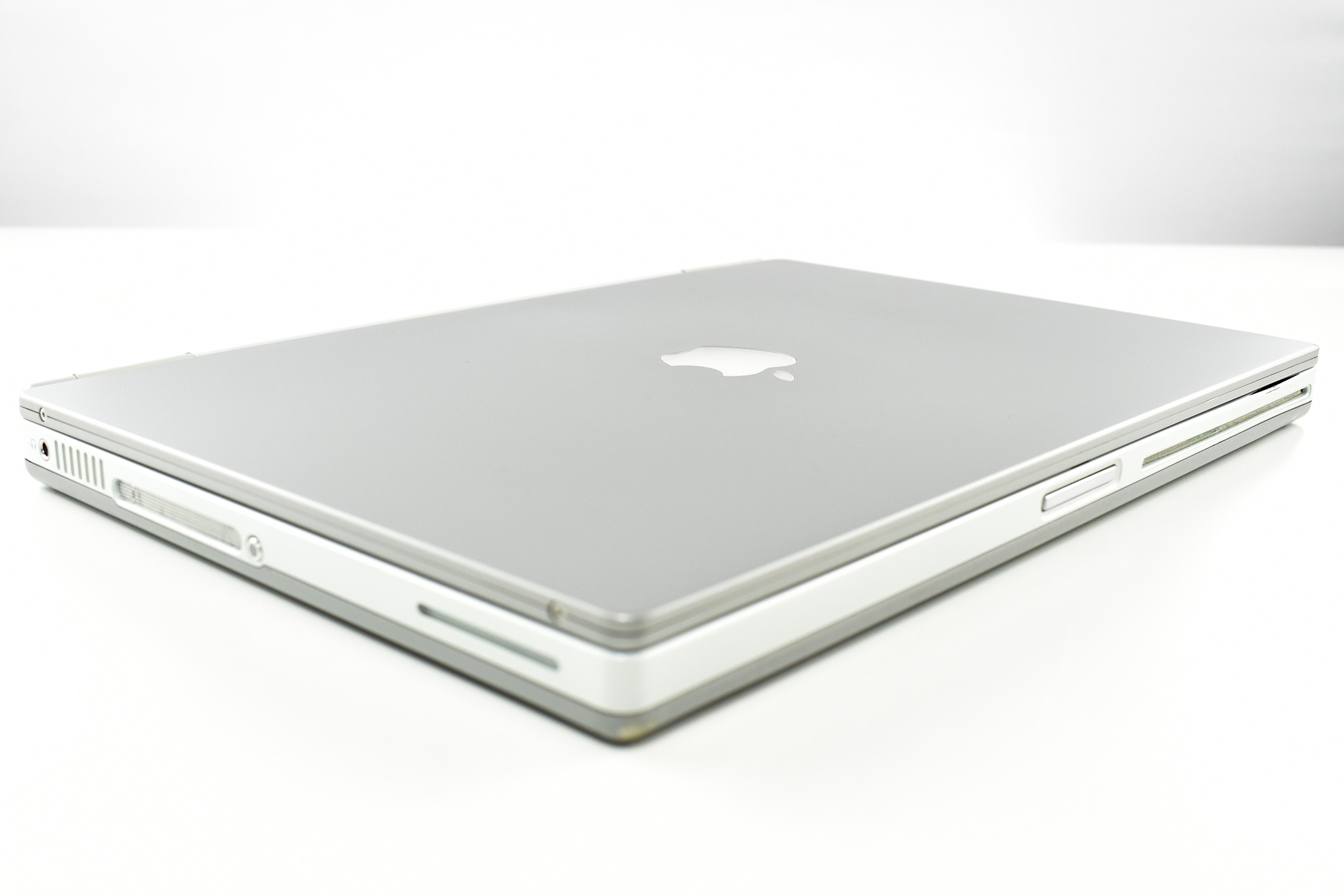
In January 2001, Steve Jobs announced “the most revolutionary portable computer ever created”—the Titanium PowerBook G4. At the time, this laptop had Apple’s largest display and fastest processor. Apple stated that a “mega-wide display and blazingly fast PowerPC G4 processors make it the ultimate system for portable video editing using Apple’s iMovie…or Apple’s award-winning Final Cut Pro professional video editing, effects, and compositing software.” The display was a 15.2-inch TFT widescreen display.
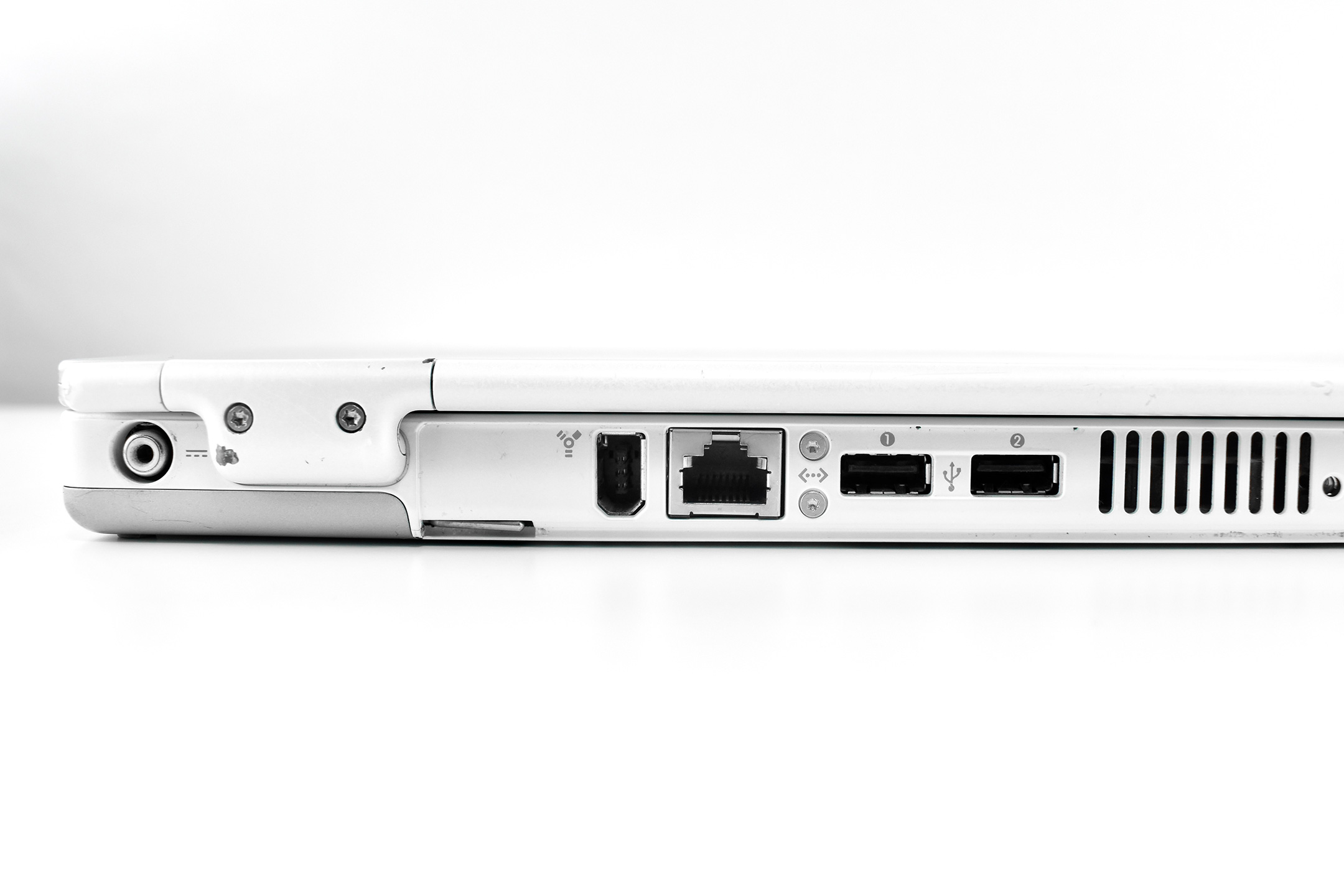
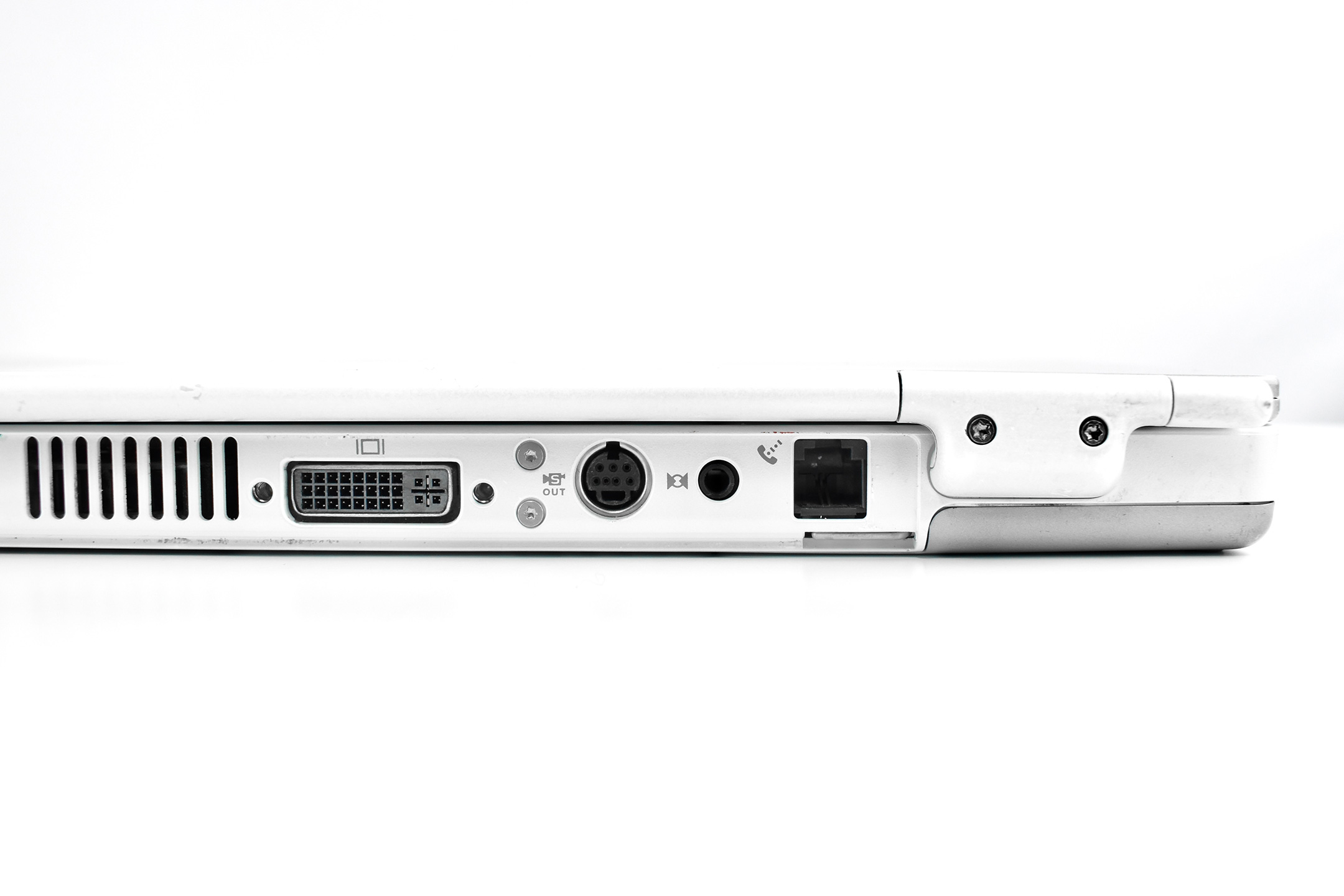
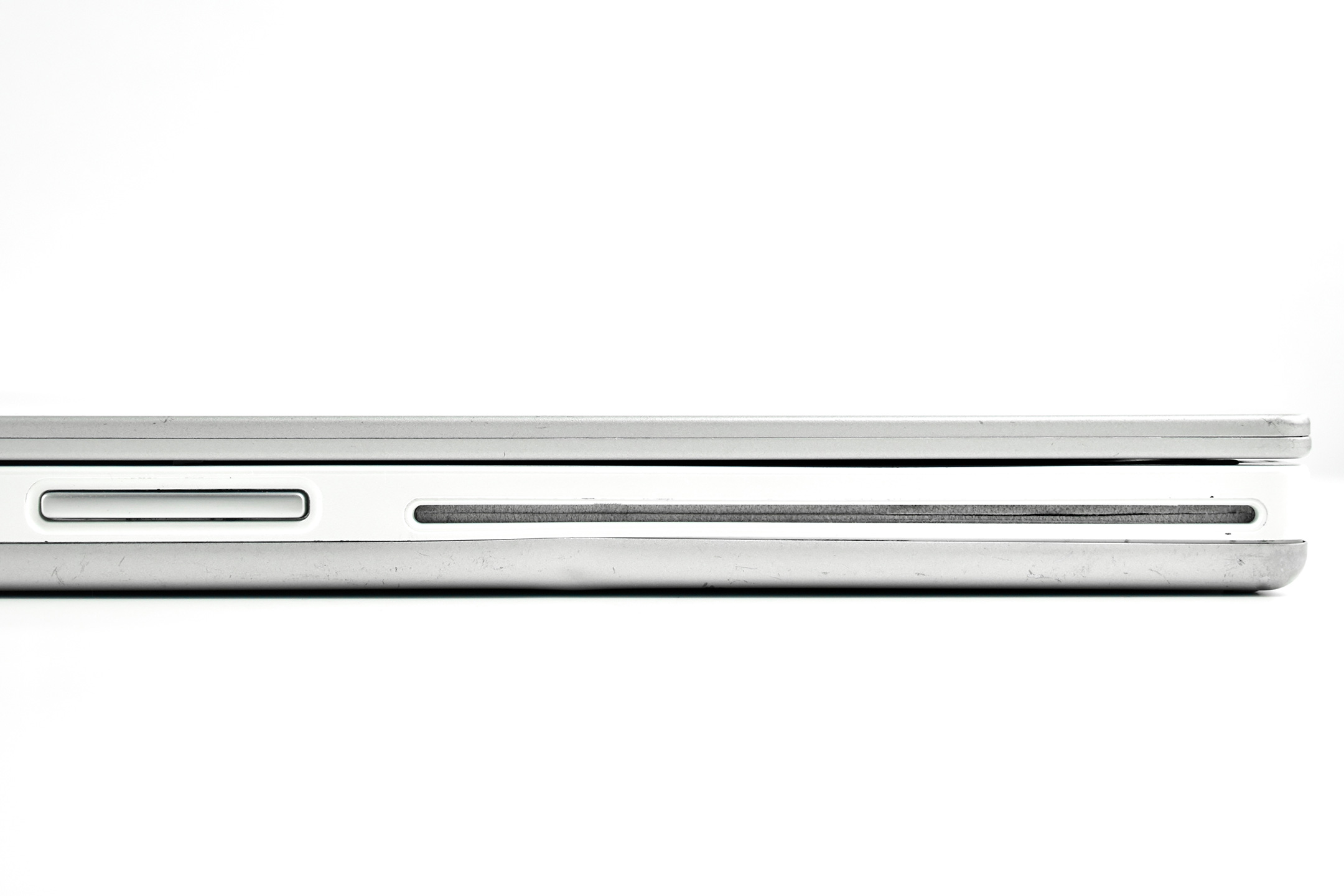
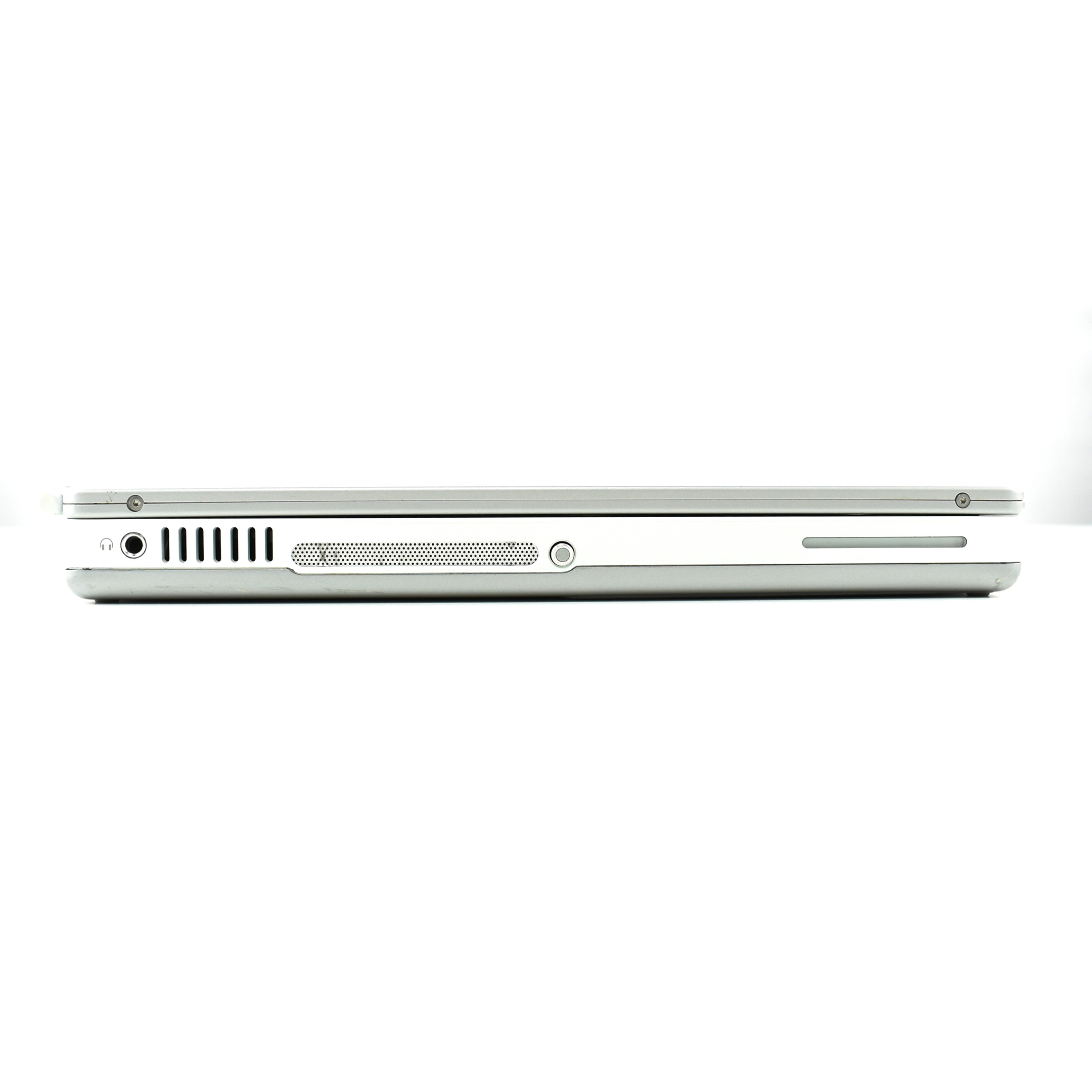
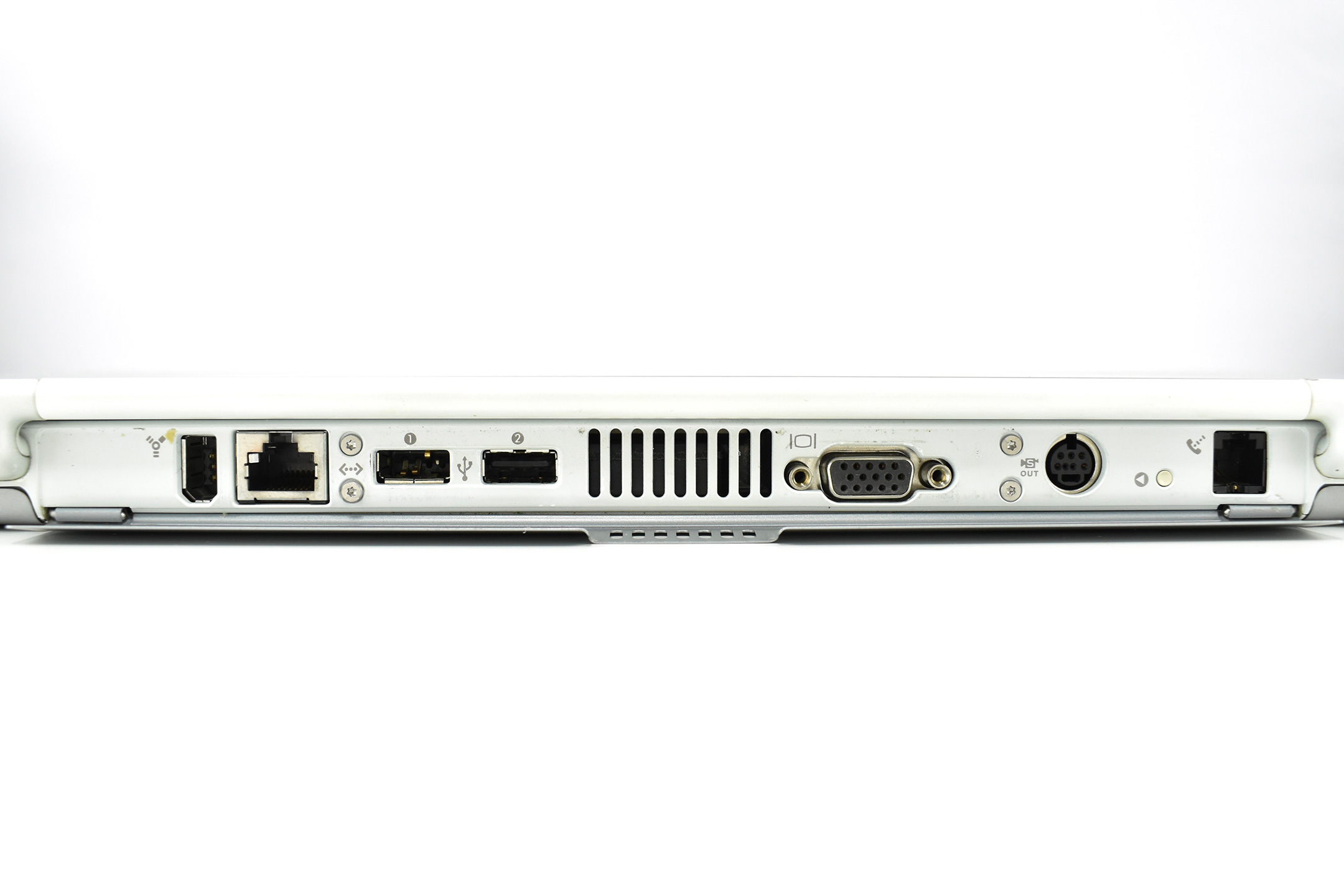
The PowerBook G4 Titanium was given the unofficial nickname of “TiBook.” This particular PowerBook G4 Titanium model was released in December 2001 and was referred to as the “Gigabit TiBook” referring to its ultra-fast Gigabit (1000BASE-T) ethernet port (an upgrade from the previous model’s 100BASE-T ethernet port).
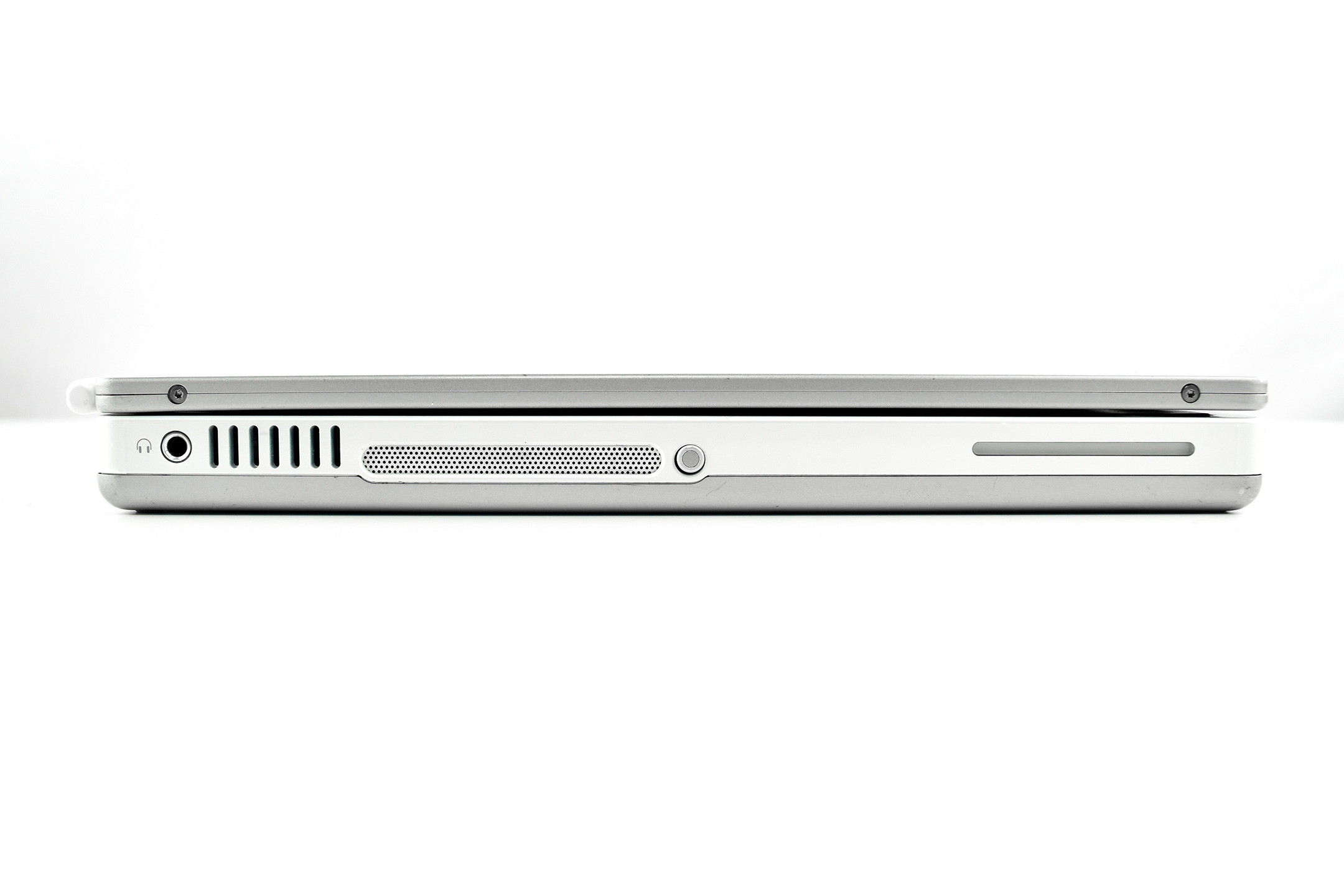
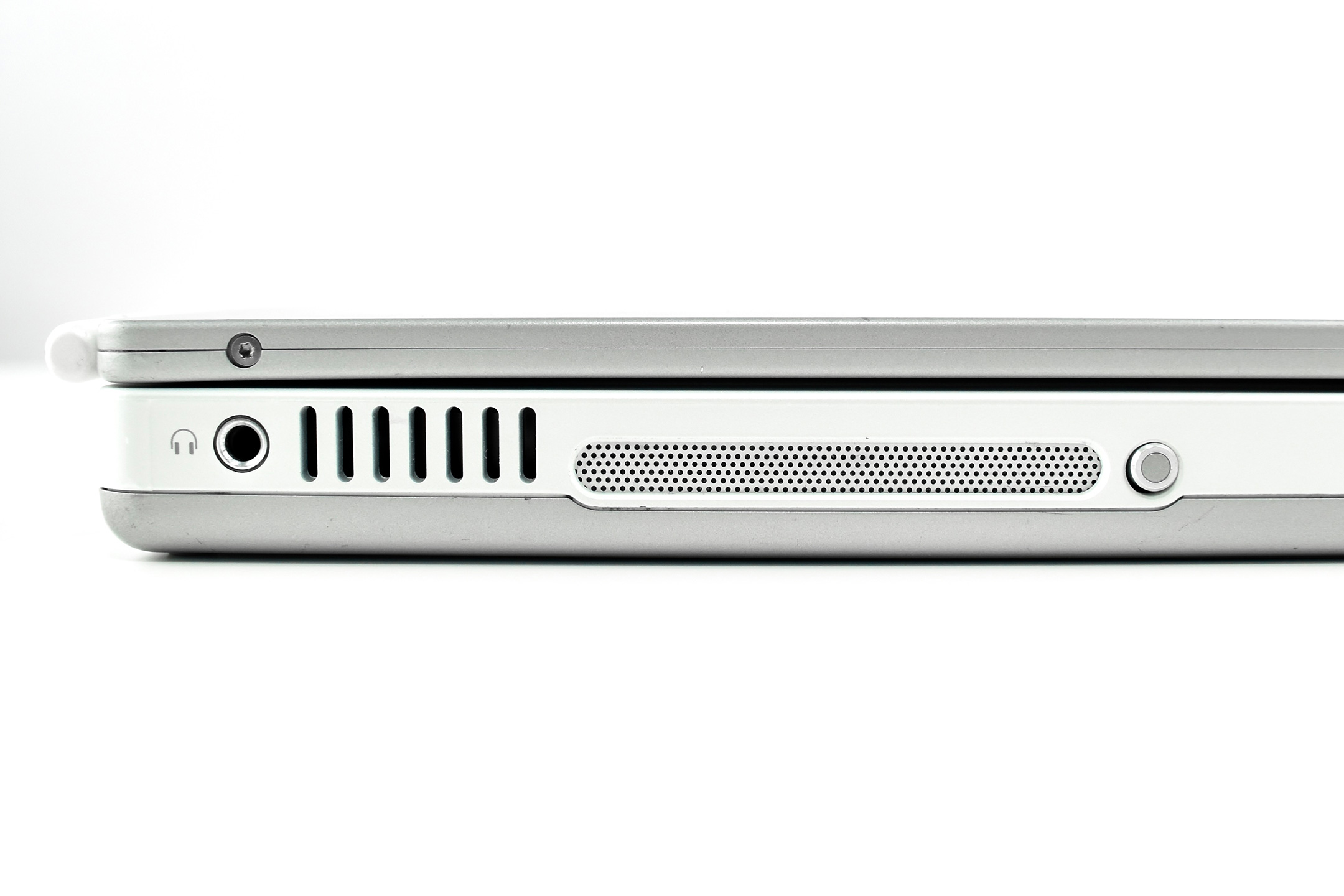
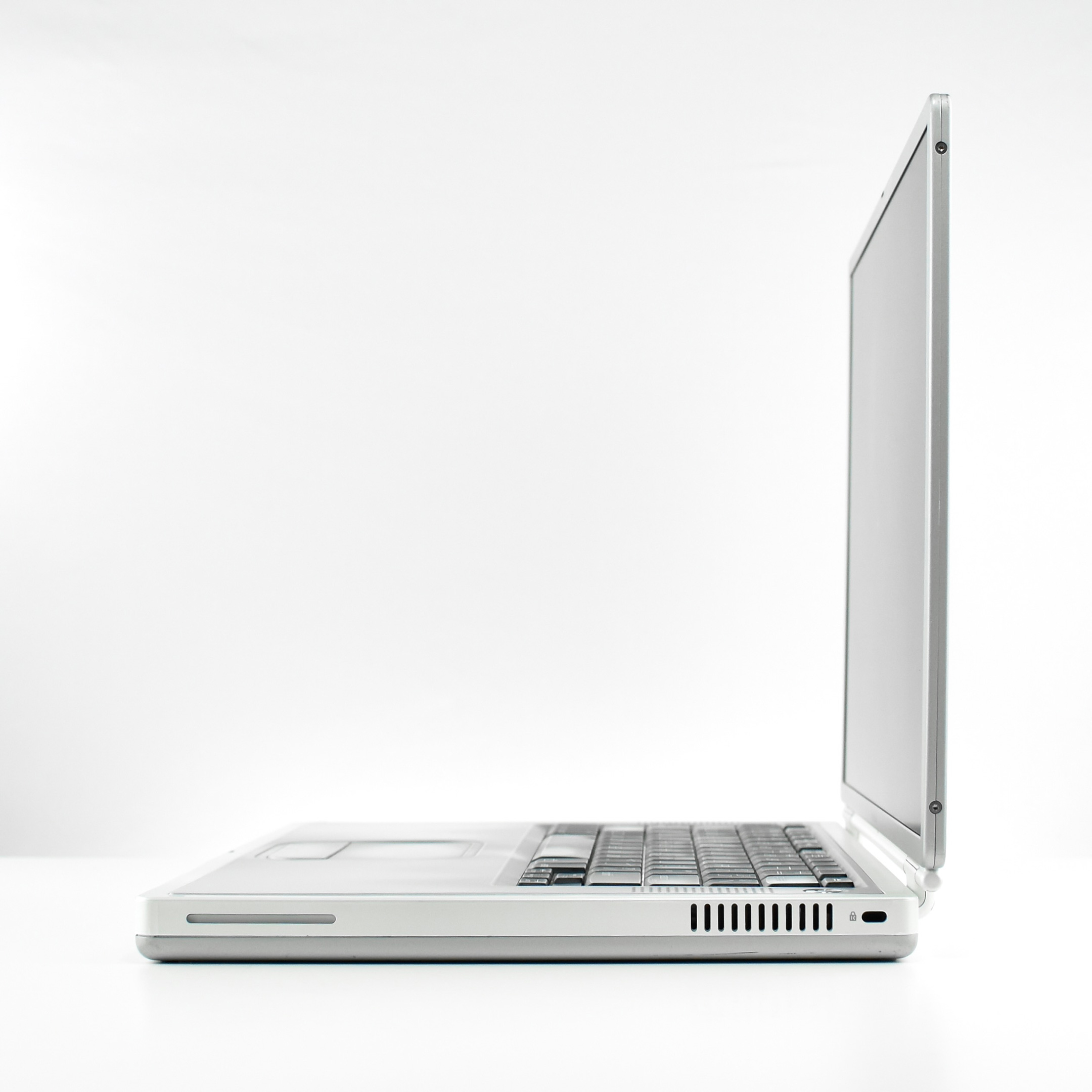
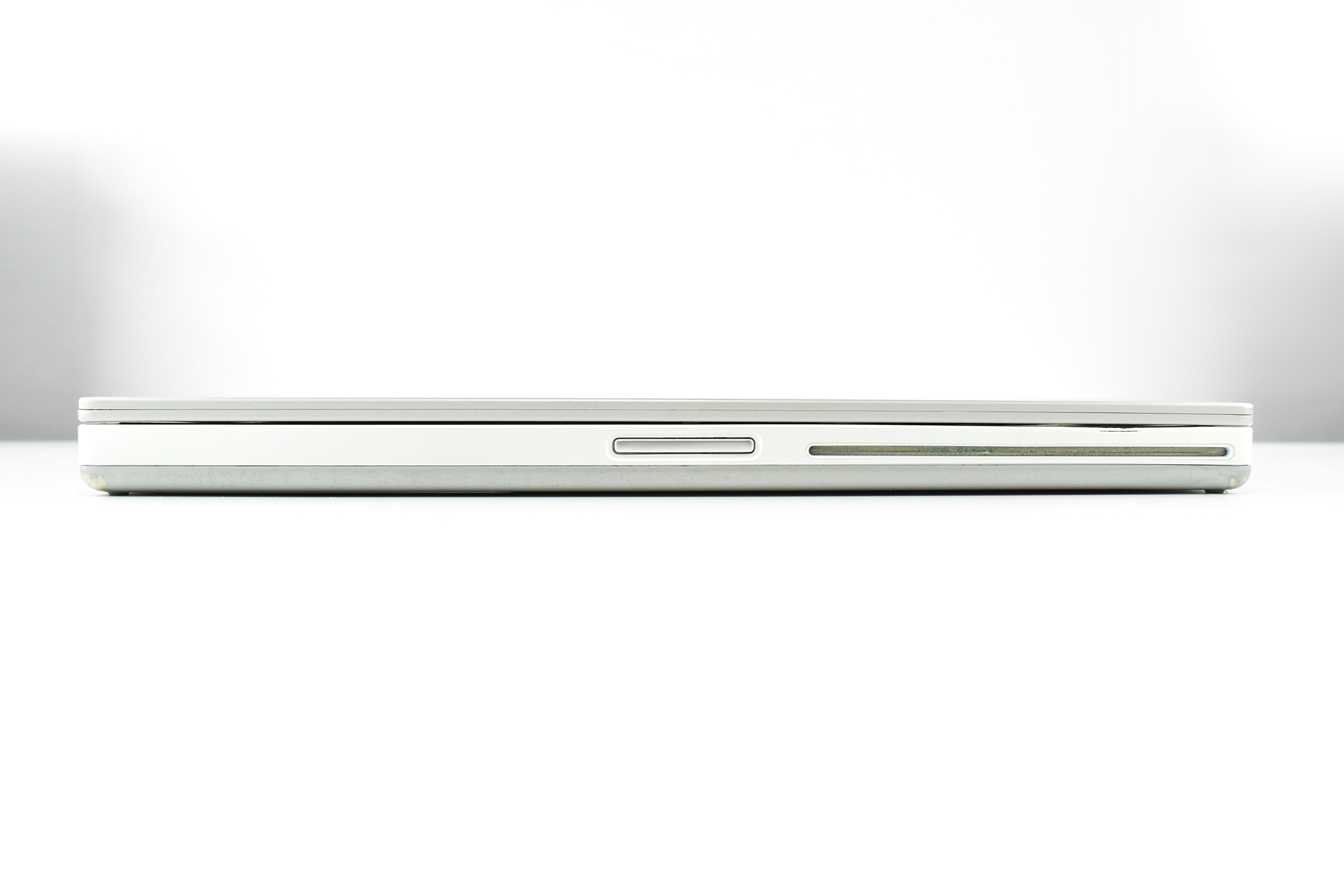
The PowerBook G4 Gigabit used a 667 MHz PowerPC 7440 G4 processor and was available with 256 MB or 512 MB SDRAM, and 30 GB hard drive. A slot-loading 6X DVD-ROM drive was located below and to the right of the trackpad on the front of the case. Overall, the PowerBook G4 Titanium was 1.1 inches thick, 13.4 inches wide, 9.5 inches deep, and weighed an average of 5.3 pounds.
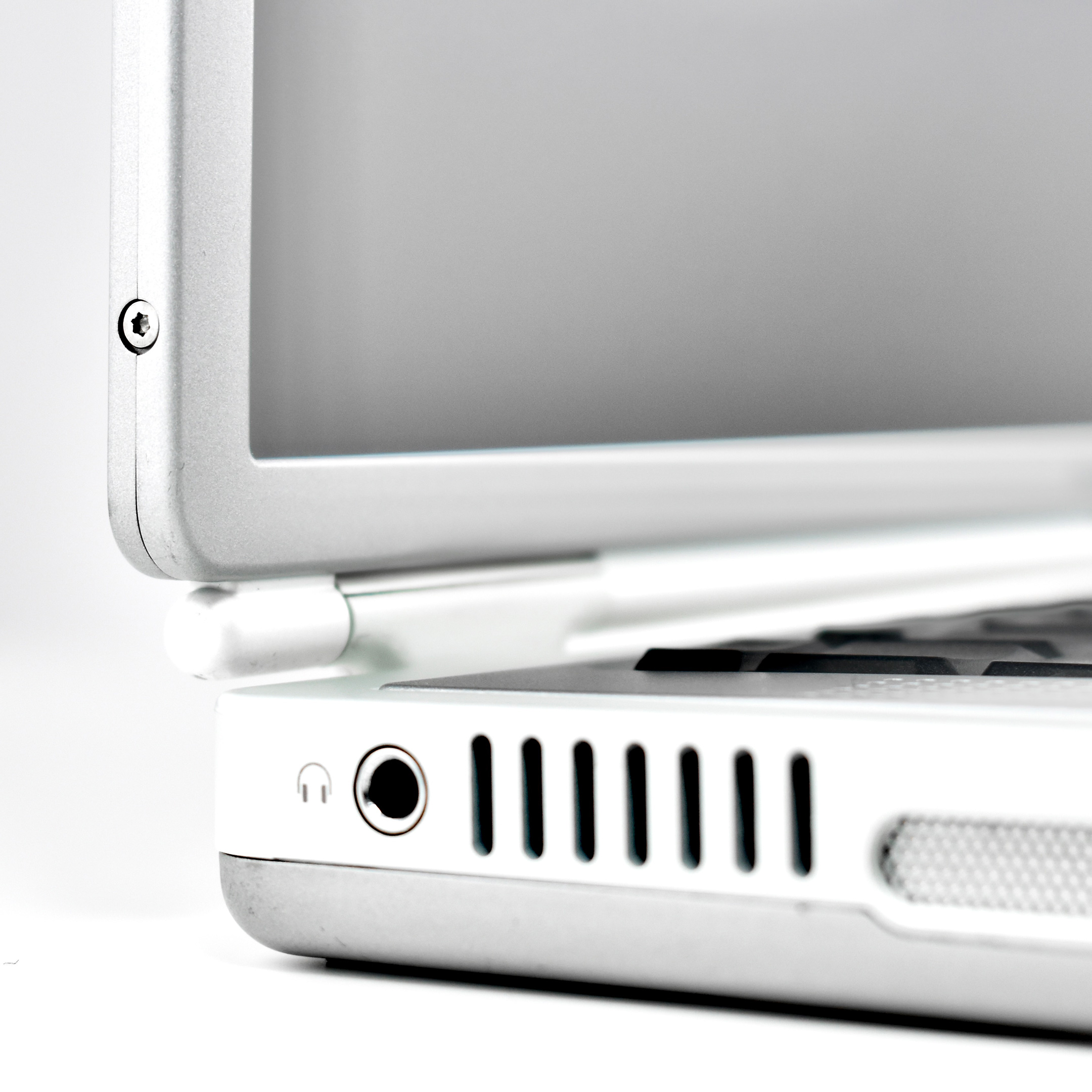
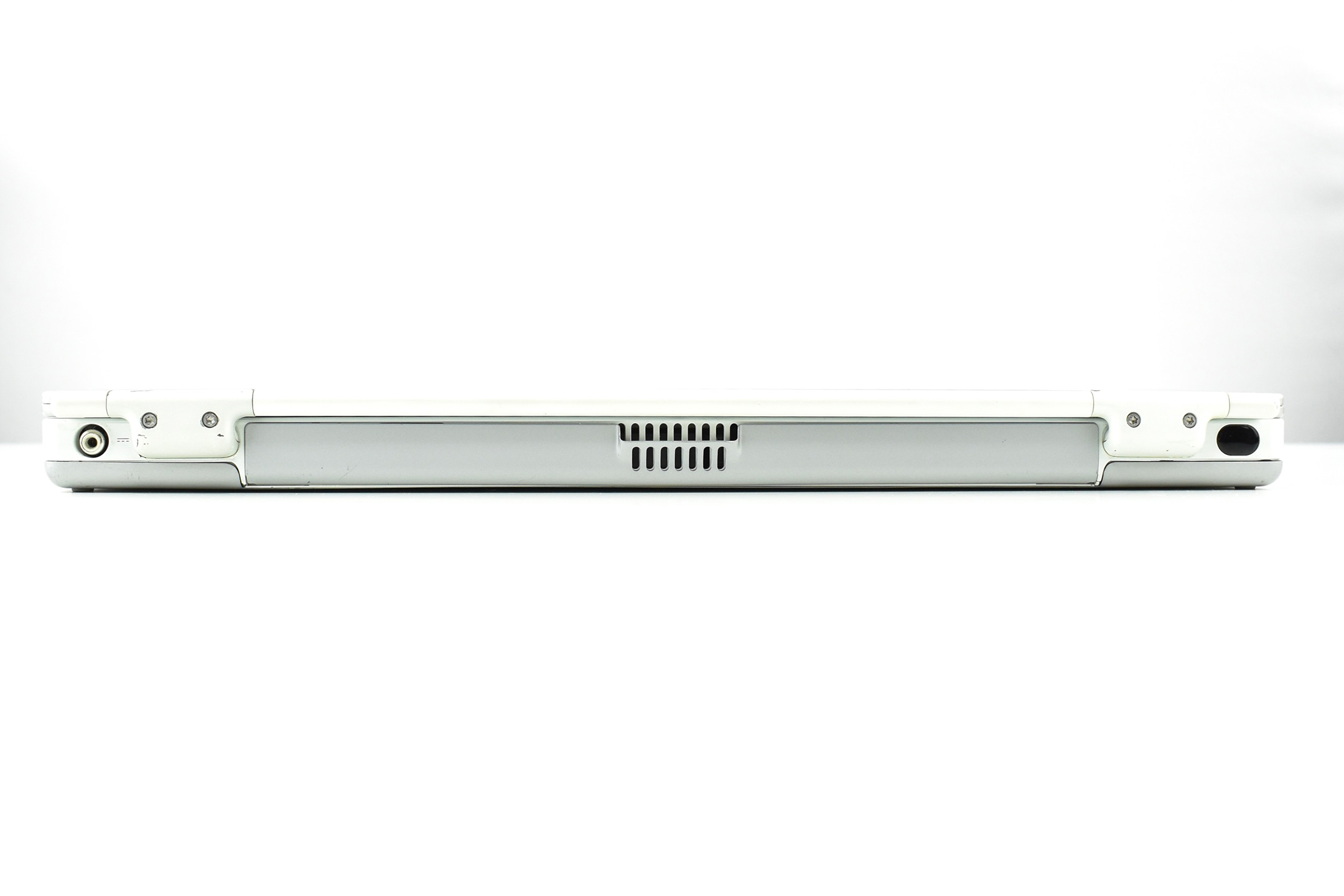
Along with the original Titanium PowerBook G4, this model was known for its sometimes problematic hinge assembly that resulted in a broken hinge and/or display problems due to the video cable running through the left hinge. These quality issues were resolved in the third “DVI” iteration of this laptop.
Upon release, the design of the Titanium PowerBook G4 was a major departure from previous Apple laptops. Although its “Titanium” moniker referred to its internal chassis, the laptop’s exterior used two shades of silver metal—a design never repeated in an Apple laptop. Its mega-wide screen (at 1152×768 pixels) had a bezel smaller than current pro Mac laptops. Also, this was the first Apple laptop to feature an Apple logo that was “right way up” when the laptop lid was open—a design met with cheers from the Macworld audience when the laptop was first shown on stage.
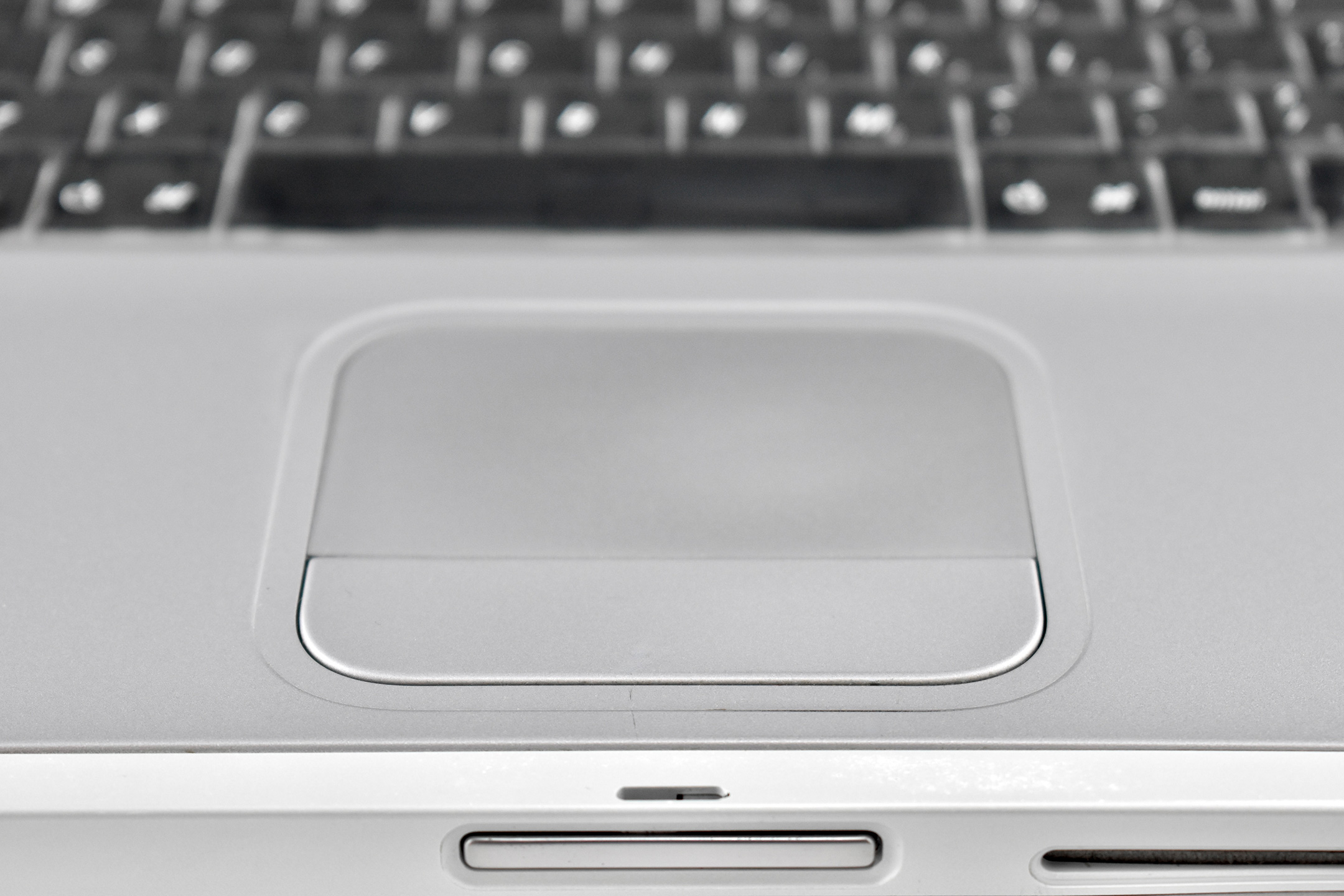
This PowerBook G4 in my collection functions, but has a major dent in its trackpad and several cosmetic issues due to wear and tear.
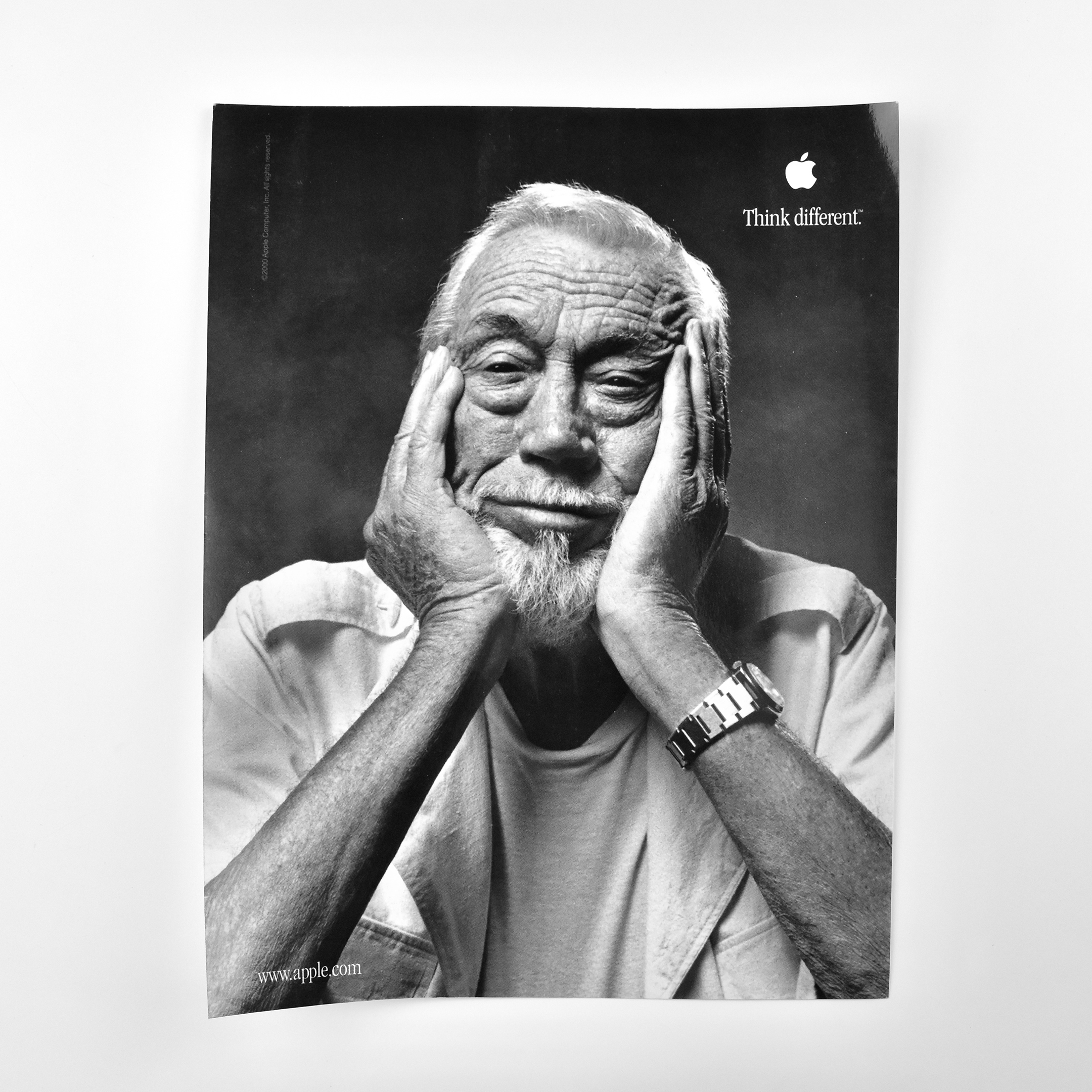
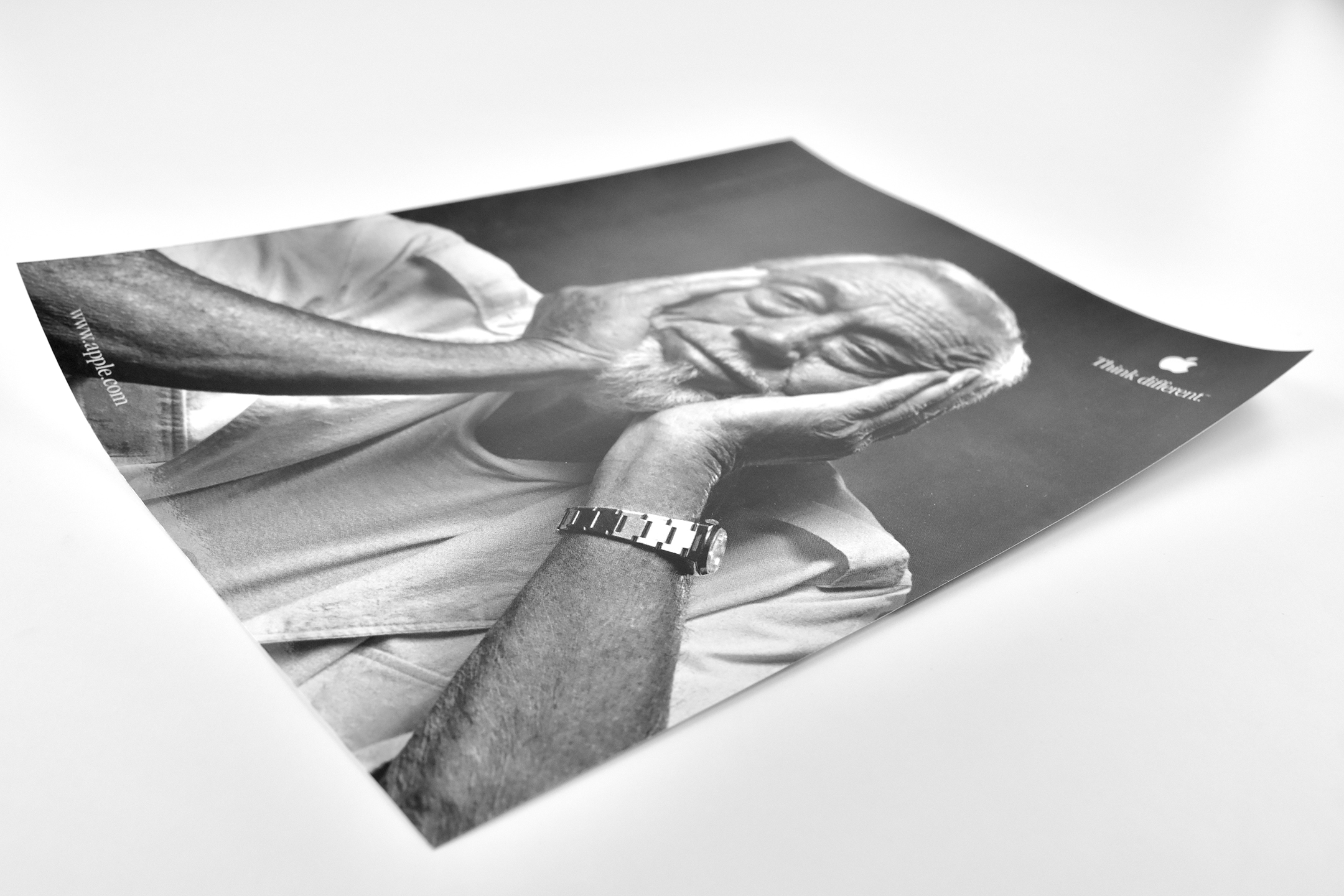
“Think different” was the slogan used by Apple in advertising 1997–2002, and is still used in some circumstances as of 2021. The “Think different” concept was created by advertising agency TBWA\Chiat\Day while working with Apple and Steve Jobs. “Think different” was used in its original concept in a TV commercial and in print/digital advertisements, and the “Think different” slogan was used as part of many TV commercials, print/digital ads, and on product packaging. This advertising campaign was notable in that its original concept did not feature Apple products, just iconic cultural figures that Apple selected to represent their ideals.
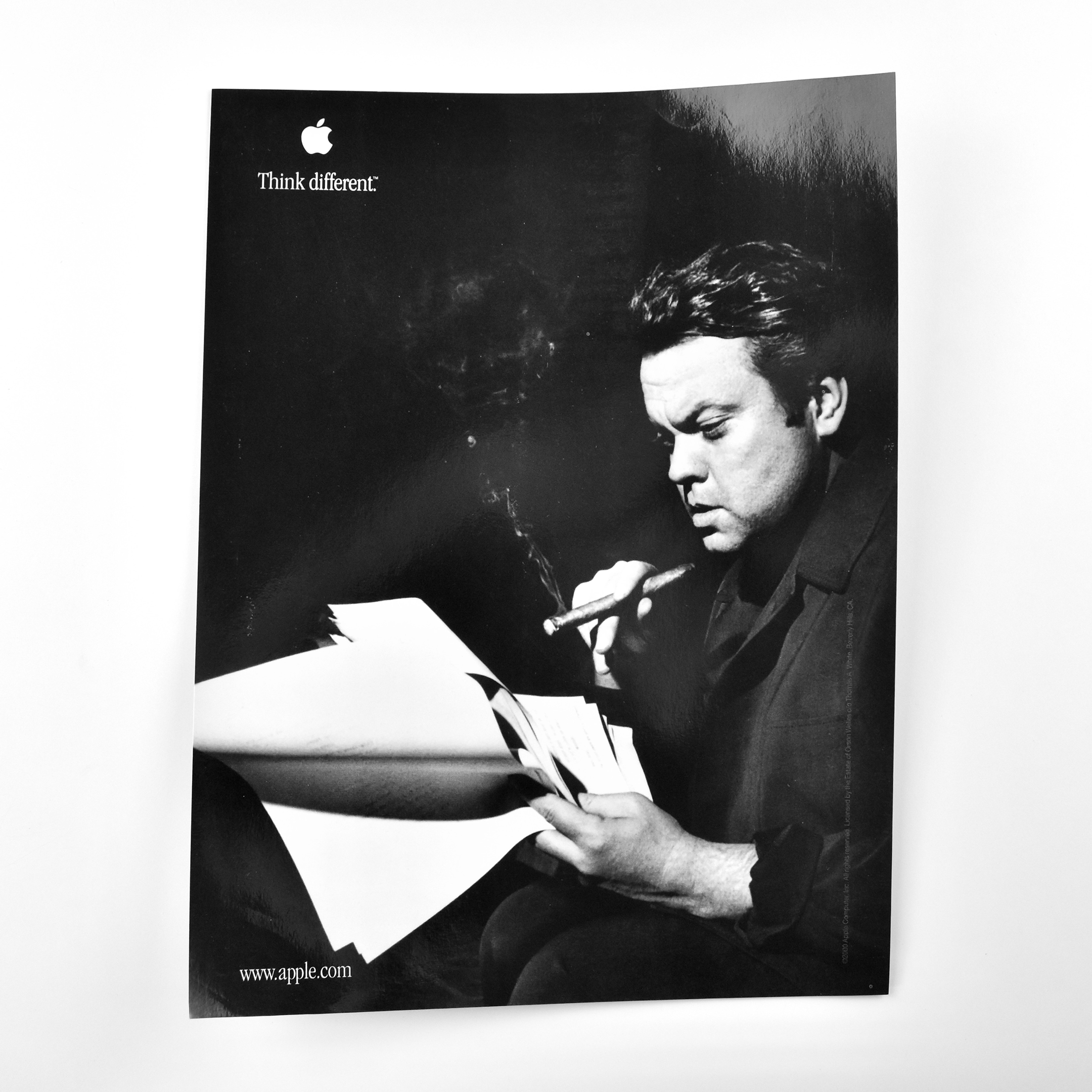
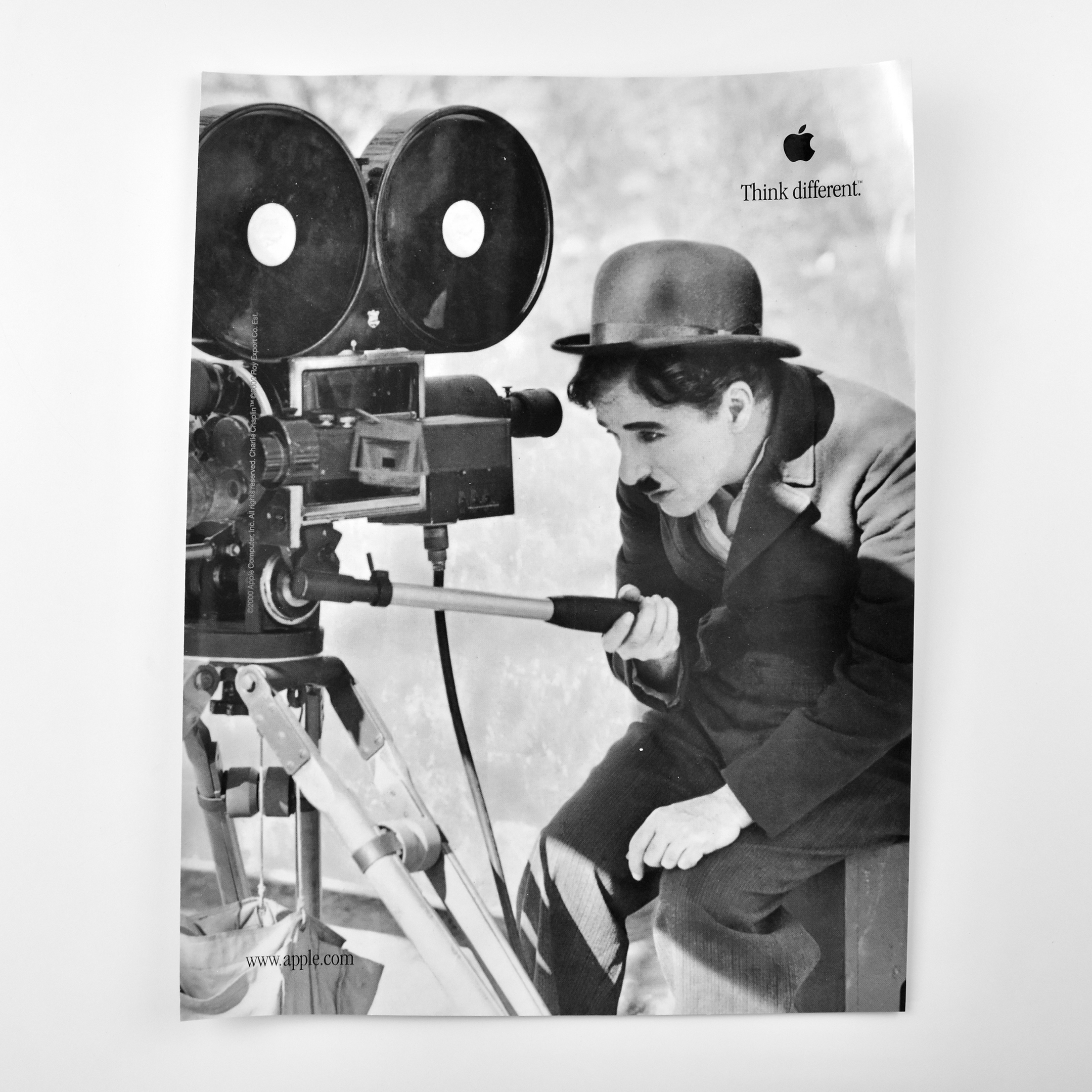
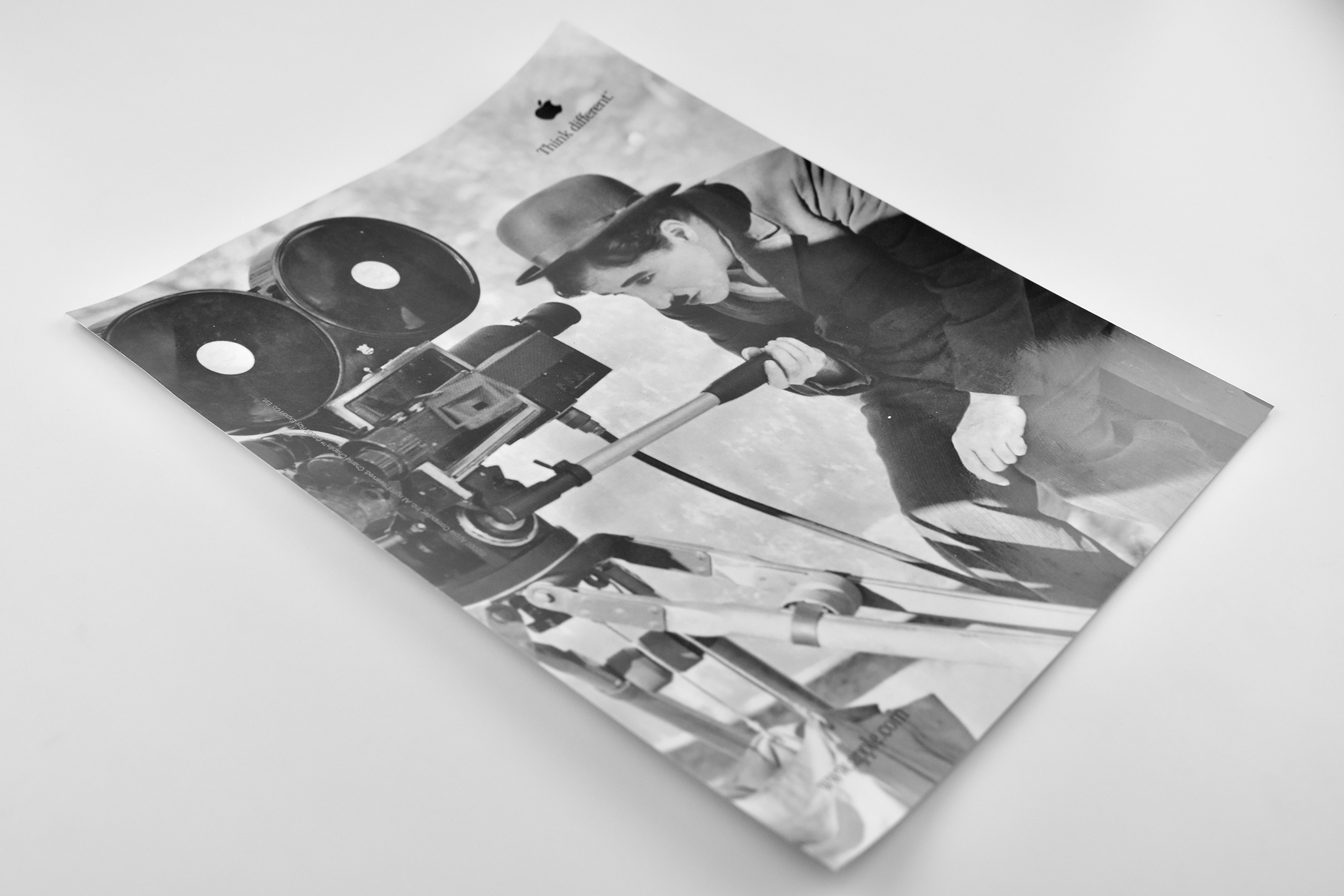
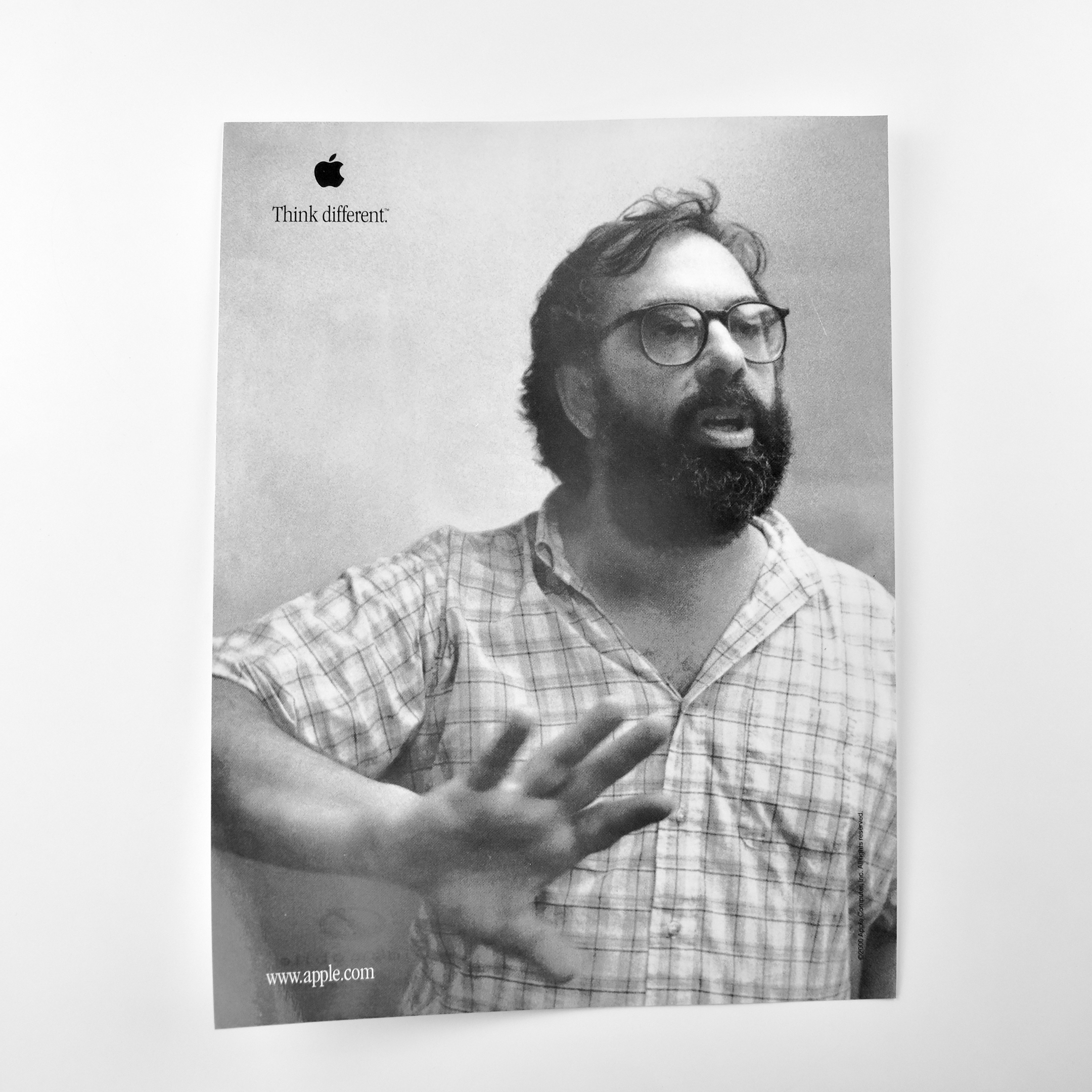
Several series of Think different ads were released. The final set of five film directors was never released to the public in poster format, but was run as magazine ads in 2000. This series featured John Huston, Orson Welles, Charlie Chaplin, Francis Ford Coppola, and Frank Capra.
I was able to collect four of five of these magazine ads (I do not have Frank Capra). Each of these ads has been laminated and measures approximately 8 x 10.5 inches.
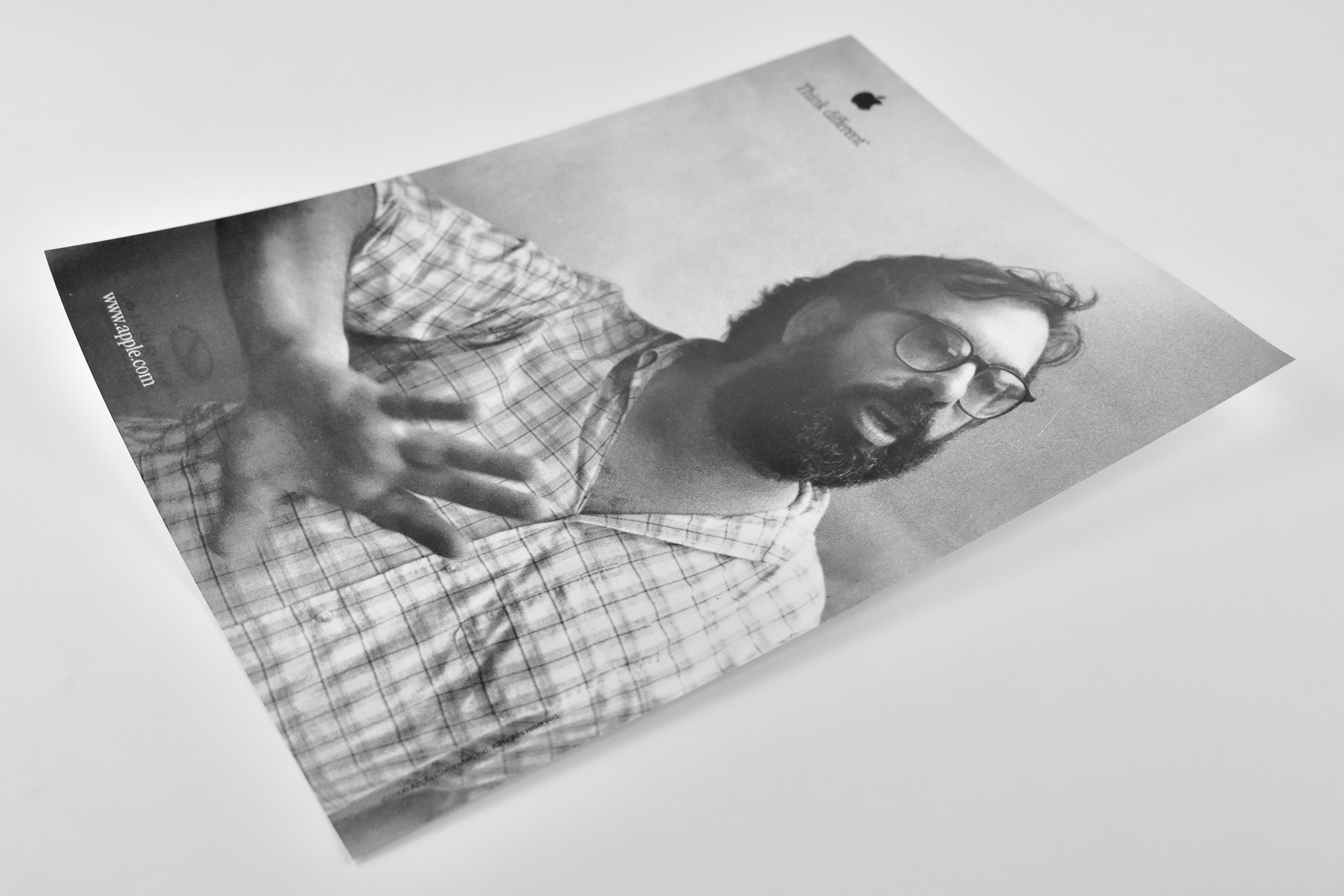
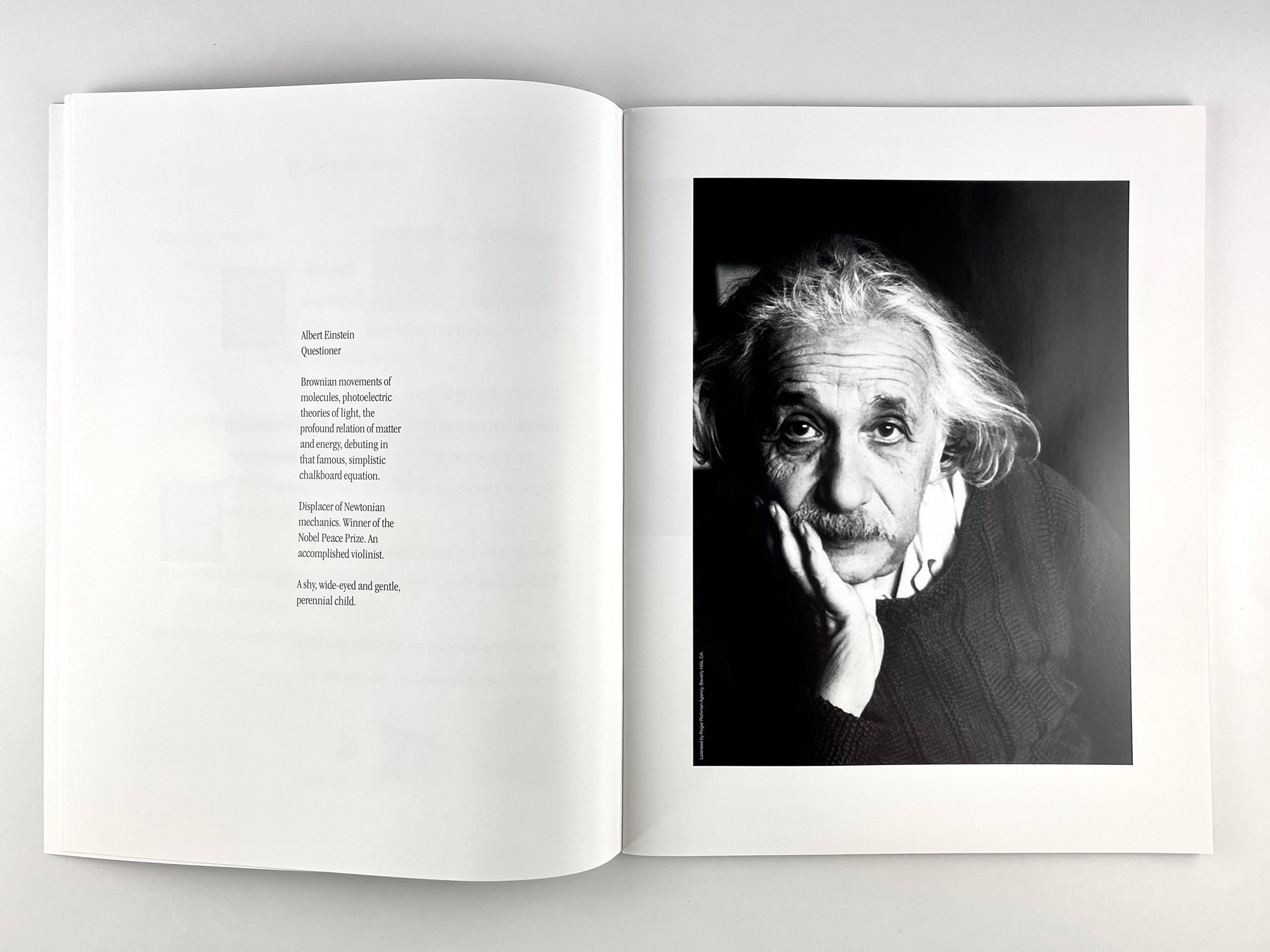
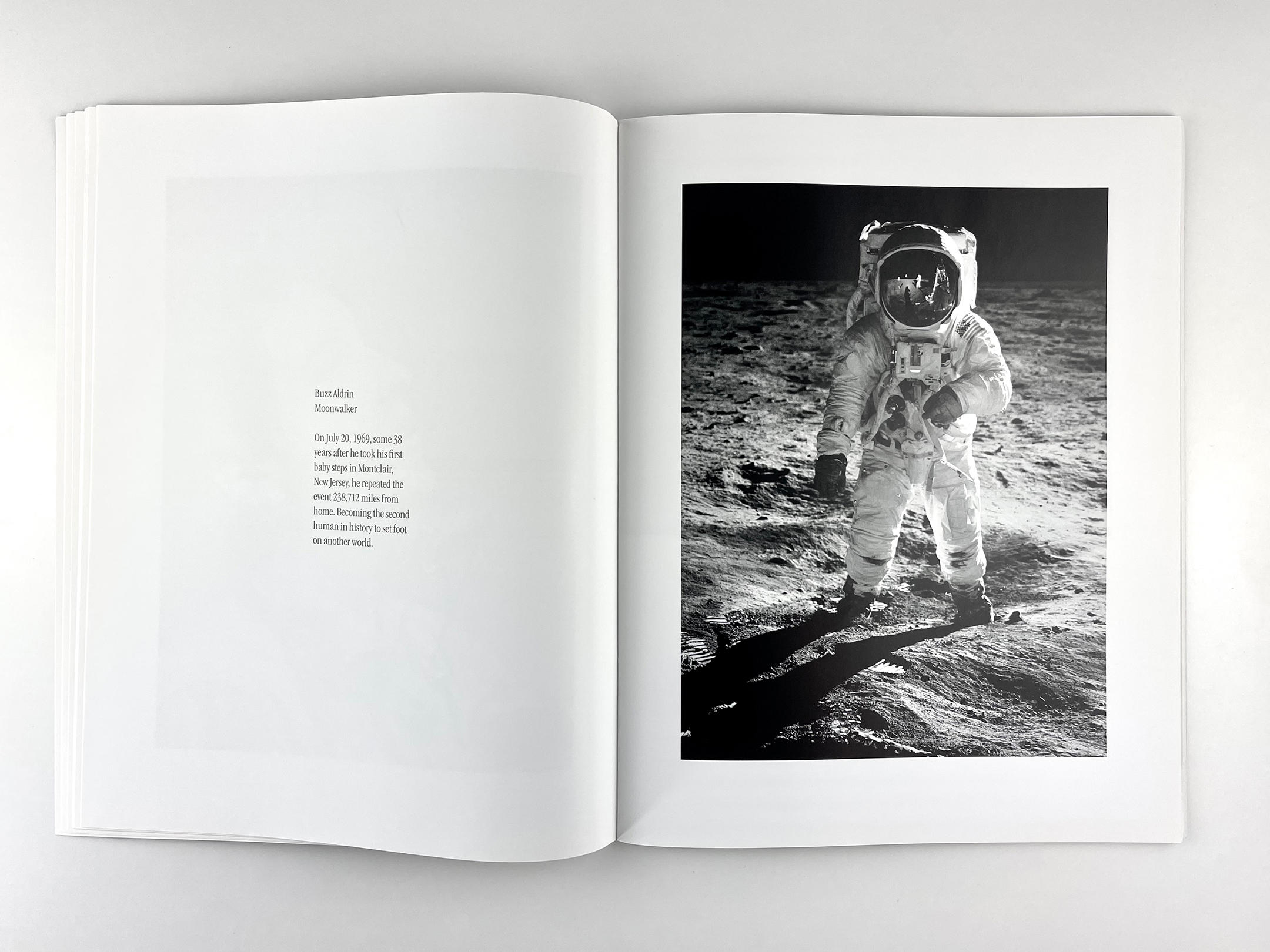
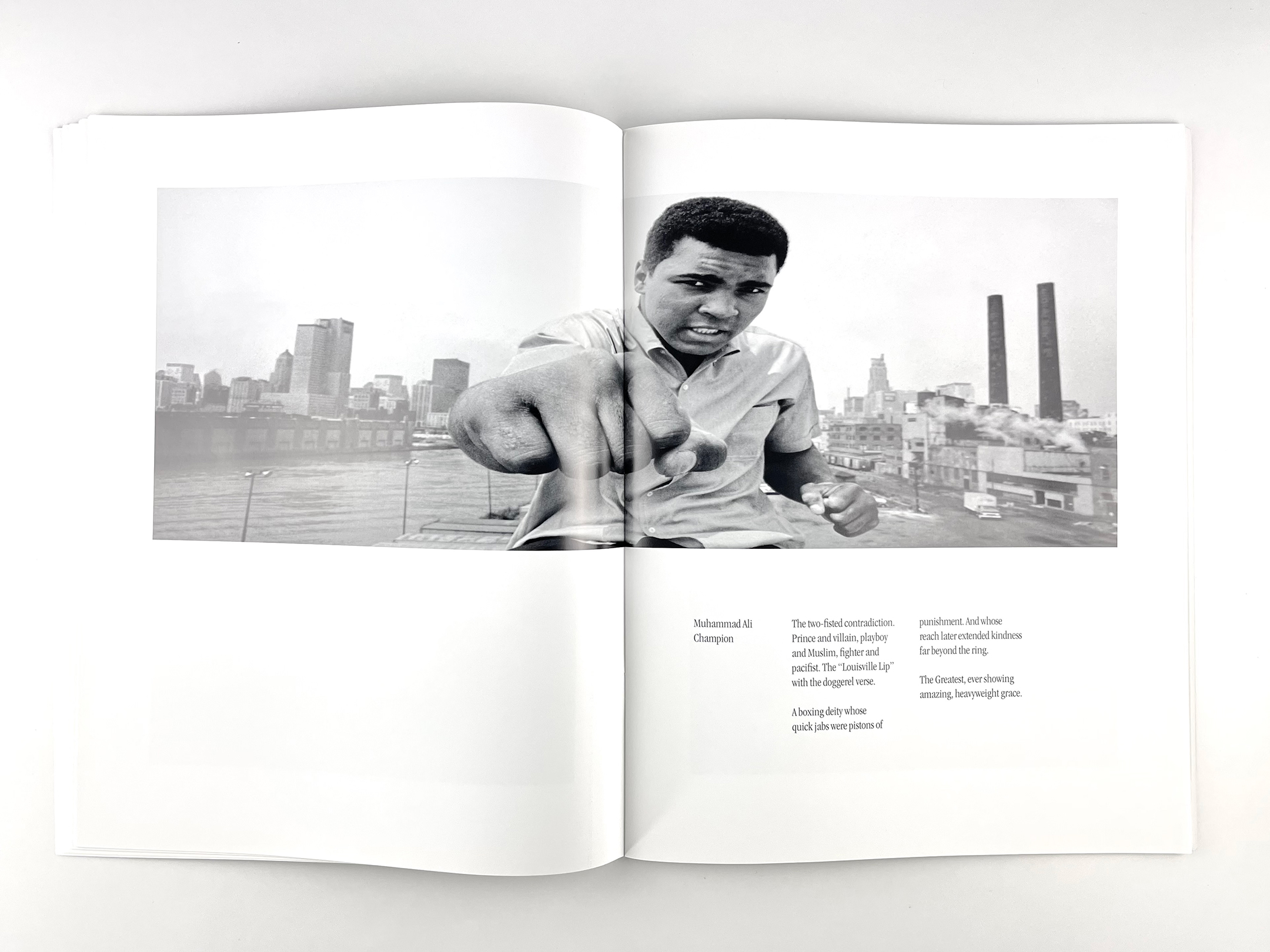
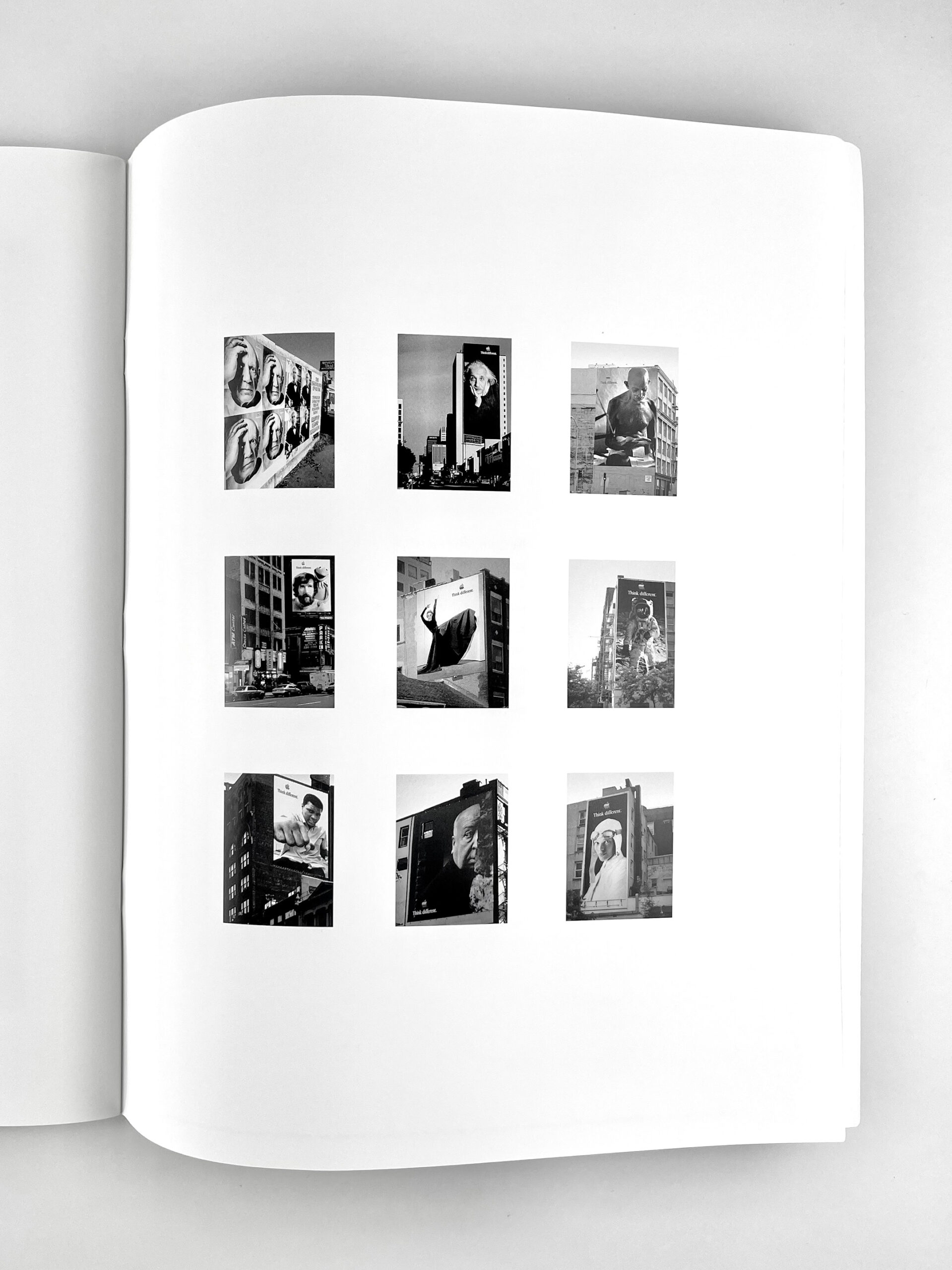
With a foreword by Steve Jobs, the book “1998: The Year of Thinking Different.” features the Think different manifesto and two-page layouts of many of the Apple Geniuses (cultural icons) featured in the Think different series.
The book begins with the full Think different “manifesto” in a 2-page layout:
The book includes the following Apple Geniuses:
Albert Einstein Mahatma Gandhi Pablo Picasso Alfred Hitchcock Rosa Parks Bob Dylan Buzz Aldrin Muhammad Ali Thomas Edison Martha Graham Jim Henson Maria Callas Dalai Lama Amelia Earhart Ansel Adams Joan Baez Paul Rand Miles Davis Lucille Ball & Desi Arnaz John Lennon & Yoko Ono
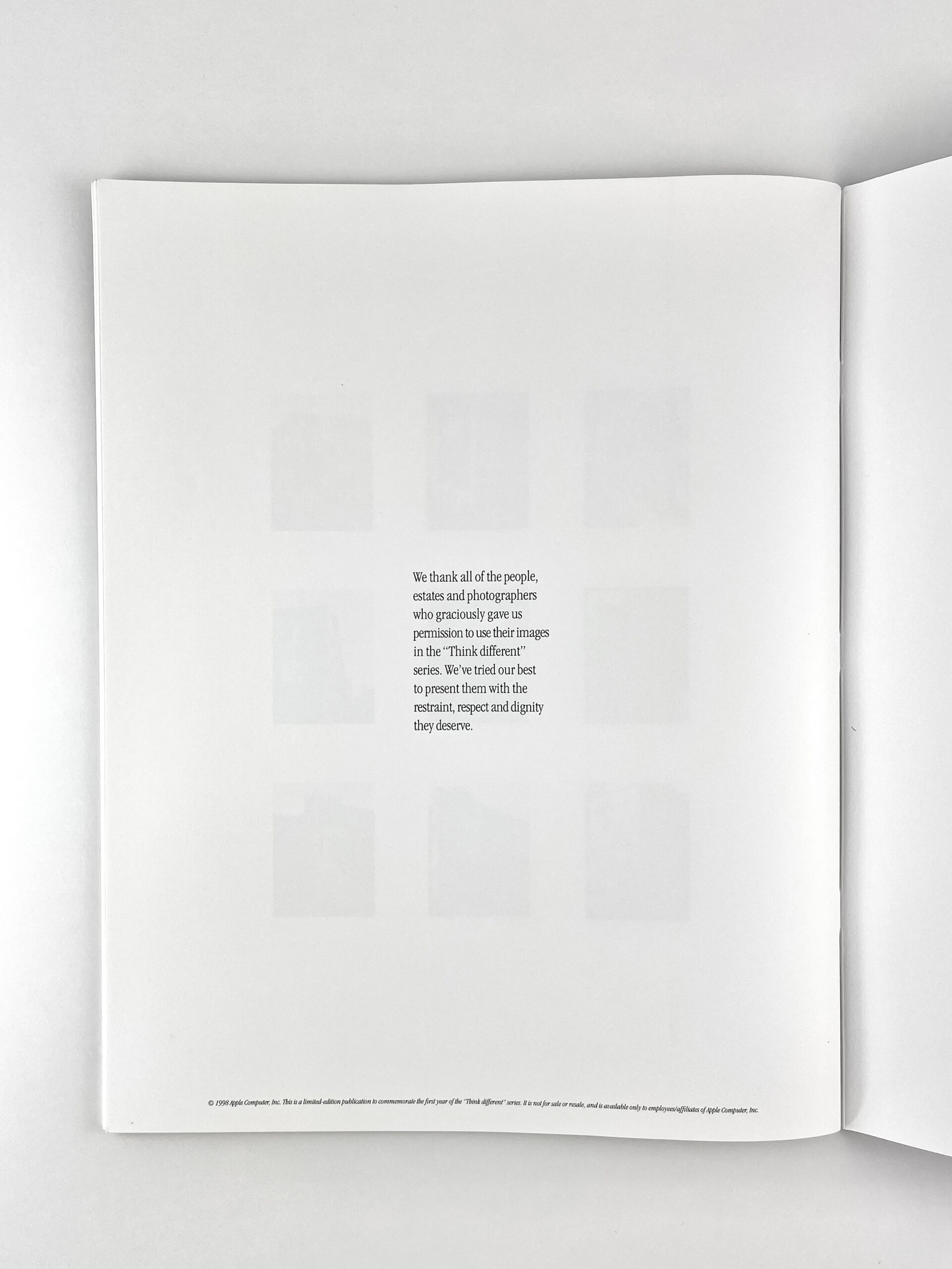
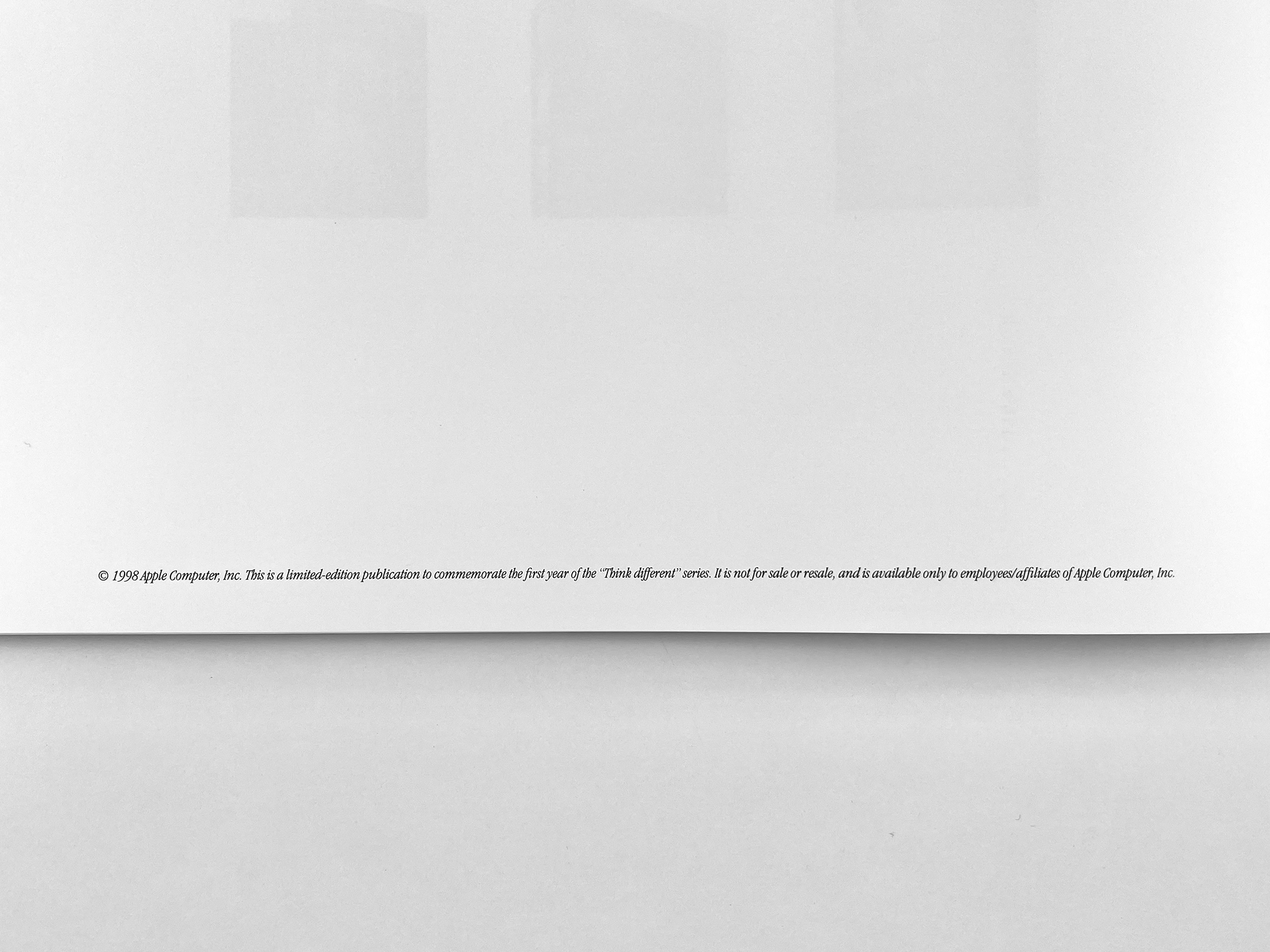
The final page of the book states, “This is a limited-edition publication to commemorate the first year of the ‘Think different’ series. It is not for sale or resale, and is only available to employees/affiliates of Apple Computer, Inc.”
The book is paperback, measures 11 x 14 inches, and is printed in black and white.
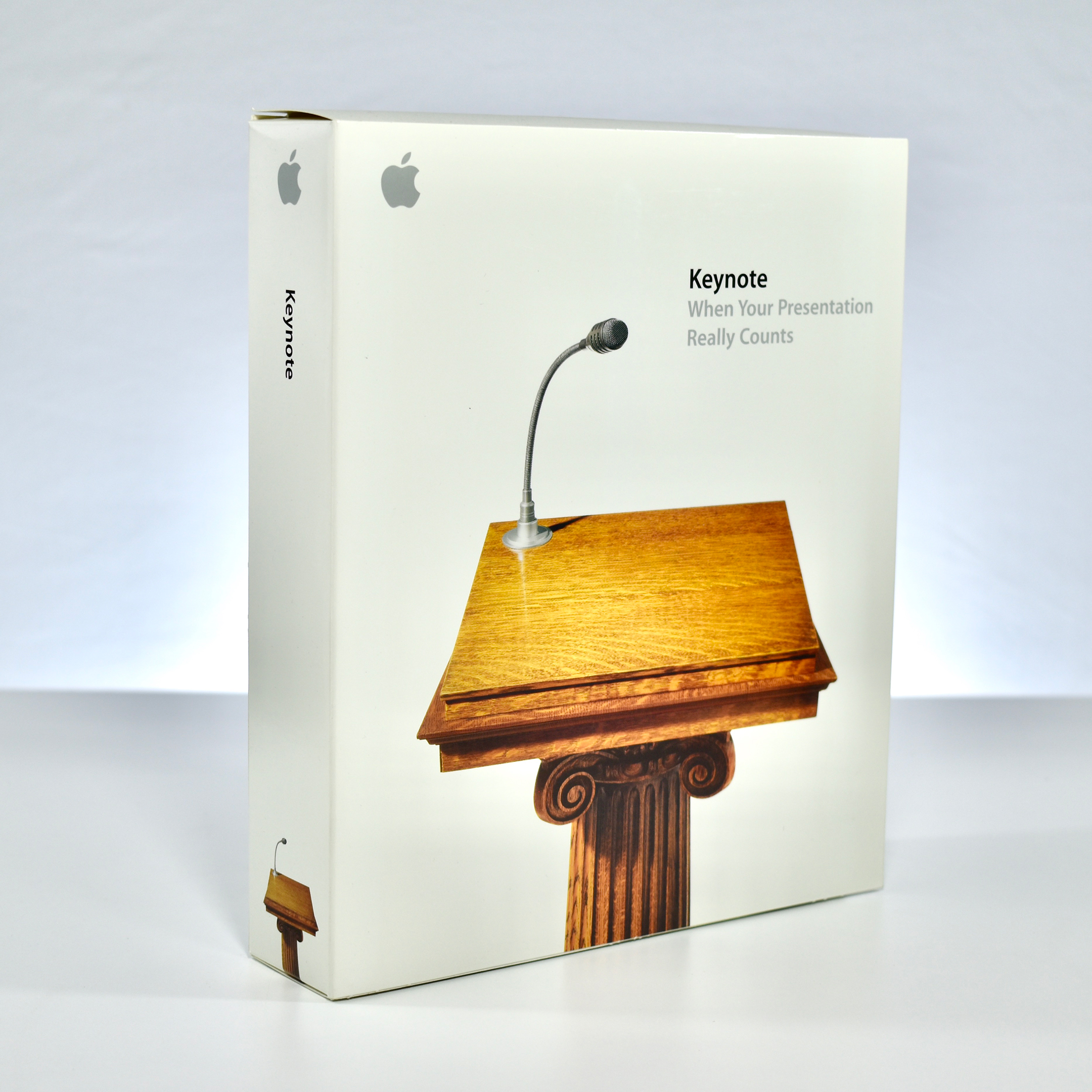
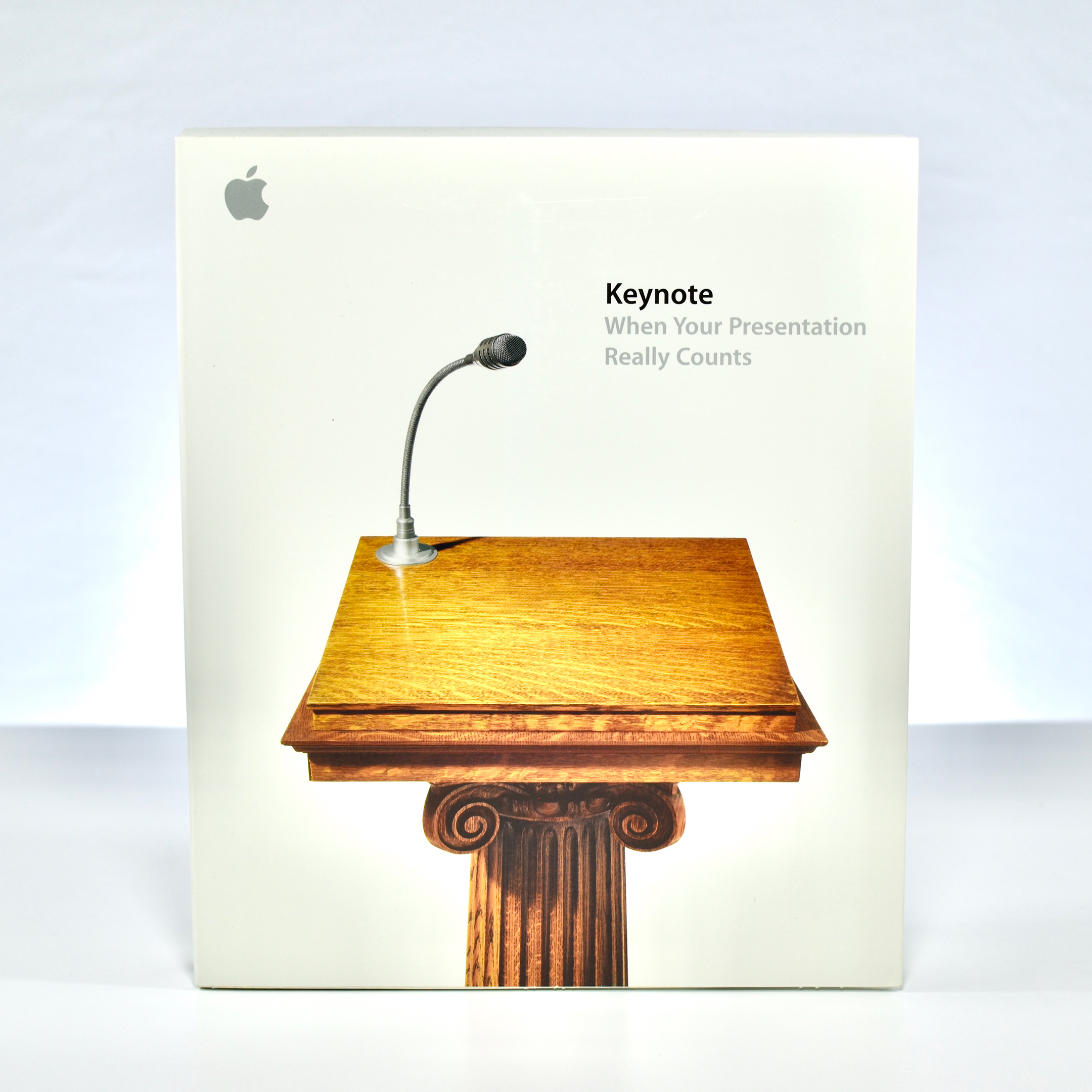
Keynote was announced by Steve Jobs as an app created for him for his world-renowned presentations. (Previously Jobs had used the application Concurrence by Lighthouse Design.)
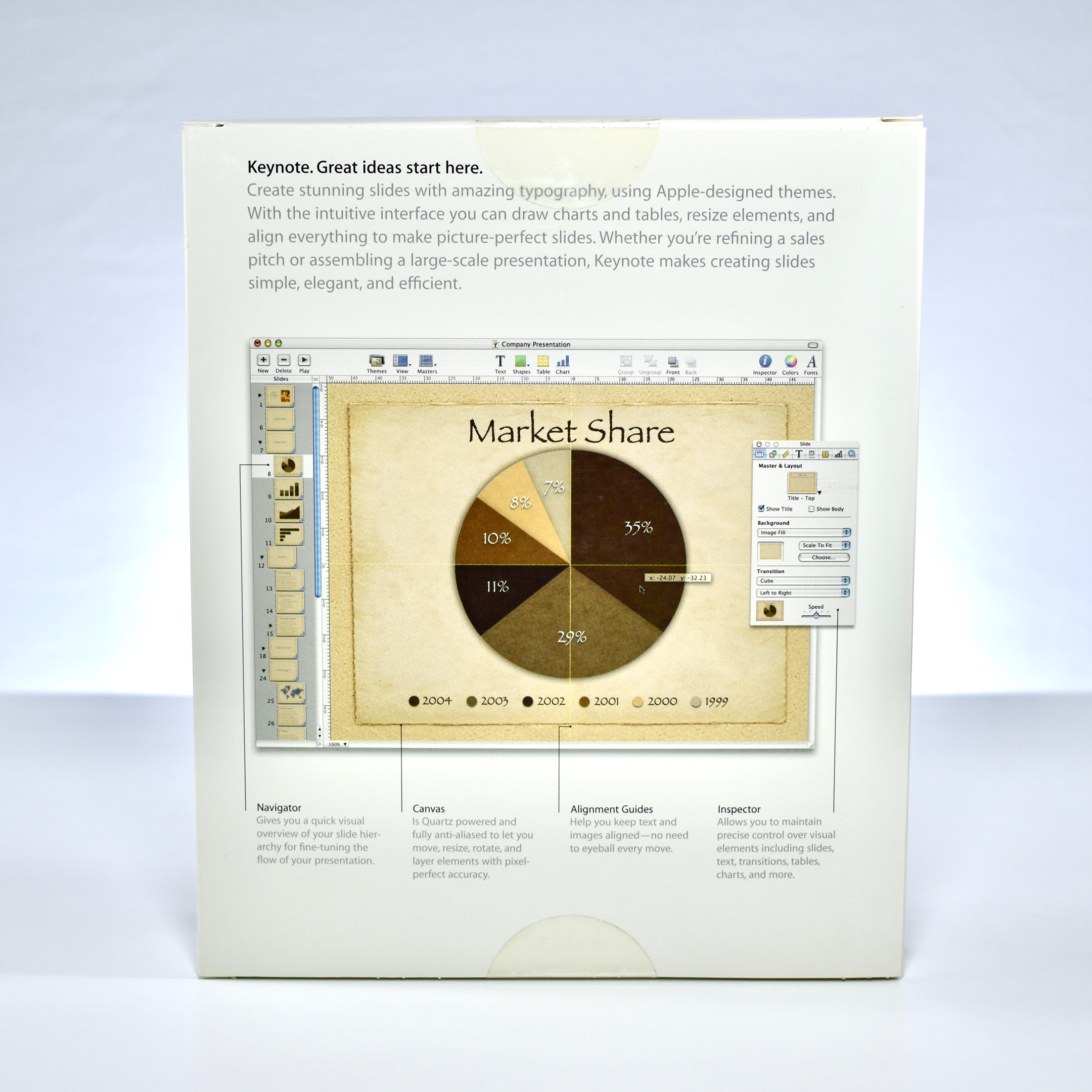
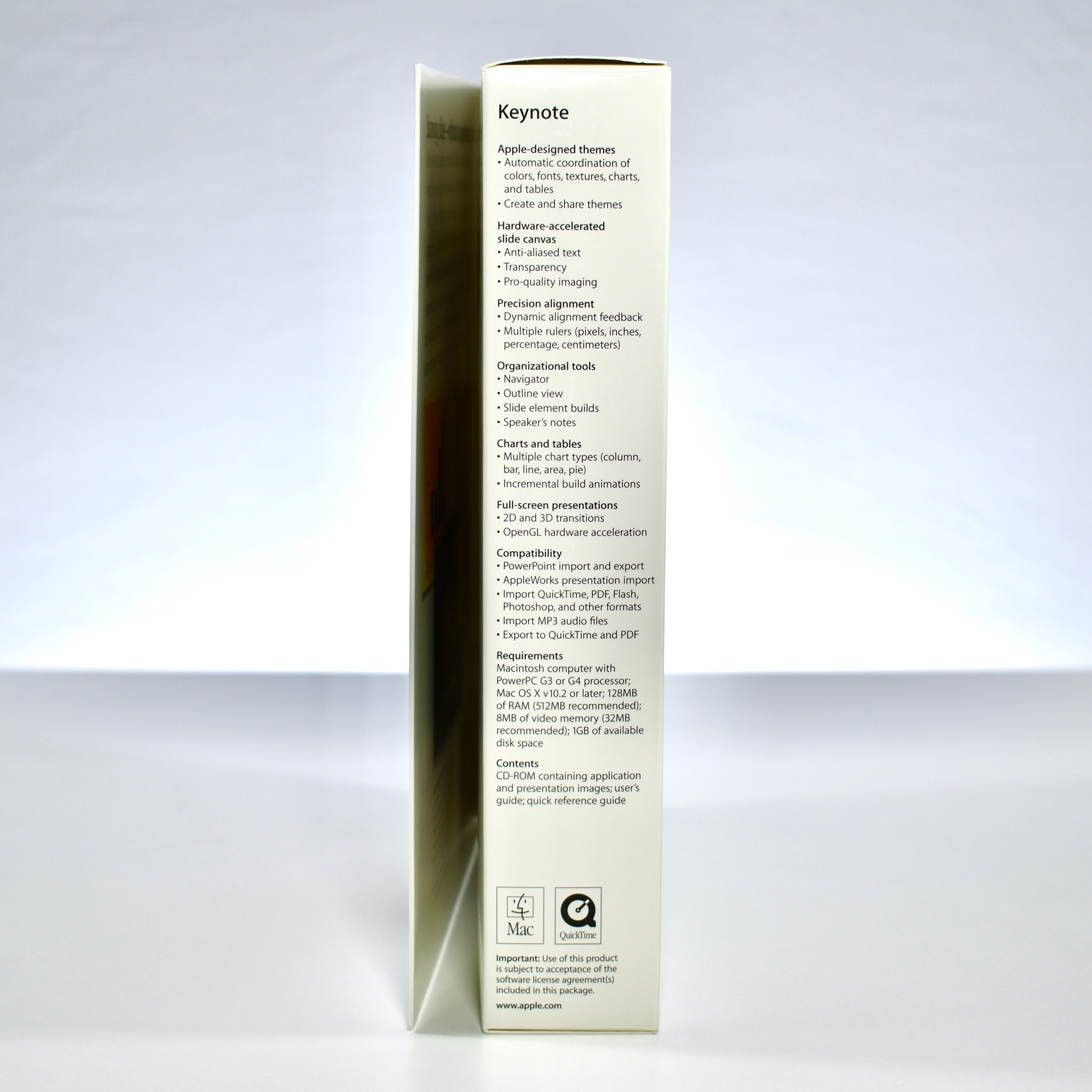
This is the box version of Keynote 1.0 from 2003. Keynote was sold as a separate application for about two years until it joined Pages as a part of Apple’s iWork suite of software tools.
In my opinion, Keynote has been far superior to PowerPoint and other presentation applications since its release. Keynote used 3D slide transitions and builds that take full advantage of OpenGL, the graphics system that is part of macOS. Keynote has always perfectly handled imported media since it supports all QuickTime formats available in macOS.
I have been a Keynote user since its beta release in 2003 and have seldom used other presentation formats.