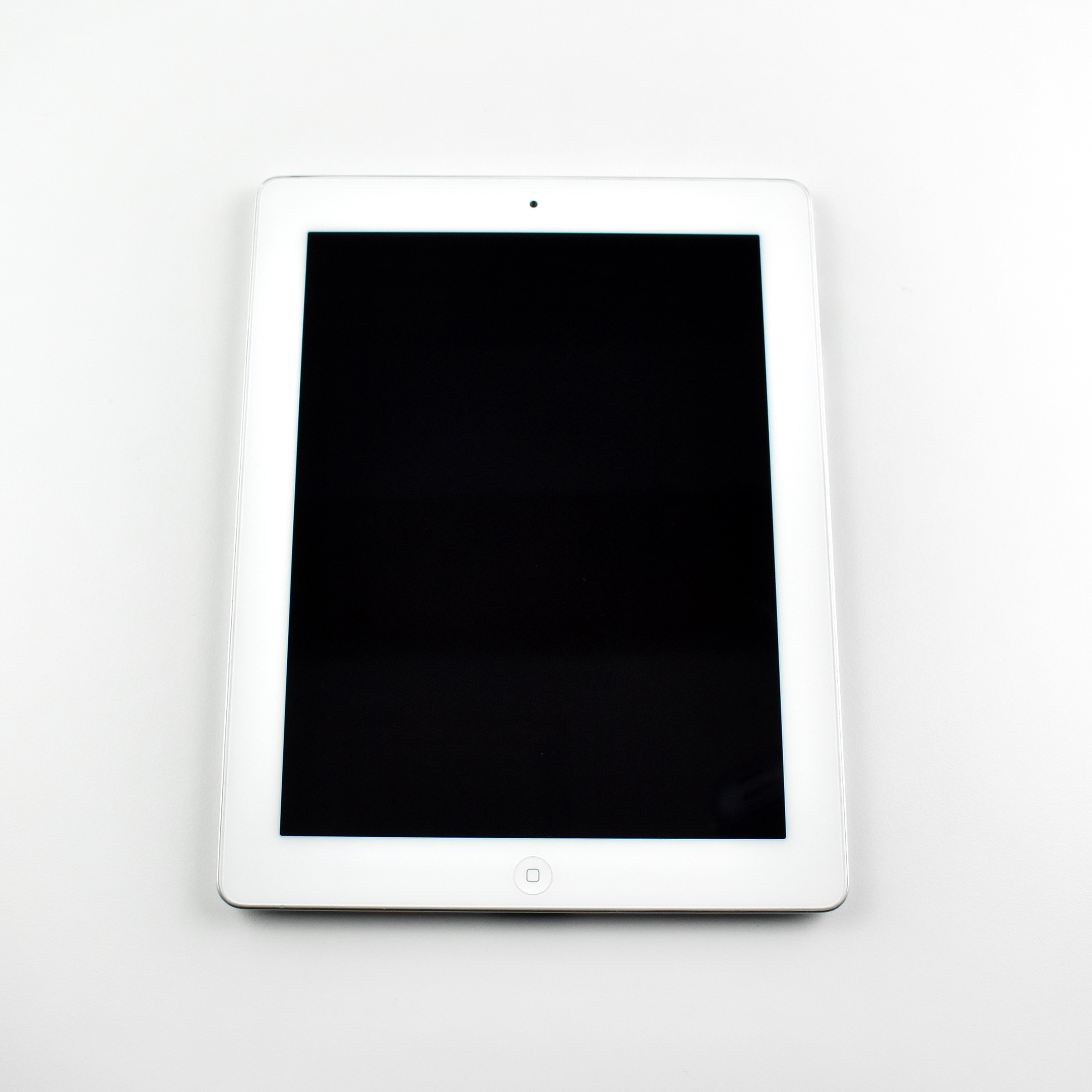
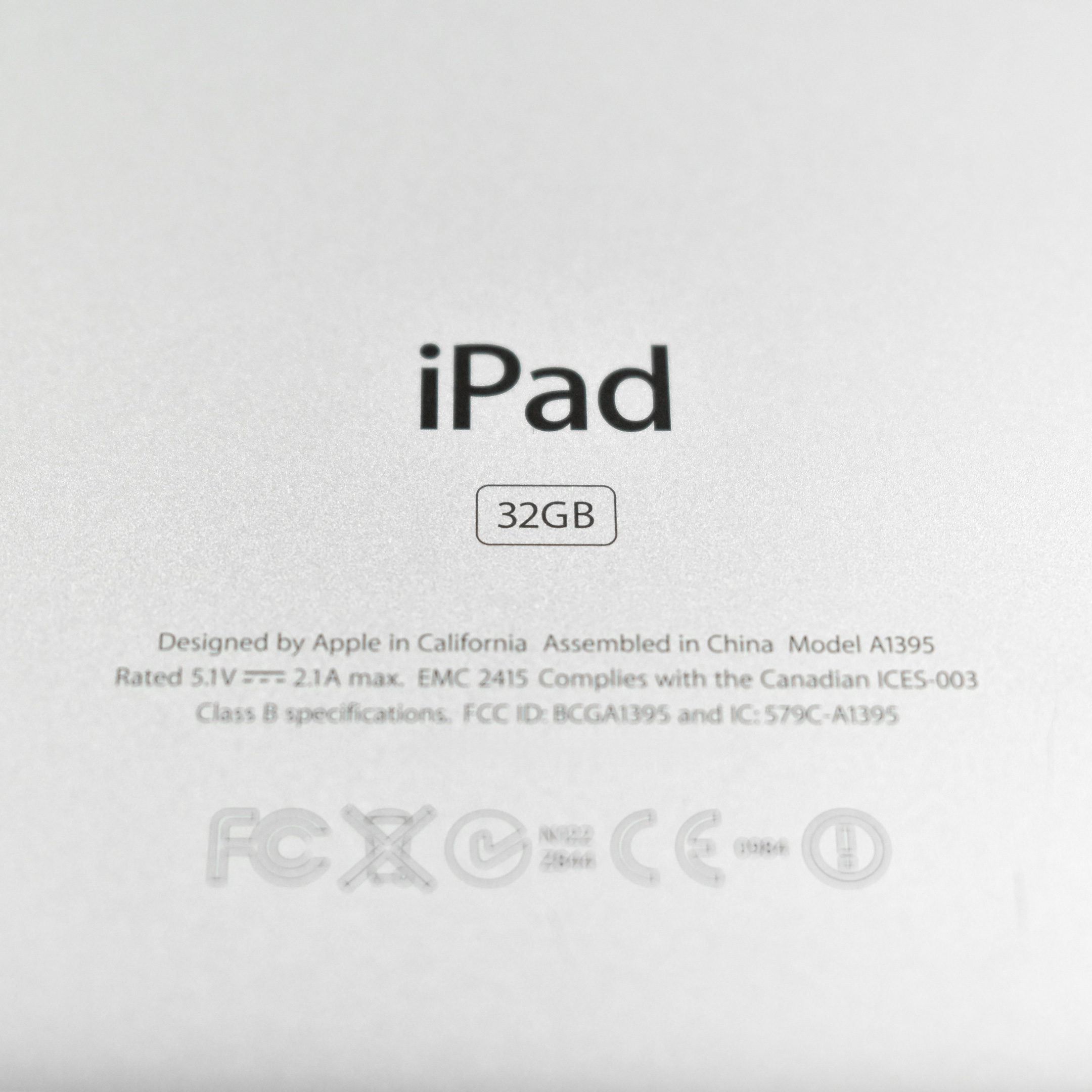
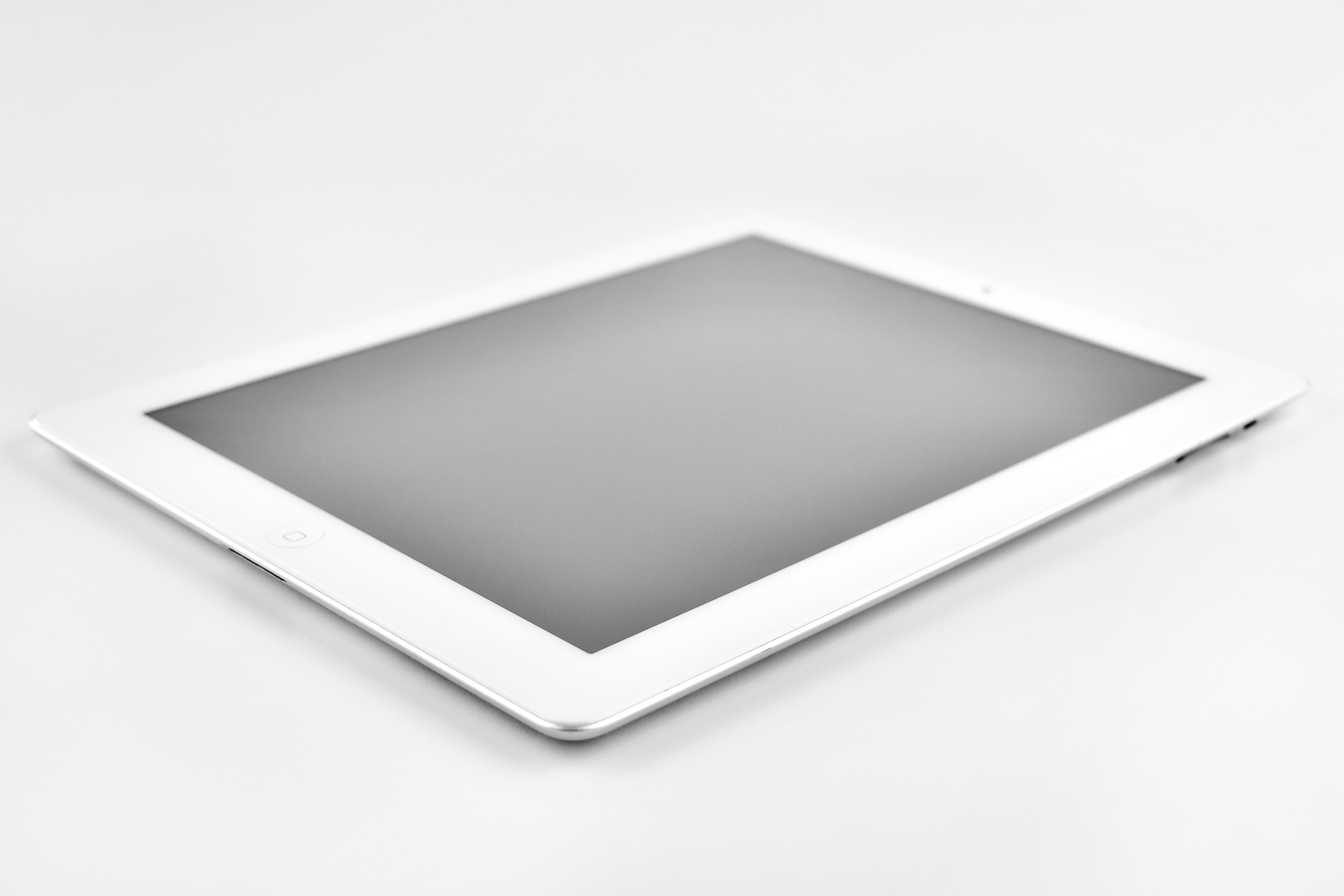
The iPad 2 represented a major update to the original iPad by allowing the iPad to begin its move from a content-consumption device to a content-creation device, mostly due to the addition of front and back cameras. Apple’s press release led with its subhead, “All New Design is Thinner, Lighter & Faster with FaceTime, Smart Covers & 10 Hour Battery.”
Like the original iPad, the iPad 2 was described as a “magical device for browsing the web, reading and sending email, enjoying photos, watching videos, listening to music, playing games, reading ebooks and much more.” The iPad 2 added “two cameras, a front-facing VGA camera for FaceTime and Photo Booth, and a rear-facing camera that captures 720p HD video, bringing the innovative FaceTime feature to iPad users for the first time.”
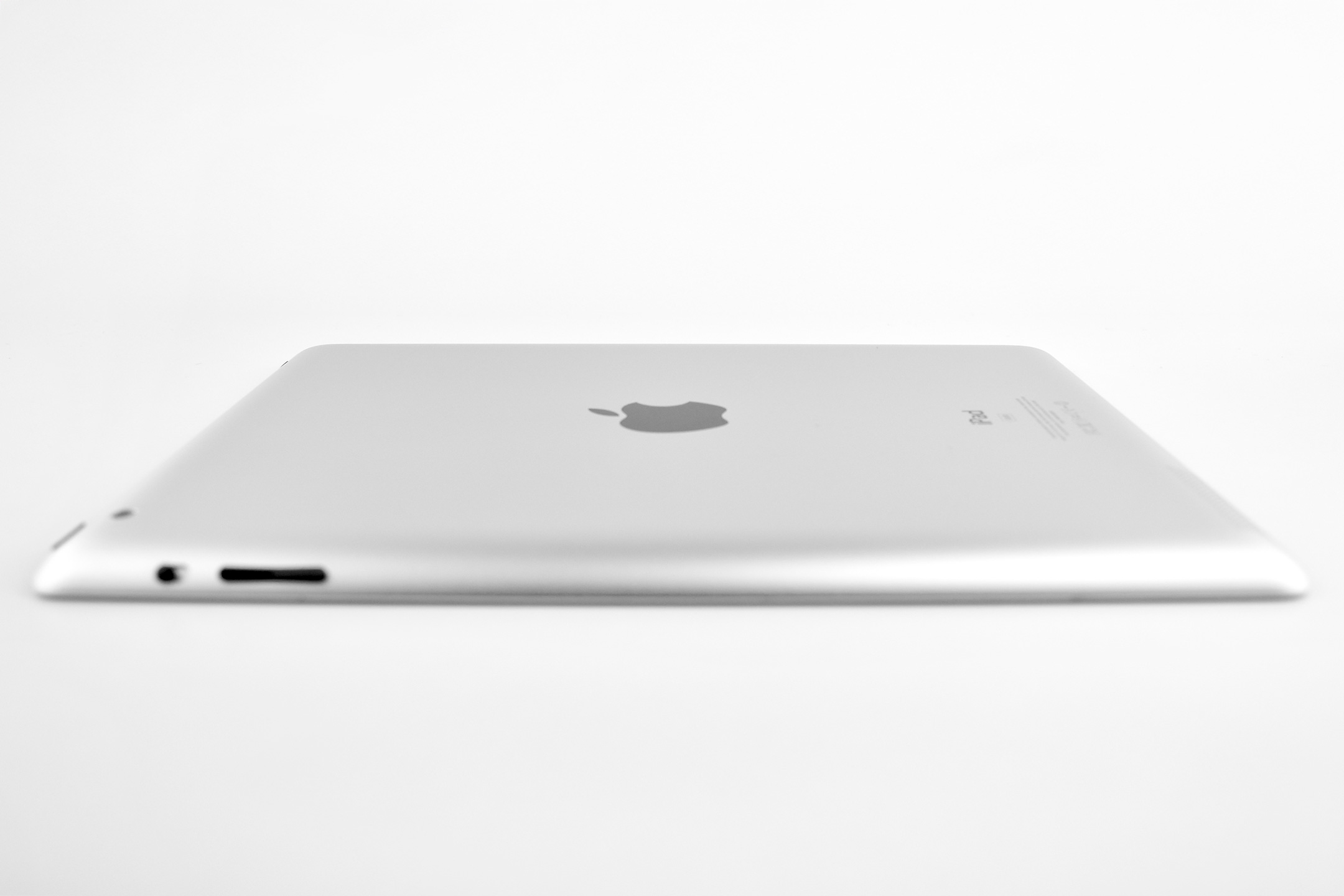
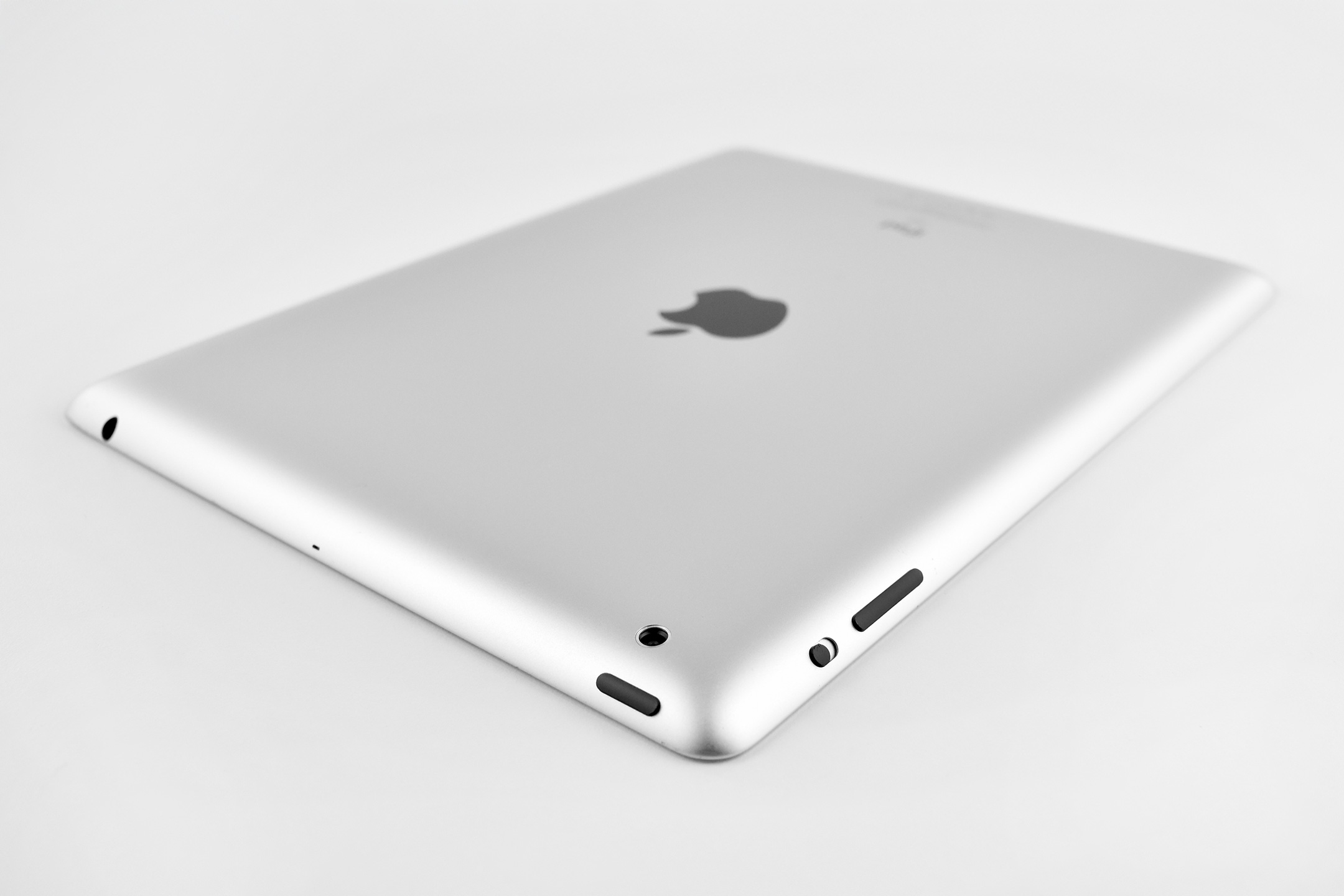
The iPad 2 had a silver aluminum back and was available with a white or black front. This example is white.
The iPad 2 had a 9.7-inch glossy LED backlit display (1024×768 at 132 ppi) and could run both iPhone and iPad-specific apps. It shipped with the A5 processor with storage options including 16, 32, or 64 GB. In addition to its front and rear cameras, it had 802.11a/b/g/n Wi-Fi support, an accelerometer, a three-axis gyroscope, an ambient light sensor, digital compass, a speaker and a built-in microphone. The iPad 2 was 33% thinner than the original iPad and weighed 1.33 pounds.
The iPad 2 was also released with the Smart Cover. The Smart Cover used magnets to attach and, when closed, automatically put the iPad 2 into Sleep mode, and would wake the iPad when opened.
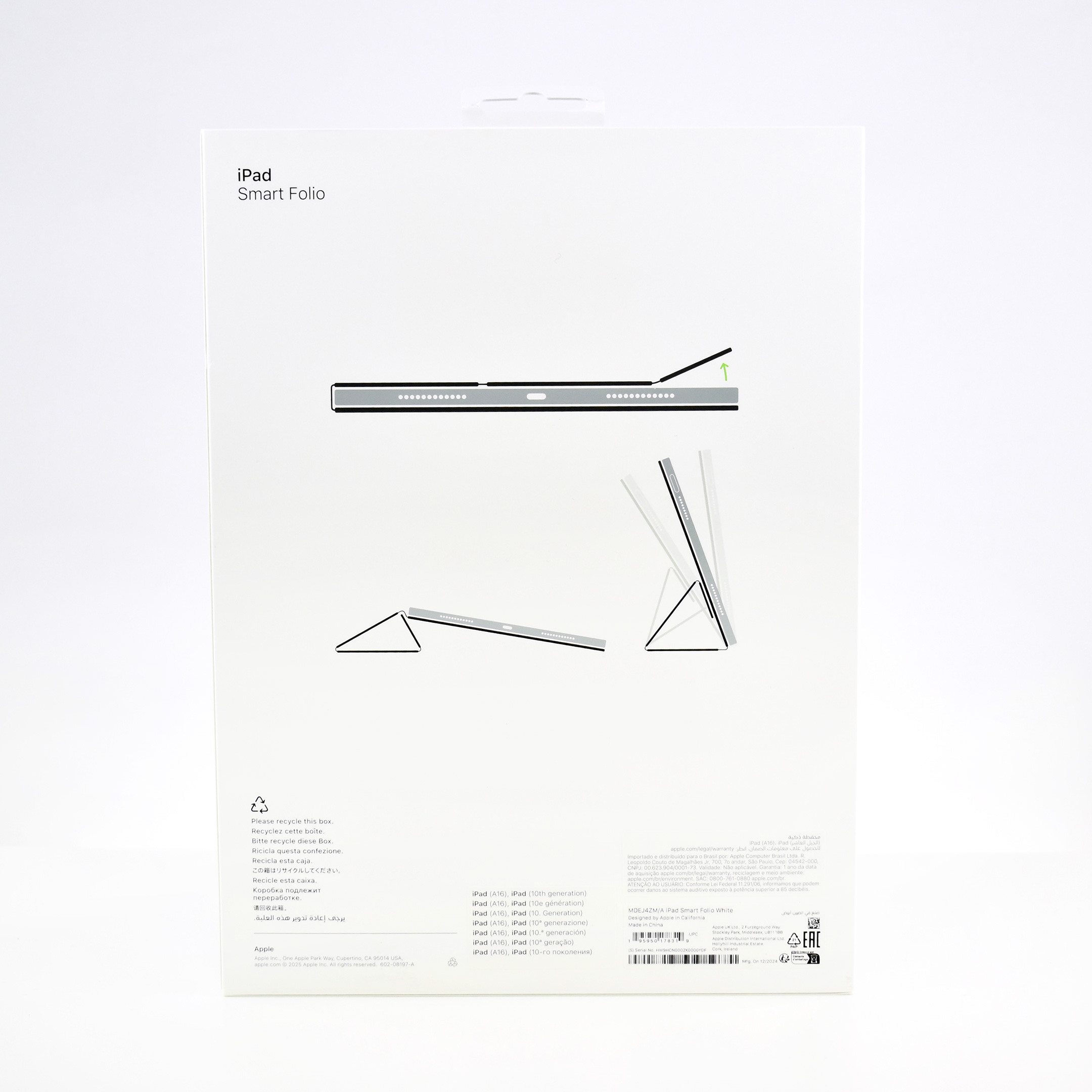
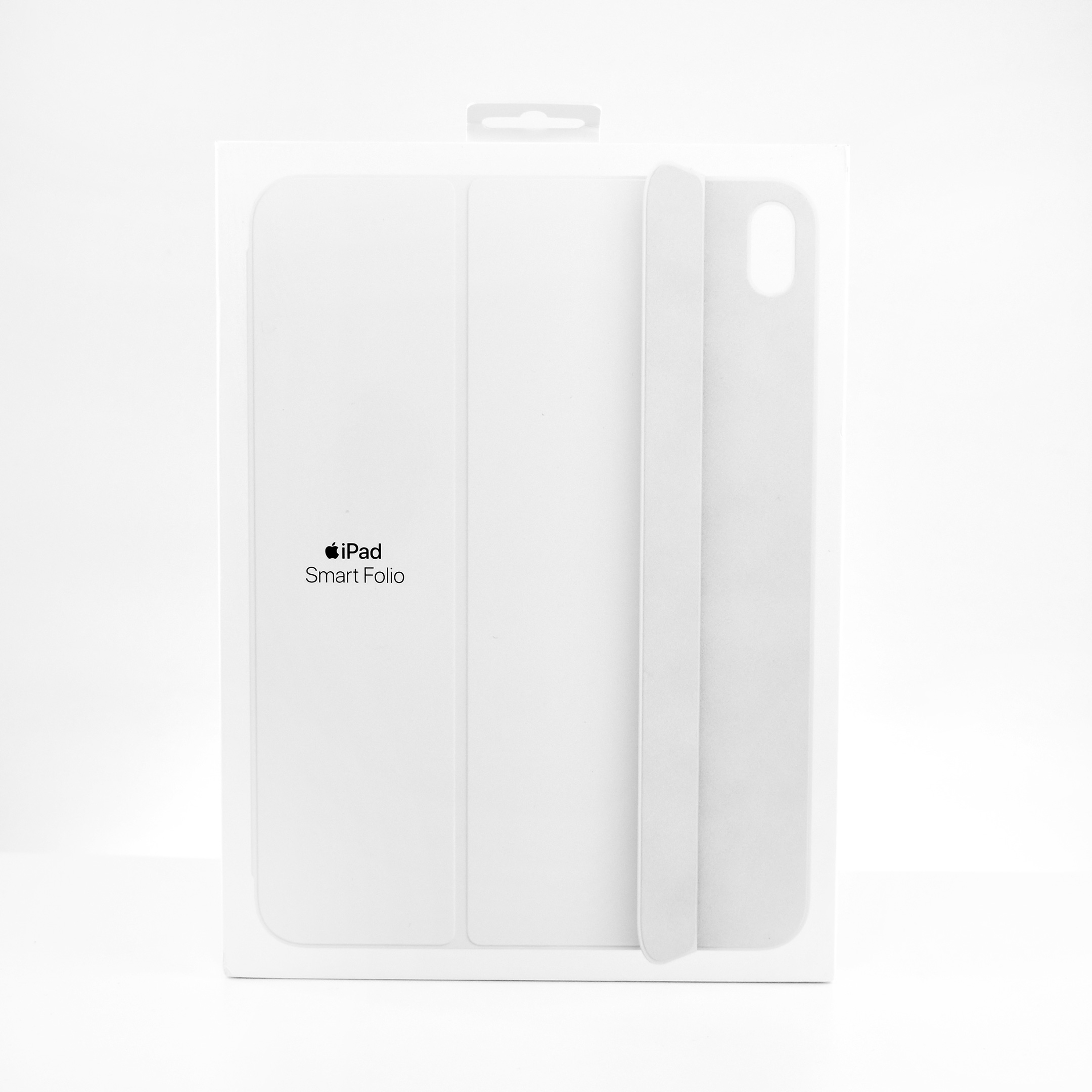
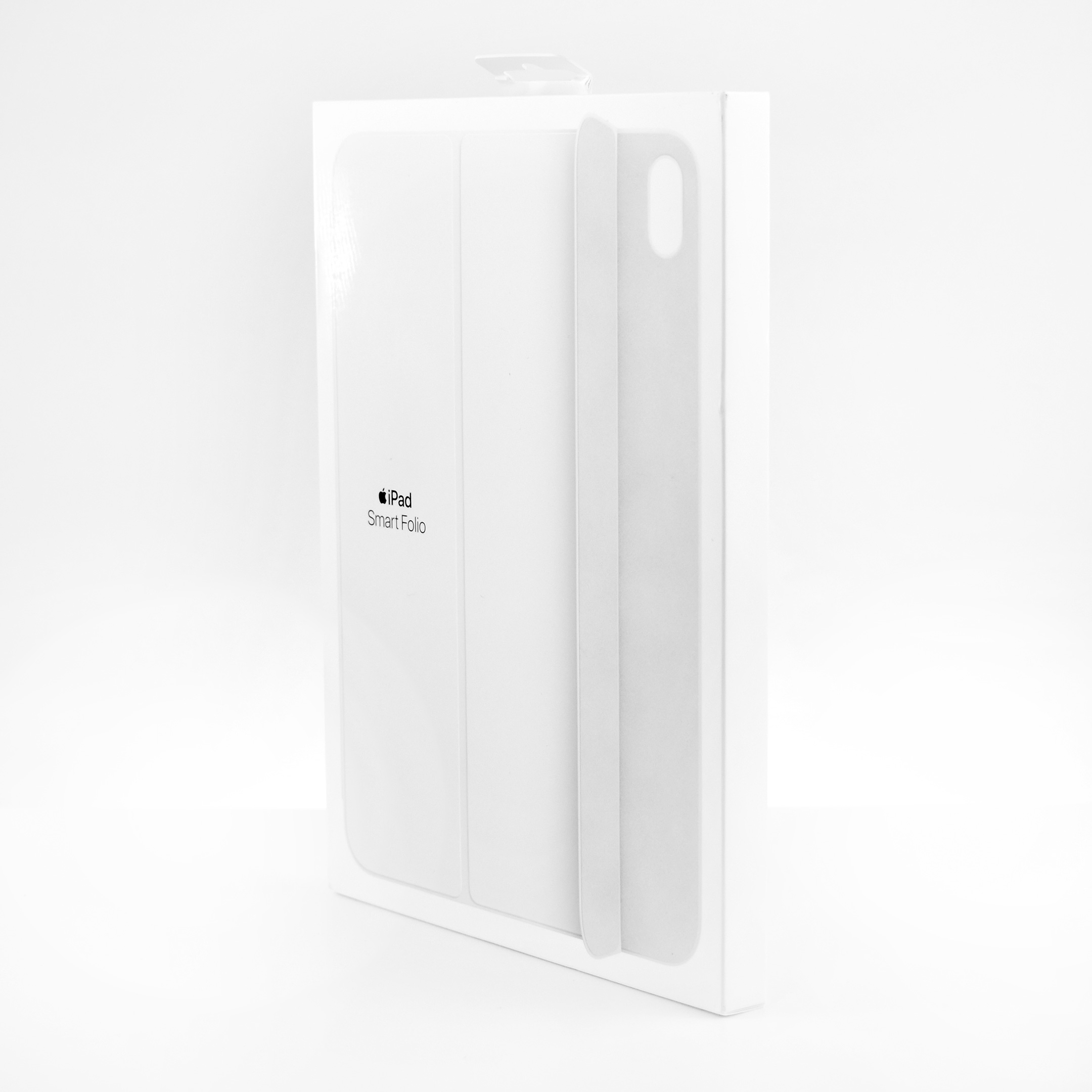
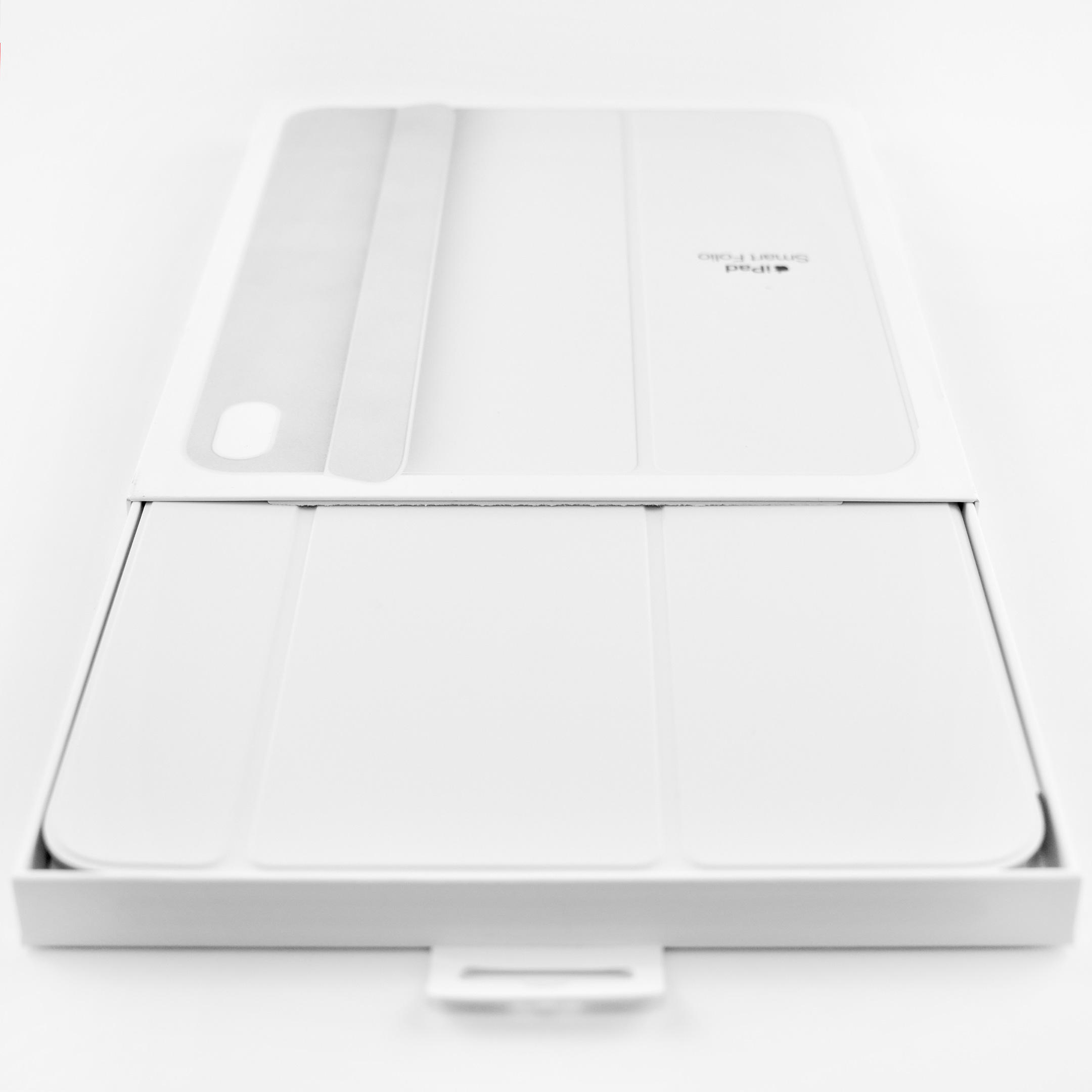
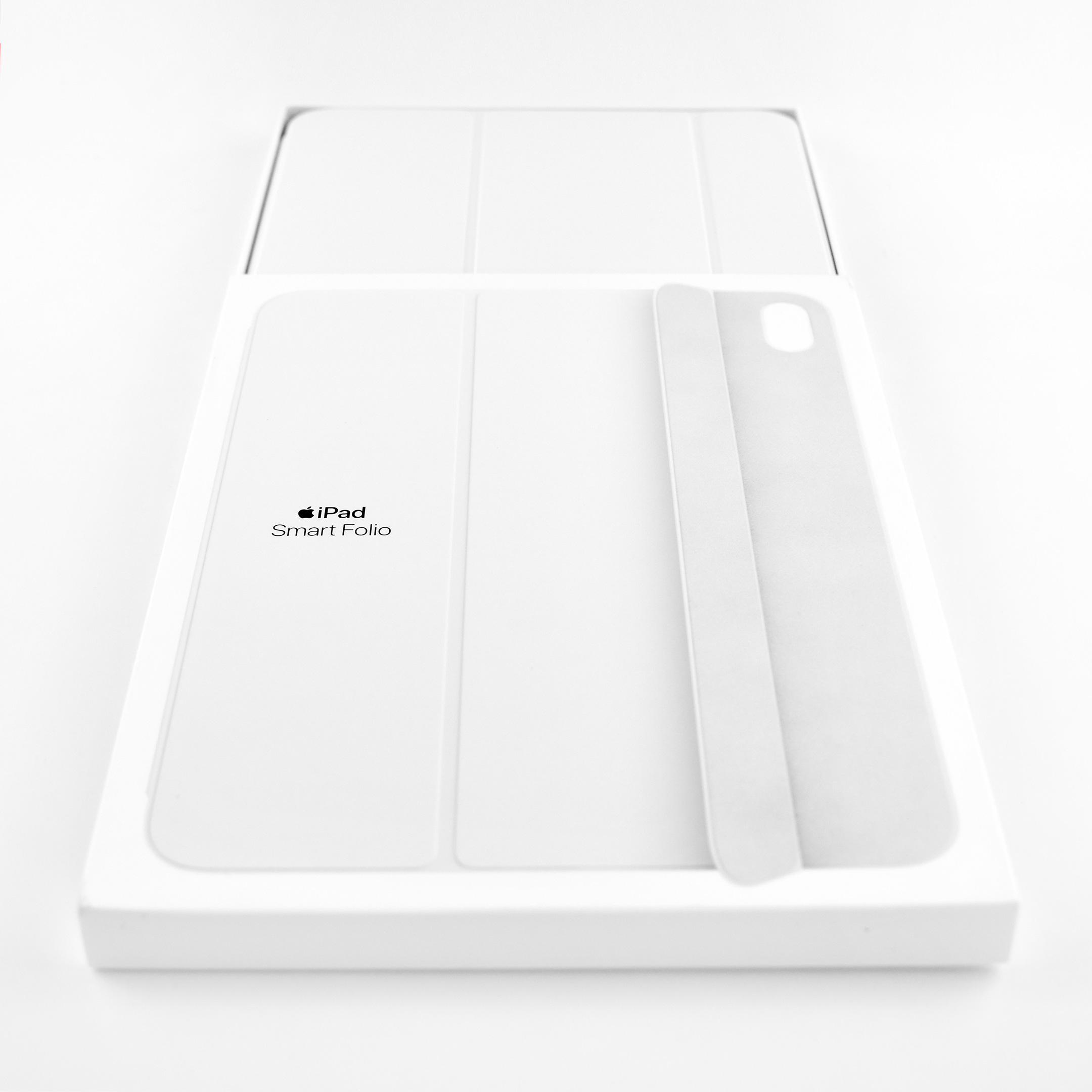
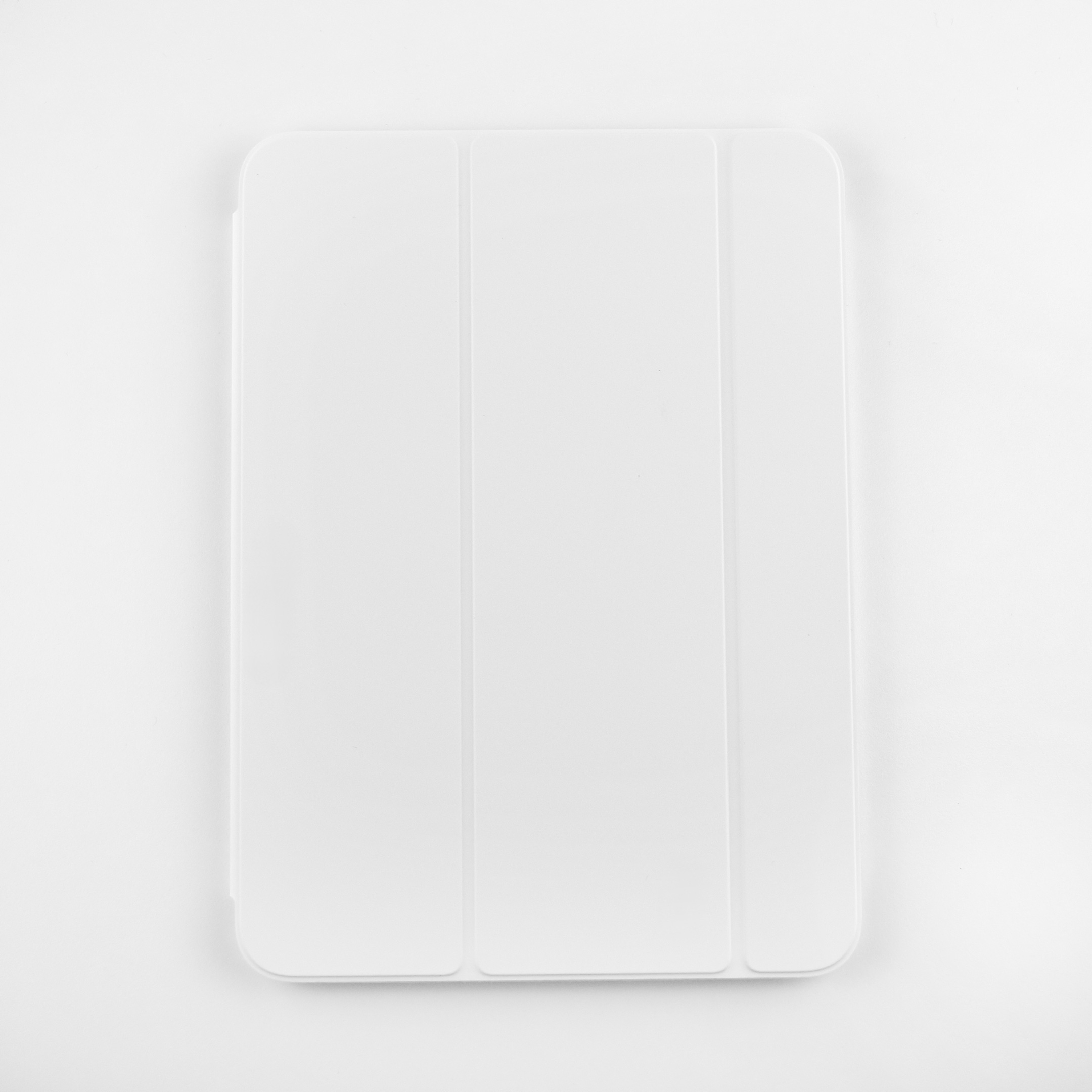
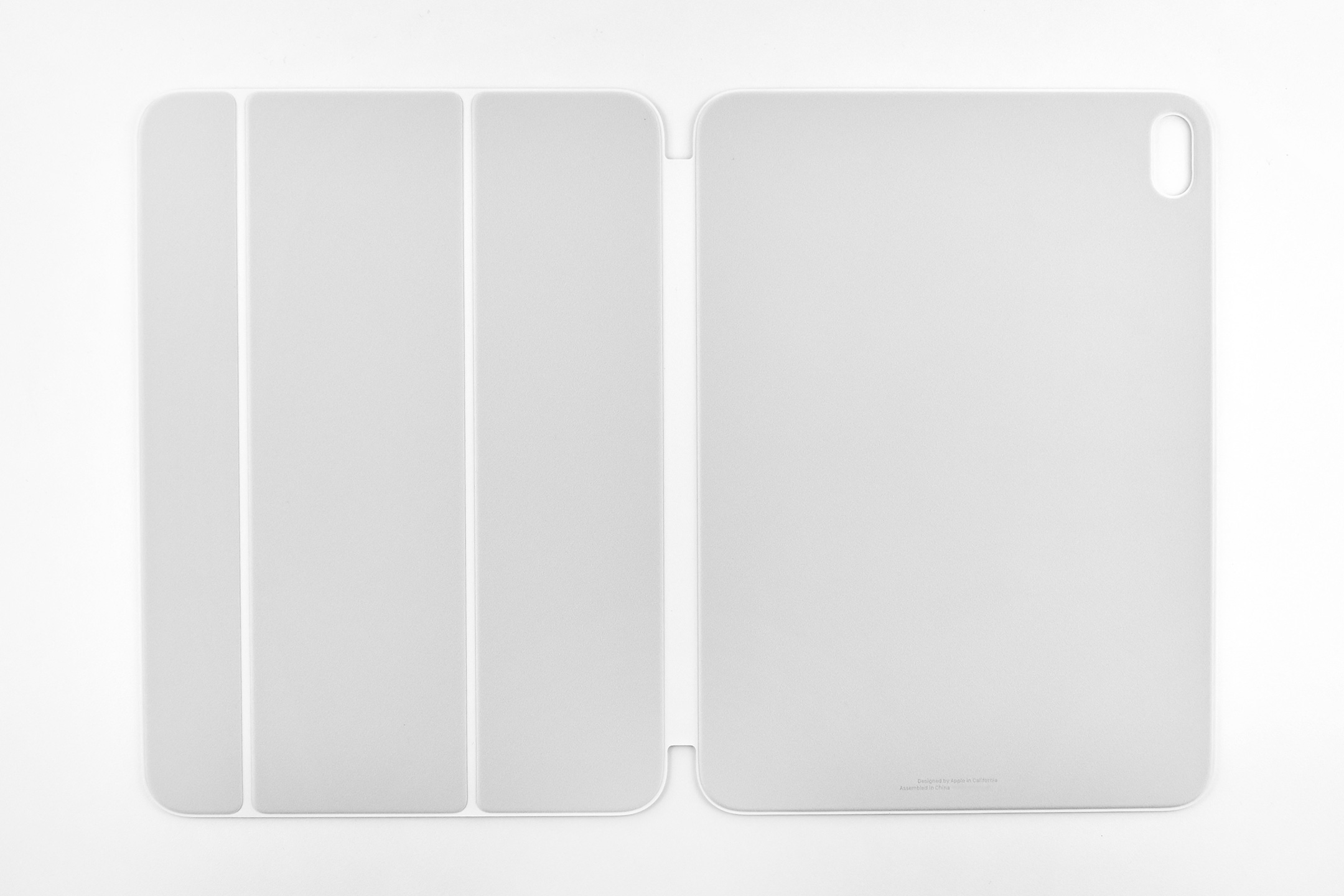
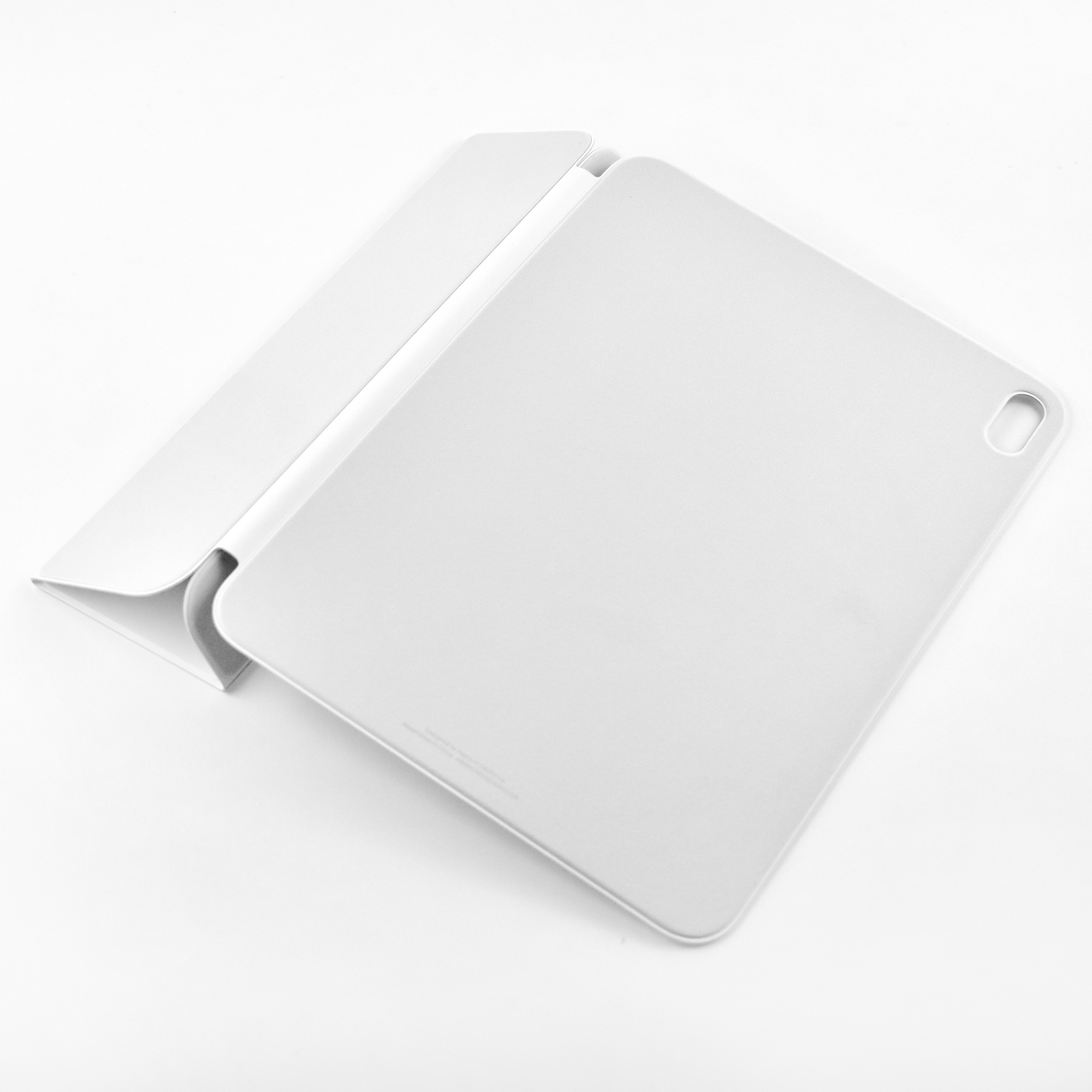
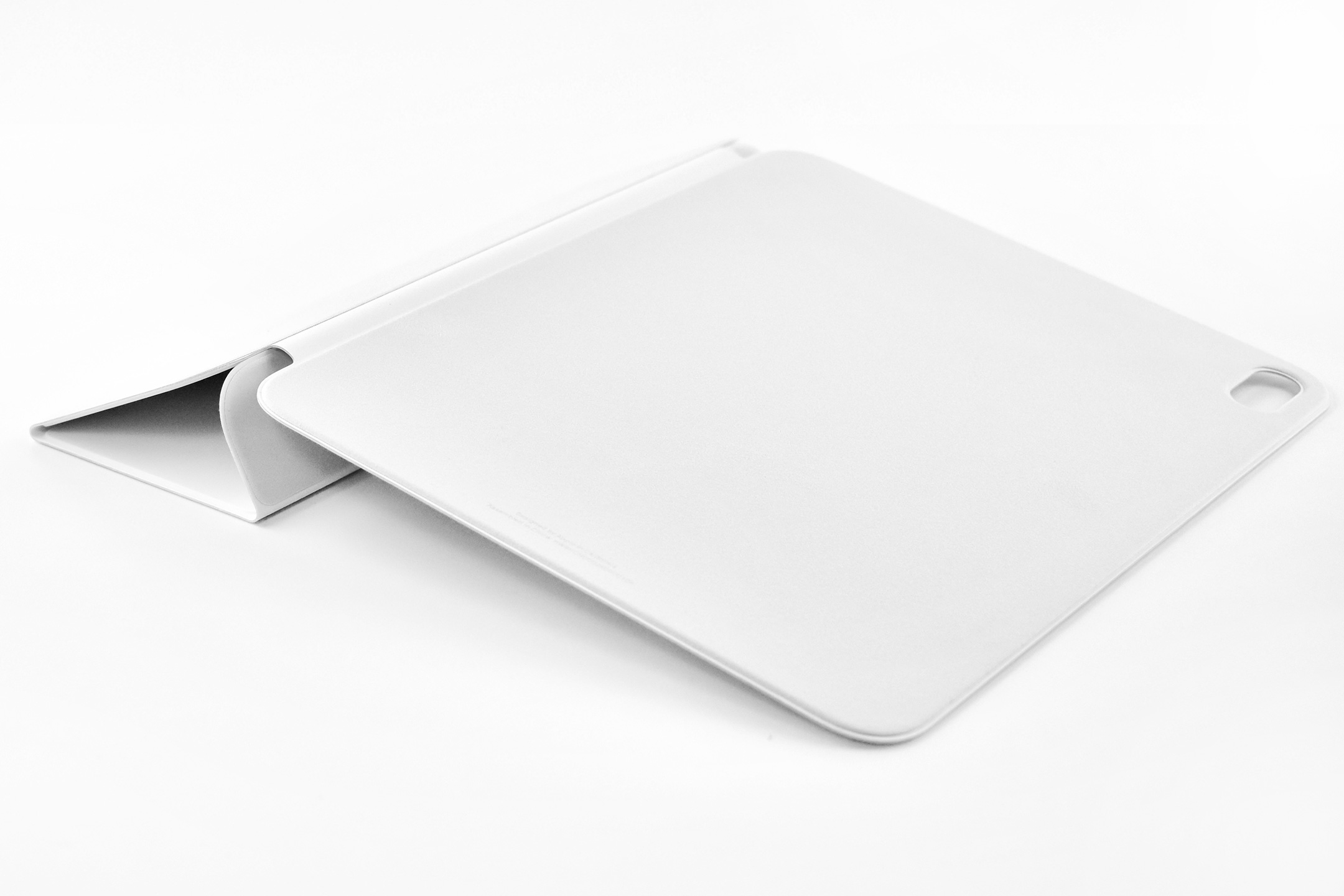
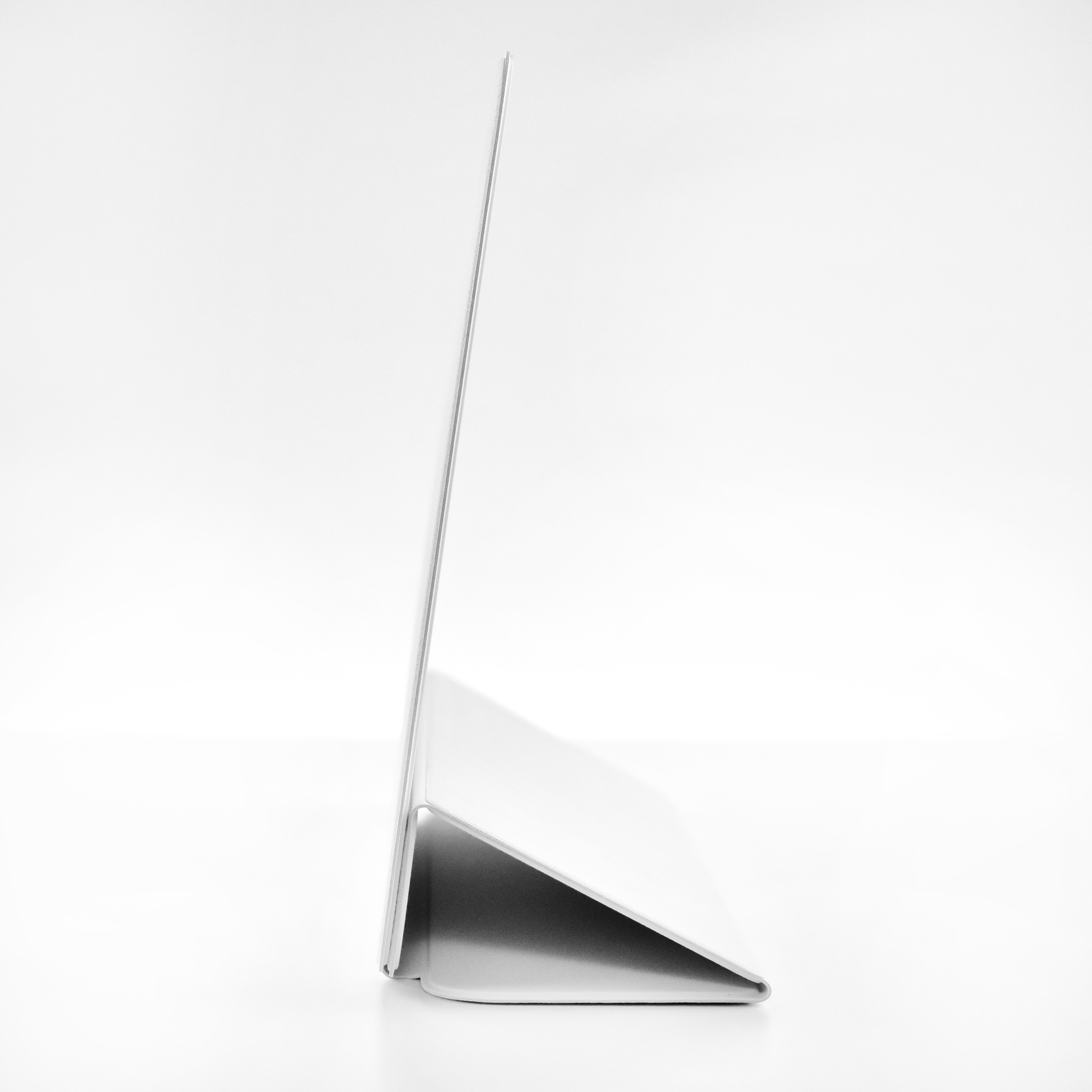
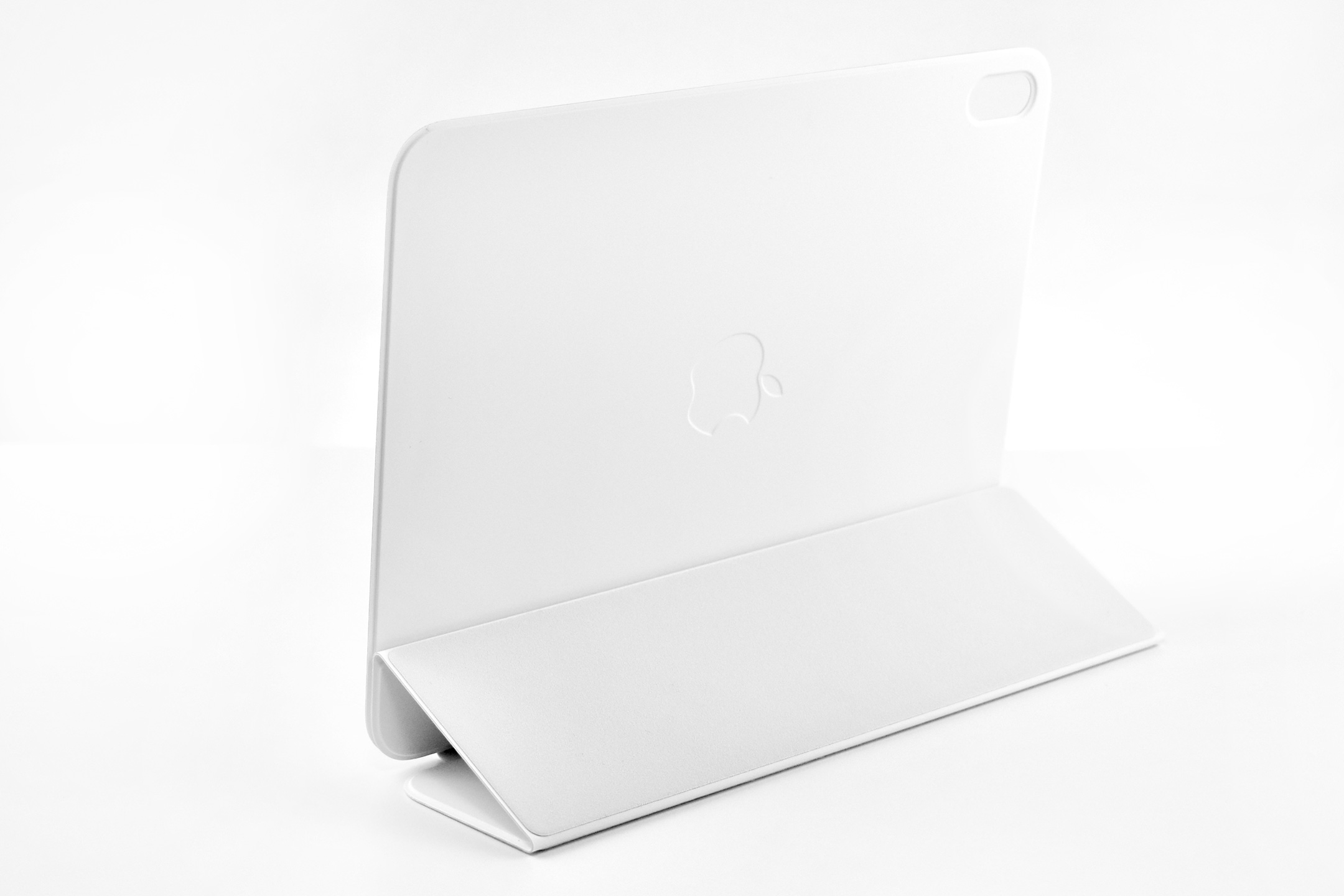
The Smart Folio for iPad Generation 11 (A16) was identical to the model made for iPad Generation 10. It was “thin and light and offers front and back protection for your device.”
Apple also noted that it “automatically wakes your iPad when opened and puts it to sleep when closed. The Smart Folio attaches magnetically, and you can easily fold it into different positions to create a stand for reading, viewing, typing, or making FaceTime calls.”
This Smart Folio was available in Sky (light blue), White, Watermelon (dark pink), and Lemonade (bright yellow). This example is white.
Apple described the Magic Mouse 2 as “wireless and rechargeable, with an optimized foot design that lets it glide smoothly across your desk. The Multi-Touch surface allows you to perform simple gestures such as swiping between web pages and scrolling through documents. The rechargeable battery will power your Magic Mouse for about a month or more between charges. It’s ready to go right out of the box and pairs automatically with your Mac.”
This wireless Multi-Touch mouse was 0.85 inch high, 2.25 inches wide, 4.47 inches deep, and weighed 0.22 pound. It shipped with a Lightning to USB cable for charging. It required a Bluetooth-enabled Mac with OS X 10.11 or later, and also worked on an iPad with iPadOS 13.4 or later.
Beginning with the M1 iMac series, the Magic Mouse was manufactured in several color variations. This option has a white Multi-Touch surface, a silver aluminum body, and the rails that contact the use surface are gray (other variations use black rails, and M1 iMac versions have rails color matched to the body of the mouse).
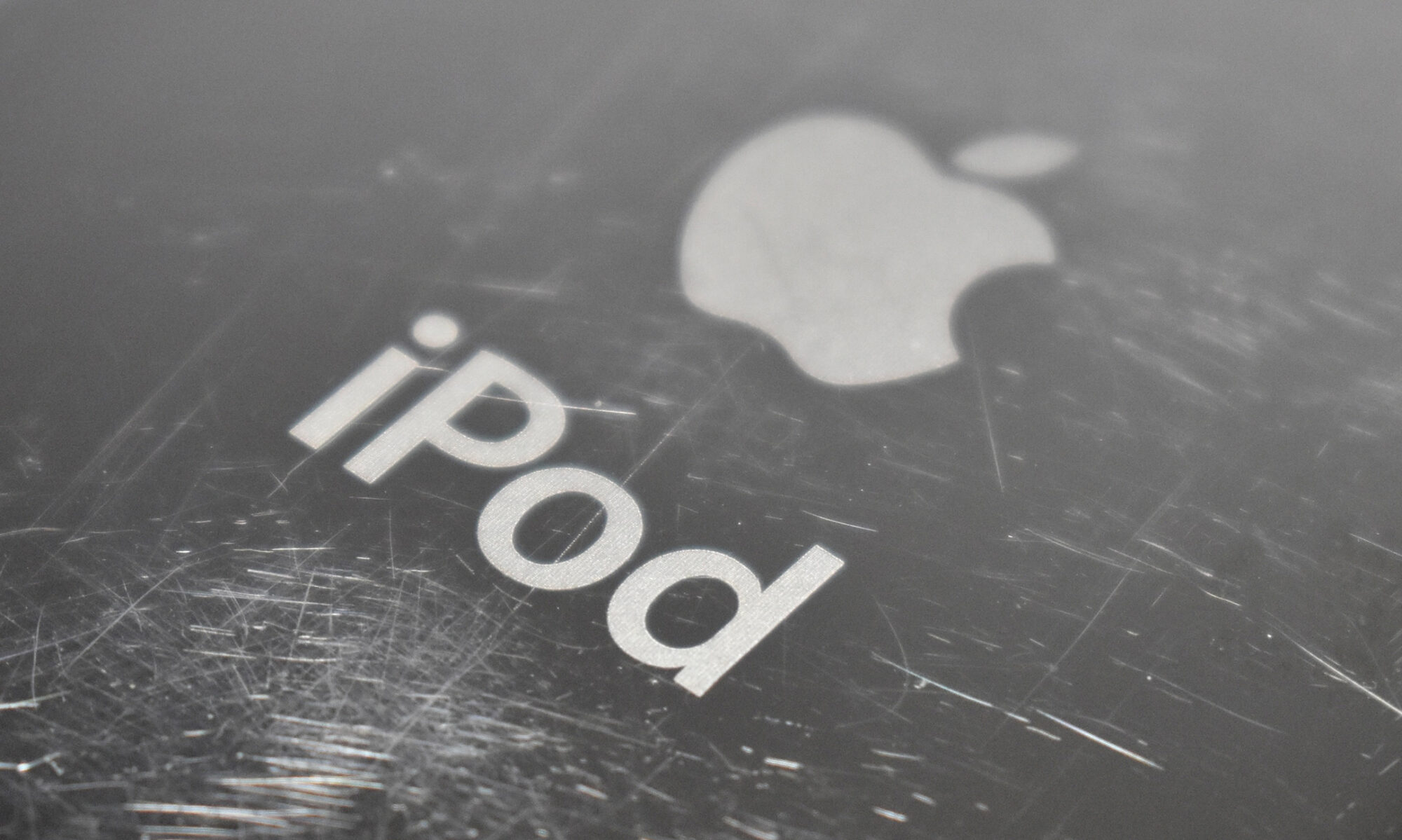
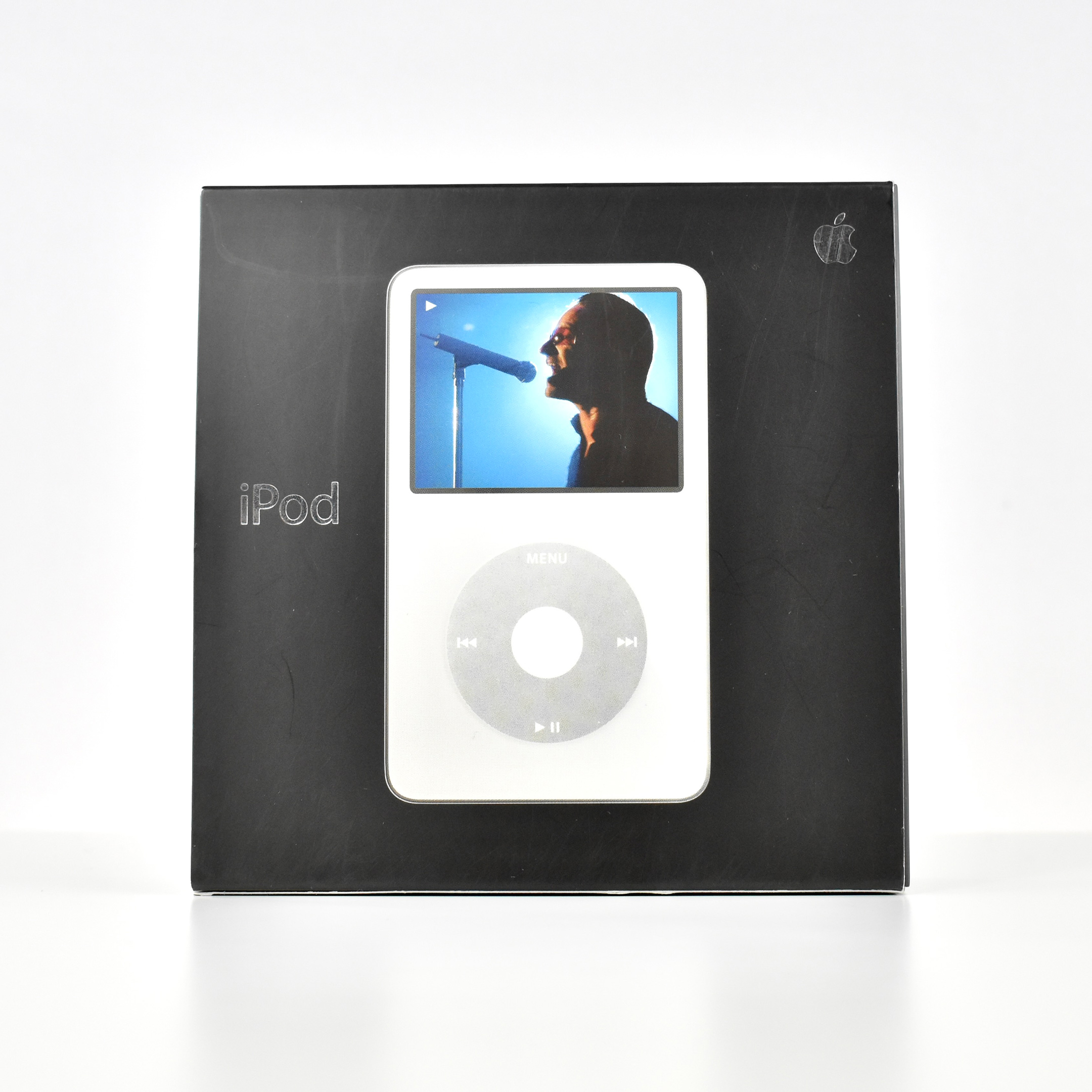
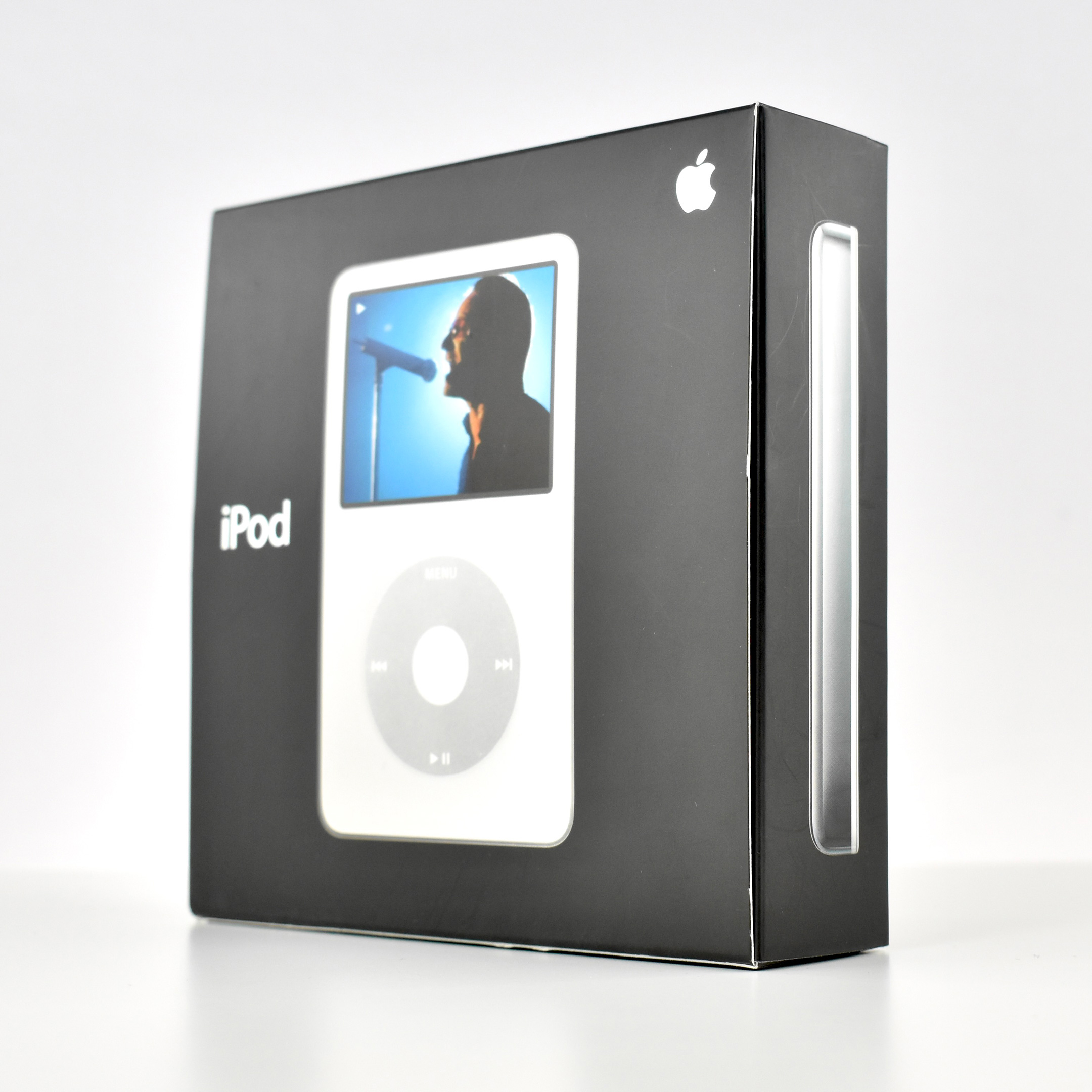
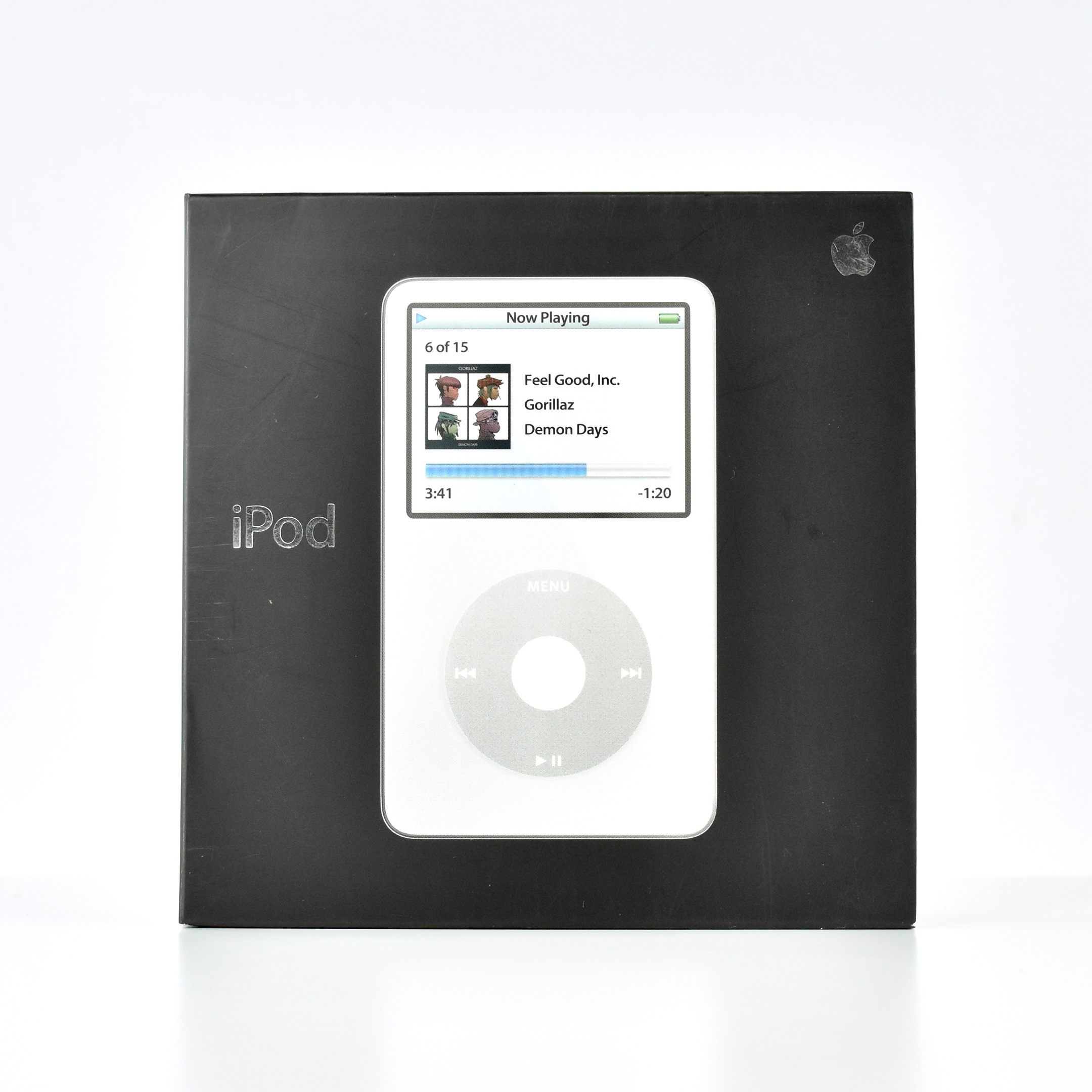
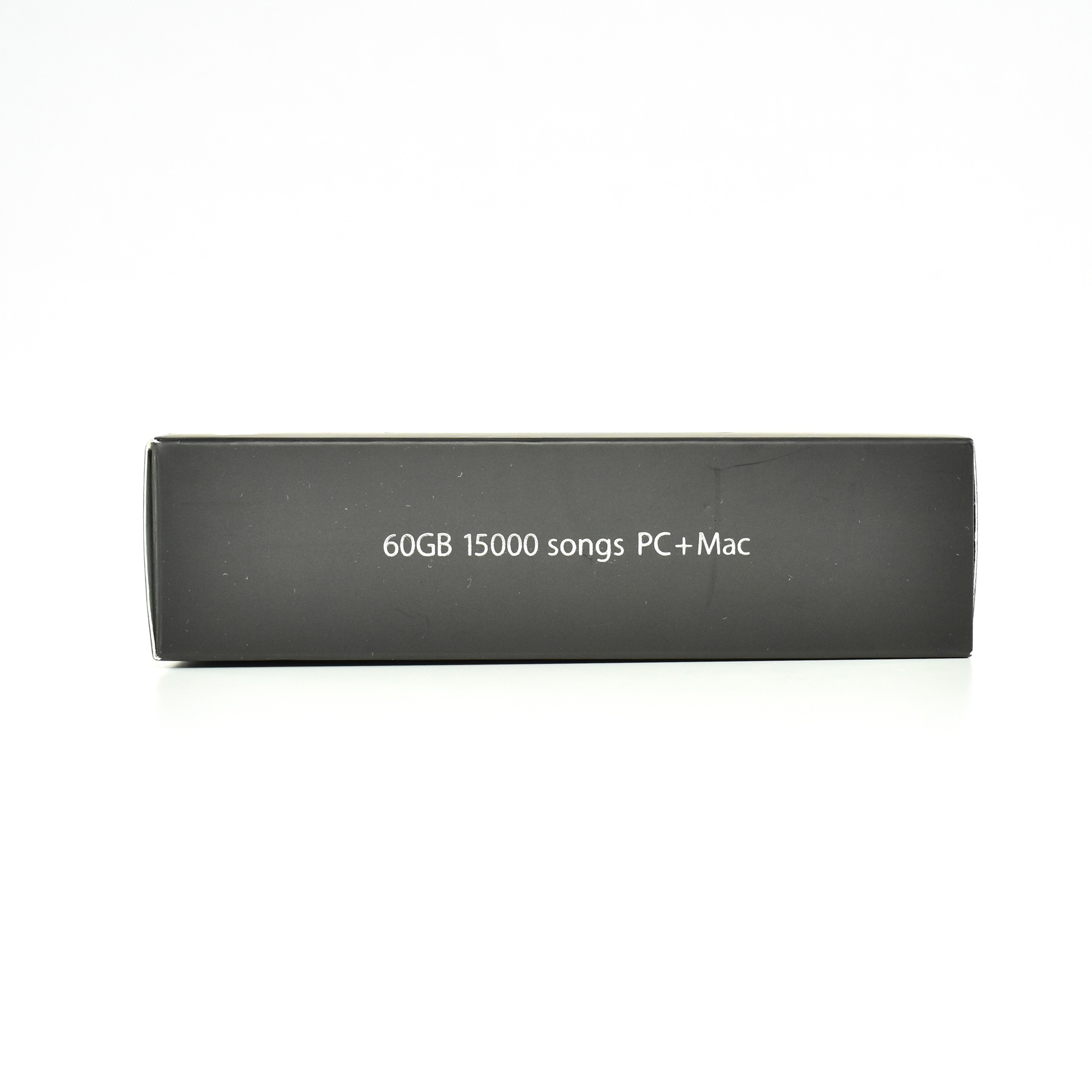
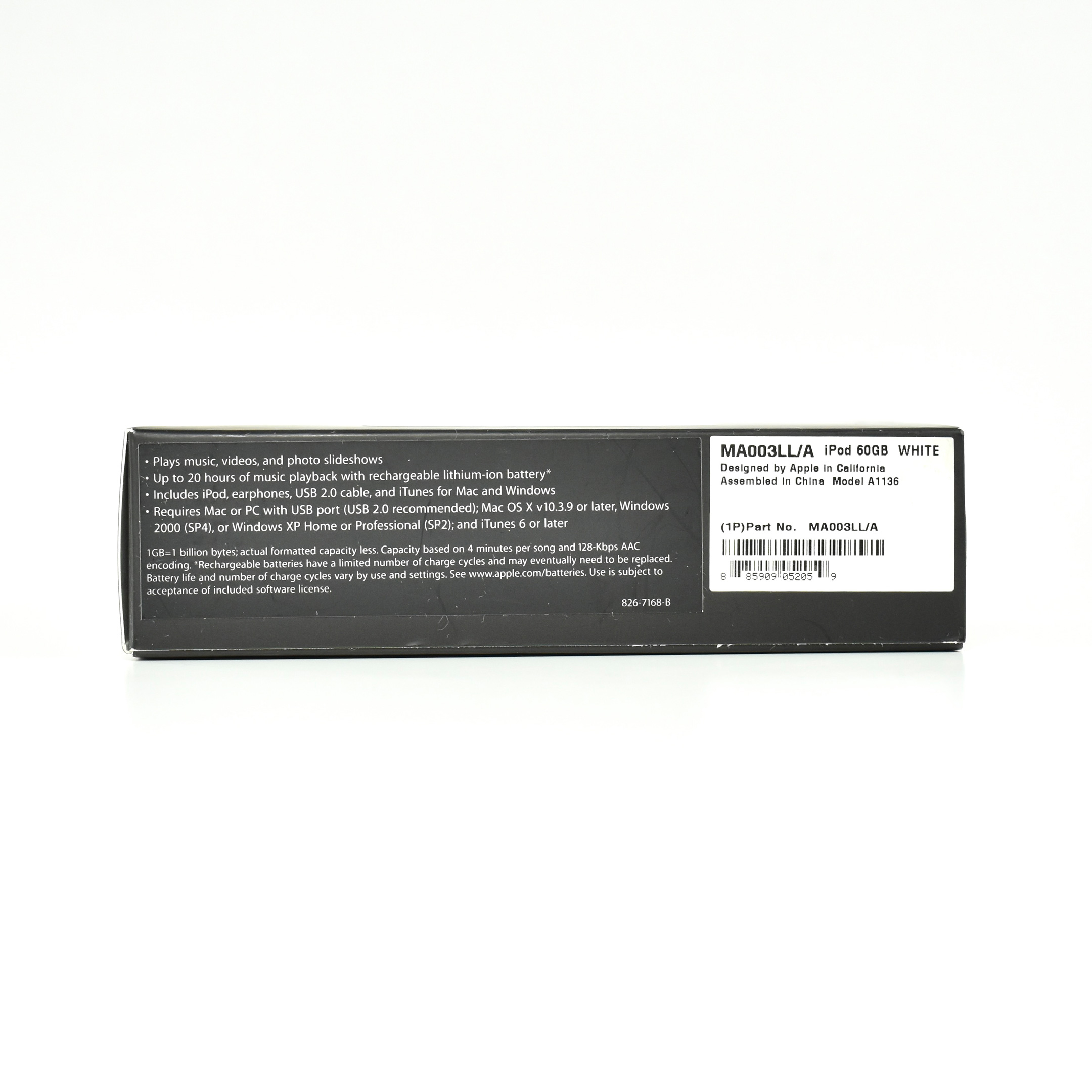
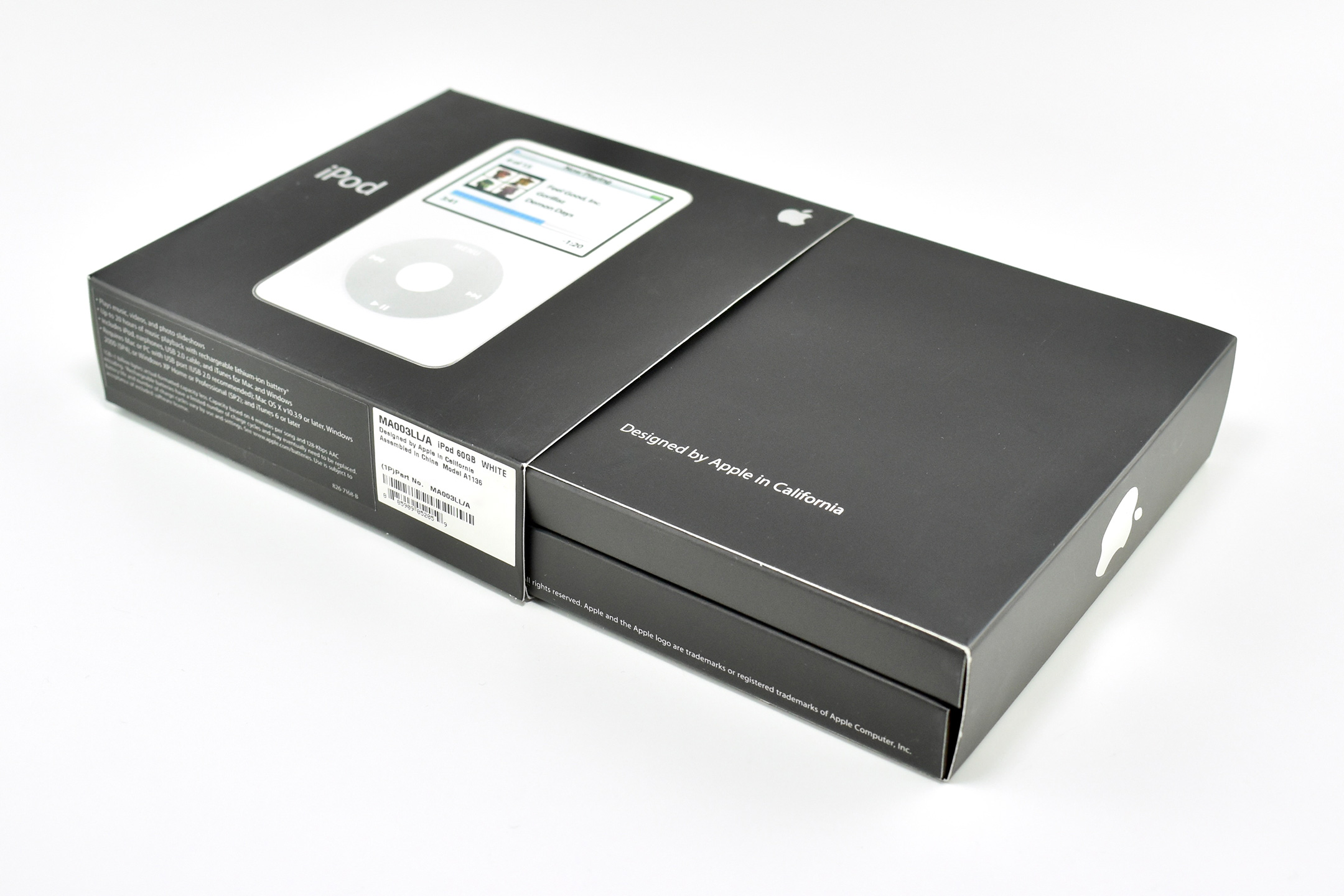
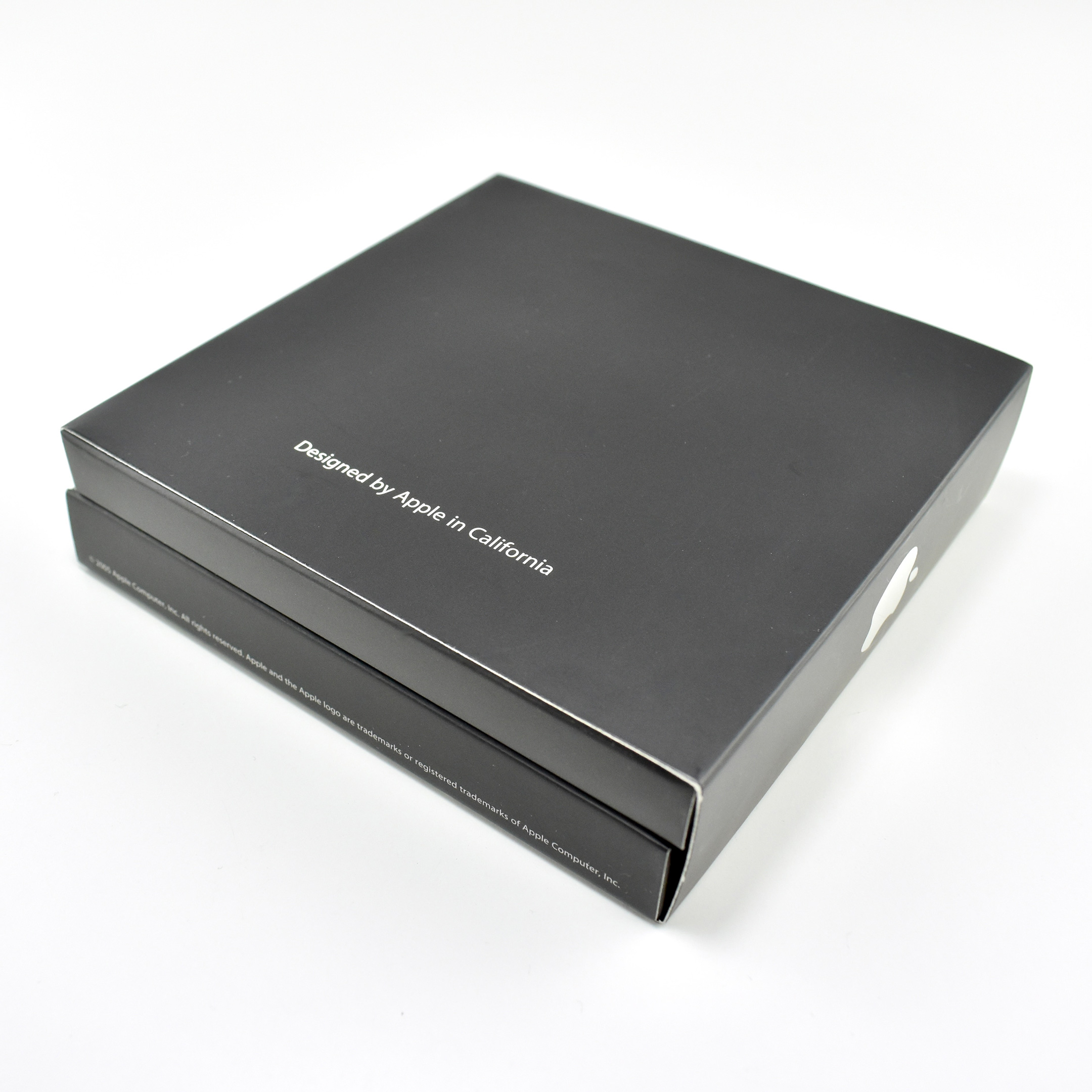
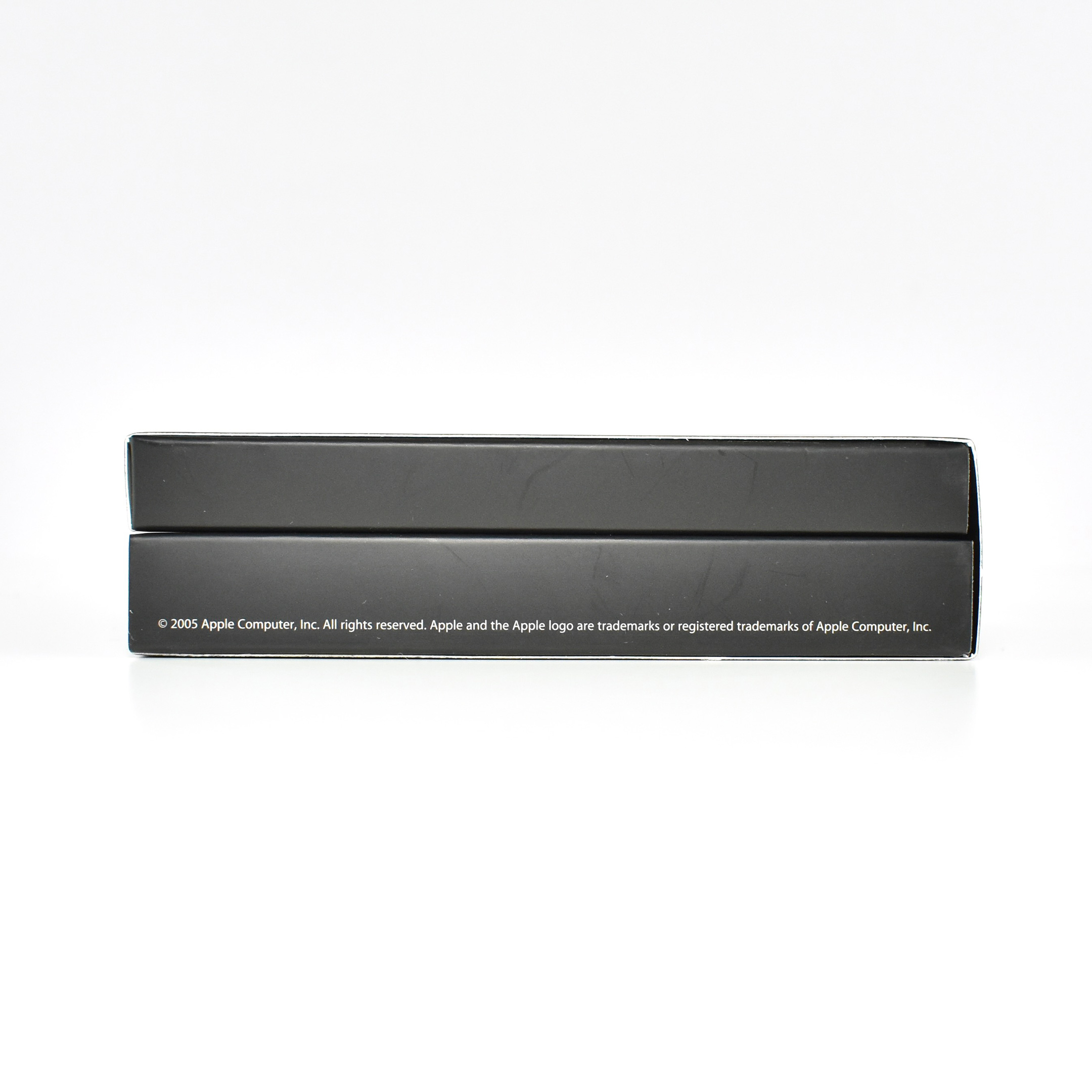
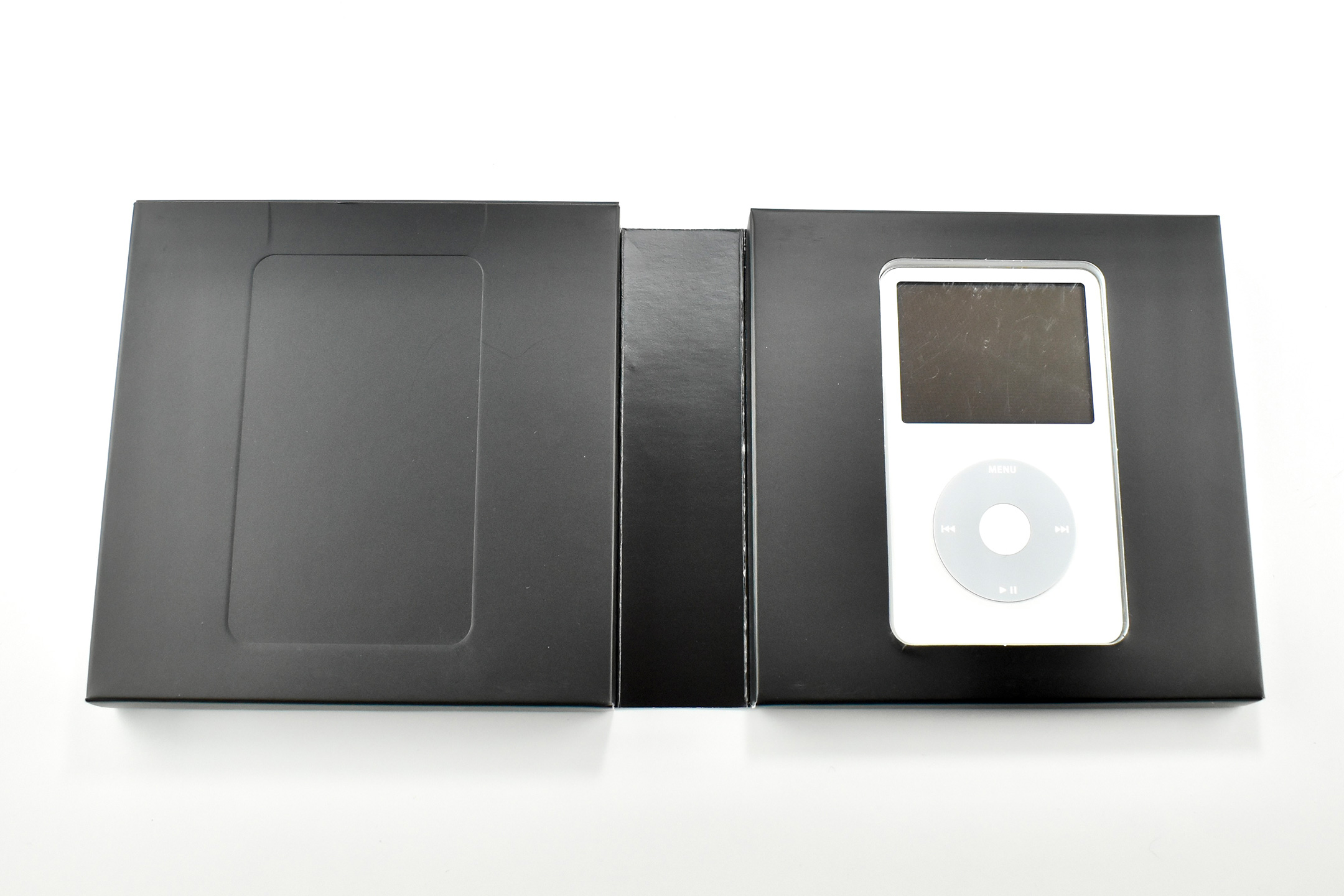
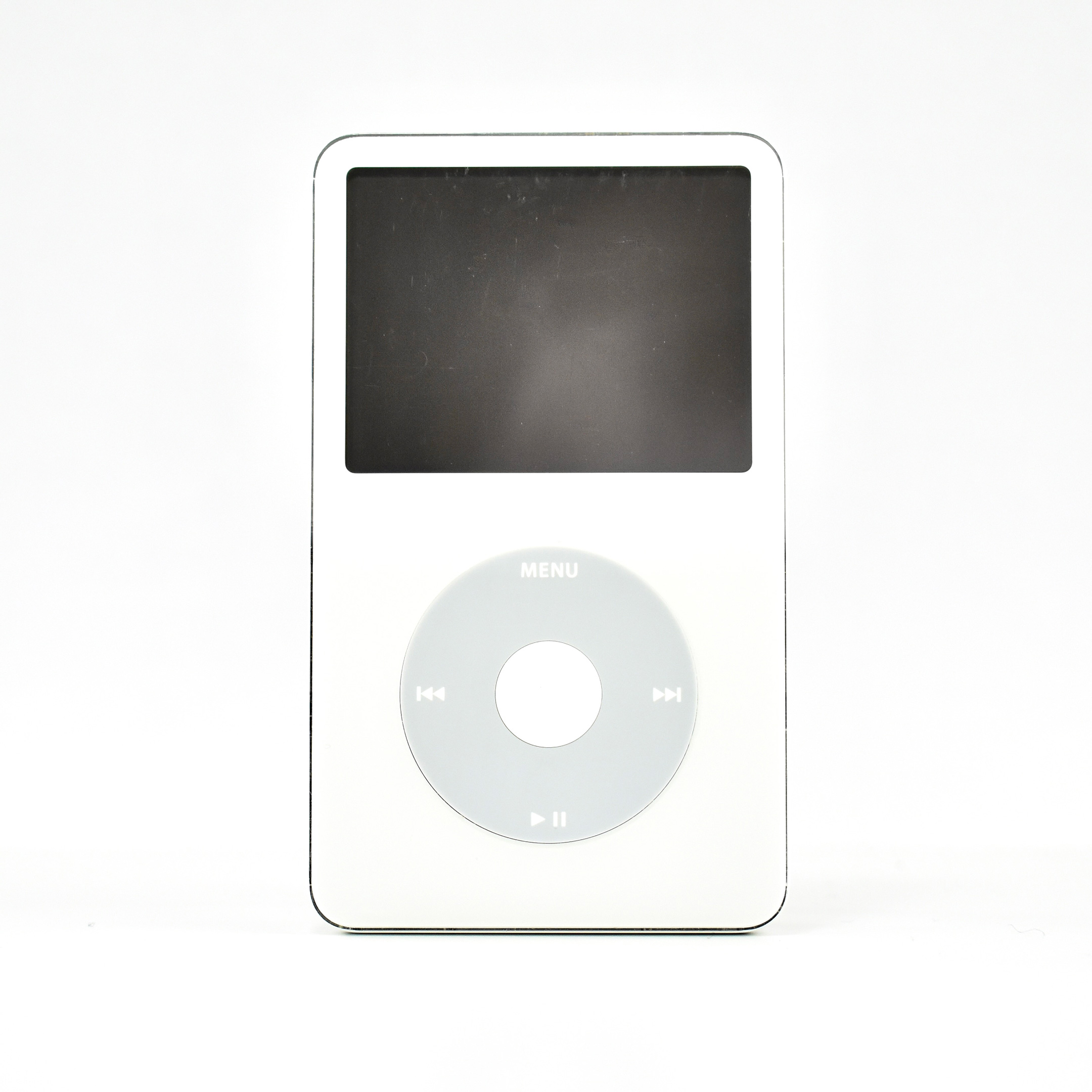
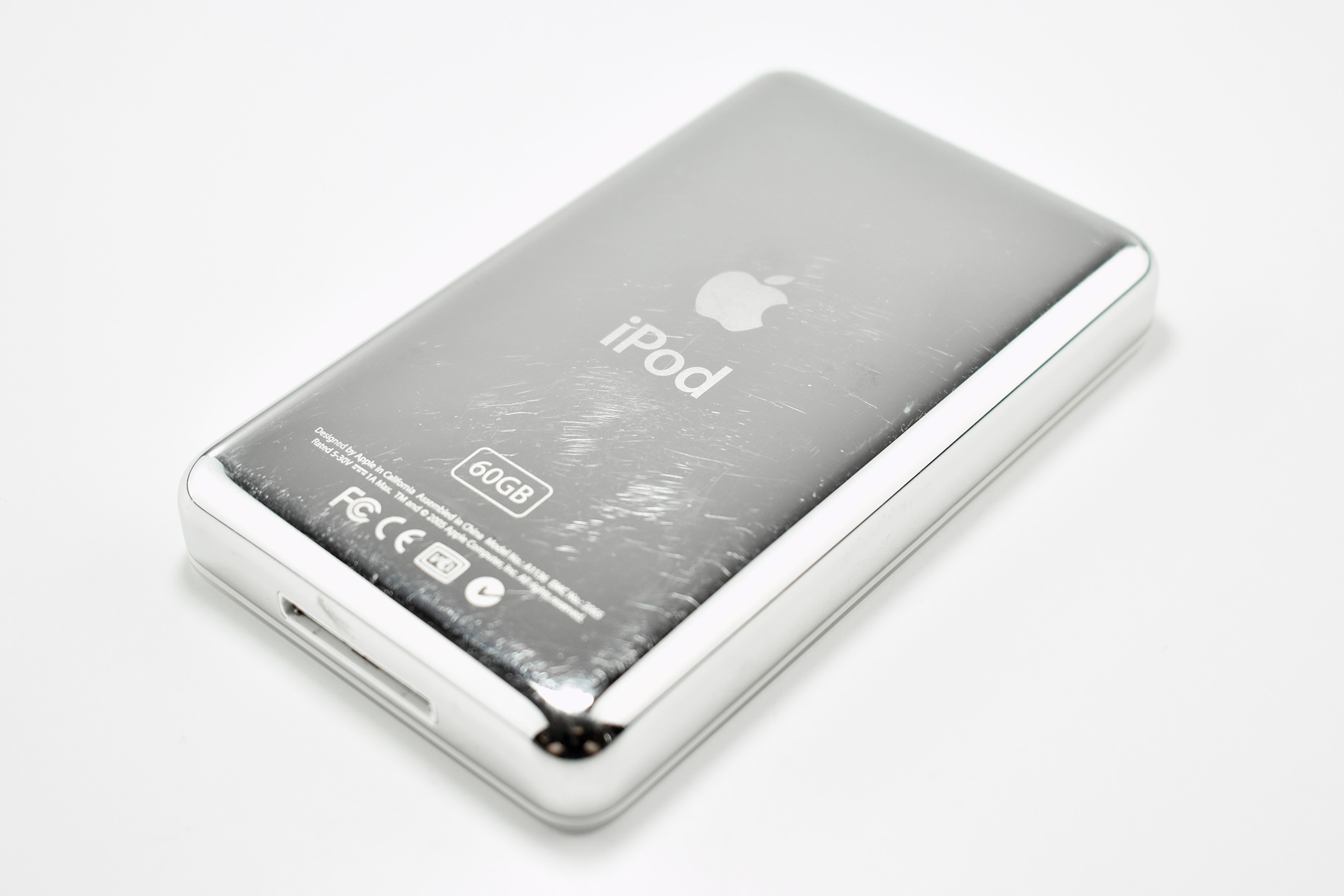
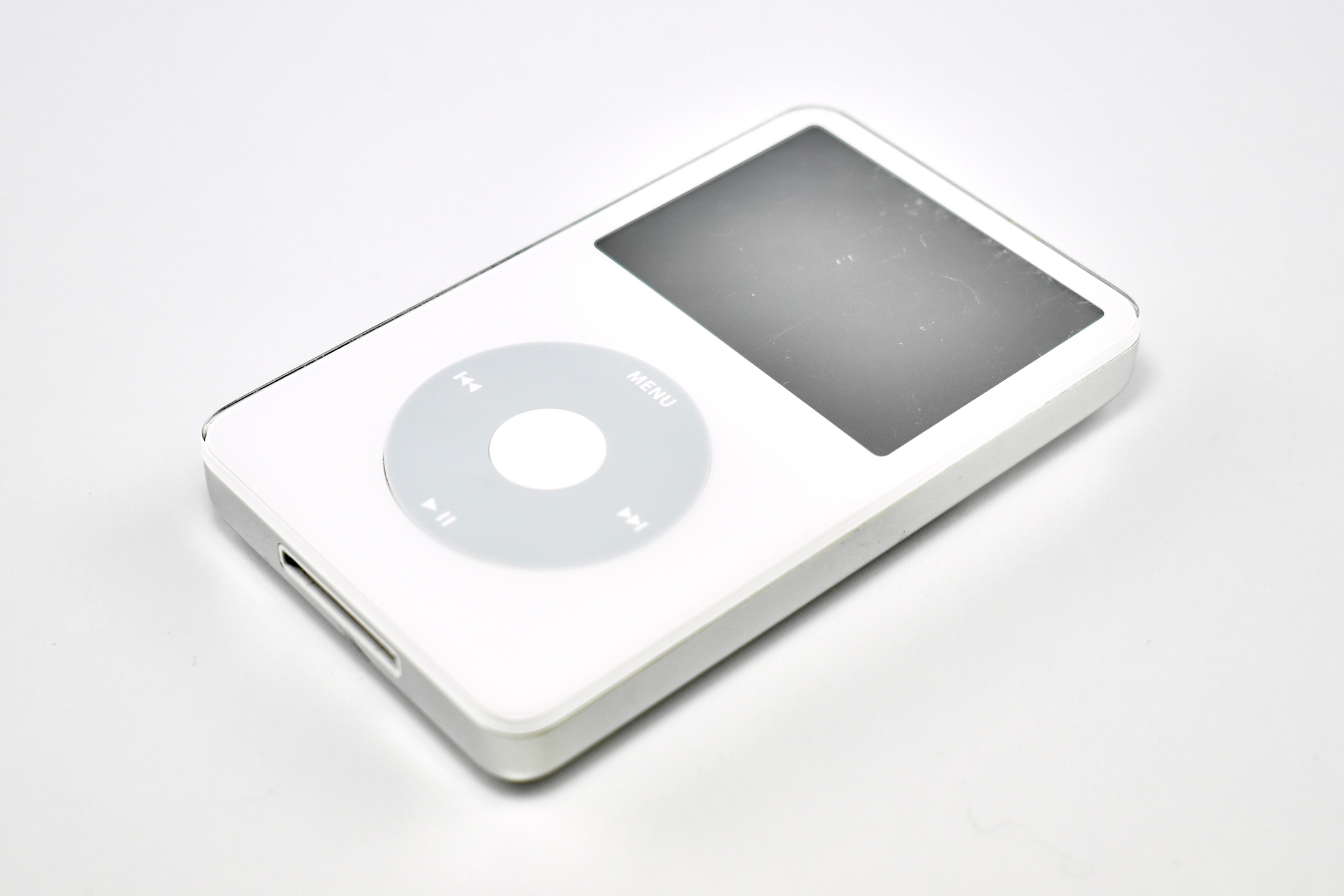
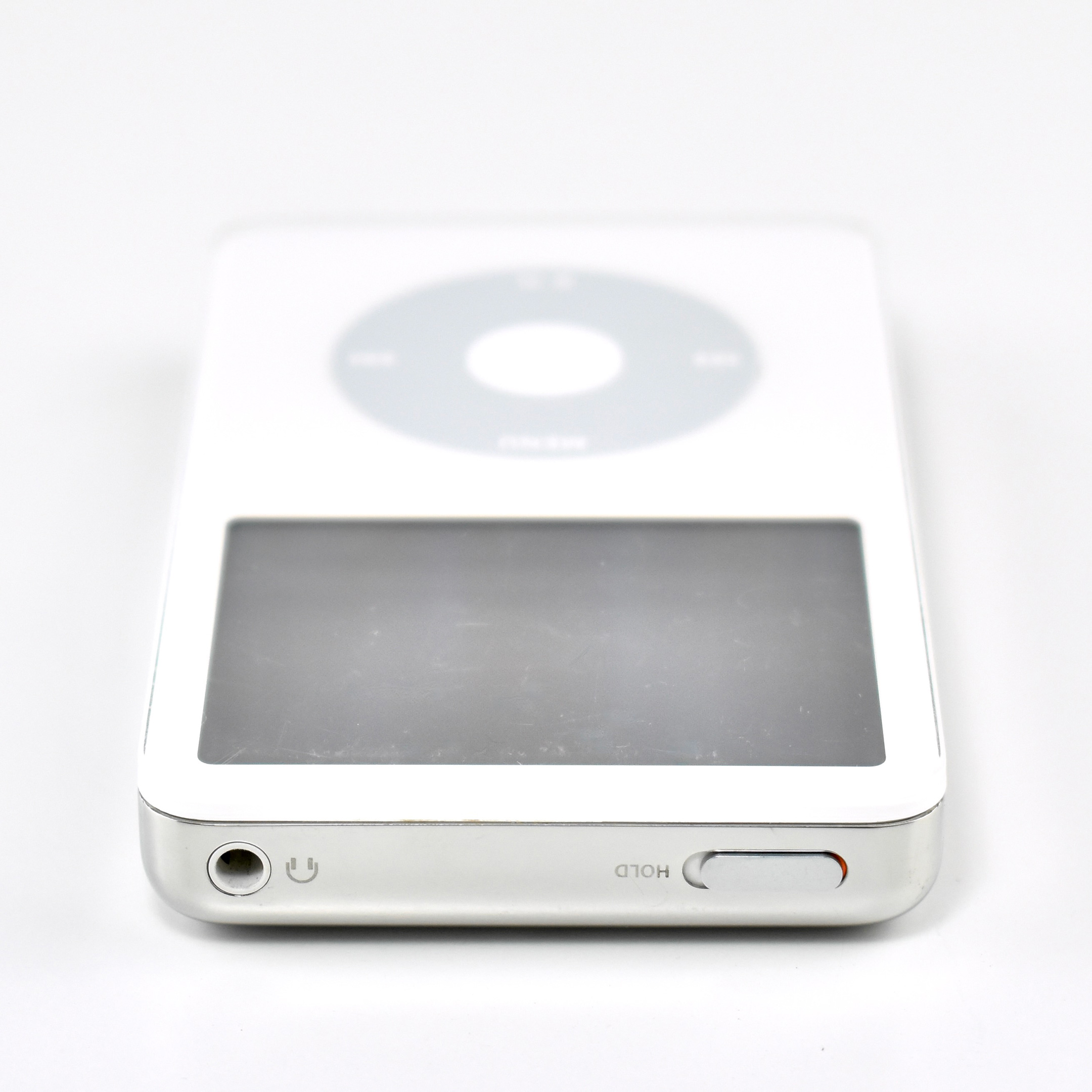
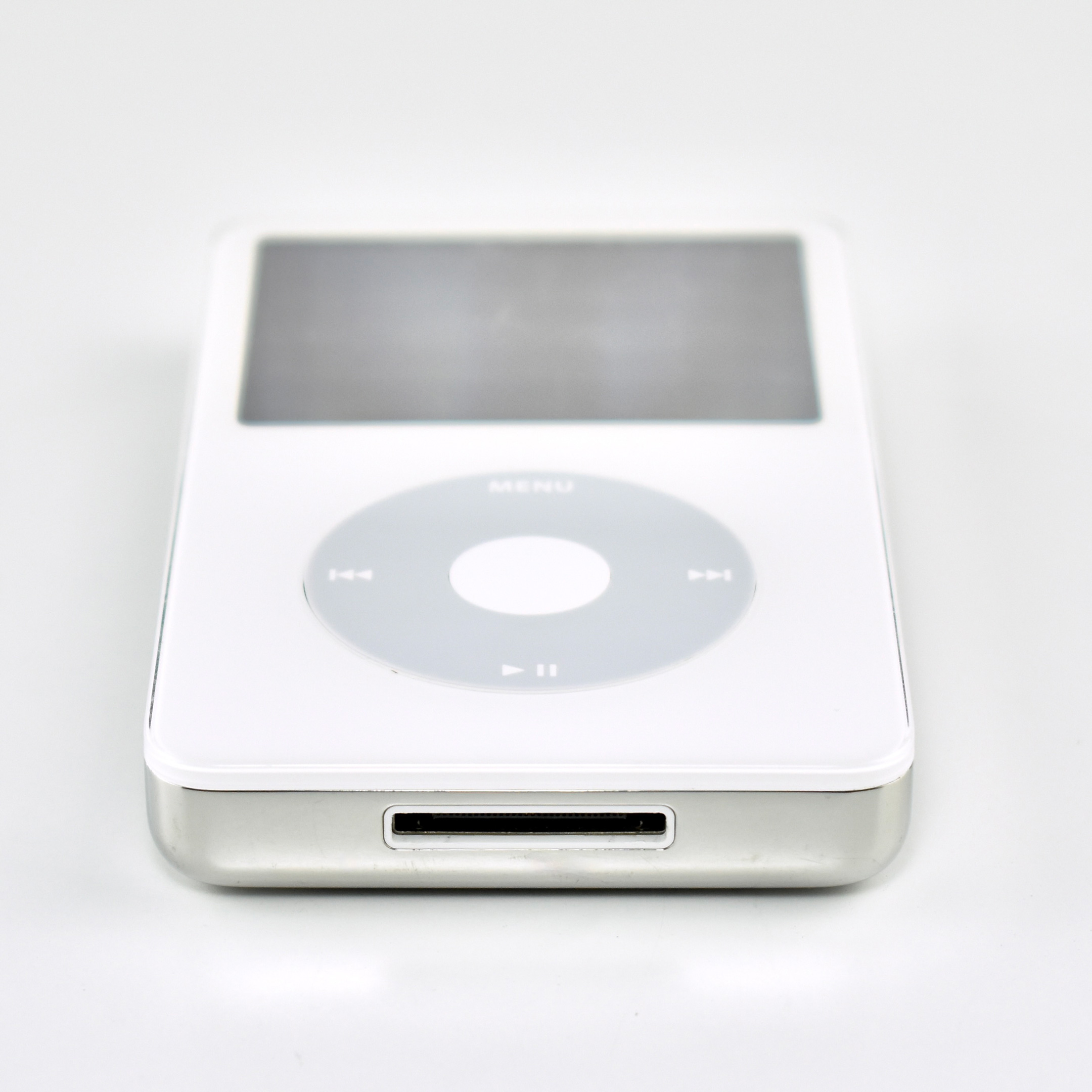
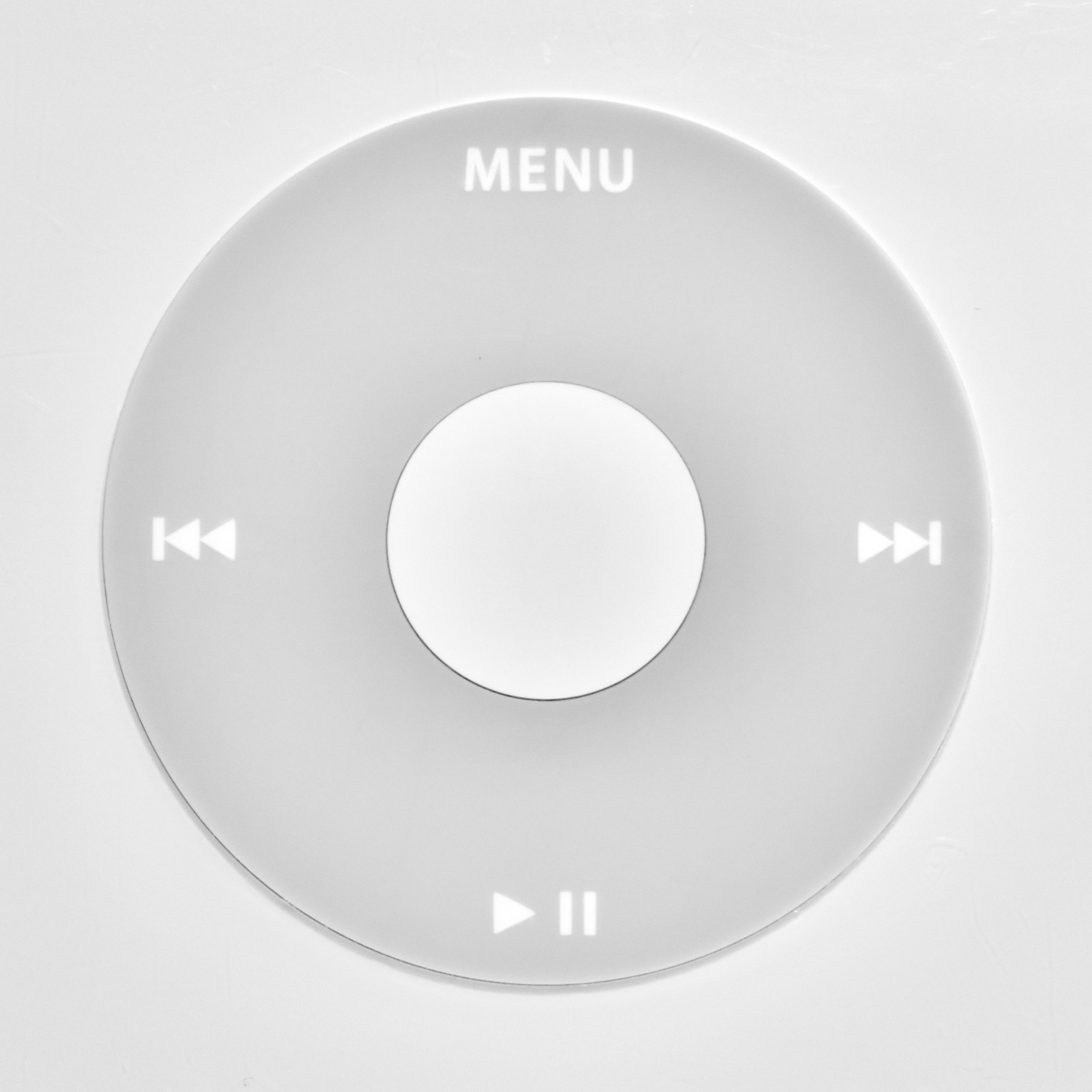
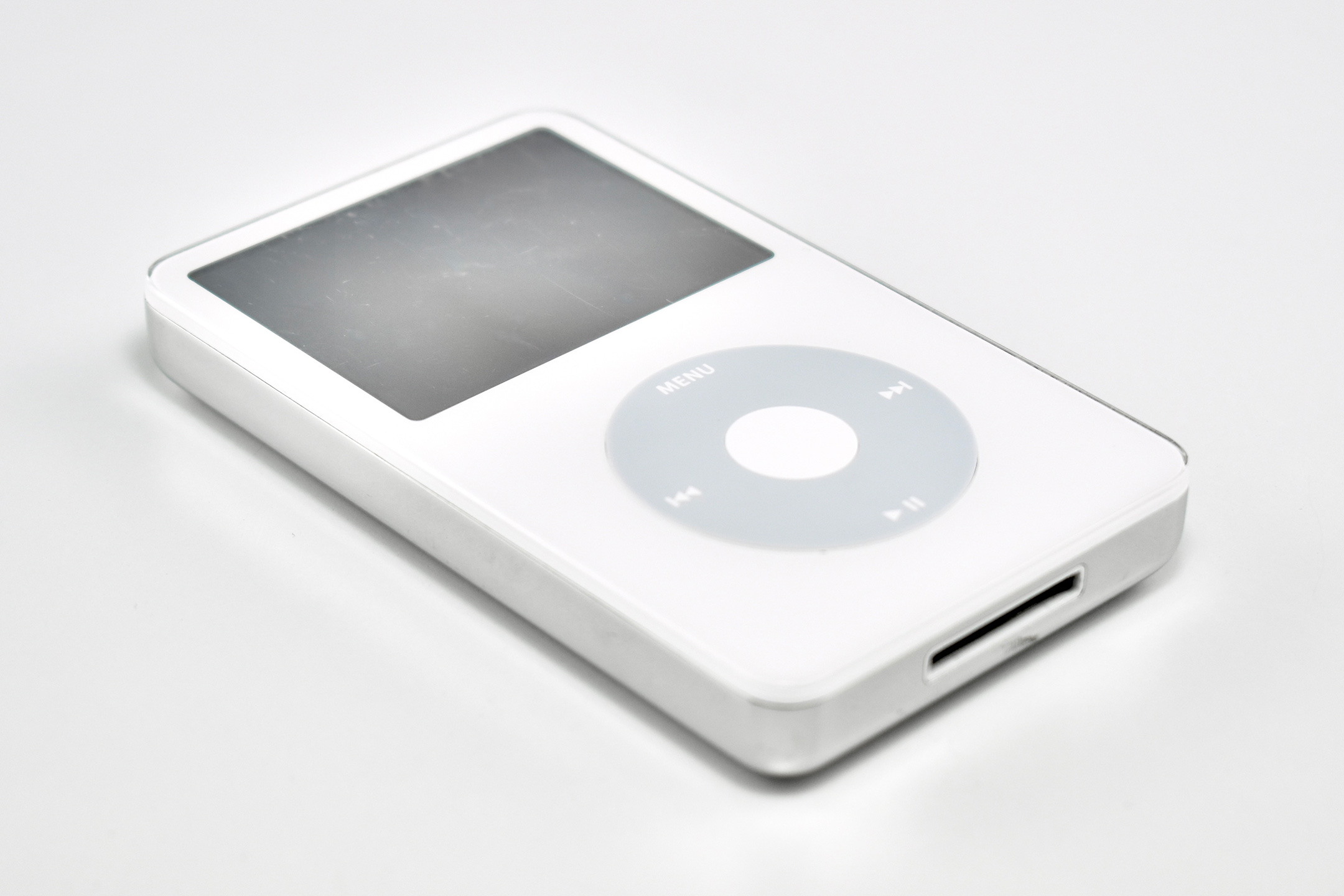
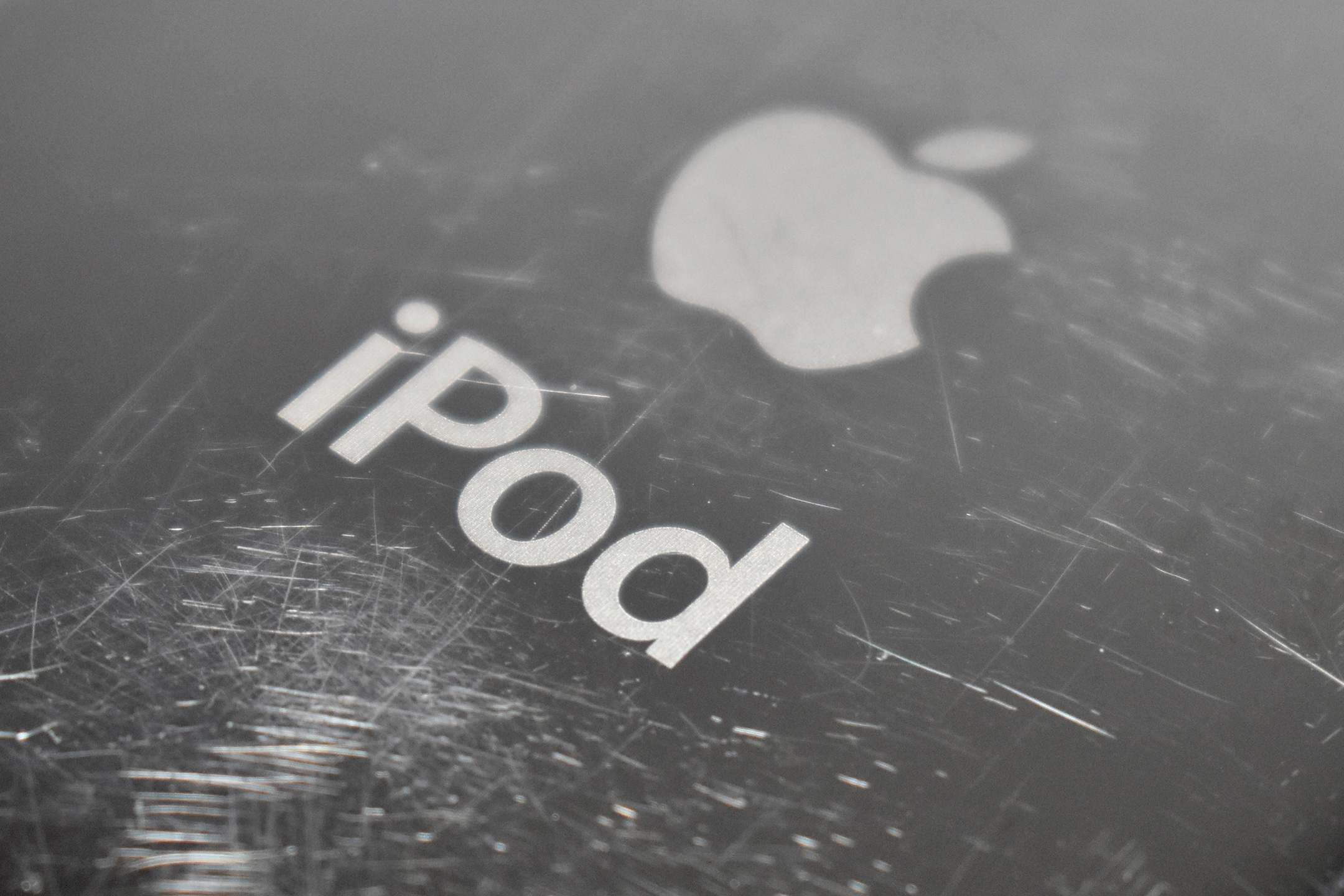
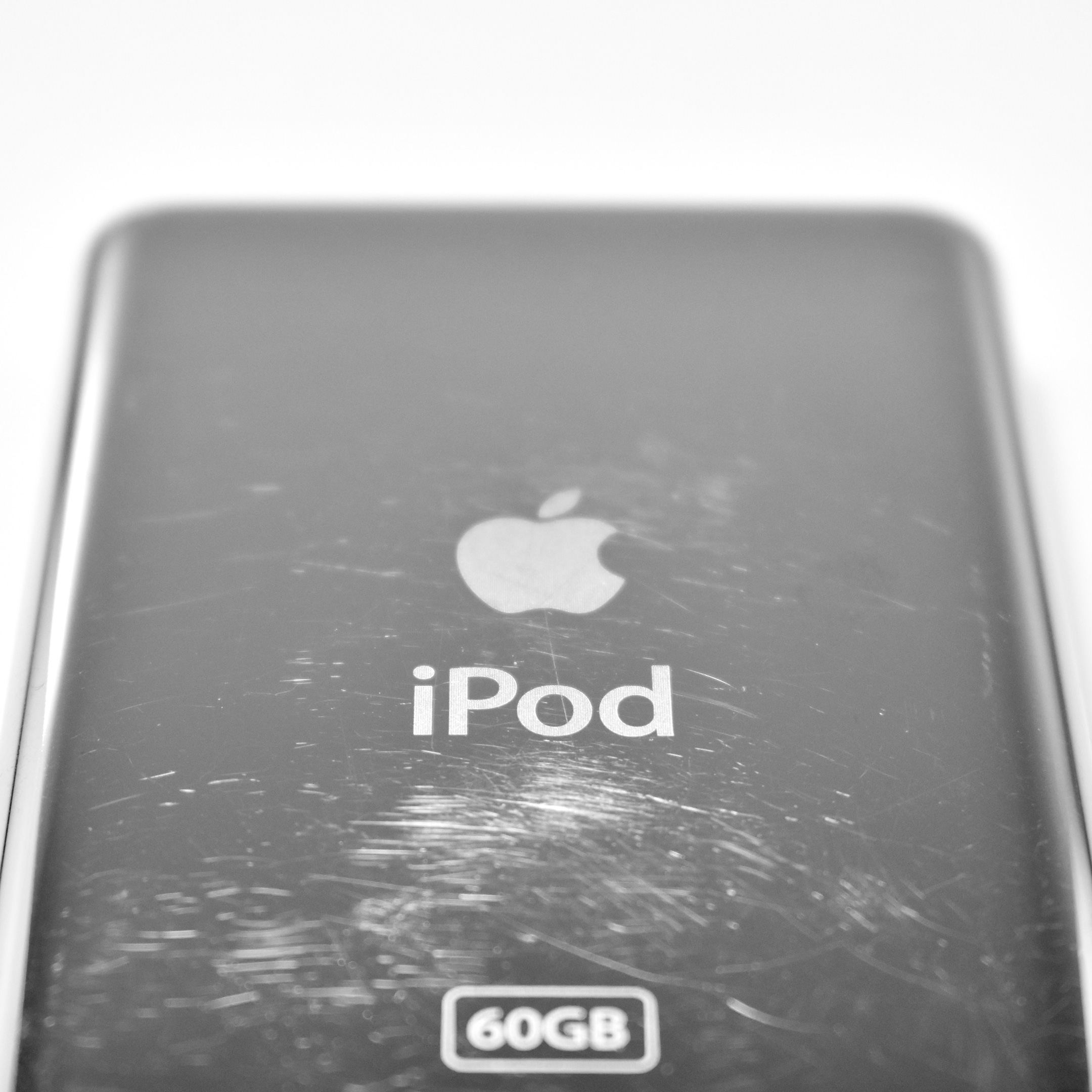
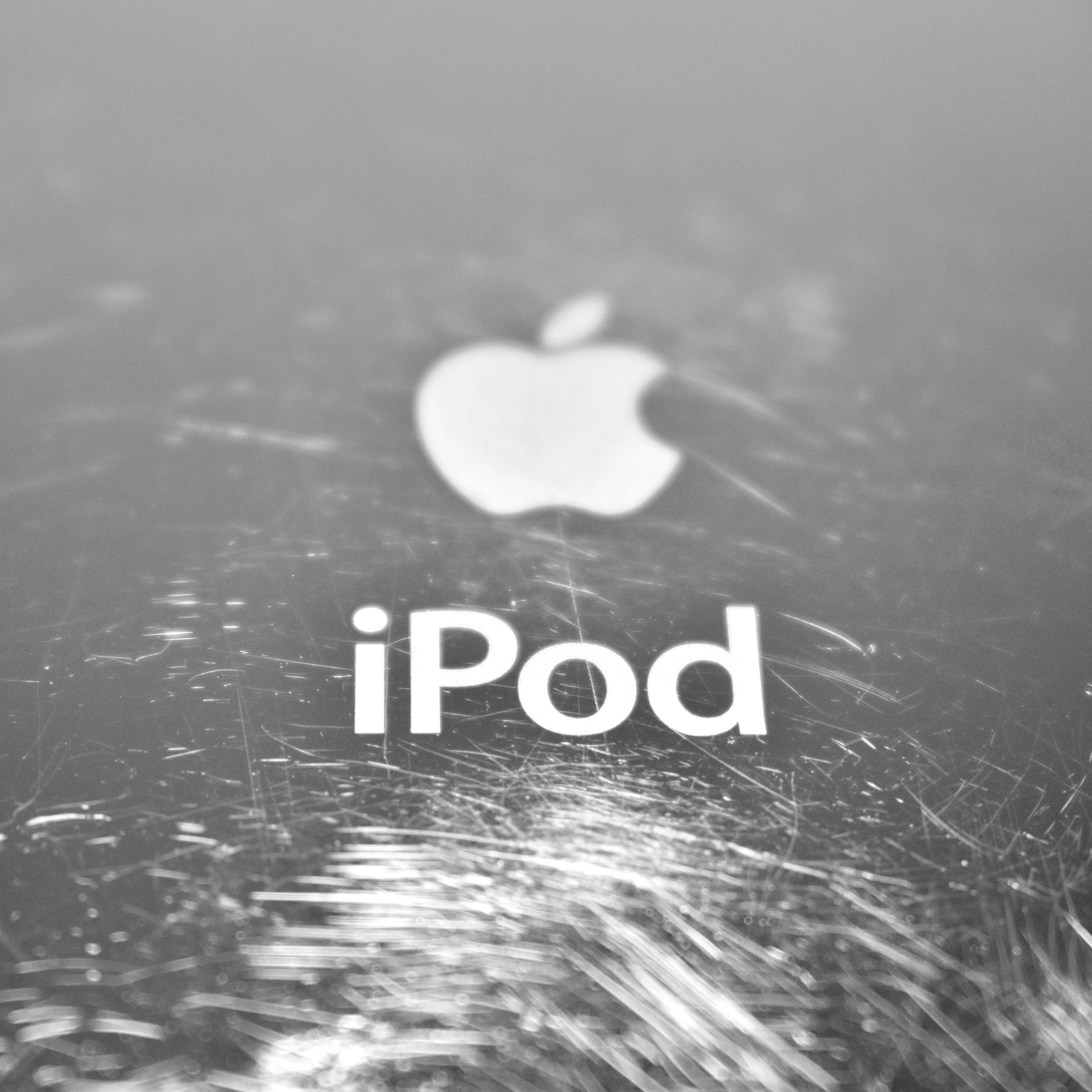
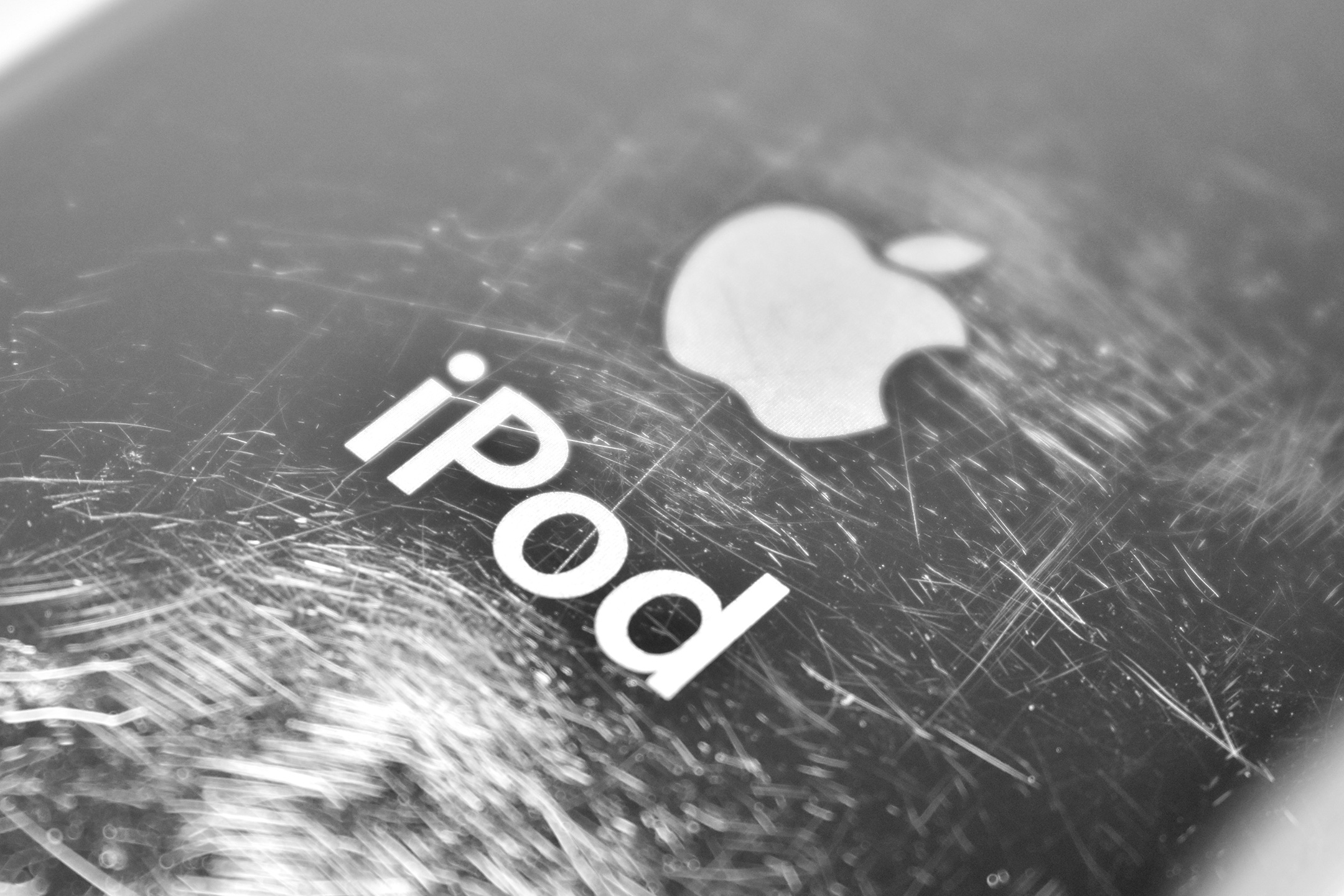
The iPod Generation 5, also known as iPod with video, was the first iPod model capable of displaying video. This device’s part number is MA003LL/A, and its model number is A1136. Apple describes this iPod:
“The iPod (5th generation) is a hard drive-based iPod featuring a large, widescreen color display, a Click Wheel, and the capability of displaying photos and videos. It uses USB for syncing.”
According to EveryMac:
“It uses a 30 GB or 60 GB 4200 RPM ATA-66 hard drive, capable of supporting up to 7,500 songs or up to 15,000 songs in 128-Kbps AAC format. Additionally, Apple reports that the 30 and 60 GB drives, respectively, can hold over 1000 or 2000 4-minute videos in H.264…”
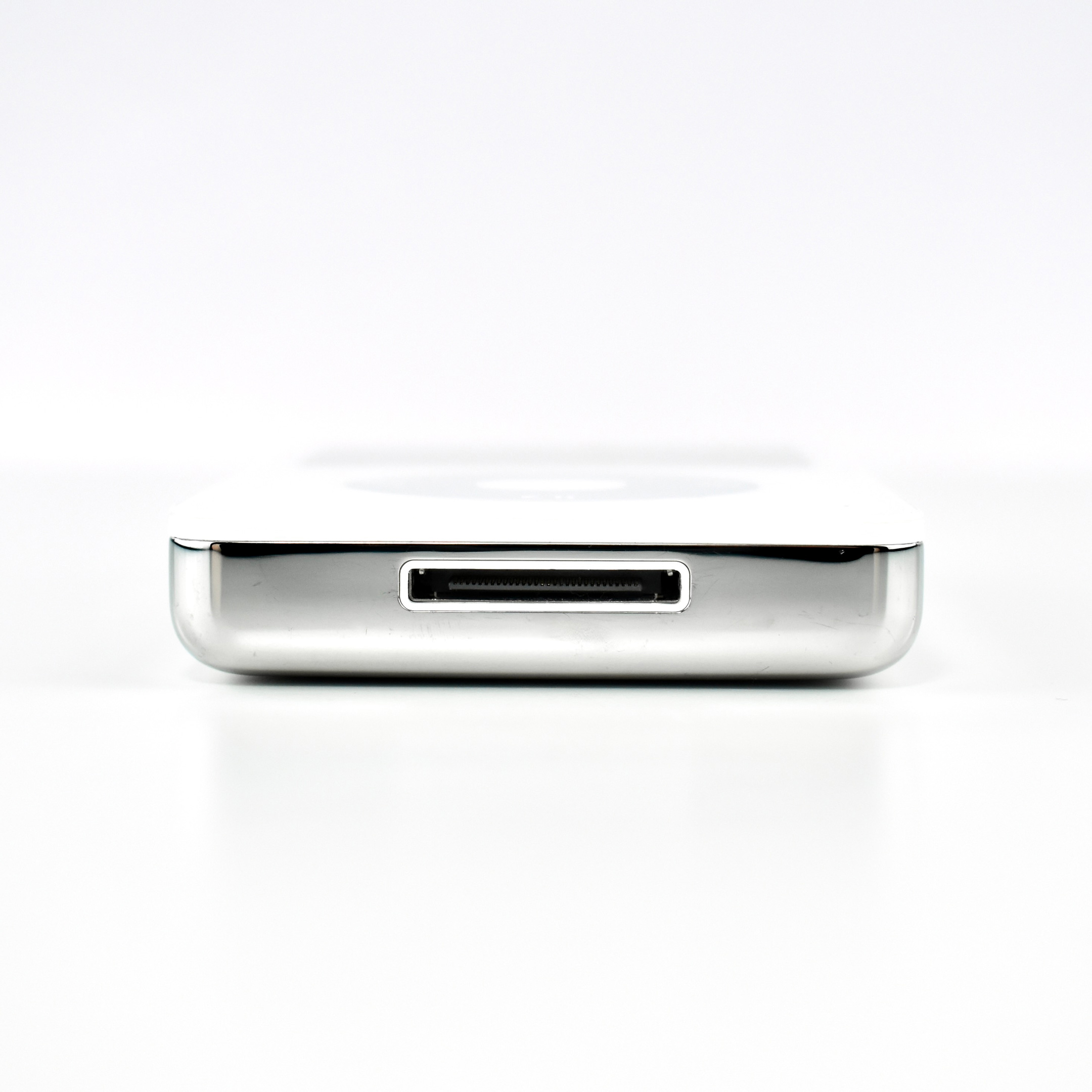
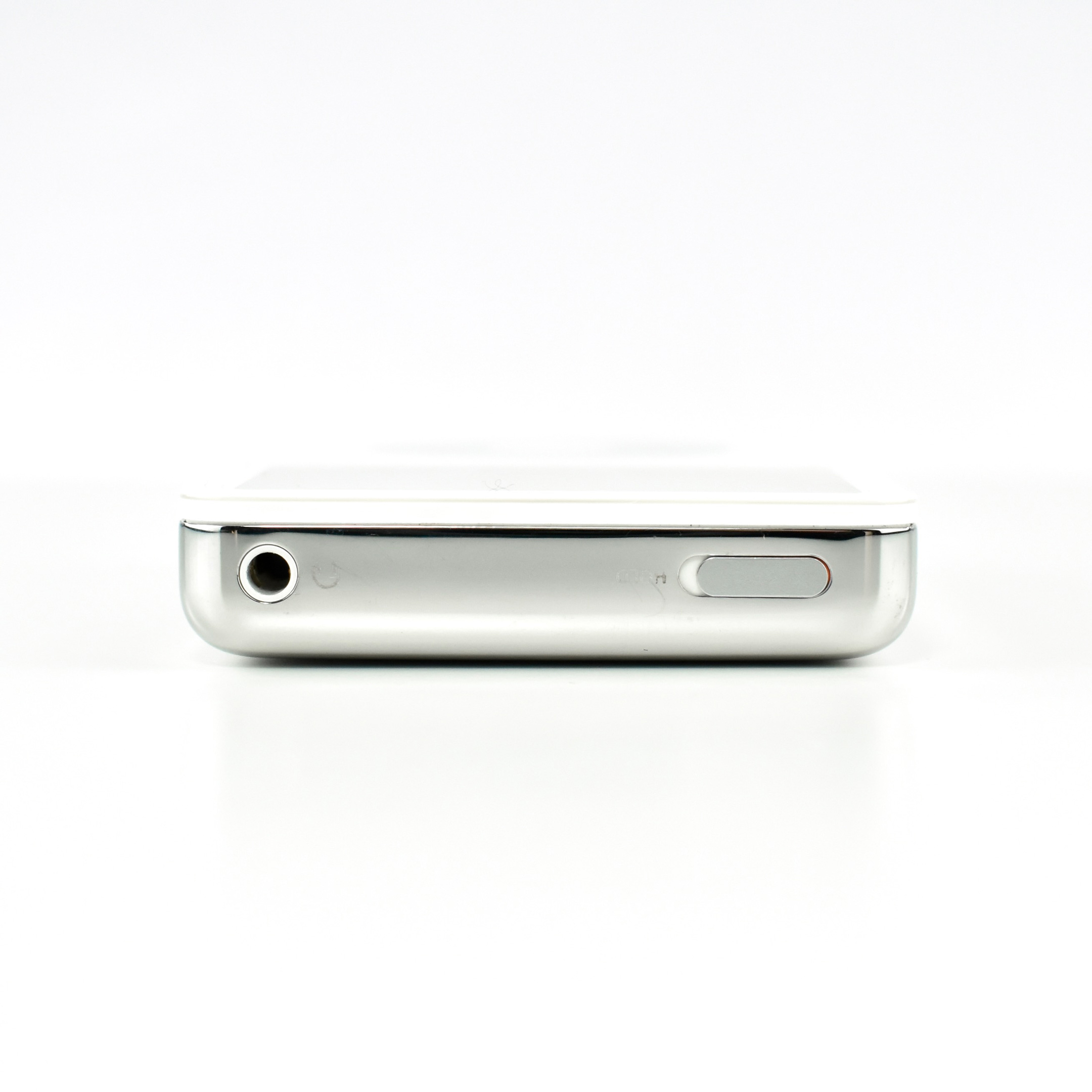
Apple described the color of this iPod as “iBook white” (after its laptop sold at the same time), or “jet black” for the U2 version of this iPod. All iPod Generation 5 models had a chrome stainless steel back. The 30GB model of the Generation 5 iPod was 31% thinner than the 30GB Generation 4, and the 60GB model of the Generation 5 iPod was 12% thinner than the 60GB Generation 4.
This iPod had a 2.5-inch (diagonal) QVGA transflective color LCD display (at 320×240) capable of displaying over 260,000 colors. The backlight was both larger and higher-resolution than earlier iPod models.
EveryMac reported that:
“The iPod 5G can immediately display many types of photos transferred directly from a digital camera using the iPod Camera Connector (US$29), and can display photo slide shows on the internal display or a television using the included AV cable (S-video, data and audio output, and a variable line output port are provided by the optional Universal Dock (US$39) that also provides support for the Apple Remote (US$29). Unlike earlier iPod models, it also supports video playback on the internal display or on a television (at a maximum resolution of 480×480).”
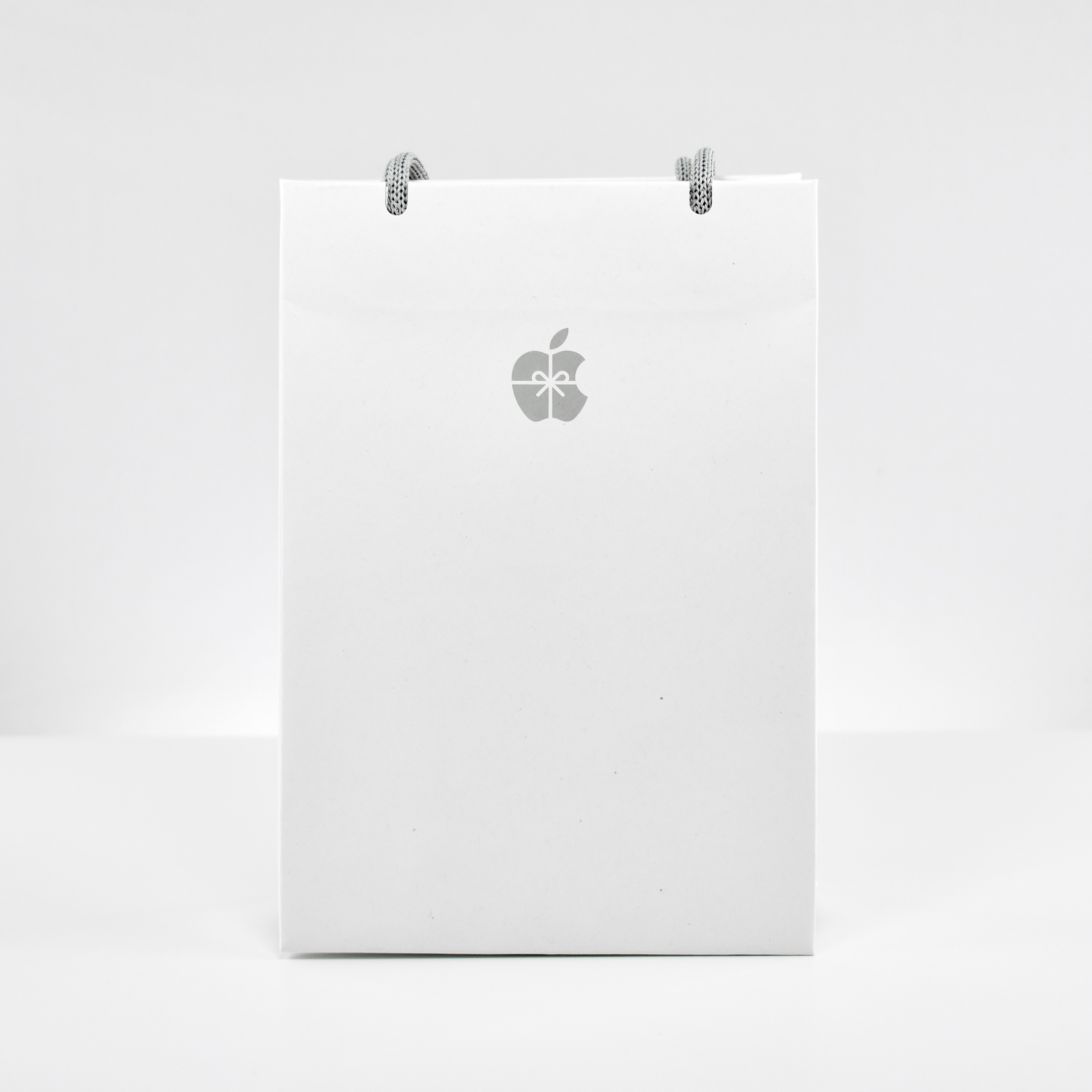
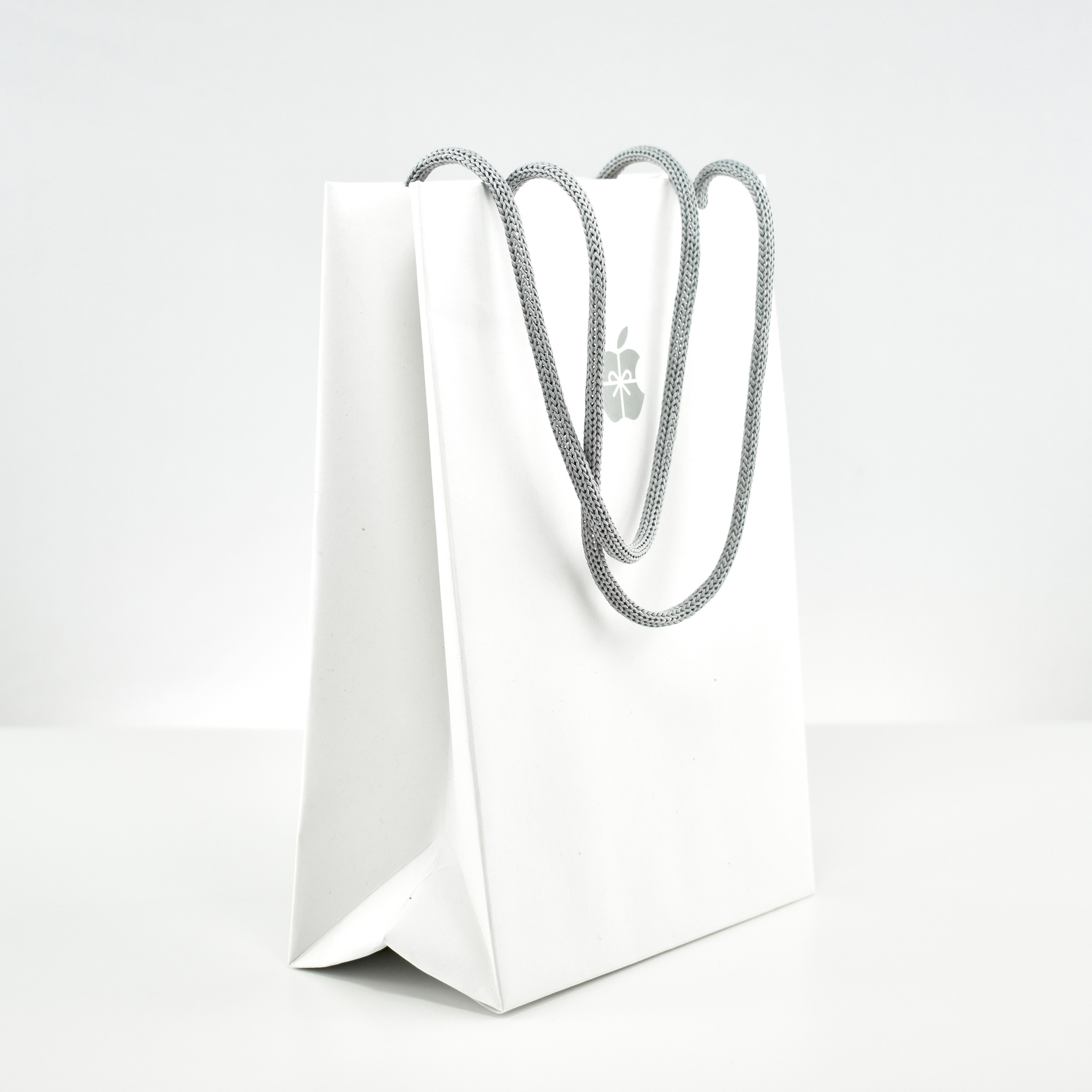
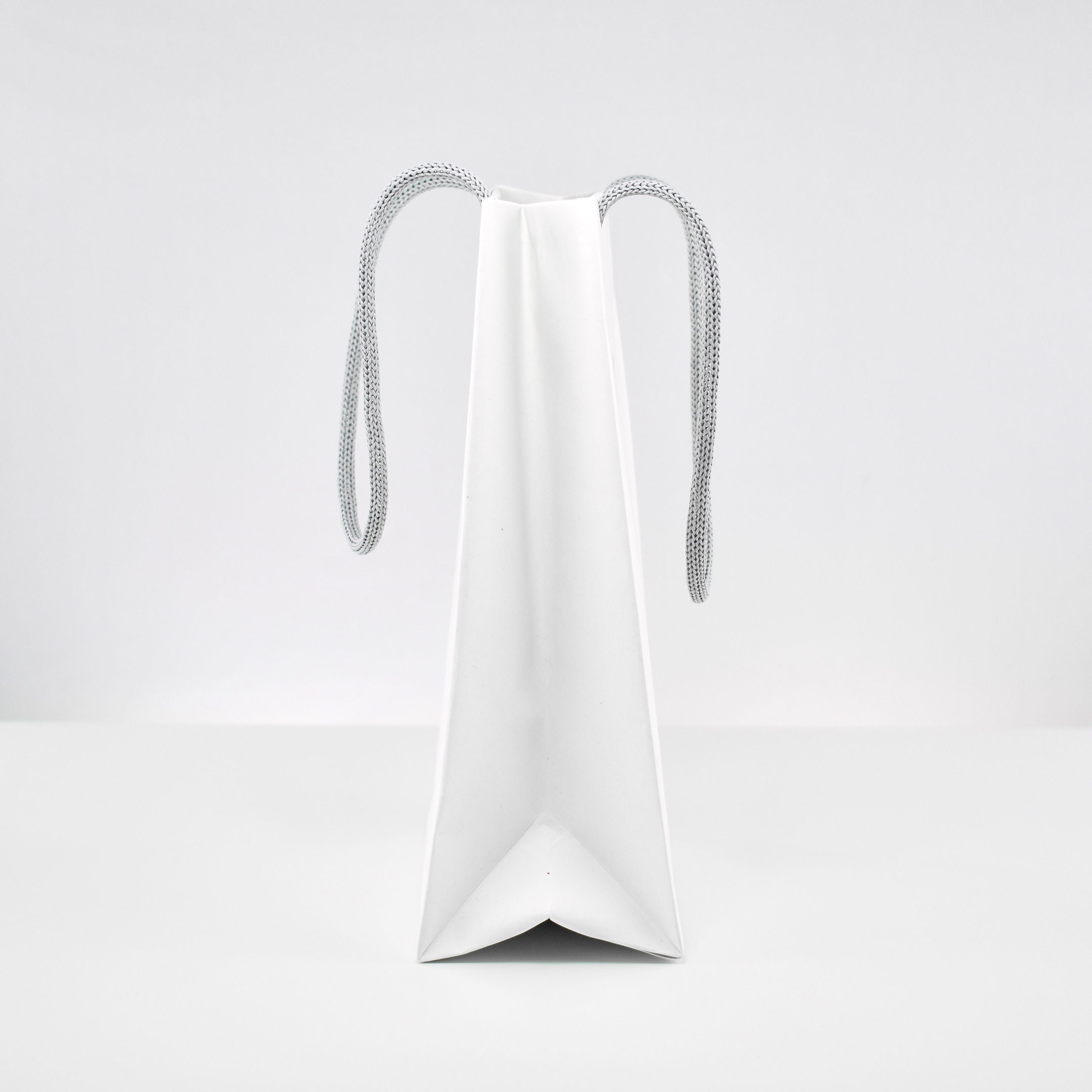
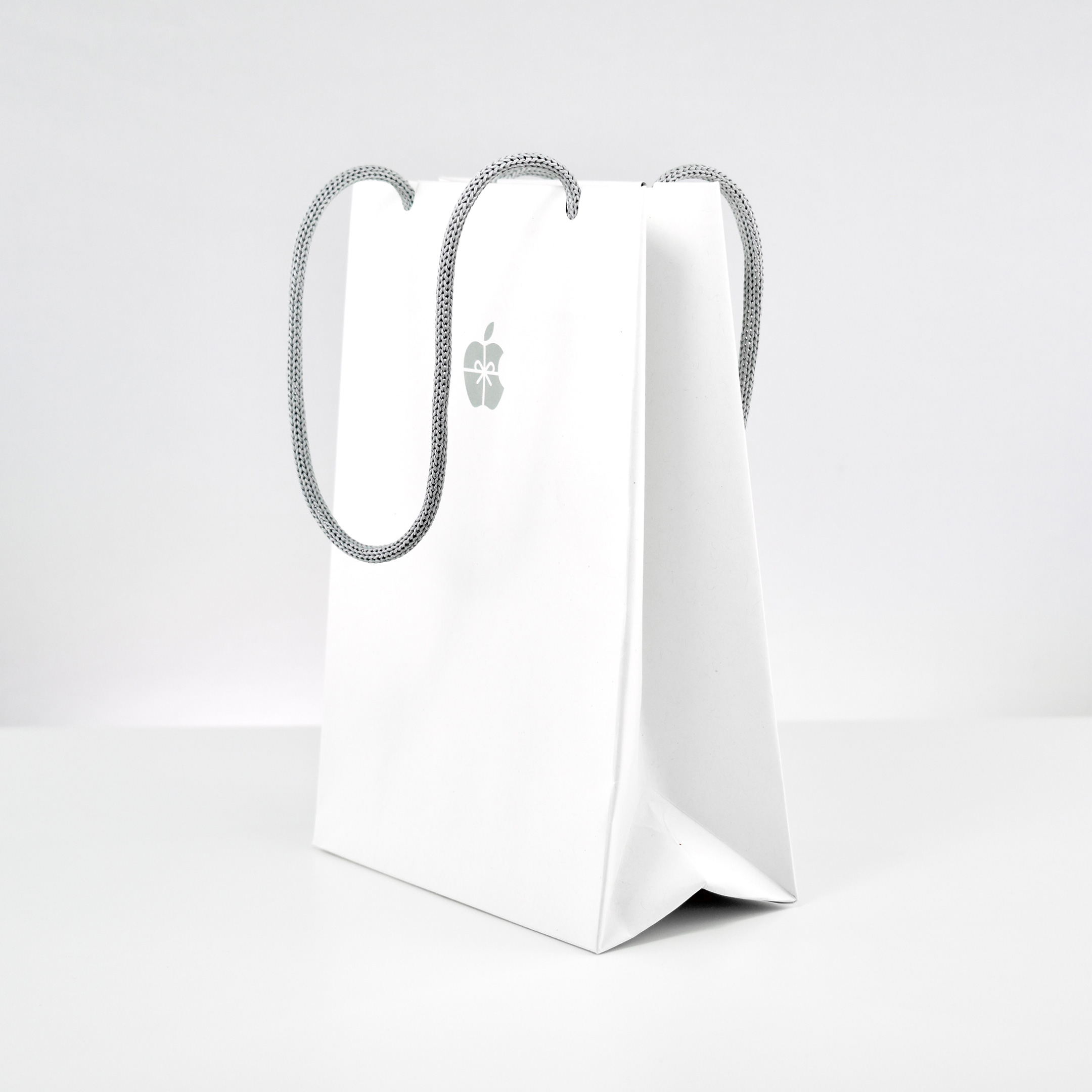
Apple’s retail store bags have been used at Apple Stores beginning in 2001 when the first Apple Store opened. Please refer to my blog post, 20 Years of Apple Store Bags (2001–2021), for more details.
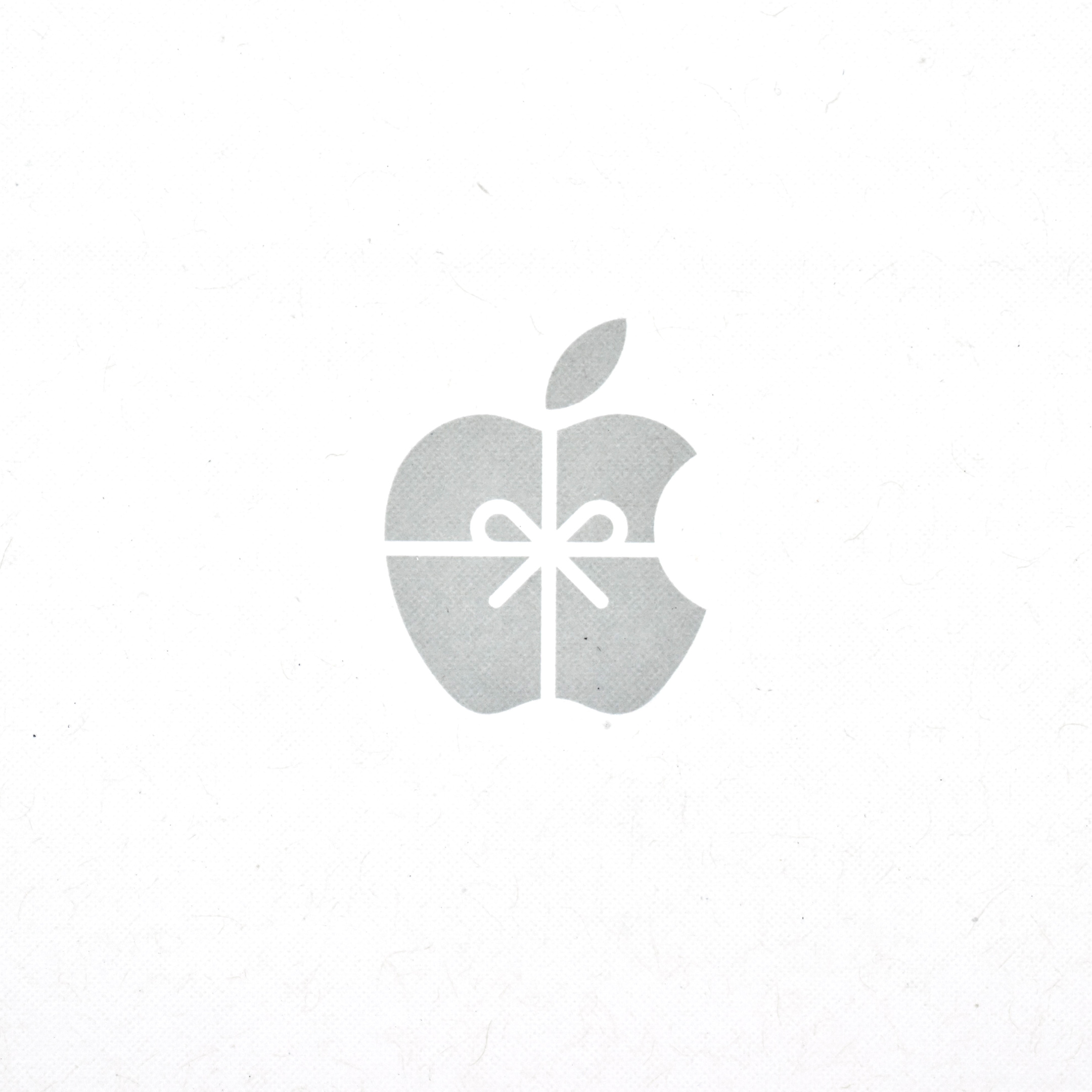
In November 2023, Apple began an email, web, and Apple Store campaign using the tagline “All kinds of wonderful” online and “Wonder awaits” on Apple Store windows. The visuals included a stylized white Apple logo with a gift bow and winter scene.
A simplified version of the logo was printed on Apple’s retail store bags to replace the typical solid gray Apple logo. This paper bag is one example of the 2023 holiday Apple Store bags.
The blog post includes a photo I captured of the winter logo on the window of the Apple Store Michigan Avenue in Chicago on November 5, 2023.
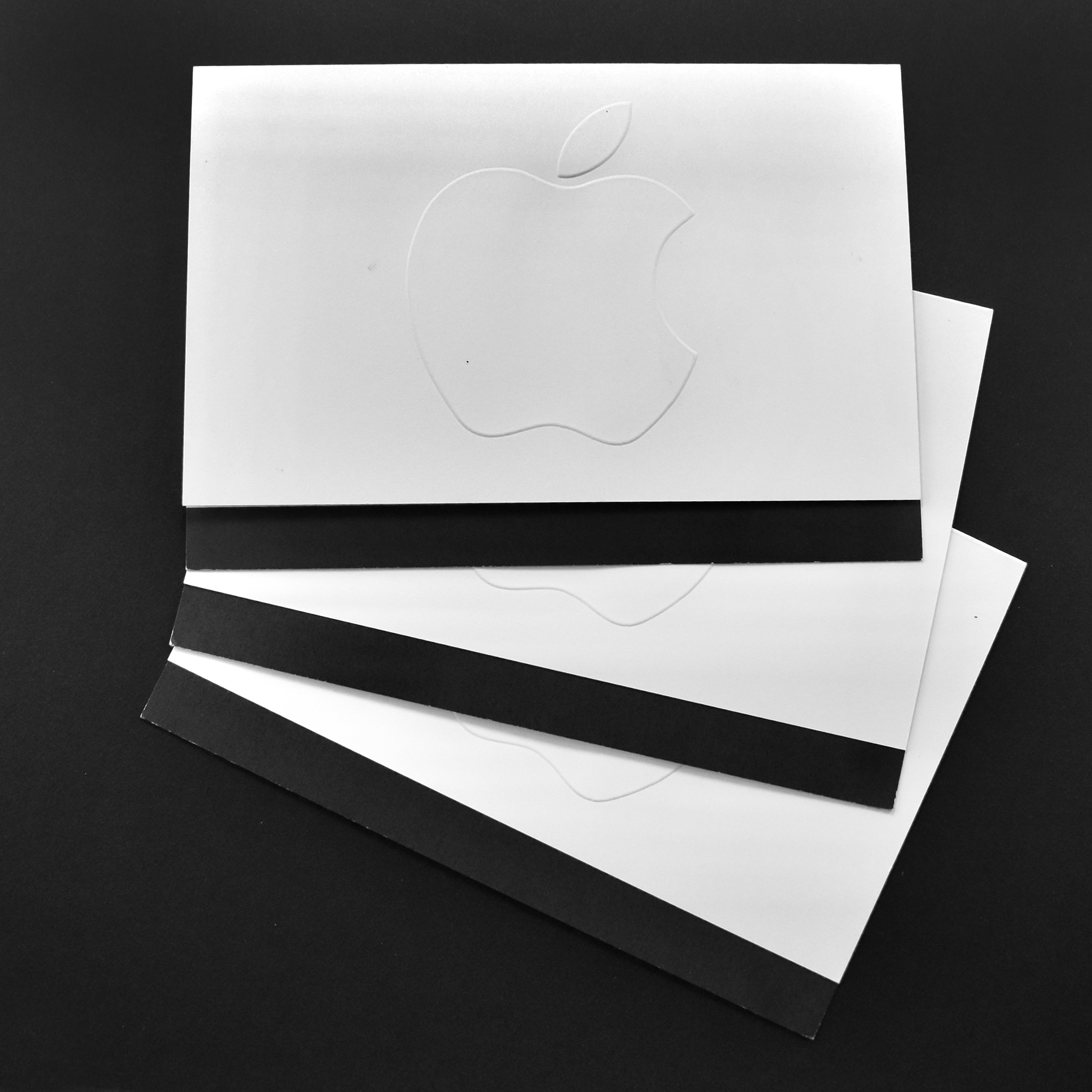
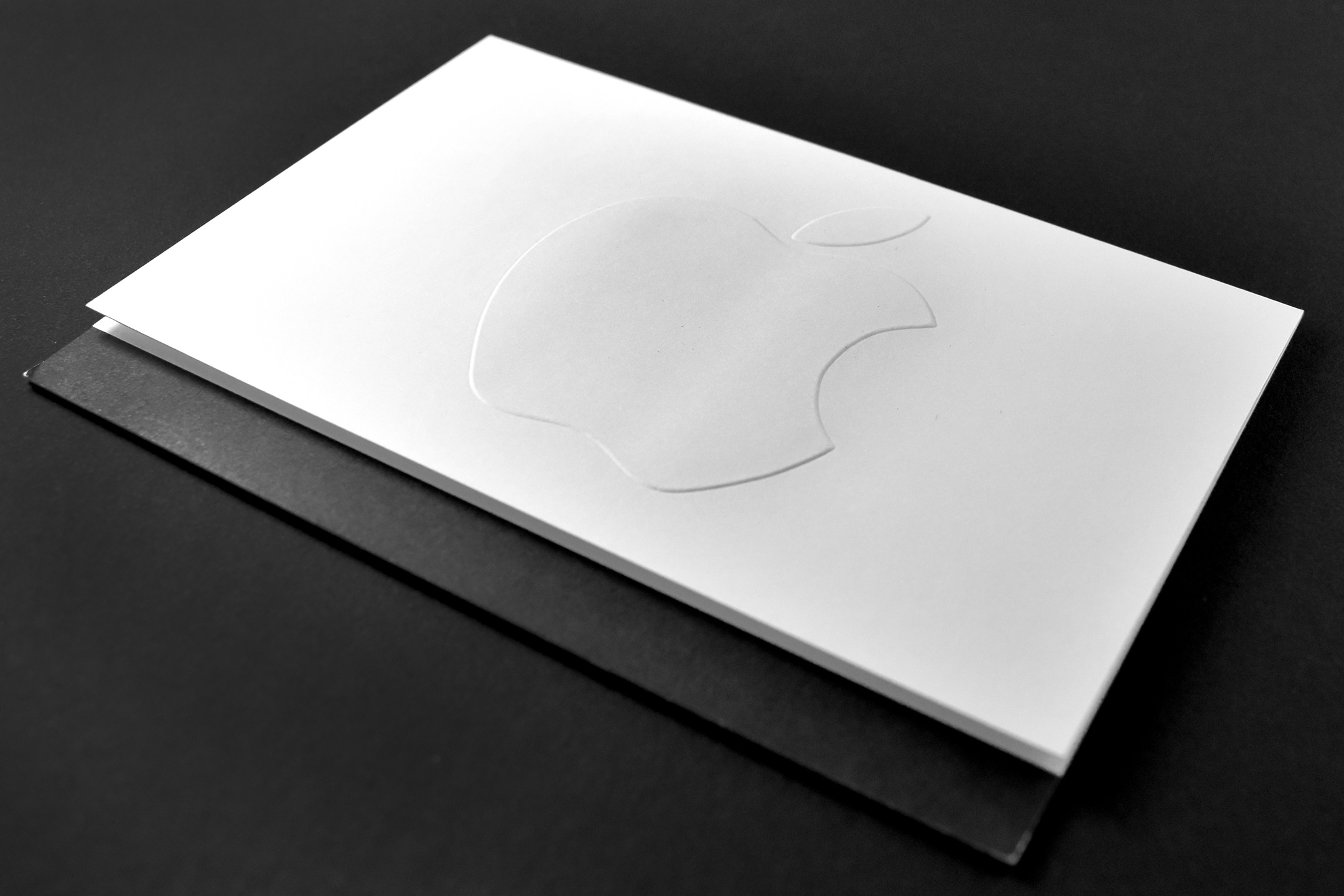
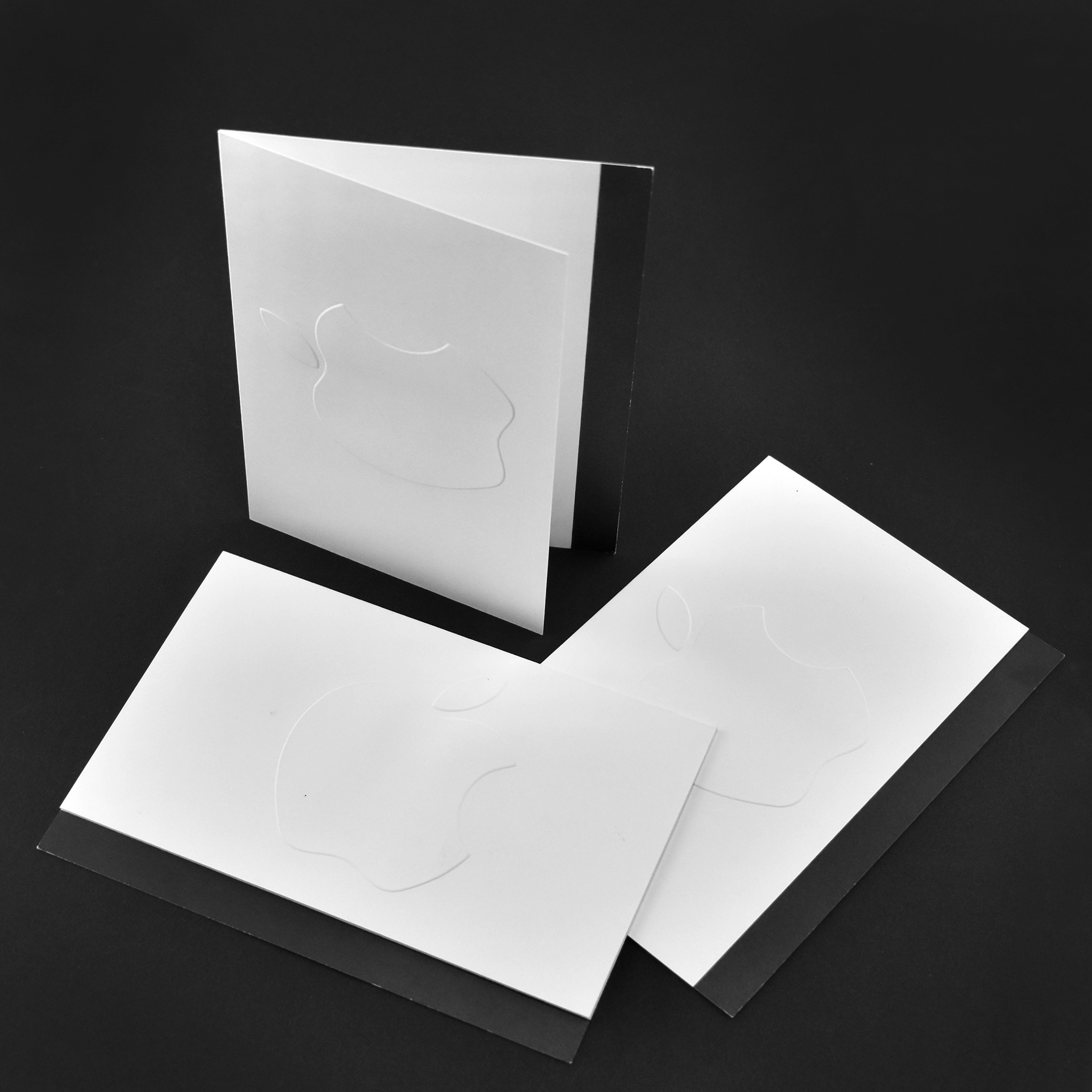
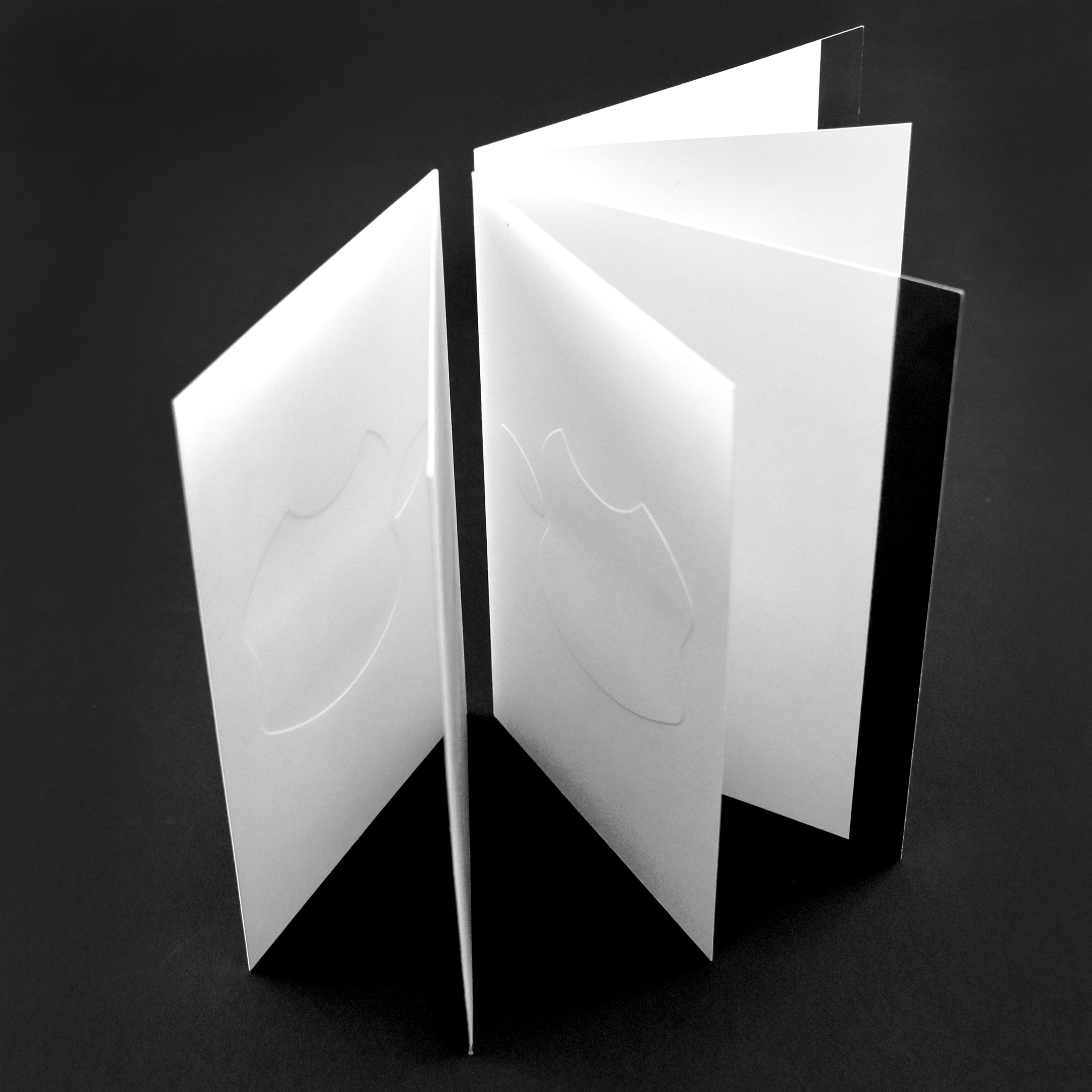
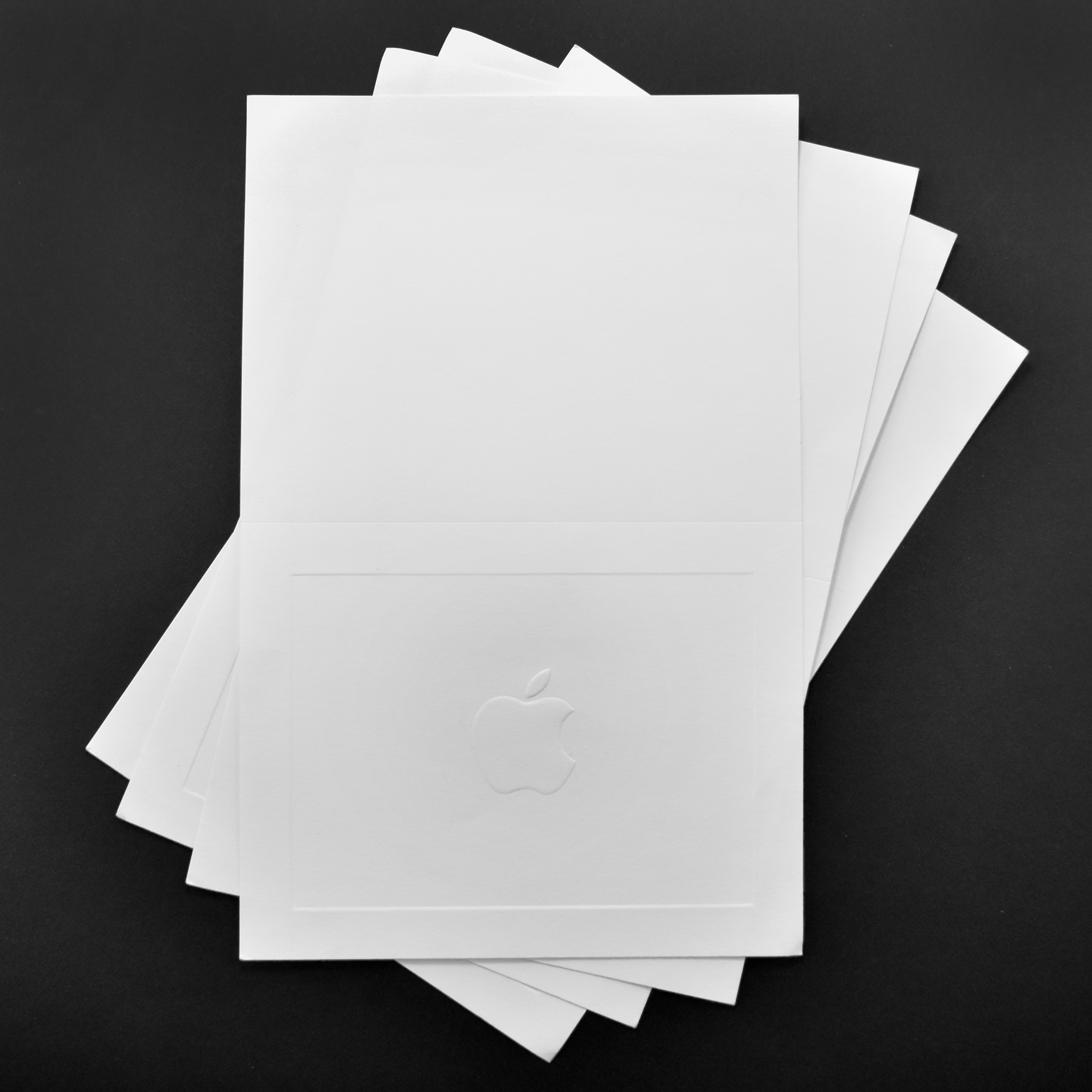
This set of white notecards measures 4.25 x 6 inches and features a 3-inch tall embossed Apple logo on the front center. The front of the notecard is cut one-half inch shorter than the card and a solid black stripe detail is printed along the bottom of the card on the inside.
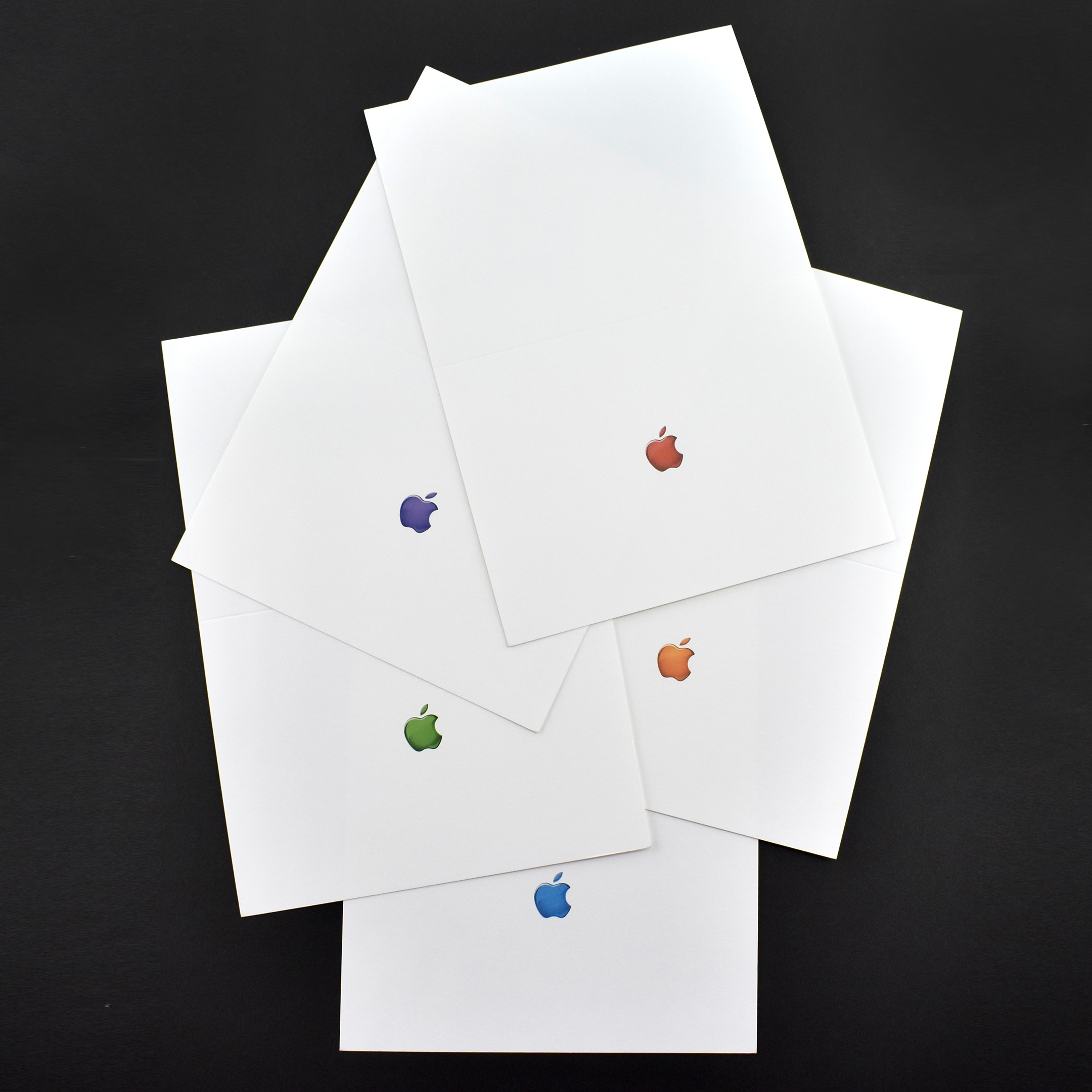
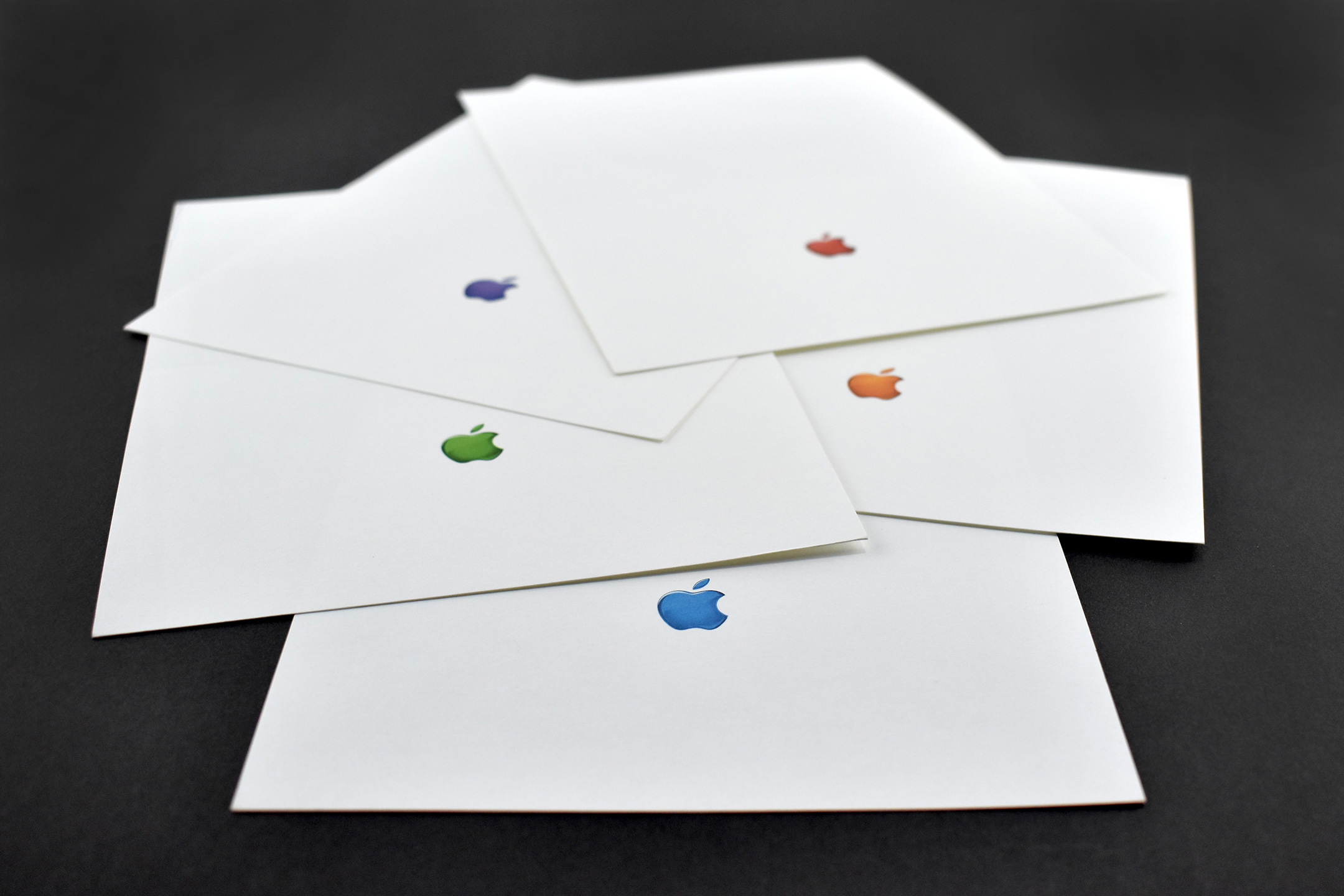
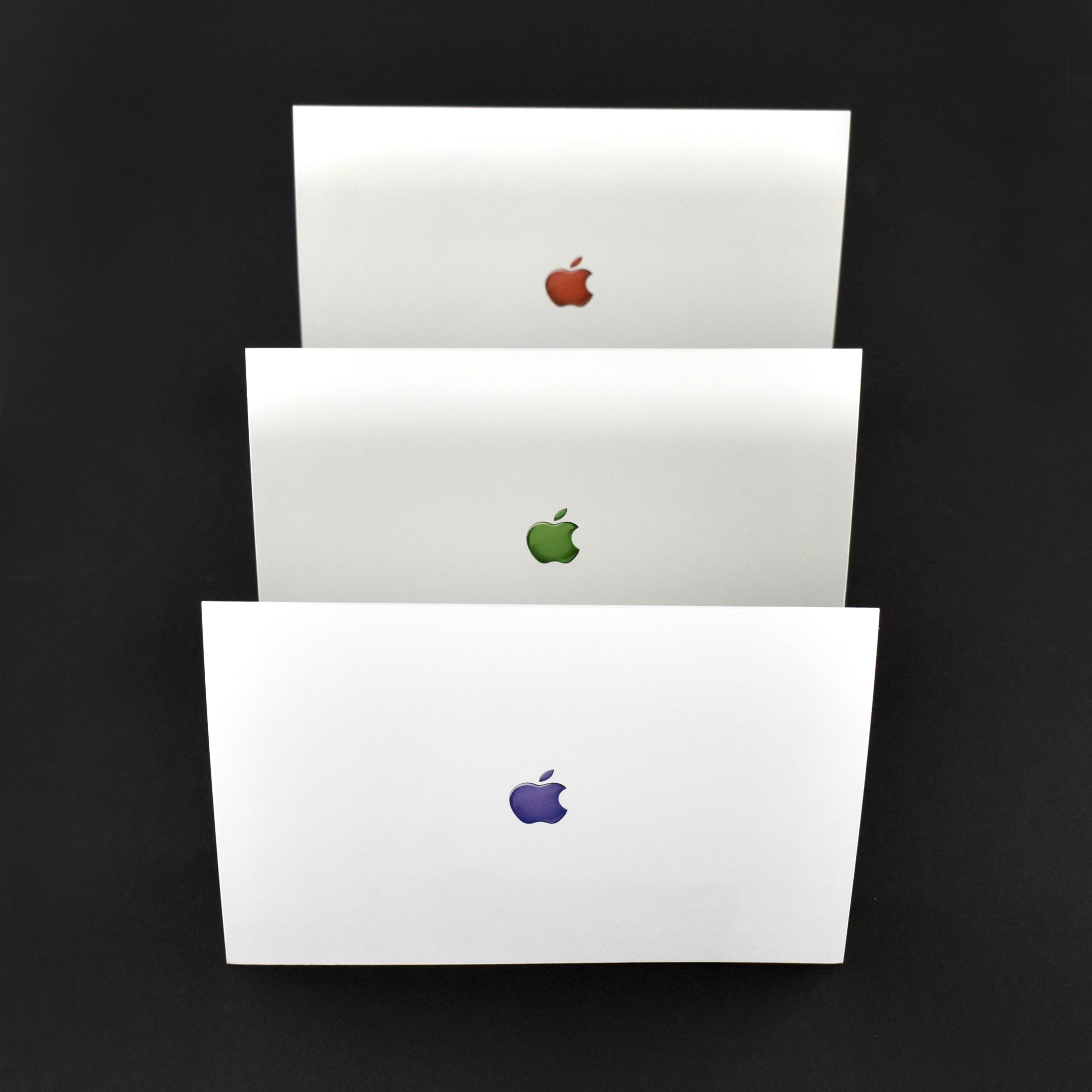
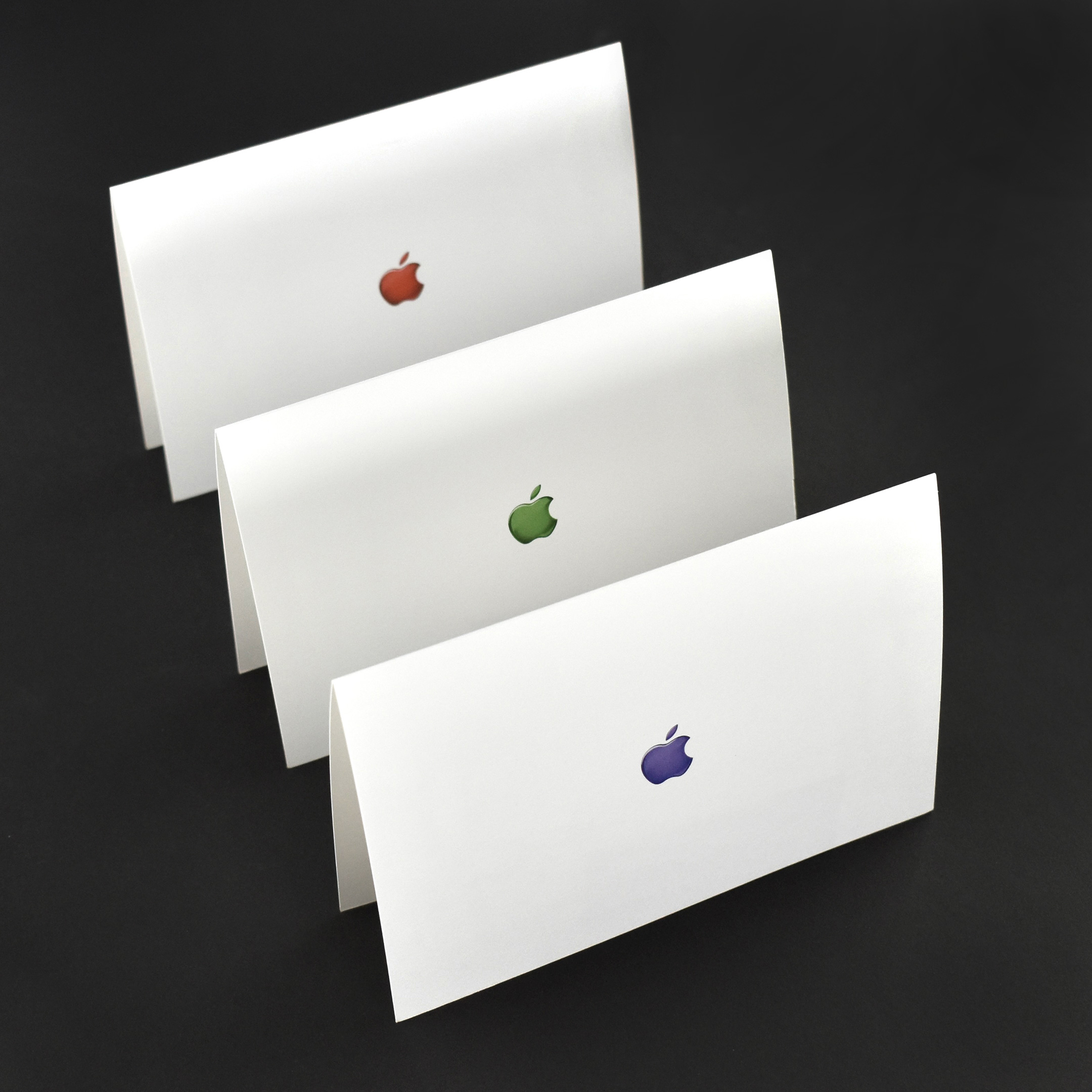
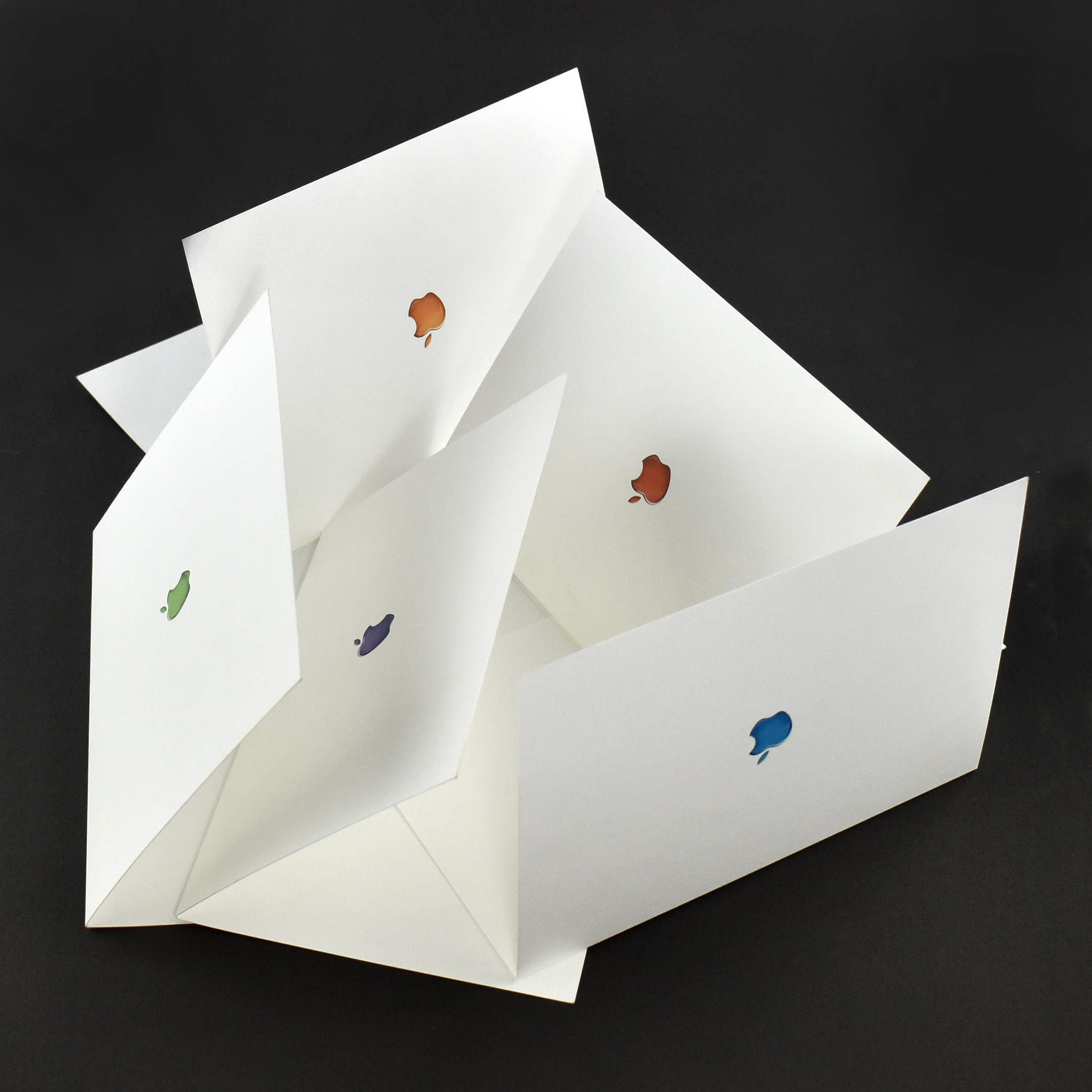
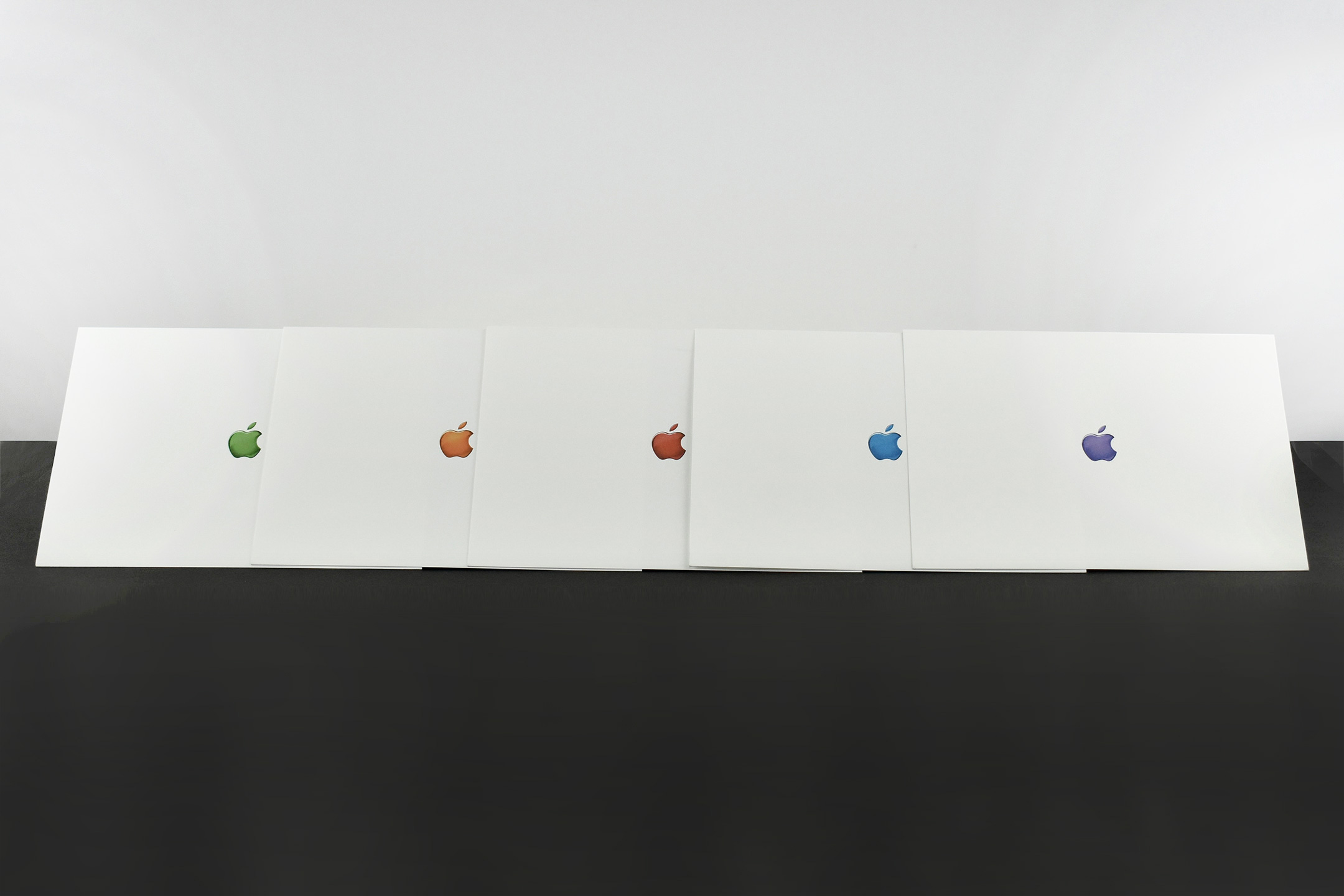
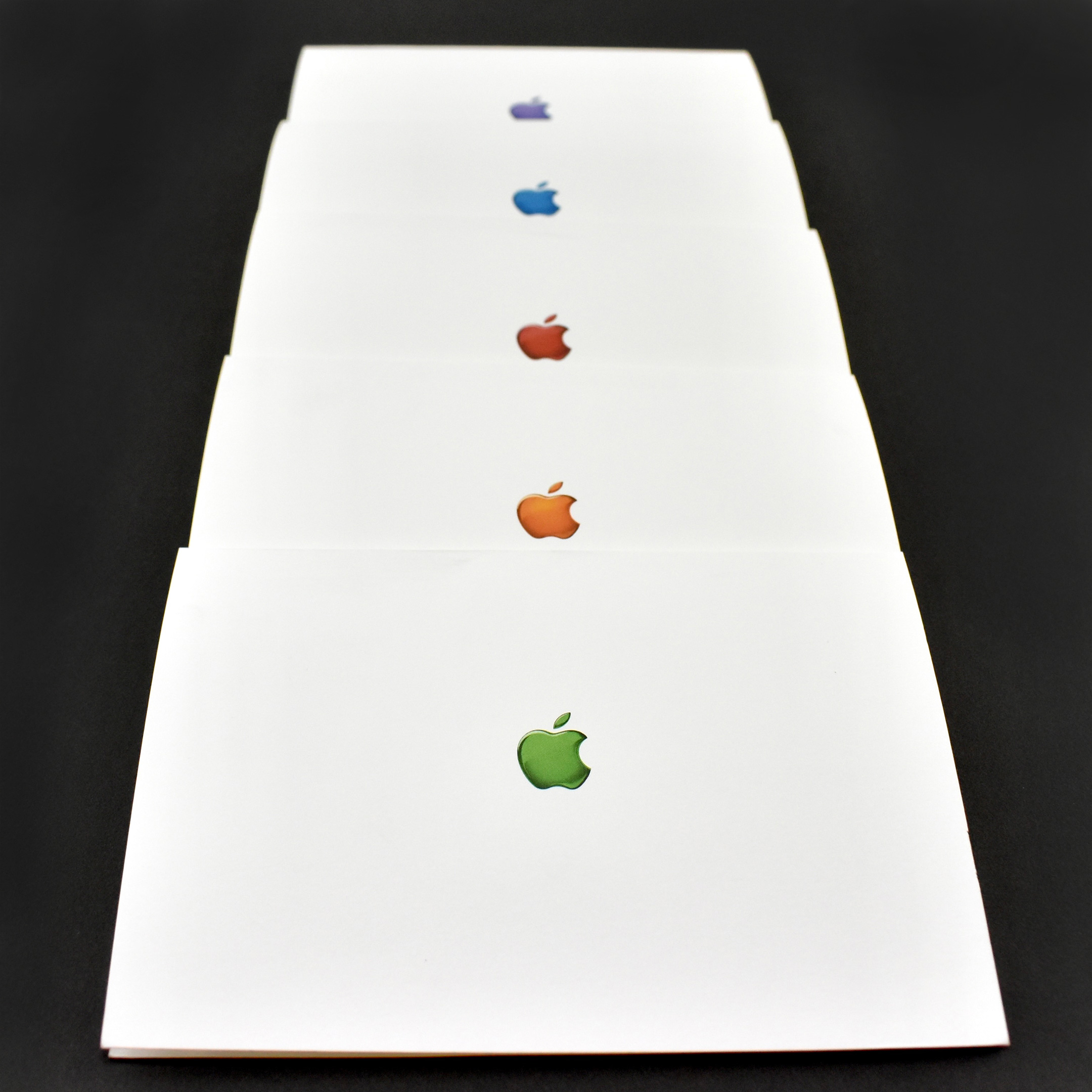
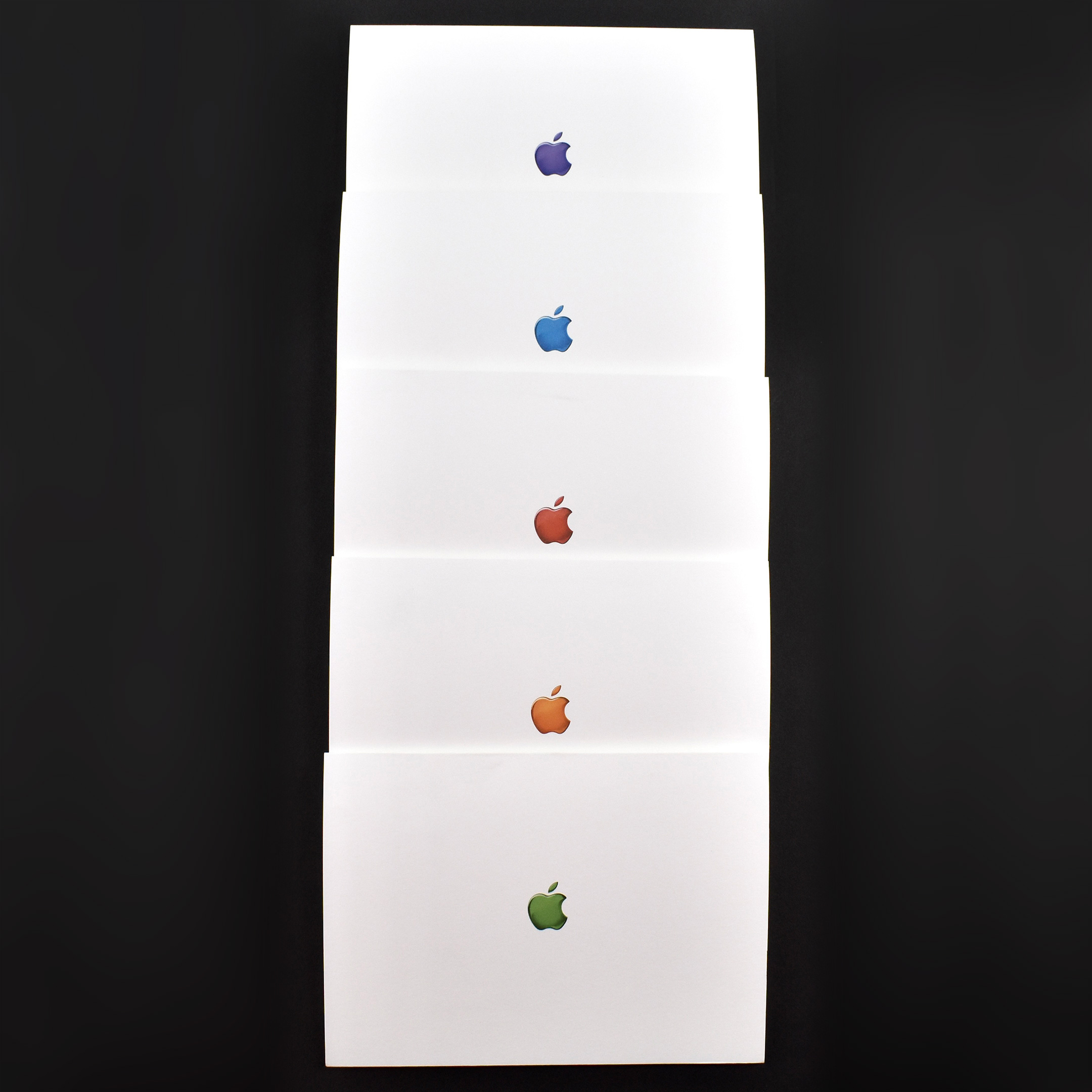
This set of white notecards features five different designs. Each card measures 4.25 x 6.25 inches, and the front-center of each card has a color Apple logo that is approximately one-half inch wide.
The Apple logos are stylized to appear as though they are partially transparent. The colors resemble the “fruit” iMac G3 colors that were released on January 5, 1999: Blueberry (blue), Grape (purple), Tangerine (orange), Lime (green), and Strawberry (red).
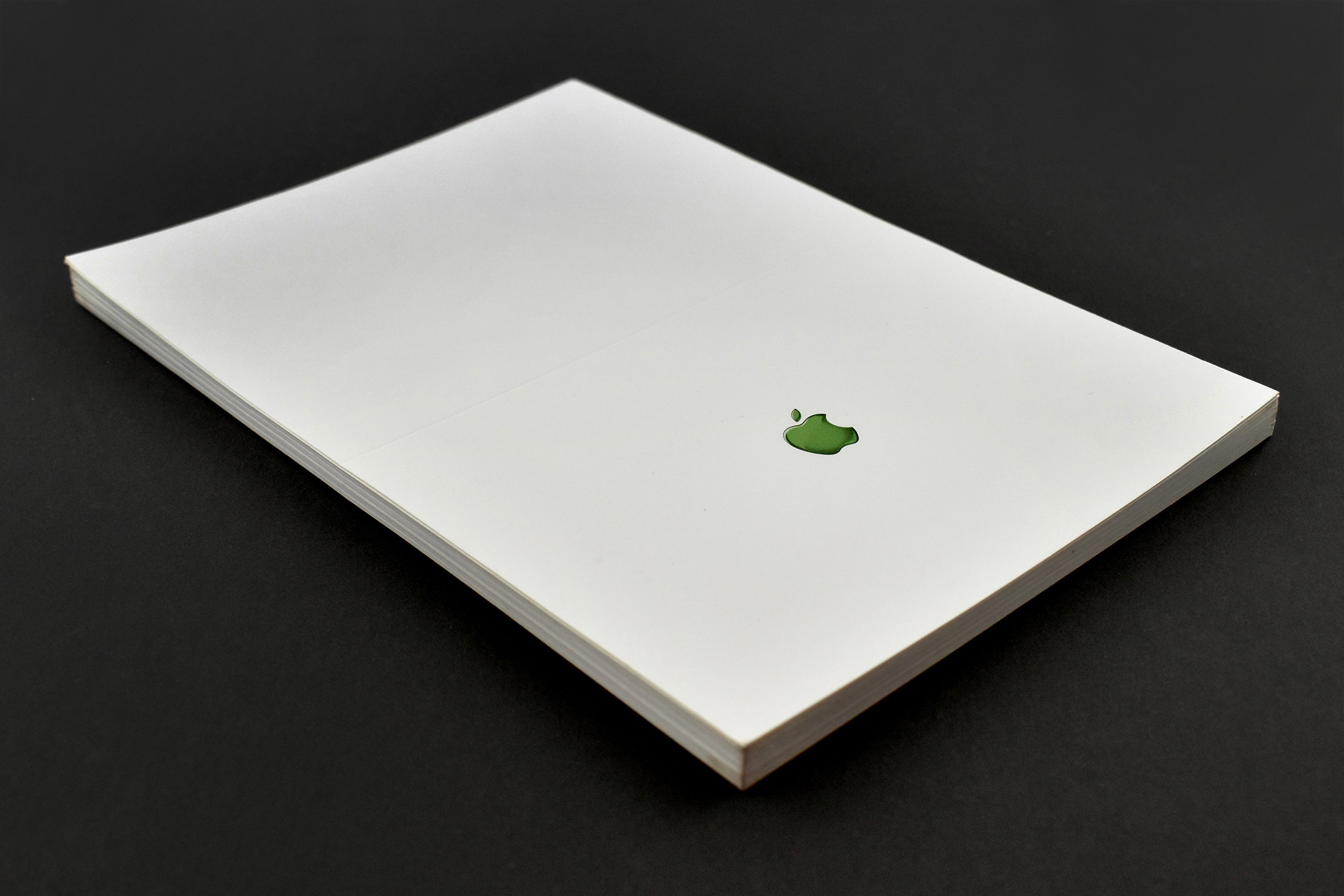
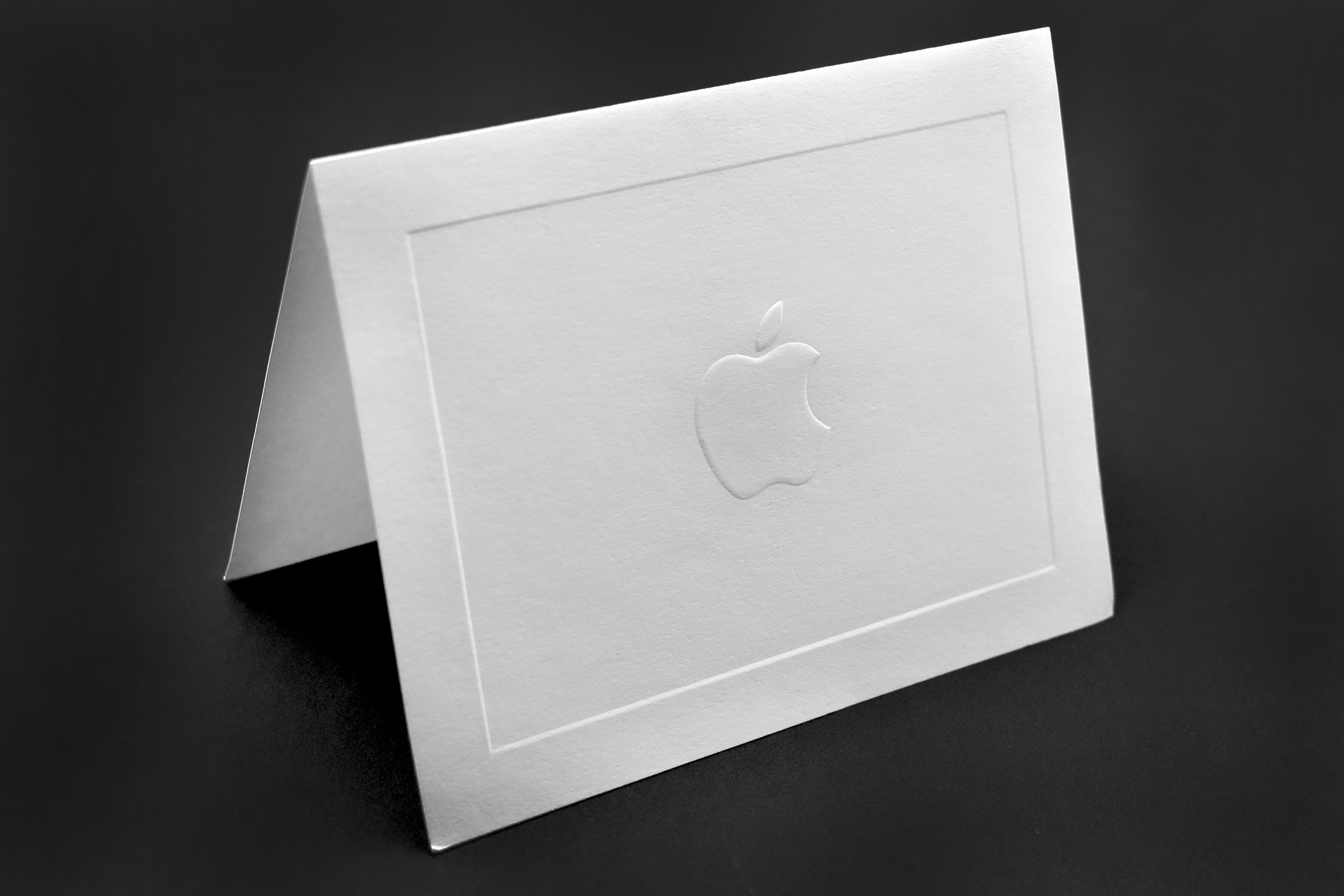
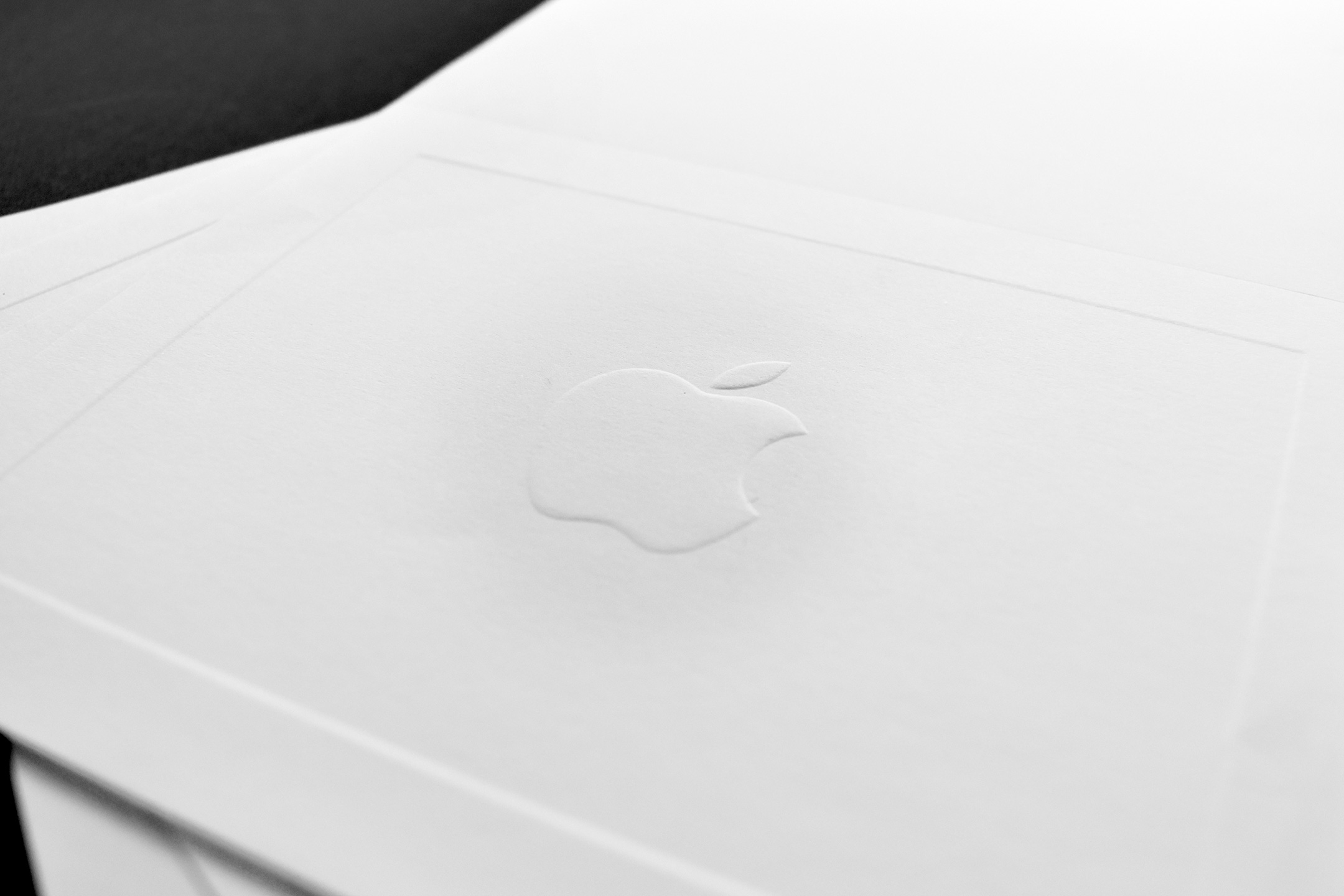
This set of white notecards measures 5.5 x 4.25 inches and features a 1-inch embossed Apple logo on the front center. The front of the notecard is bordered by a one.half-inch embossed border.
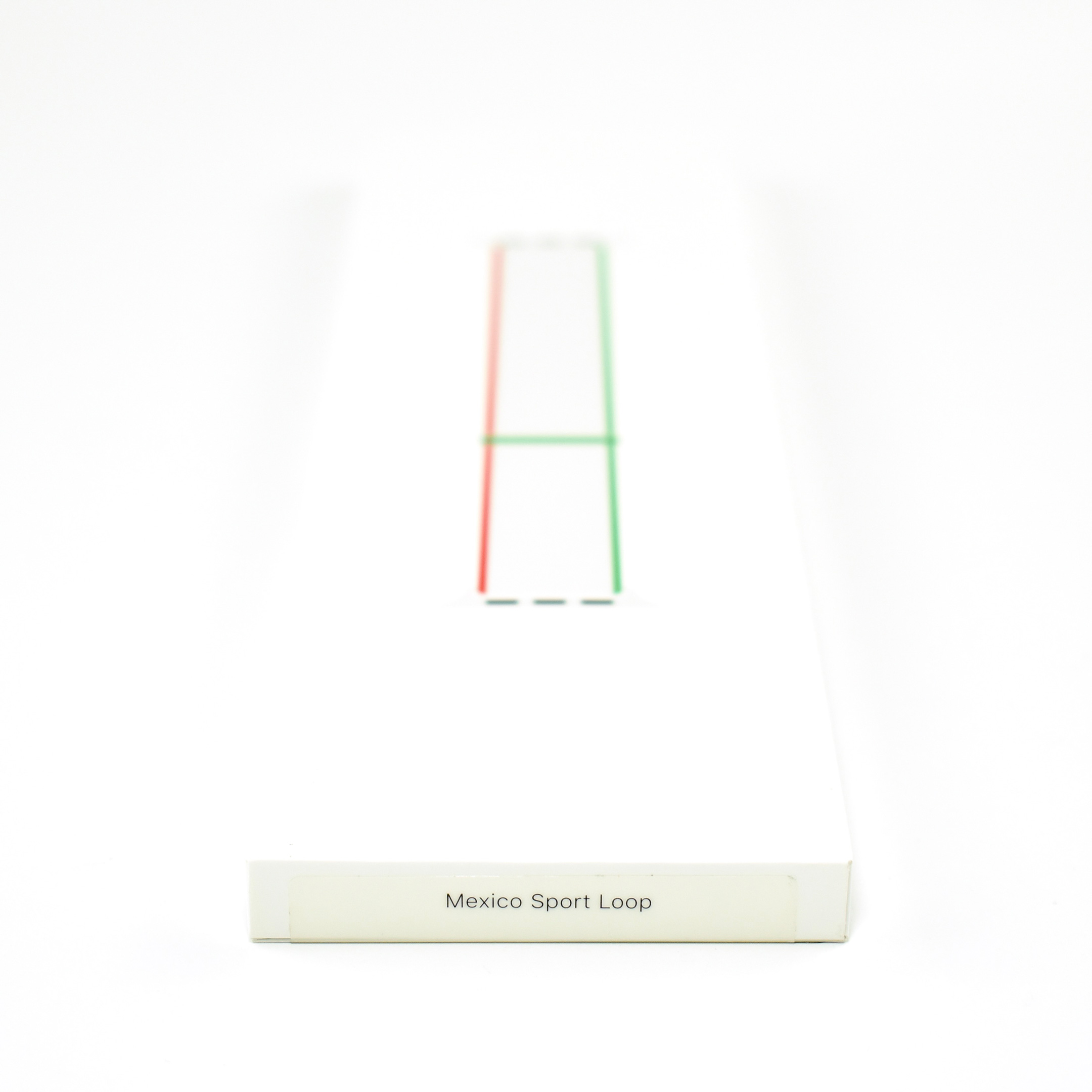
The International Collection Sport Loop was released at the time the Summer Olympics were played in 2021 (referred to as the 2020 Olympics due to the COVID-19 delay). The bands came in 22 designs “representing nations across the globe, each with a downloadable matching watch face.”
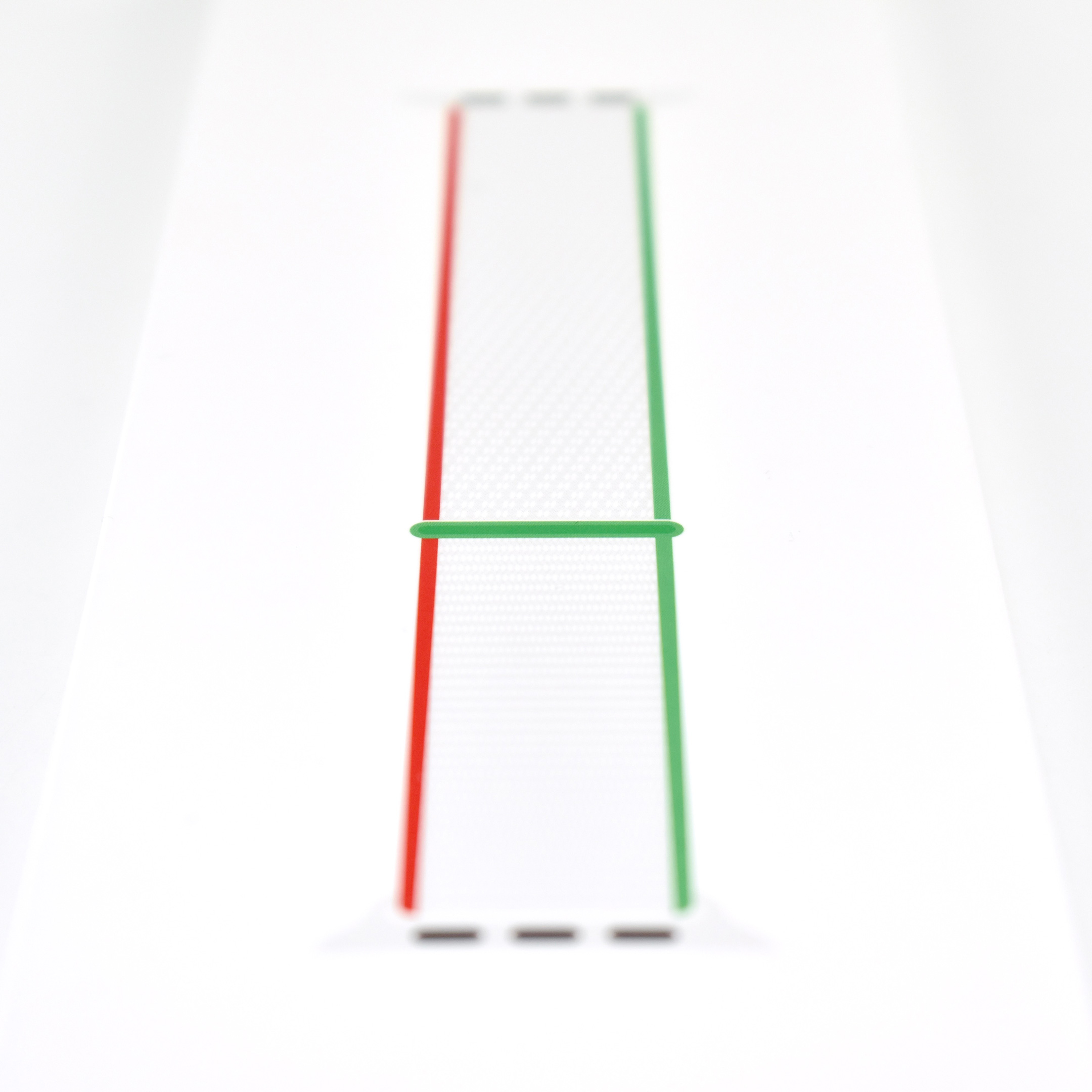
The bands used the Sport Loop design and were described by Apple as, “Soft, breathable, and lightweight, it features a hook-and-loop fastener for quick and easy adjustment. The double-layer nylon weave has dense loops on the skin side that provide soft cushioning while allowing moisture to escape. On the reverse side, the attachment loops are securely anchored for superior durability.”
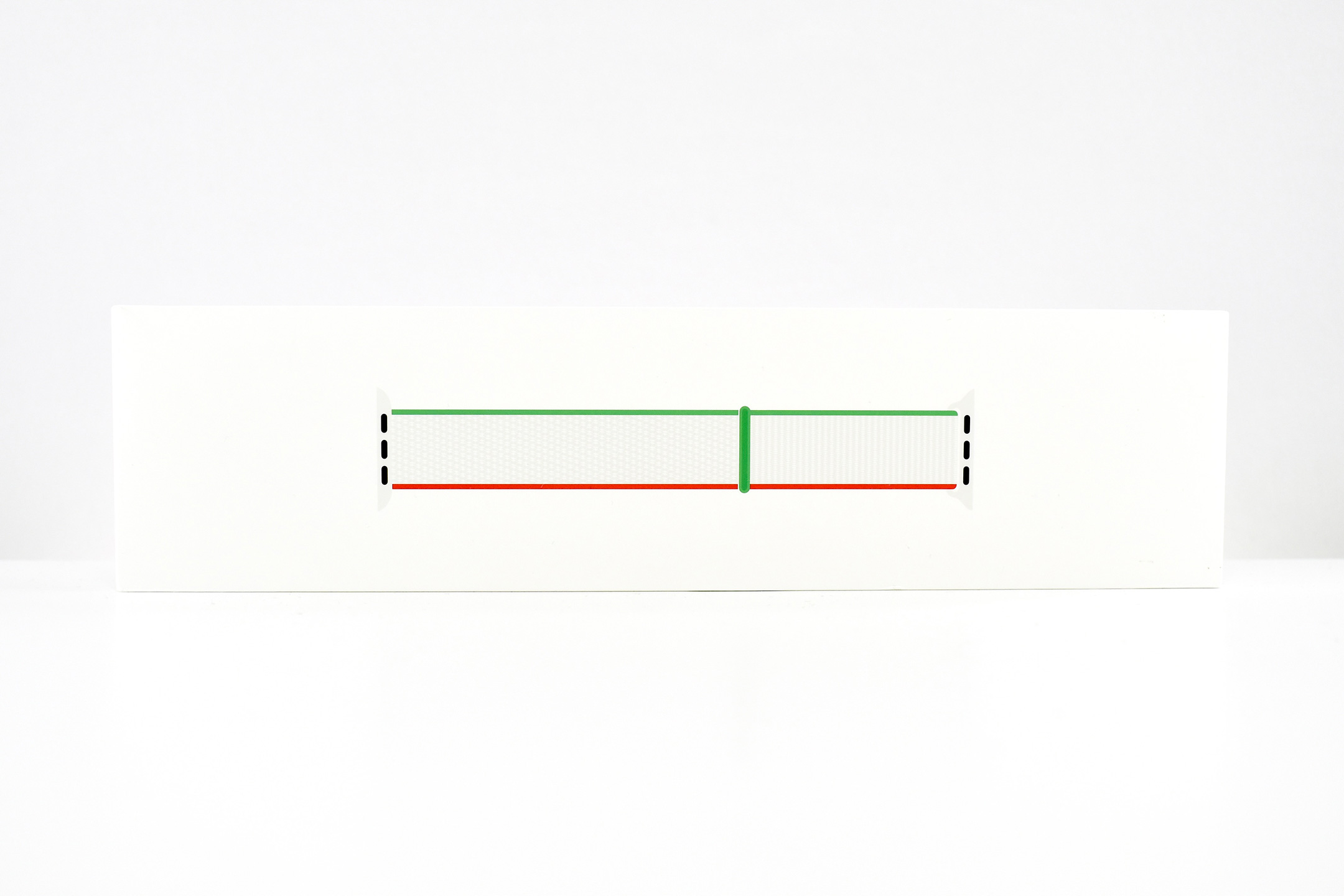
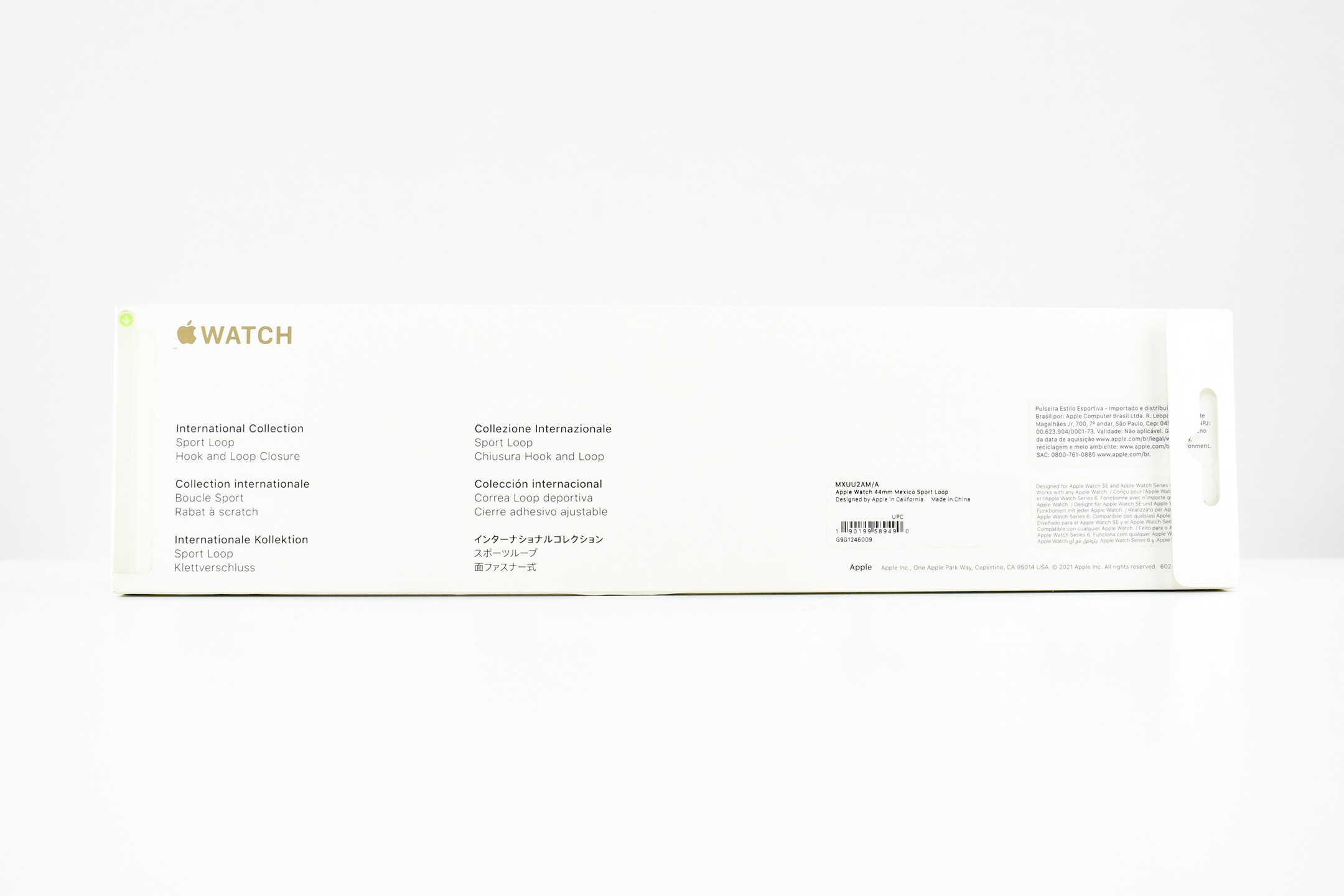
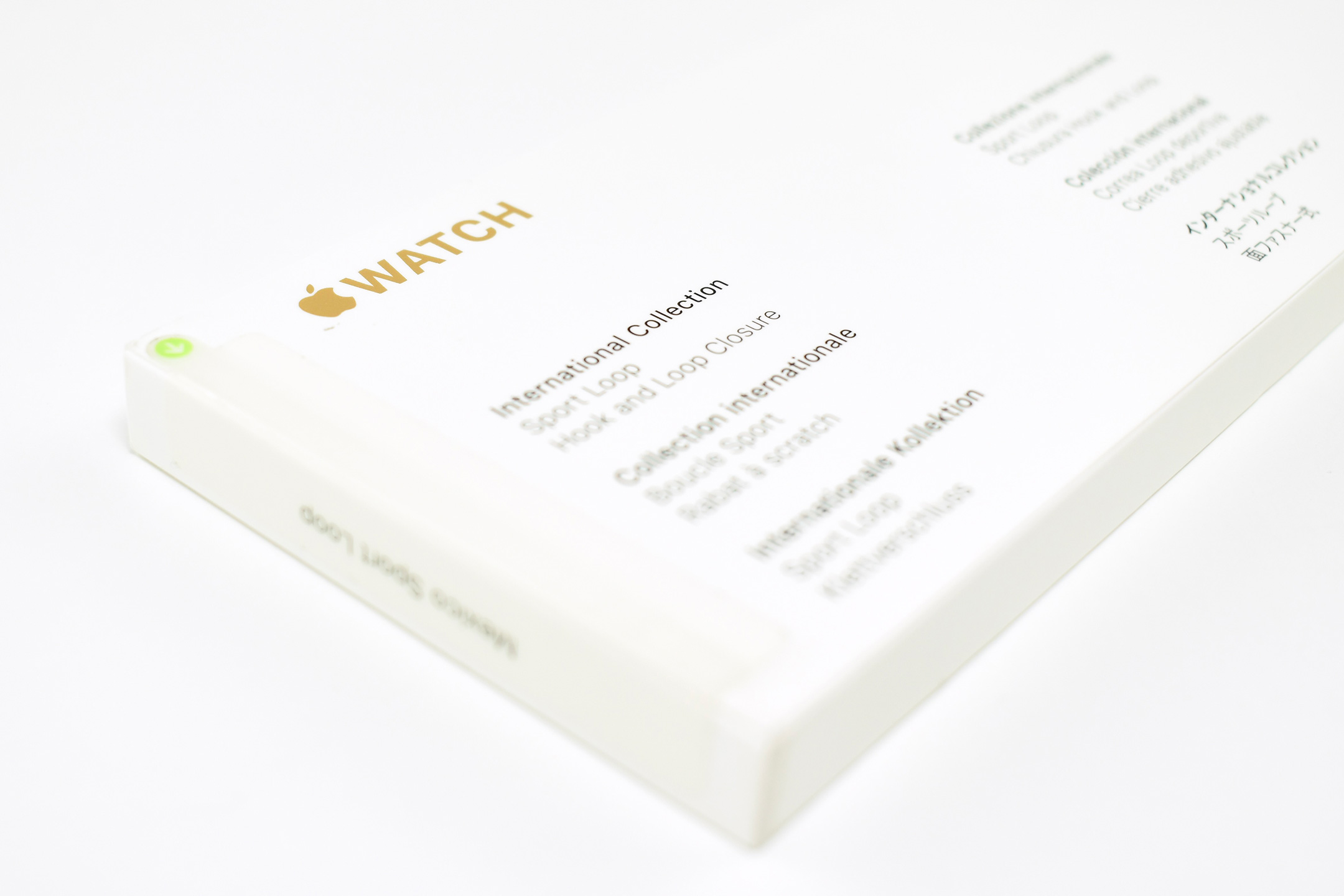
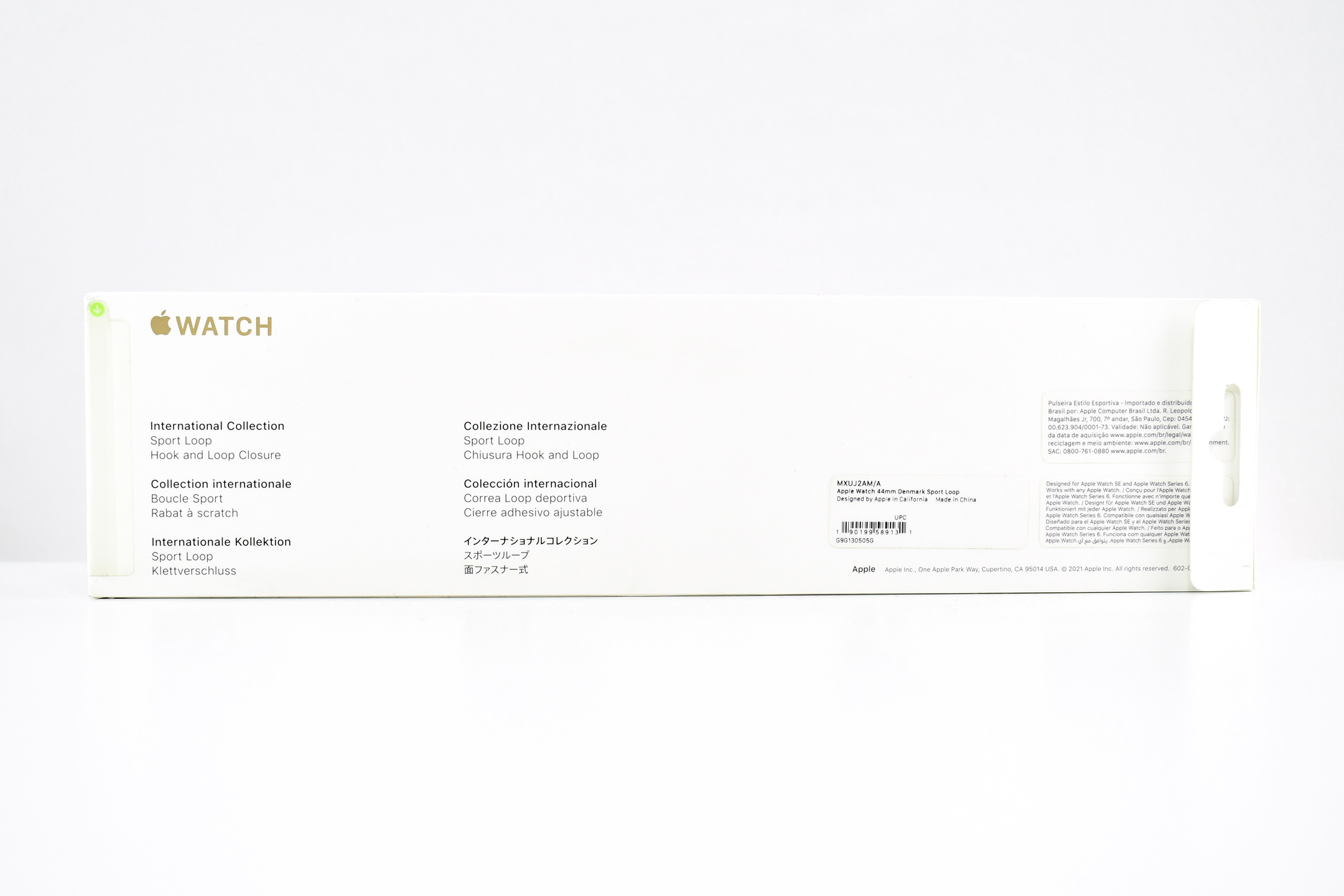
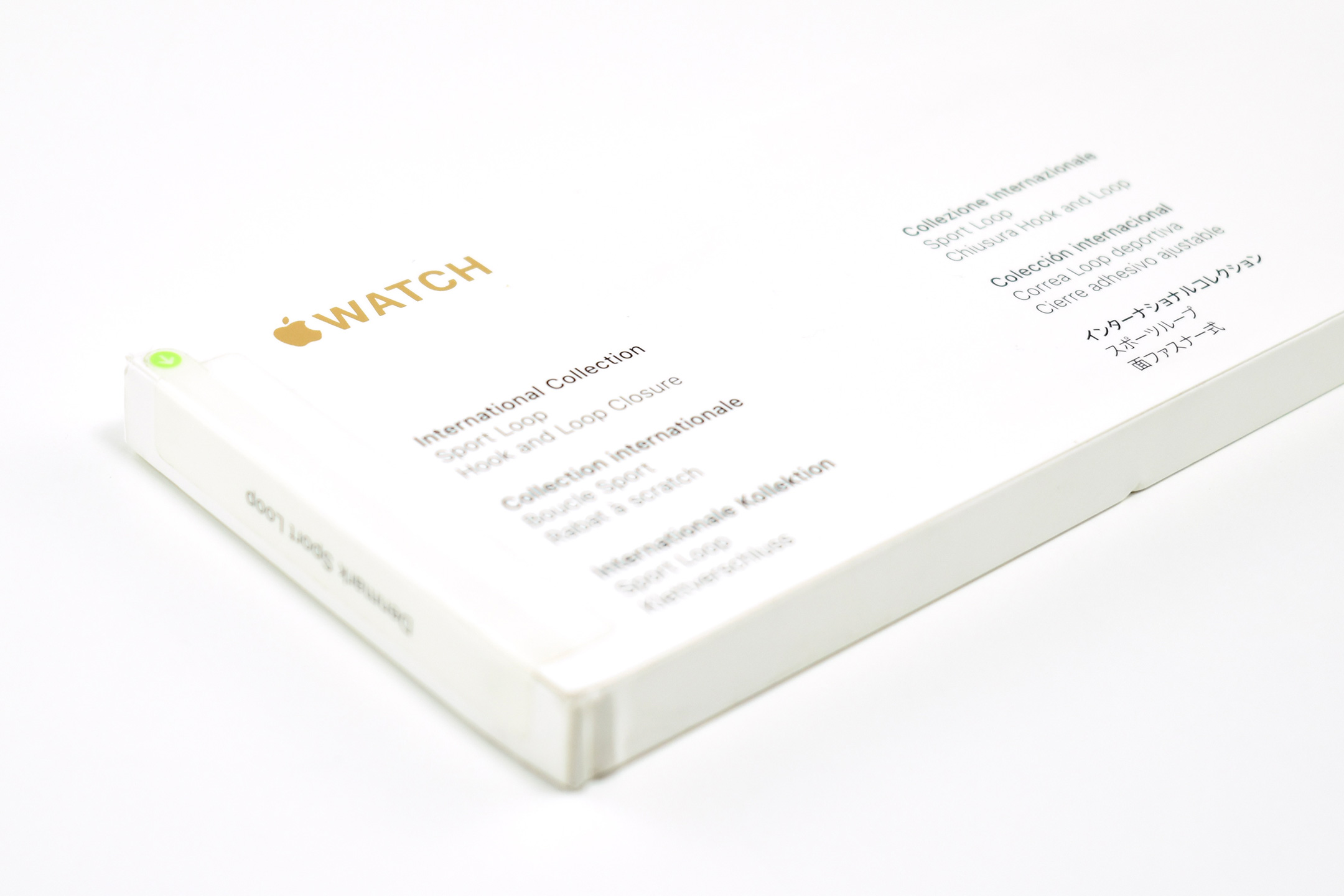
The packaging for each band was customized (compared to the typical Sport Loop packaging) and featured the Apple Watch logo on the box exterior in metallic gold (presumably a reference to Olympic gold medals). The interior packaging used the design of the sport band (as opposed to the generic design used in other Sport Loop designs) and included an App Clip Code (Apple’s custom circular QR Code design) that led directly to a downloadable Watch face that matched the band.
According to an Apple Newsroom release from June 29, 2021:
“To celebrate the indescribable drive and competitive spirit of all athletes and fans, Apple is launching the International Collection bands for Apple Watch, featuring 22 limited-edition Sport Loop bands with colorful designs that represent those nations across the globe. Each band also features a matching downloadable Stripes watch face showcasing color combinations that customers around the world can use to personalize their Apple Watch and boldly show their country support.
The soft, breathable, and lightweight International Collection Sport Loop bands are available representing the following countries: Australia, Belgium, Brazil, Canada, China, Denmark, France, Germany, Great Britain, Greece, Italy, Jamaica, Japan, Mexico, the Netherlands, New Zealand, Russia, South Africa, South Korea, Spain, Sweden, and the US.”
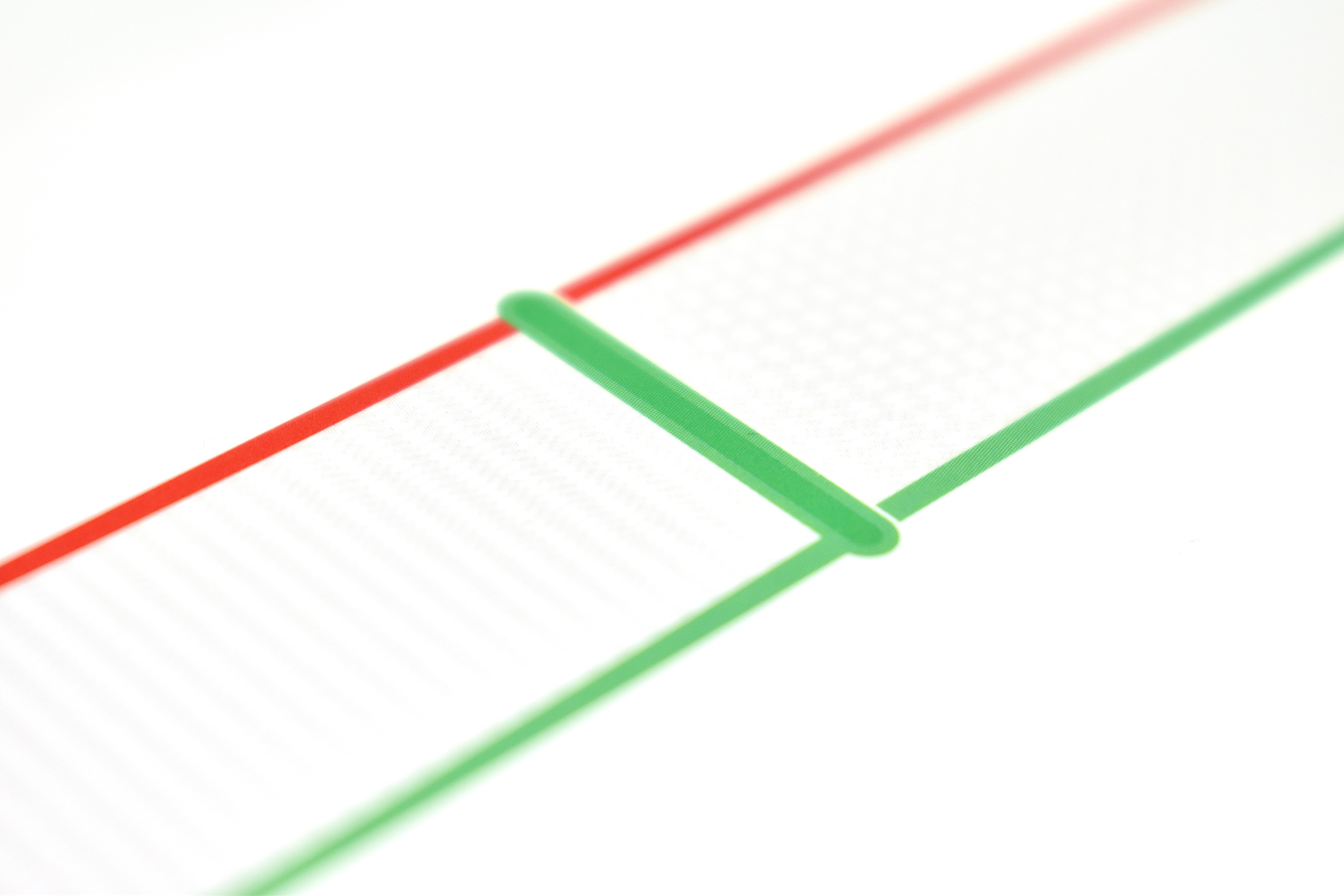
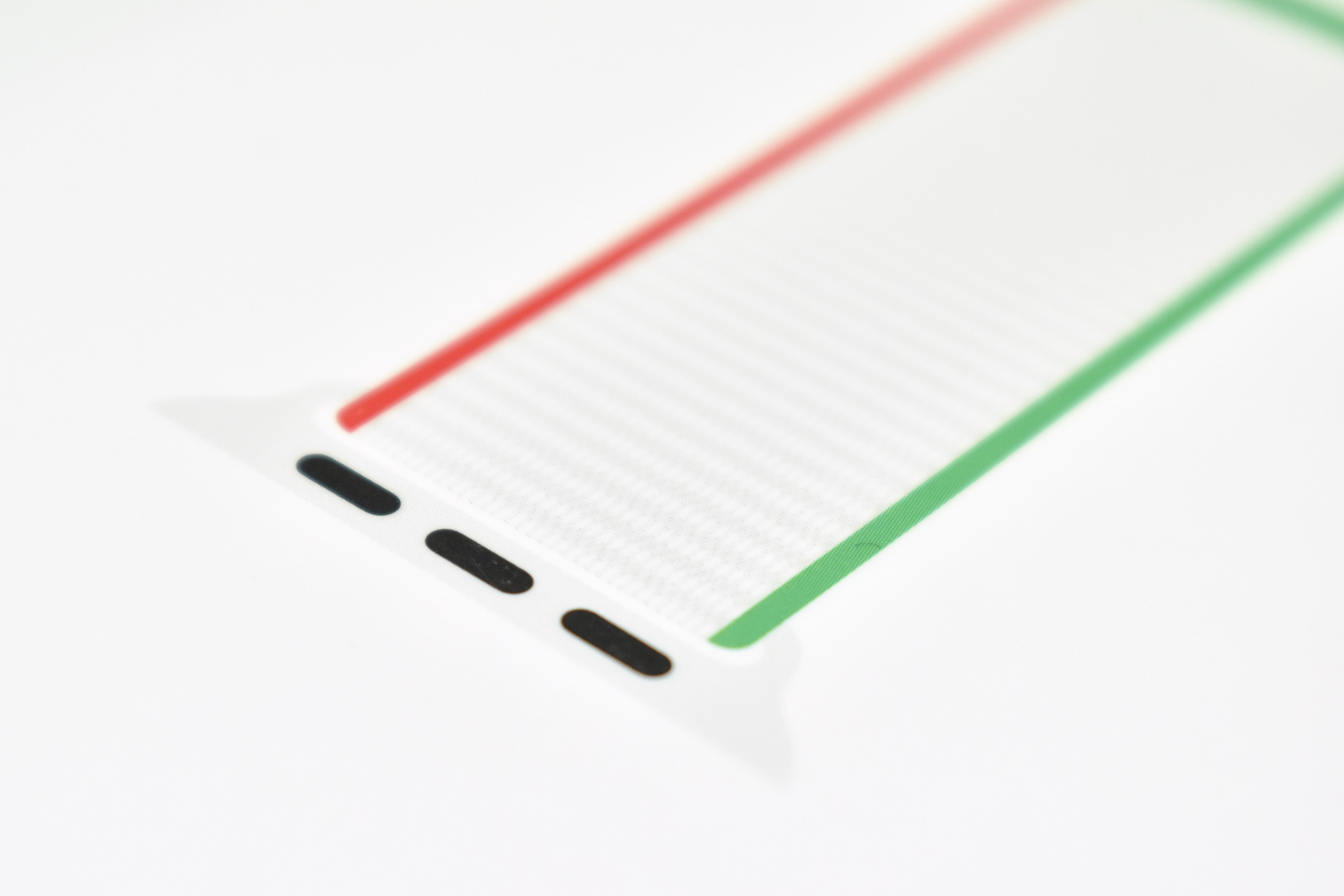
The colorful designs used a variety of designs including one-color bands, one- and two-color facing bands, and some bands were split vertically with two colors (a first for Apple Watch band designs). All bands used a contrasting edge color, and many bands featured contrasting plastic connectors/closure colors. Bands matched the flags of each country and featured two to five colors each.
These are my descriptions of each of the band designs:
Australia—2-sided bright green and yellow band; bright green edges; bright green plastic connectors/closure.
Belgium—yellow gold band; red edges; black plastic connectors/closure.
Brazil—bright green band; yellow edges; dark blue plastic connectors/closure.
Canada—vertical striped white and red band; white and red edges; white plastic connectors, white closure.
China—red band; yellow-gold edges; red plastic connectors, yellow-gold closure.
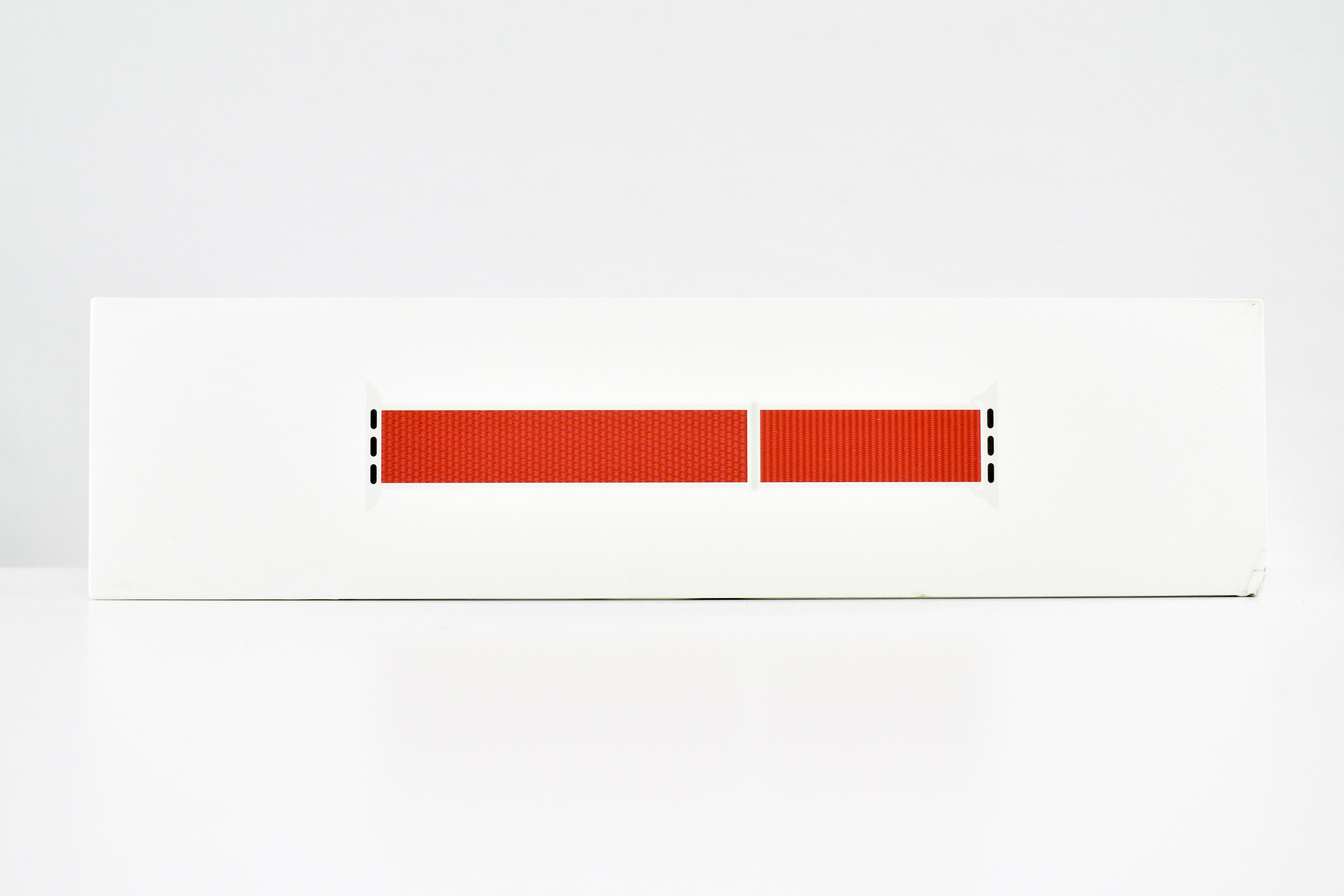
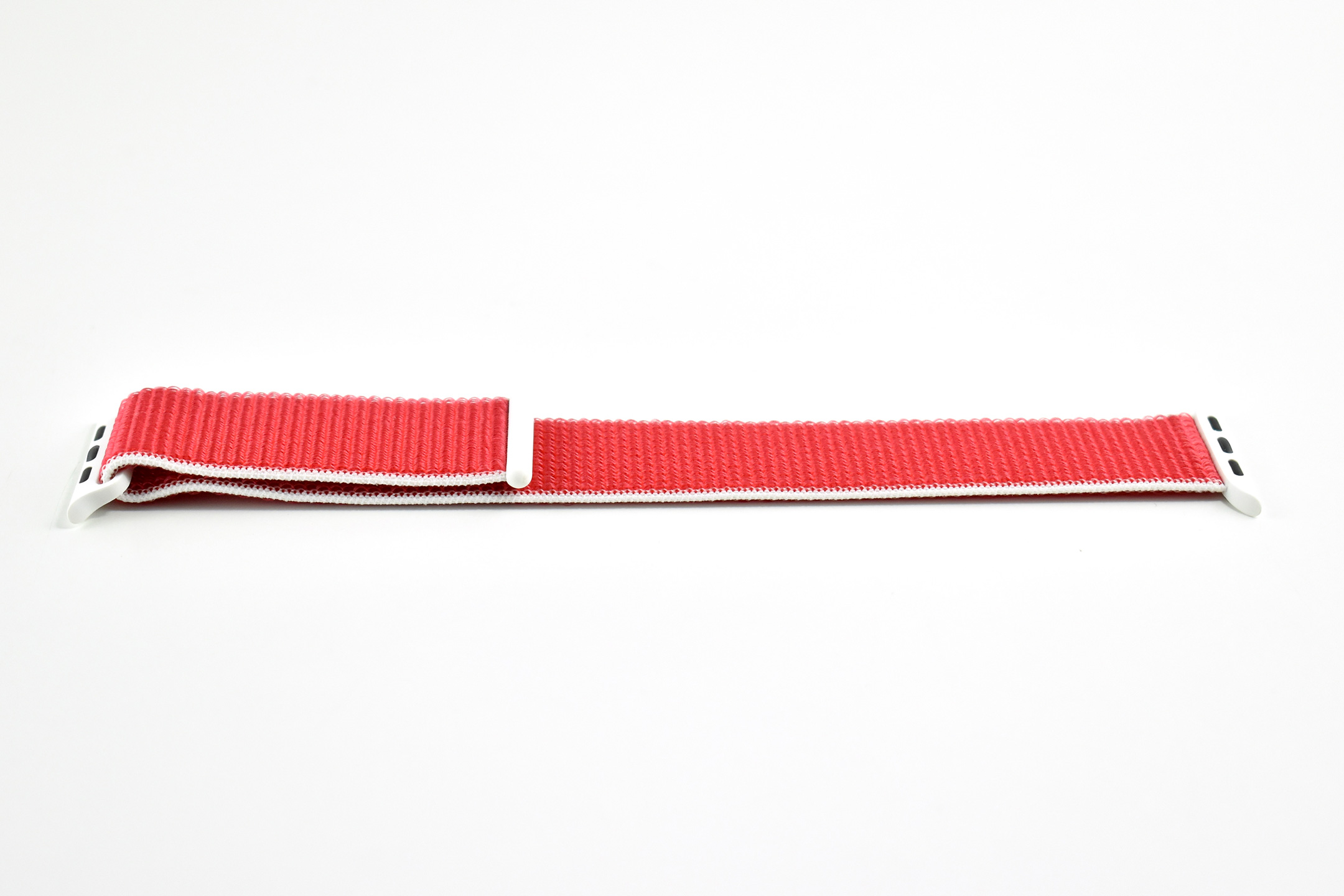
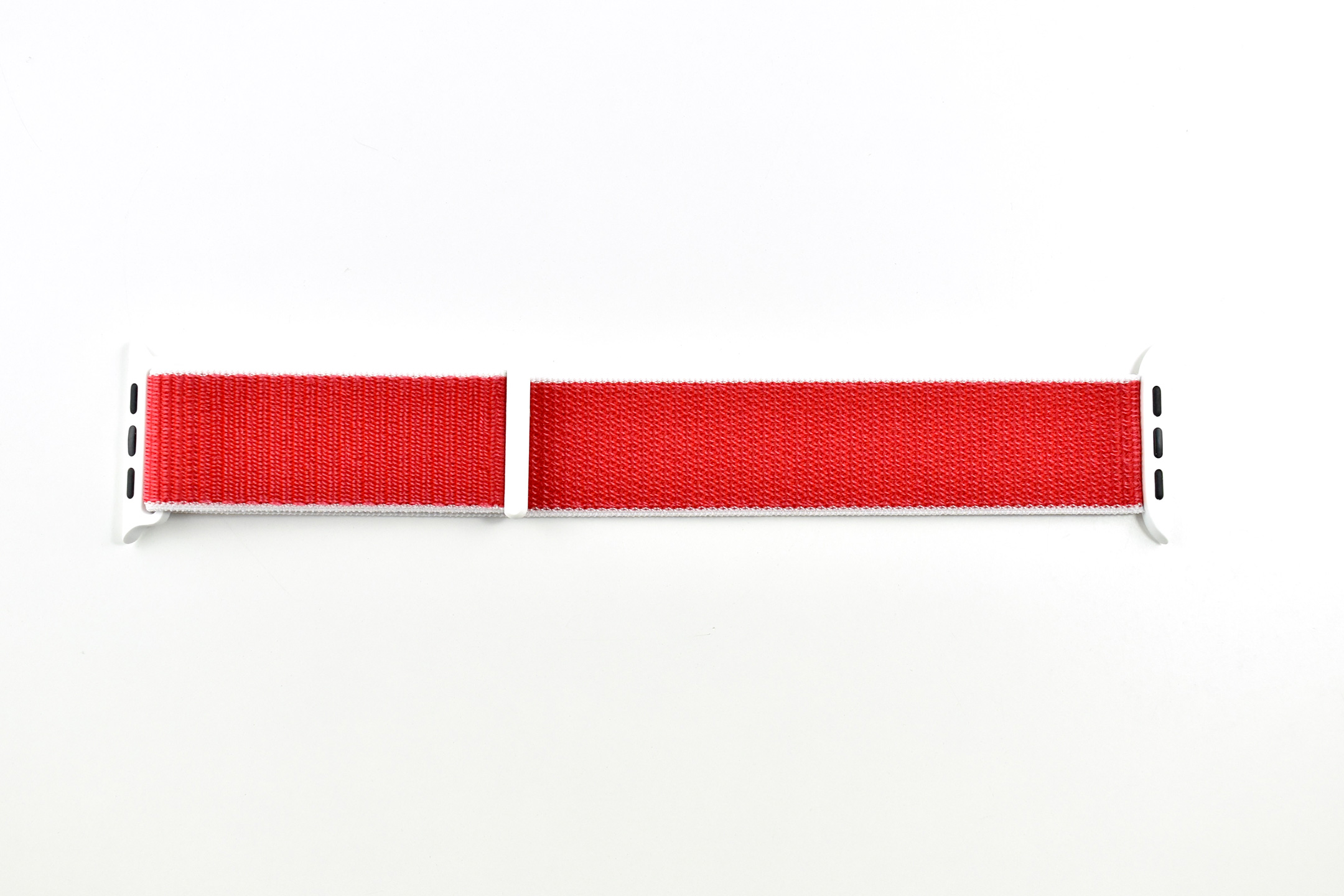
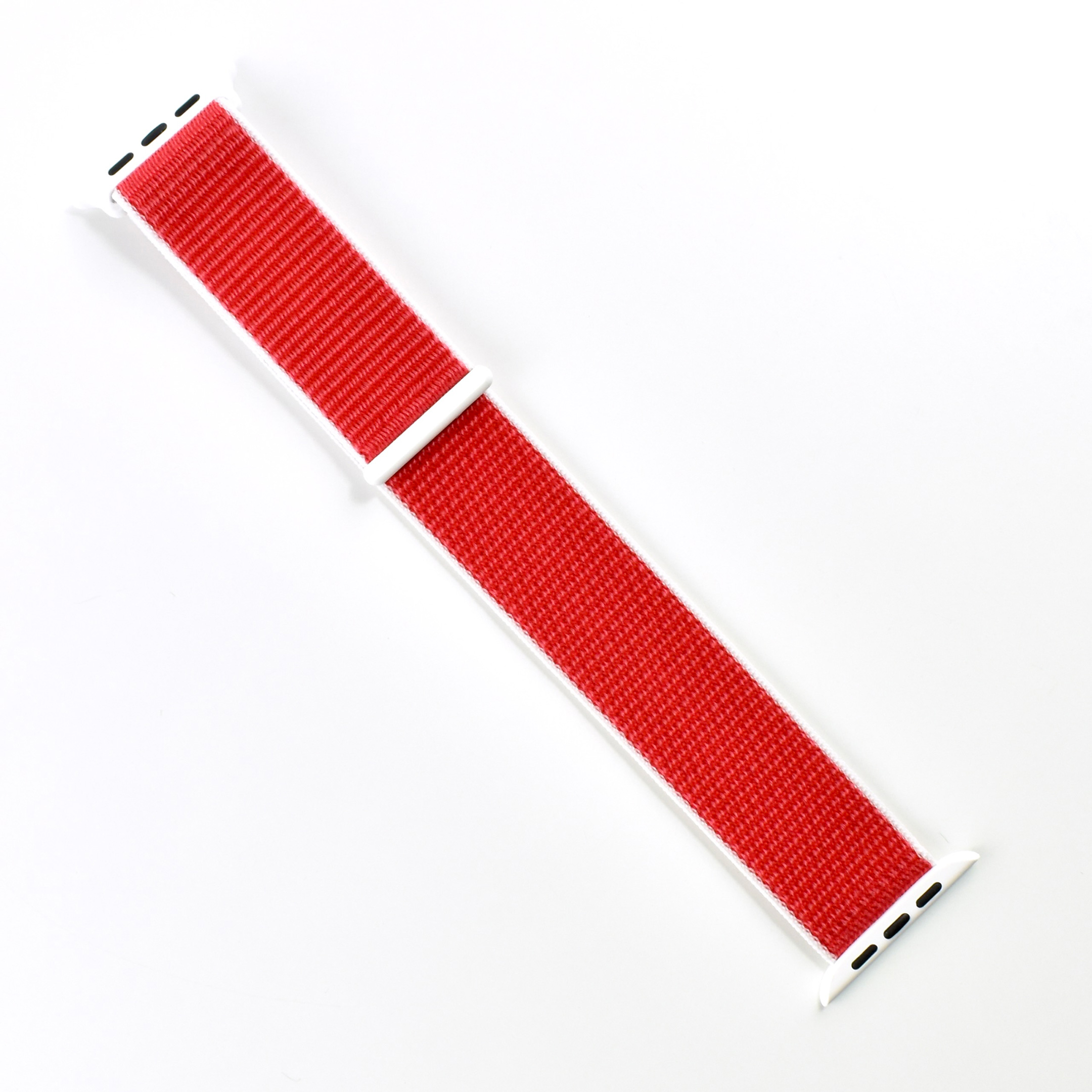
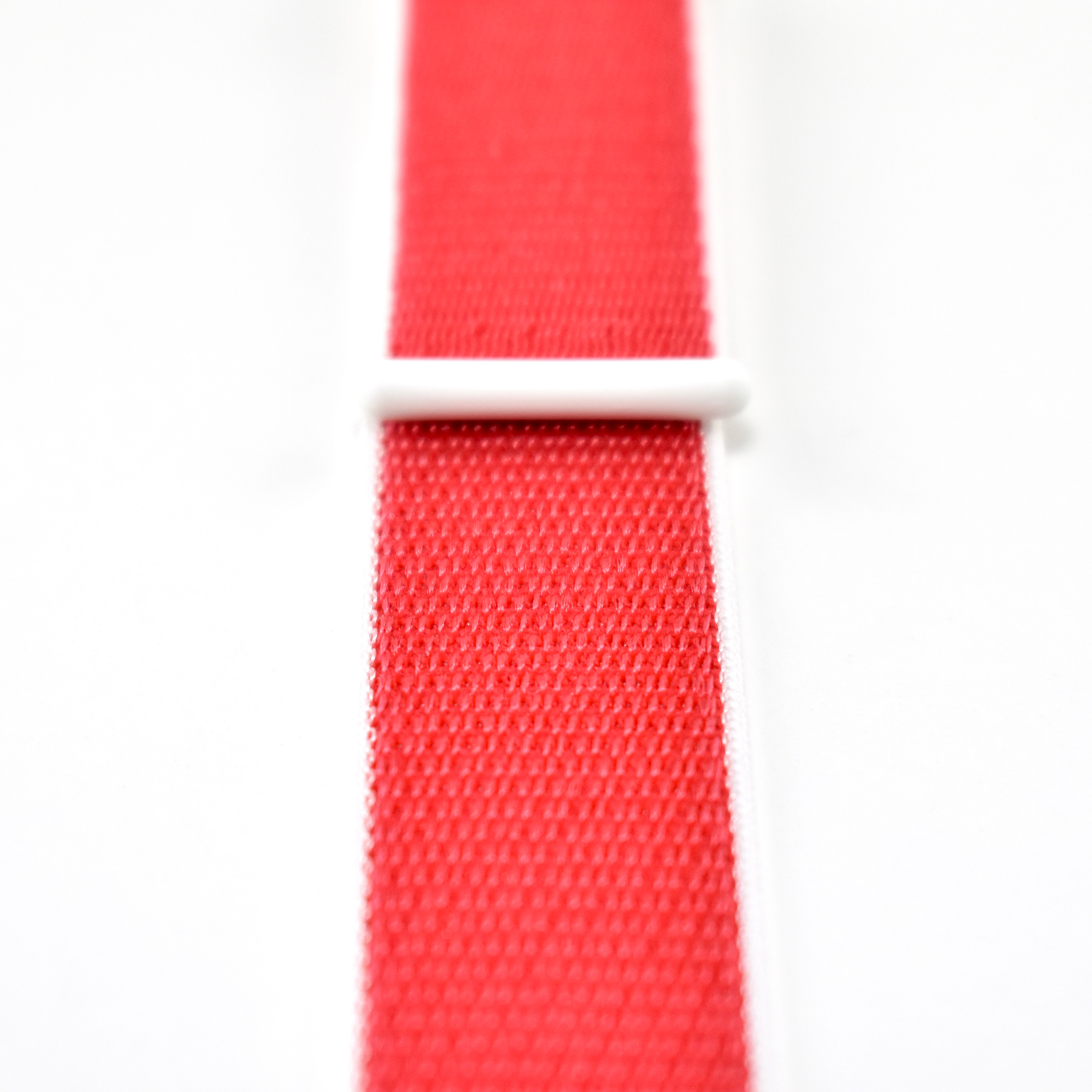
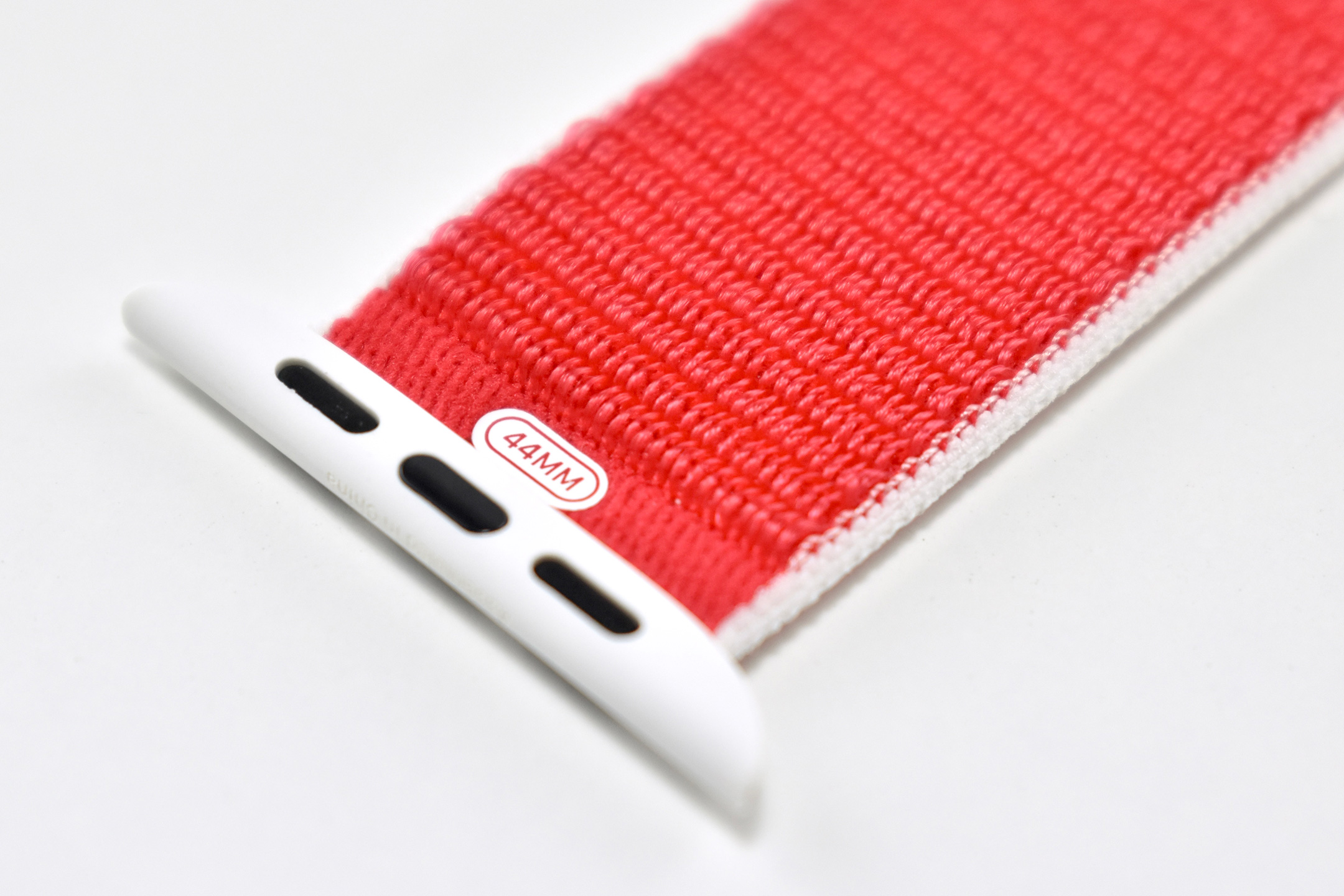
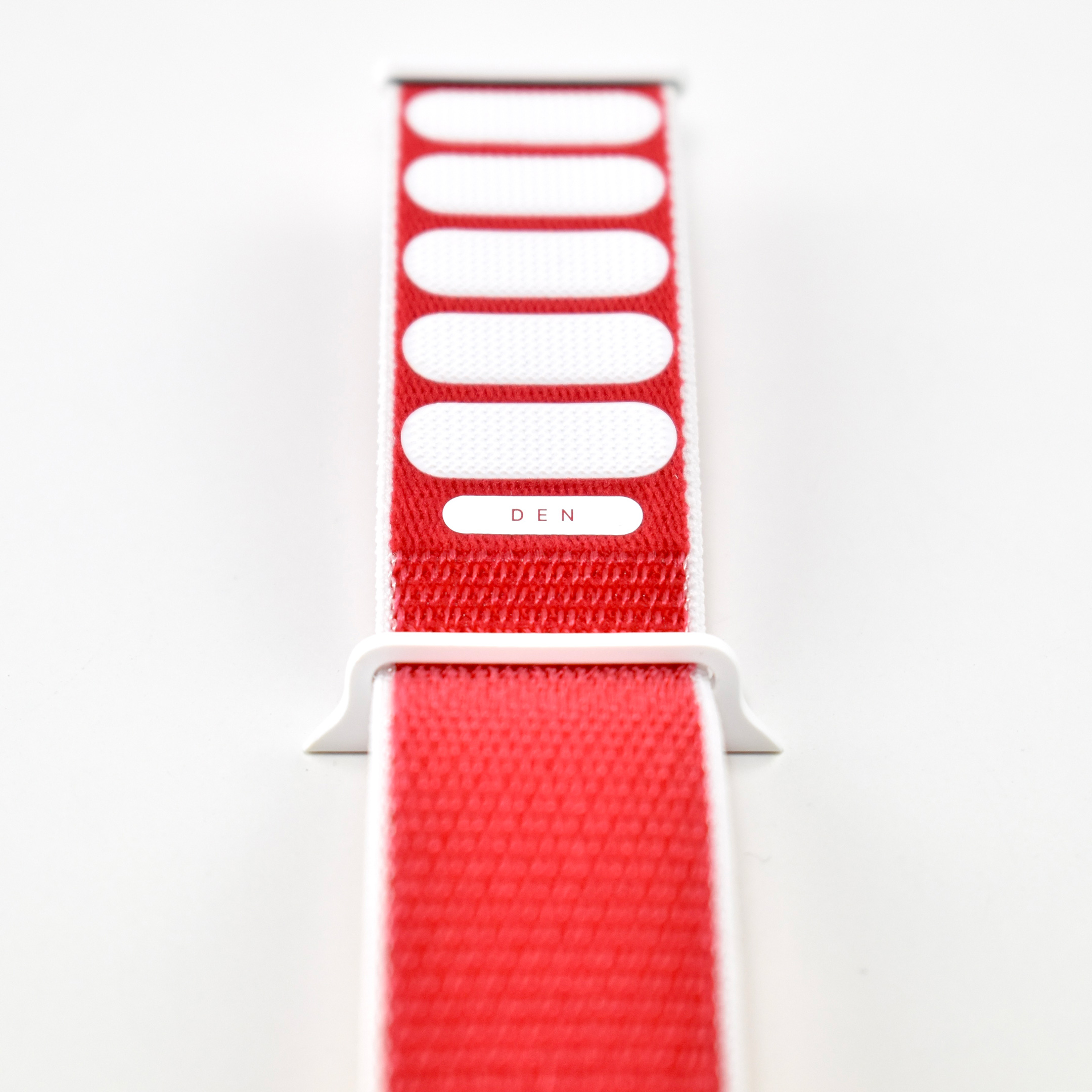
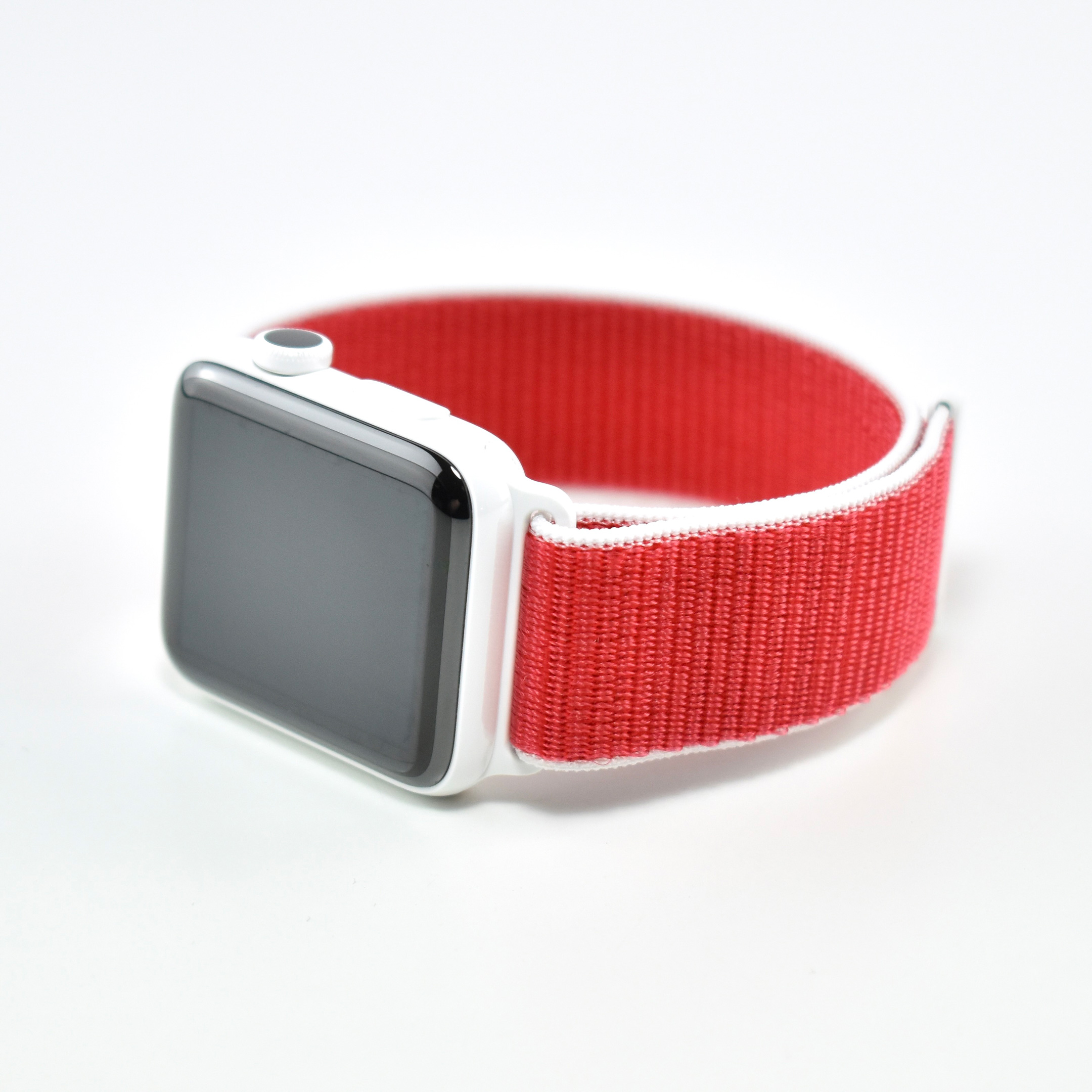
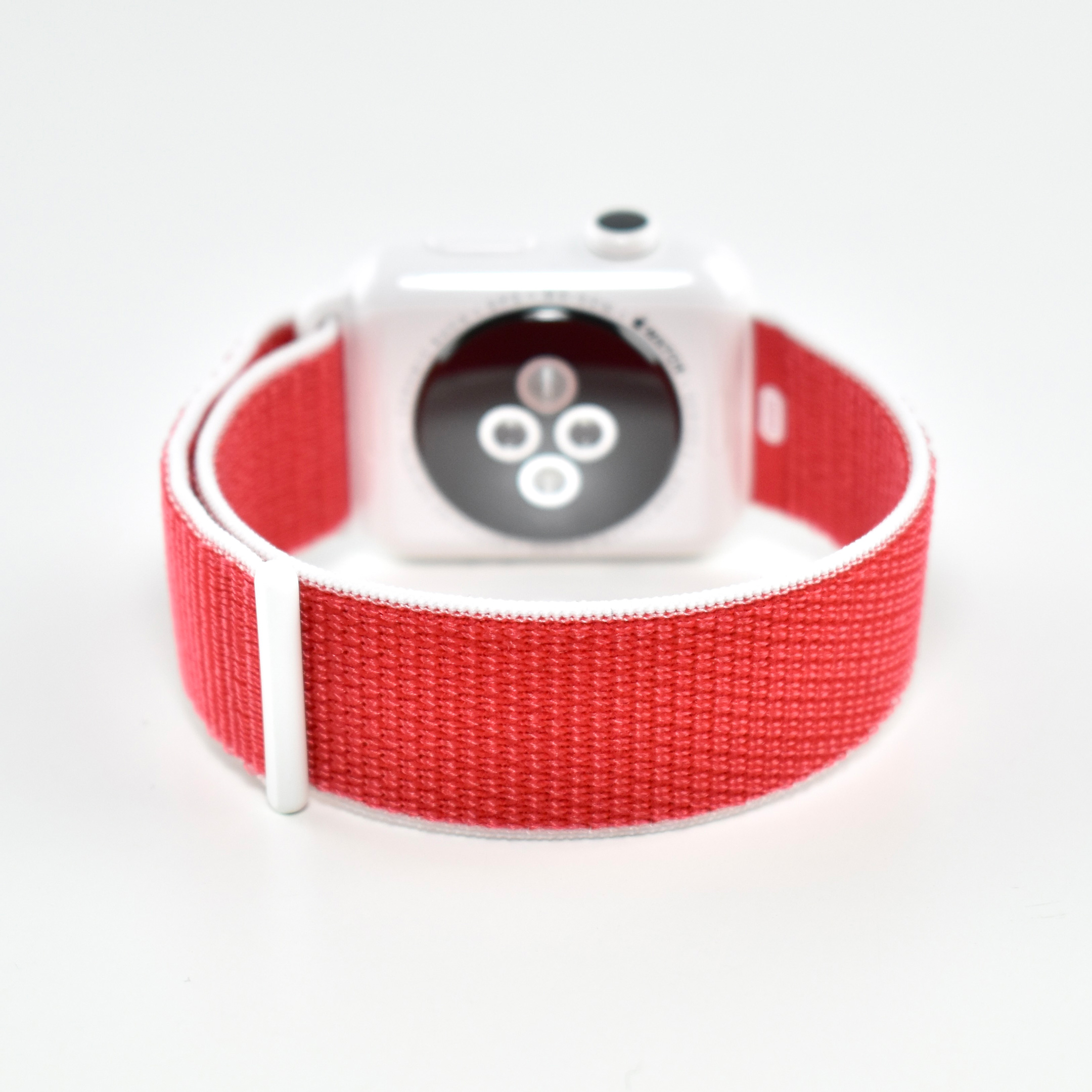
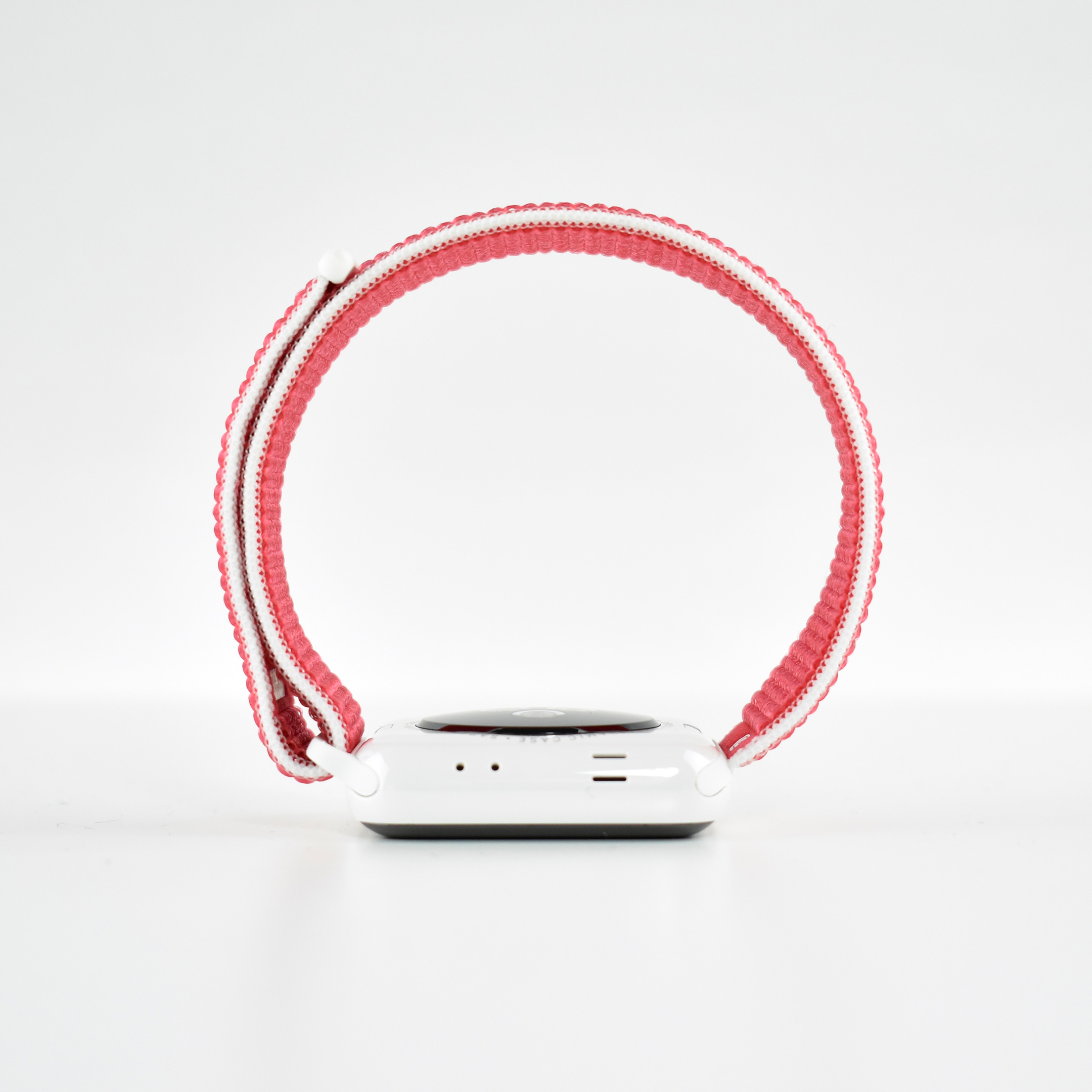
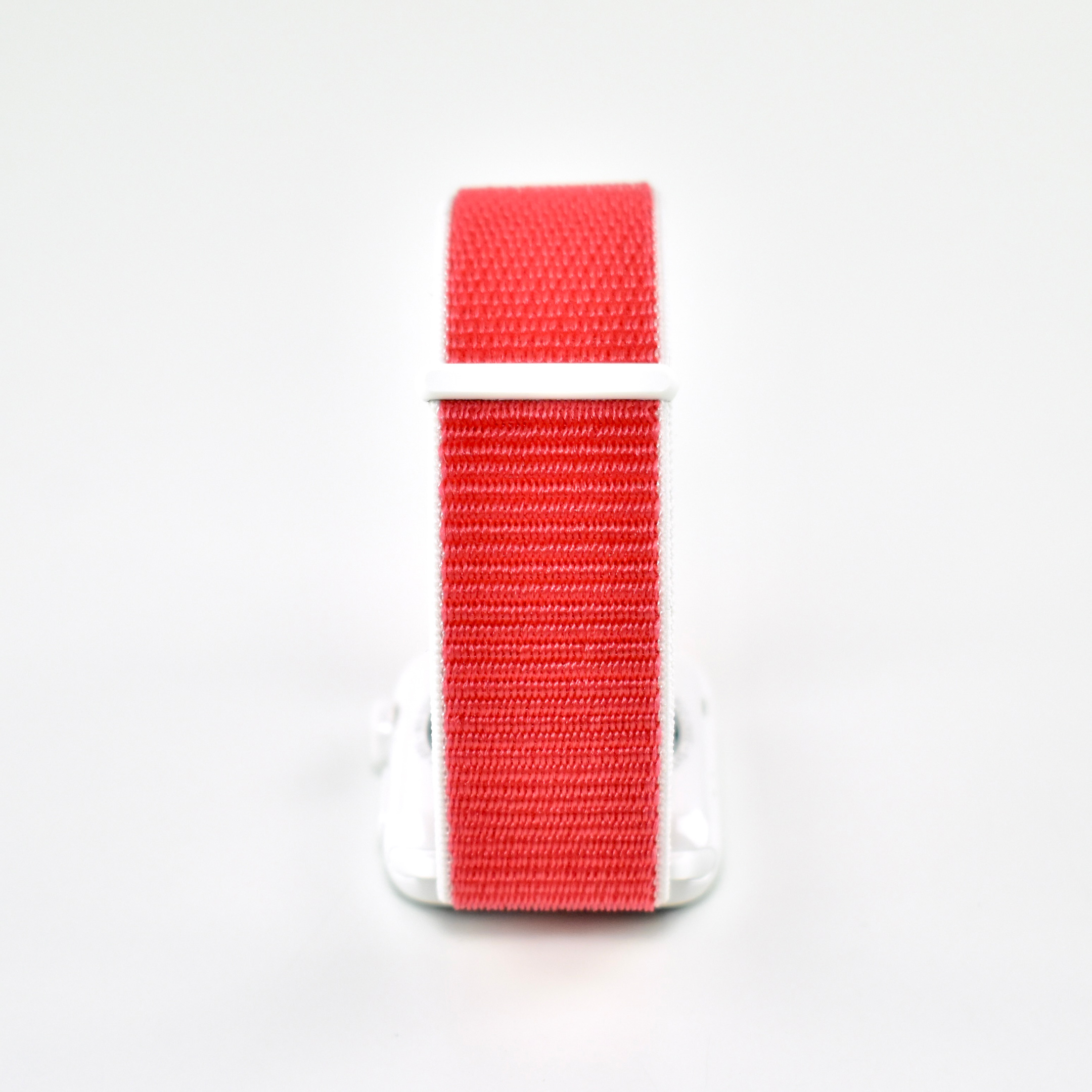
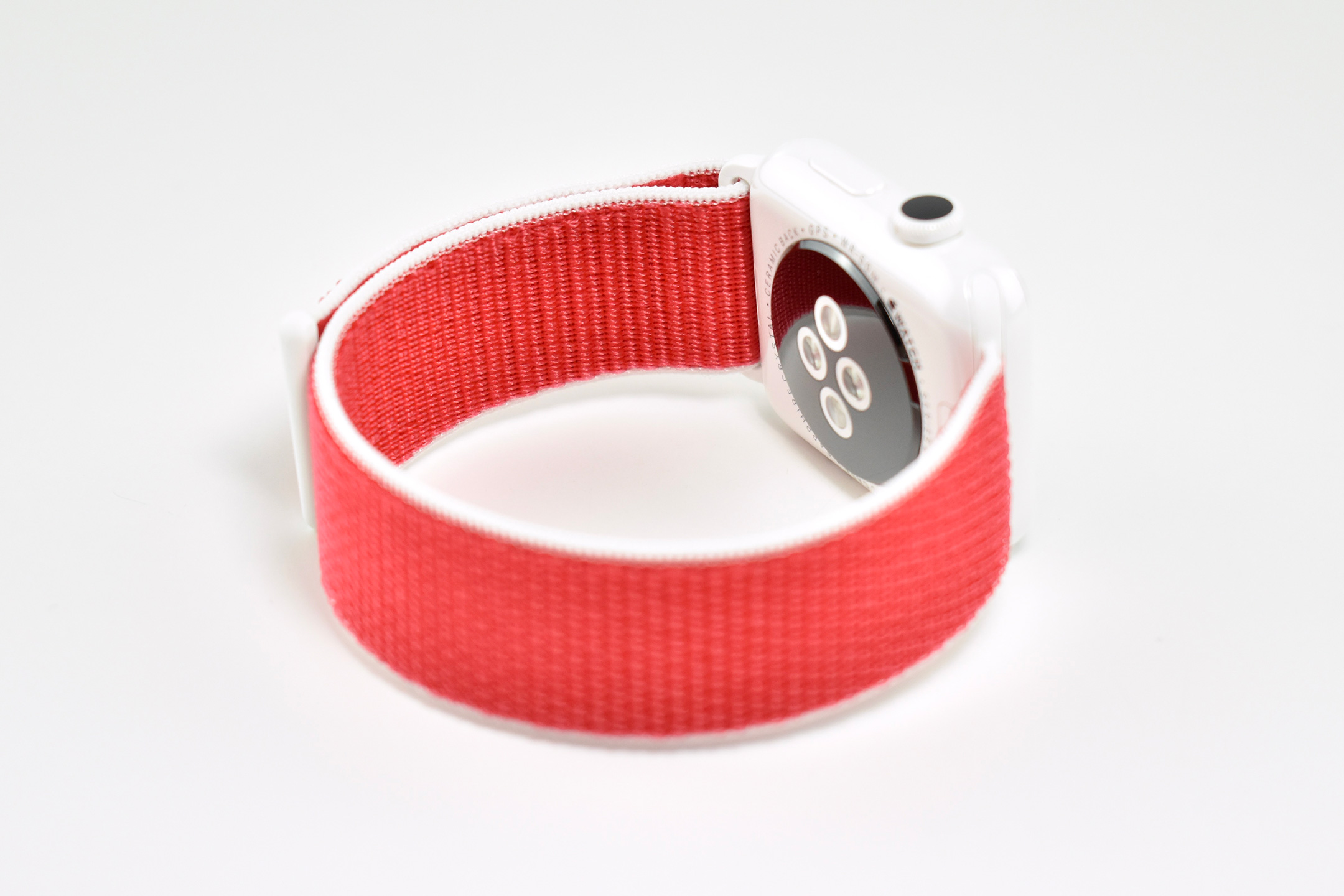
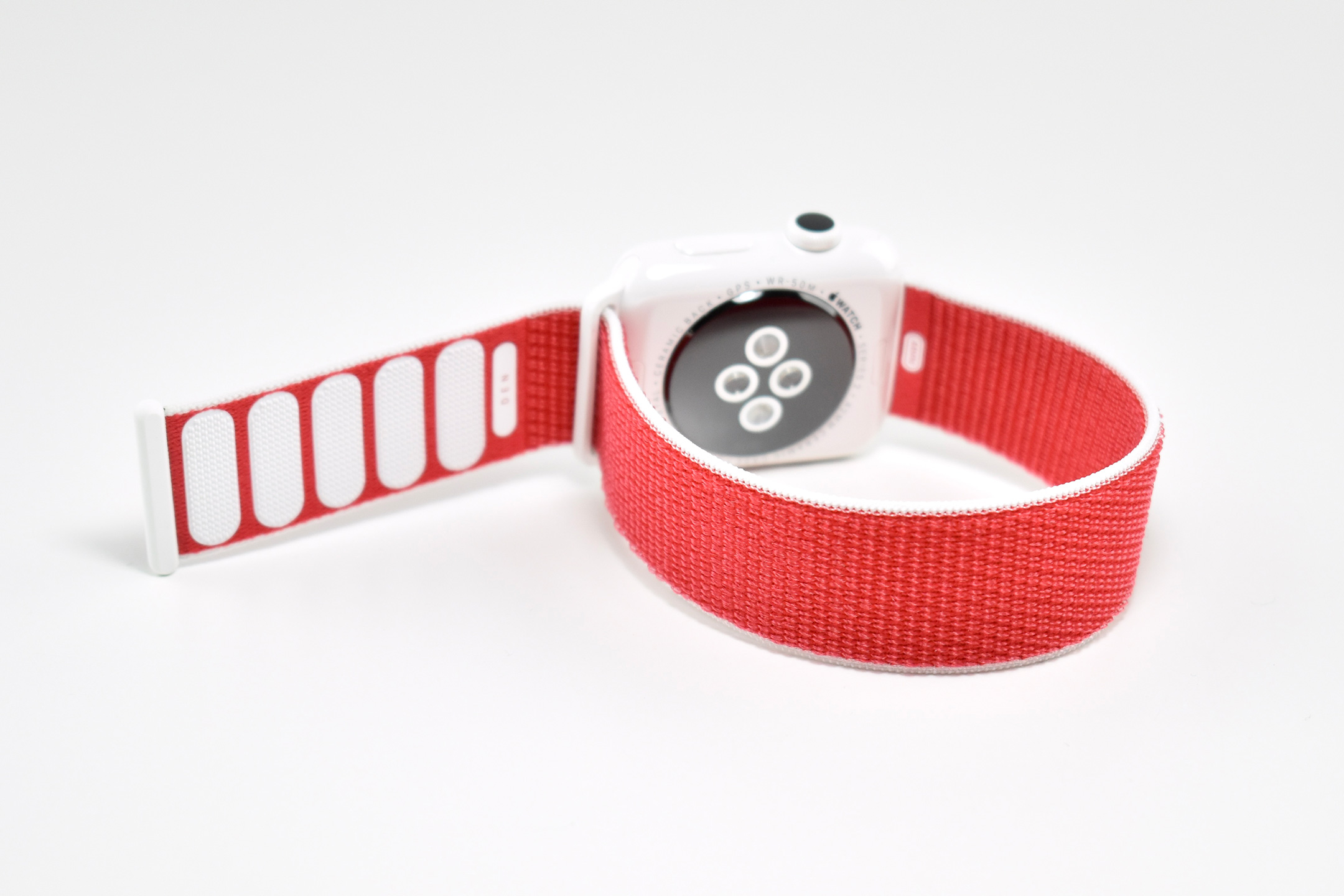
Denmark—red band; white edges; white plastic connectors/closure.
France—white band; blue and red edges; white plastic connectors, blue closure.
Germany—2-sided black and yellow-gold band; red edges; black plastic connectors/closure.
Greece—vertical striped white and blue band; blue and white edges; white plastic connectors/closure.
Italy—bright blue band; white edges; green plastic connectors, red closure.
Jamaica—2-sided bright green and black band; yellow edges; black plastic connectors, yellow closure.
Japan—white band; red edges; white plastic connectors, red closure.
Mexico—white band; green and red edges; white plastic connectors, green closure.
Netherlands—bright orange band; white edges; white plastic connectors, blue closure.
New Zealand—black band; white edges; black plastic connectors, white closure.
Russia—2-sided blue and red band; white edges; white plastic connectors/closure.
South Africa—2-sided red and blue band; green edges; black plastic connectors, yellow closure.
South Korea—white band; black edges; blue plastic connectors, red closure.
Spain—2-sided yellow-gold and red band; red edges; red plastic connectors/closure.
Sweden—2-sided yellow and medium-blue band; medium-blue edges; medium-blue plastic connectors/closure.
United States—vertical striped white and blue band; red edges; white plastic connectors, red closure.
Great Britain—2-sided red and blue band; white edges; white plastic connectors/closure.
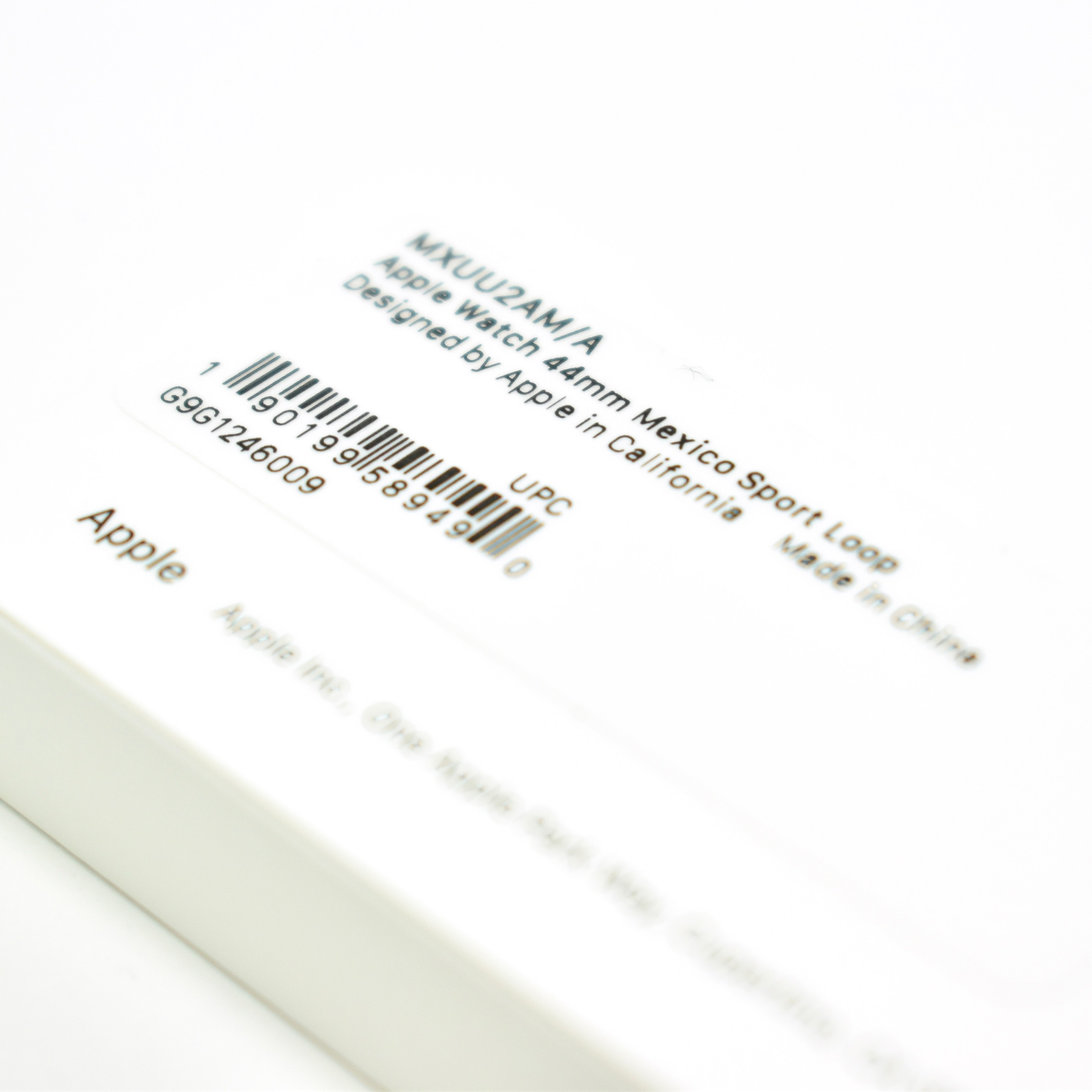
This example is a 44mm Sport Loop representing Mexico, a white band with green and red edges, white plastic connectors, and a green closure.
The International Collection Sport Loop was released at the time the Summer Olympics were played in 2021 (referred to as the 2020 Olympics due to the COVID-19 delay). The bands came in 22 designs “representing nations across the globe, each with a downloadable matching watch face.”
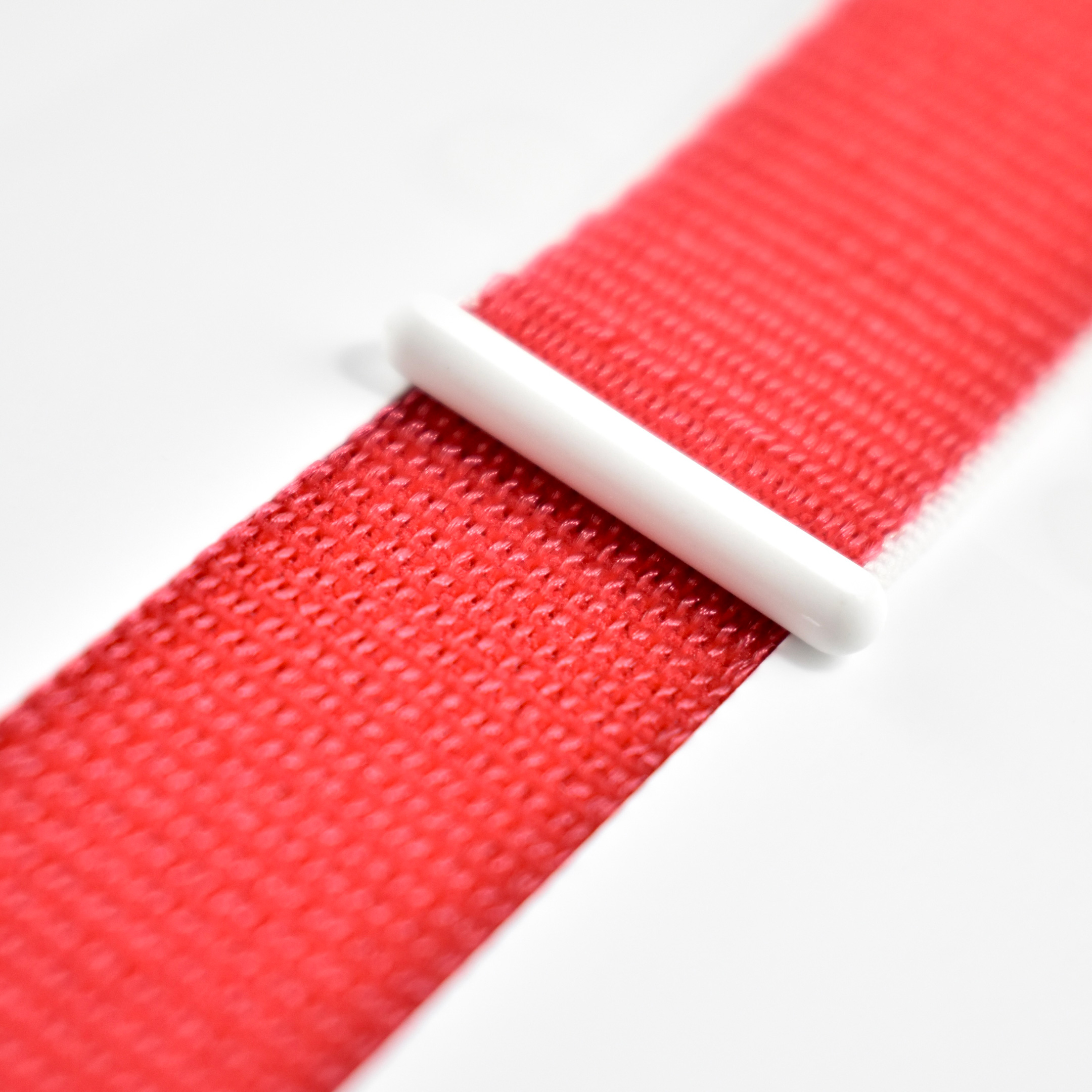
The bands used the Sport Loop design and were described by Apple as, “Soft, breathable, and lightweight, it features a hook-and-loop fastener for quick and easy adjustment. The double-layer nylon weave has dense loops on the skin side that provide soft cushioning while allowing moisture to escape. On the reverse side, the attachment loops are securely anchored for superior durability.”
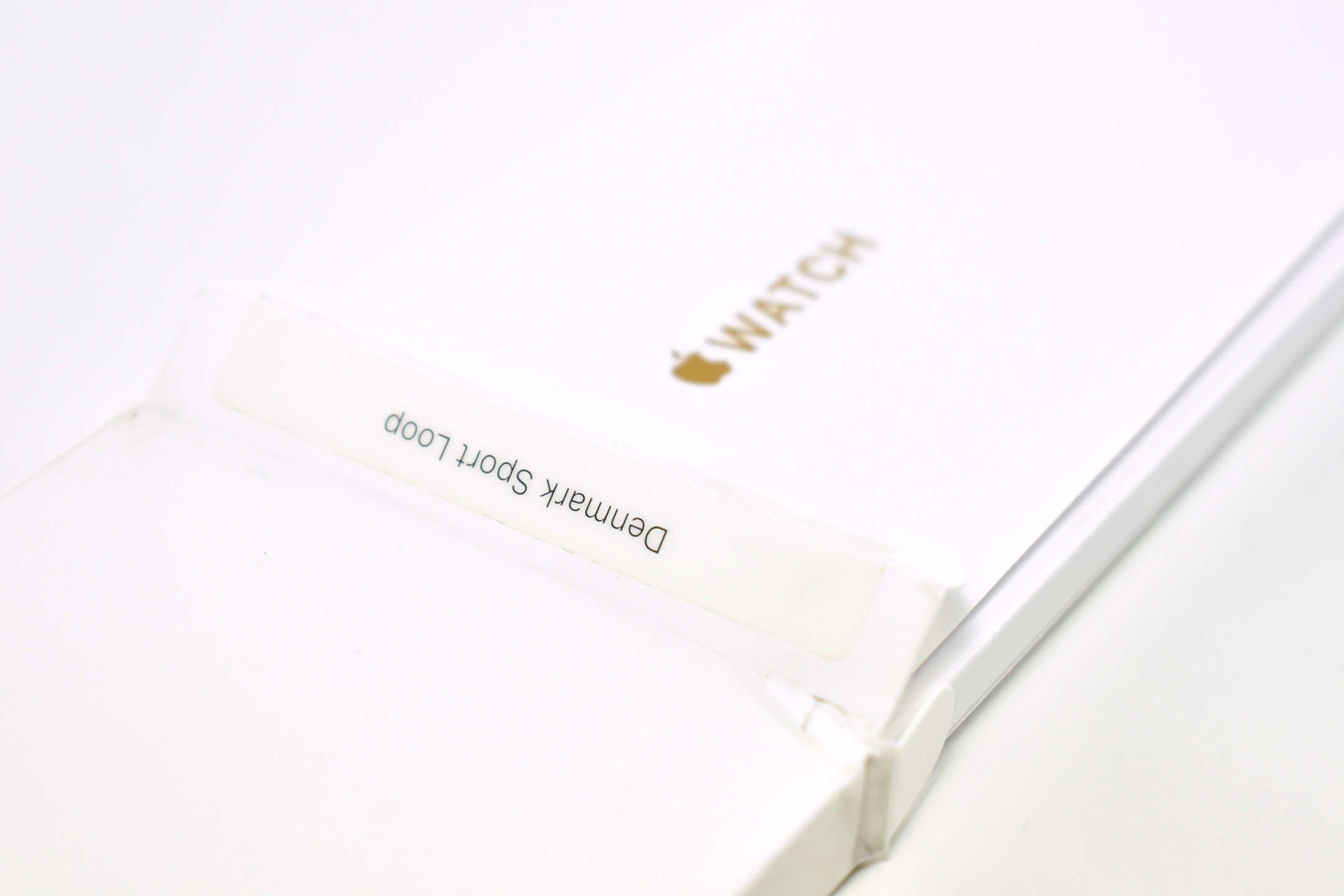
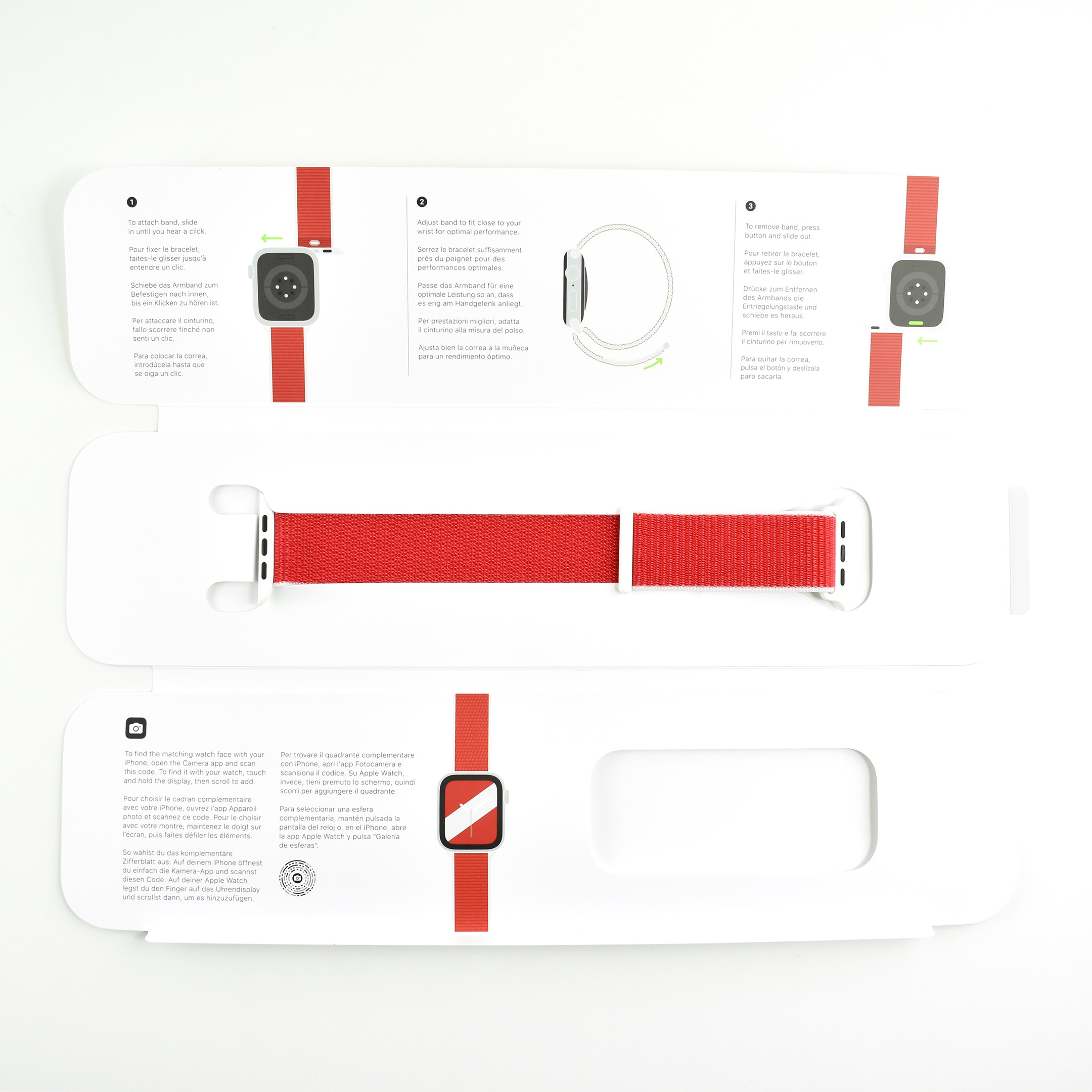
The packaging for each band was customized (compared to the typical Sport Loop packaging) and featured the Apple Watch logo on the box exterior in metallic gold (presumably a reference to Olympic gold medals). The interior packaging used the design of the sport band (as opposed to the generic design used in other Sport Loop designs) and included an App Clip Code (Apple’s custom circular QR Code design) that led directly to a downloadable Watch face that matched the band.
According to an Apple Newsroom release from June 29, 2021:
“To celebrate the indescribable drive and competitive spirit of all athletes and fans, Apple is launching the International Collection bands for Apple Watch, featuring 22 limited-edition Sport Loop bands with colorful designs that represent those nations across the globe. Each band also features a matching downloadable Stripes watch face showcasing color combinations that customers around the world can use to personalize their Apple Watch and boldly show their country support.
The soft, breathable, and lightweight International Collection Sport Loop bands are available representing the following countries: Australia, Belgium, Brazil, Canada, China, Denmark, France, Germany, Great Britain, Greece, Italy, Jamaica, Japan, Mexico, the Netherlands, New Zealand, Russia, South Africa, South Korea, Spain, Sweden, and the US.”
The colorful designs used a variety of designs including one-color bands, one- and two-color facing bands, and some bands were split vertically with two colors (a first for Apple Watch band designs). All bands used a contrasting edge color, and many bands featured contrasting plastic connectors/closure colors. Bands matched the flags of each country and featured two to five colors each.
These are my descriptions of each of the band designs:
Australia—2-sided bright green and yellow band; bright green edges; bright green plastic connectors/closure.
Belgium—yellow gold band; red edges; black plastic connectors/closure.
Brazil—bright green band; yellow edges; dark blue plastic connectors/closure.
Canada—vertical striped white and red band; white and red edges; white plastic connectors, white closure.
China—red band; yellow-gold edges; red plastic connectors, yellow-gold closure.
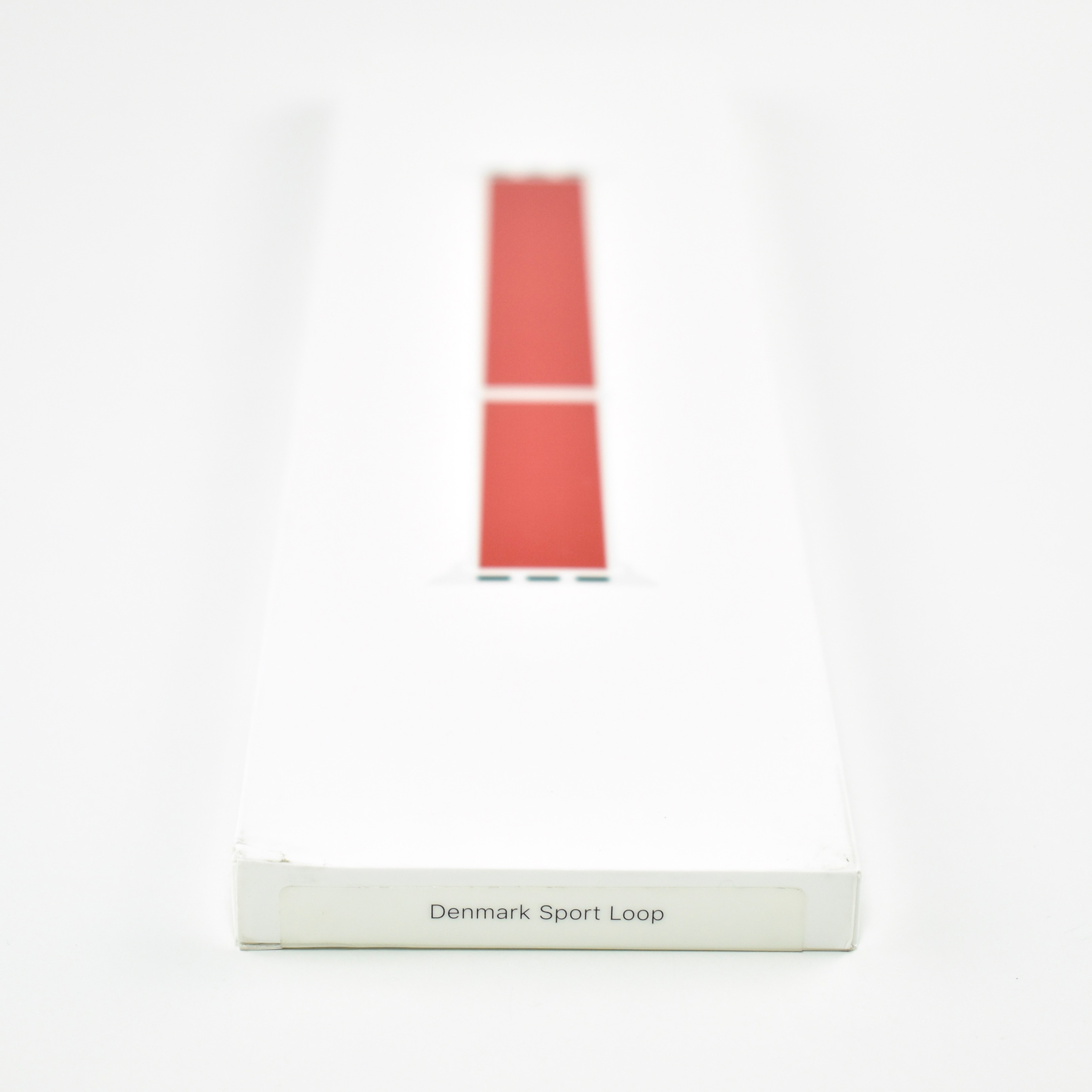
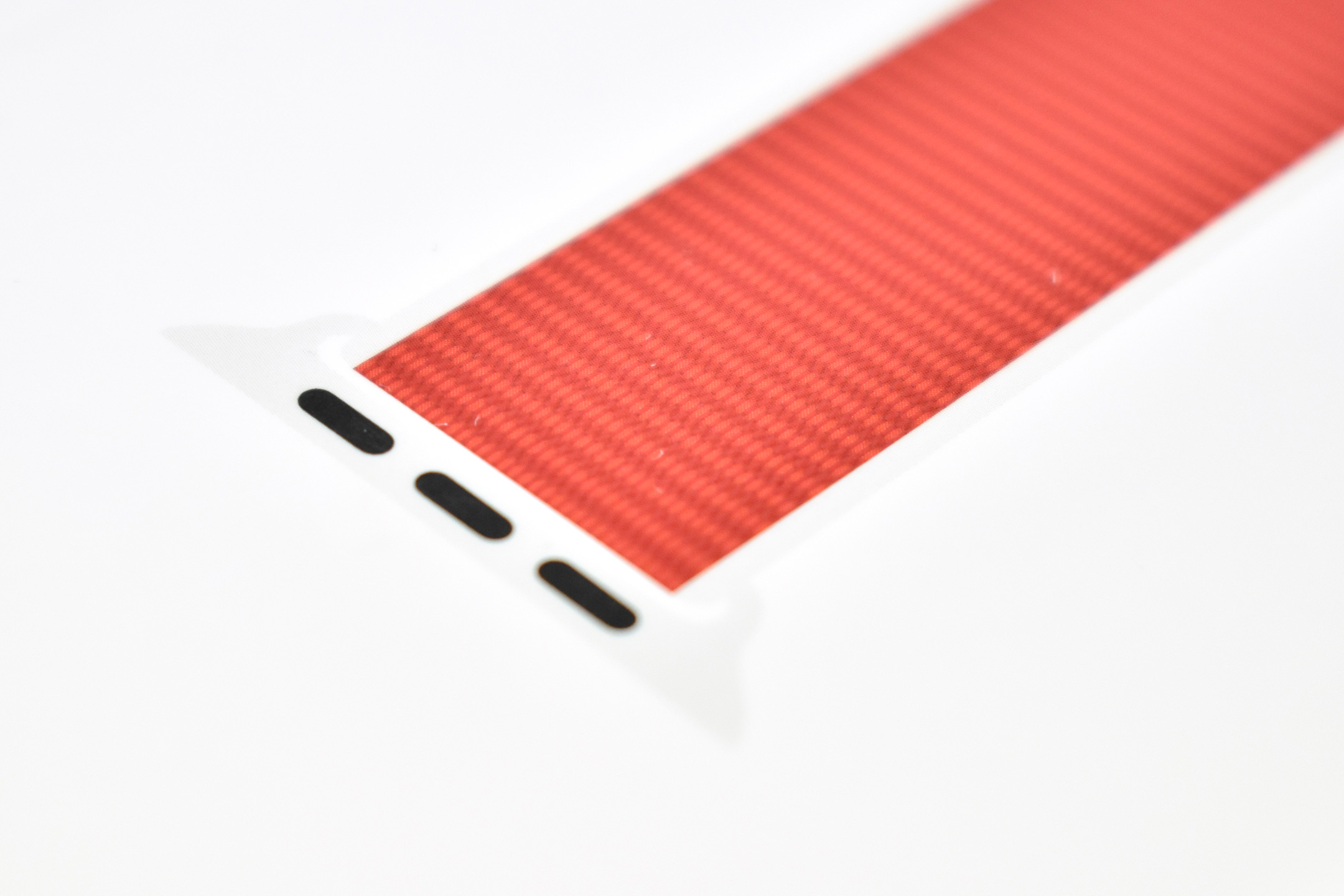
Denmark—red band; white edges; white plastic connectors/closure.
France—white band; blue and red edges; white plastic connectors, blue closure.
Germany—2-sided black and yellow-gold band; red edges; black plastic connectors/closure.
Greece—vertical striped white and blue band; blue and white edges; white plastic connectors/closure.
Italy—bright blue band; white edges; green plastic connectors, red closure.
Jamaica—2-sided bright green and black band; yellow edges; black plastic connectors, yellow closure.
Japan—white band; red edges; white plastic connectors, red closure.
Mexico—white band; green and red edges; white plastic connectors, green closure.
Netherlands—bright orange band; white edges; white plastic connectors, blue closure.
New Zealand—black band; white edges; black plastic connectors, white closure.
Russia—2-sided blue and red band; white edges; white plastic connectors/closure.
South Africa—2-sided red and blue band; green edges; black plastic connectors, yellow closure.
South Korea—white band; black edges; blue plastic connectors, red closure.
Spain—2-sided yellow-gold and red band; red edges; red plastic connectors/closure.
Sweden—2-sided yellow and medium-blue band; medium-blue edges; medium-blue plastic connectors/closure.
United States—vertical striped white and blue band; red edges; white plastic connectors, red closure.
Great Britain—2-sided red and blue band; white edges; white plastic connectors/closure.
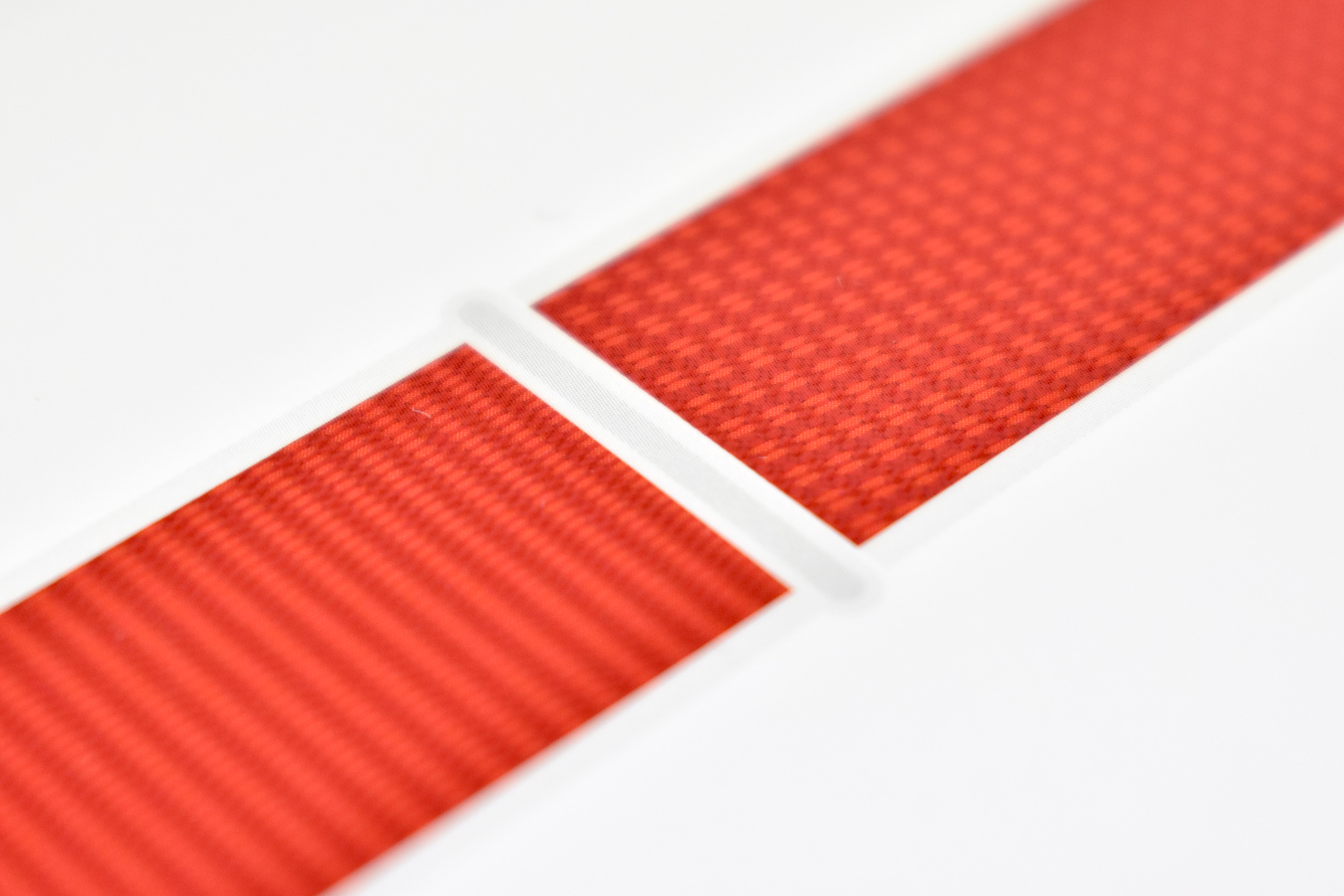
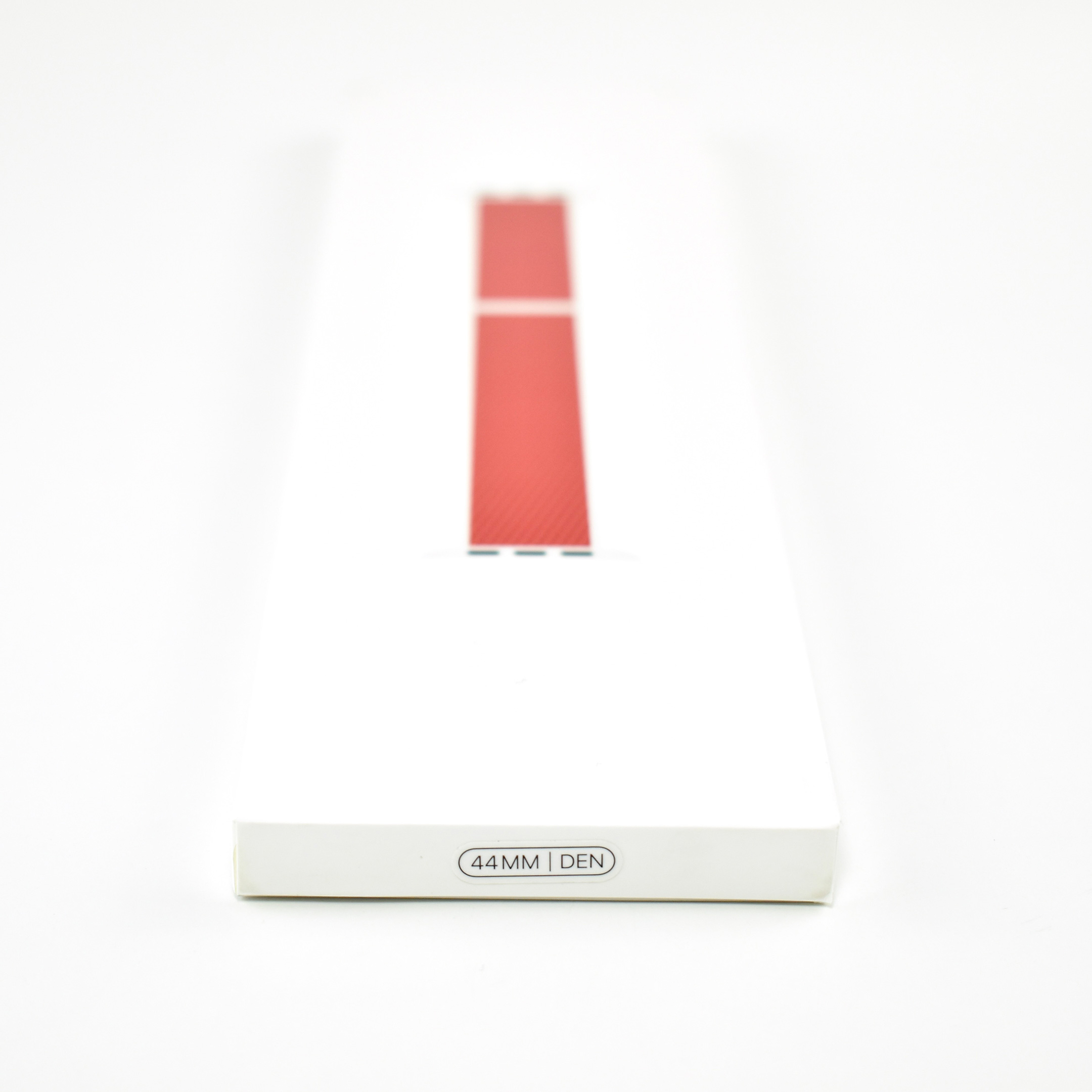
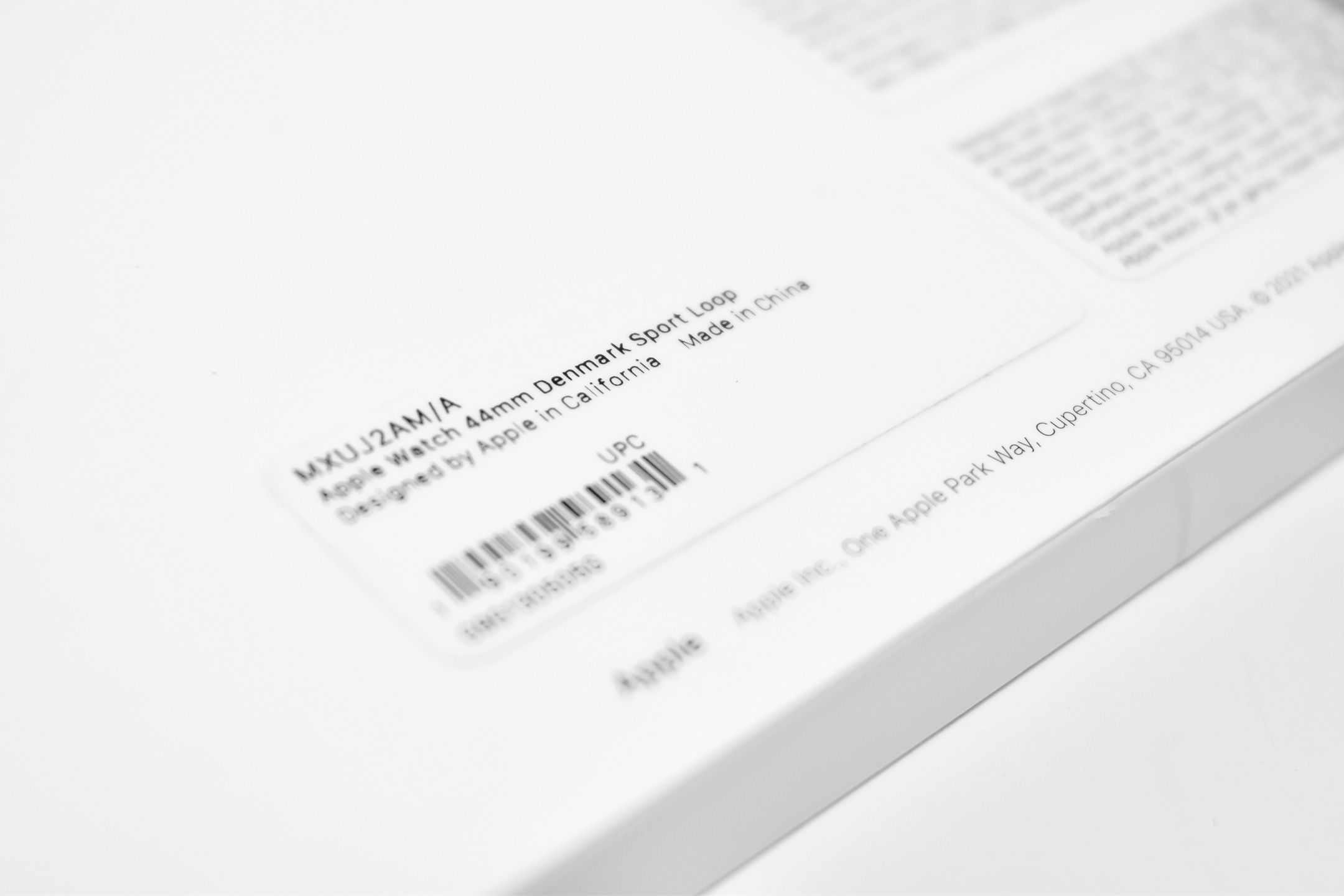
This example is a 44mm Sport Loop representing Denmark, a red band with white edges and white plastic connectors/closure.