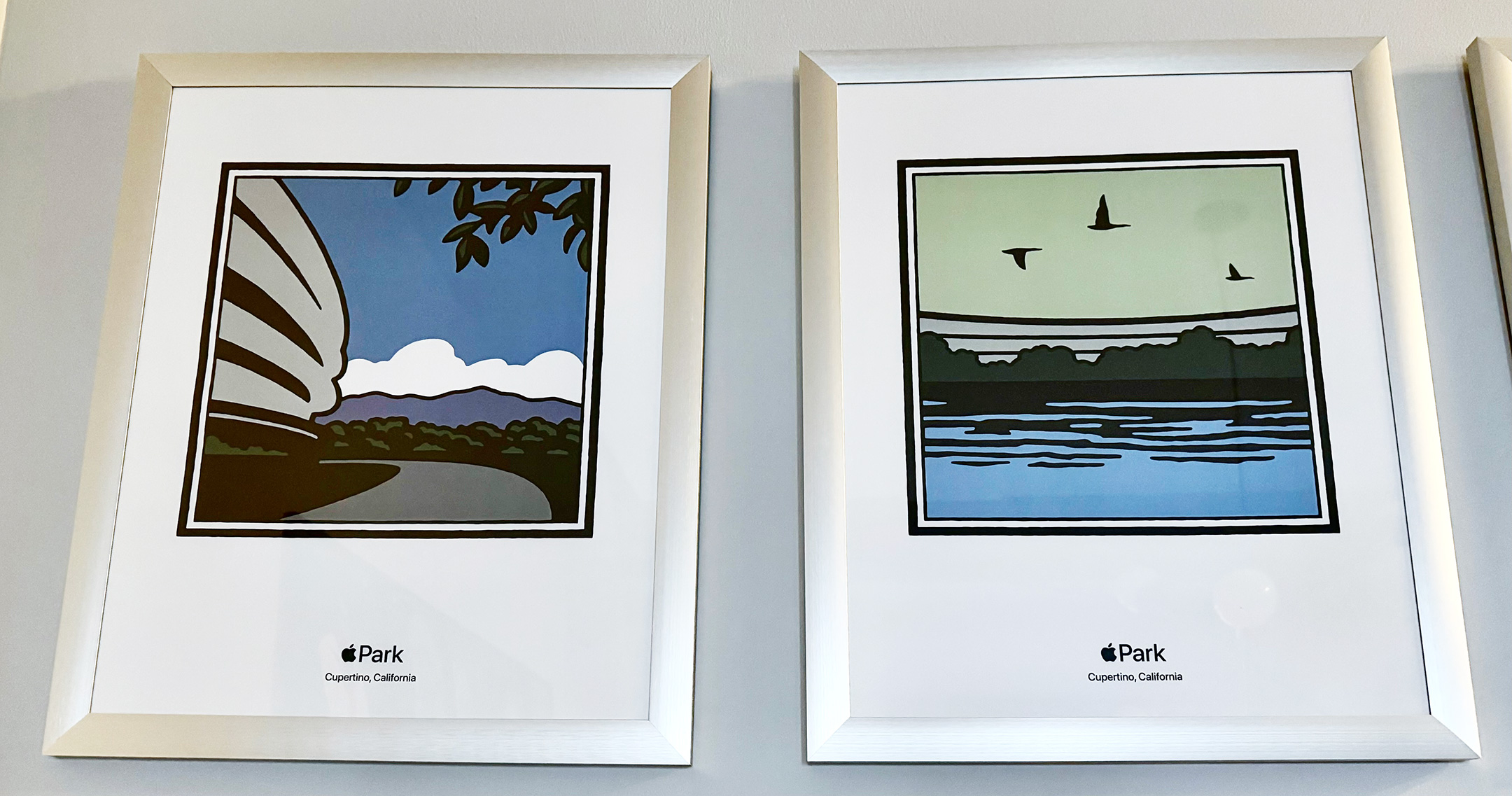
This set of posters was sold at the Apple Park Apple Park Visitor Center in 2022. The set includes four different designs by the graphic artist Michael Schwab. The posters were packaged in a white cardboard tube with a label that read, “Apple Park M. Schwab Poster Set (4pk) HP932LL/A.” Each poster measured 16 x 20 inches.
The designs included the following representations:
Apple Park office structure (a partial view)
Reflecting pool in the outdoor center of the Apple Park office structure with three birds flying above
Steve Jobs Theater at night with a crescent moon above
An apple tree, reminiscent of those growing in the outdoor center of the Apple Park office structure
This set is presented in the order that the posters were hanging in the Apple Park Visitor Center Apple Store. The poster designs were also available on white t-shirts (one design per shirt). In fact, when I first saw the posters in the Visitor Center Apple Store, it was not obvious to me that they were available for sale because they appeared to only show the details of the t-shirt design. An Apple employee let me know the posters were available.
According to Michael Schwab’s website, he was born in Oklahoma in 1952 and now lives and works in northern California. His biography states:
“From his studio in Marin County, he has established a national reputation as one of America’s leading graphic artists.
He has created national award-winning logos and posters for a remarkable list of prestigious clients, including Apple, Amtrak, The Golden Gate National Parks, Major League Baseball, Robert Mondavi, Muhammad Ali, Nike, Pebble Beach, Polo Ralph Lauren, Robert Redford, San Francisco Opera, Sundance, Sunset Books, and Wells Fargo, among others.
Having attended school in Texas, New York and California, Michael has a broad array of visual, cultural, and geographic references to which he regularly turns for ideas.
His work is easily recognized by his signature use of large, flat areas of color, dramatic perspectives and bold, graphic images of archetypal human forms.”
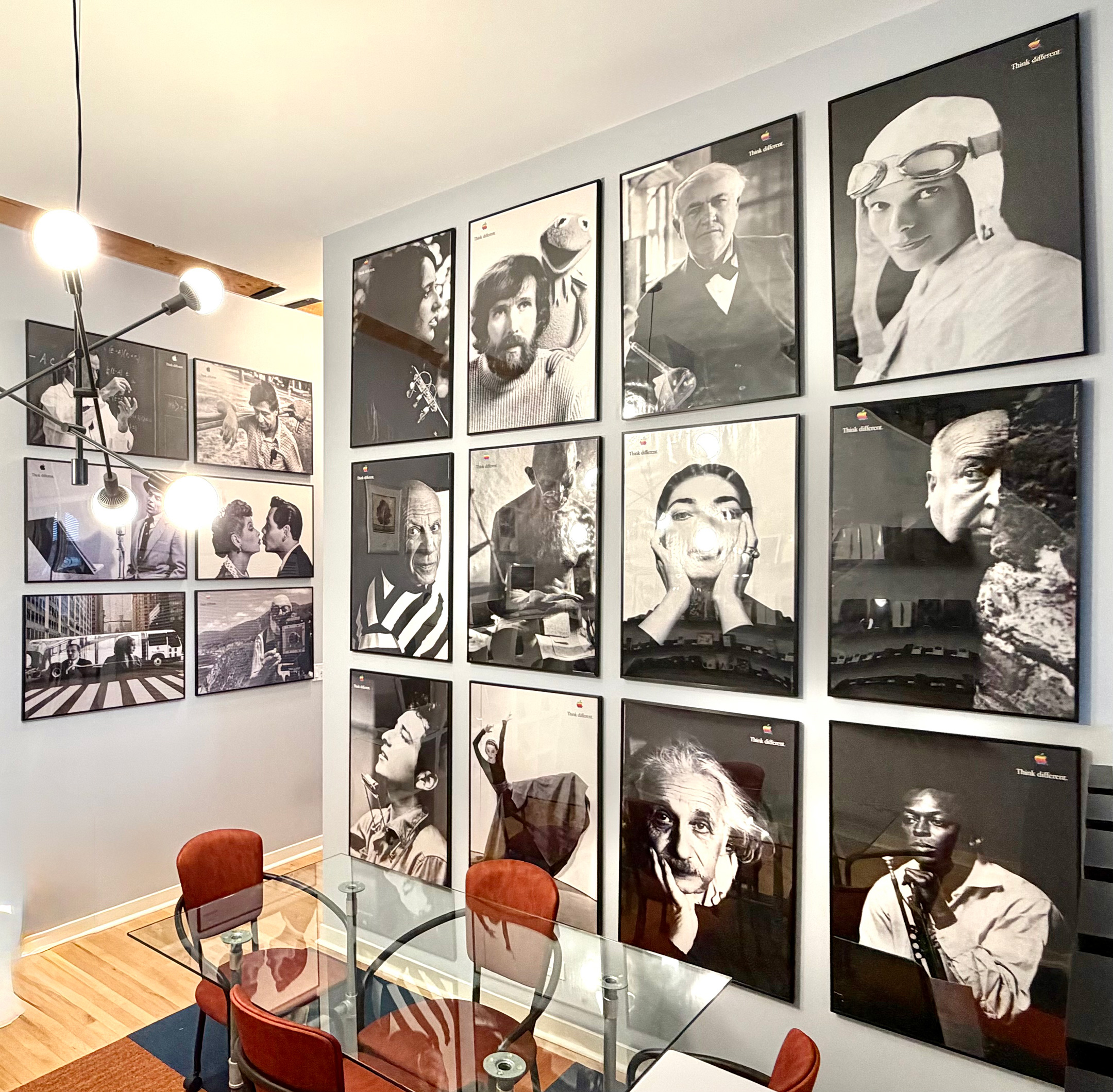
Please note, the photography style of this entry is very different from my typical posts because this set of posters hangs in my home. These photos were captured with iPhone 17 Pro in situ with inconsistent lighting, angles, and reflections.
“Think different” was the slogan used by Apple in an advertising campaign during the years 1997–2002, and is still used in rare circumstances as of 2025. The Think different concept was created by advertising agency TBWA\Chiat\Day while working with Apple and Steve Jobs. Think different was first rolled out as a TV commercial and was followed by additional TV commercials, print/digital ads, and as part of Apple’s product packaging.
Posters in this set include:
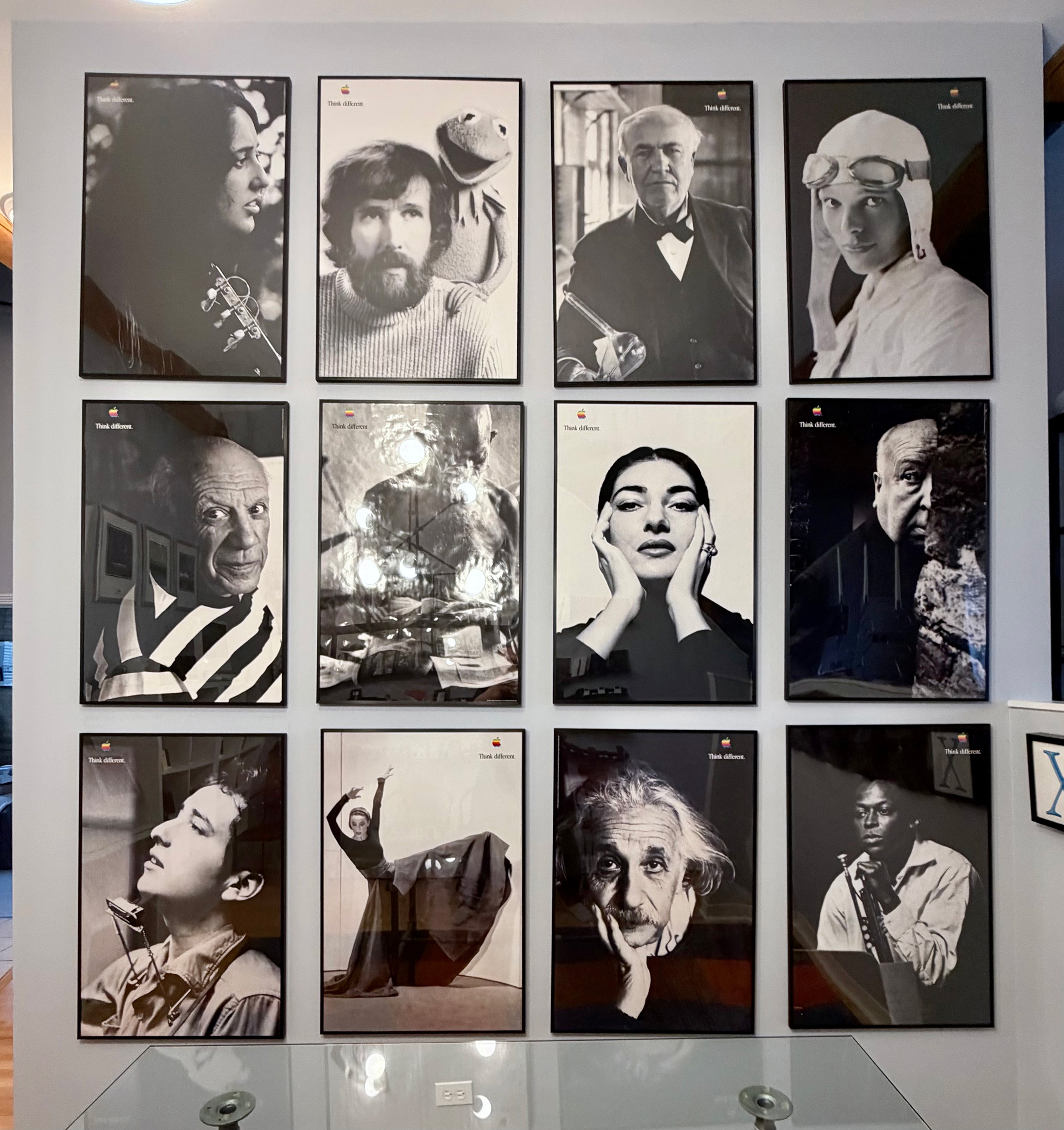
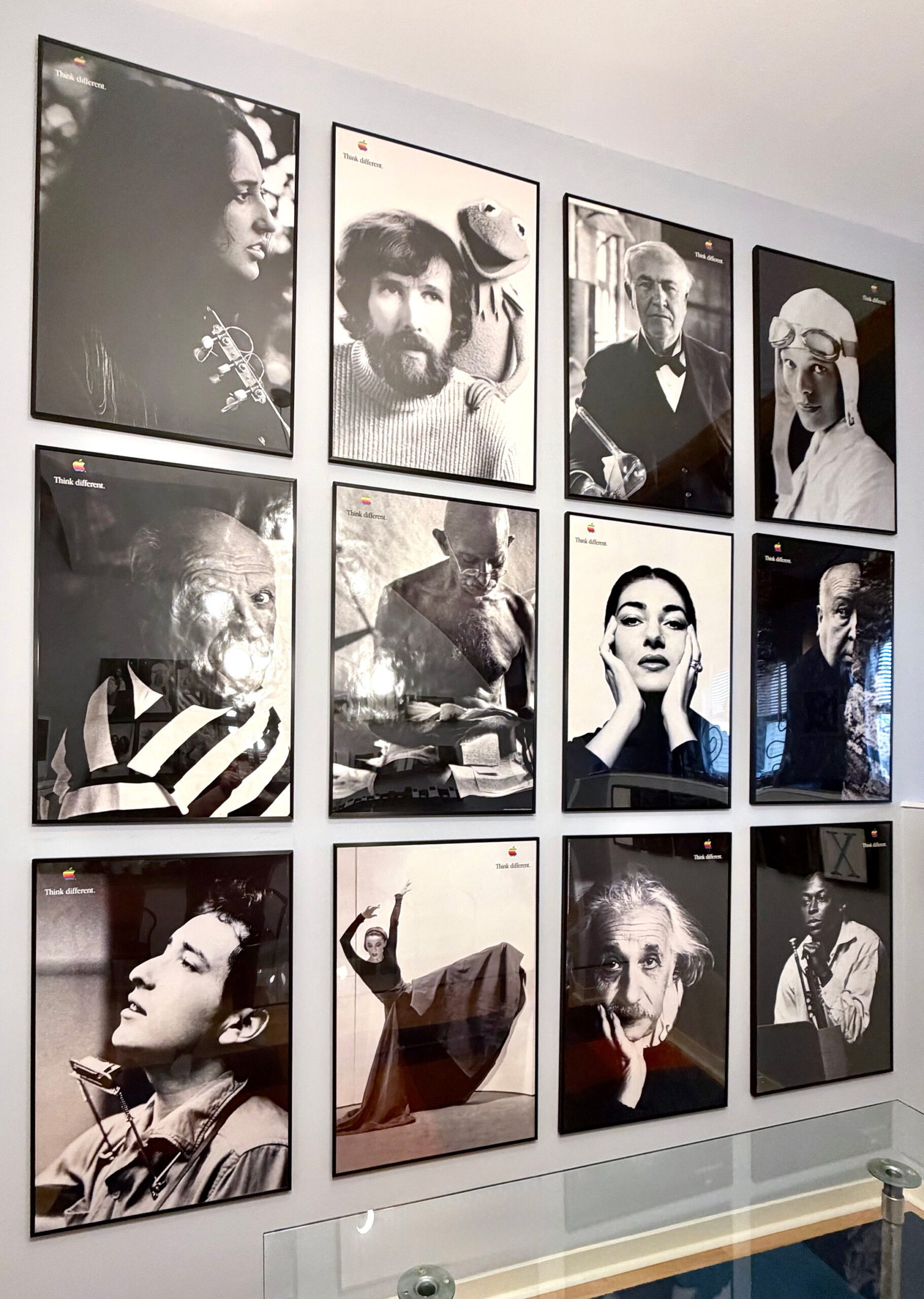
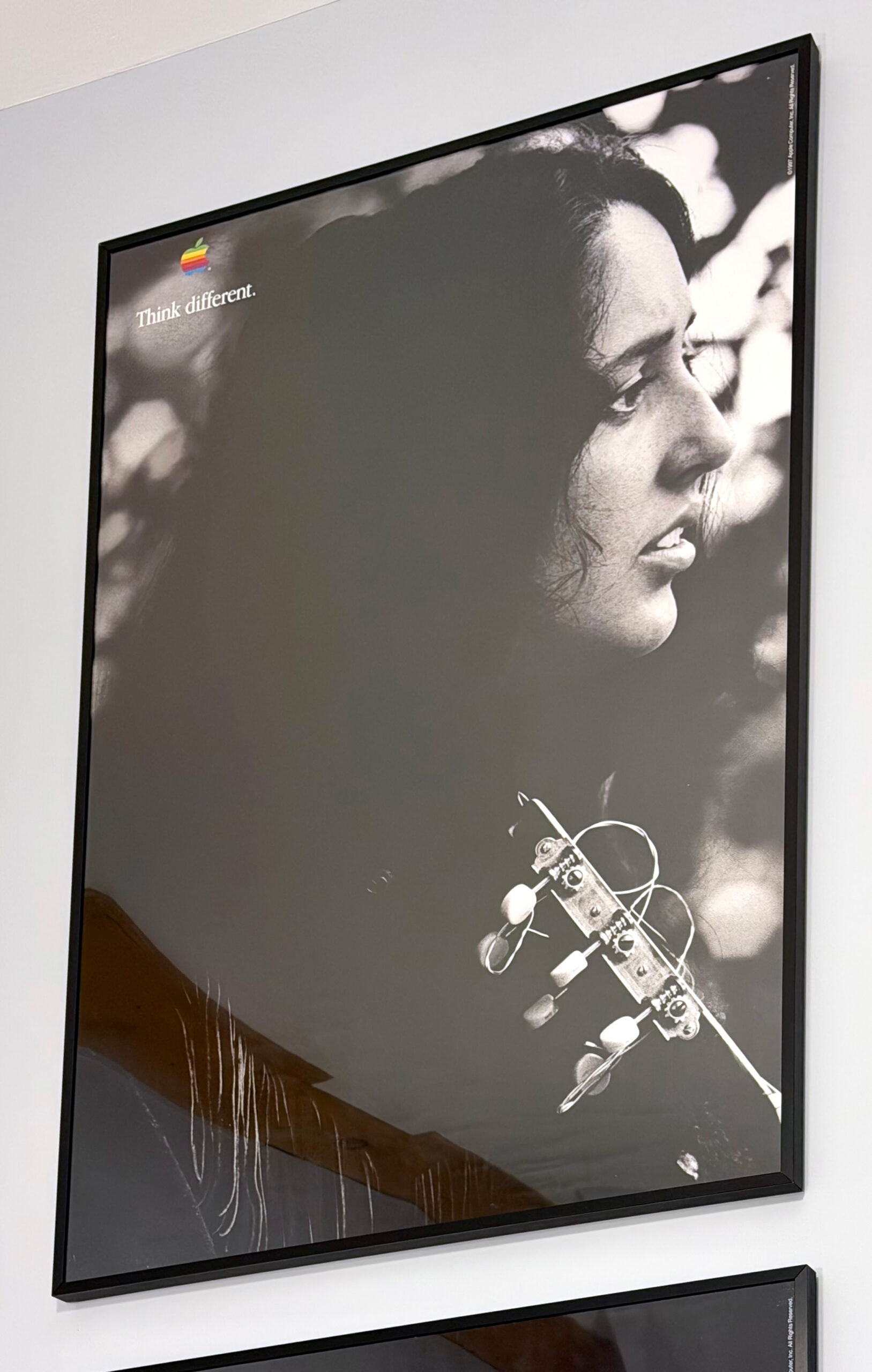
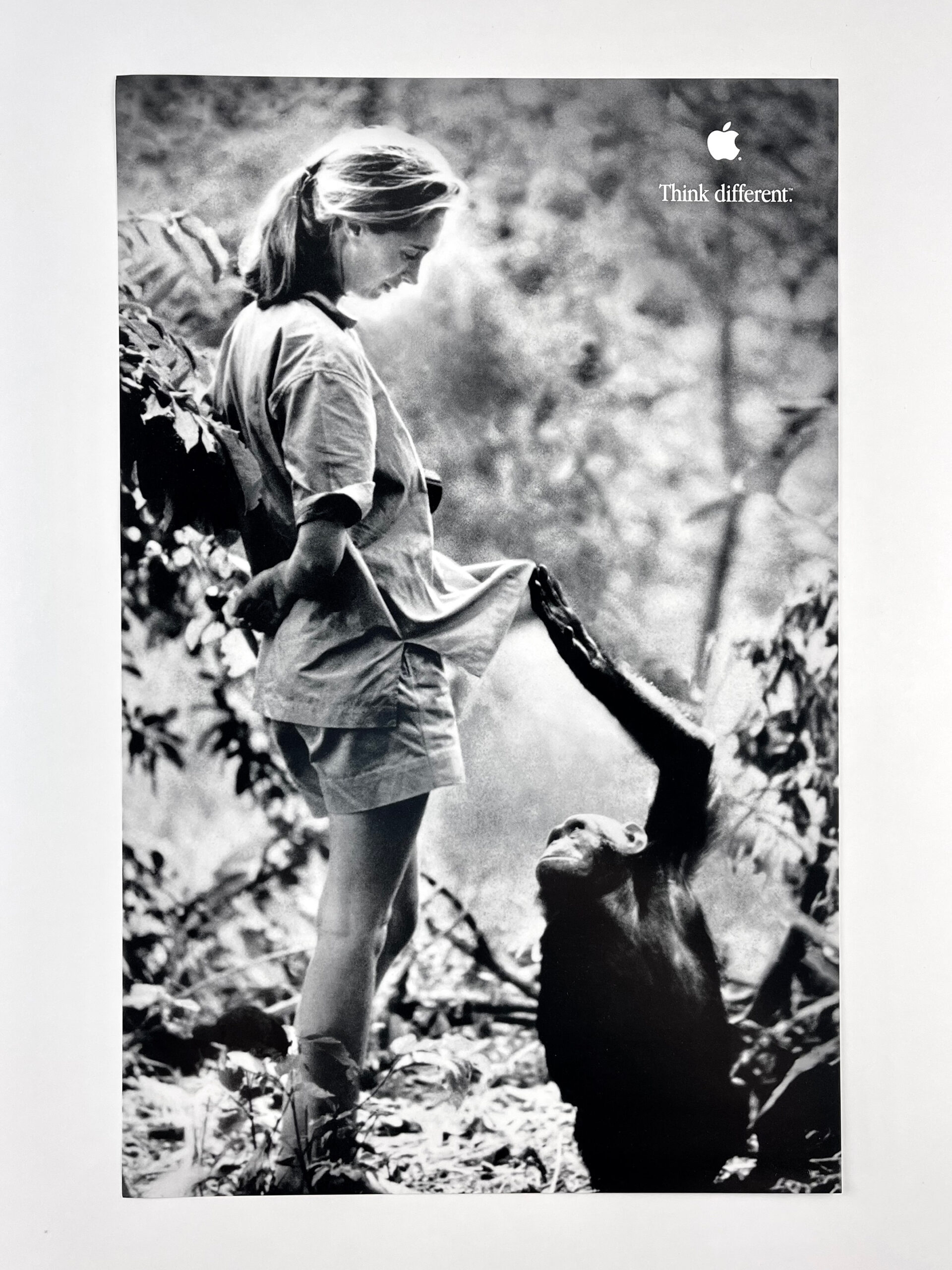
Joan Baez (24 x 36 inches, 1997). From poster set 2.
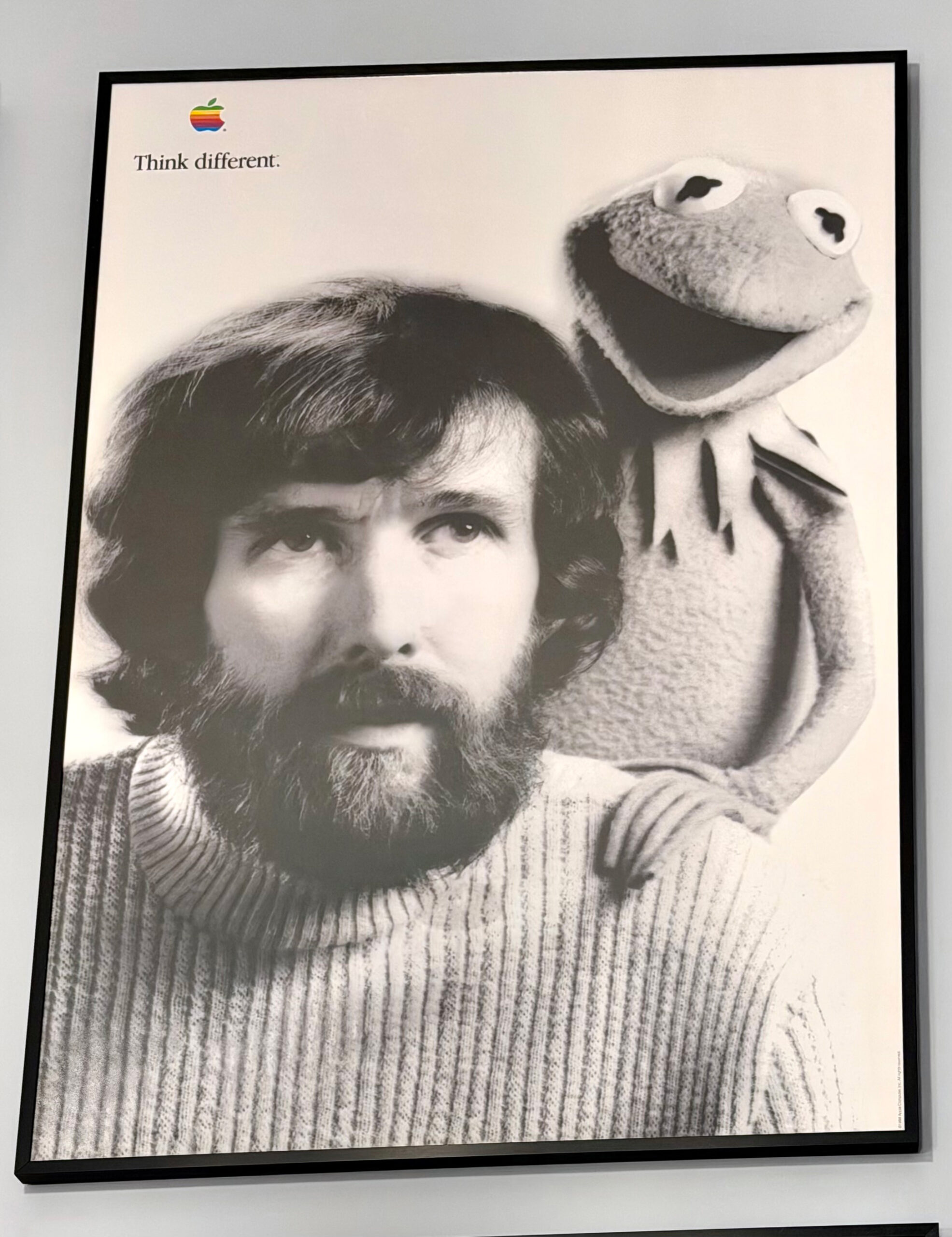
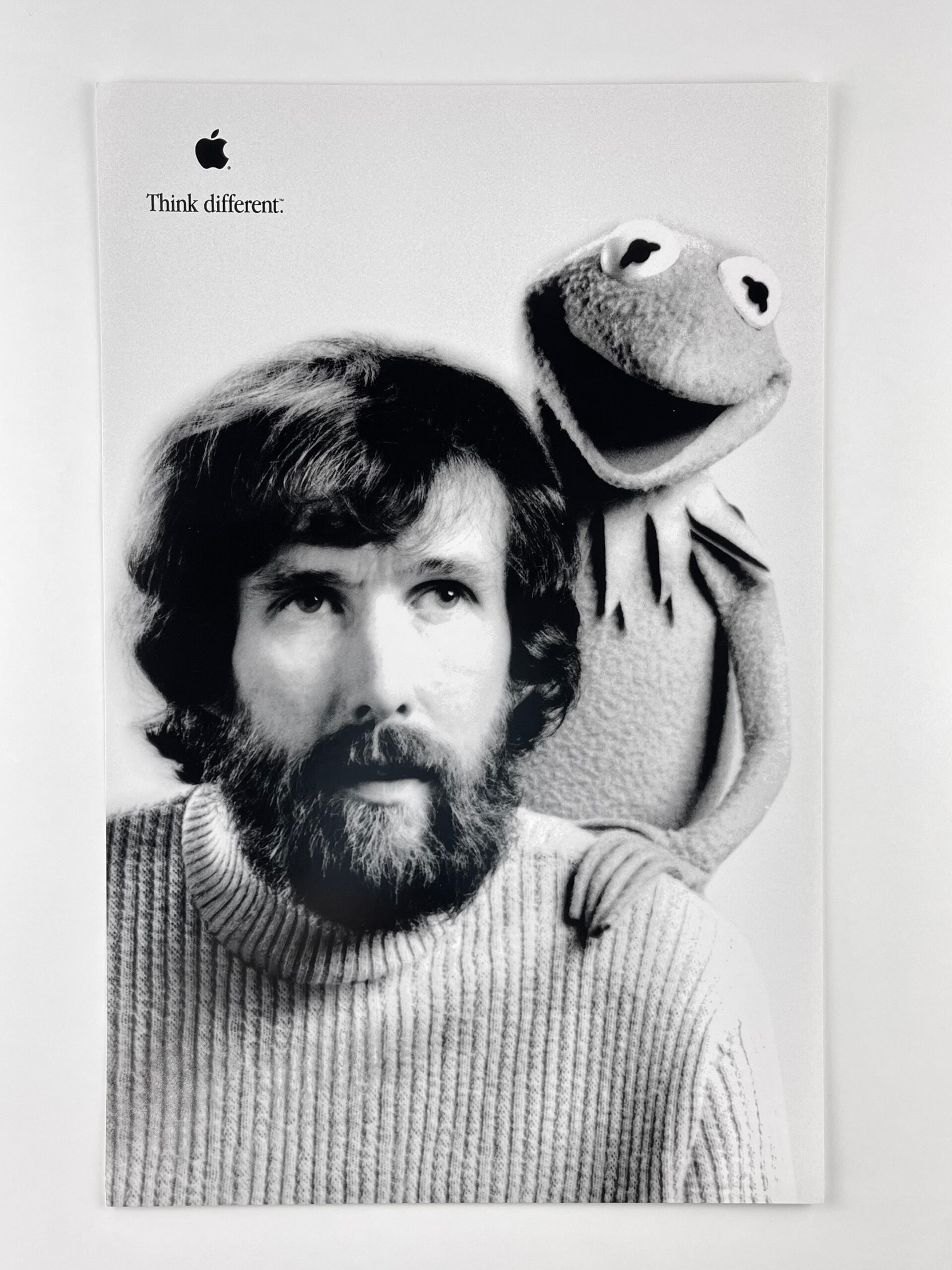
Jim Henson with Kermit the Frog (24 x 36 inches, 1998). From poster set 3.
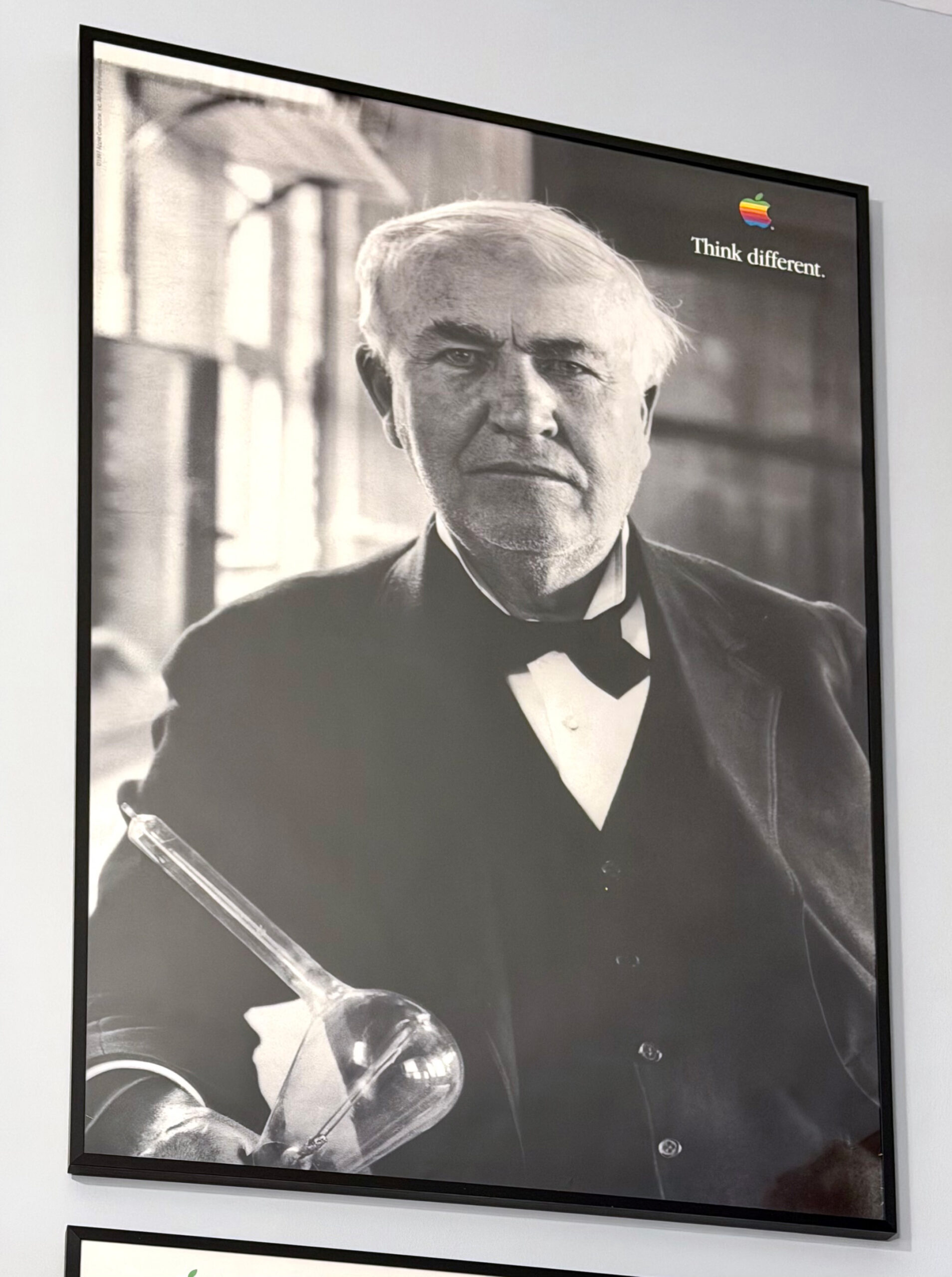
Thomas Edison (24 x 36 inches, 1997). From poster set 1.
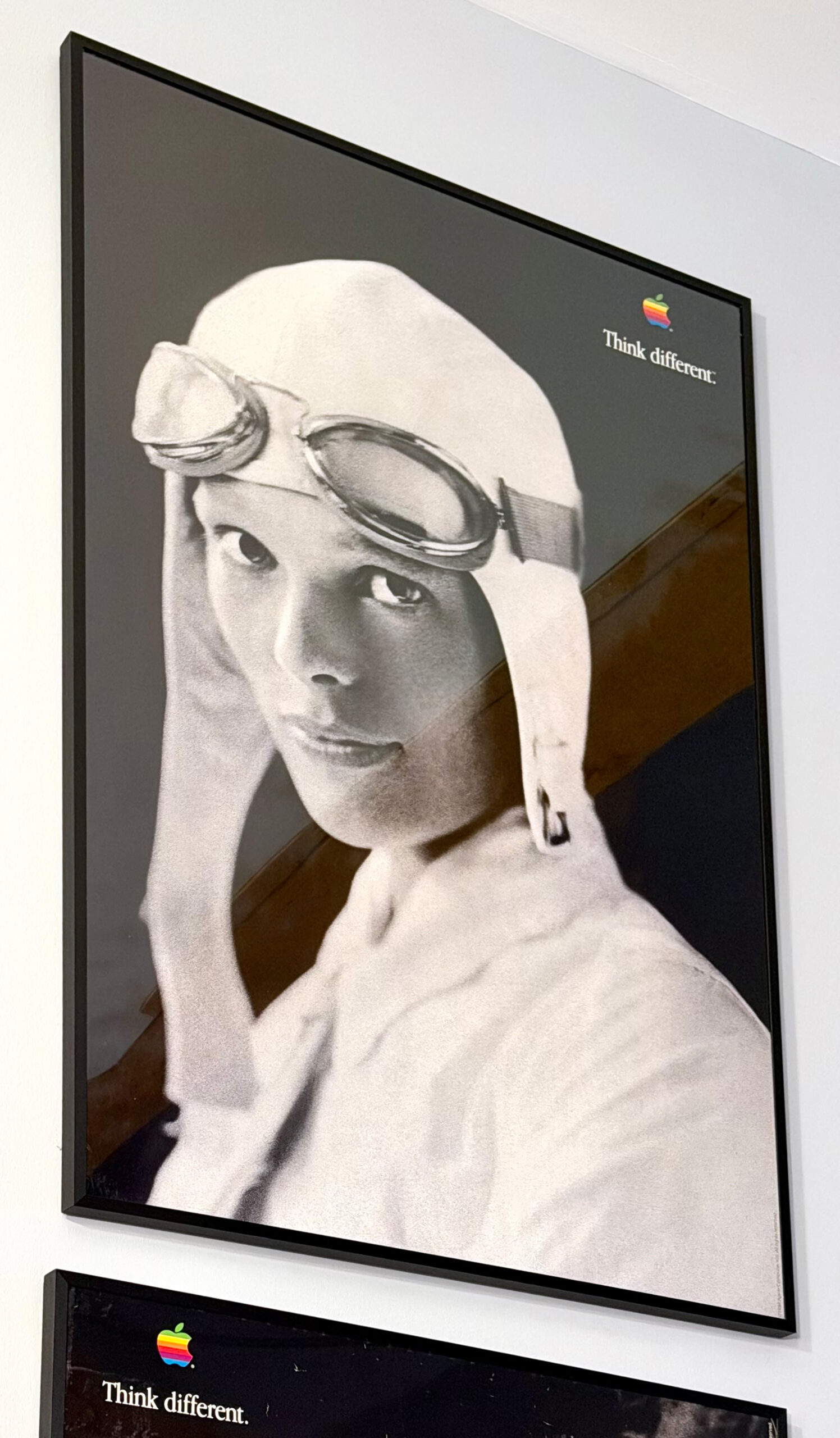
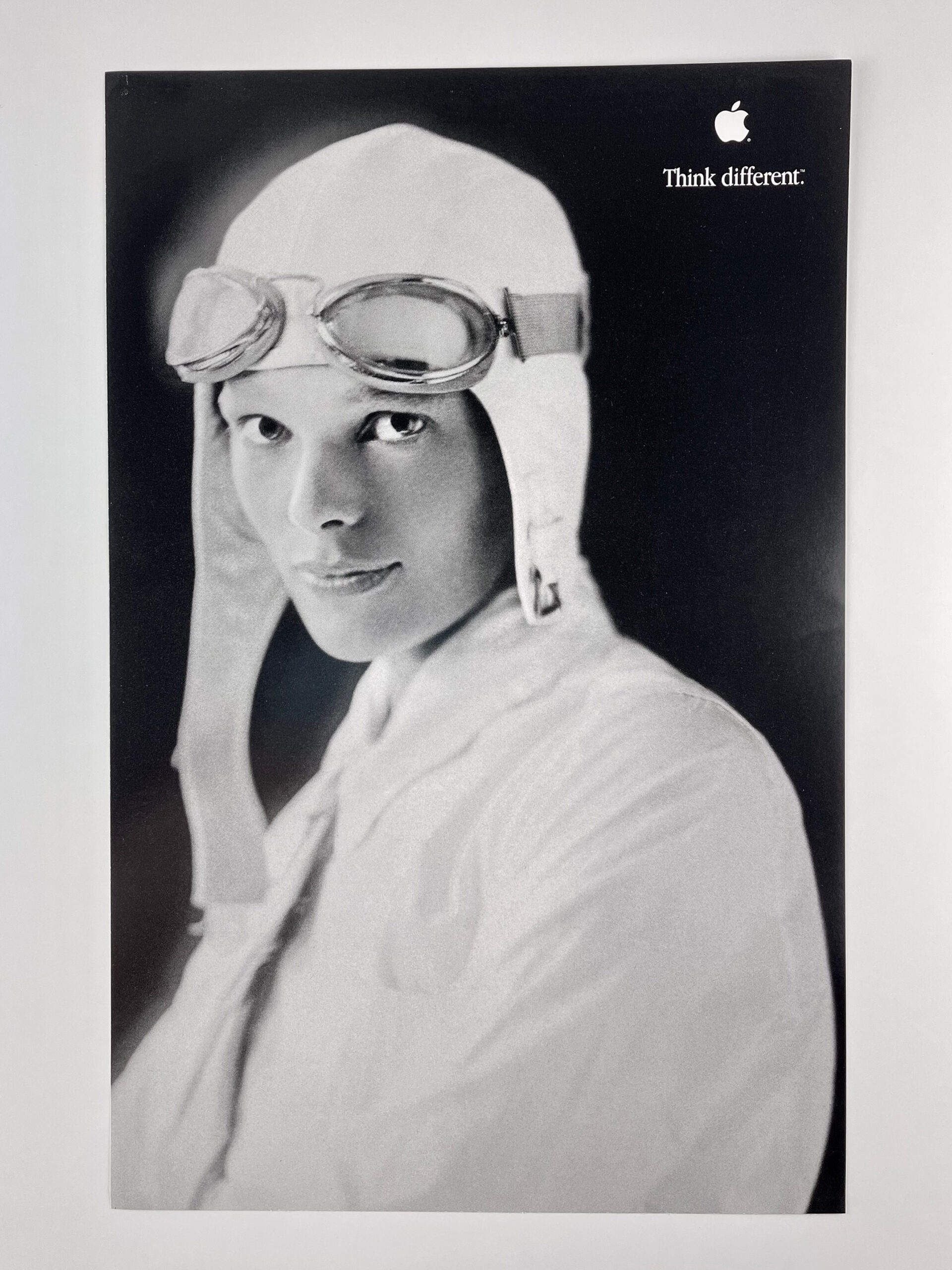
Amelia Earhart (24 x 36 inches, 1998). From poster set 1.
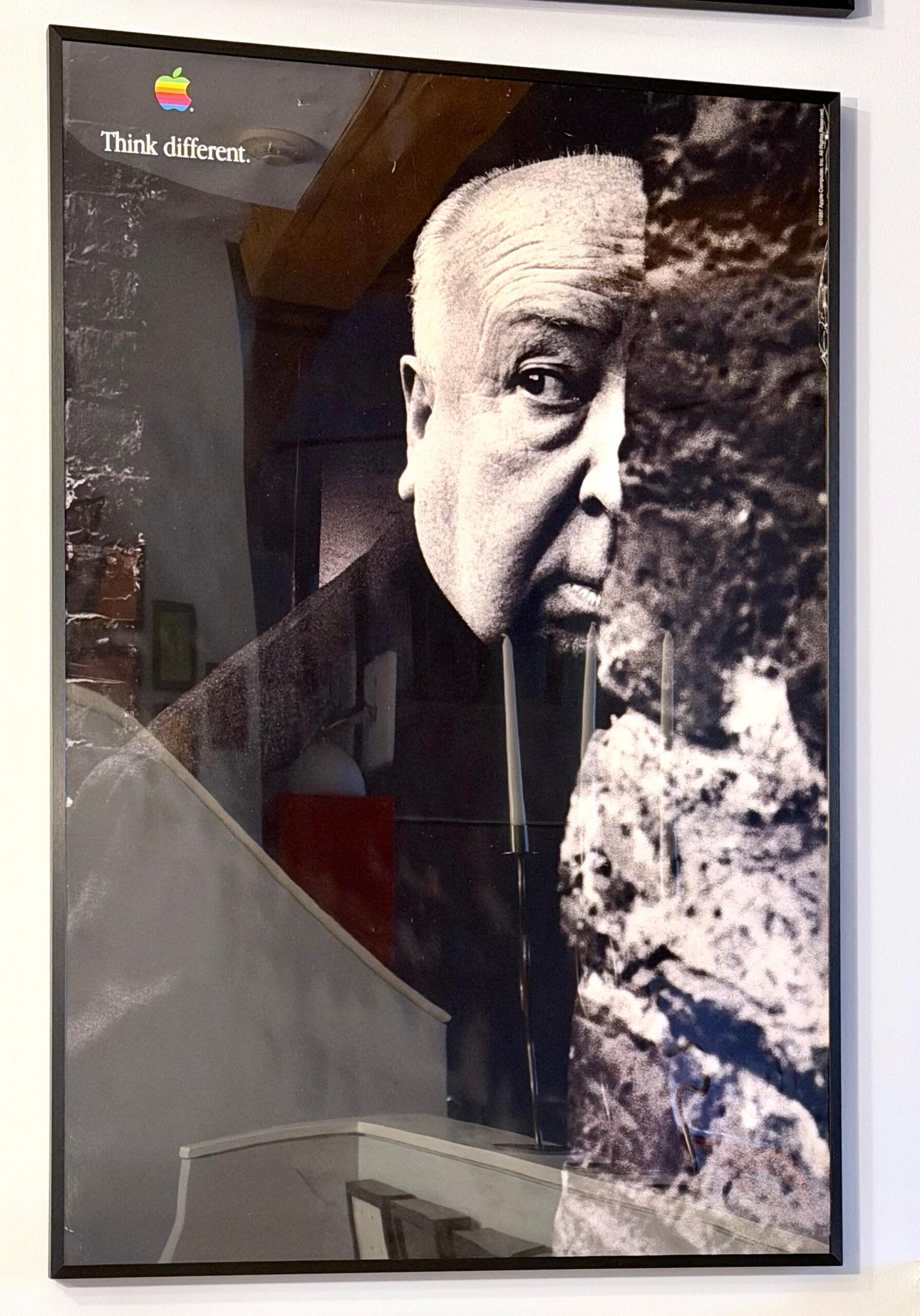
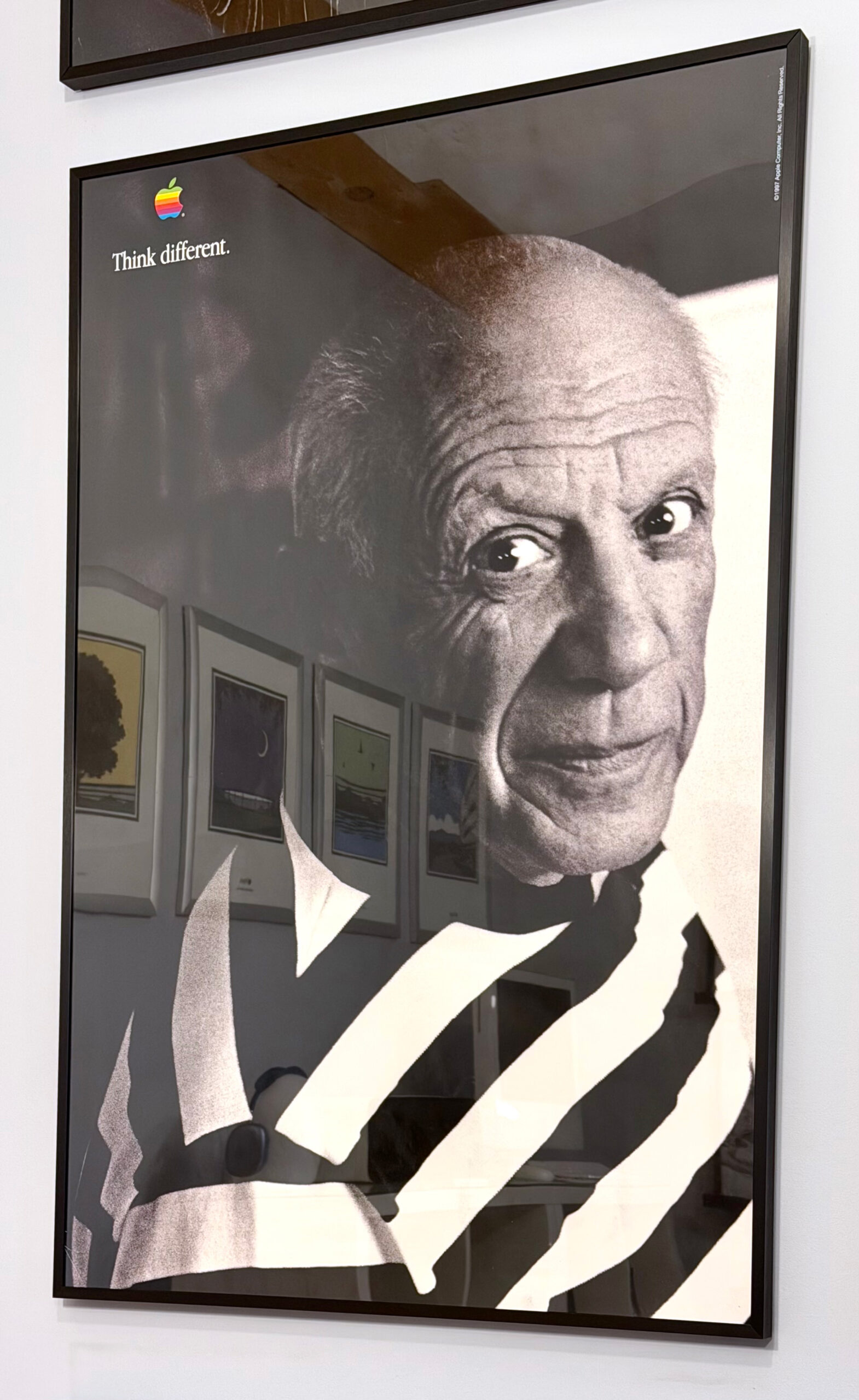
Picasso [side facing] (24 x 36 inches, 1997). From poster set 1.
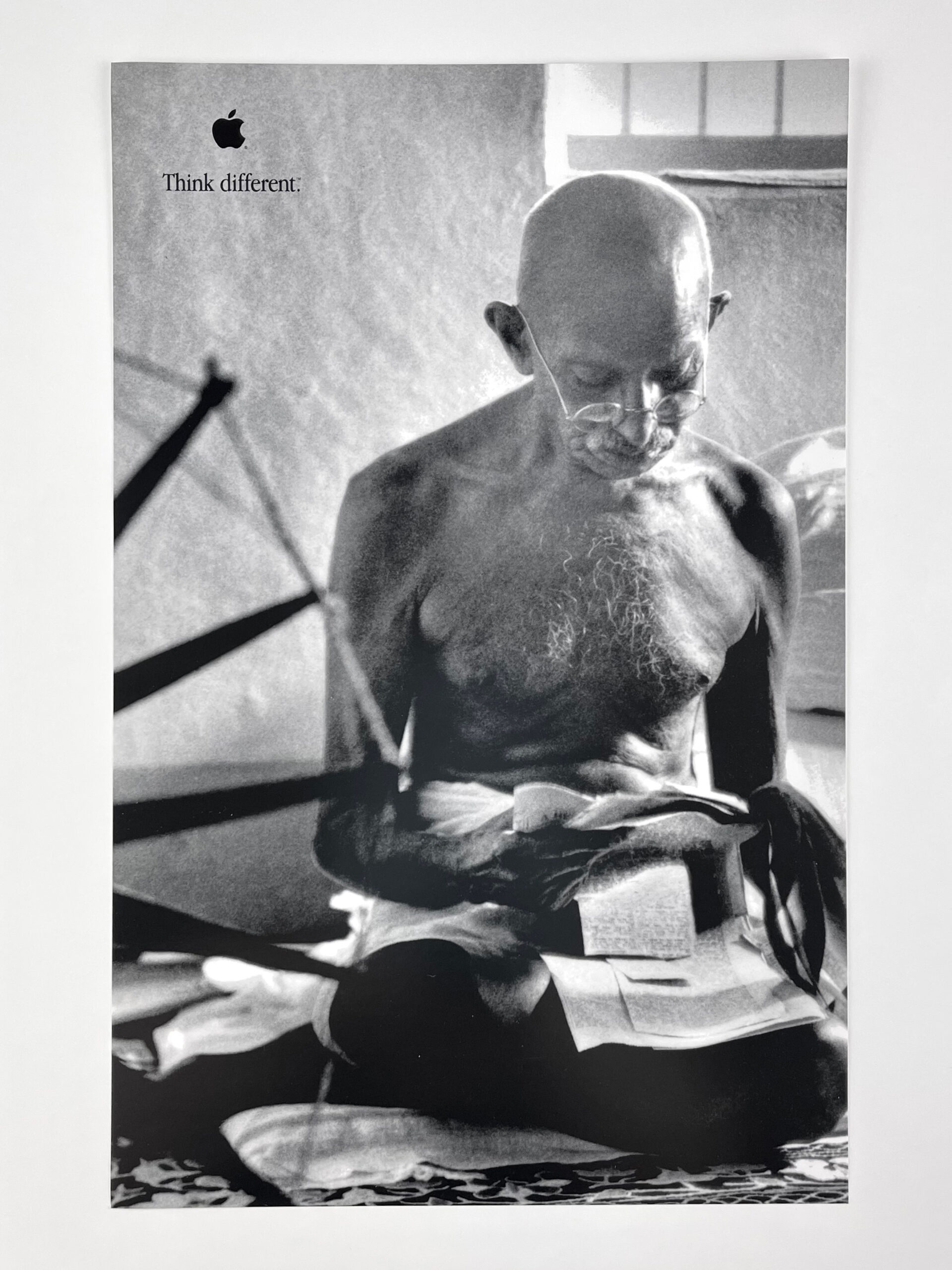
Gandhi (24 x 36 inches, 1997). From poster set 1.
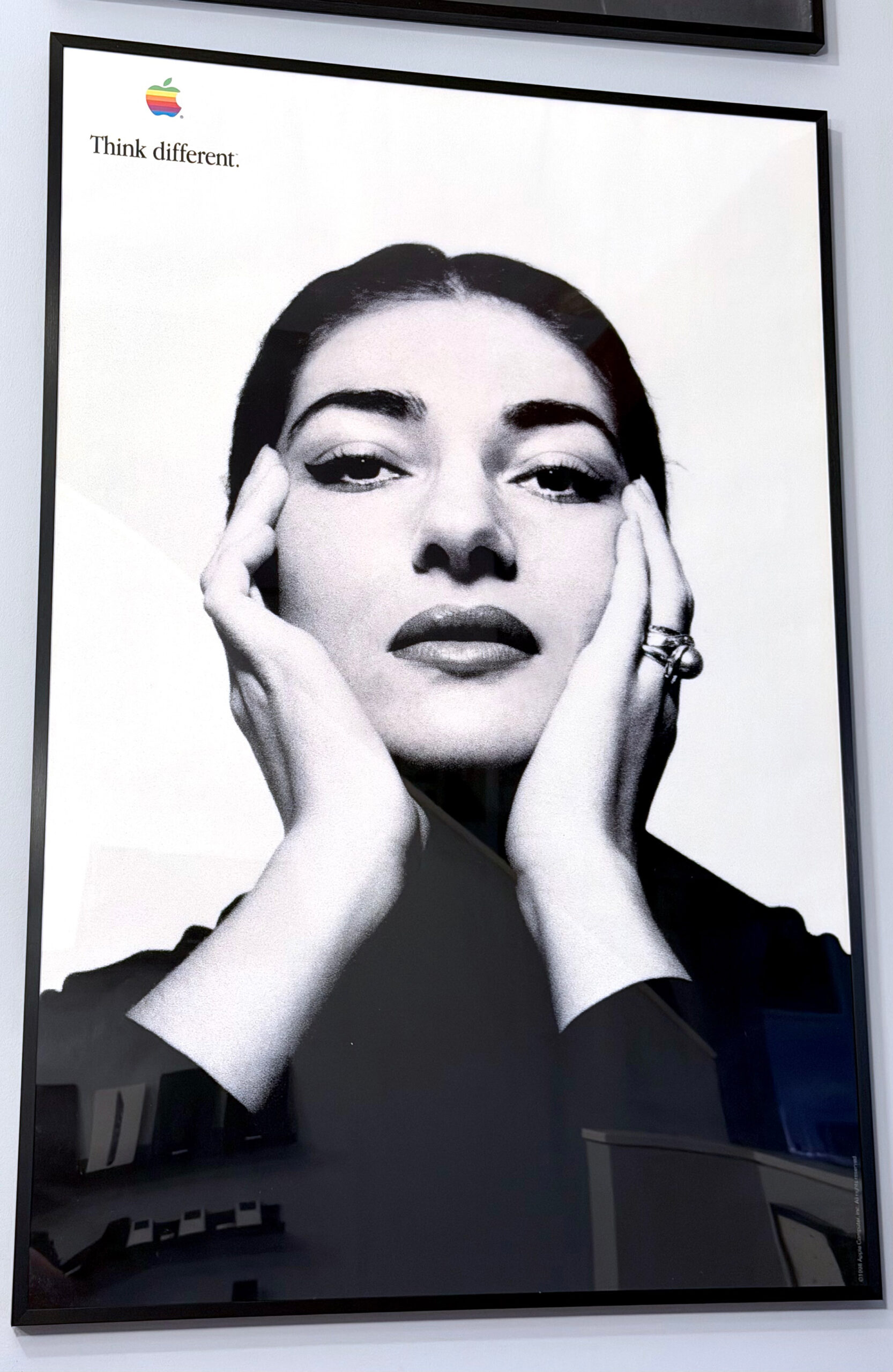
Maria Callas (24 x 36 inches, 1998). From poster set 2.
Alfred Hitchcock (24 x 36 inches, 1997). From poster set 1.
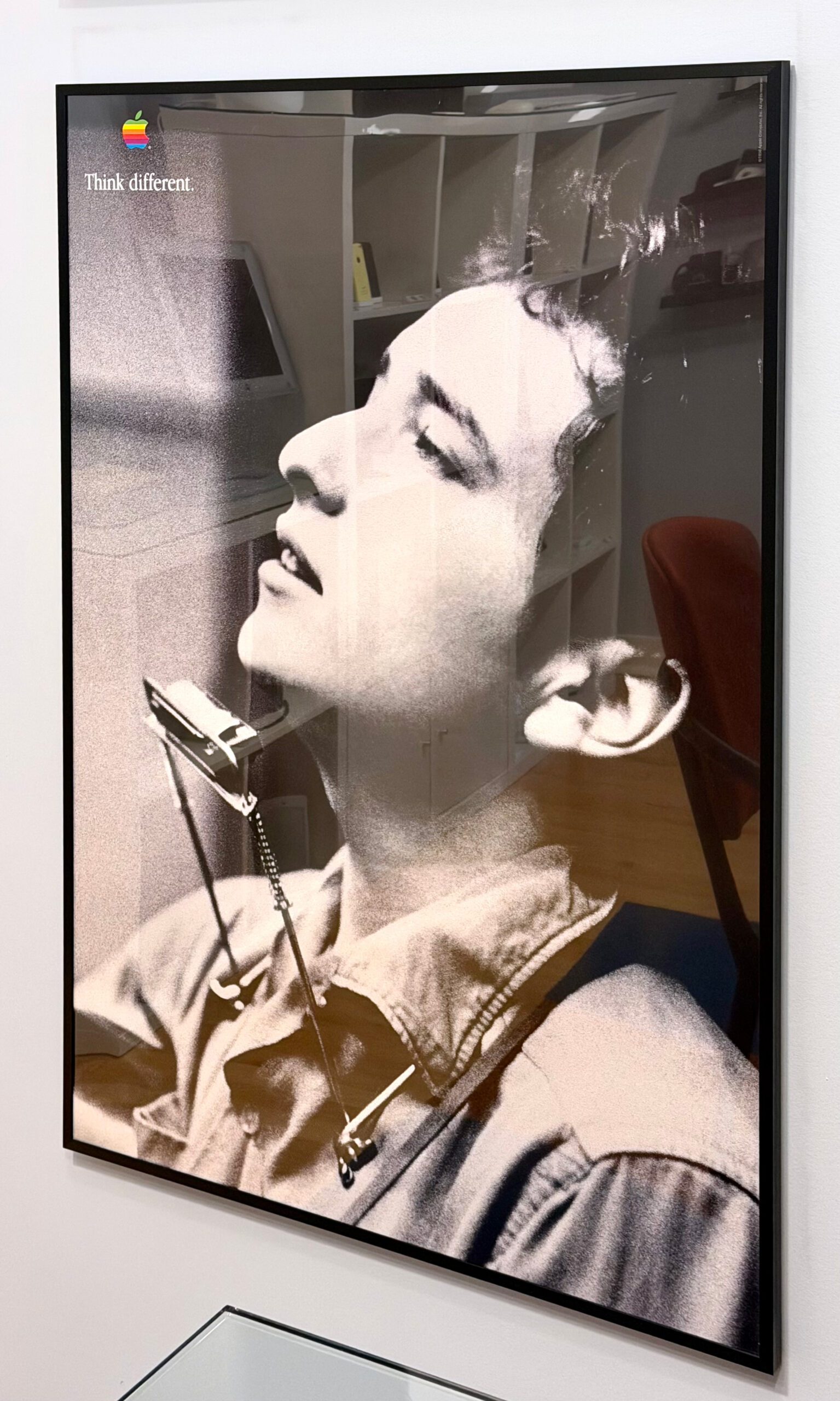
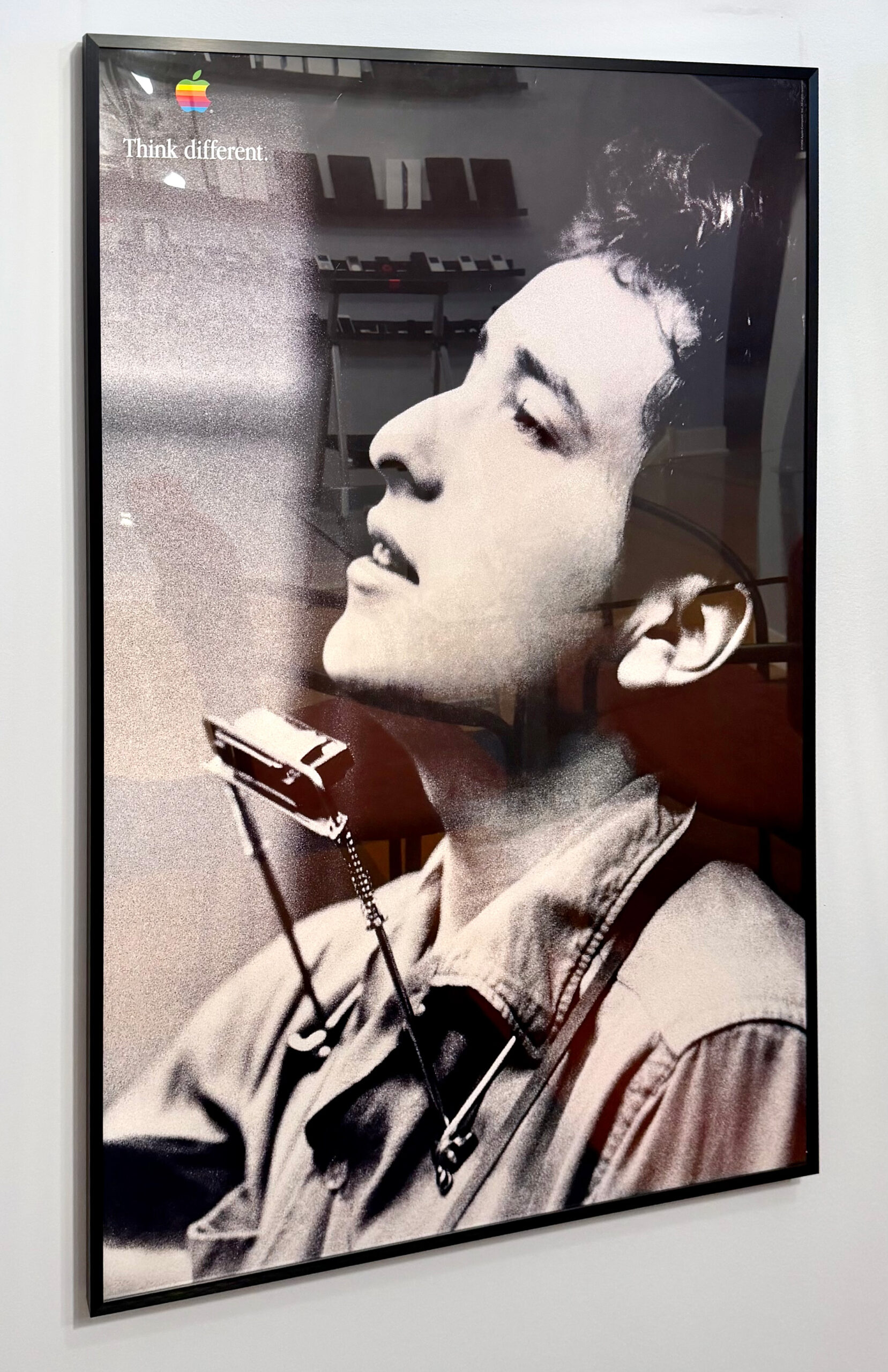
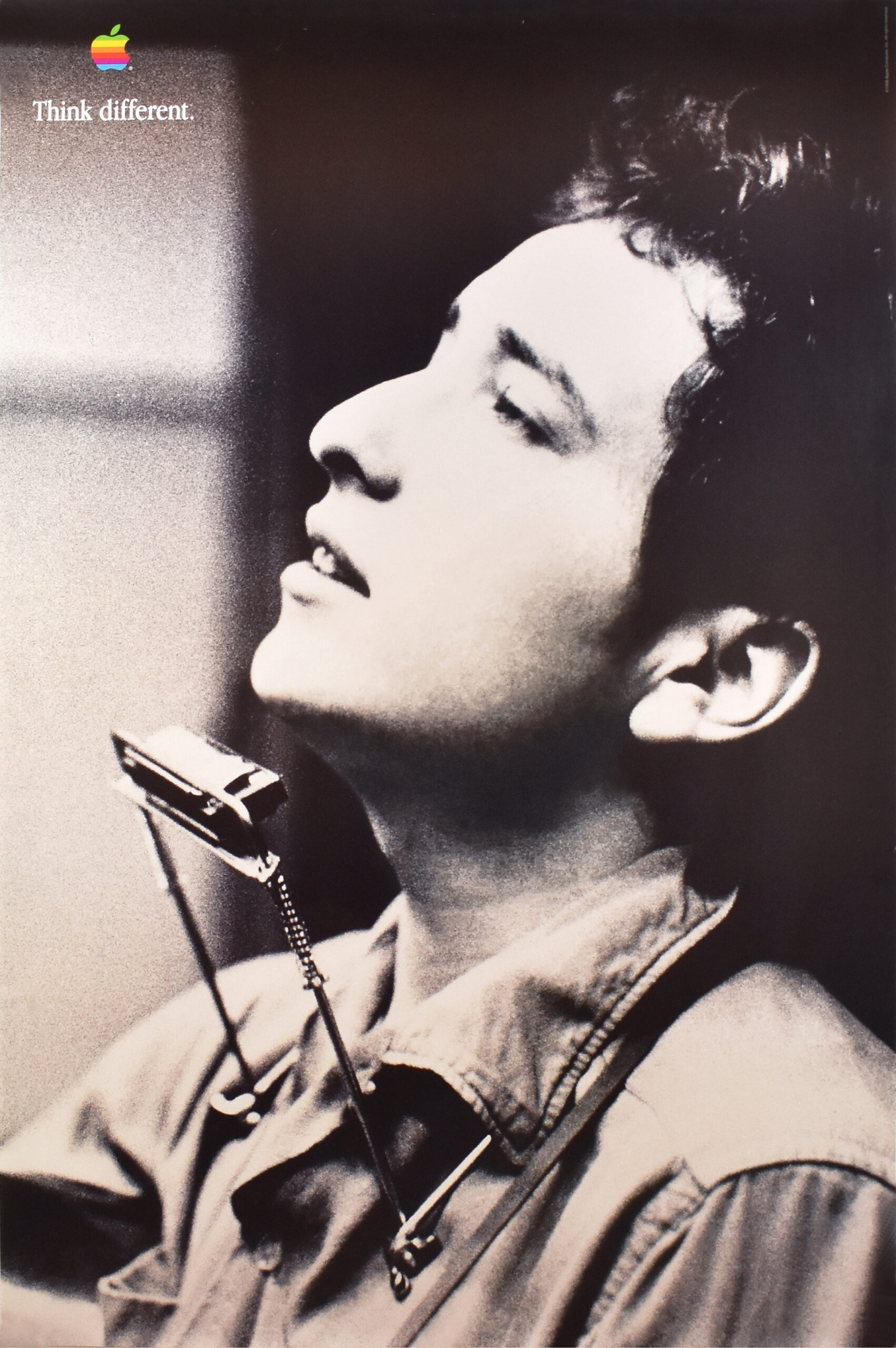
Bob Dylan (24 x 36 inches, 1998). From poster set 3.
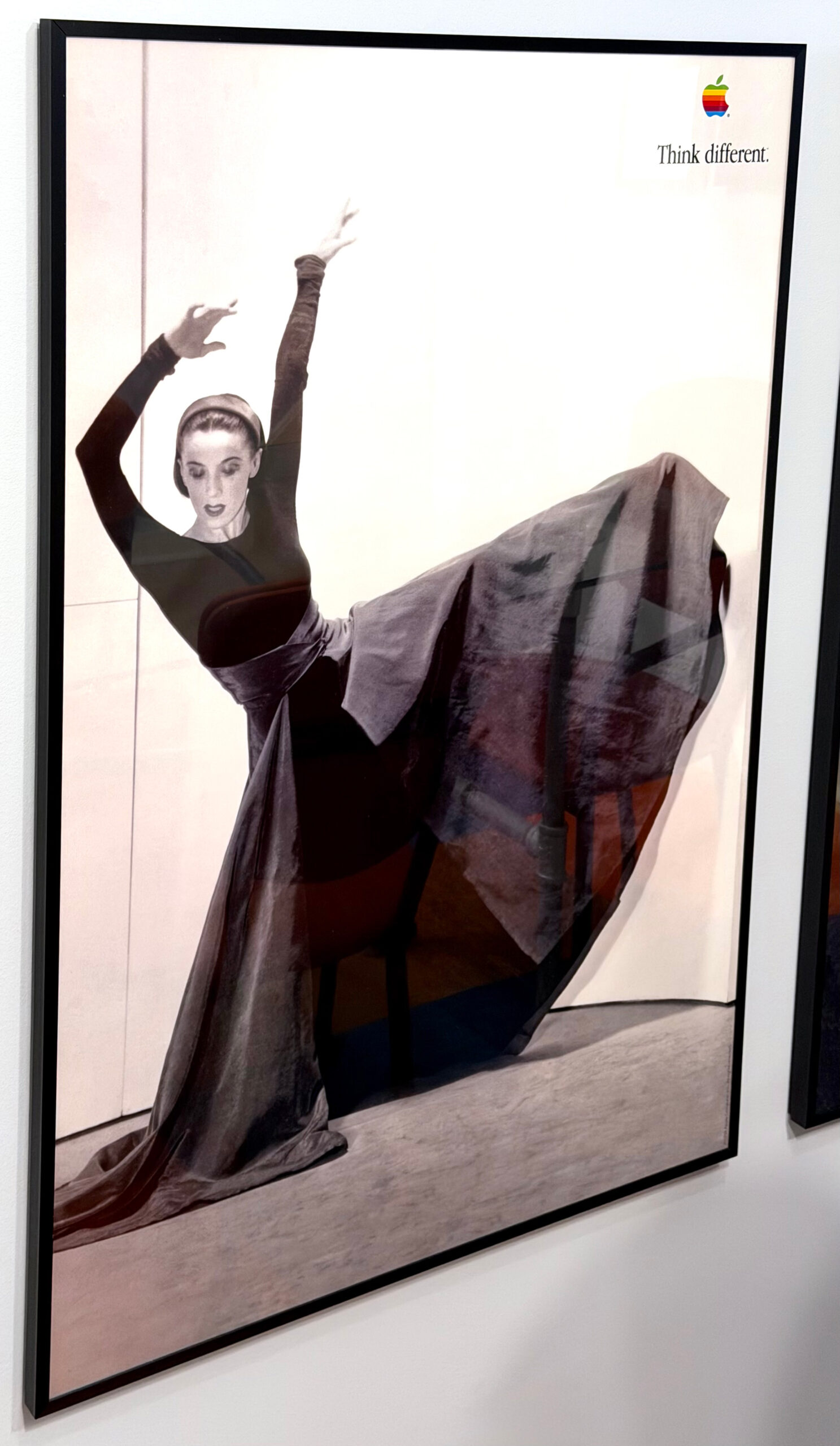
Martha Graham (24 x 36 inches, 1997). From poster set 2.
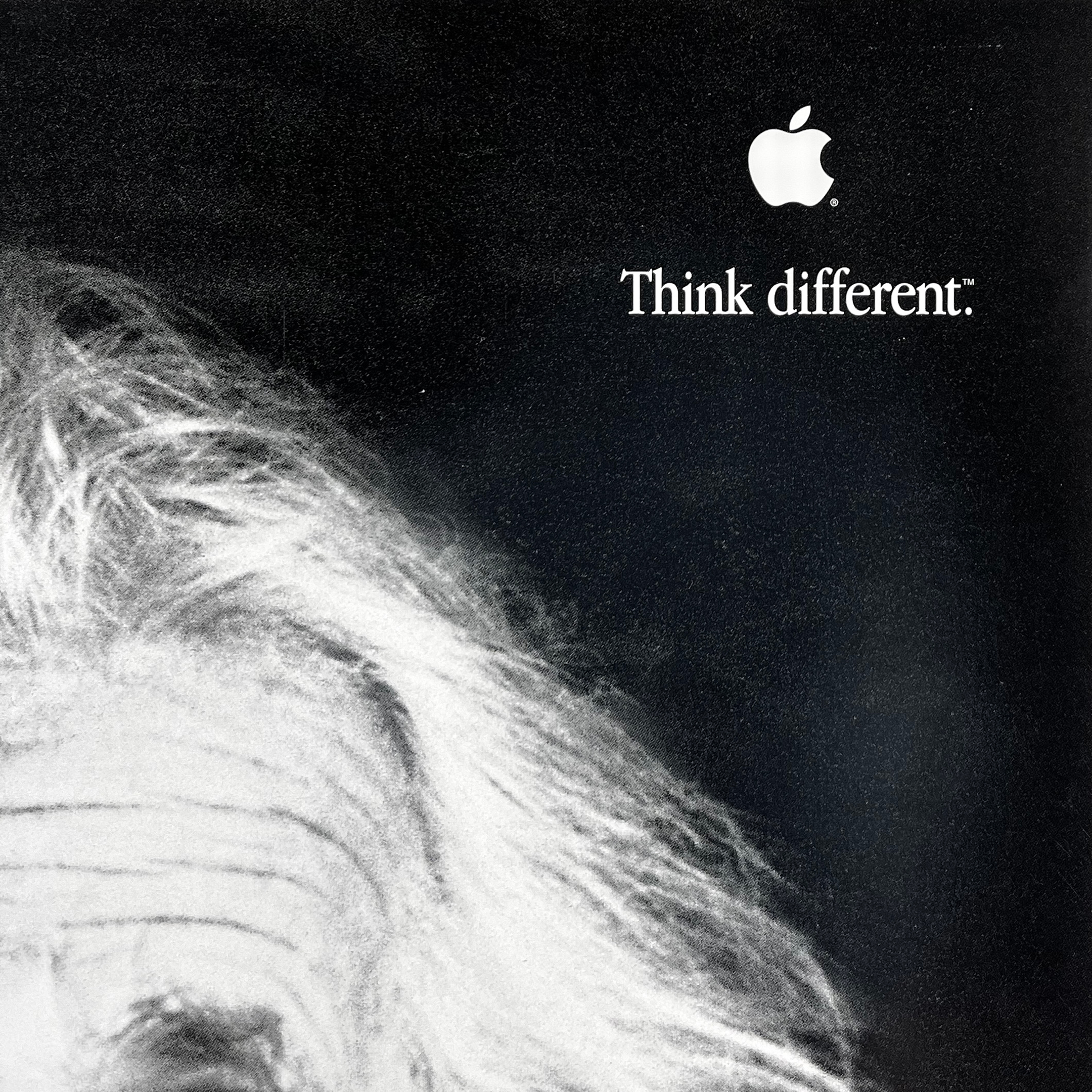
Albert Einstein (24 x 36 inches, 1997).
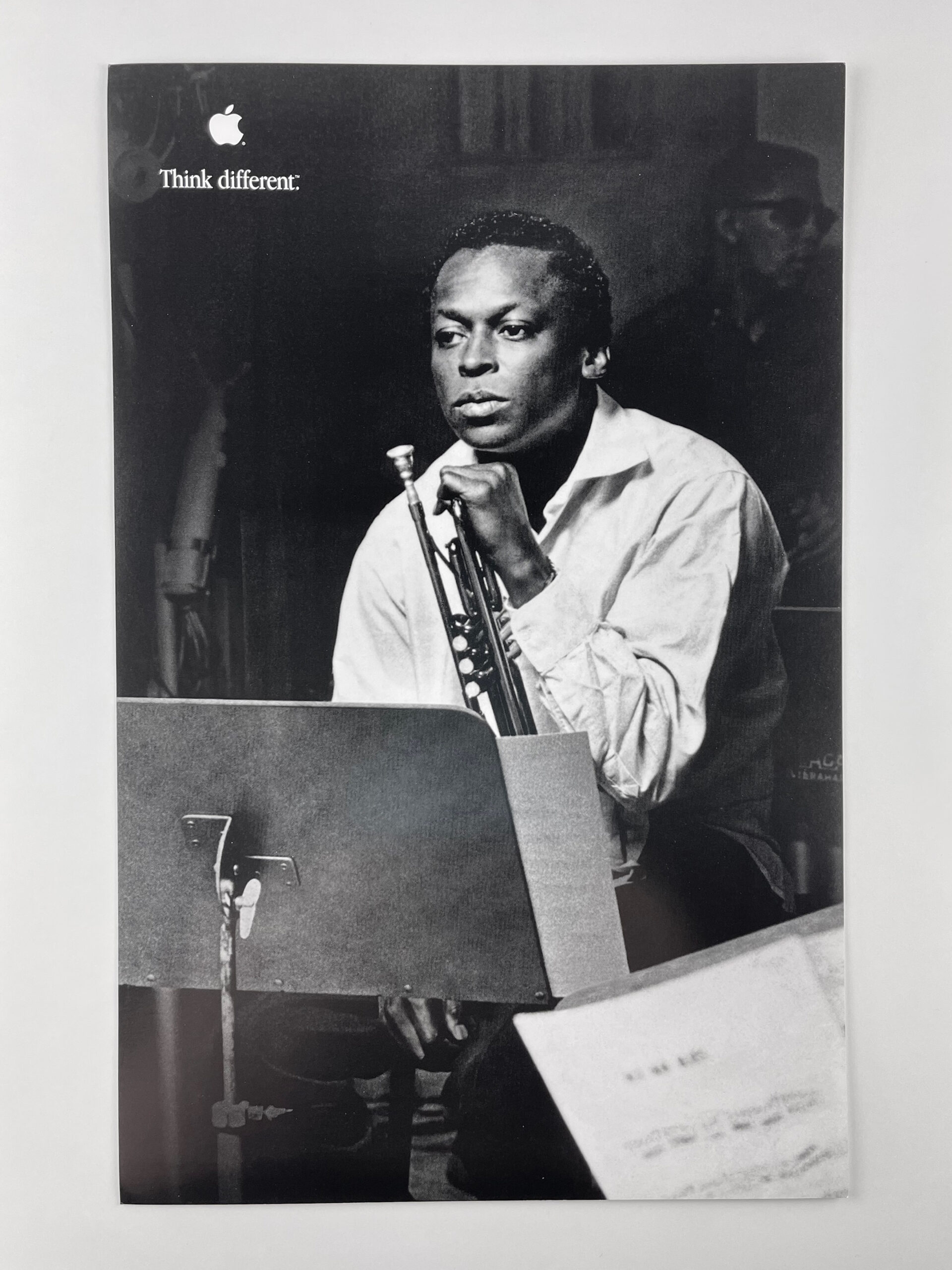
Miles Davis (24 x 36 inches, 1998). From poster set 3.
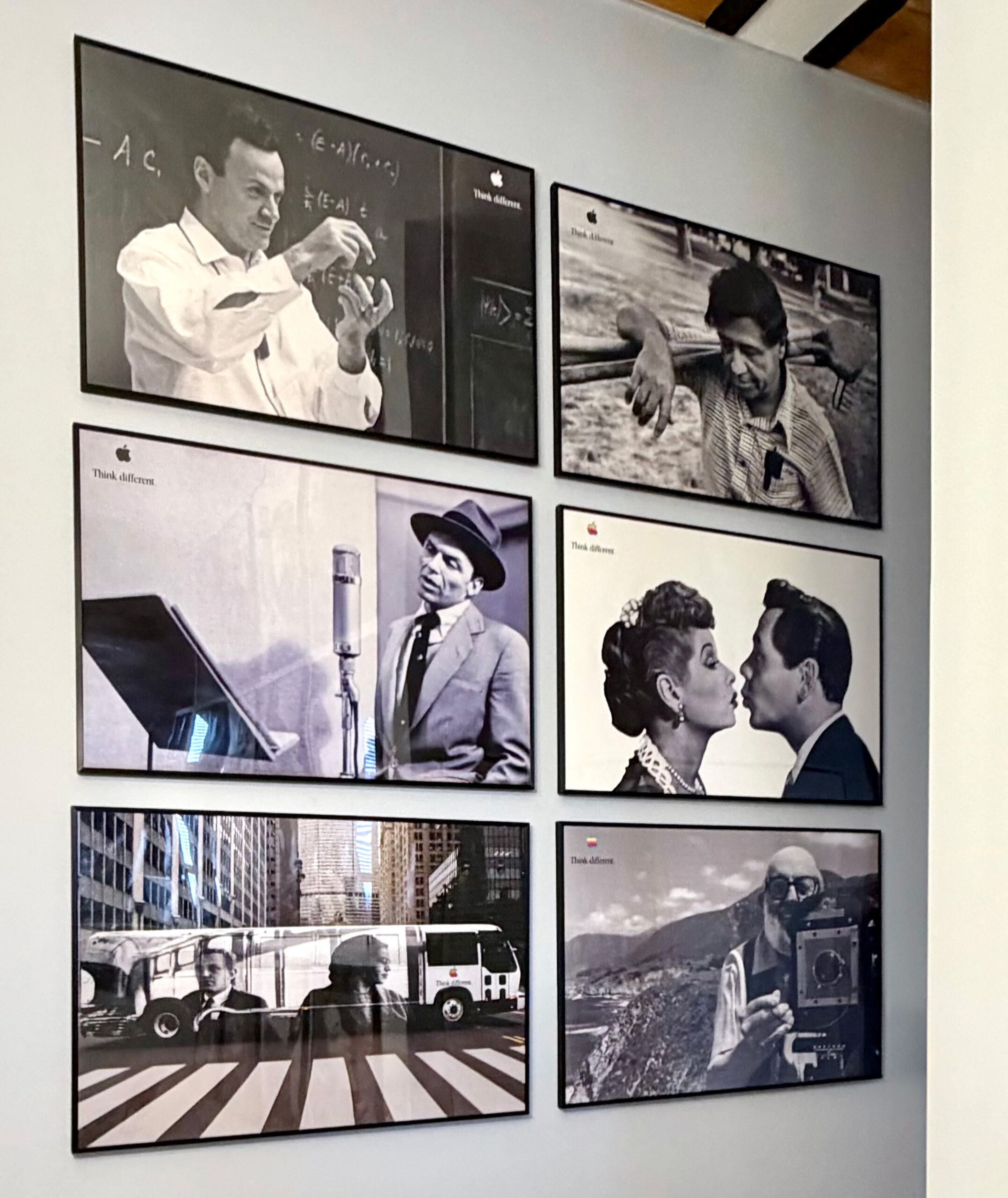
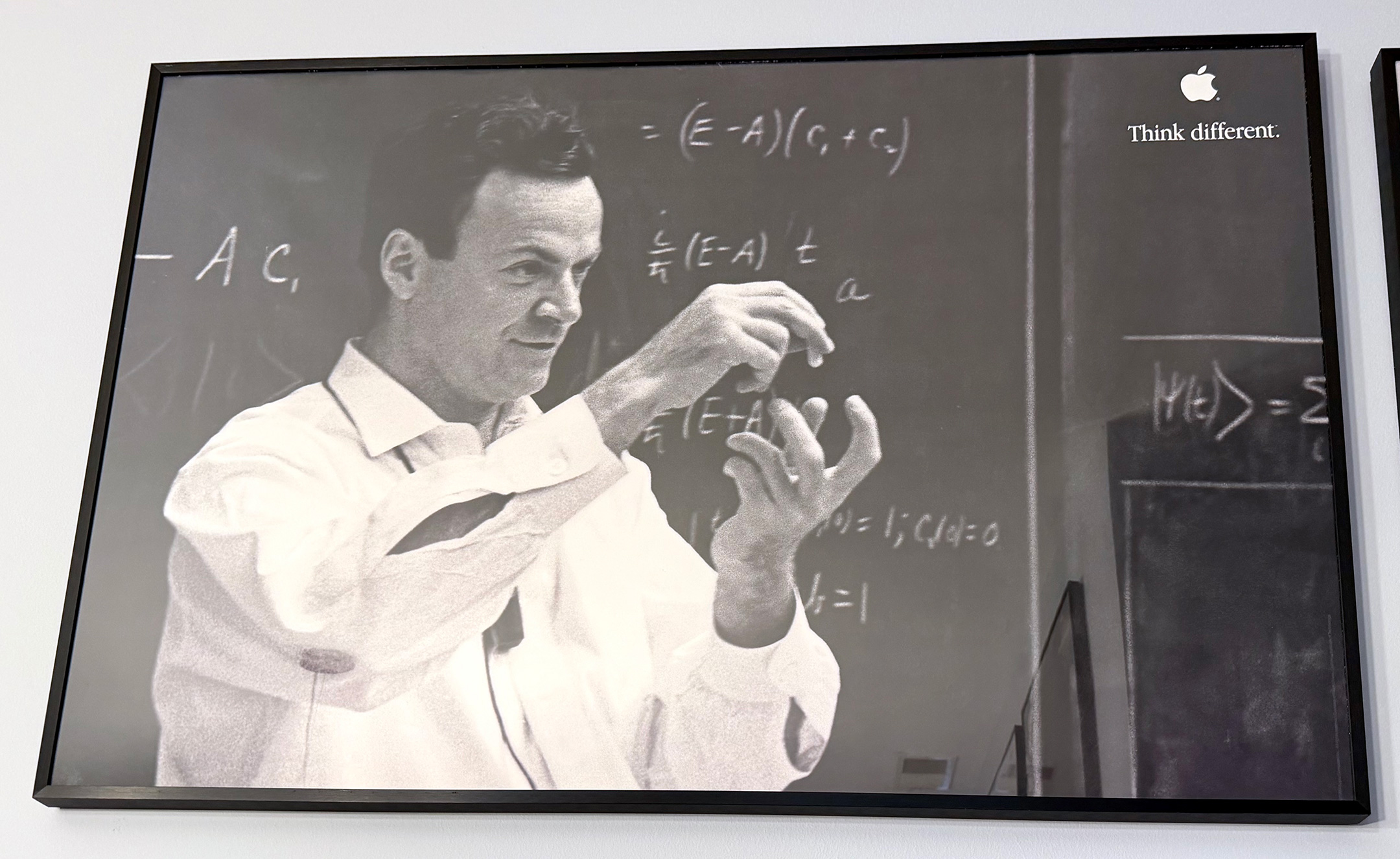
Richard Feynmann (36 x 24 inches, 1999). From poster set 4.
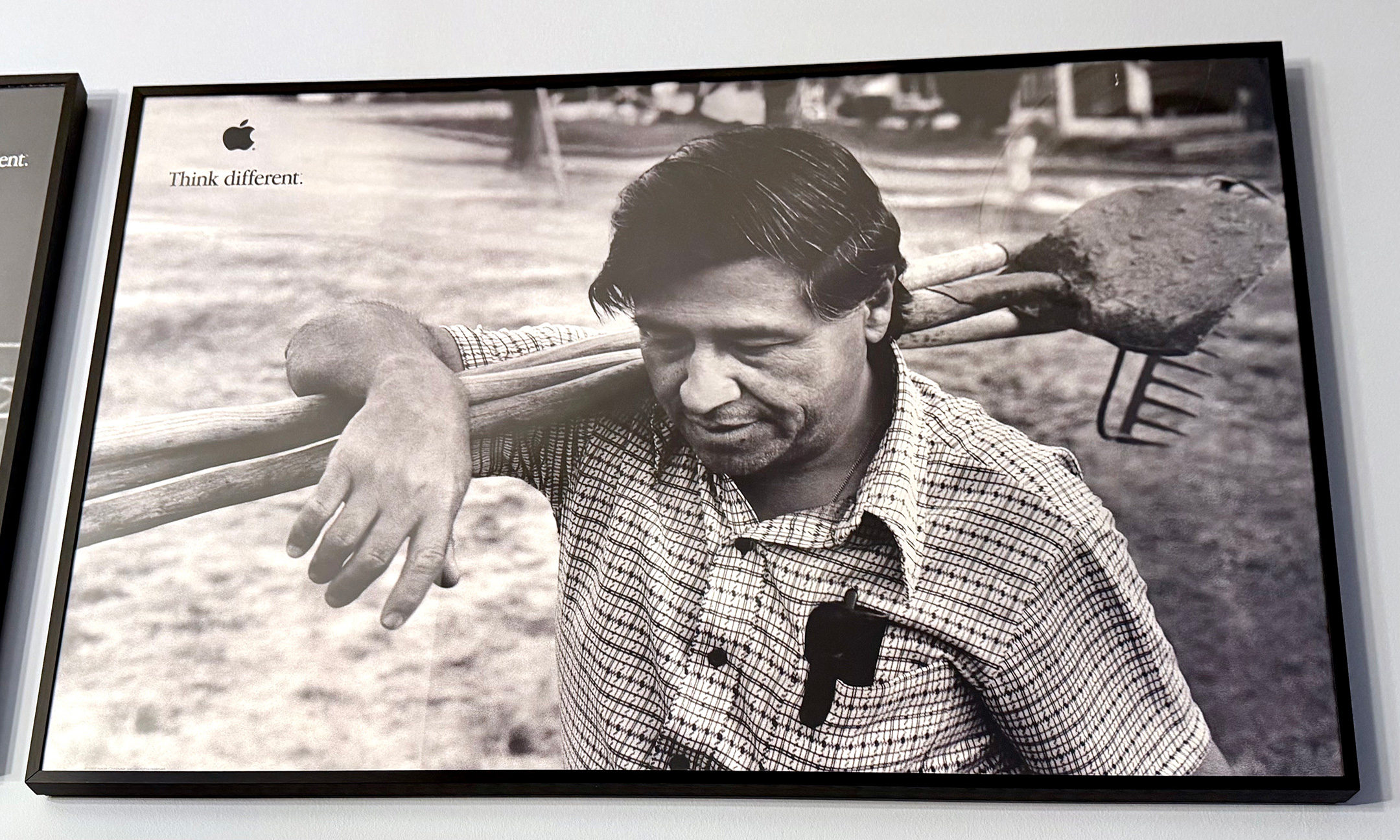
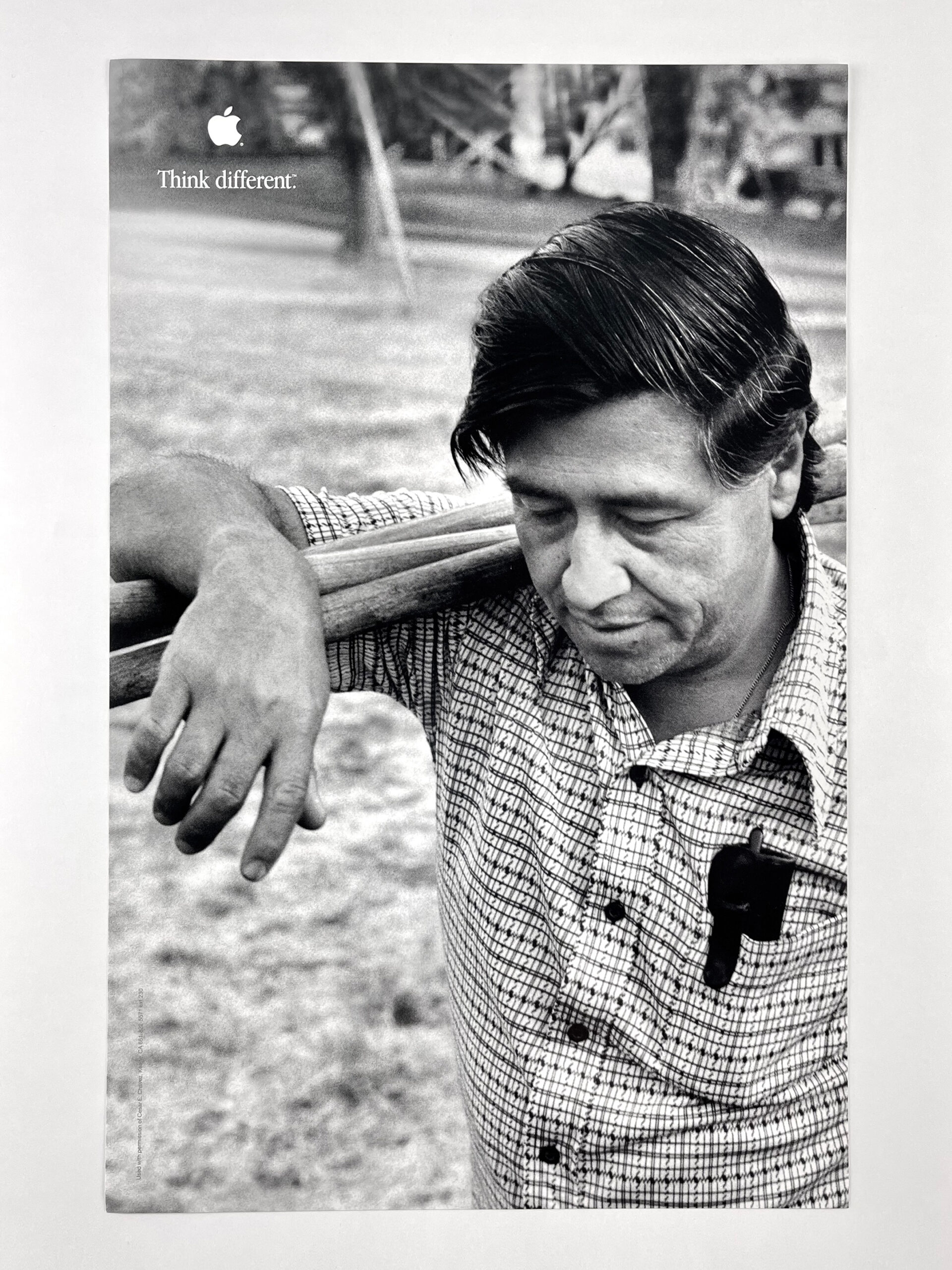
Cesar Chavez (36 x 24 inches, 1998). From poster set 4.
Frank Sinatra (36 x 24 inches, 1999). From poster set 4. [Print faded]
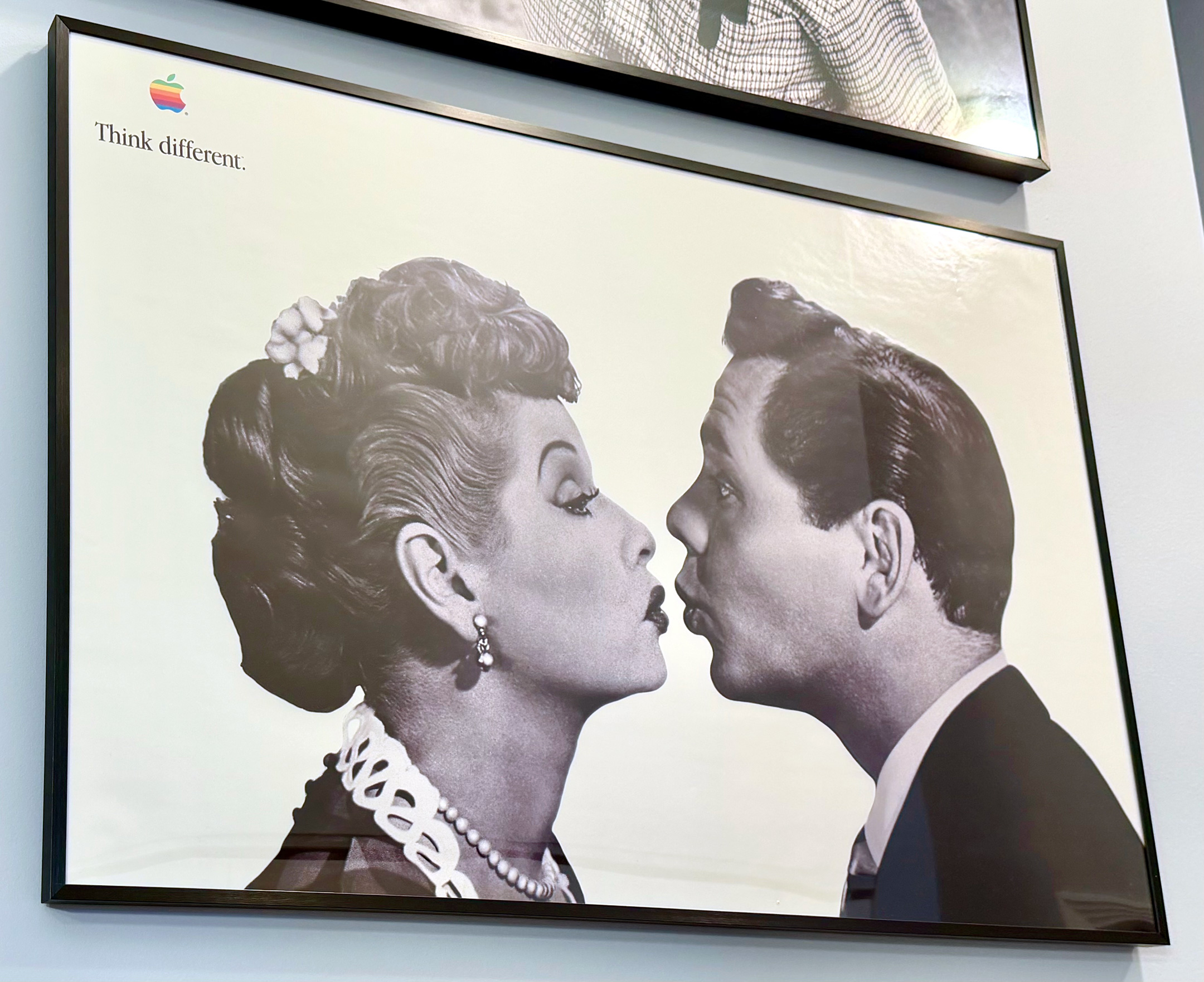
Lucille Ball & Desi Arnaz (36 x 24 inches, 1954/1998). From poster set 3.
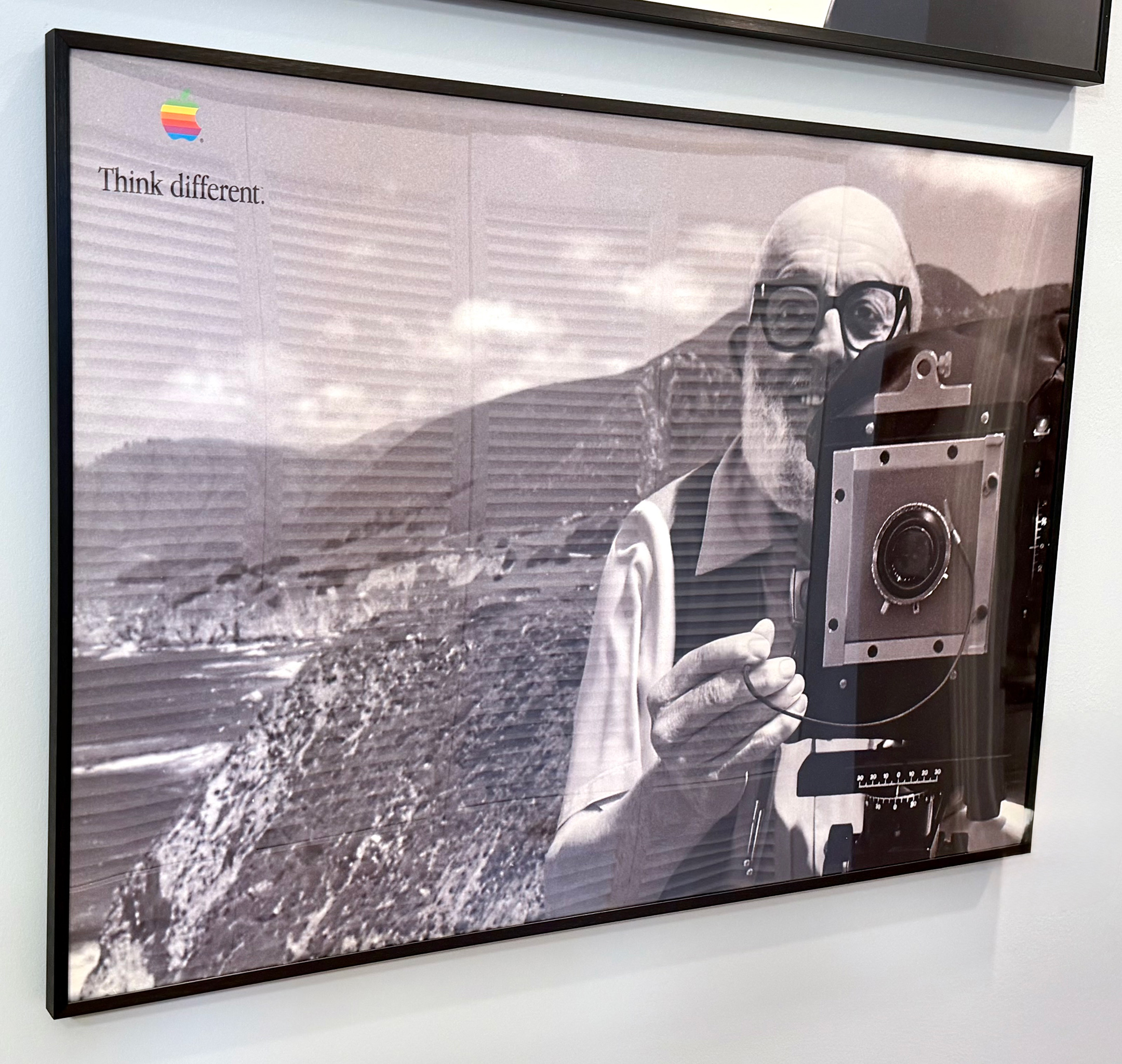
Ansel Adams (36 x 24 inches, 1998). From poster set 3.
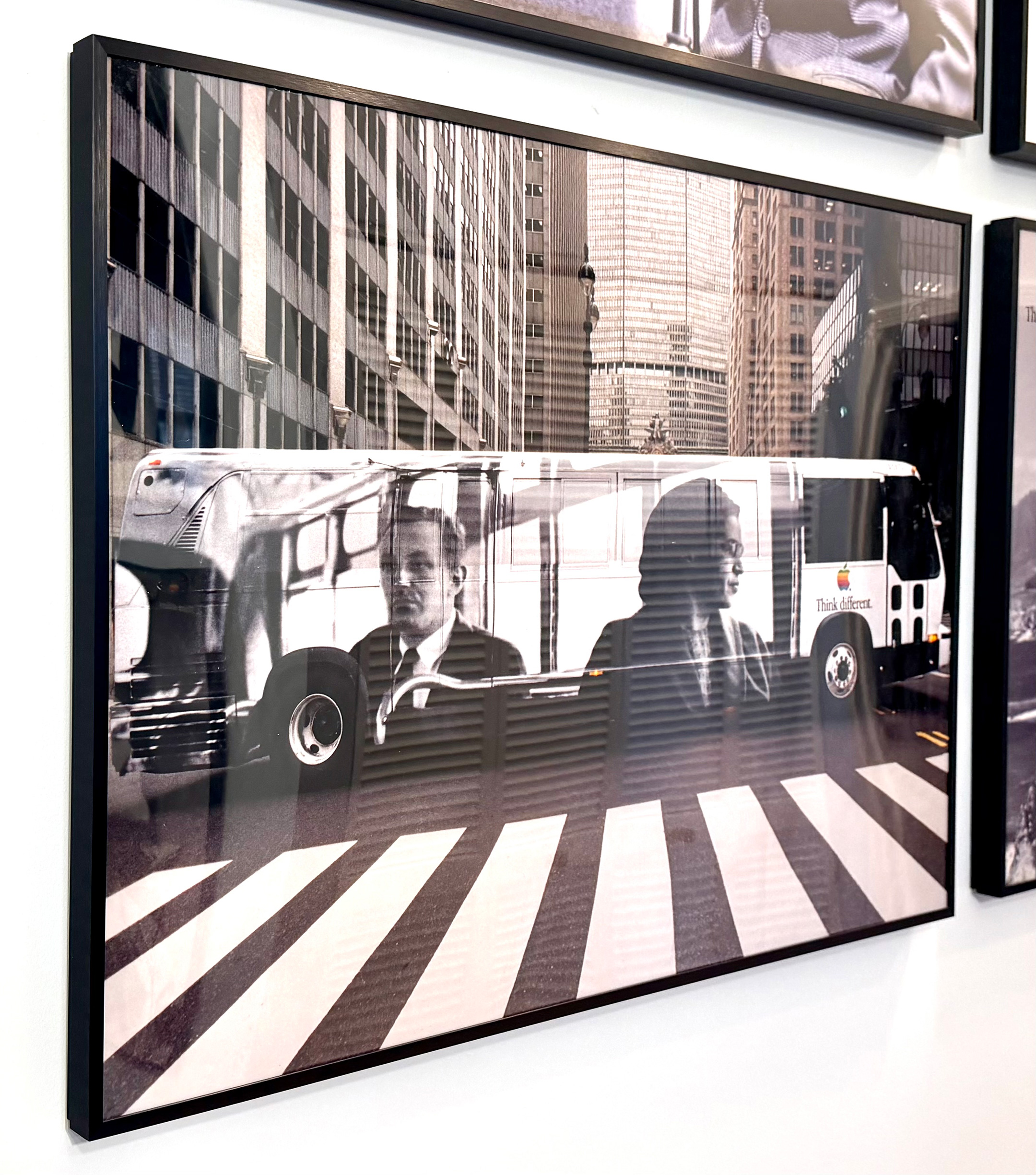
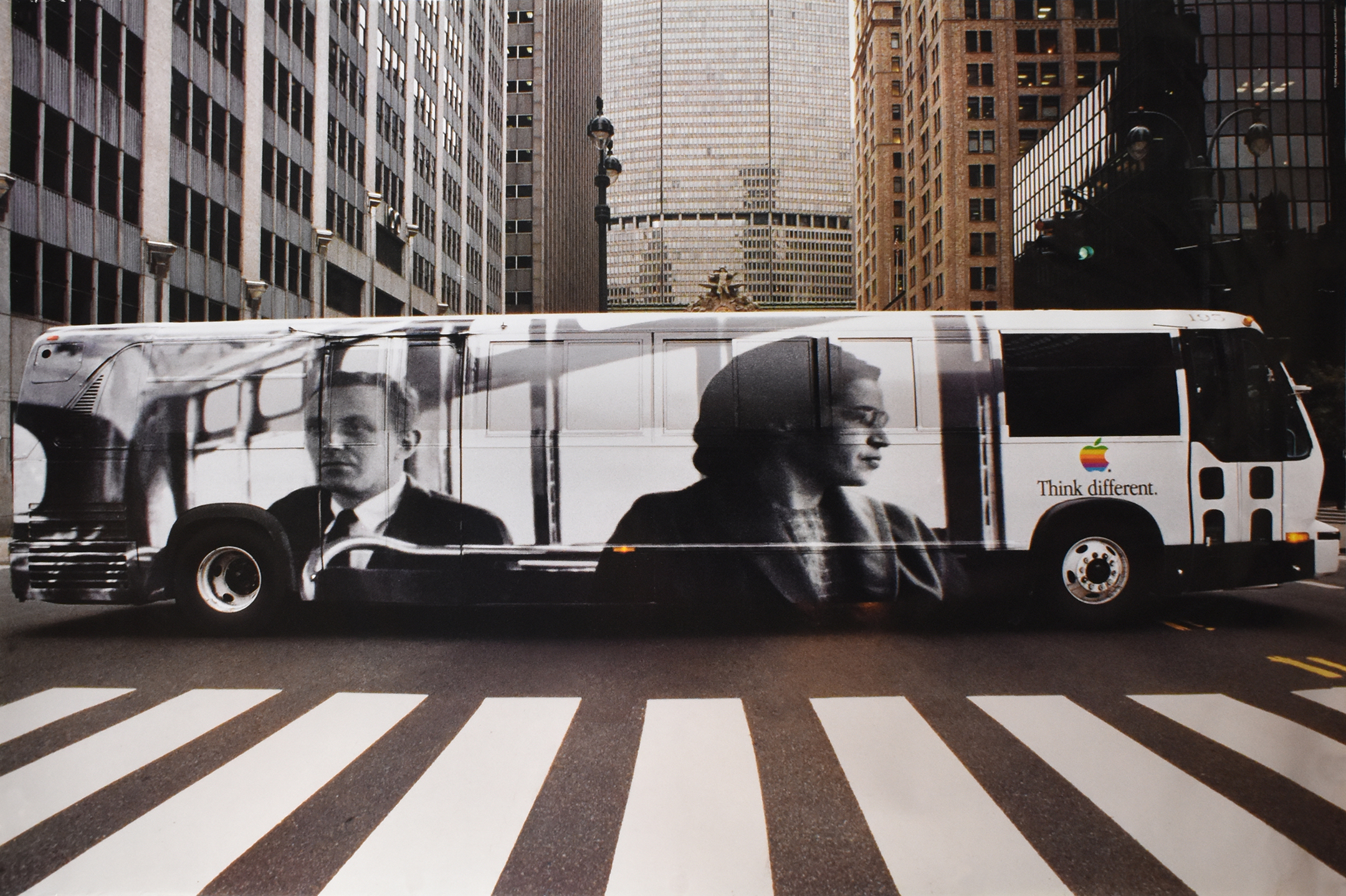
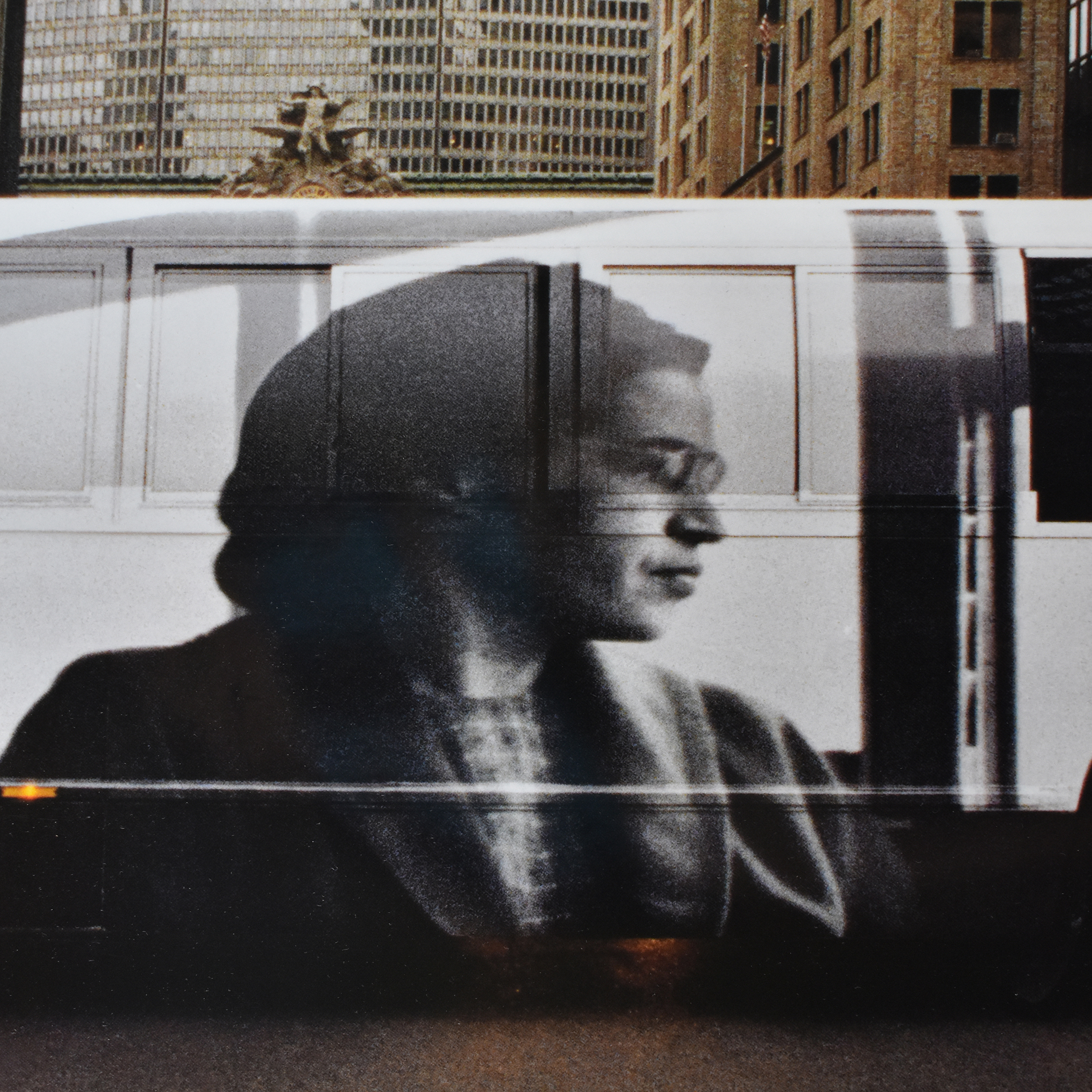
Rosa Parks bus (36 x 24, 1998). Education poster.
This advertising campaign was notable because it did not include imagery or mentions of any Apple products. The Think different idea was based upon a “manifesto” that began famously with “Here’s to the crazy ones.”
During the original TV commercial, voiced by Richard Dreyfuss, black-and-white film footage of iconic figures served as visuals to accompany the voiceover of a shortened version of the manifesto. Luminaries in the commercial included Albert Einstein, Bob Dylan, Martin Luther King Jr., Thomas Edison, Muhammad Ali, Gandhi, Amelia Earhart, Alfred Hitchcock, Jim Henson, Pablo Picasso, and others. The commercial ended with the multi-color Apple logo on a black background with white text (in the Apple Garamond font) Think different.
The print and digital ads also did not feature Apple products, just a black-and-white photo, the multi-color Apple logo, and the words “Think different.” One of the creative team members who worked on the campaign described the print concept: “The rainbow-colored logo served as stark contrast to the black and white photography, and, to me, it seemed to make the ‘Think Different’ statement all the more bold.”
In her 2011 book Design by Nature: Using Universal Forms and Principles in Design, Maggie Macnab described the concept of the Think different campaign:
“By identifying Apple’s core philosophy with the rebels and geniuses that changed the world by ‘thinking differently,’ the campaign established Apple as the ideology of the future. Apple was perceived as saving the day by making technology accessible to anyone. This move repositioned it well above its competition and far beyond the status of ‘product’ by connecting the user into a world of possibility.”
From the debut of Think different, the grammar of the slogan has been debated. Would-be grammarians cited the adverbial rule and admonished the slogan stating that “standard” English grammar dictates that adverbs must modify verbs—making “think differently” the “correct” usage. However as in this case, “different” can be used as an adjective that modifies the object “think”—suggesting a command to think in a different way. Thus, the slogan is parallel to other uses, such as “think big,” where “big” is used as an adjective. Using this logic, “think big” cannot be corrected to “think bigly,” just as “think different” could not be changed to “think differently” without changing its meaning.
In the United States, four sets of 24 x 36 inch Think different posters were released. Set 1 included Amelia Earhart, Alfred Hitchcock, Pablo Picasso, Mahatma Gandhi, and Thomas Edison. Set 2 included Maria Callas, Martha Graham, Joan Baez, Ted Turner, and the Fourteenth Dalai Lama (not officially released due to licensing). Set 3 included Miles Davis; Ansel Adams (landscape orientation); Lucille Ball and Desi Arnaz (landscape orientation); and Bob Dylan (not officially released due to licensing). Paul Rand and Jimi Hendrix were part of Set 3, but not included in all sets that were shipped (also likely due to licensing). Set 4 included Frank Sinatra, Richard Feynman, Jackie Robinson, and Cesar Chavez.
An unofficial Set 5 included film directors that was never released, including Charlie Chaplin, Francis Ford Coppola, Orson Welles, Frank Capra, and John Huston.
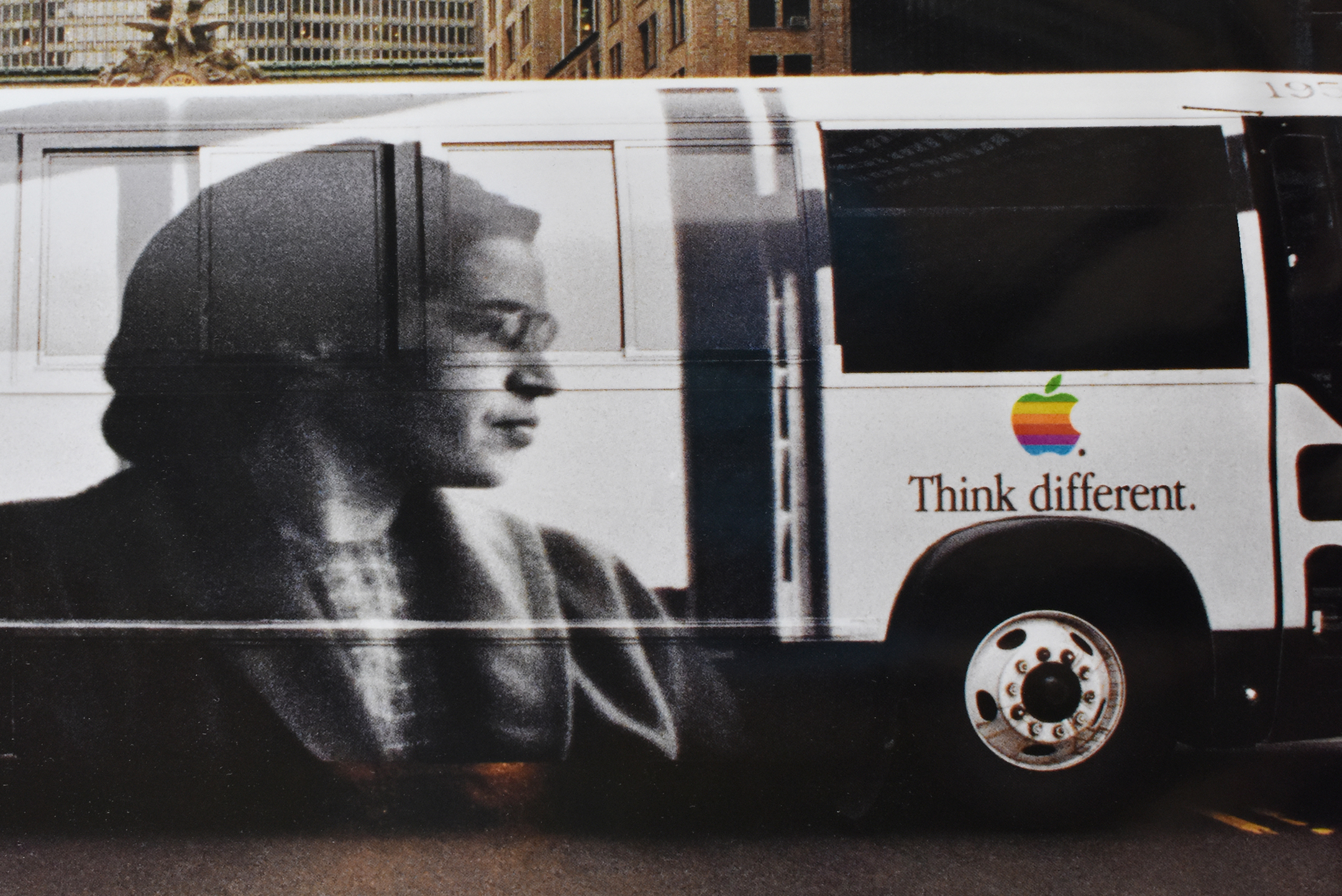
The 36 x 24 inch Rosa Parks bus poster is unique in this set as it was created and distributed to education customers and not part of a larger set. Further, the poster is a color photo of a black-and-white photo on the side of a New York City bus.
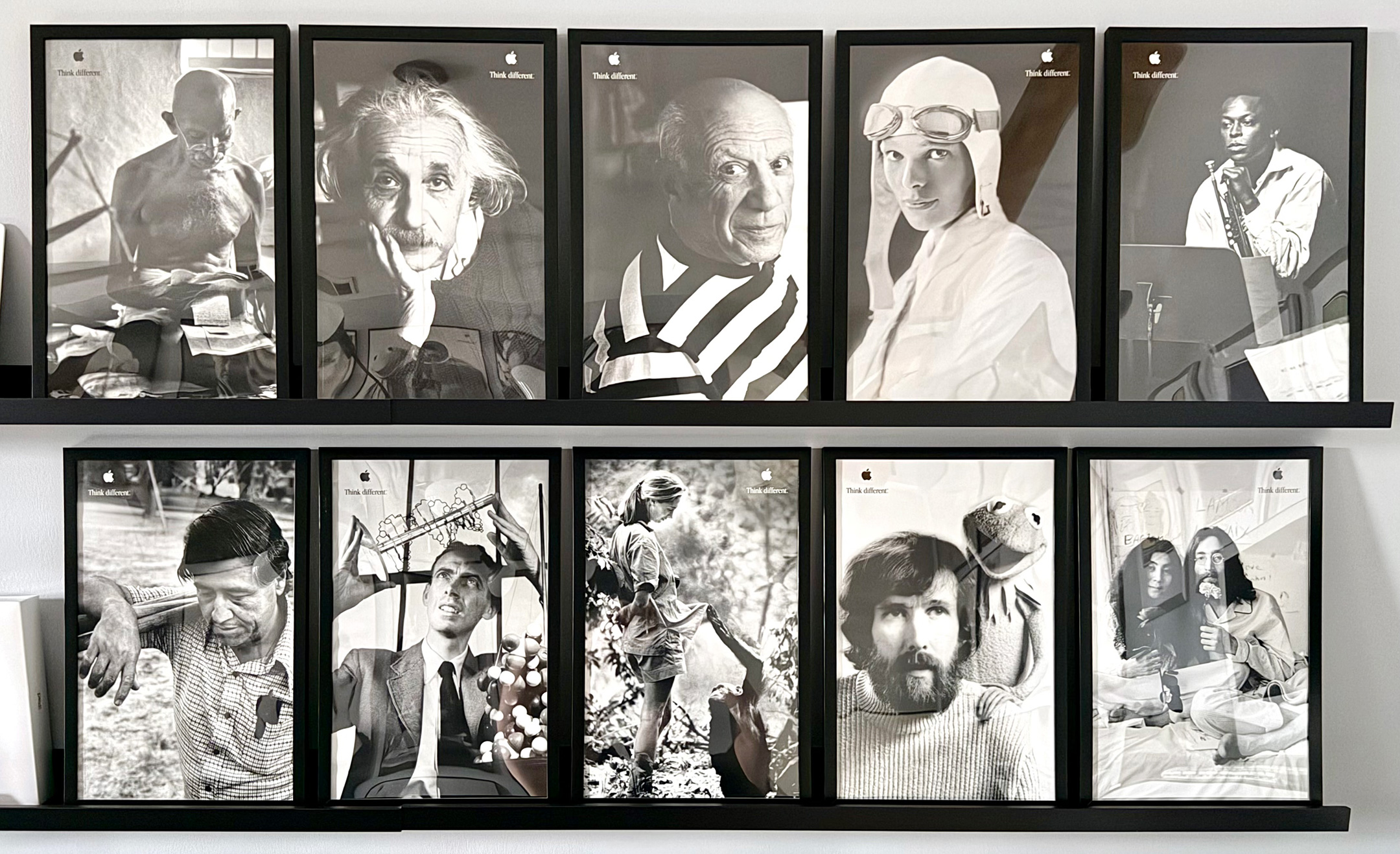
I have collected many of Apple’s Think different posters, print ads, and other materials, including a set of 10 posters that measure 11 x 17 each and were distributed to educators. Some designs in this Think different education set are cropped versions of the 24 x 36 posters.
The 24 x 36 posters photographed here are displayed in my dining room on two walls to create a gallery effect. I also included a photo of the 11 x 17 posters on the facing wall. You will note that the photography style of this entry is very different from my typical posts. These photos were captured with iPhone 17 Pro in situ with inconsistent lighting, angles, and reflections.
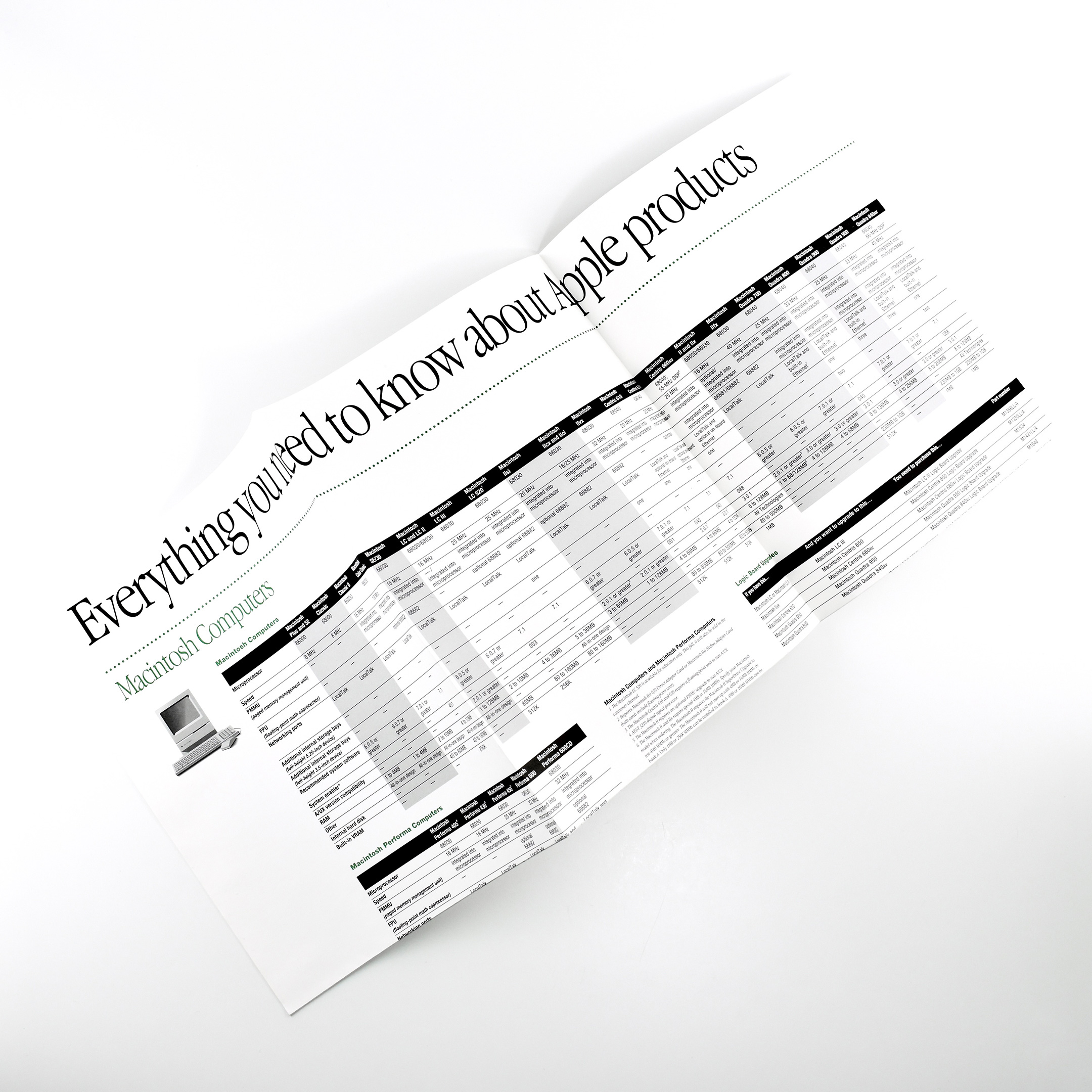
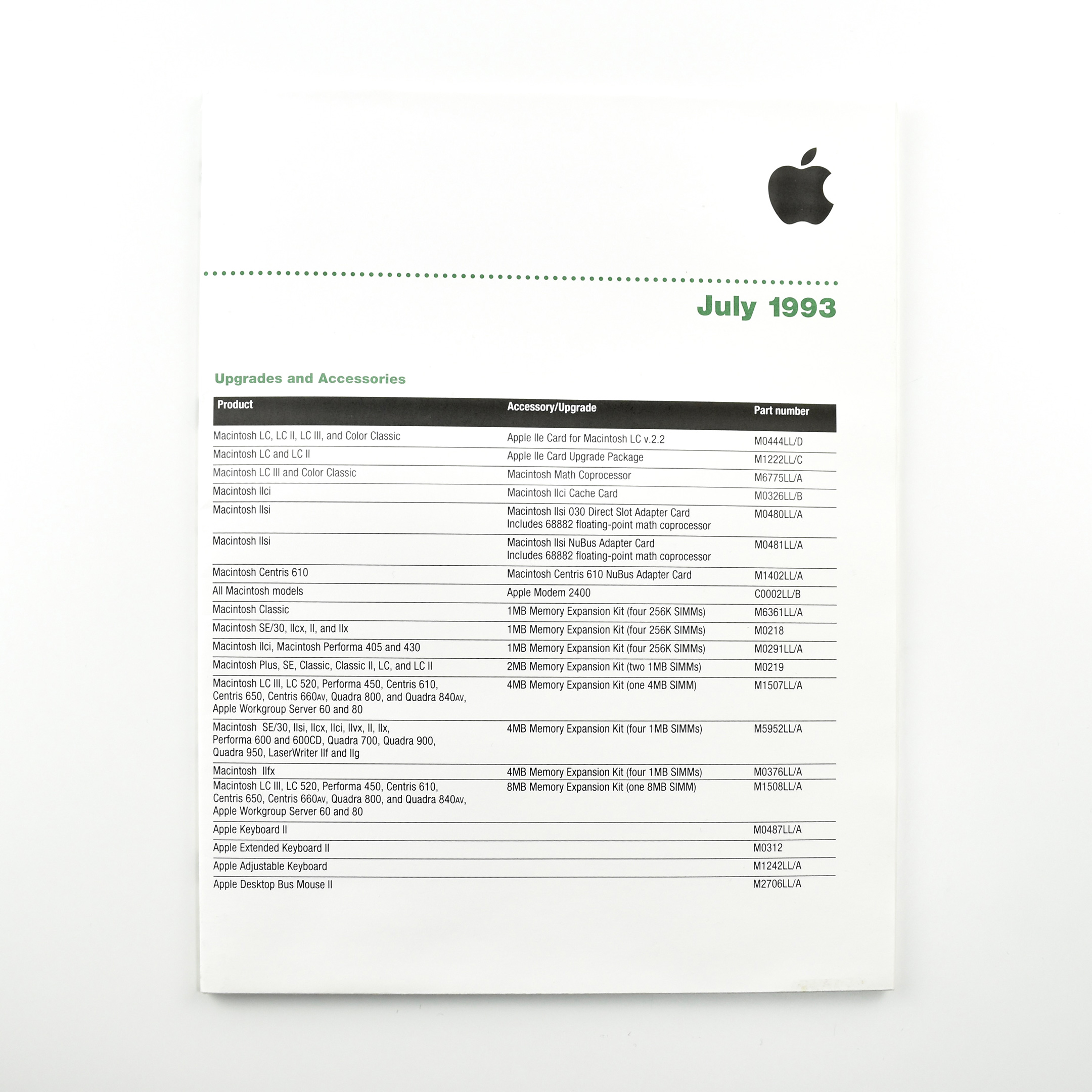
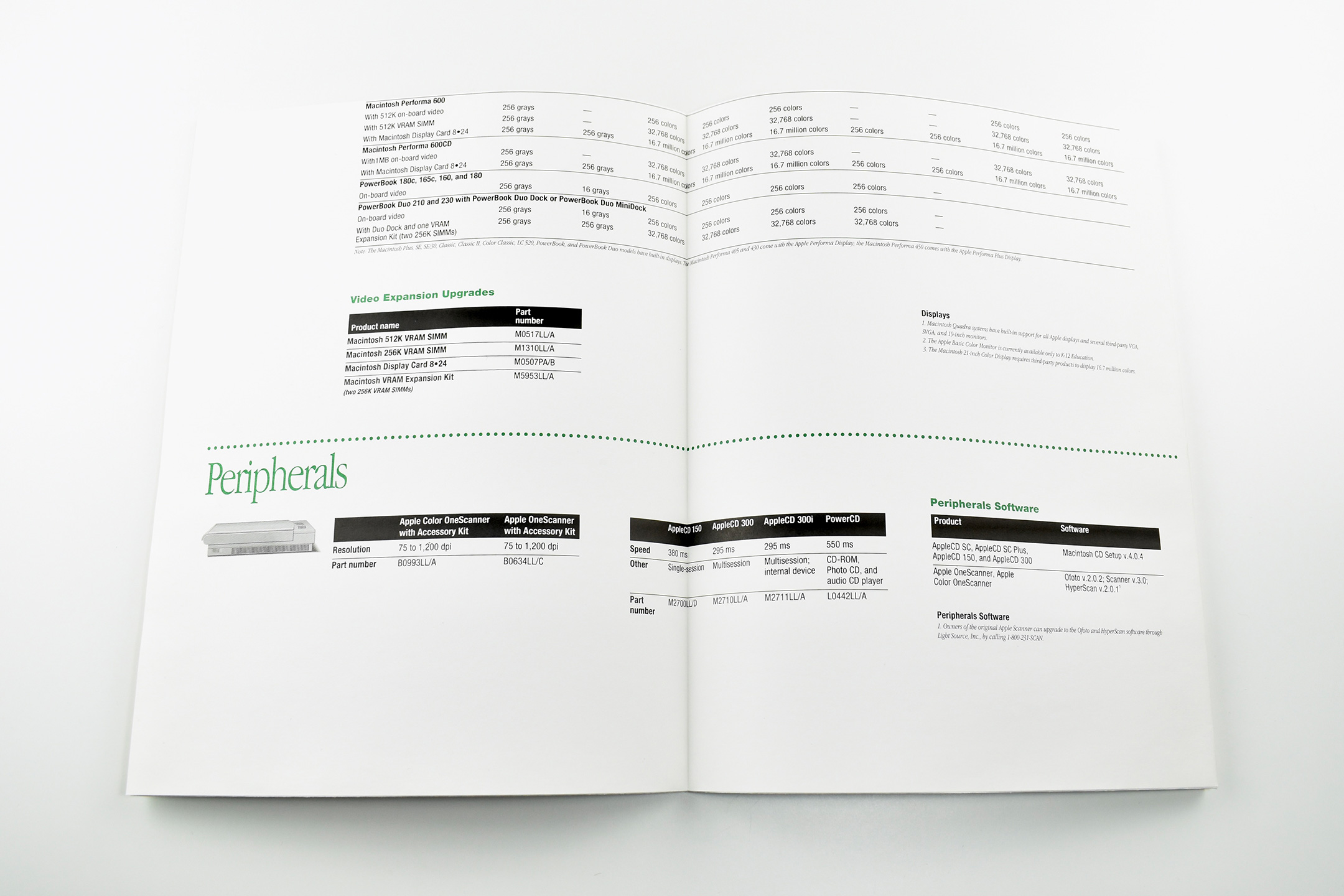
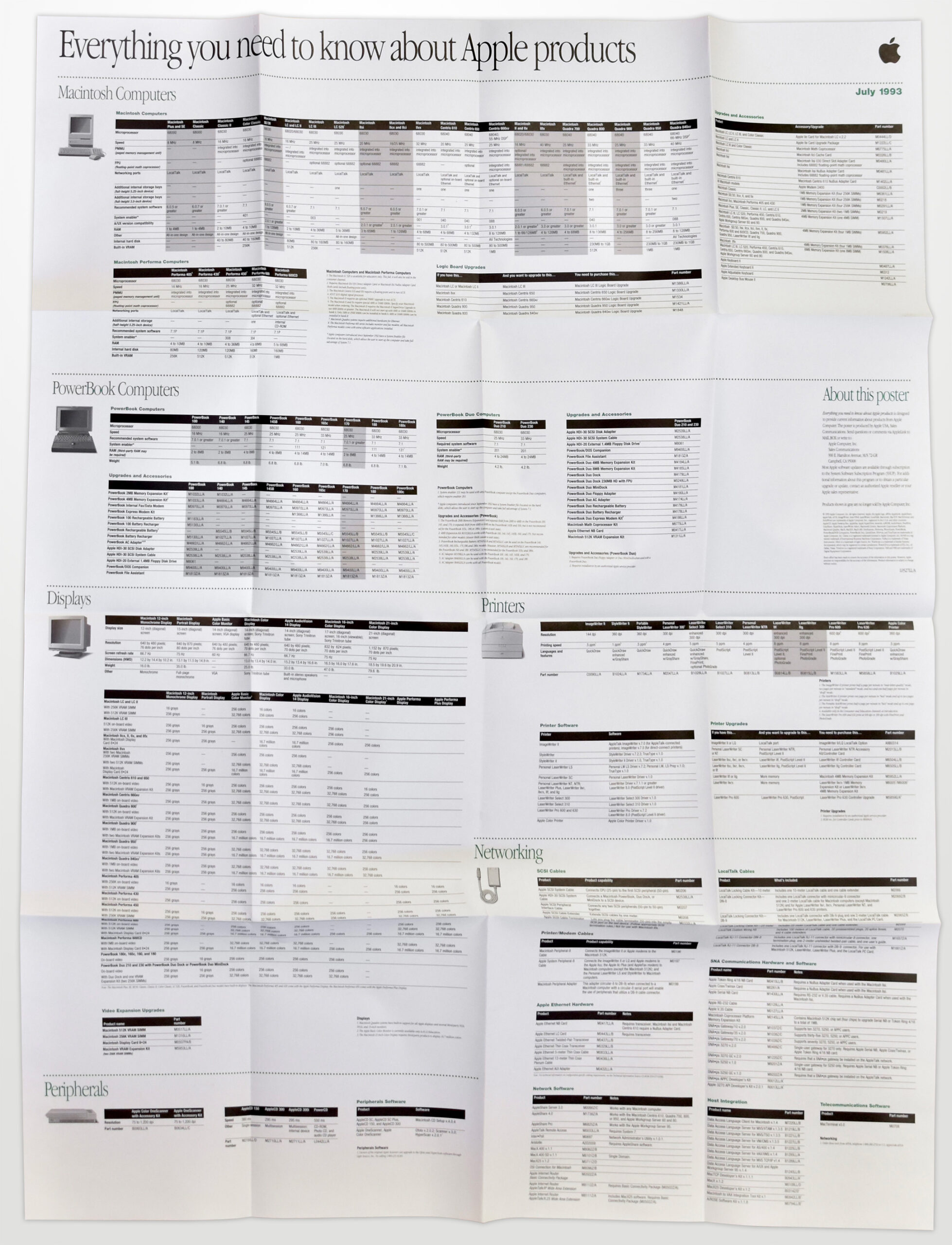
This fold-out poster is from July 1993 and lists product names and feature grids of every Apple product available at the time. Its headline reads “Everything you need to know about Apple products” in Apple Garamond, Apple’s corporate font used between 1984 and 2003. Folded, the poster measures 8.5 x 11 inches—but it unfolds into 16 panels to reveal a 34-inch wide x 44-inch long poster (nearly 3 x 4 feet).
The poster is printed on one side and includes the following product categories:
Macintosh Computers (25 options)
PowerBook Computers (11 options)
Displays (9 options)
Printers (12 options)
Networking
Peripherals
The list of devices offered included separate devices with different names and configurations—creating a dizzying array of options for consumers.
I was able to unfold this poster, perhaps for the first time, carefully enough to provide a photo from above that offers high enough resolution to read most of the grids.
The poster is printed on heavy white paper (yellowing slightly with age), primarily with black ink and dark green accents.
“Think different” was the slogan used by Apple in advertising 1997–2002, and is still used in some circumstances as of 2021. The “Think different” concept was created by advertising agency TBWA\Chiat\Day while working with Apple and Steve Jobs. “Think different” was used in its original concept in a TV commercial and in print/digital advertisements, and the “Think different” slogan was used as part of many TV commercials, print/digital ads, and on product packaging.
This advertising campaign was notable in that its original concept did not feature any Apple products. The original version began with a “manifesto” that began famously with “Here’s to the crazy ones.”
During the commercial, voiced by Richard Dreyfuss, black-and-white footage of iconic personalities (Apple referred to them later as “Apple Geniuses”) served as visuals to accompany the voiceover of the manifesto. Personalities included Albert Einstein, Bob Dylan, Martin Luther King Jr., Thomas Edison, Muhammad Ali, Ted Turner, Mahatma Gandhi, Amelia Earhart, Alfred Hitchcock, Martha Graham, Jim Henson, Pablo Picasso, and others.
The print and digital ads also did not feature Apple devices, just the Apple logo and the words “Think different.” One of the creative team who worked on the campaign described the print concept: “The rainbow-colored logo served as stark contrast to the black and white photography, and, to me, it seemed to make the ‘Think Different’ statement all the more bold.”
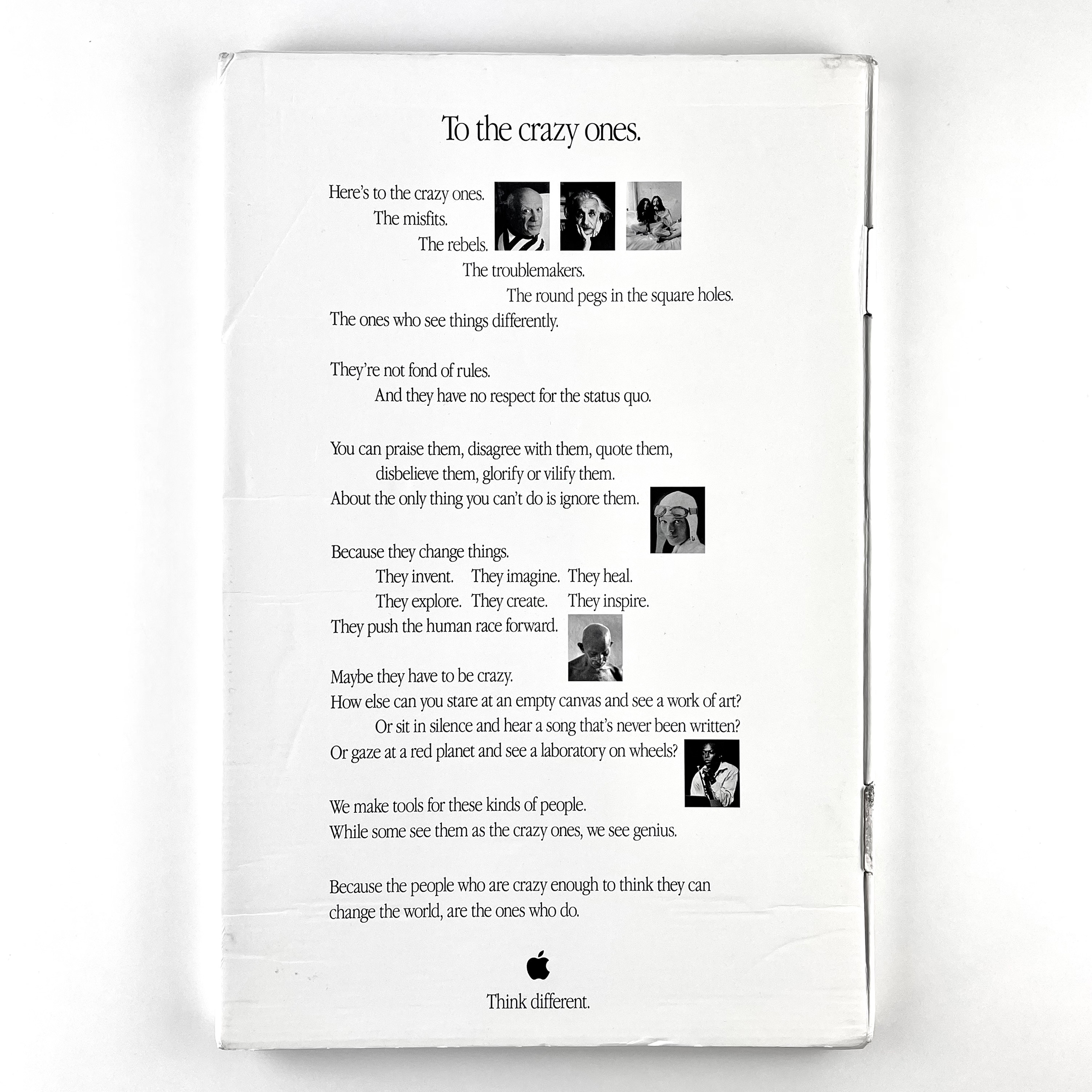
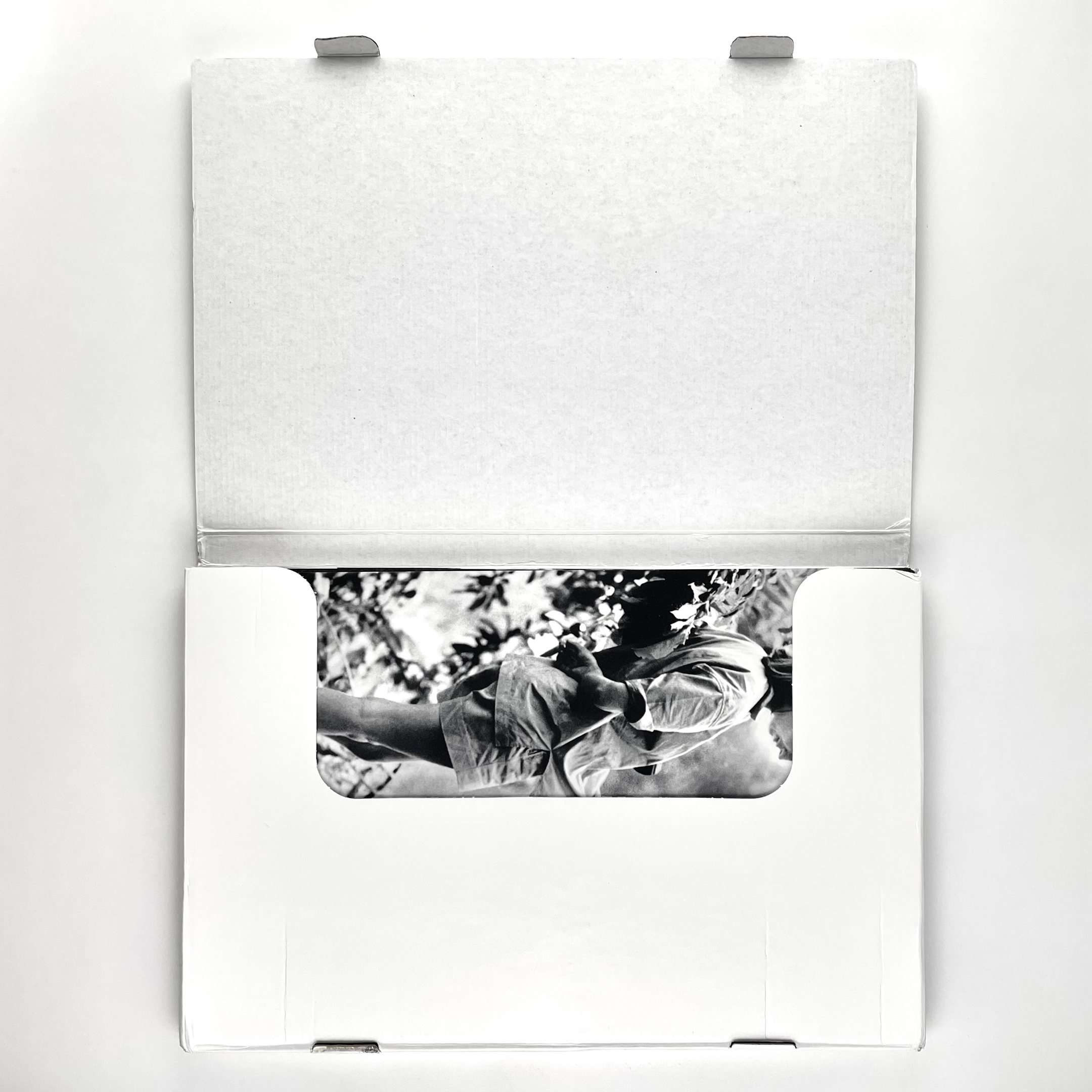
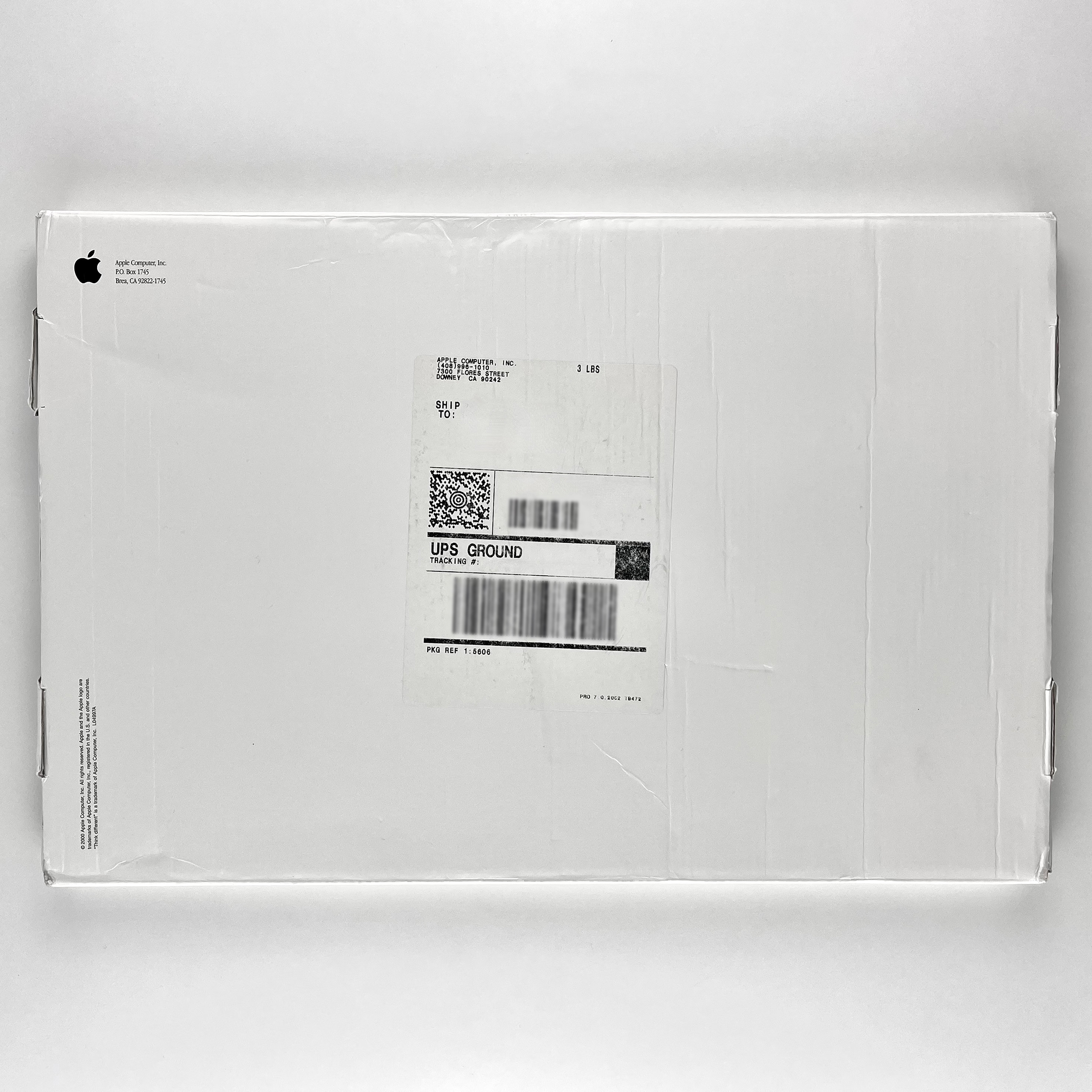
In 2000 this Think different poster set was provided to school leaders. The posters were 11 x 17 inches and arrived in a white box printed with the “Here’s to the crazy ones” manifesto. Each box contained three packs of posters sealed in plastic of 10 posters each.
I have two of these education sets. The one pictured was shipped directly to a high school principal. One set has been removed from its shrink wrap, and two sets are still unopened. I have a second compete set still in shrink wrap and has no shipping label.
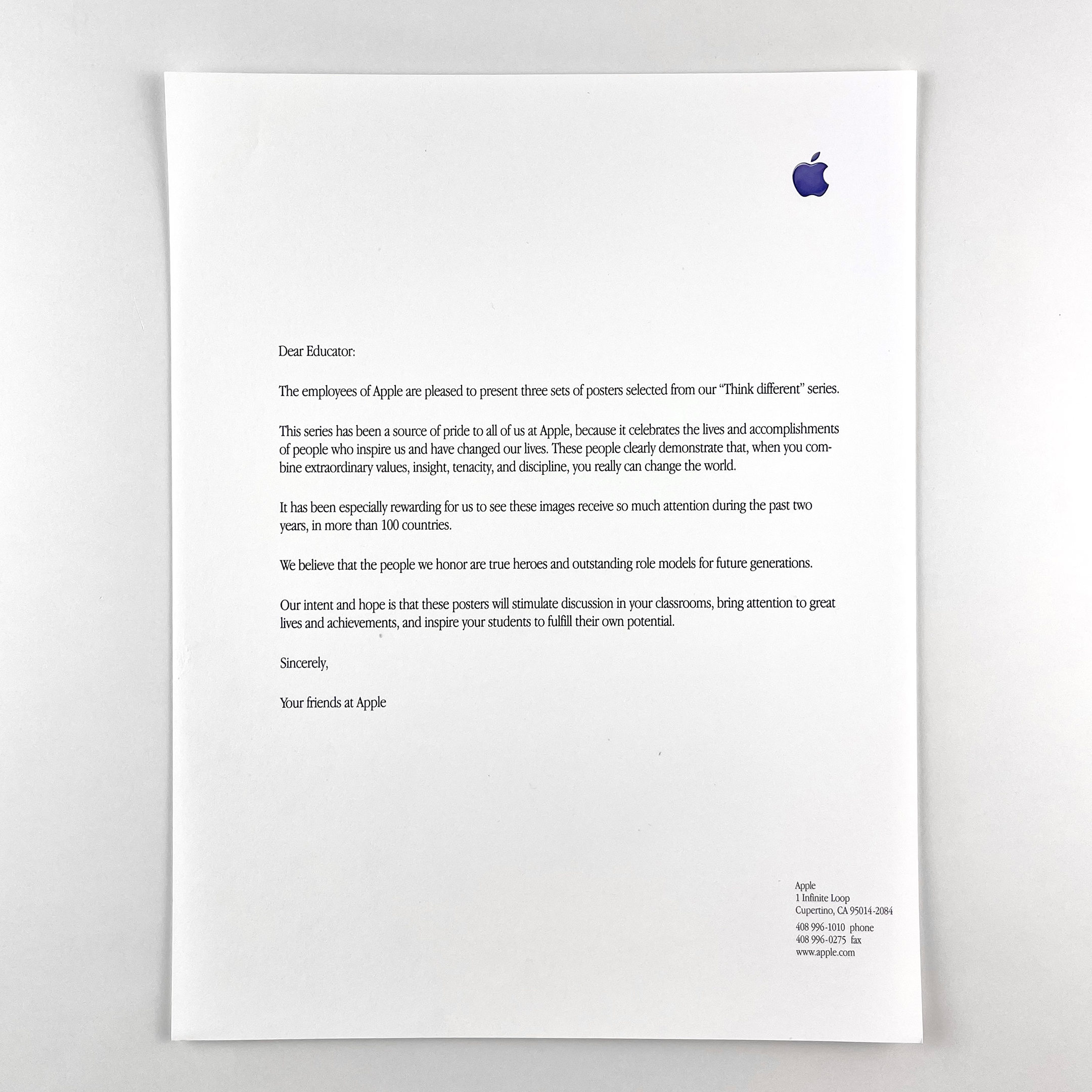
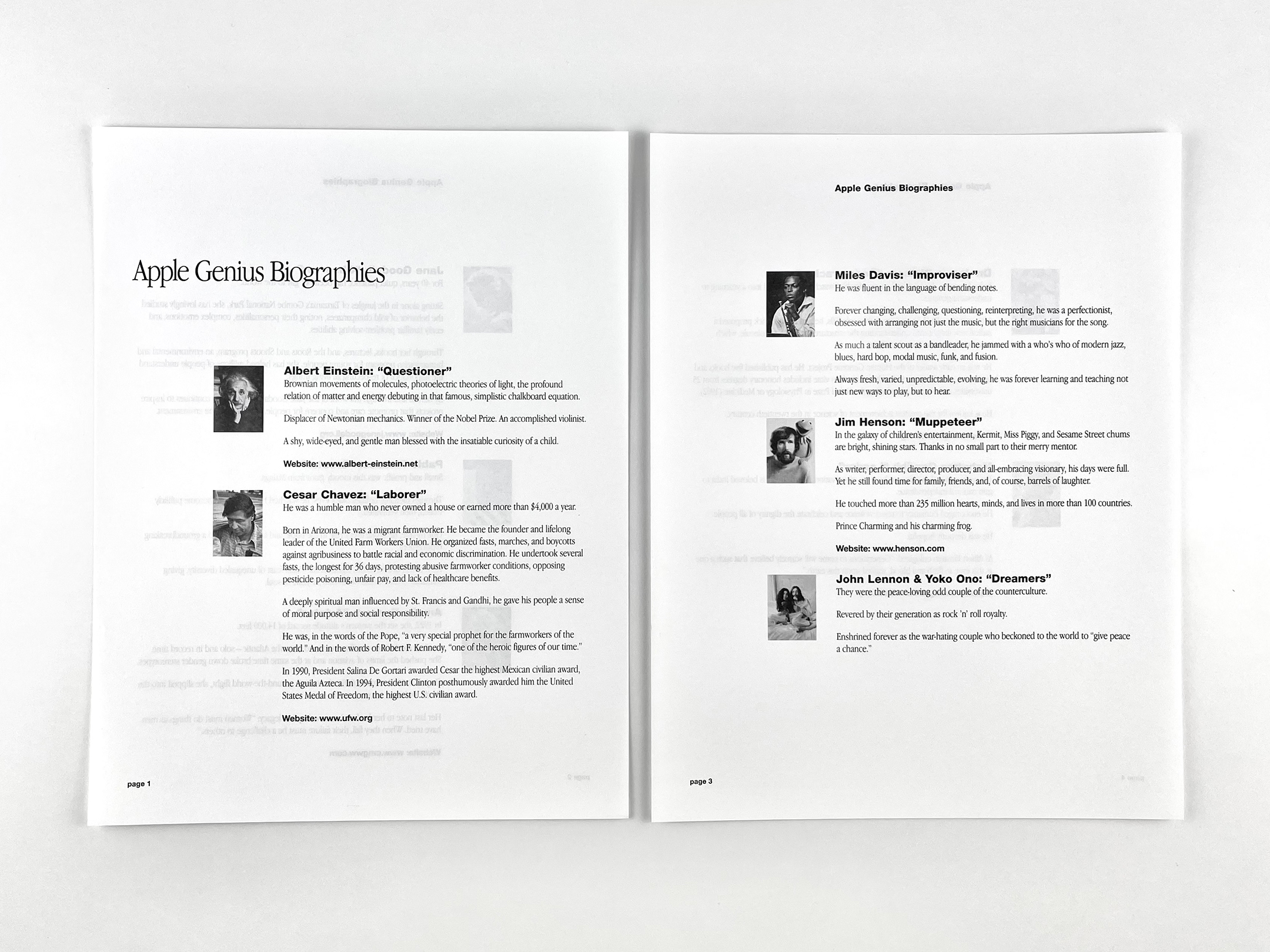
The set also includes three 8.5 x 11 sheets inside. One is a letter from Apple, and the other two sheets include a “key” naming each Think different portrait with an adjective and mini-biography of each person’s life. The set contains the following “Apple Geniuses:”
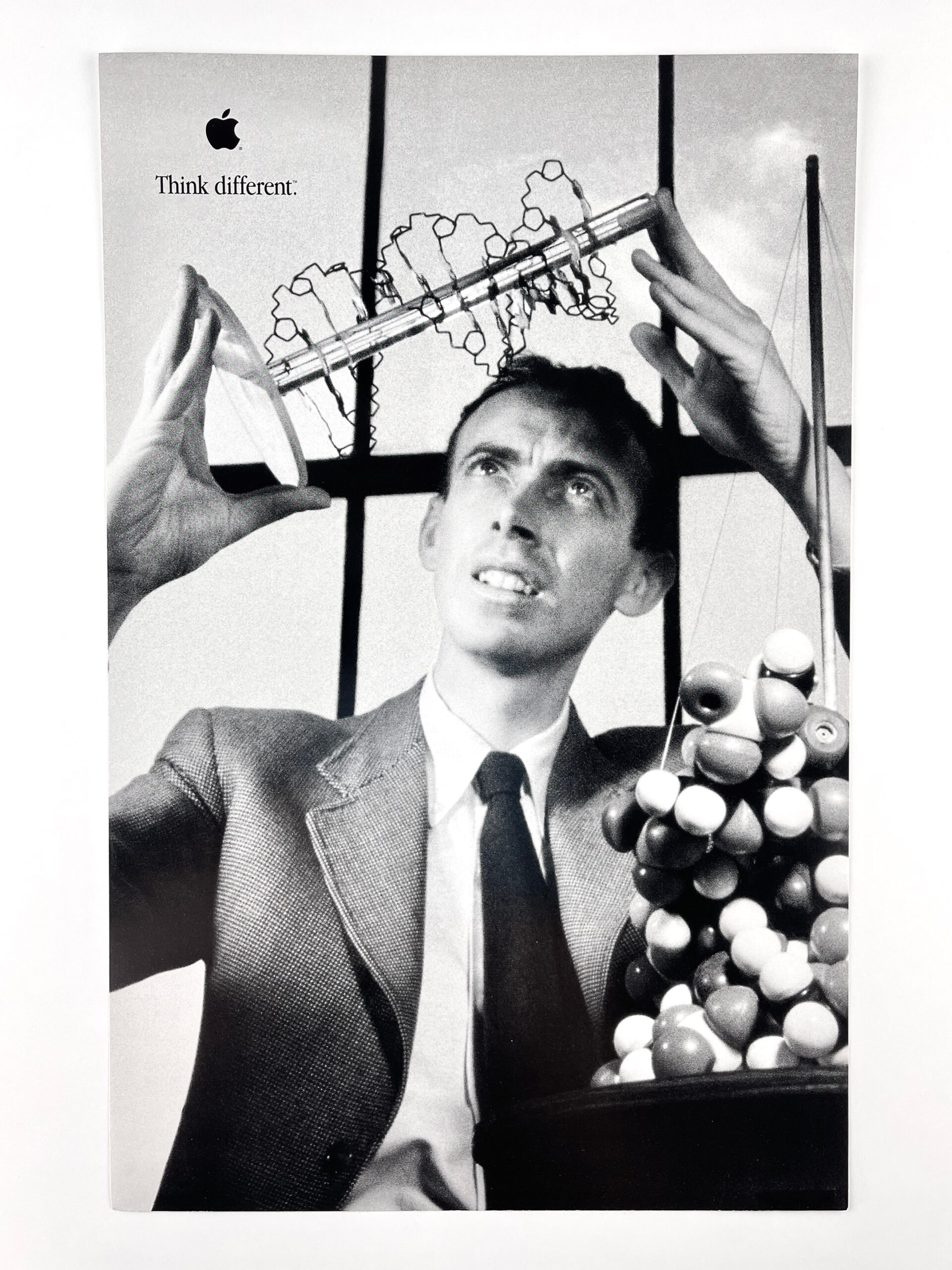
Albert Einstein: “Questioner” Cesar Chavez: “Laborer” Jane Goodall: “Observer” Pablo Picasso: “Creator” Amelia Earhart: “Aviator” Miles Davis: “Improviser” Jim Henson: “Muppeteer” John Lennon & Yoko Ono: “Dreamers” Dr. James Watson: “Code cracker” Mahatma Gandhi: “Leader”
Sources: Wikipedia, Forbes, Apple (documentation included in this set)
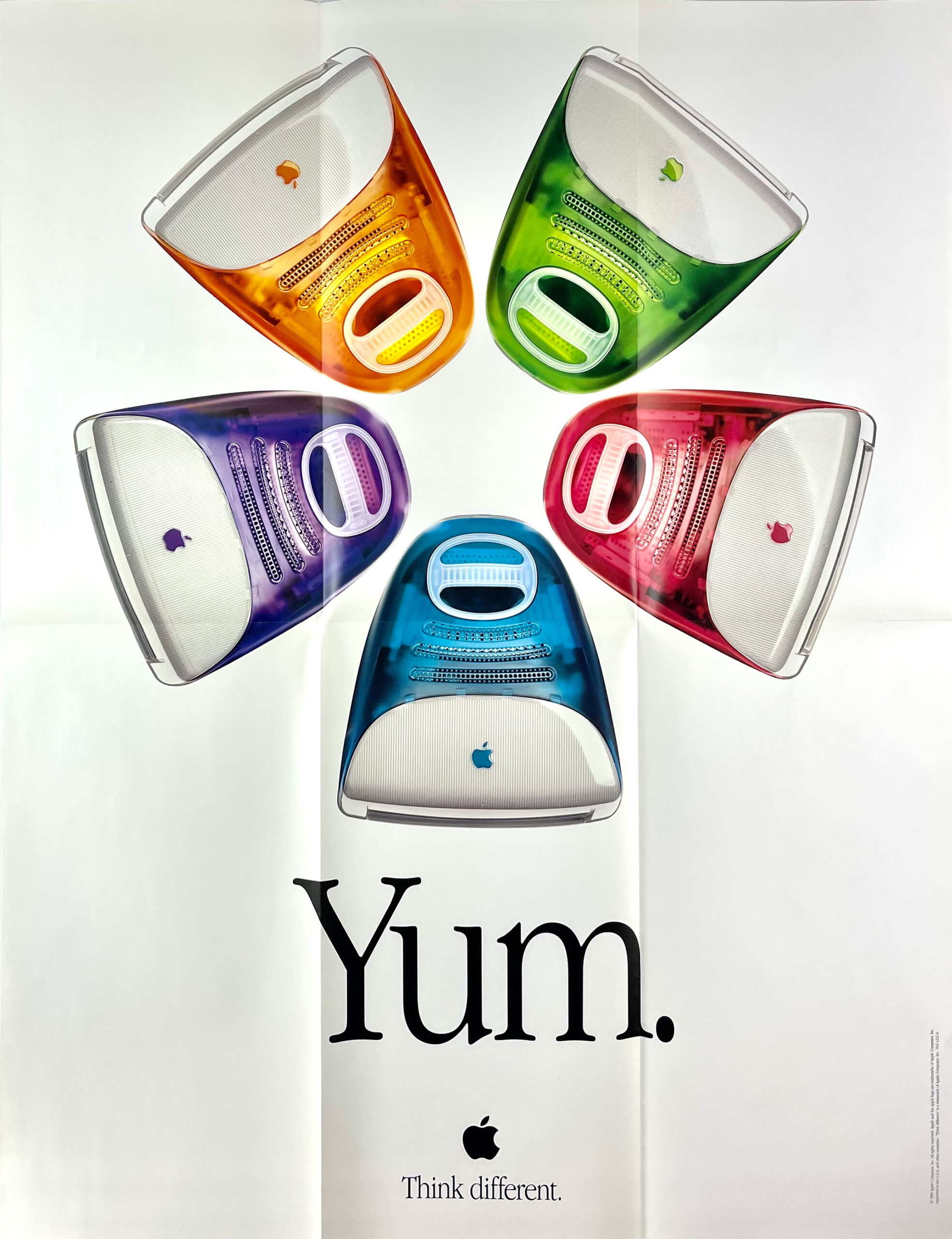
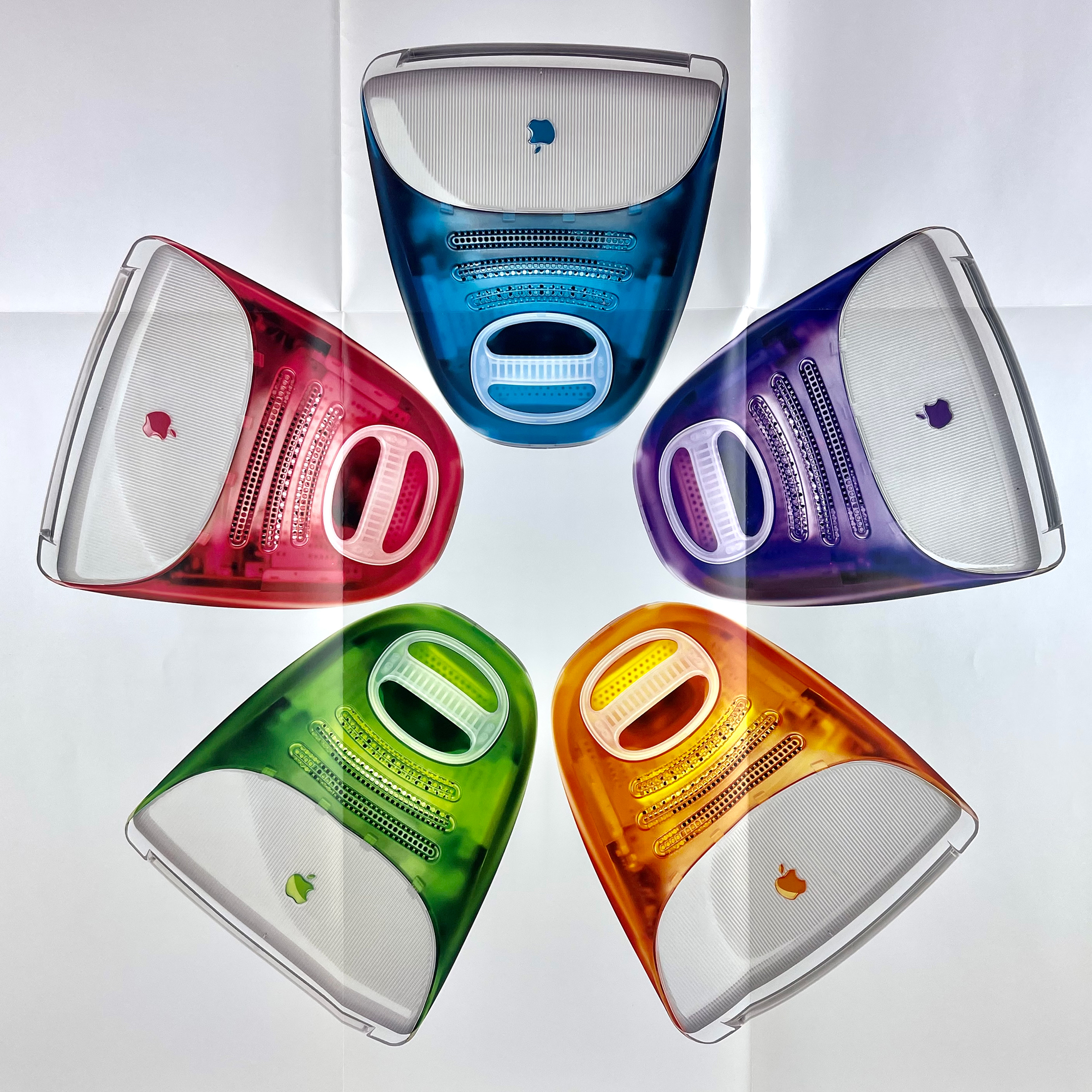
This poster was included in the package of all new iMac computers in 1999. After the success of the original iMac that was available in one color, Bondi blue (named for the color of the water at the beach in Australia of the same name), the second iteration of the iMac was available in five colors: blueberry, grape, tangerine, lime, and strawberry.
This poster shows all five iMac colors in a circle. The tagline is simply, “Yum.” to reference the fruit-inspired color names. (I use the term “fruit-inspired” because the shade of blue bears no resemblance to the color of a blueberry, and the dark-pink hue used matches no strawberry I’ve ever seen.) At bottom-center, the tagline “Think different.” is included along with the Apple logo.
This version of this poster is folded (to fit in the iMac box) and is 30 x 24 inches unfolded. I have another version of this poster that is rolled in a poster tube, and a rectangular button with the same design.
“Think different” is the slogan used by Apple in advertising 1997–2002, and is still used in some circumstances as of 2021. The “Think different” concept was created by advertising agency TBWA\Chiat\Day while working with Apple and Steve Jobs. “Think different” was used in its original concept in a TV commercial and in print/digital advertisements, and the “Think different” slogan was used as part of TV commercials, print/digital ads, and on product packaging.
The “Think different” advertising campaign was notable in that its original concept did not feature Apple products. The original version began with a “manifesto” that began famously with “Here’s to the crazy ones.” During the commercial, voiced by Richard Dreyfuss, black-and-white footage of iconic personalities served as visuals to accompany the voiceover. Personalities included Albert Einstein, Bob Dylan, Martin Luther King Jr., Thomas Edison, Muhammad Ali, Mahatma Gandhi, Amelia Earhart, Alfred Hitchcock, Jim Henson, Pablo Picasso, and others.
Although the image depicted on the bus follows the black-and-white photo convention of the Think different series, the poster itself is printed in color. Incidentally, the name of the man in the original iconic photo of Rosa Parks is Nicholas C. Chriss, according to the New York Times. The original photo can be viewed in the Library of Congress digital archive.
“Think different” is the slogan used by Apple in advertising 1997–2002, and is still used in some circumstances as of 2021. The “Think different” concept was created by advertising agency TBWA\Chiat\Day while working with Apple and Steve Jobs. “Think different” was rolled out in its original concept as a TV commercial and in print/digital advertisements. The “Think different” slogan was also used as part of many TV commercials, print/digital ads, and on product packaging.
This advertising campaign was notable because its original concept did not include mention of any Apple products. The original version began with a “manifesto” that began famously with “Here’s to the crazy ones.”
During the commercial, voiced by Richard Dreyfuss, black-and-white footage of iconic personalities served as visuals to accompany the voiceover of the manifesto. Luminaries included Albert Einstein, Bob Dylan, Martin Luther King Jr., Thomas Edison, Muhammad Ali, Mahatma Gandhi, Amelia Earhart, Alfred Hitchcock, Jim Henson, Pablo Picasso, and others.
The print and digital ads also did not feature Apple devices, just a black-and-white photo, the multi-color Apple logo, and the words “Think different.” One of the creative team members who worked on the campaign described the print concept: “The rainbow-colored logo served as stark contrast to the black and white photography, and, to me, it seemed to make the ‘Think Different’ statement all the more bold.”
Author Maggie Macnab described the ideal of the “Think different” campaign well in her 2011 book Design by Nature: Using Universal Forms and Principles in Design. She said:
“By identifying Apple’s core philosophy with the rebels and geniuses that changed the world by ‘thinking differently,’ the campaign established Apple as the ideology of the future. Apple was perceived as saving the day by making technology accessible to anyone. This move repositioned it well above its competition and far beyond the status of ‘product’ by connecting the user into a world of possibility.”
In the United States, four sets of 24 x 36 inch “Think different” posters were released. Set 1 included: Amelia Earhart, Alfred Hitchcock, Pablo Picasso, Mahatma Gandhi, and Thomas Edison. Set 2 included Maria Callas, Martha Graham, Joan Baez, Ted Turner, and the Fourteenth Dalai Lama (not officially released due to licensing). Set 3 included, Miles Davis; Ansel Adams (landscape orientation); Lucille Ball and Desi Arnaz (landscape orientation); and Bob Dylan (not officially released due to licensing). Paul Rand and Jimi Hendrix were part of Set 3, but not included in all sets that were shipped. Set 4 included Frank Sinatra, Richard Feynman, Jackie Robinson, and Cesar Chavez.
A Set 5 included film directors that was never officially released, including: Charlie Chaplin, Francis Ford Coppola, Orson Welles, Frank Capra, and John Huston.
In 2000 an Educator Set was provided to school leaders. The posters were 11 x 17 inches and arrived in a white box printed with the “Here’s to the crazy ones” manifesto. Each box contained three packs of posters sealed in plastic of 10 posters each. This set includes: Albert Einstein; Amelia Earhart; Miles Davis; Jim Henson; Jane Goodall; Mahatma Gandhi; John Lennon and Yoko Ono; Cesar Chavez; James Watson; and Pablo Picasso.
I have collected many of Apple’s Think different posters, print ads, and other material.
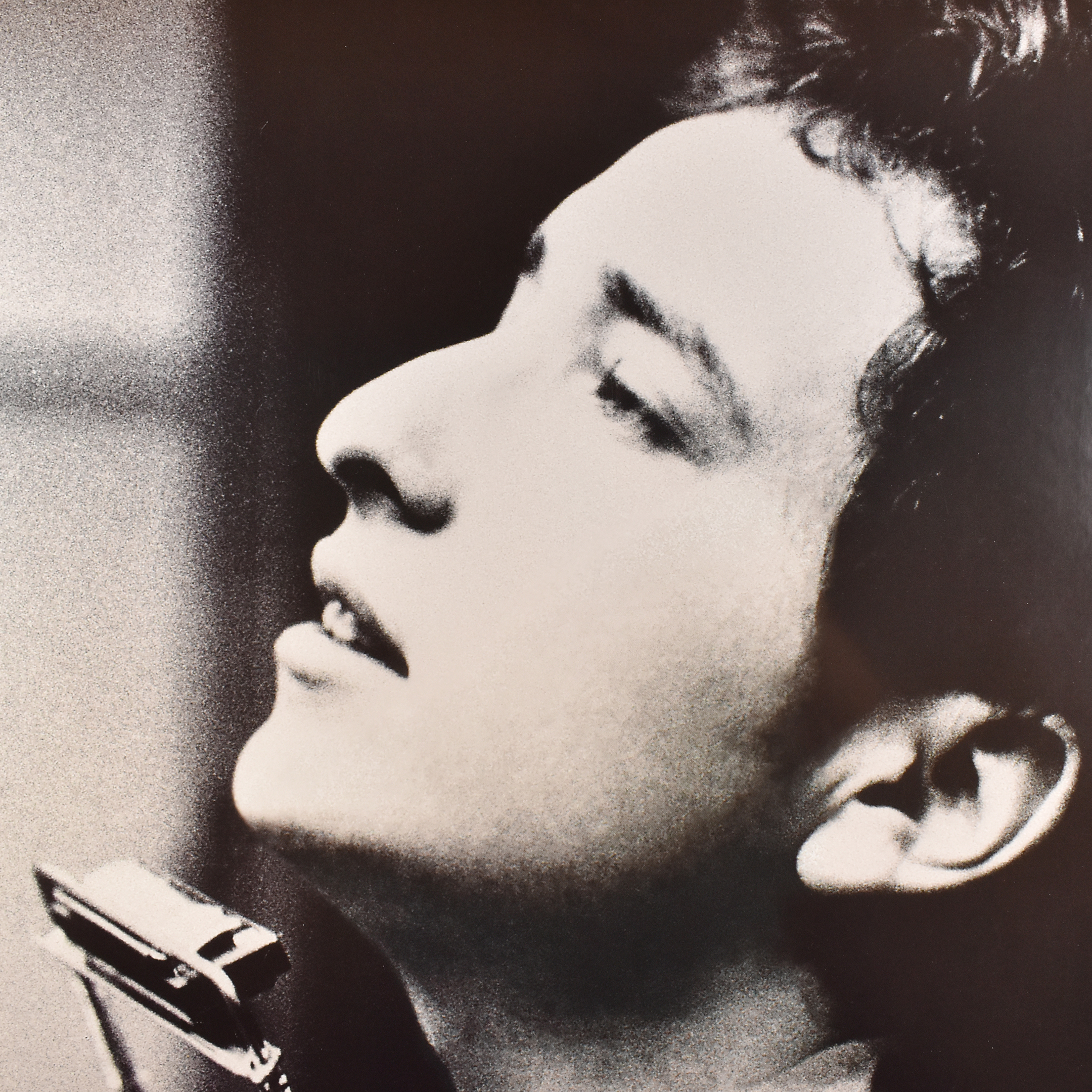
This poster of Bob Dylan is considered rare. I ordered the first three sets of Think different posters directly from Apple in approximately 1999. The poster sets were essentially free, but Apple charged $8.00 for each set for postage. When my Set 3 arrived, it included only Miles Davis; Ansel Adams; and Lucille Ball and Desi Arnaz. Earlier versions of the set were reported to have included Bob Dylan, Paul Rand, and/or Jimi Hendrix.
At one time I read an account that the Bob Dylan photo Apple had used was not properly licensed, and although some Dylan posters had shipped, Apple stopped including them in the sets. I was lucky to find this poster on eBay for a reasonable price.
According to CNN and Getty Images, this photo of Bob Dylan was taken in November 1961 while Dylan was recording his first album for Columbia Studio in New York City. In other photos in the series, Dylan can be seen holding his acoustic Gibson guitar.
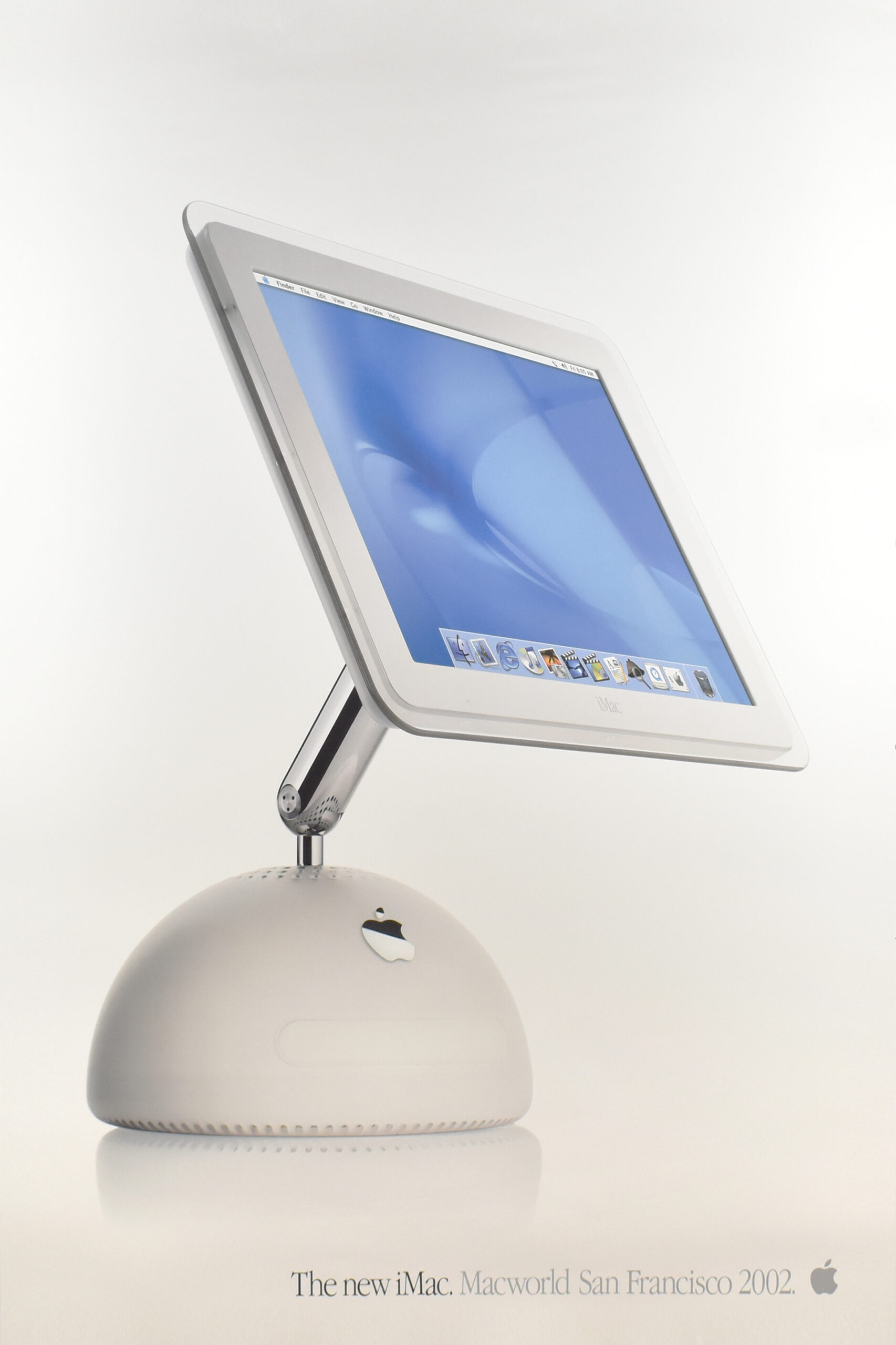
In early January 2002, Apple introduced a major design update to the iconic original iMac design. Previously the iMac was an all-in-one CRT-based design available in translucent and transparent colors and designs. The new 2002 design remained an all-in-one computer, but used a half-sphere white base, a chrome adjustable arm, and a “floating” flat-panel display.
Apple described the design in a press release:
“Apple today unveiled the all-new iMac, redesigned from the ground up around a stunning 15-inch LCD flat screen that floats in mid-air—allowing users to effortlessly adjust its height or angle with just a touch.”
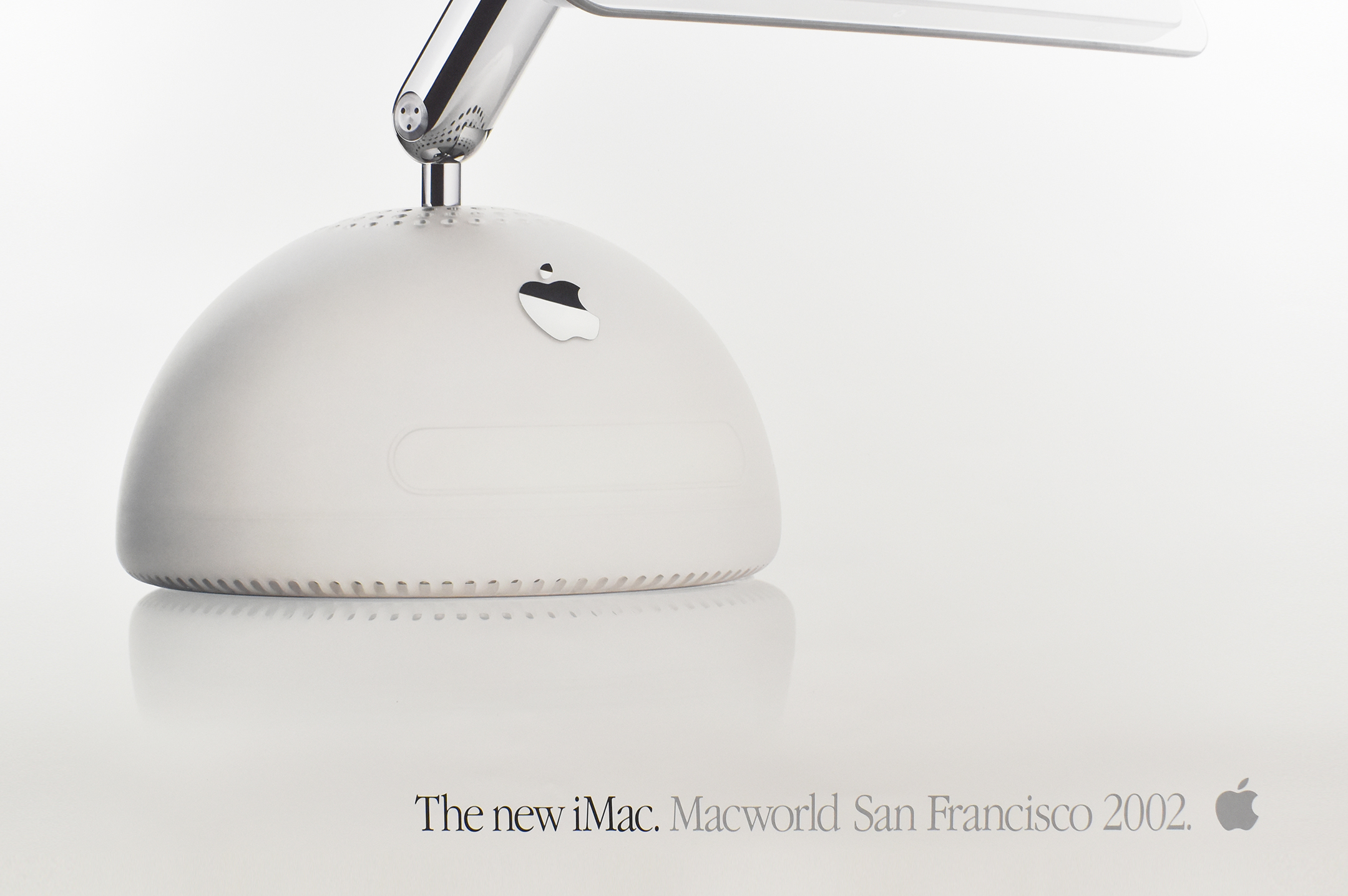
The 2002 iMac was available in 15- and 17-inch models. This 24 x 36 inch poster depicts the 15-inch iMac on a white background and adds a reflection under the base. The text is printed in Apple Garamond, “The new iMac. Macworld San Francisco 2002.” and is followed by a gray Apple logo.
Also notable, this iMac has a screen showing Mac OS X. The icons in the Dock include Finder, Mail, Microsoft Internet Explorer, iTunes, iPhoto, iMovie, iDVD, AppleWorks, Sherlock, QuickTime Player, System Preferences, and Trash. The inclusion of iMovie and iDVD underscored the addition of the SuperDrive “for playing and burning custom CDs and DVDs” as standard equipment on this iMac.
Although this poster (and the iMac itself) used the Apple Garamond font, later versions of this iMac design would switch to the Apple Myriad font.
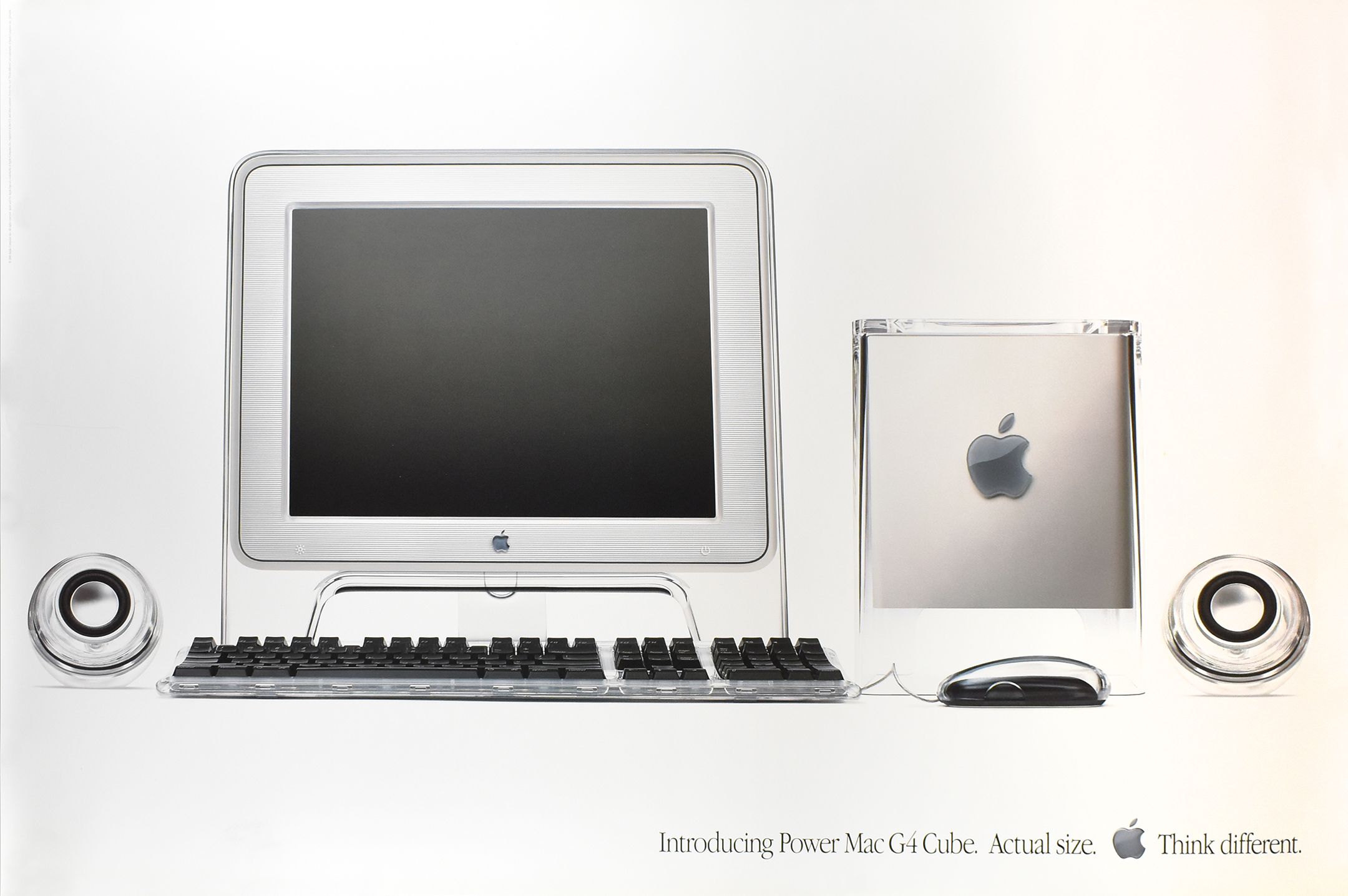
The Power Mac G4 Cube was introduced in 2000 as a small desktop computer in an 8 x 8 x 8 inch form factor (actual measurements including the base were 7.7 x 7.7 x 9.8 inches). The computer ran silently without an internal fan and featured a sound system by Harman Kardon. The G4 Cube was announced on July 19, 2000, at Macworld Expo. It was the last topic introduced by Steve Jobs as “one more thing” at the end of Keynote.
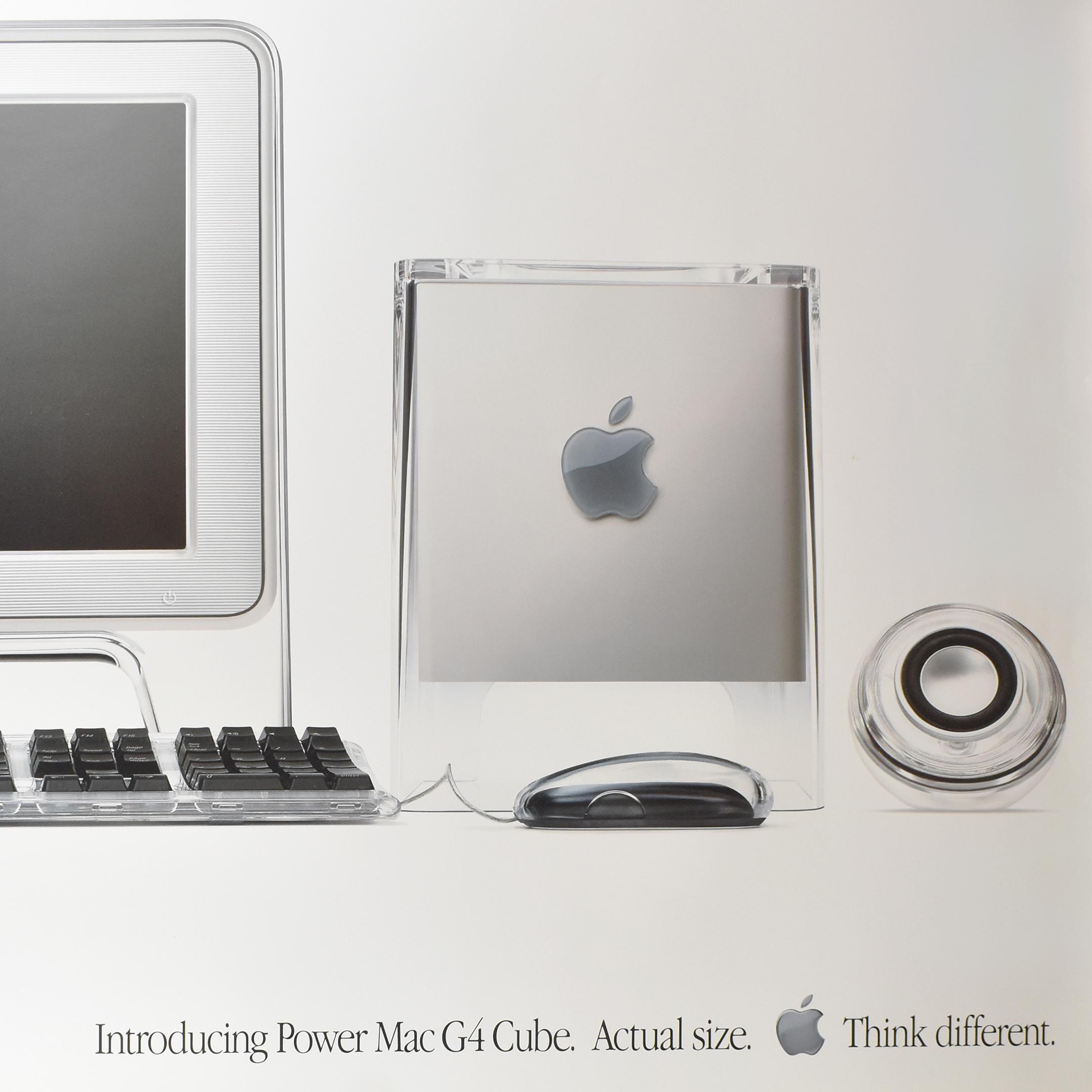
This 36 x 24 inch poster (in landscape orientation) was printed to commemorate the release of the G4 Cube and to depict its exact size. The G4 Cube is shown along with its newly designed keyboard and mouse, each in a crystal clear case with black keys on the keyboard and a black accent in the mouse, and the included clear spherical speakers. Also shown is the then-new 15-inch Apple Studio Display (its design matched the 22-inch Apple Cinema Display that was released at the same time).
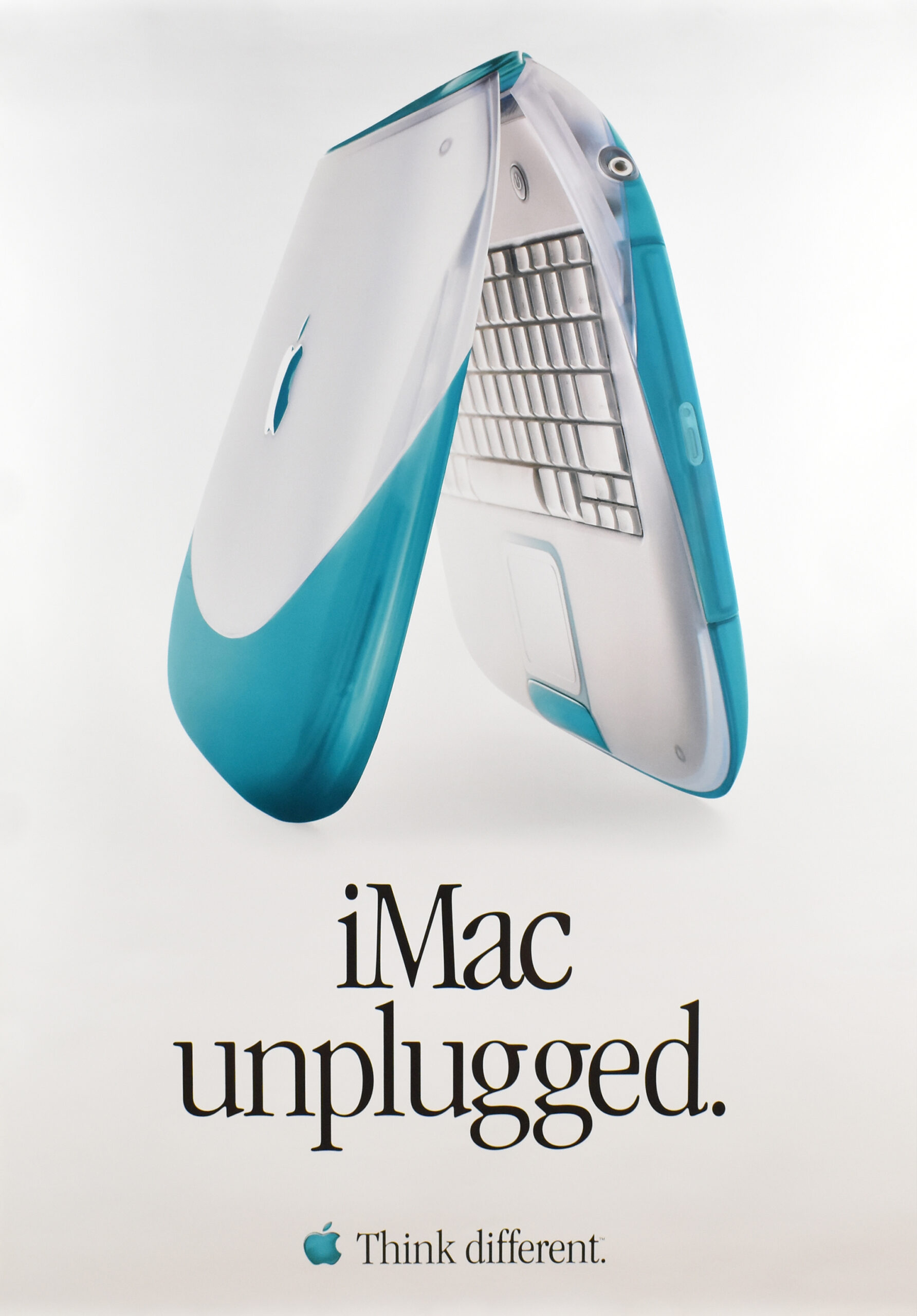
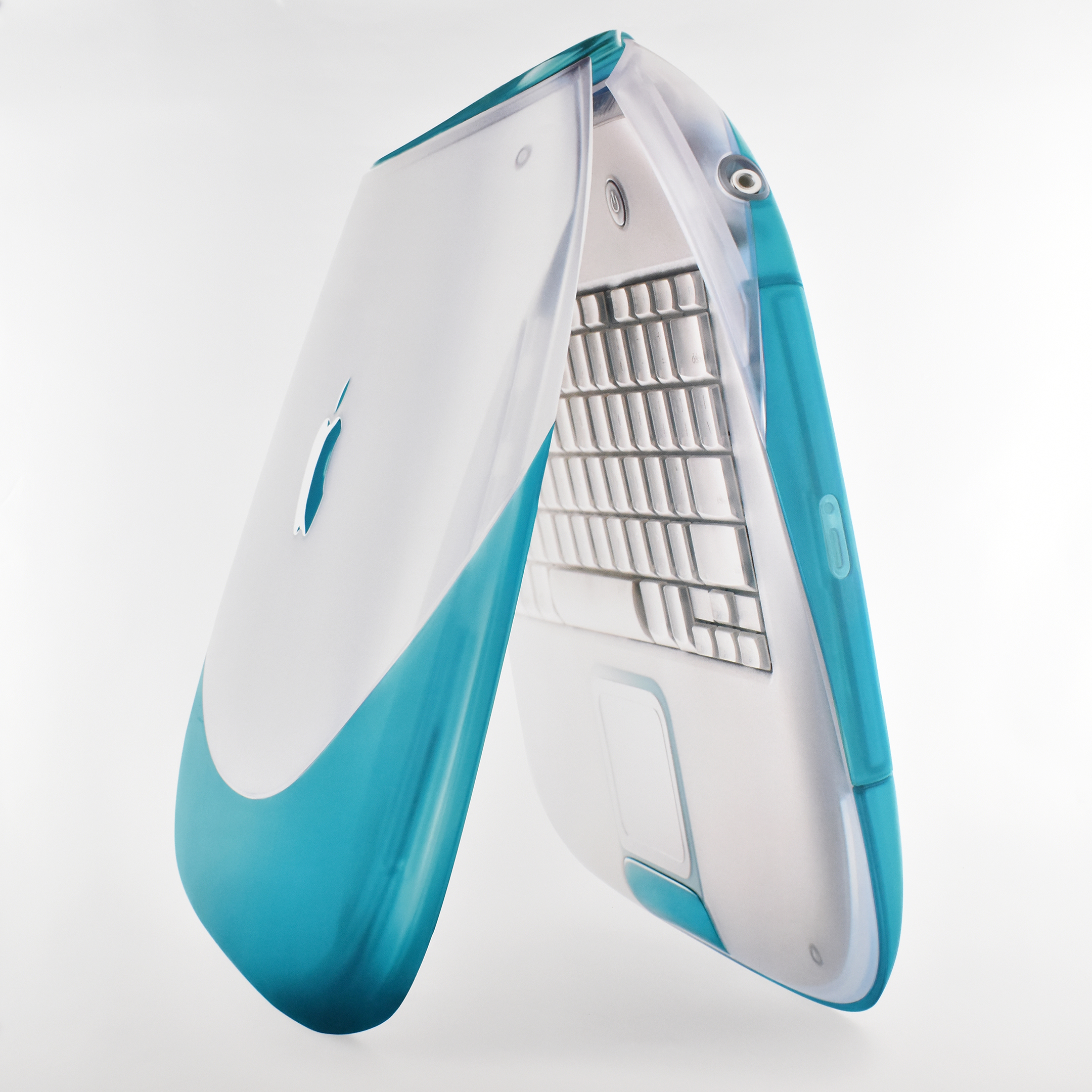
Apple announced the iBook laptop in 1999 as a successor to the popular original iMac desktop computer. The iMac had been released in a translucent Bondi blue color and the iBook followed suit being available first in blueberry (aqua blue) and tangerine (orange). The design of the iBook was arguably as “shocking” as the original iMac. The iBook not only came in colors, but also featured a curved clamshell design with a built-in handle.
The iMac was among the first computers released that was not only made for “surfing the Internet,” but was also relatively easy to set it up and get online. This was not the case with most computers at the time. The iBook extended this ease of Internet connection by adding a built-in wireless card—named “AirPort”—and an accompanying AirPort Base Station. While these technologies were not new, they were among the first to be easy to set up and configure.
A print ad version of this idea featured an iBook with the words: “Introducing iBook: Up to six hours of battery life. Pentium-crushing G3 processor. Out of the box and onto the Internet in 10 minutes—no desk required. www.apple.com.”
The poster measures 24 x 36 inches and is printed on glossy paper. The design features a blueberry iBook with text below in the Apple Garamond font that reads, “iMac unplugged.” At bottom center is a translucent blueberry Apple logo and the words “Think different.” This poster includes no date or other information.