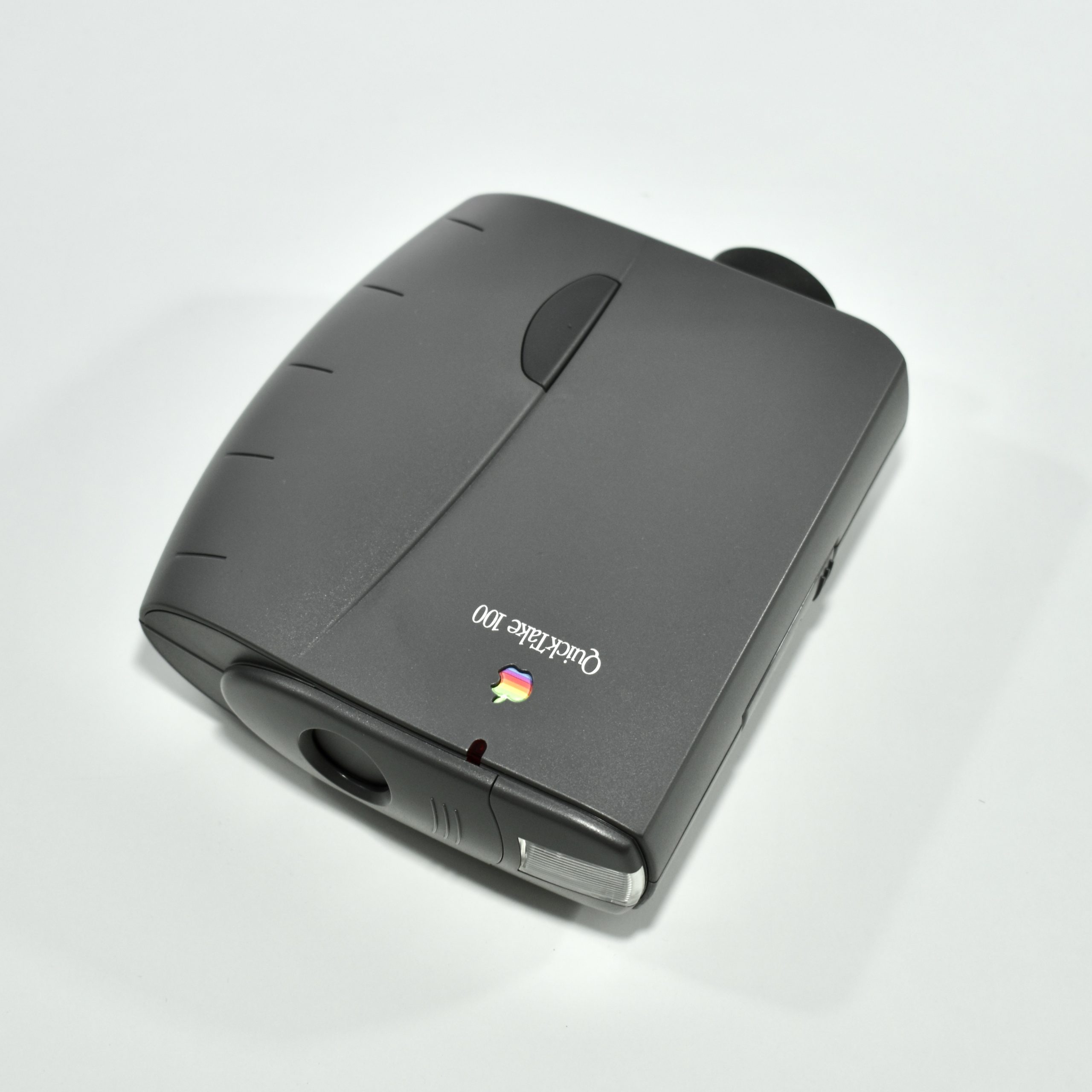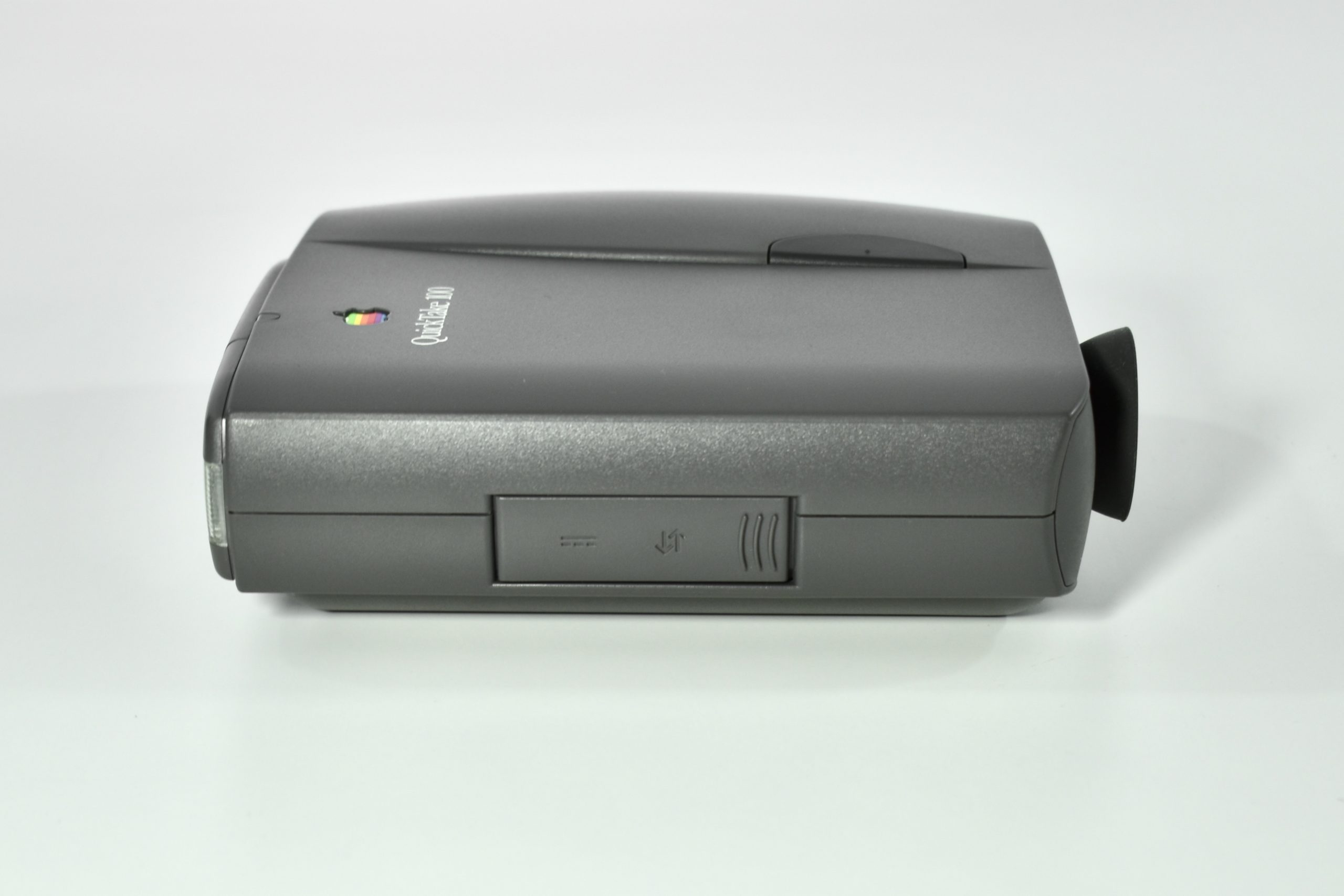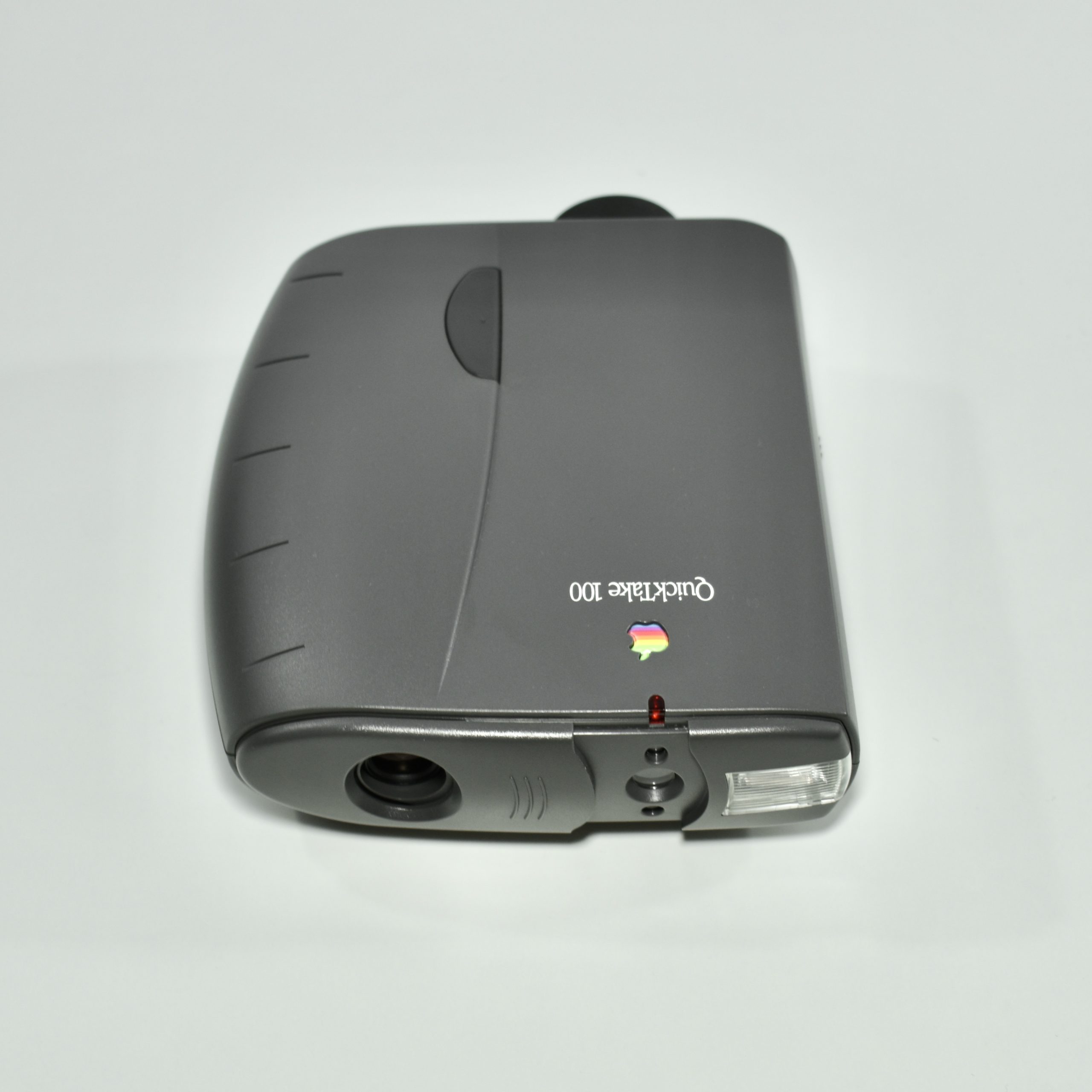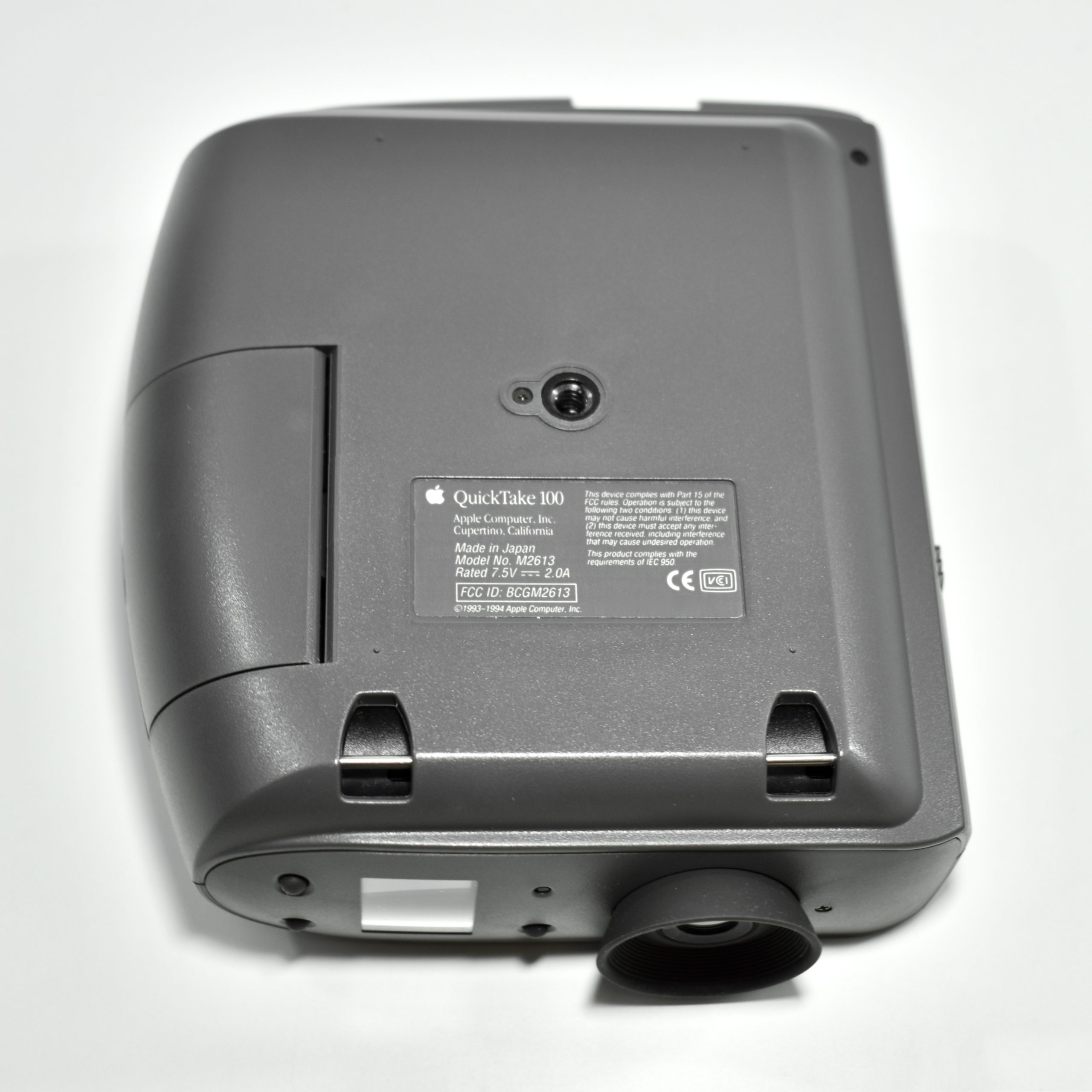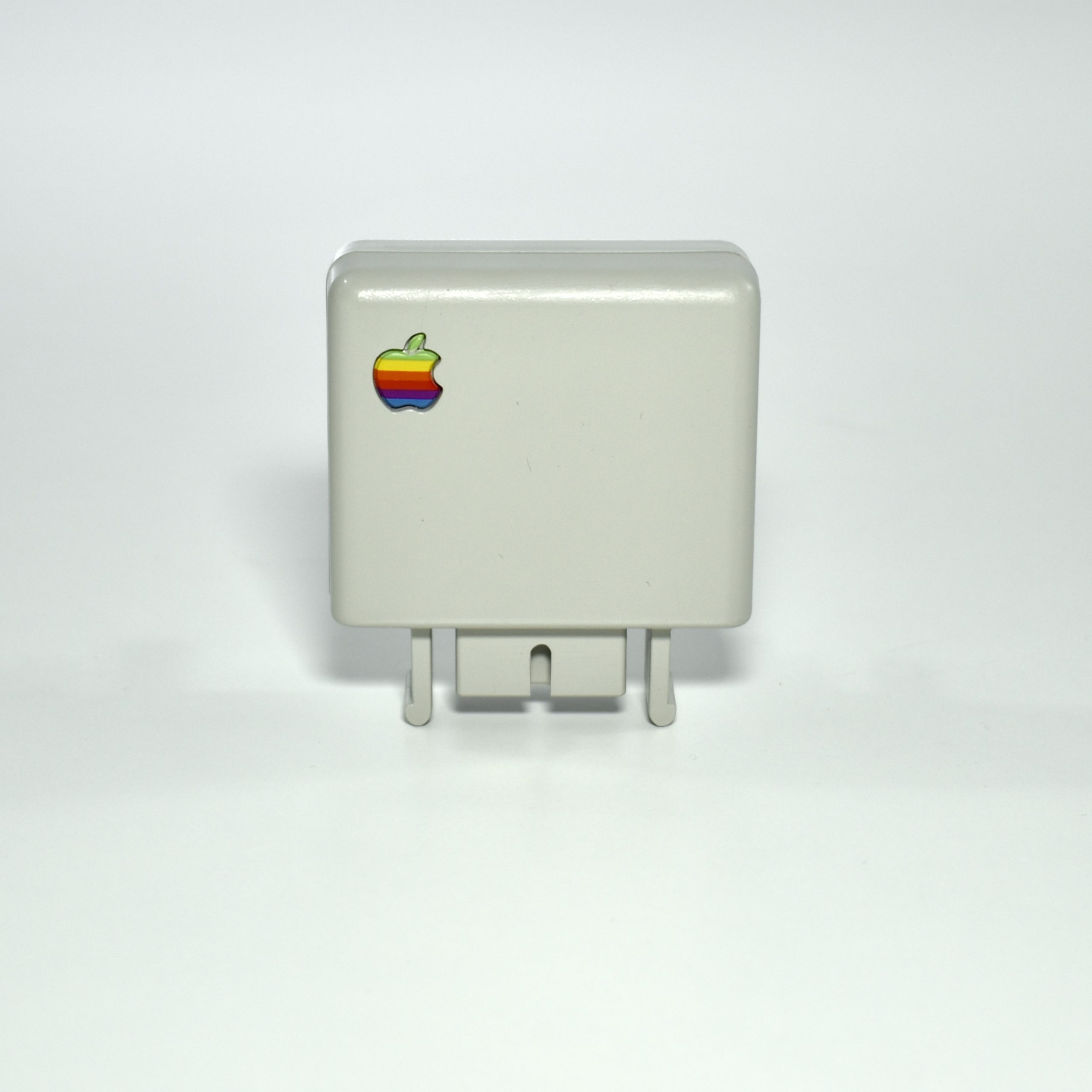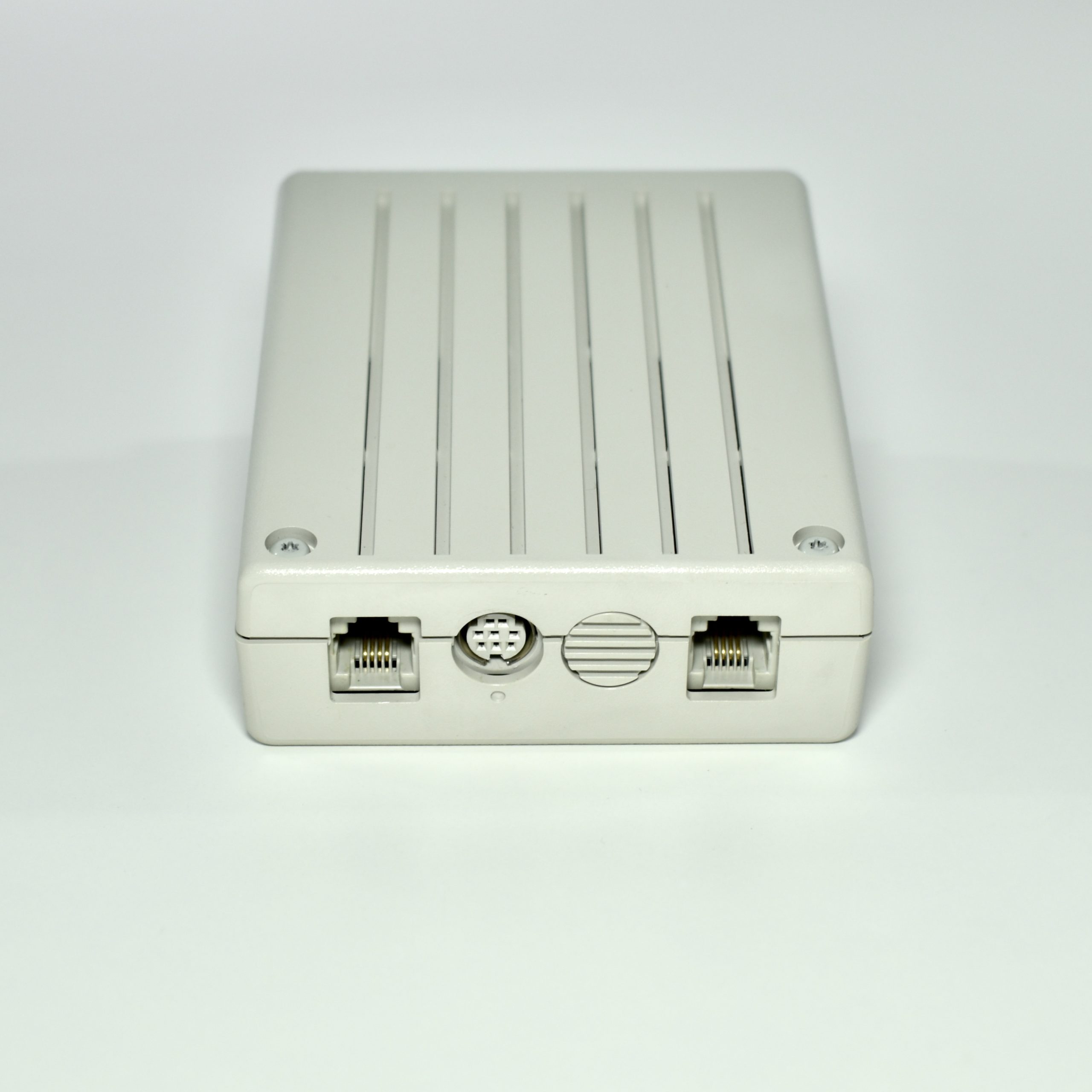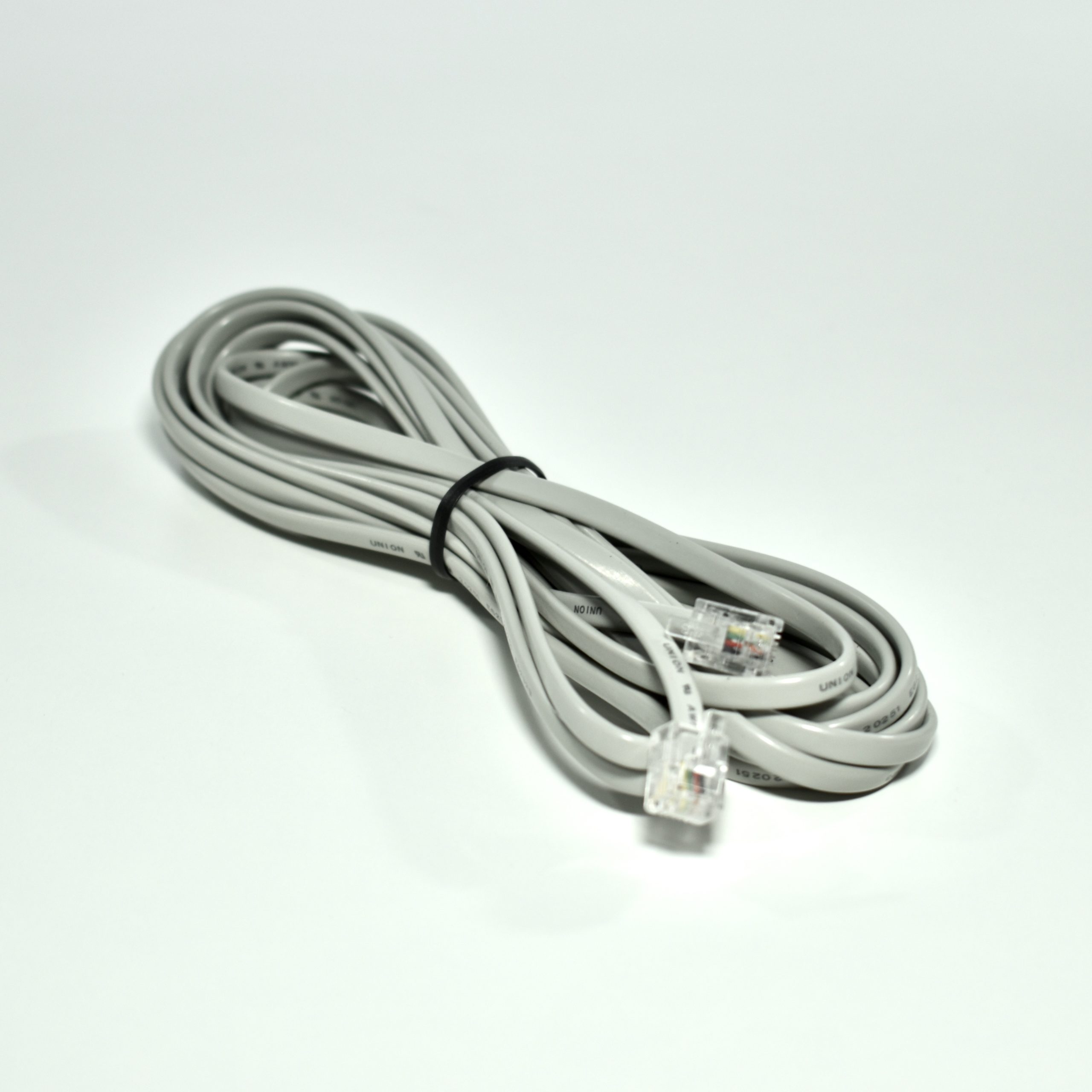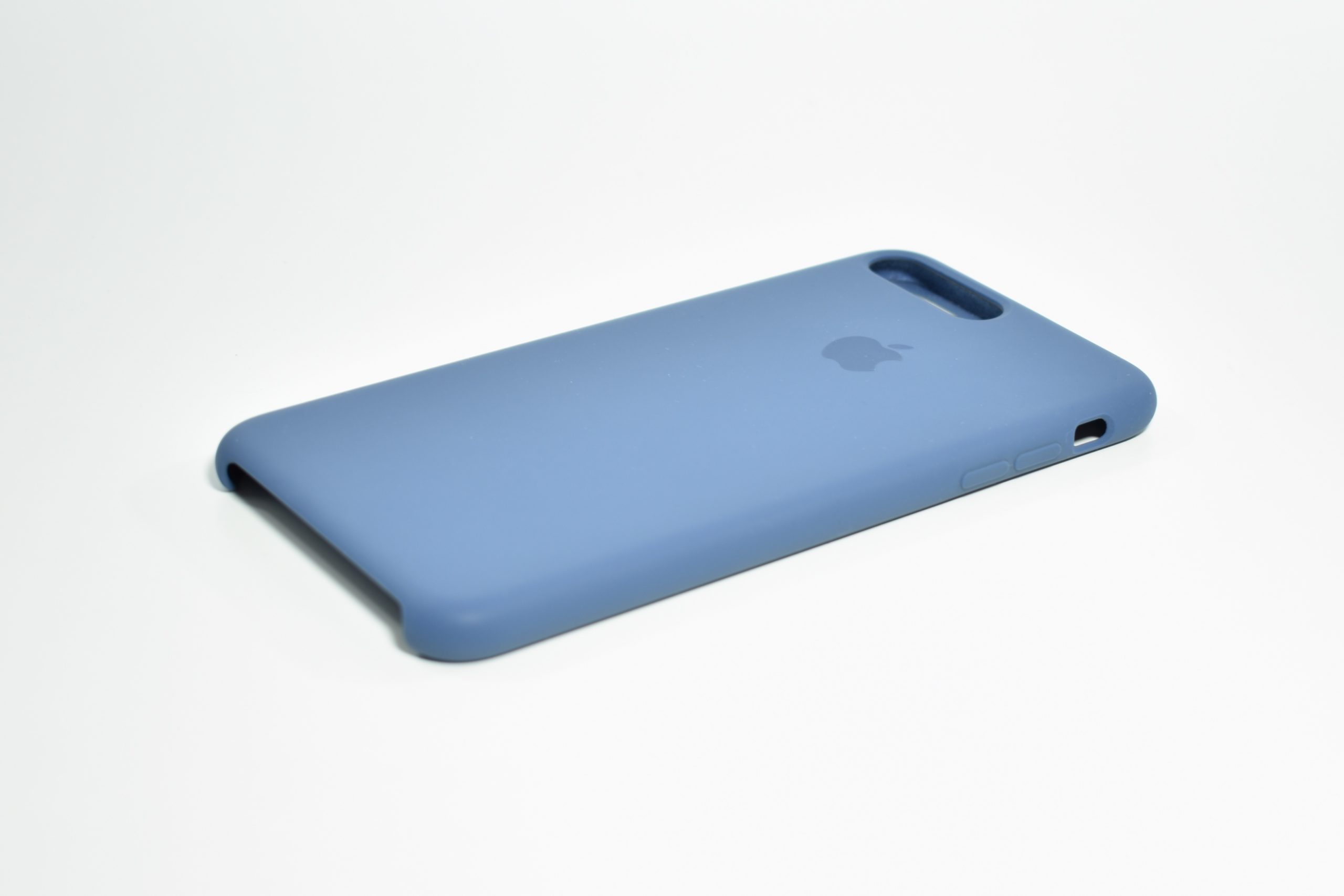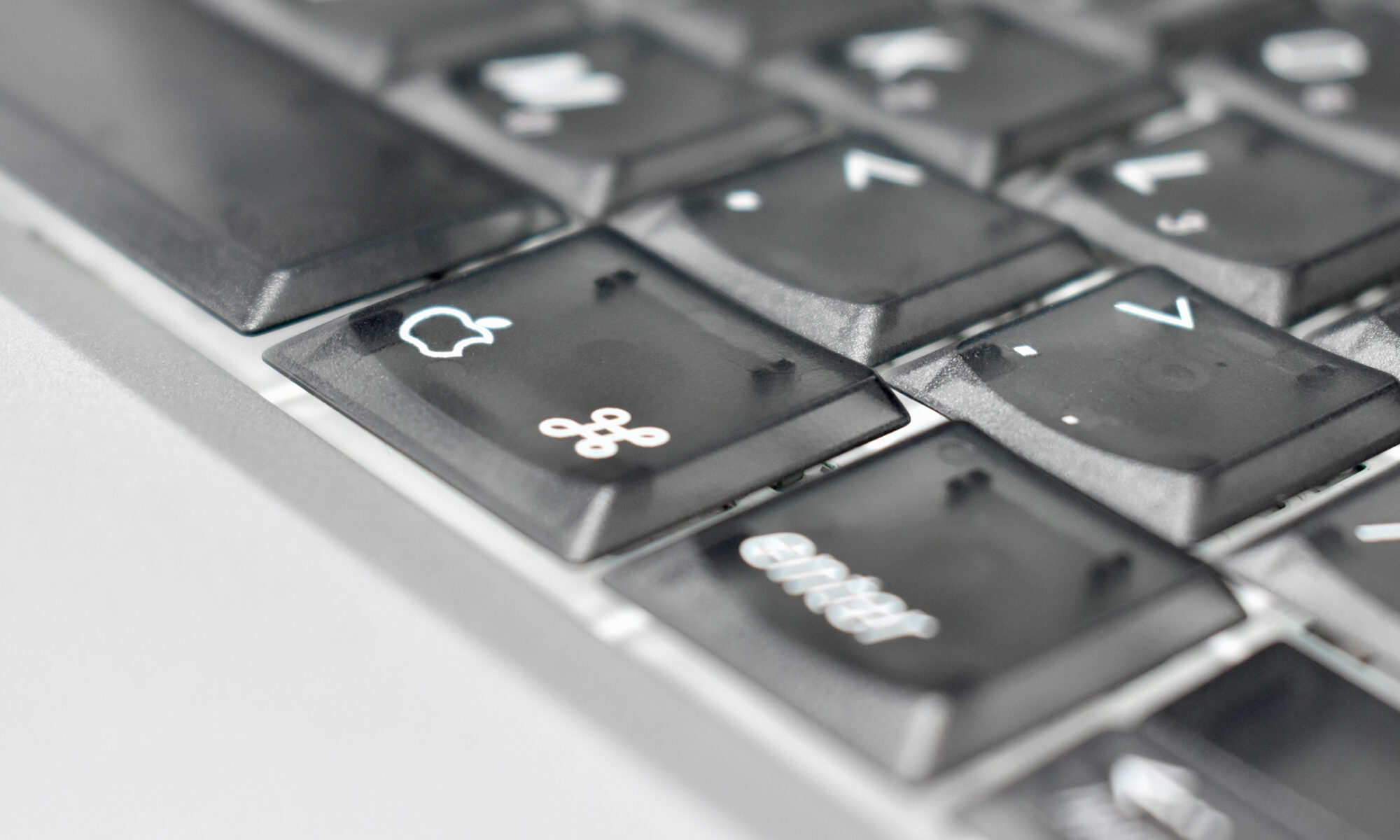
QuickTake 100 (1994)

The QuickTake 100 is considered one of the first consumer digital cameras and was only available for about one year, from 1994 to 1995. The QuickTake 100 model was replaced by the QuickTake 150 in 1995 (using the same design) and then the QuickTake 200 in 1996 (a new design manufactured by Fuji).

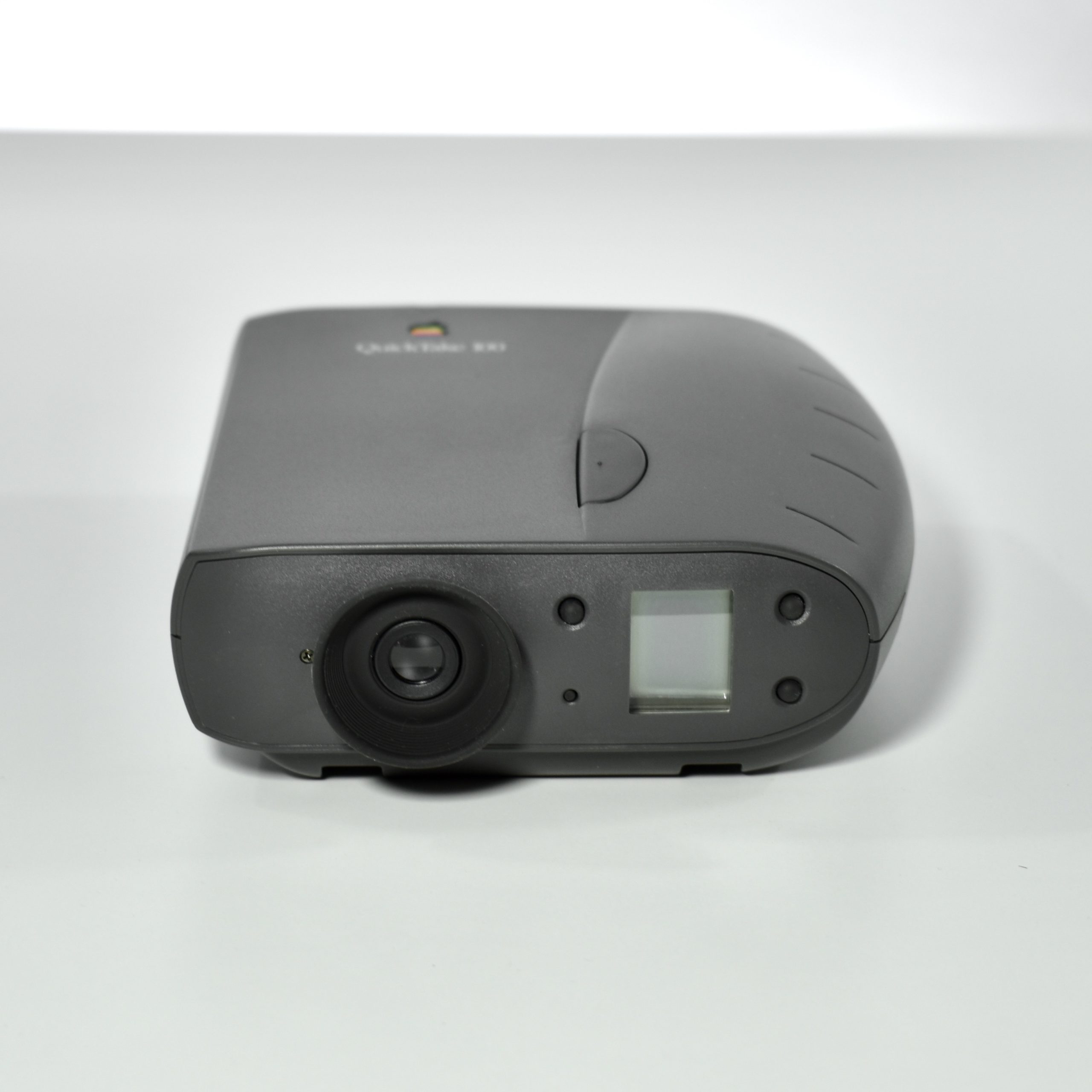
The camera had 5 button controls: one to control the shutter, and four surrounding a small black/gray LCD panel on the back to control flash, resolution, self-timer, and a recessed button to delete all photos.

The camera sold for $749 and could take eight photos at 640×480 resolution, 32 photos at 320×240 resolution, or a combination of the sizes in 24-bit color. Although the QuickTake 100 had a built-in flash, it had no zoom or focus controls, nor could it preview or delete individual photos from the internal memory. Photos were downloaded to a computer using a serial cable and included QuickTake software. The QuickTake software also included functions such as rotate, resize, crop, and export.

After the Macintosh version of the QuickTake 100 was released, a Windows version followed six months later.

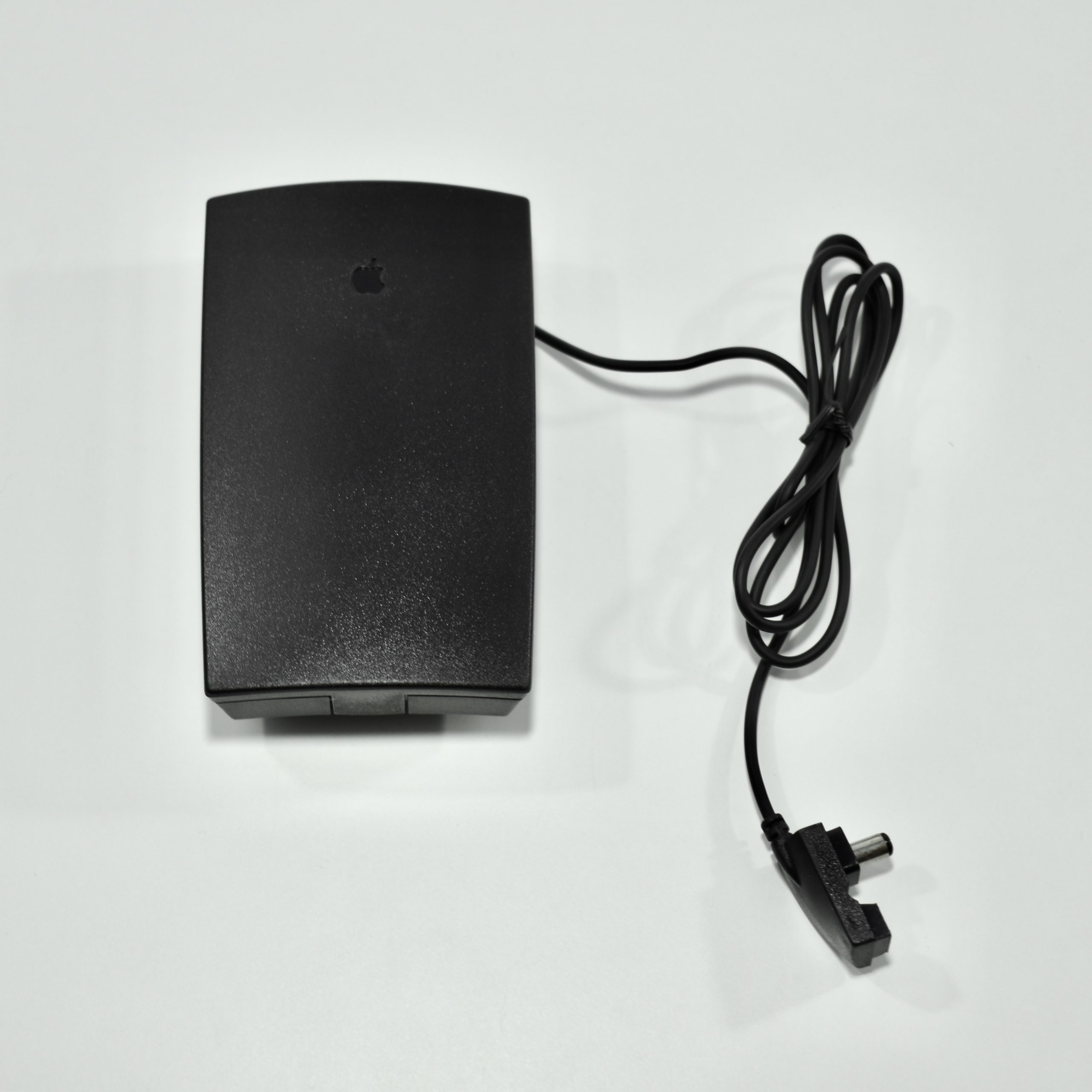
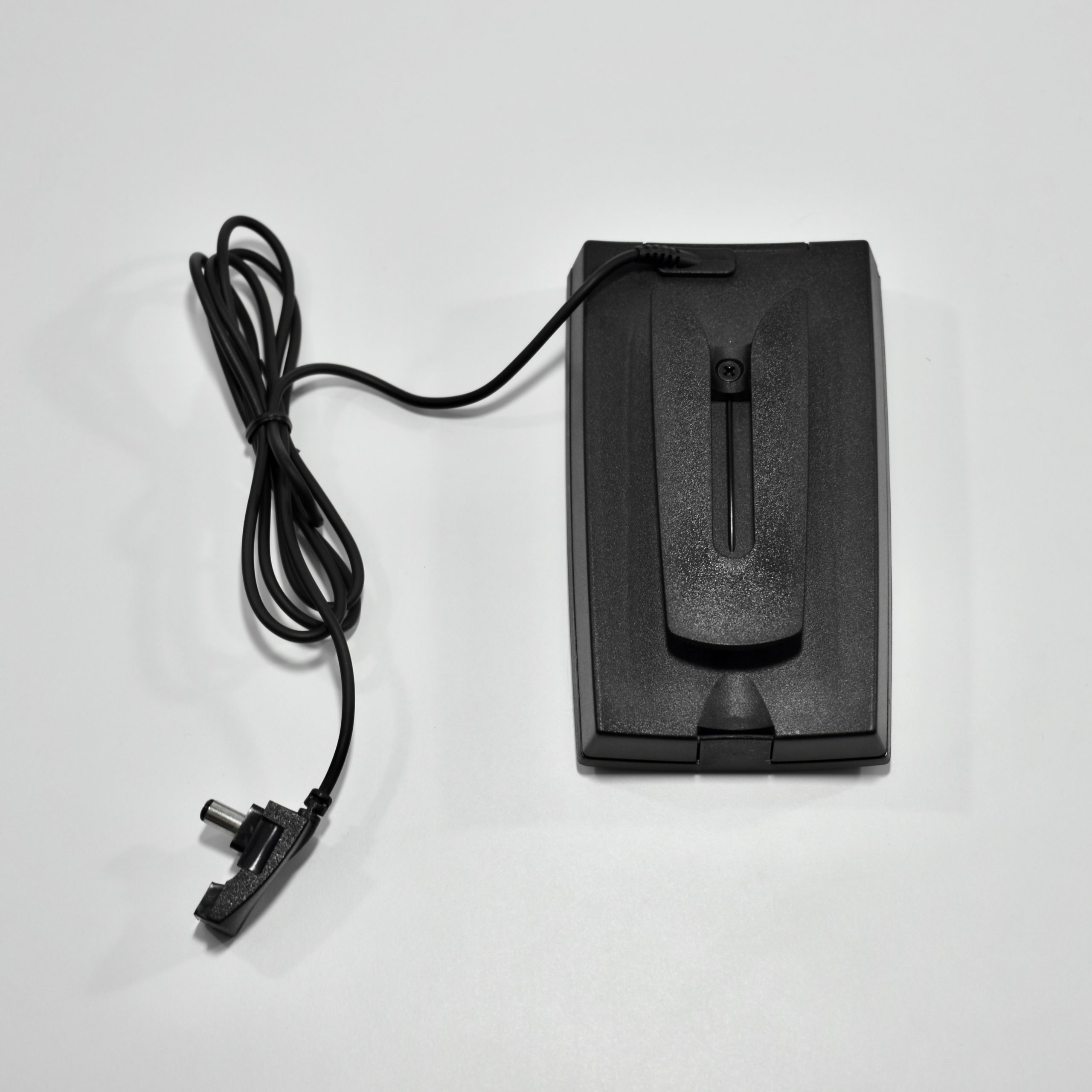
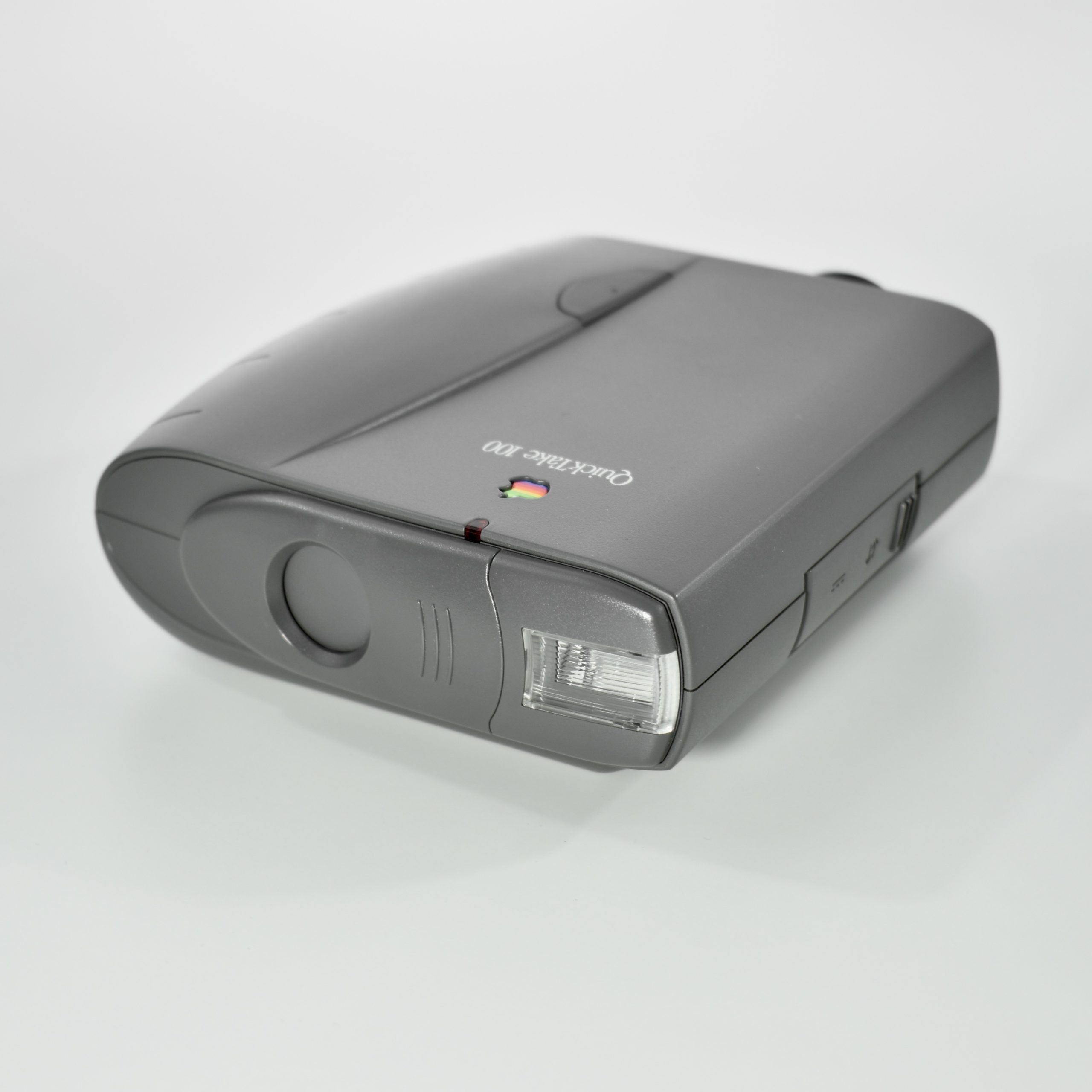
QuickTake cameras also included several accessories, such as a leather cover with a hand strap, a neck strap, a leather case, a battery booster pack (shown here), and a snap-on close-up lens.

Source: Wikipedia
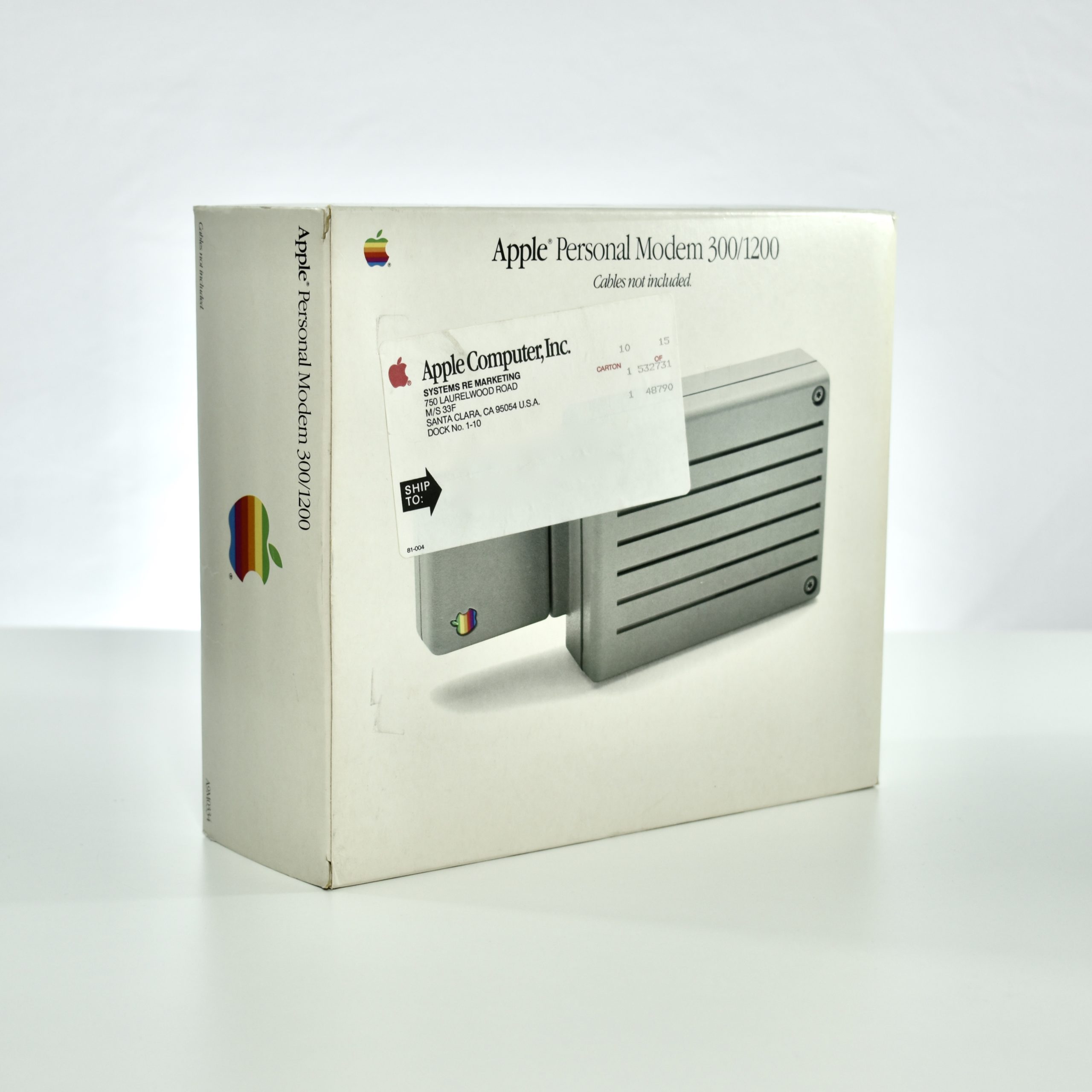
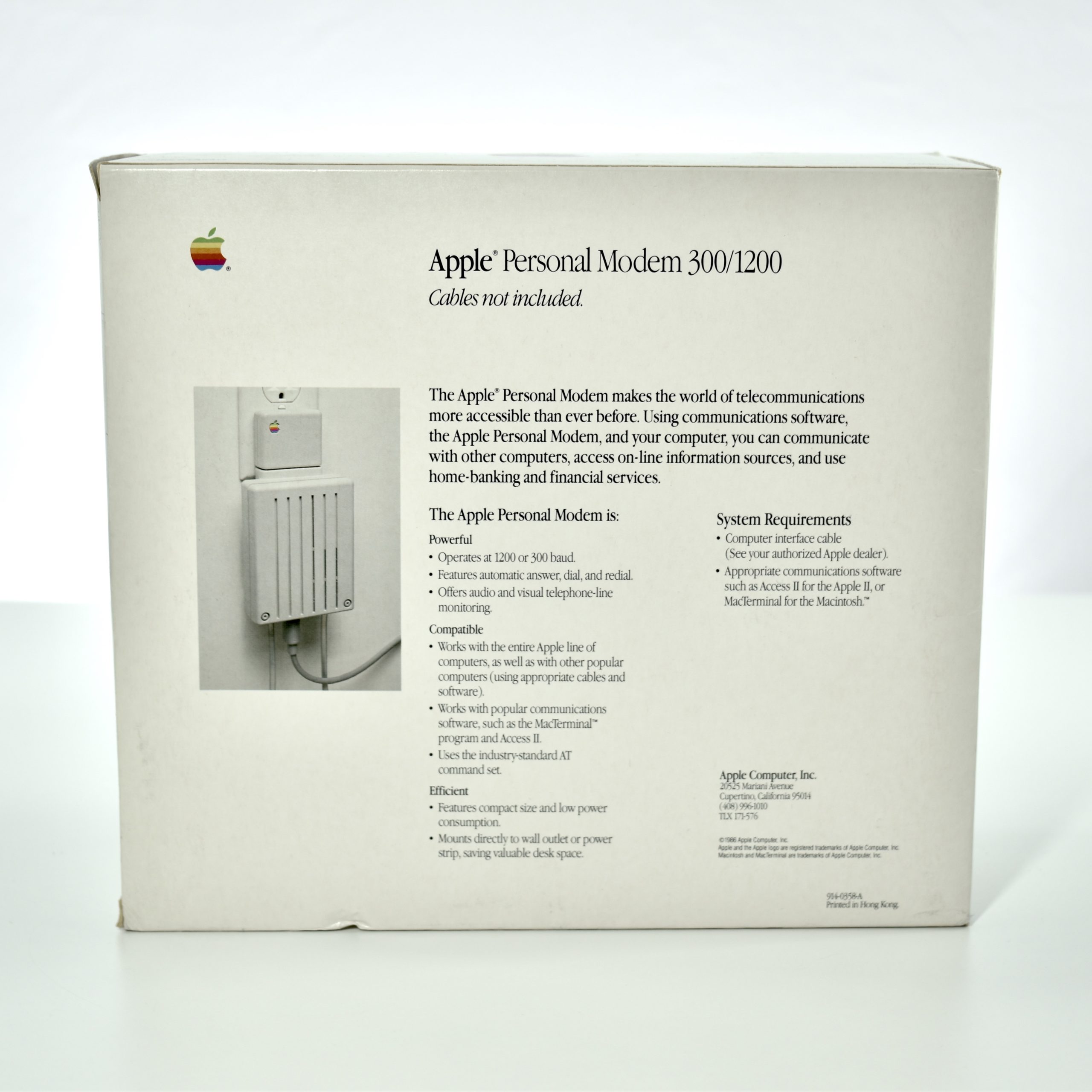
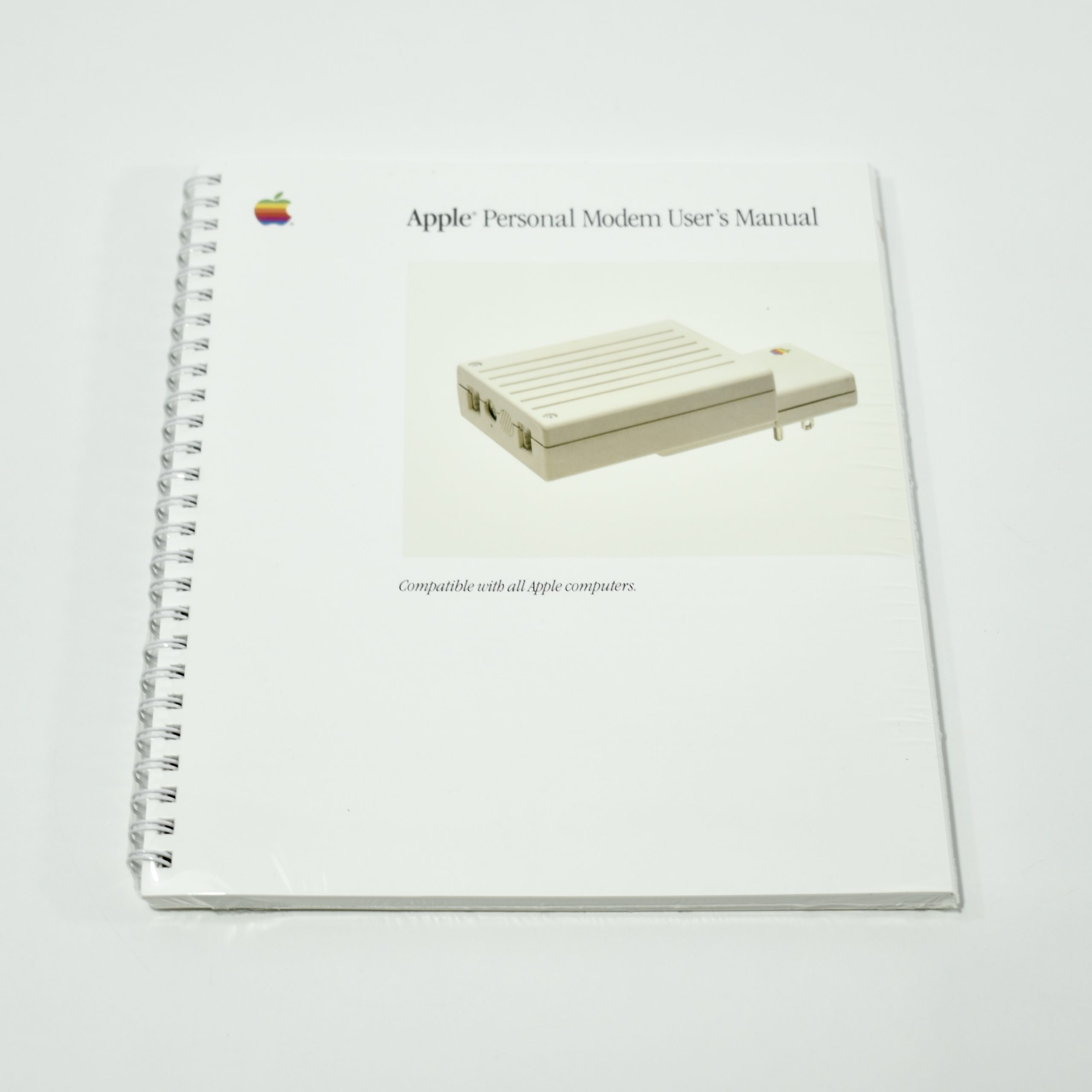
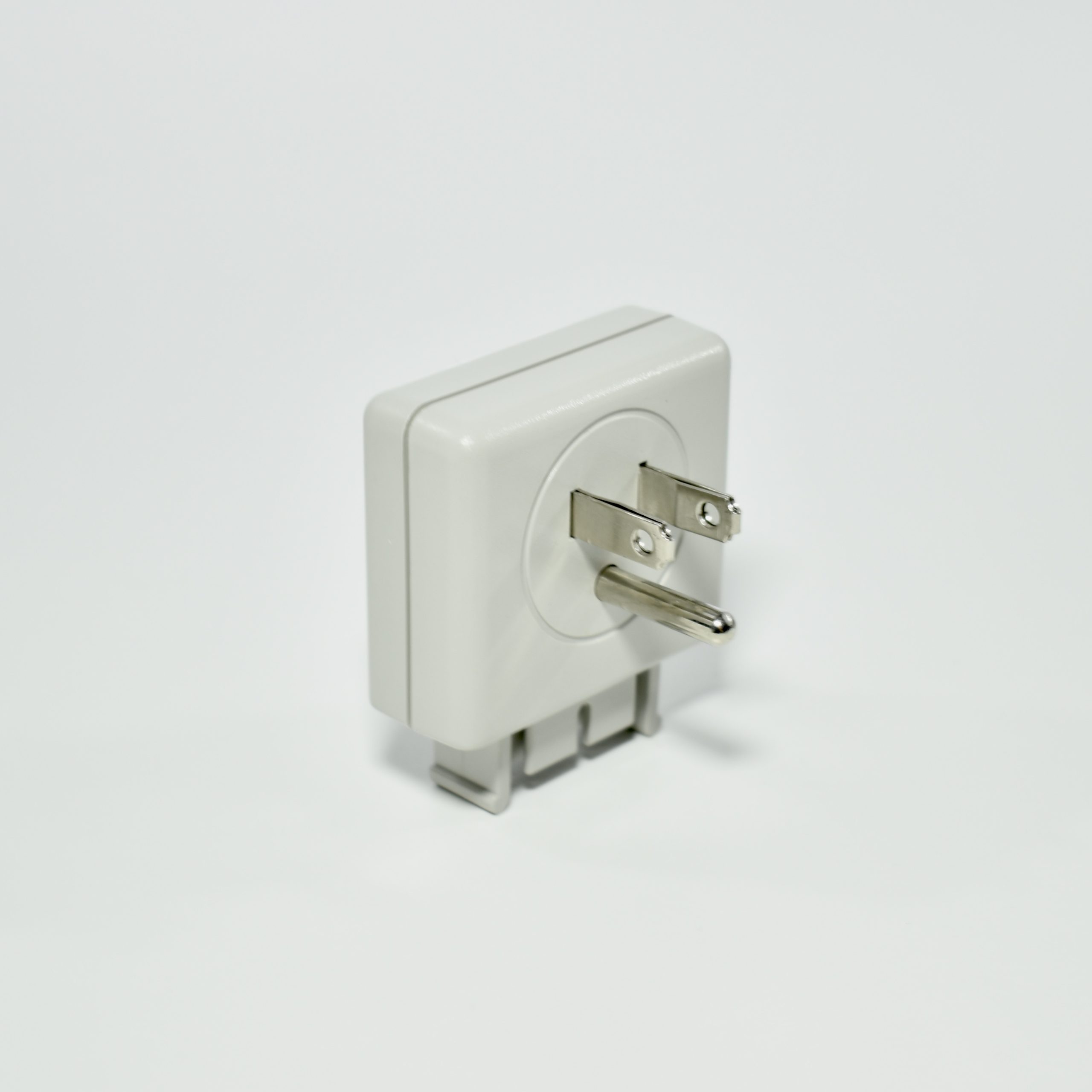
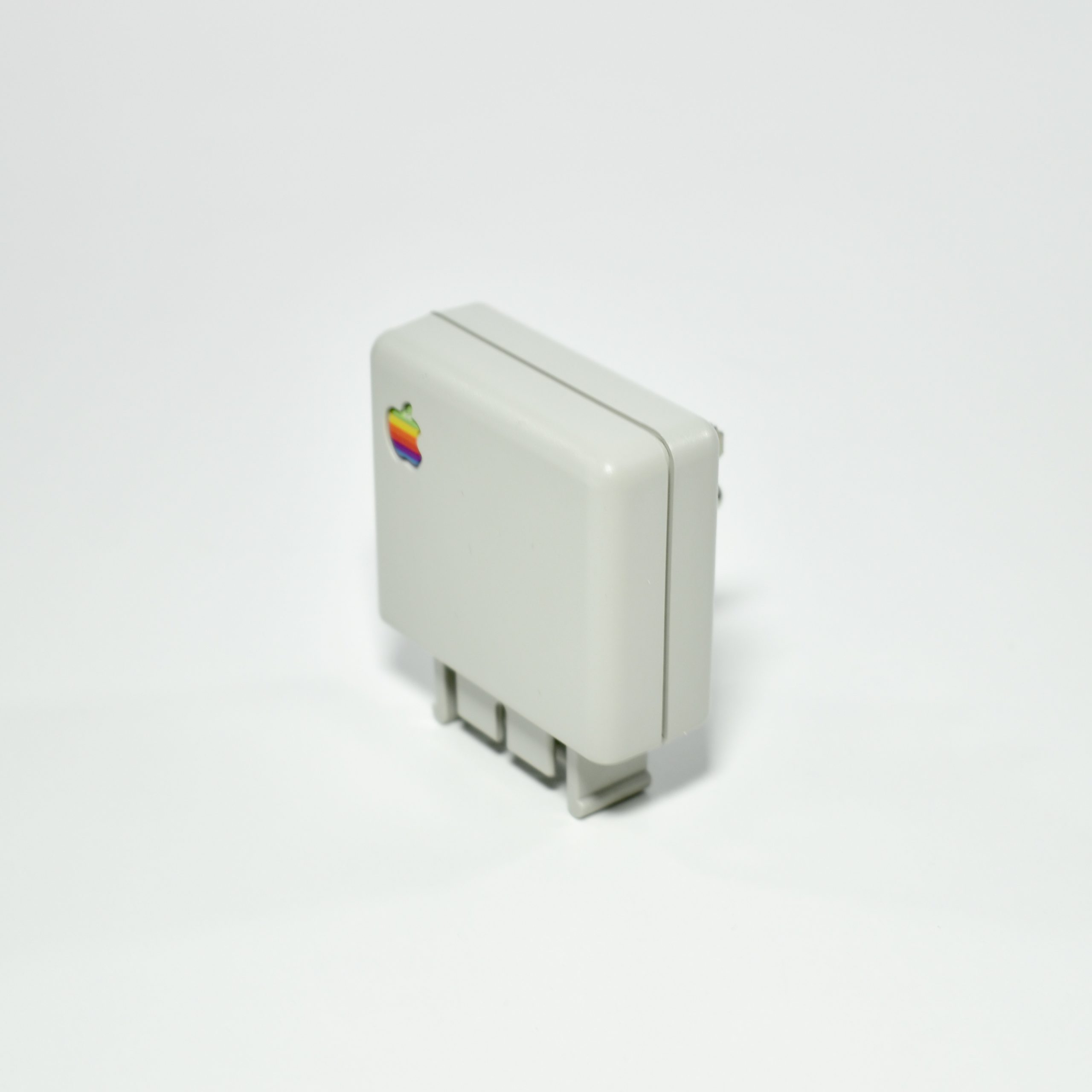
Apple Personal Modem 300/1200 (1987)

An Apple white paper summarized the Apple Personal Modem 300/1200 features:

“The Apple Personal Modem is a compact, 1200/300-baud modem that provides a cost-effective data communications solution for any Apple personal computer system. With the modem and appropriate software, your Macintosh or Apple II computer can communicate with other personal computers, minicomputers, and mainframes to send reports and graphs between offices, access data bases and commercial information services, find out the latest stock prices, or shop and bank from your own home.”

At the time of its release, the modem worked with several types of Macintosh and other Apple computers: Macintosh (128K, 512K, 512K Enhanced), Macintosh Plus, Macintosh SE, Macintosh II, Apple II GS, Apple IIe, Apple III, Macintosh XL, and Lisa. The modem did not ship with cables because several different interfaces were in use at the time: Apple System/Peripheral-8 Cable (Macintosh Plus, Macintosh SE, Macintosh II, or Apple IlGS); Macintosh Peripheral-8 Cable (Macintosh 128K, 512K, 512K Enhanced); Apple IIe Peripheral-8 Cable; Apple Ile Modem-8 Cable (Apple Ile, Apple II Plus, Apple II, Apple III, Macintosh XL, Lisa); and other computers with an RS-232 port.

This modem in my collection appears to have never been used, and all original paperwork, manuals, and packaging was included in the box. Thus, I was able to provide an “unboxing” of a 1987 product. Note that the internal packaging is mostly styrofoam and the Apple logo is embossed in two different locations in the styrofoam.

Source: Apple (PDF)

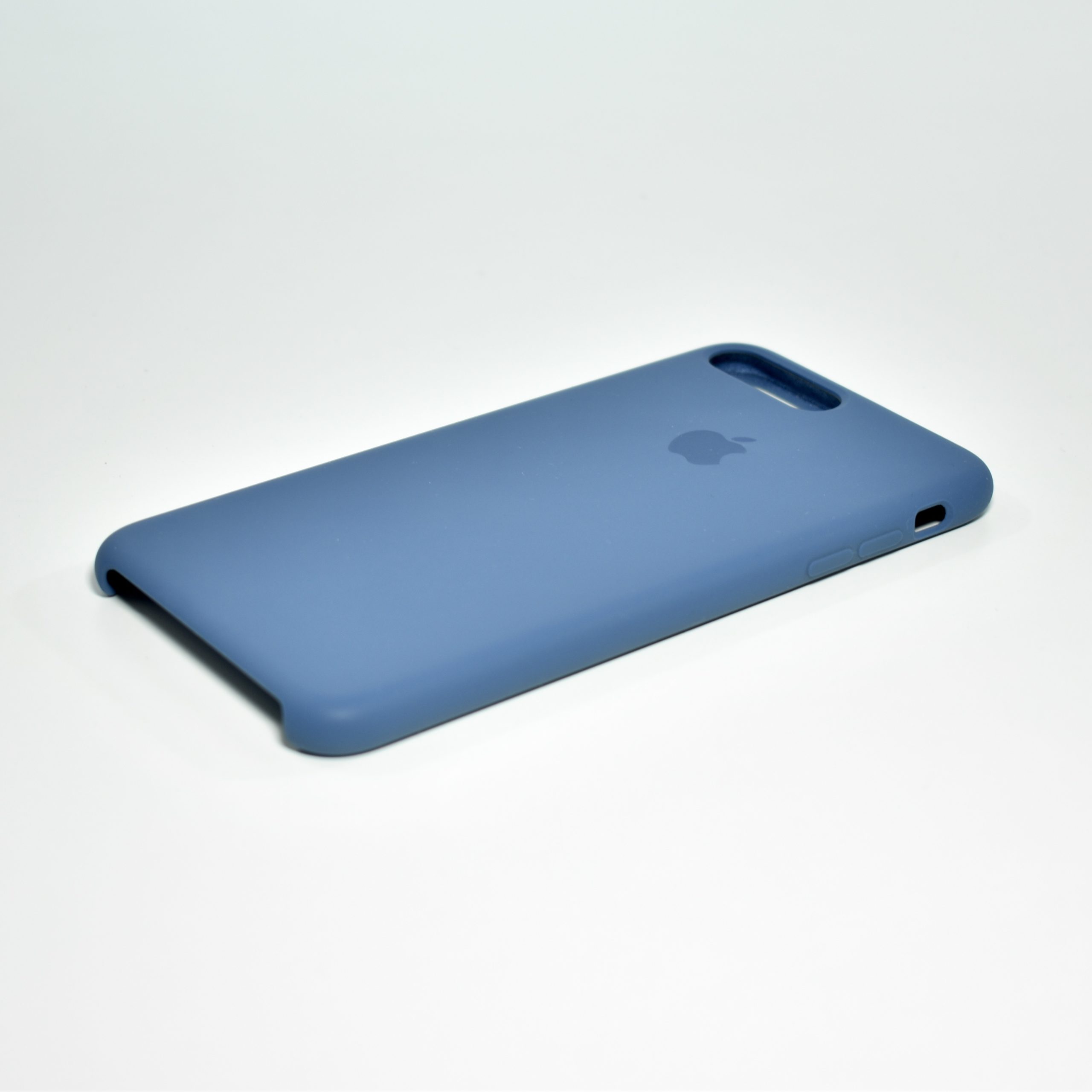
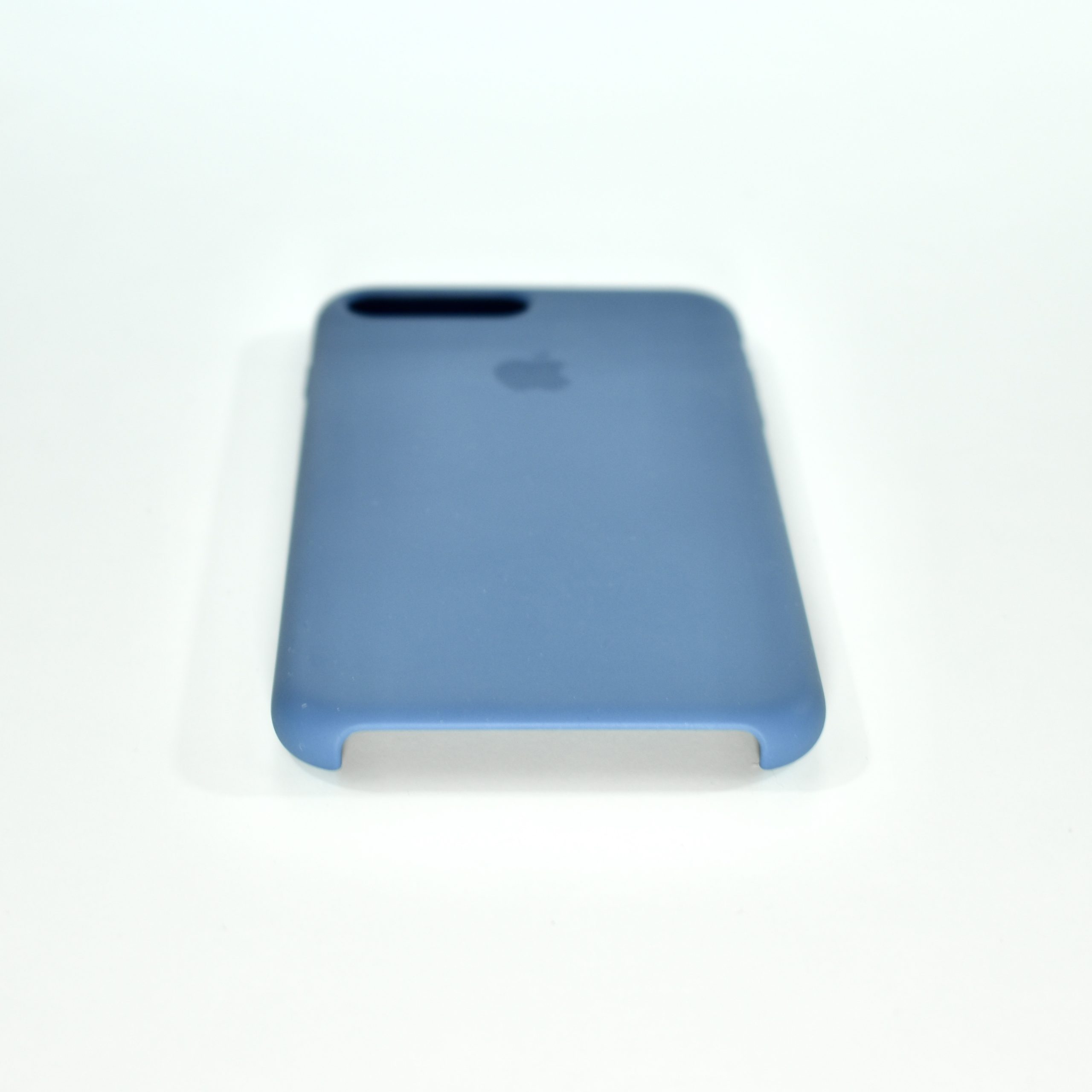
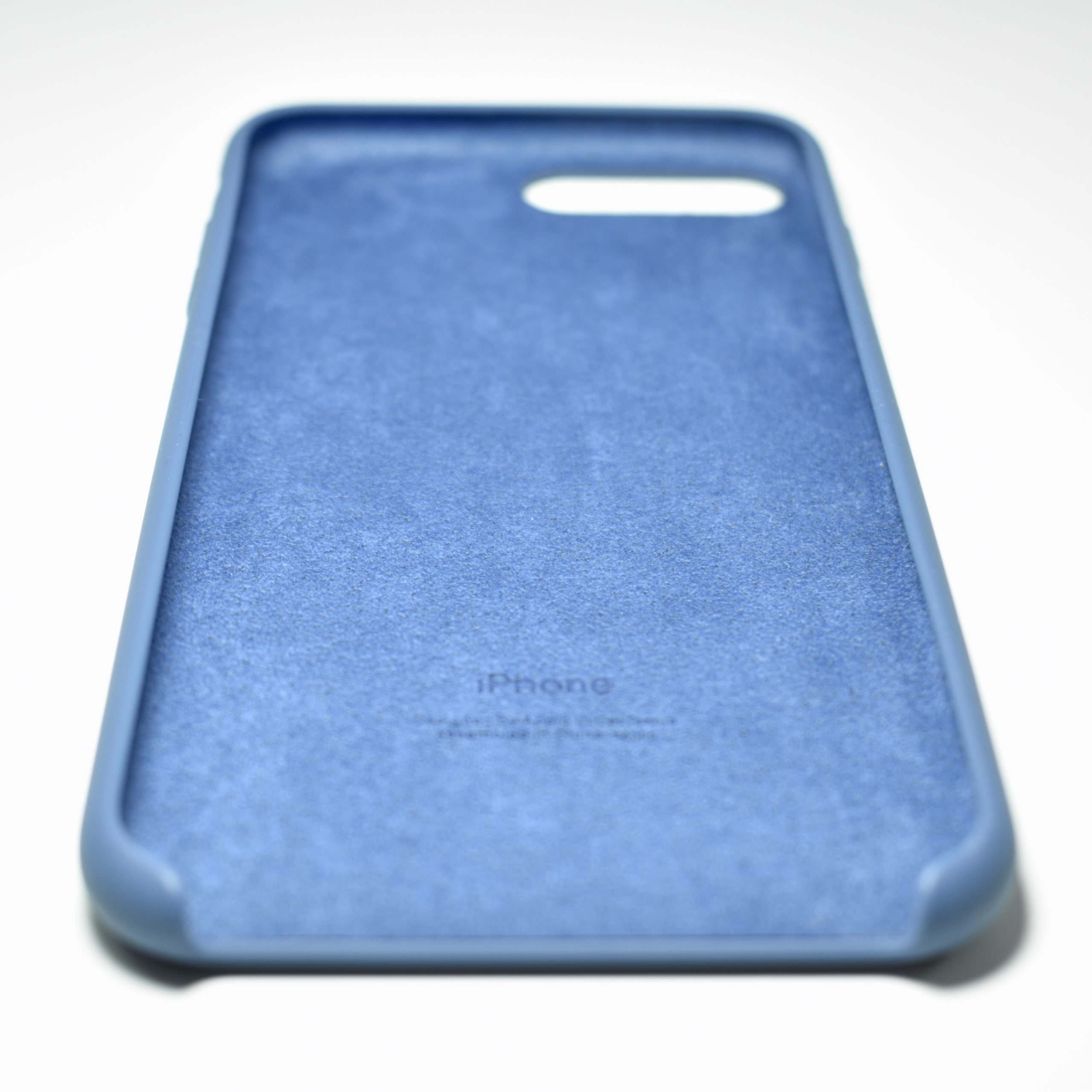
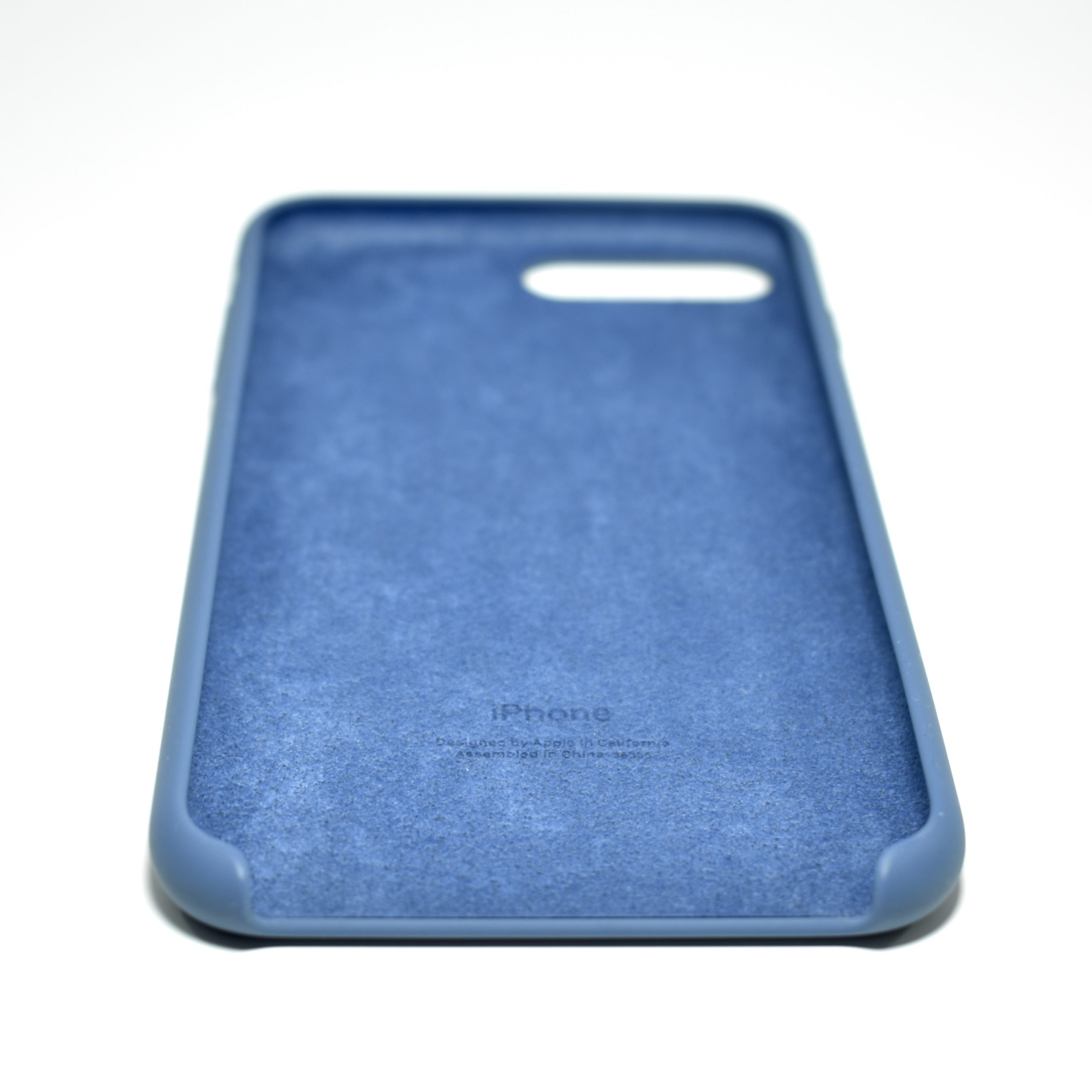
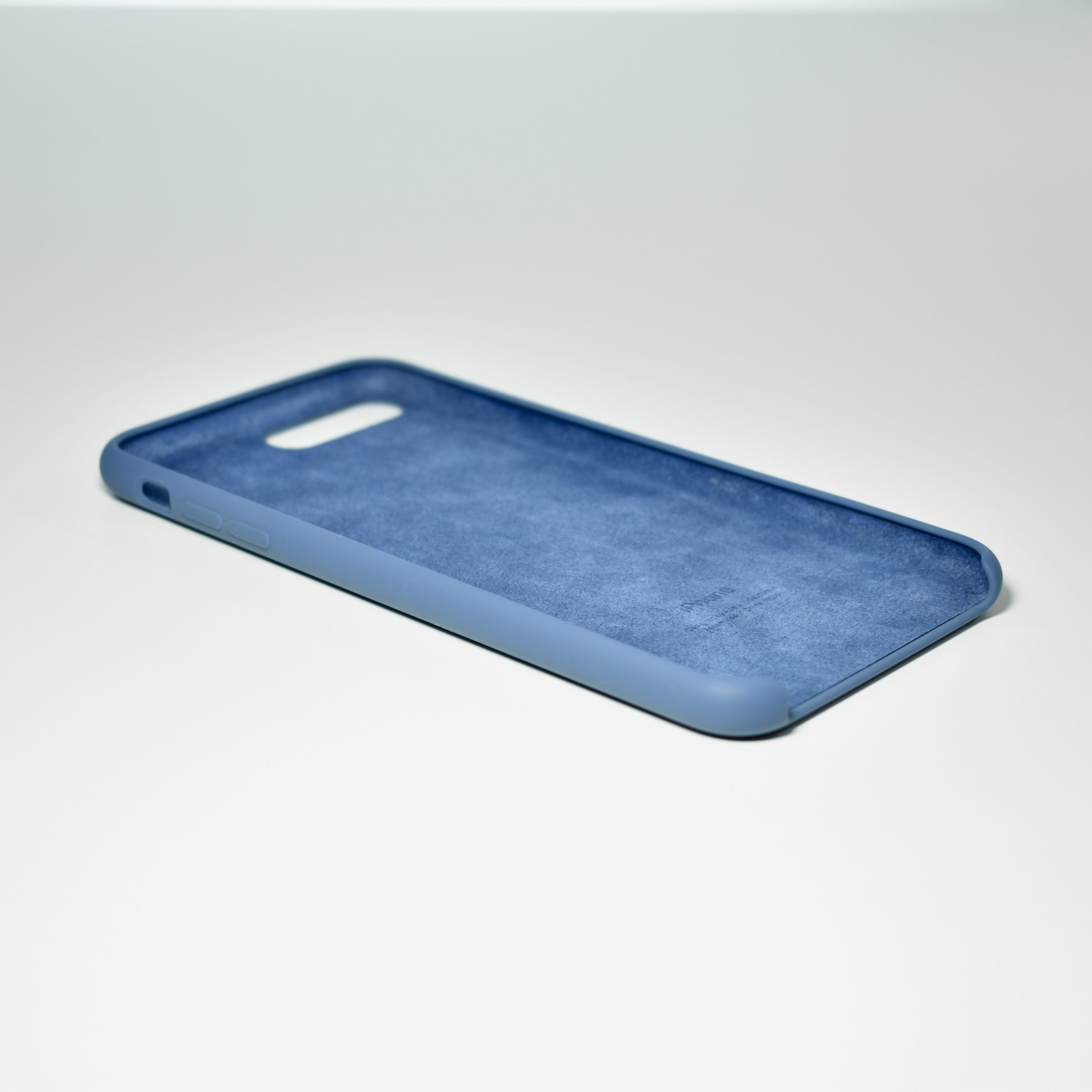
iPhone 7 Plus Silicone Case (Denim Blue, 2016)

According to Apple’s website, “Designed by Apple to complement your iPhone, the form of the silicone case fits snugly over the volume buttons, side button, and curves of your device without adding bulk. A soft microfiber lining on the inside helps protect your iPhone. On the outside, the silky, soft-touch finish of the silicone exterior feels great in your hand.”

This case was purchased to protect my iPhone 7 Plus in Jet Black (the gloss black version of the iPhone 7 Plus). The same case also fit the next “Plus” iPhone, the iPhone 8 Plus, and Apple began to refer to the product as the iPhone 8 Plus/7 Plus Silicone Case.

The case was released in Midnight Blue, Pink Sand, Sea Blue, Black, Cocoa, Ocean Blue, Denim Blue, (PRODUCT)RED, Stone, and White.

Source: Apple

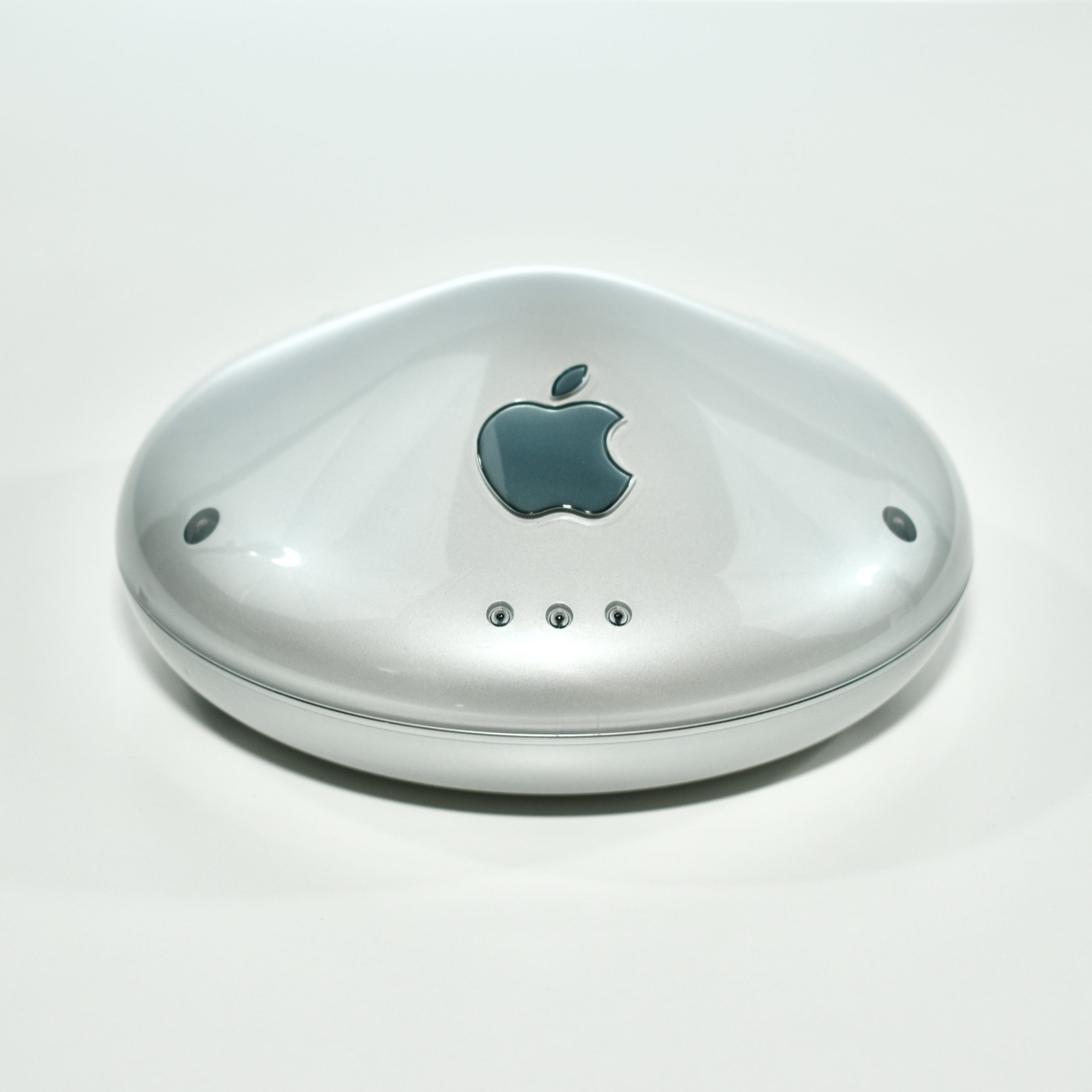
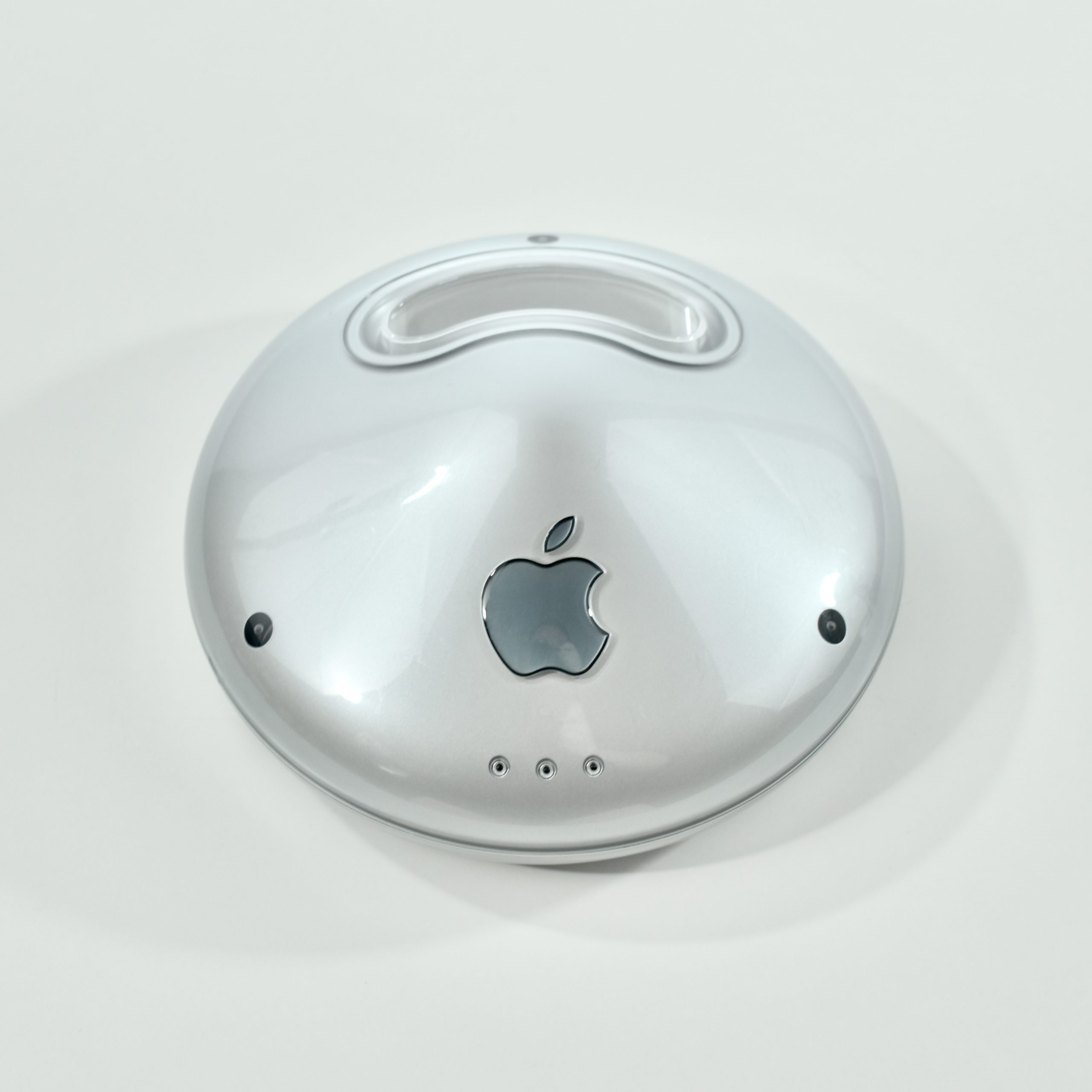
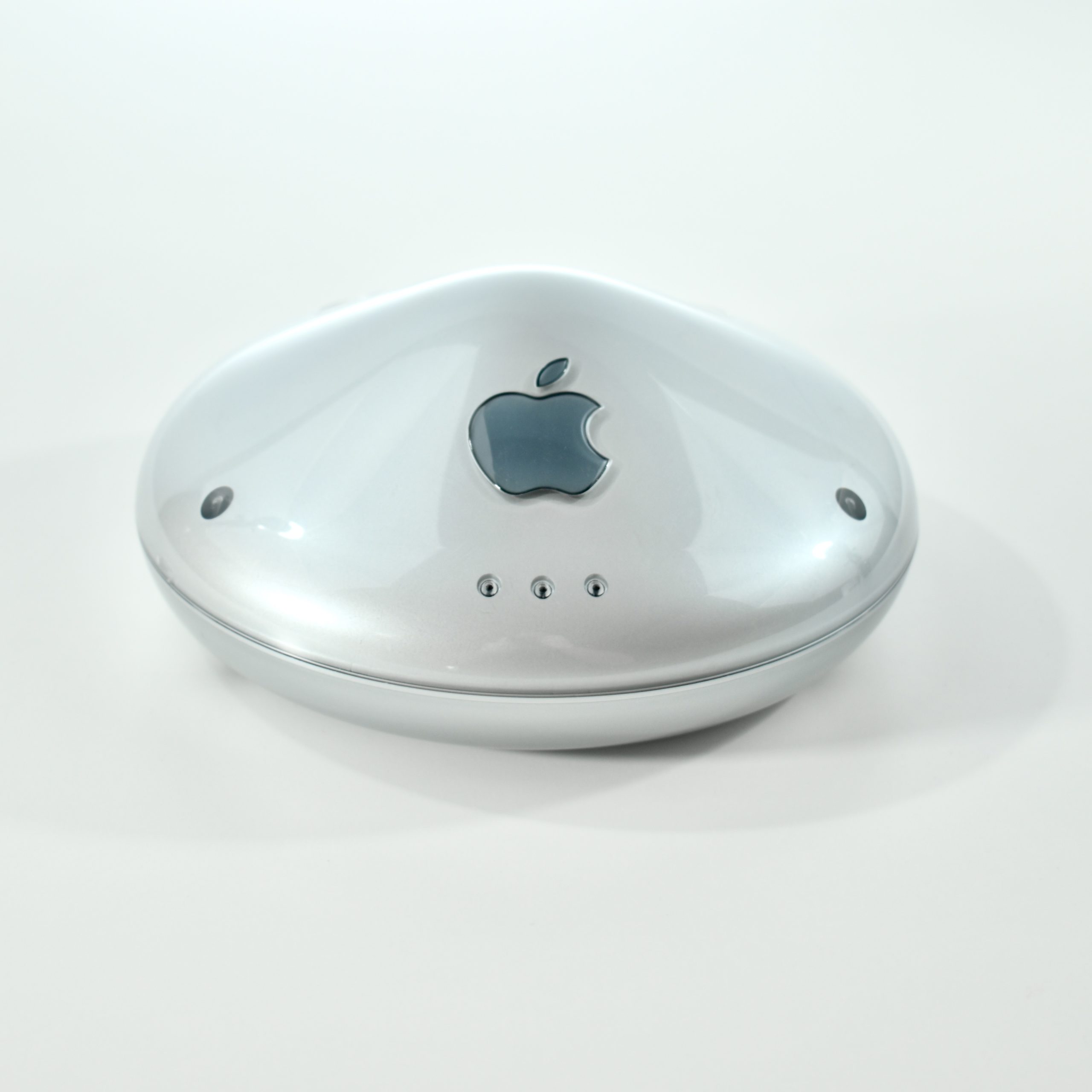
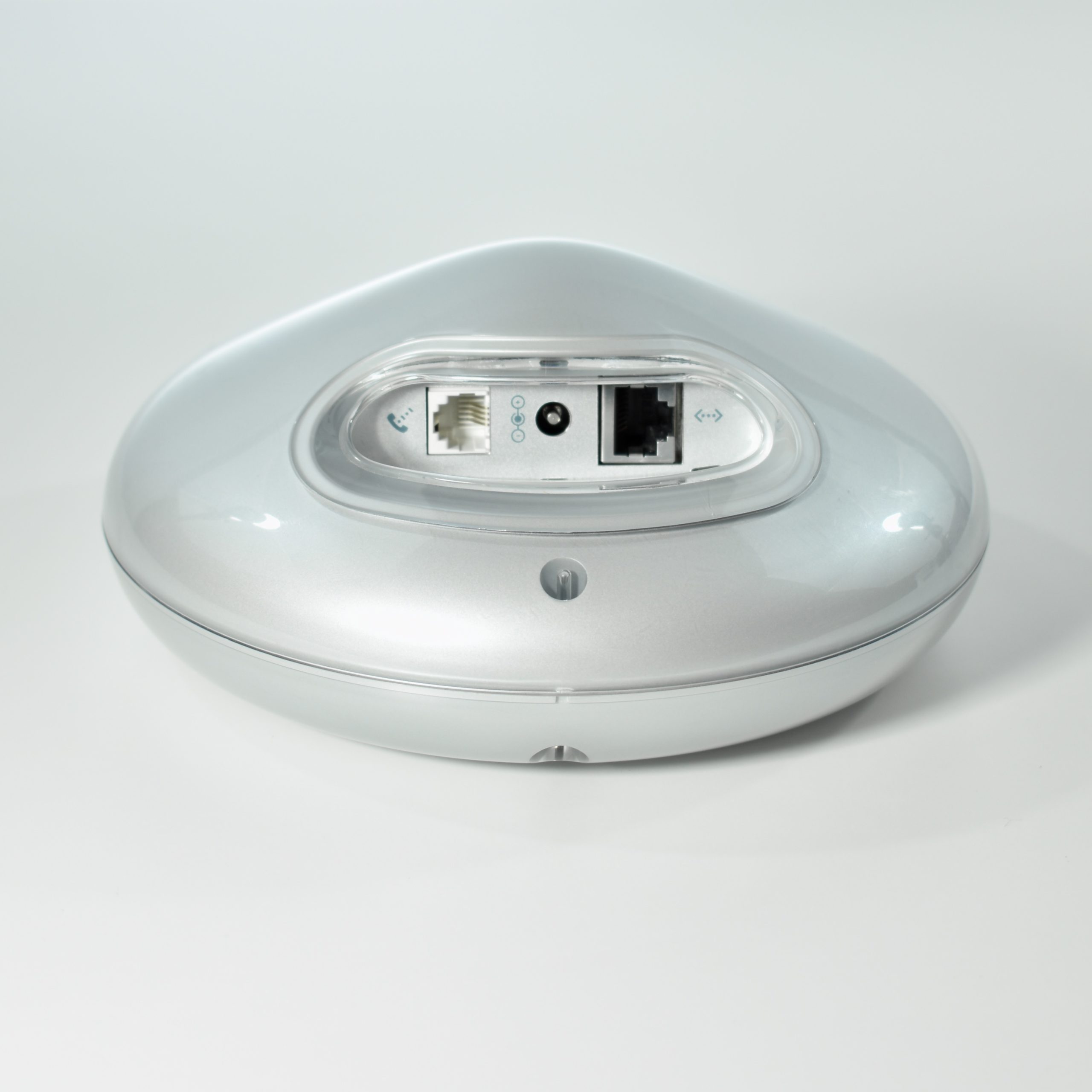
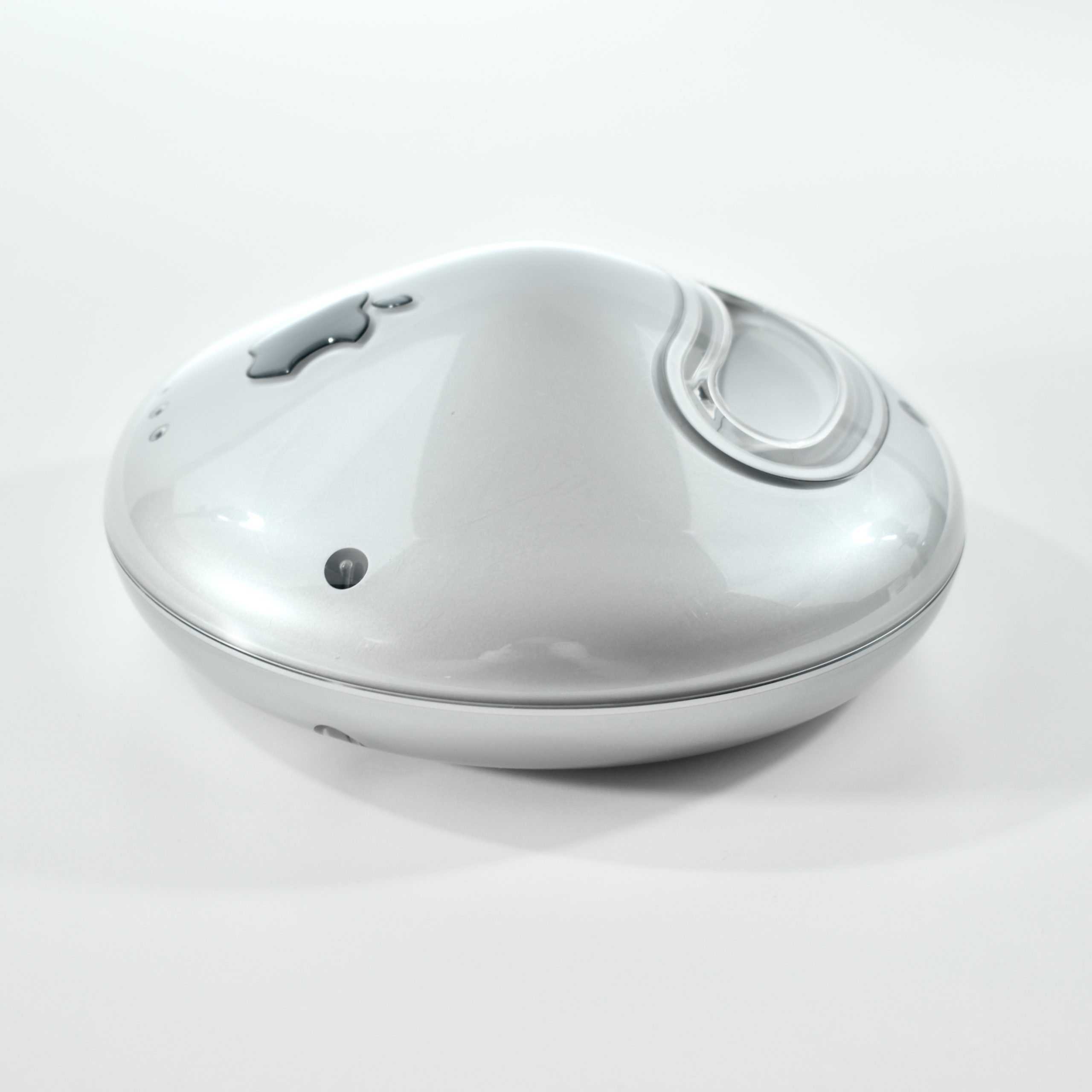
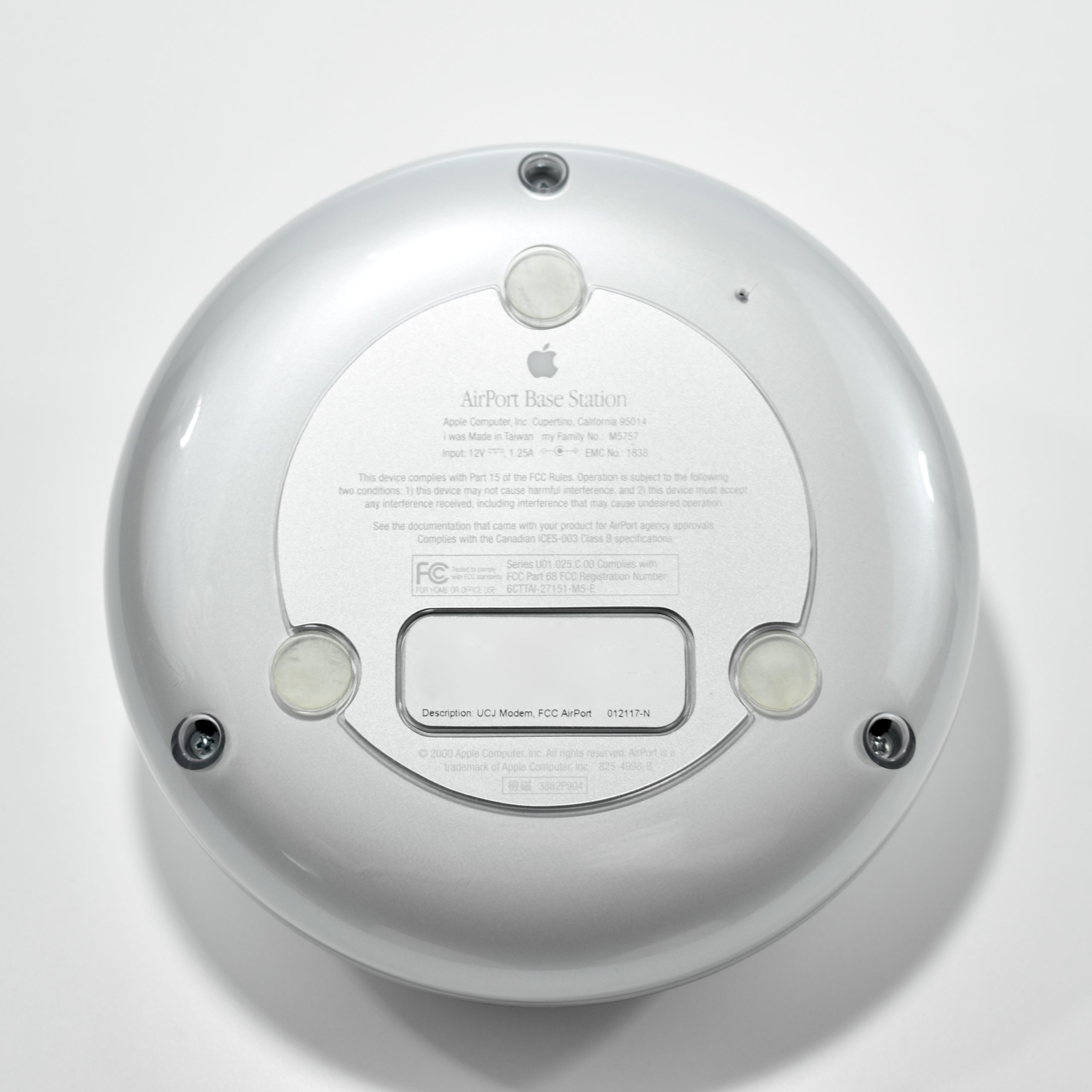
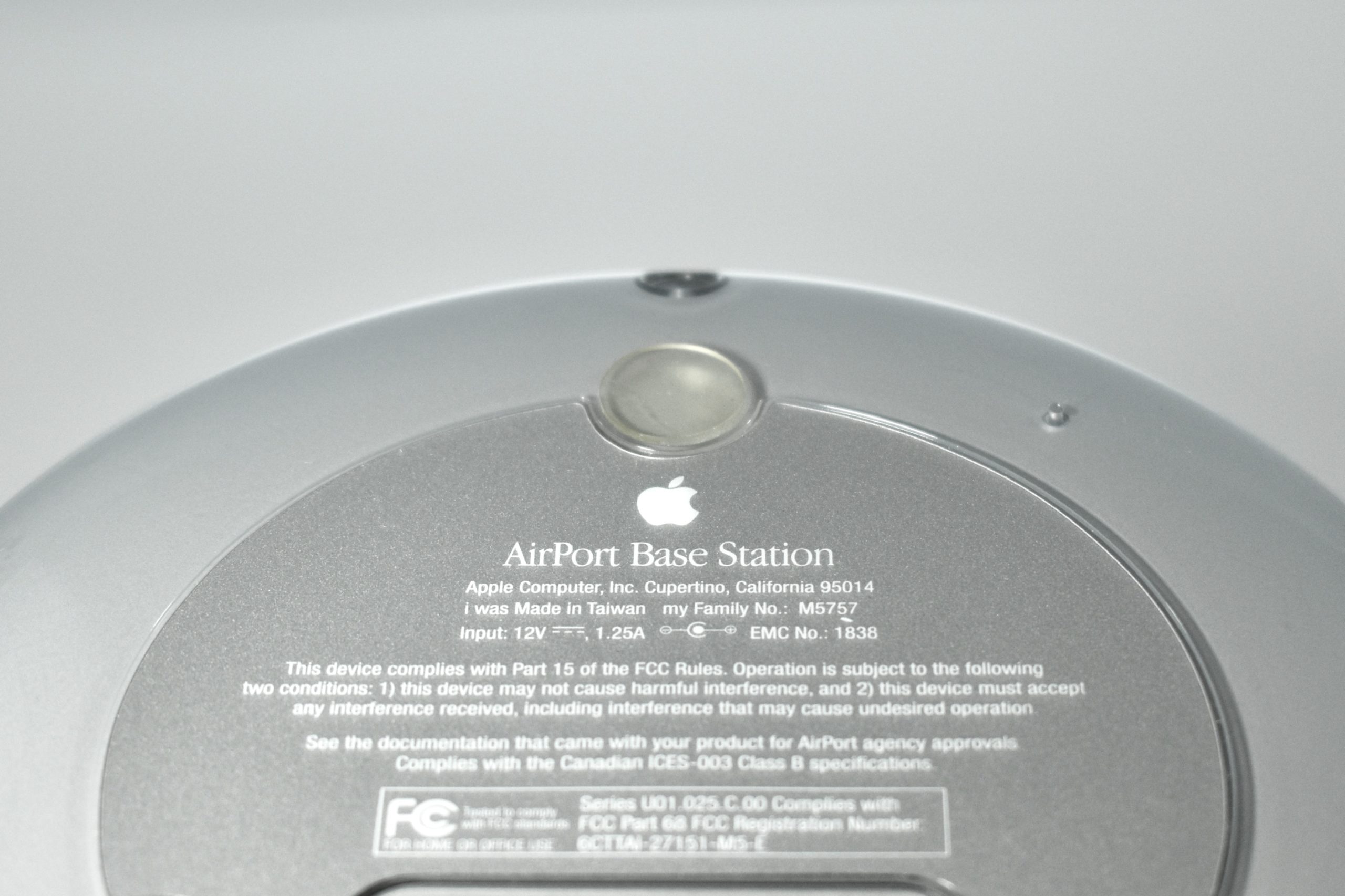
AirPort Base Station (original, 1999)

The original AirPort Base Station was released along with the original iBook (blueberry and tangerine) at the 1999 MacWorld conference and expo in New York City. An optional AirPort card was available for the iBook (a repackaged Lucent ORiNOCO Gold Card PC Card adapter) and this graphite AirPort Base Station provided one of the first consumer WiFi base stations that was relatively easy to set up and manage.

The original AirPort system including the AirPort card and AirPort Base Station allowed transfer rates up to 11 Megabits/second.

Soon after MacWorld, Apple began airing a TV commercial for the AirPort Base Station featuring a 1950s-style Sci-Fi soundtrack and the base station flying in like a flying saucer.

Sources: Wikipedia, Museums Victoria (Australia)

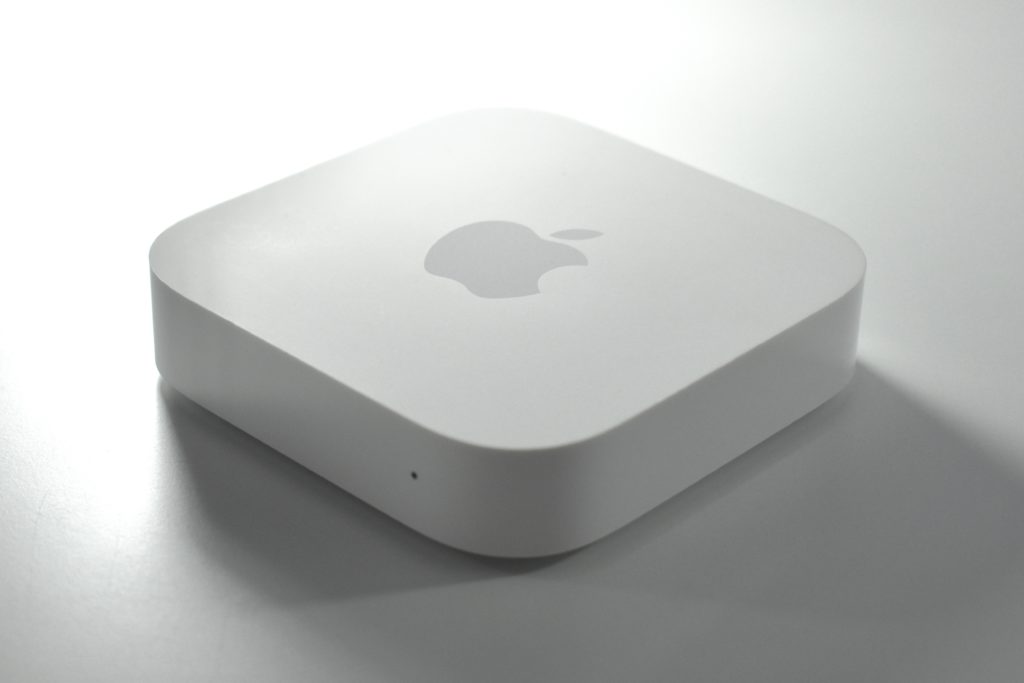
AirPort Express 802.11n (Generation 2, 2012)

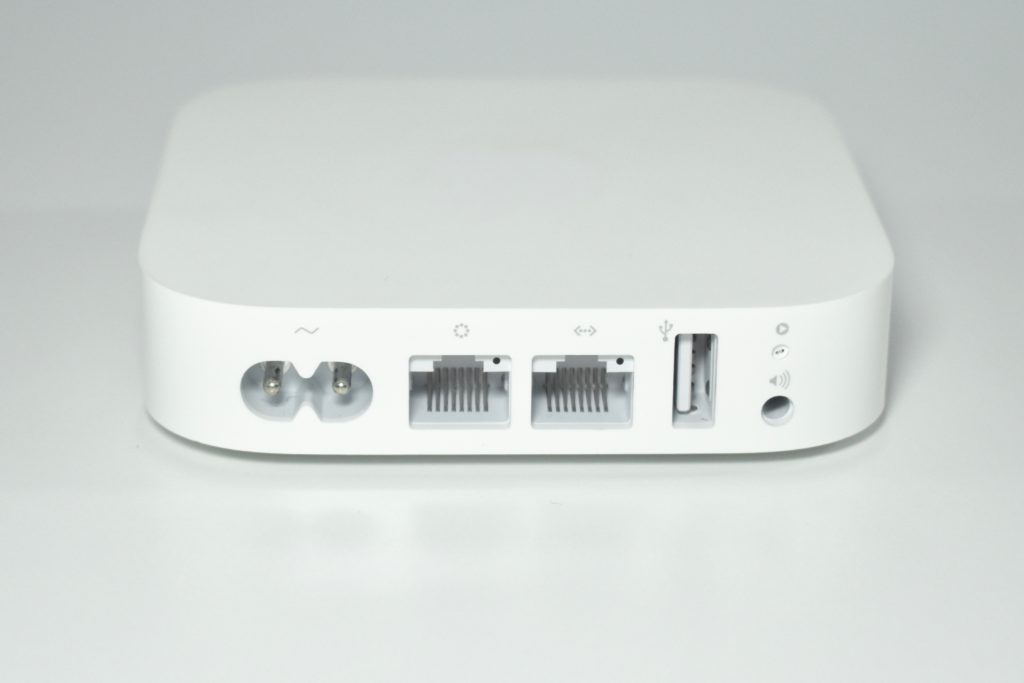
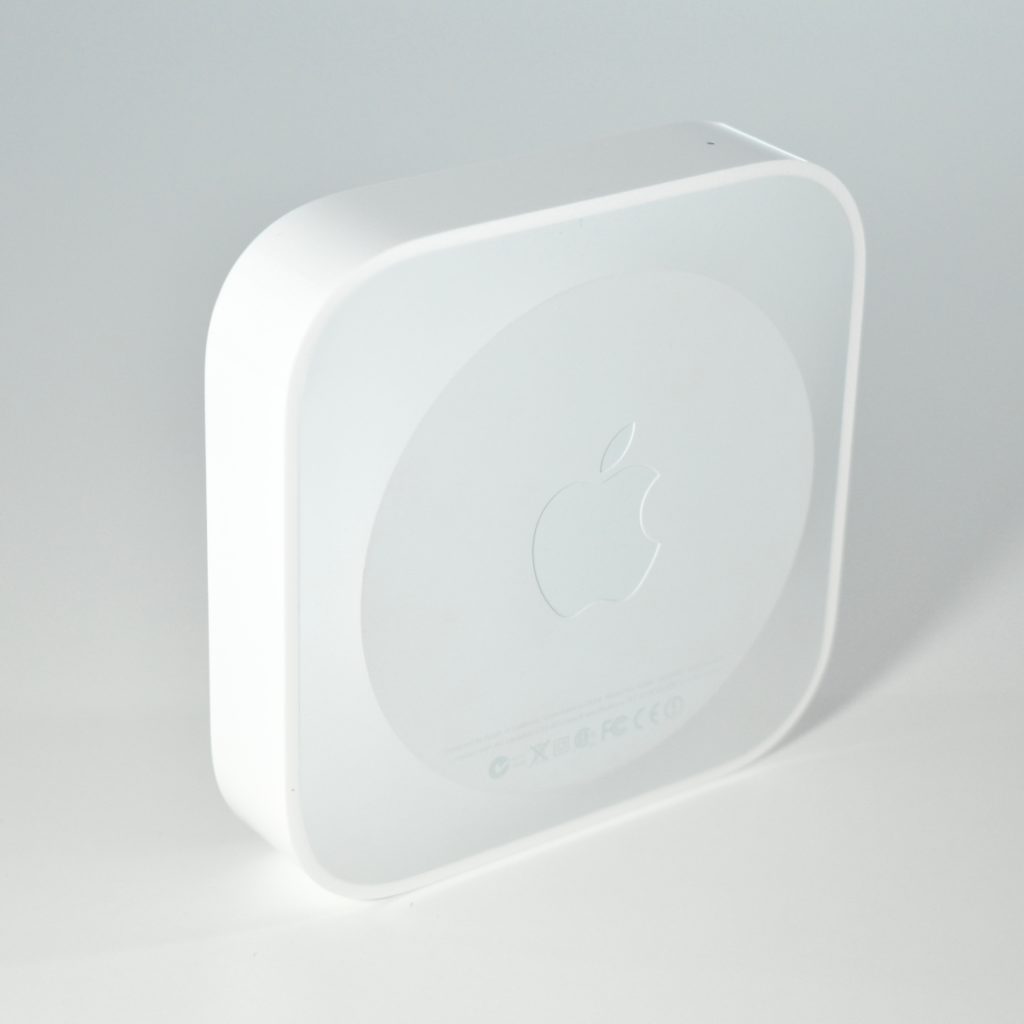
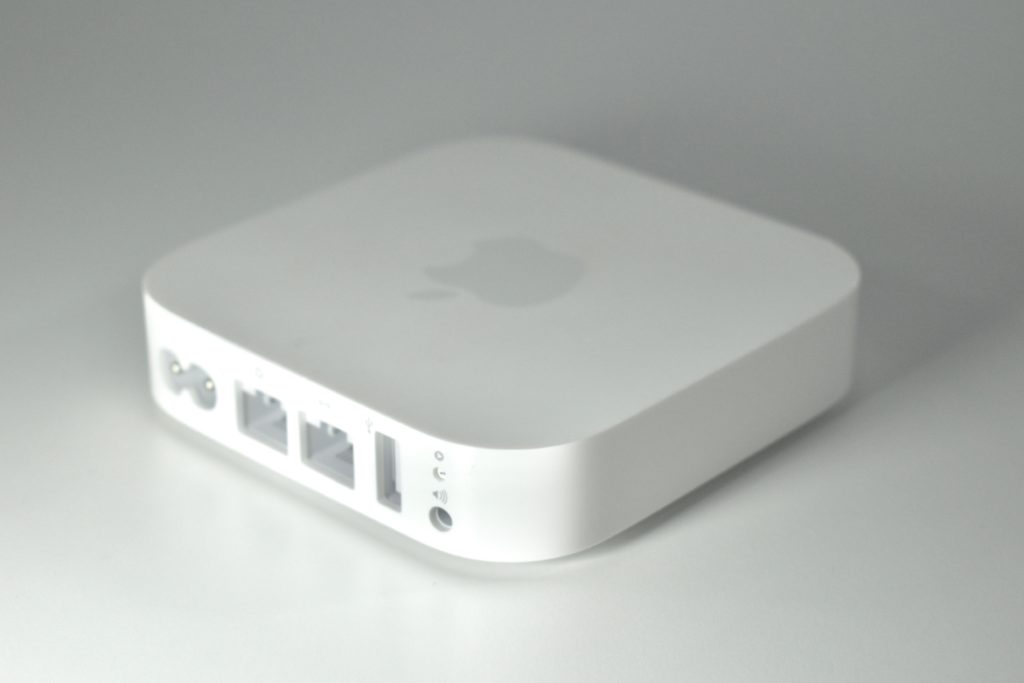
The AirPort Express Generation 2 functioned as a wireless access point, to extend the range of a network, as an Ethernet-to-wireless bridge, as a print server, and/or as an audio server. This model allowed up to 50 networked users using the 802.11a/n Wi-Fi standard.

Connectors included an audio connector that combined a 3.5 mm minijack socket and a mini-TOSLINK optical digital connection. On August 28, 2018, AirPlay 2 support was added to the Generation 2 AirPort Express, giving it features similar to HomePod.

Source: Wikipedia
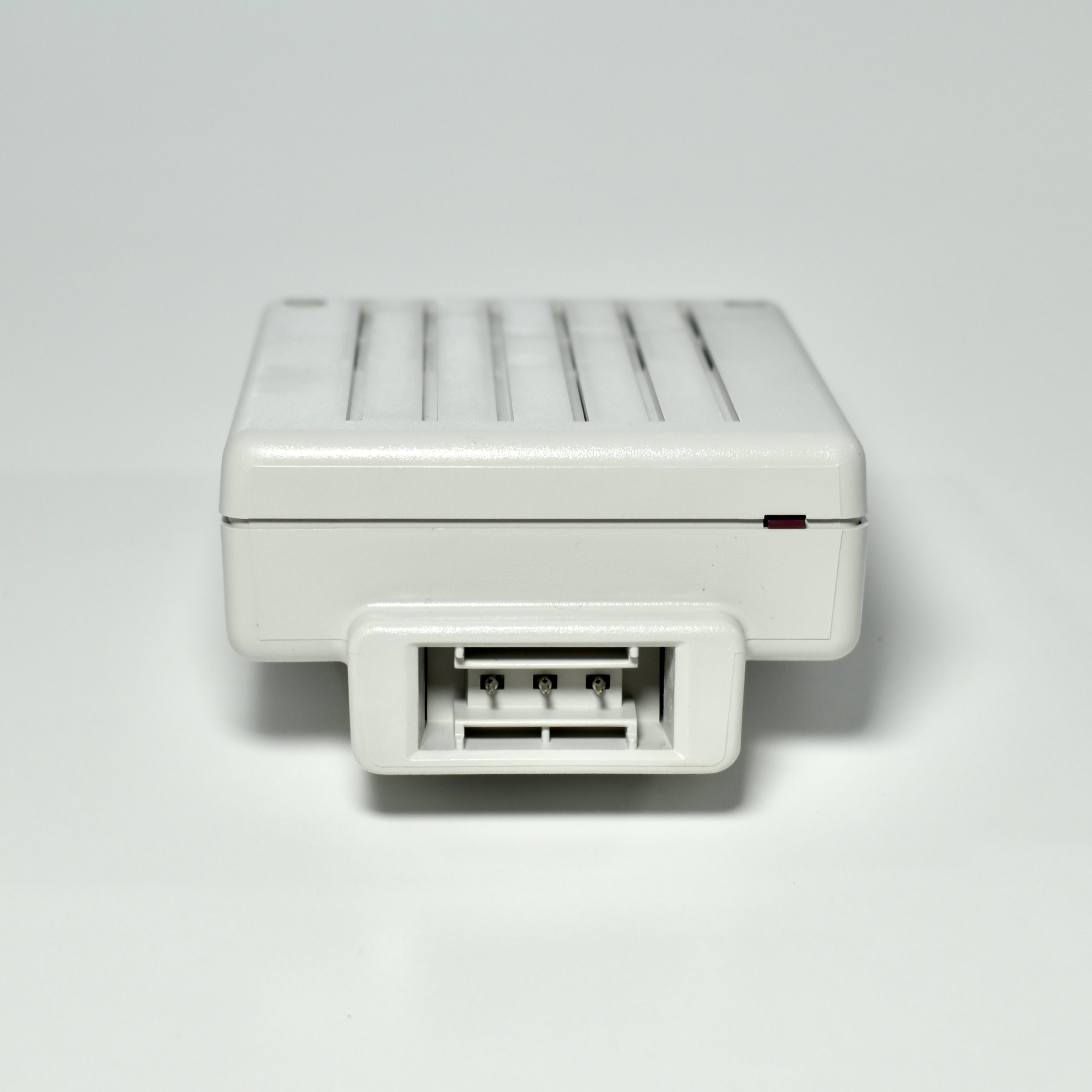
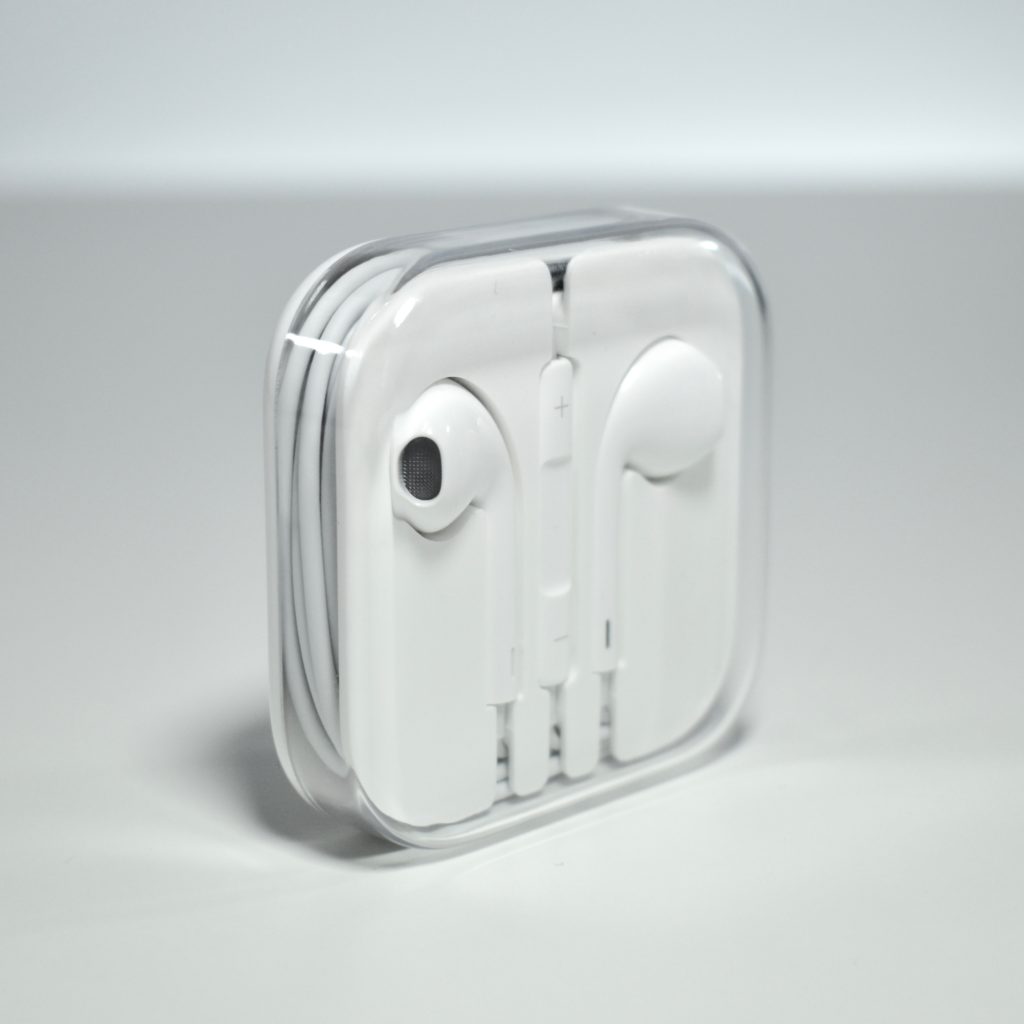
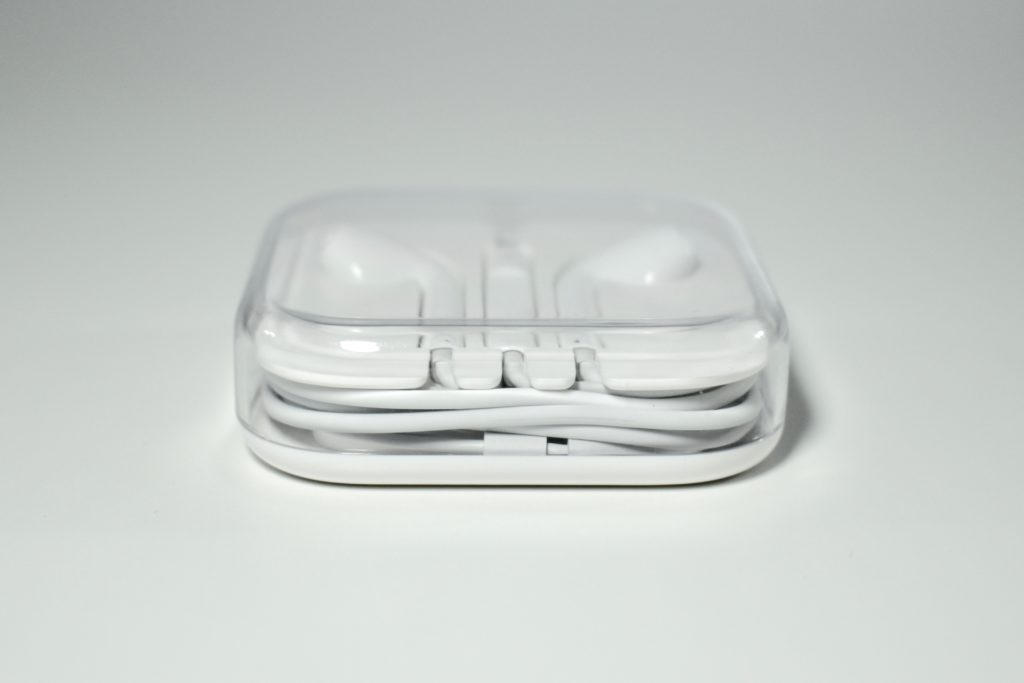
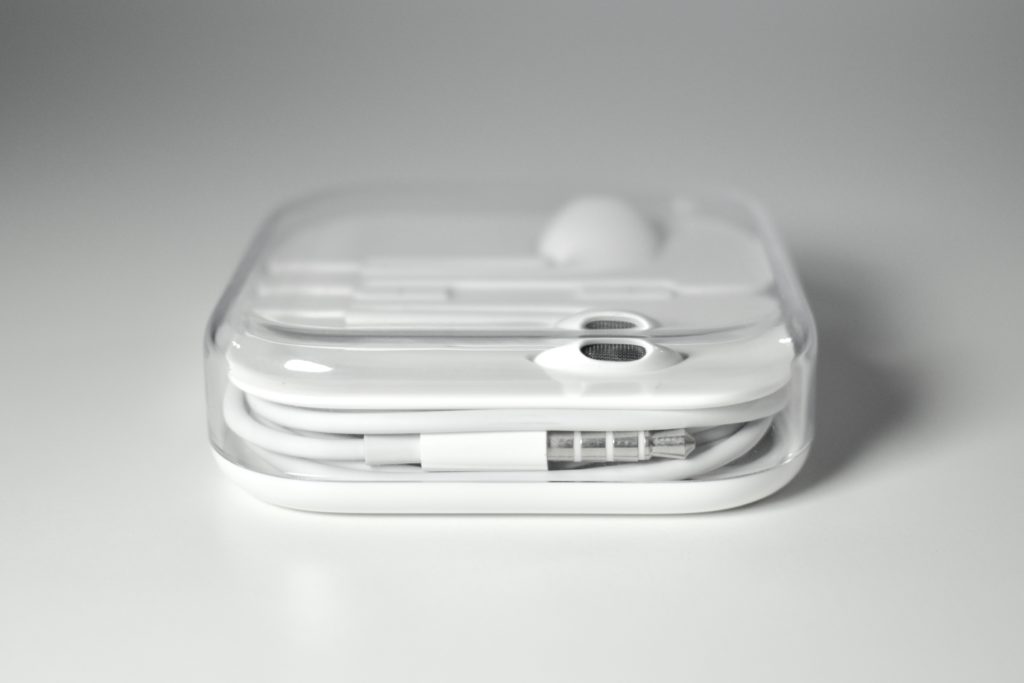
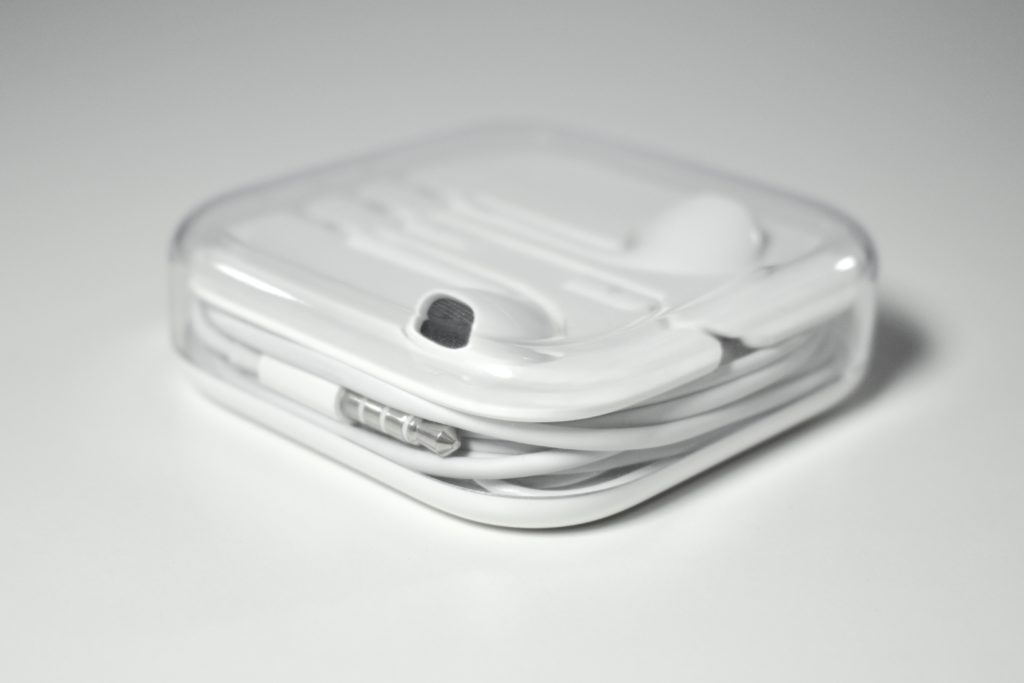
EarPods (with 3.5 mm Headphone Plug, 2012)

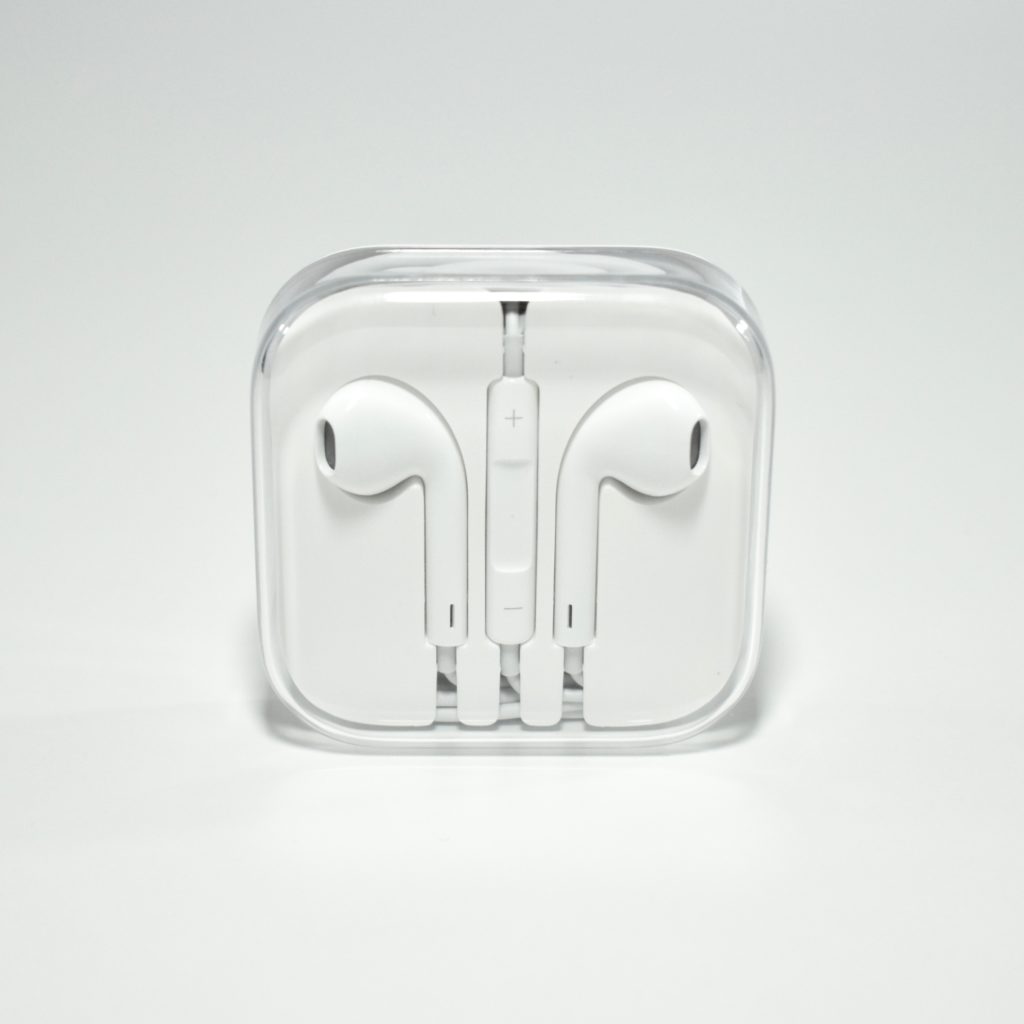
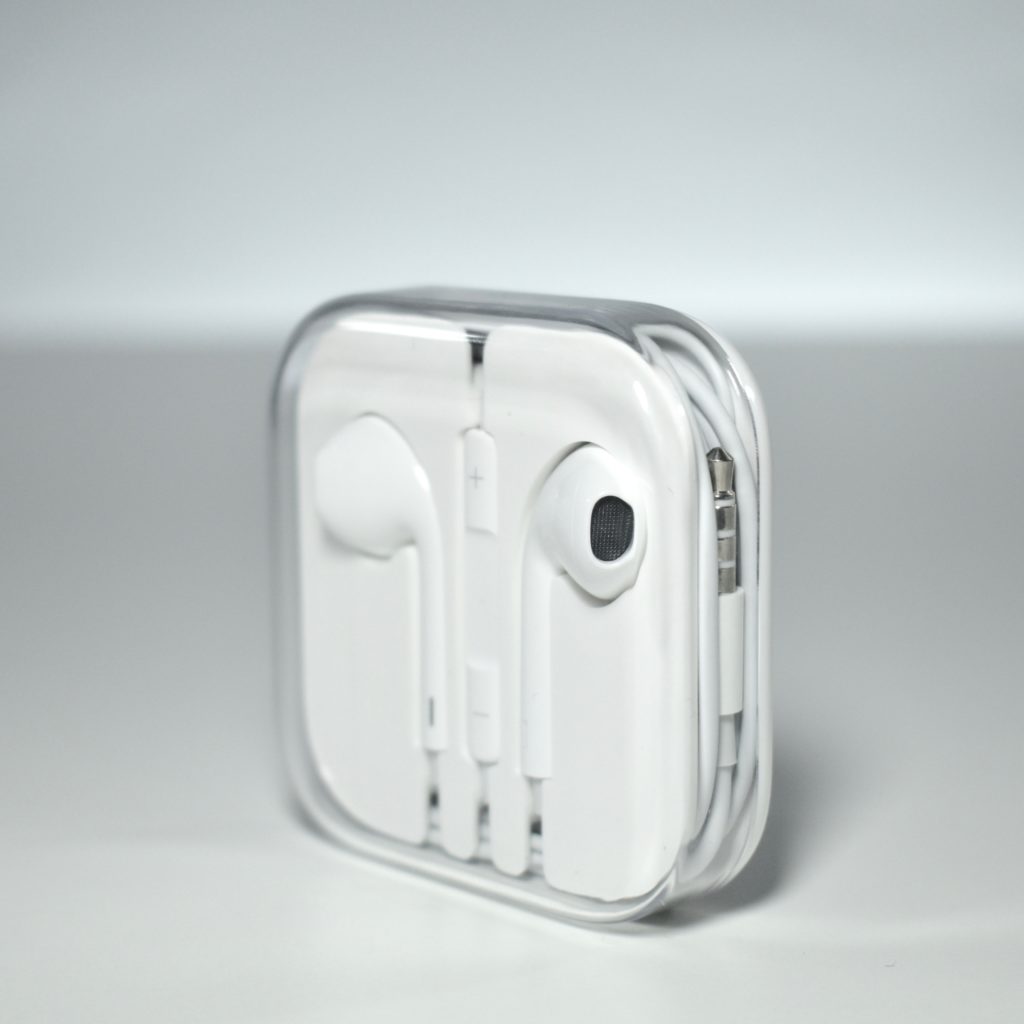
The EarPods design replaced a previous Apple headphone design with a circular earphone design. The product description states that, “Unlike traditional, circular earbuds, the design of the EarPods is defined by the geometry of the ear. Which makes them more comfortable for more people than any other earbud-style headphones.”
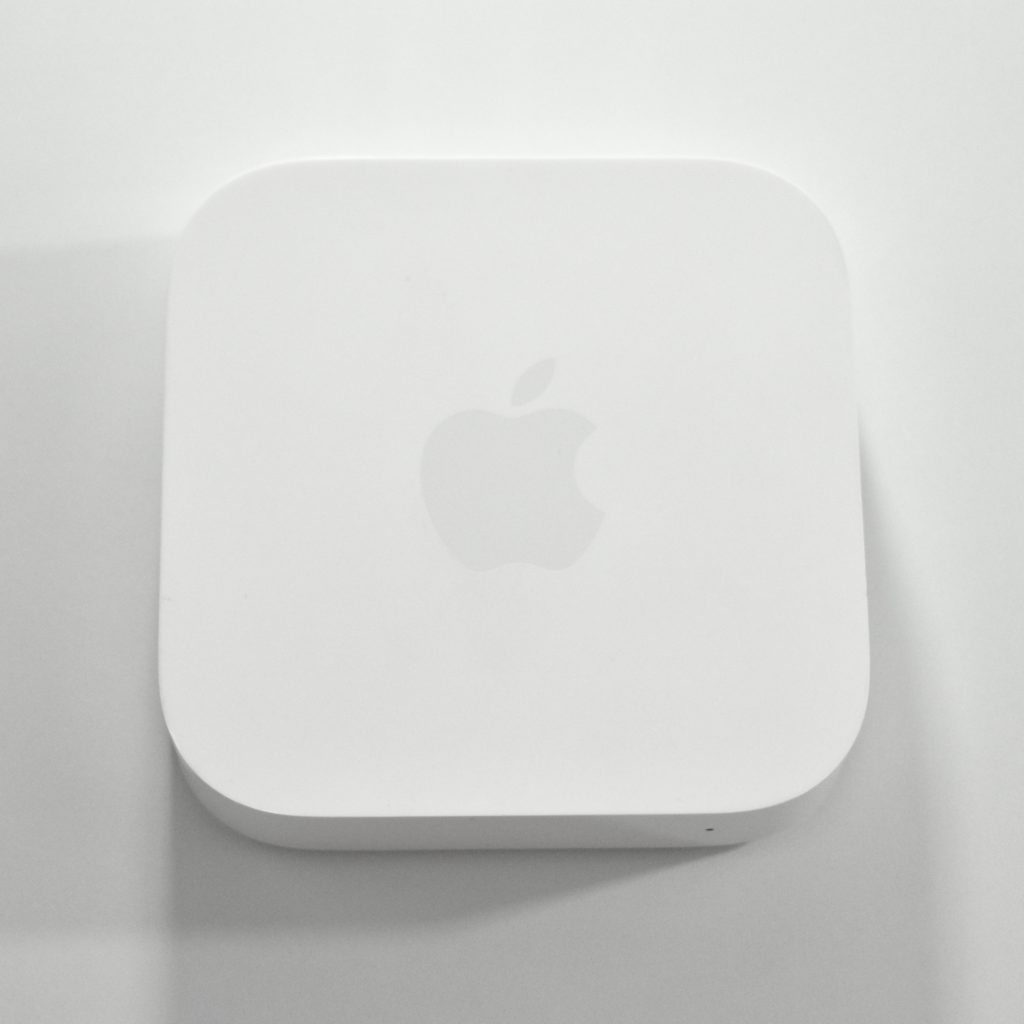
EarPods also included a remote and microphone on the right EarPod wire. The remote allowed the user to pinch the thickened cord to control volume, play/pause music and video, and answer or end a call.

The same wired EarPod design was used in the EarPods with Lightning Connector product when Apple removed the audio connector from the iPhone. Both the 3.5 mm Headphone Plug and Lightning Connector options were sold at the same time since both ports were still used in Apple products.

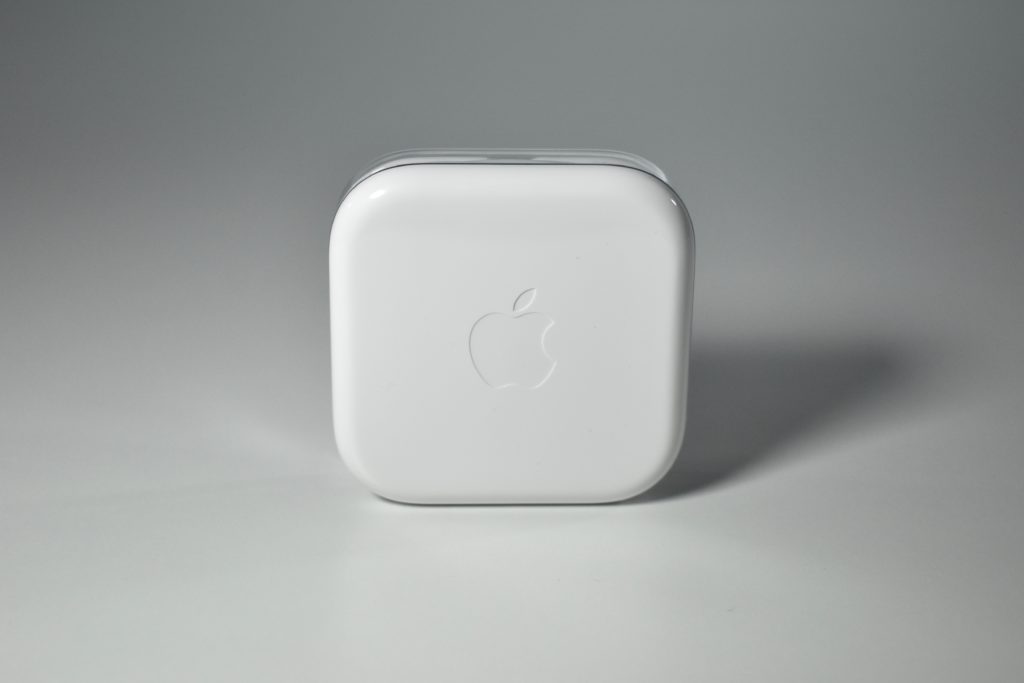
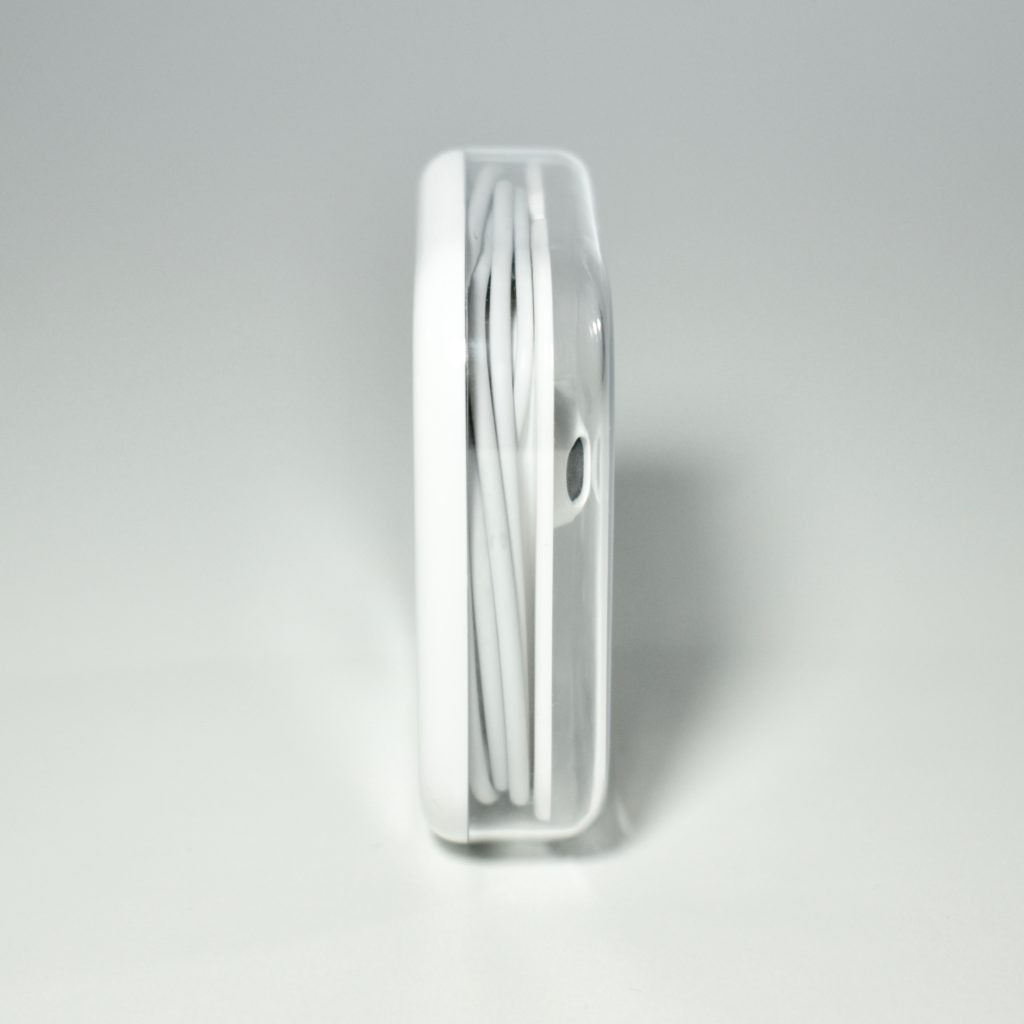
This product was sold in a variety of packaging. This is the same packaging that shipped inside iPhone models and also available as OEM replacement parts from some online retailers.

Source: Apple.com

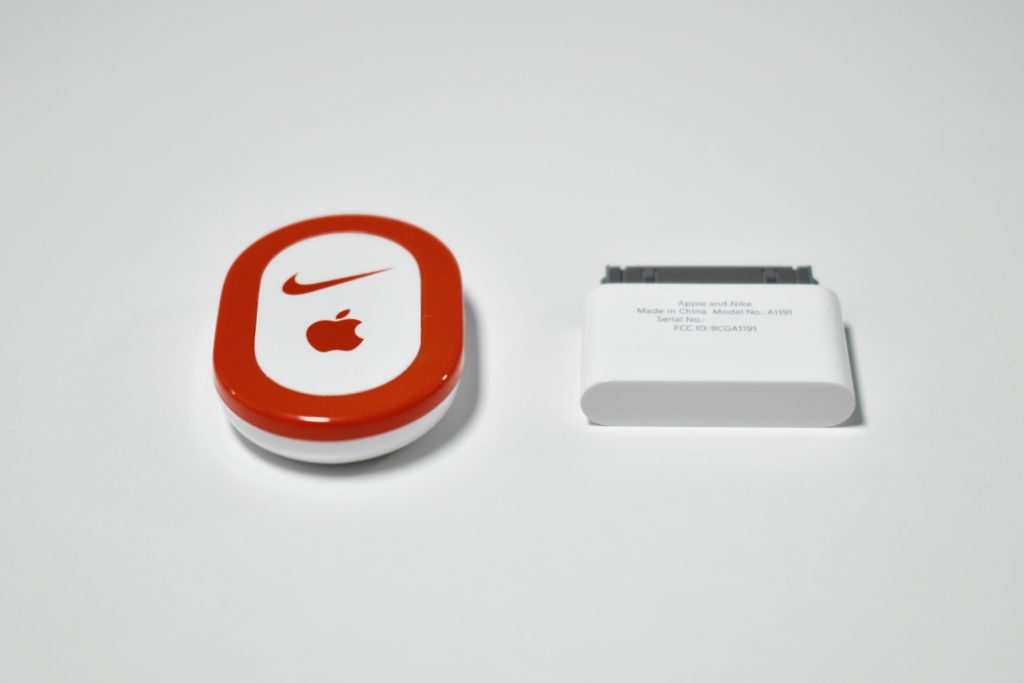
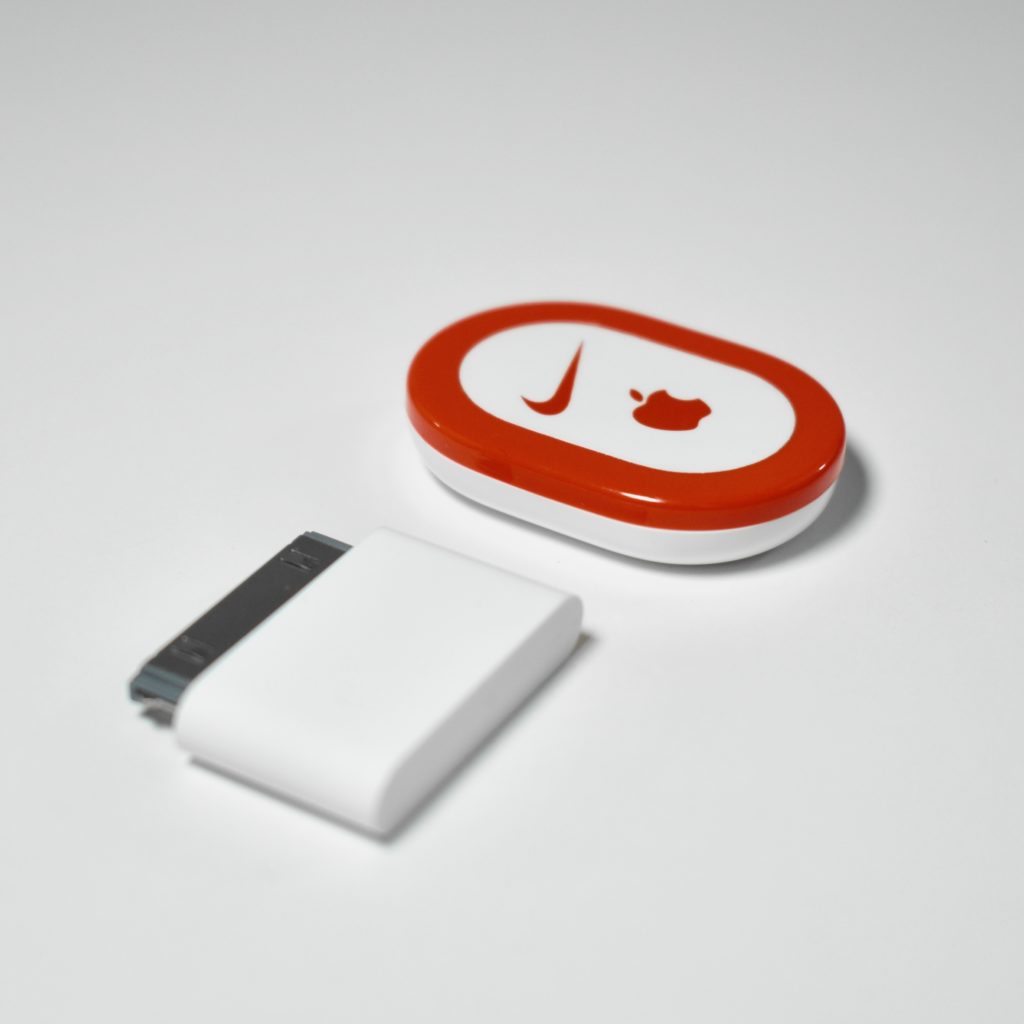
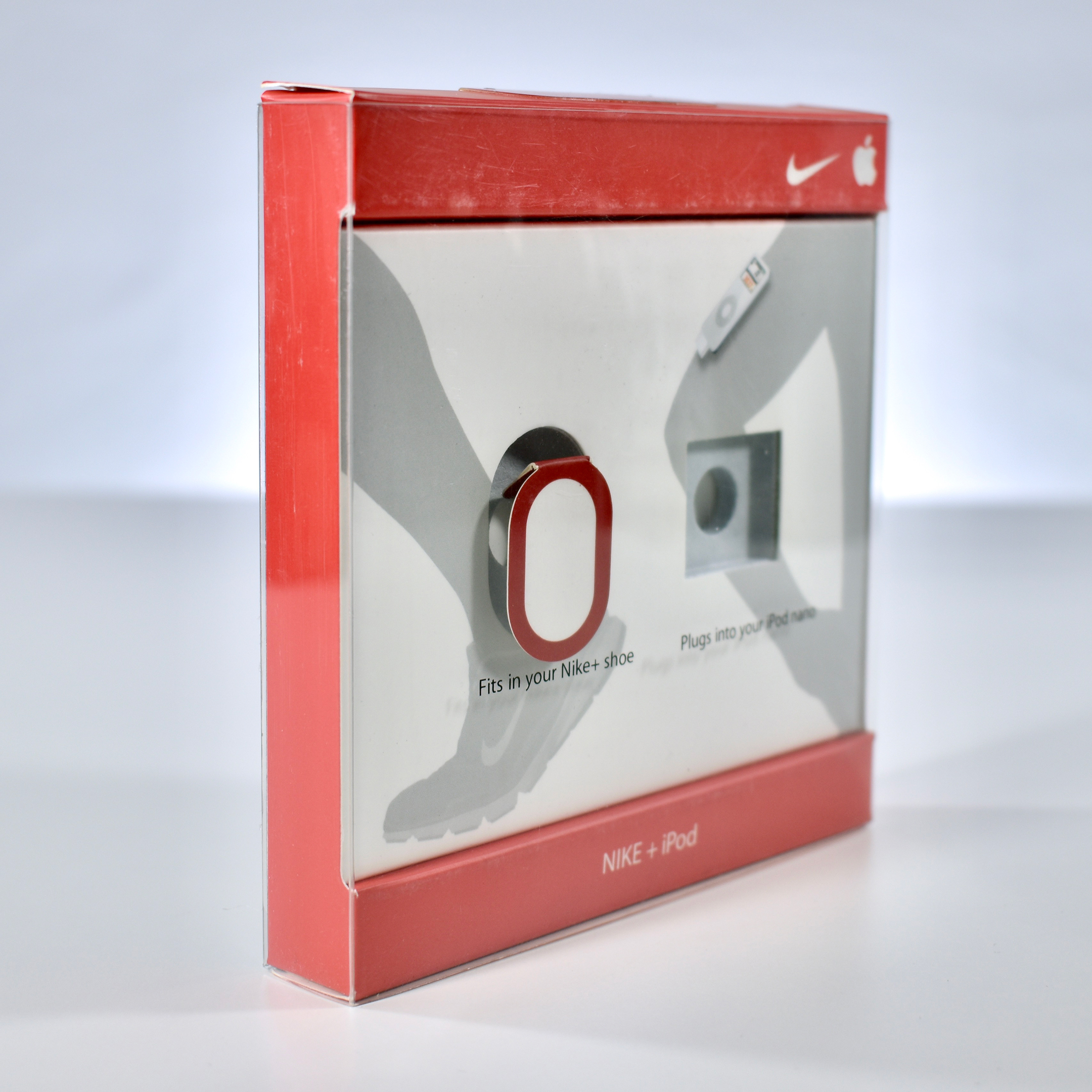
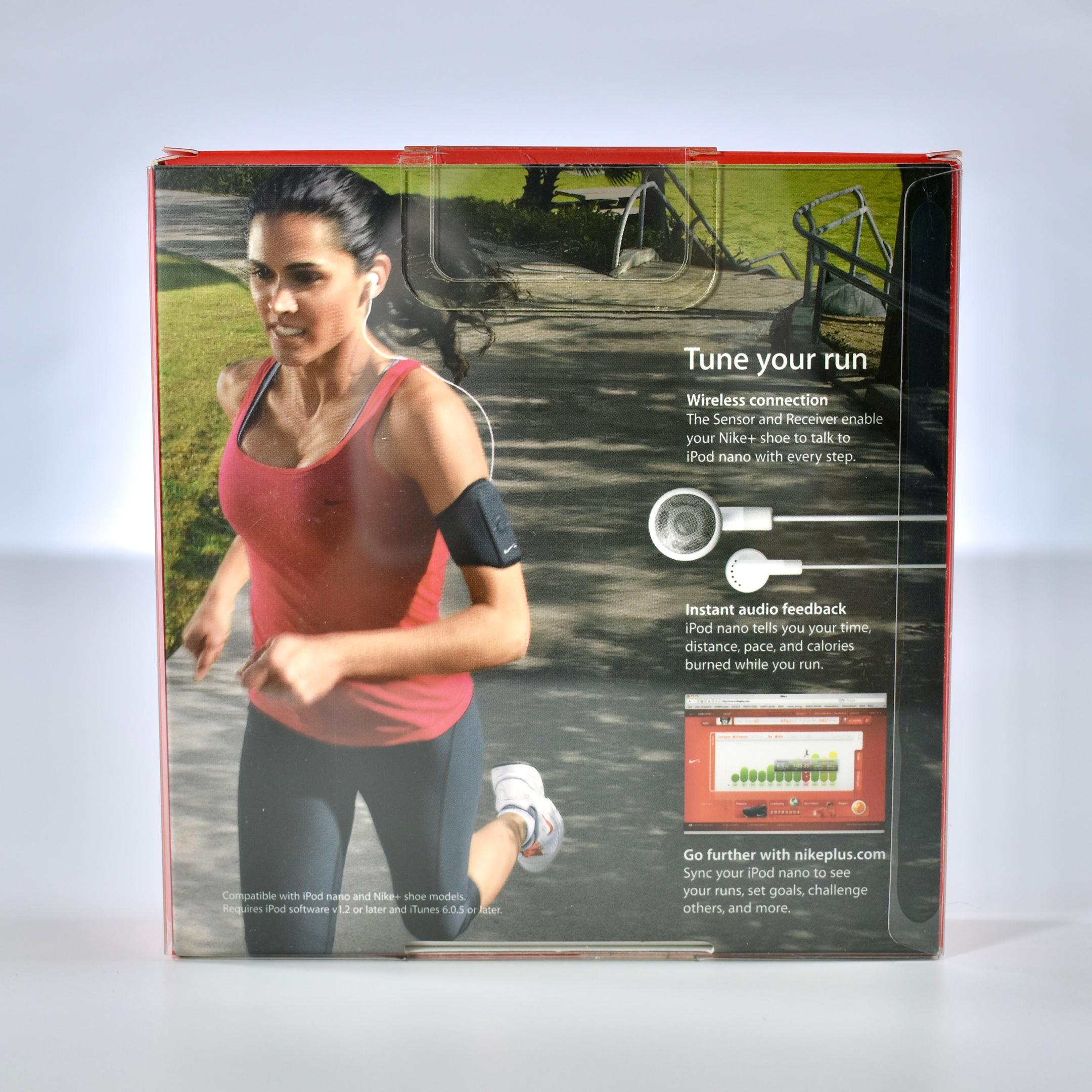
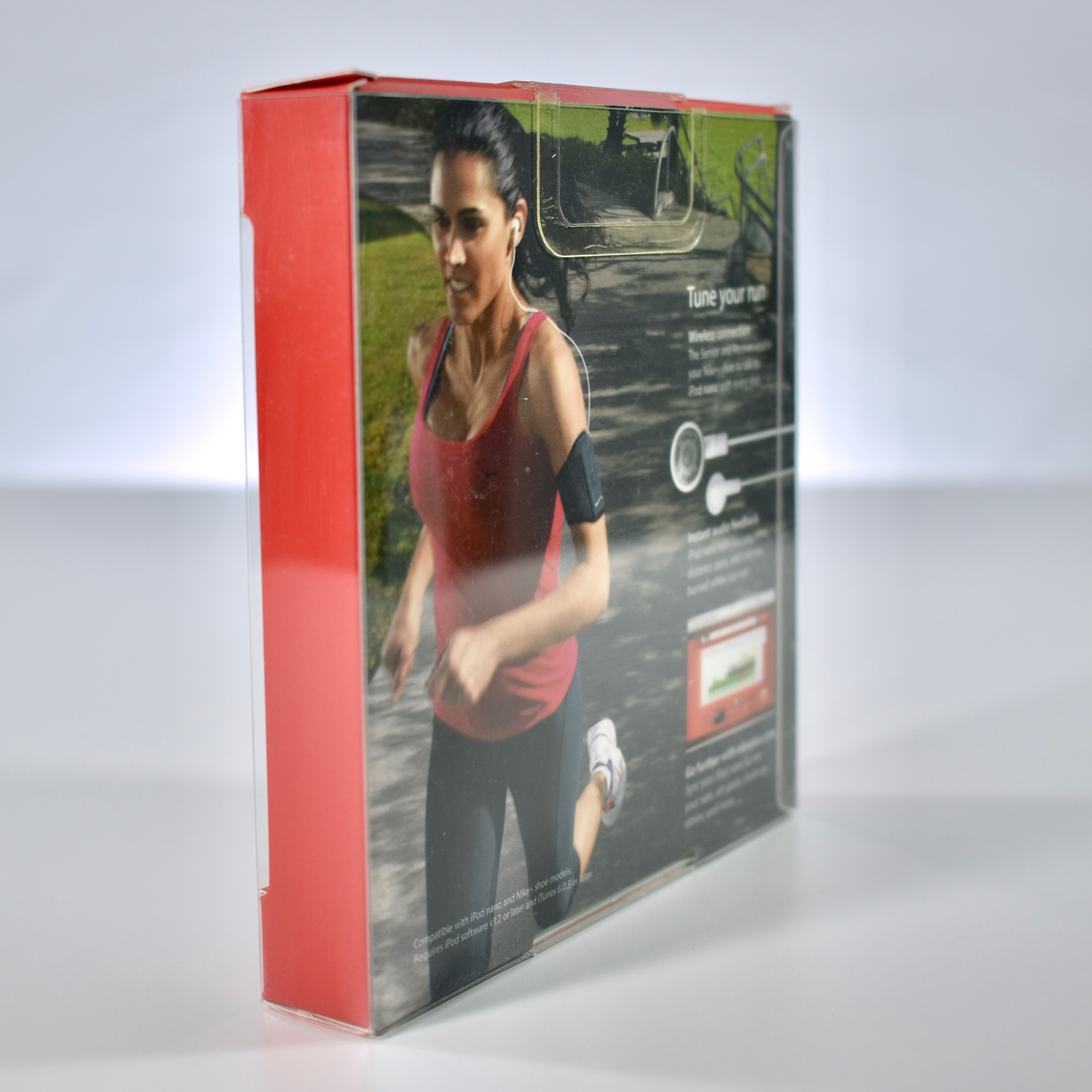
Nike+iPod Sport Kit (2006)

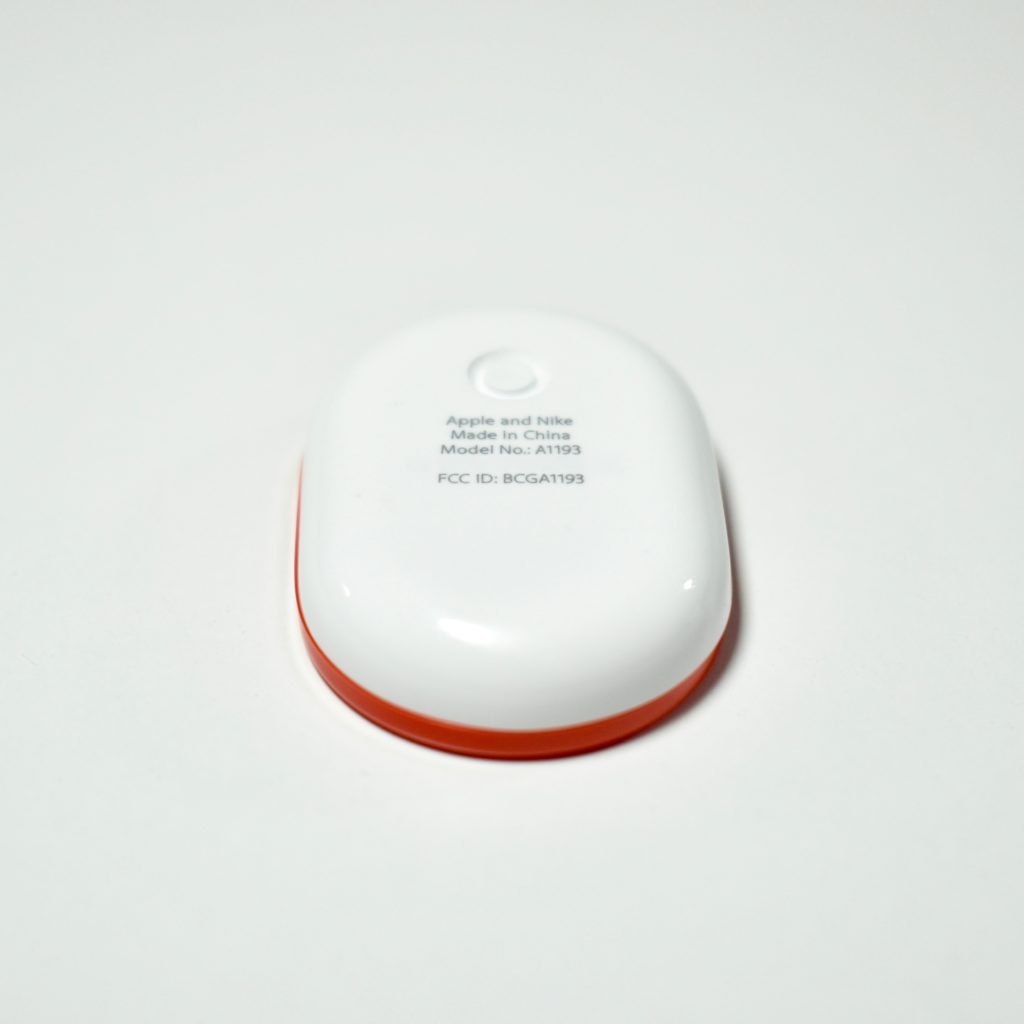
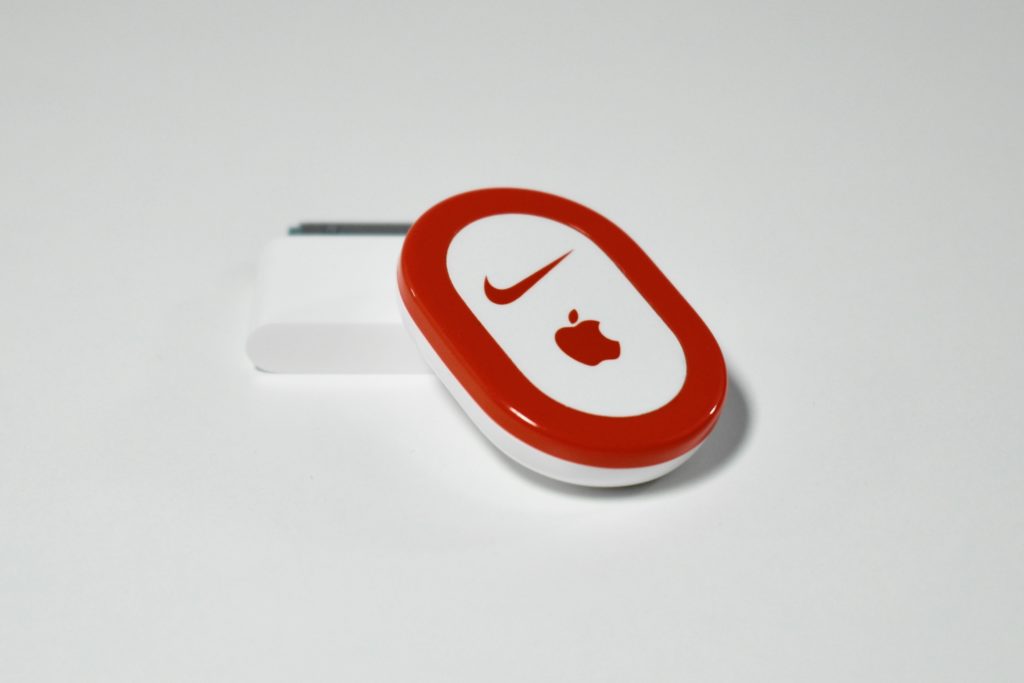
The Nike+iPod Sport Kit was announced on May 23, 2006. A press released stated, “Nike and Apple today announced a partnership bringing the worlds of sports and music together like never before with the launch of innovative Nike+iPod products.” The two-piece wireless system included an oval sensor that was placed inside a Nike+ shoe and a 30-pin plug for the iPod nano.

Software on the iPod nano would connect to custom Nike+ footwear or any shoe with the Nike+iPod sensor attached and provided information on time, distance, calories burned, and pace on the iPod screen. In addition, “A new Nike Sport Music section on the iTunes Music Store and a new nikeplus.com personal service site help maximize the Nike+iPod experience.”

This kit was sold for $29 and included an in-shoe sensor and a receiver that attached to iPod. I used this device with both an iPod nano and with the first two iPhone models both on a treadmill and during my walks and run/walks. I attached the device to my running shoe laces with a purpose-built case that held the oval sensor. A later pair of shoes had a built-in slot in the arch of the sole that held the sensor.

Source: Apple.com

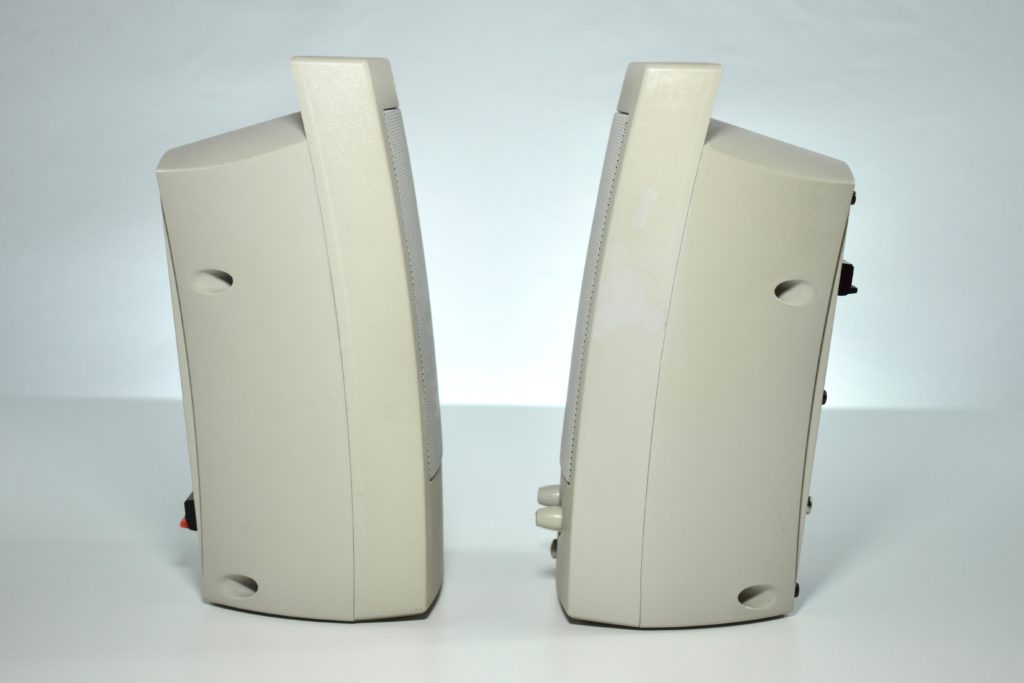
AppleDesign Powered Speakers (1993)

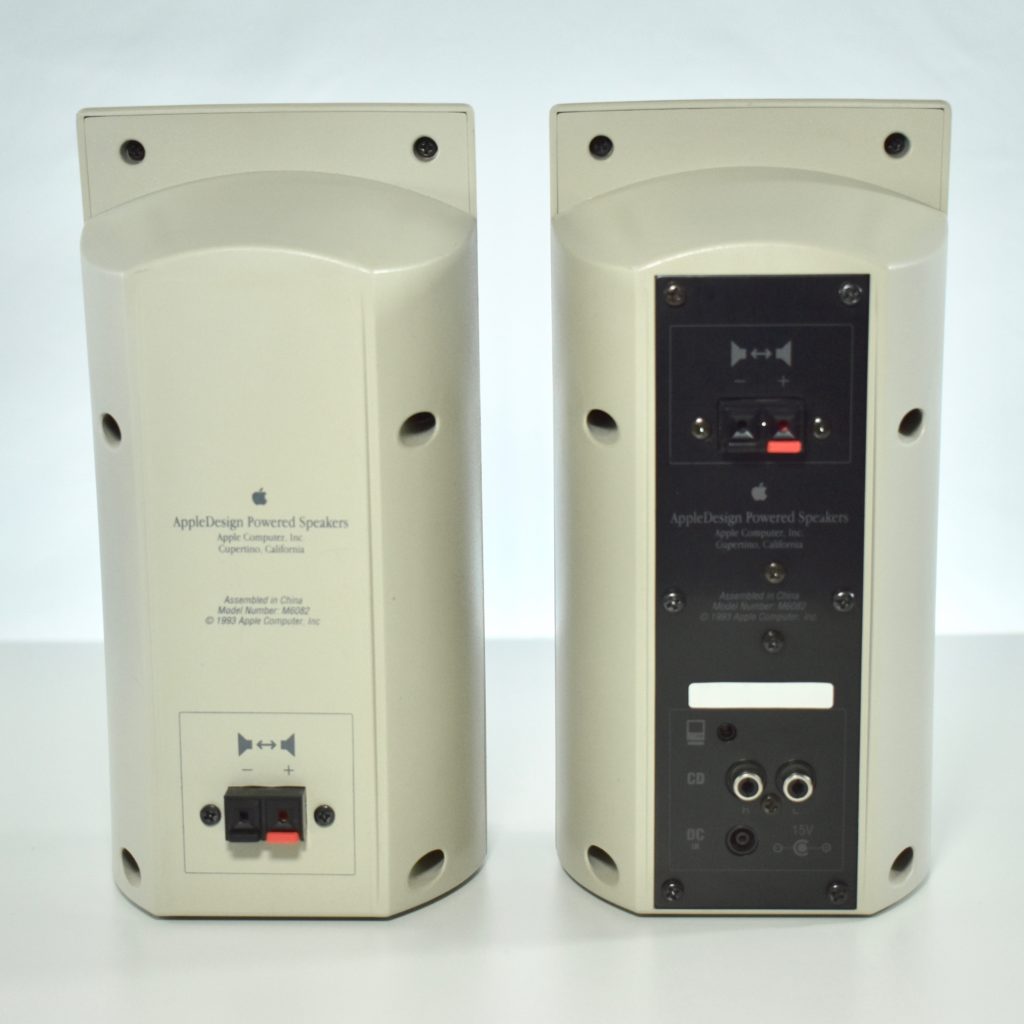
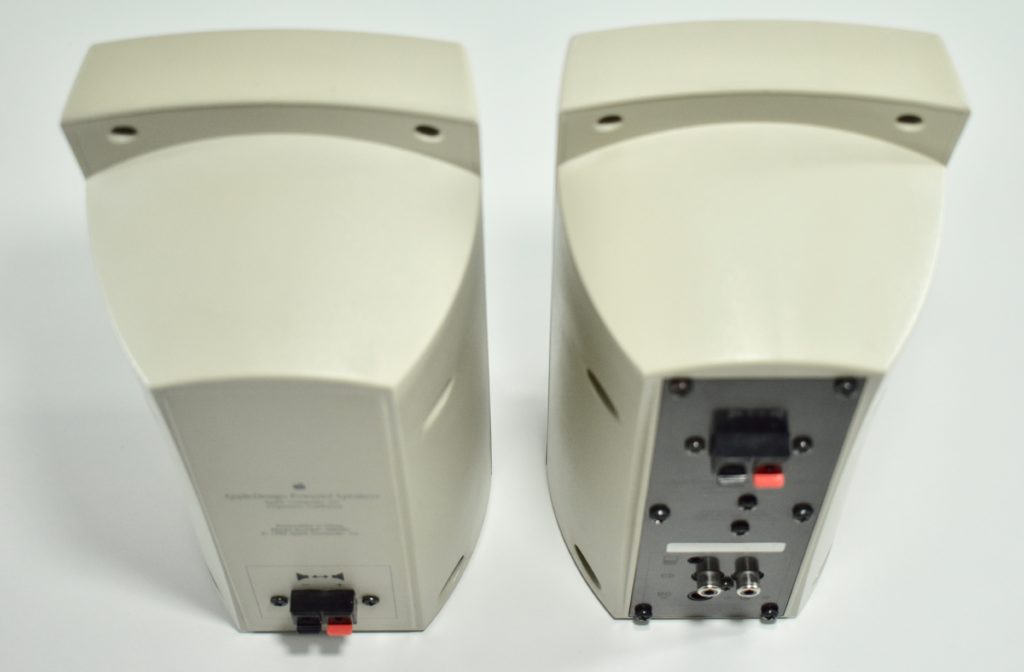
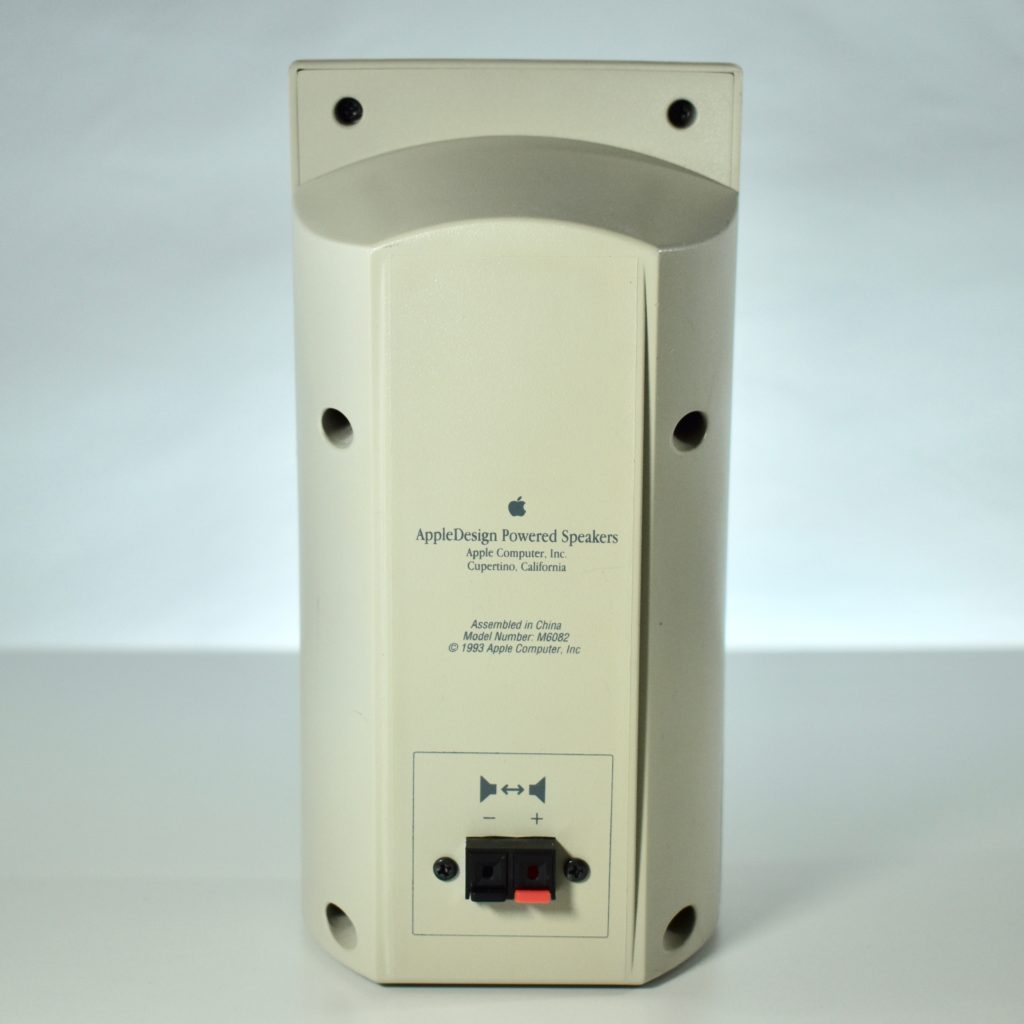
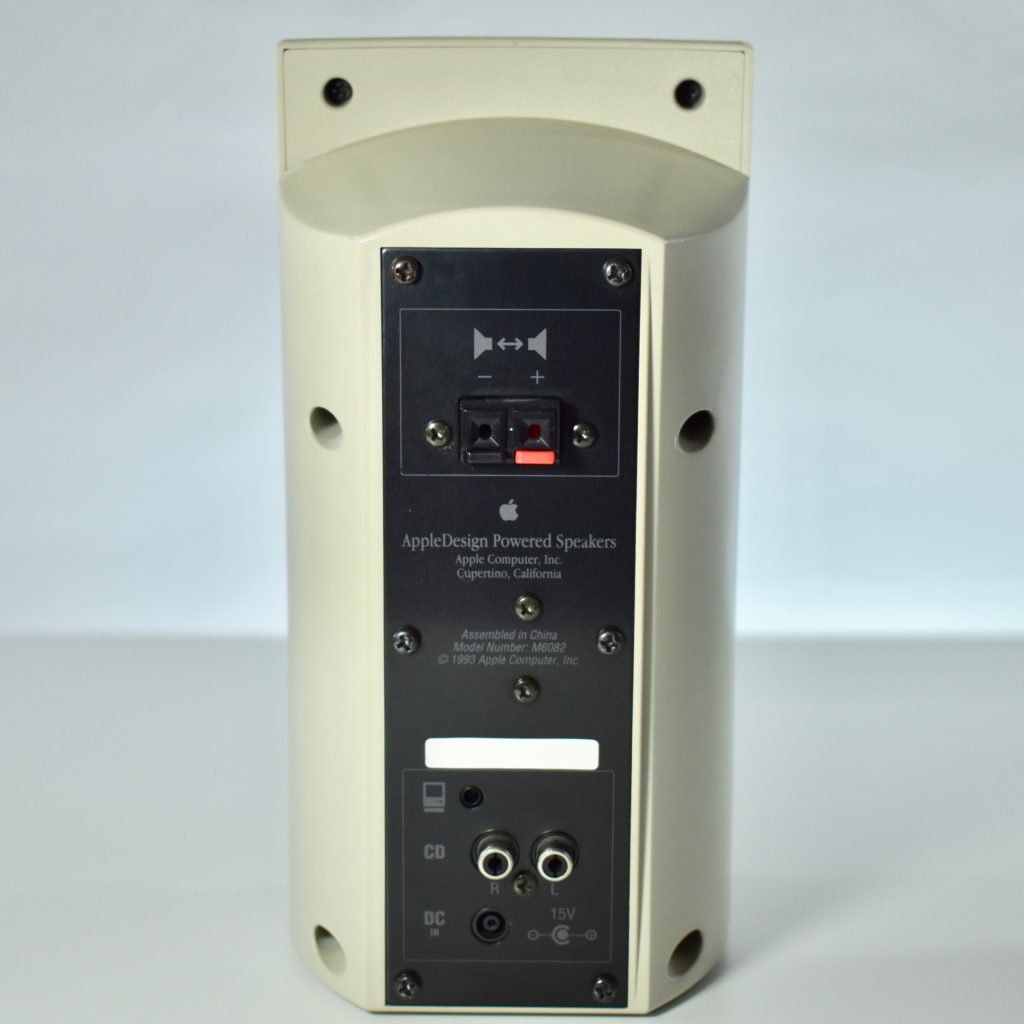
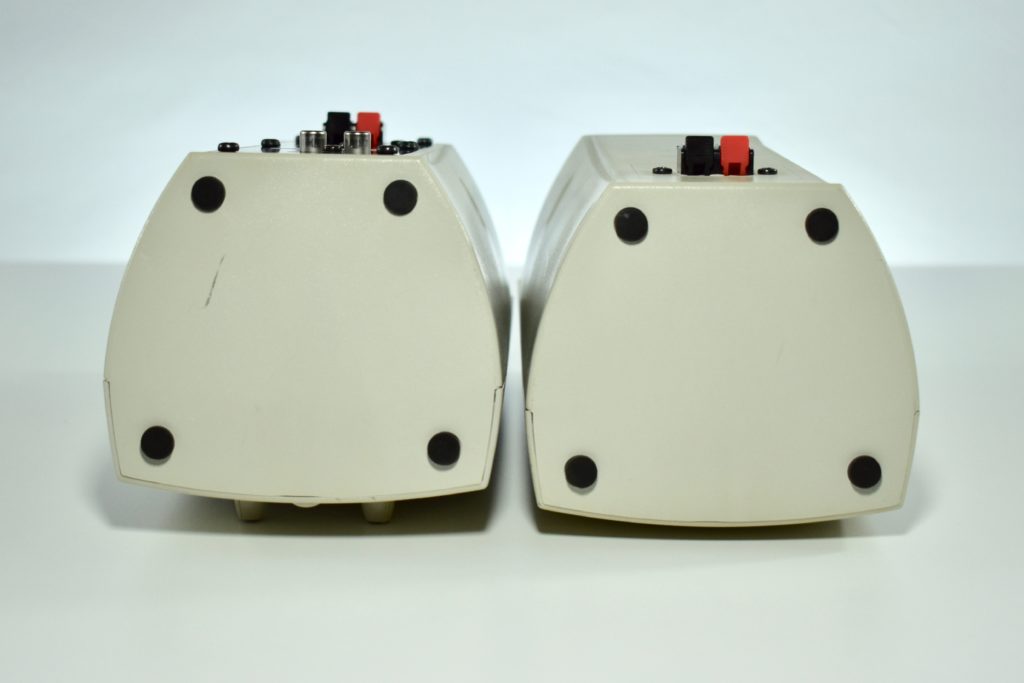
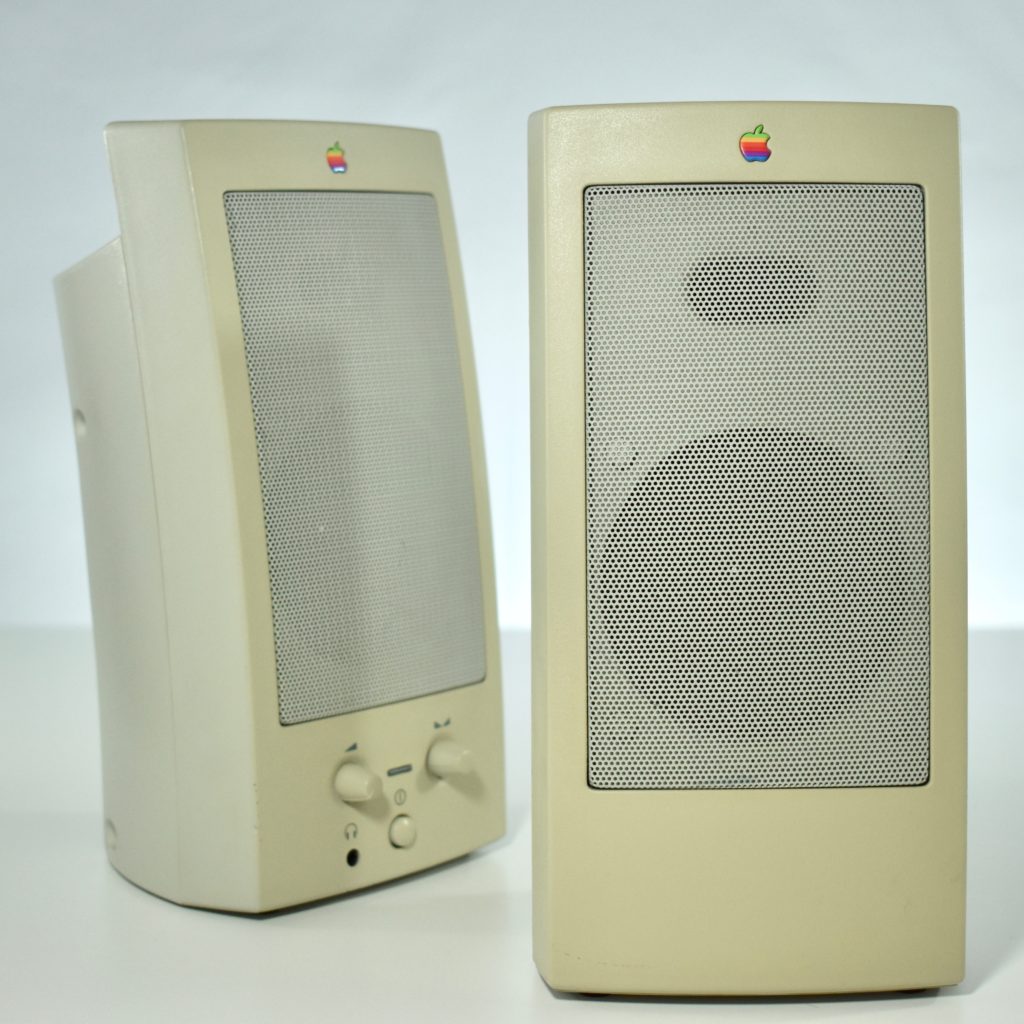
According to the User’s Guide, “AppleDesign Powered Speakers are the first powered speakers designed by a computer company specifically for use with a personal computer.” The guide goes on to explain that the speakers provide CD-quality sound from both the CD-ROM drive and the computer at the same time. The setup includes both a main speaker and a “satellite speaker.”

The two speakers are meant to be connected by an included speaker wire. The main speaker includes a Subwoofer output jack that allows a non-Apple powered (2 volts peak to peak) subwoofer to be connected.

The maximum sound output is listed at 90 dB at 0.5 meters and 90 Hz. The dimensions are 9.25 x 4.5 x 4.25 inches.

These AppleDesign Powered Speakers represent the first in my full collection of all of Apple’s standalone powered speakers. These speakers were followed by the AppleDesign Powered Speakers II, the iPod Hi-Fi, and eventually the HomePod. The only Apple powered speakers I do not currently own are the rare black AppleDesign Powered Speakers II.

Source: MacintoshRepository.org

Siri Remote (2015)

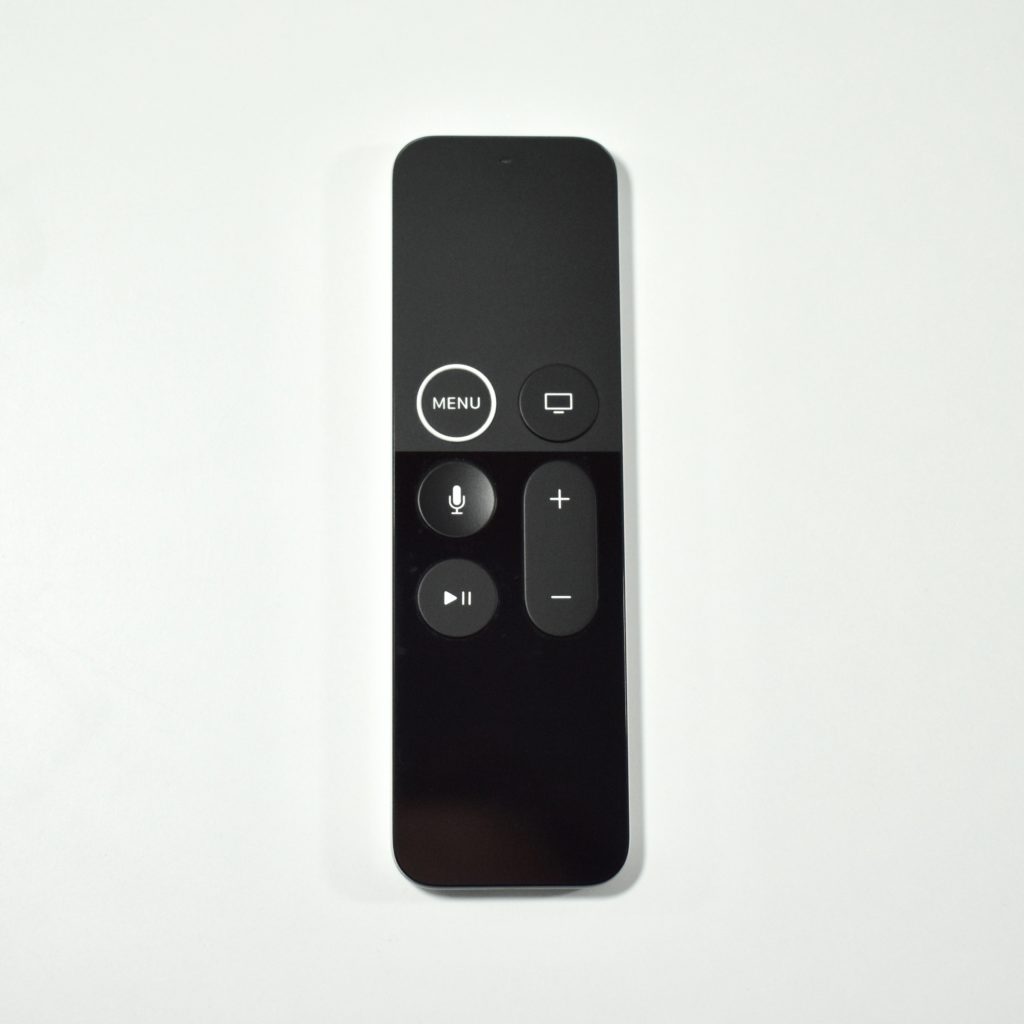
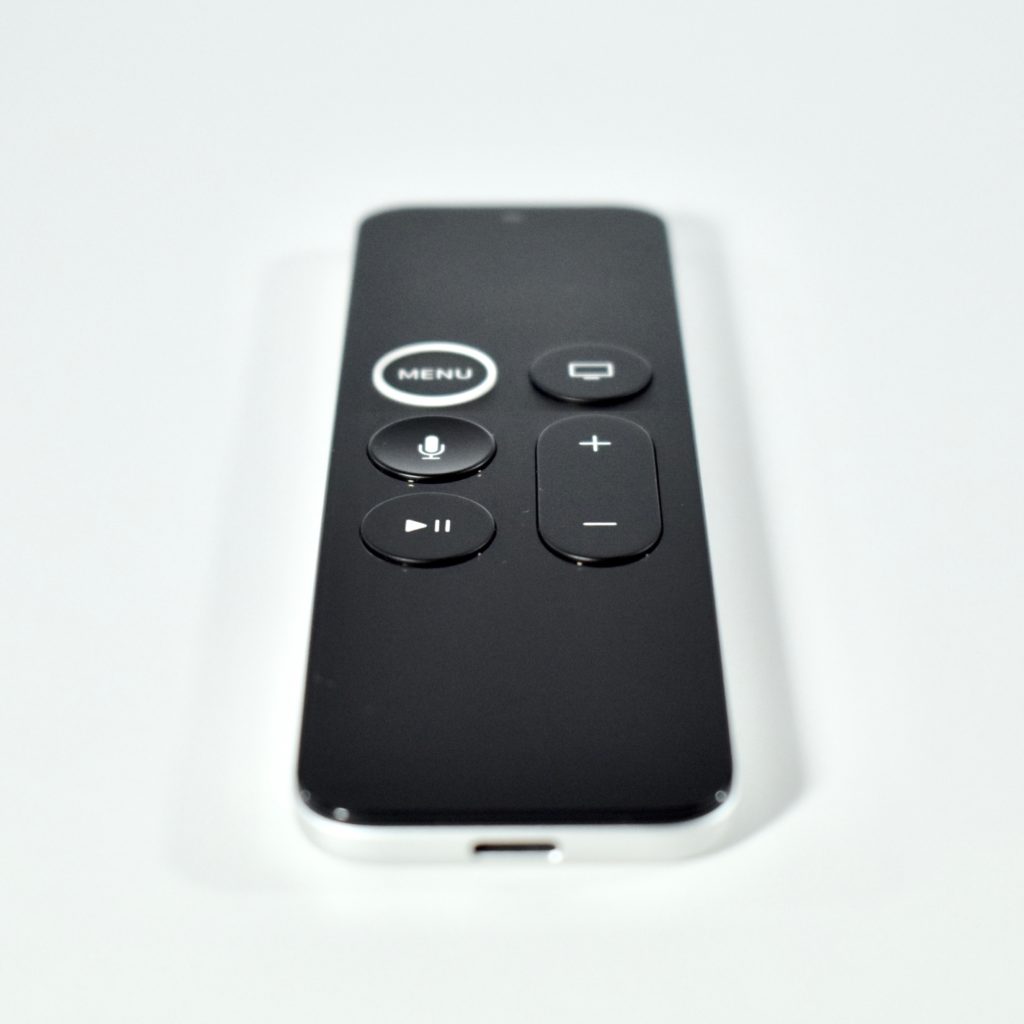
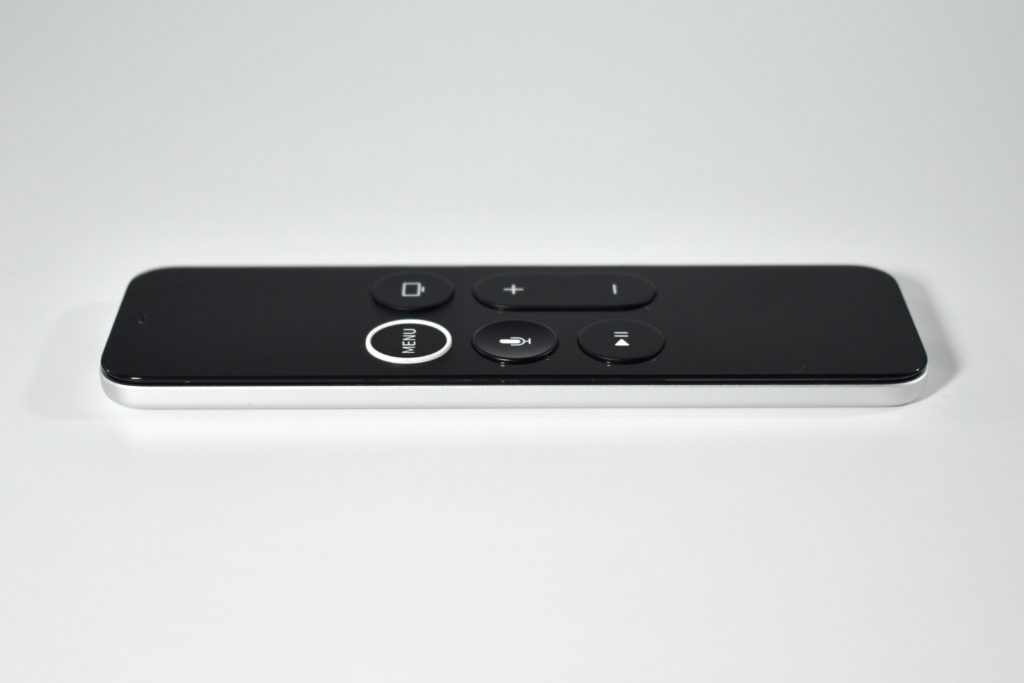
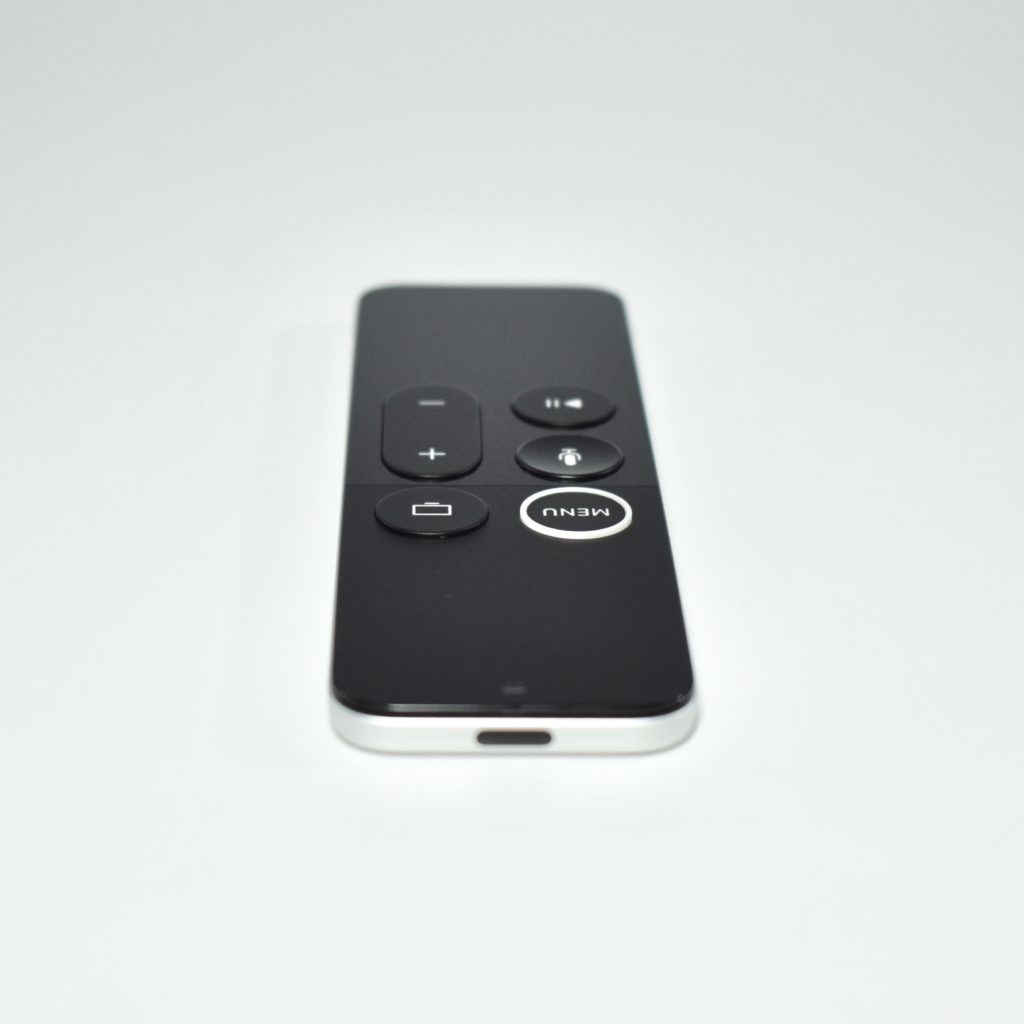
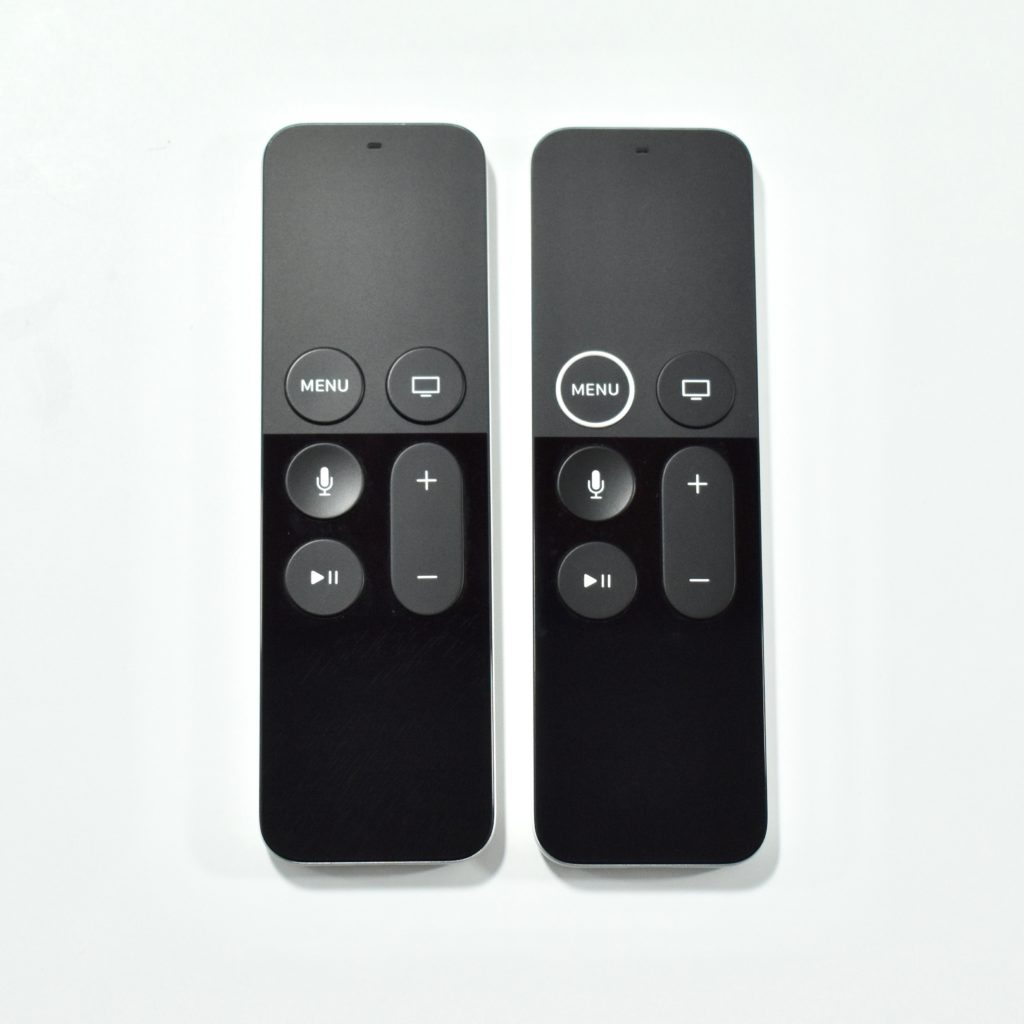
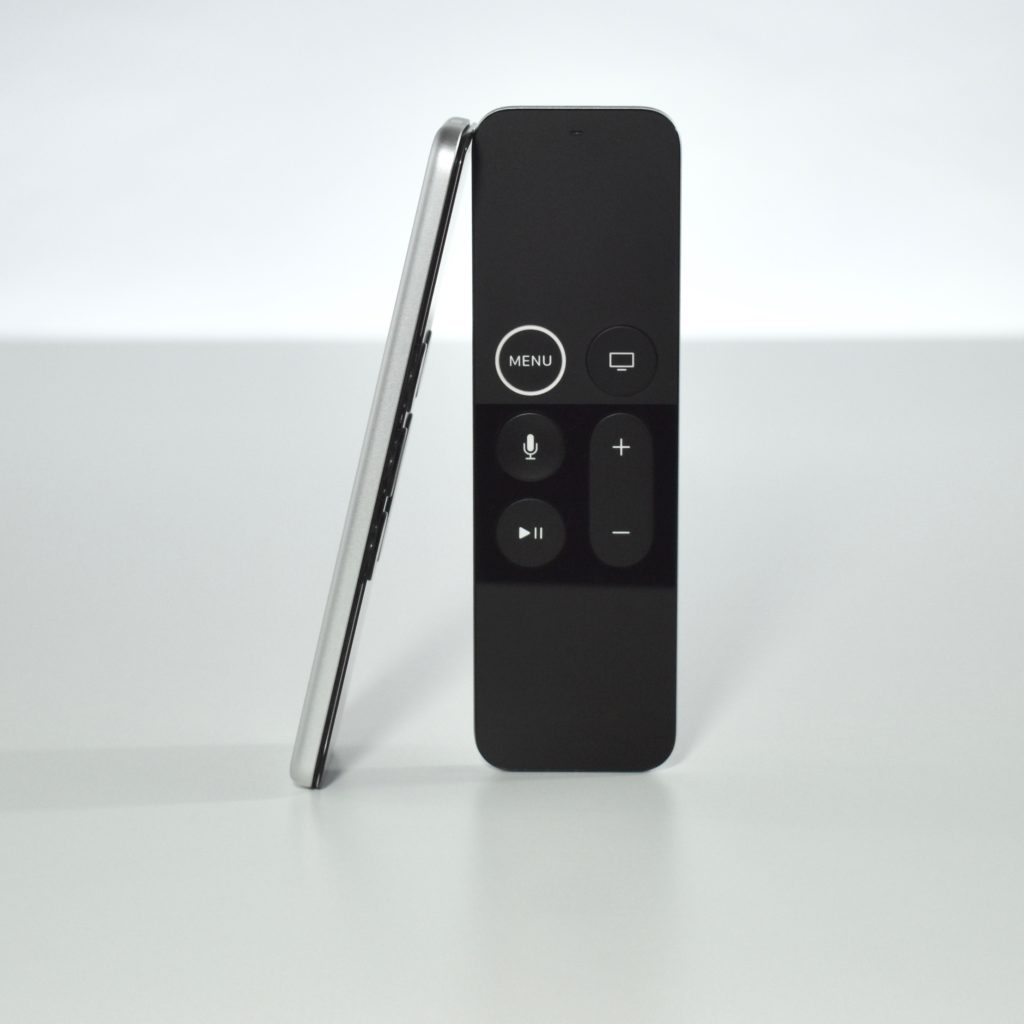
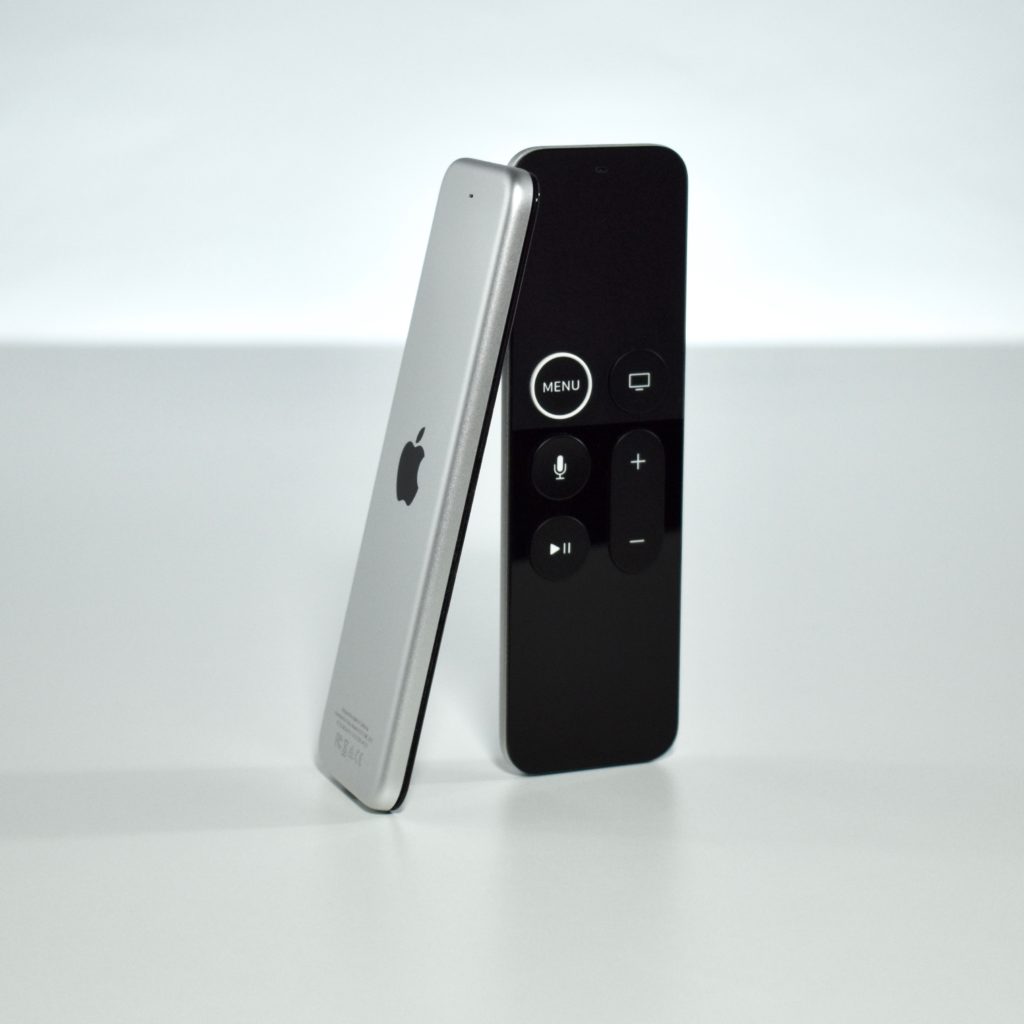
The Siri Remote was released in 2015 along with the Apple TV Generation 4. This remote had a glass trackpad, two microphones, and five buttons. The buttons included Menu, Home, Siri, Play/Pause, and a combined Volume up/down button. This remote used both IR and Bluetooth to connect to the Apple TV. The remote also included two sensors for gaming, an accelerometer and a gyroscope.

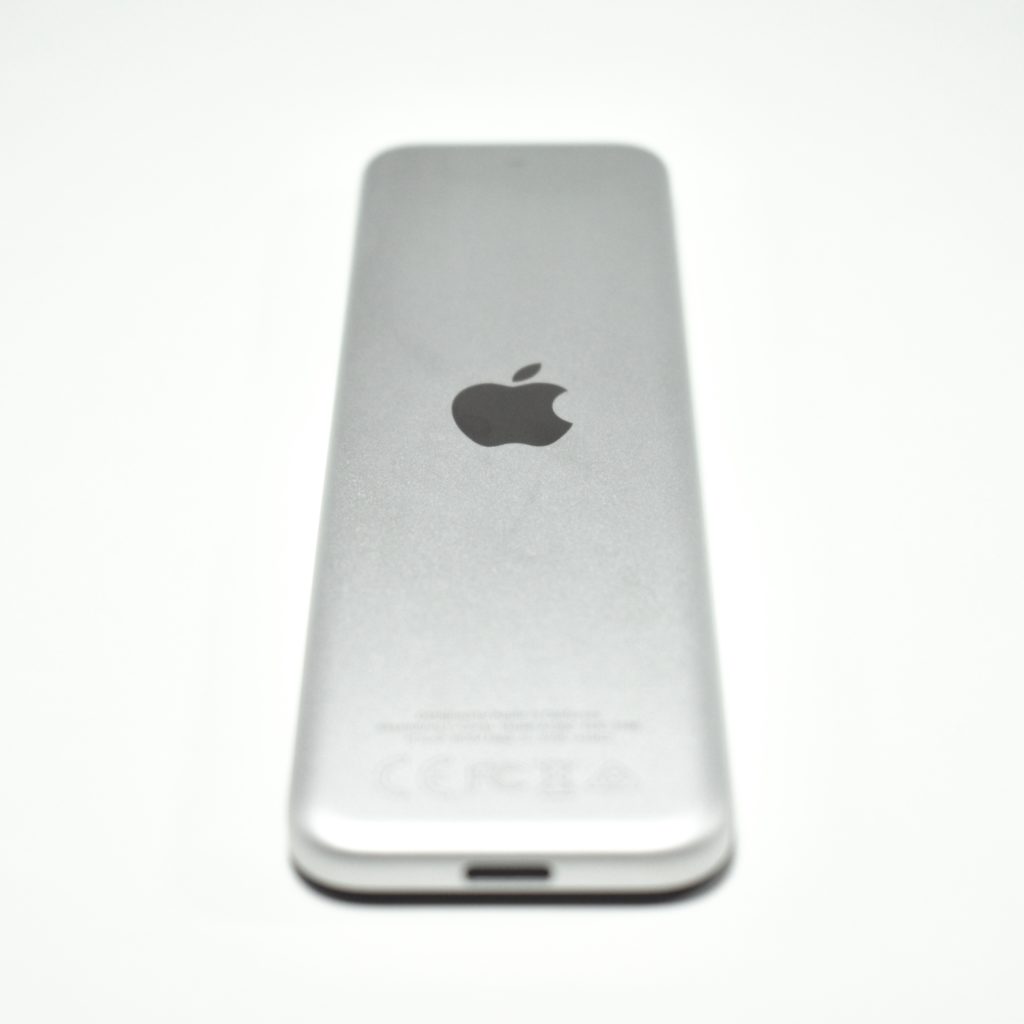
The finishes of the remote included a matte finish on the trackpad and a smooth, glossy finish at the bottom. The textured finishes helped differentiate the orientation of the remote when using it in the dark or by touch.

The trackpad on the Siri Remote supported limited gestures, including swipe, click, and tap.

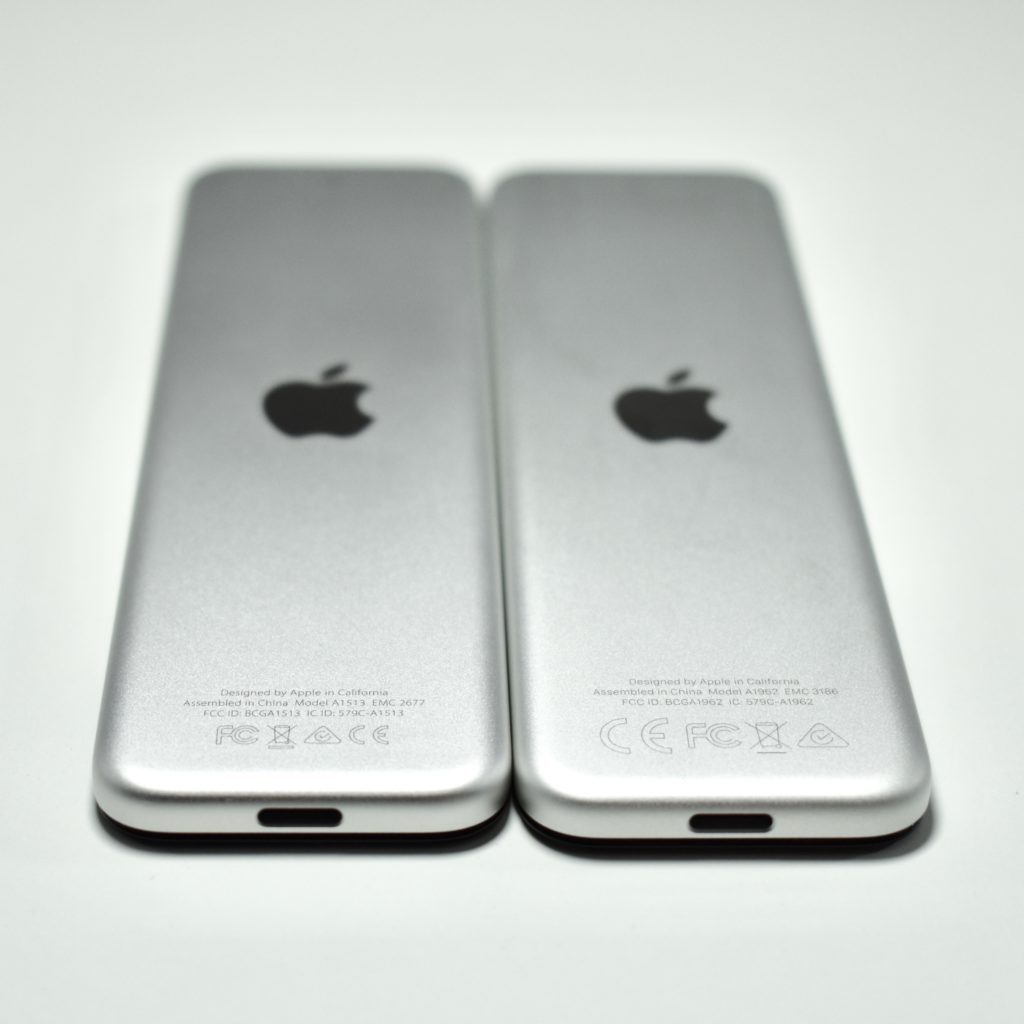
Unlike earlier Apple Remotes, the Siri Remote used a built-in rechargeable Lithium Polymer Battery that charged using a Lightning port at the bottom.

The design of this remote was slightly revised after initial production. The original design had a solid black Menu button. The revised design added a white raised ring around the the Menu button.

References: Wikipedia.com, Apple Developer

eMate Replacement Pens (1997)

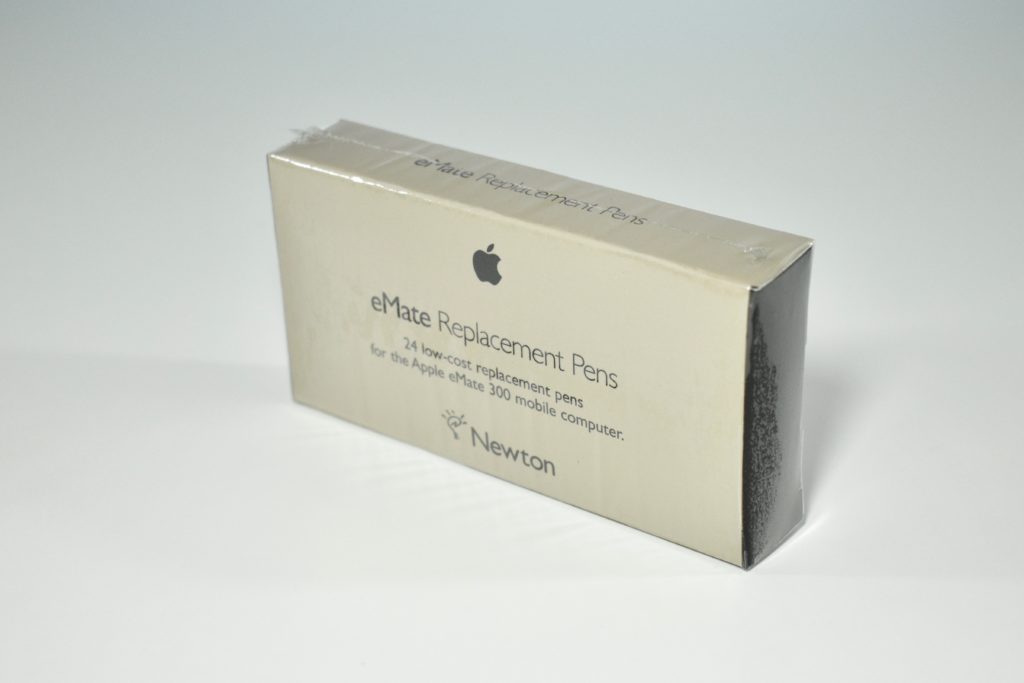
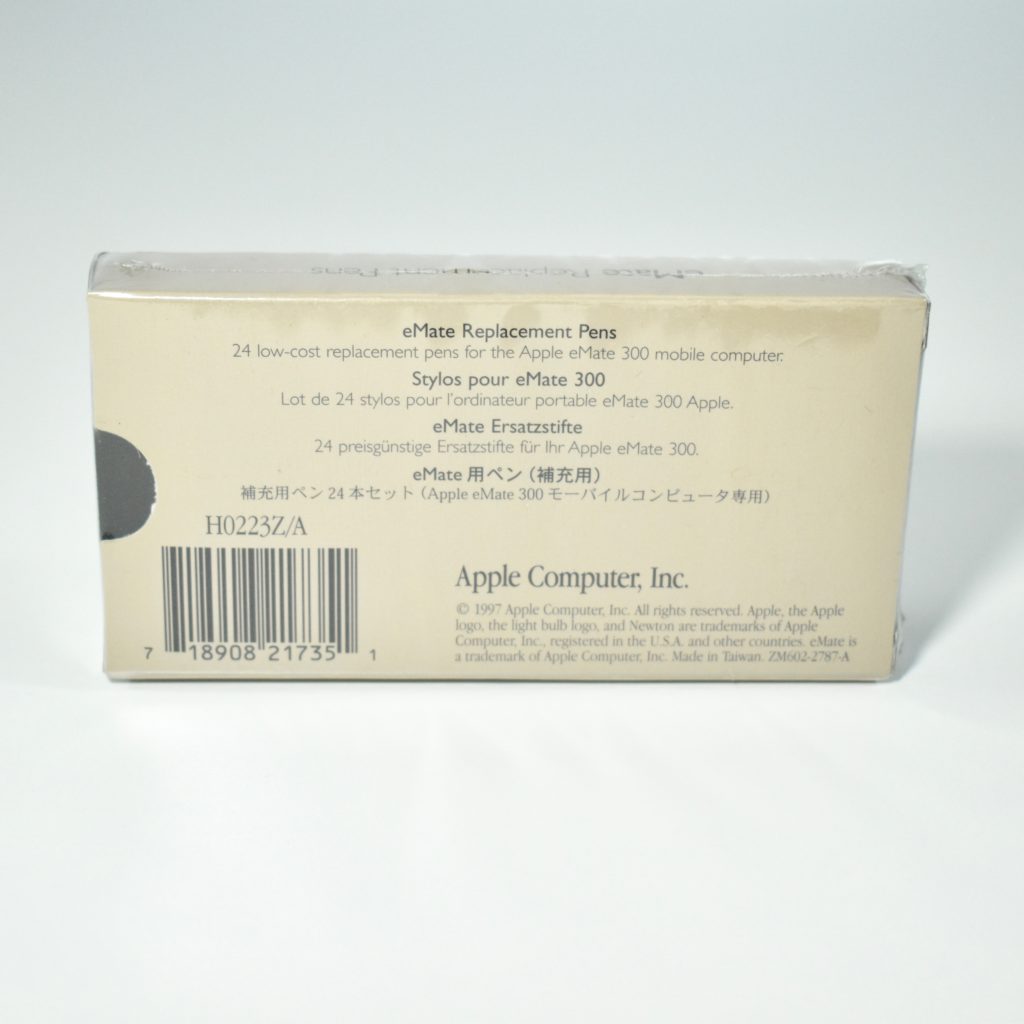
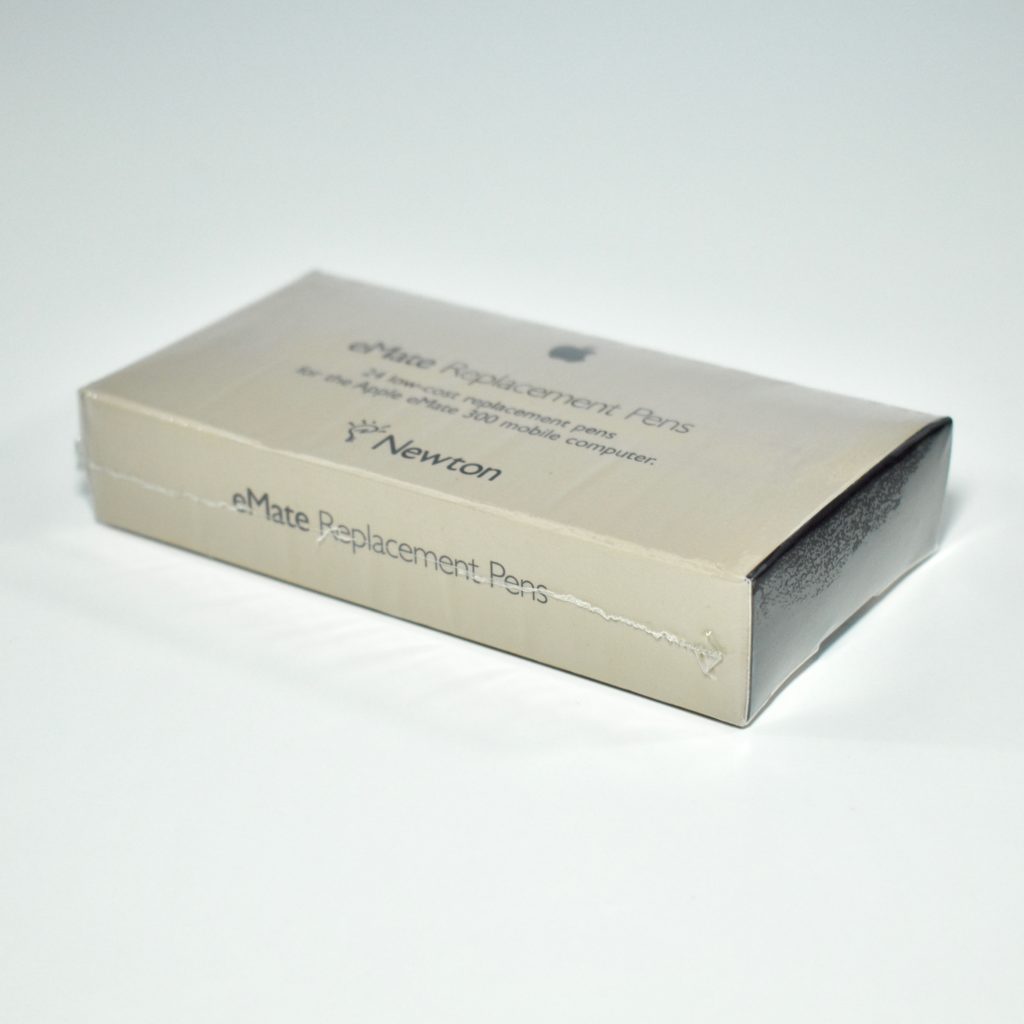
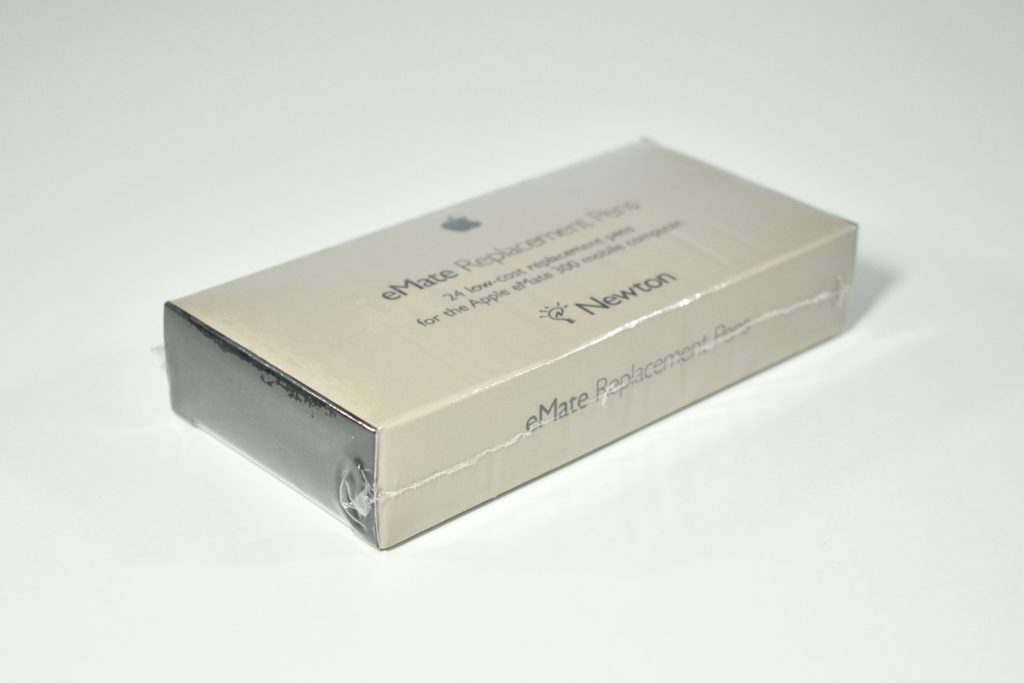
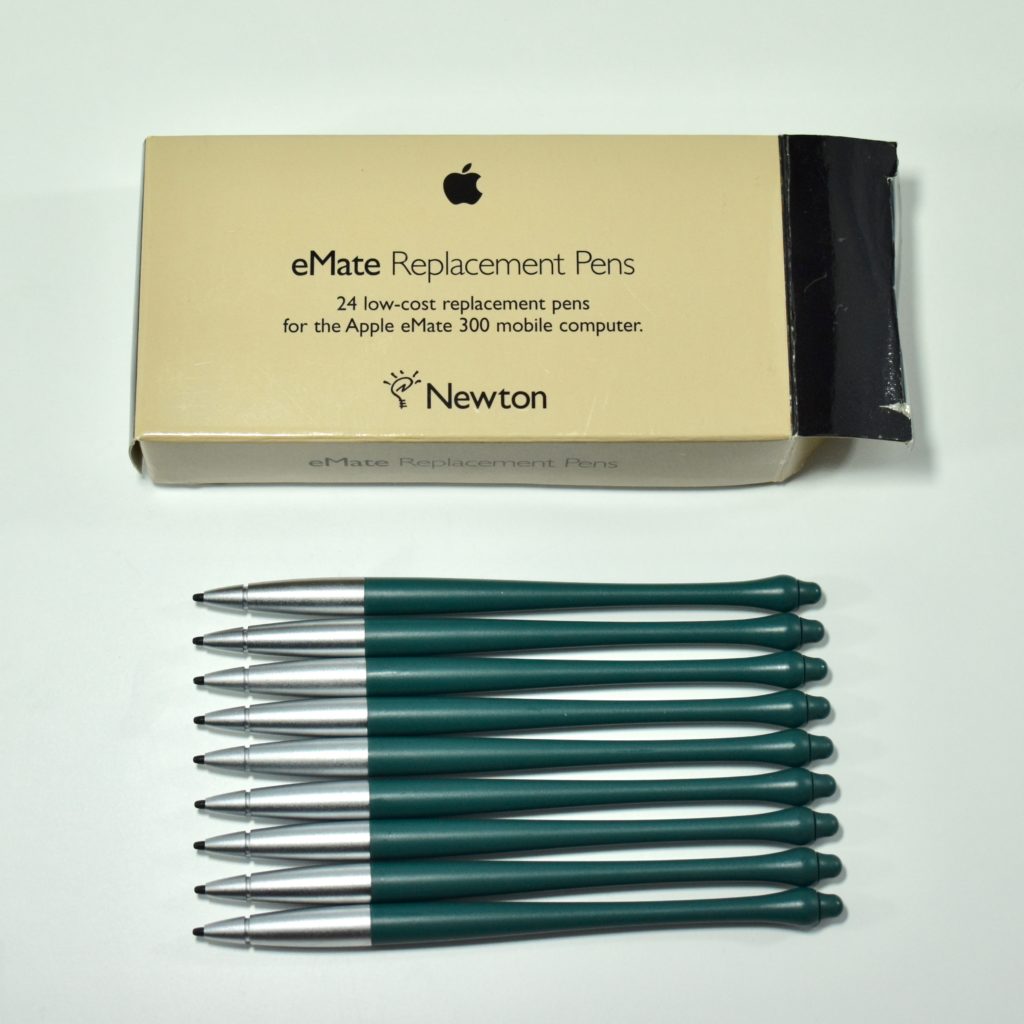
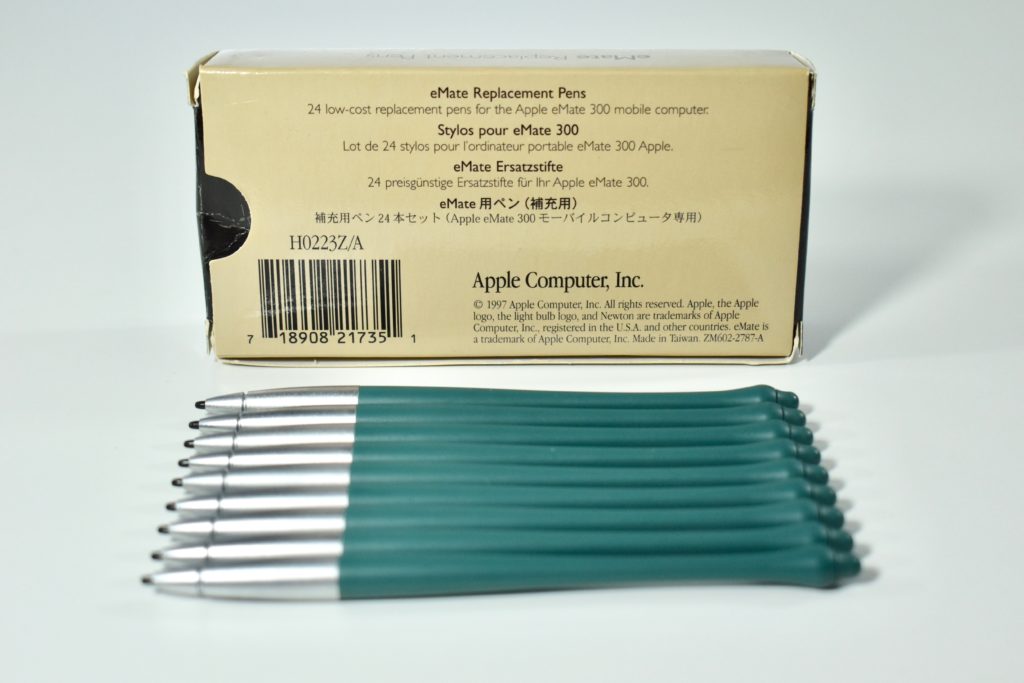
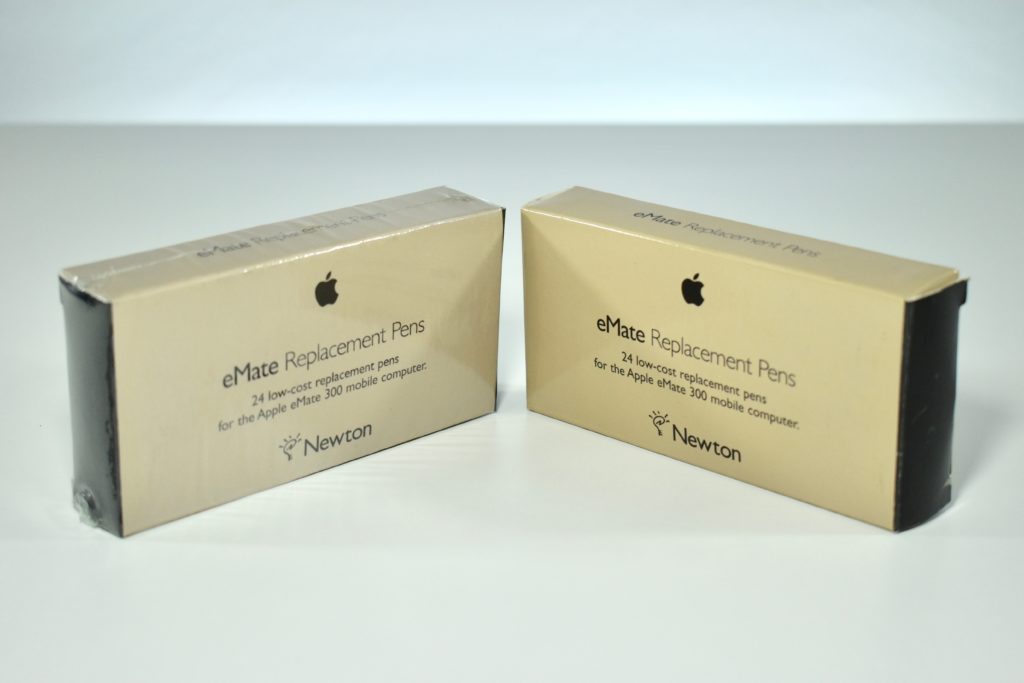
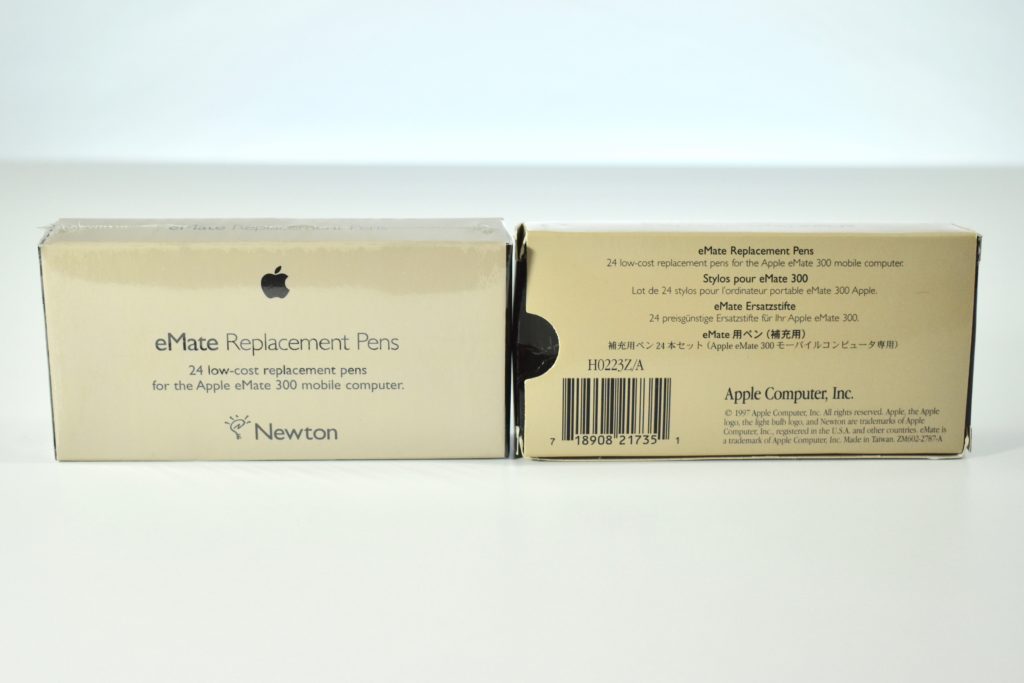
These boxes contain eMate Replacement Pens. The box is labeled “24 low-cost replacement pens for the Apple eMate 300 mobile computer.” One of the boxes I have is factory-shrink-wrapped and the other is an open partial box.

The eMate 300, a member of the Newton family, shipped with a stylus of the same design as these replacement pens. Comparing the pen that shipped with the eMate 300 and these replacement pens, the two appear identical.