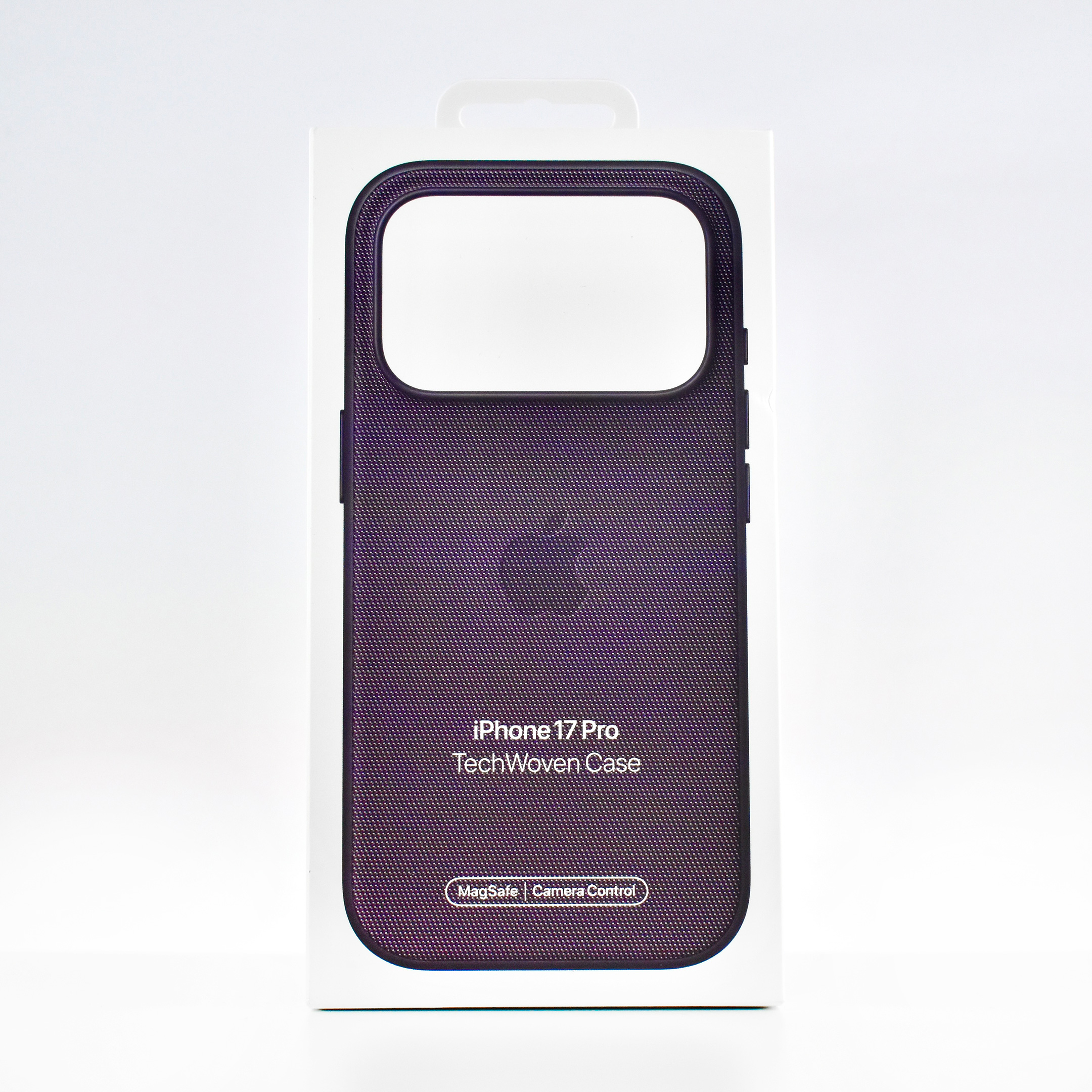
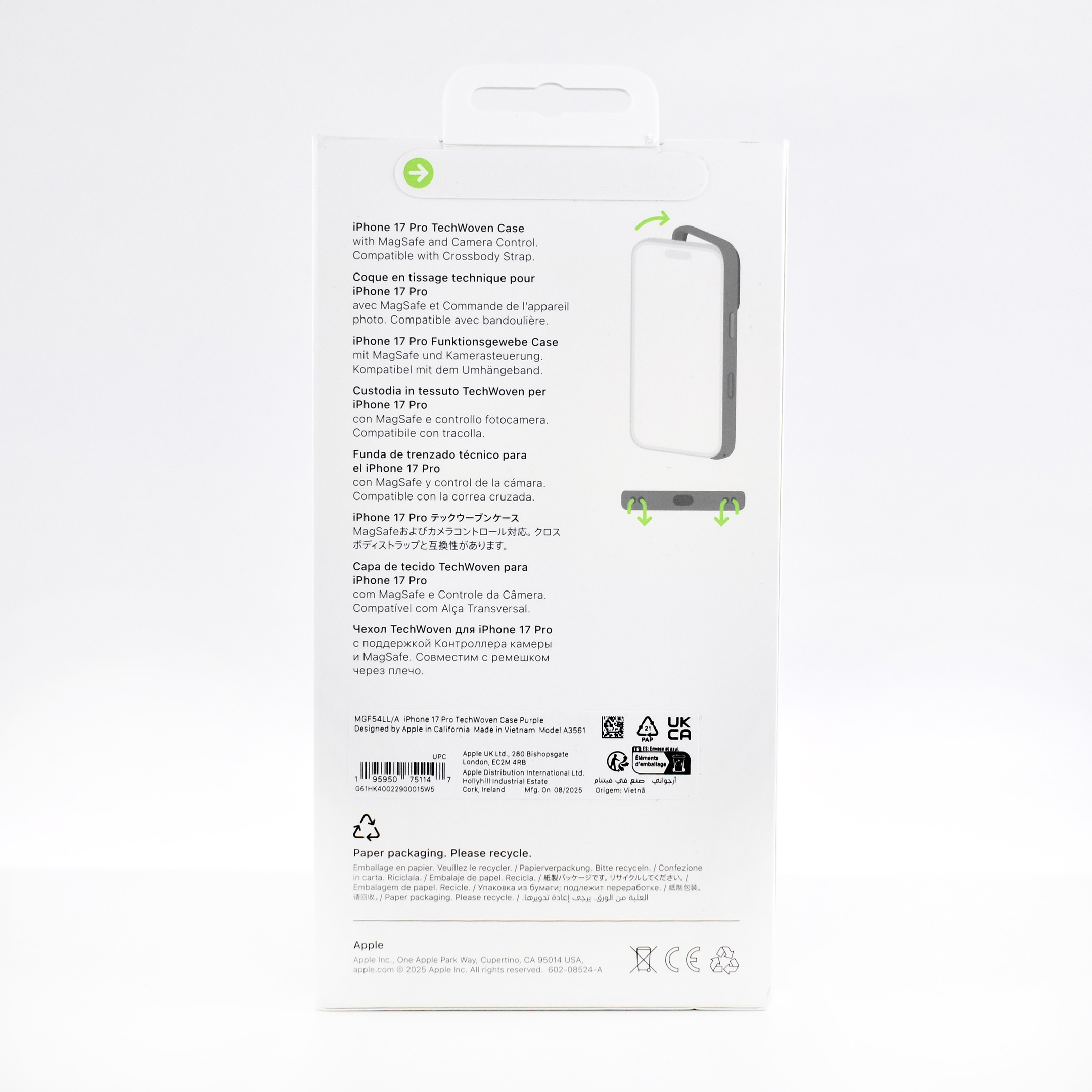
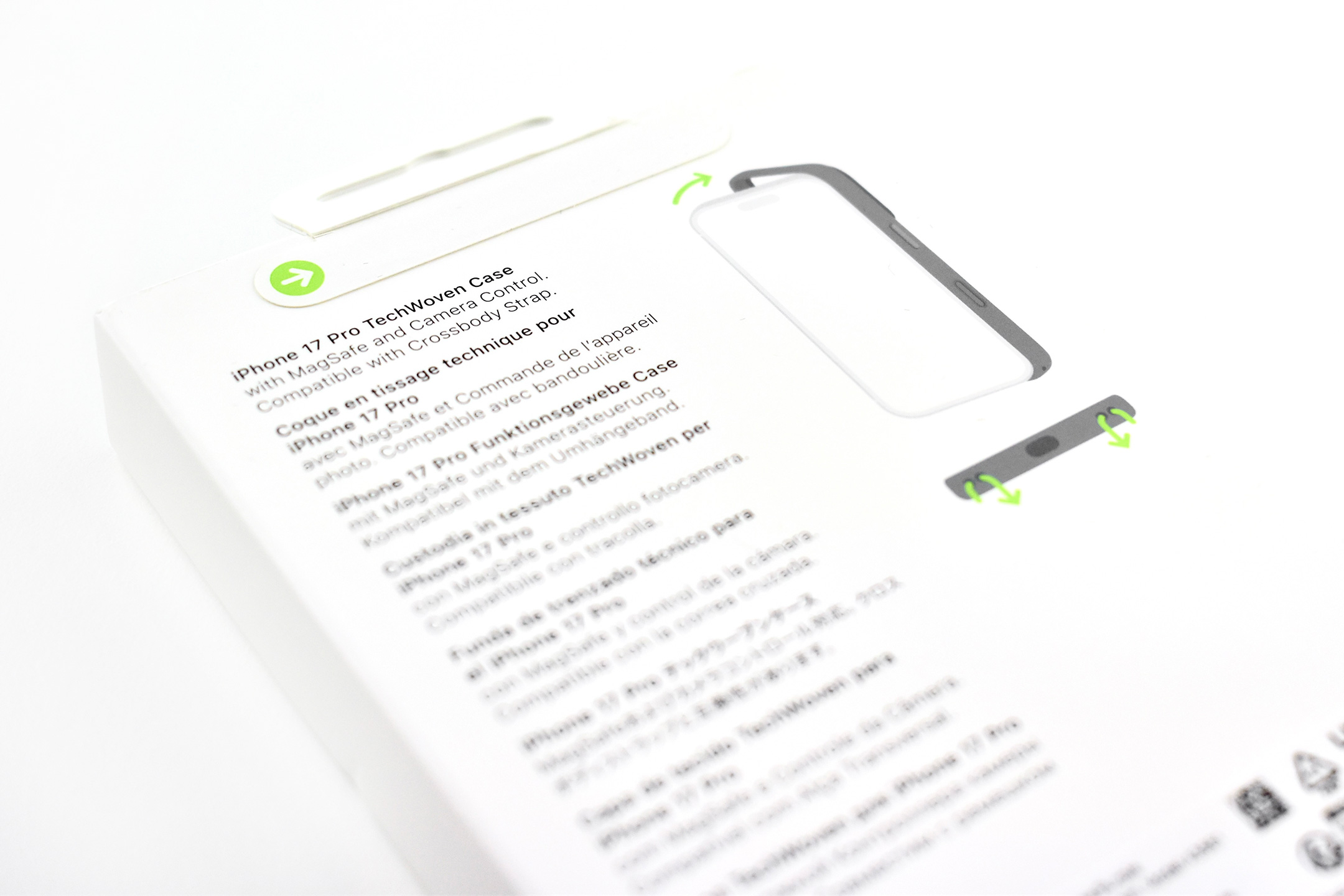
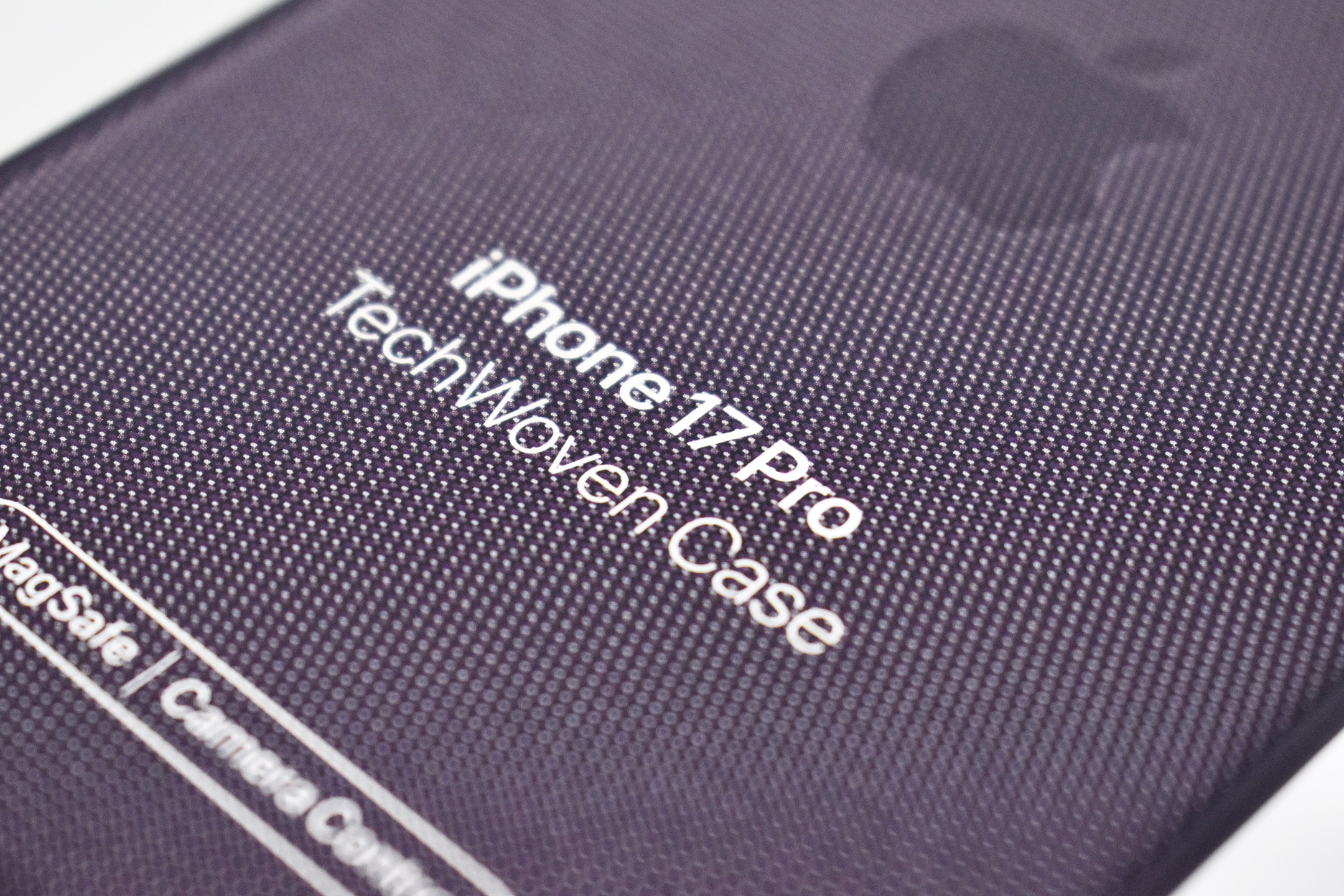
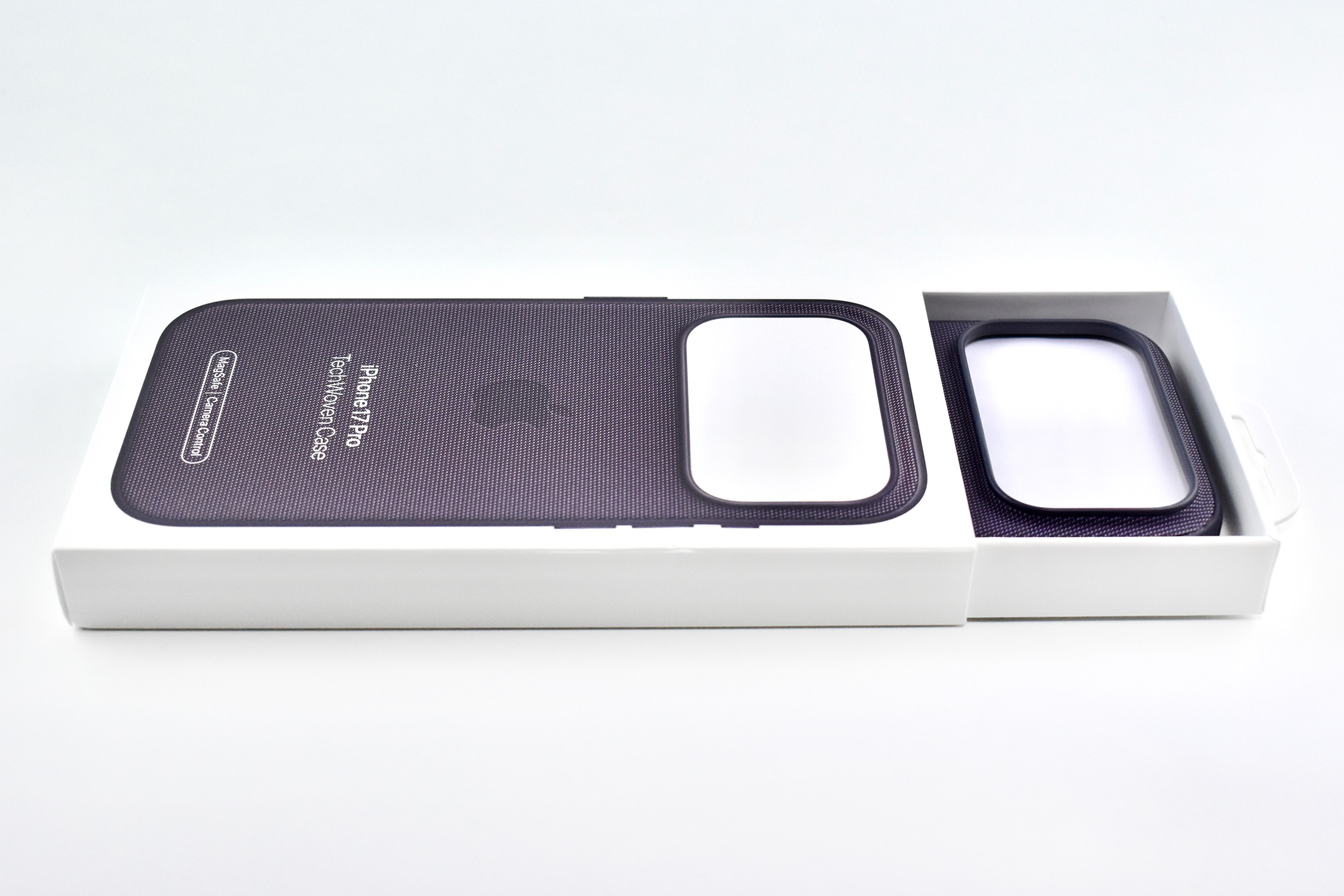
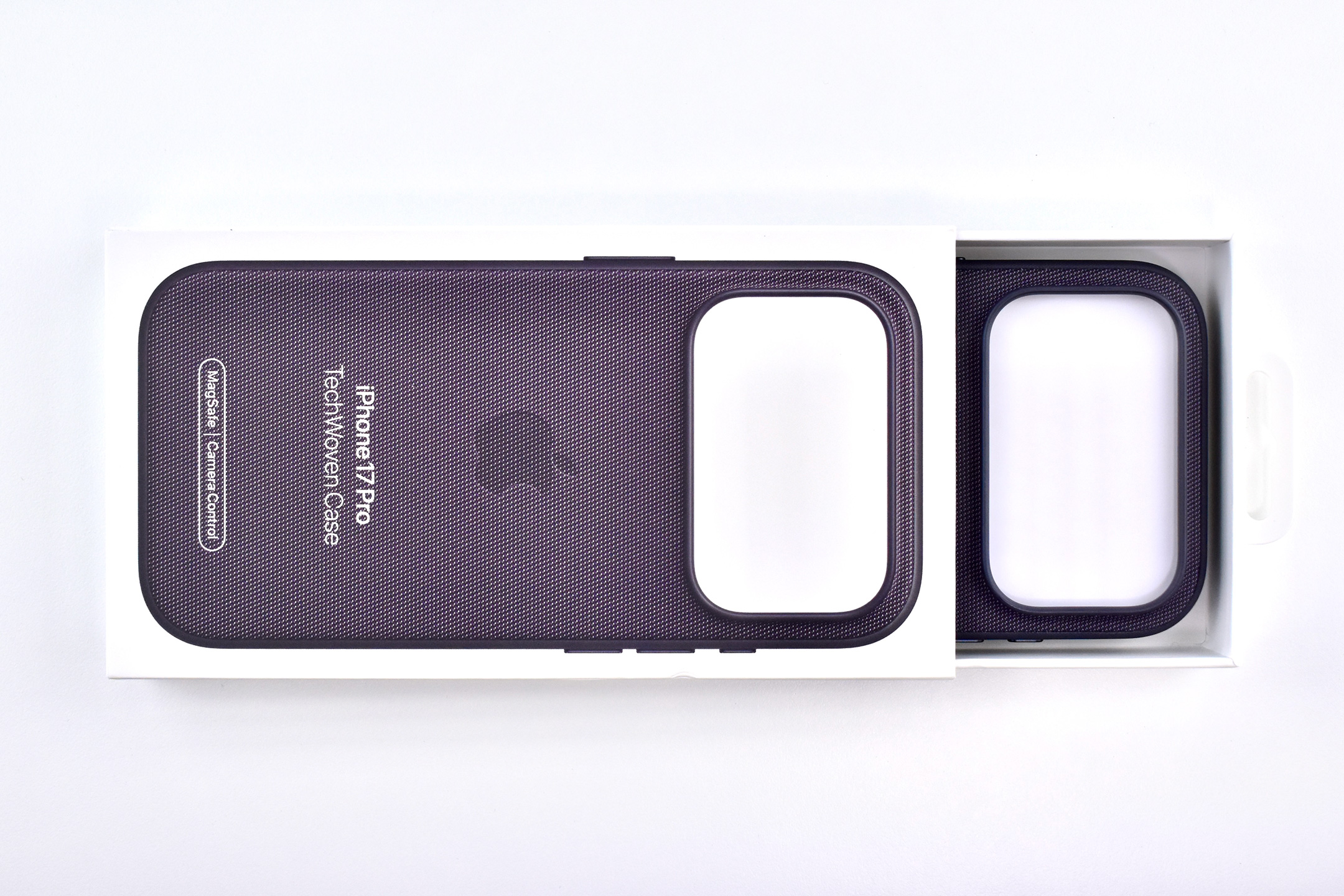
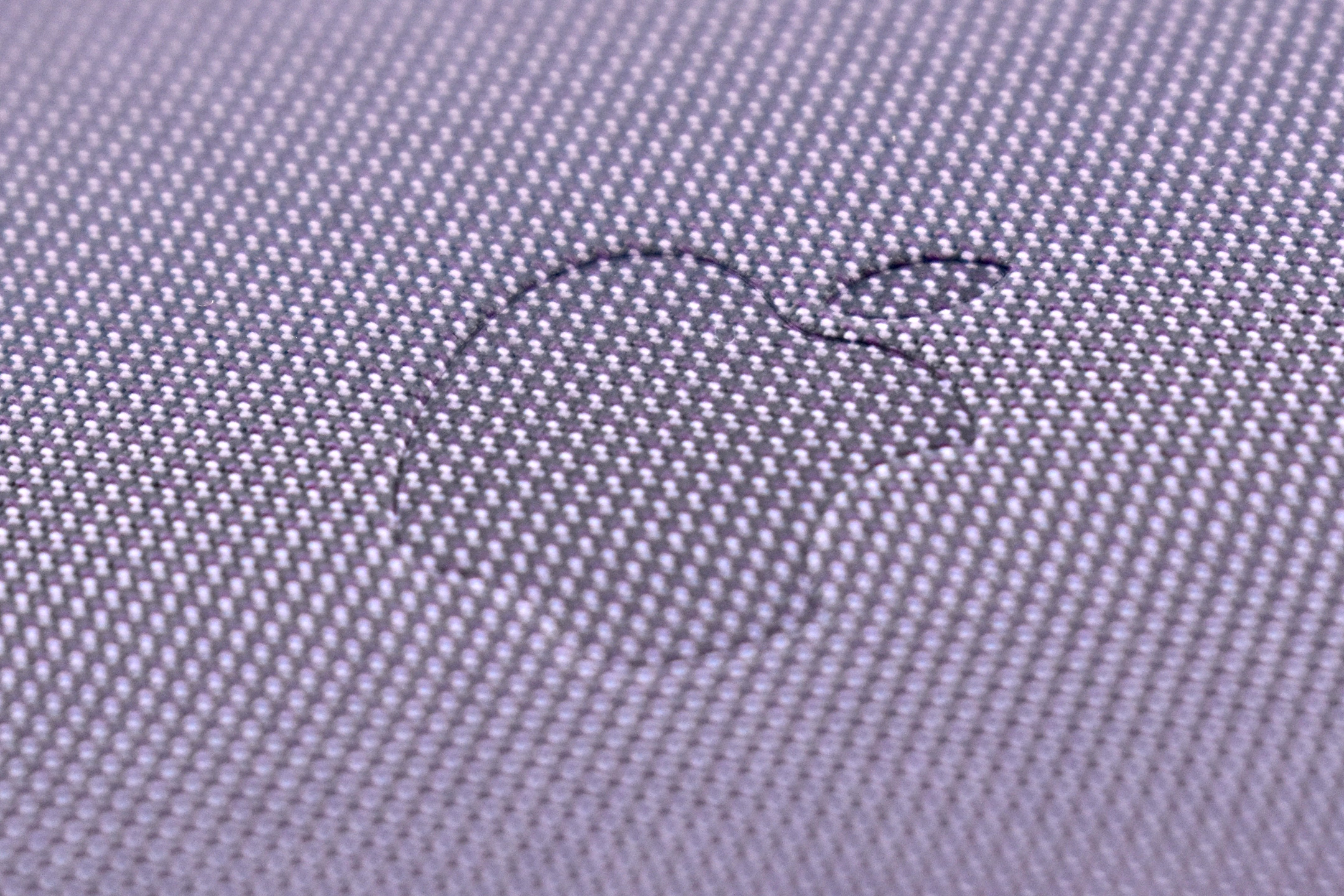
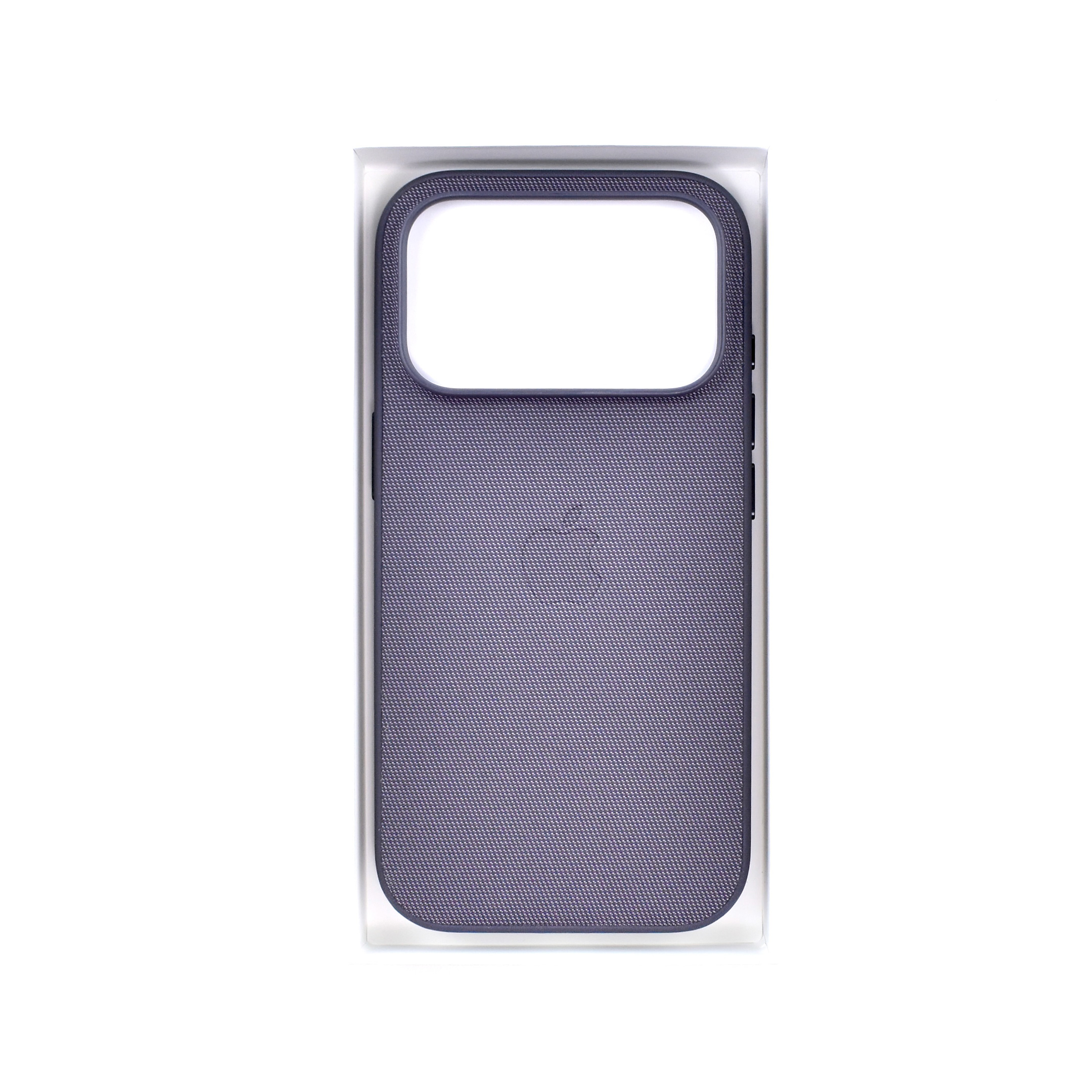
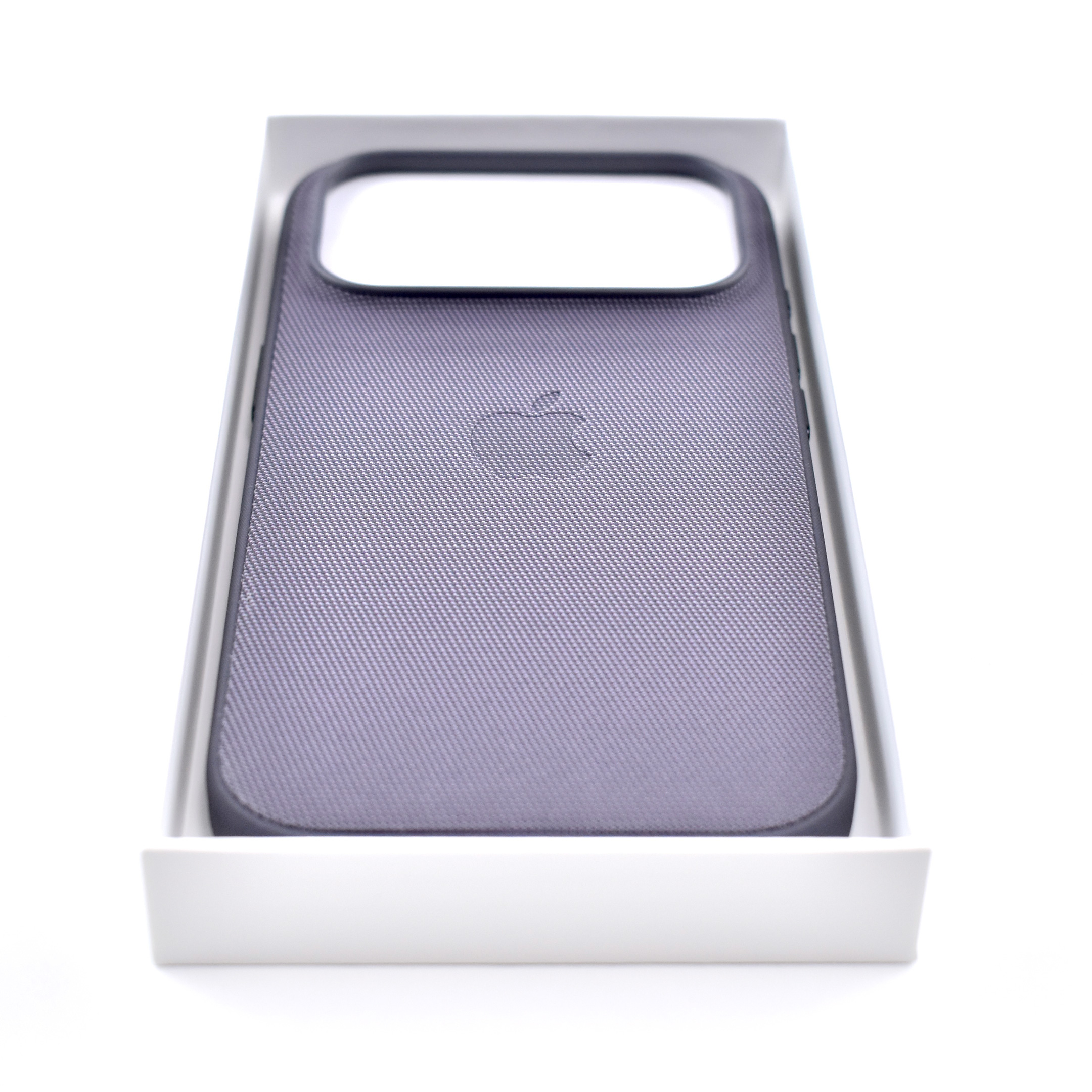
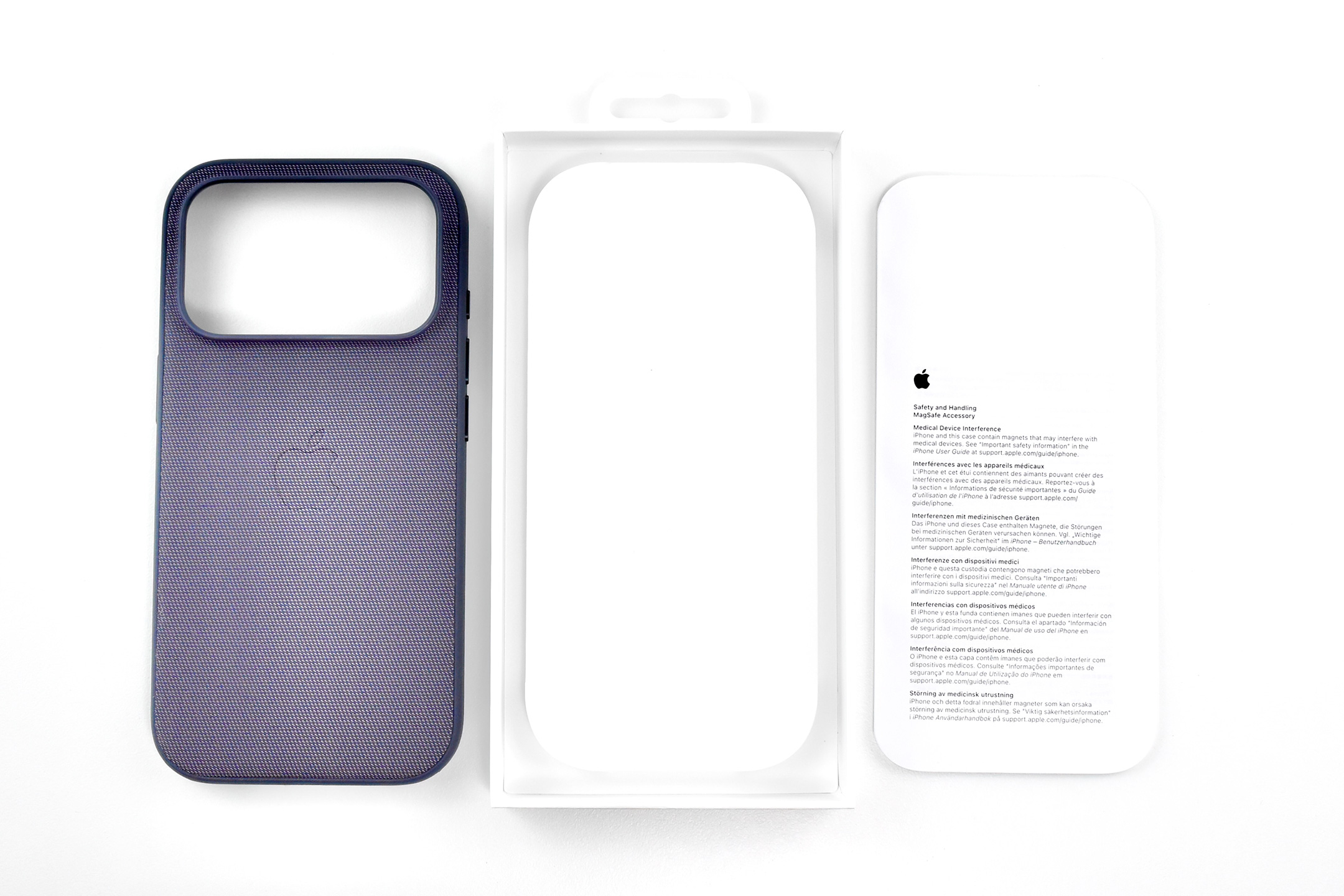
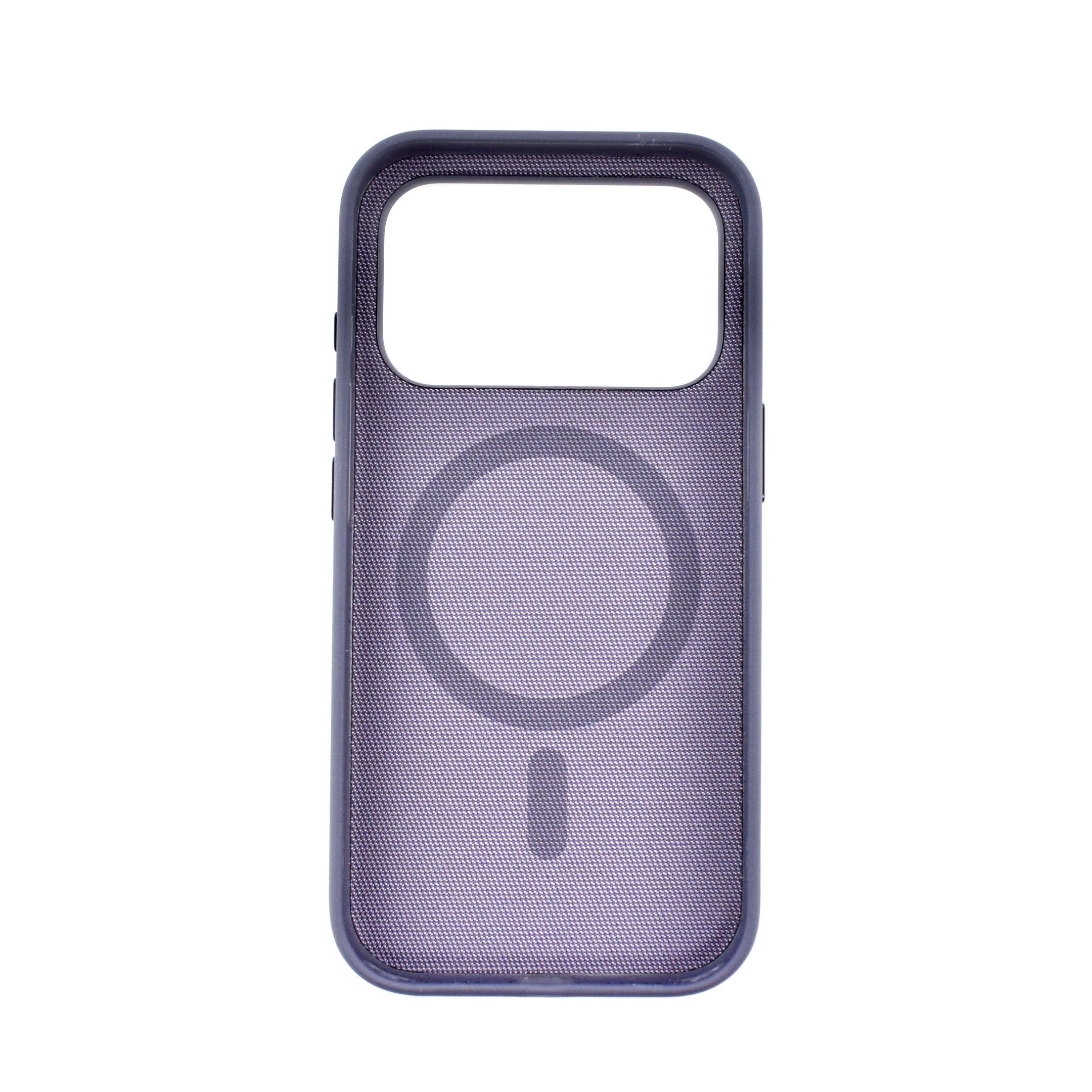
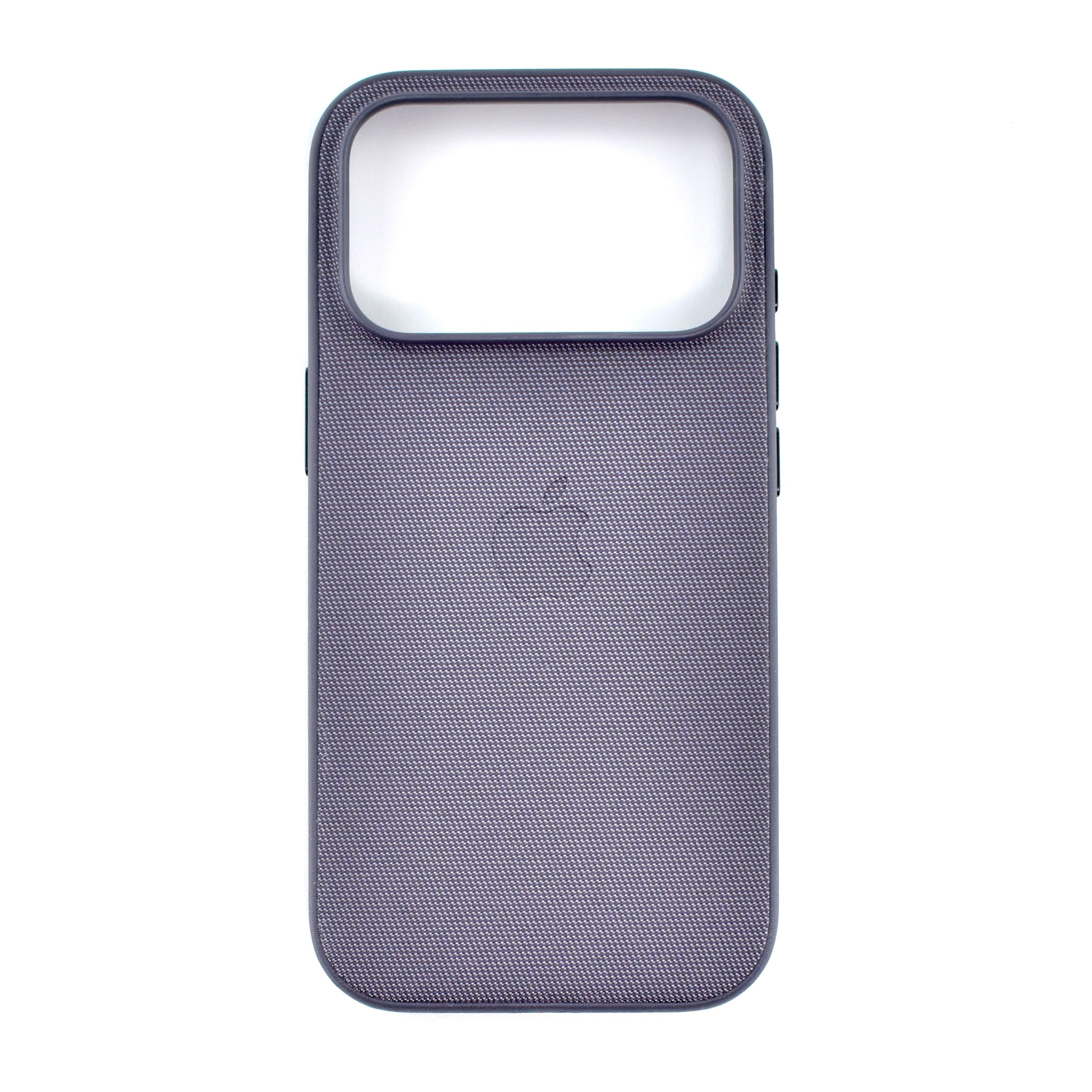
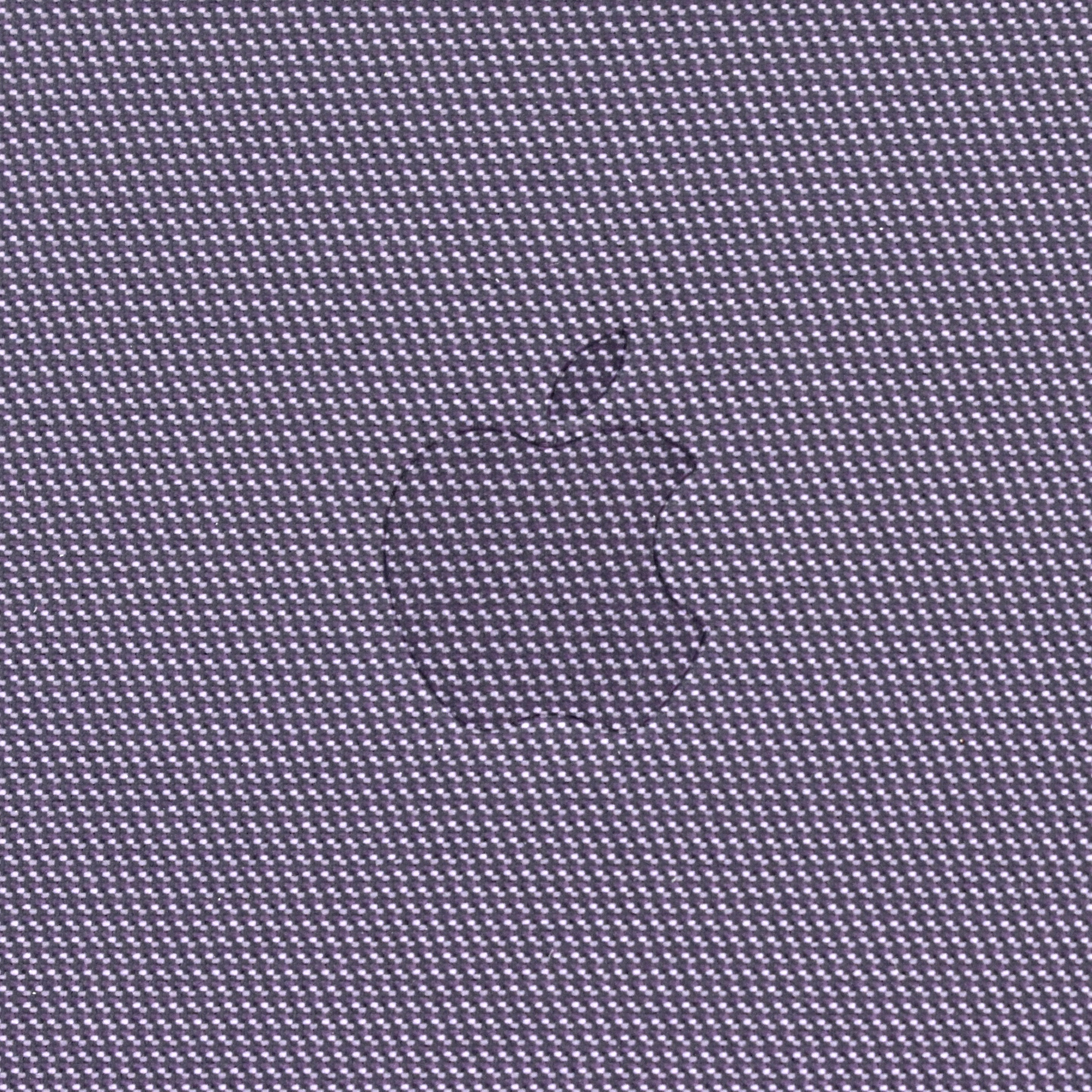
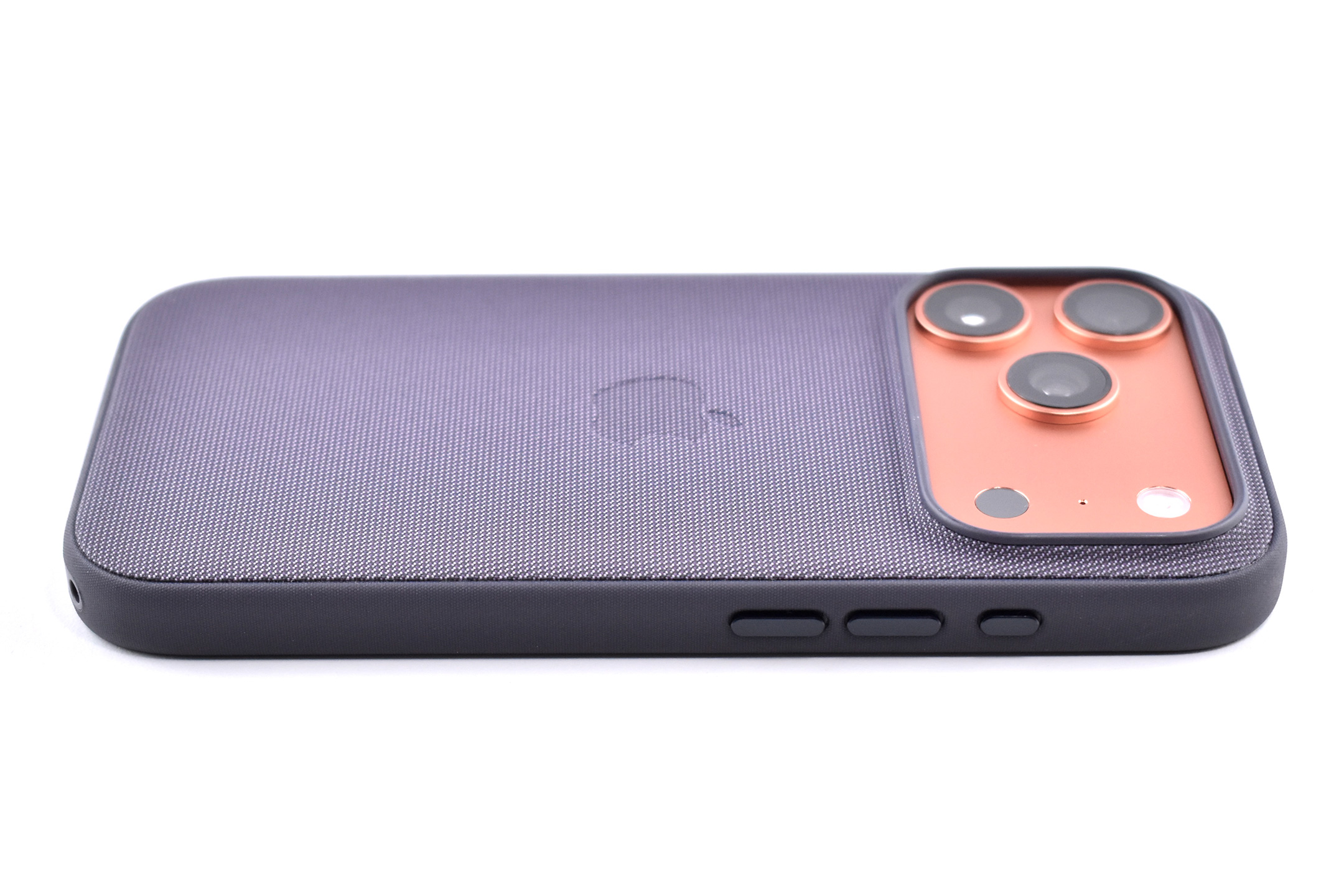
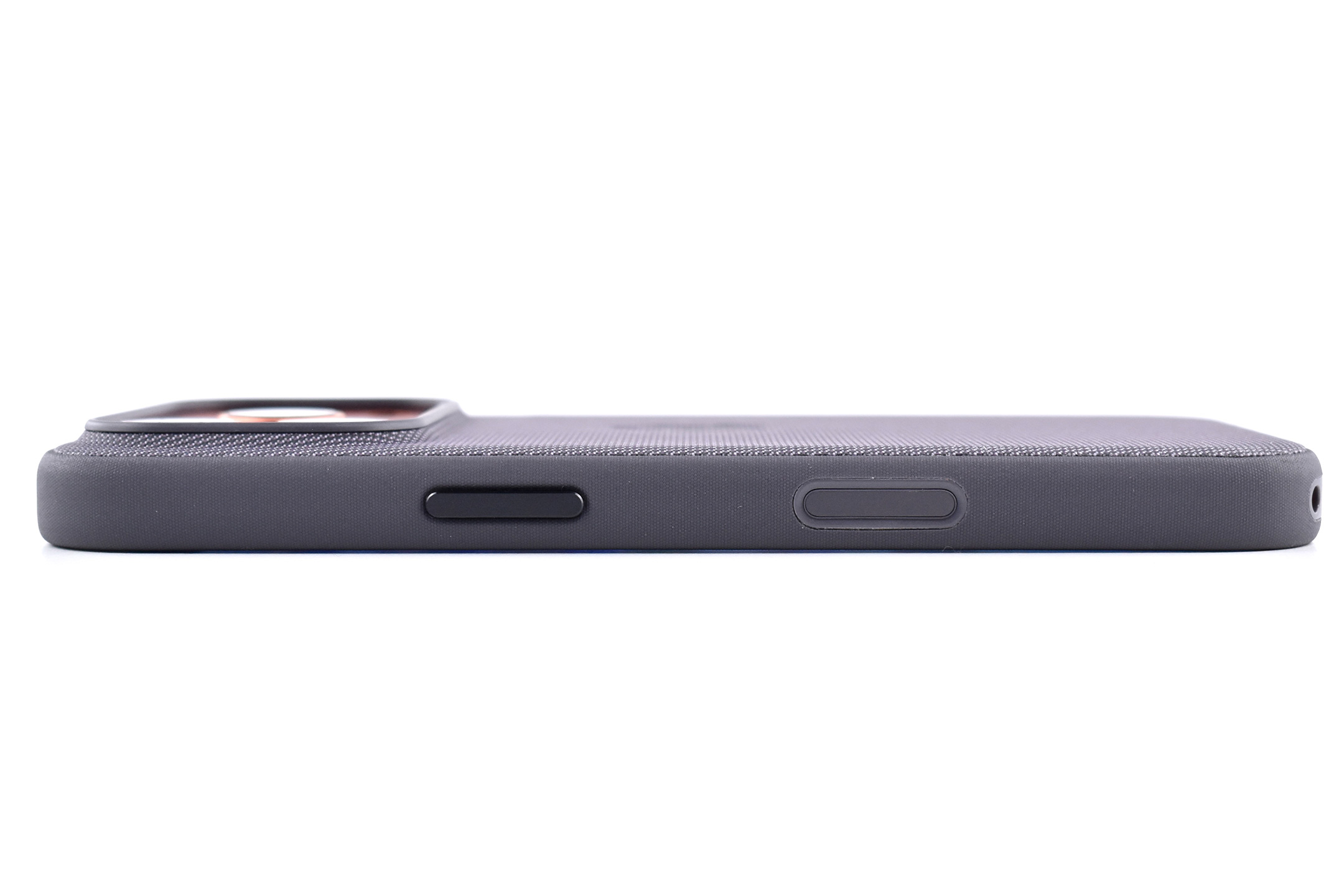
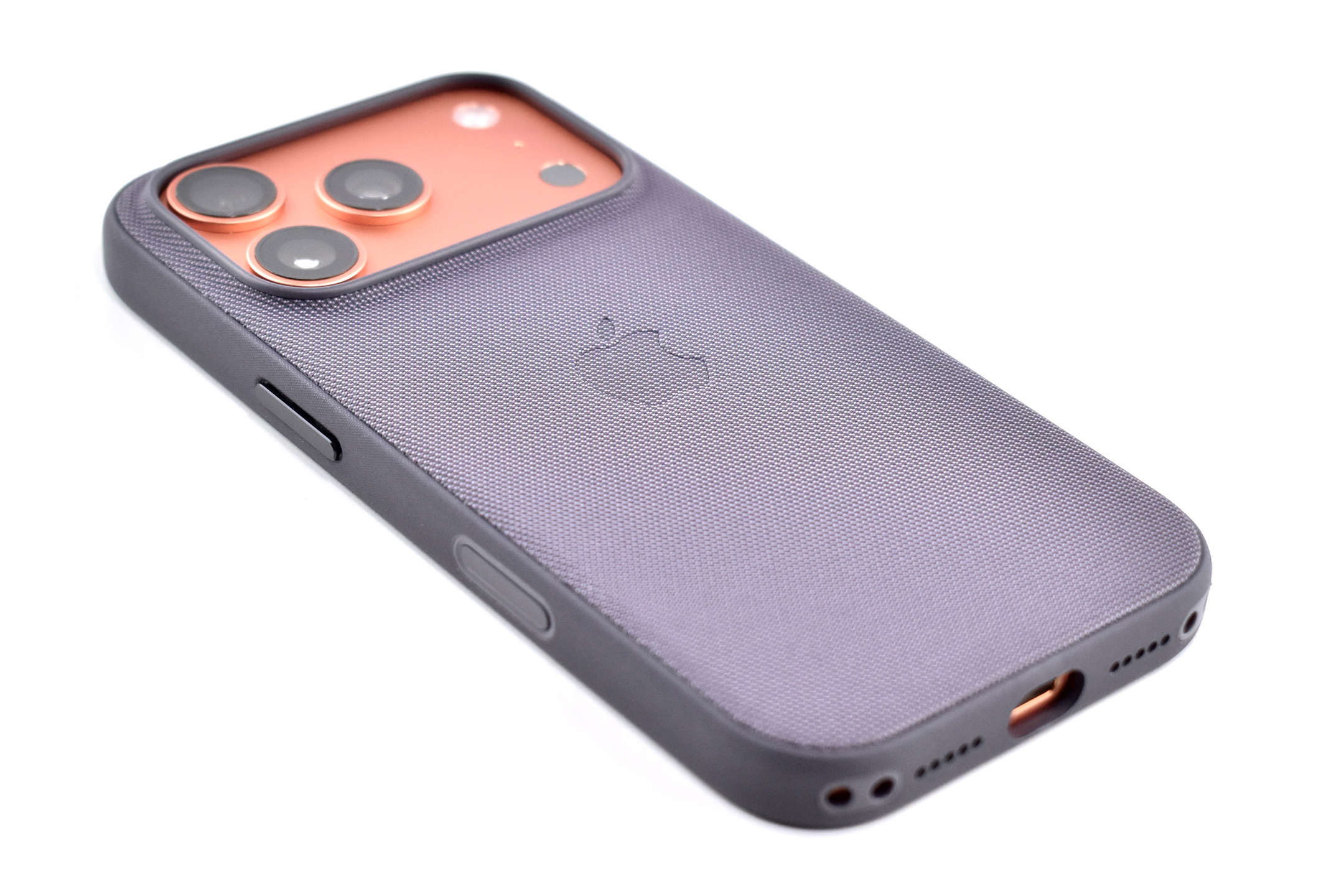
The TechWoven Case was introduced in September 2025 along with the iPhone 17 Pro and iPhone 17 Pro Max. Apple described the new material: “The TechWoven Case has a new technical woven fabric that uses multiple colored yarns, creating a dimensional texture and rich depth of color, while a protective coating provides resistance to scratches and stains.”
This TechWoven material was described by some reviewers as a replacement to FineWoven, the material Apple released in 2023 to replace its leather accessories when the company removed the material from its offerings as part of its carbon neutral “Apple 2030 climate goal.” FineWoven was generally regarded by many reviewers as unsuccessful and TechWoven was referred to as the replacement of the replacement with headlines such as “Apple Seeks to Repent for FineWoven Fail With New TechWoven Cases” and bylines that included, “Apple’s TechWoven case is cloth and, more importantly, not the old FineWoven mess.”
Apple described the iPhone 17 Pro TechWoven Case as offering “beautiful personalization and protection for your iPhone 17 Pro.” They noted:
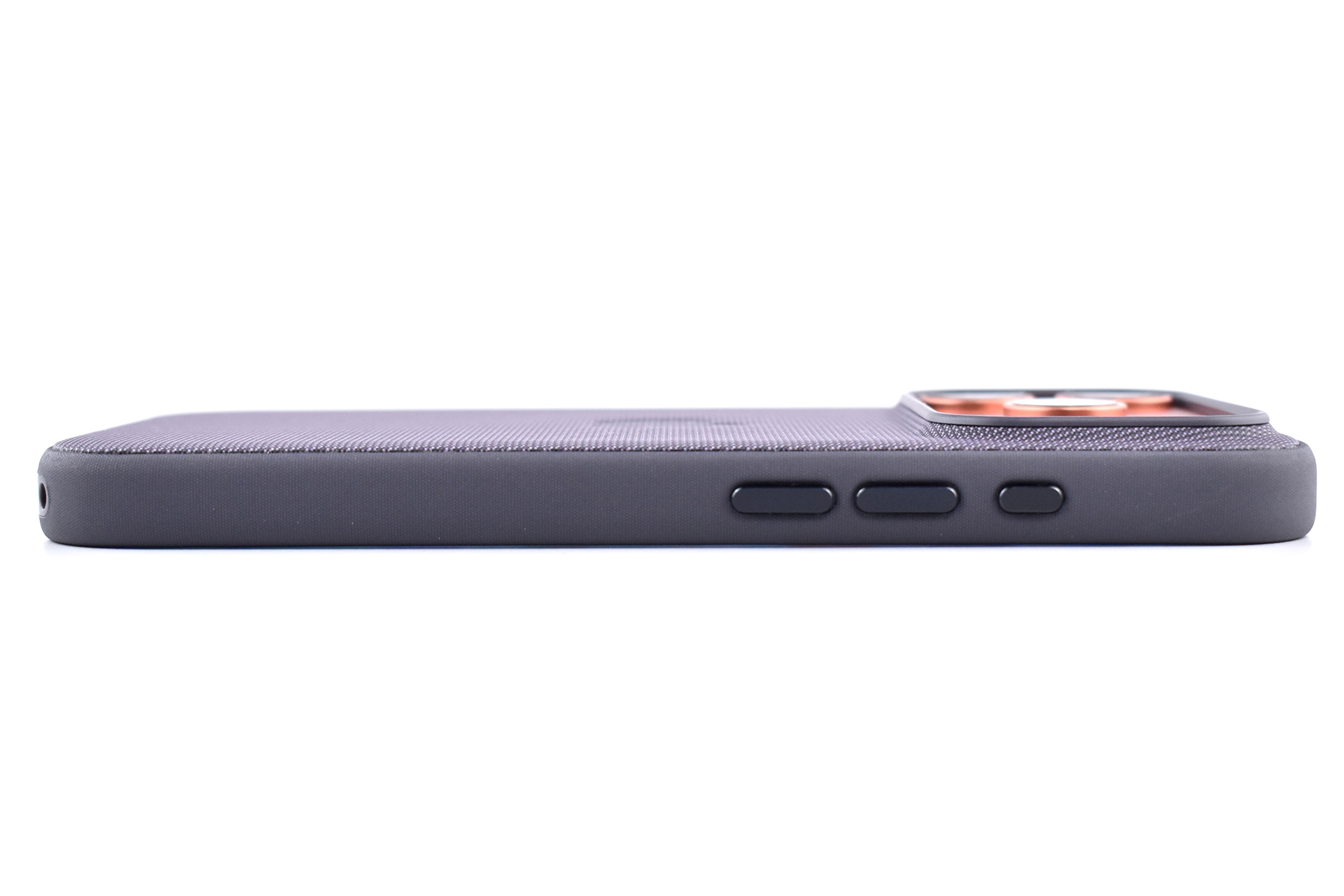
“This case is made from a custom technical woven fabric, made from 100 percent recycled polyester. Multiple colored yarns are woven together on a Jacquard loom creating a dimensional texture with a rich depth of color. The sides of the case are coated with a lightly textured TPU for better grip. The refined anodized aluminum buttons provide precise and responsive feedback.”
This case also featured two connection points so it could be securely attached to the Crossbody Strap that was introduced at the same time as this case.
The iPhone 17 Pro TechWoven Case had “built-in magnets that align perfectly with iPhone 17 Pro” and offered a “magical attach experience and faster wireless charging.” This example is purple.
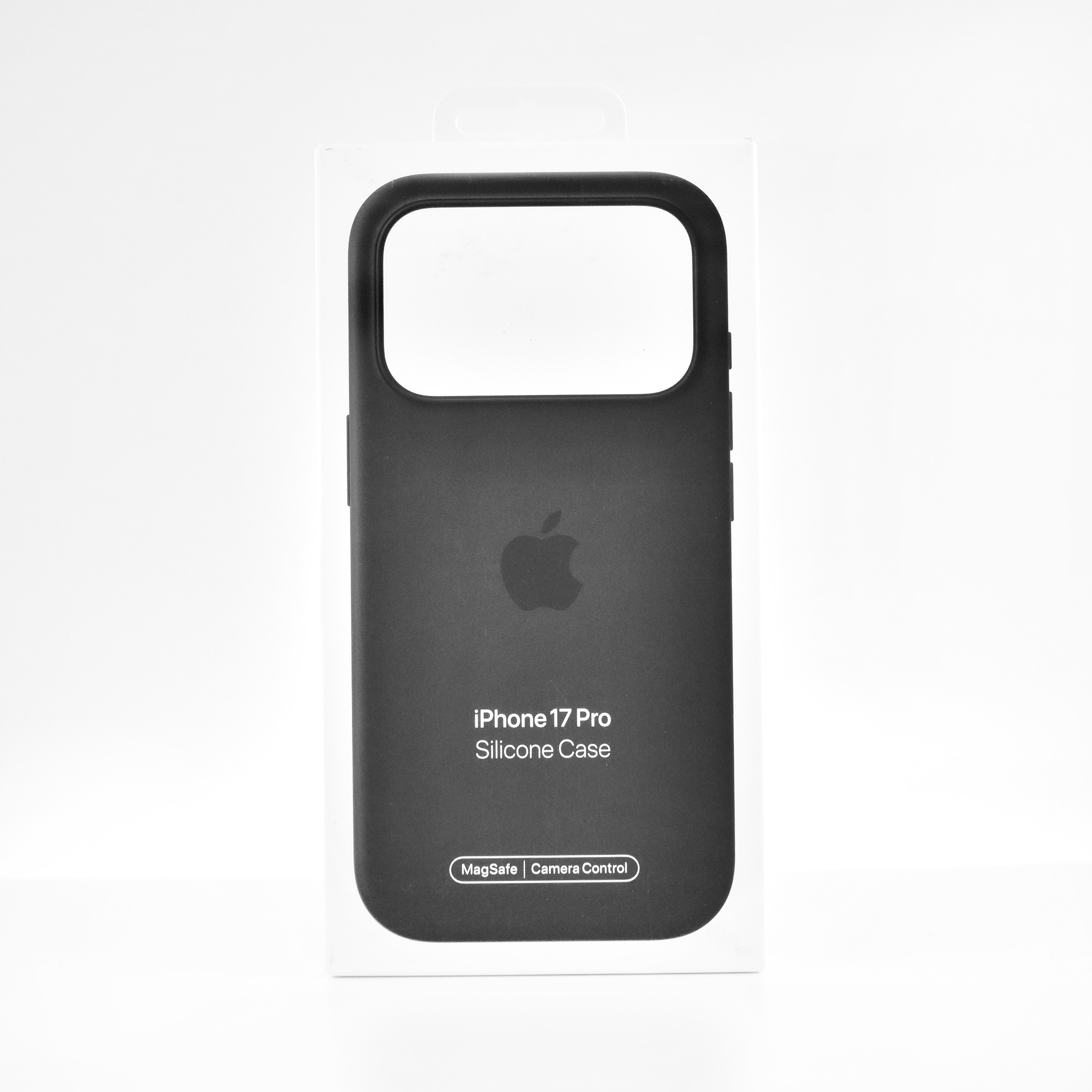
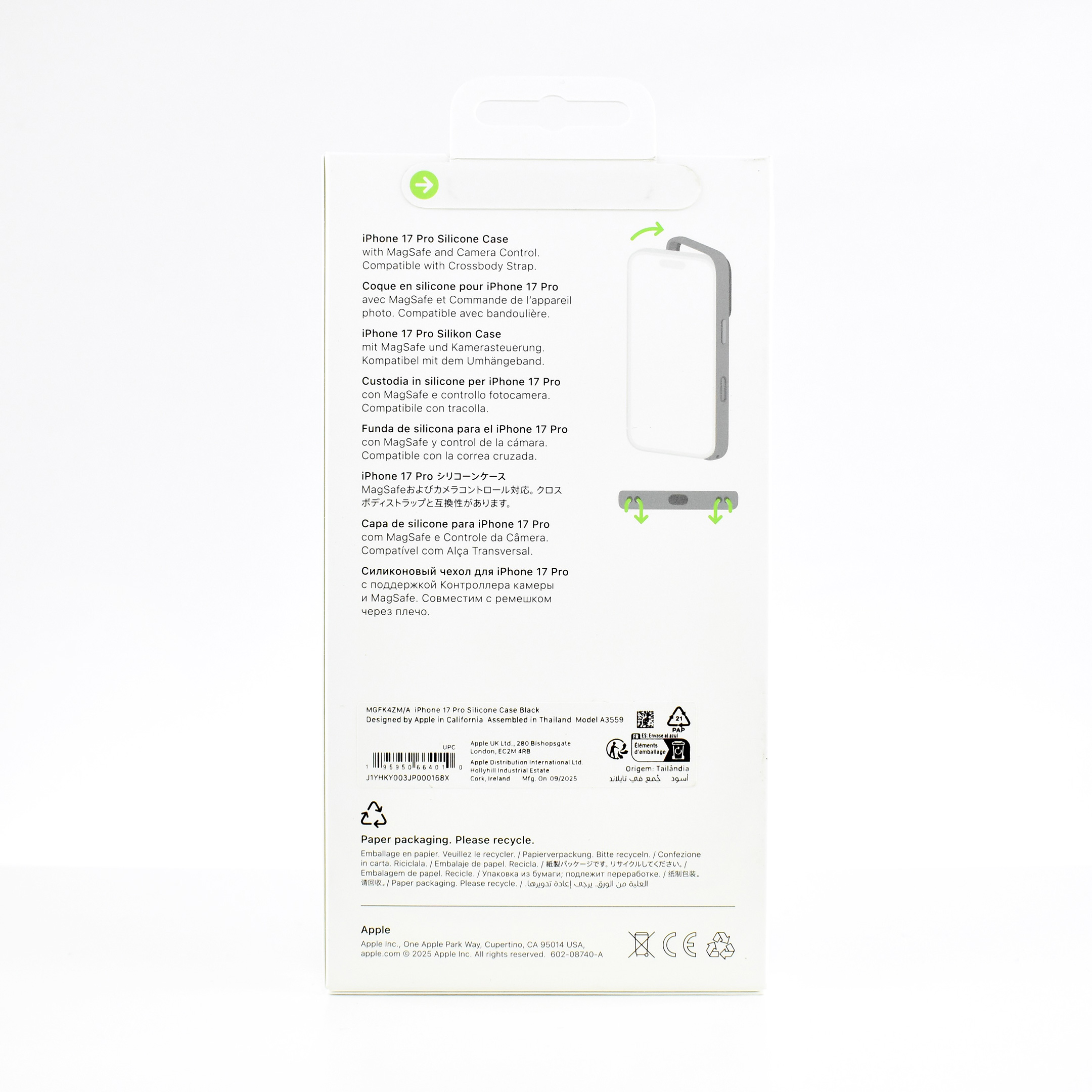
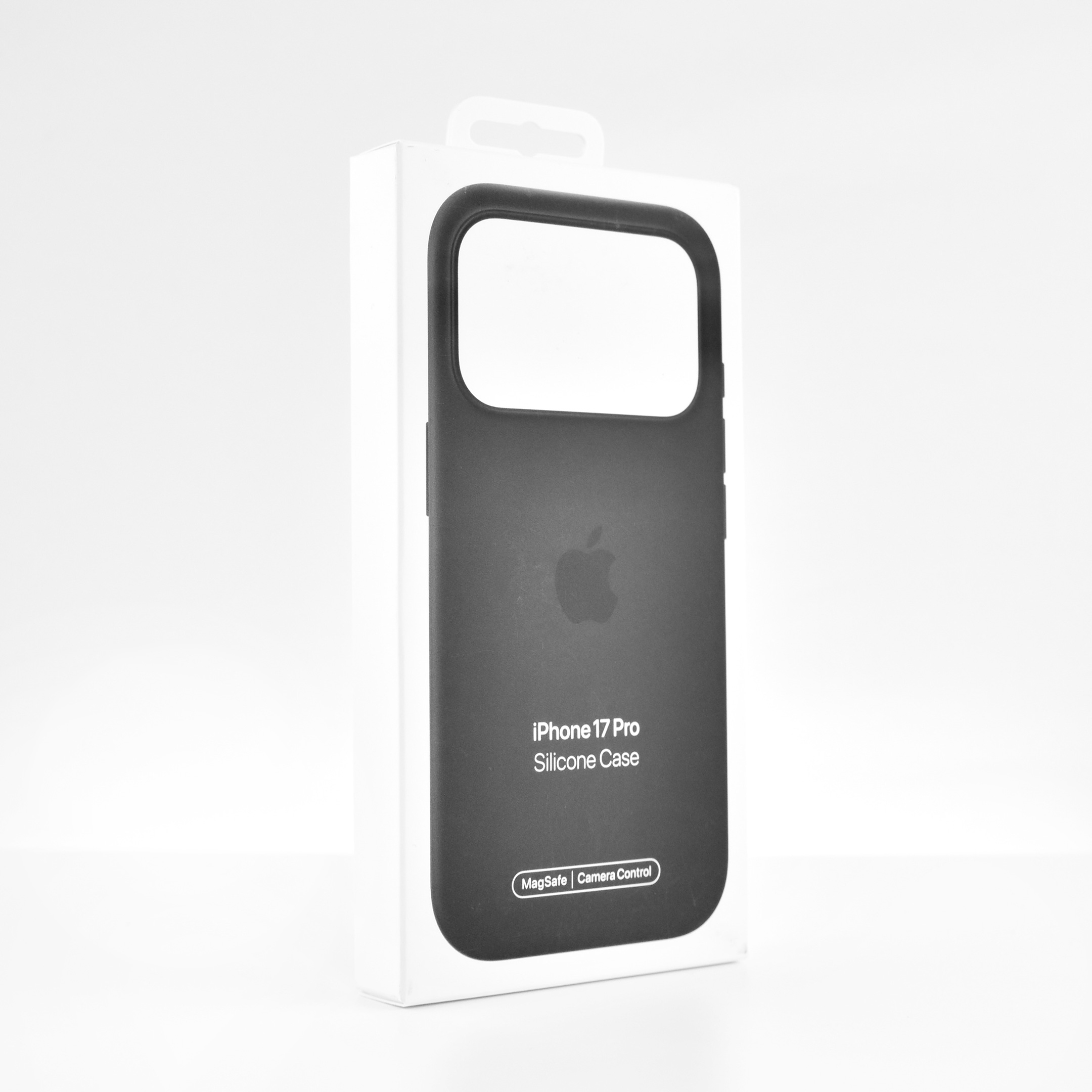
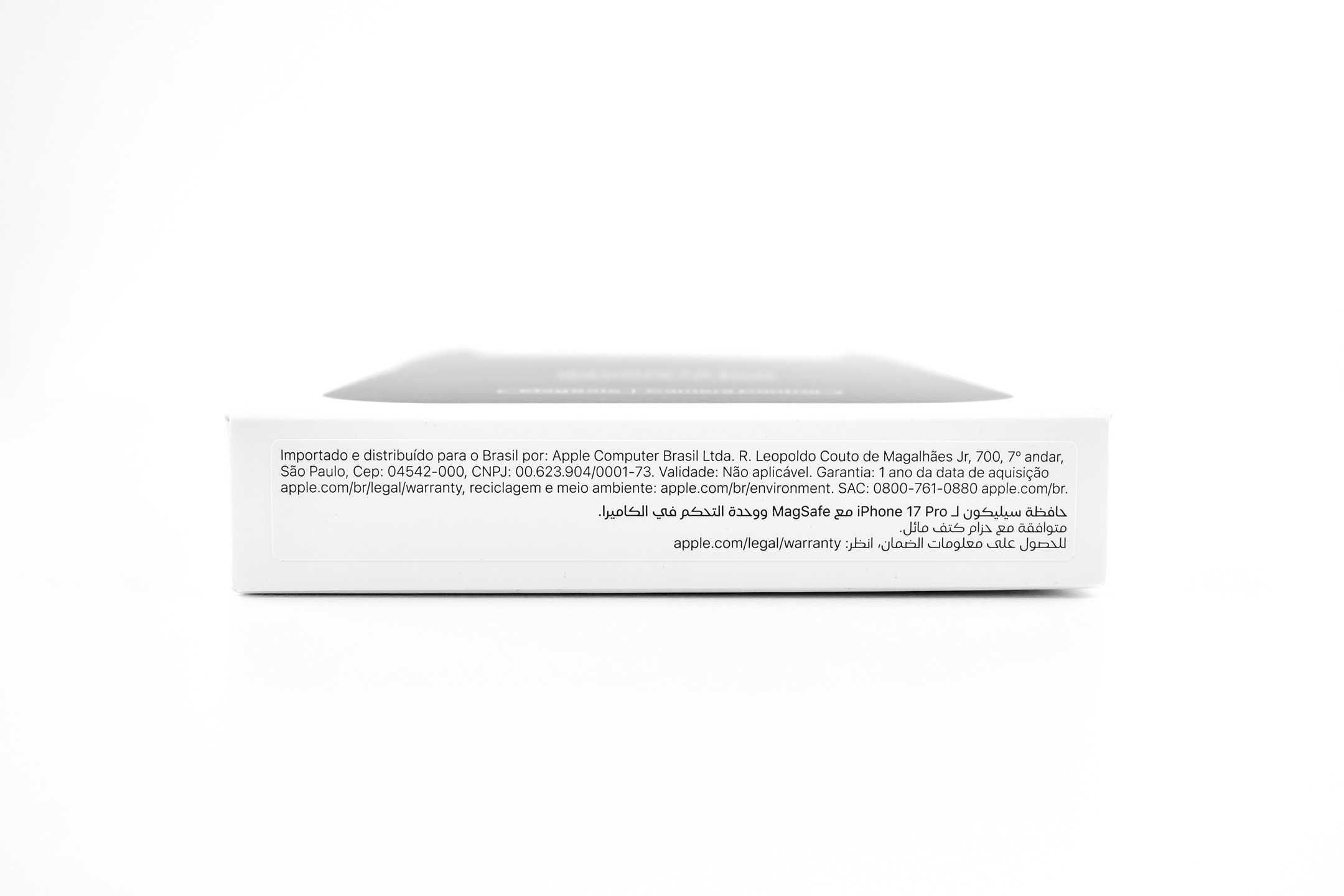
The iPhone 17 Pro Silicone Case was “Designed by Apple to complement iPhone 17 Pro, the Silicone Case with MagSafe is a delightful way to protect your iPhone.” This case also featured a conductive layer to communicate finger movements to the Camera Control button under the volume buttons.
Unlike previous Silicone case models, this one featured two connection points so it could be securely attached to the Crossbody Strap that was introduced at the same time as this case and the iPhone 17 Pro.
Apple also noted that the case was “Made with a 45 percent recycled silicone material” and “has a silky, soft-touch finish on the exterior that feels great in your hand. And on the inside, there’s a soft microfiber lining for even more protection.”
The case also included MagSafe magnets that extended the functionality of MagSafe built into the iPhone through the case. Apple described the charging functionality:
“With built-in magnets that align perfectly with iPhone 17 Pro Max, this case offers a magical attach experience and faster wireless charging, every time. When it’s time to charge, just leave the case on your iPhone and snap on your MagSafe charger, or set it on your Qi2 25W or Qi-certified charger.”
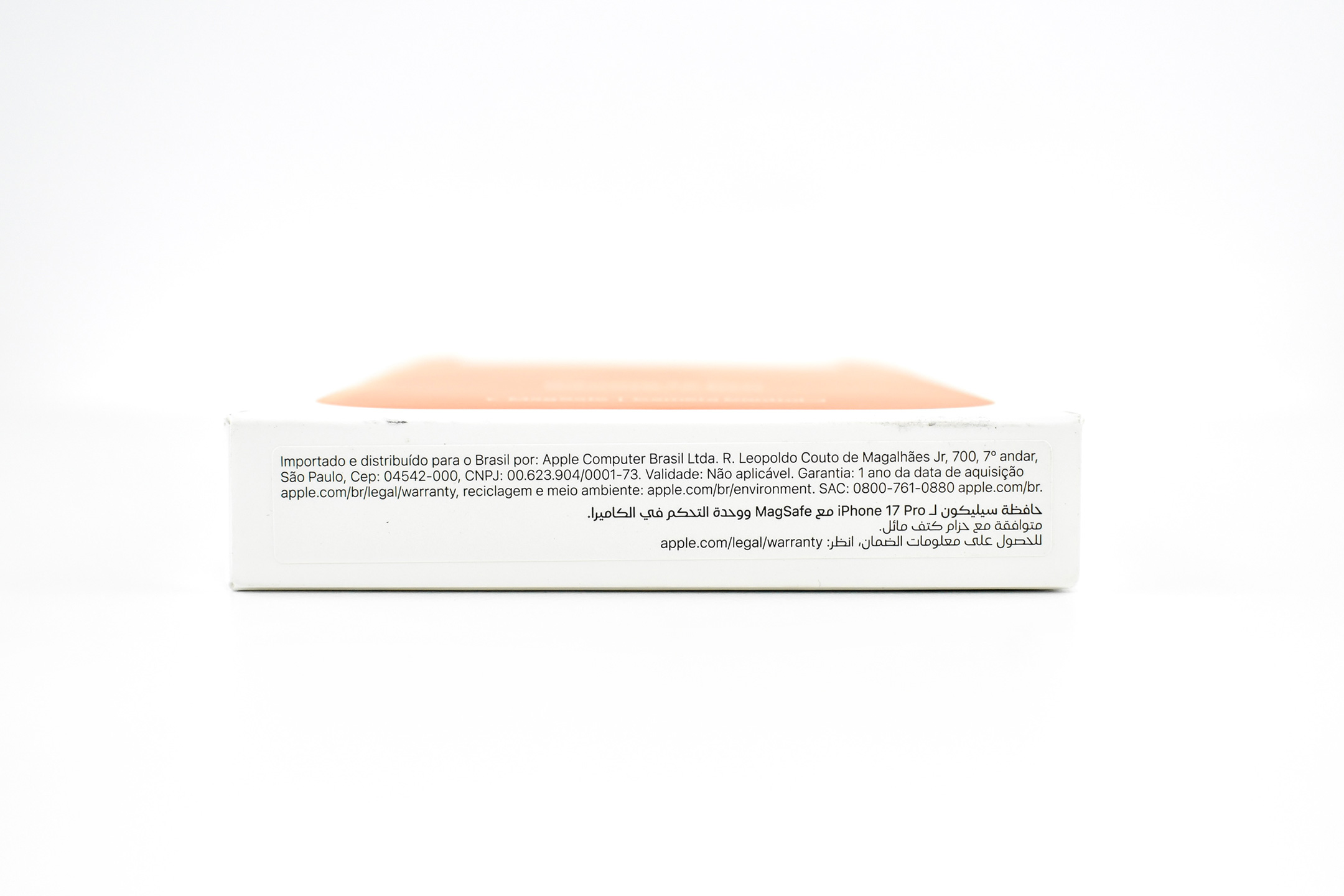
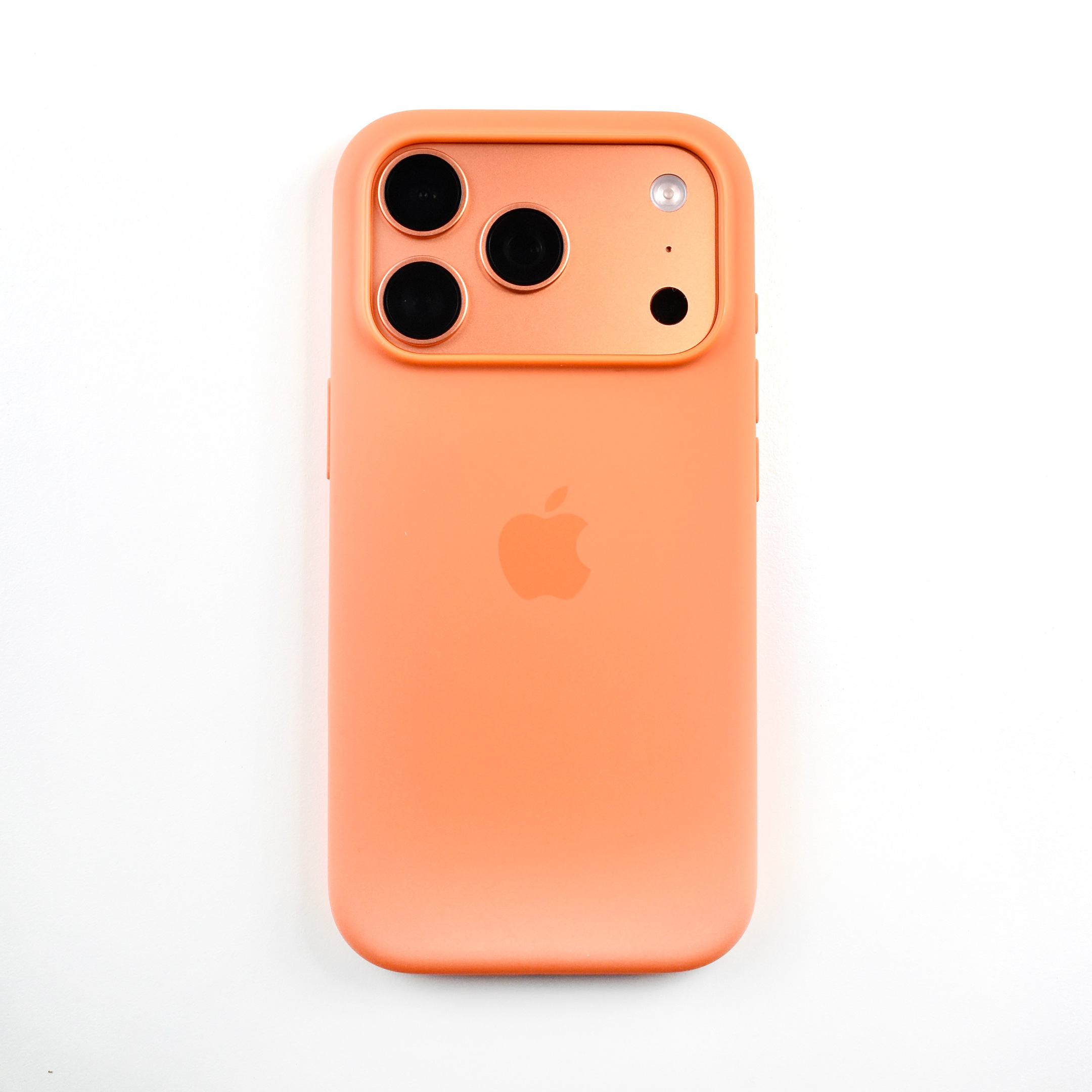
This case was originally offered in six colors. This example is black.
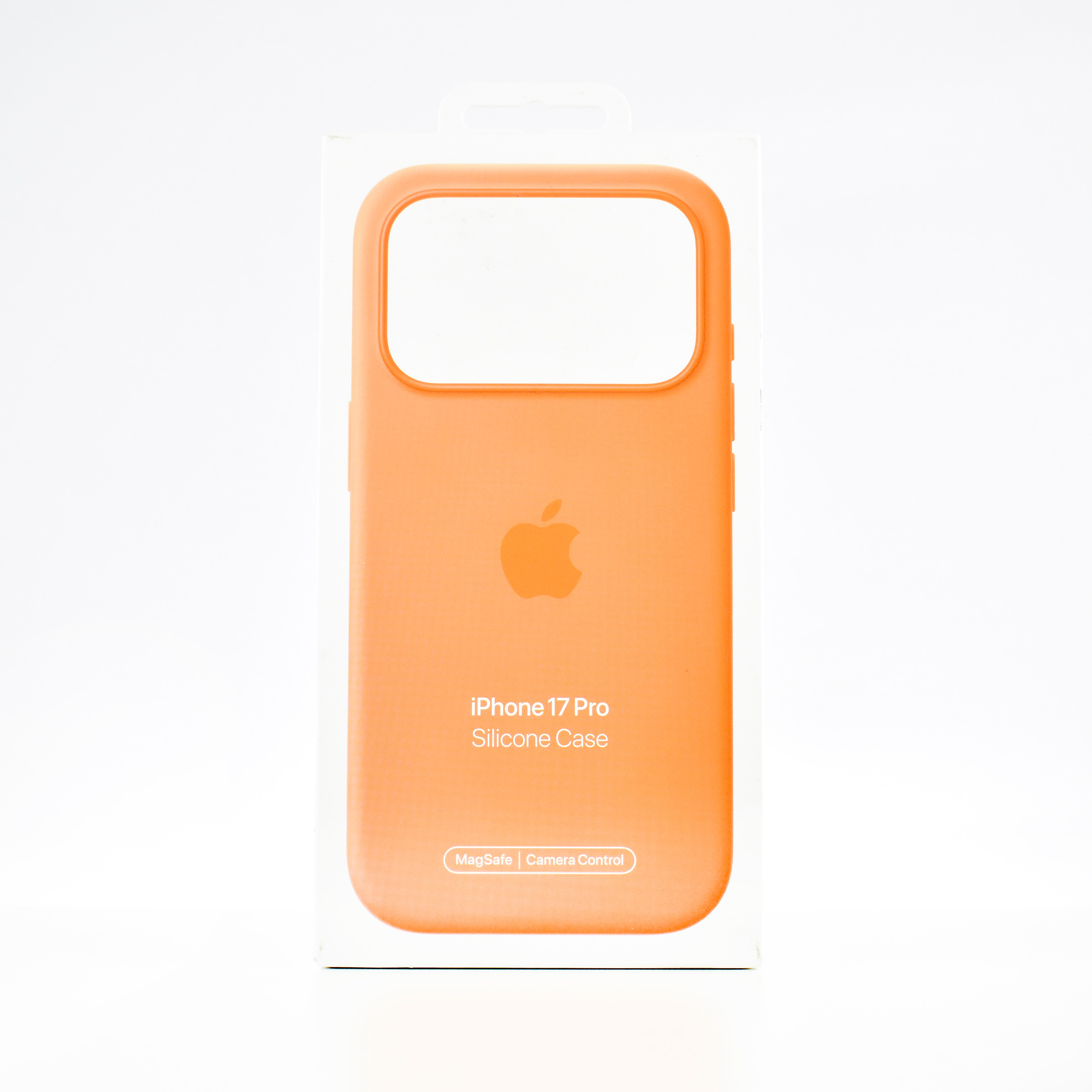
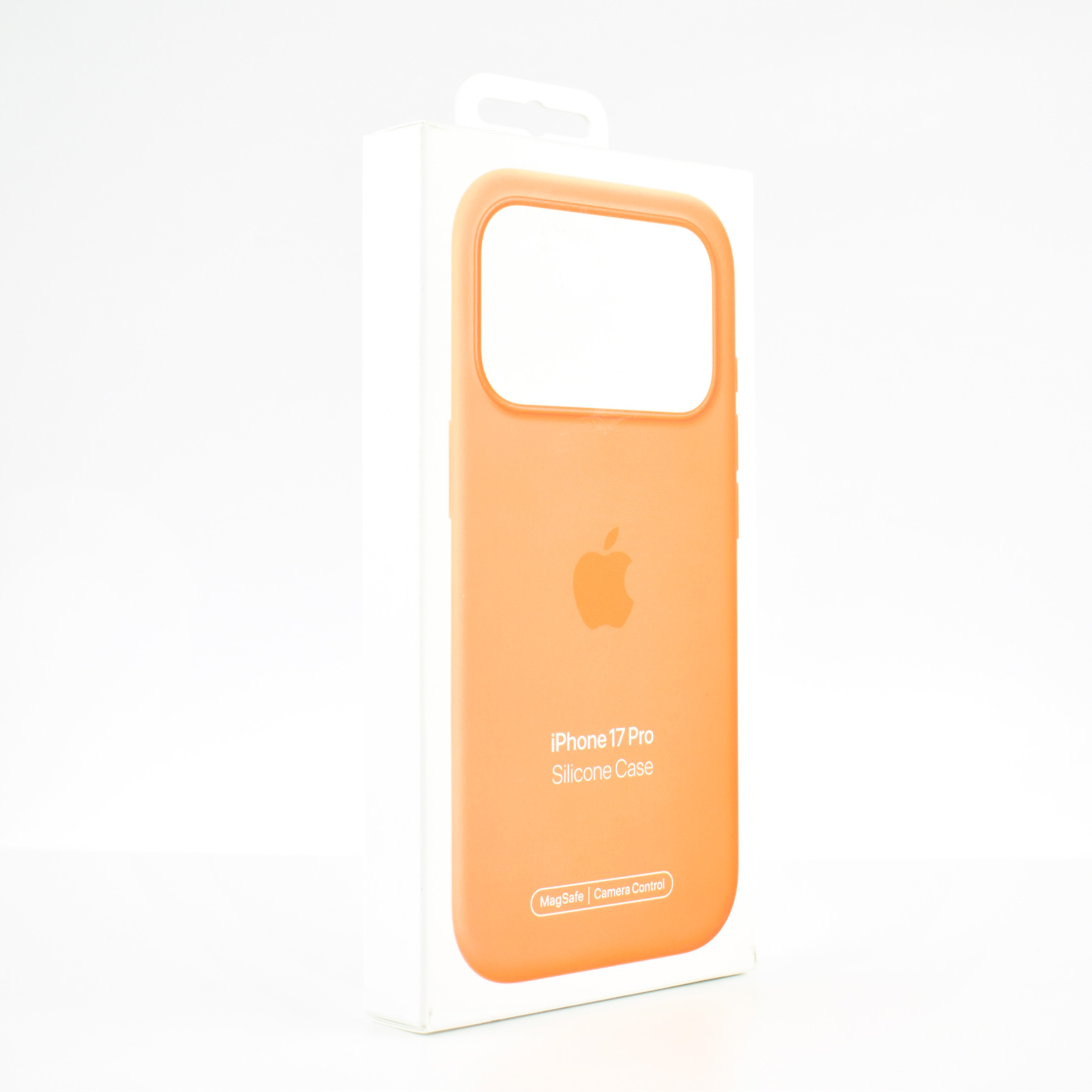
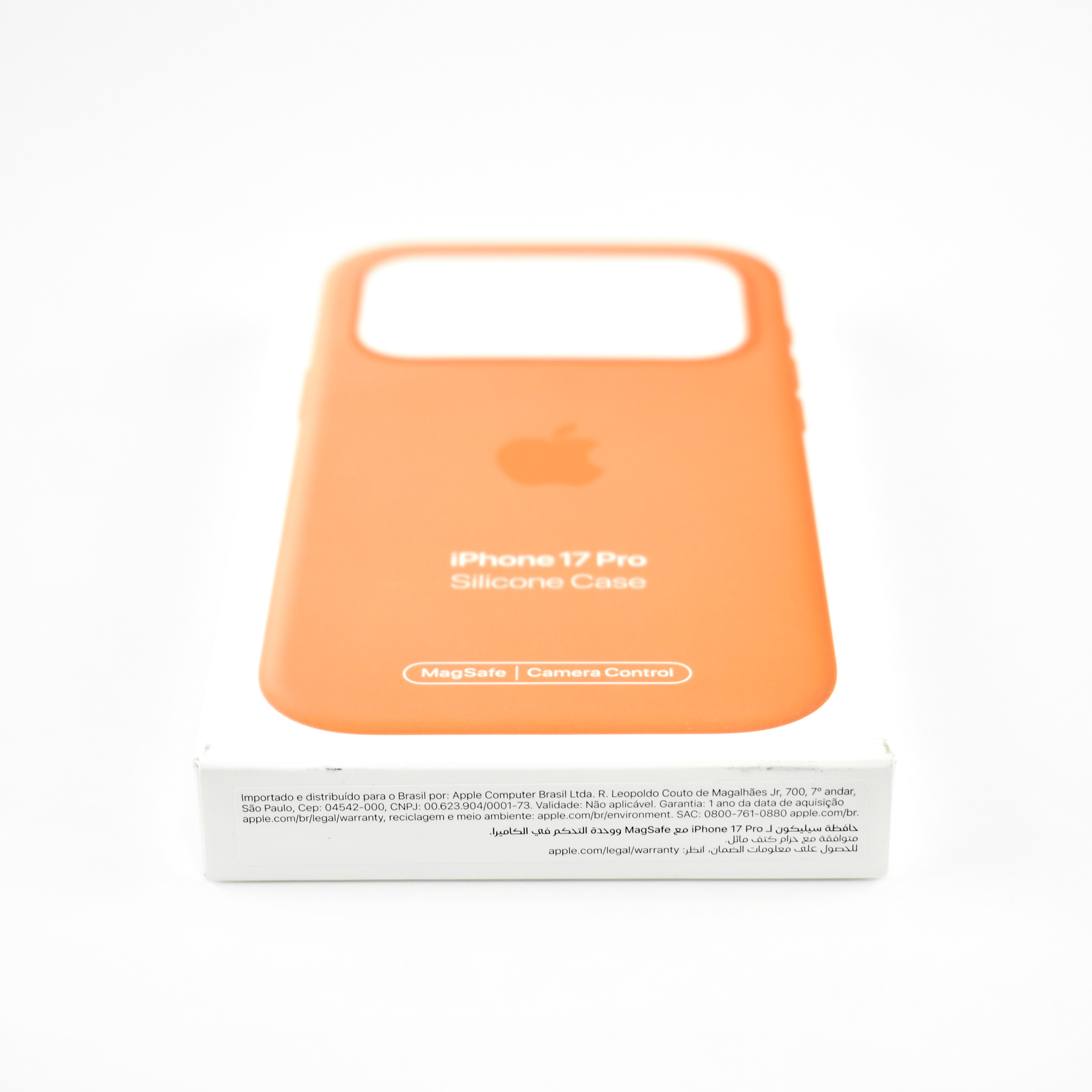
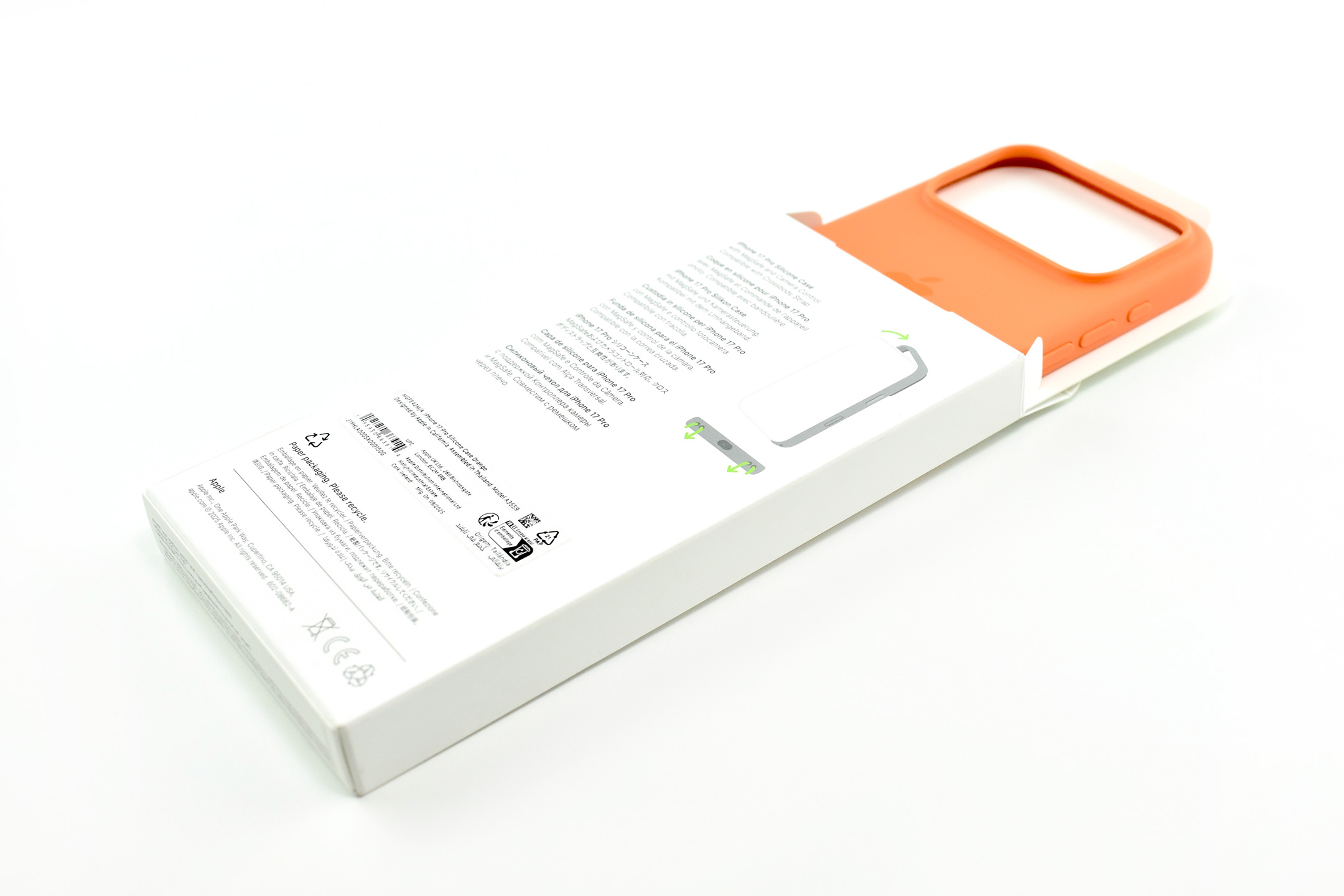
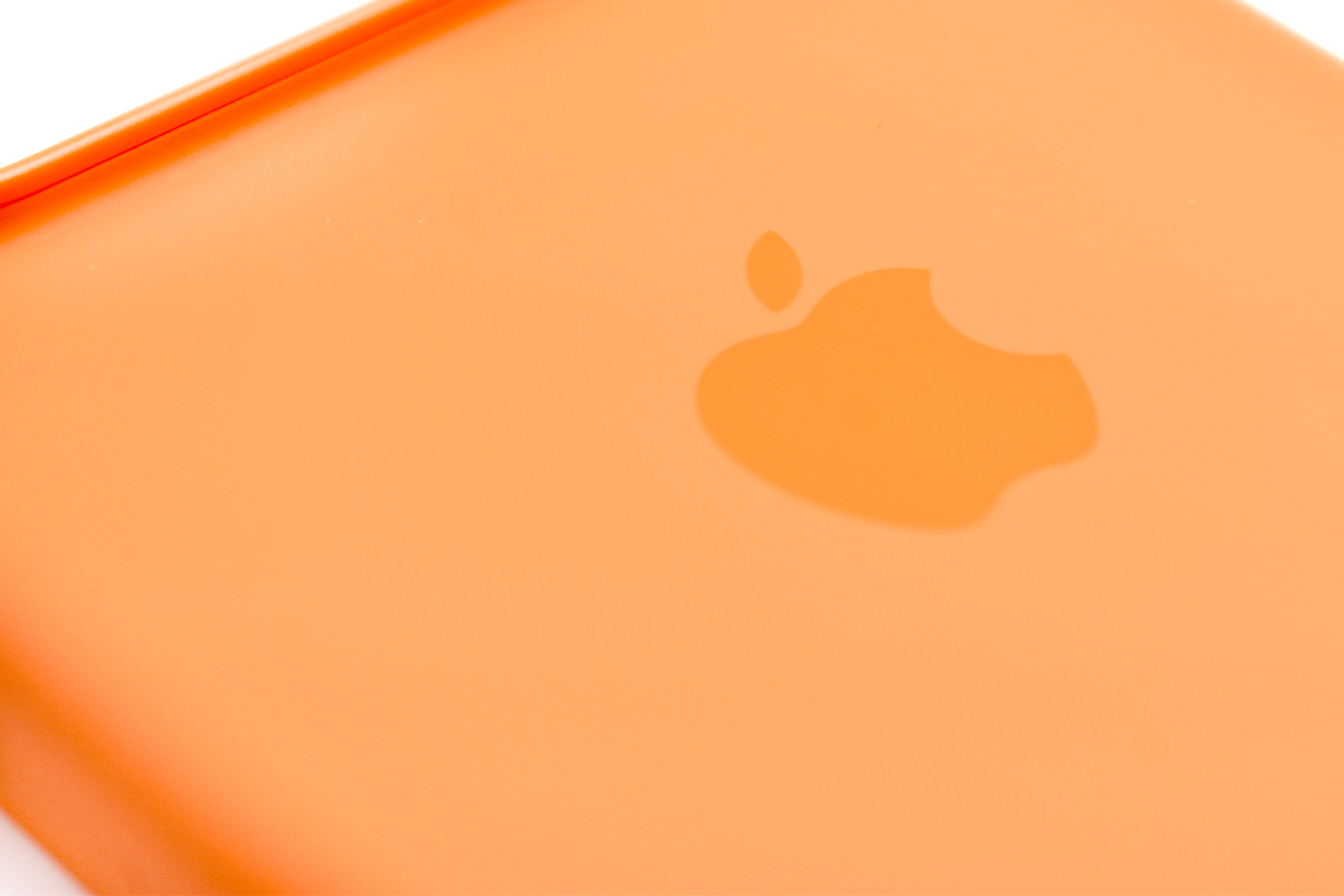
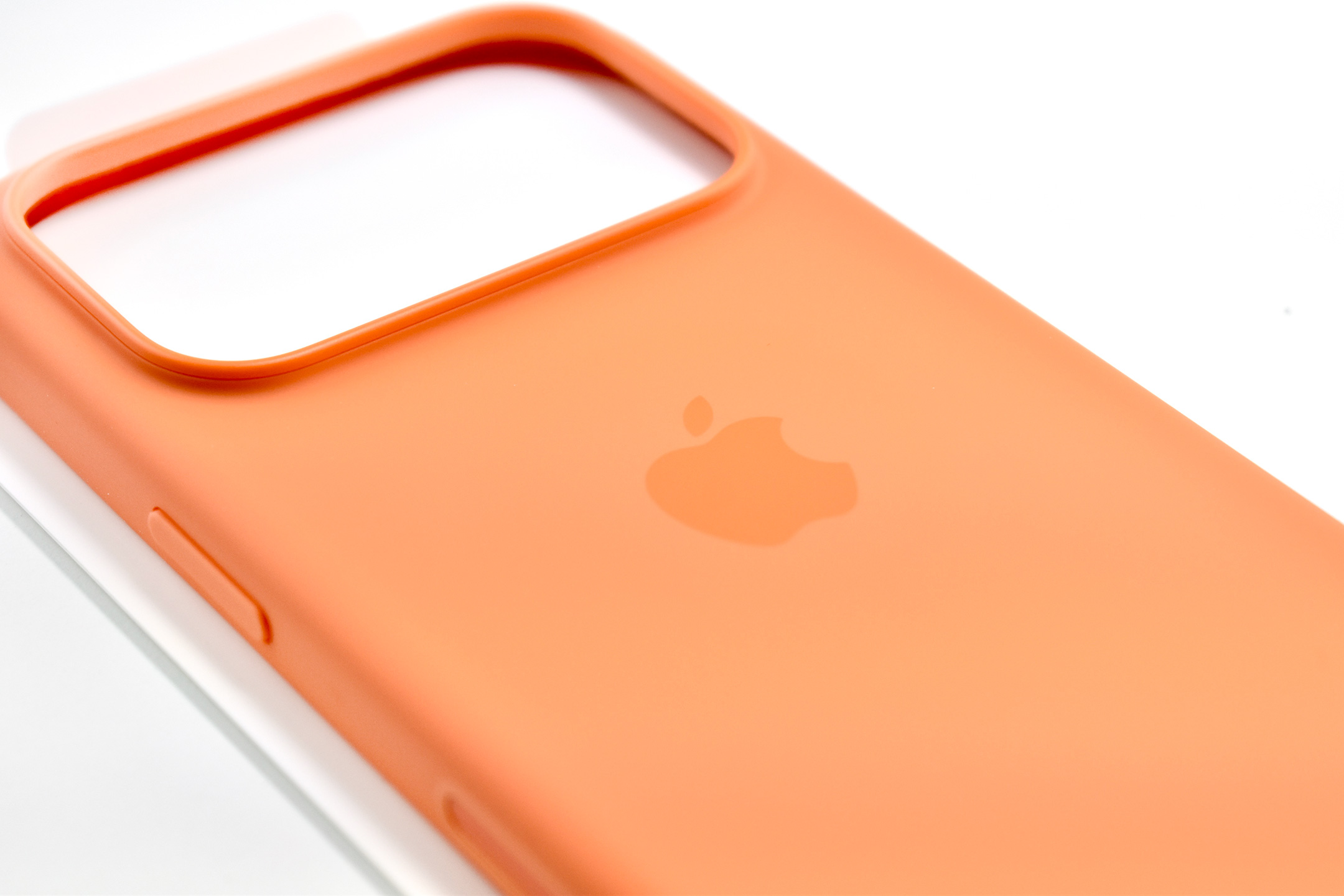
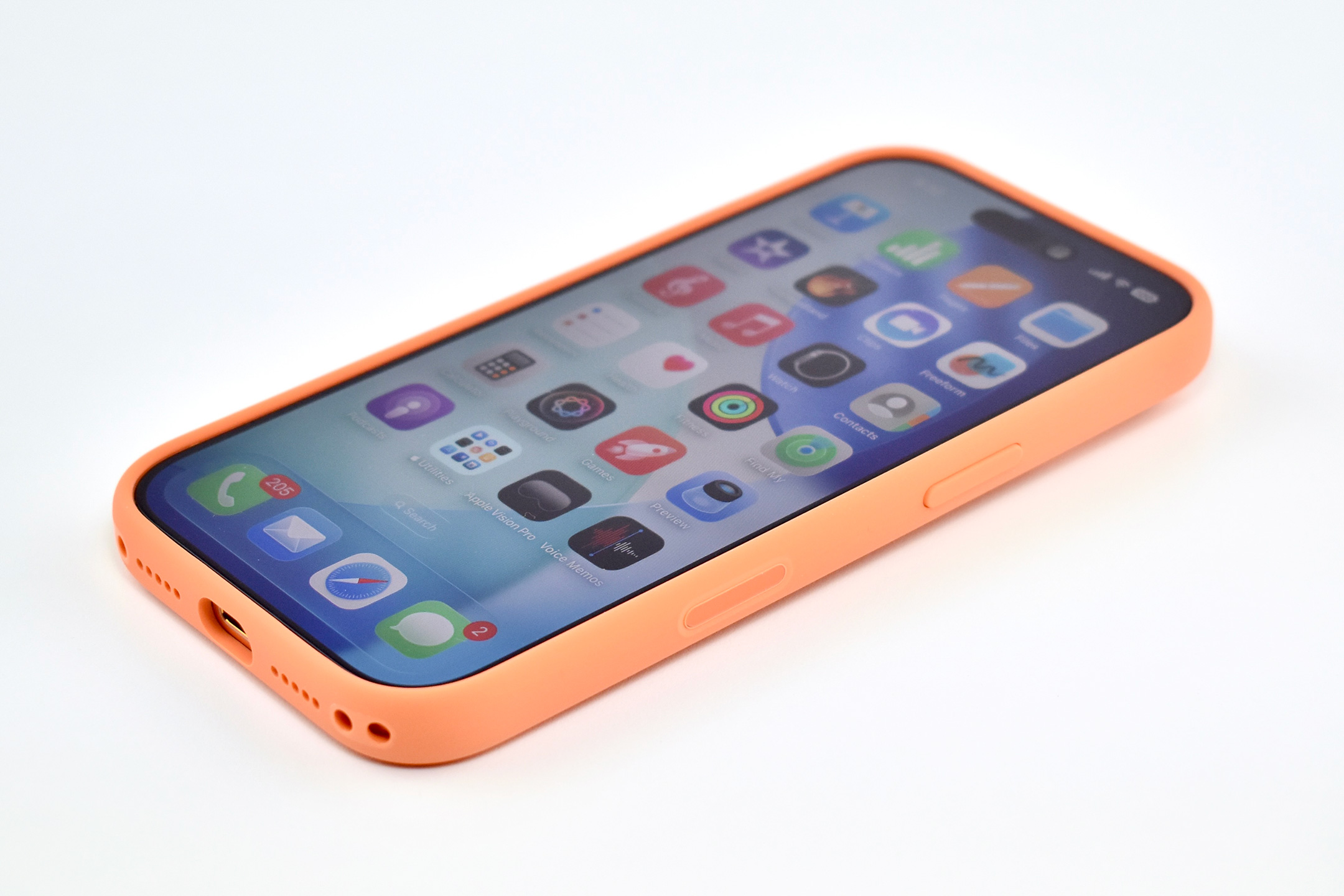
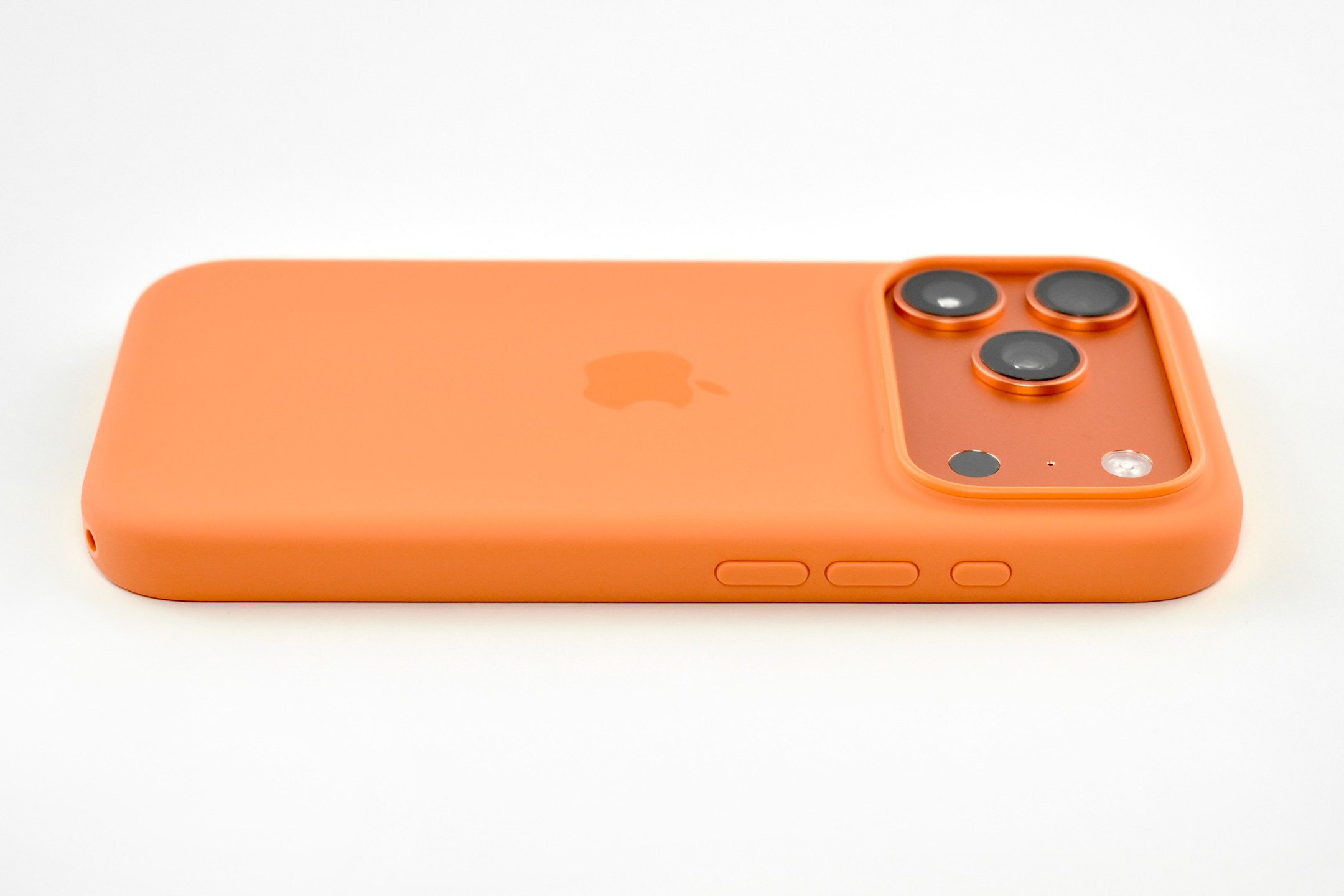
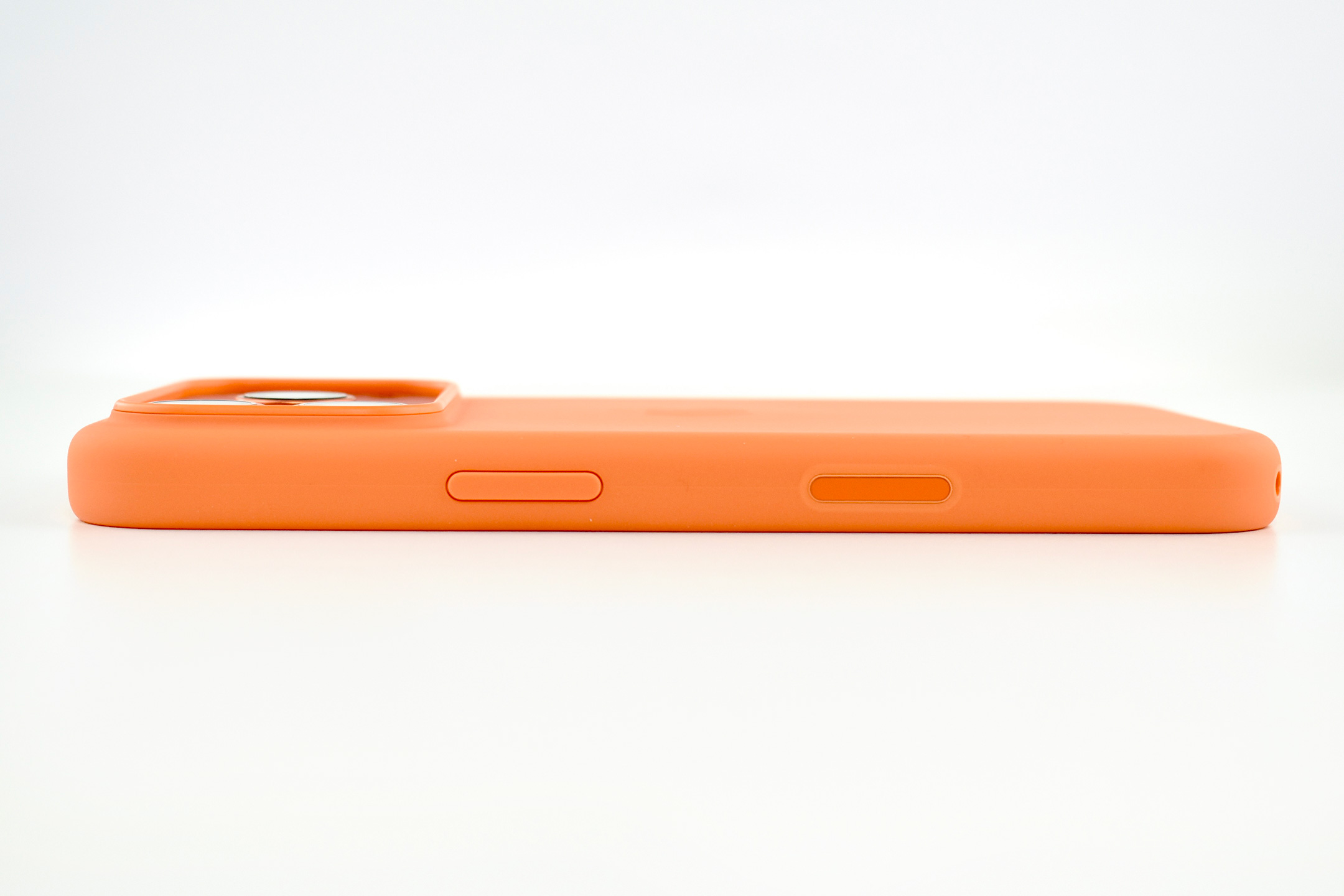
The iPhone 17 Pro Silicone Case was “Designed by Apple to complement iPhone 17 Pro, the Silicone Case with MagSafe is a delightful way to protect your iPhone.” This case also featured a conductive layer to communicate finger movements to the Camera Control button under the volume buttons.
Unlike previous Silicone case models, this one featured two connection points so it could be securely attached to the Crossbody Strap that was introduced at the same time as this case and the iPhone 17 Pro.
Apple also noted that the case was “Made with a 45 percent recycled silicone material” and “has a silky, soft-touch finish on the exterior that feels great in your hand. And on the inside, there’s a soft microfiber lining for even more protection.”
The case also included MagSafe magnets that extended the functionality of MagSafe built into the iPhone through the case. Apple described the charging functionality:
“With built-in magnets that align perfectly with iPhone 17 Pro Max, this case offers a magical attach experience and faster wireless charging, every time. When it’s time to charge, just leave the case on your iPhone and snap on your MagSafe charger, or set it on your Qi2 25W or Qi-certified charger.”
This case was originally offered in six colors. This example is orange.
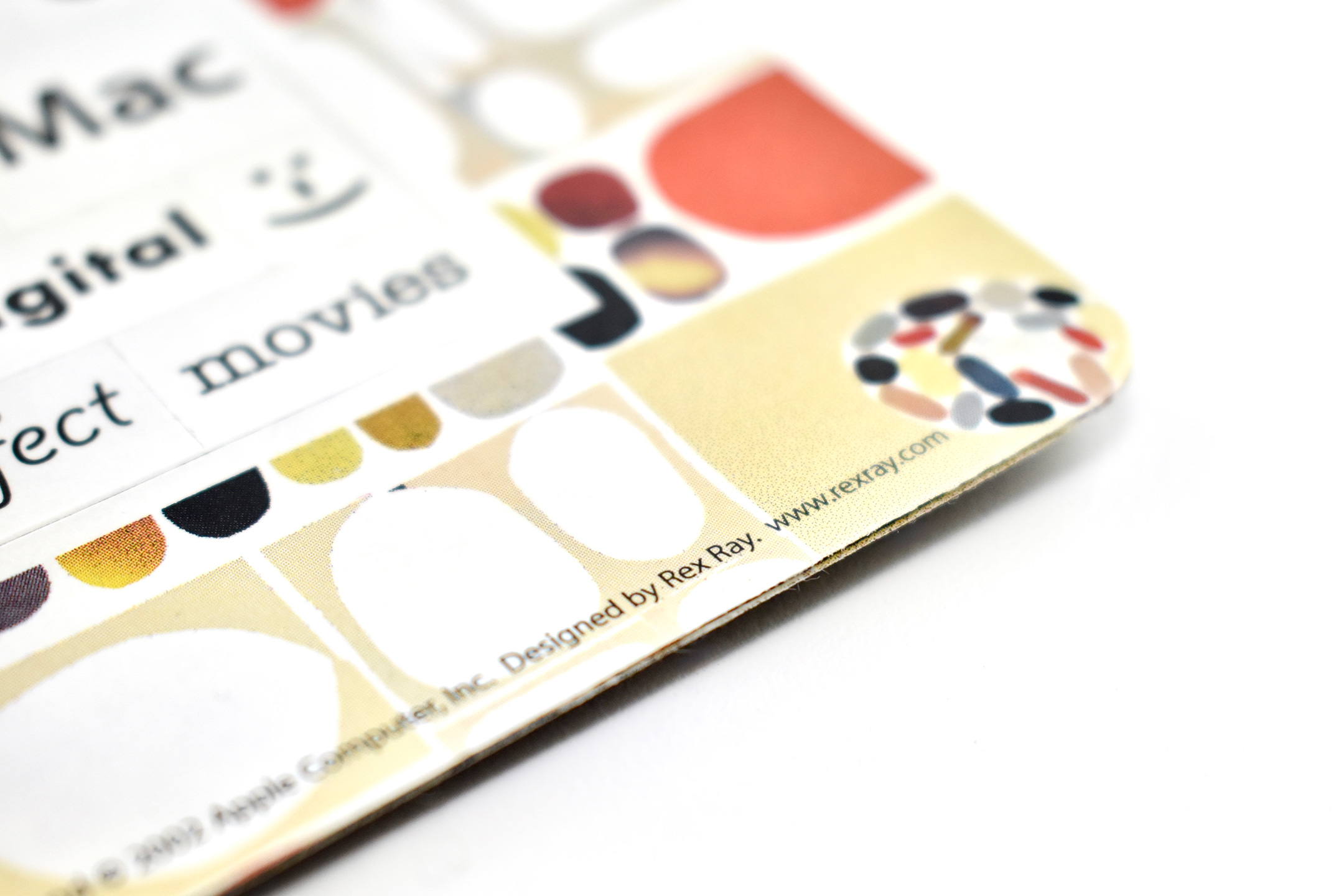
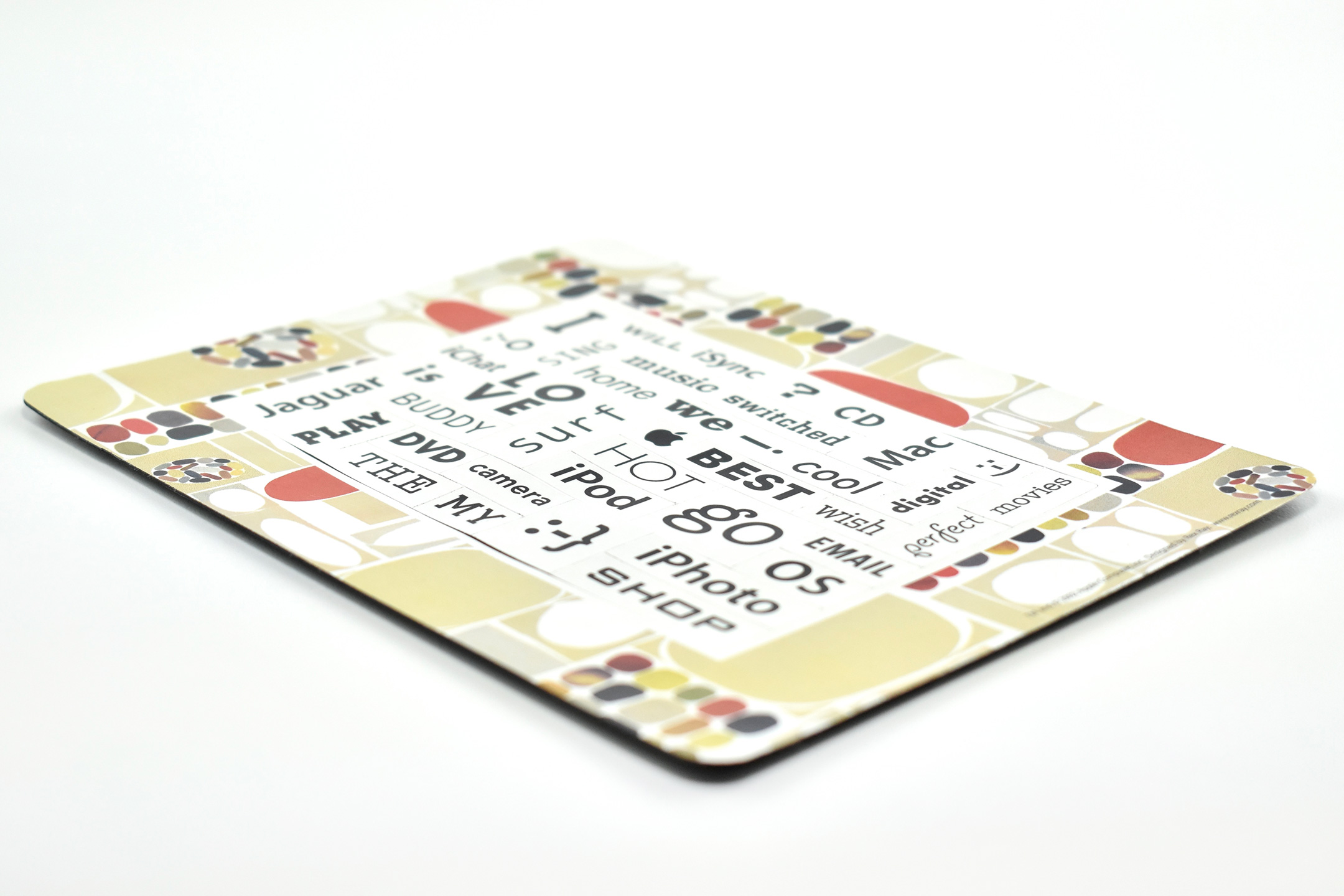
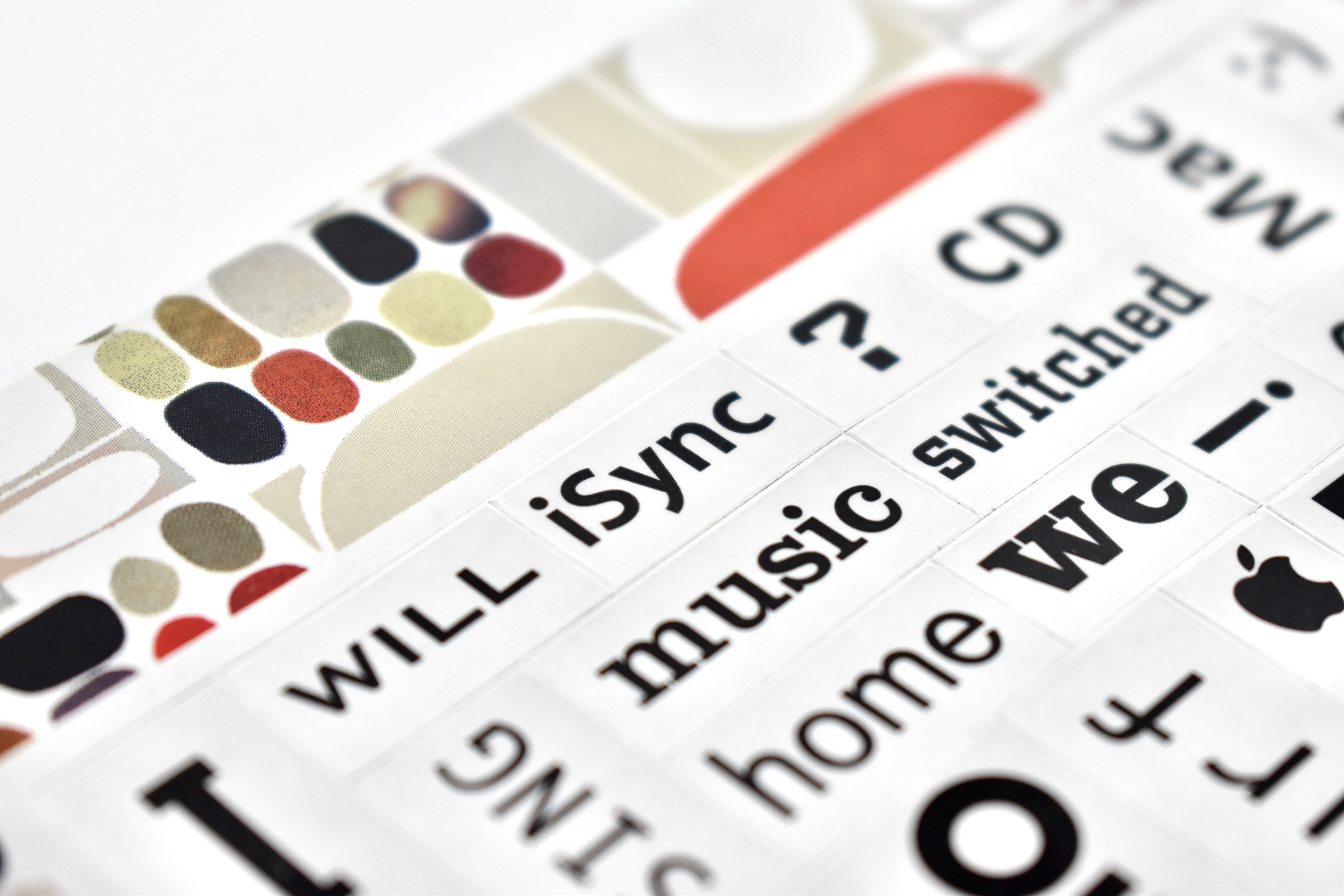
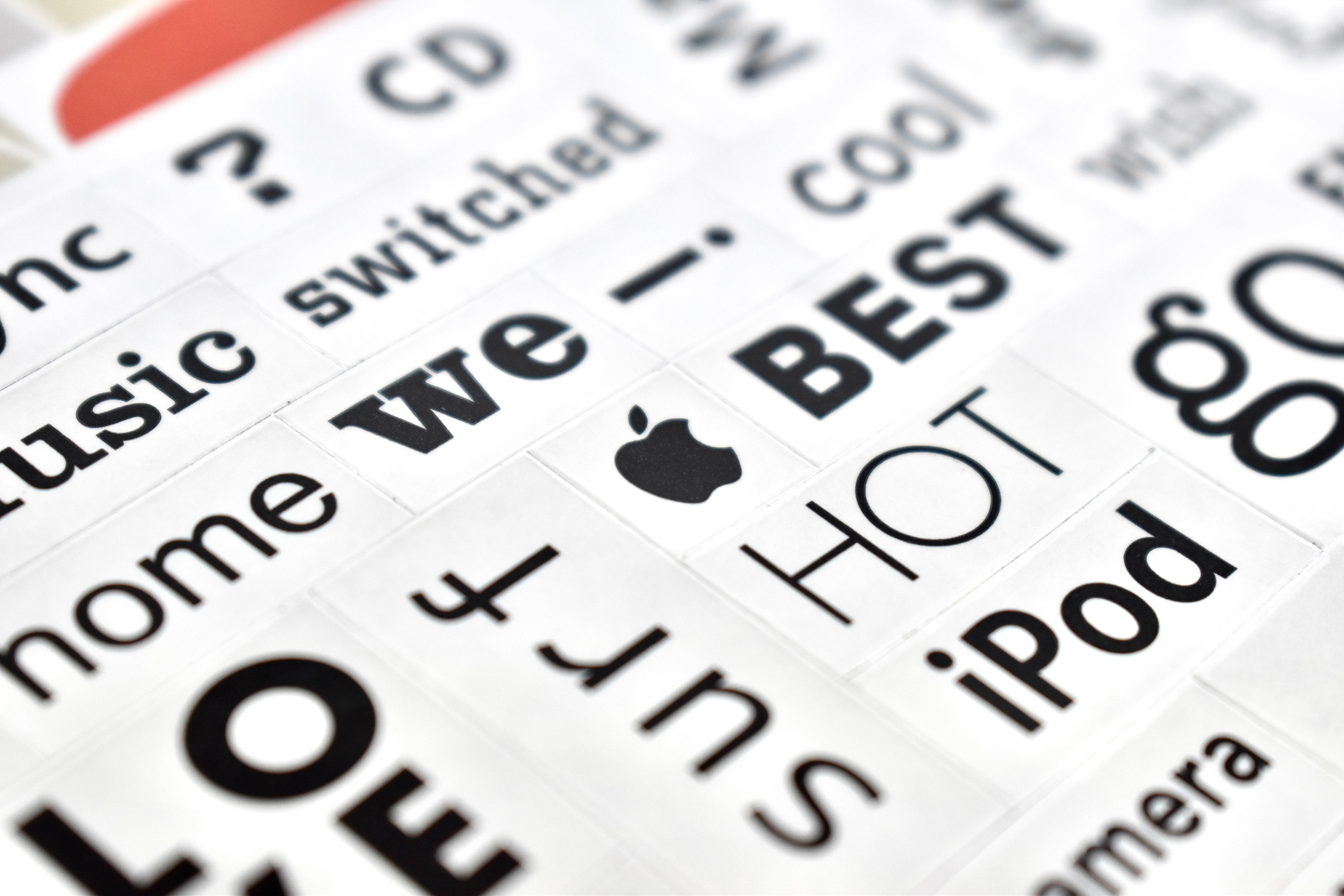
The border of this magnetic poetry set was designed by artist Rex Ray. Born September 11, 1956, and died February 9, 2015, Rex Ray was an “American artist best known for his innovative pop aesthetic in fine and commercial art—on canvases, wood panels, album covers, paper, book jackets, murals, and rock and roll posters.”
The border of this magnetic poetry set matches a design Ray created for Apple that was used for gift wrap, also available in 2002.
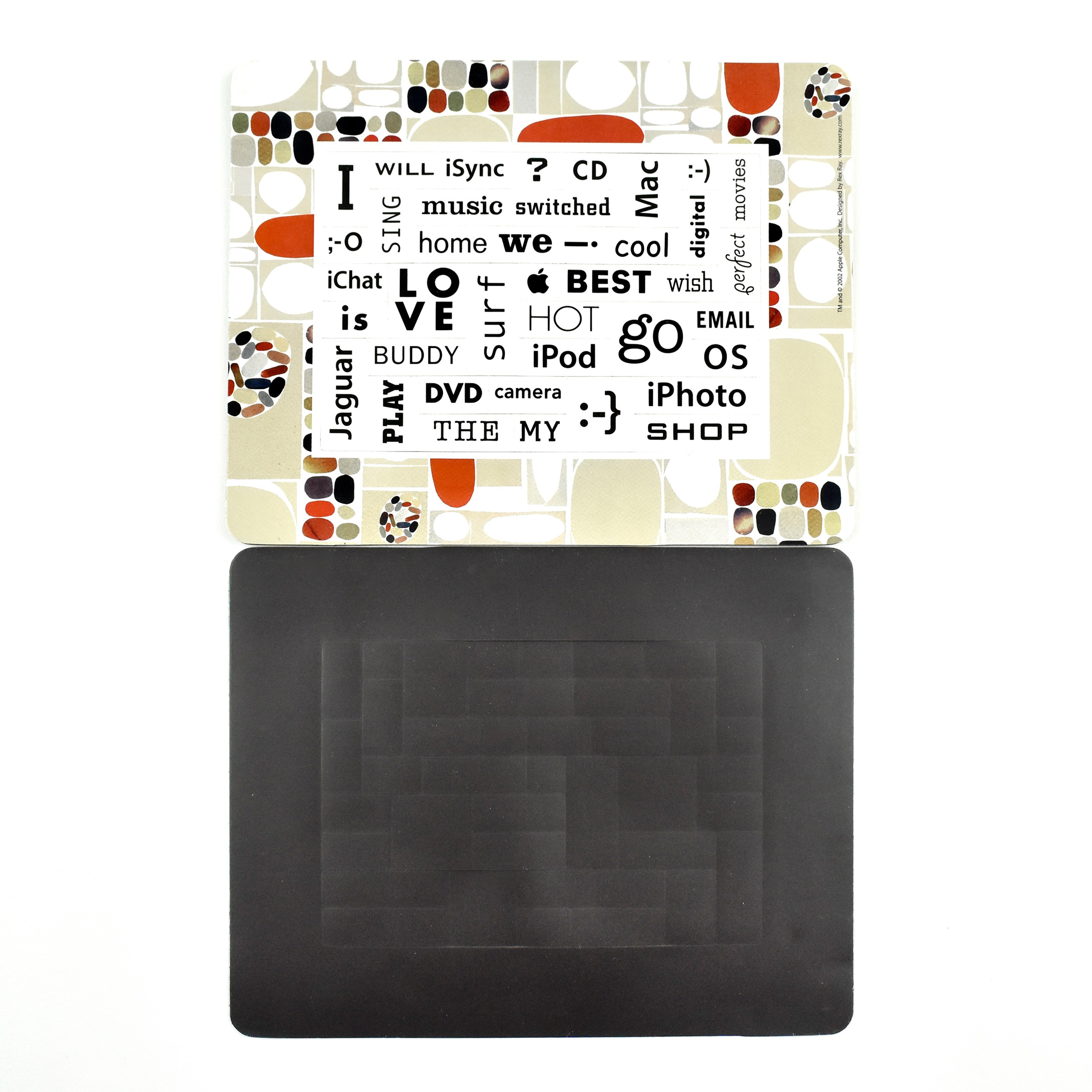
The inside of this magnetic poetry set was also used by Apple with a jaguar-skin border that was released along with Mac OS X version 10.2, “Jaguar.” The magnetic words are a combination of Apple products, words, punctuation-based emoji, and symbols. The complete list of poetry elements include (in alphabetical order):
The poetry magnet set measures 6.75 × 5.25 inches.
Interestingly, as of this writing in 2025, except for “Mac,” all other Apple products featured in this poetry set have been discontinued or are no longer in general use (iSync, iChat, iPod, iPhoto, Jaguar).
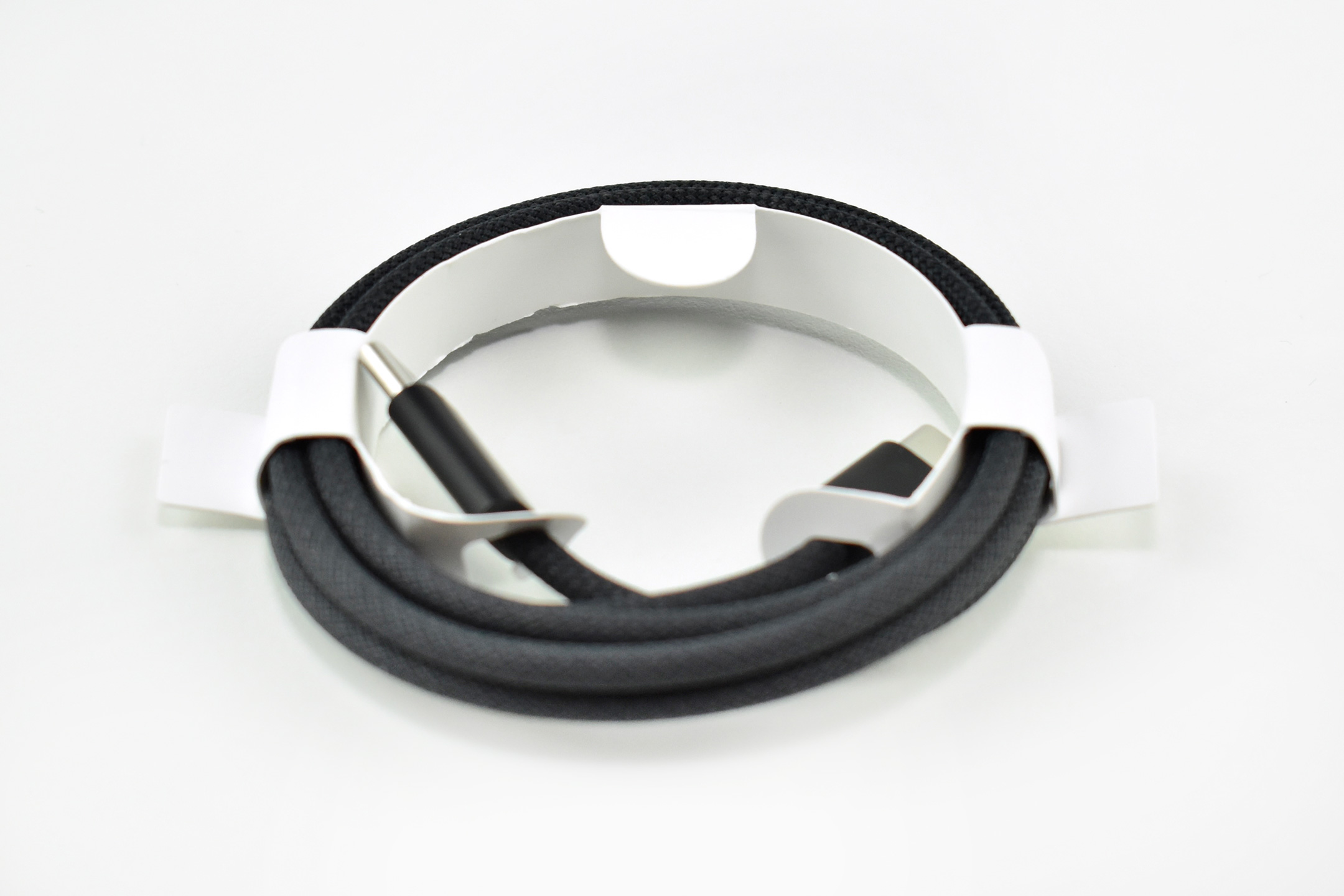
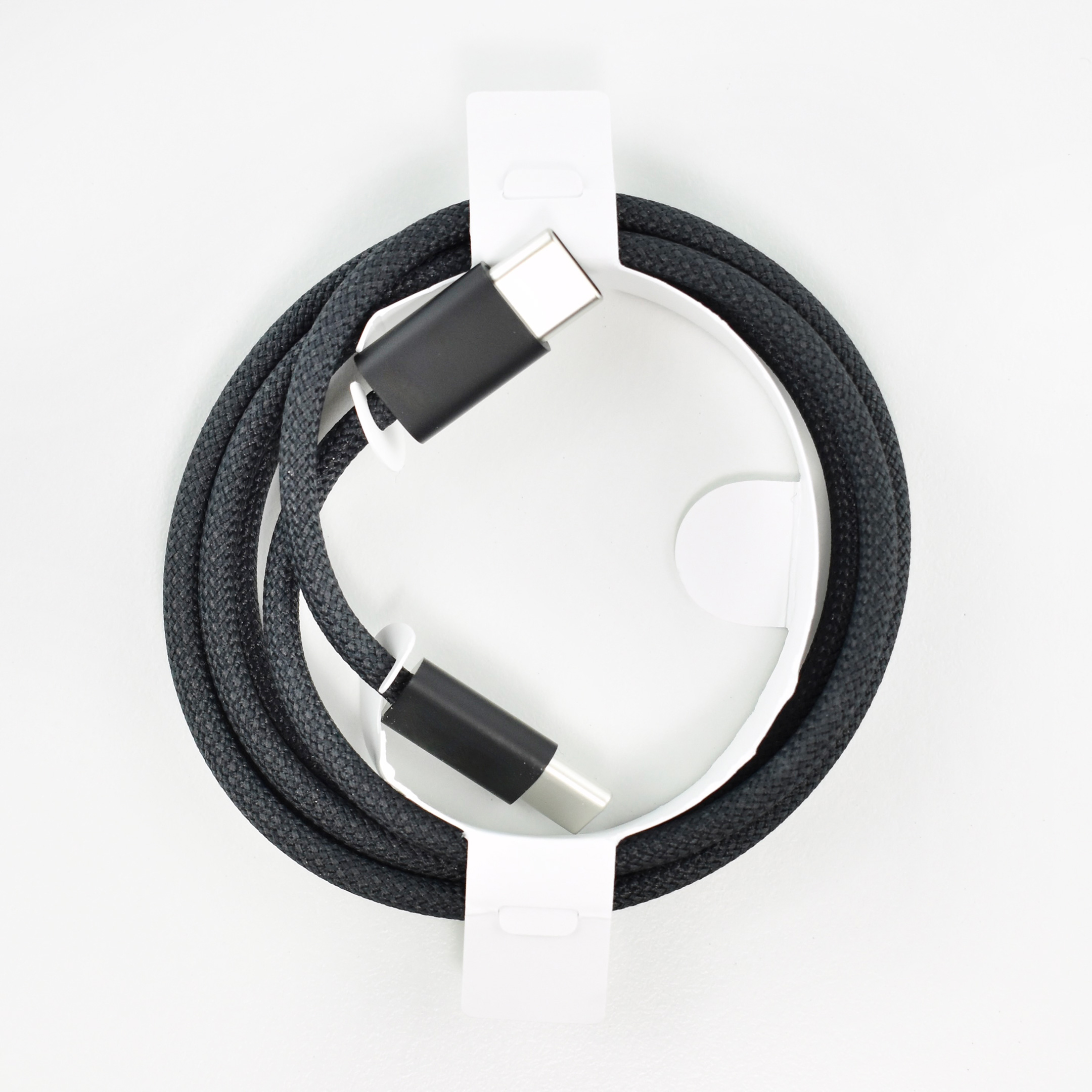
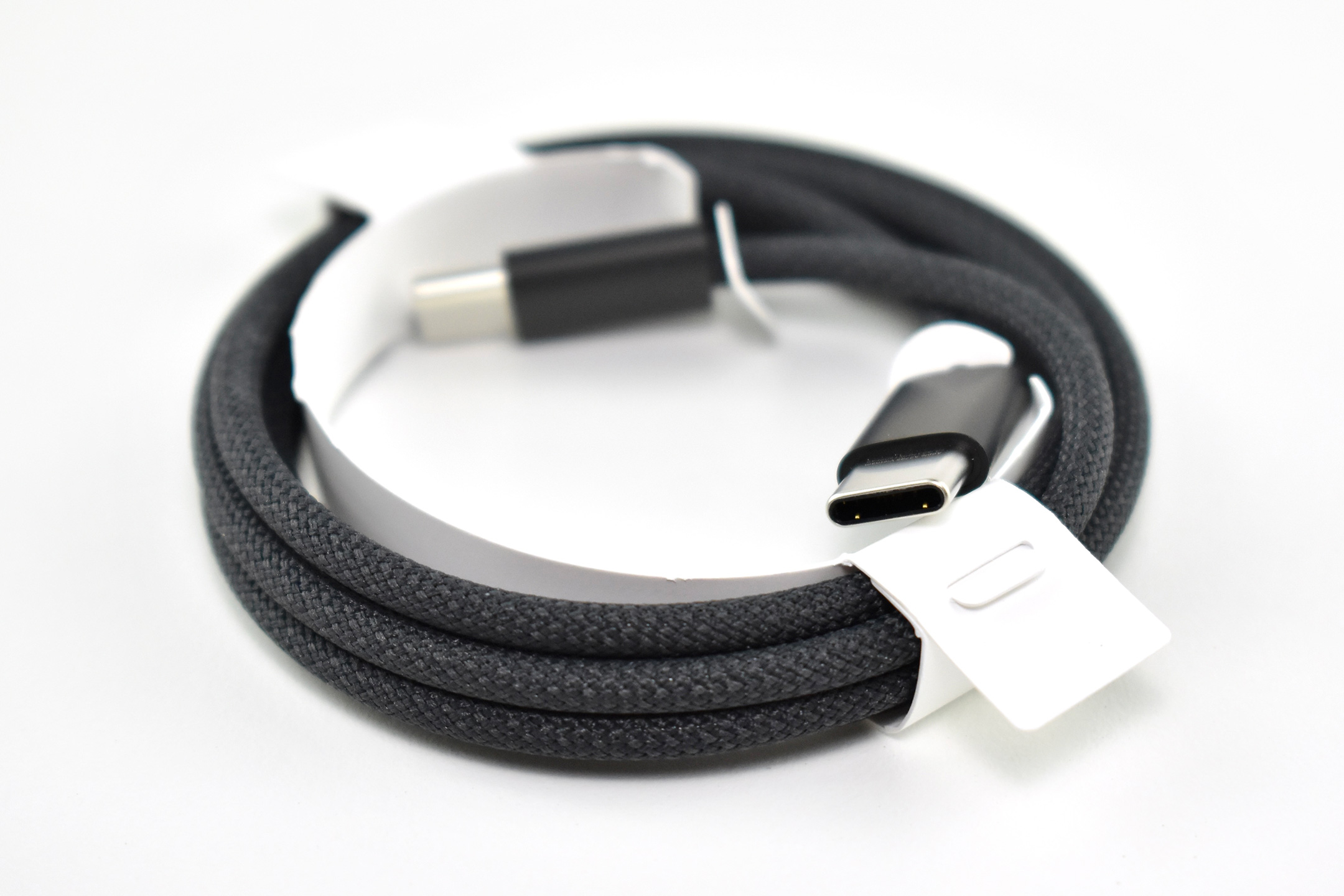
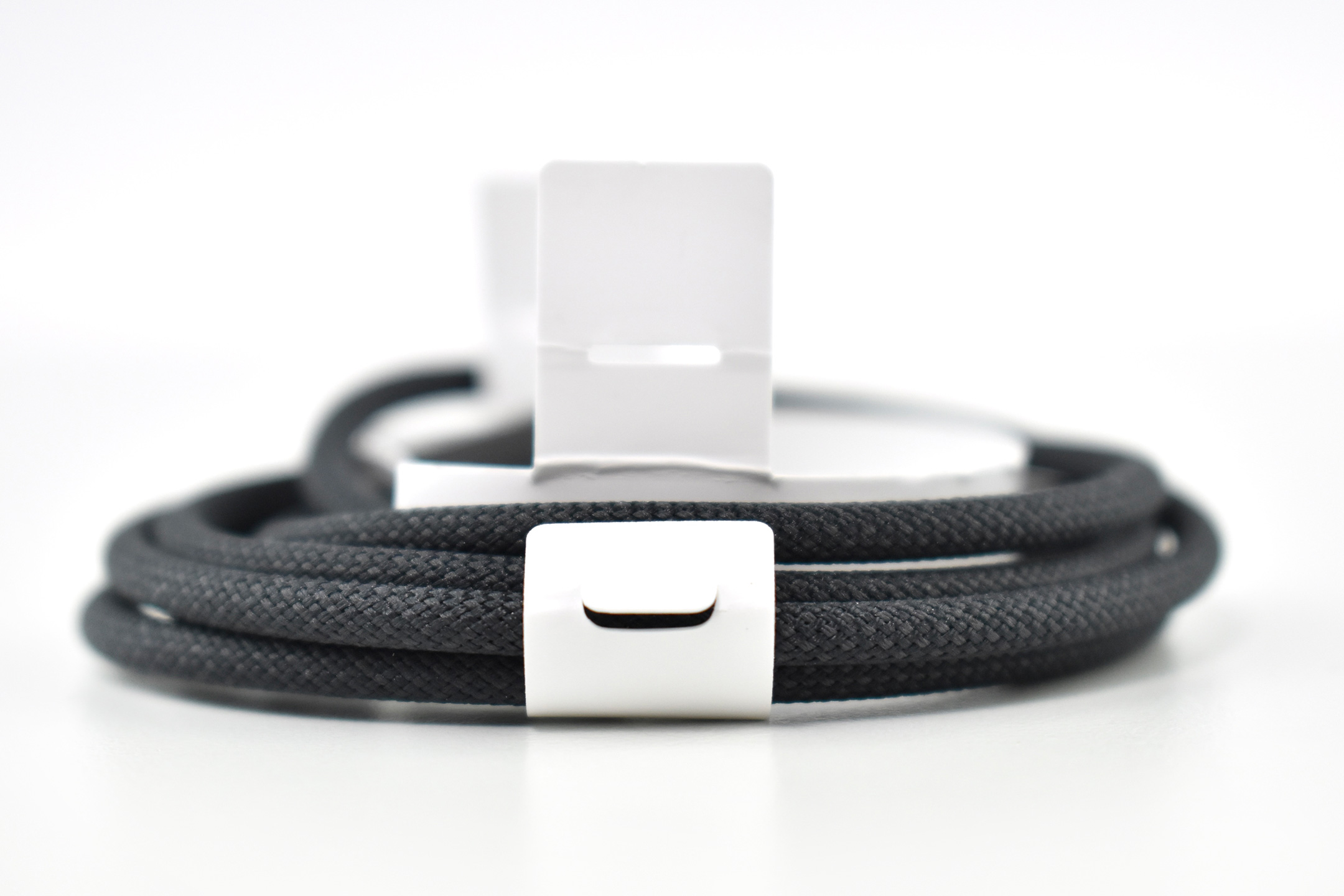
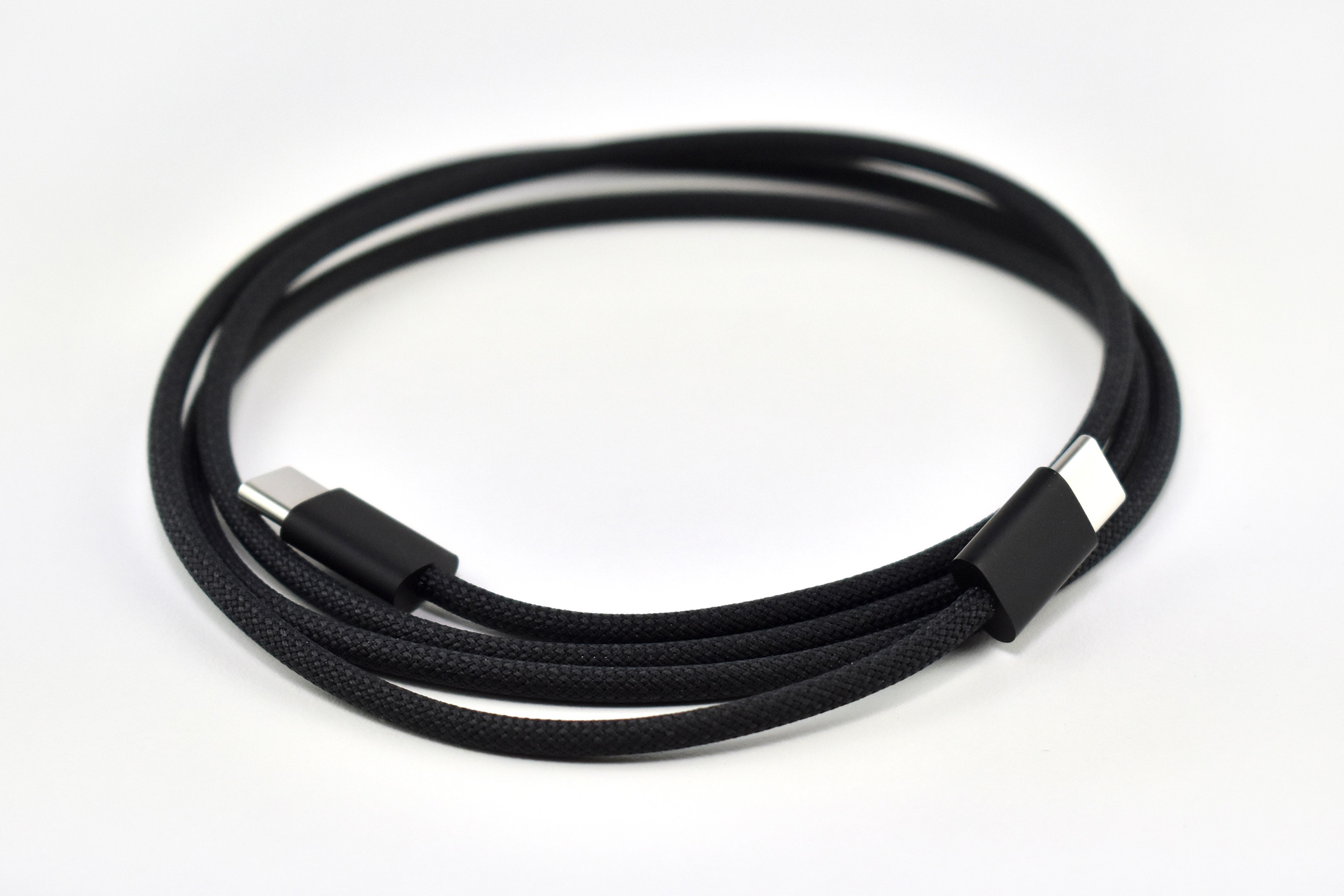
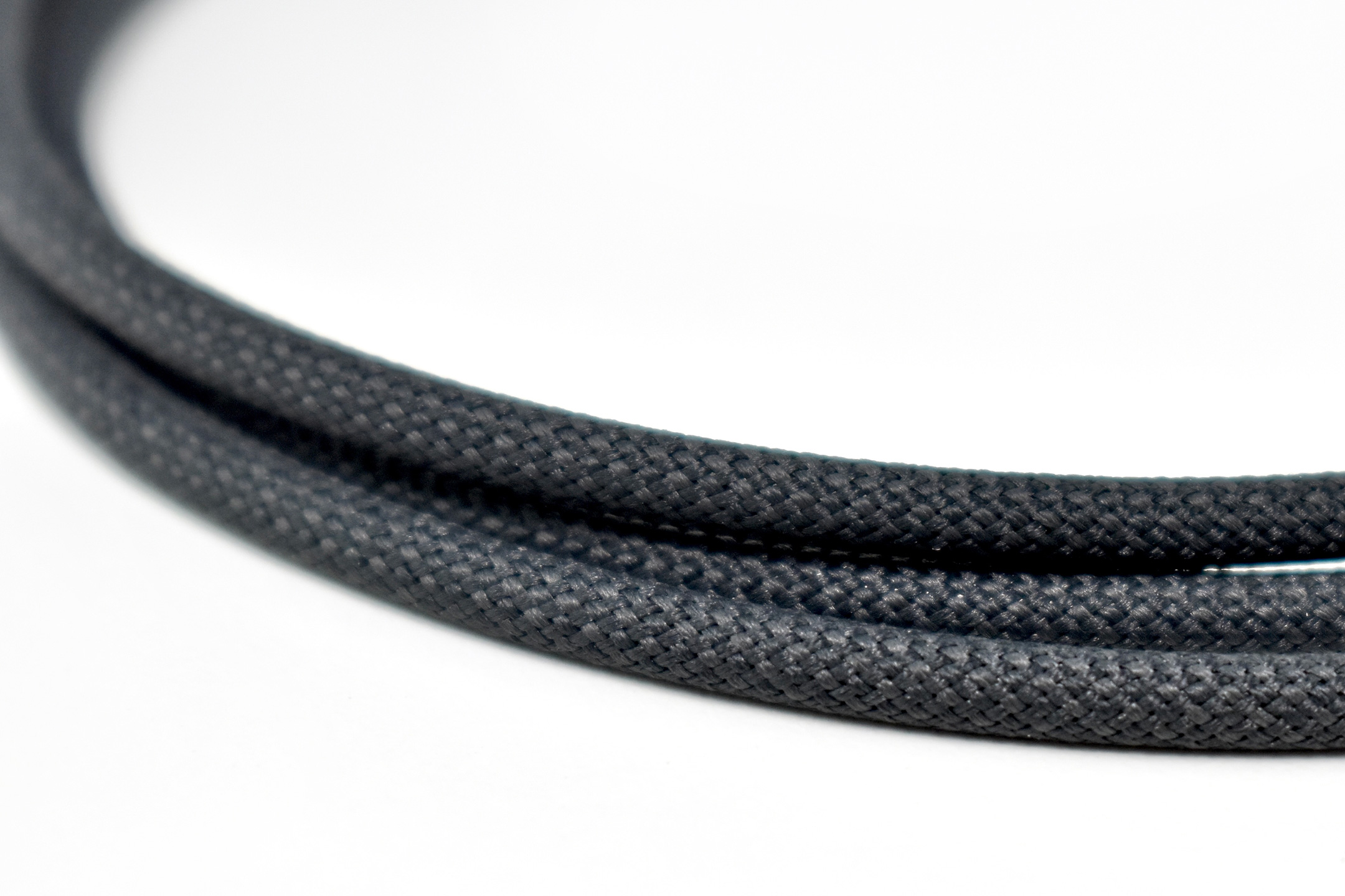
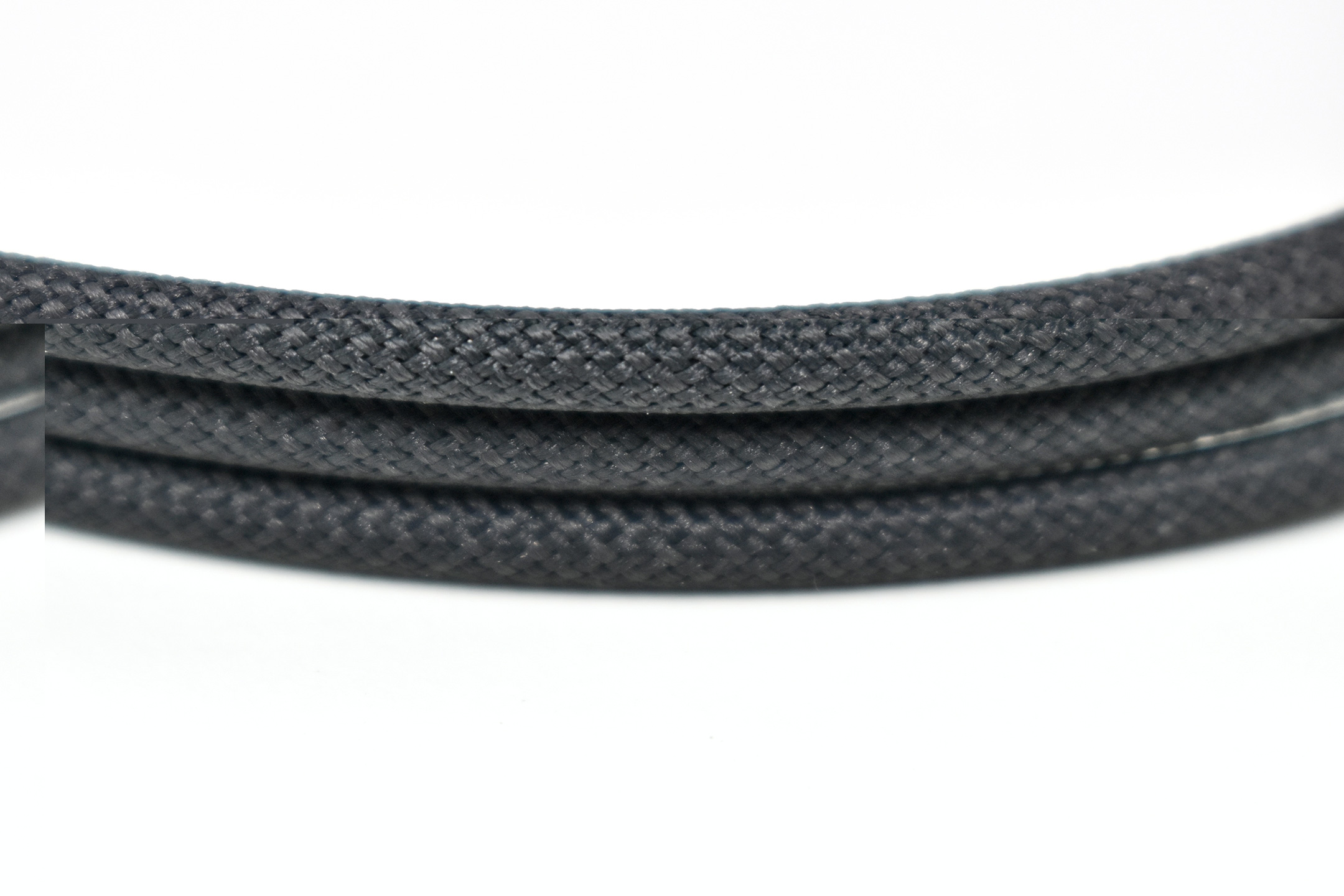
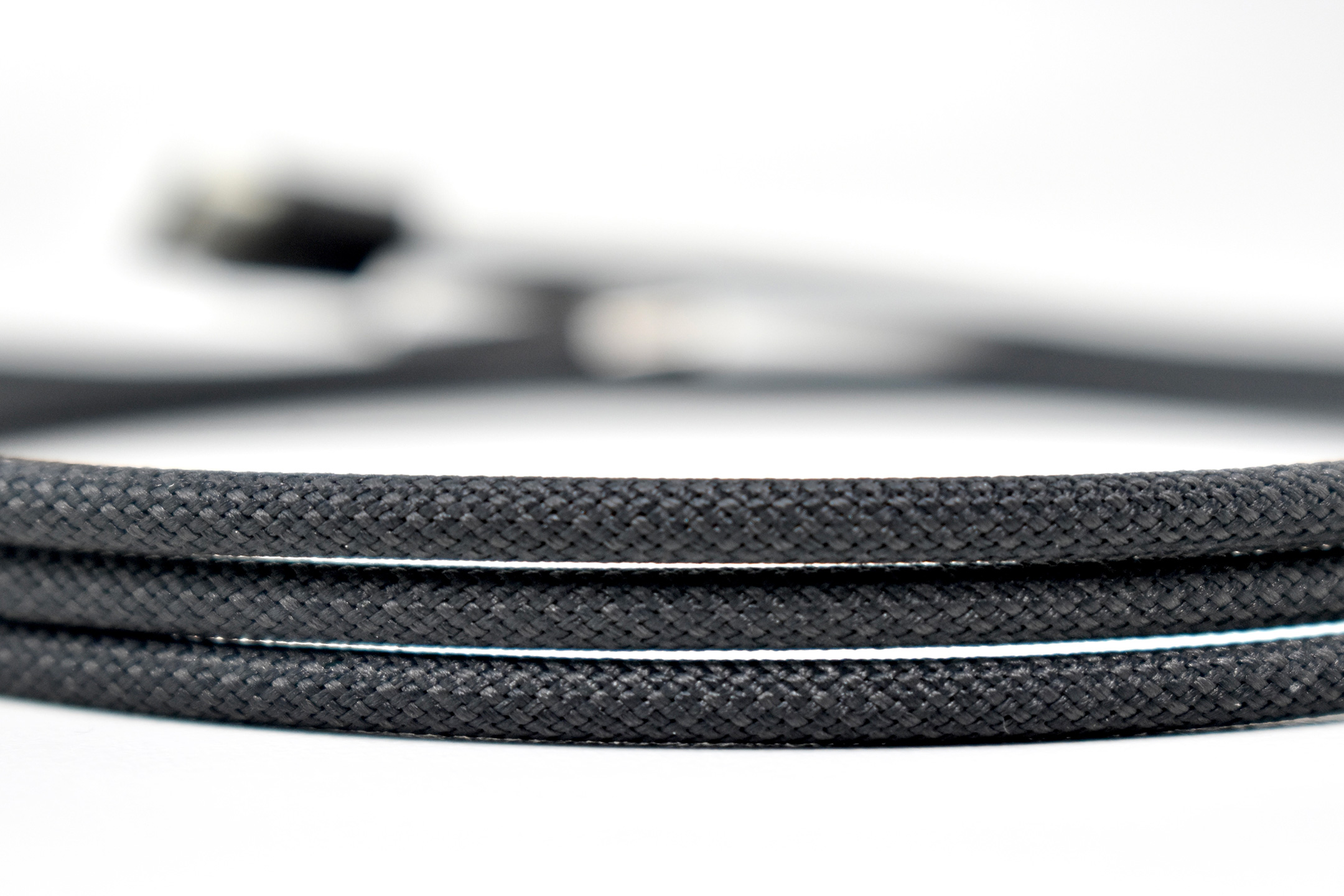
This USB-C charging cable was made by Apple in a braided design in black. It has USB-C connectors on both ends and could be used for charging, syncing, and transferring data between USB-C devices. It supported charging of up to 60 watts or USB 2 data transfer. If used with a USB-C power adapter, it can fast-charge devices from a wall outlet.
This cable is 1 meter (3.3 feet) long and shipped in bulk packaging—the same cardboard packaging that is used to keep the cable wrapped in a circular package with the USB-C plugs secured inside an Apple box such as an iPad.
As of January 2026, Apple referred to this product on their website as “60W USB-C Charge Cable (1 m).”
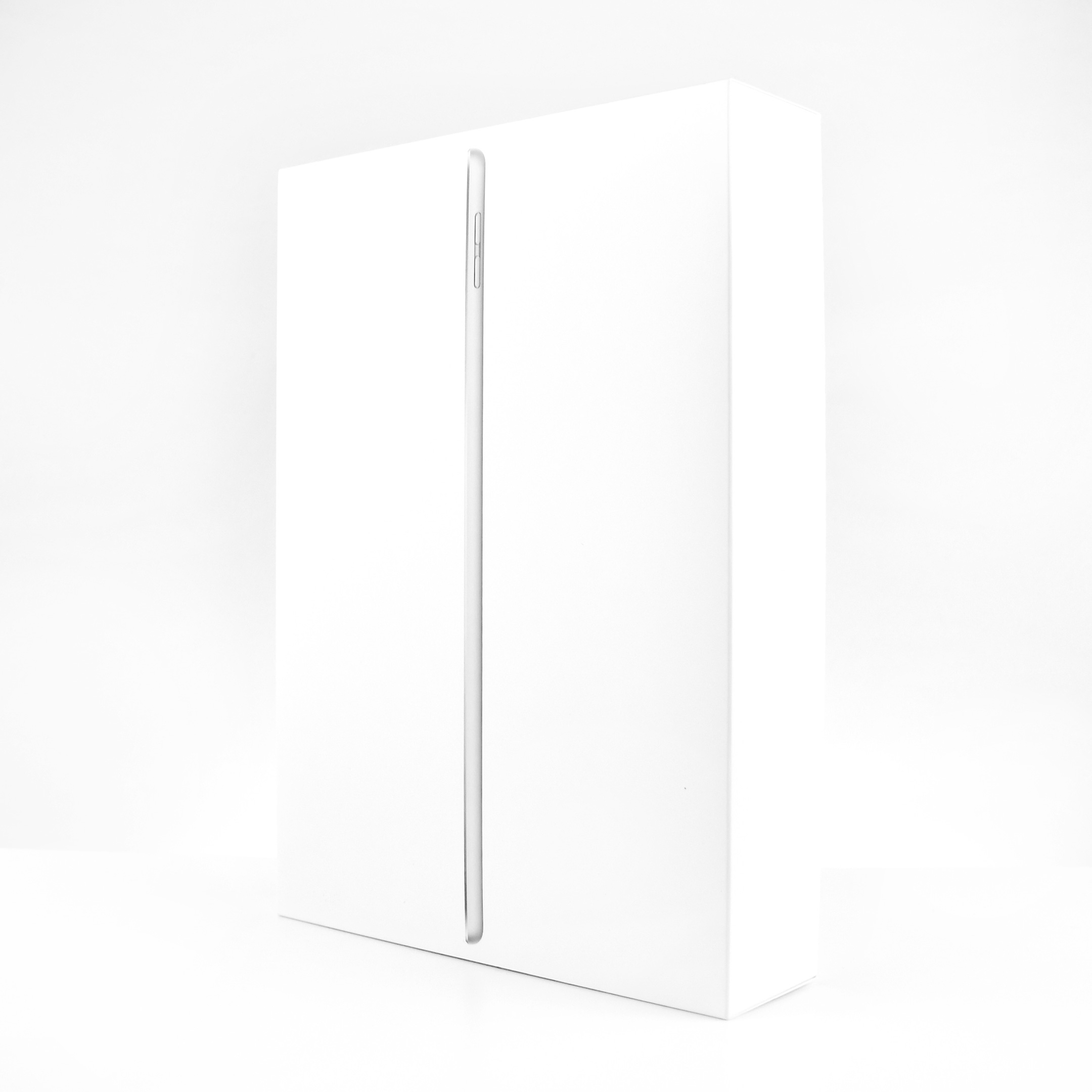
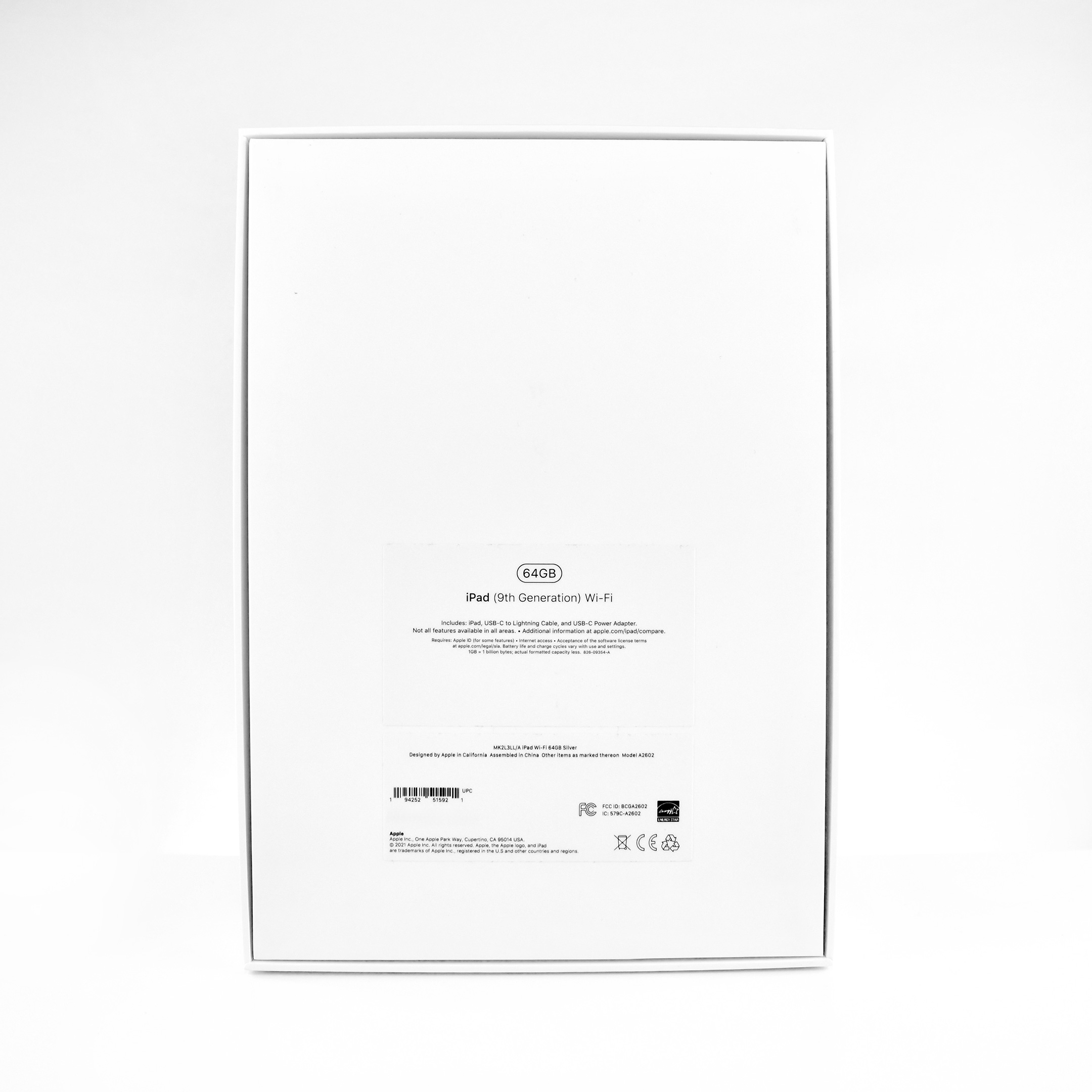
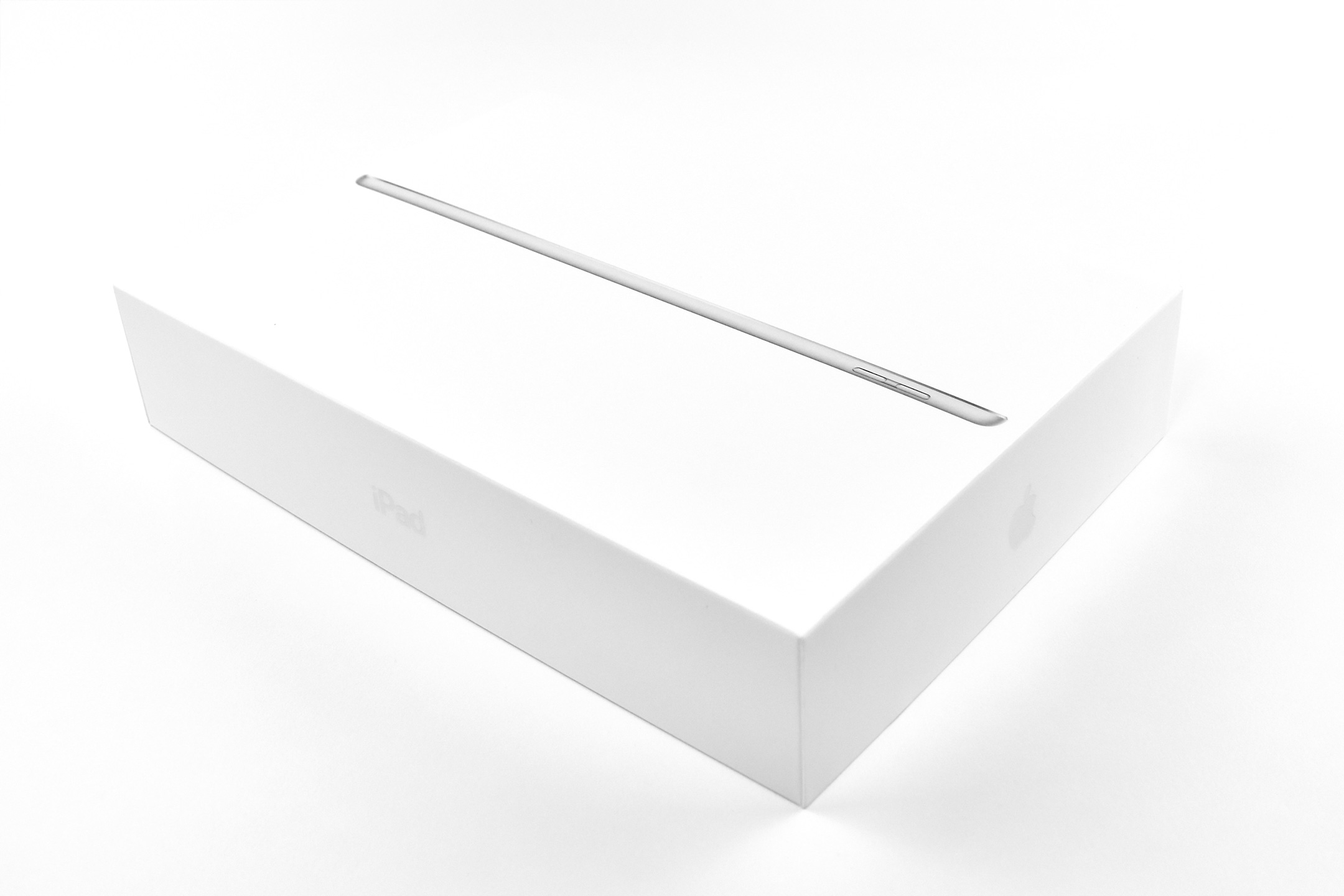
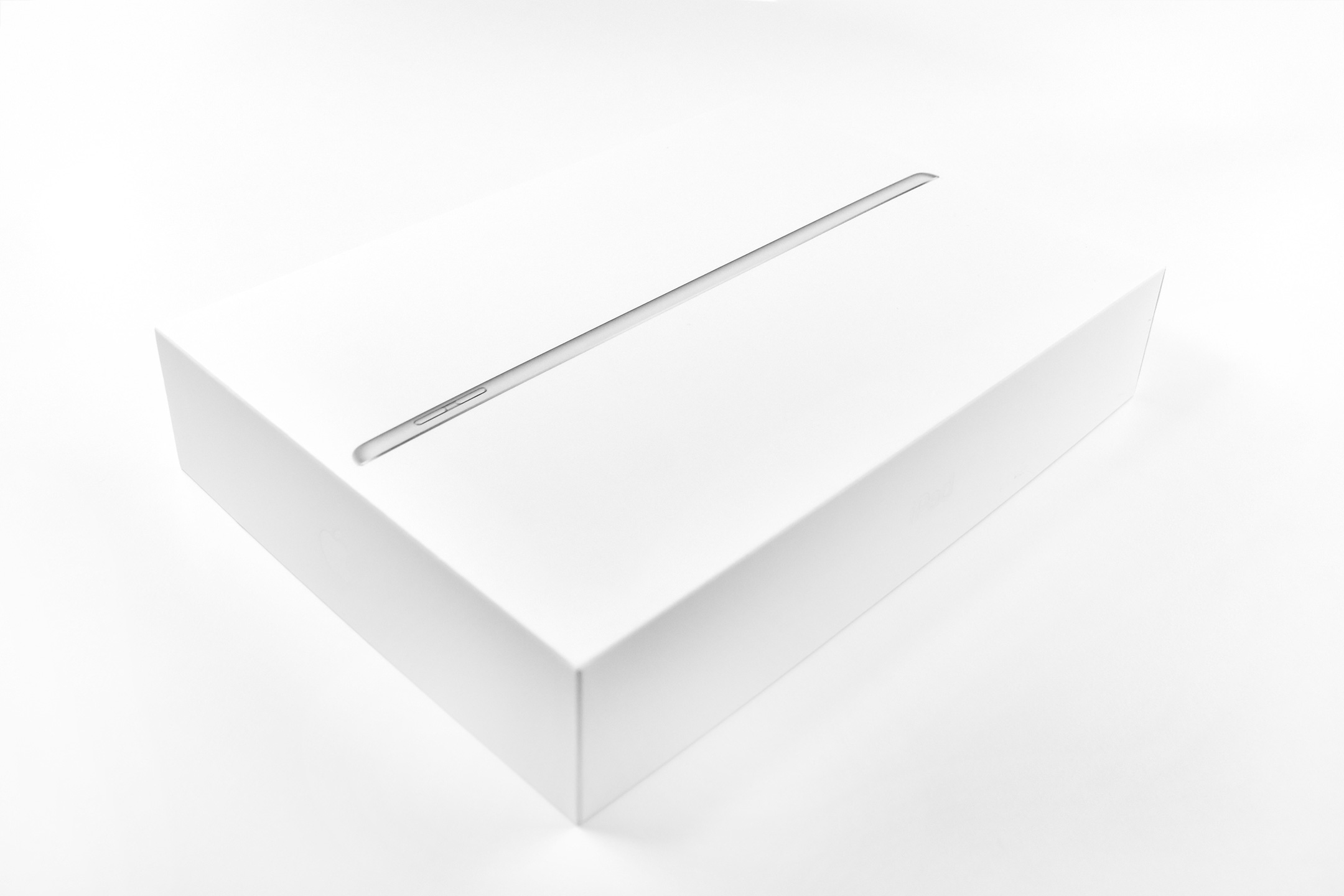
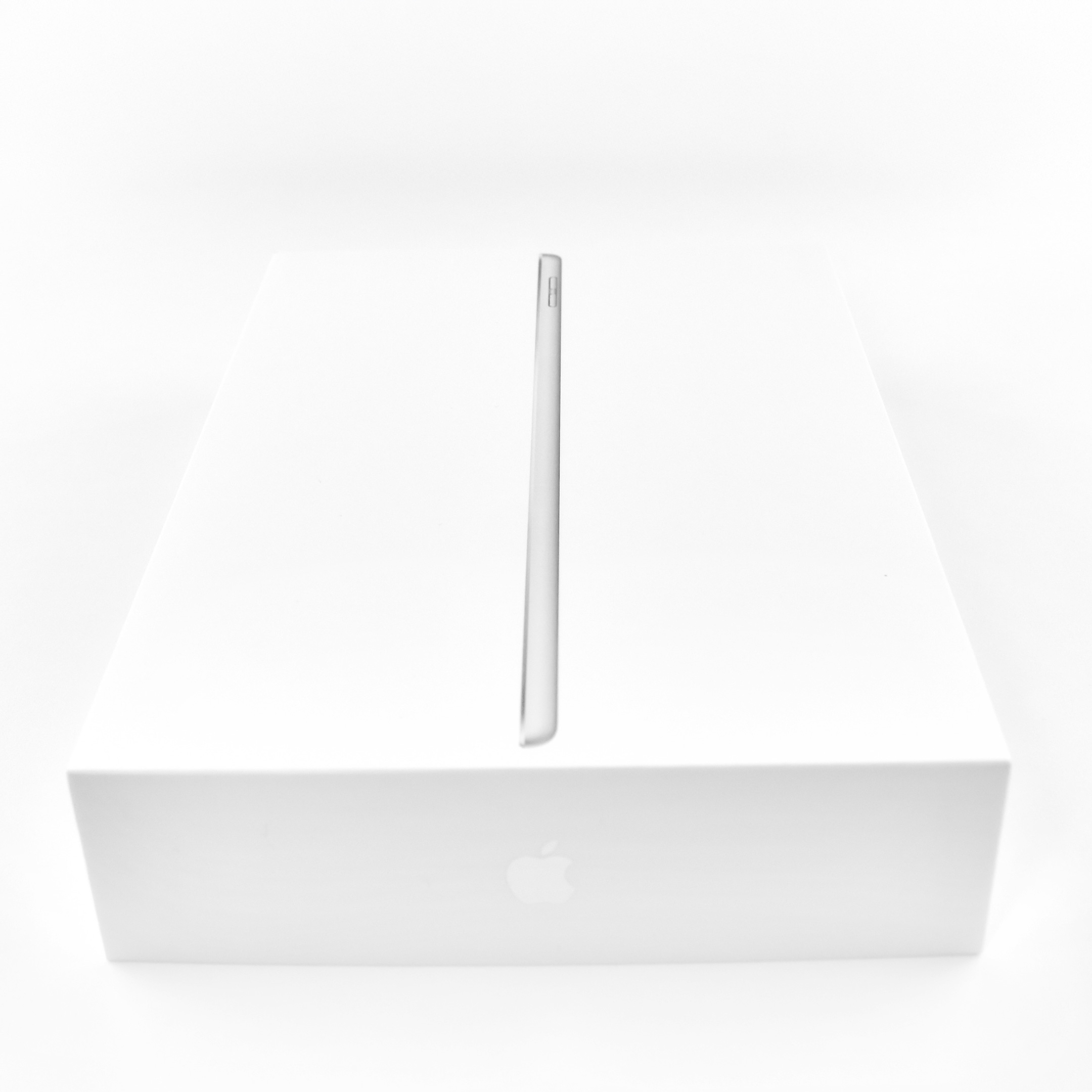
Apple released the iPad Generation 9 on September 14, 2021. The headline in Apple’s Press Release read, “Apple’s most popular iPad delivers even more performance and advanced features,” and listed its features as including “A13 Bionic, Center Stage, True Tone, and now starts with double the storage.”
Greg Joswiak, Apple’s senior vice president of Worldwide Marketing, reported:
“iPad has never been more essential for working, learning, and communicating, and we’re excited to bring one of the biggest updates ever to our most popular iPad… With the powerful A13 Bionic, more engaging video calls with Center Stage, and double the storage, the new iPad delivers advanced capabilities, versatility, and simplicity at an incredible value.”
The A13 Bionic chip with Neural Engine not only boosted performance compared to the previous iPad by 20%, it also allowed “next-level machine learning capabilities, including Live Text…which uses on-device intelligence to recognize text in a photo that users can take action on.” Thus, this iPad was able to use an early version of Apple’s on-device “Artificial Intelligence” capabilities—even if Apple chose not to use the term “AI.”
Apple also touted the iPad Generation 9’s Center Stage capabilities, a feature that enhanced video calls that was on the minds of many users after the worldwide COVID pandemic. The iPad was equipped with a new 12MP Ultra Wide front camera that used the Neural Engine: “Center Stage automatically pans the camera to keep [the user] in view. When others join in, the camera detects them too, and smoothly zooms out to include them in the conversation.” Center Stage worked in FaceTime and third-party video-calling apps such as Zoom.
The iPad Generation 9 was offered in Silver and Space Gray, and in two storage capacities, 64 GB and 256 GB. It measured 9.8 inches (250.6 mm) x 6.8 inches (174.1 mm), and was 0.29 inch (7.5 mm) thick. The Wi-Fi model weighed 1.07 pounds (487 grams), and the Wi-Fi + Cellular model weighed 1.09 pounds (498 grams).
The iPad Generation 9 was the last iPad to use a physical Home button, and it also had Touch ID.
It used a 10.2-inch (diagonal) Retina display that was 2160 x 1620 pixels at 264 pixels per inch. It used a True Tone display that could deliver up to 500 nits brightness. This iPad had both stereo speakers and dual microphones for calls, video recording, and audio recording.
Uncharacteristically, the back camera had lower resolution than the front camera. The back camera was an 8 MP Wide camera with digital zoom up to 5x using a 5-element lens. It could capture Panoramic photos (up to 43MP), and featured HDR, photo geotagging, auto image stabilization, and burst mode. The back camera could record 1080p HD video at 25 and 30 fps.
The front camera was a 12MP Ultra Wide camera with 122° field of view. It could record 1080p HD video at 25, 30, or 60 fps.
Wireless connectivity included Wi-Fi 5 (802.11ac) and Bluetooth 4.2. Its 5 sensors included Touch ID, 3‐axis gyro, accelerometer, barometer, and an ambient light sensor. The iPad Generation 9 charged and transferred data using a Lightning connector and shipped with a Lightning-to-USB-C Cable that connected to its included 20W USB-C Power Adapter.
Interestingly, Apple continued manufacturing and selling the iPad Generation 9 even after they announced the iPad Generation 10 13 months later. The iPad Generation 10 was released with a considerable price increase at $459 for a base iPad—from the iPad Generation 9 base price of $329. Apple noted in the “fine print” of the iPad Generation 10 press release: “iPad (9th generation) will remain in the iPad lineup. Wi-Fi models of iPad (9th generation) are available with a starting price of $329 (US), and Wi-Fi + Cellular models start at $459 (US), in silver and space gray finishes.”
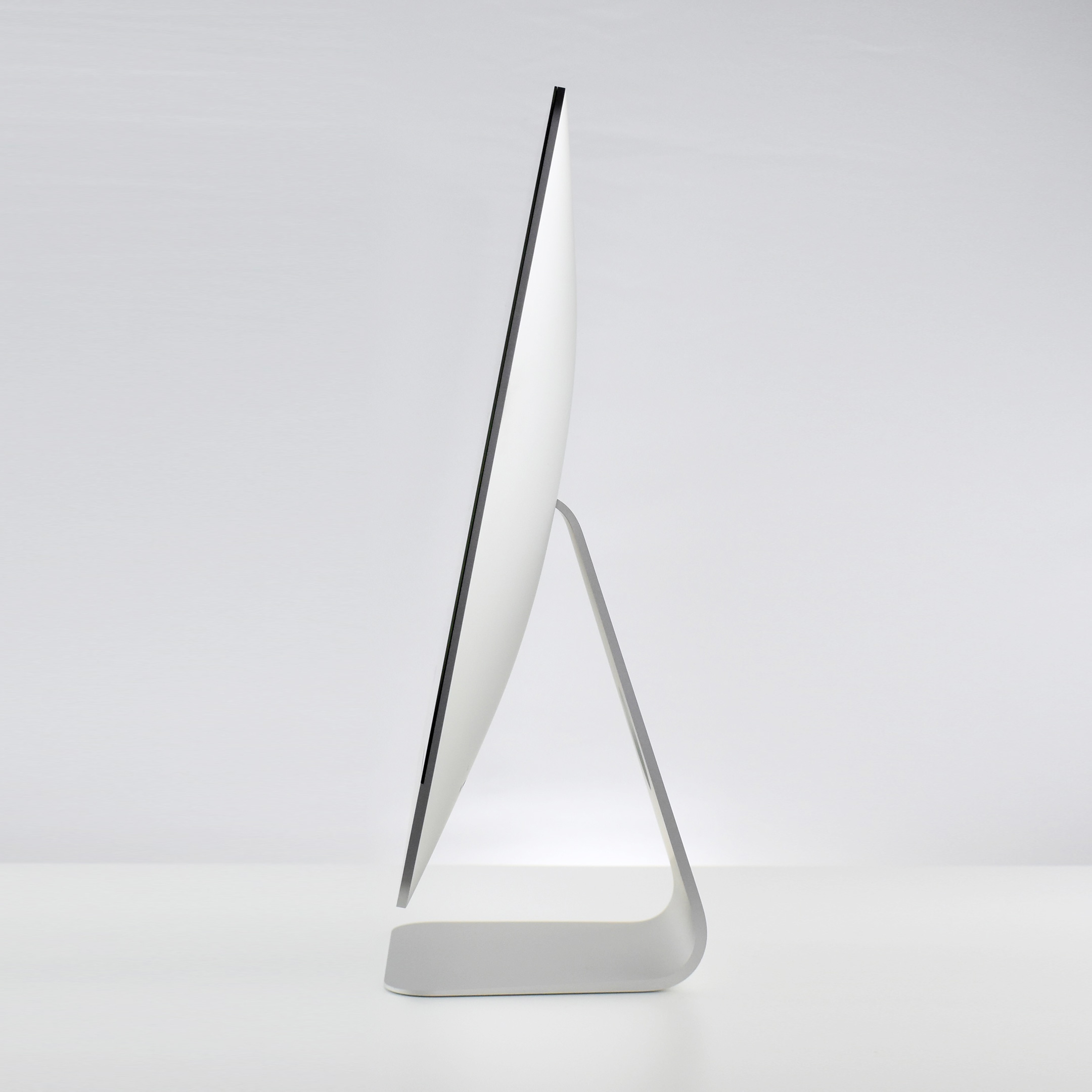
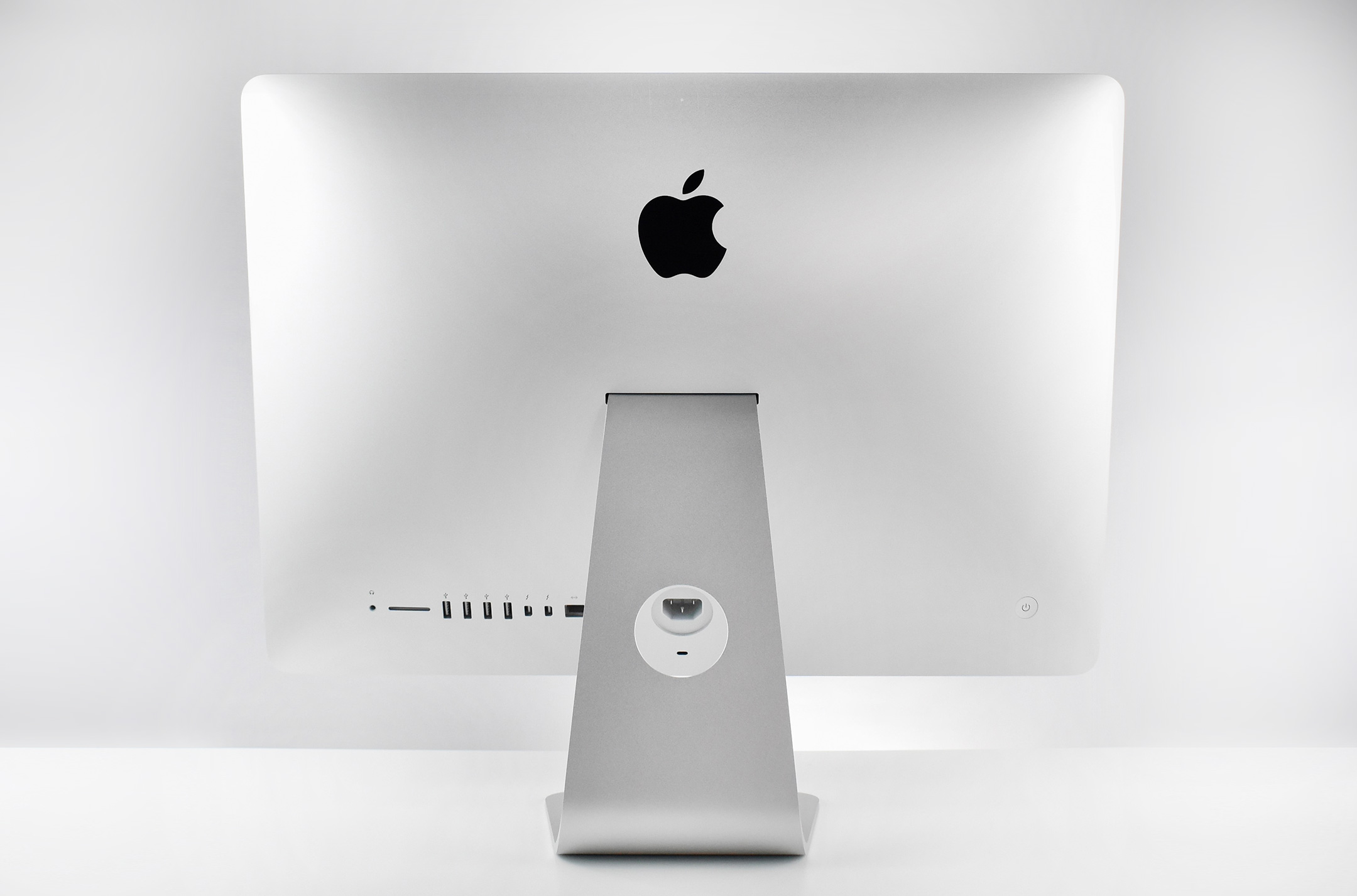
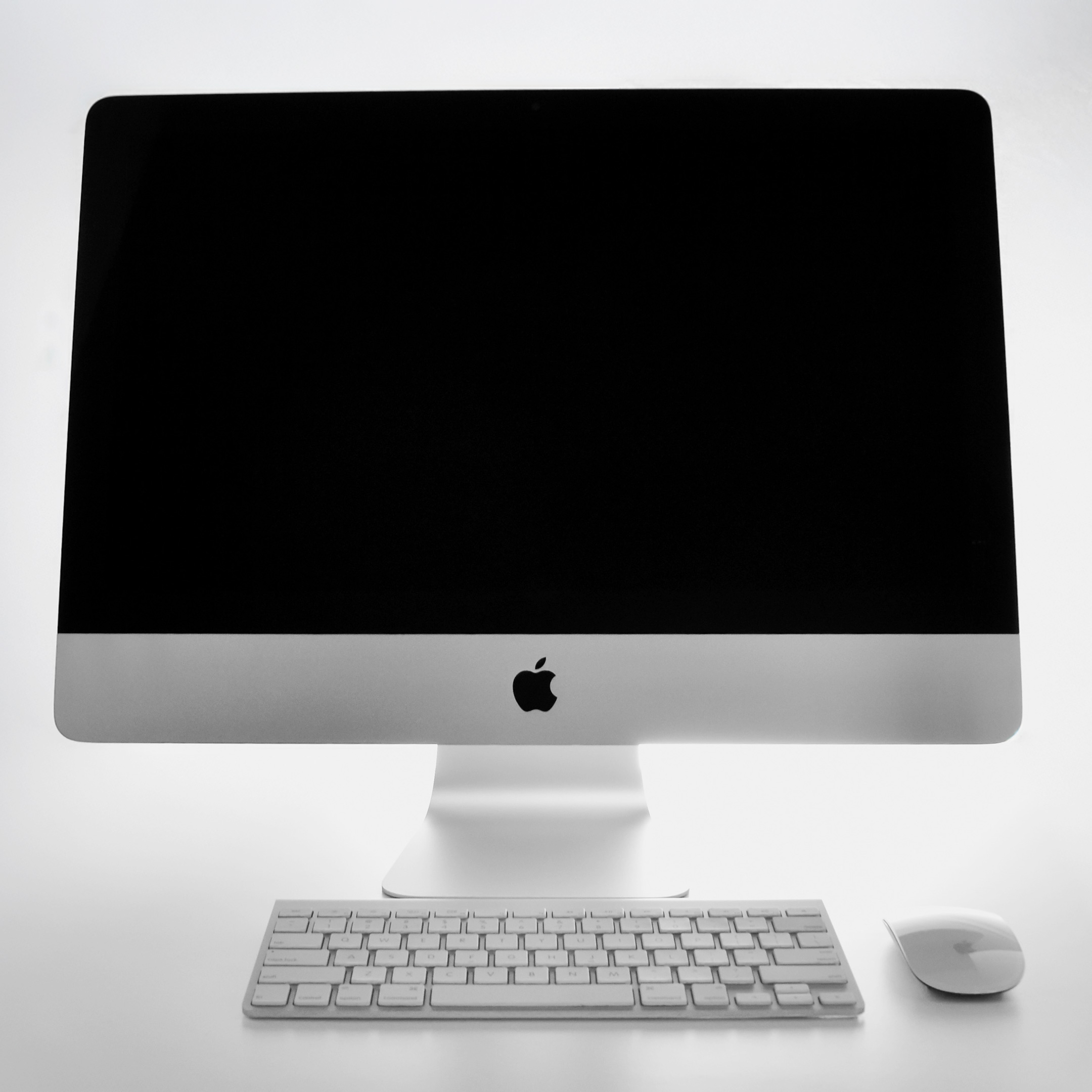
This 21.5-inch iMac (Model A1418) ran a Core i5 “Haswell/Crystalwell” Intel processor with 4 2.7 GHz cores on a single chip. It used 8 GB of 1600 MHz DDR3 SDRAM and housed a 1 TB (5400 RPM) hard drive.
In a press release from September 24, 2013, Apple announced that they had “updated iMac with fourth generation Intel quad-core processors, new graphics, next generation Wi-Fi and faster PCIe flash storage options. The updated iMac brings the latest technology to the stunningly thin design and gorgeous display of the world’s leading all-in-one desktop.”
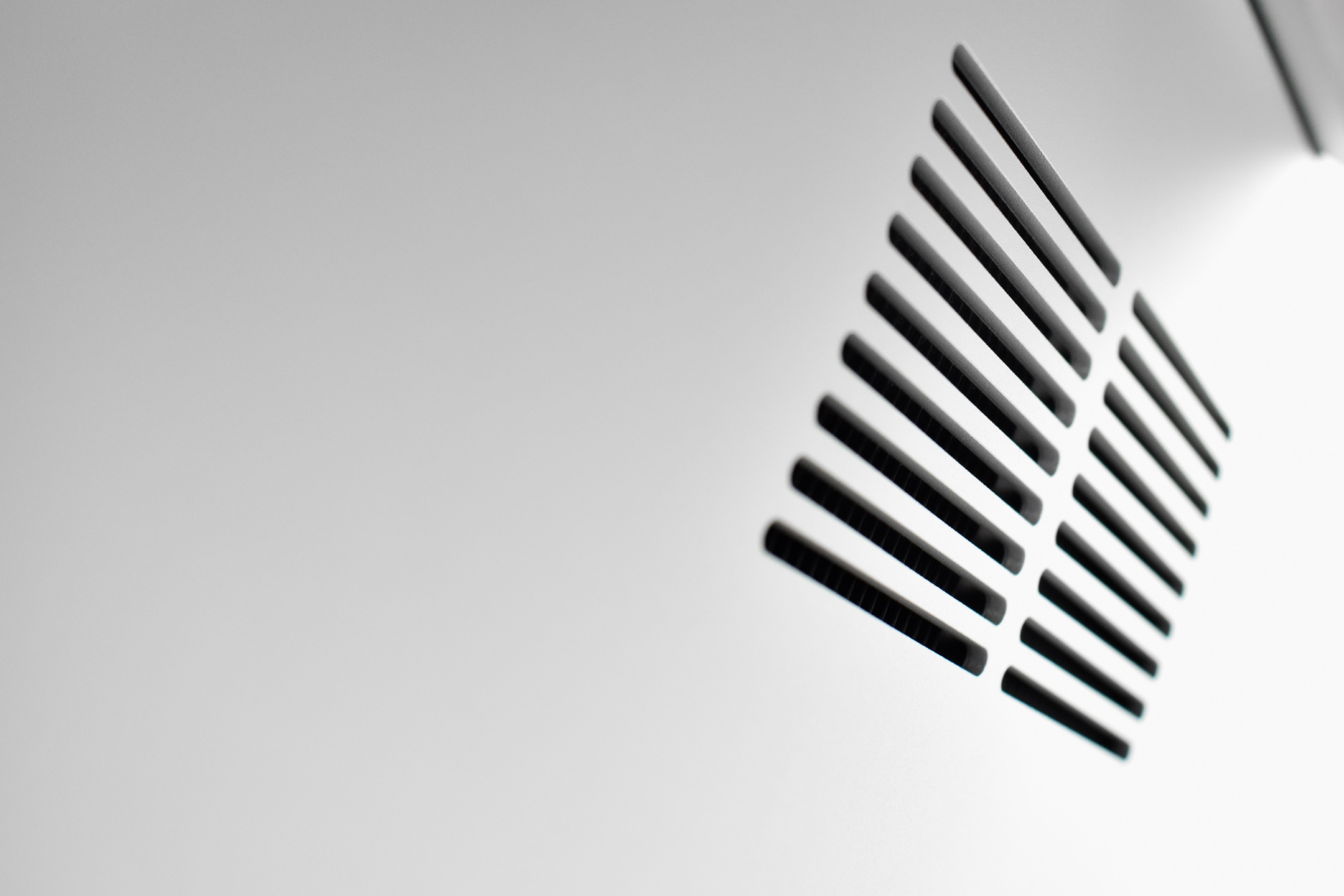
The 21.5-inch display was a 1920 x 1080 LED-backlit 16:9 widescreen IPS display. Its cover glass was fully laminated to the LCD and anti-reflective coating. The design of the rear case was aluminum and is thicker in the middle and tapers to a razor thin 5 mm at the edges. This iMac had a FaceTime HD front webcam, stereo speakers, but lacked an optical drive.
This iMac shipped with OS X Mountain Lion. This Mac OS featured “Messages, Notification Center, system-wide Sharing, AirPlay Mirroring, Dictation, Game Center and the enhanced security of Gatekeeper to your Mac. With iCloud built into the foundation of OS X, Mountain Lion makes it easier than ever to keep your content up to date across your Mac, iPhone®, iPad and iPod touch.”
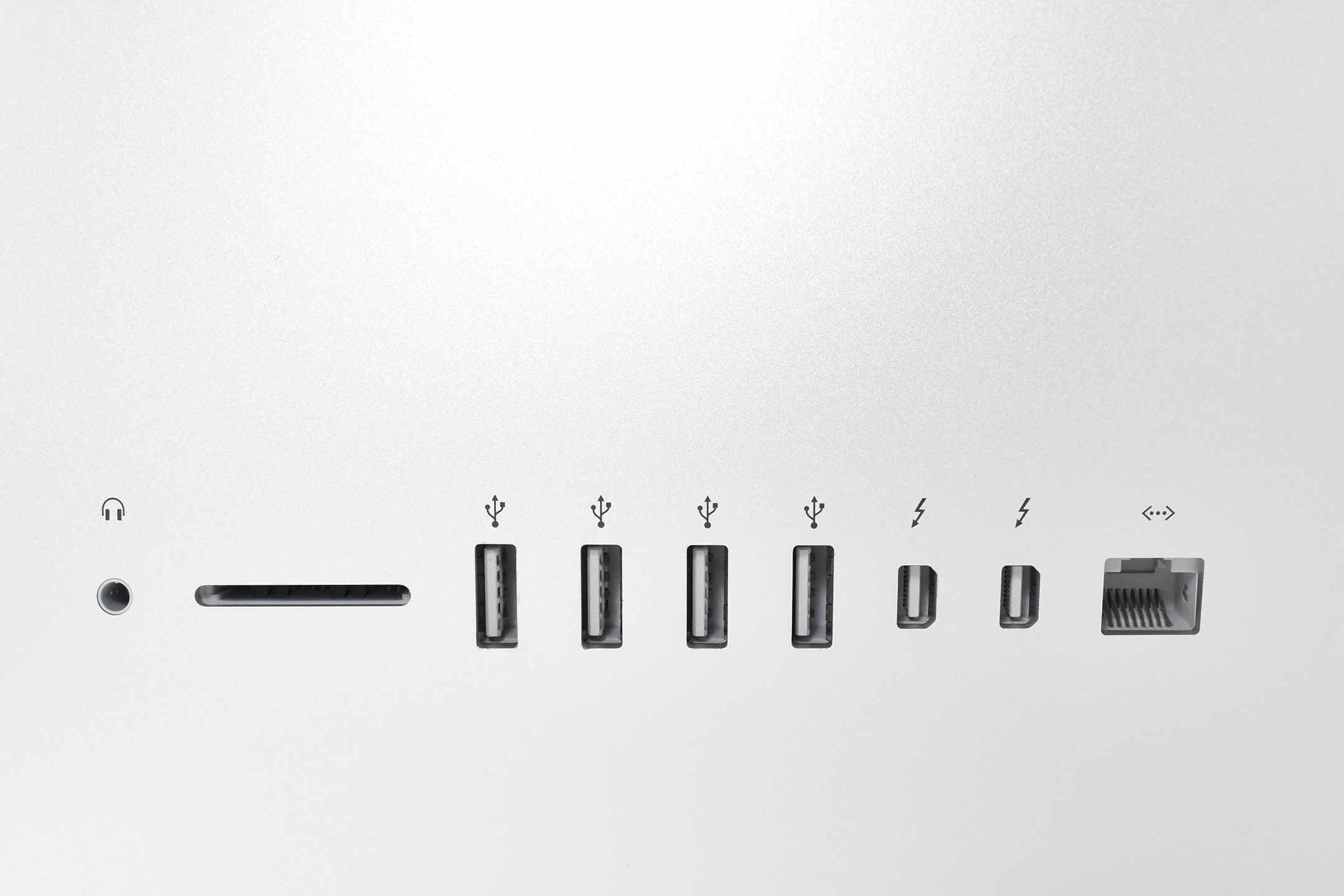
Connectivity included four USB 3.0 ports, dual Thunderbolt ports, Gigabit Ethernet, 802.11ac Wi-Fi (802.11a/b/g/n compatible), and Bluetooth 4.0.
This iMac model shipped with a compact aluminum Apple Wireless Keyboard and either a Magic Mouse, a Magic Trackpad, or a traditional wired Apple mouse.
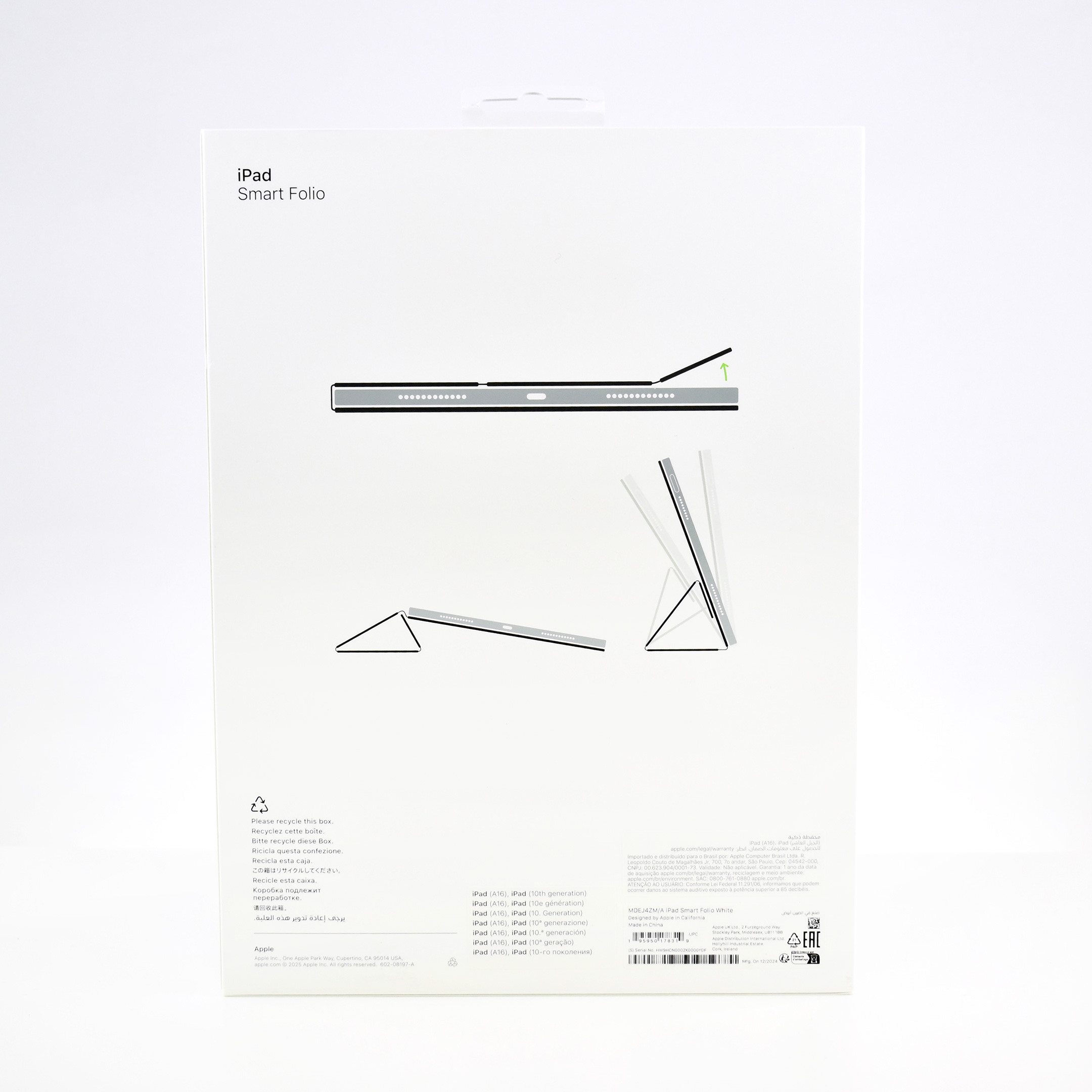
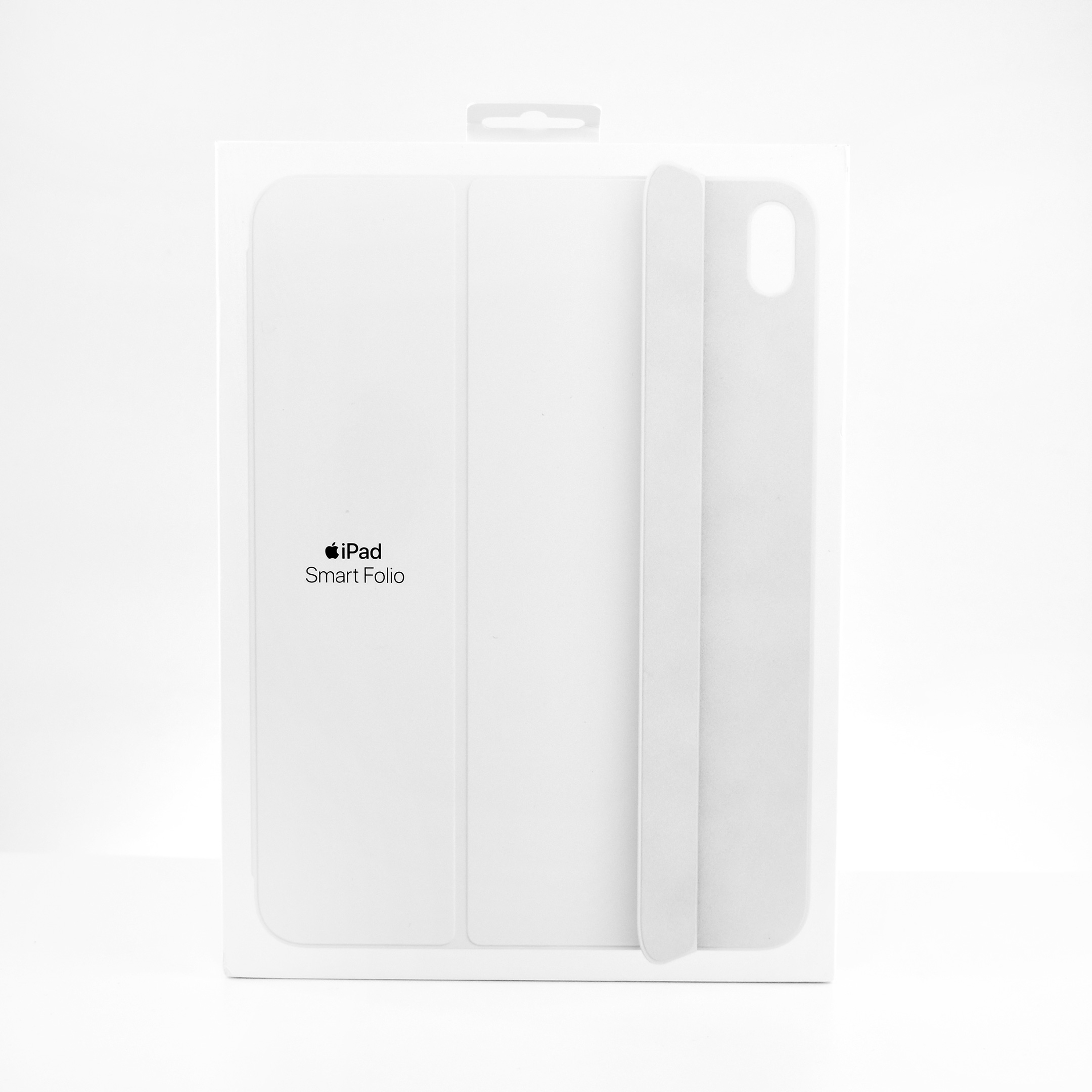
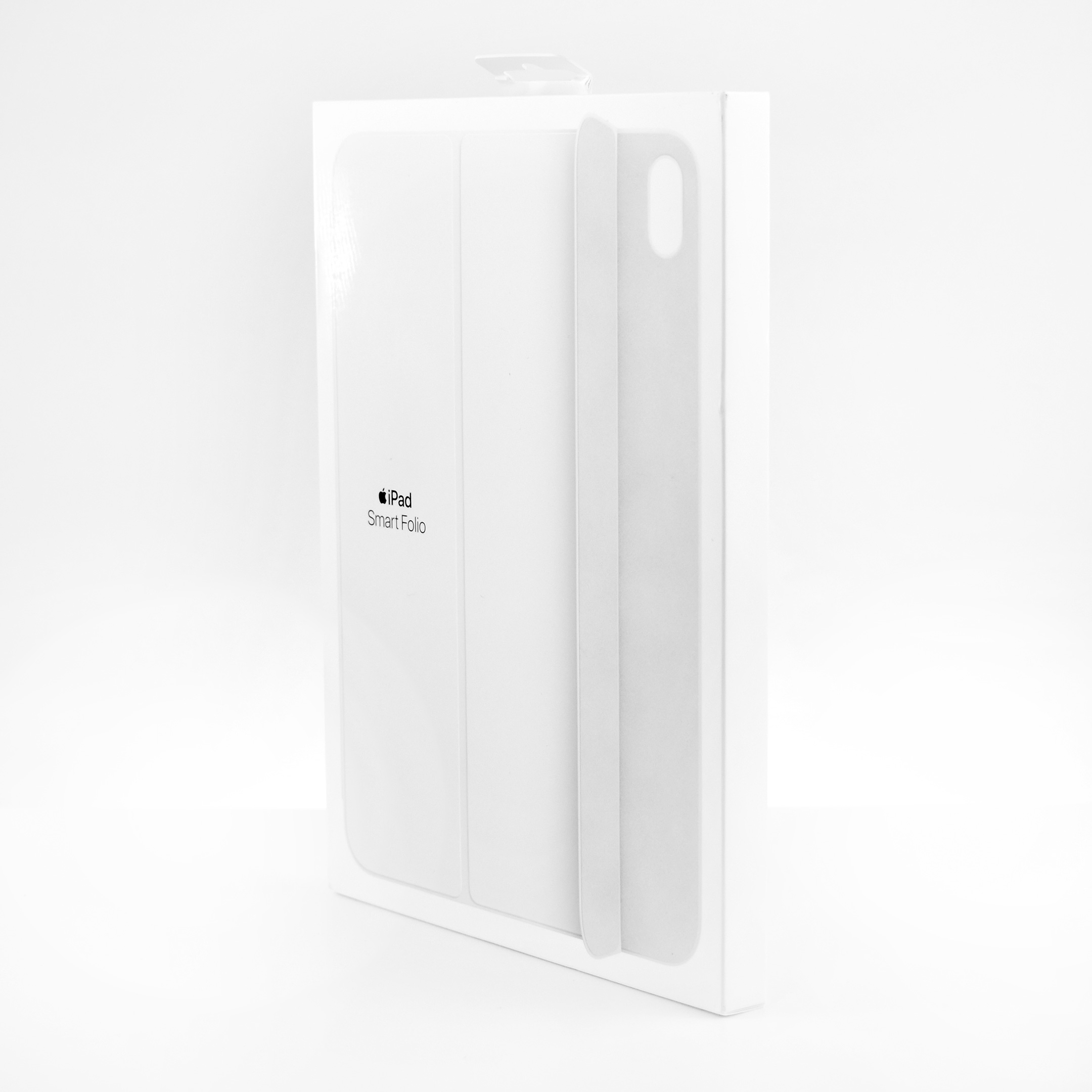
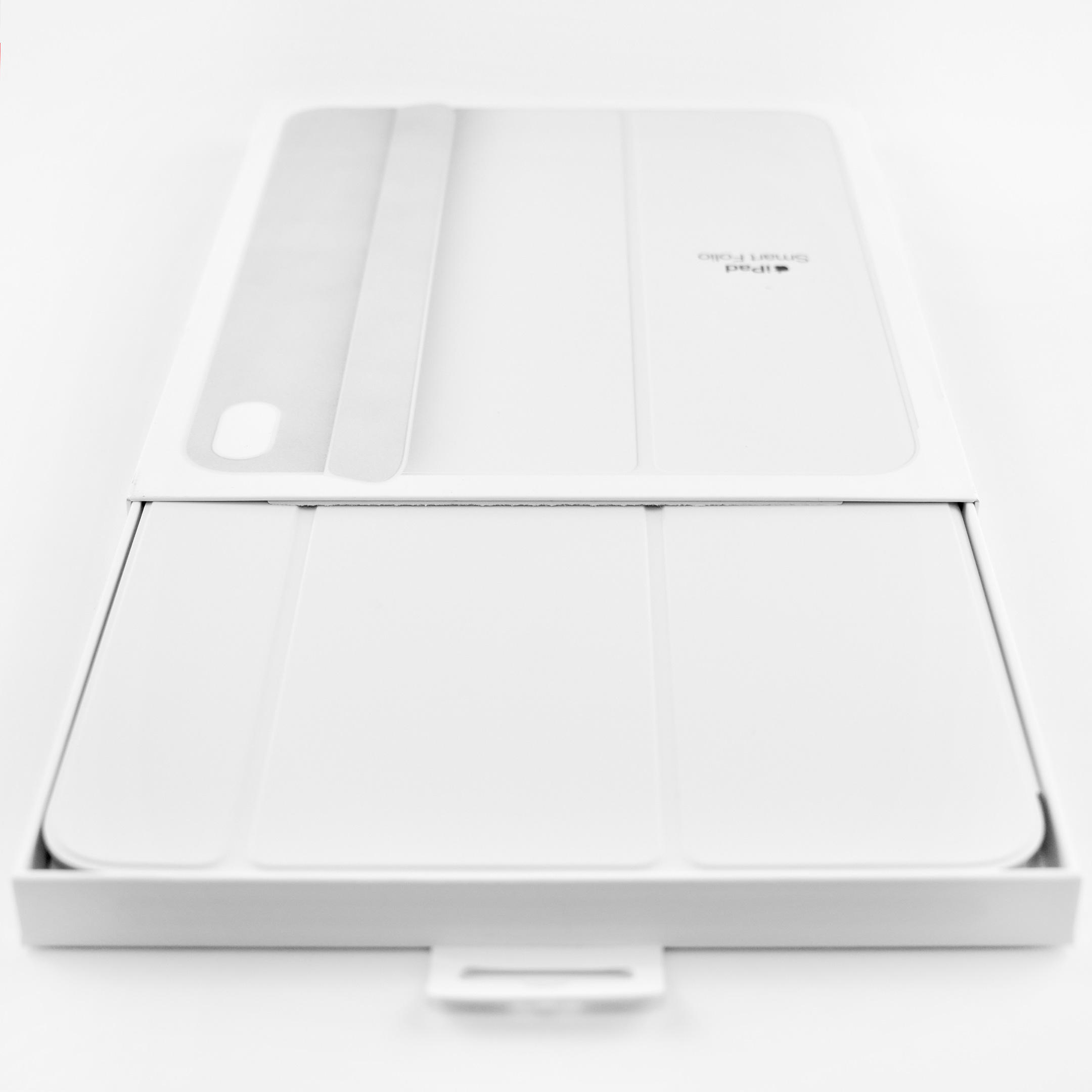
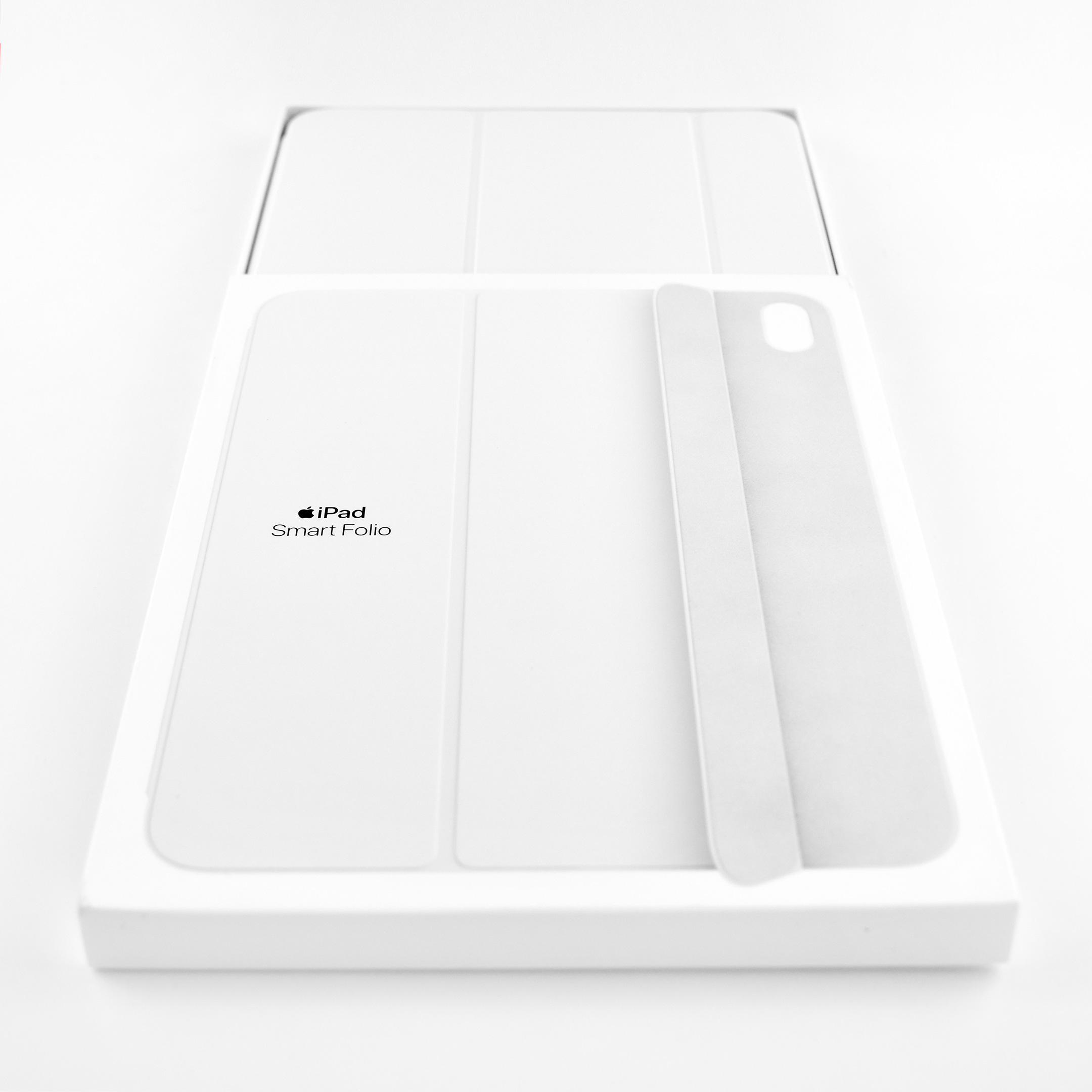
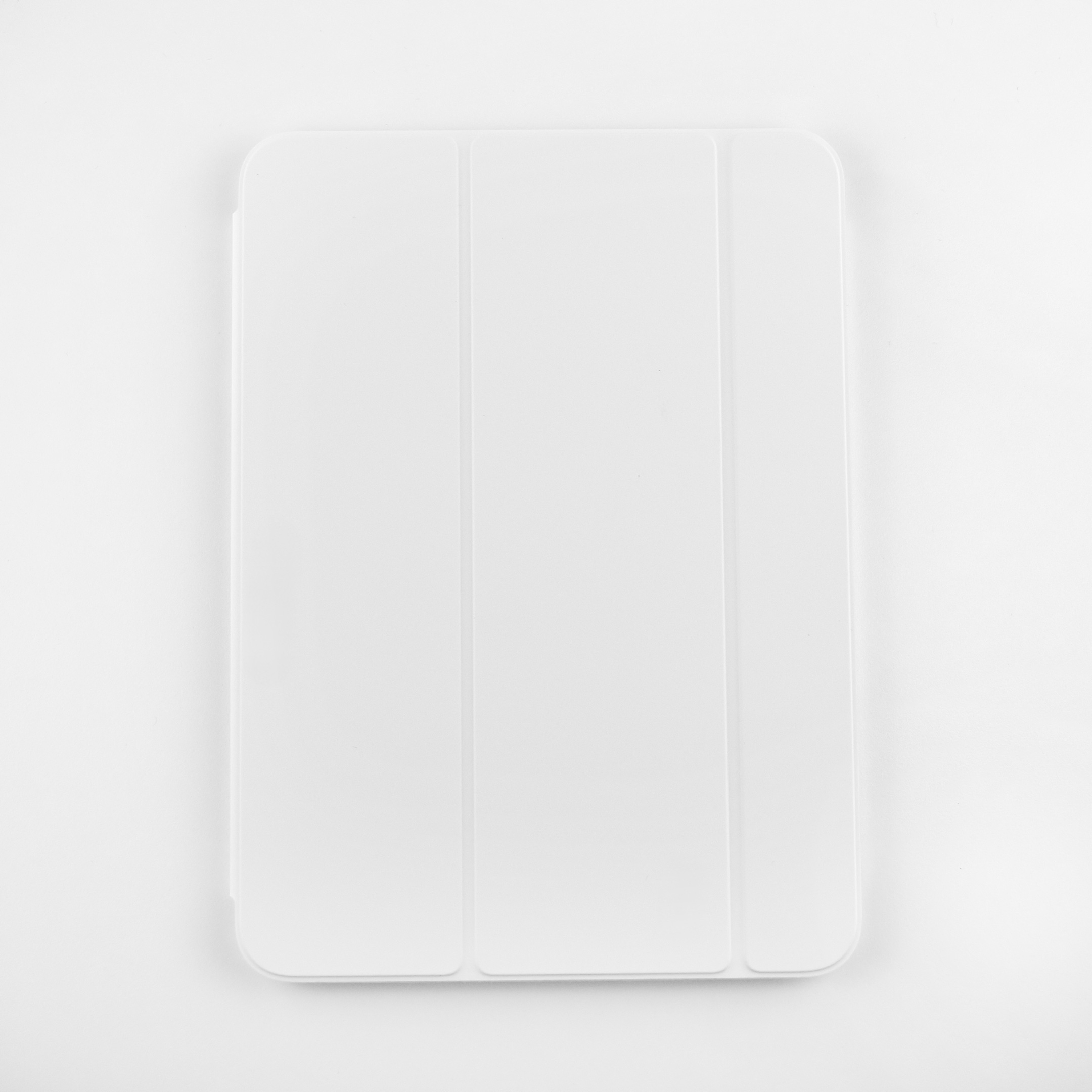
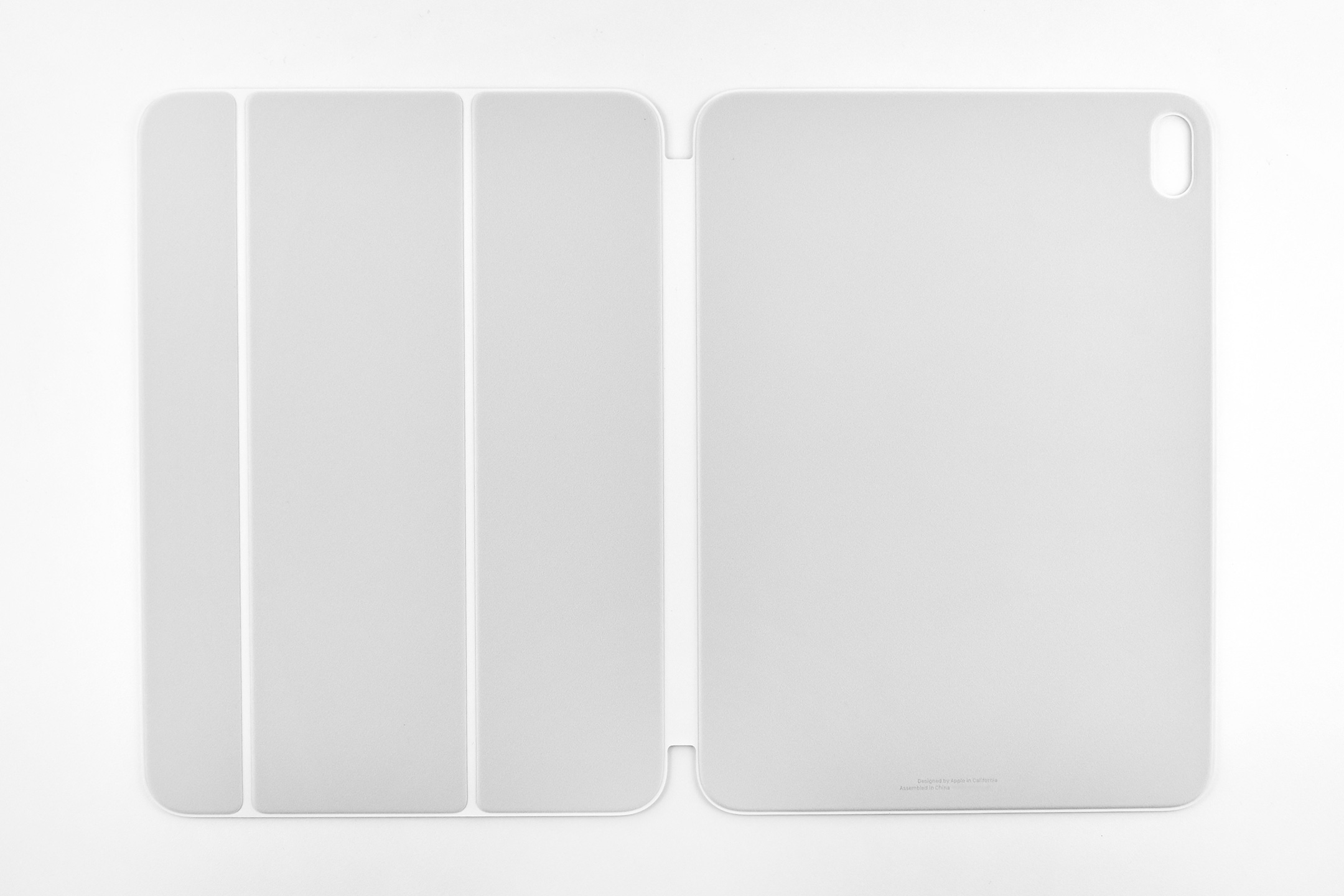
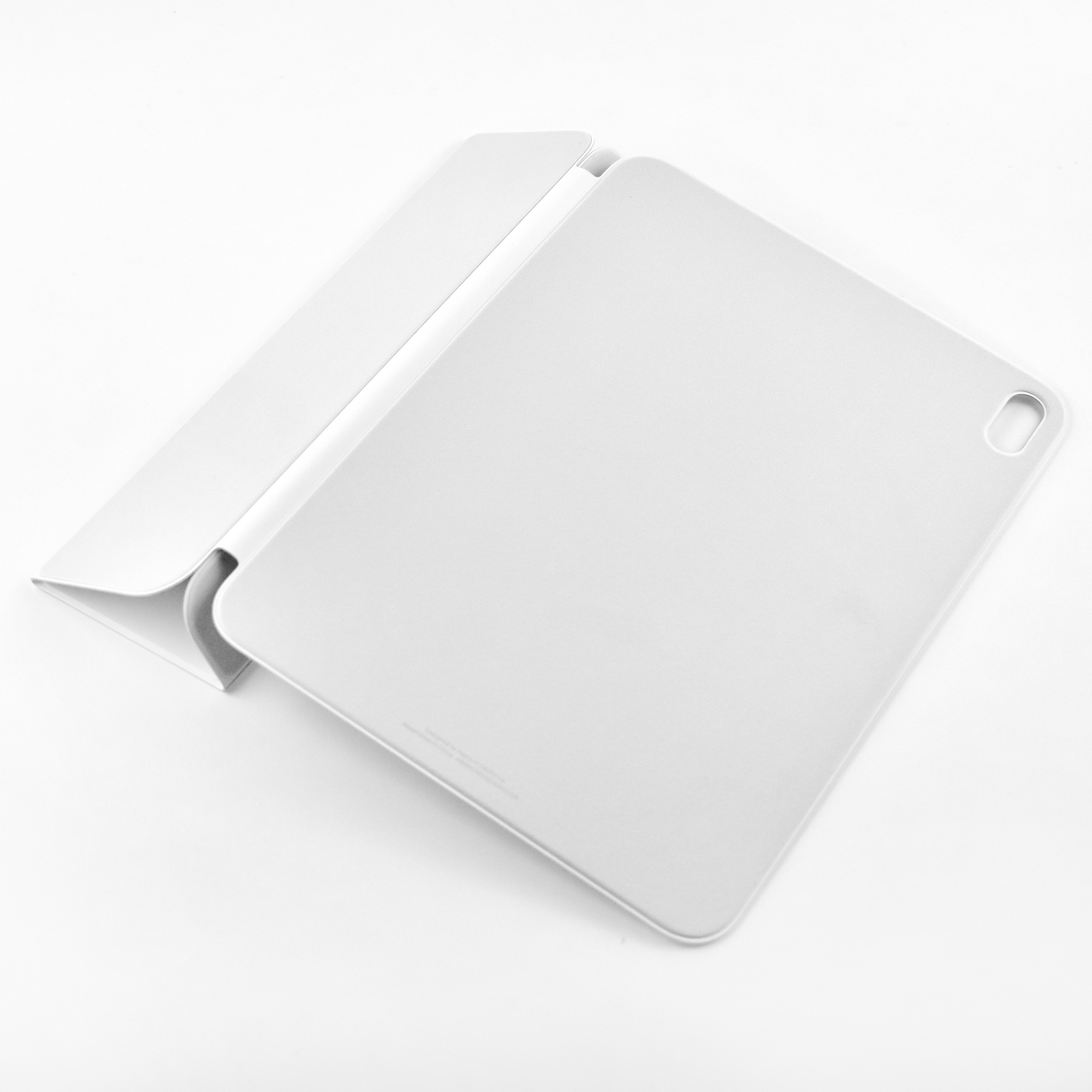
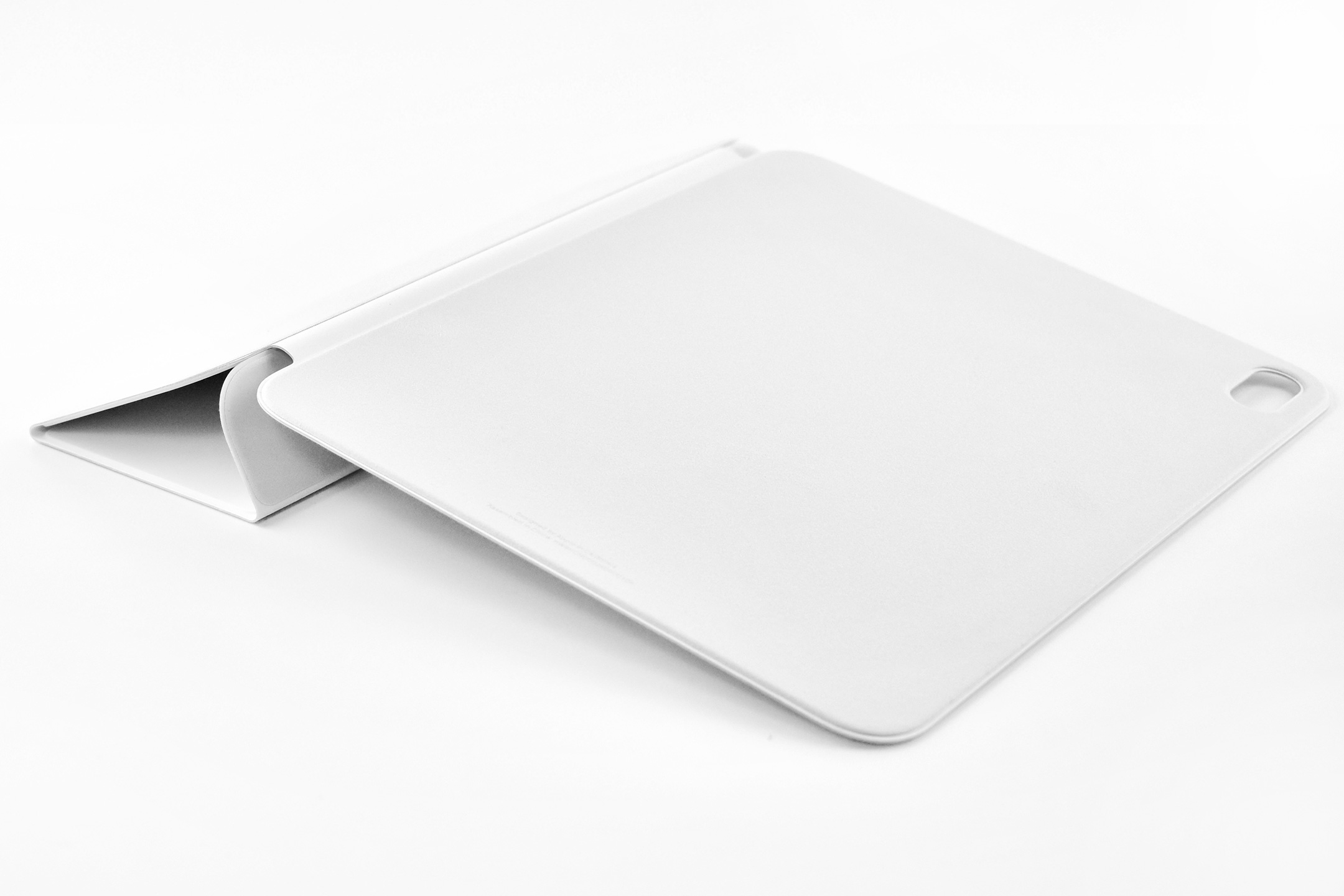
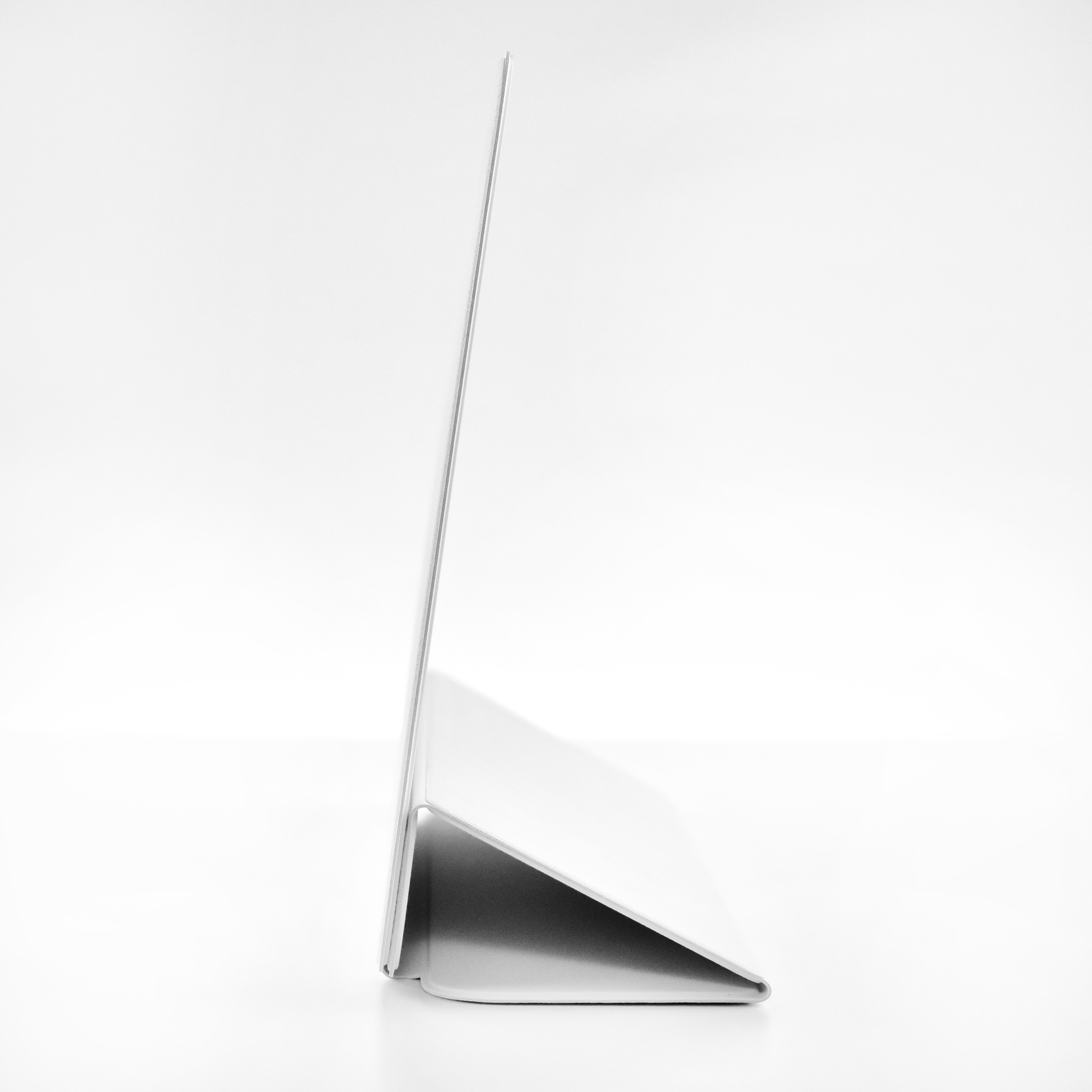
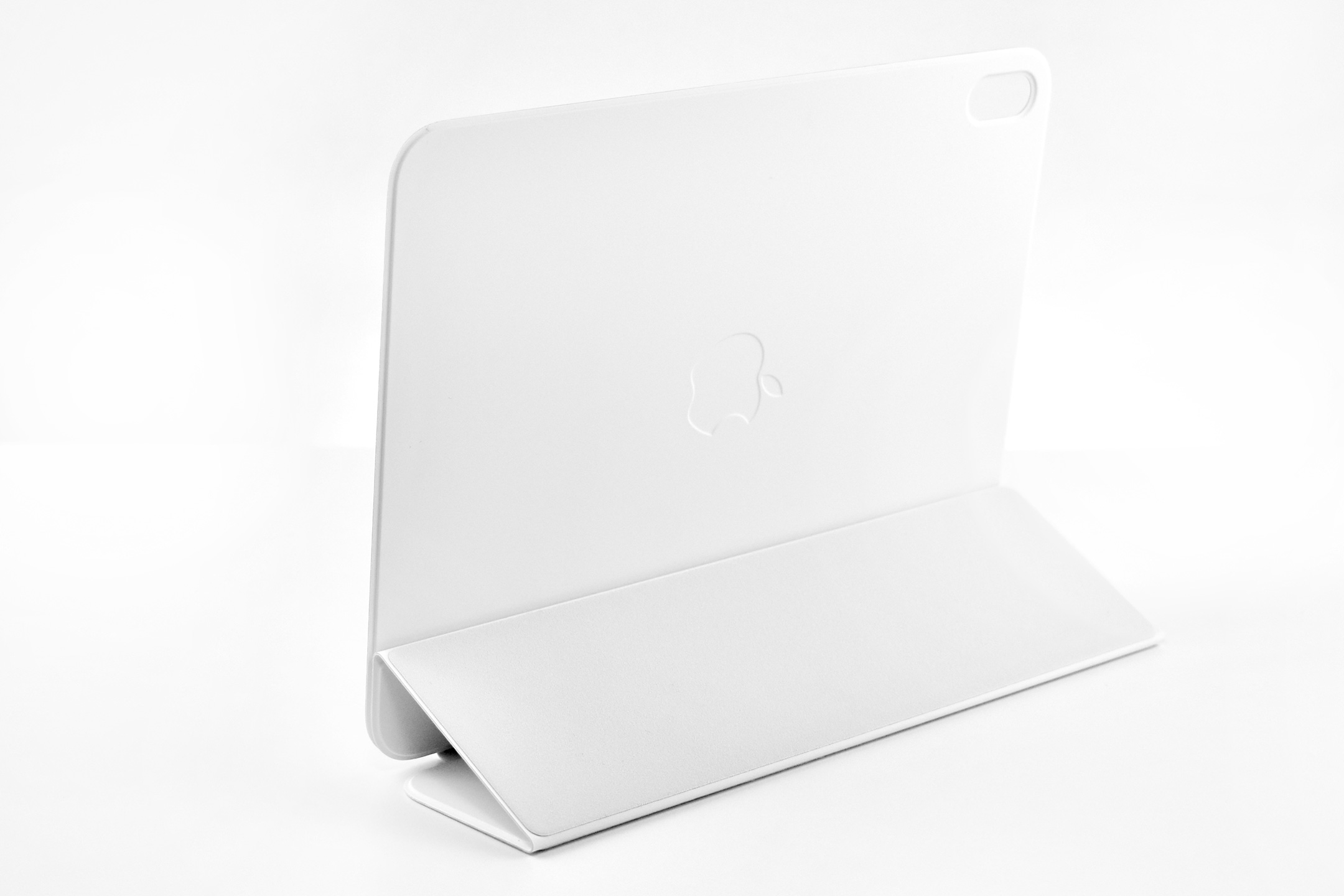
The Smart Folio for iPad Generation 11 (A16) was identical to the model made for iPad Generation 10. It was “thin and light and offers front and back protection for your device.”
Apple also noted that it “automatically wakes your iPad when opened and puts it to sleep when closed. The Smart Folio attaches magnetically, and you can easily fold it into different positions to create a stand for reading, viewing, typing, or making FaceTime calls.”
This Smart Folio was available in Sky (light blue), White, Watermelon (dark pink), and Lemonade (bright yellow). This example is white.
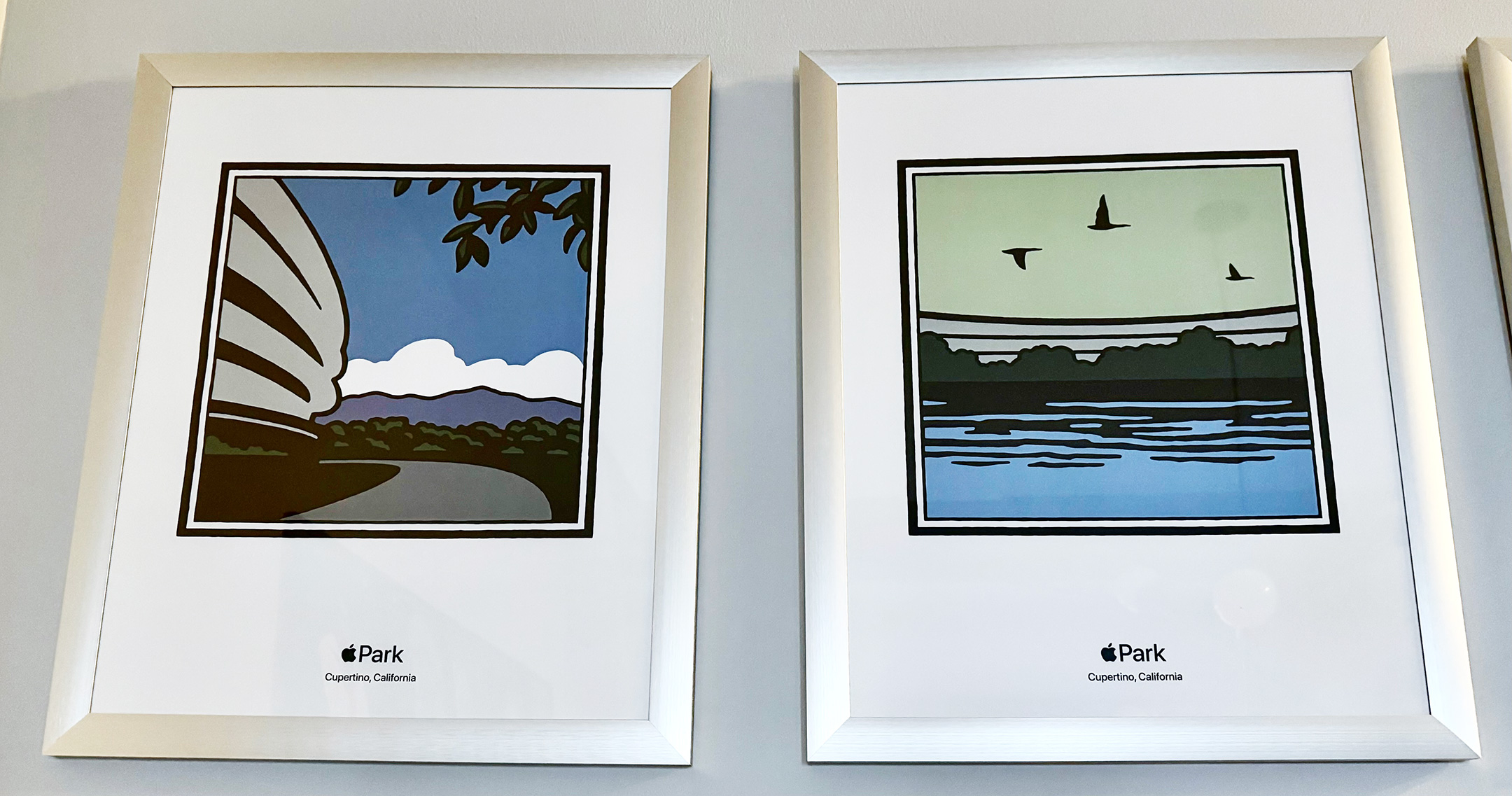
This set of posters was sold at the Apple Park Apple Park Visitor Center in 2022. The set includes four different designs by the graphic artist Michael Schwab. The posters were packaged in a white cardboard tube with a label that read, “Apple Park M. Schwab Poster Set (4pk) HP932LL/A.” Each poster measured 16 x 20 inches.
The designs included the following representations:
Apple Park office structure (a partial view)
Reflecting pool in the outdoor center of the Apple Park office structure with three birds flying above
Steve Jobs Theater at night with a crescent moon above
An apple tree, reminiscent of those growing in the outdoor center of the Apple Park office structure
This set is presented in the order that the posters were hanging in the Apple Park Visitor Center Apple Store. The poster designs were also available on white t-shirts (one design per shirt). In fact, when I first saw the posters in the Visitor Center Apple Store, it was not obvious to me that they were available for sale because they appeared to only show the details of the t-shirt design. An Apple employee let me know the posters were available.
According to Michael Schwab’s website, he was born in Oklahoma in 1952 and now lives and works in northern California. His biography states:
“From his studio in Marin County, he has established a national reputation as one of America’s leading graphic artists.
He has created national award-winning logos and posters for a remarkable list of prestigious clients, including Apple, Amtrak, The Golden Gate National Parks, Major League Baseball, Robert Mondavi, Muhammad Ali, Nike, Pebble Beach, Polo Ralph Lauren, Robert Redford, San Francisco Opera, Sundance, Sunset Books, and Wells Fargo, among others.
Having attended school in Texas, New York and California, Michael has a broad array of visual, cultural, and geographic references to which he regularly turns for ideas.
His work is easily recognized by his signature use of large, flat areas of color, dramatic perspectives and bold, graphic images of archetypal human forms.”
Please note, the photography style of this entry is very different from my typical posts because this set of posters hangs in my home. These photos were captured with iPhone 17 Pro in situ with inconsistent lighting, angles, and reflections.