Shortly after Steve Jobs was ousted from Apple in 1985, he founded the company NExT, Inc. With headquarters in Redwood City, California, NeXT created computer workstations and software that was originally intended for education markets. Notably, a NeXT computer was used by Tim Berners-Lee and Robert Cailliau at CERN to develop the world’s first web server and web browser on the then-new World Wide Web. When NeXT was purchased by Apple in 1996 its core technologies were later used in future Apple products, including as a foundation for Mac OS X.
During its 11-years, NExT only developed a few hardware products, including the NExT Computer (later renamed the NExTcube), the Next Workstation, and several peripheral devices including the following:
NeXT Color Printer
NeXT External CD-ROM Drive
NeXT Keyboard
NeXT Laser Printer
NeXT MegaPixel Display
NeXT MegaPixel Color Display
NeXT Mouse
NeXTdimension color board
Sources report that NeXT only sold a total of 50,000 units among all its products combined. Thus, working NeXT computers are considered somewhat rare.
This NeXTstation mouse matches the color of the computer, has 2 buttons, and uses opto-mechanical tracking. NeXT had at least two mouse designs, this rectangular version and a circular design.
The data sheet that Apple provided for the AppleDesign Powered Speakers II described them as “audiophile-quality…designed to work perfectly with virtually any personal computer, portable CD player or audio cassette player and with any television that supports sound output.”
Similarly, Apple’s Service Source repair manual lists system compatibility as “Any Macintosh computer, any personal computer equipped for sound output, any CD player or audio cassette player, or any television supporting sound output.”
The arc-sliding design of the rear speaker leg allowed the speakers to be adjusted to various angles. The power and volume controls were located in the front of the right speaker, and an included cable with 3.5 mm plugs connected the two speakers. An external headphone port was also located on the front of the right speaker. A stereo audio input port was located on the rear of the right speaker.
The speakers delivered 90 dB at 0.5m at 200Hz. Each speaker measures 6.8 inches tall, 4.1 inches wide, and 3.9 inches deep.
These AppleDesign Powered Speakers II are dark gray with a silver metallic Apple logo at the top-center of each speaker. The dark gray (almost black) color matched the PowerBook laptop colors of the time and Apple’s PowerCD. The speakers were also available in beige (platinum) to match Apple desktop computers sold at the time.
The AppleDesign Powered Speakers II were discontinued in 1995.
The AppleColor High-Resolution RGB Monitor is a CRT (Cathode Ray Tube) computer display introduced in 1987 and discontinued in 1992. This monitor has the distinction of being Apple’s first color display for the Macintosh. It was introduced along with the Mac II.
The tube size is 13 inches with a viewable size of 12.8 inches. The display uses Sony Trinitron technology.
The monitor is capable of displaying 640 x 480 resolution at 69 dots per inch and supports 24-bit color. It measures 11 inches high, by 13.5 inches wide, is 16 inches deep, and weighs 44 pounds. The monitor uses Apple’s proprietary DA-15 video connector.
Surprisingly, this monitor’s specifications are still available on Apple’s Documentation website as of June 2024.
The Macintosh Centris 650 has the distinction of being Apple’s Macintosh product with the shortest lifespan (along with the Centris 610). The Centris 650 and 610 were introduced on February 10, 1993, and discontinued on October 21, 1993—a lifespan of only 253 days. The short life resulted from a technicality when Apple made the decision in late 1993 to follow a new naming scheme for all their products: “Quadra” for business, “LC” for education, and “Performa” for home. As a result of the name change, the Macintosh Centris 650 became the Macintosh Quadra 650.
The Centris computers were introduced as Apple’s midrange offerings in 1993 as replacements to the Macintosh IIci and Quadra 700. The Centris 650 used a Motorola 25MHz 68040 or 68LC040 chip and could run System 7.1, up through and including Mac OS 8.1 (without a PowerPC upgrade).
The Centris 650 includes onboard video with VGA support via an adapter, 3 NuBus slots, two ADB ports, two serial ports, an external SCSI connector, and a 5.25-inch drive bay. This was one of the earliest Macintosh computers to be available with an internal CD-ROM drive (an AppleCD 300i model).
According to MacWorld in April 1993, five configurations were available:
25 MHz 68LC040, 4 MB RAM (on board), 512 KB VRAM, 80 MB HDD, no Ethernet
Although Beats products are not Apple-branded, the Beats by Dr. Dre website states, “Beats by Dr. Dre (Beats) is a leading audio brand founded in 2006 by Dr. Dre and Jimmy Iovine… Beats was acquired by Apple Inc. in July 2014.” As an Apple collector, I have a small number of Beats products in my collection.
Beats describes the Studio Buds + on their website:
“Beats Studio Buds + custom acoustic platform packs powerful, balanced sound in a sophisticated, pocketable design. Reengineered acoustic venting improves audio precision and gently relieves pressure for a more comfortable all-day fit. Each bud is equipped with a two-layer transducer that flexes to deliver cleaner bass and ultra-low distortion. So whether you’re listening to music or taking calls, Studio Buds + deliver rich, immersive sound wherever you go.”
As a “sister” company to Apple, the Beats Studio Buds + offer the following “Enhanced Apple Compatibility:”
One-touch pairing—easy, one-touch setup instantly pairs with every device in your iCloud account
“Hey Siri”—simply say “Hey Siri” to activate your voice assistant
Find My—locate your lost earbuds on a map based on the last known connected location
Over-the-air updates—receive software updates and new features automatically
Beats also offer “Enhanced Android Compatibility:”
Google Fast Pair
Audio Switch
Find My Device
These earbuds offer many features, including:
Active Noise Cancelling (ANC)
Transparency mode
Up to 36 hours of total battery life (9-hour earbuds + 27-hour charging case)
One-touch pairing
Crisp, clear call performance from upgraded, voice-targeting mics
Sweat and water resistant earbuds (IPX4-rated)
Four soft eartip sizes
Spatial audio for Dolby Atmos
Pocket-sized charging case with USB-C connector
The case measures 2.55cm tall, 7.2cm long, and 5.1cm wide. Each bud measures 1.5cm tall, 2.05cm long, and 1.85cm wide. Each bud weighs 5g, and the entire product—2 buds and the case—weighs 59g.
My primary interest in this product was the design including the “transparent” color option. This was the first Apple-backed product released in a semi-transparent design in about 20 years (with the possible exception of updates of the originally Apple-designed Harman Kardon SoundSticks). Other notable transparent Apple products over the years have included the following:
iMac (CRT models, 1998–2003)
eMate 300 (1997–1998)
iBook (“clamshell” models, 1999–2001)
Power Macintosh G3 All-in-One (1998)
Power Macintosh G3 (Blue & White tower, 1999)
Studio Display (various LCD and CRT designs, 1998, 1999, 2000)
As a side-note, some may have forgotten that Apple’s LaserWriter 8500 (1997–1999) used light-green-tinted transparent plastics in its lower drawer and top paper feeder.
As mentioned above, Harman Kardon SoundSticks were reported to have been designed in partnership with Apple and have been available since 2000. Although the product has not changed significantly, it has been updated regularly (2004, 2009, 2012, and 2020).
This Hydro Flask insulated water bottle features the distinctive (and now discontinued) spearmint color (a shade of green) and features a white Apple logo. The bottom of the bottle specifies it is a 20-ounce model.
The Hydro Flask website (as of 2024) refers to this particular model as a “20 oz Wide Mouth,” named for its capacity, and it includes an “insulated cap for wide mouth bottles.” This bottle has a cap, “Flex Cap Strap,” and “Boot” (rubberized bottom)—all color-matched in the spearmint color.
The iPod shuffle Generation 4 is a rare example of Apple reversing a design theme and going back to a design closer to a previous design, while still improving upon it. The iPod shuffle Generation 4 has a design similar to the Generation 2 iPod shuffle, but it is smaller and adds a “VoiceOver” feature that reads the name of songs, artists, and playlists out loud.
Between the Generation 2 and 4, the Generation 3 iPod shuffle had no controls on the iPod device, the Generation 4 added the clickable ring buttons back to the iPod.
This iPod shuffle is 1.14 inches tall, 1.24 inches wide, and 0.34 inch deep, including the clip. It weighs 0.44 ounce (12.5 grams). According to Apple, this iPod could play up to 15 hours of audio. Unlike the iPod shuffle Generation 2 that shipped with a custom USB-powered charging base, this Generation 4 shipped with a short USB-to-3.5mm cable.
The iPod shuffle Generation 4 was available in five colors: silver (with a black button ring); and blue, green, orange, and pink (with a white button ring). All models have 2 GB of storage, or up to 500 songs. This example is pink and includes the original packaging.
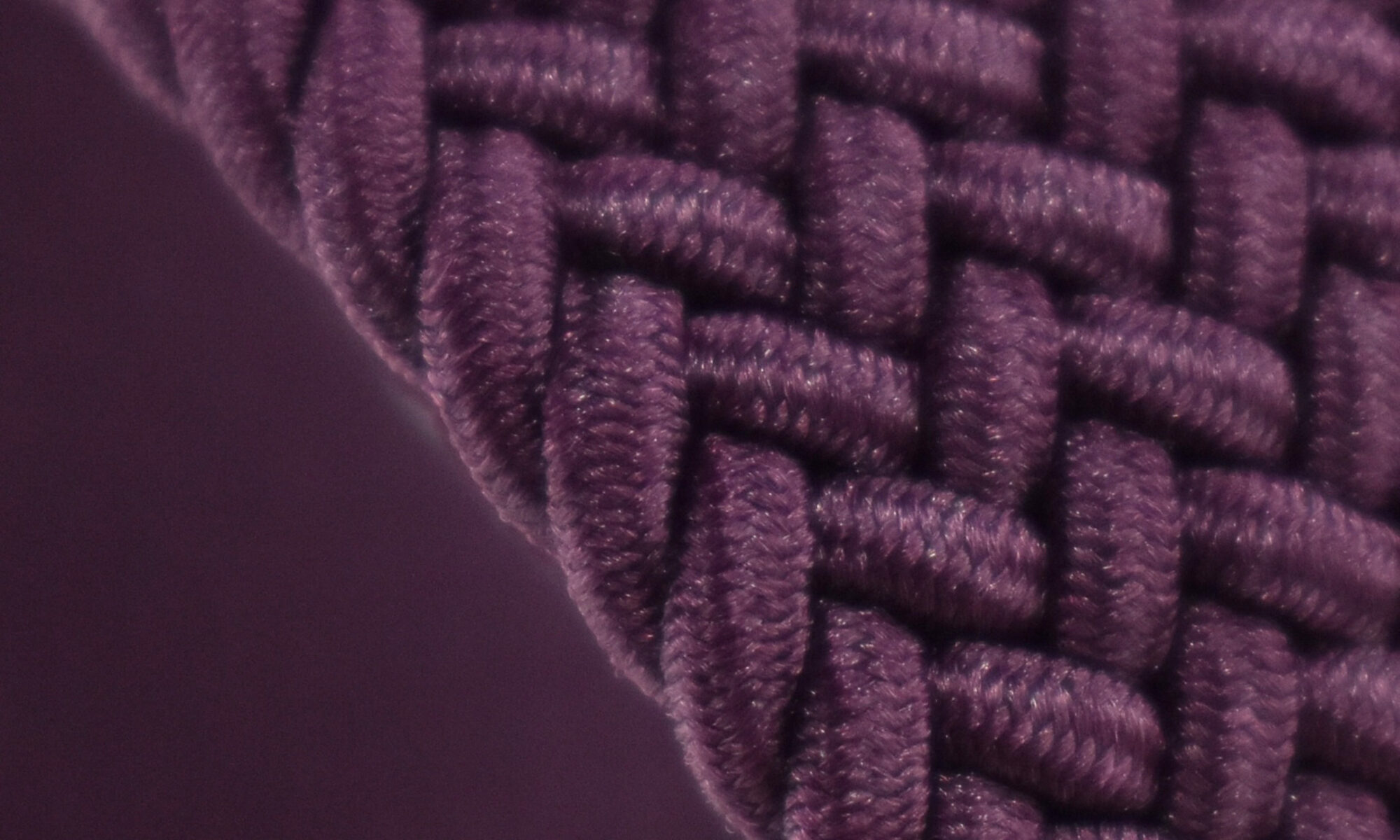
This iPhone FineWoven Wallet is made from Apple’s “luxury” FineWoven material and includes Find My support. Apple described the Wallet:
“Designed with both style and function in mind, the new iPhone FineWoven Wallet with MagSafe is the perfect way to keep your ID and credit cards close at hand. It supports Find My, so you can be notified of your wallet’s last known location if it gets separated from your phone… The wallet features strong built-in magnets that allow it to effortlessly snap into place on the back of your iPhone. You can even stack it on top of a case with MagSafe to create a look that’s unique to you. The FineWoven wallet supports up to three cards and is shielded so it’s safe for credit cards.”
Further, Apple describes FineWoven as “durable microtwill” with a “soft, suedelike feel.” Apple continues, “The FineWoven material was also designed with the earth in mind — made from 68 percent post-consumer recycled content and significantly reducing carbon emissions compared to leather.”
Apple created FineWoven as a replacement to leather and since then, customer reviews of the material have been polarizing. Consumer Reports reviewed the material and its verdict was to not recommend accessories made from the material, stating that with typical use, they look “like a toddler has been chewing on it.”
The Consumer Reports tester, along with several other reviewers and consumers, report that FineWoven scratches easily, attracts lint, and stains with oil or grease—compared to the leather cases they replaced.
Apple provides a 4-step cleaning process for FineWoven using a liquid laundry detergent and reports that the “material may look different and show wear over time as the fibers get compressed with normal use.”
This FineWoven Wallet is Taupe, a shade of medium brown.
The AirTag Leather Key Ring was designed to contain an Apple AirTag, a small, disc-shaped accessory that uses Apple’s Find My network to easily locate items.
This color of the AirTag Leather Key Ring was among Apple’s final accessory offerings in leather when they discontinued the material’s use in 2023 due to environmental concerns. In a September 2023 press release, Apple reported, “Apple has…ended the use of leather across all of its product lines.”
According to Apple:
“The leather key ring is thoughtfully crafted from the finest materials. The stainless steel is as striking as it is strong, while the European leather is specially tanned and soft to the touch. And it fits snugly over your AirTag, so you never have to worry about it falling out.”
When the AirTag was released, “a wide range of Apple-designed AirTag accessories” were also available. Accessories included: a Polyurethane Loop, a Leather Loop, and a Leather Key Ring. In addition, Apple and Hermès introduced the AirTag Hermès with an “assortment of handcrafted leather accessories including the Bag Charm, Key Ring, Travel Tag, and Luggage Tag.” The Hermès accessories were sold with a custom-engraved AirTag with the Hermès Clou de Selle logo.
This AirTag Leather Key Ring is Forest Green, shade of dark green.
In October 2023, Apple released this new Apple Pencil USB-C model. At the time, this was the third Apple Pencil in the lineup. Apple described the Apple Pencil USB-C:
“Today, Apple is bringing more choice to iPad users with a new, more affordable Apple Pencil. With pixel-perfect accuracy, low latency, and tilt sensitivity, the new Apple Pencil is ideal for note taking, sketching, annotating, journaling, and more. Designed with a matte finish and a flat side that magnetically attaches to the side of iPad for storage, the new Apple Pencil pairs and charges with a USB-C cable.”
This Apple Pencil added the hover feature on M2 iPad models, “allowing users to sketch and illustrate with even greater precision.” The USB-C version of the Apple Pencil also added a new charging method to the Apple Pencil family—this time by sliding the end of the Pencil to reveal a USB-C charging port that both charges and pairs the Pencil.
The original Apple Pencil also used wired charging/pairing via Lightning port, while the Apple Pencil 2 used magnetic wireless charging/pairing. This Apple Pencil USB-C uses magnets to attach to the side of compatible iPad models for storage (like the Apple Pencil 2), but it does not charge.
As of June 2024, this Apple Pencil USB-C was compatible with the following iPad models:
iPad Pro 13-inch (M4)
iPad Pro 11-inch (M4)
iPad Air 13-inch (M2)
iPad Air 11-inch (M2)
iPad (10th generation)
iPad mini (6th generation)
iPad Air (4th or 5th generation)
iPad Pro 11-inch (1st, 2nd, 3rd, or 4th generation)
iPad Pro 12.9-inch (3rd, 4th, 5th or 6th generation)