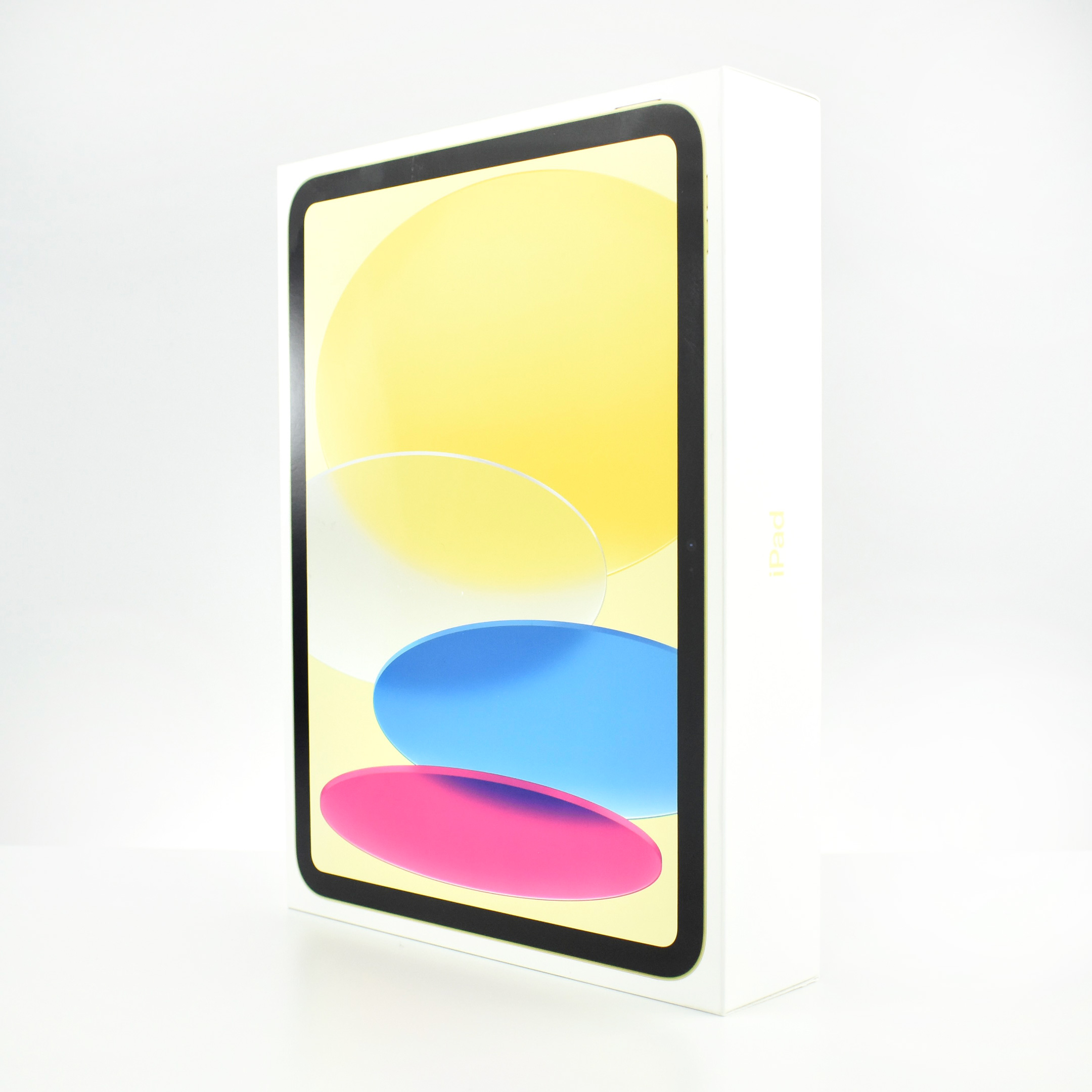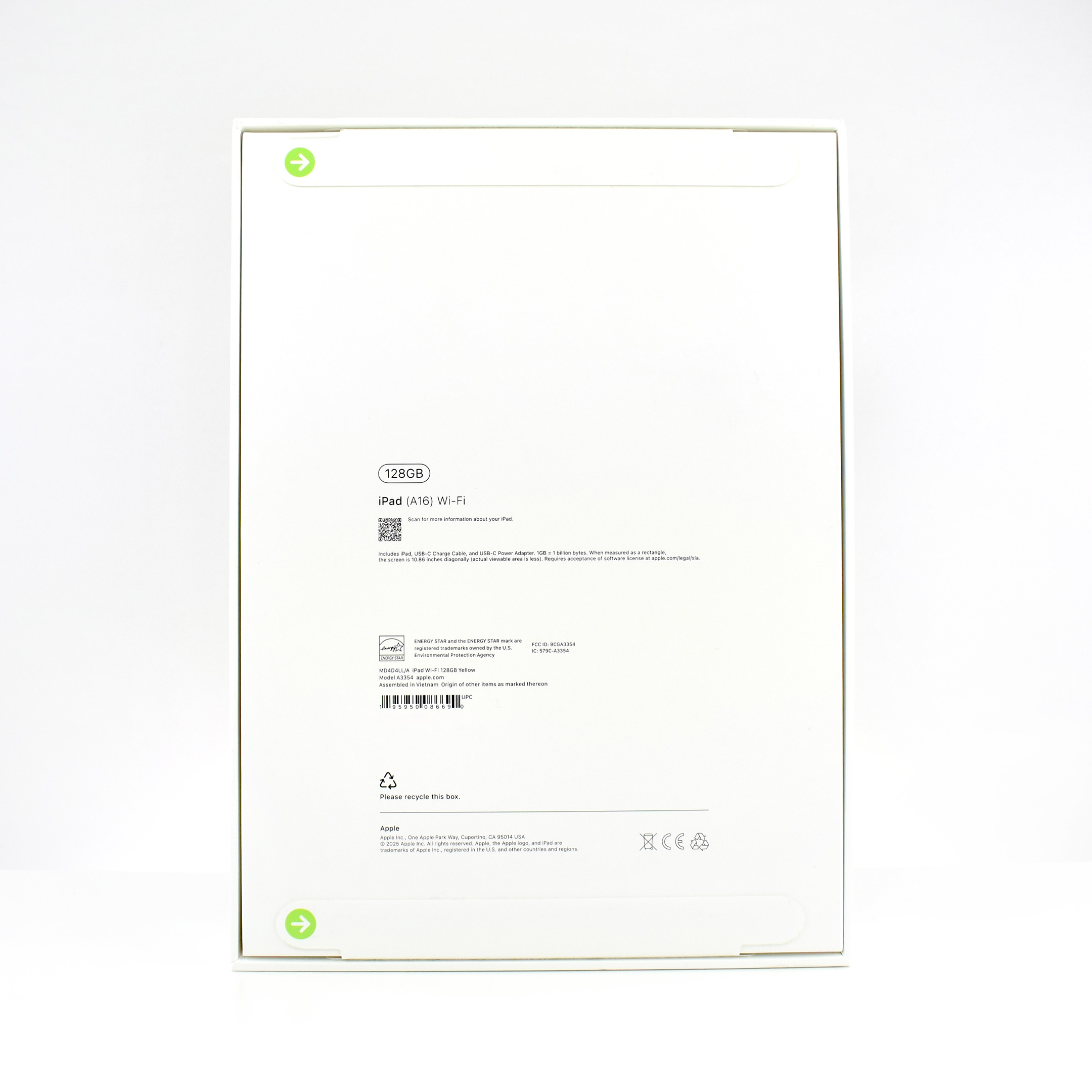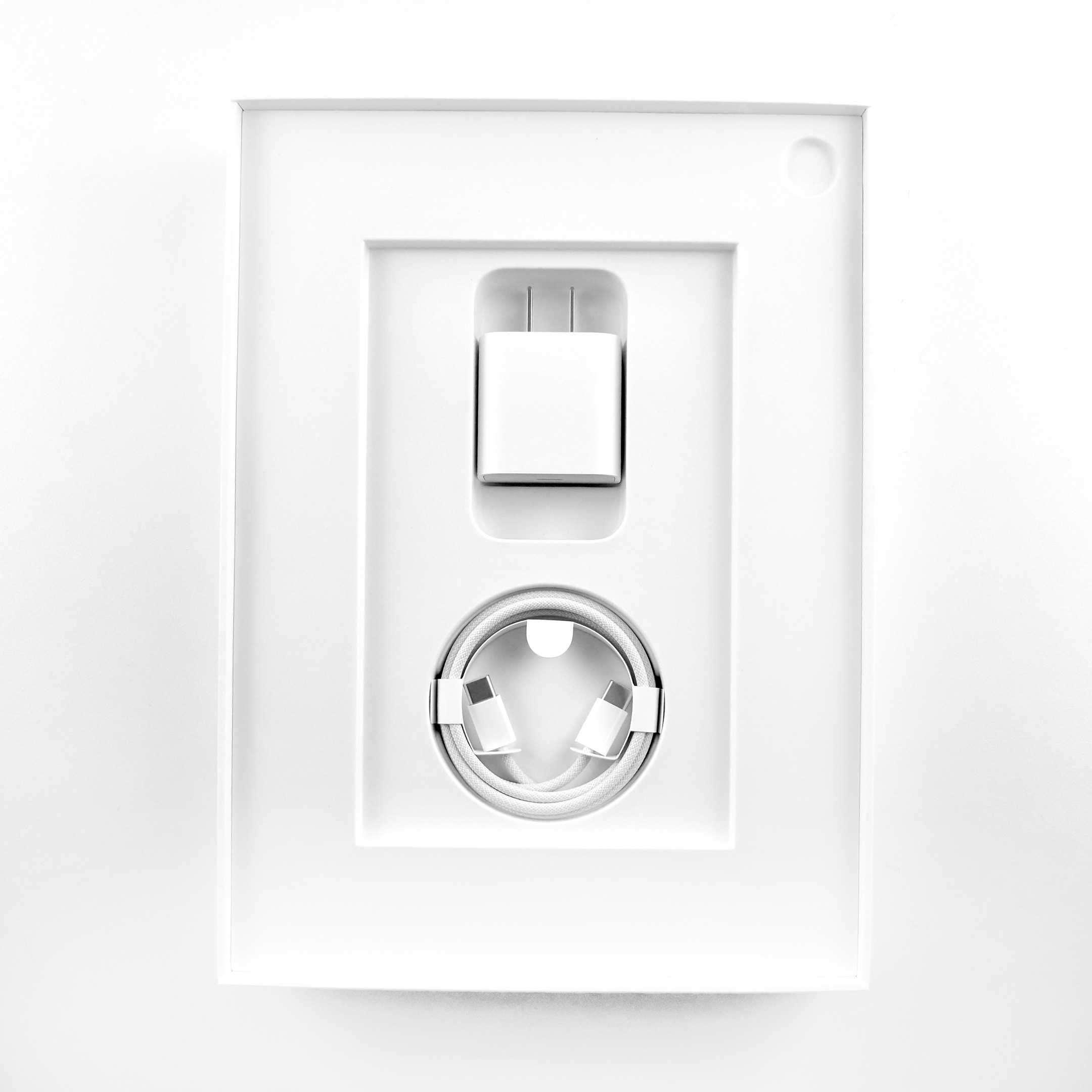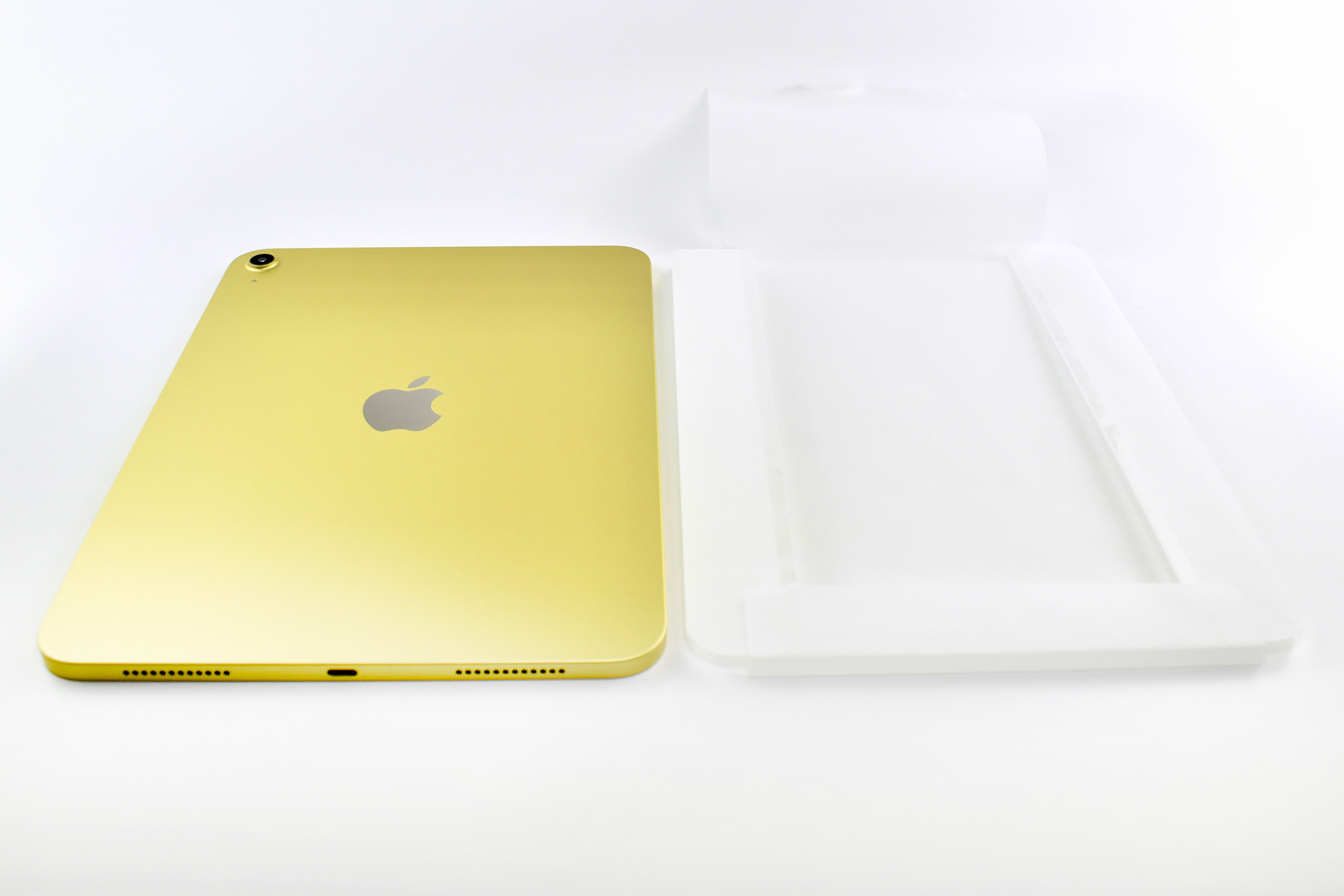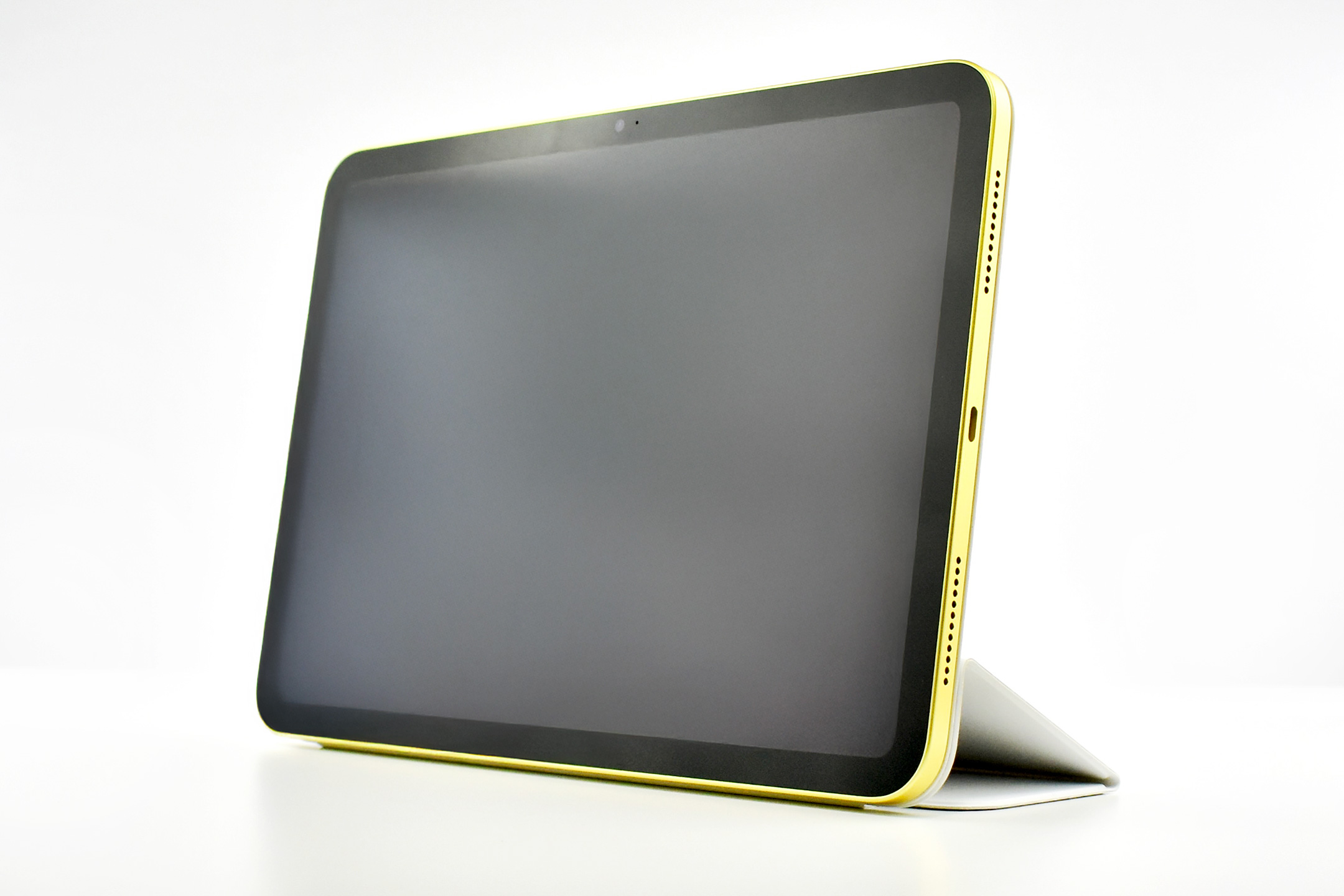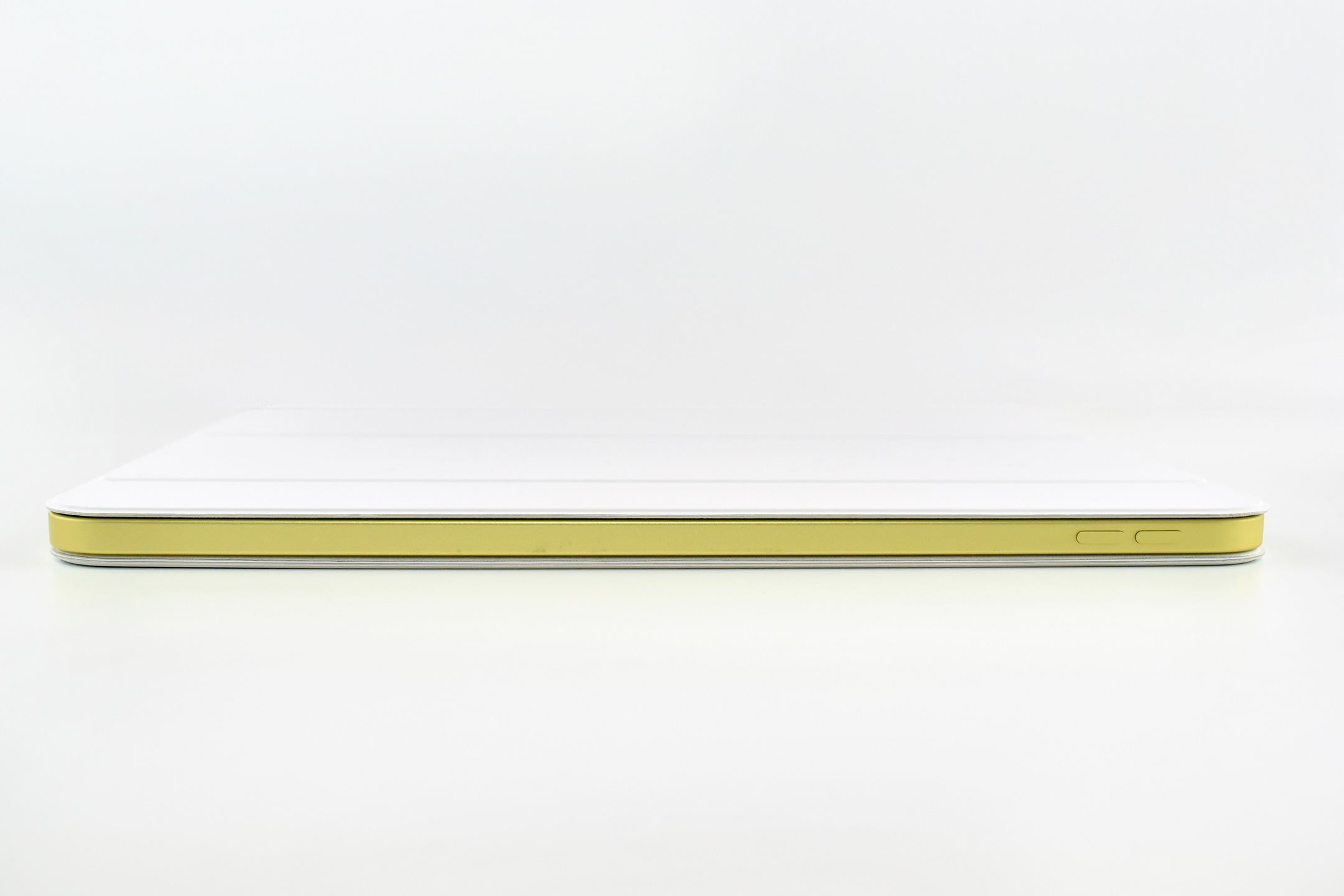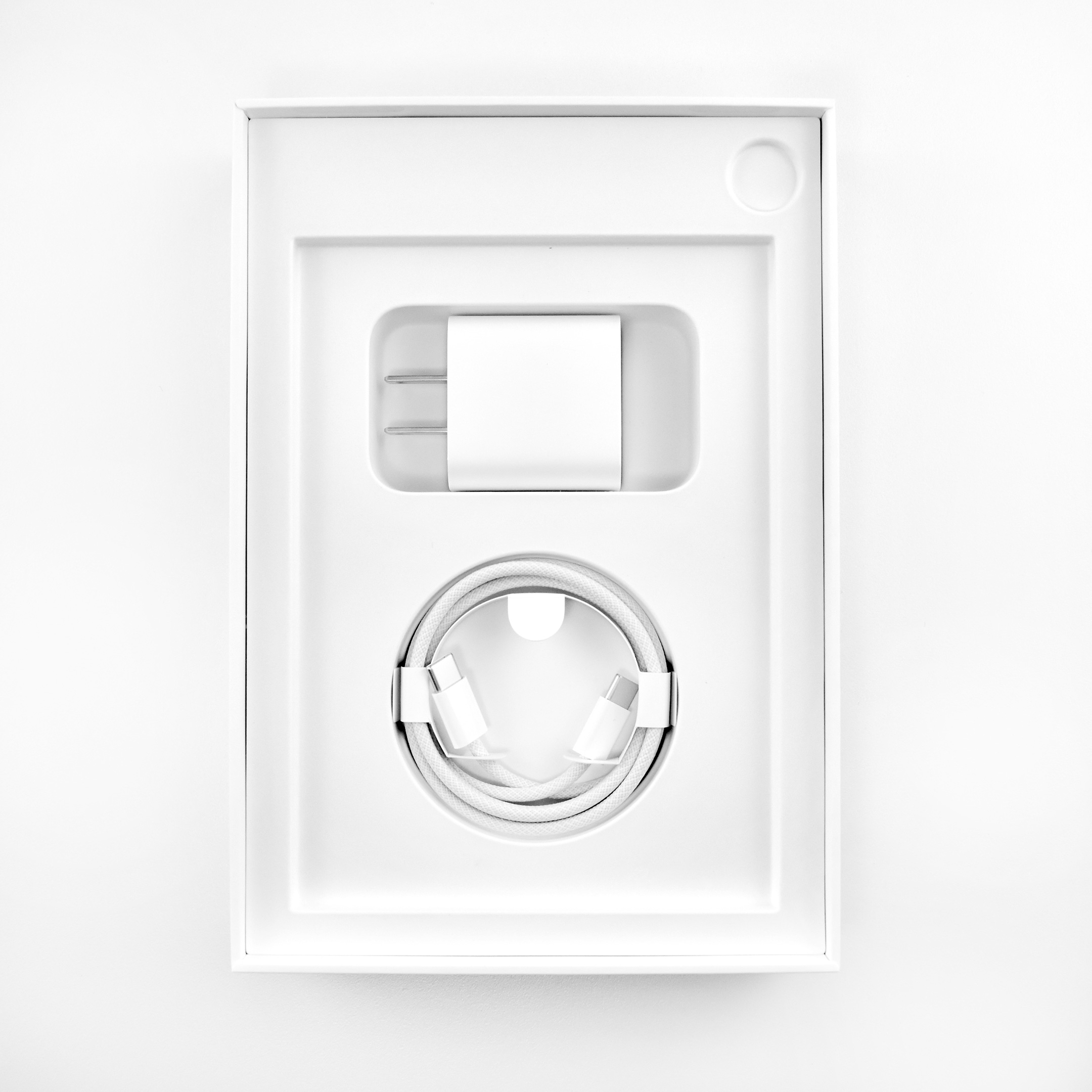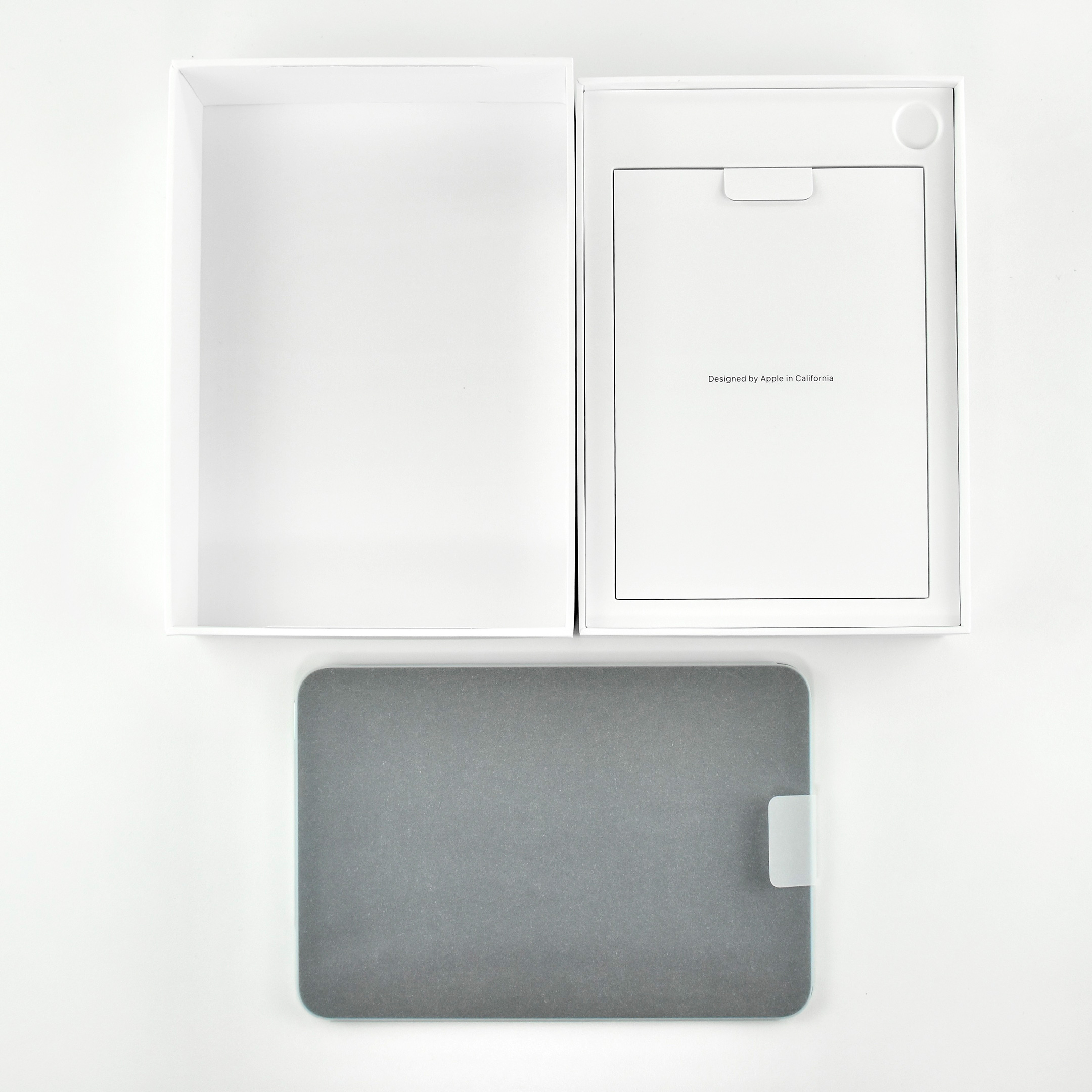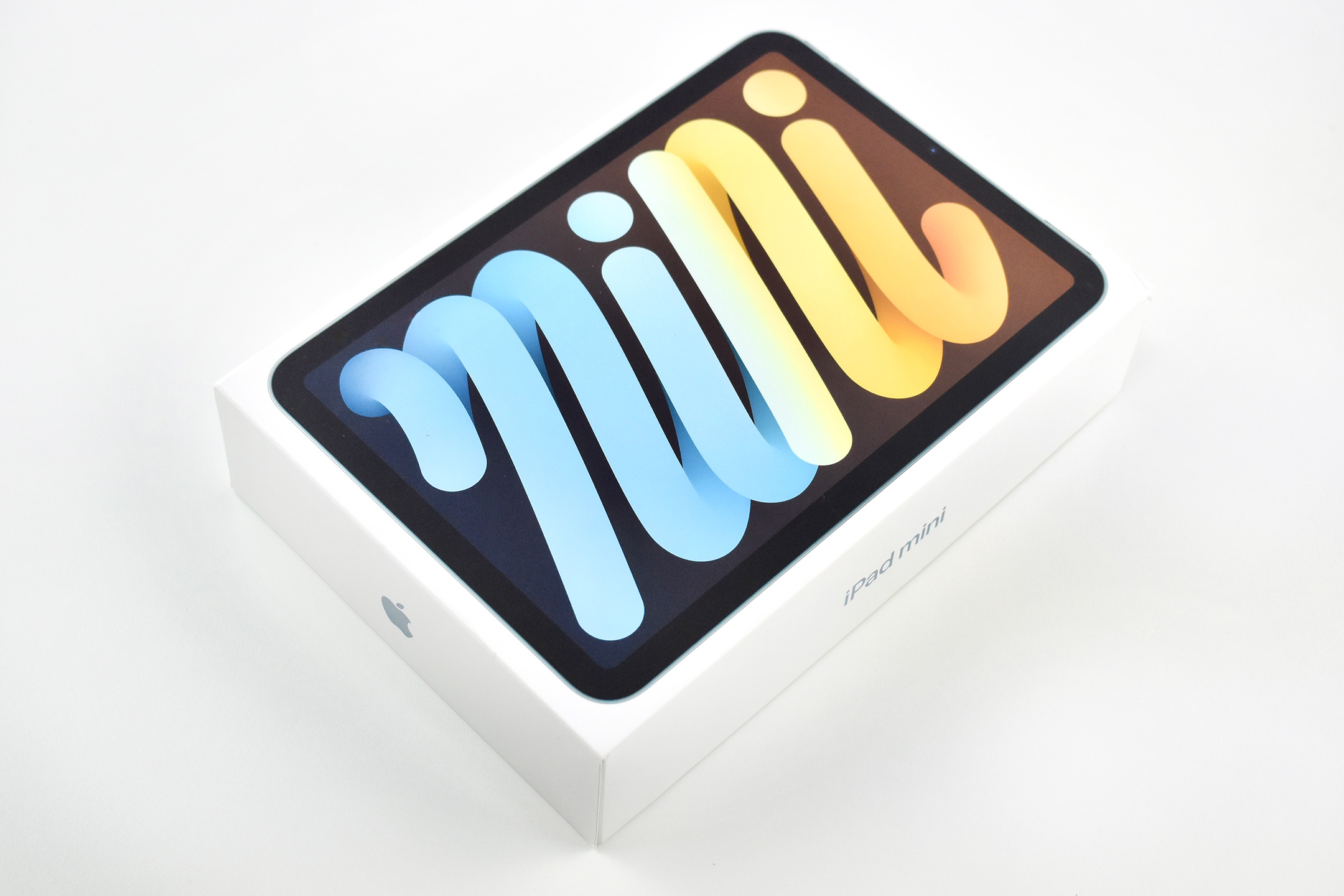
iPad (A16) (Generation 11, 11-inch, Wi-Fi, 128GB, Yellow, 2025)

On March 4, 2025, when Apple introduced the iPad Air with the M3 chip, they also announced the iPad Generation 11 with an A16 chip. The entire press release for this iPad device release amounted to one paragraph:

“Apple today also updated iPad with double the starting storage and the A16 chip, bringing even more value to customers. The A16 chip provides a jump in performance for everyday tasks and experiences in iPadOS, while still providing all-day battery life. Compared to the previous generation, the updated iPad with A16 is nearly 30 percent faster. In fact, compared to iPad with A13 Bionic, users will see up to a 50 percent improvement in overall performance, and A16 makes the updated iPad up to 6x faster than the best-selling Android tablet.”

This iPad update was released soon after the announcement of Apple Intelligence. While Apple was touting Apple Intelligence and updating its devices to take advantage of the new features, the iPad Generation 11 was given a chip that did not allow Apple Intelligence. While this updated iPad is faster than the previous Generation 10 model, it does not meet the minimum specification of the A17 Pro chip to allow Apple Intelligence compatibility. Apple provided no explanation for this omission.

One notable upgrade was in storage on the A16 iPad. The iPad Generation 11 doubled its base storage from 64 to 128GB and was also available in 256 and 512GB configurations. 

Except for the A16 chip and upgraded storage, this iPad was nearly identical to the iPad Generation 10. 

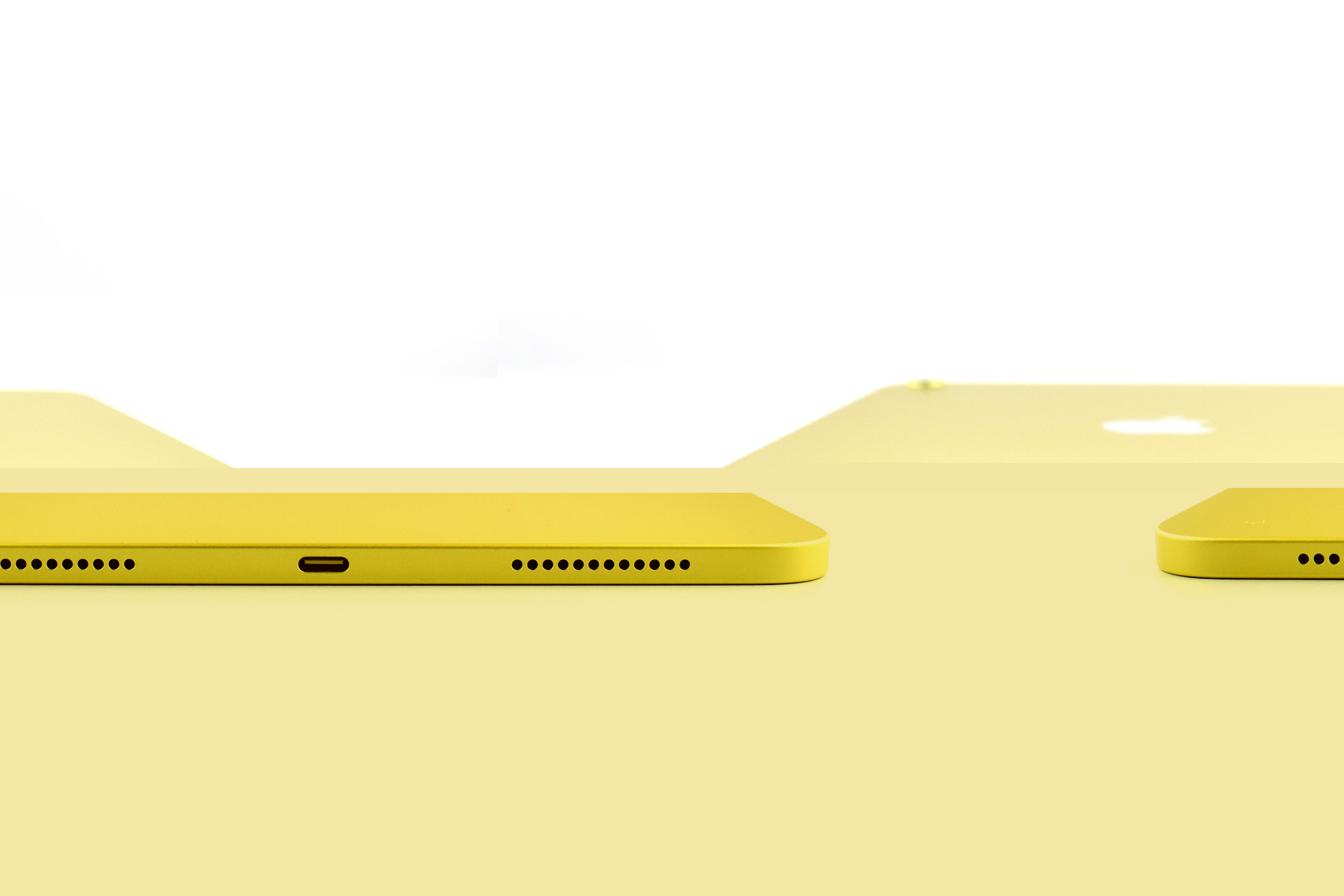
The iPad Generation 11 measured 9.79 x 7.07 inches, and was 0.28 inch thick. It weighed 1.05 pounds (Wi-Fi model). It had stereo speakers, a front camera and microphone centered on the “long”landscape” (long) side to enhance the FaceTime experience, and included both USB-C and a Smart Connector.

Its Liquid Retina display was 2360 x 1640 pixels at 264 ppi and delivered up to 500 nits brightness. It supported the Apple Pencil (USB-C) and also the Apple Pencil Generation 1 (although clumsily since the original Apple Pencil used a Lightning connector for charging). 

The back camera was 12MP with digital zoom up to 5x supporting Smart HDR 4, geotagging, auto image stabilization, and burst mode. It could capture video up to 4K. The similar front camera was also 12MP and supported Center Stage in Landscape mode. It supported Smart HDR 4, but only could record 1080p HD video. 

The iPad Generation 11 had 5 sensors, including Touch ID, 3‐axis gyro, accelerometer, barometer, and an ambient light sensor. 

Sources: Apple (Newsroom, Specs)

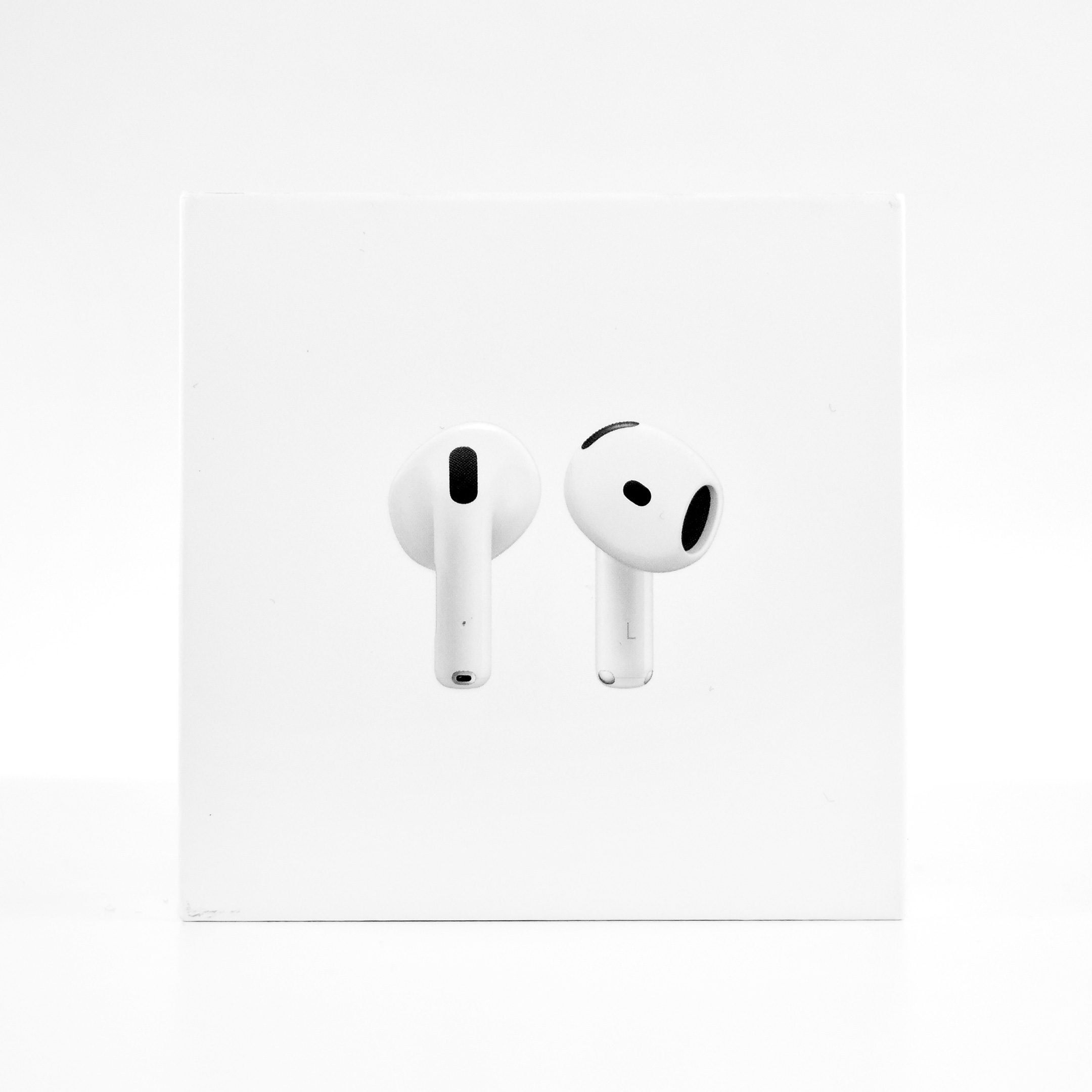
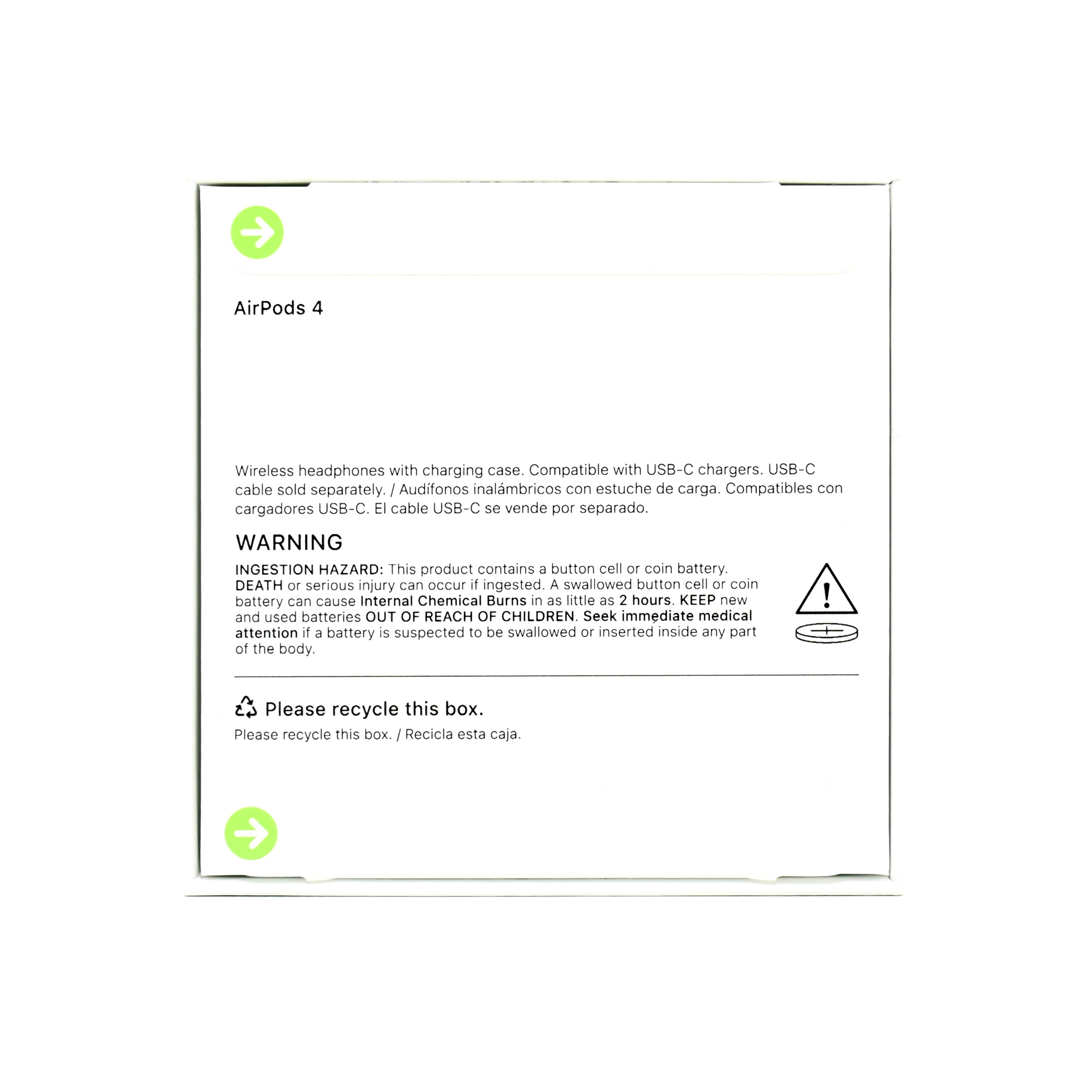
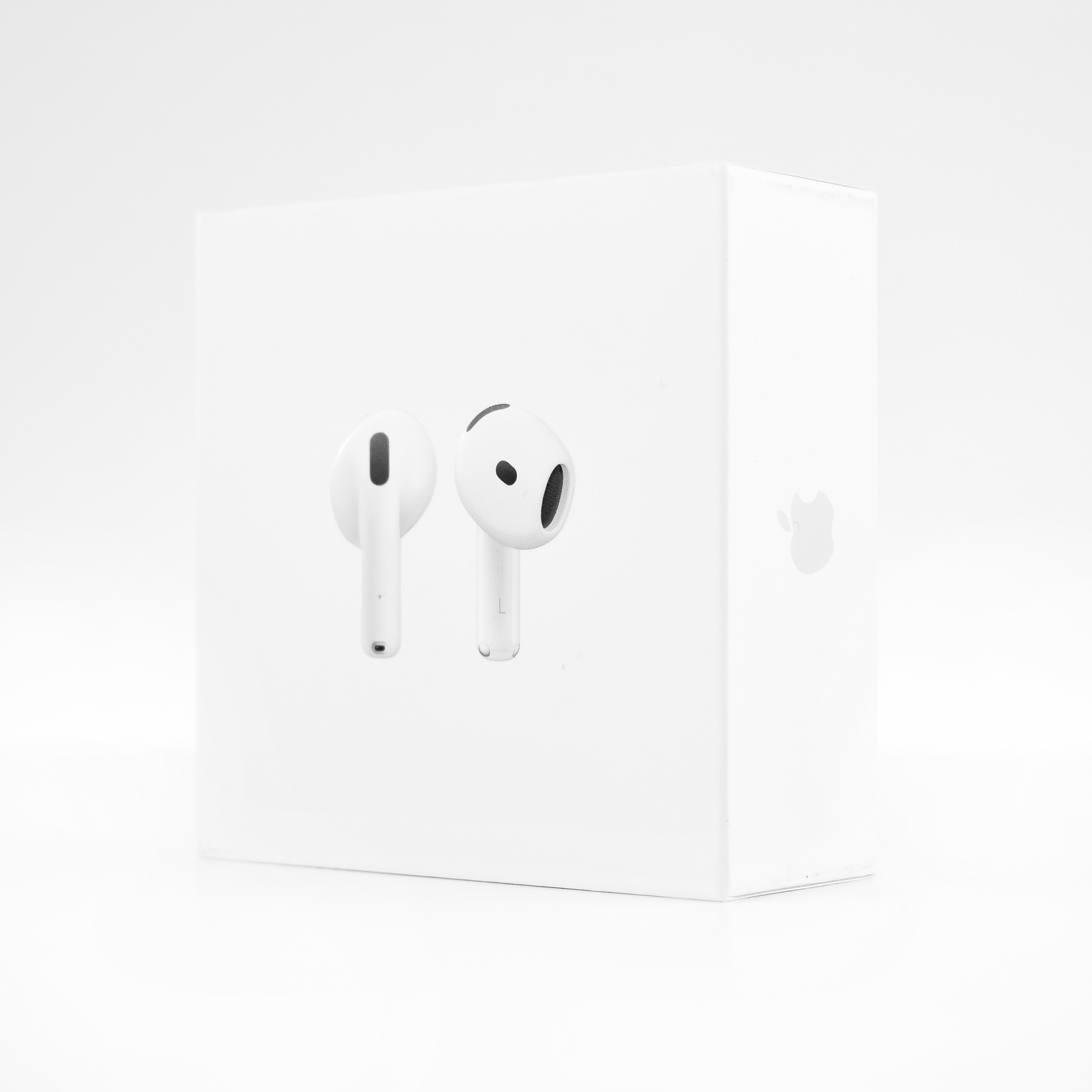
AirPods 4 (2024)

Beginning in 2024 Apple began offering the entry-level AirPods 4 product in two versions: AirPods 4 and AirPods 4 with Active Noise Cancellation. These AirPods 4 are the “base” model without the additional features.

As Apple often mentions, “AirPods 4 are the best headphones Apple has ever created.” The updated headphones offer “open-ear design, setting an entirely new benchmark for fit and comfort.”

Apple improved the fit and comfort of these AirPods:

“The new design is built with an unparalleled data set that uses advanced modeling tools, like 3D photogrammetry and laser topography, to precisely map and analyze thousands of ear shapes and over 50 million individual data points in total. This process helped refine the design to deliver the most comfortable AirPods ever with one shape that naturally fits even more users around the world.”

AirPods 4 offer the following core technologies:

  • Custom high-excursion Apple driver
  • Custom high dynamic range amplifier
  • Voice Isolation2
  • Personalized Spatial Audio with dynamic head tracking3
  • Adaptive EQ
  • Vent system for pressure equalization

The AirPods 4 with Active Noise Cancellation add 4 features, including Active Noise Cancellation, Adaptive Audio, Transparency mode, and Conversation Awareness. These additional features also allow this model to use Live Translation for communicating across languages.

AirPods 4 are powered by Apple’s H2 headphone chip. Built-in sensors include:

  • Dual beamforming microphones
  • Inward-facing microphone
  • Optical in-ear sensor
  • Motion-detecting accelerometer
  • Speech-detecting accelerometer
  • Force sensor

These sensors offer many new features not available in previous “base” AirPods models:

“With the H2 chip, AirPods 4 unlock intelligent audio experiences only Apple silicon can deliver, such as Voice Isolation, enabling clearer call quality no matter the environmental conditions, and Siri Interactions, allowing users to simply nod their head yes or gently shake their head no to respond to Siri announcements. For even more control, AirPods 4 also feature a new force sensor on the stem to play or pause media and mute or end calls with a quick press.”

Each AirPod 4 is 1.19 inches (30.2 mm) x 0.72 inch (18.3 mm) and 0.71 inch (18.1 mm) deep. Each weighs 0.15 ounce (4.3 grams). The AirPods 4 case measures 1.82 inches (46.2 mm) x 1.97 inches (50.1 mm) and is 0.83 inch (21.2 mm) deep. The case weighs 1.14 ounces (32.3 grams).

The base AirPods 4 allows only USB-C connector charging, while the AirPods 4 with Active Noise Cancellation adds Apple Watch or Qi‑certified charging. AirPods 4 allow up to 5 hours of listening time on a single charge, however, 5 minutes of charging provides around 1 hour of listening time.

AirPods 4 connect using Bluetooth 5.3.

Source: Apple (product page, newsroom)

USB-C Woven Charging Cable (Black, 1 meter, Bulk Packaging, 2024)

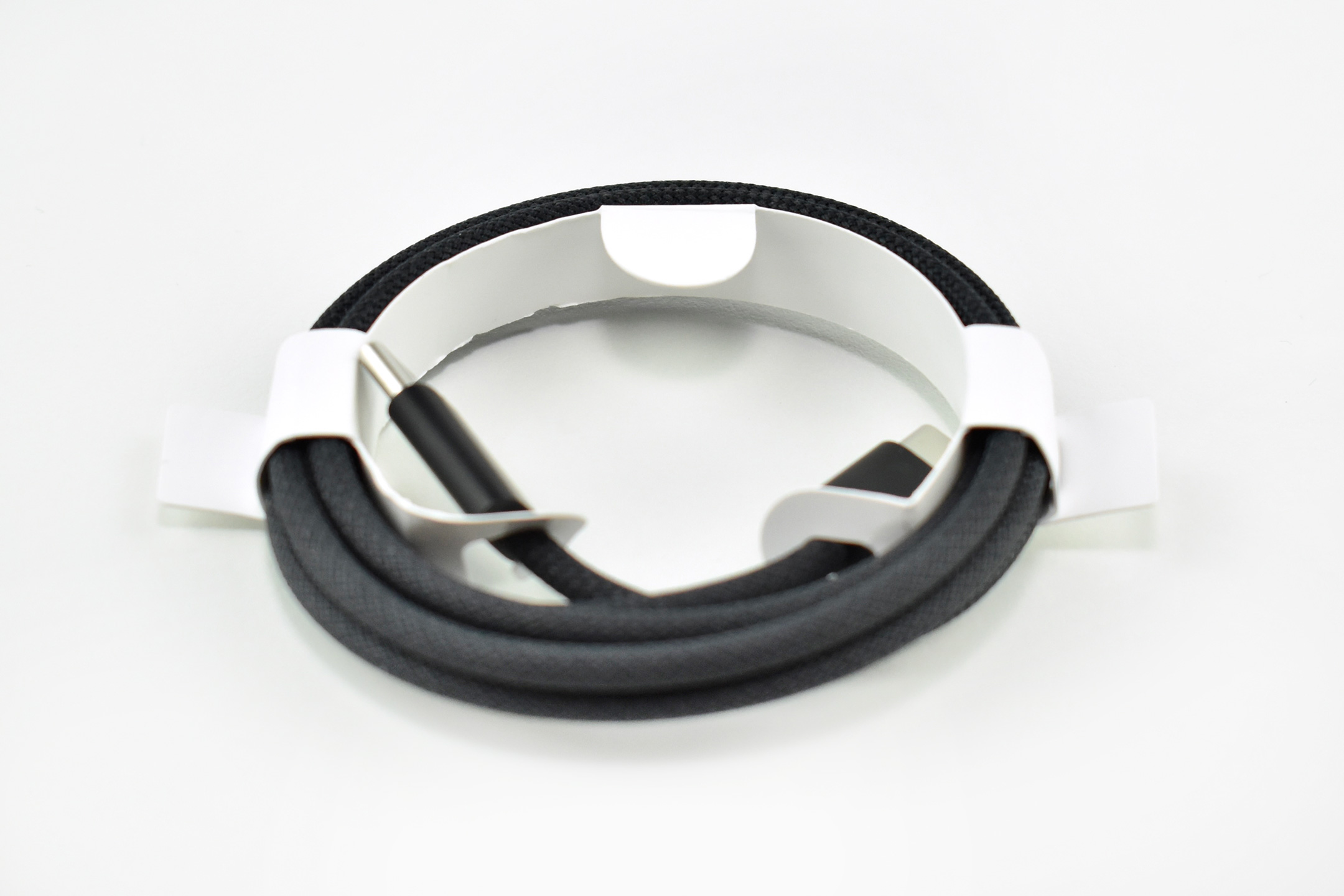
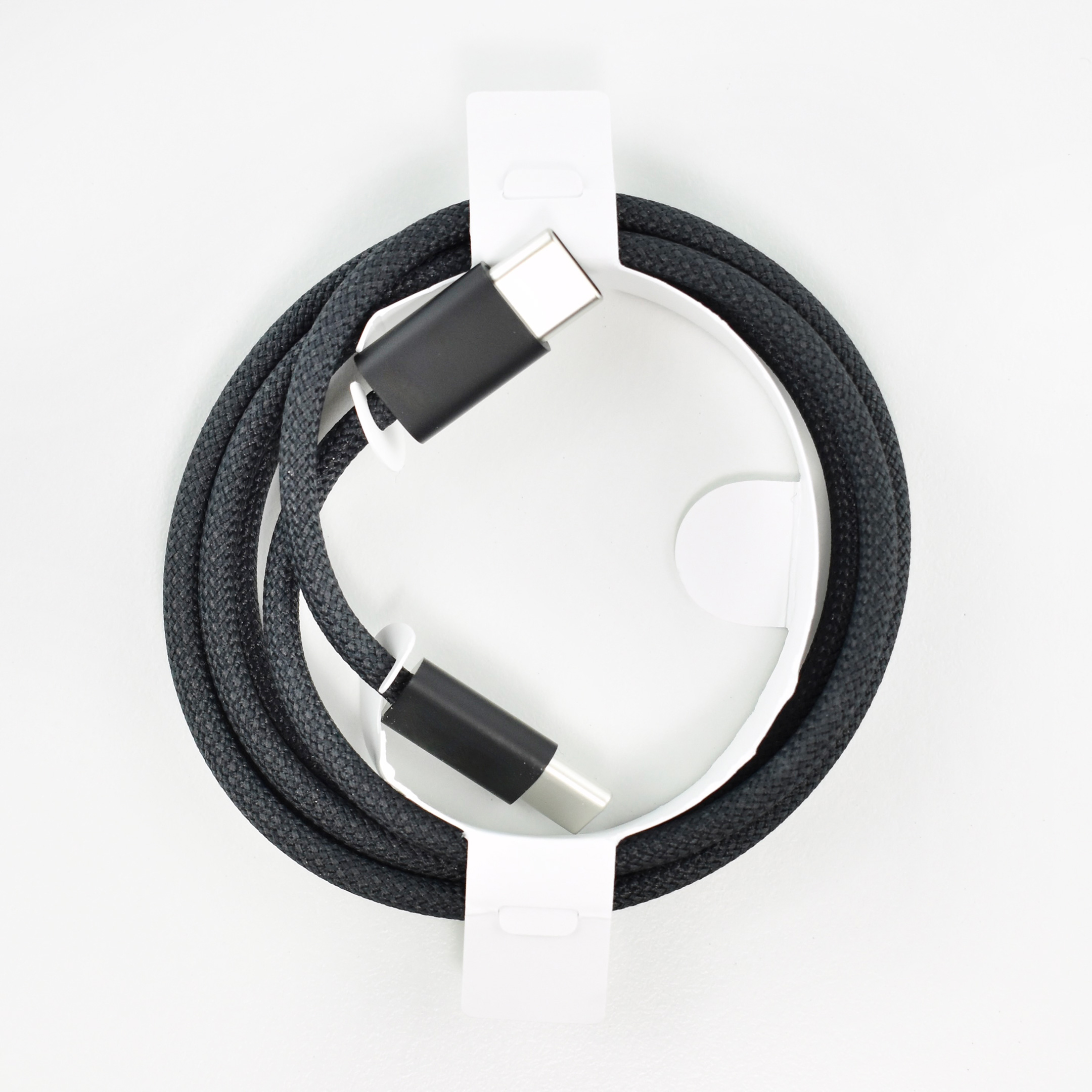
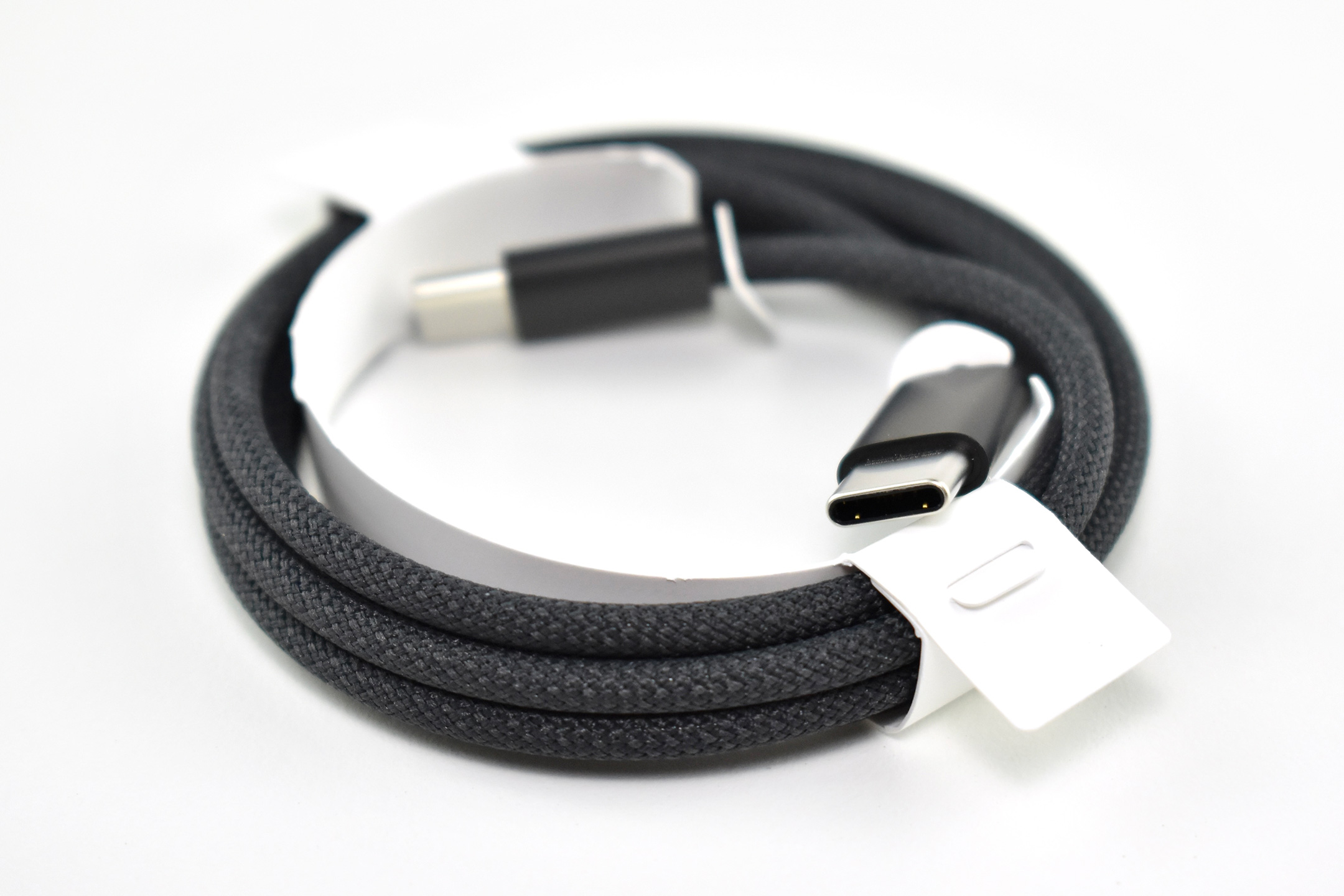
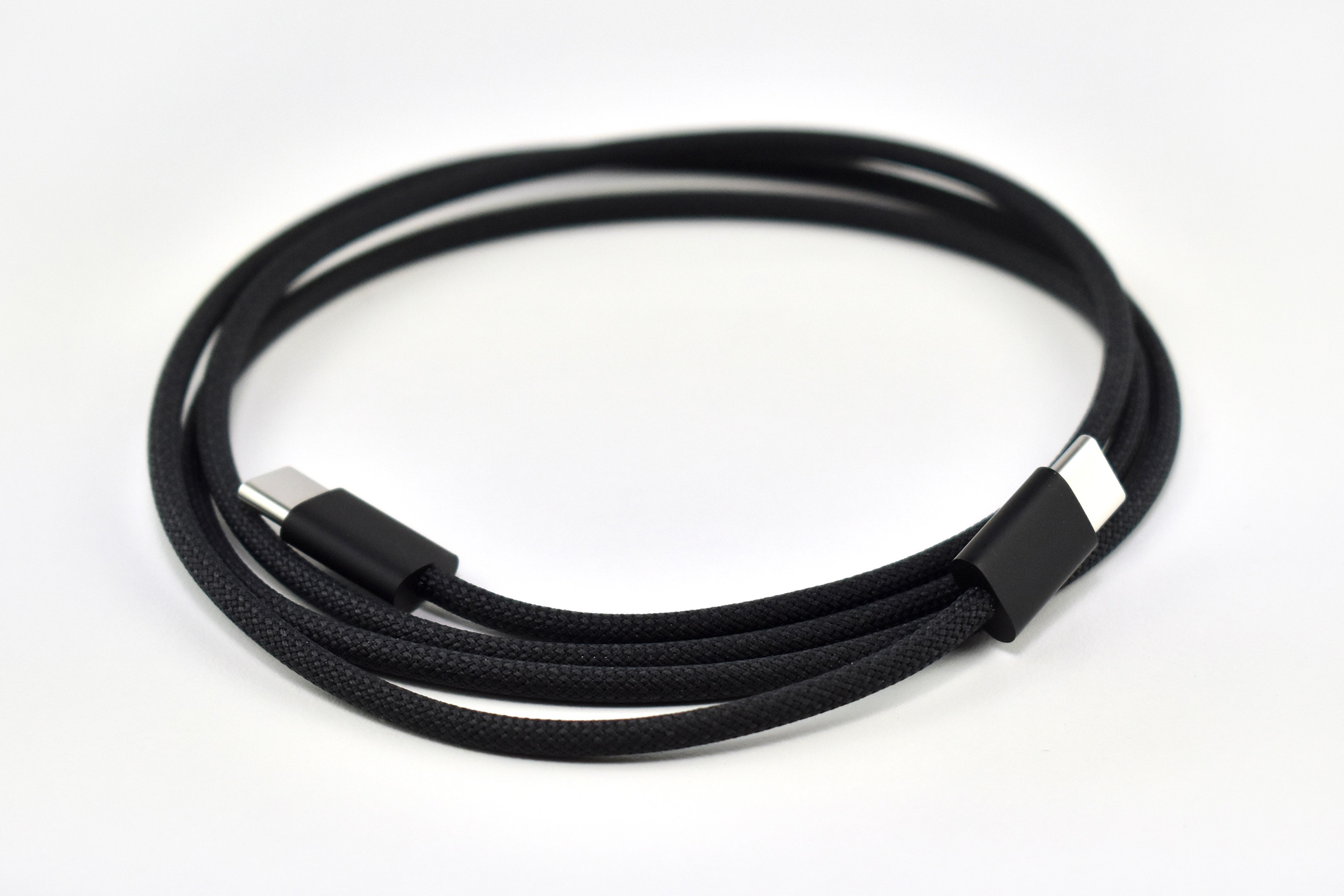
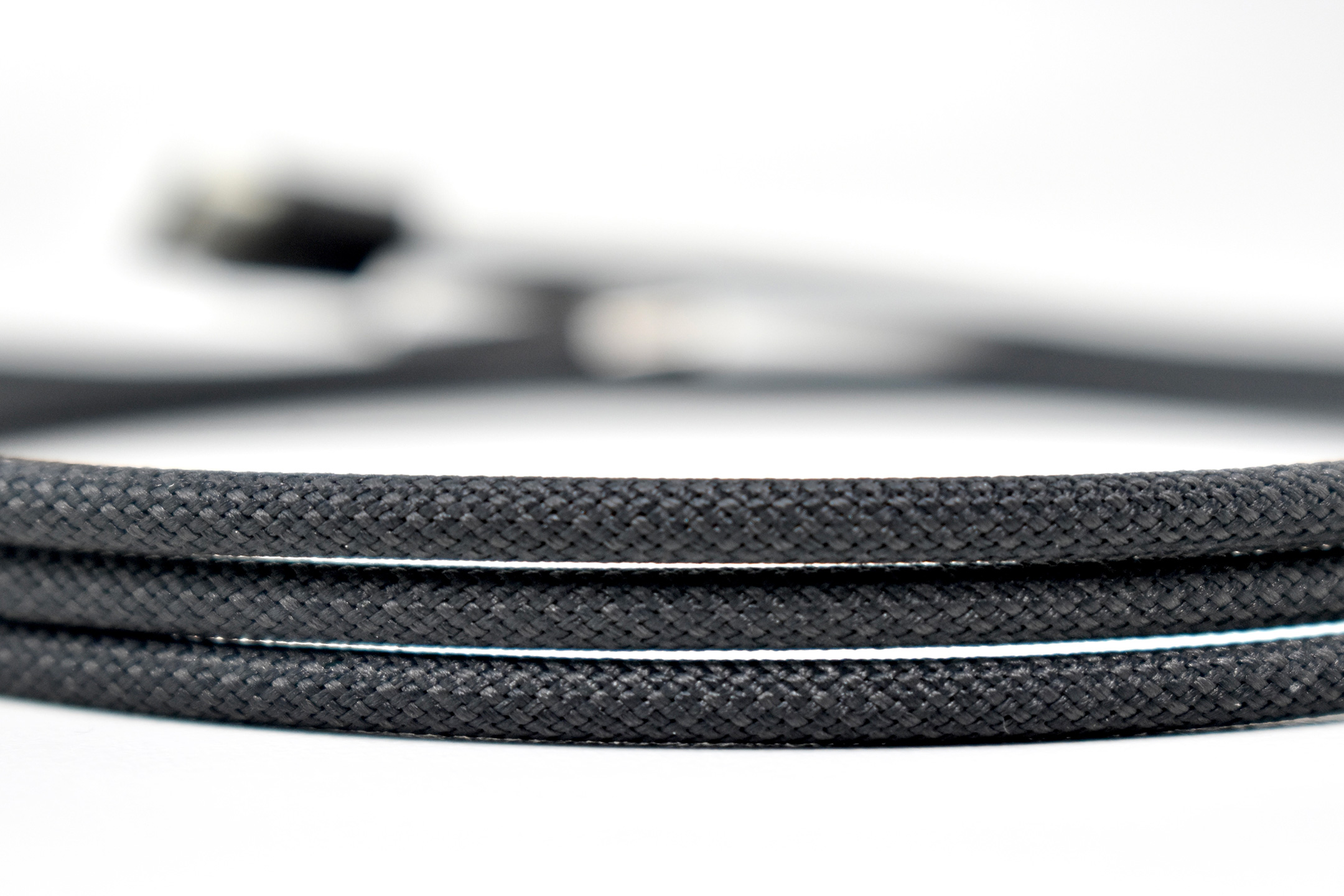
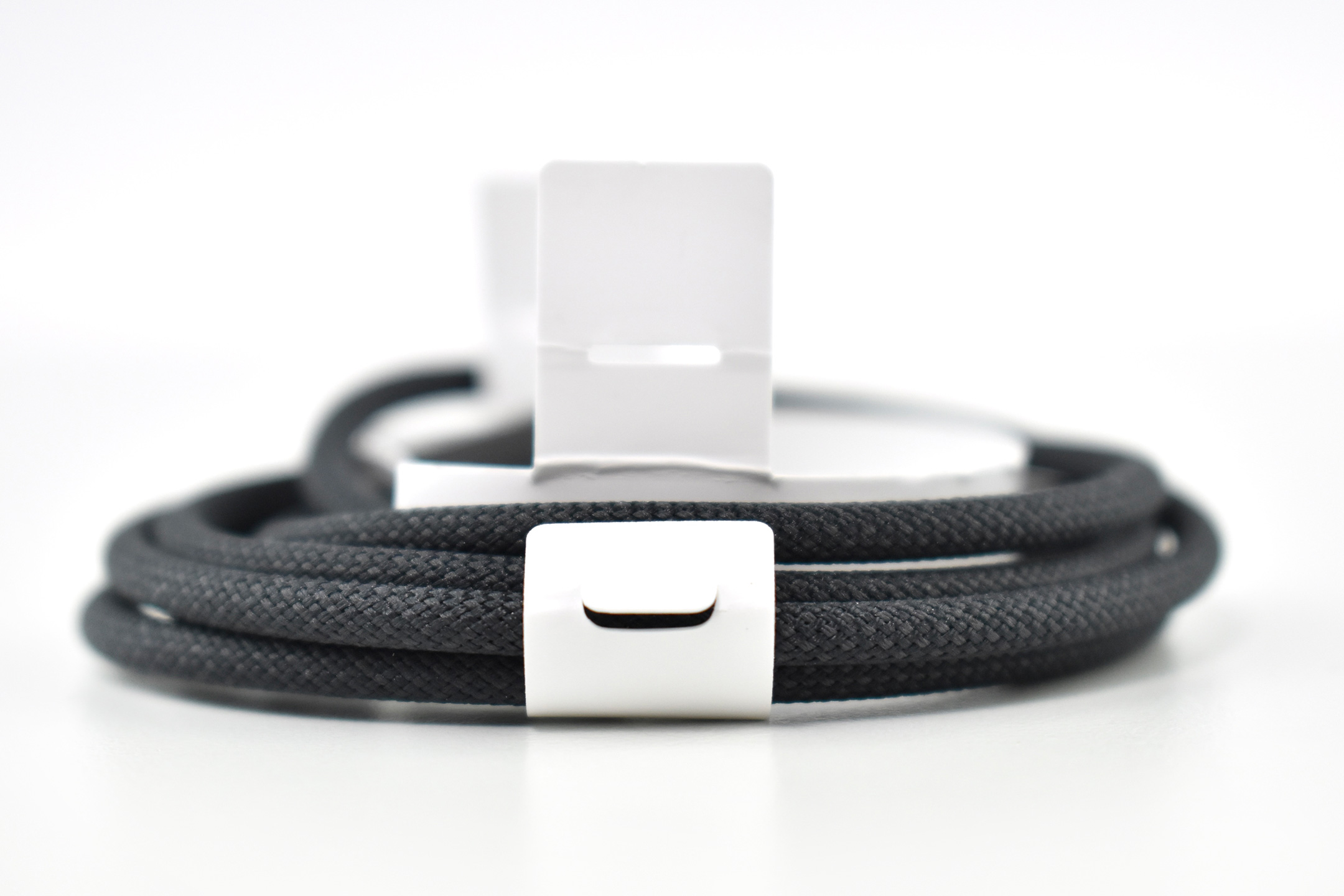
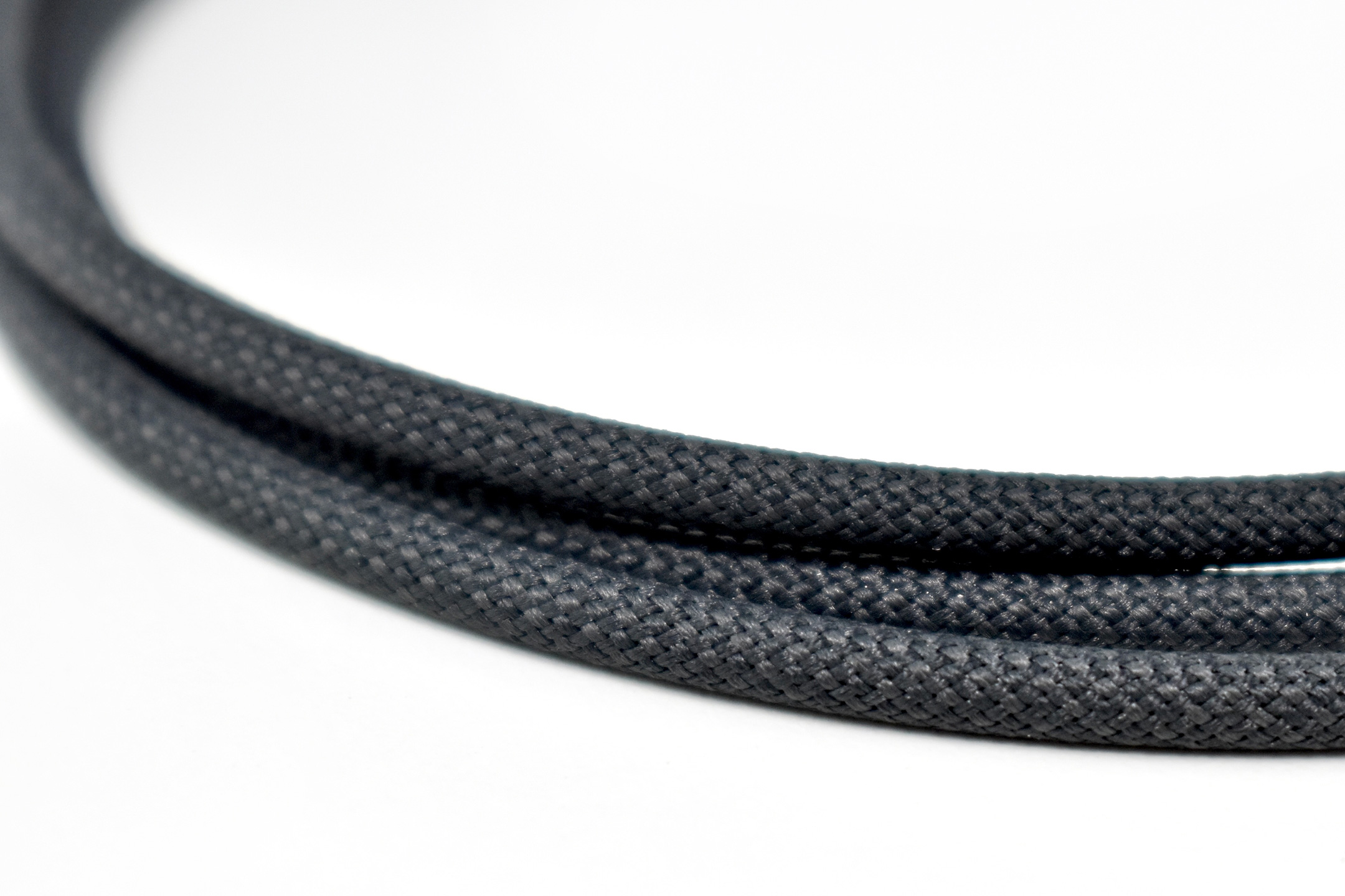
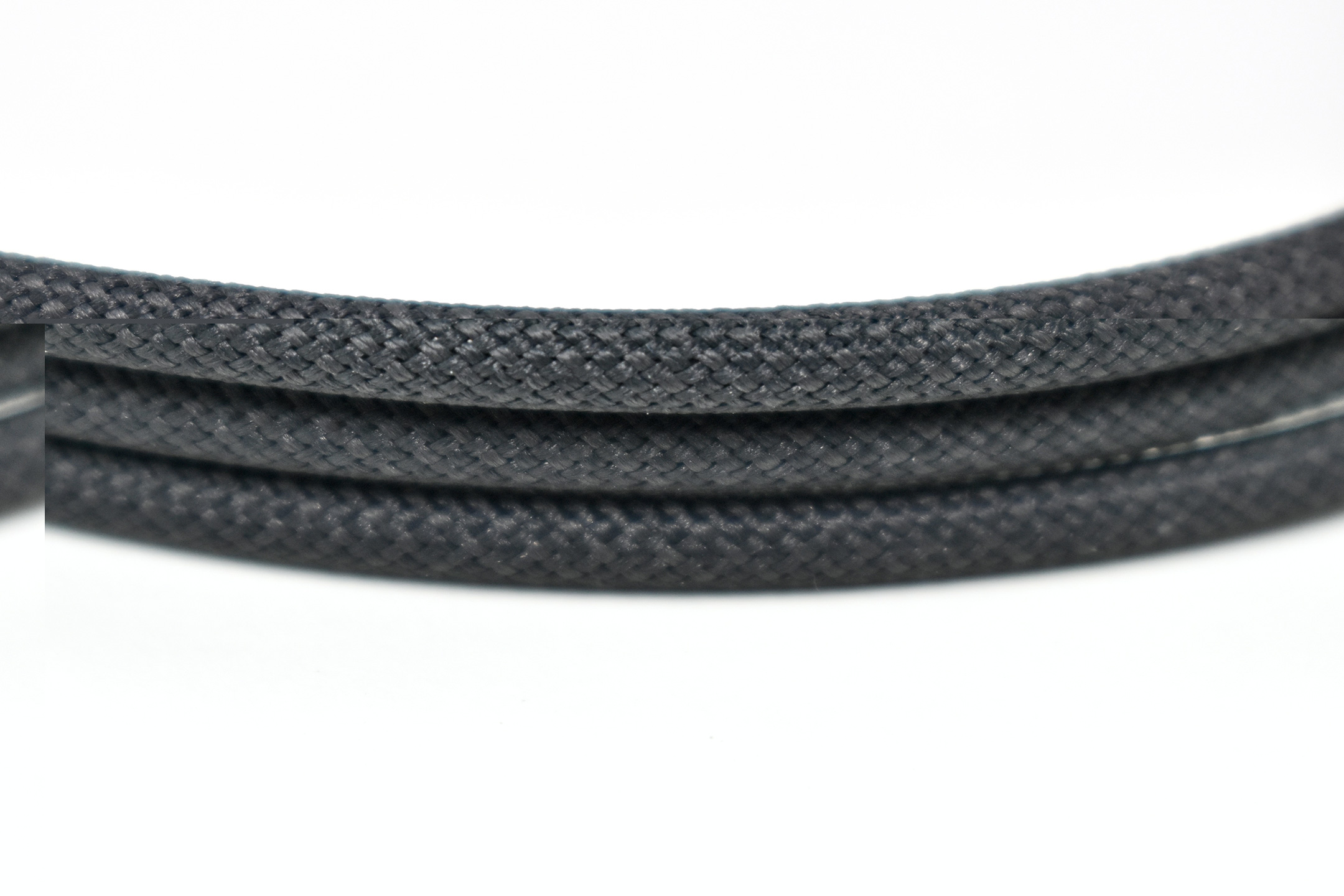
This USB-C charging cable was made by Apple in a braided design in black. It has USB-C connectors on both ends and could be used for charging, syncing, and transferring data between USB-C devices. It supported charging of up to 60 watts or USB 2 data transfer. If used with a USB-C power adapter, it can fast-charge devices from a wall outlet.

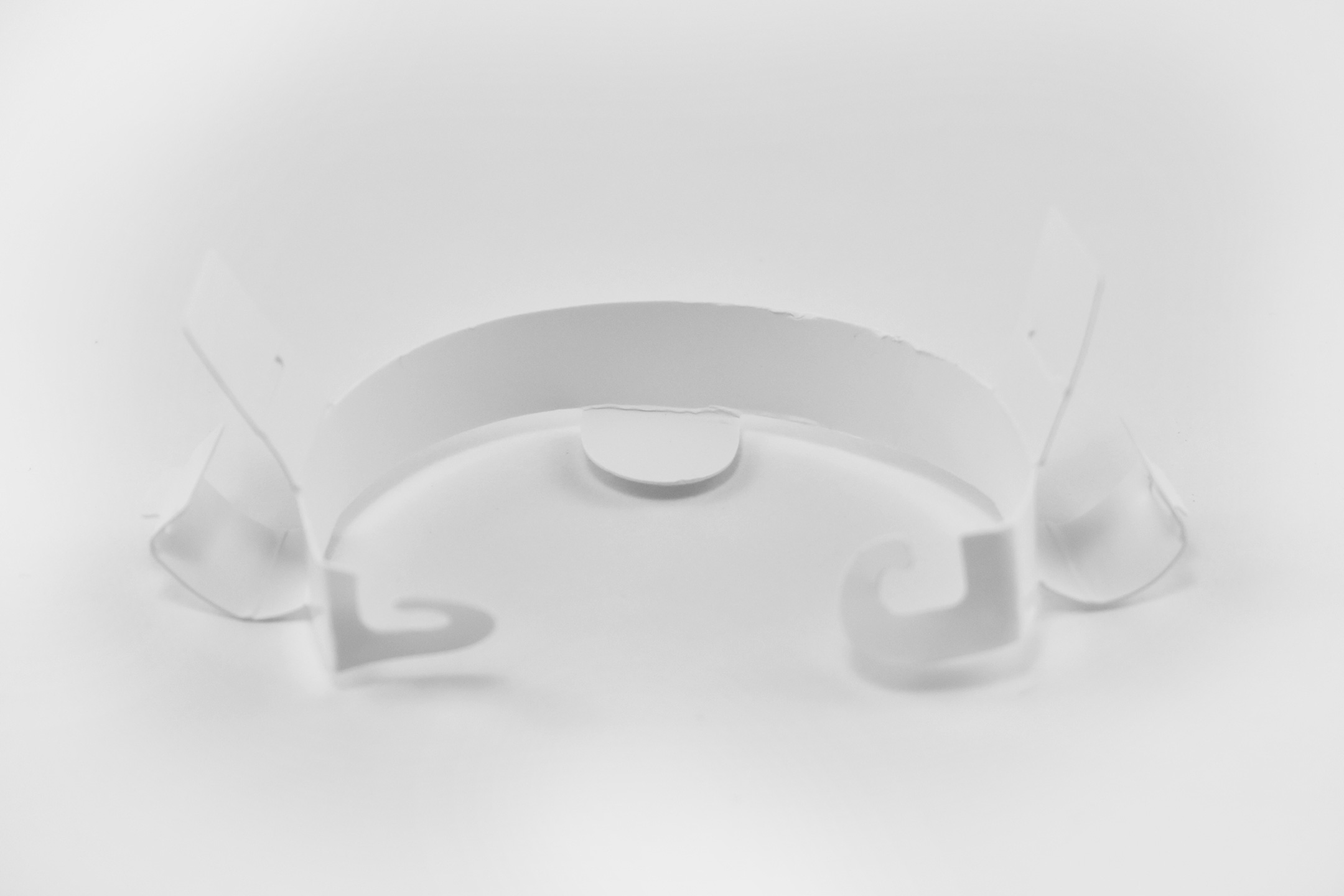
This cable is 1 meter (3.3 feet) long and shipped in bulk packaging—the same cardboard packaging that is used to keep the cable wrapped in a circular package with the USB-C plugs secured inside an Apple box such as an iPad.

As of January 2026, Apple referred to this product on their website as “60W USB-C Charge Cable (1 m).”

Source: Apple

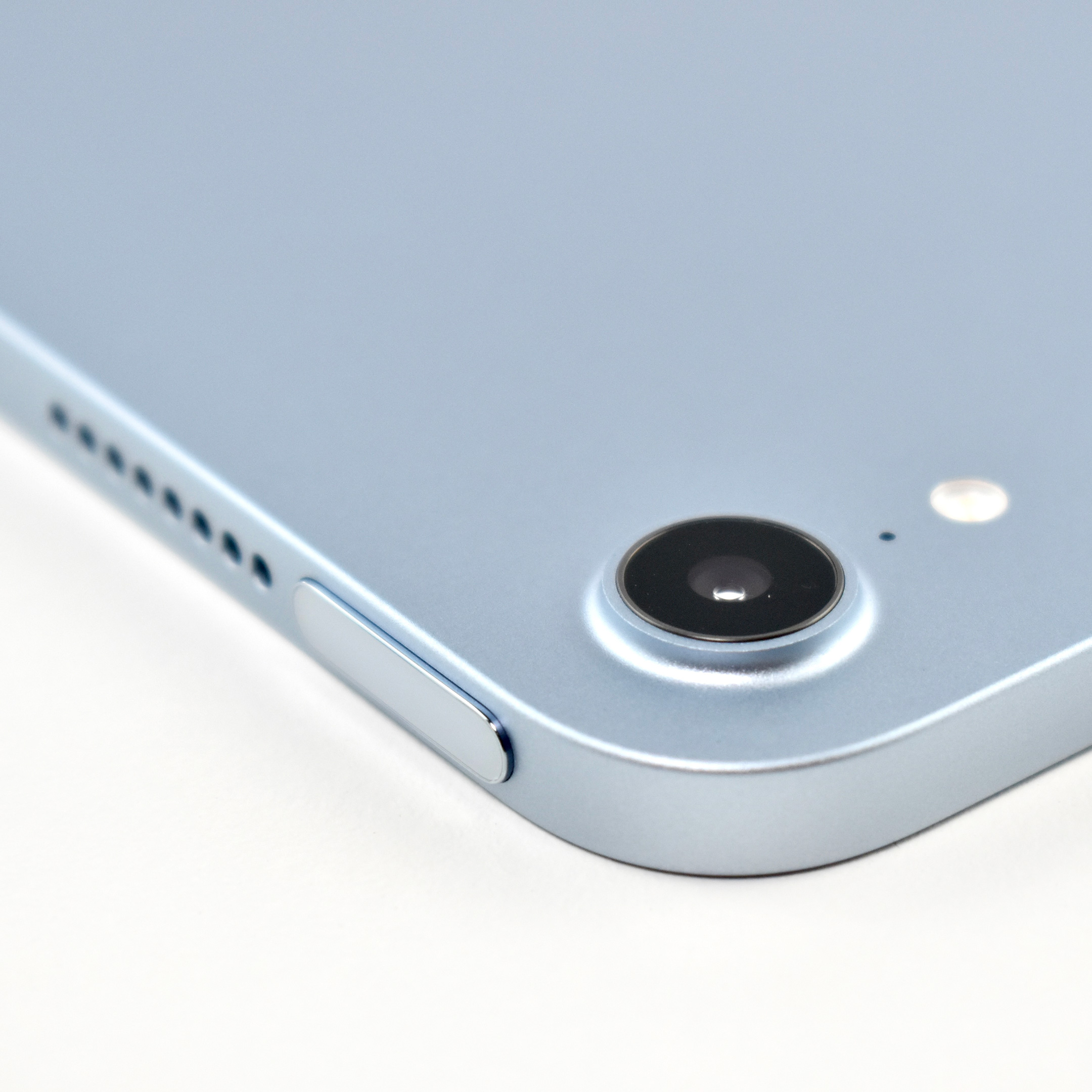
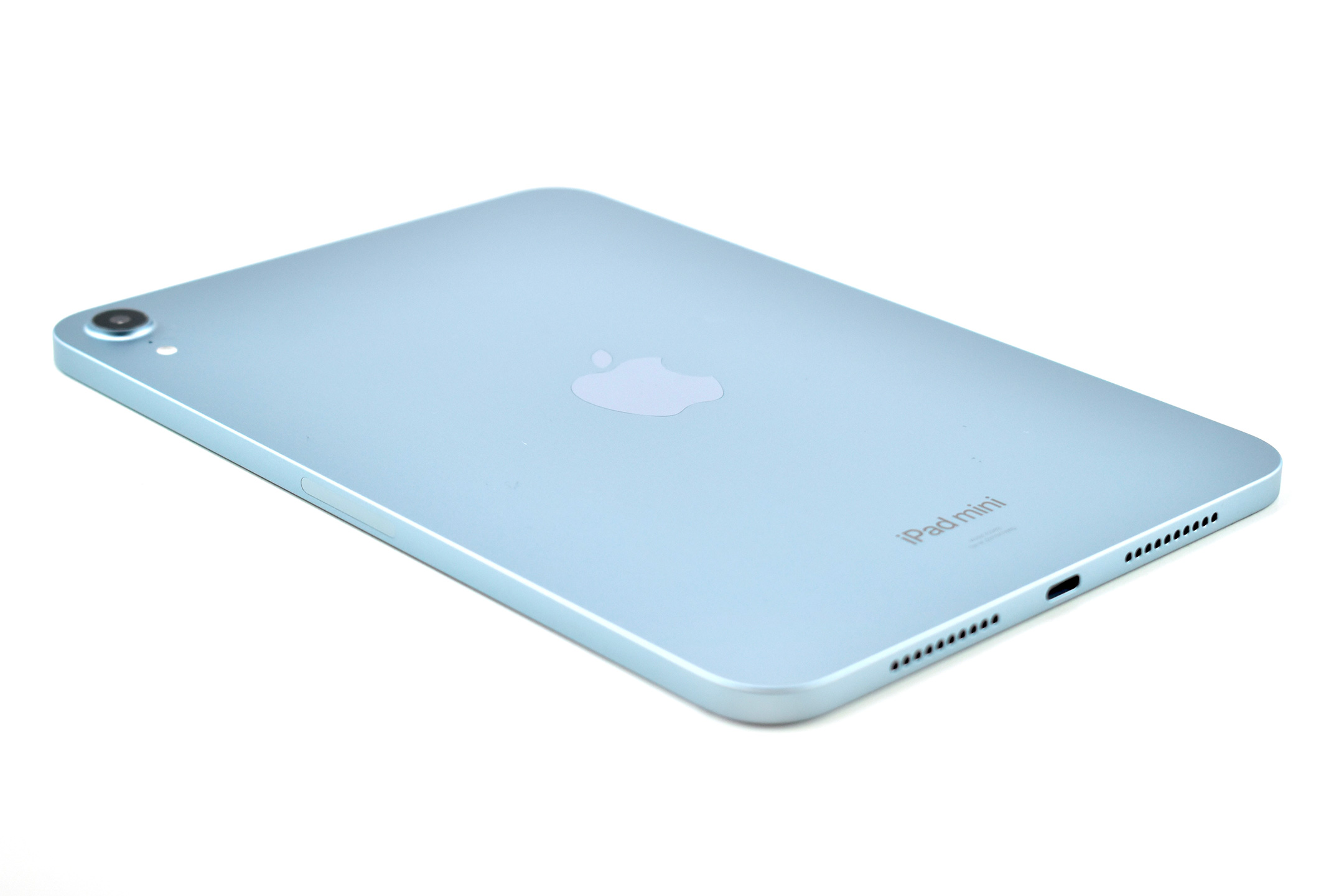
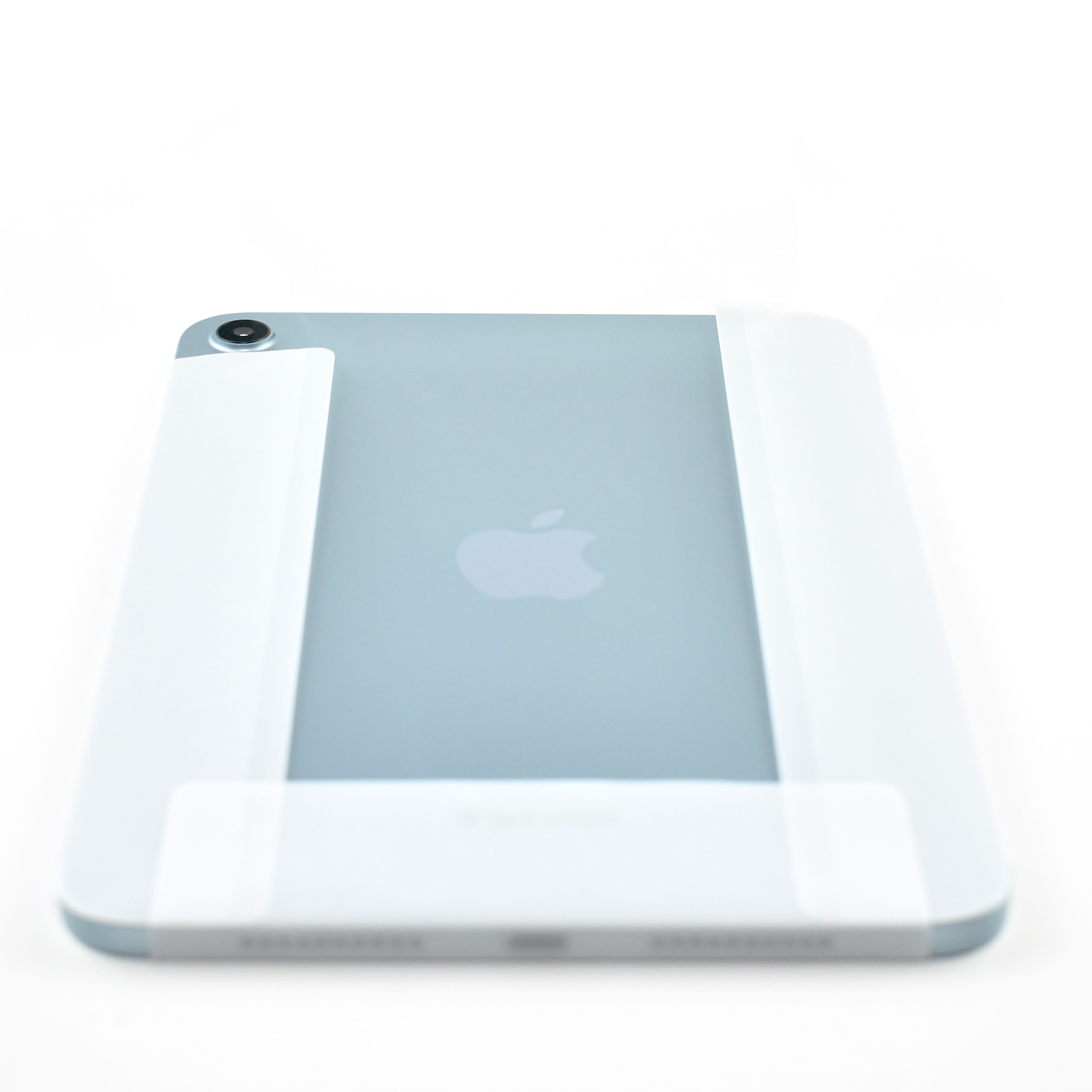
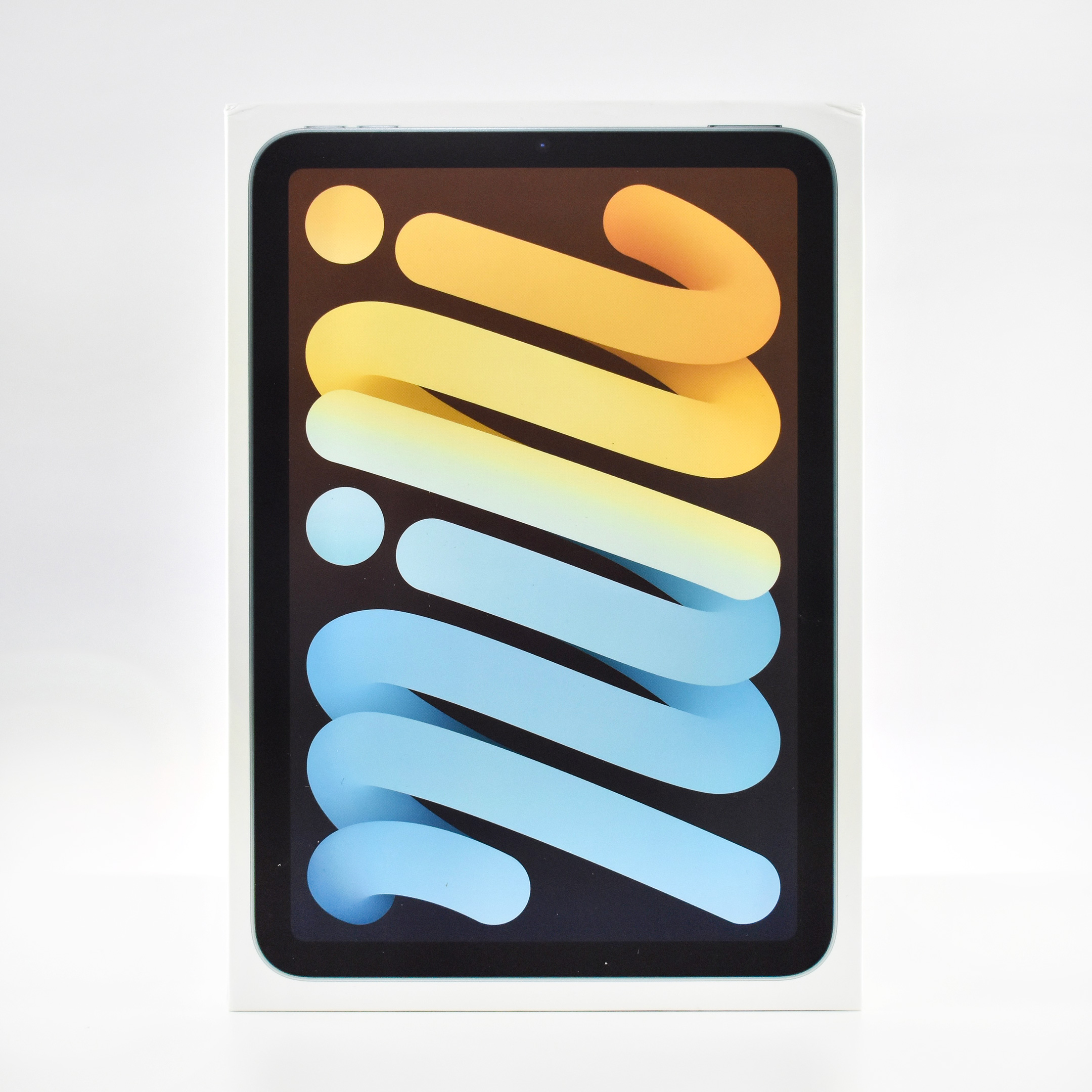
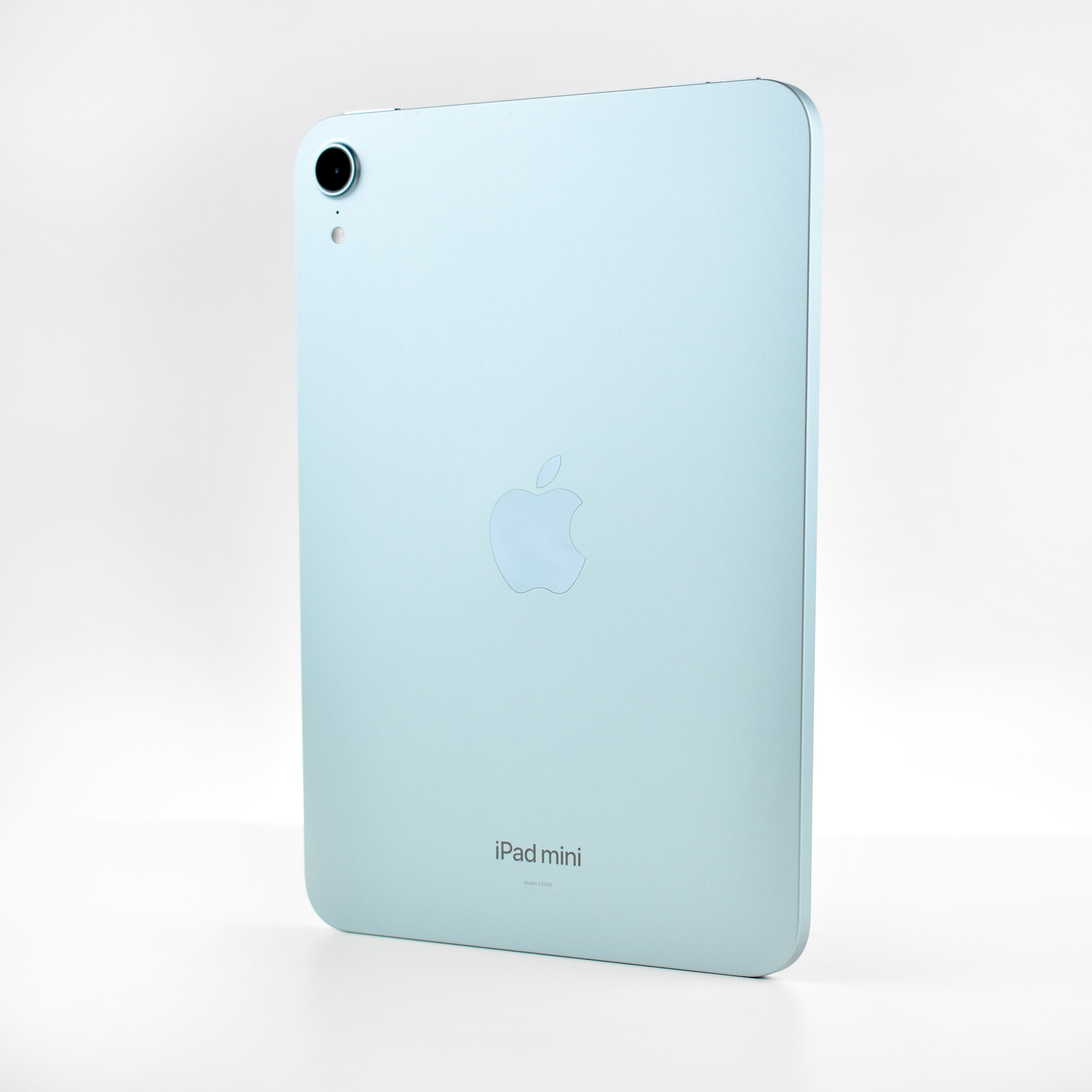
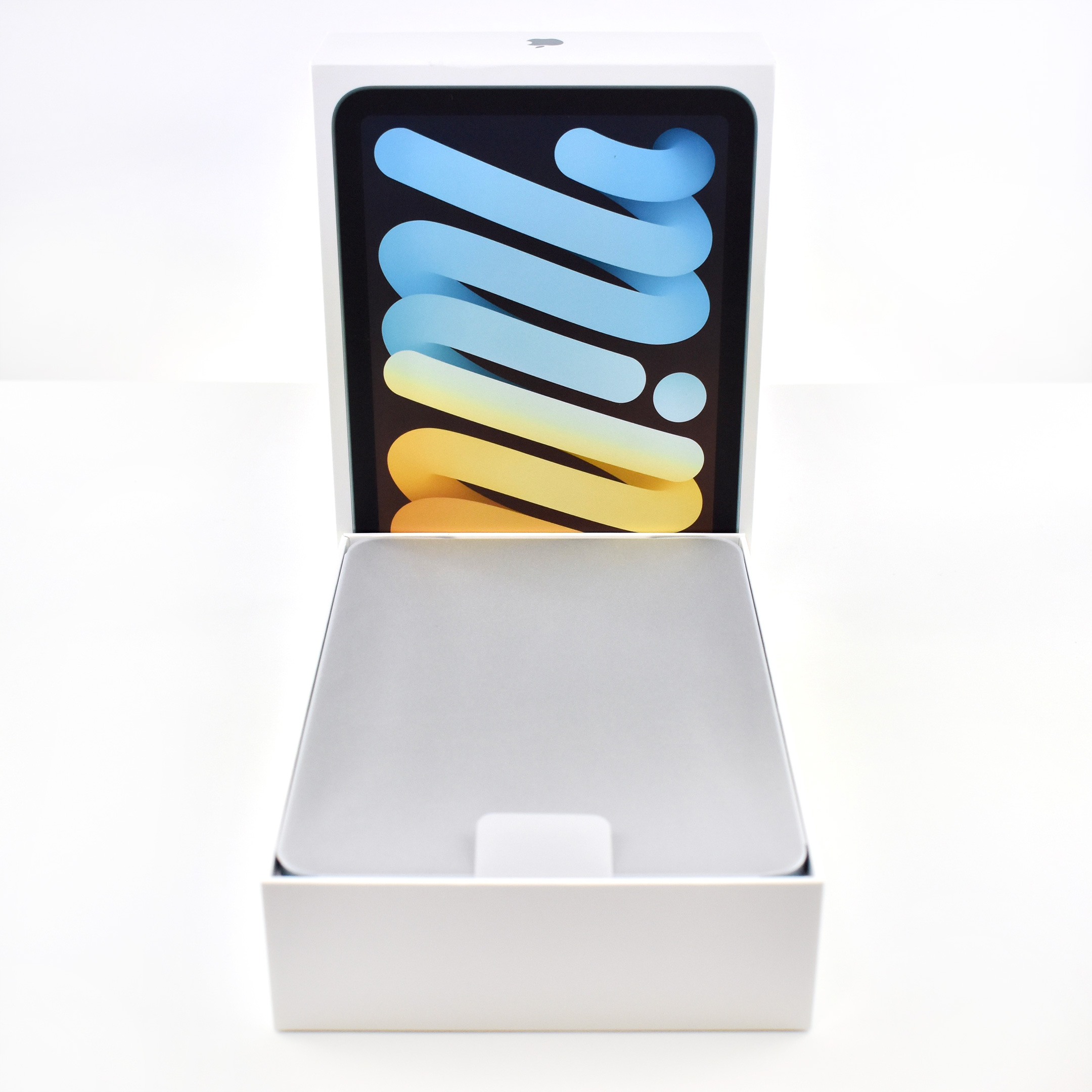
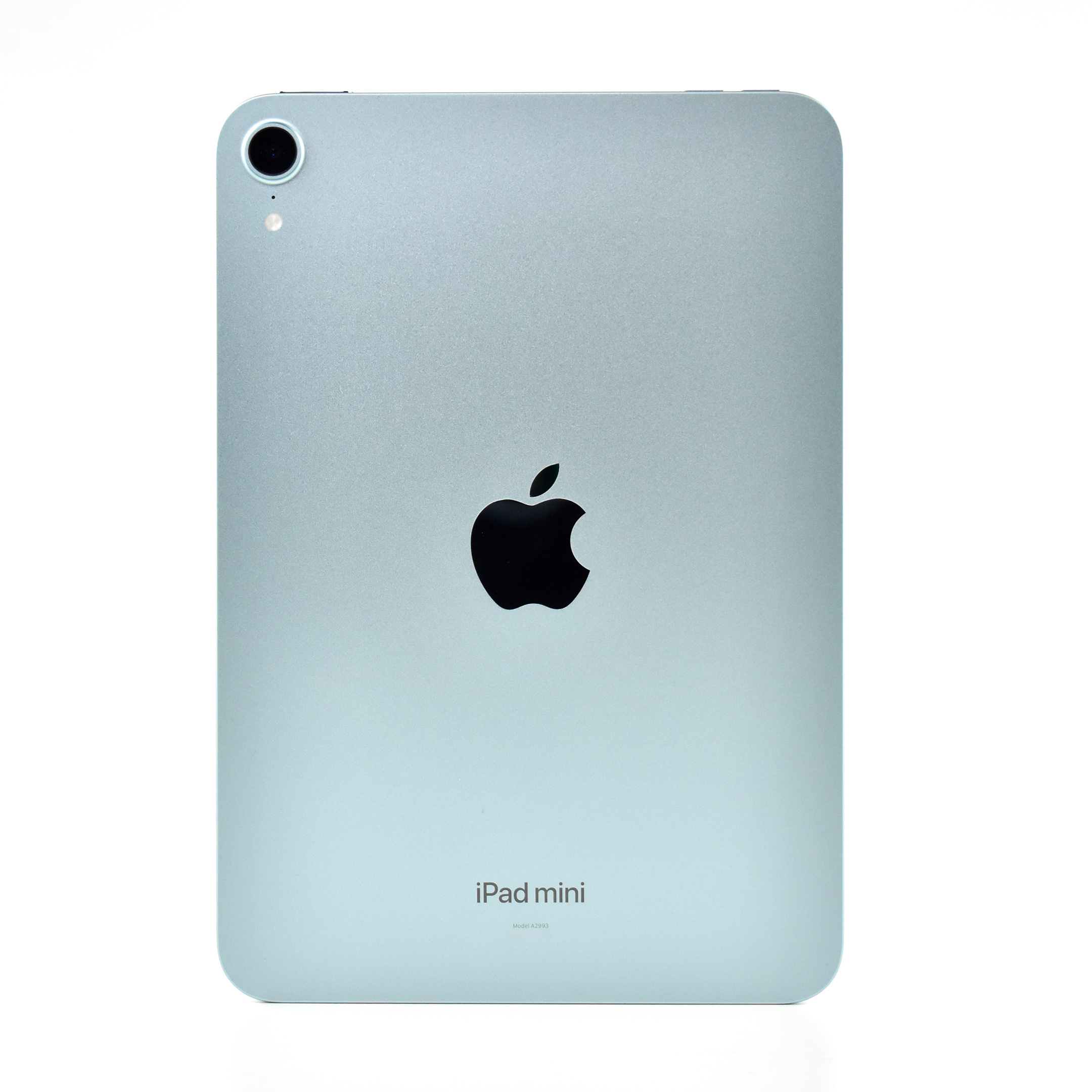
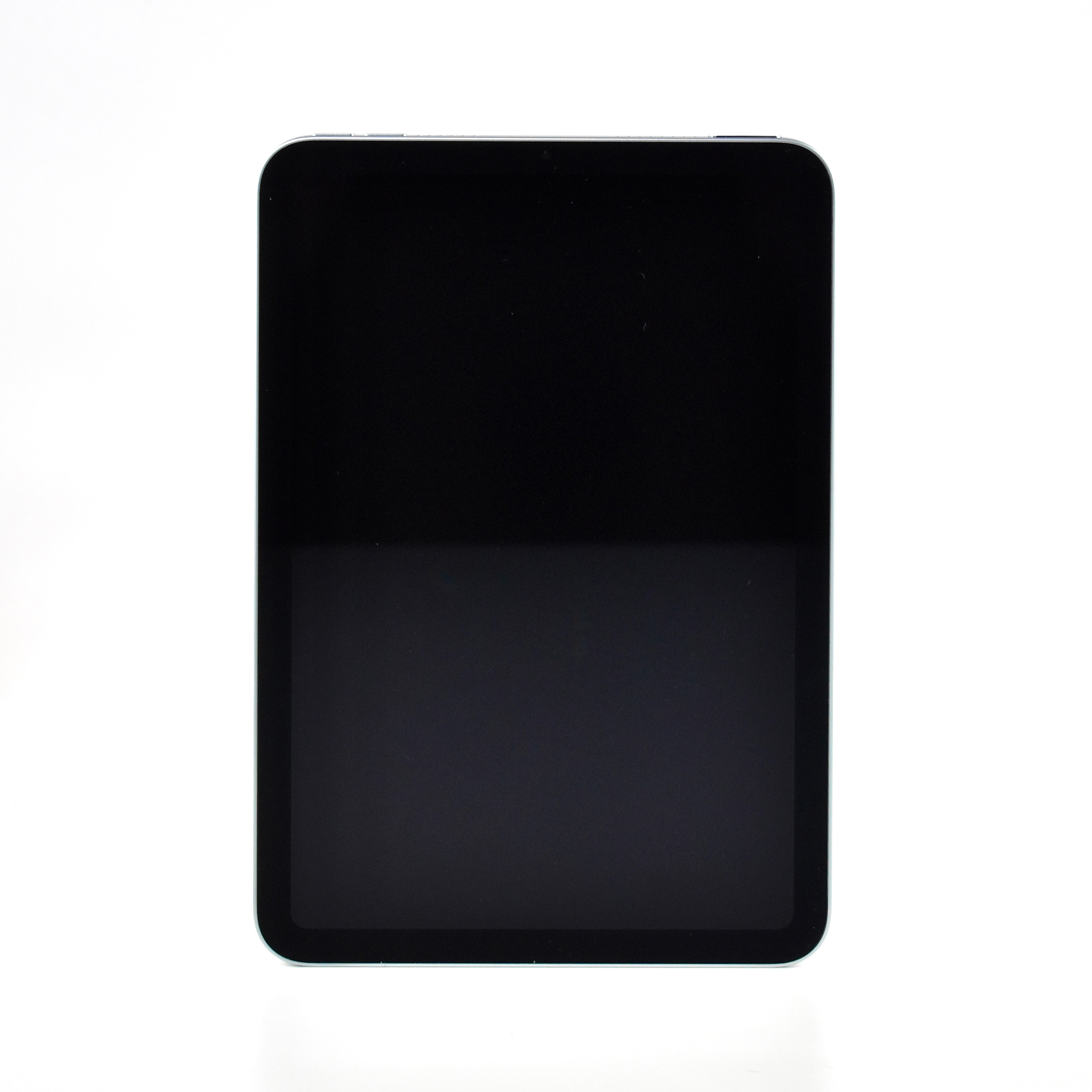
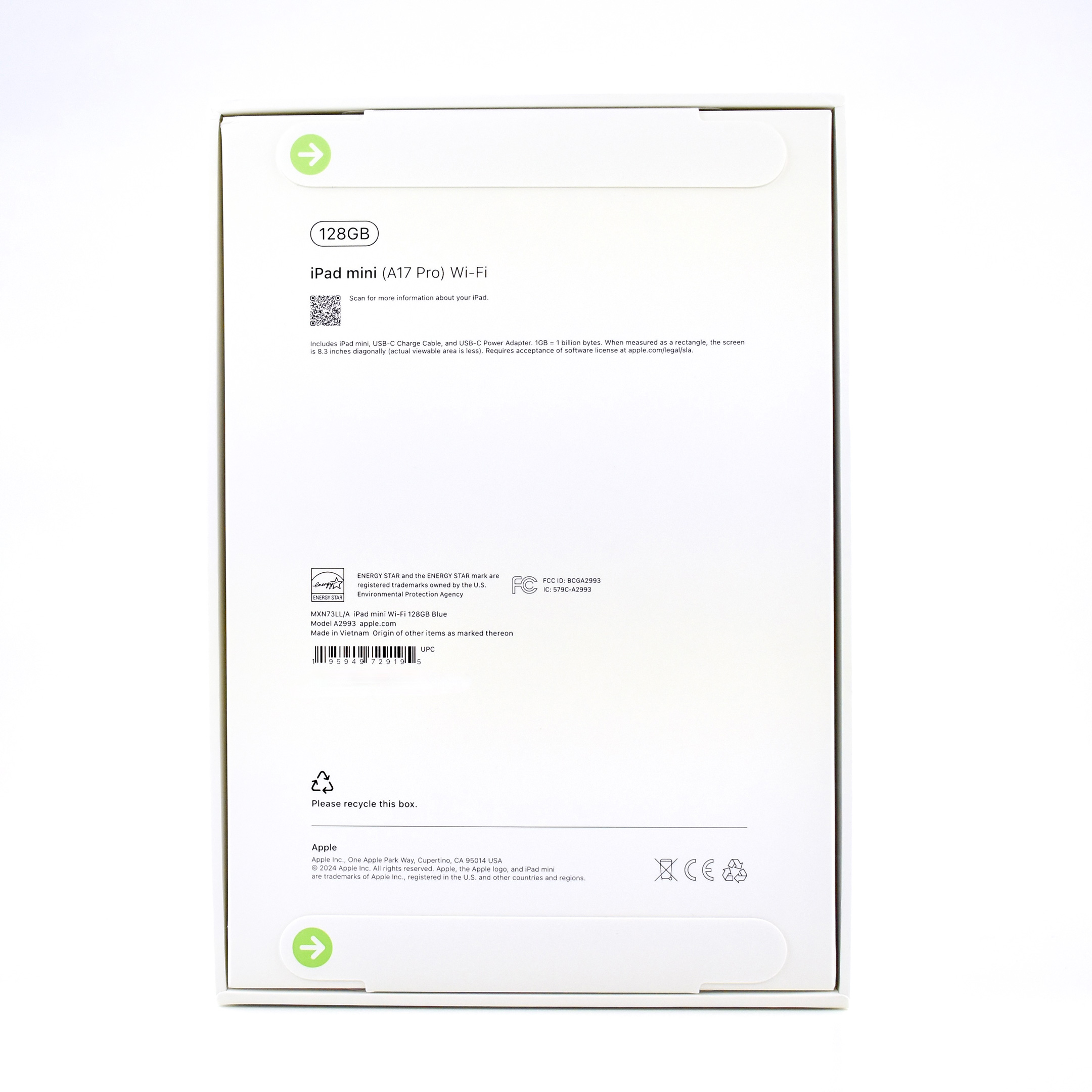
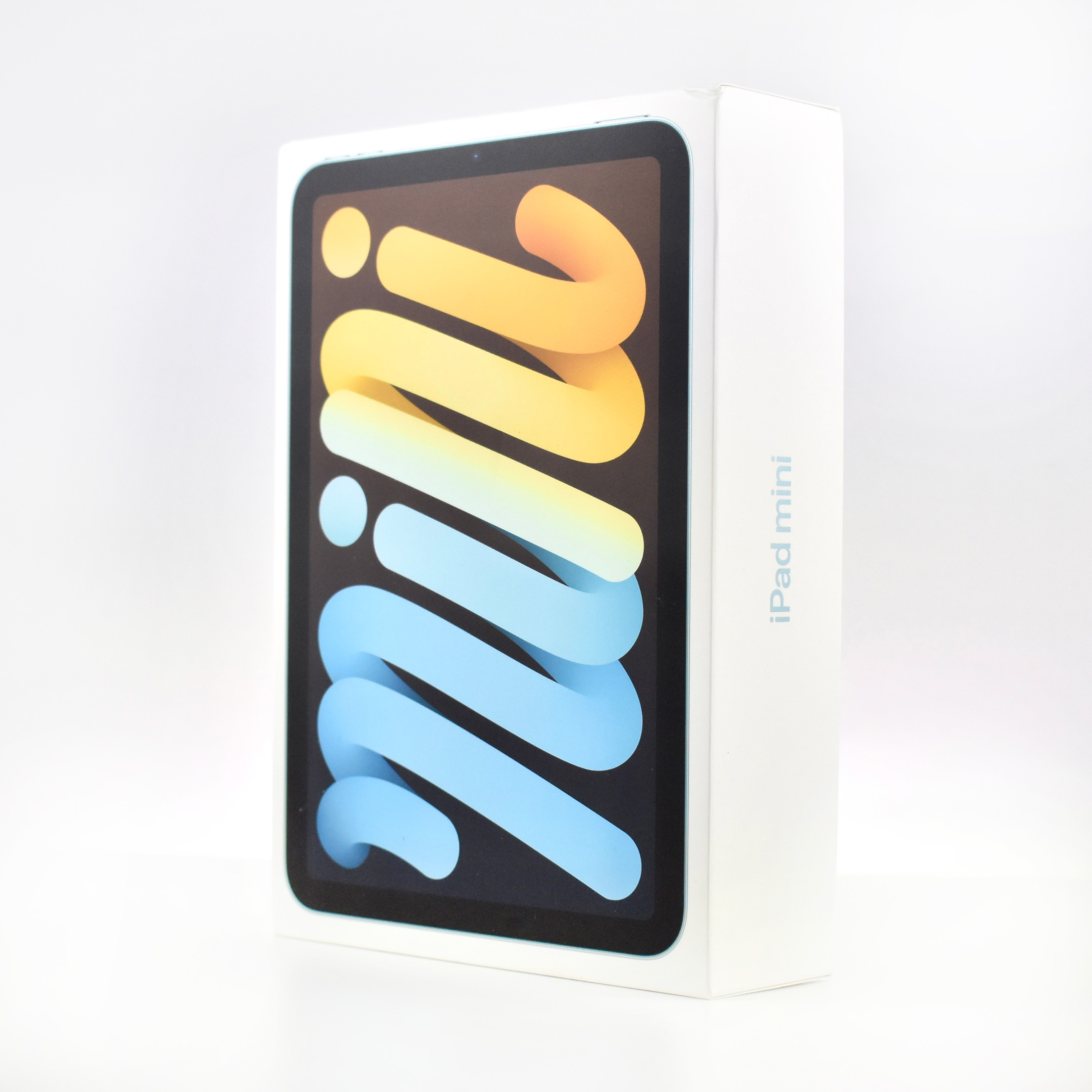
iPad mini (Generation 7, A17 Pro, Wi-Fi, 128GB, Blue, 2024)

Soon after Apple updated most of its hardware for use with Apple Intelligence, the Smart Folio for iPad mini was updated to Generation 7 with the A17 Pro chip—the bare minimum processor to allow Apple Intelligence features. At the time, Apple described Apple Intelligence as “the easy-to-use personal intelligence system that understands personal context to deliver intelligence that is helpful and relevant while protecting user privacy.”

This iPad mini had an 8.3-inch Liquid Retina display (2266 x 1488 at 326 ppi, 500 nits brightness). Apple described the A17 Pro chip as offering “a huge performance boost for even the most demanding tasks, with a faster CPU and GPU, [and] a 2x faster Neural Engine than the previous-generation iPad mini.” This iPad mini also added support for the Apple Pencil Pro.

The iPad mini front camera was 12MP and included Center Stage: “as you move around, the camera automatically pans to keep you centered in the frame.” Apple described the back camera: “The 12MP wide back camera supports Smart HDR 4 for natural-looking photos with increased dynamic range, and uses machine learning to detect and scan documents right in the Camera app.” In addition, the back camera could record 4K video.

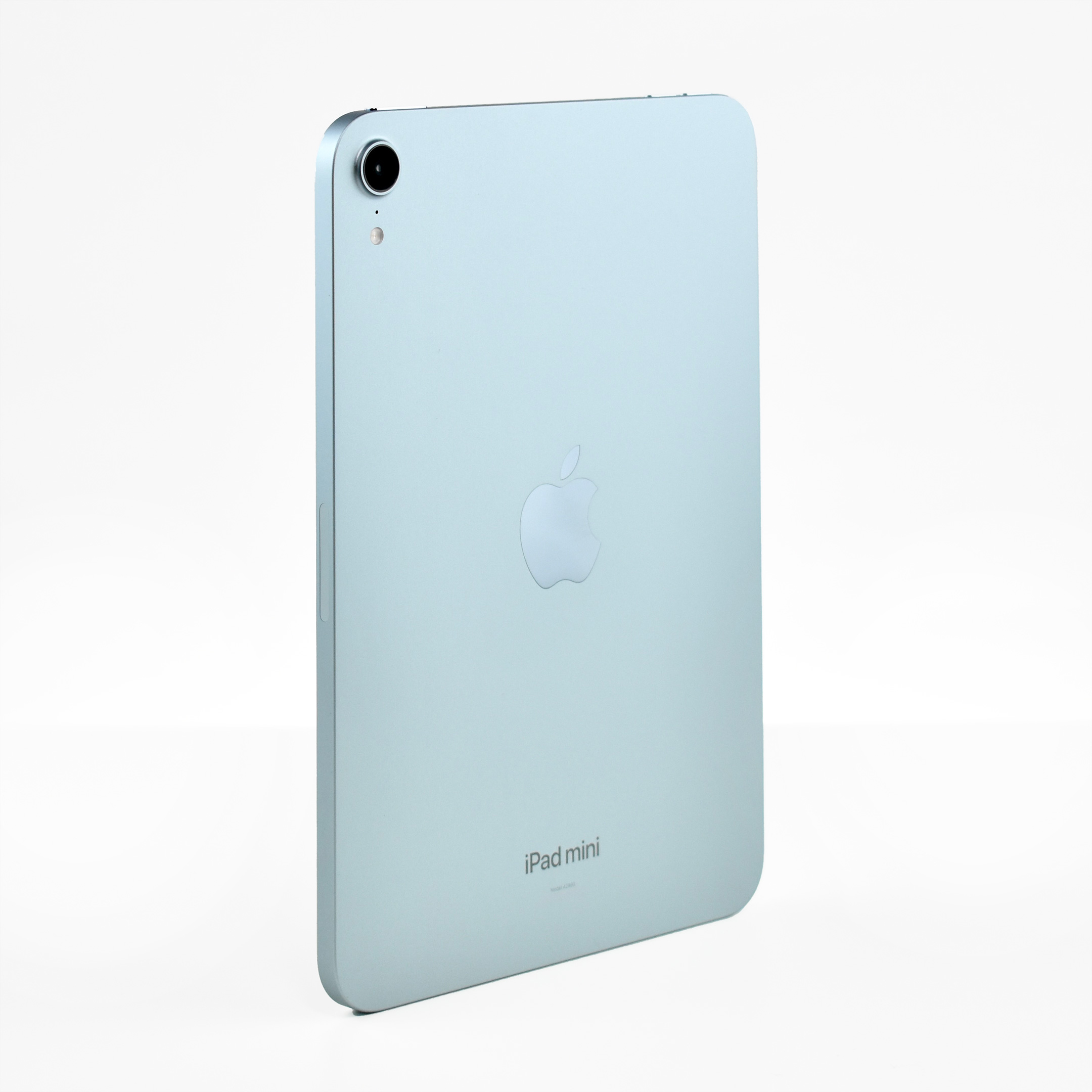
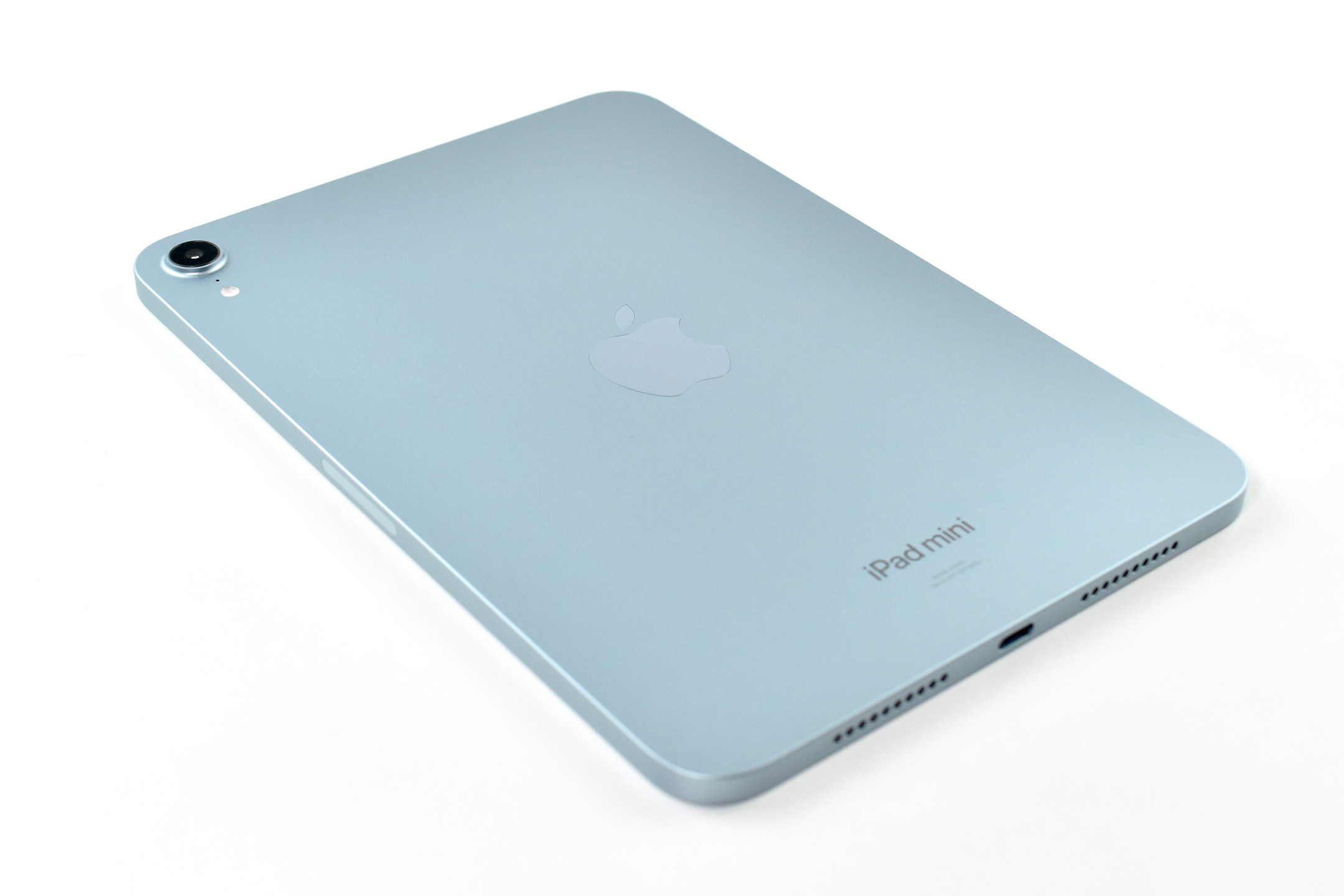
This iPad mini was available in three muted tones including Blue, Purple, and Starlight—and Space Gray. This example is Blue.

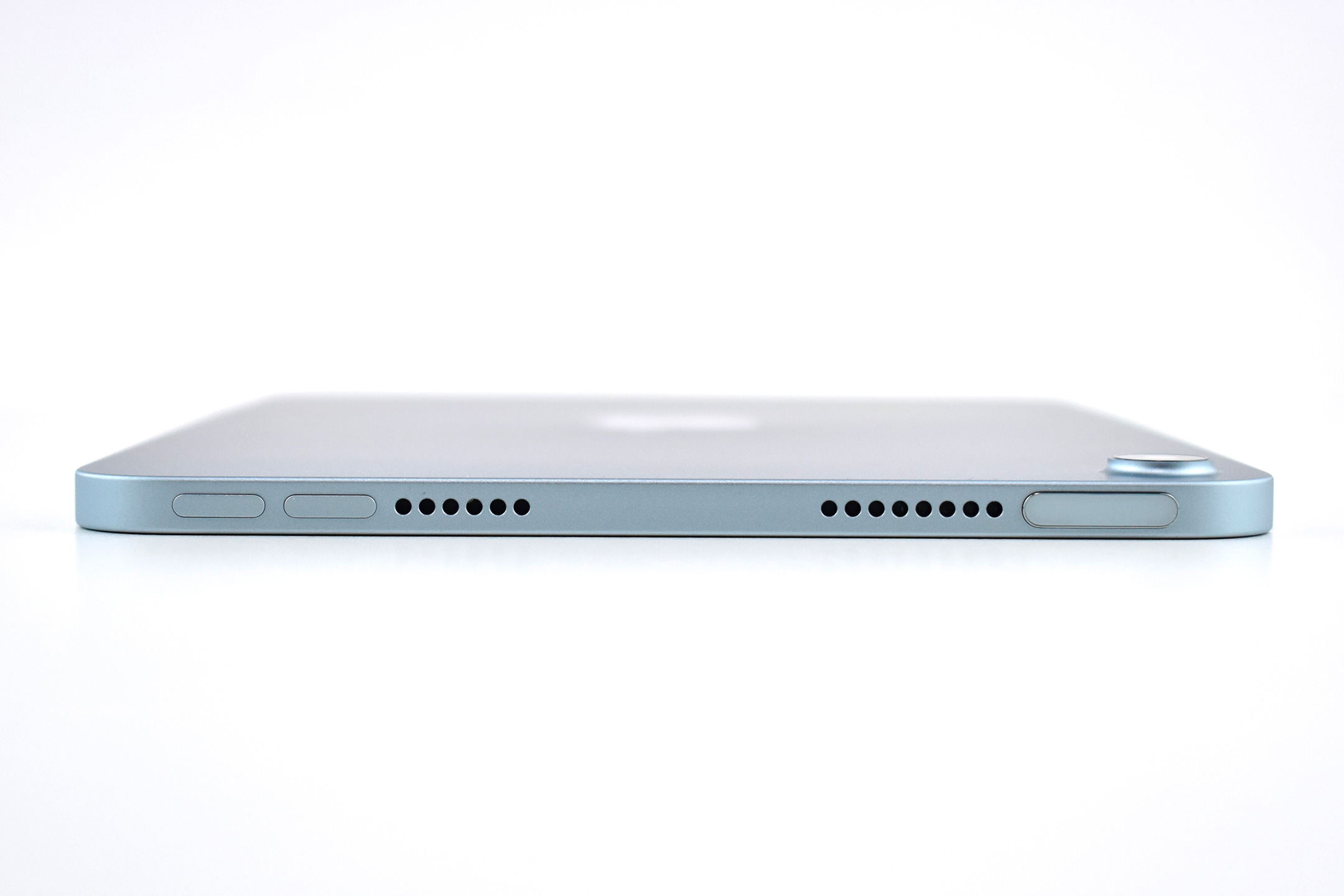
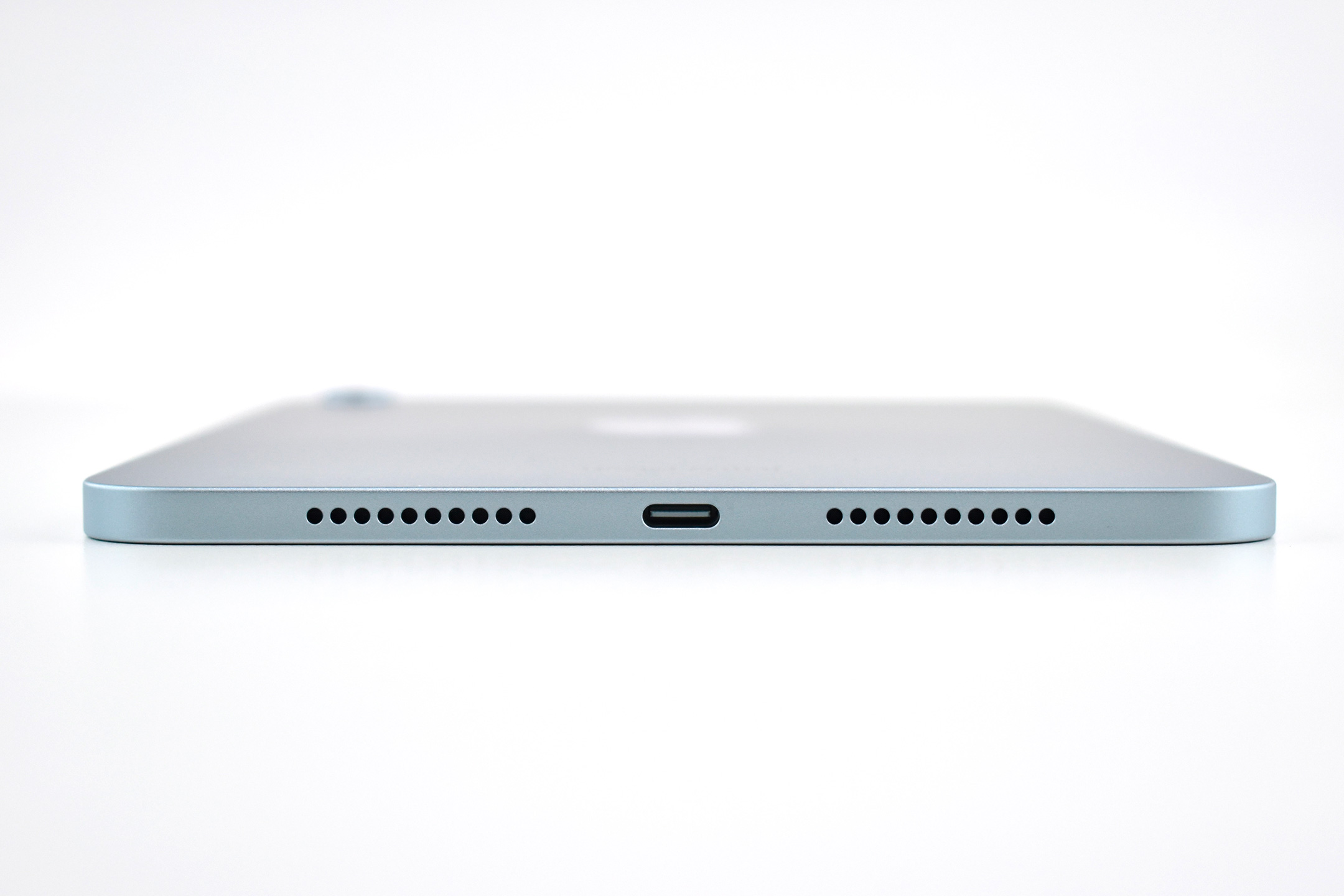
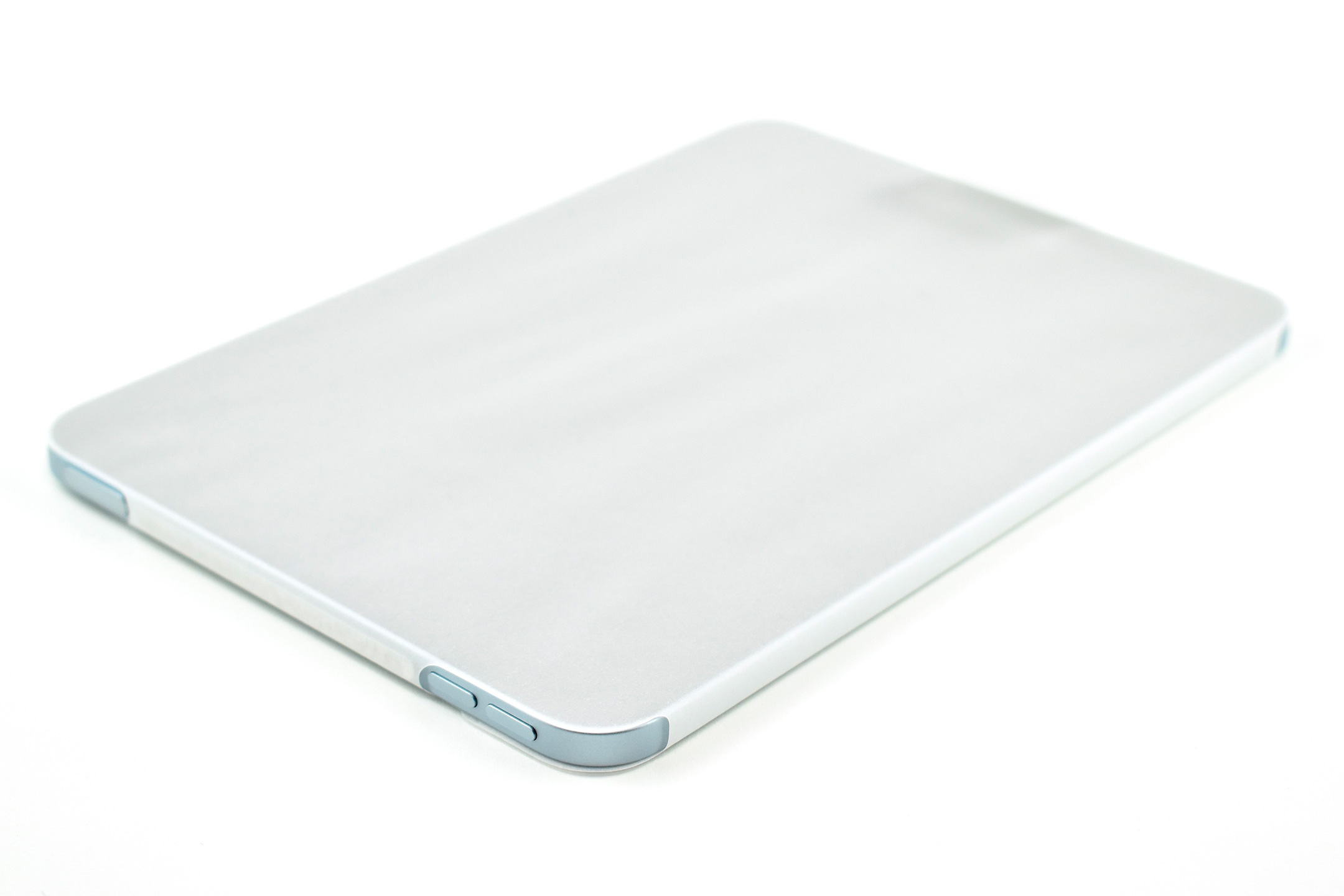
This iPad mini was 7.69 inches tall, 5.3 inches wide, and 0.25 inch thick. It weighed 0.65 pound. All buttons were along the top on the short side opposite the USB-C port, including the 2 volume buttons and the Top button with Touch ID. Each of the short sides also had speakers that allowed stereo sound output. Unlike other iPad models of the time, the front camera was placed on the short side.

Sources: Apple (press release, product page, specs)
Beats Studio Pro Wireless Headphones (black, 2023)

Beats by Dr. Dre (“Beats”) was founded in 2006 by Dr. Dre and Jimmy lovine. Beats makes a collection of headphones, earphones, and speakers, and aims to “bring the energy, emotion and excitement of playback in the recording studio back to the listening experience for music lovers worldwide.” Beats was acquired by Apple in July 2014.

As a company owned by Apple, Beats have many of the same features found in Apple-branded audio products, but Beats seems to more prominently feature Android compatibility in product specifications (compared to Apple’s AirPods products). The Beats product overview notes:

“The Beats Studio Pro custom acoustic platform delivers an immersive listening experience. Each custom 40mm driver has been engineered for optimal clarity, with near-zero distortion even at high volume – an improvement of up to 80% compared to Beats Studio3, providing increased audio fidelity. An integrated digital processor optimizes the final frequency response for a powerful, yet balanced sound profile crafted to bring out the subtle details of whatever you’re listening to.”

The product packaging touts the following features:

  • Sound that surrounds you with Personalized Spatial Audio and dynamic head tracking
  • Active Noise Cancelling (ANC) for immersive listening
  • Transparency mode blends your listening experience with the world around you
  • Two additional EQ-optimized sound profiles while using USB-C audio
  • Voice targeting mics for clear call performance
  • UltraPlush engineered leather cushions for extended comfort and durability

The “Enhanced Apple Compatibility” features of Beats Studio Pro Wireless Headphones include one-touch pairing with every device in your iCloud account, “Hey Siri” compatibility, Find My suport, and Over-the-air updates.

“Enhanced Android Compatibility” features include Google Fast Pair to all Android or Chrome devices registered to a Gmail account, Audio Switch between Android and Chromebook devices, Google Find My Device support, and a Beats app for Android to “unlock access to product customization, software updates, and new features to get the most out of your headphones.”

The headphones measure 7.125 inches high, by 7 inches long, by 3.1 inches wide, and weigh 9.17 ounces. They include a custom-fitted carrying case, USB-C-to-USB-C cable (charging and audio), and a 3.5 mm analog audio cable. Bluetooth (version 5.3) delivers up to 40 hours of listening time and offers a “Fast Fuel” charge that delivers up to 4 hours of playback from a 10-minute charge.

Sources: Beats, Apple

USB-C to USB Adapter (2015)

Apple’s USB-C to USB Adapter is a “dongle-style” adapter that allows older USB-A devices to be converted to USB-C or Thunderbolt 3. Apple described the adapter:

“The USB-C to USB Adapter lets you connect iOS devices and many of your standard USB accessories to a USB-C or Thunderbolt 3 (USB-C) enabled Mac, iPad, or iPhone. Plug the USB-C end of the adapter into a USB-C or Thunderbolt 3 (USB-C) port on your Mac, iPad, or iPhone, and then connect your flash drive, camera, or other standard USB device. You can also connect a Lightning to USB cable to sync and charge your iPhone, iPad, or iPod.”

According to Apple, it “supports data-transfer speeds up to 5Gbps (USB 3.1 Gen 1).” Further, you may “Use the USB-A port of this adapter with flash drives, cameras, USB hubs, and other devices that connect to USB-A for data transfer or charging.”

Source: Apple (product, support)

Apple World Travel Adapter Kit (2011)

Apple’s World Travel Adapter Kit is a collection of plugs to replace the North American “duck head”-style plug to allow the use Apple’s various power adapters in power outlets in other countries, including: North America, Japan, China, United Kingdom, Continental Europe, Korea, Australia, Hong Kong, and Brazil.

Apple notes that: “The kit is designed to work with iPod, iPhone, iPad, and Mac notebooks. It is compatible with Apple USB-C Power Adapters, MagSafe, MagSafe 2, and MagSafe 3 Power Adapters, 10W and 12W USB Power Adapters, and Portable Power Adapters.”

The kit works with a wide variety of Apple products, including, “iPod, iPhone, iPad, and Mac notebooks. It is compatible with Apple USB-C Power Adapters, MagSafe, MagSafe 2, and MagSafe 3 Power Adapters, 10W and 12W USB Power Adapters, and Portable Power Adapters.” The plugs are laser-etched with the regions in which they are designed to be used.

Apple’s product code for this boxed collection is MB974ZM/B.

Source: Apple

Apple 67W USB-C Power Adapter (2021)

This USB-C Power Adapter is compatible with Apple laptops that charge using USB-C. It measures 4.21 x 4.21 x 1.28 inches and weighs 9.5 ounces. Apple’s product code is MKU63AM/A for this device. According to the product specifications:

“Apple recommends pairing this power adapter with your 13-inch MacBook Pro (2016 and later) or your 14-inch MacBook Pro with Apple M1 Pro chip 8-core CPU.”

Compatible devices include: MacBook Air (15-inch, M2, 2023), MacBook Air (13-inch, M2, 2022), MacBook Air (13-inch, M1, 2020), MacBook Air (Retina, 13-inch, 2020), MacBook Air (Retina, 13-inch, 2018–2019), MacBook Pro (14-inch, 2023), MacBook Pro (14-inch, 2021), MacBook Pro (13-inch, M2, 2022), MacBook Pro (13-inch, M1, 2020), MacBook Pro (13-inch, 2020), MacBook Pro (13-inch, 2016–2019), MacBook (Retina, 12-inch, Early 2015–2017).

Like most Apple power adapters, this one uses the North American “duck head” hinged plug that can be swapped with the power plugs used in other countries.

Source: Apple

Beats Studio Buds + (transparent, 2023)

Although Beats products are not Apple-branded, the Beats by Dr. Dre website states, “Beats by Dr. Dre (Beats) is a leading audio brand founded in 2006 by Dr. Dre and Jimmy Iovine… Beats was acquired by Apple Inc. in July 2014.” As an Apple collector, I have a small number of Beats products in my collection.
Beats describes the Studio Buds + on their website:

“Beats Studio Buds + custom acoustic platform packs powerful, balanced sound in a sophisticated, pocketable design. Reengineered acoustic venting improves audio precision and gently relieves pressure for a more comfortable all-day fit. Each bud is equipped with a two-layer transducer that flexes to deliver cleaner bass and ultra-low distortion. So whether you’re listening to music or taking calls, Studio Buds + deliver rich, immersive sound wherever you go.”

As a “sister” company to Apple, the Beats Studio Buds + offer the following “Enhanced Apple Compatibility:”

  • One-touch pairing—easy, one-touch setup instantly pairs with every device in your iCloud account
  • “Hey Siri”—simply say “Hey Siri” to activate your voice assistant
  • Find My—locate your lost earbuds on a map based on the last known connected location
  • Over-the-air updates—receive software updates and new features automatically

Beats also offer “Enhanced Android Compatibility:”

  • Google Fast Pair
  • Audio Switch
  • Find My Device

These earbuds offer many features, including:

  • Active Noise Cancelling (ANC)
  • Transparency mode
  • Up to 36 hours of total battery life (9-hour earbuds + 27-hour charging case)
  • One-touch pairing
  • Crisp, clear call performance from upgraded, voice-targeting mics
  • Sweat and water resistant earbuds (IPX4-rated)
  • Four soft eartip sizes
  • Spatial audio for Dolby Atmos
  • Pocket-sized charging case with USB-C connector

The case measures 2.55cm tall, 7.2cm long, and 5.1cm wide. Each bud measures 1.5cm tall, 2.05cm long, and 1.85cm wide. Each bud weighs 5g, and the entire product—2 buds and the case—weighs 59g.

My primary interest in this product was the design including the “transparent” color option. This was the first Apple-backed product released in a semi-transparent design in about 20 years (with the possible exception of updates of the originally Apple-designed Harman Kardon SoundSticks). Other notable transparent Apple products over the years have included the following:

  • iMac (CRT models, 1998–2003)
  • eMate 300 (1997–1998)
  • iBook (“clamshell” models, 1999–2001)
  • Power Macintosh G3 All-in-One (1998)
  • Power Macintosh G3 (Blue & White tower, 1999)
  • Studio Display (various LCD and CRT designs, 1998, 1999, 2000)

As a side-note, some may have forgotten that Apple’s LaserWriter 8500 (1997–1999) used light-green-tinted transparent plastics in its lower drawer and top paper feeder.

As mentioned above, Harman Kardon SoundSticks were reported to have been designed in partnership with Apple and have been available since 2000. Although the product has not changed significantly, it has been updated regularly (2004, 2009, 2012, and 2020).

Sources: Beats, Apple, Macworld, Fandom (LaserWriter 8500)

Apple Pencil USB-C (2023)

In October 2023, Apple released this new Apple Pencil USB-C model. At the time, this was the third Apple Pencil in the lineup. Apple described the Apple Pencil USB-C:

“Today, Apple is bringing more choice to iPad users with a new, more affordable Apple Pencil. With pixel-perfect accuracy, low latency, and tilt sensitivity, the new Apple Pencil is ideal for note taking, sketching, annotating, journaling, and more. Designed with a matte finish and a flat side that magnetically attaches to the side of iPad for storage, the new Apple Pencil pairs and charges with a USB-C cable.”

This Apple Pencil added the hover feature on M2 iPad models, “allowing users to sketch and illustrate with even greater precision.” The USB-C version of the Apple Pencil also added a new charging method to the Apple Pencil family—this time by sliding the end of the Pencil to reveal a USB-C charging port that both charges and pairs the Pencil.

The original Apple Pencil also used wired charging/pairing via Lightning port, while the Apple Pencil 2 used magnetic wireless charging/pairing. This Apple Pencil USB-C uses magnets to attach to the side of compatible iPad models for storage (like the Apple Pencil 2), but it does not charge.

As of June 2024, this Apple Pencil USB-C was compatible with the following iPad models:

  • iPad Pro 13-inch (M4)
  • iPad Pro 11-inch (M4)
  • iPad Air 13-inch (M2)
  • iPad Air 11-inch (M2)
  • iPad (10th generation)
  • iPad mini (6th generation)
  • iPad Air (4th or 5th generation)
  • iPad Pro 11-inch (1st, 2nd, 3rd, or 4th generation)
  • iPad Pro 12.9-inch (3rd, 4th, 5th or 6th generation)

Sources: Apple (Newsroom, Product, Compatibility)