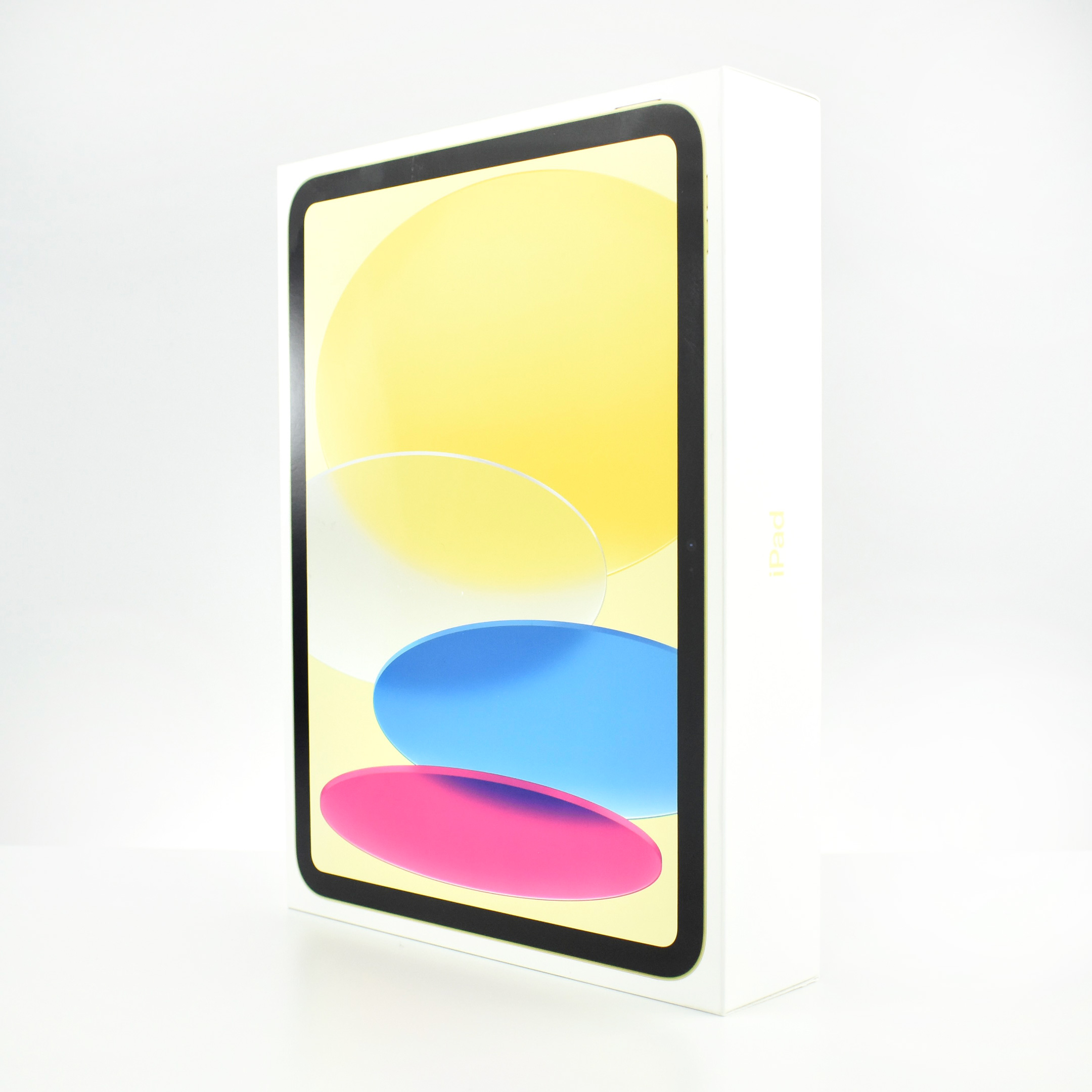
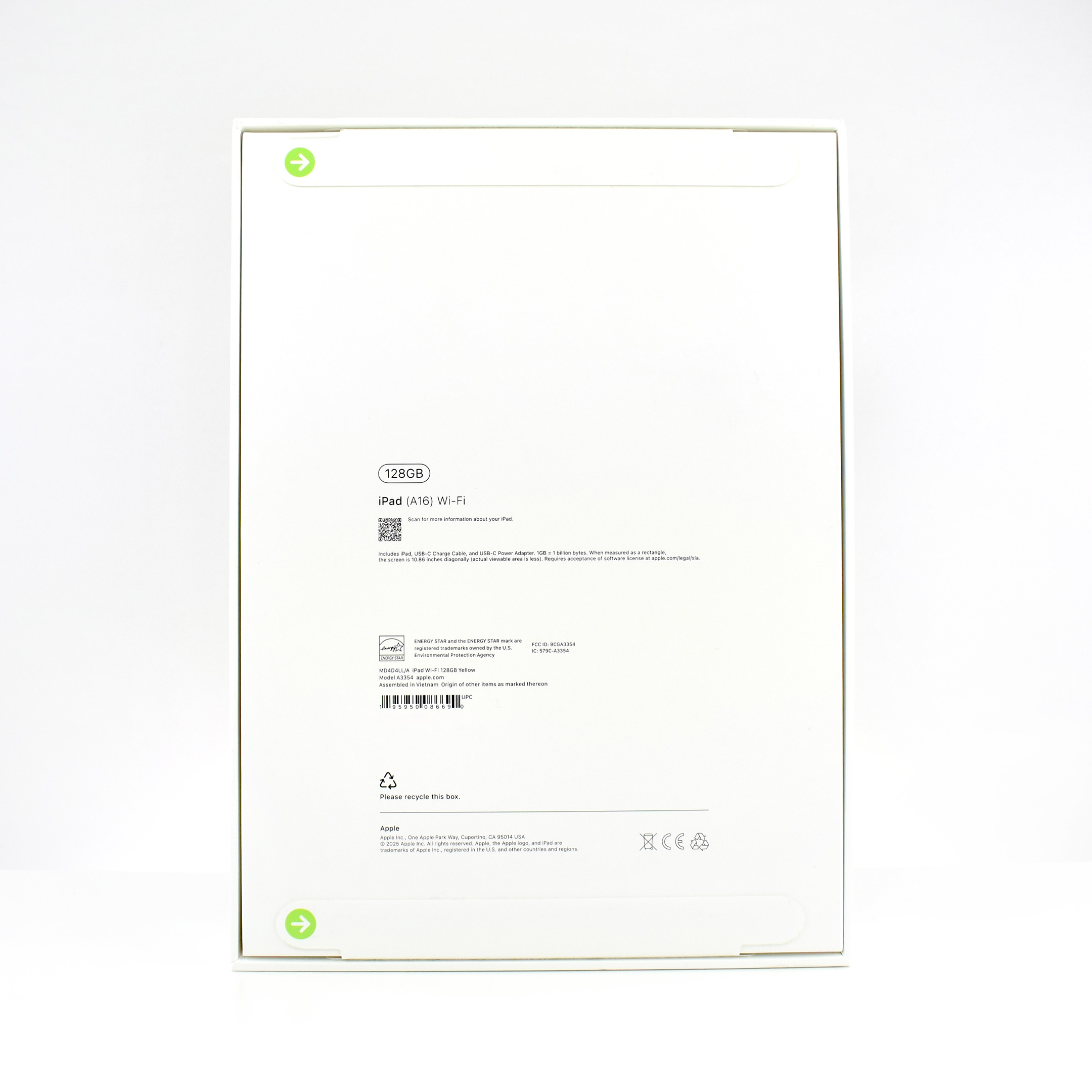
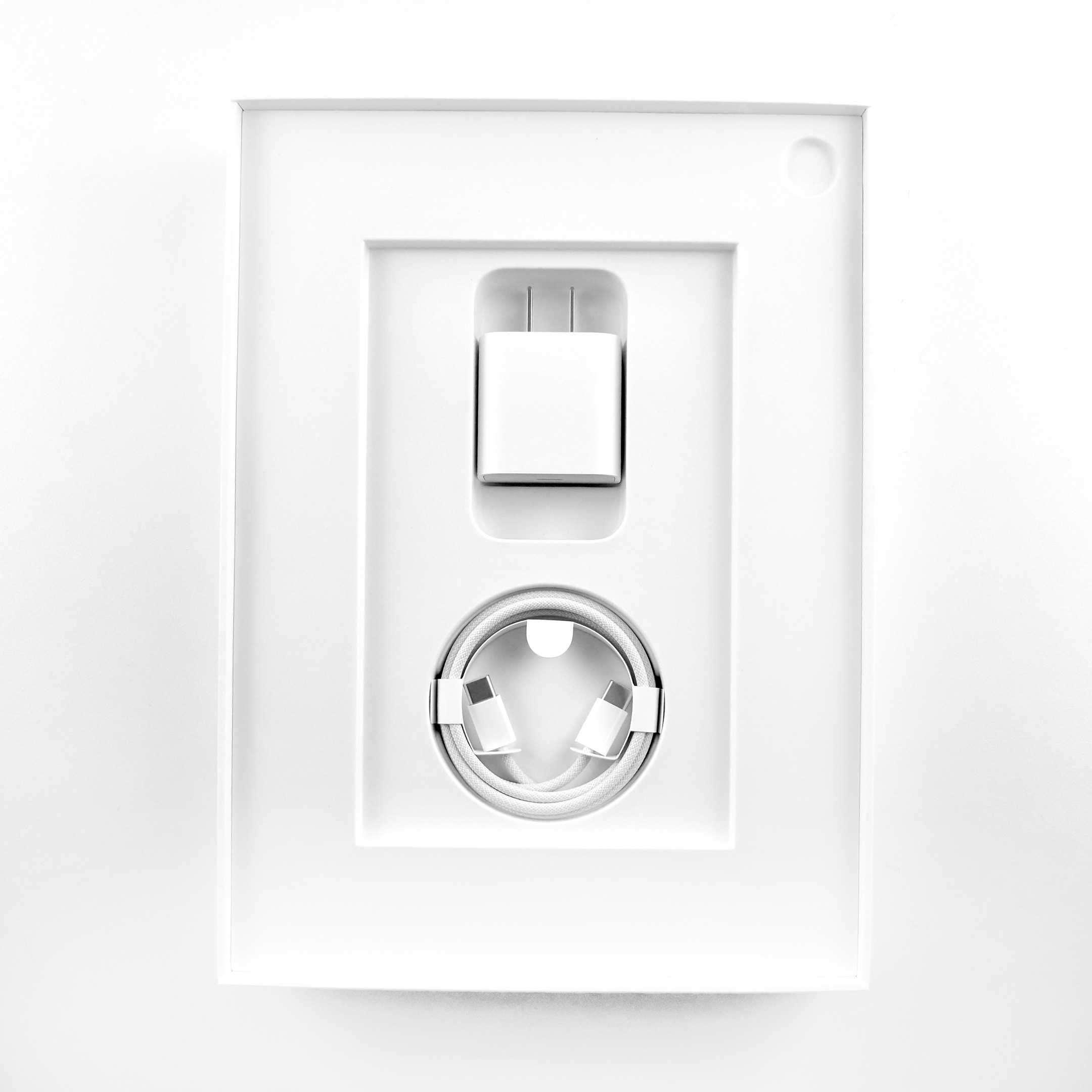
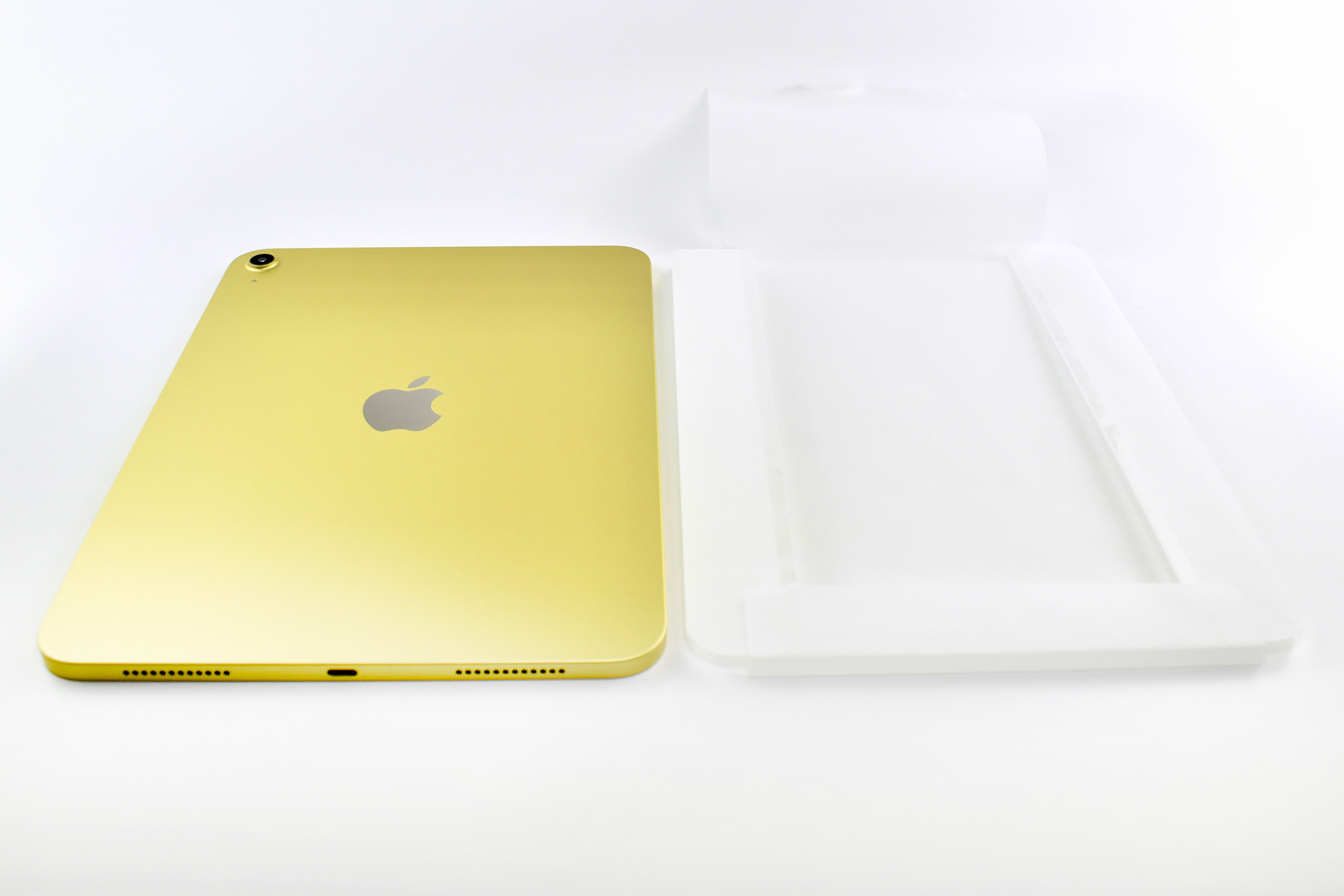
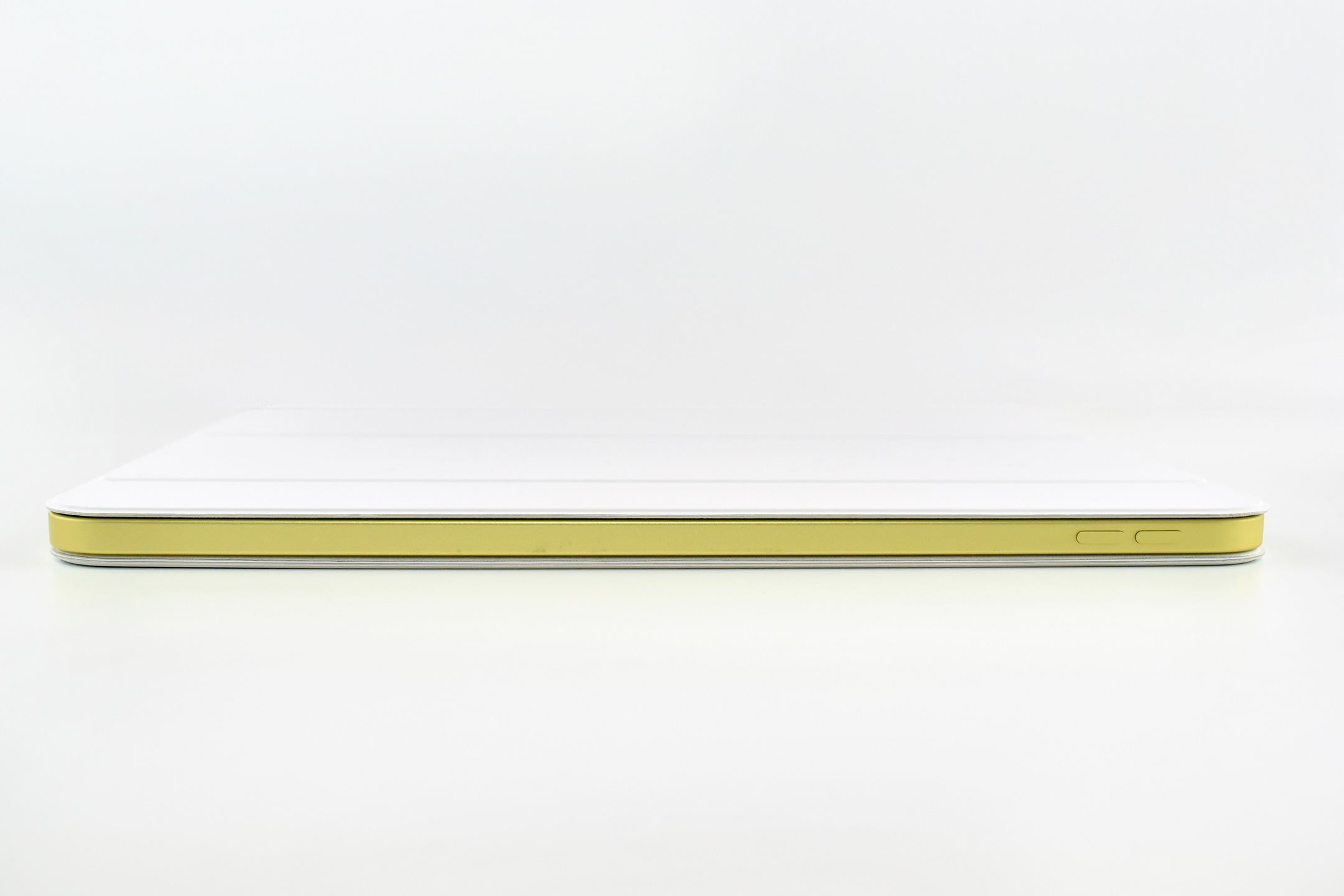
On March 4, 2025, when Apple introduced the iPad Air with the M3 chip, they also announced the iPad Generation 11 with an A16 chip. The entire press release for this iPad device release amounted to one paragraph:
“Apple today also updated iPad with double the starting storage and the A16 chip, bringing even more value to customers. The A16 chip provides a jump in performance for everyday tasks and experiences in iPadOS, while still providing all-day battery life. Compared to the previous generation, the updated iPad with A16 is nearly 30 percent faster. In fact, compared to iPad with A13 Bionic, users will see up to a 50 percent improvement in overall performance, and A16 makes the updated iPad up to 6x faster than the best-selling Android tablet.”
This iPad update was released soon after the announcement of Apple Intelligence. While Apple was touting Apple Intelligence and updating its devices to take advantage of the new features, the iPad Generation 11 was given a chip that did not allow Apple Intelligence. While this updated iPad is faster than the previous Generation 10 model, it does not meet the minimum specification of the A17 Pro chip to allow Apple Intelligence compatibility. Apple provided no explanation for this omission.
One notable upgrade was in storage on the A16 iPad. The iPad Generation 11 doubled its base storage from 64 to 128GB and was also available in 256 and 512GB configurations.
Except for the A16 chip and upgraded storage, this iPad was nearly identical to the iPad Generation 10.
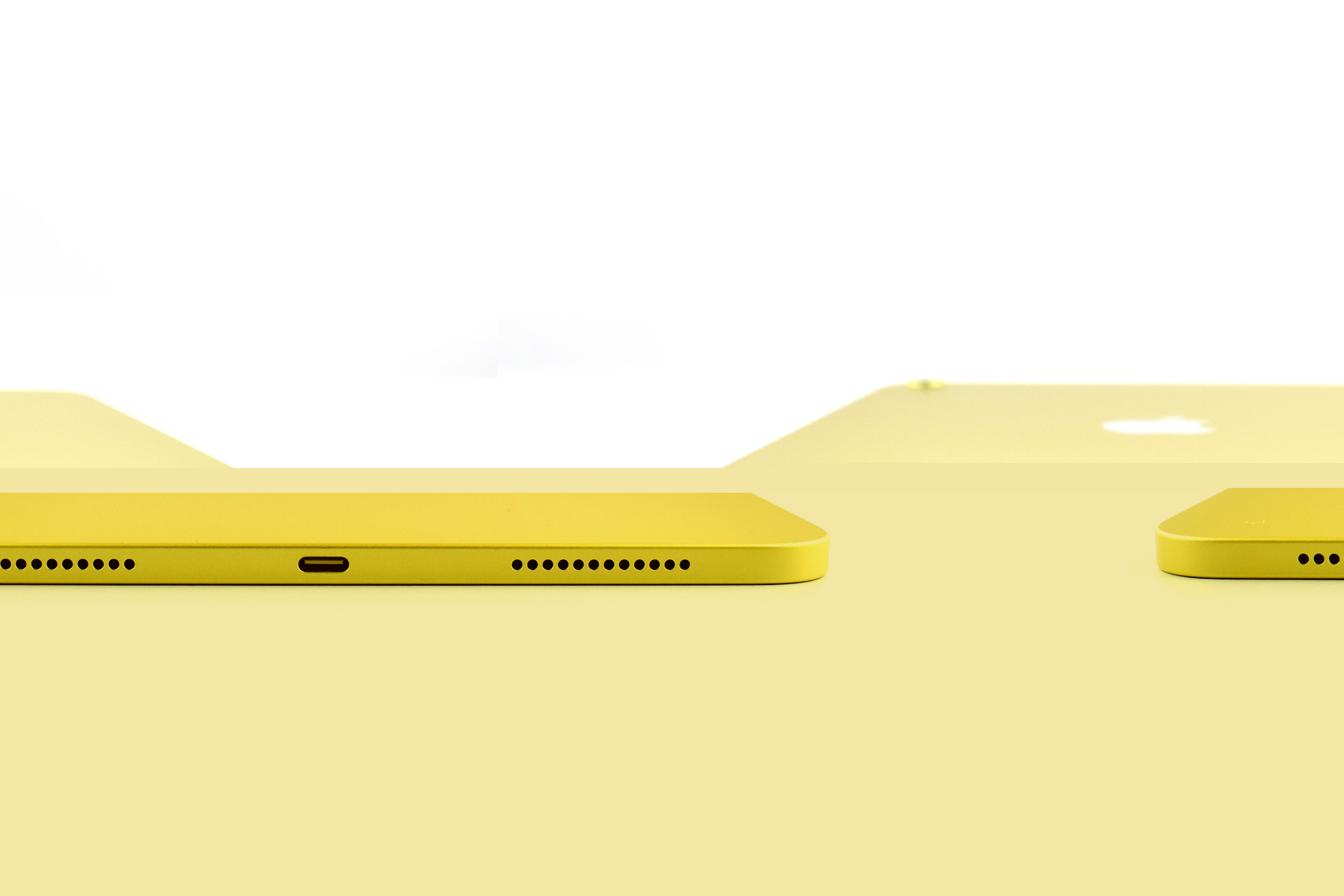
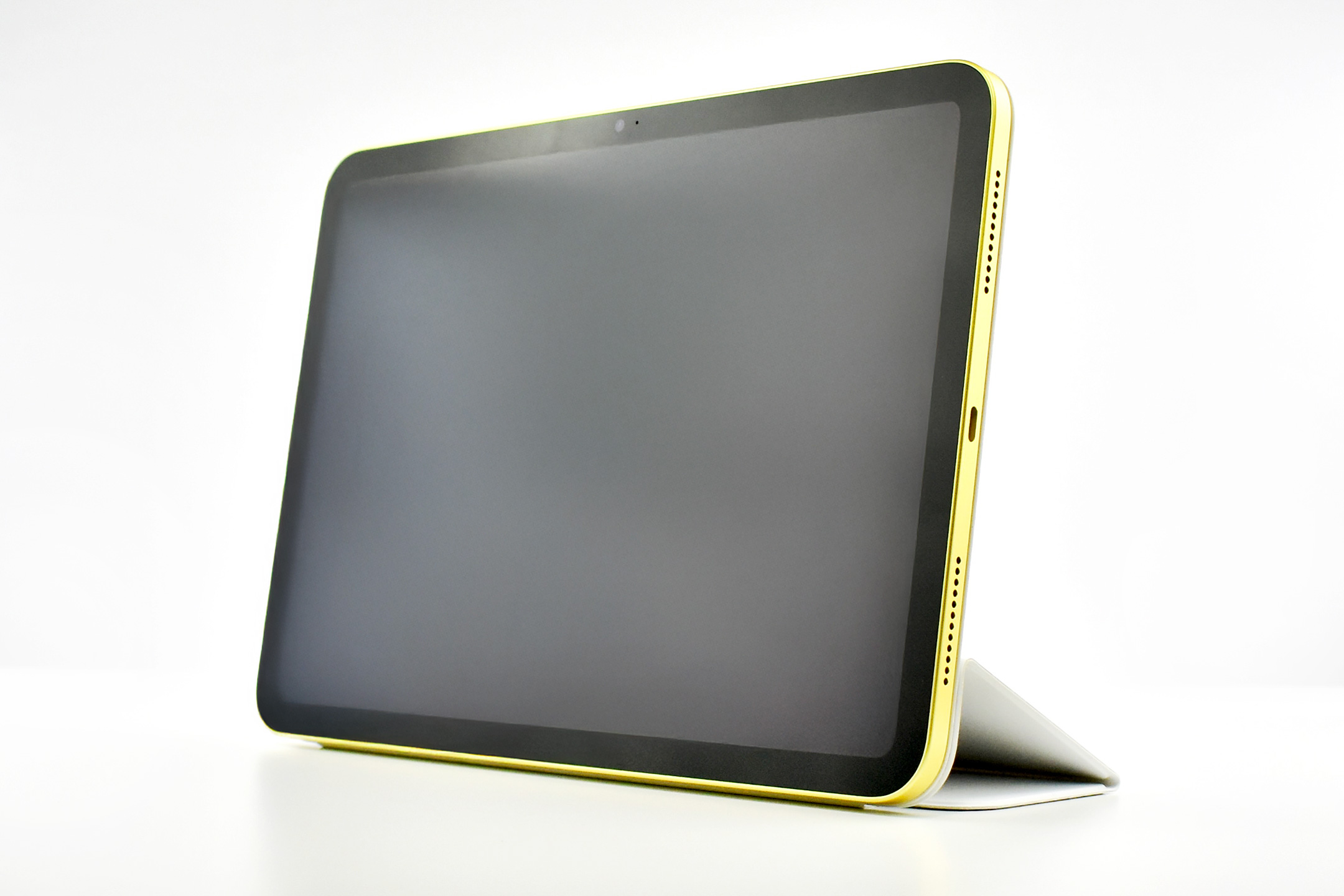
The iPad Generation 11 measured 9.79 x 7.07 inches, and was 0.28 inch thick. It weighed 1.05 pounds (Wi-Fi model). It had stereo speakers, a front camera and microphone centered on the “long”landscape” (long) side to enhance the FaceTime experience, and included both USB-C and a Smart Connector.
Its Liquid Retina display was 2360 x 1640 pixels at 264 ppi and delivered up to 500 nits brightness. It supported the Apple Pencil (USB-C) and also the Apple Pencil Generation 1 (although clumsily since the original Apple Pencil used a Lightning connector for charging).
The back camera was 12MP with digital zoom up to 5x supporting Smart HDR 4, geotagging, auto image stabilization, and burst mode. It could capture video up to 4K. The similar front camera was also 12MP and supported Center Stage in Landscape mode. It supported Smart HDR 4, but only could record 1080p HD video.
The iPad Generation 11 had 5 sensors, including Touch ID, 3‐axis gyro, accelerometer, barometer, and an ambient light sensor.
“Think different” was the slogan used by Apple in an advertising campaign during the years 1997–2002, and is still used in rare circumstances as of 2025. The Think different concept was created by advertising agency TBWA\Chiat\Day while working with Apple and Steve Jobs. Think different was first rolled out as a TV commercial and was followed by additional TV commercials, print/digital ads, and as part of Apple’s product packaging.
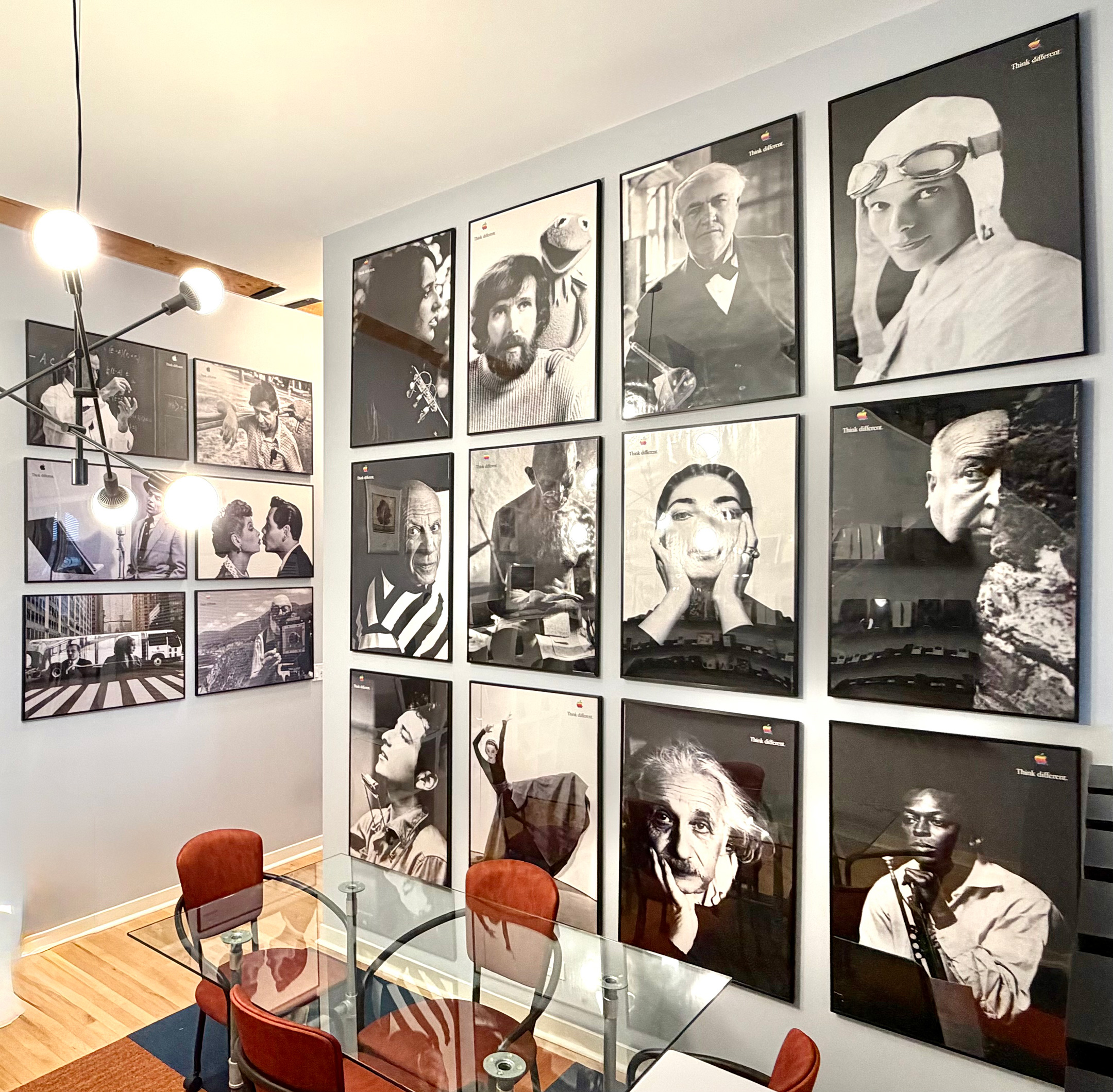
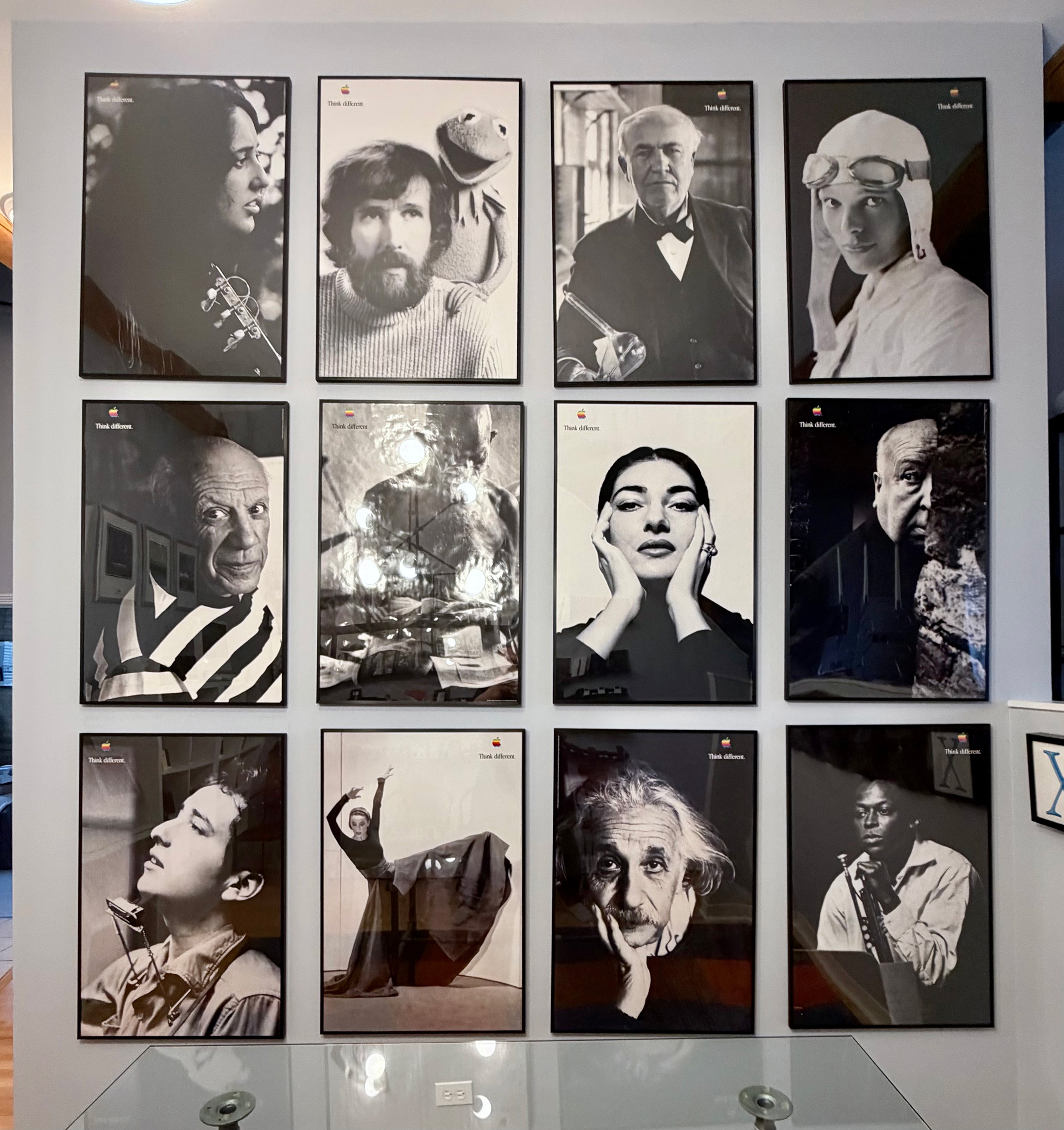
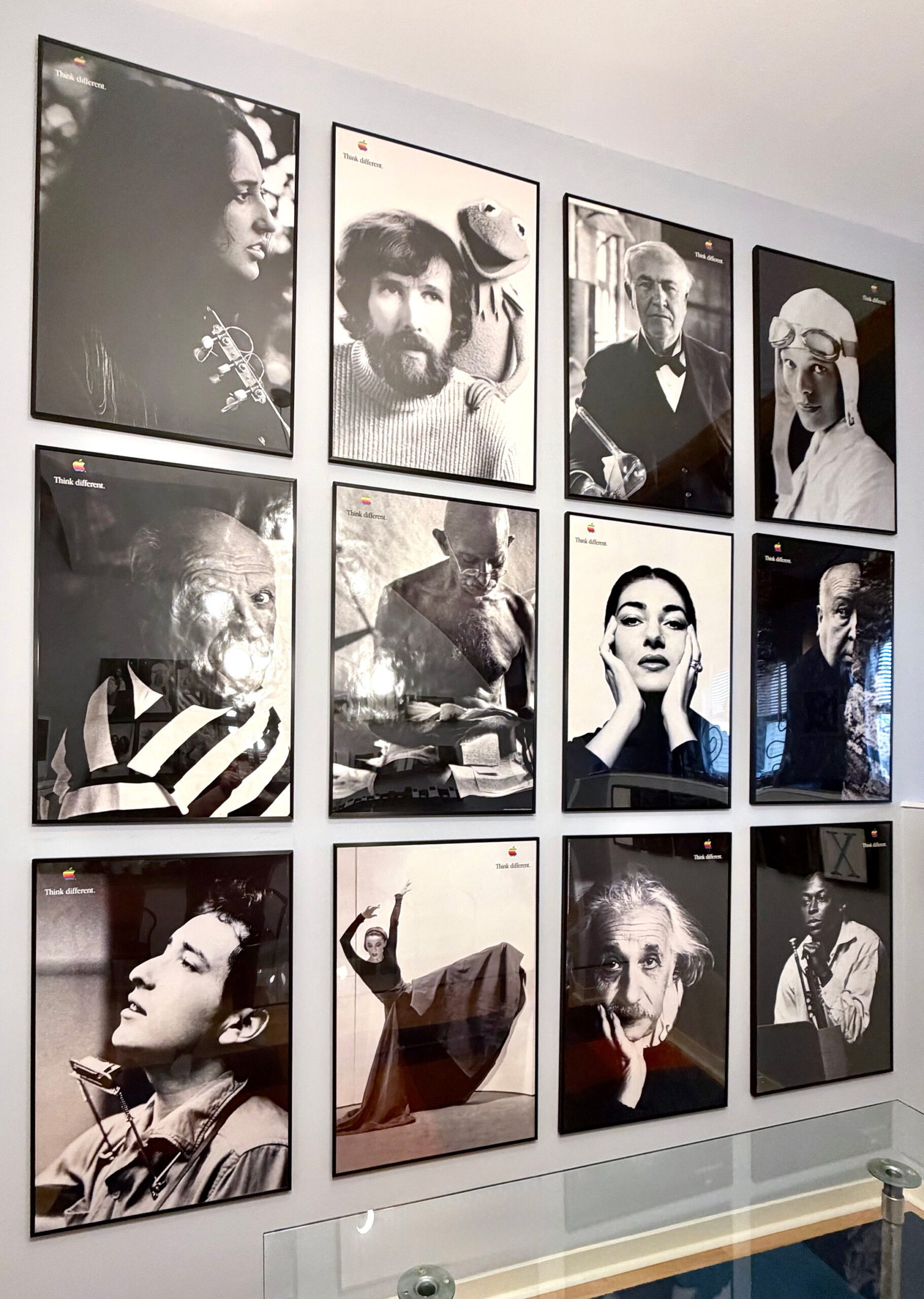
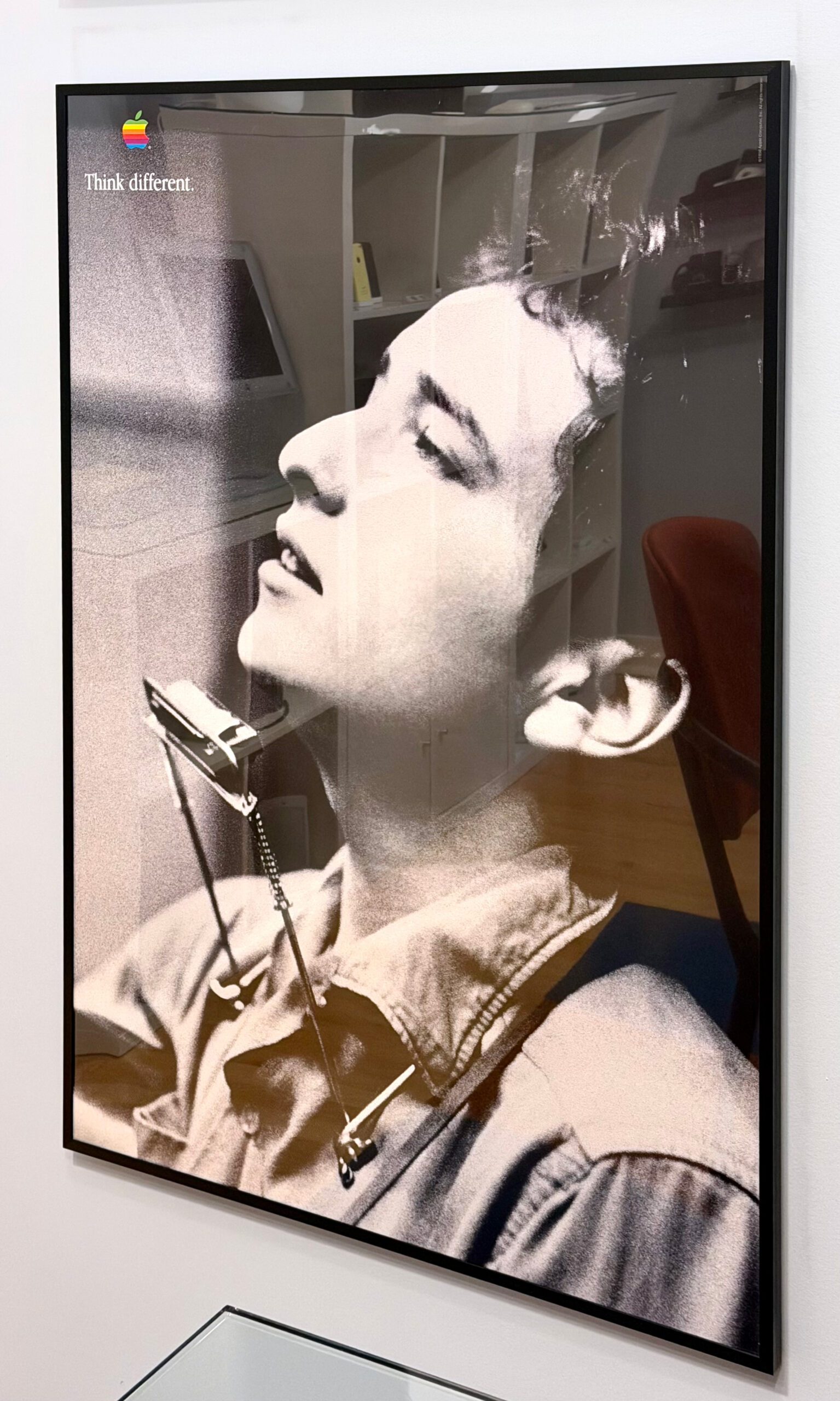
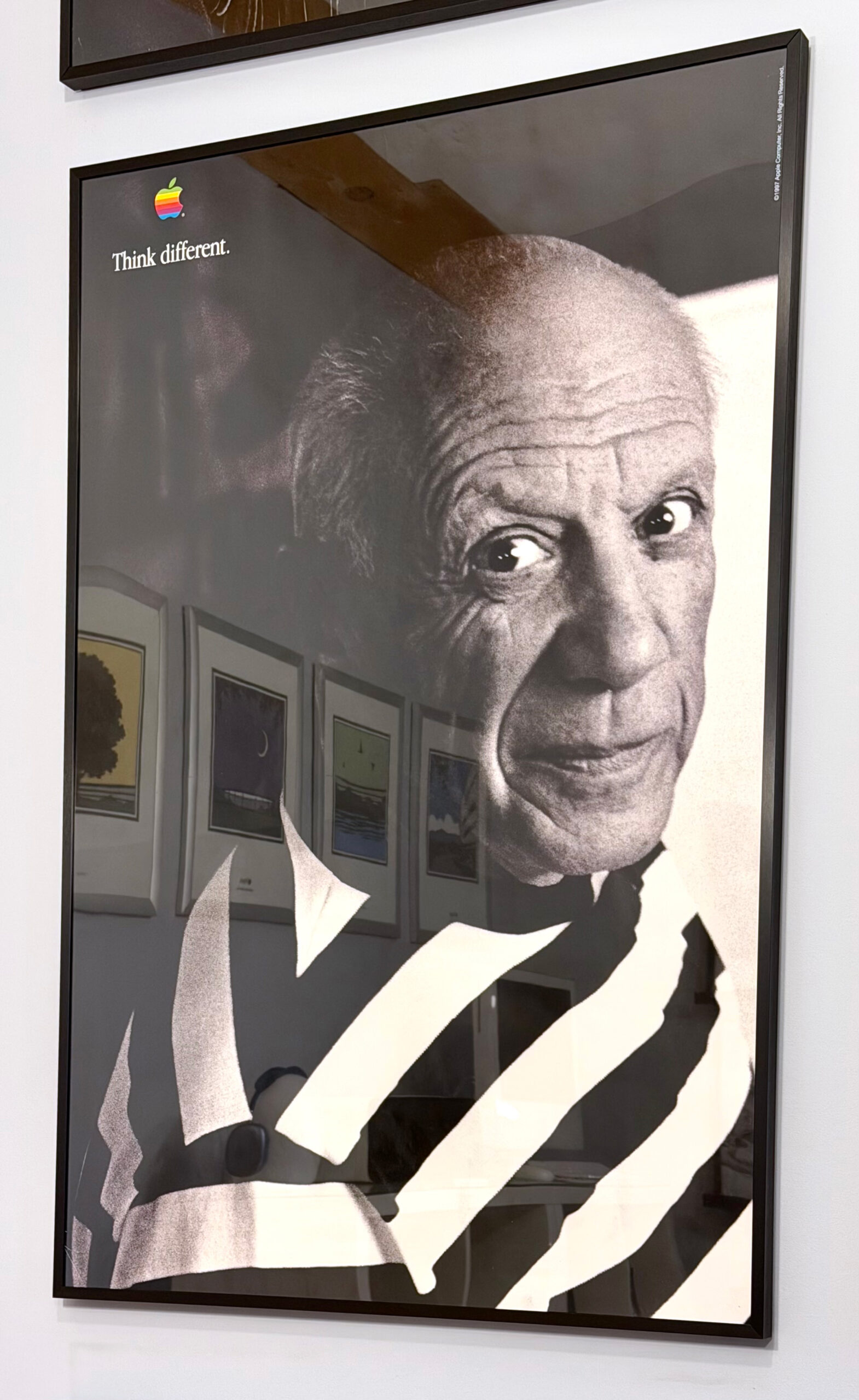
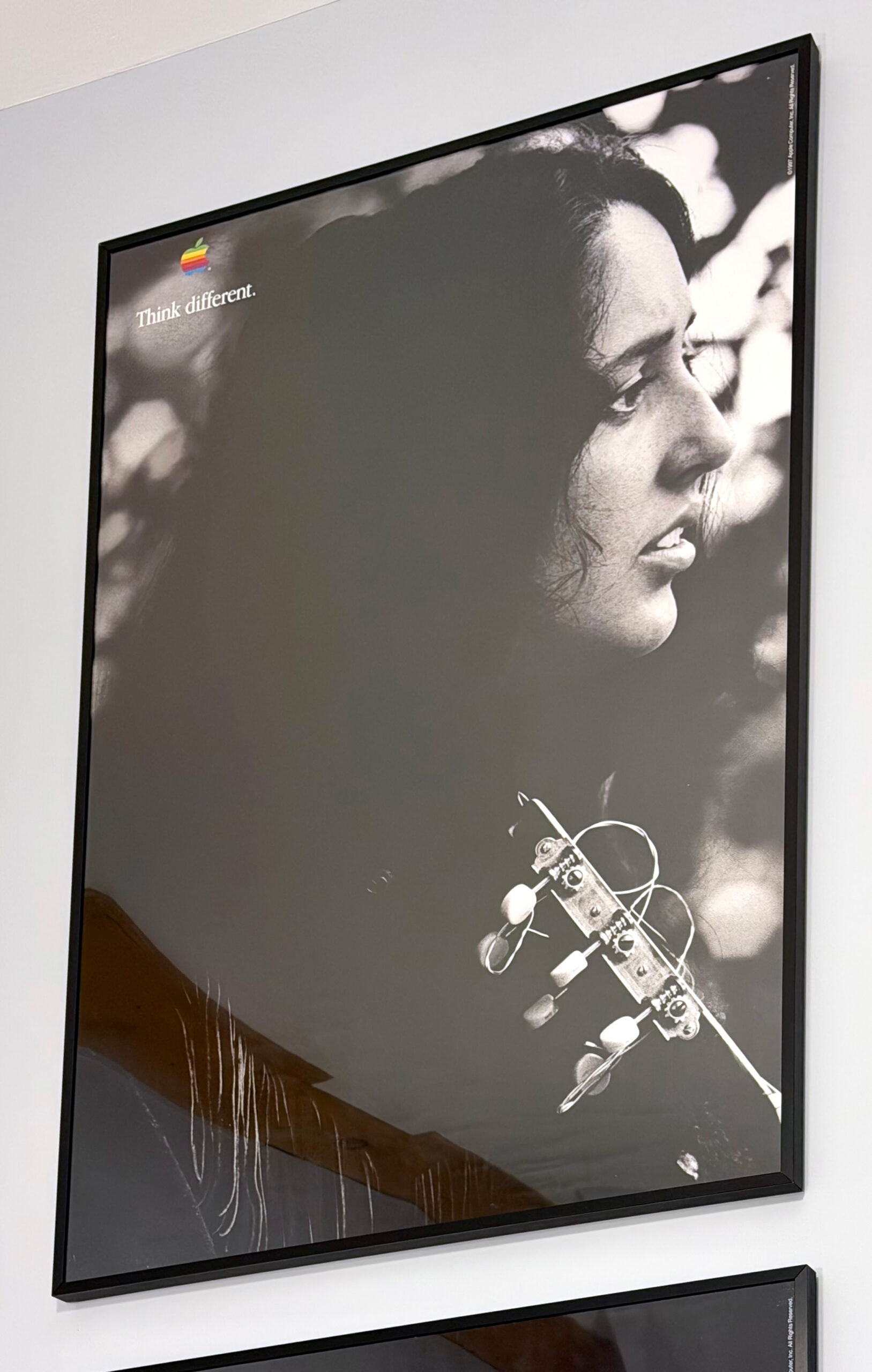
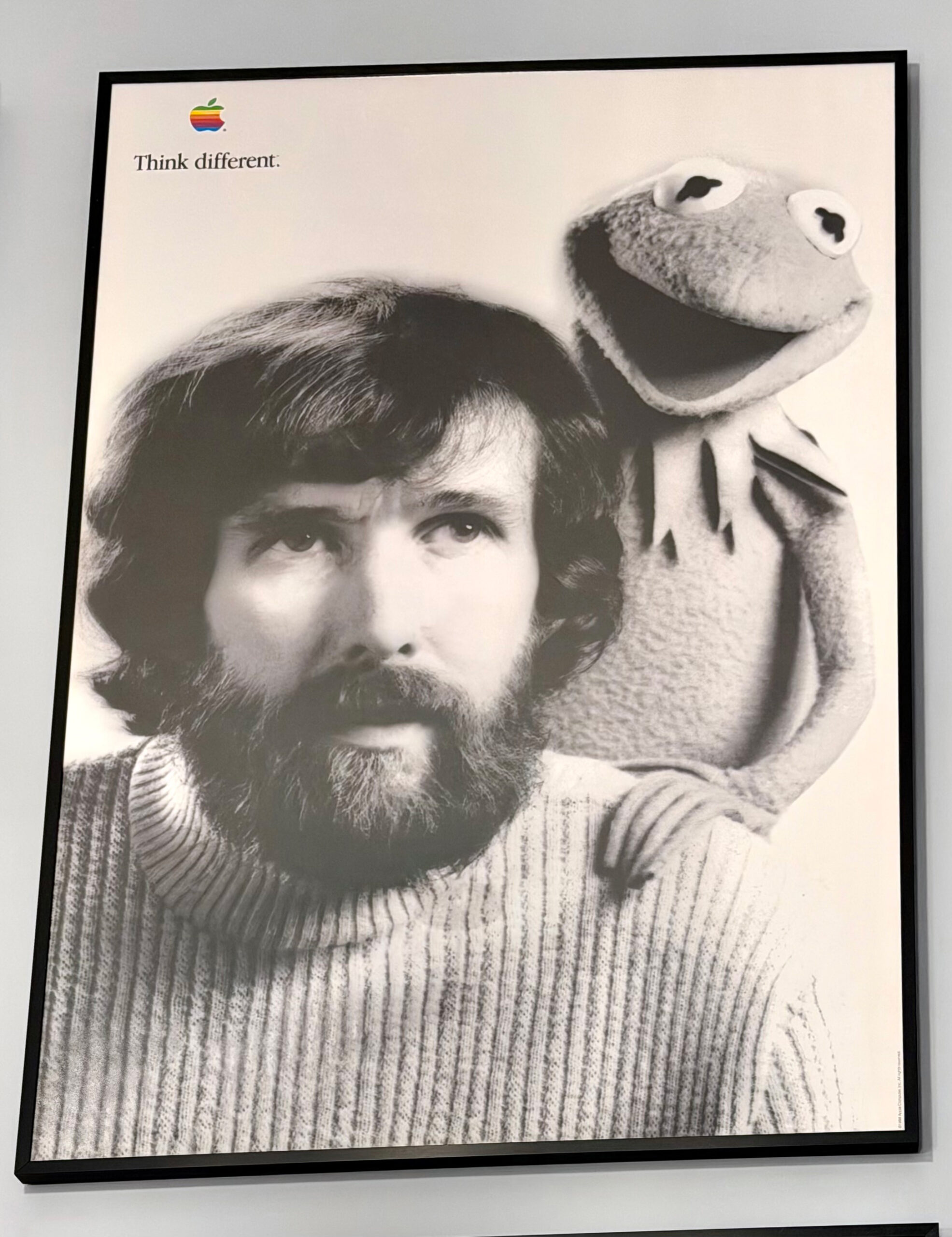
Posters in this set include:
Joan Baez (24 x 36 inches, 1997). From poster set 2.
Jim Henson with Kermit the Frog (24 x 36 inches, 1998). From poster set 3.
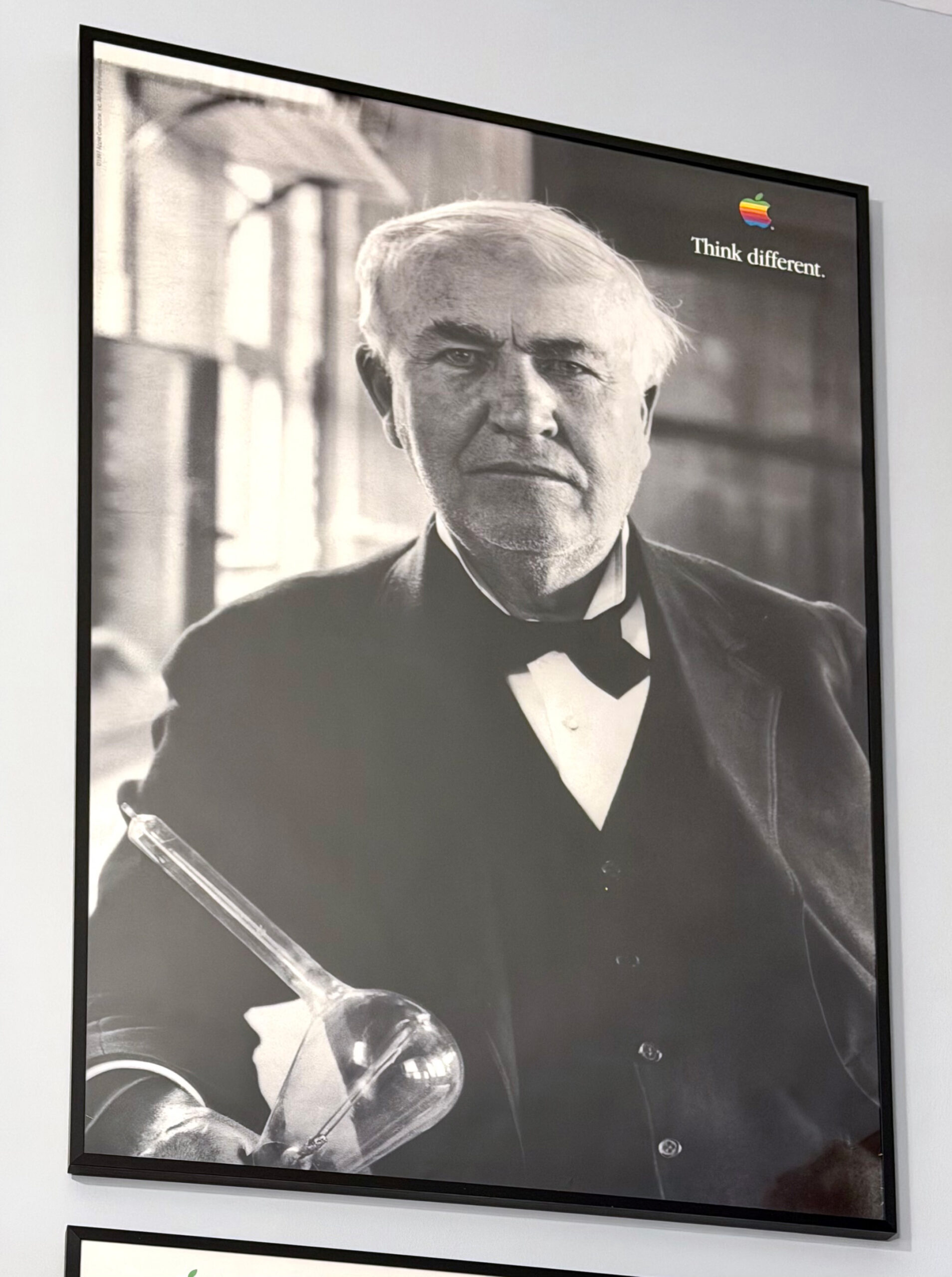
Thomas Edison (24 x 36 inches, 1997). From poster set 1.
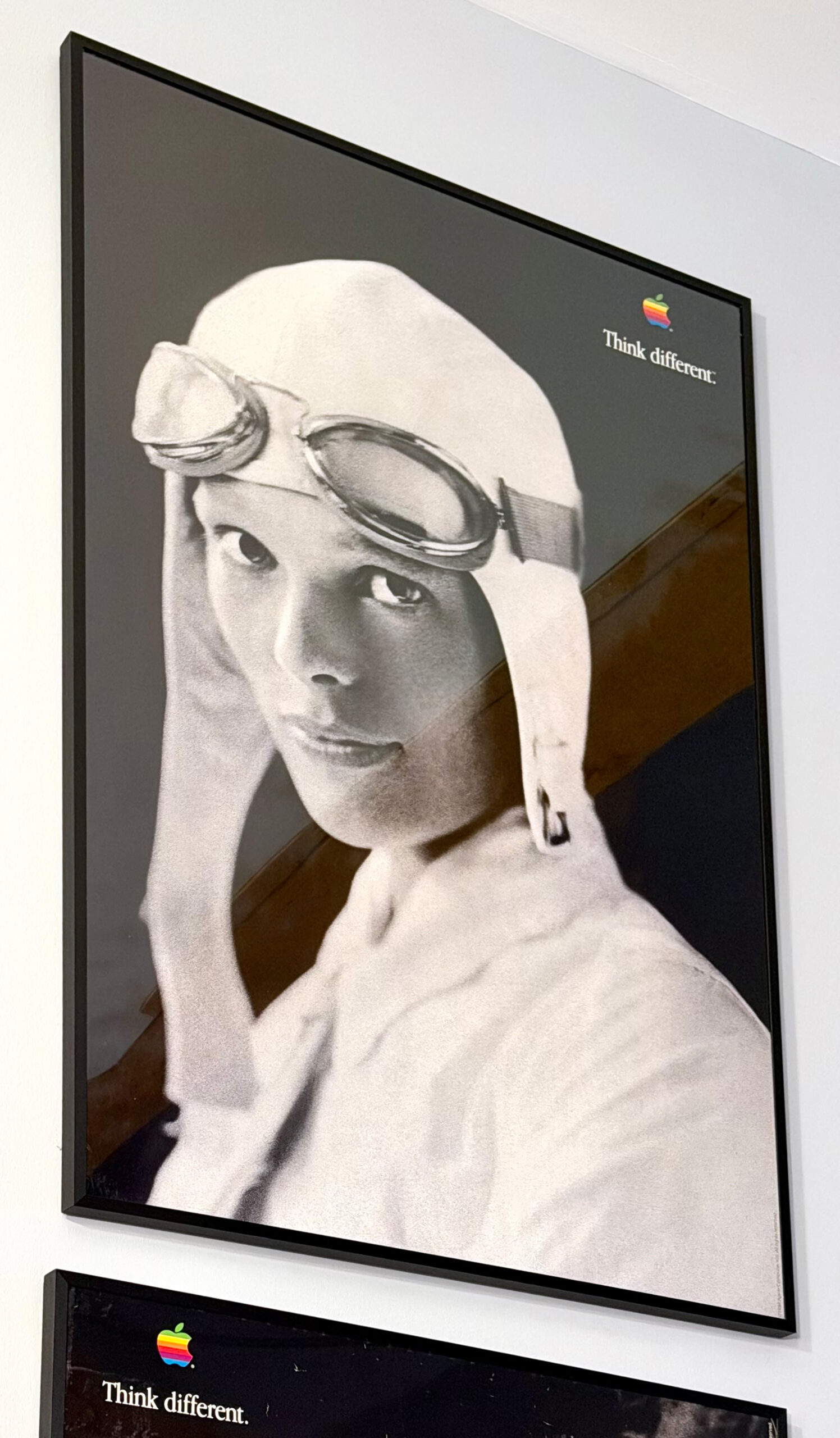
Amelia Earhart (24 x 36 inches, 1998). From poster set 1.
Picasso [side facing] (24 x 36 inches, 1997). From poster set 1.
Gandhi (24 x 36 inches, 1997). From poster set 1.
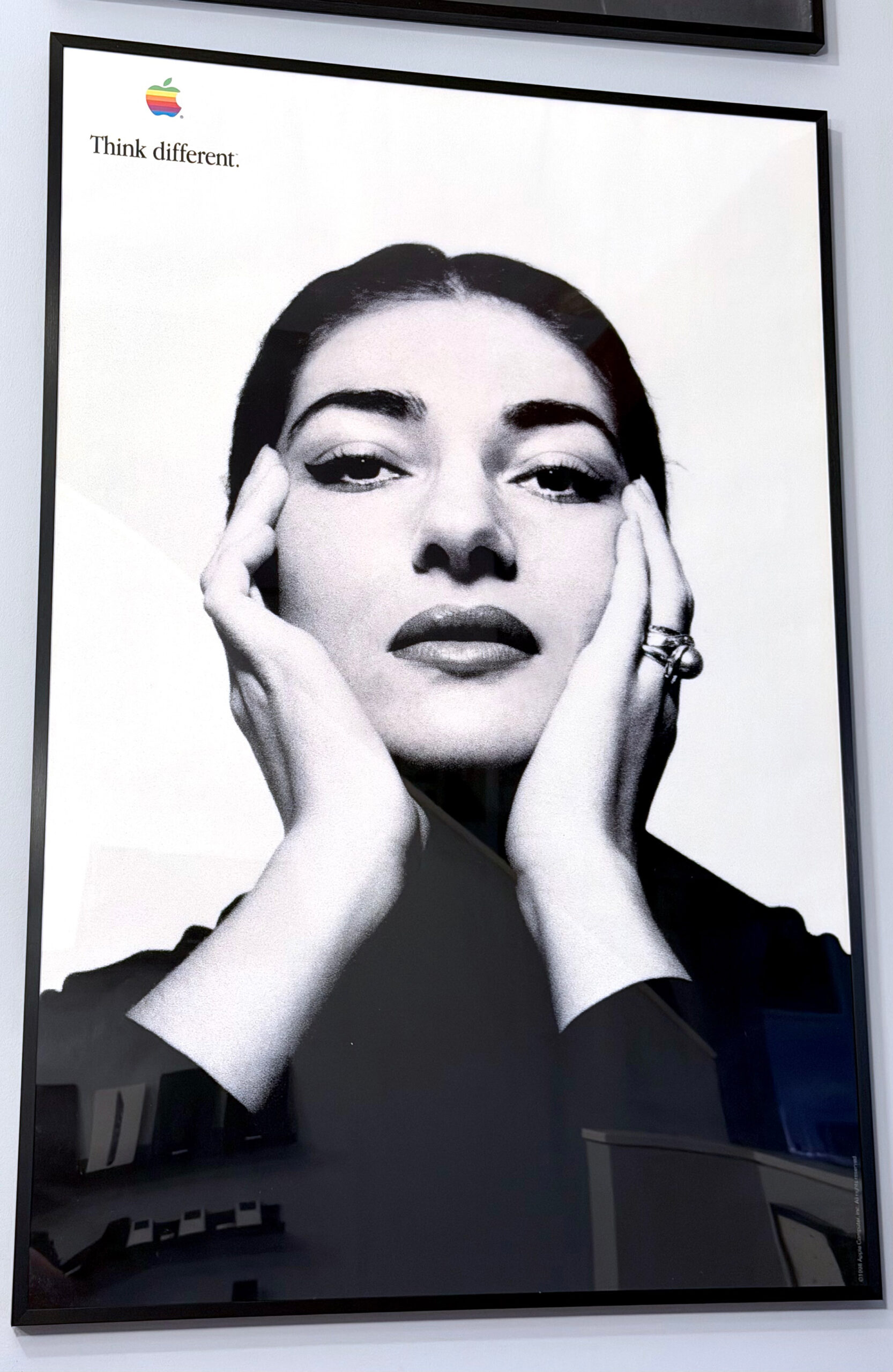
Maria Callas (24 x 36 inches, 1998). From poster set 2.
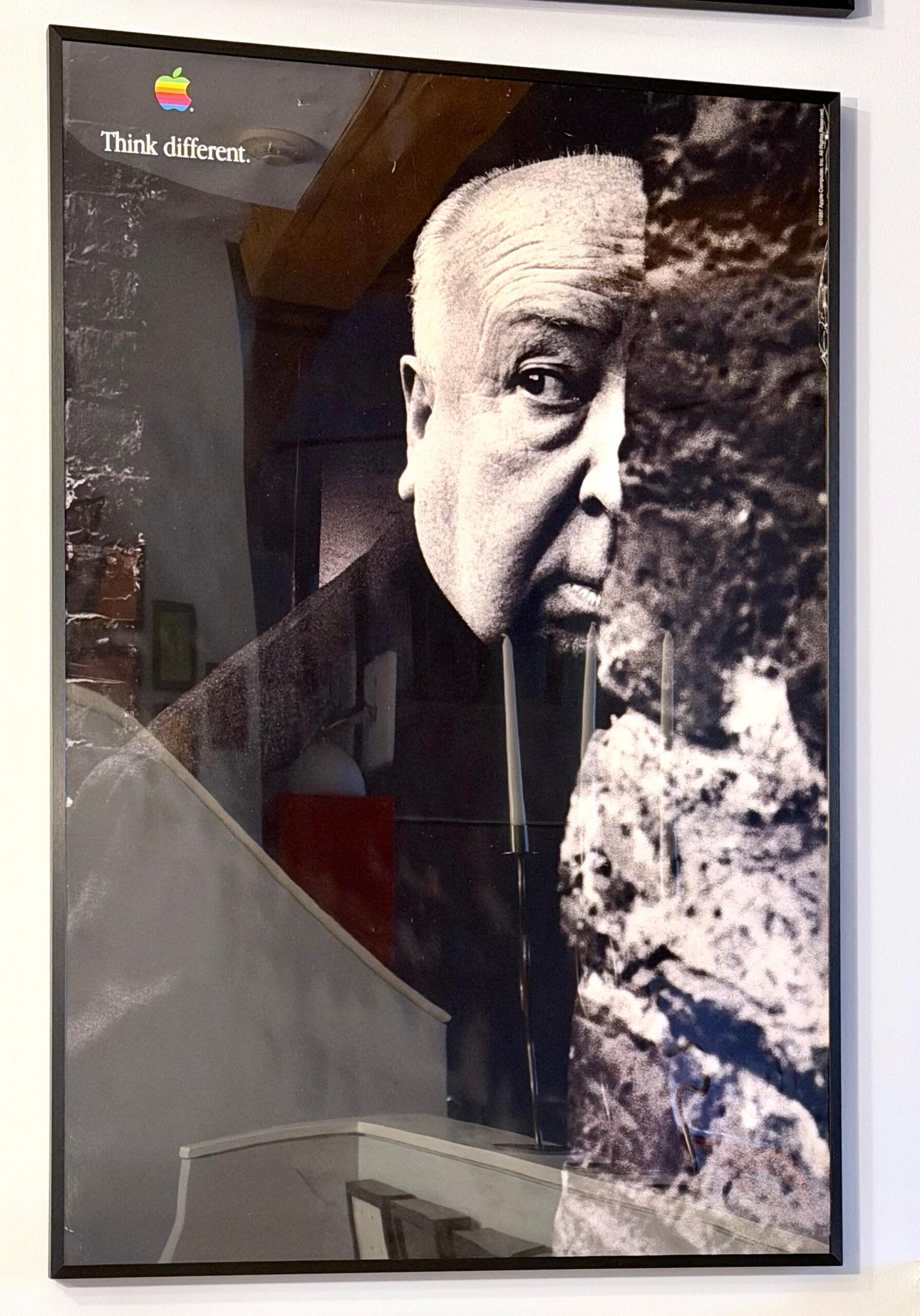
Alfred Hitchcock (24 x 36 inches, 1997). From poster set 1.
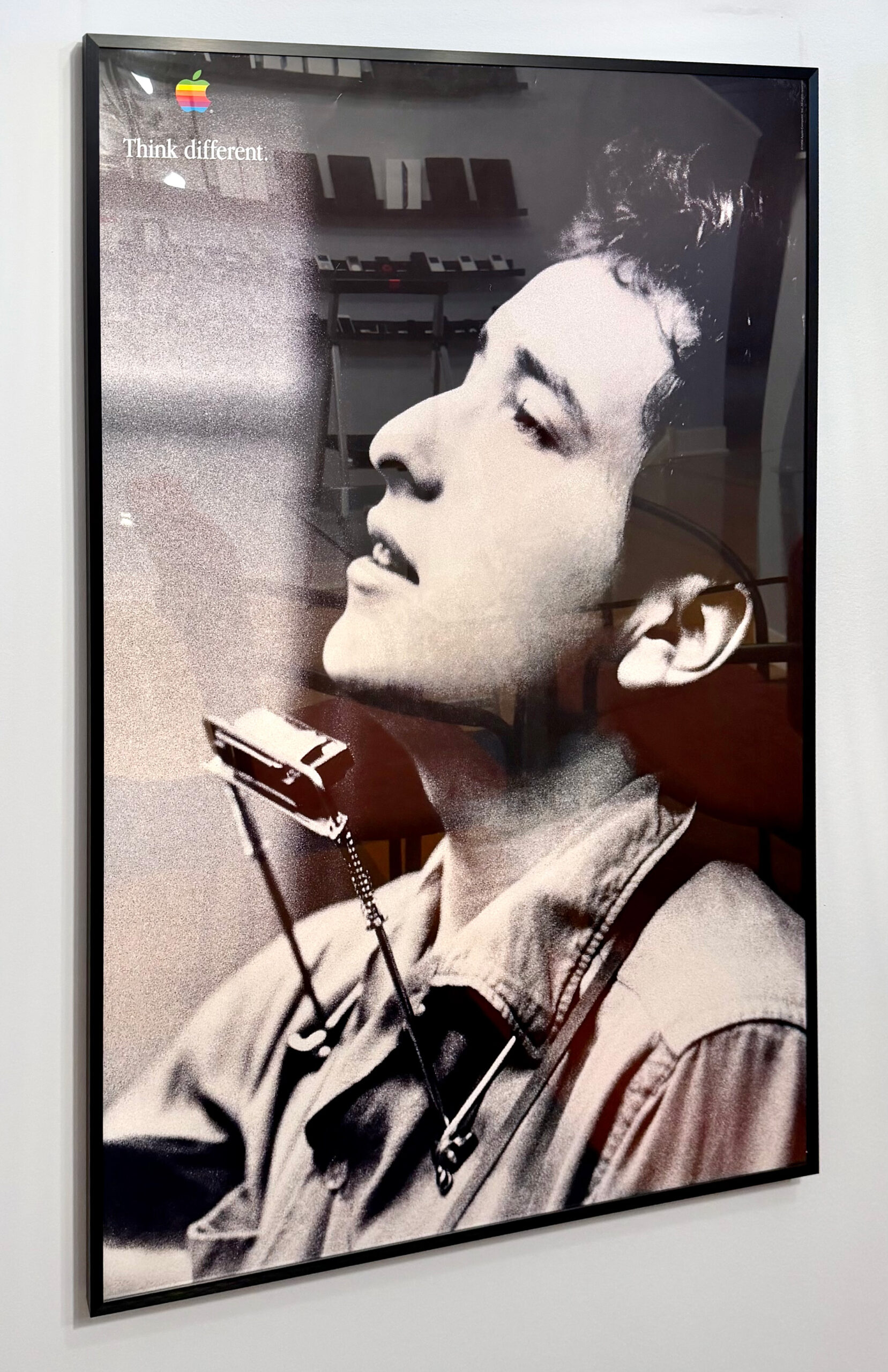
Bob Dylan (24 x 36 inches, 1998). From poster set 3.
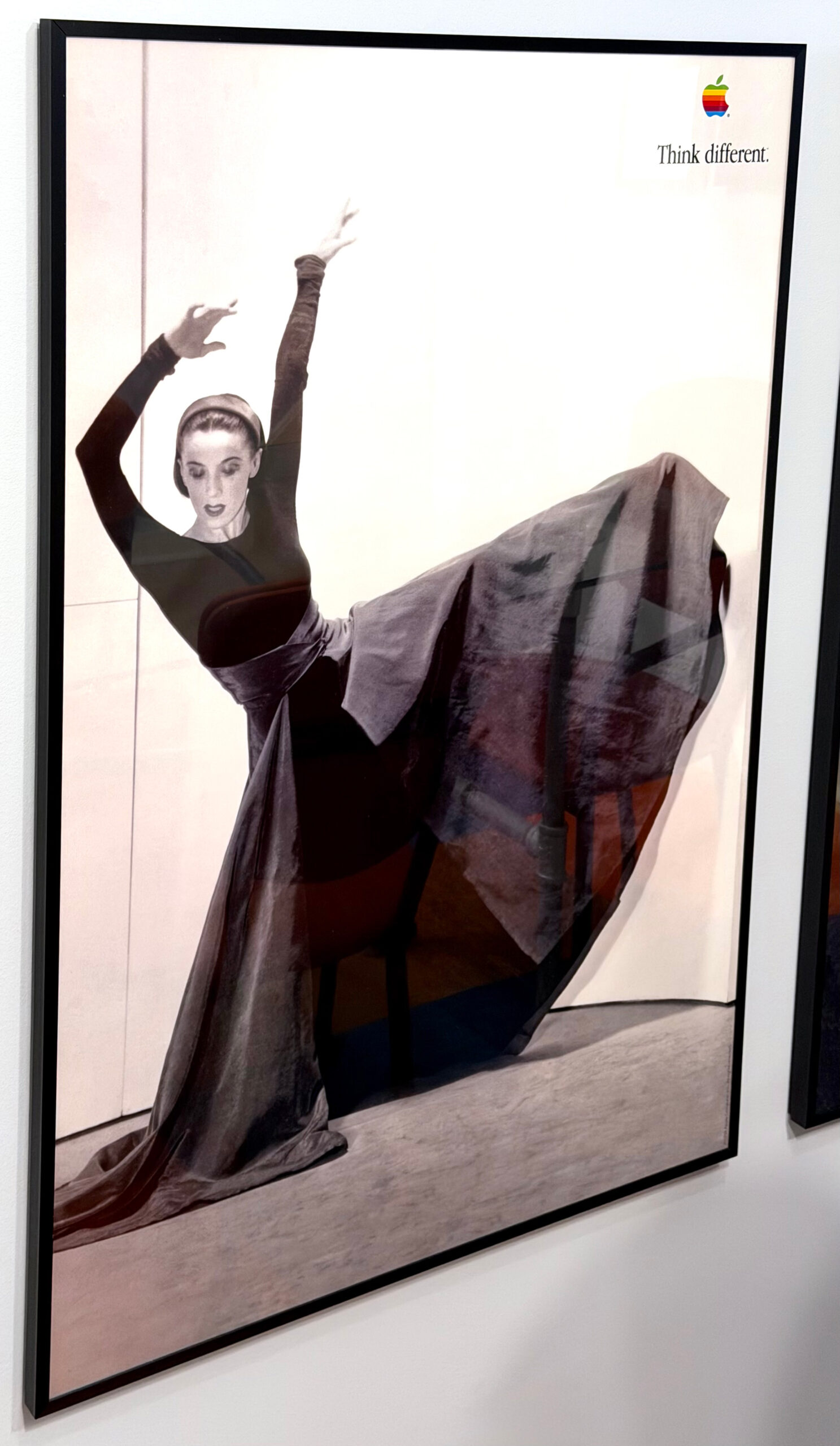
Martha Graham (24 x 36 inches, 1997). From poster set 2.
Albert Einstein (24 x 36 inches, 1997).
Miles Davis (24 x 36 inches, 1998). From poster set 3.
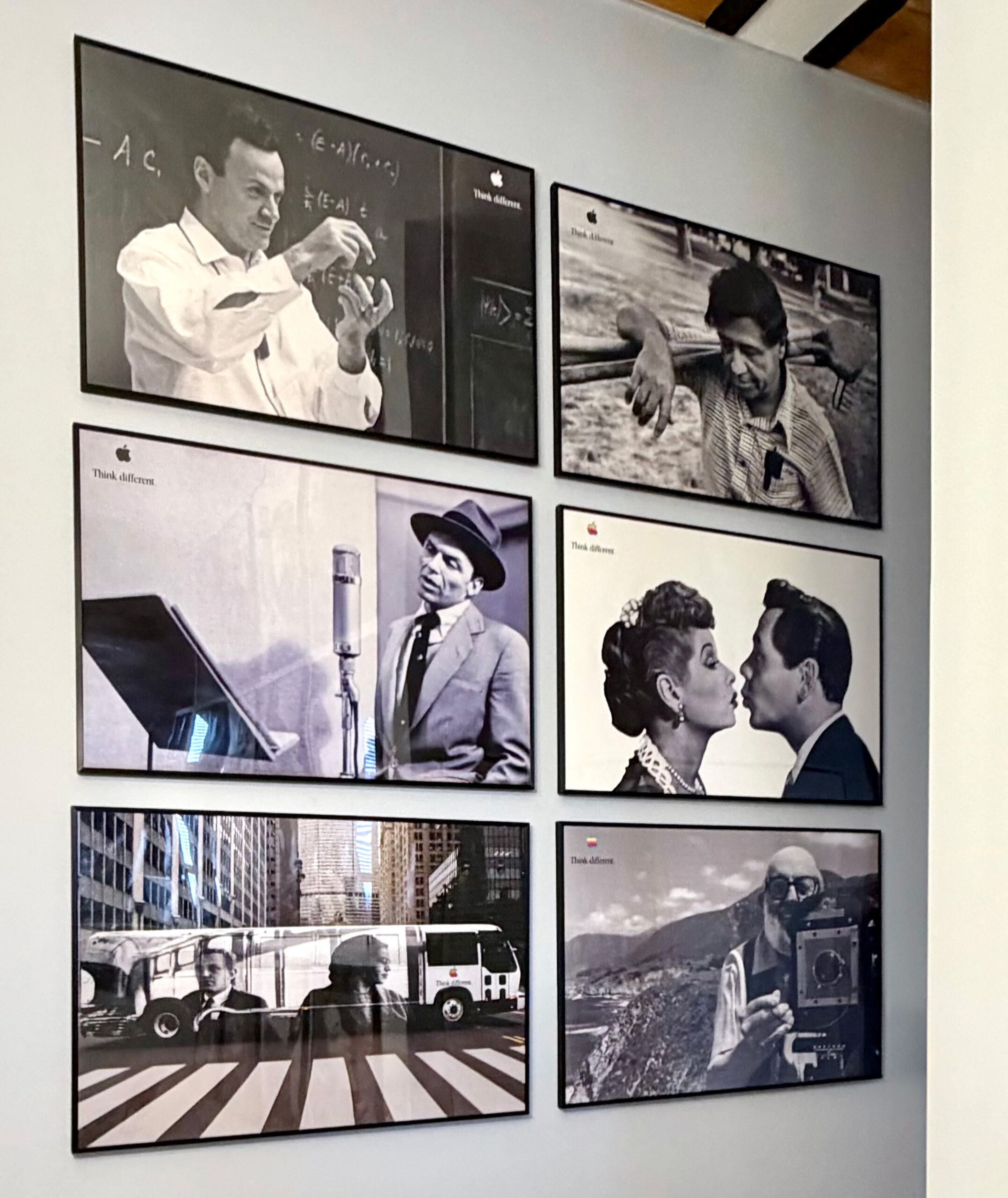
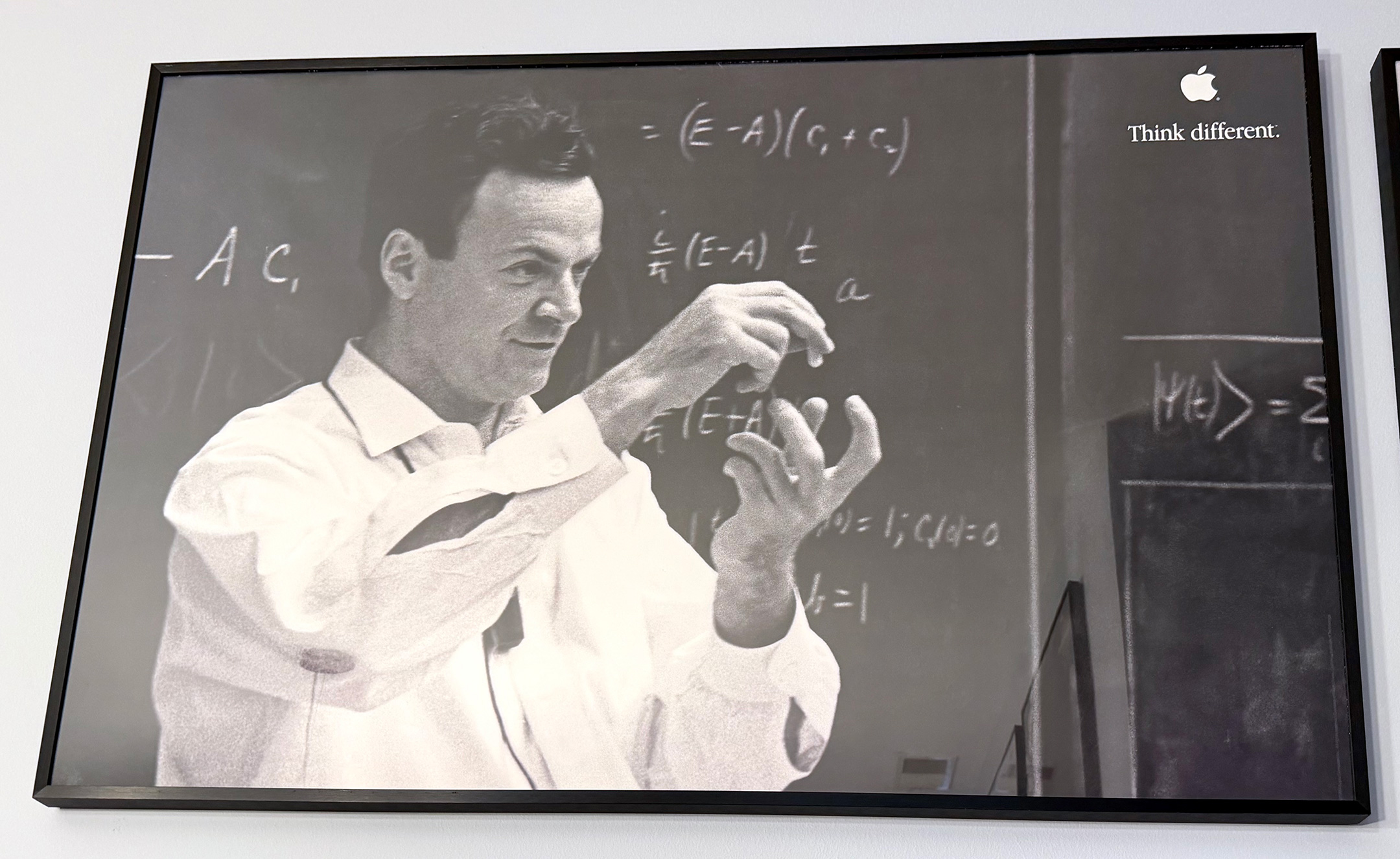
Richard Feynmann (36 x 24 inches, 1999). From poster set 4.
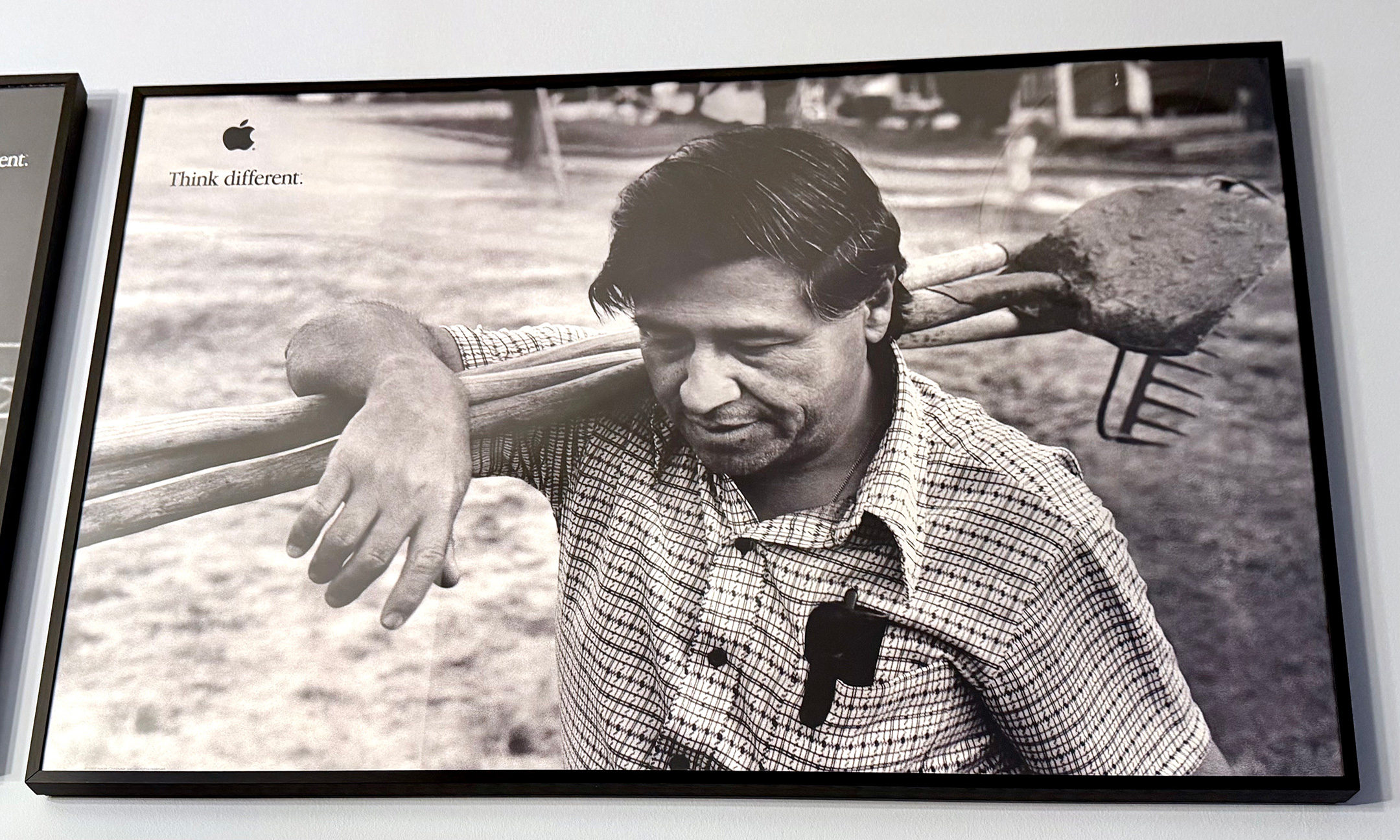
Cesar Chavez (36 x 24 inches, 1998). From poster set 4.
Frank Sinatra (36 x 24 inches, 1999). From poster set 4. [Print faded]
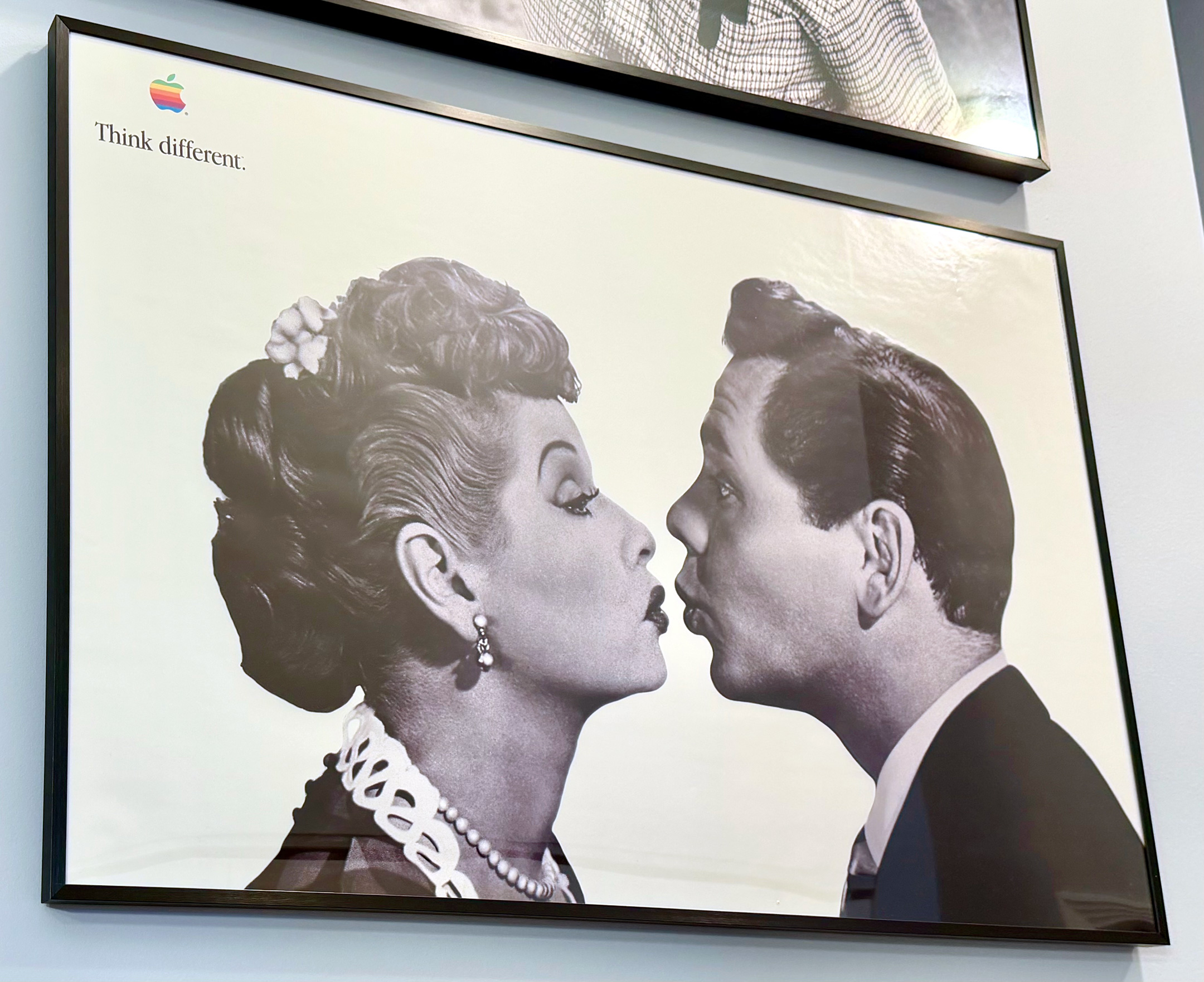
Lucille Ball & Desi Arnaz (36 x 24 inches, 1954/1998). From poster set 3.
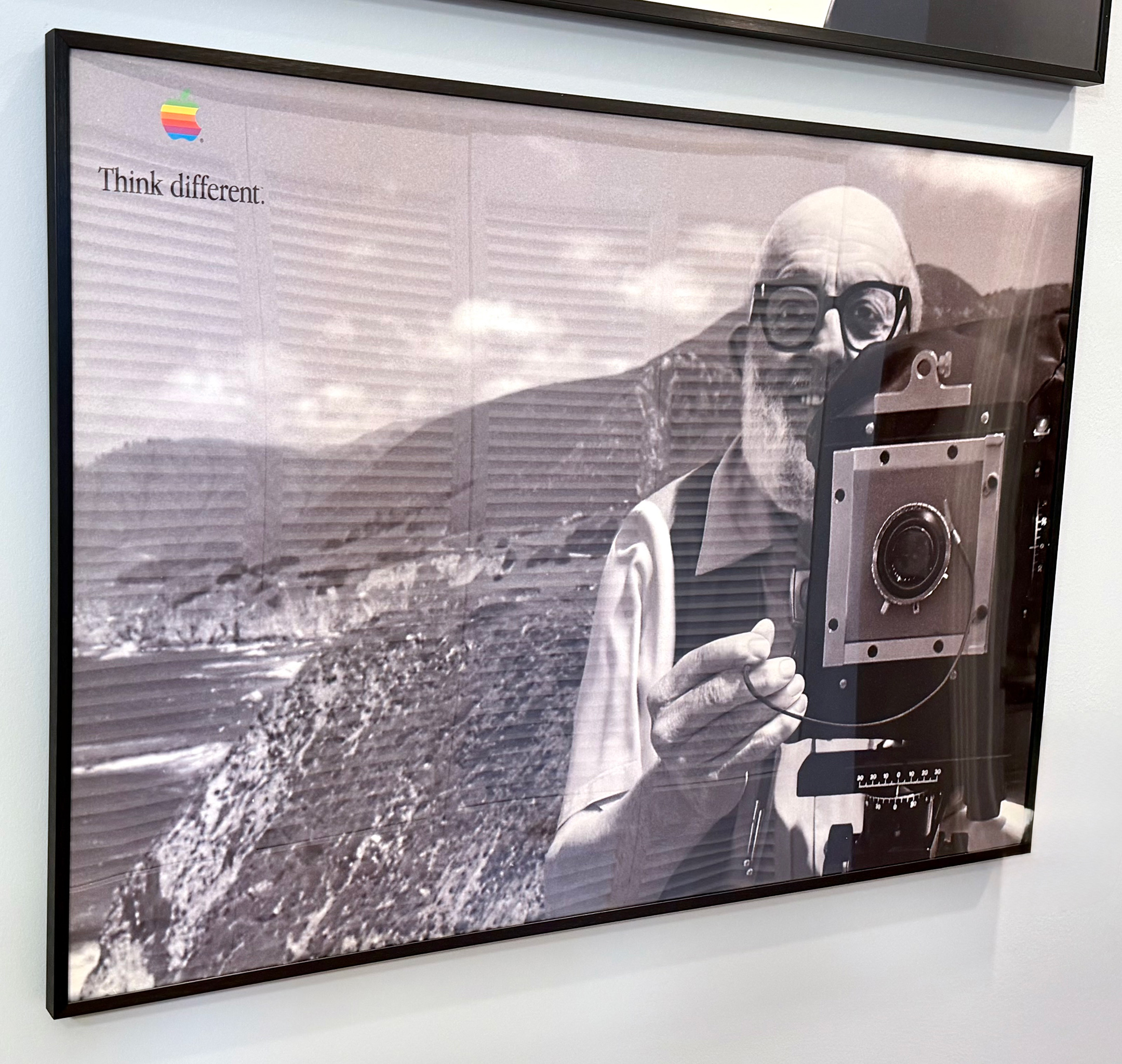
Ansel Adams (36 x 24 inches, 1998). From poster set 3.
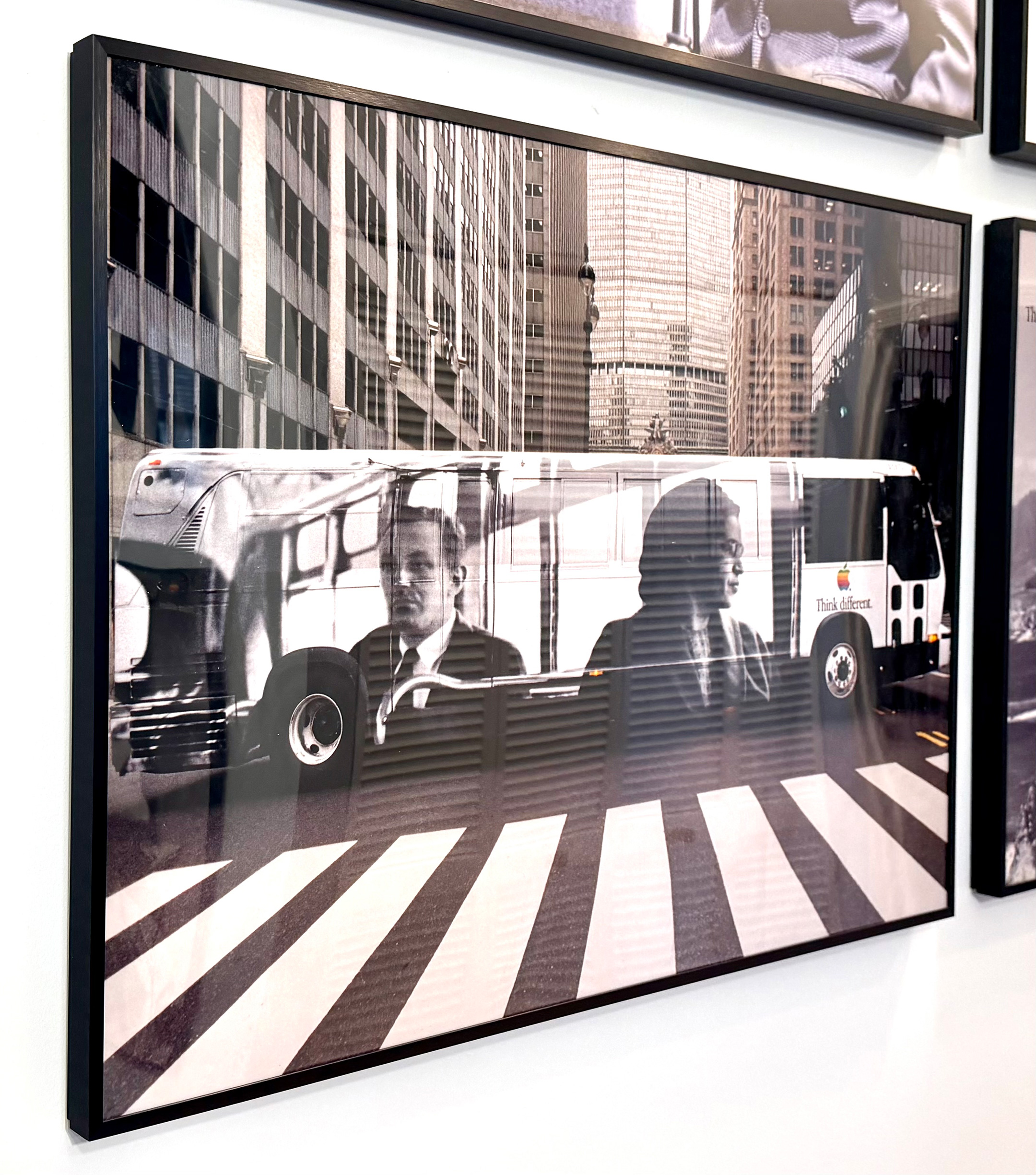
Rosa Parks bus (36 x 24, 1998). Education poster.
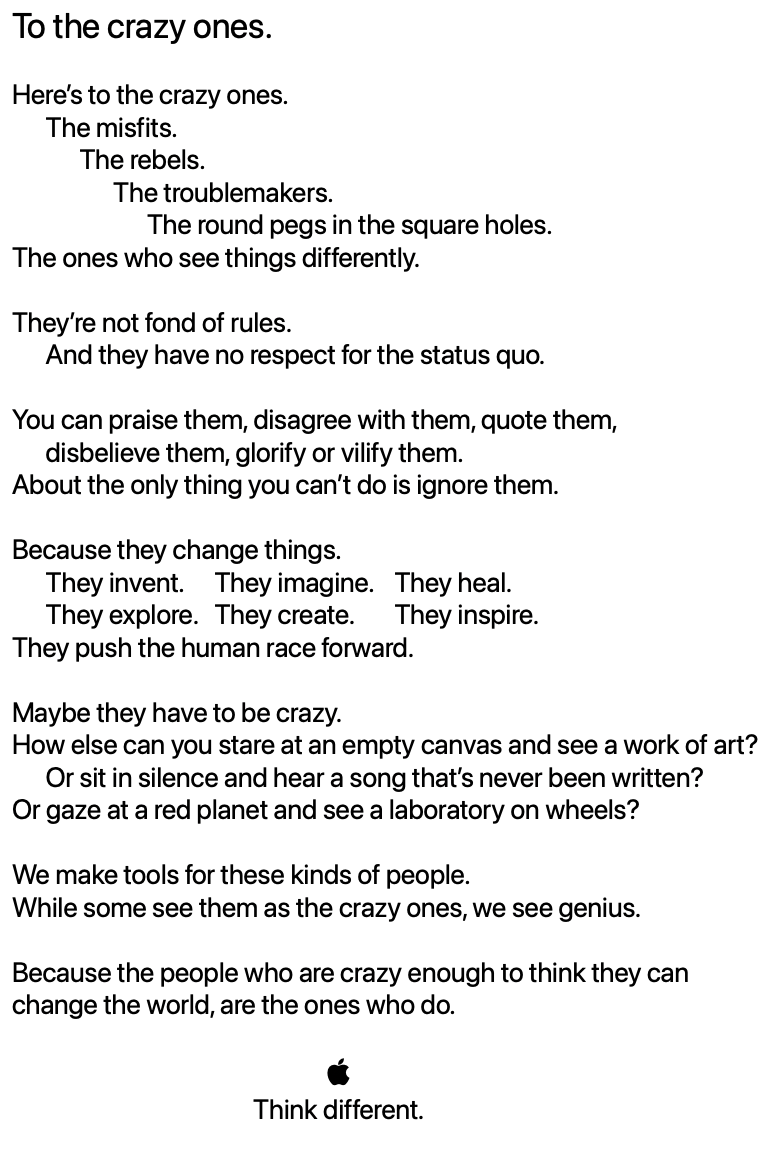
This advertising campaign was notable because it did not include imagery or mentions of any Apple products. The Think different idea was based upon a “manifesto” that began famously with “Here’s to the crazy ones.”
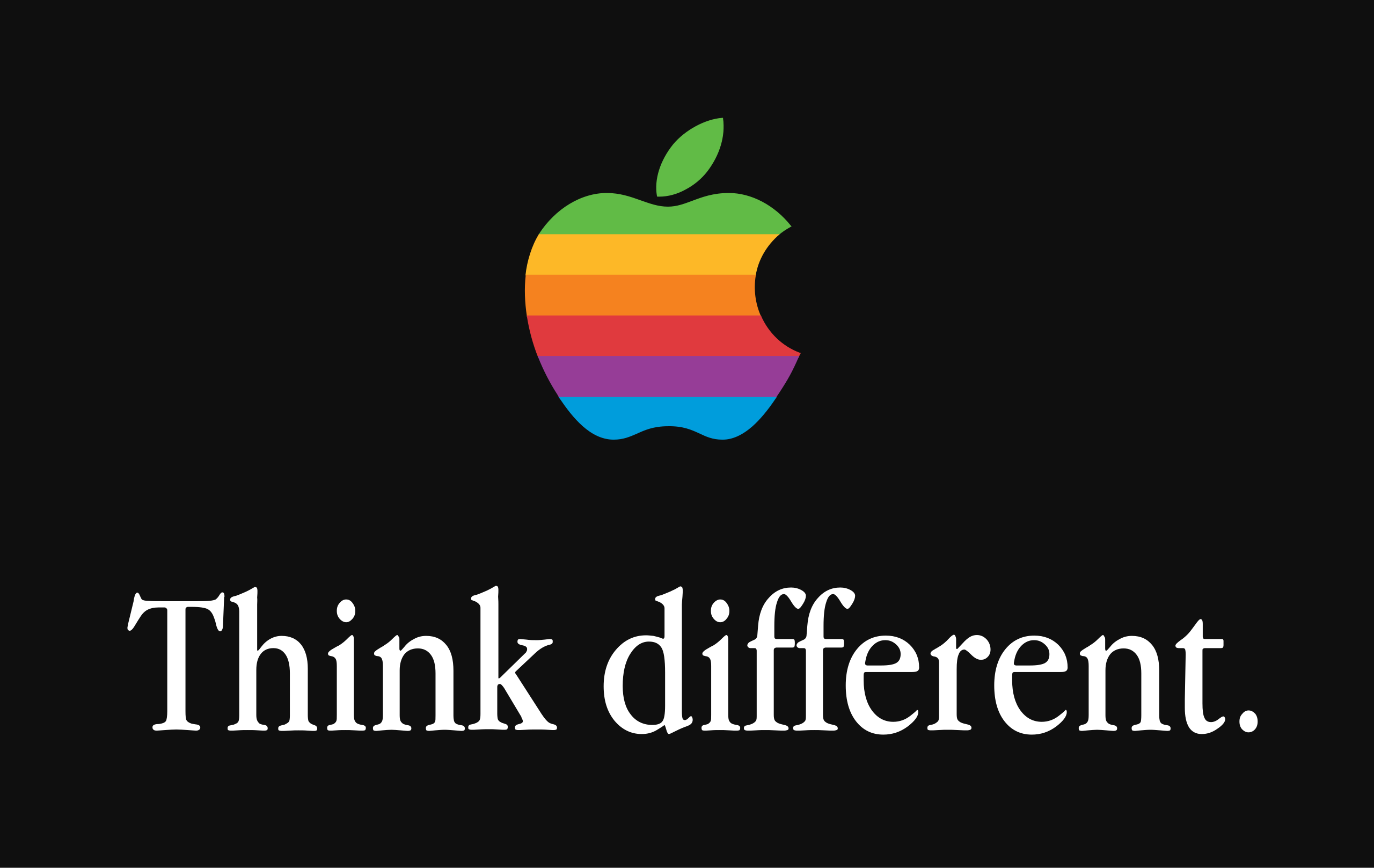
During the original TV commercial, voiced by Richard Dreyfuss, black-and-white film footage of iconic figures served as visuals to accompany the voiceover of a shortened version of the manifesto. Luminaries in the commercial included Albert Einstein, Bob Dylan, Martin Luther King Jr., Thomas Edison, Muhammad Ali, Gandhi, Amelia Earhart, Alfred Hitchcock, Jim Henson, Pablo Picasso, and others. The commercial ended with the multi-color Apple logo on a black background with white text (in the Apple Garamond font) Think different.
The print and digital ads also did not feature Apple products, just a black-and-white photo, the multi-color Apple logo, and the words “Think different.” One of the creative team members who worked on the campaign described the print concept: “The rainbow-colored logo served as stark contrast to the black and white photography, and, to me, it seemed to make the ‘Think Different’ statement all the more bold.”
In her 2011 book Design by Nature: Using Universal Forms and Principles in Design, Maggie Macnab described the concept of the Think different campaign:
“By identifying Apple’s core philosophy with the rebels and geniuses that changed the world by ‘thinking differently,’ the campaign established Apple as the ideology of the future. Apple was perceived as saving the day by making technology accessible to anyone. This move repositioned it well above its competition and far beyond the status of ‘product’ by connecting the user into a world of possibility.”
From the debut of Think different, the grammar of the slogan has been debated. Would-be grammarians cited the adverbial rule and admonished the slogan stating that “standard” English grammar dictates that adverbs must modify verbs—making “think differently” the “correct” usage. However as in this case, “different” can be used as an adjective that modifies the object “think”—suggesting a command to think in a different way. Thus, the slogan is parallel to other uses, such as “think big,” where “big” is used as an adjective. Using this logic, “think big” cannot be corrected to “think bigly,” just as “think different” could not be changed to “think differently” without changing its meaning.
In the United States, four sets of 24 x 36 inch Think different posters were released. Set 1 included Amelia Earhart, Alfred Hitchcock, Pablo Picasso, Mahatma Gandhi, and Thomas Edison. Set 2 included Maria Callas, Martha Graham, Joan Baez, Ted Turner, and the Fourteenth Dalai Lama (not officially released due to licensing). Set 3 included Miles Davis; Ansel Adams (landscape orientation); Lucille Ball and Desi Arnaz (landscape orientation); and Bob Dylan (not officially released due to licensing). Paul Rand and Jimi Hendrix were part of Set 3, but not included in all sets that were shipped (also likely due to licensing). Set 4 included Frank Sinatra, Richard Feynman, Jackie Robinson, and Cesar Chavez.
An unofficial Set 5 included film directors that was never released, including Charlie Chaplin, Francis Ford Coppola, Orson Welles, Frank Capra, and John Huston.
The 36 x 24 inch Rosa Parks bus poster is unique in this set as it was created and distributed to education customers and not part of a larger set. Further, the poster is a color photo of a black-and-white photo on the side of a New York City bus.
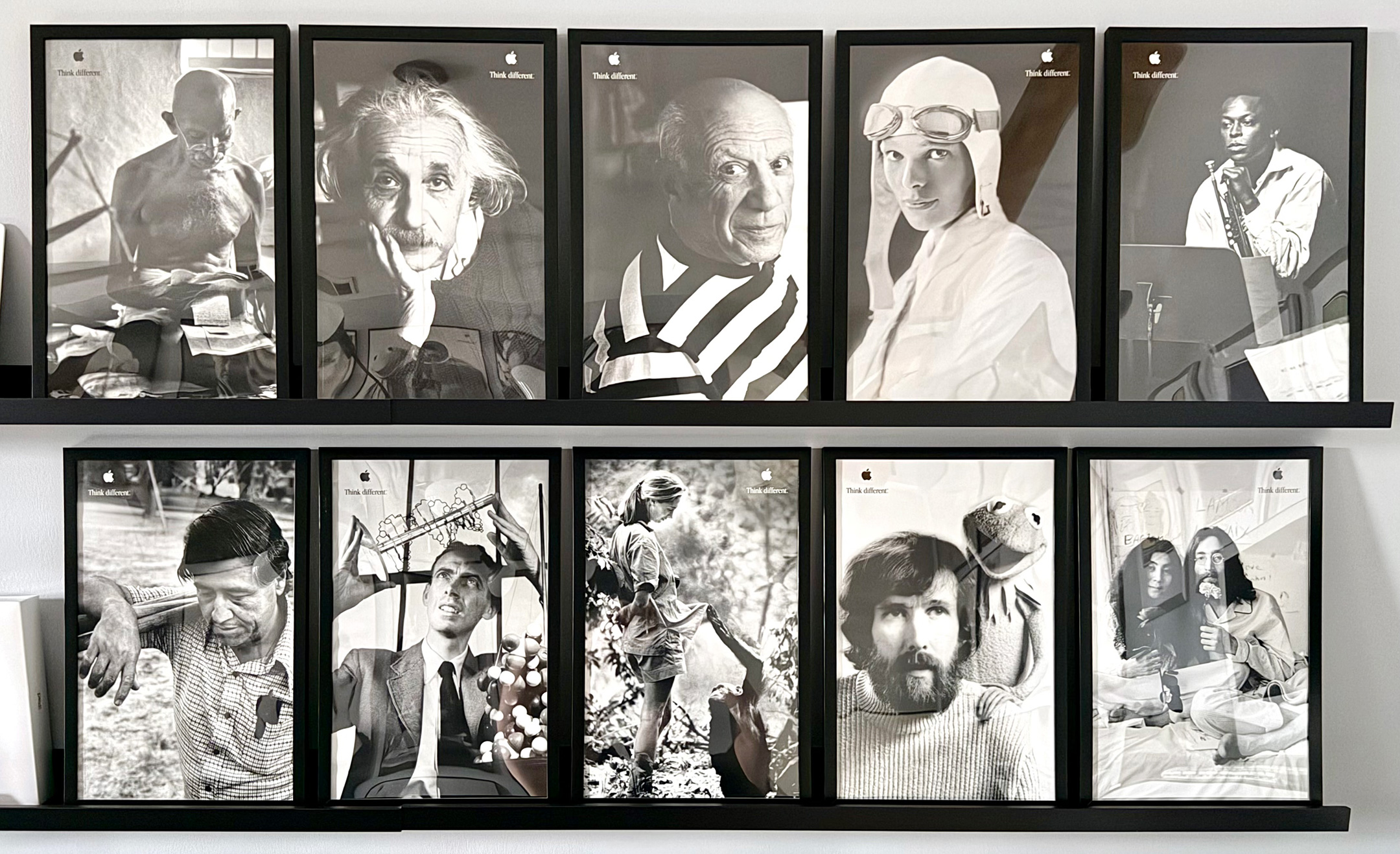
I have collected many of Apple’s Think different posters, print ads, and other materials, including a set of 10 posters that measure 11 x 17 each and were distributed to educators. Some designs in this Think different education set are cropped versions of the 24 x 36 posters.
The 24 x 36 posters photographed here are displayed in my dining room on two walls to create a gallery effect. I also included a photo of the 11 x 17 posters on the facing wall. You will note that the photography style of this entry is very different from my typical posts. These photos were captured with iPhone 17 Pro in situ with inconsistent lighting, angles, and reflections.