Apple Vision Pro Travel Case (2024)

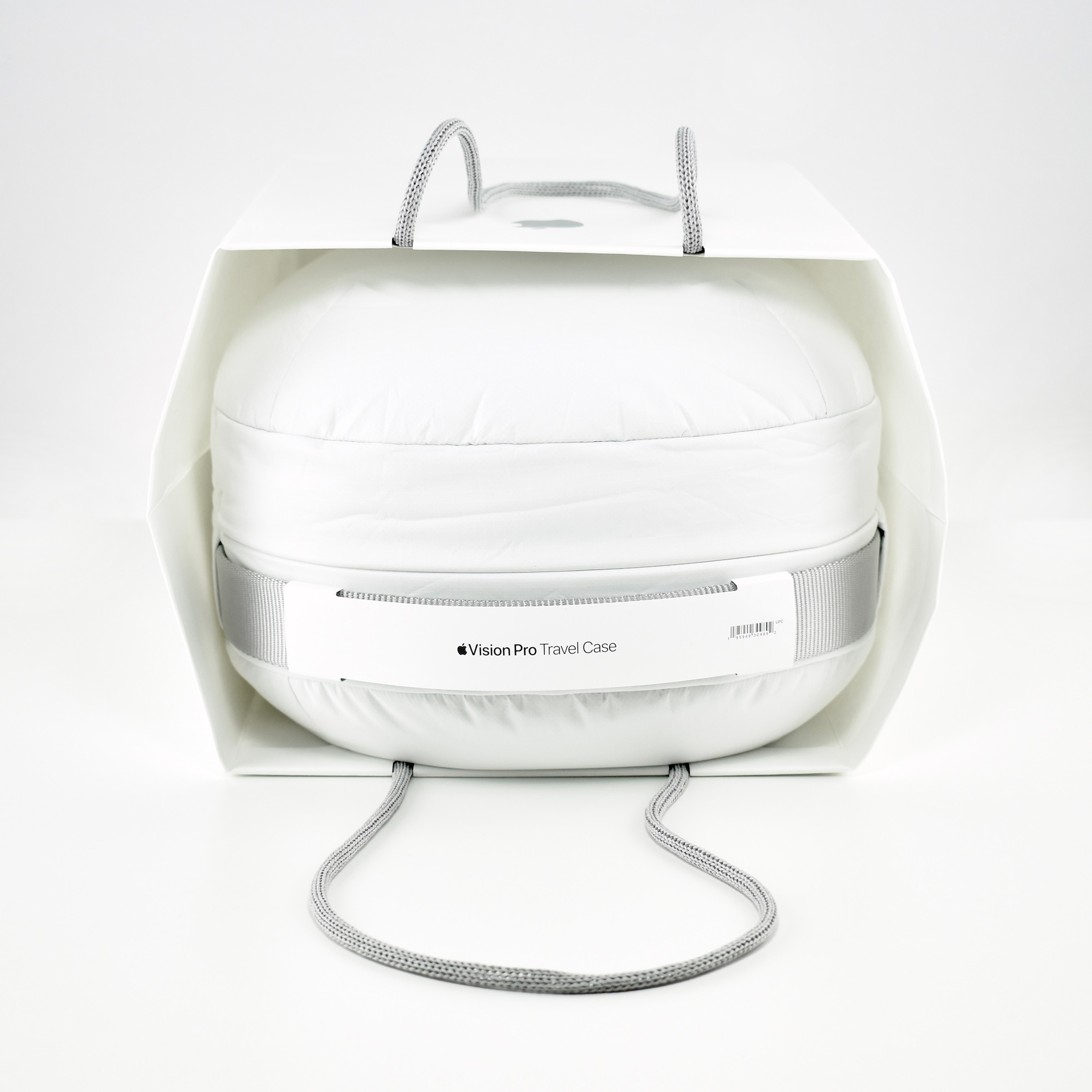
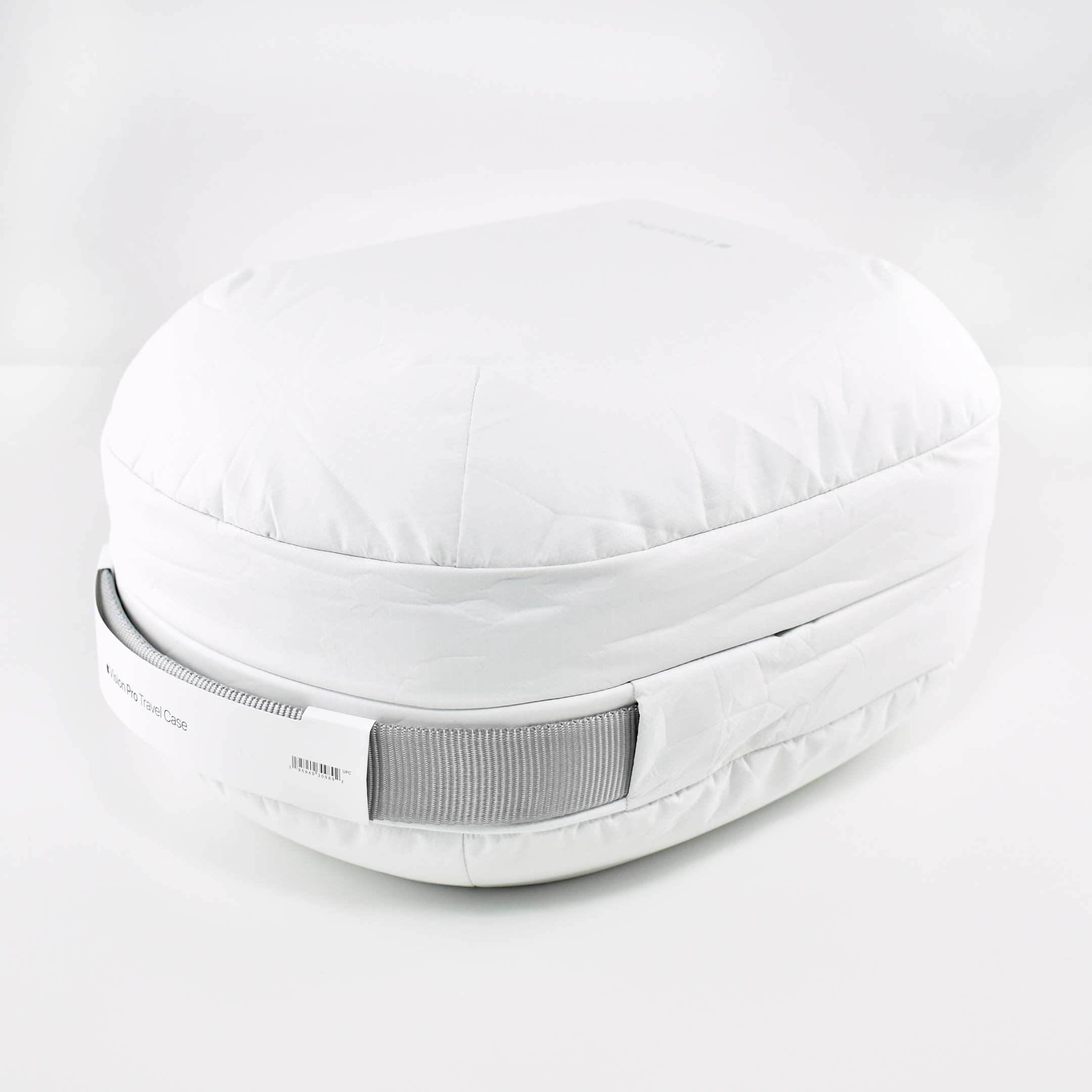
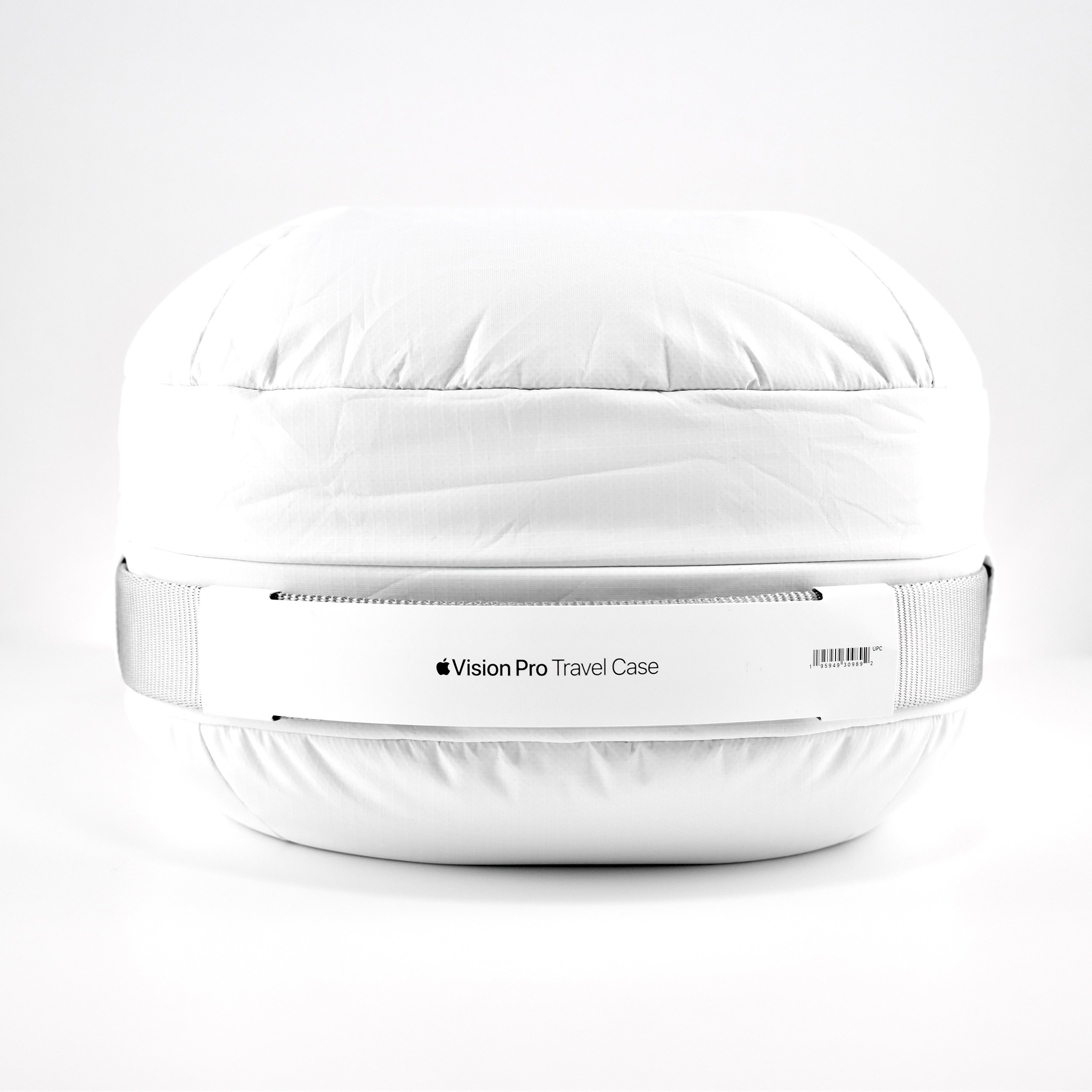
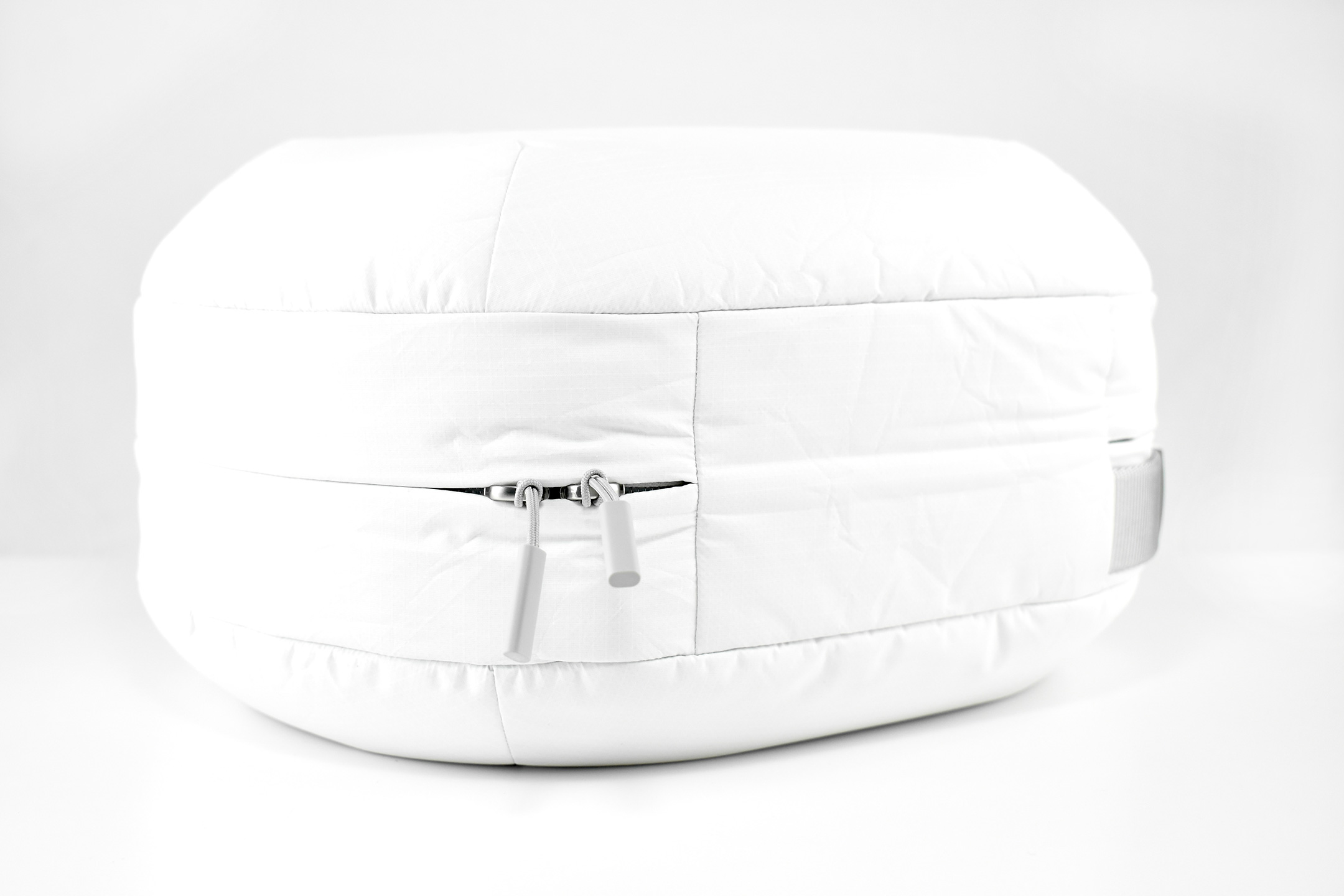
The Apple Vision Pro Travel Case is described by Apple as having “a retractable handle and specially designed compartments for your battery, ZEISS Optical Inserts, Apple Vision Pro Cover, and additional accessories.”

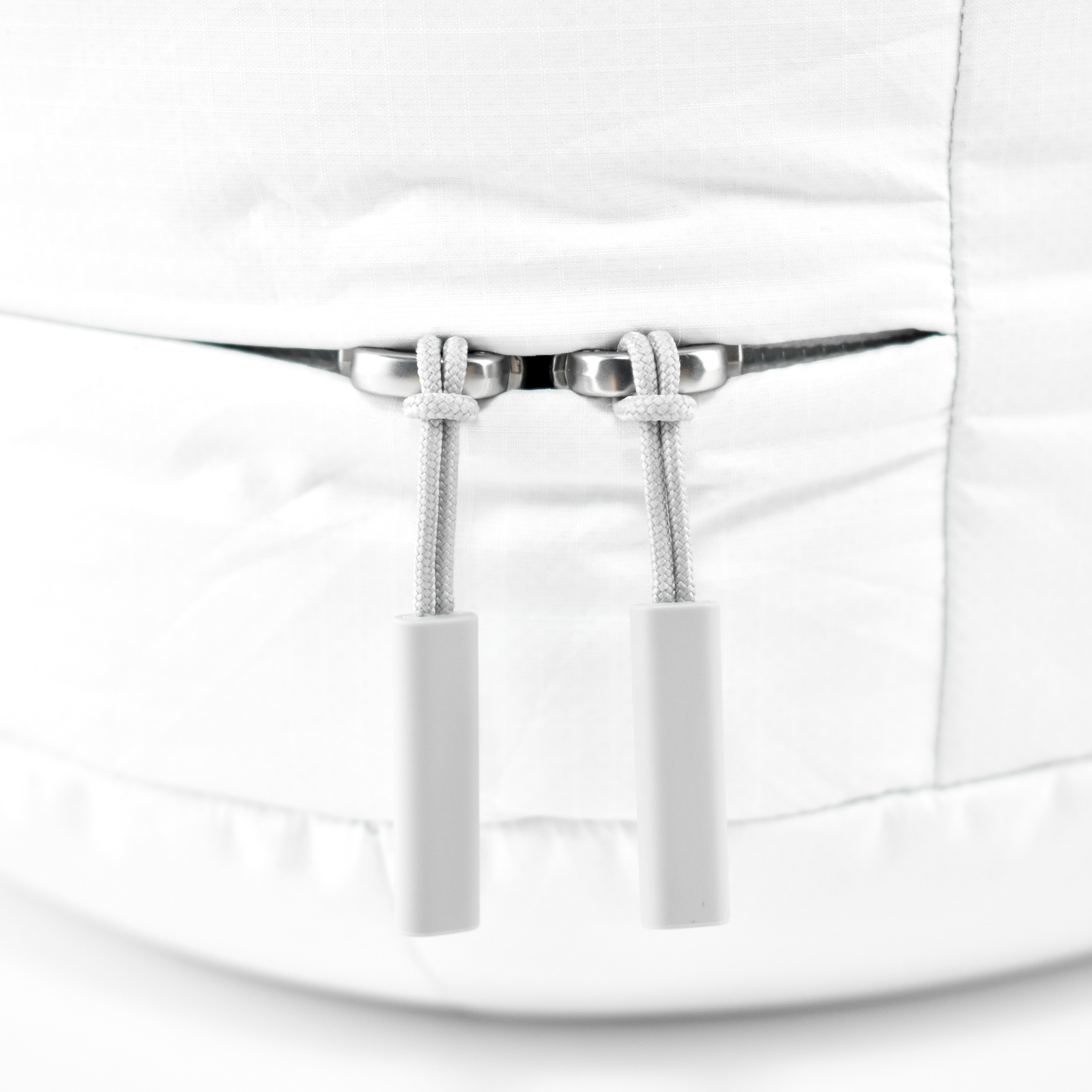
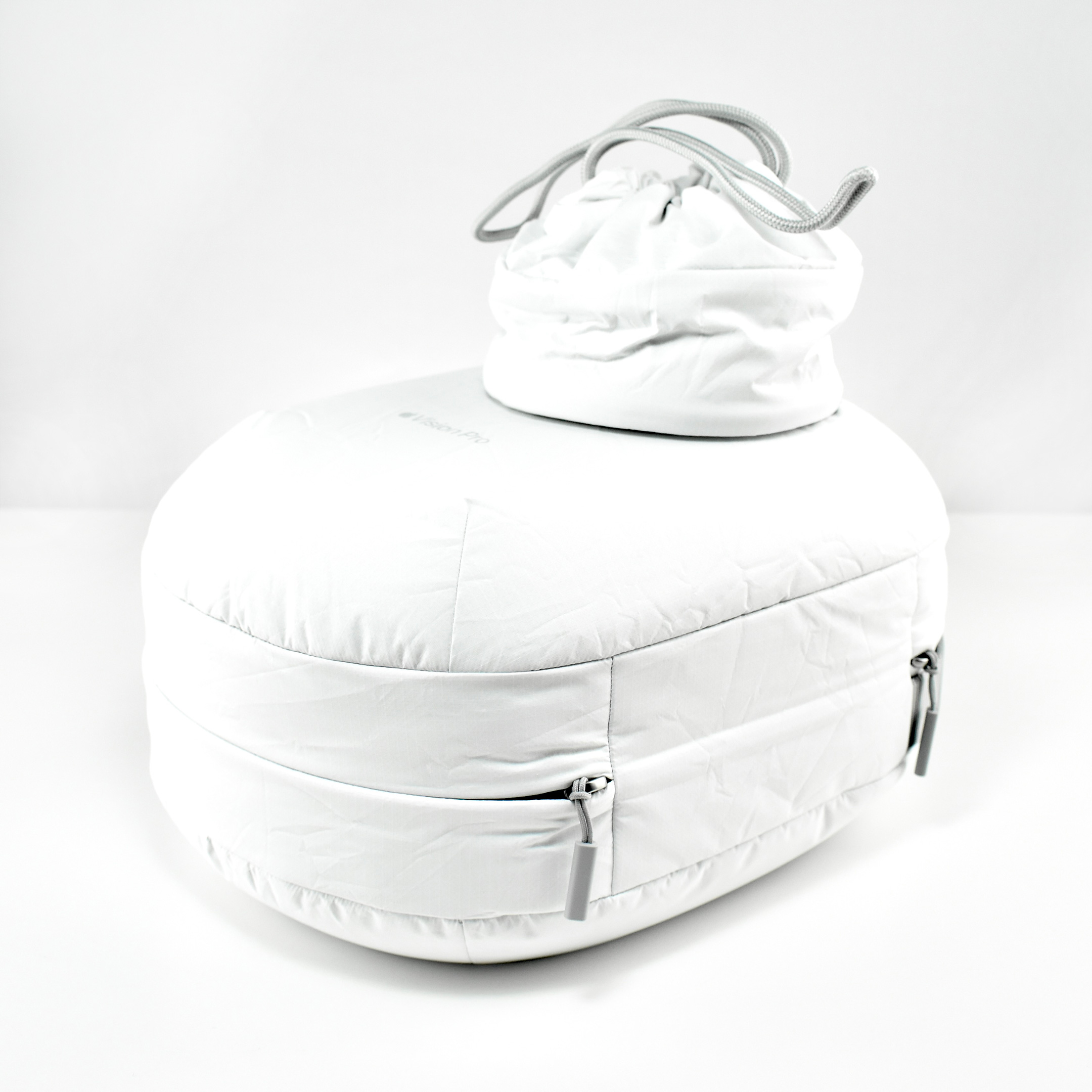
The exterior of the Apple Vision Pro Travel Case uses a material reminiscent of a windbreaker and loosely covers the polycarbonate protective structure. Apple refers to this white covering as “Ripstop,” defined by Wikipedia as “a woven fabric, often made of nylon, using a reinforcing technique that makes it more resistant to tearing and wear.” The case is printed on one side with the words “Apple Vision Pro” in light gray in Apple’s San Francisco font.

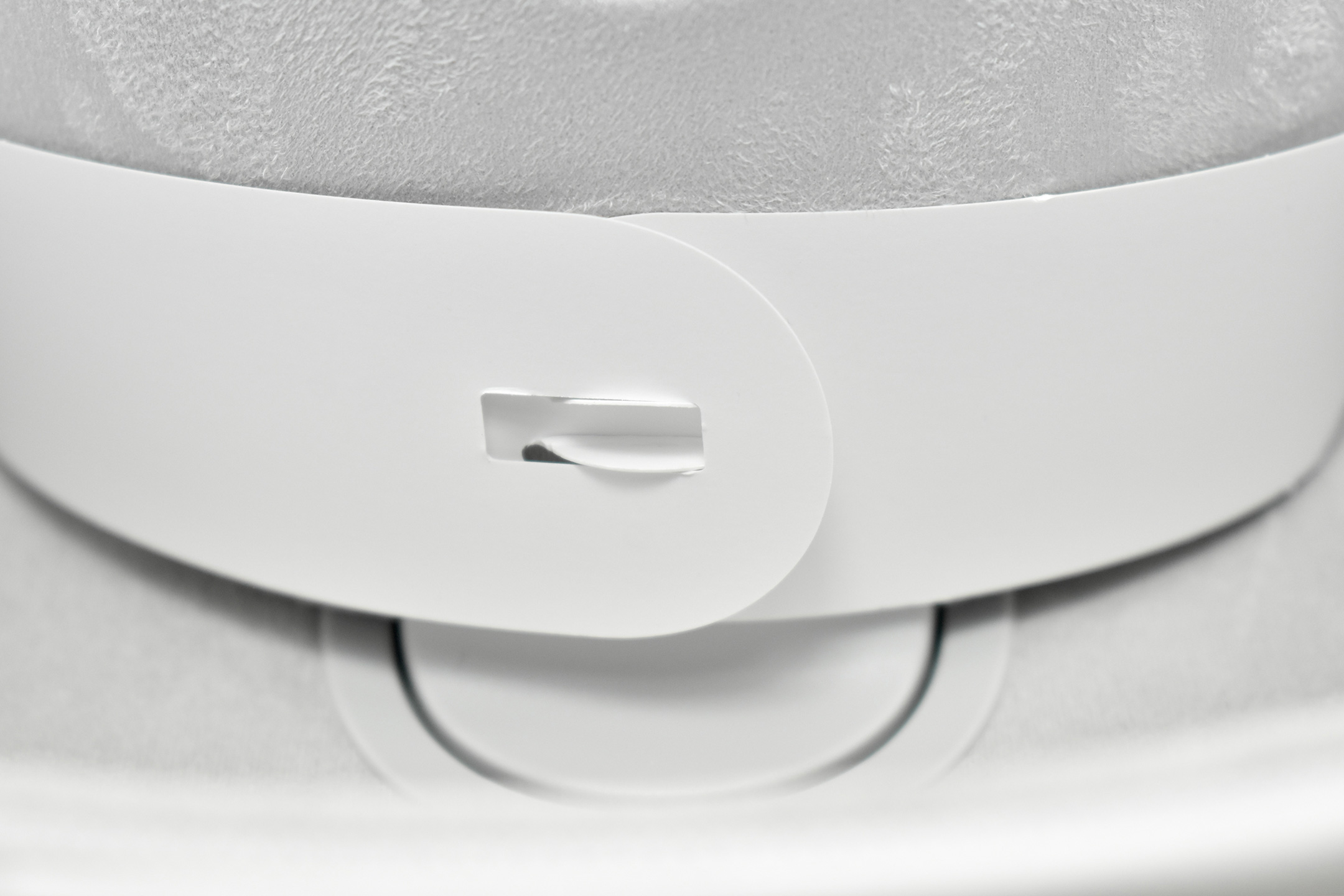
The outer retractable handle is light gray and borders the entire upper curve of the case. When not in use, it hugs tightly to the contour of the case.

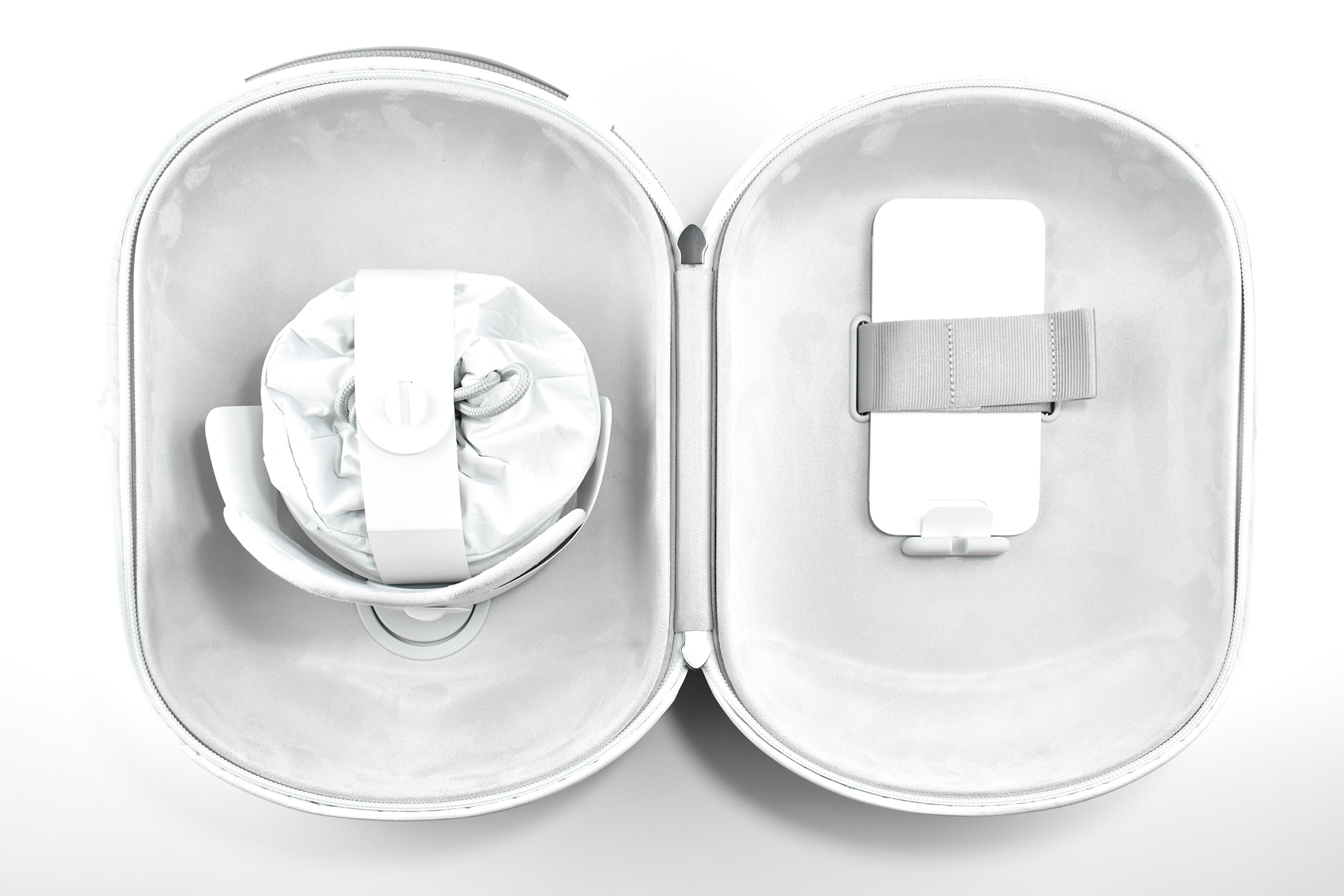
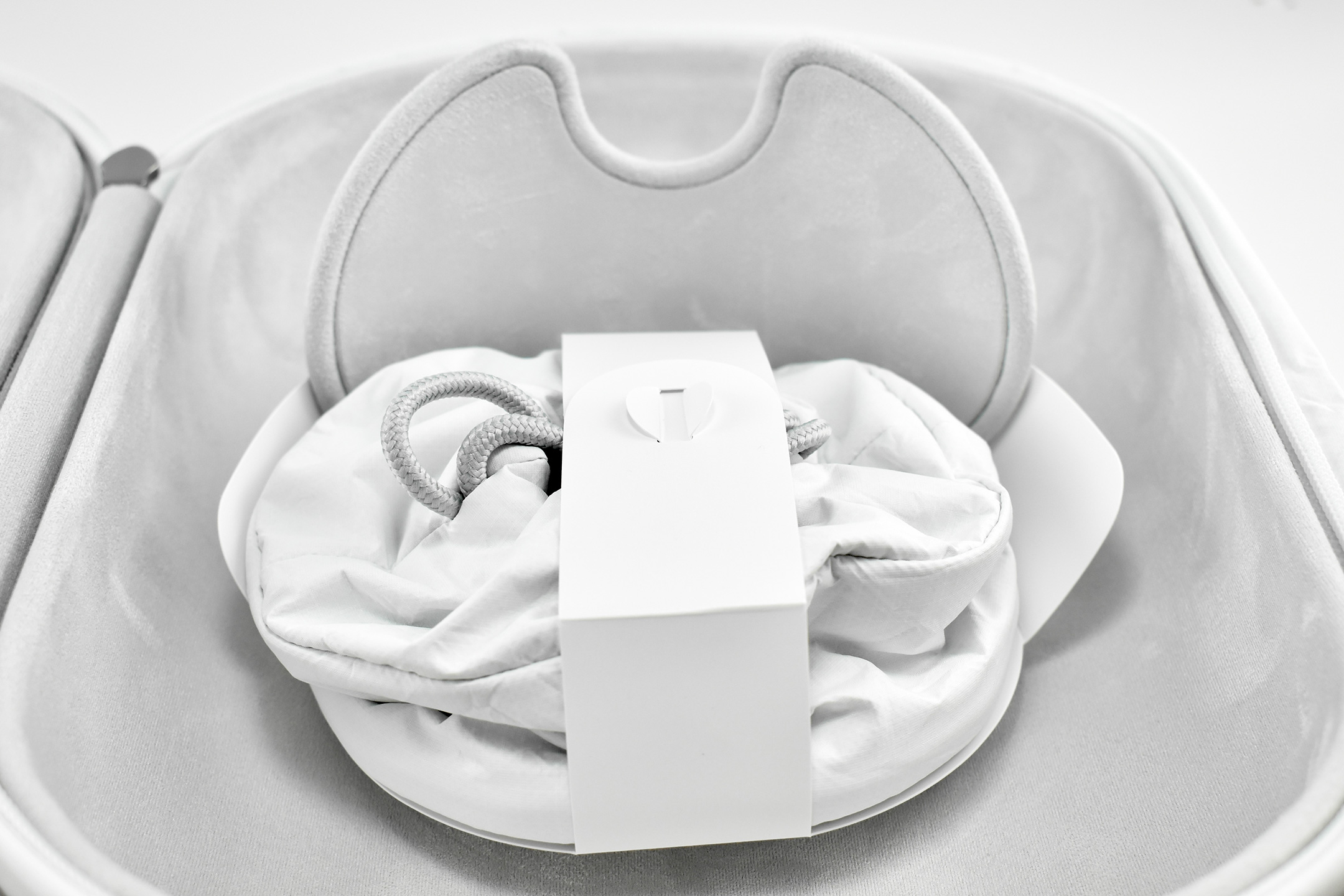
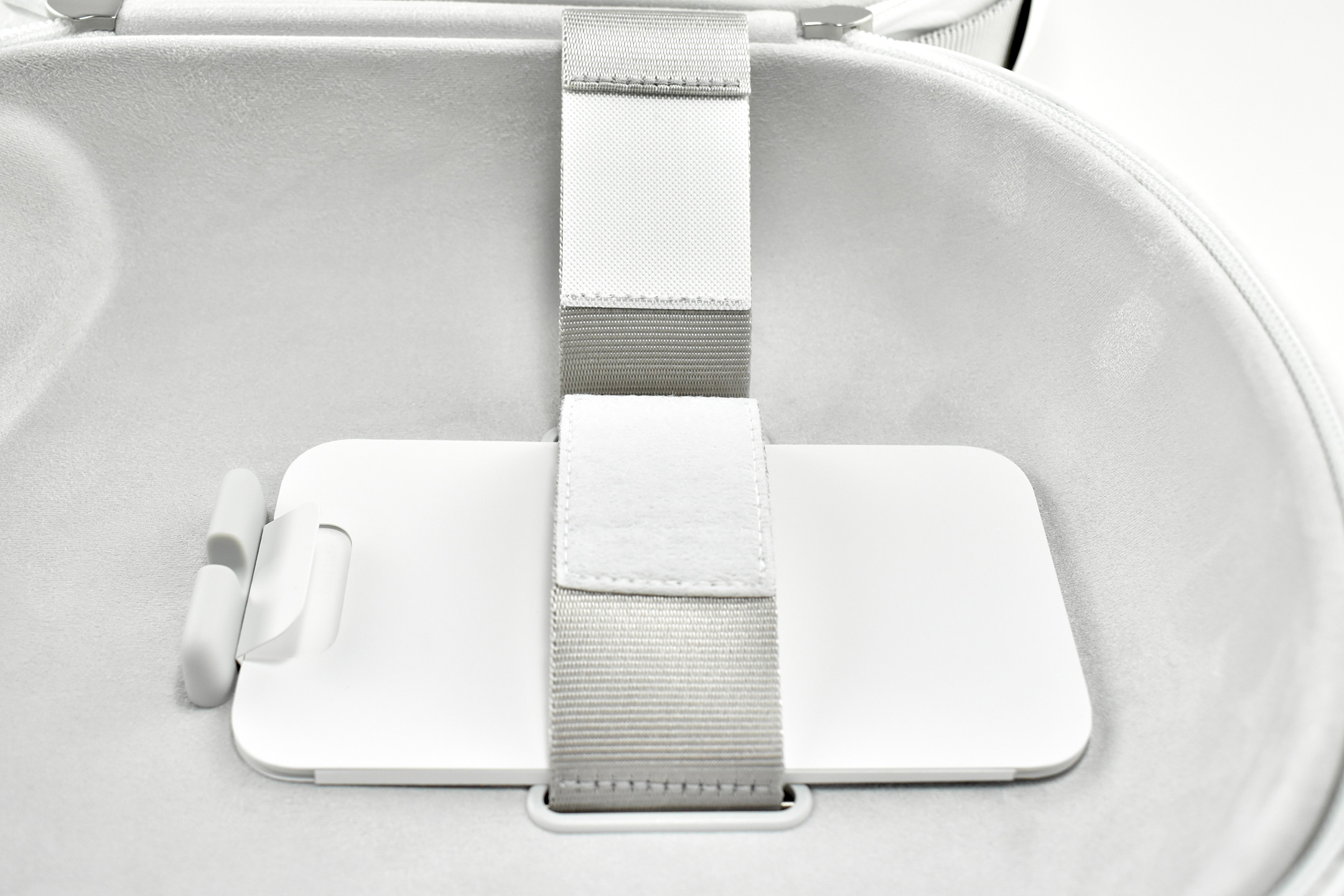
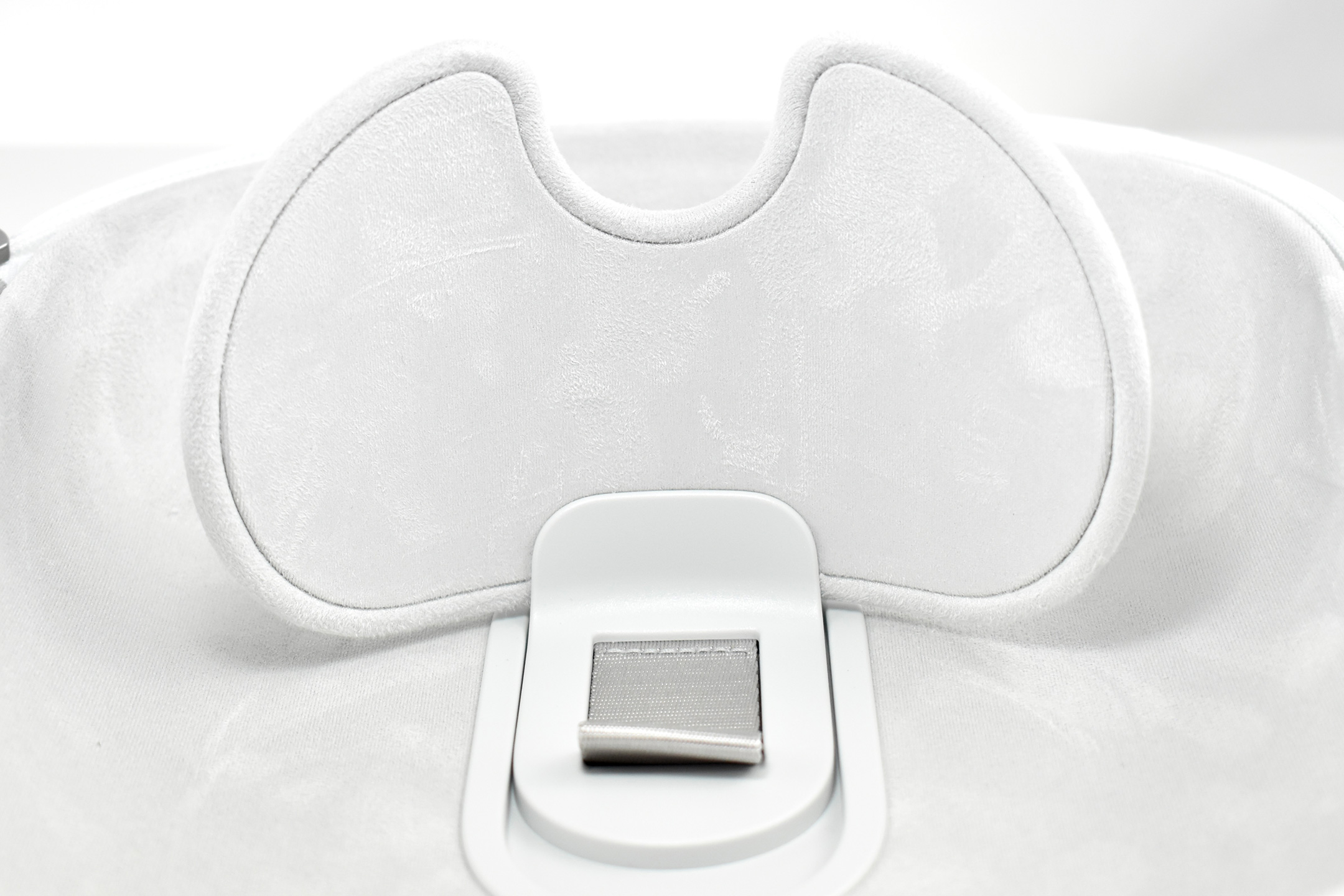
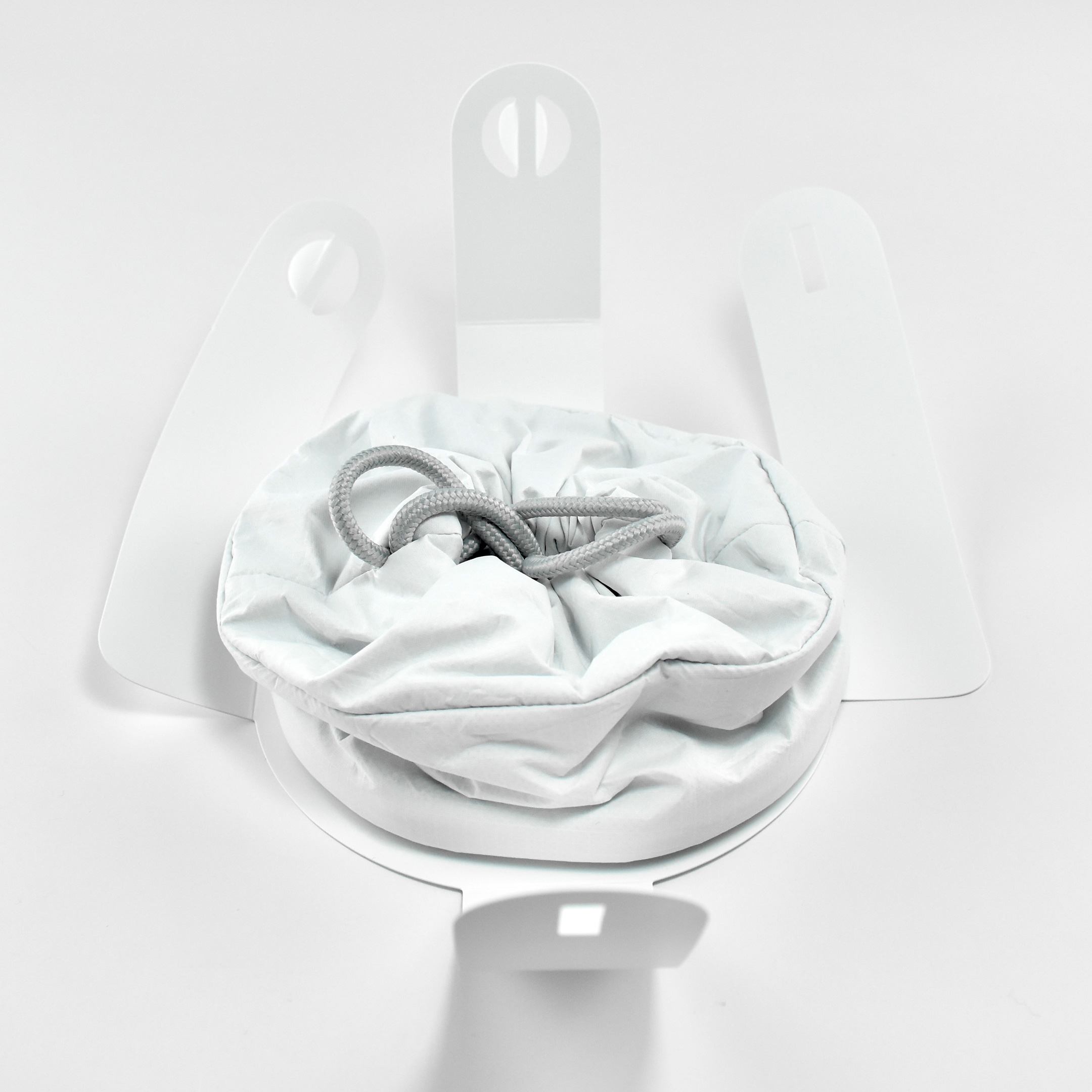
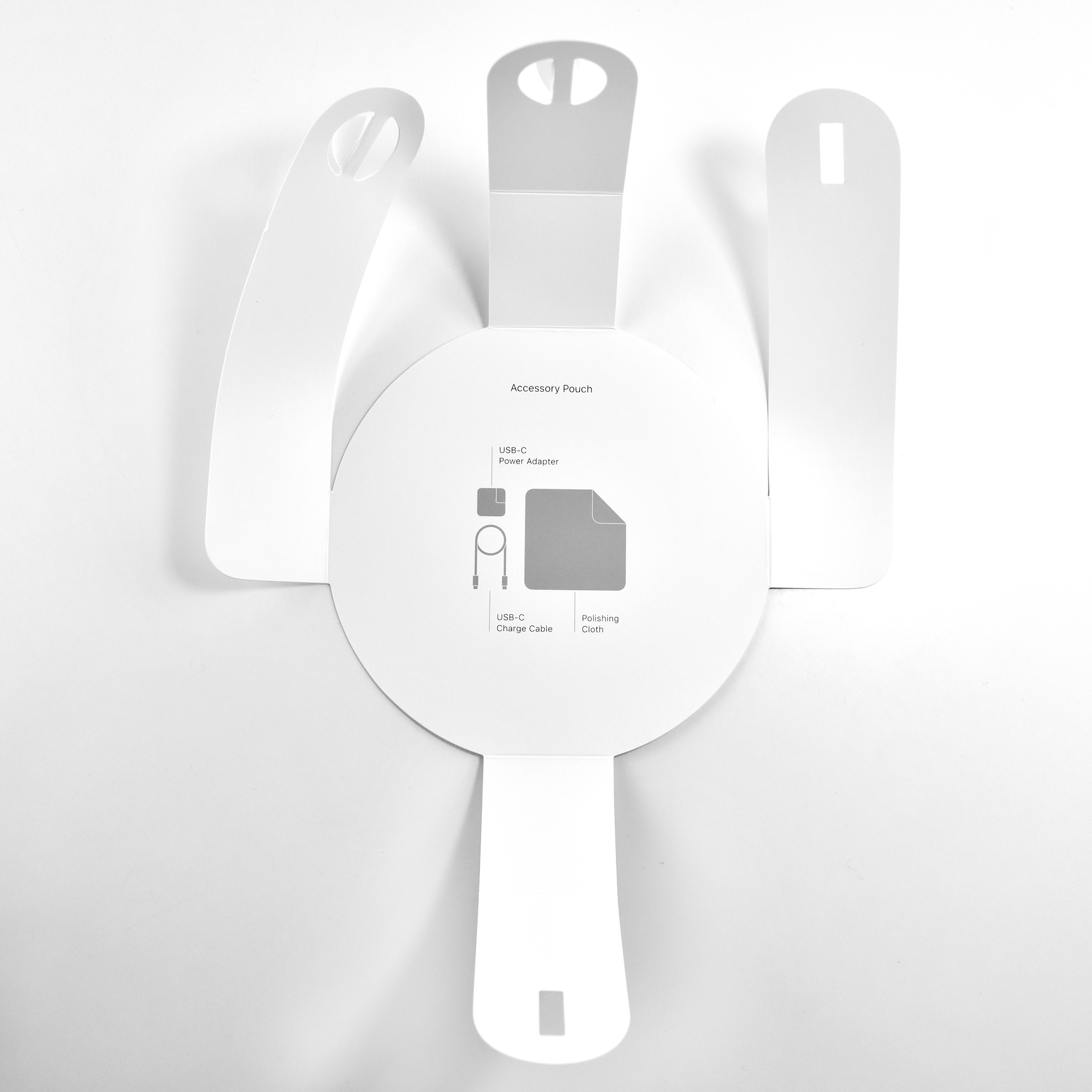
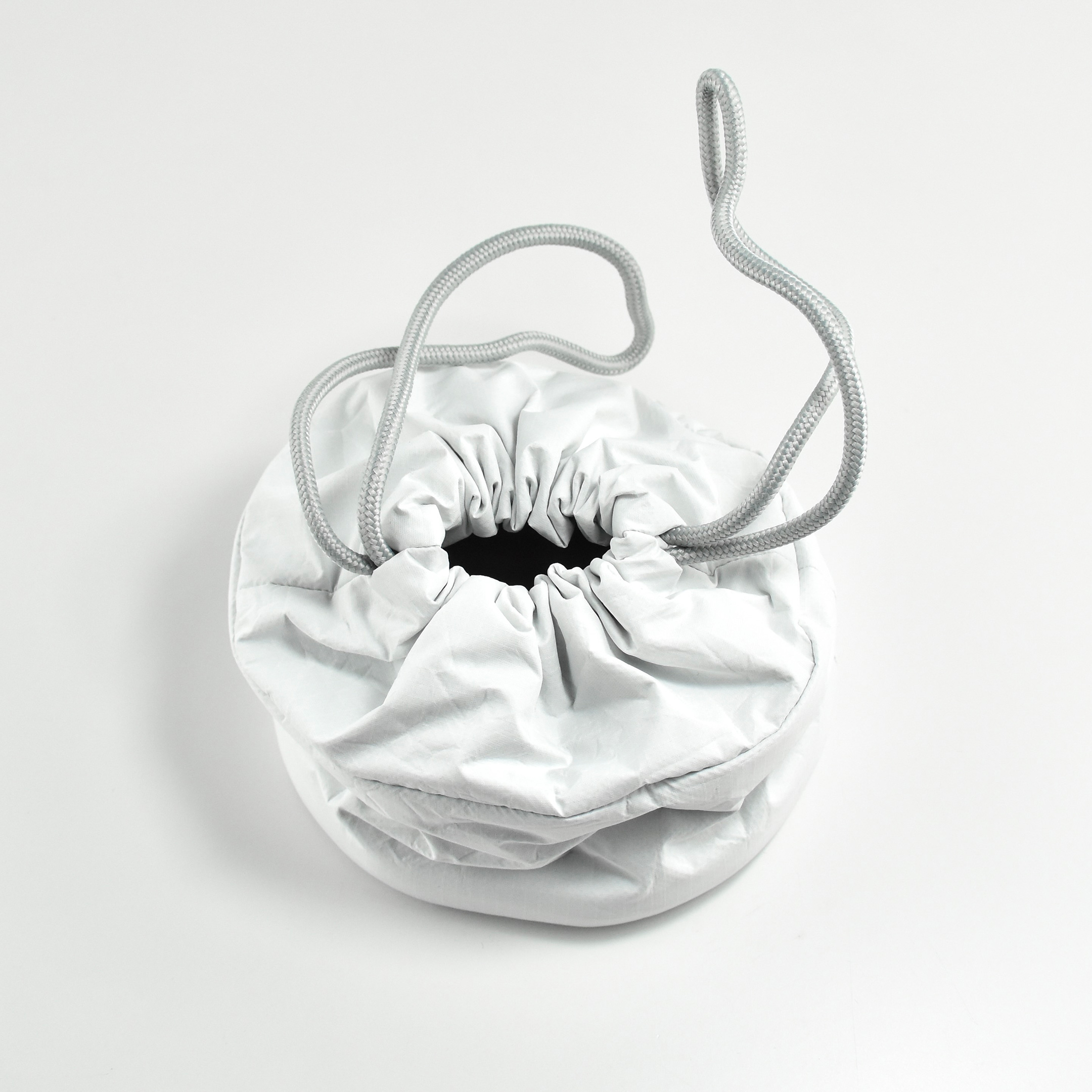
The interior of the Apple Vision Pro Travel Case is lined with microfiber in a color and texture similar to Apple’s infamous polishing cloth. The Apple Vision Pro fits perfectly in the case and includes a velcro strap to securely hold the battery. A white circular drawstring bag fits in the space in the open area between the front of the headset and the headband.

The Apple Vision Pro Travel Case measures 11.69 inches tall, 8.78 inches high, and 6.5 inches deep.

The Verge offered: “The huge case costs an additional $199 and looks like a marshmallow from space. I love it.” I concur wholeheartedly that the case looks like a marshmallow from space, and add that it would pair well with a NASA or SpaceX spacesuit.

Sources: Apple, Wikipedia, The Verge
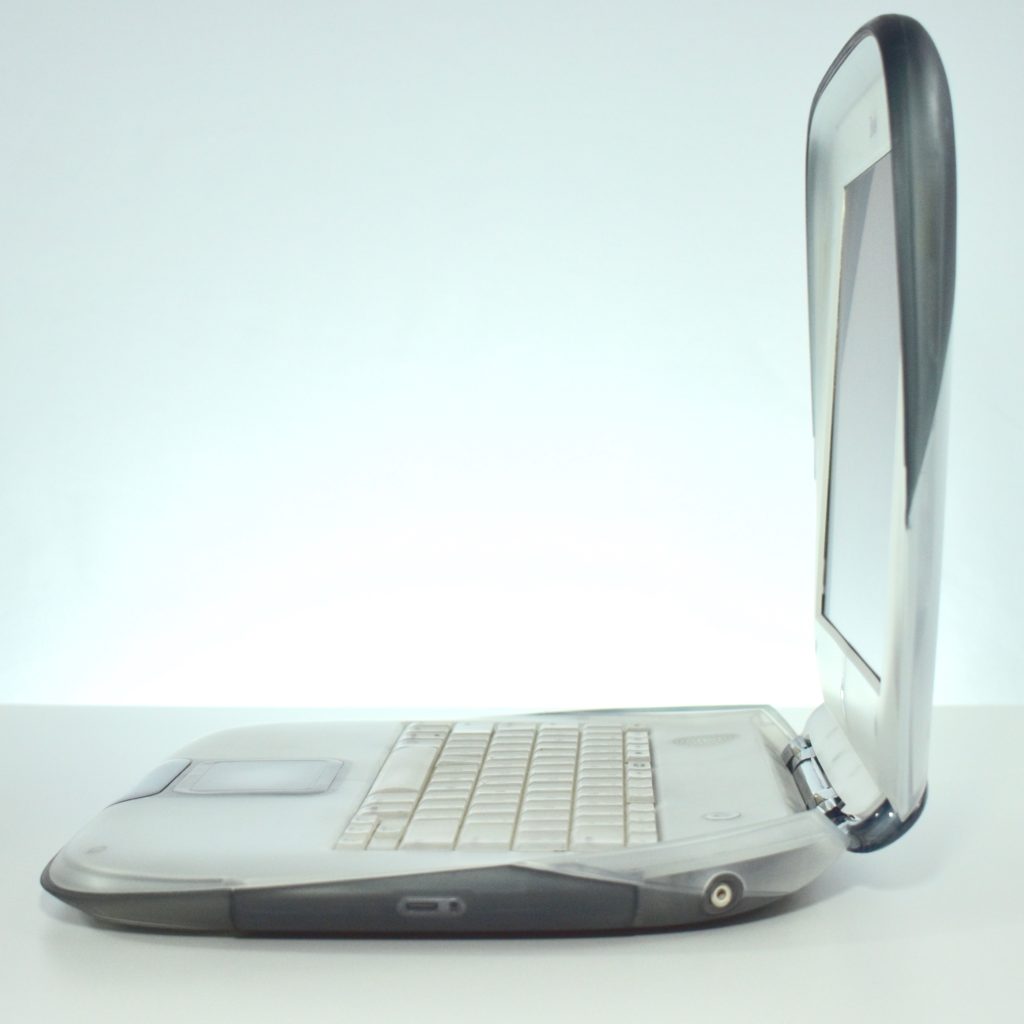
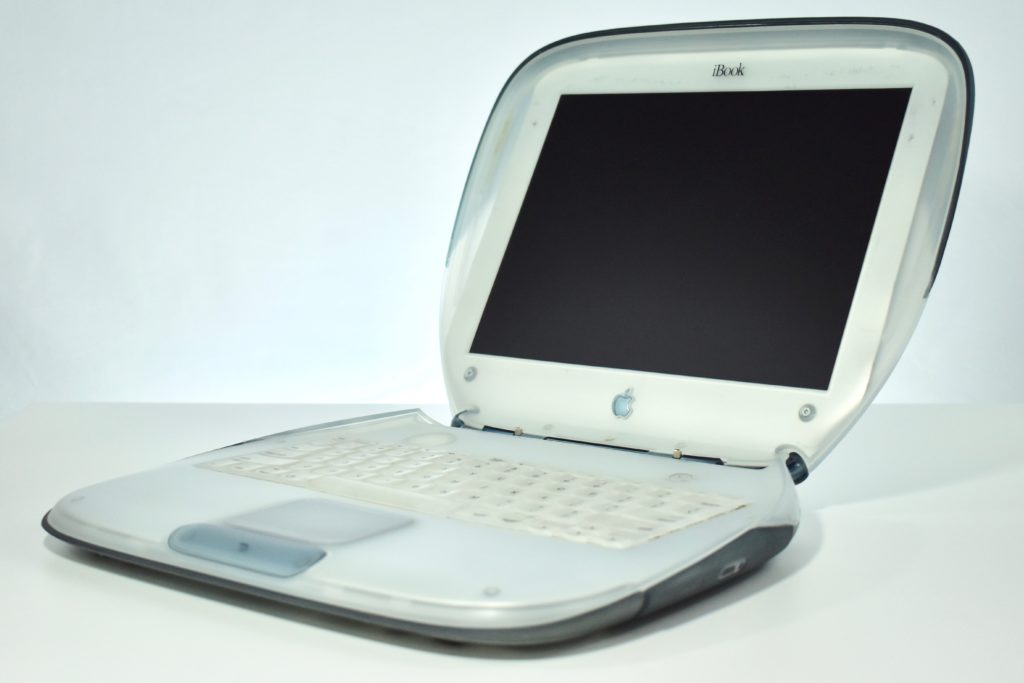
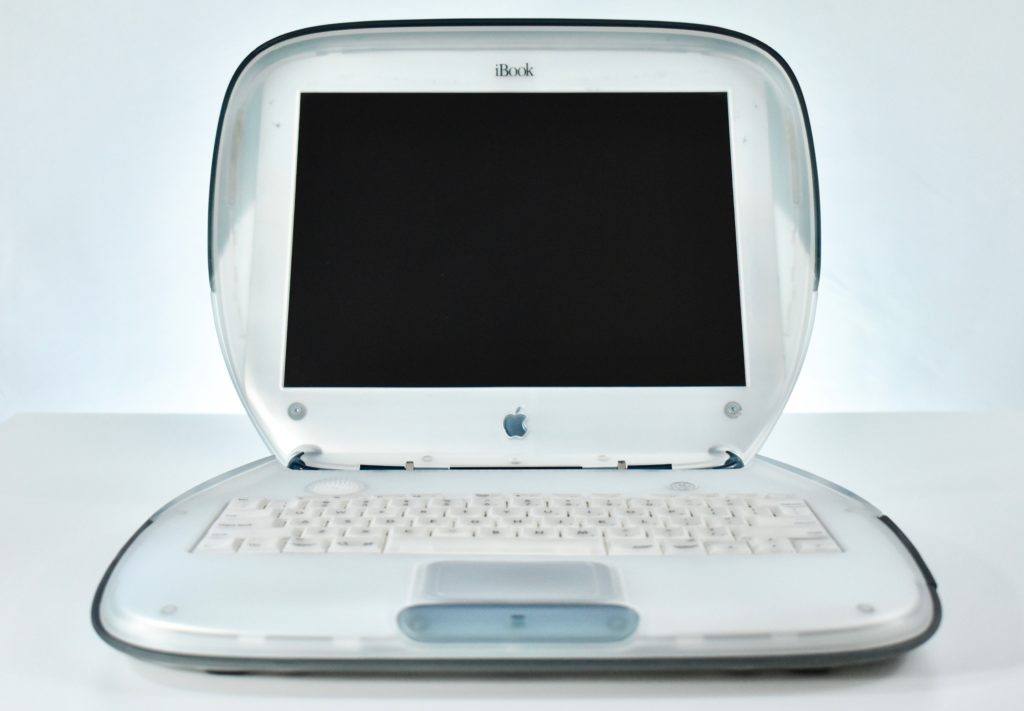
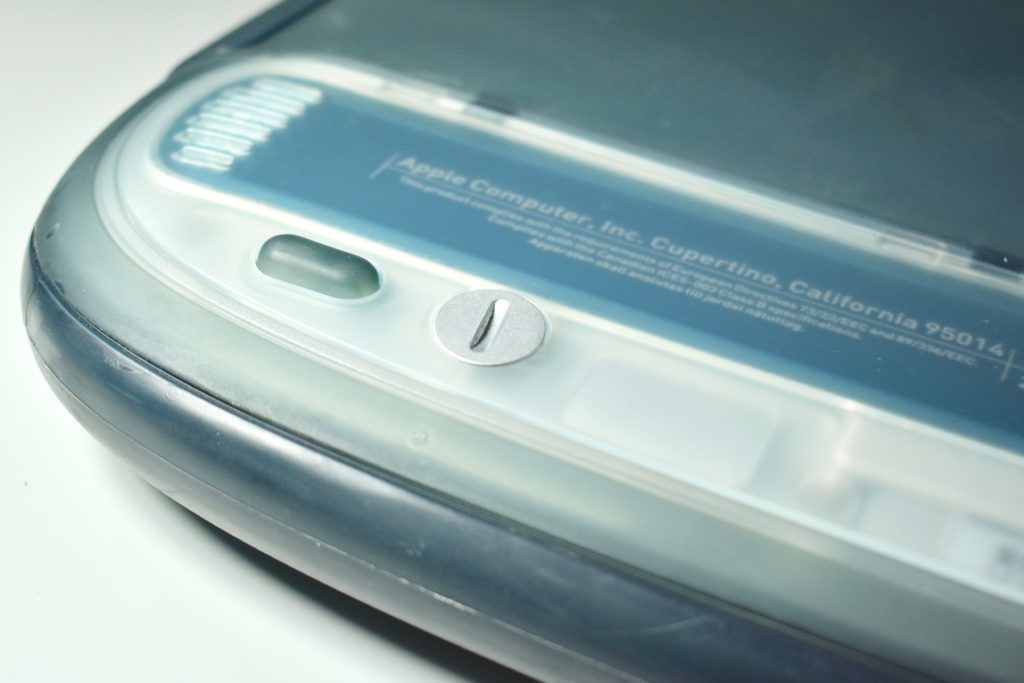
iBook G3/366 SE (graphite, 2000)

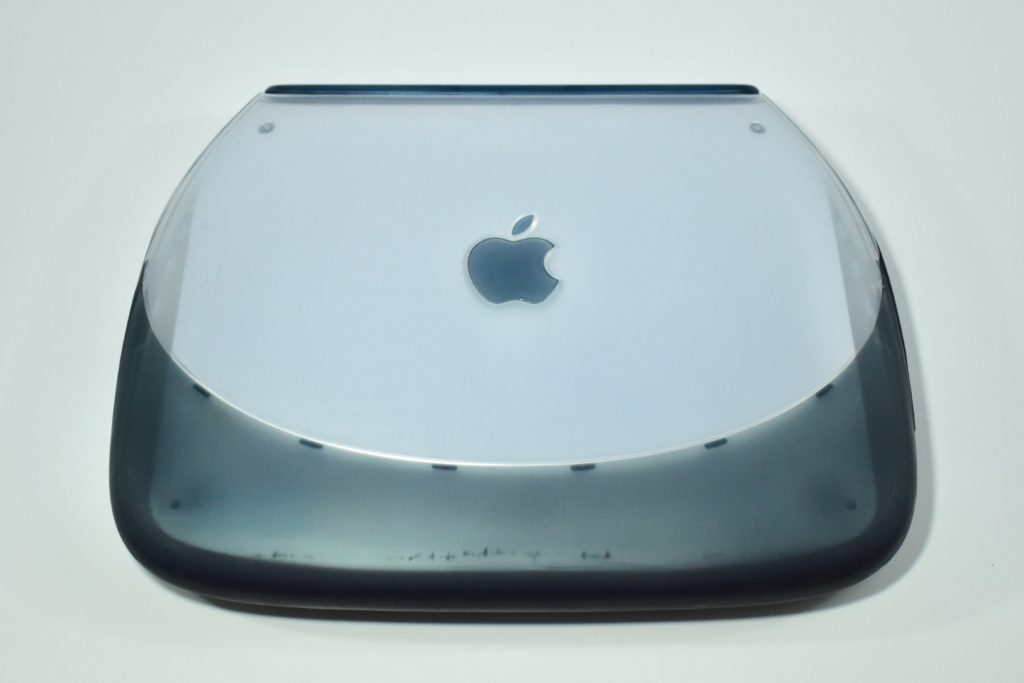
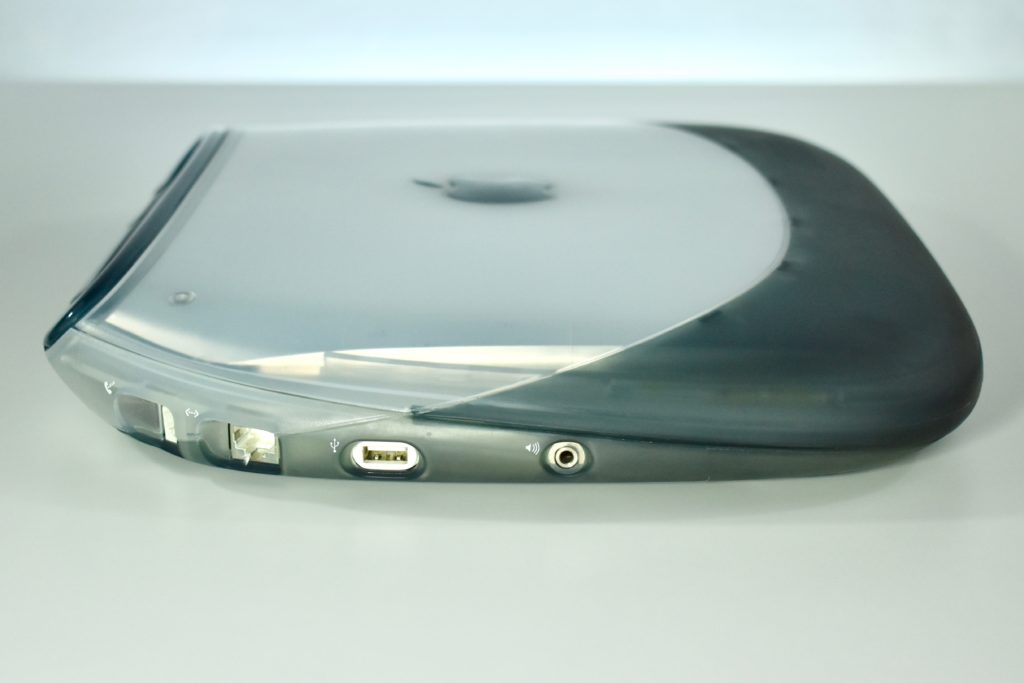
The iBook G3/366 Special Edition (SE) shares the same Apple model number as the original “clamshell” iBook, but has a few upgraded internal specifications. The iBook SE increased the processor power to 366 MHz and shipped with 64 MB of RAM and a 6.0 GB hard drive.

The SE was also offered in a more conservative case color that Apple referred to as “graphite and ice.”

Source: EveryMac.com

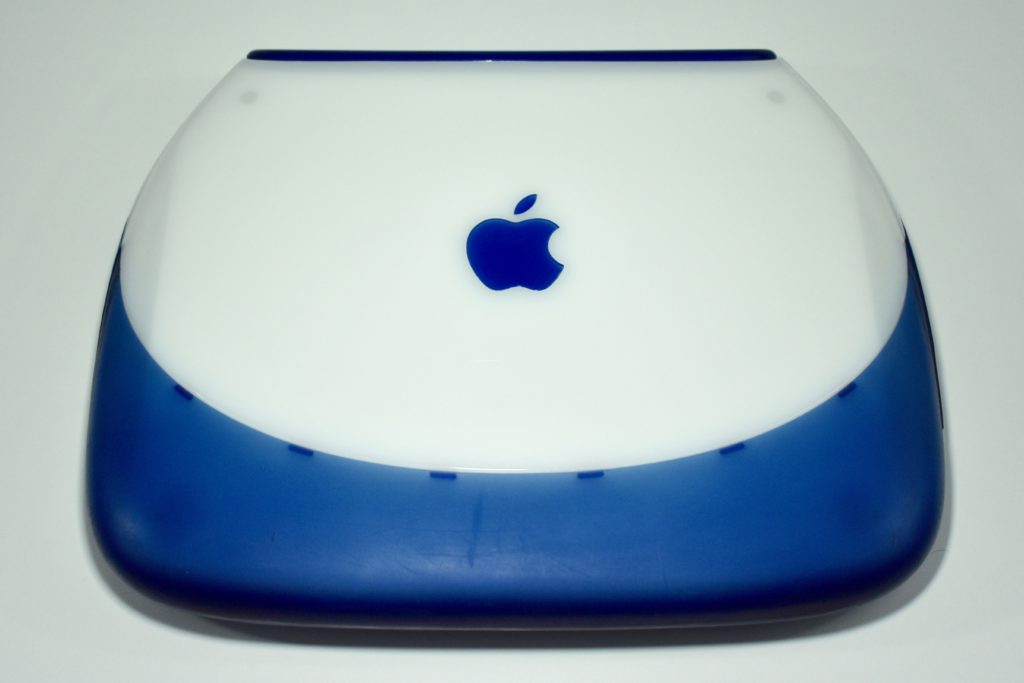
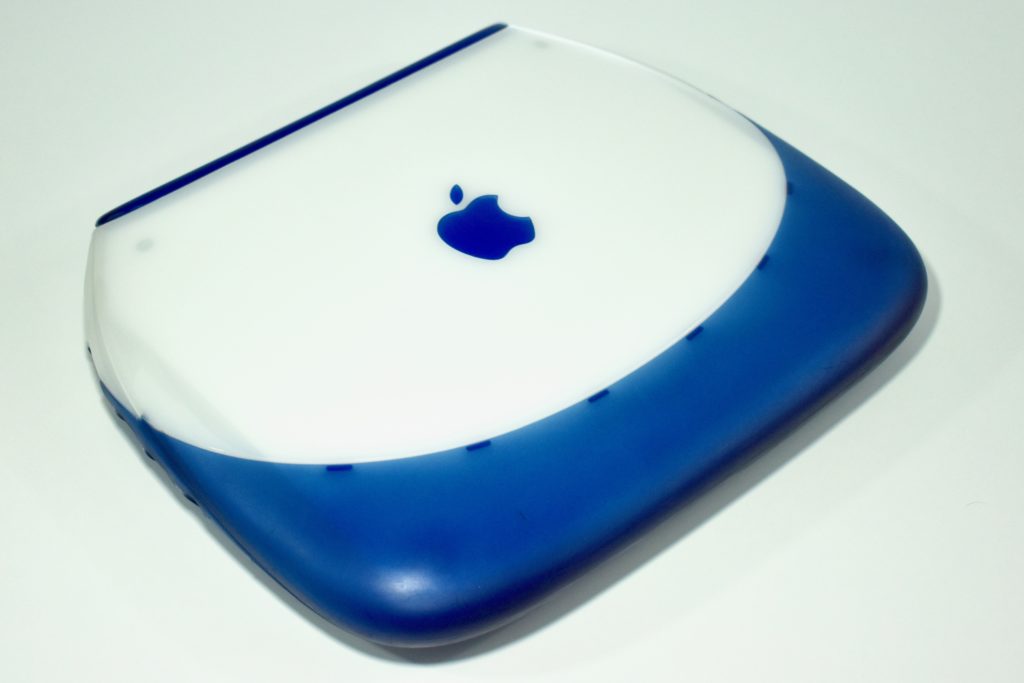
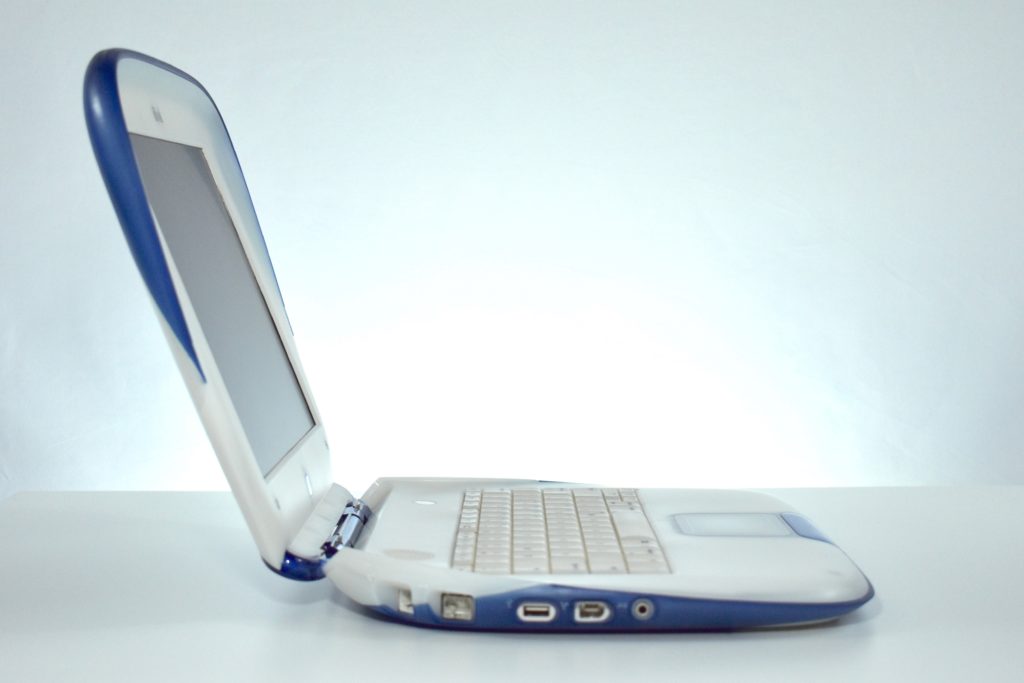
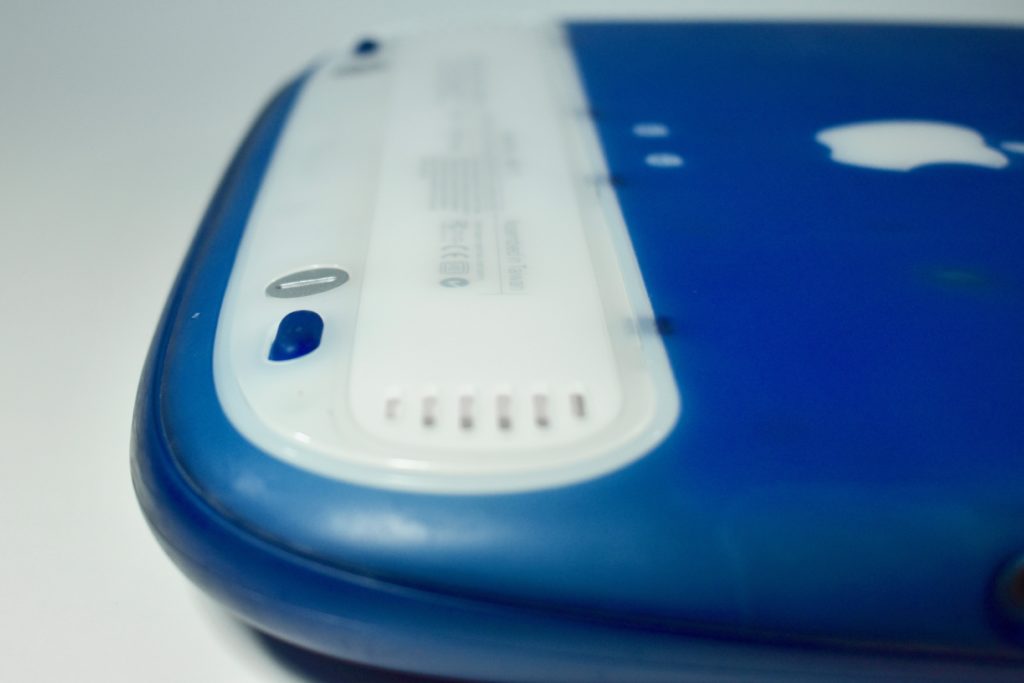
iBook G3/366 (indigo, 2000)

The iBook G3/366 is similar to the original iBook G3/300 in design, but adds two new colors, a single FireWire port, and several internal upgrades.

The iBook G3/366 featured a 366 MHz G3 processor, 64 MB RAM, a 10.0 GB hard drive, a 24X tray-loading CD-ROM drive, and a 12.1-inch display at 800×600. This example is in indigo, a color Apple selected likely due to the popularity of the indigo iMac at the time. It also introduced a new hybrid A/V port that allowed composite audio/video out capabilities using a proprietary cable.

I remember when this laptop was released and it quickly became my “go to” device for portable video creation in iMovie for its faster processor and FireWire capabilities. It was among the first consumer-level laptops that began to feel like it had similar capabilities to the desktops at the time.

Source: EveryMac.com

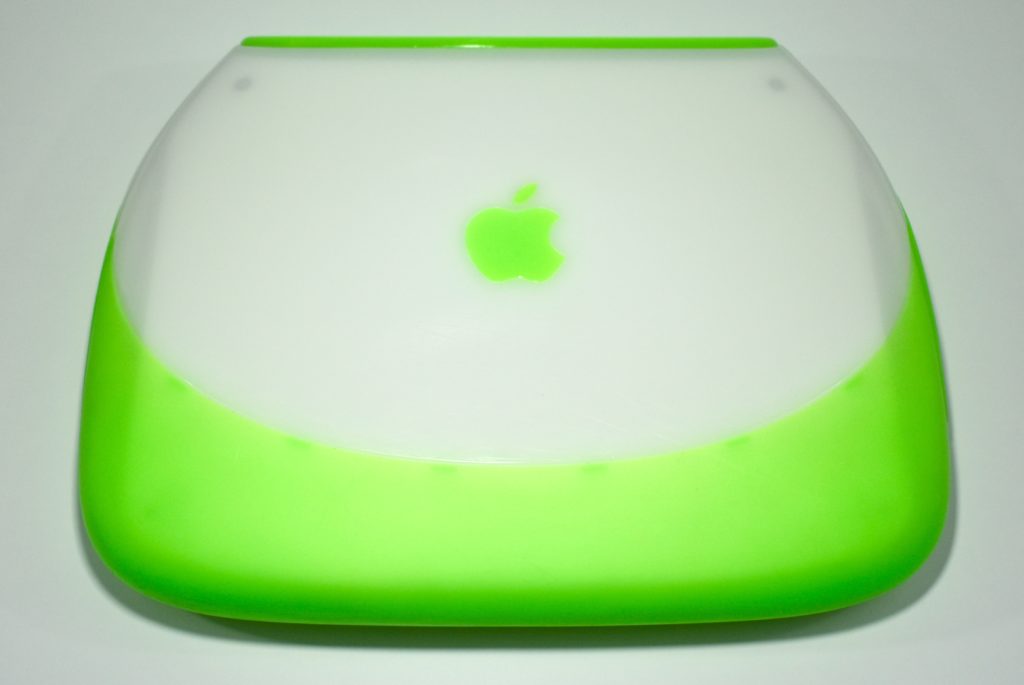
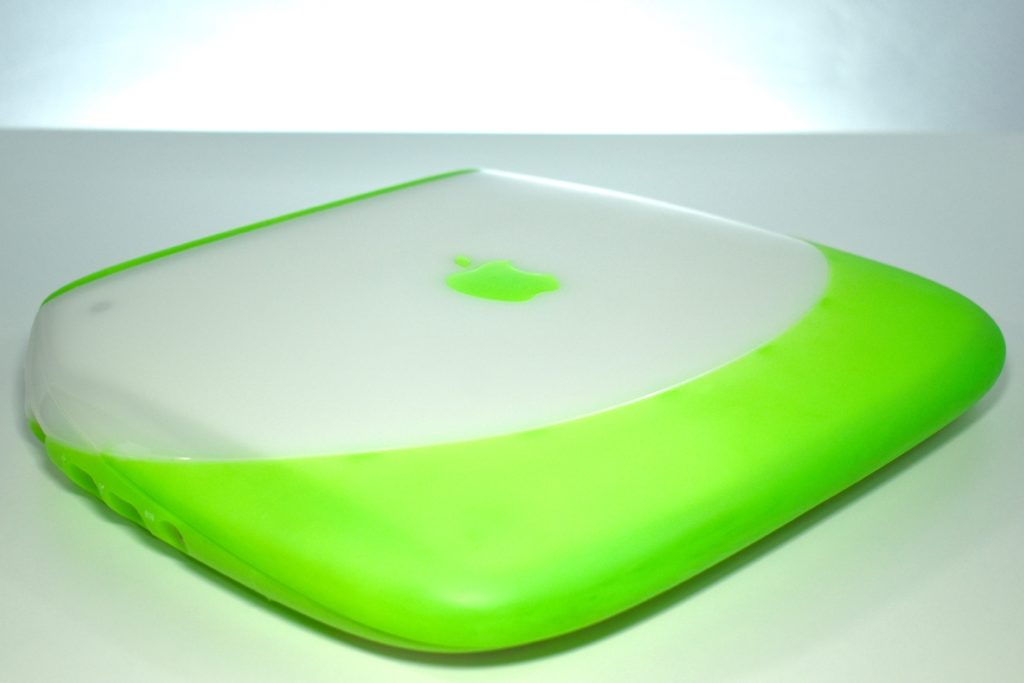
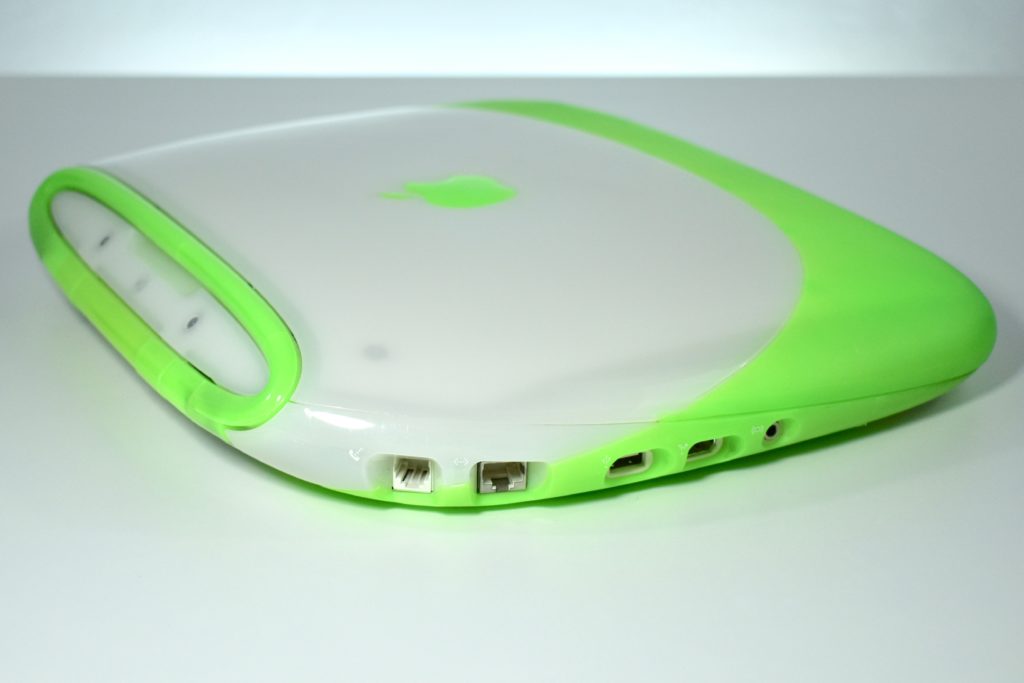
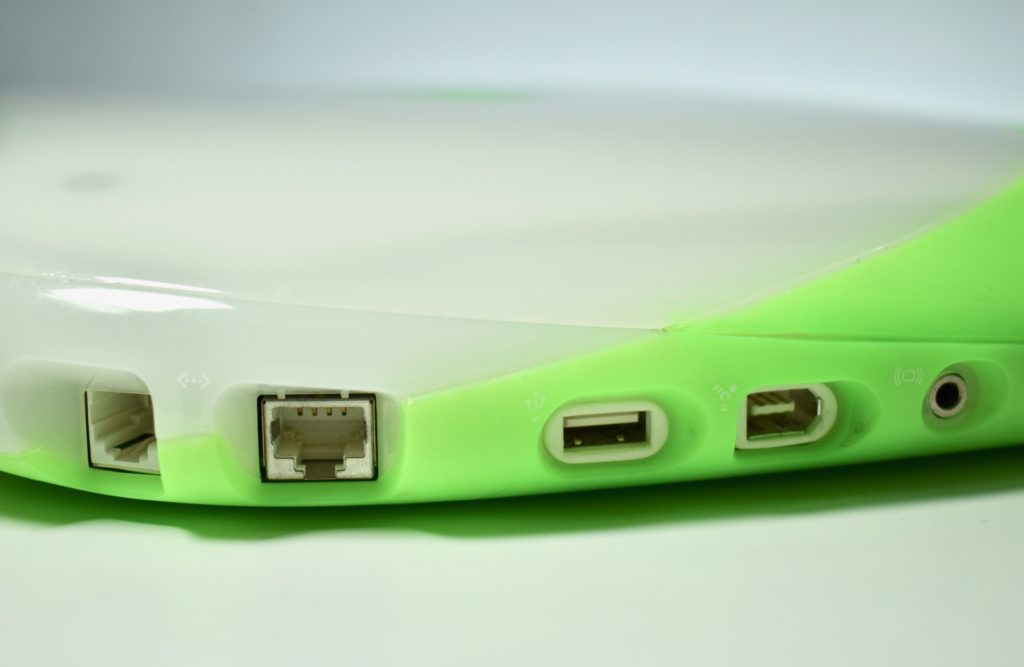
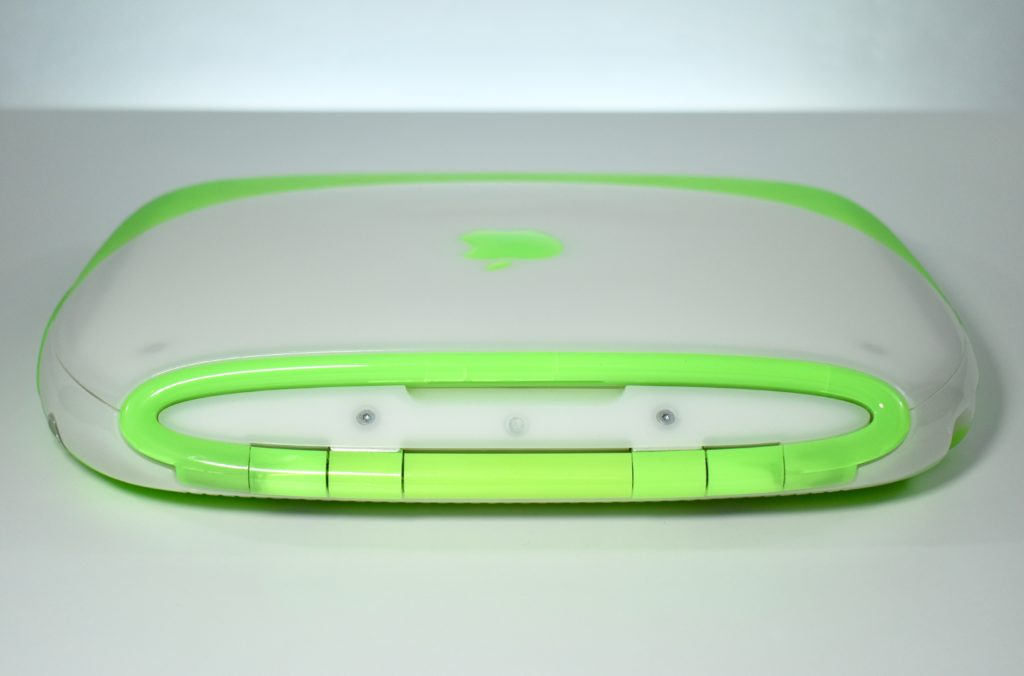
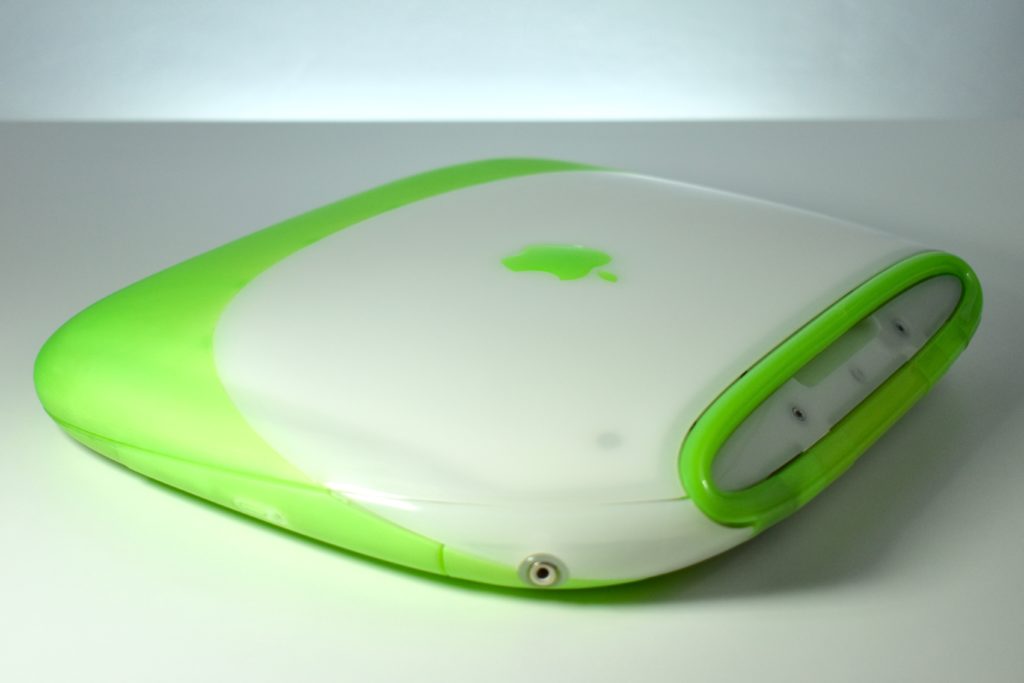
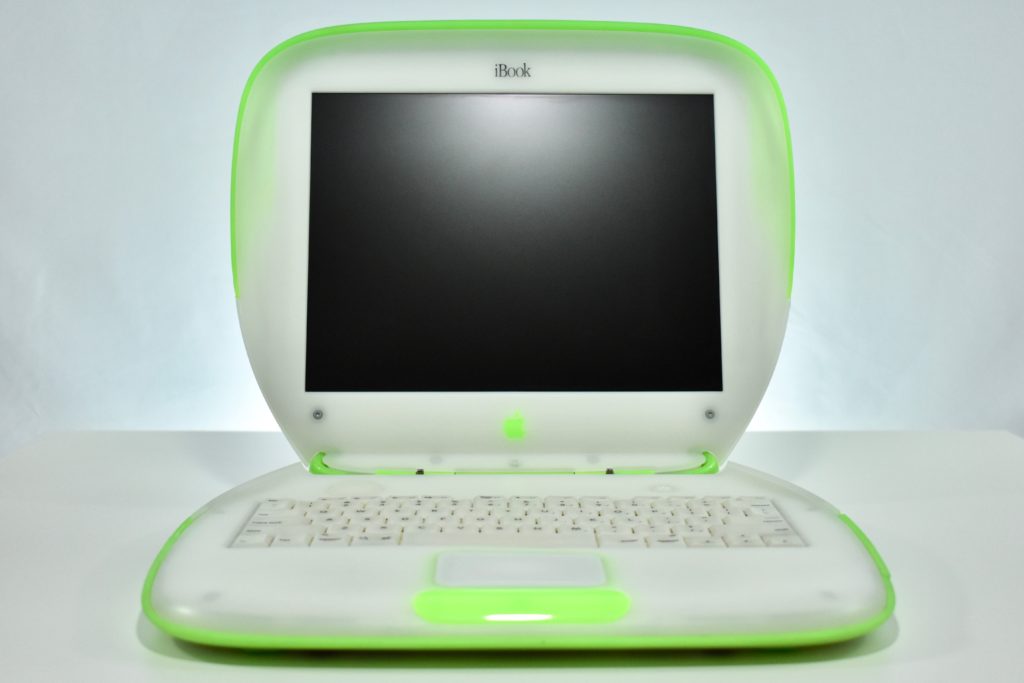
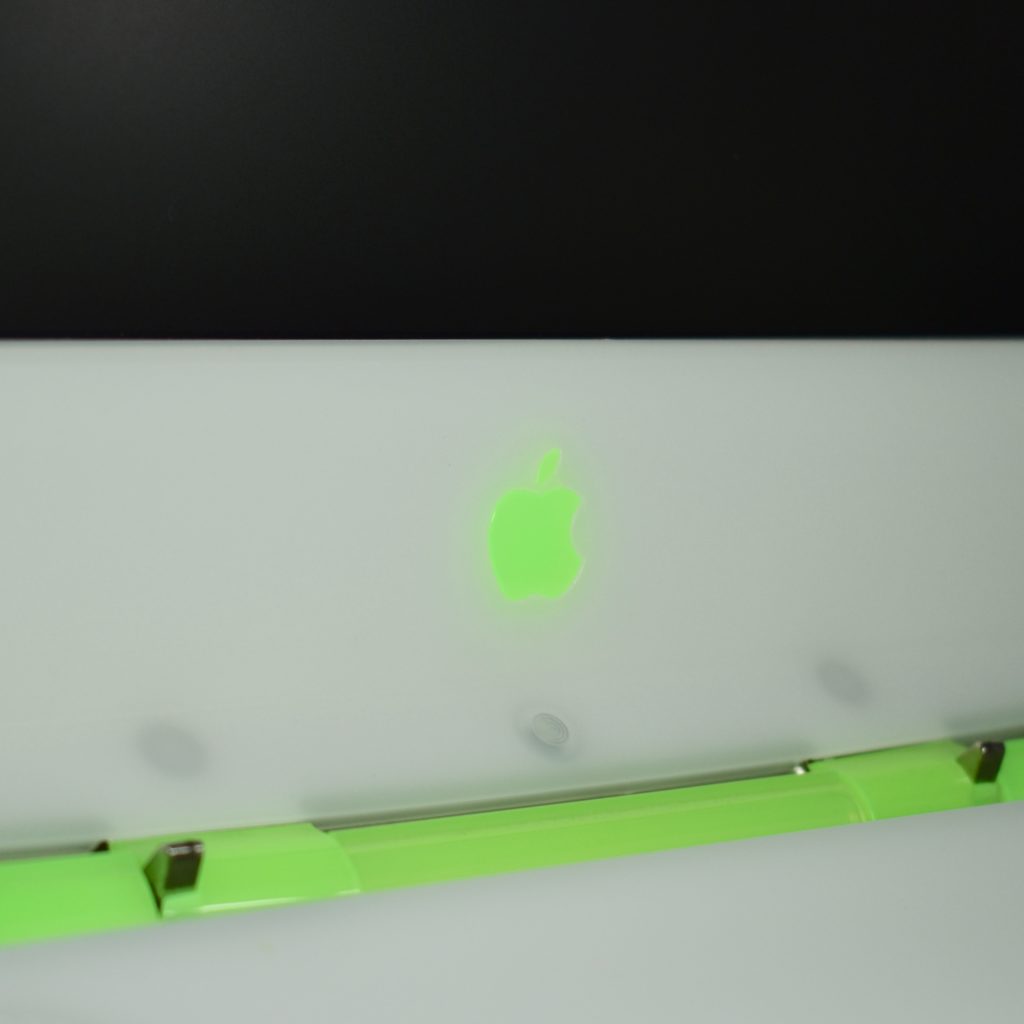
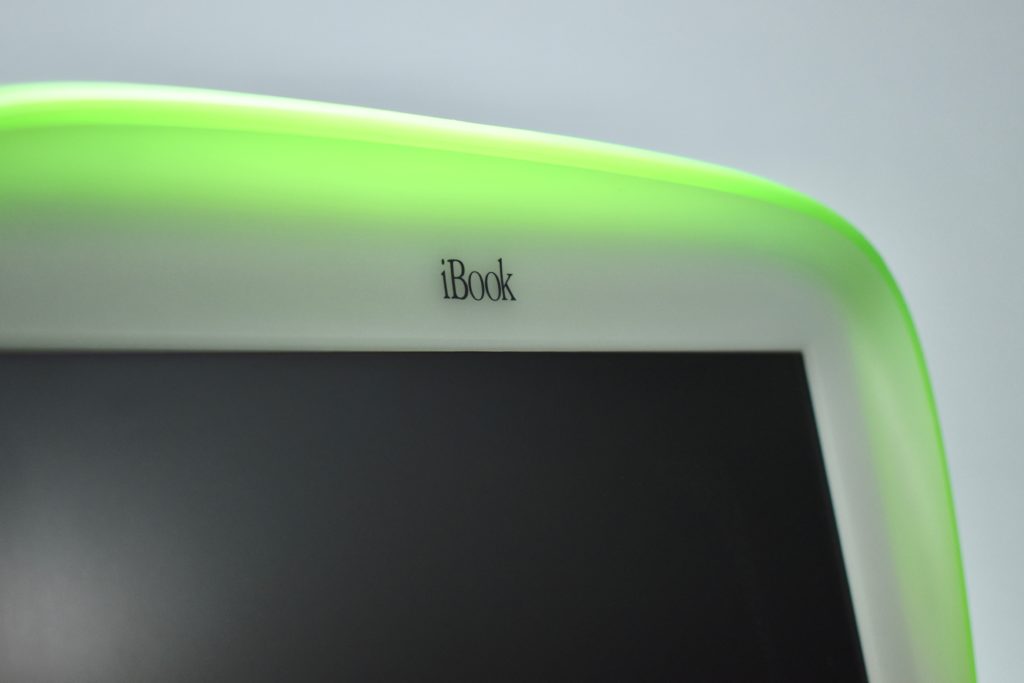
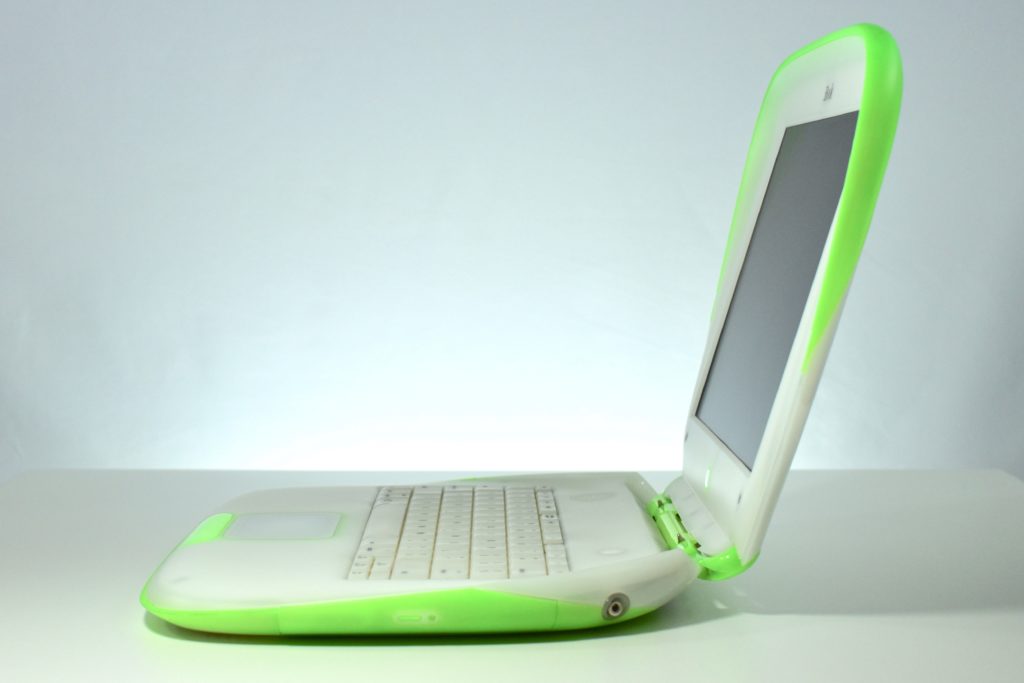
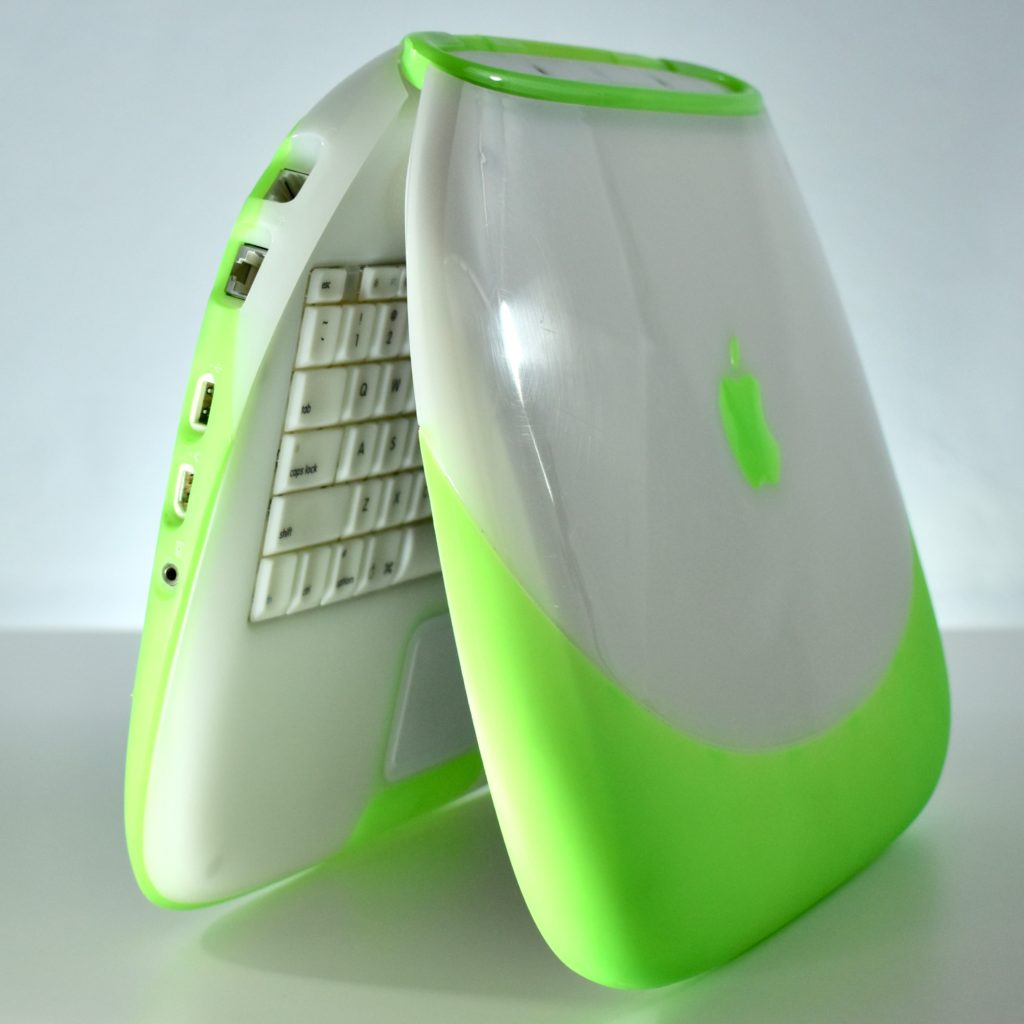
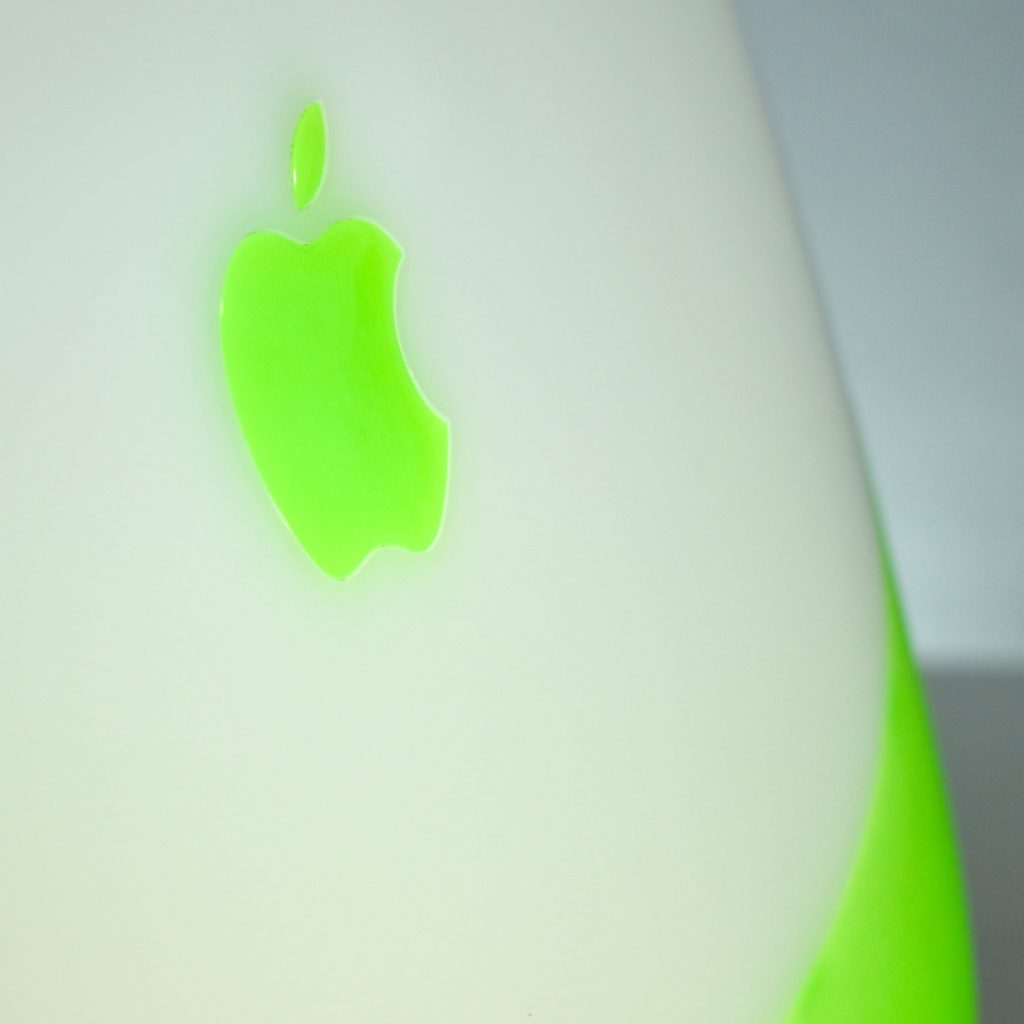
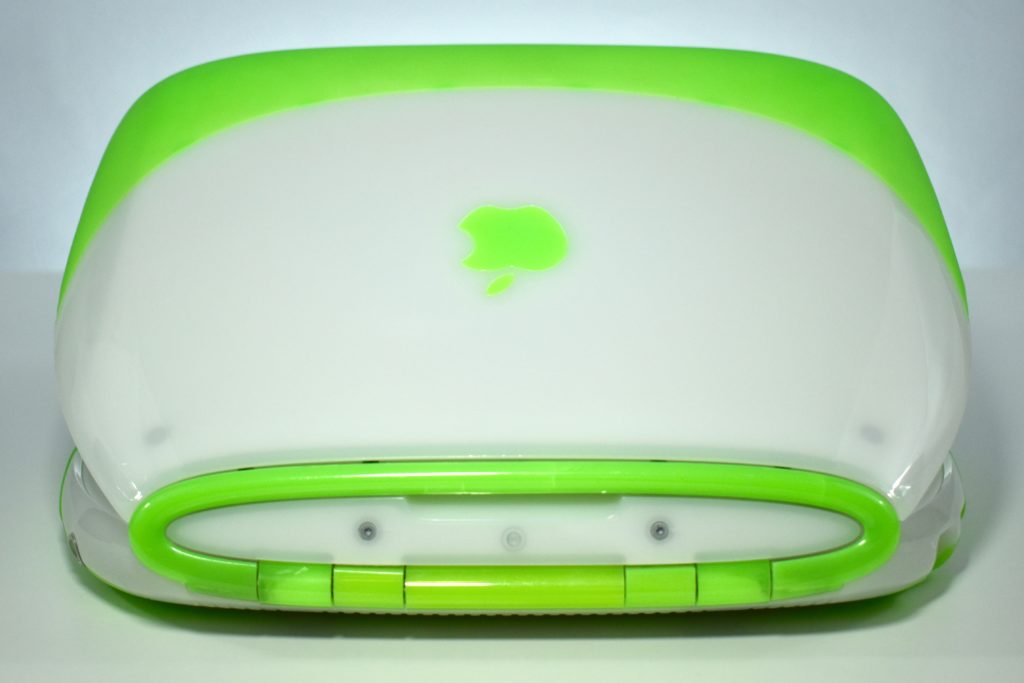
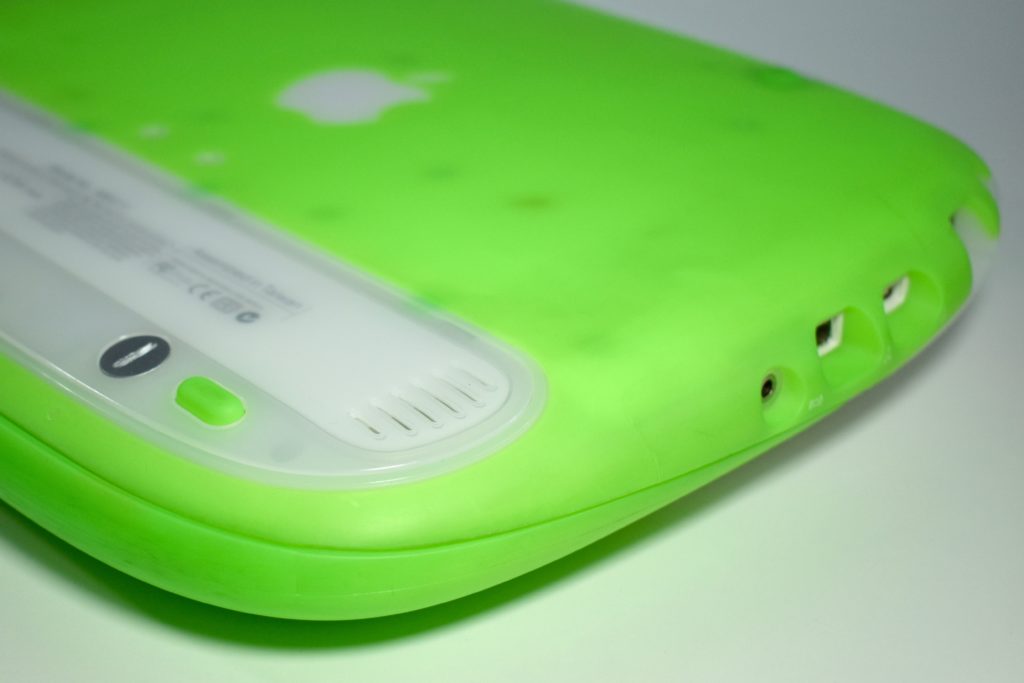
iBook G3/366 (key lime, 2000)

The iBook G3/366 is similar to the original iBook G3/300 in design, but adds two new colors, a single FireWire port, and several internal upgrades.

The iBook G3/366 featured a 366 MHz G3 processor, 64 MB RAM, a 10.0 GB hard drive, a 24X tray-loading CD-ROM drive, and a 12.1-inch display at 800×600. This iBook is in key lime, an extremely vibrant shade of neon green.

Source: EveryMac.com

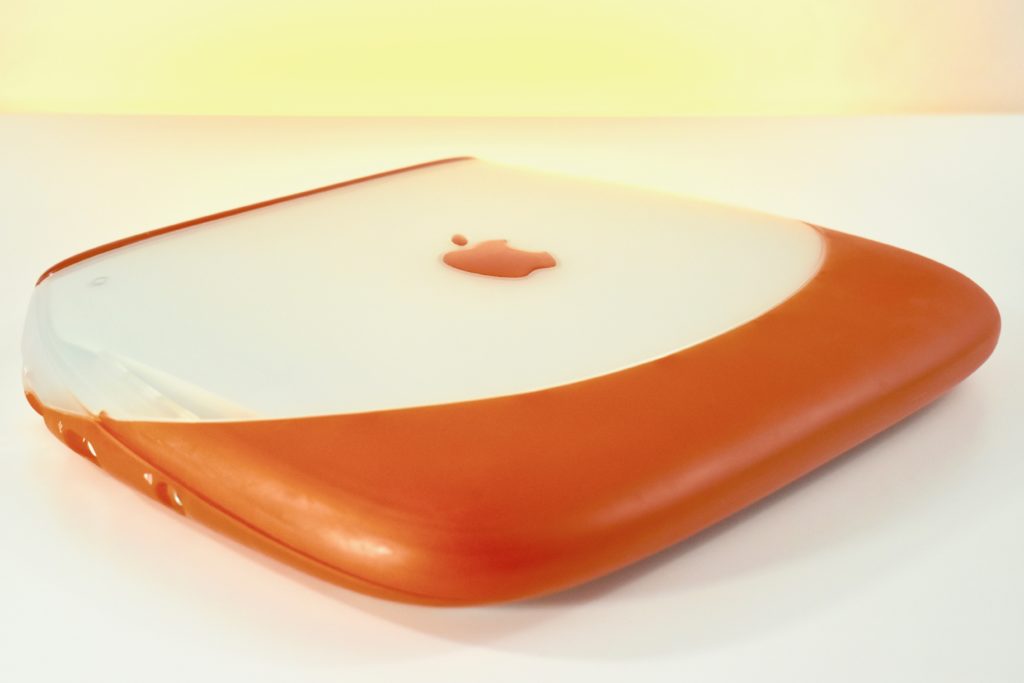
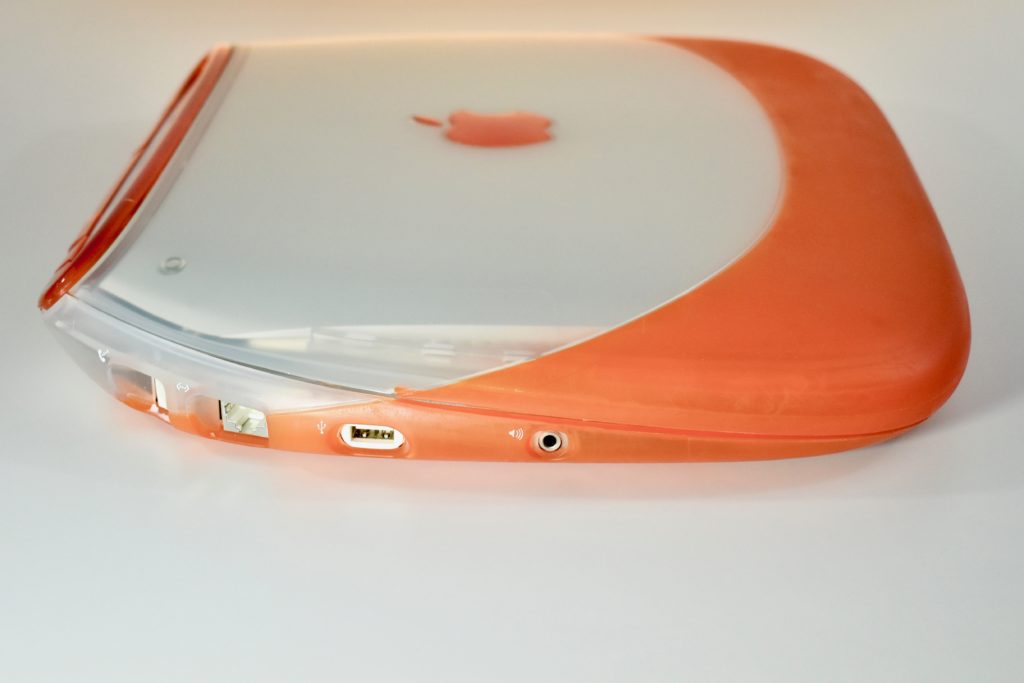
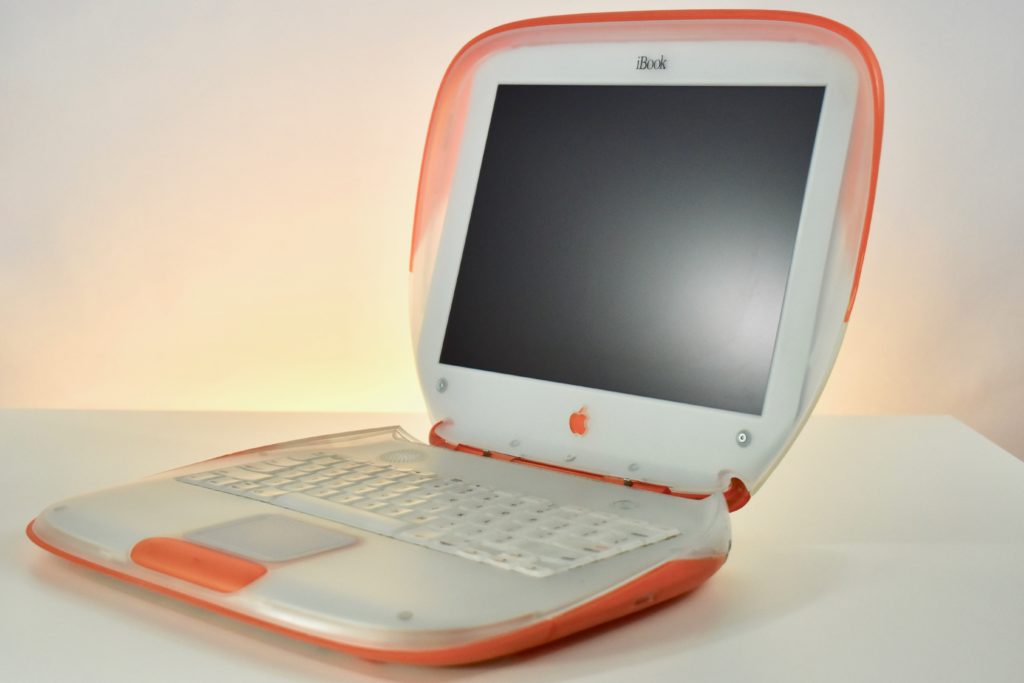
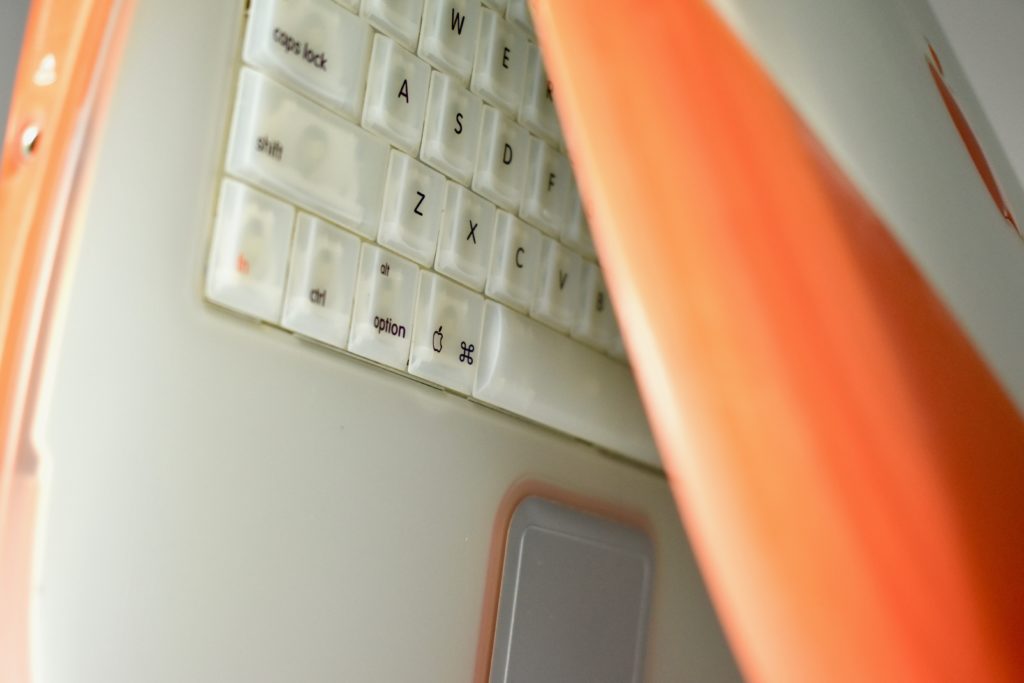
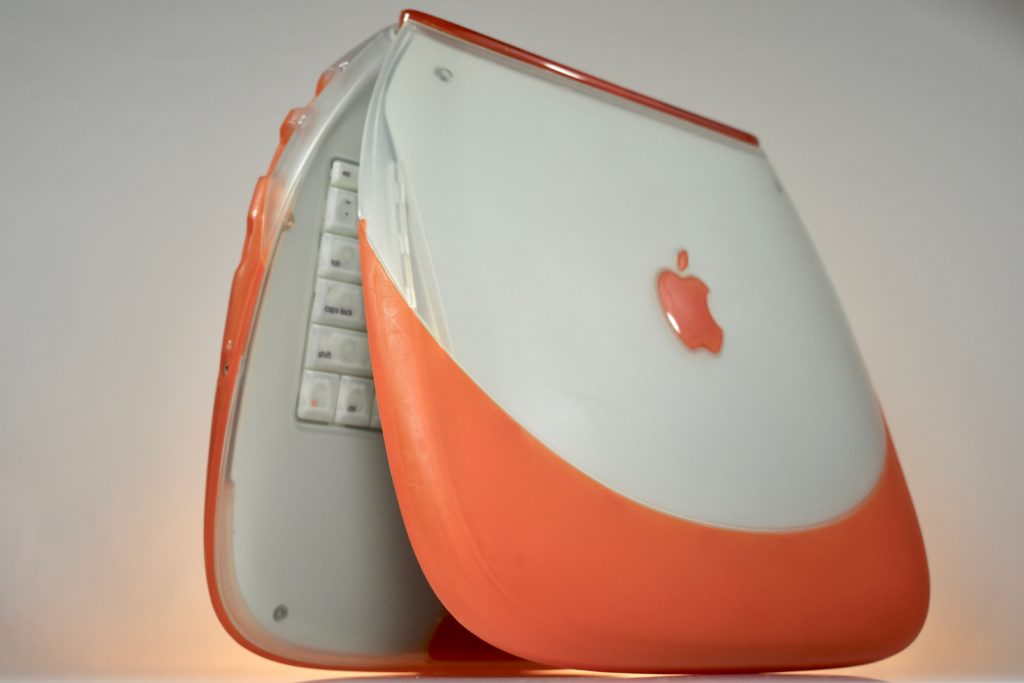
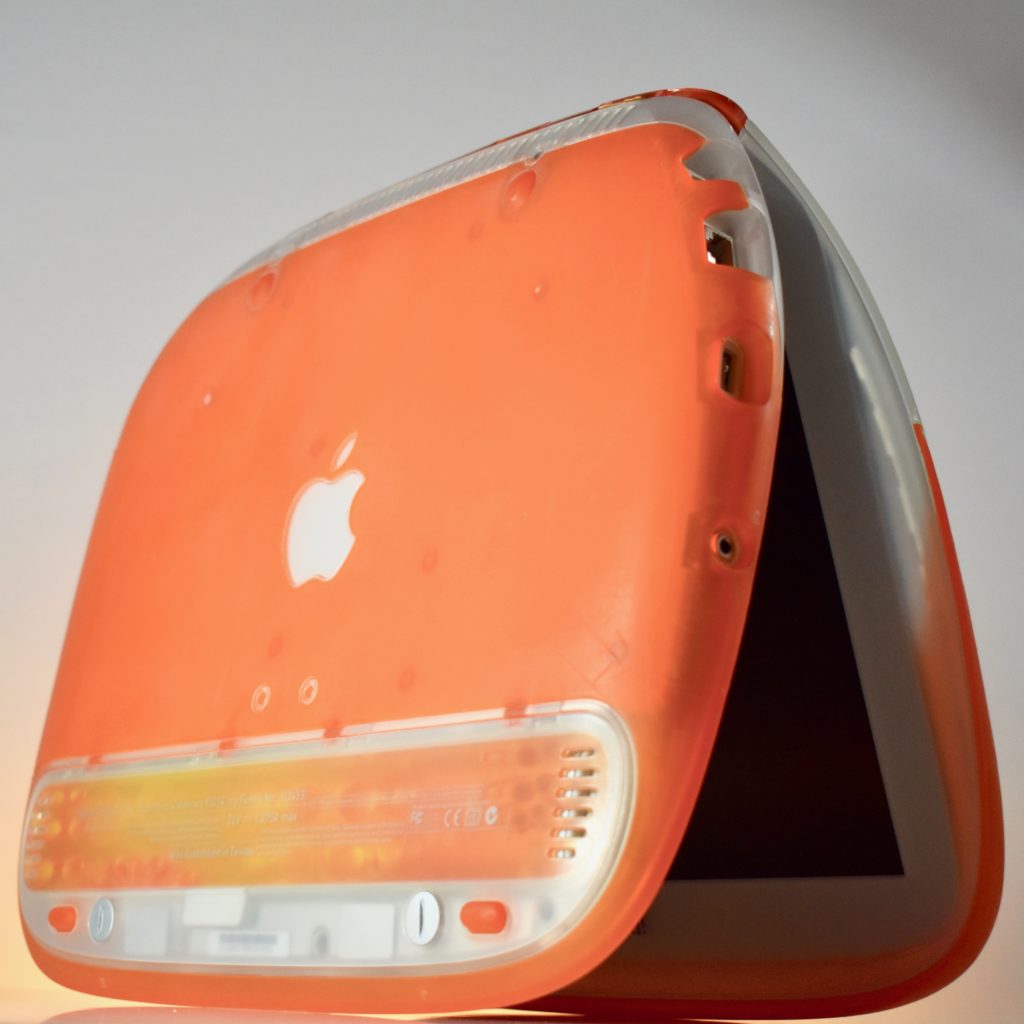
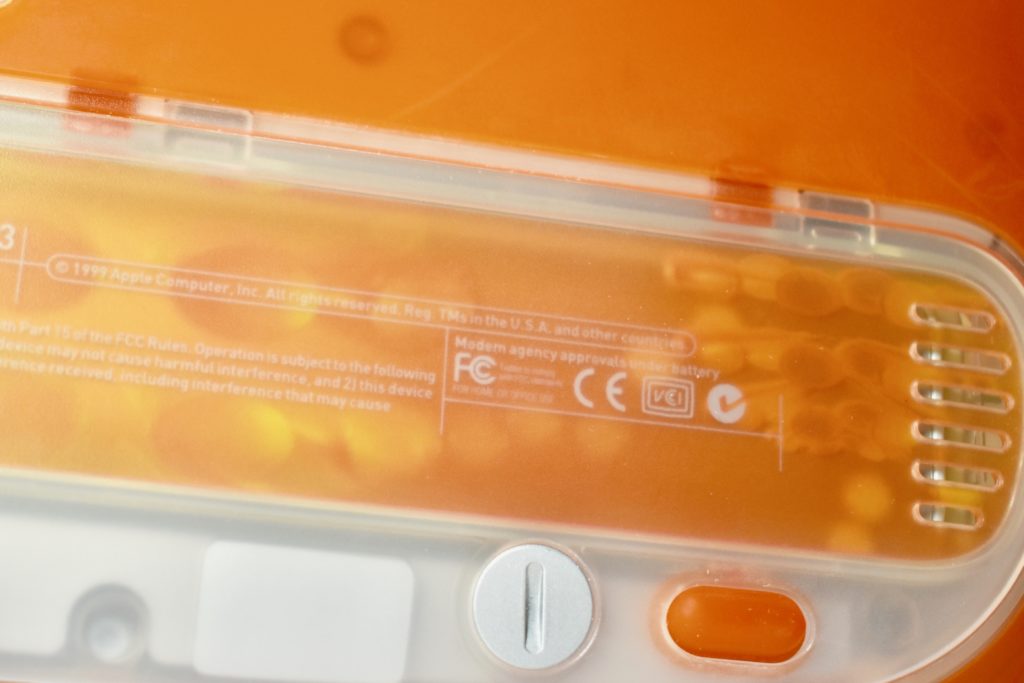
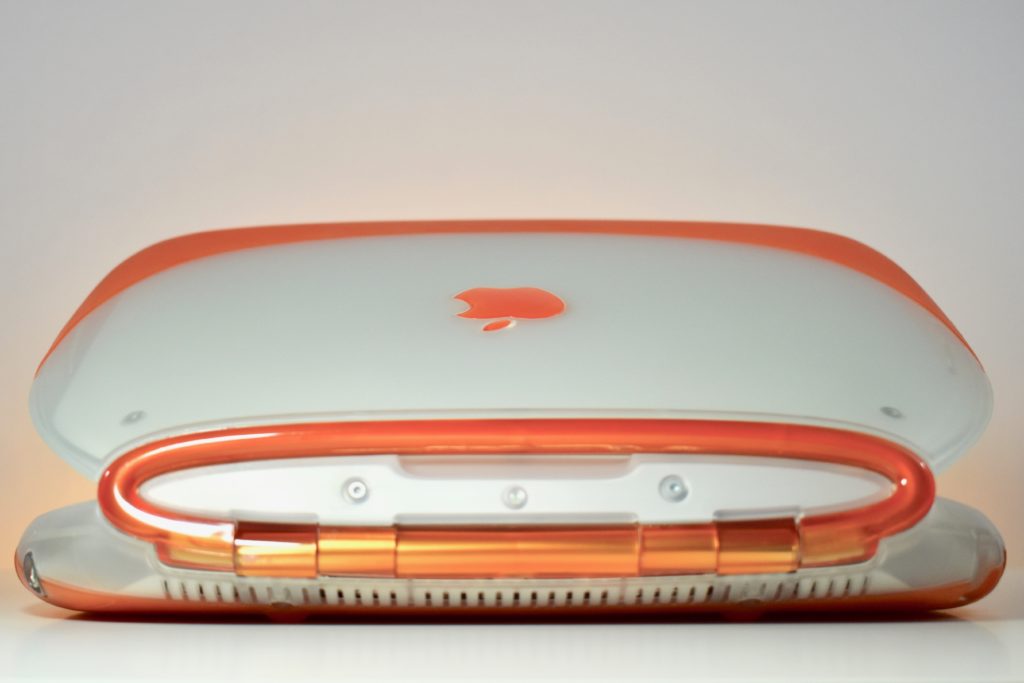
iBook G3/300 (original, tangerine, 1999)

The iBook G3/300 was released as a relatively low-cost portable Mac for consumers. Its radical design was available in blueberry and tangerine, two of the five colors available for iMac at the time. The design is sometimes referred to as the “clamshell.”

The iBook shipped with 32 MB or 64 MB of RAM, a 3.2 GB or 6.0 GB hard drive, and a 12.1-inch TFT active matrix display at 800×600. The case featured a handle on the back that folded out when in use and sprang back into place.

Although portable Mac options were not new at the time with years of PowerBook models that preceded the iBook, Wi-Fi was still not common in 1999. The iBook was available with an optional AirPort wireless networking card. Many consumers who purchased an iBook also likely needed an AirPort Base Station to plug into their modem to set up their first home wireless network.

This example is a tangerine iBook, complete with an internal AirPort wireless networking card.

Source: EveryMac.com

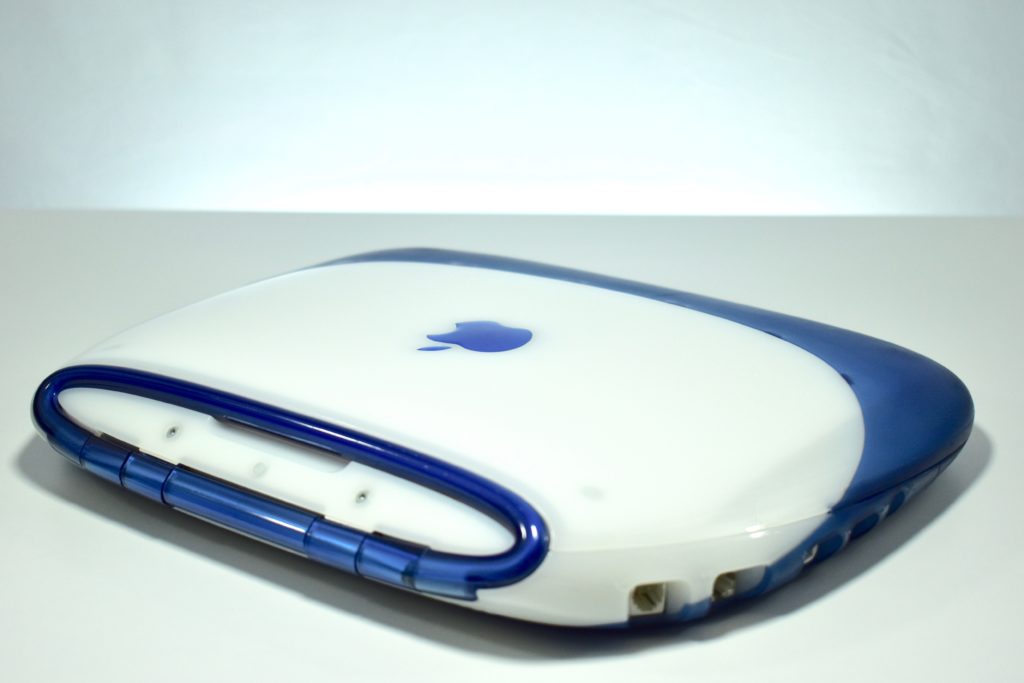
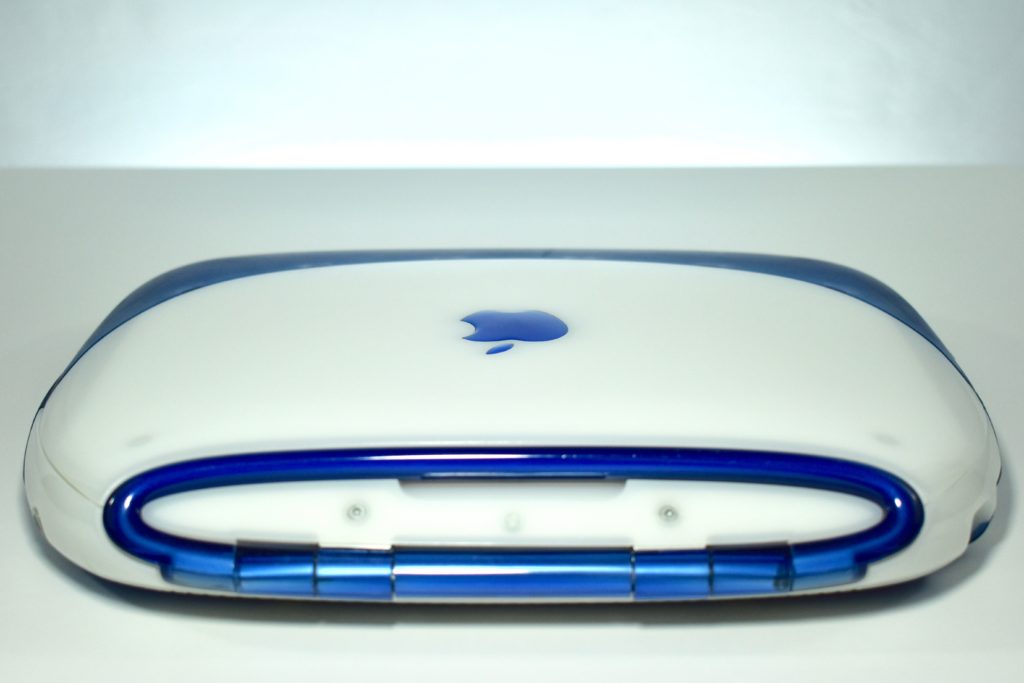
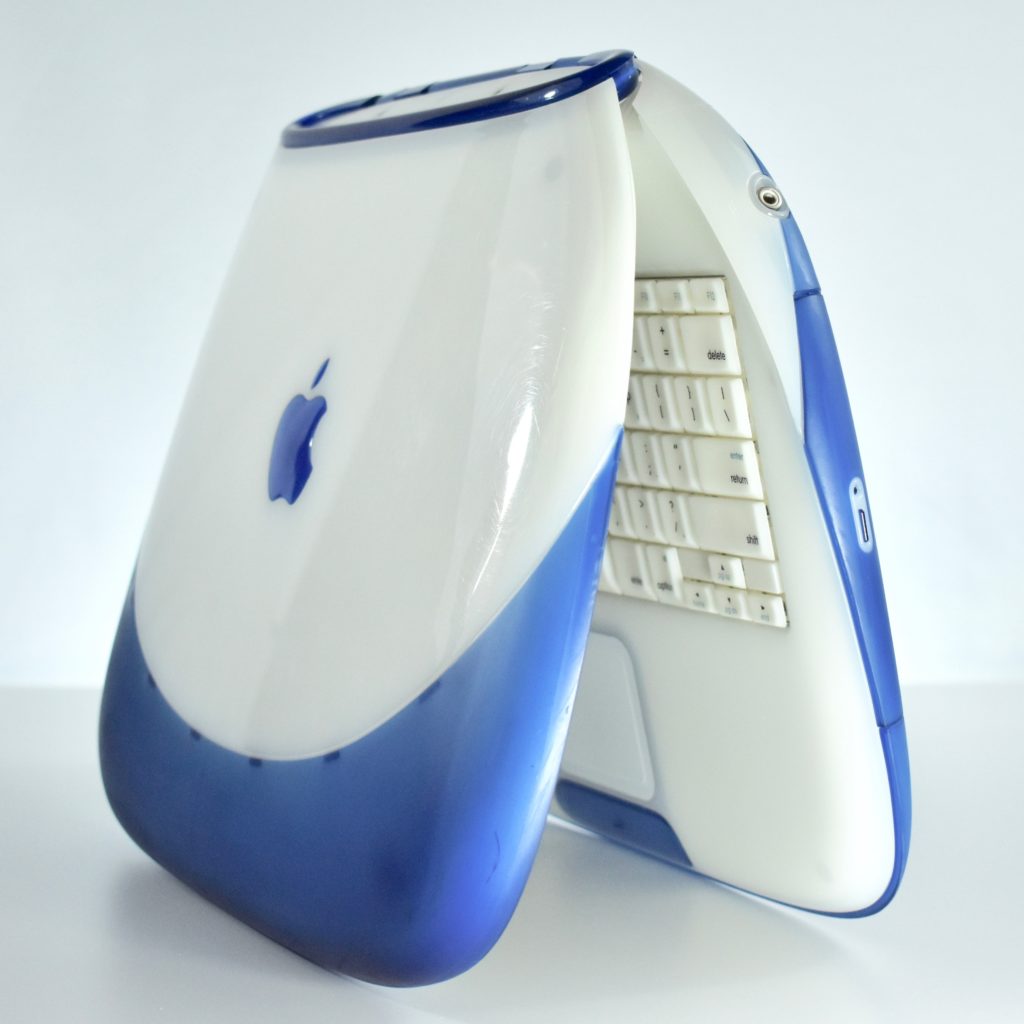
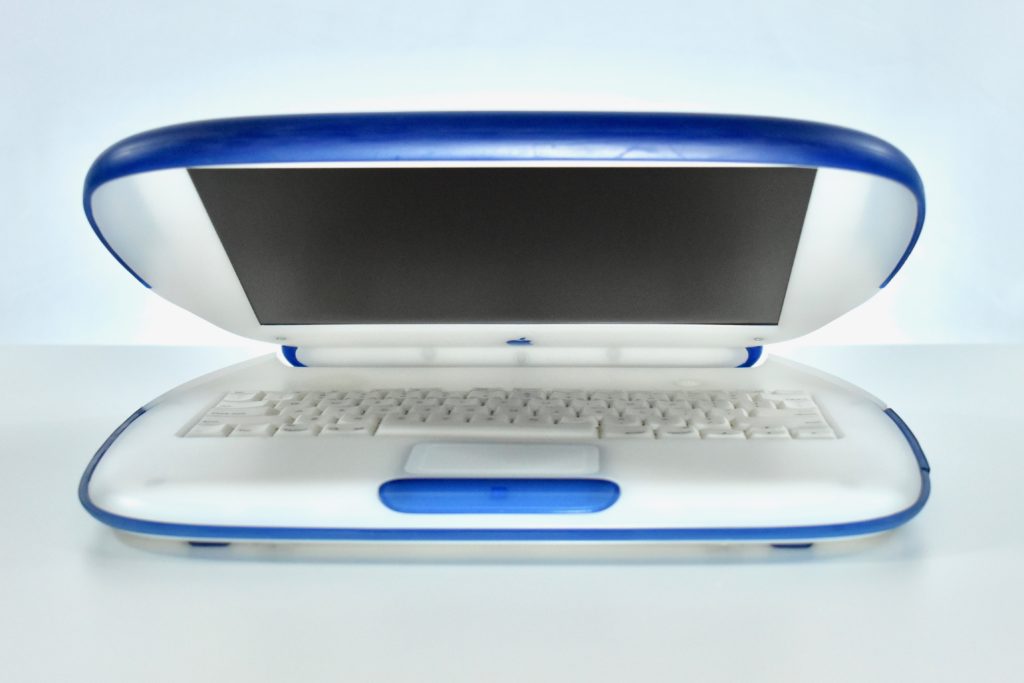
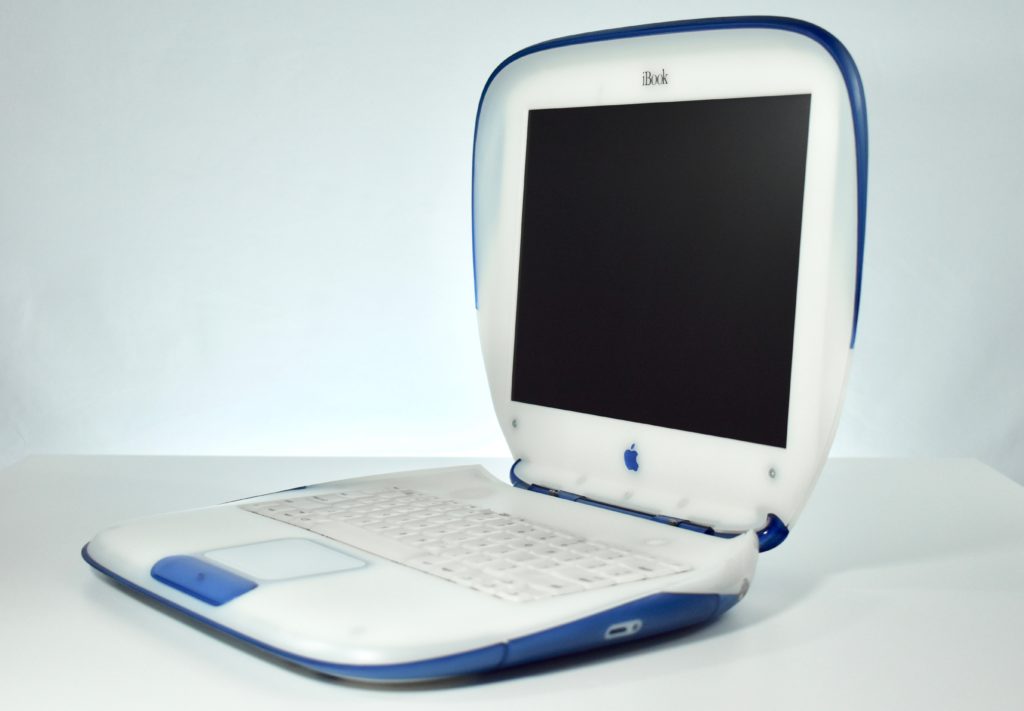
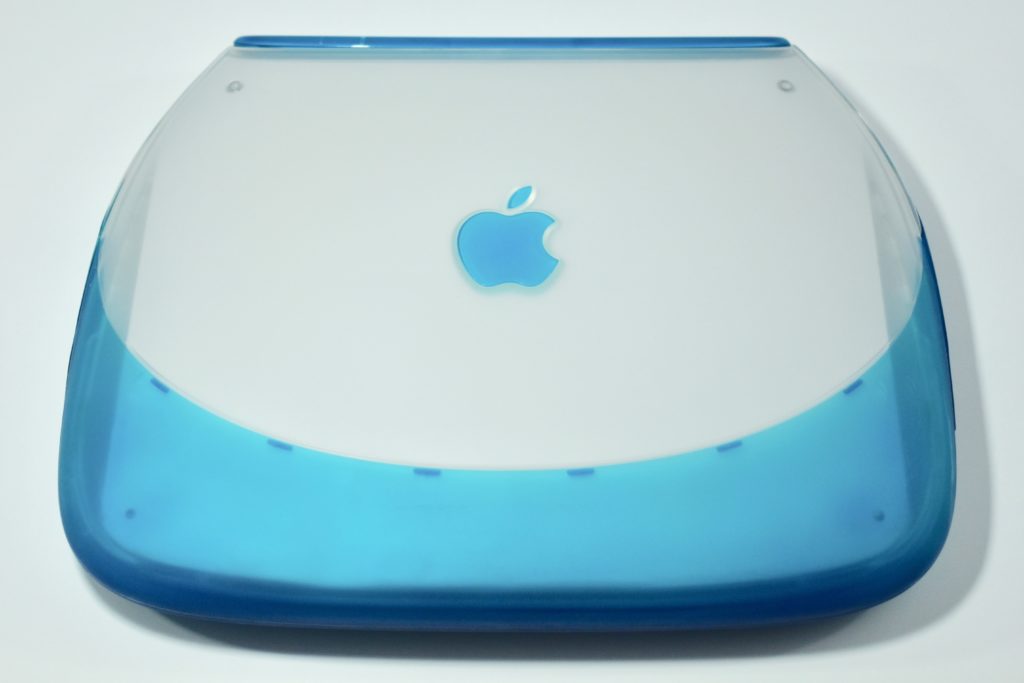
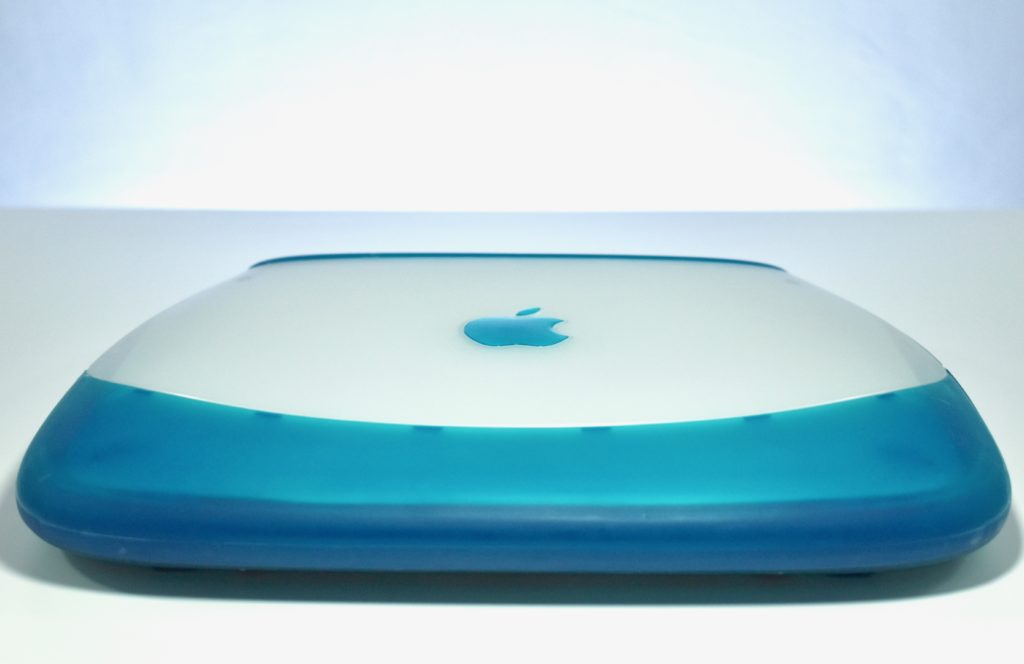
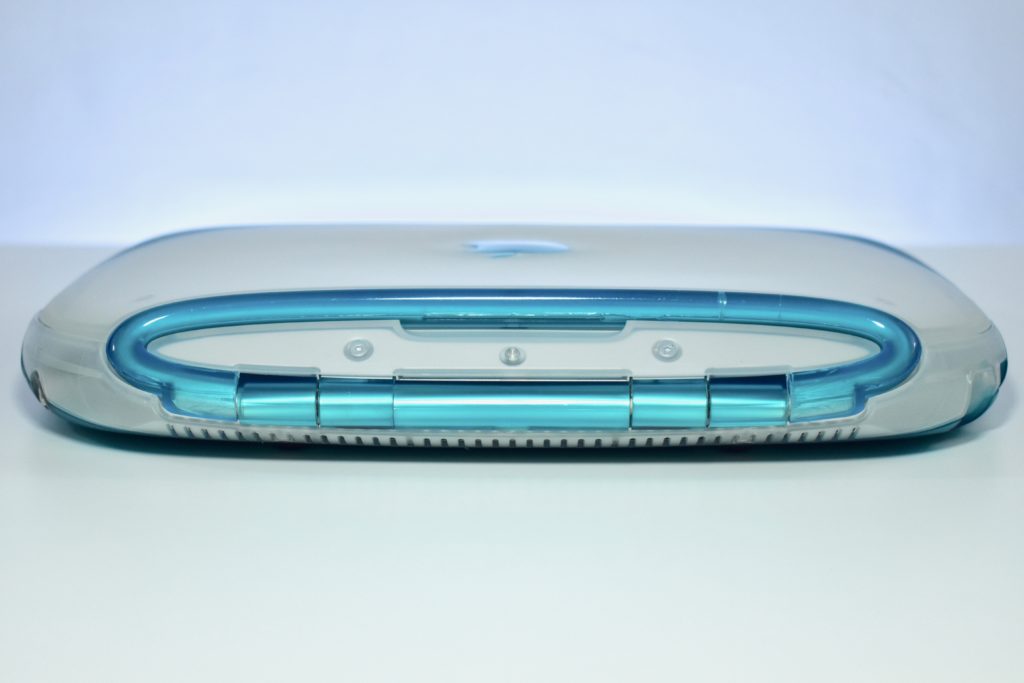
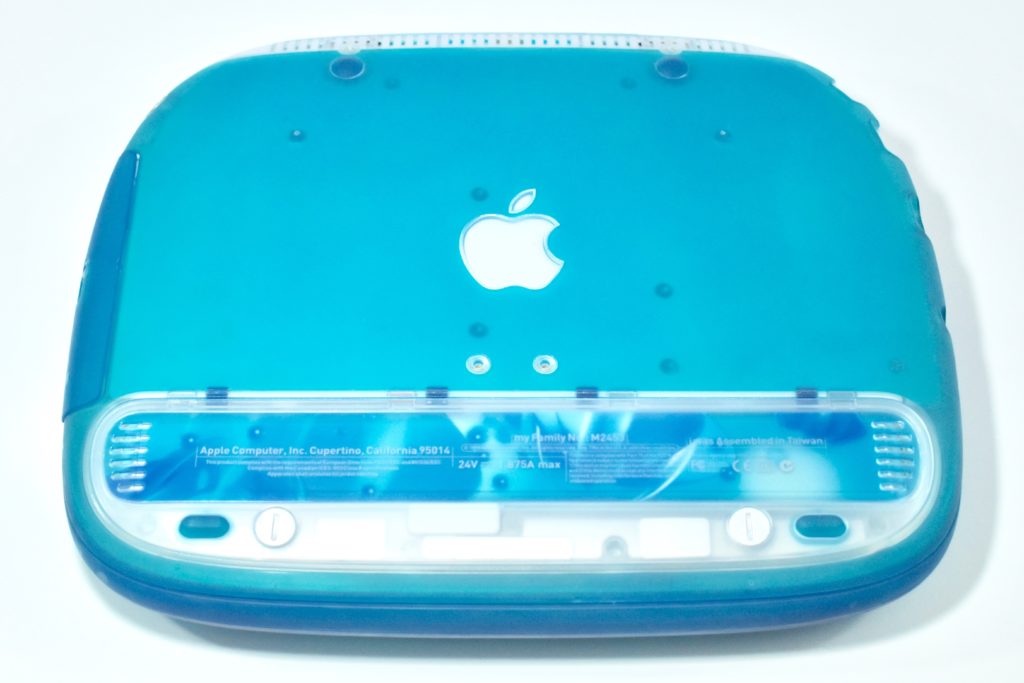
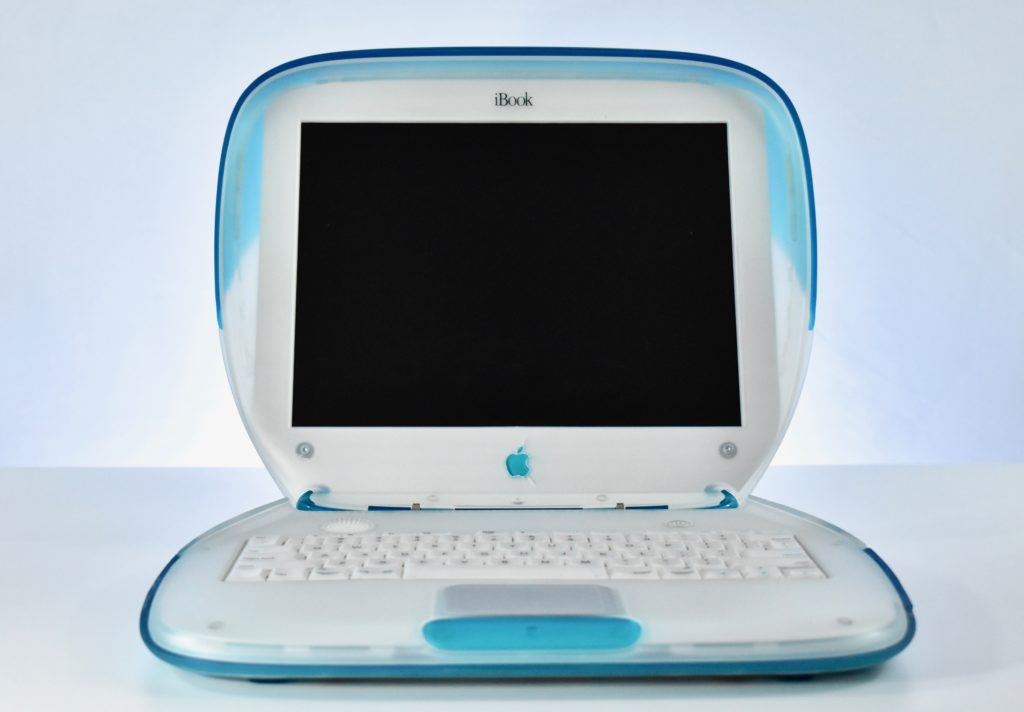
iBook G3/300 (original, blueberry, 1999)

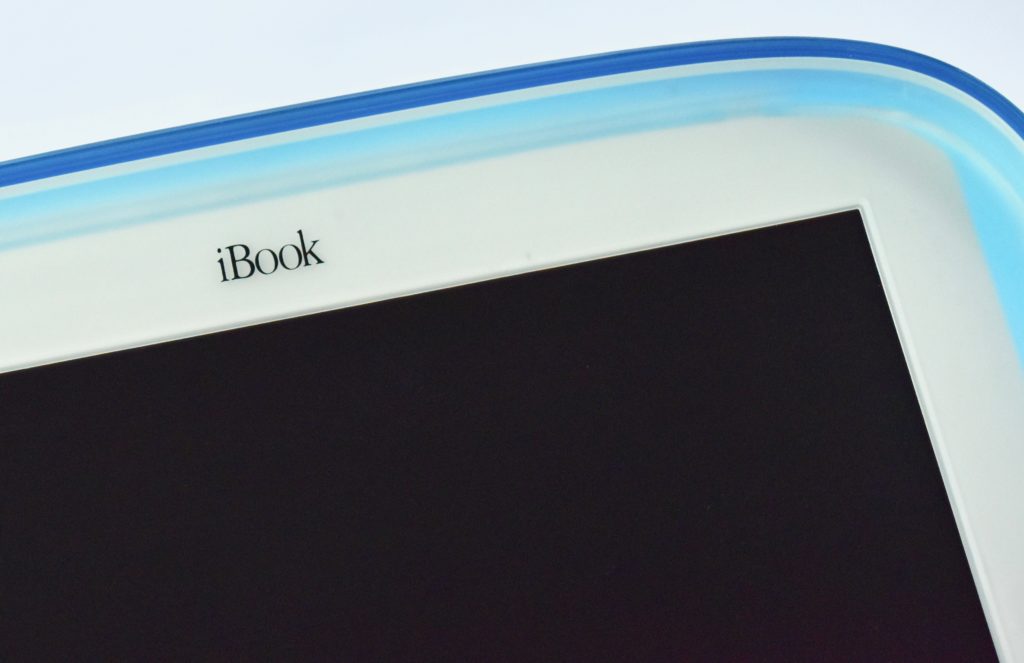
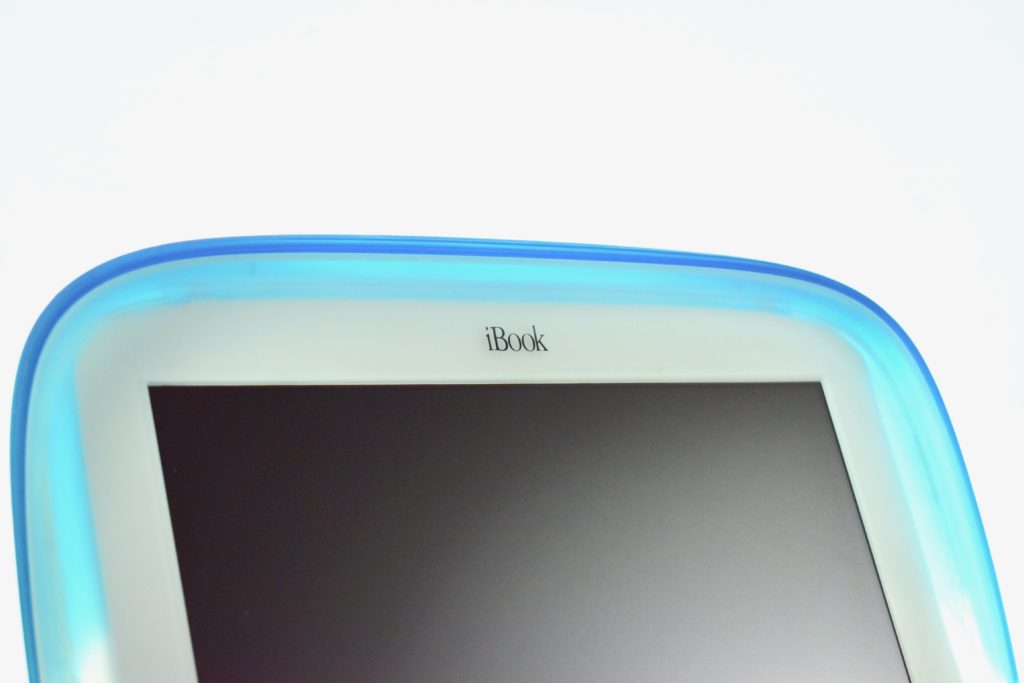
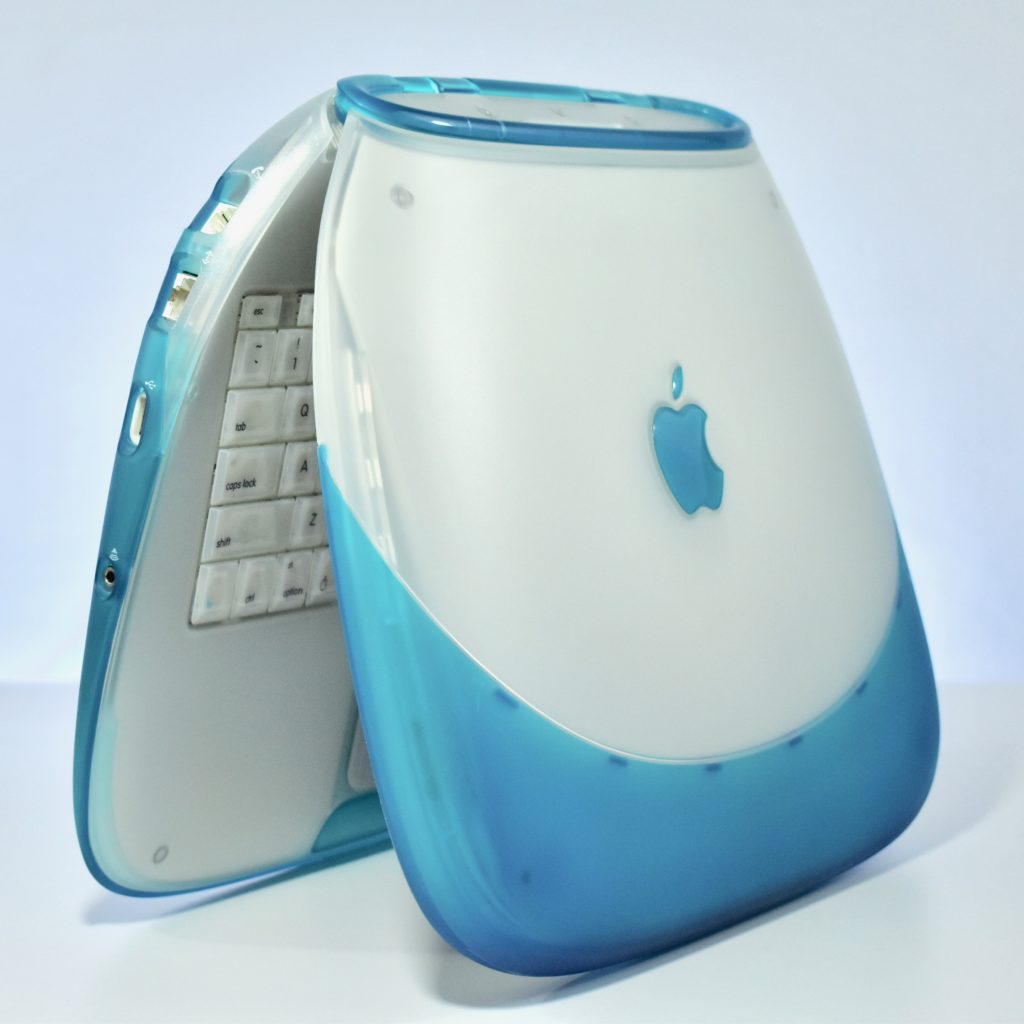
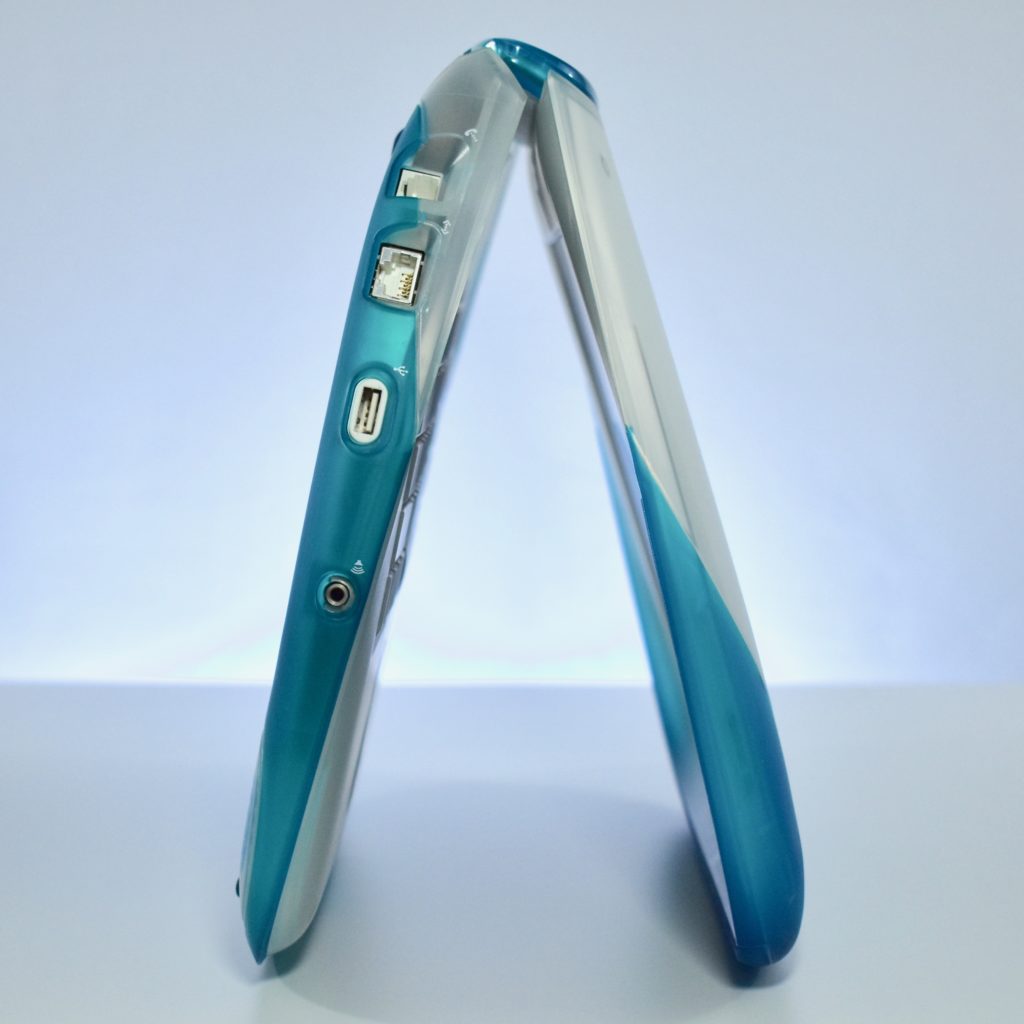
Following the success of the original iMac, the iBook G3/300 was released as portable Mac for consumers with a radical design. The original iBook was available in blueberry and tangerine, two of the five colors available for iMac at the time. The design is sometimes referred to as the “clamshell.”

The iBook shipped with 32 MB or 64 MB of RAM, a 3.2 GB or 6.0 GB hard drive, and a 12.1-inch TFT active matrix display at 800×600. The case featured a handle on the back that folded out when in use and sprang back into place.

Although portable Mac options were not new at the time with years of PowerBook models that preceded the iBook, Wi-Fi was still not common in 1999. The iBook was available with an optional AirPort wireless networking card. Many consumers who purchased an iBook also likely needed an AirPort Base Station to plug into their modem to set up their first home wireless network.

My first full-time technology director position in a school district is where I first encountered the iBook and AirPort Base Station. The Director of Special Education had purchased an iBook for each Special Education teacher to assist in supporting students with Individualized Educational Plans and deal with the extensive paperwork that is required. Although it is fairly commonplace now for teacher and students to have a technology device assigned to them, in 1999–2000 this practice was considered quite innovative.

This example is a blueberry iBook, complete with an internal AirPort wireless networking card. In my experience, schools in my area tended to purchase the blueberry iBook over the tangerine option.

Source: EveryMac.com