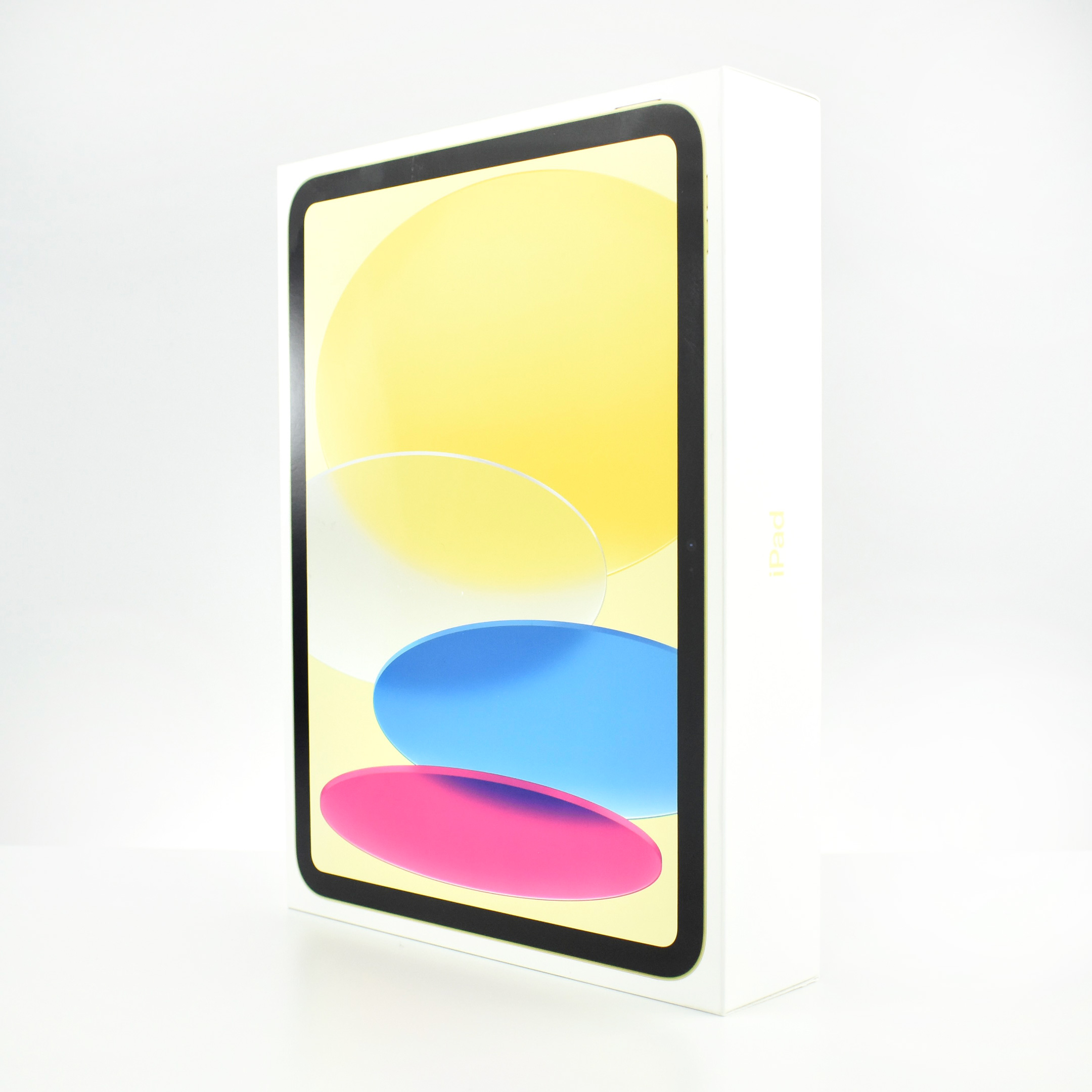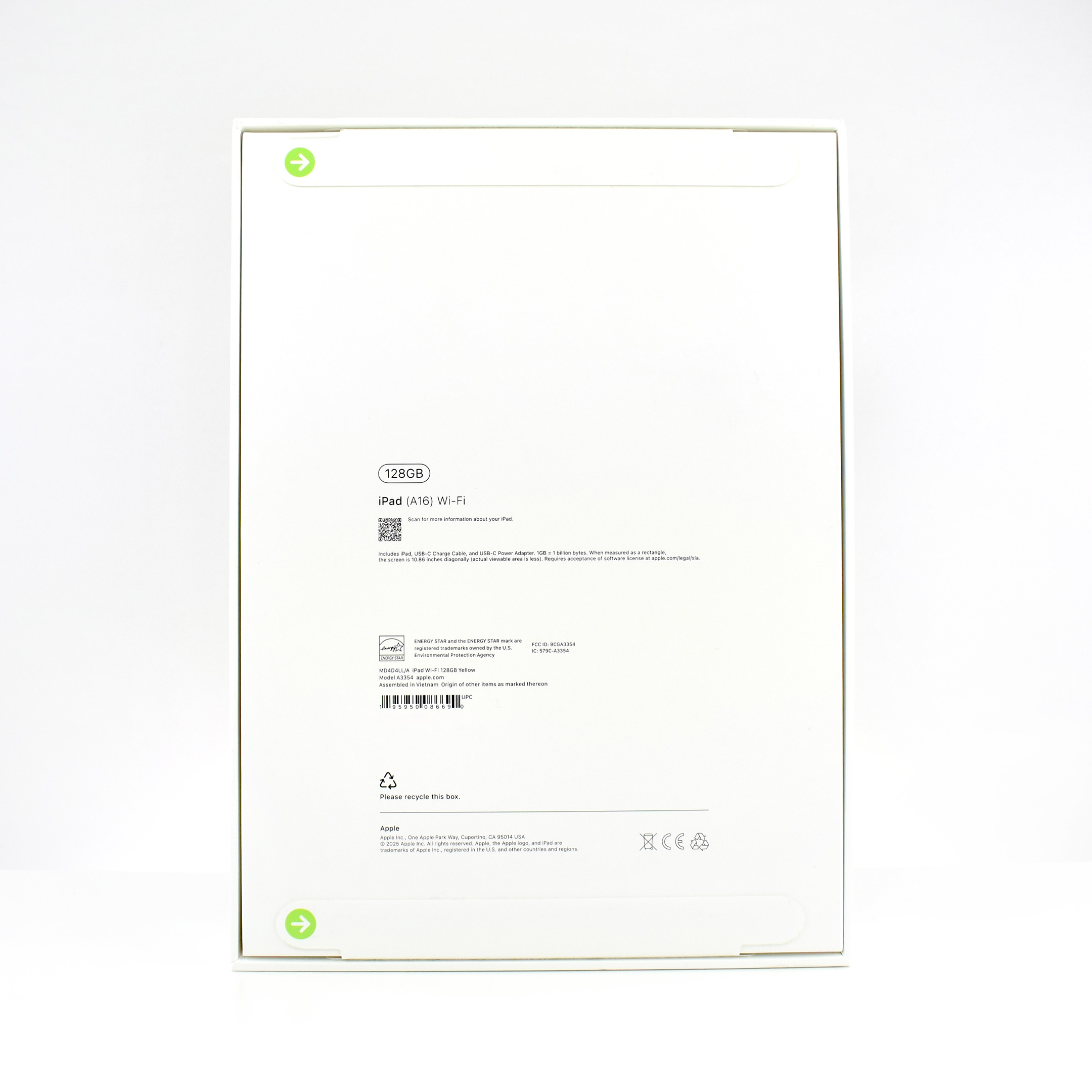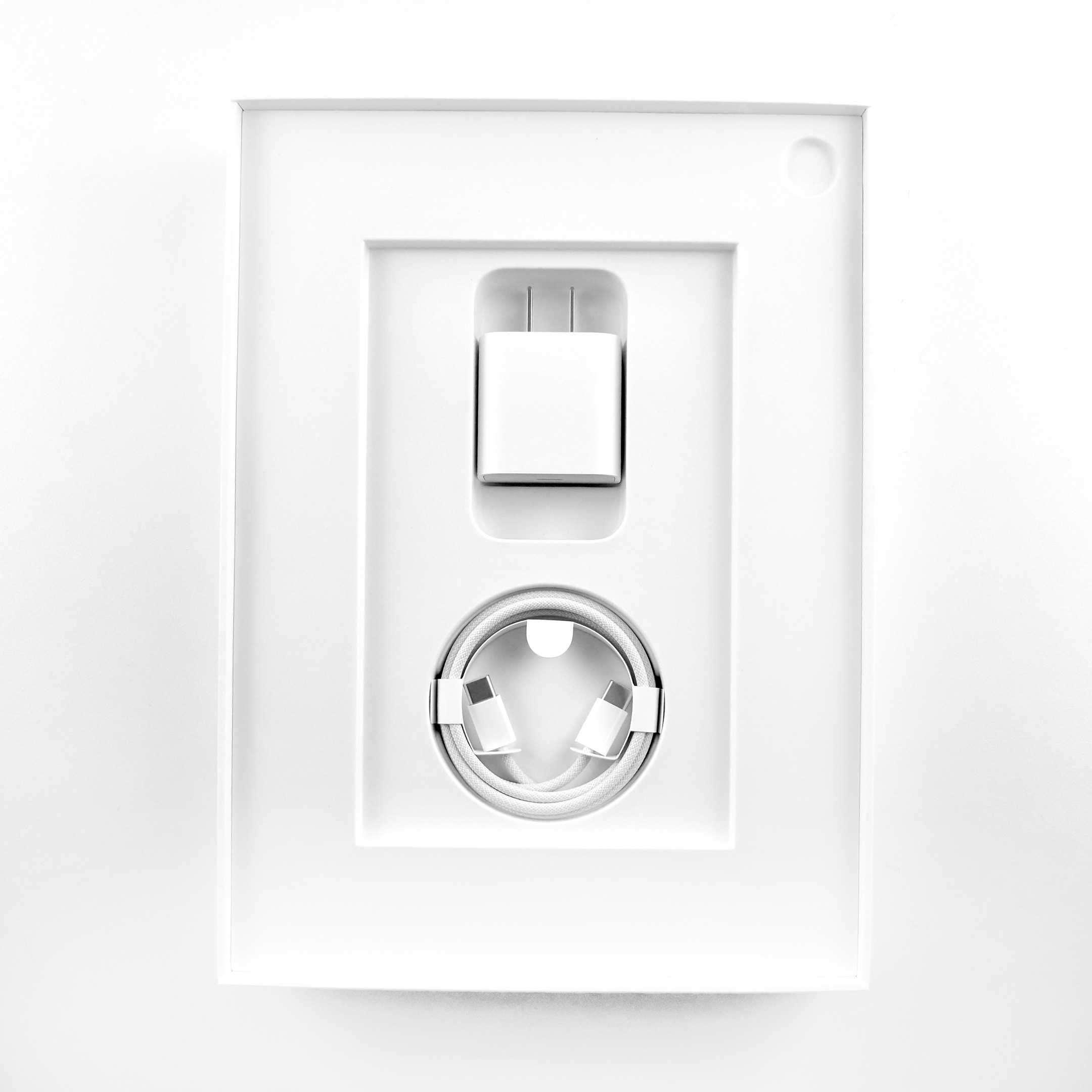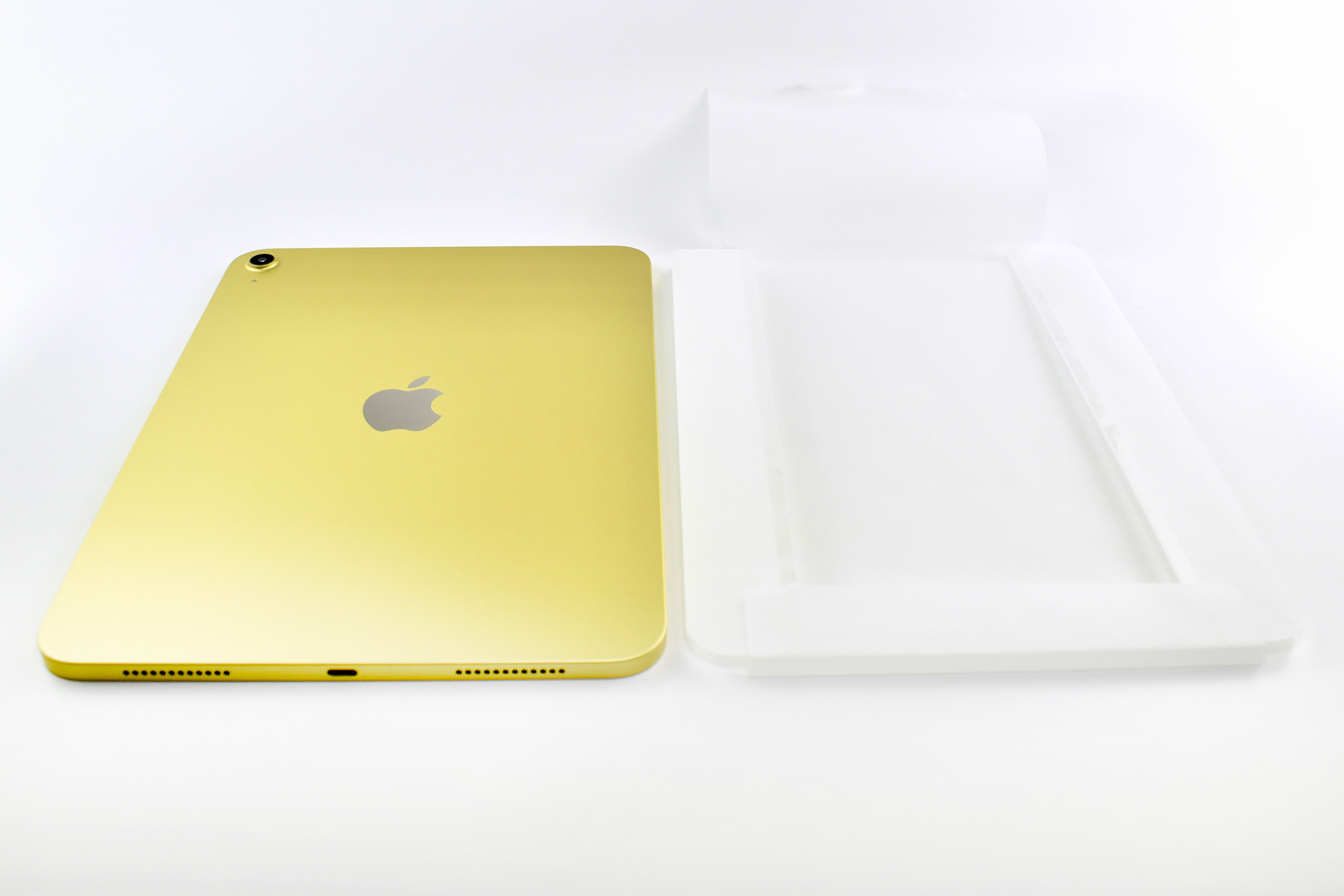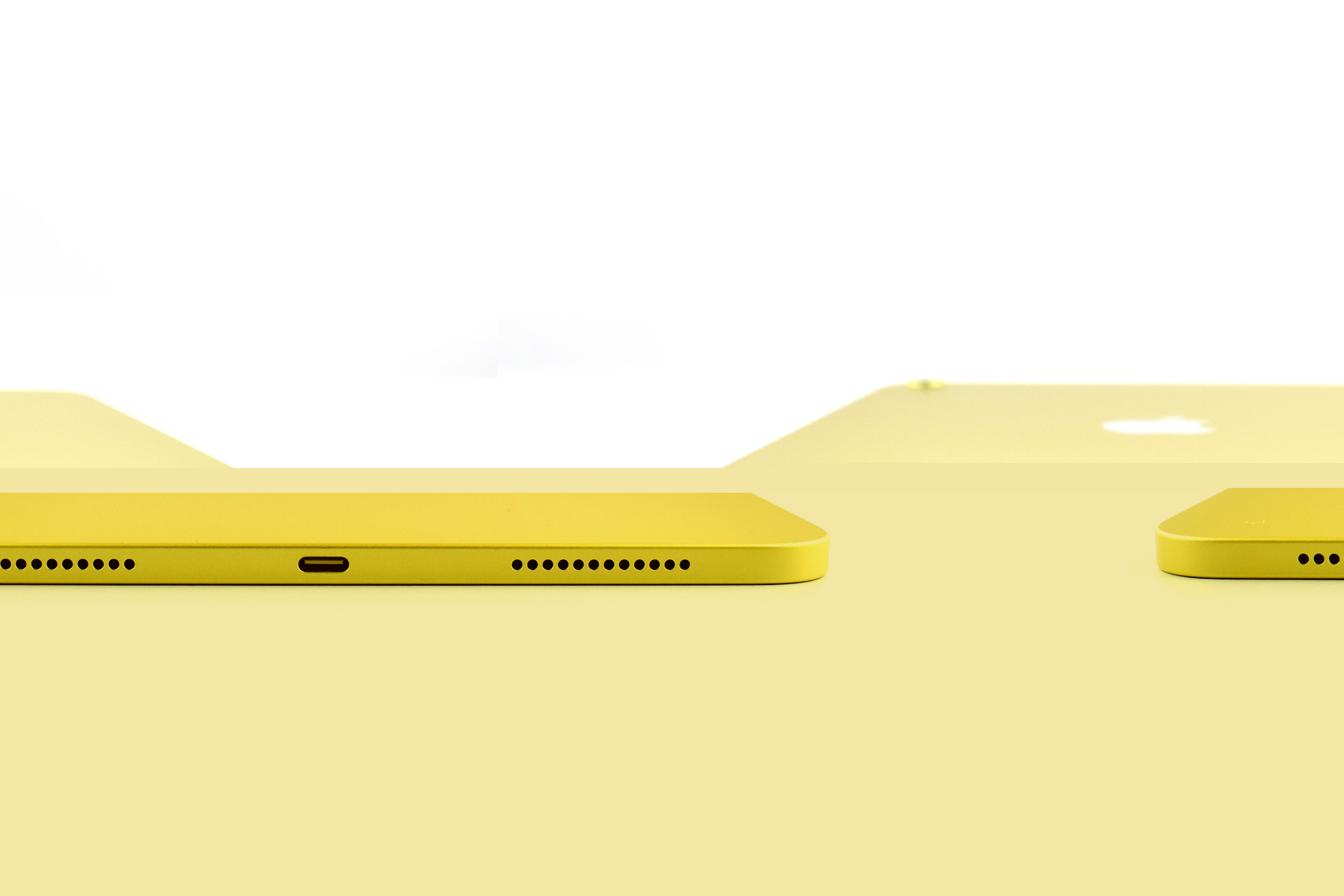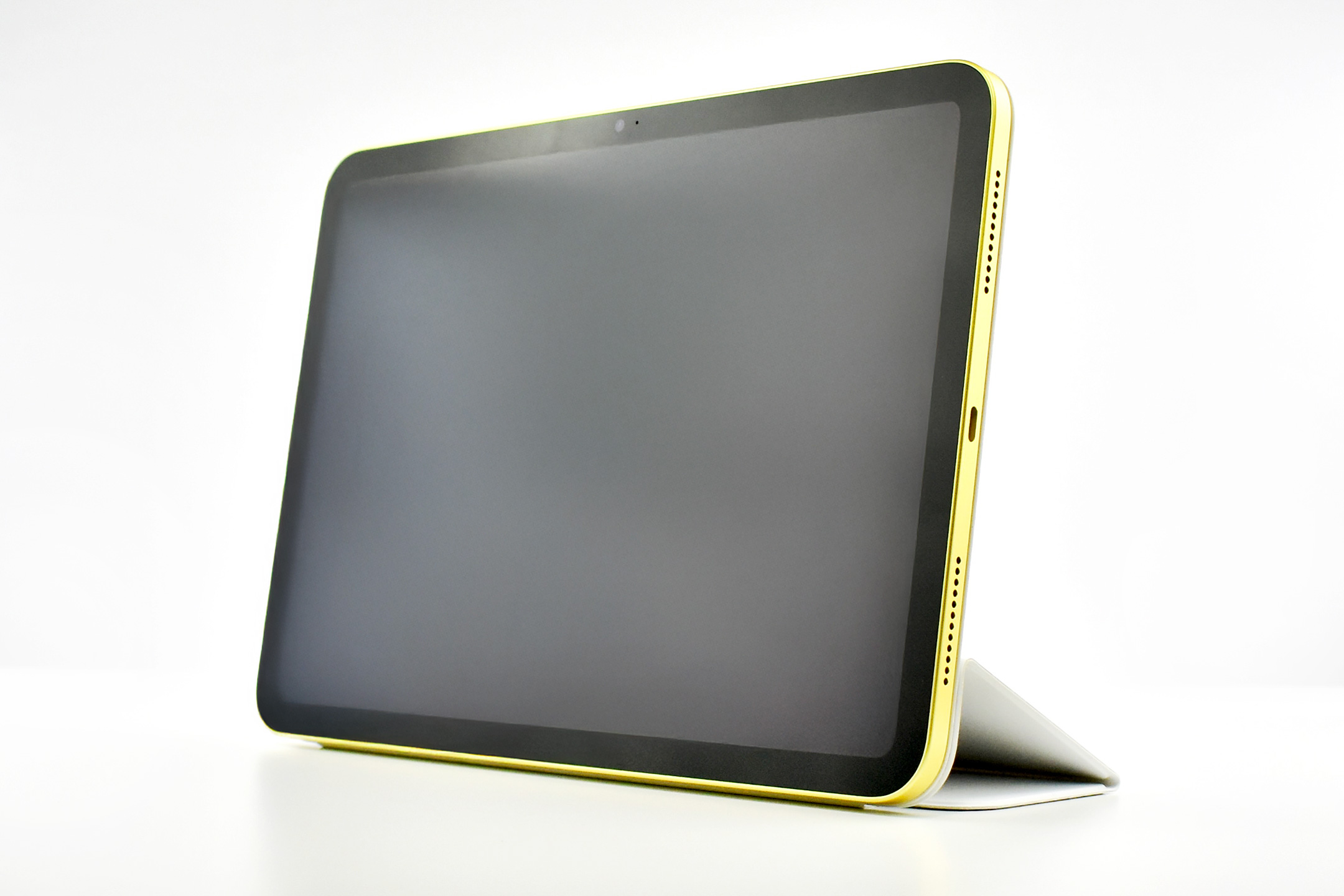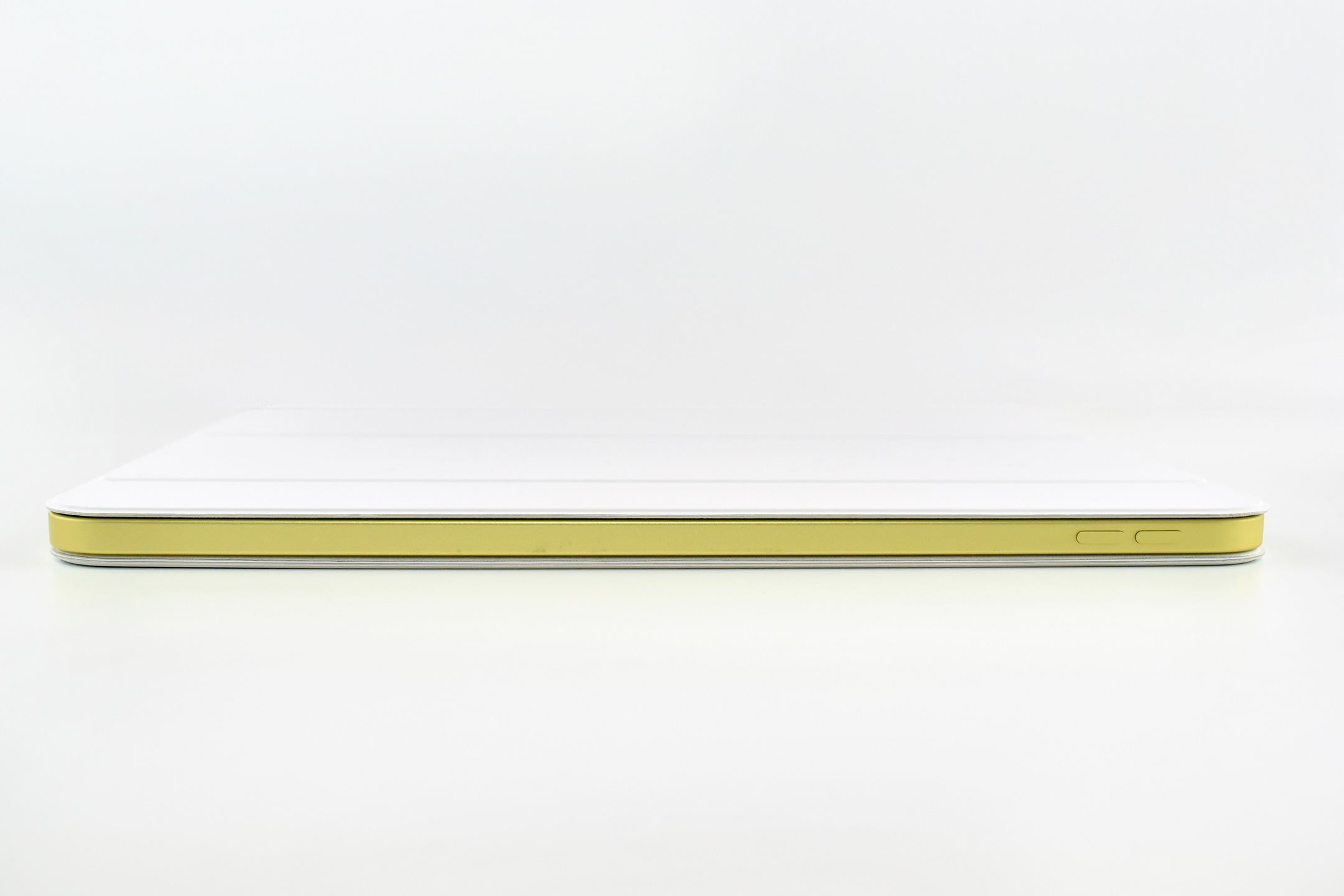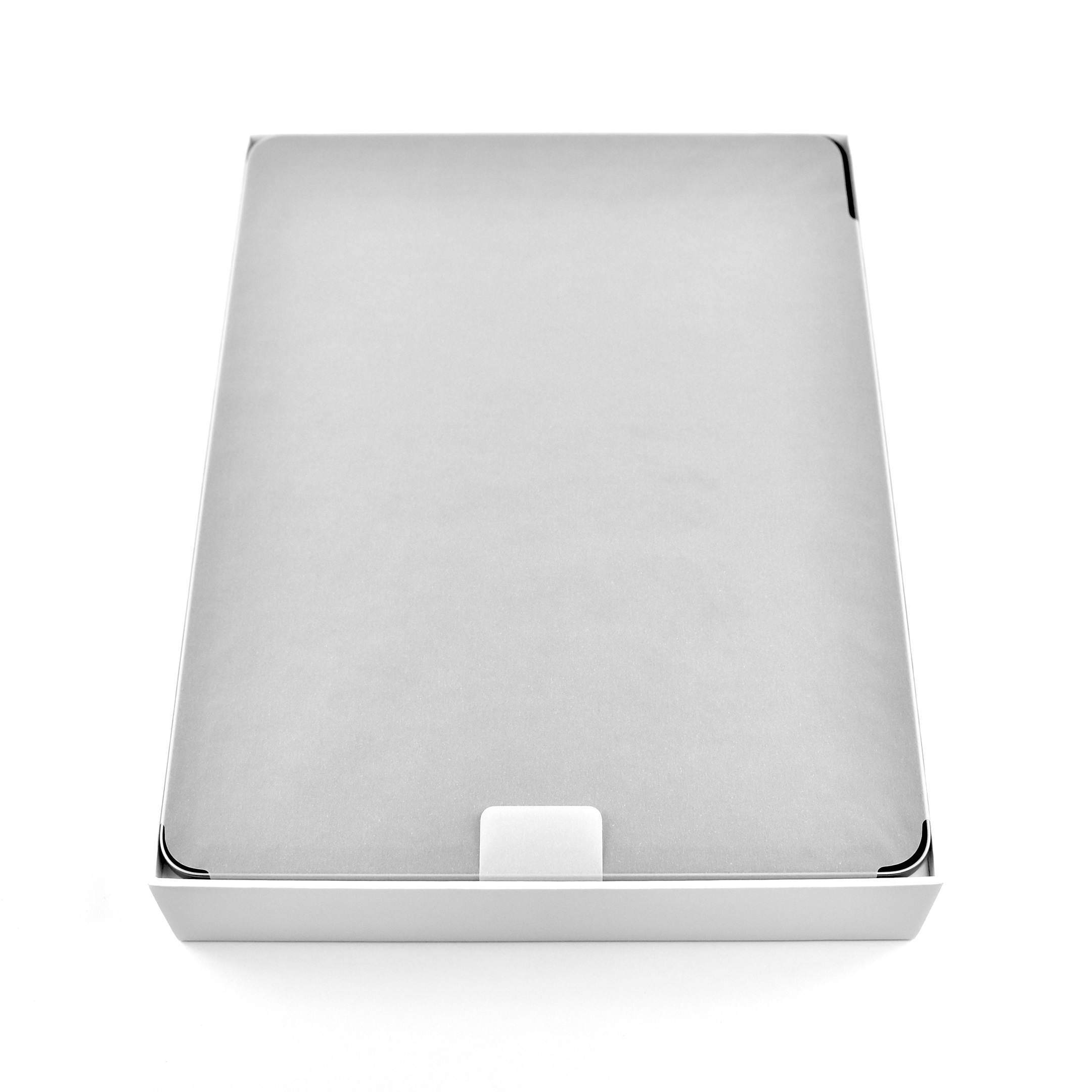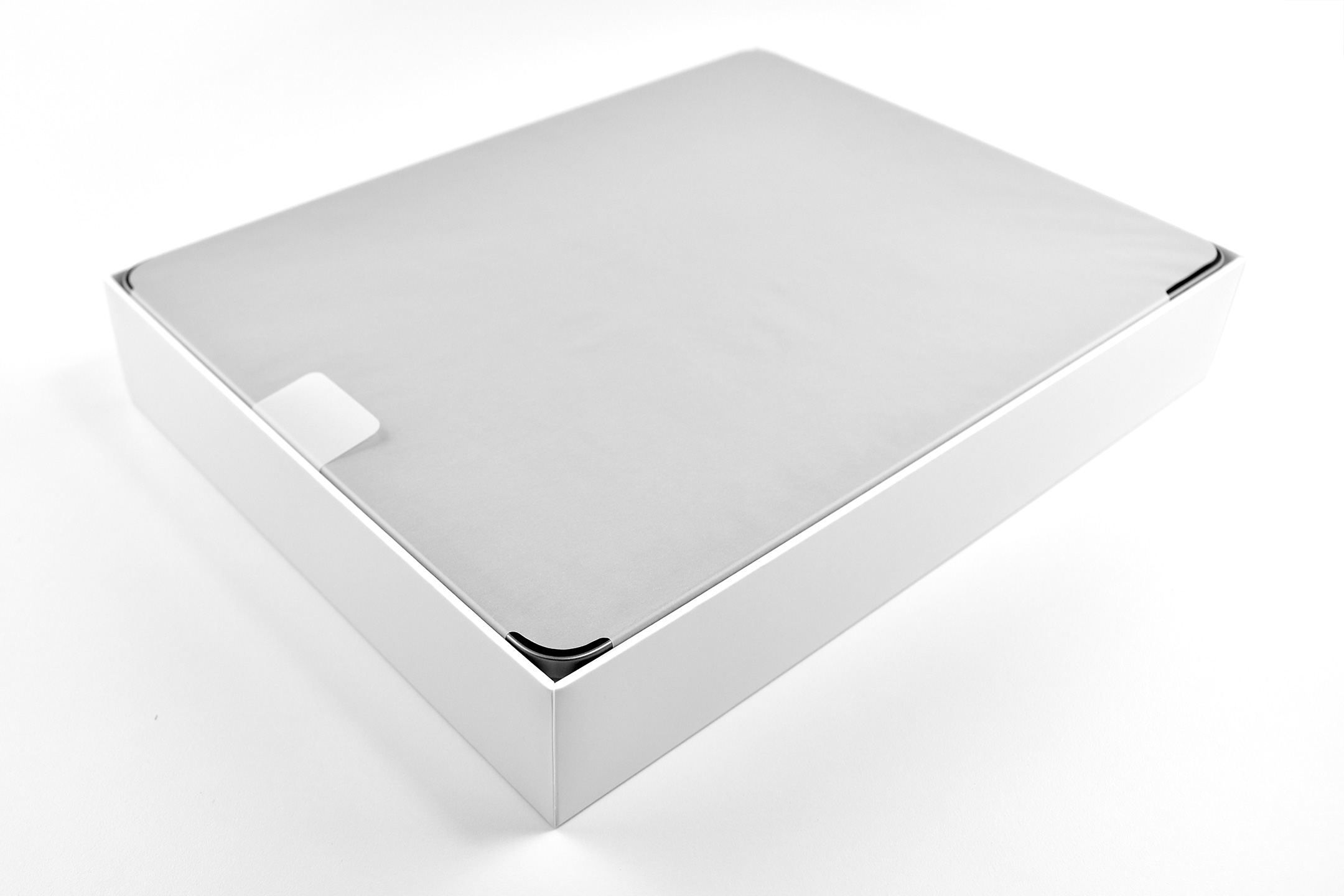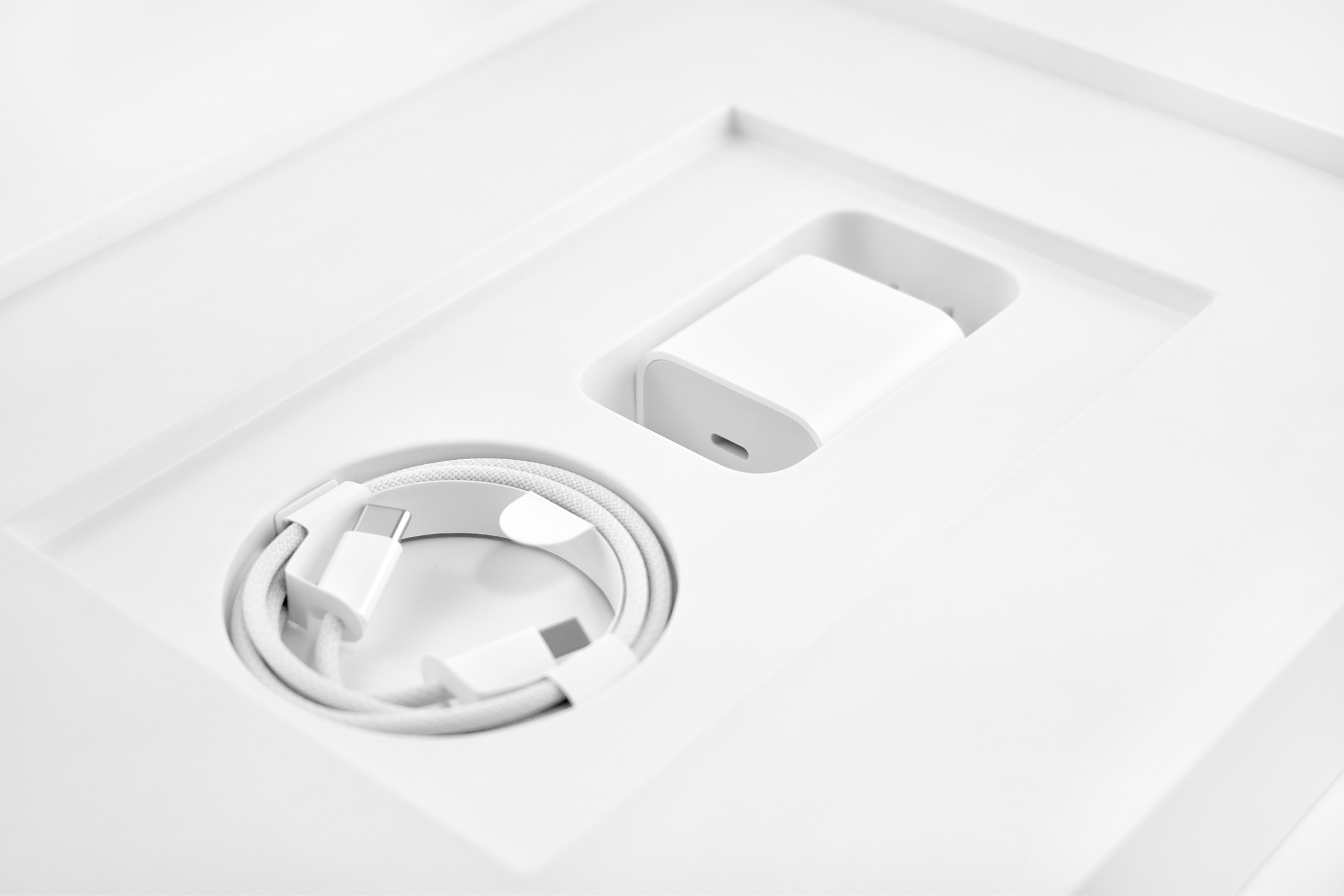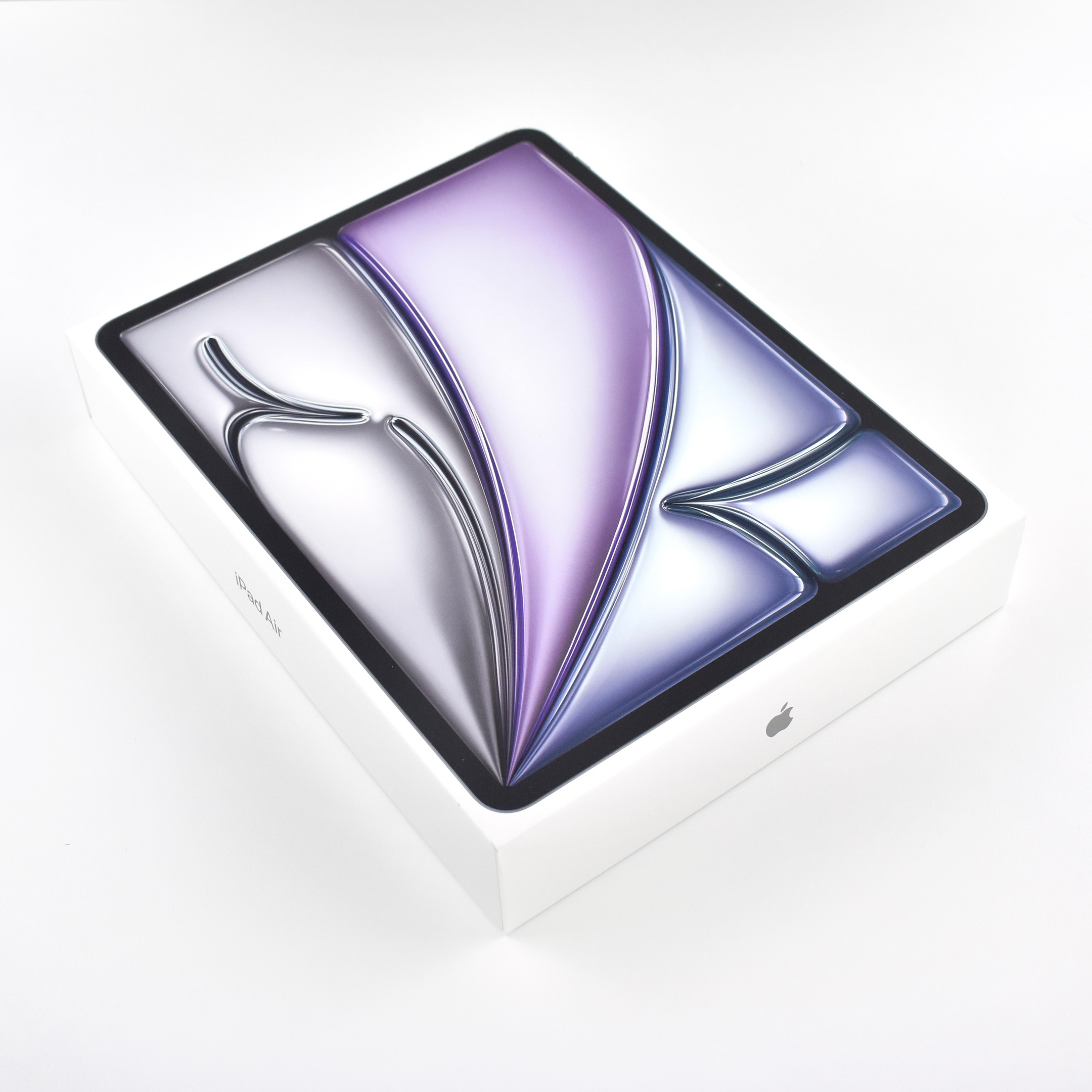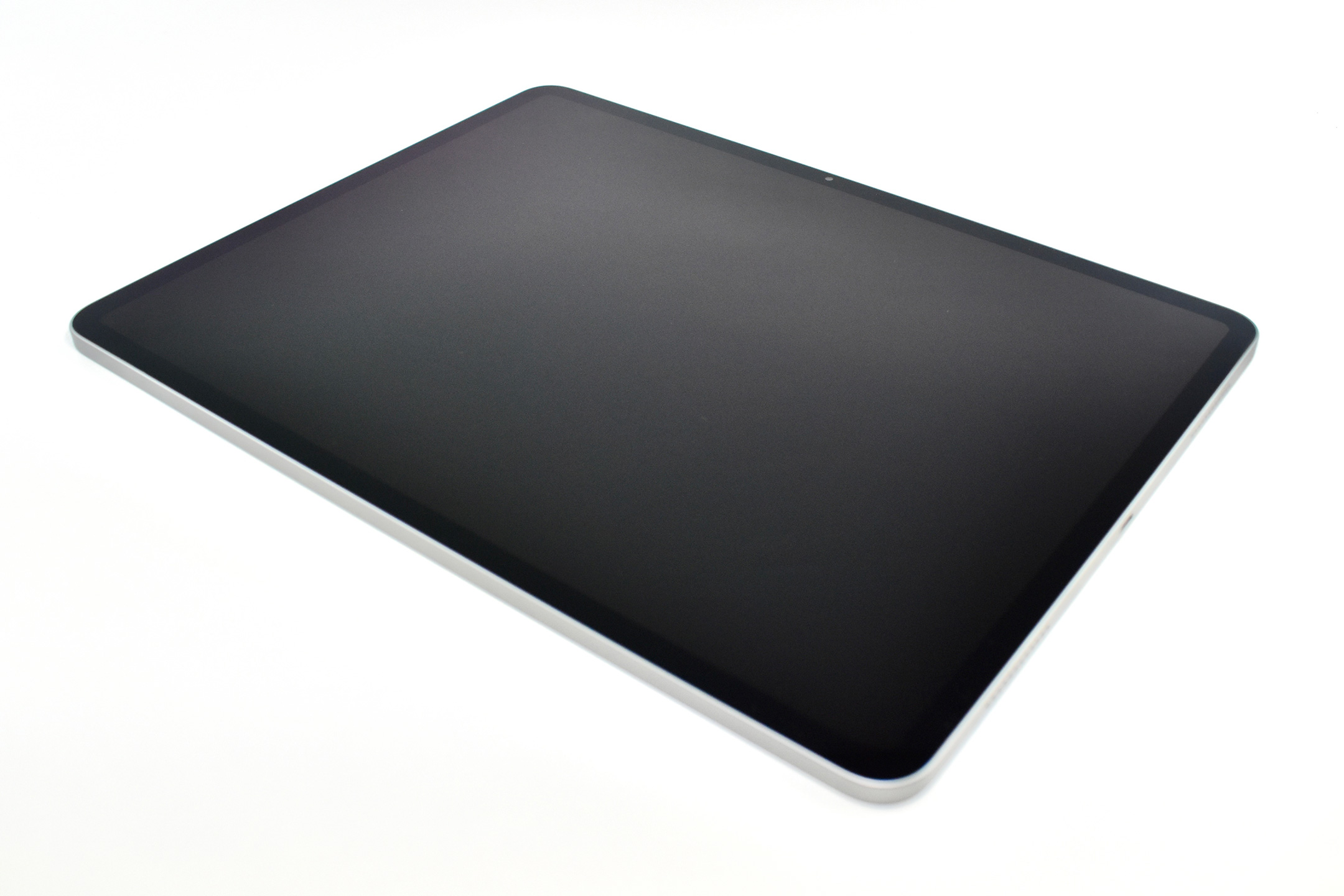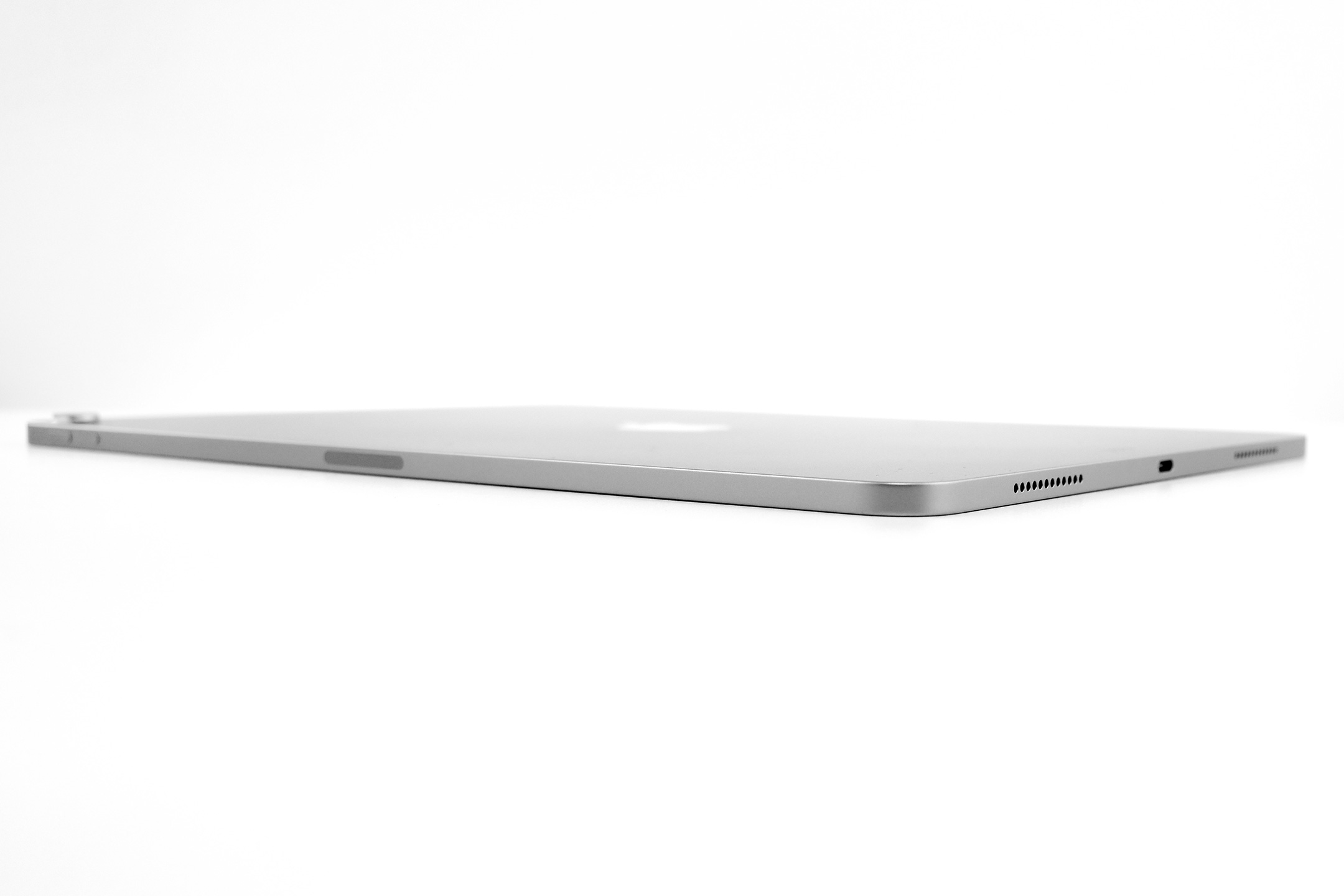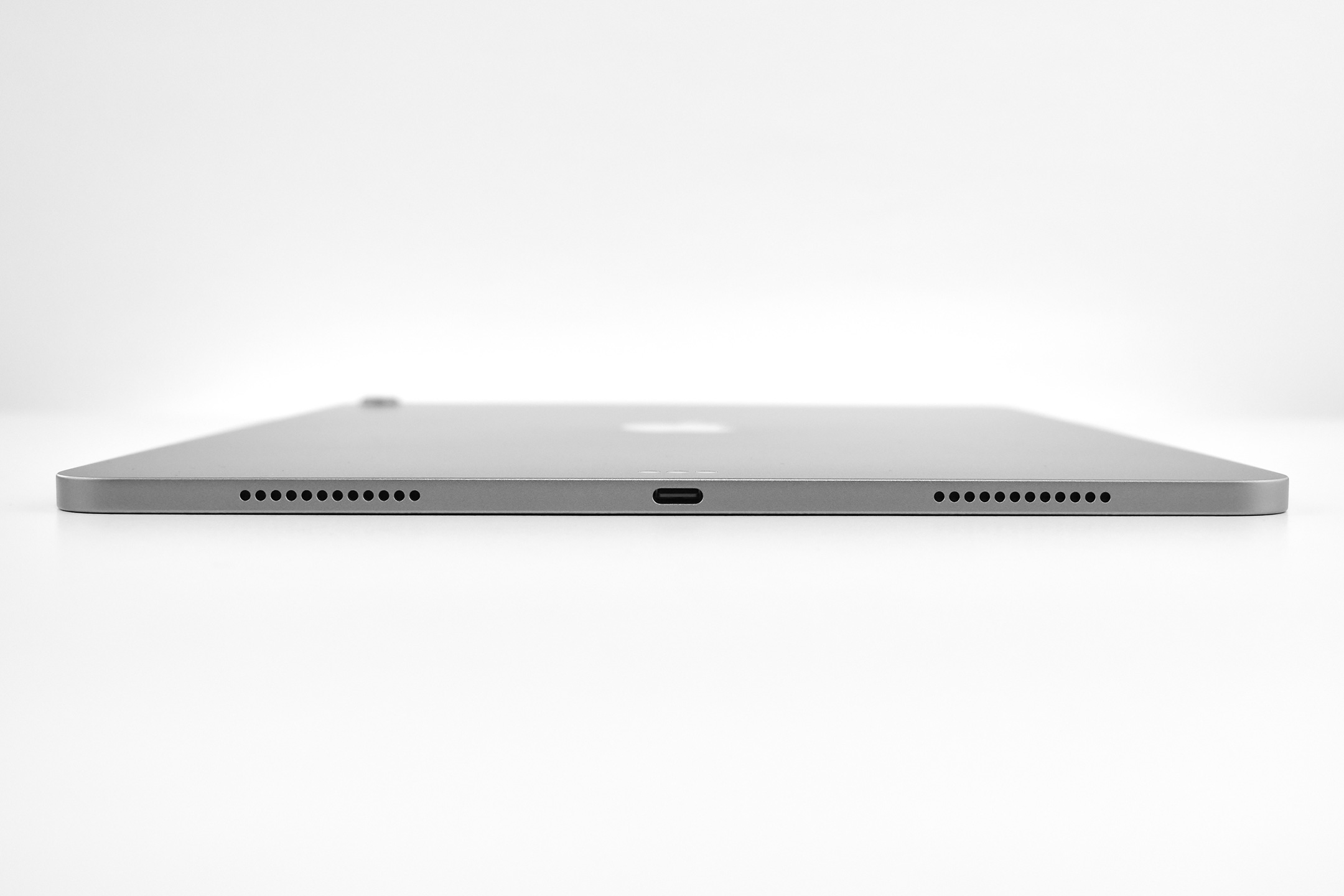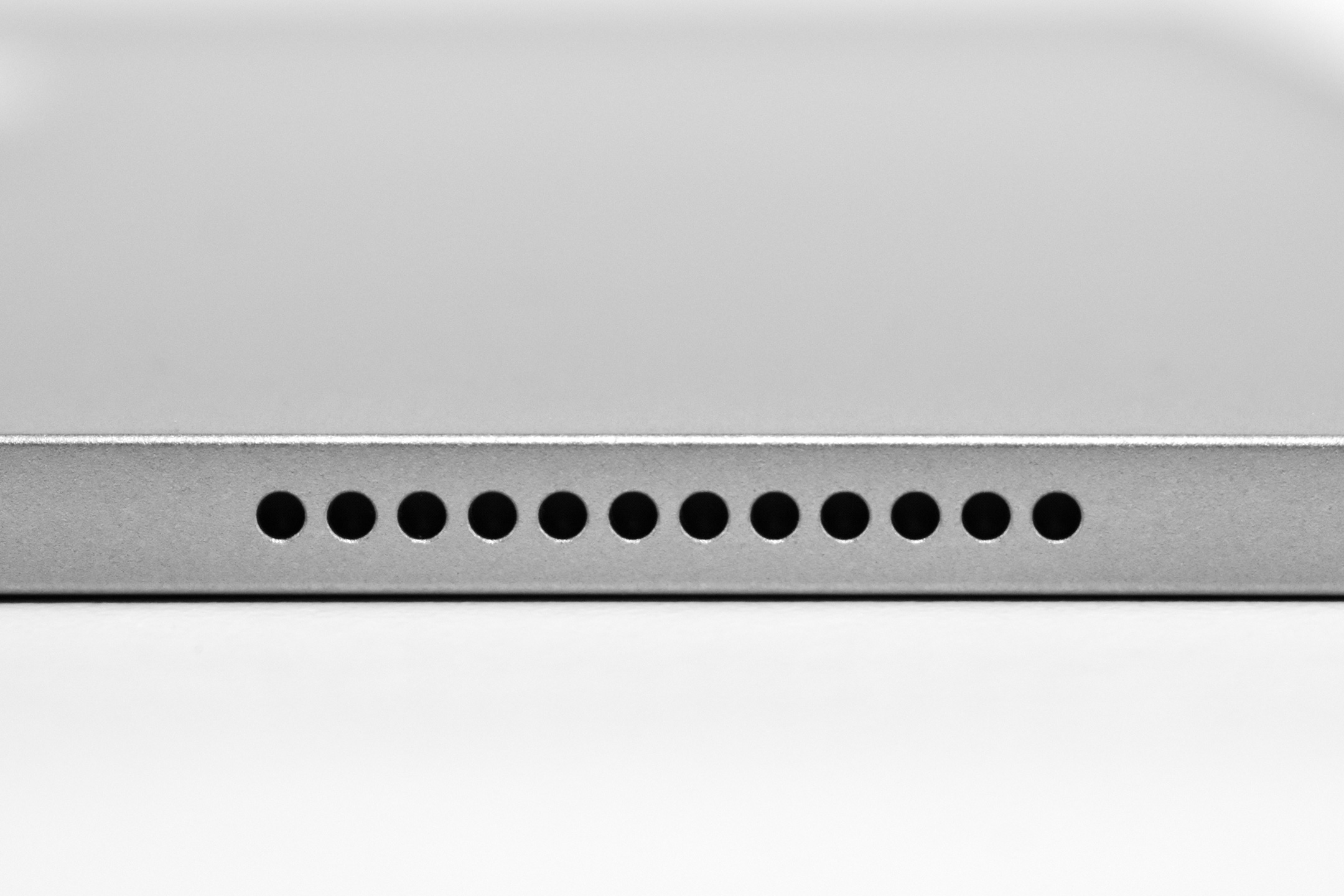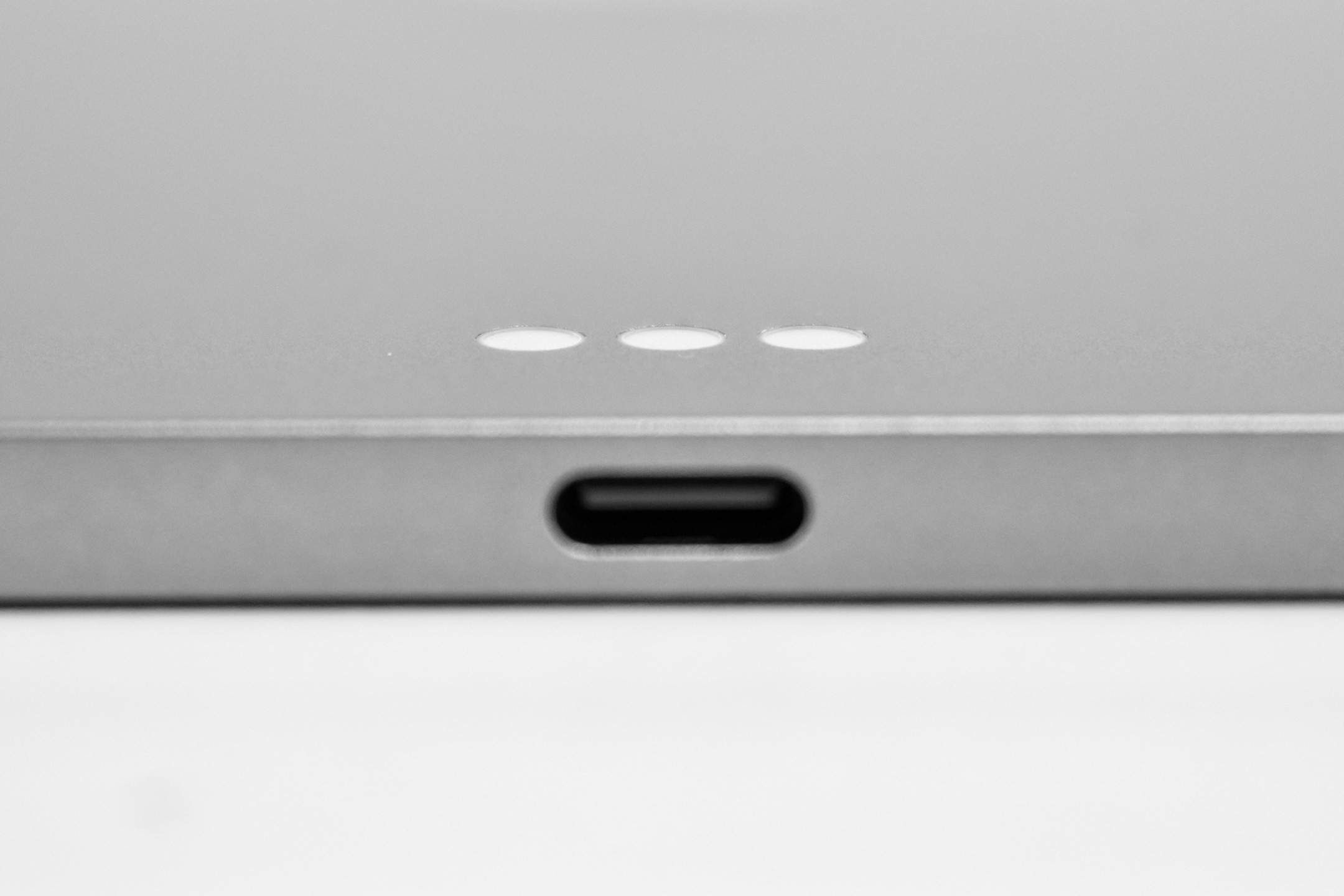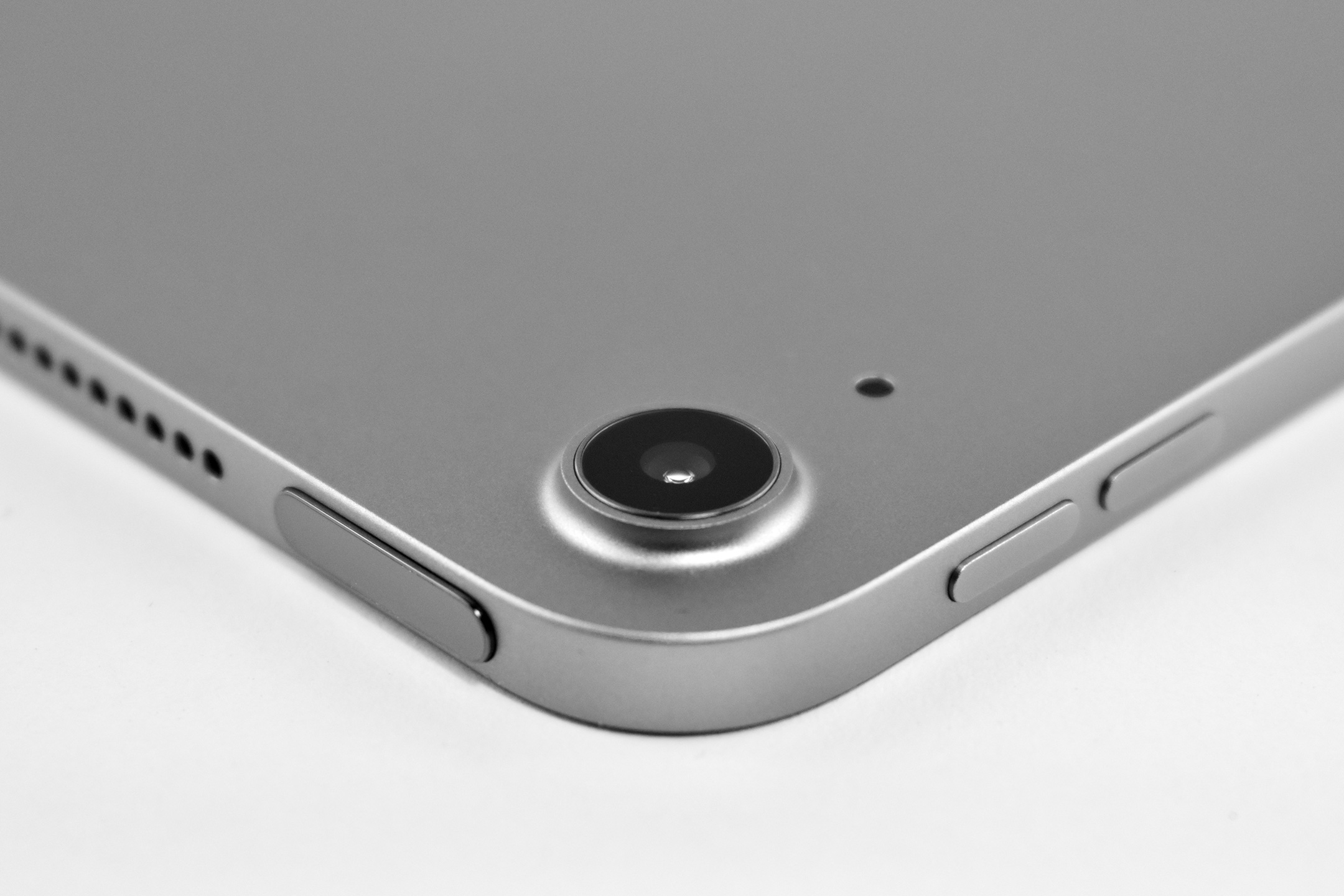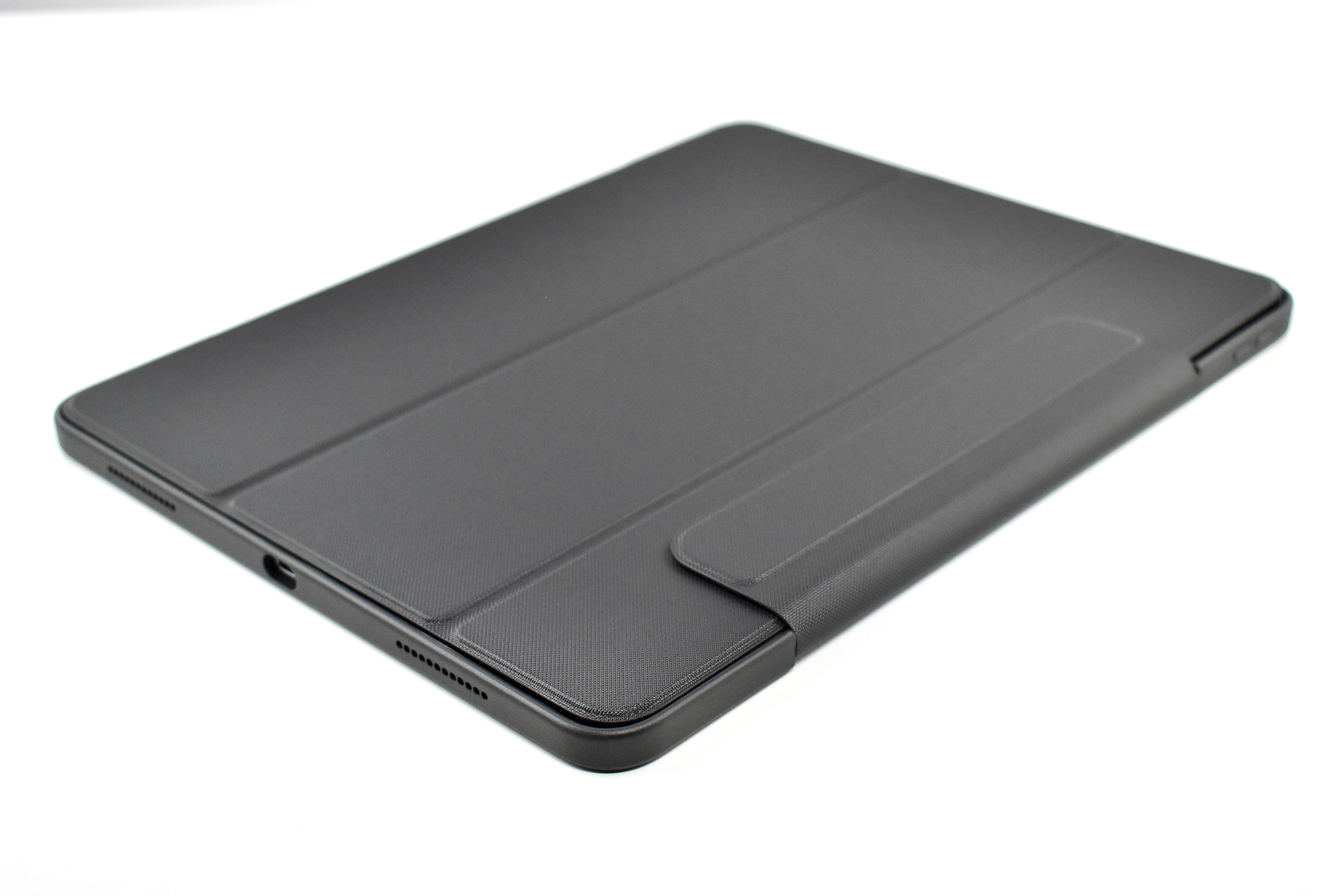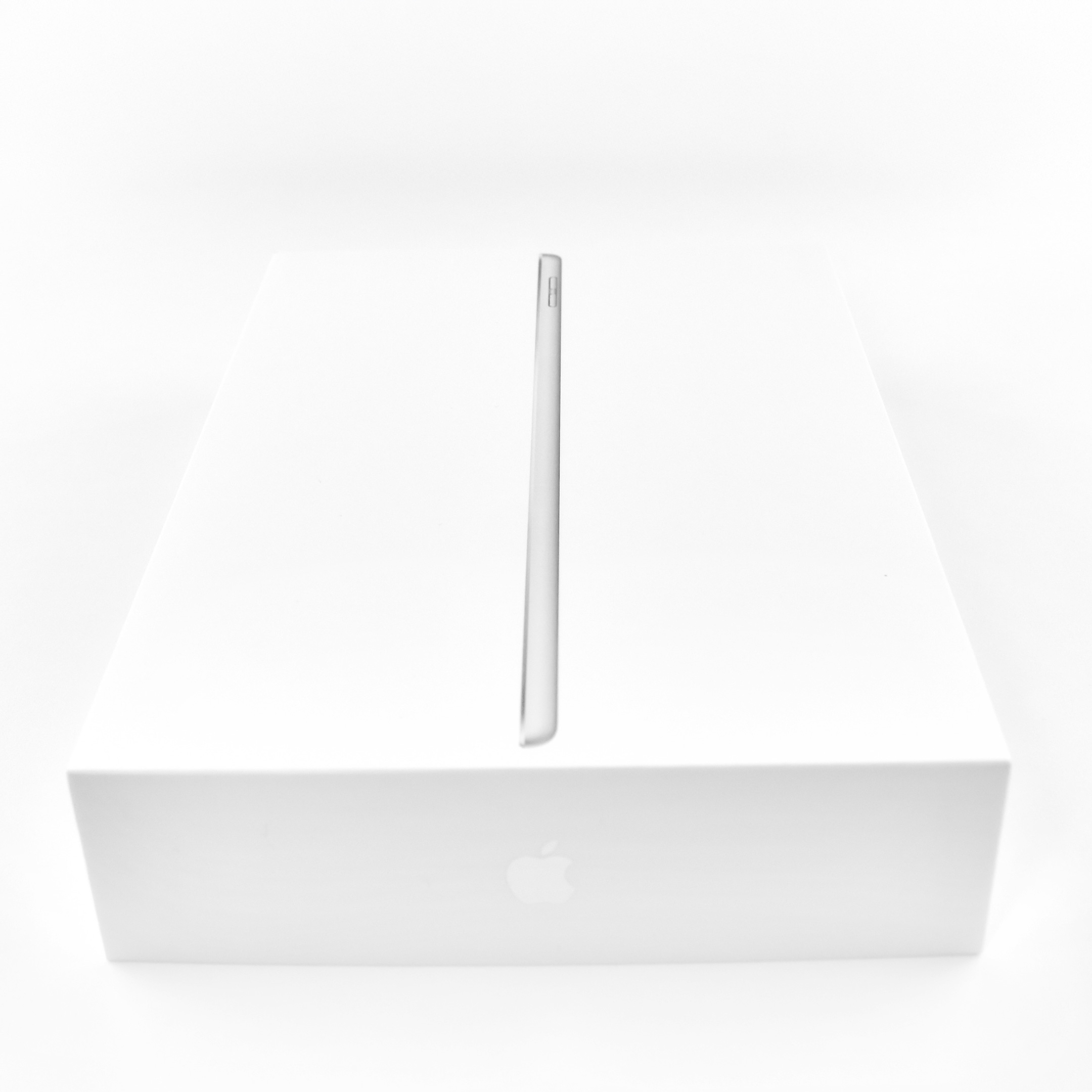
iPad (A16) (Generation 11, 11-inch, Wi-Fi, 128GB, Yellow, 2025)

On March 4, 2025, when Apple introduced the iPad Air with the M3 chip, they also announced the iPad Generation 11 with an A16 chip. The entire press release for this iPad device release amounted to one paragraph:

“Apple today also updated iPad with double the starting storage and the A16 chip, bringing even more value to customers. The A16 chip provides a jump in performance for everyday tasks and experiences in iPadOS, while still providing all-day battery life. Compared to the previous generation, the updated iPad with A16 is nearly 30 percent faster. In fact, compared to iPad with A13 Bionic, users will see up to a 50 percent improvement in overall performance, and A16 makes the updated iPad up to 6x faster than the best-selling Android tablet.”

This iPad update was released soon after the announcement of Apple Intelligence. While Apple was touting Apple Intelligence and updating its devices to take advantage of the new features, the iPad Generation 11 was given a chip that did not allow Apple Intelligence. While this updated iPad is faster than the previous Generation 10 model, it does not meet the minimum specification of the A17 Pro chip to allow Apple Intelligence compatibility. Apple provided no explanation for this omission.

One notable upgrade was in storage on the A16 iPad. The iPad Generation 11 doubled its base storage from 64 to 128GB and was also available in 256 and 512GB configurations. 

Except for the A16 chip and upgraded storage, this iPad was nearly identical to the iPad Generation 10. 

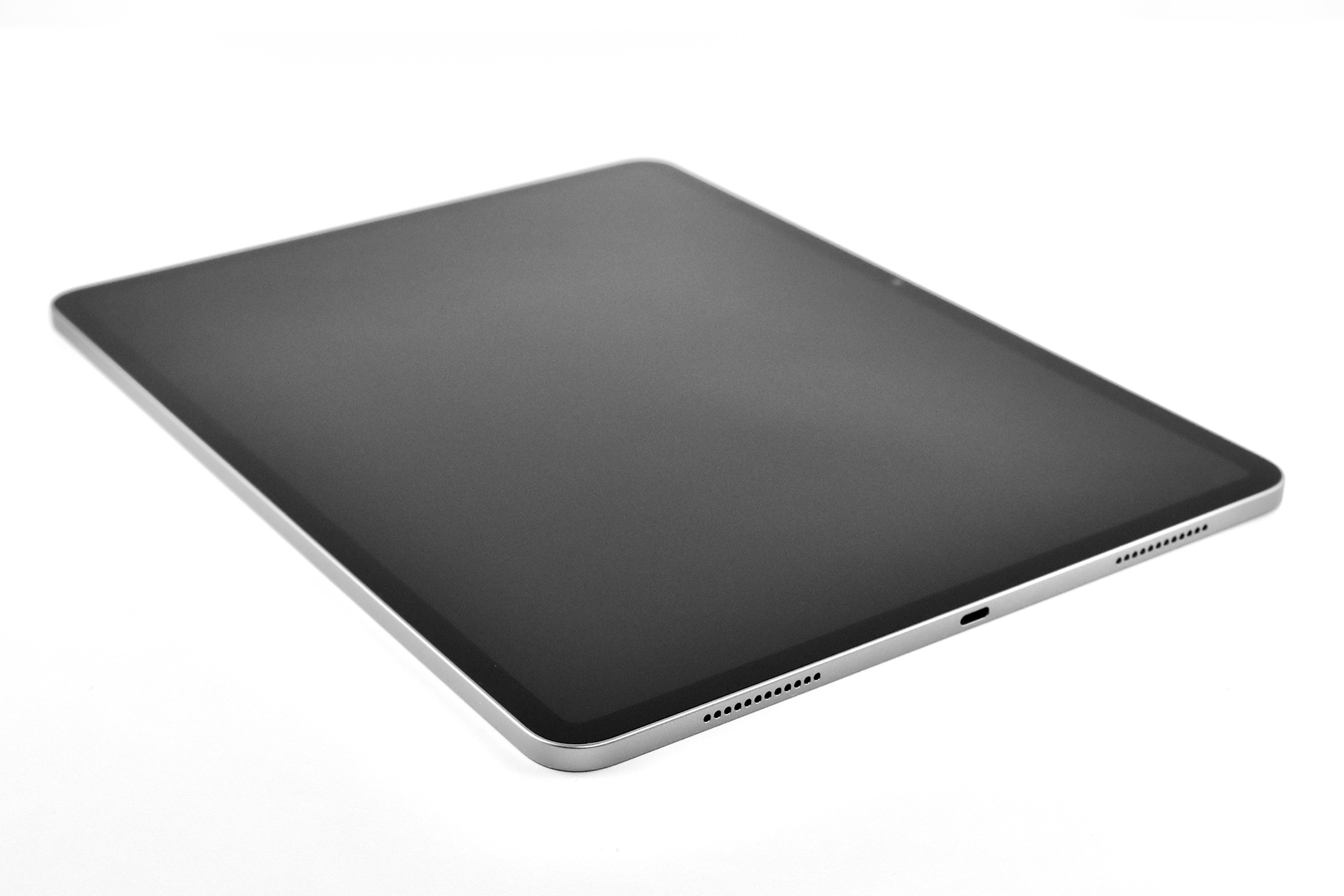
The iPad Generation 11 measured 9.79 x 7.07 inches, and was 0.28 inch thick. It weighed 1.05 pounds (Wi-Fi model). It had stereo speakers, a front camera and microphone centered on the “long”landscape” (long) side to enhance the FaceTime experience, and included both USB-C and a Smart Connector.

Its Liquid Retina display was 2360 x 1640 pixels at 264 ppi and delivered up to 500 nits brightness. It supported the Apple Pencil (USB-C) and also the Apple Pencil Generation 1 (although clumsily since the original Apple Pencil used a Lightning connector for charging). 

The back camera was 12MP with digital zoom up to 5x supporting Smart HDR 4, geotagging, auto image stabilization, and burst mode. It could capture video up to 4K. The similar front camera was also 12MP and supported Center Stage in Landscape mode. It supported Smart HDR 4, but only could record 1080p HD video. 

The iPad Generation 11 had 5 sensors, including Touch ID, 3‐axis gyro, accelerometer, barometer, and an ambient light sensor. 

Sources: Apple (Newsroom, Specs)

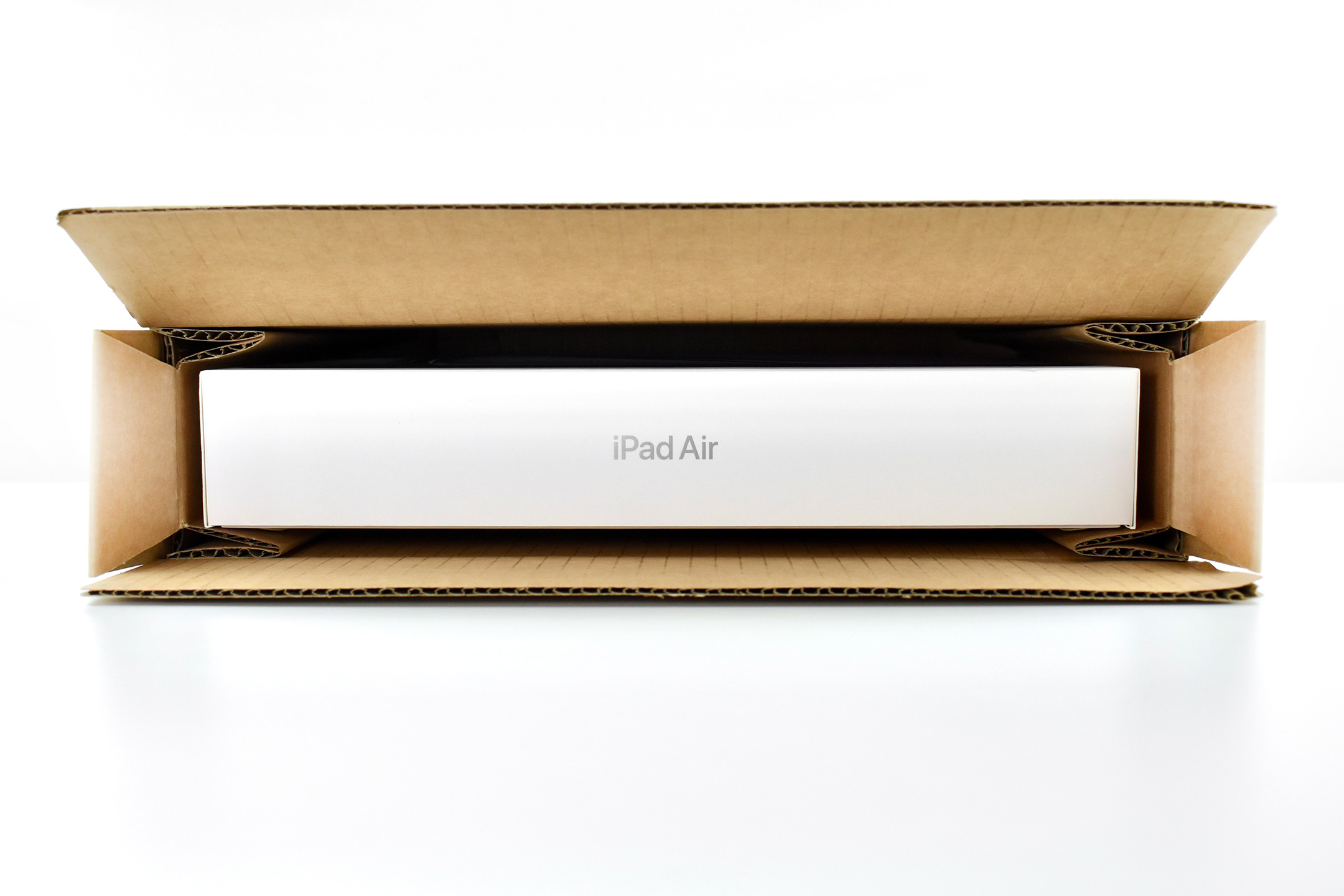
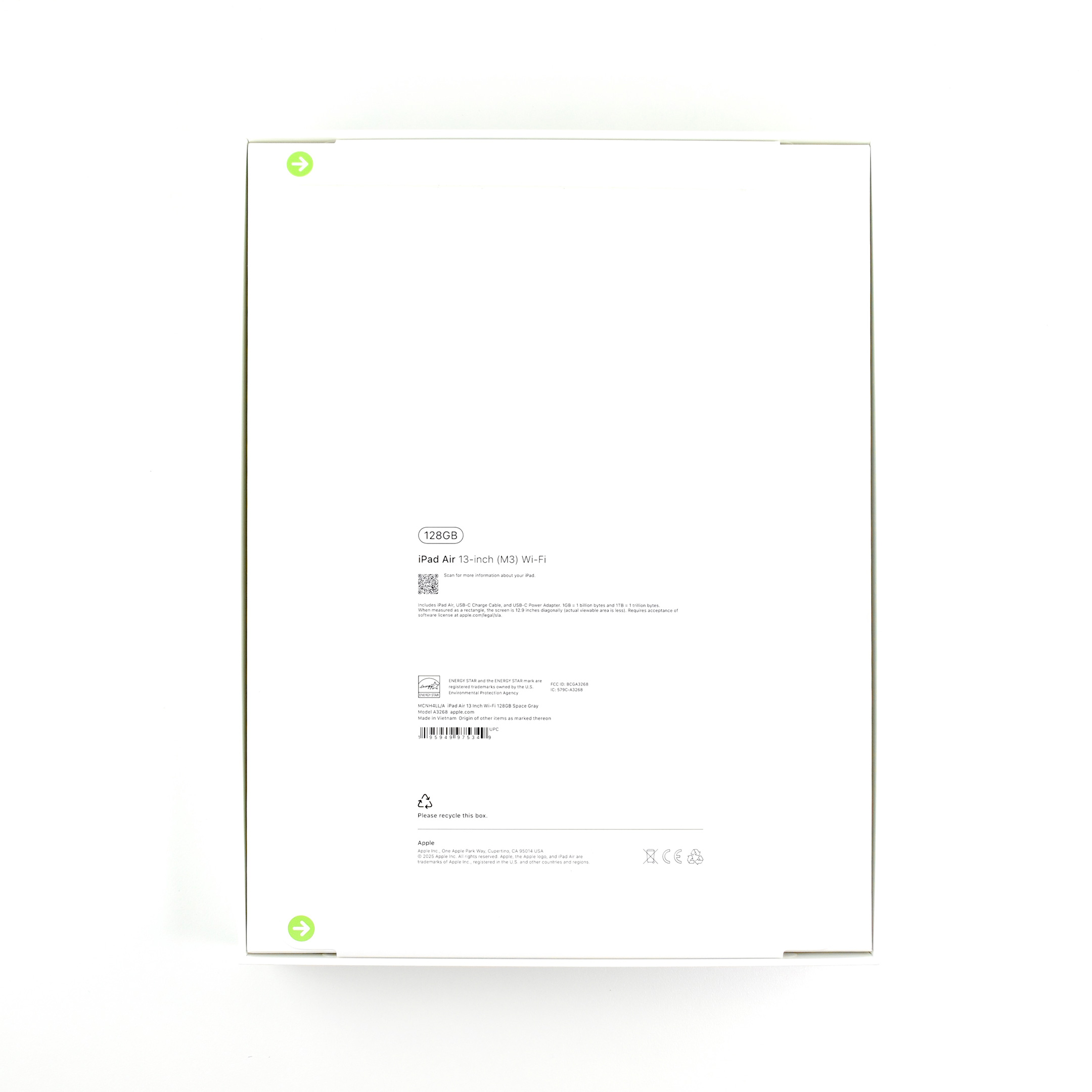
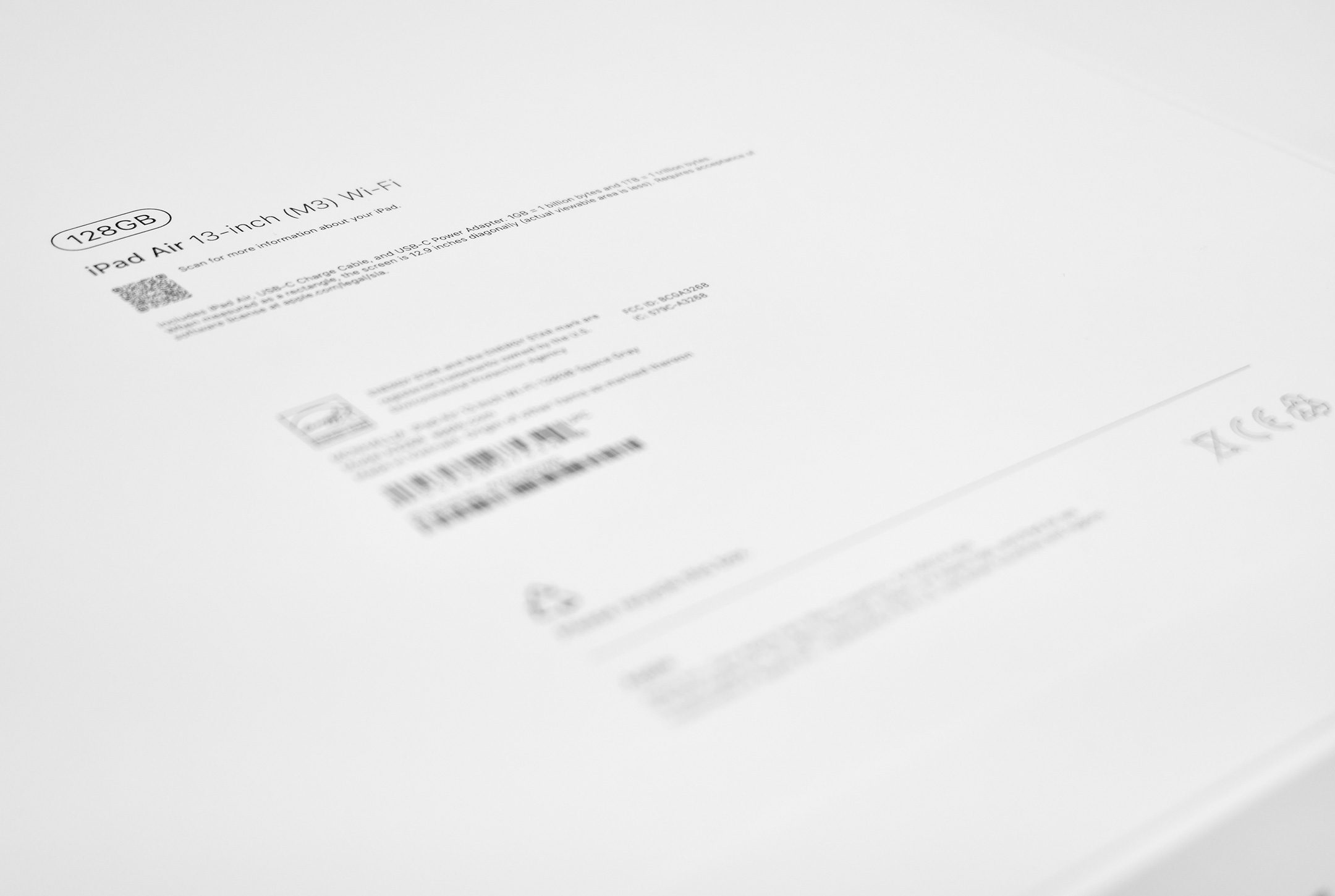
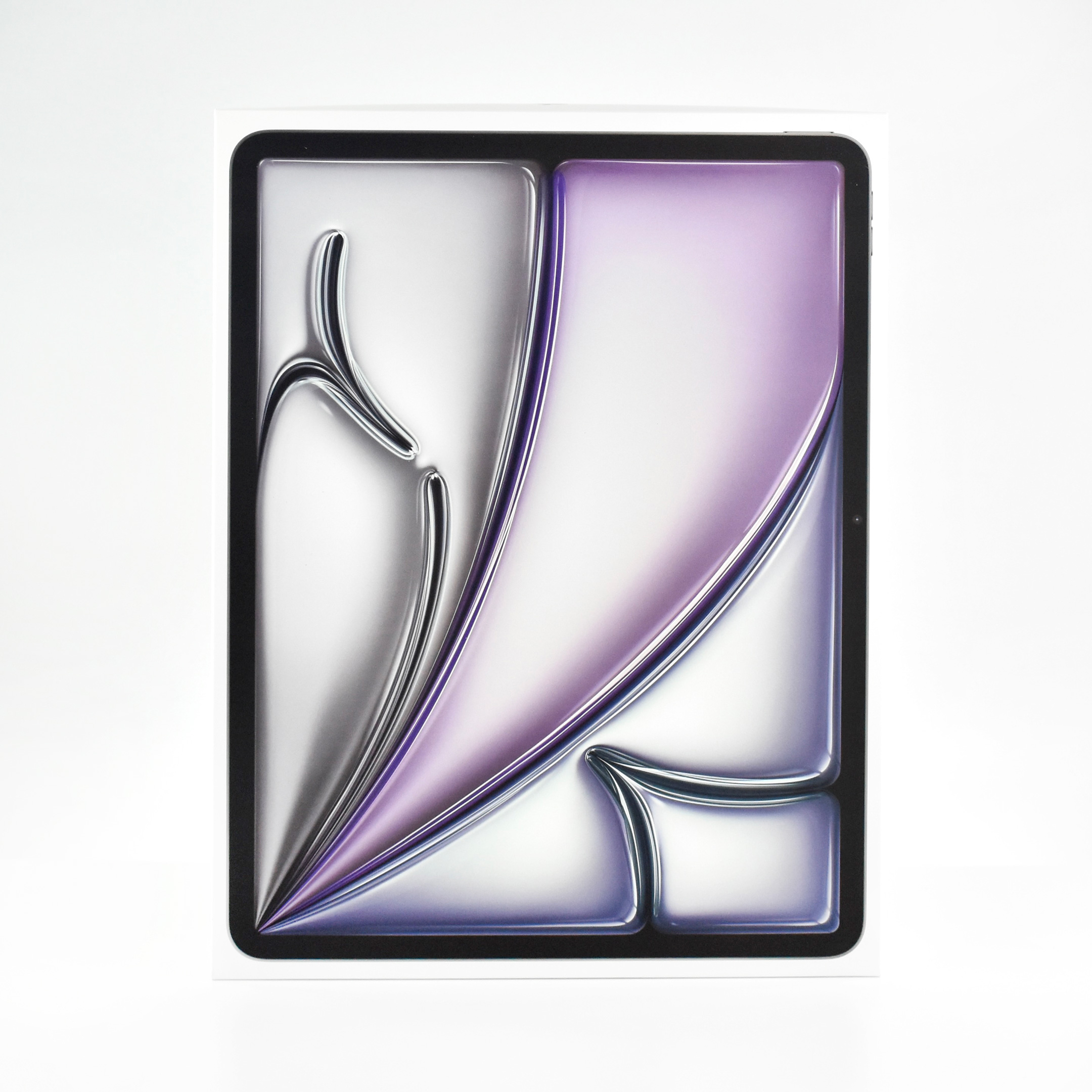
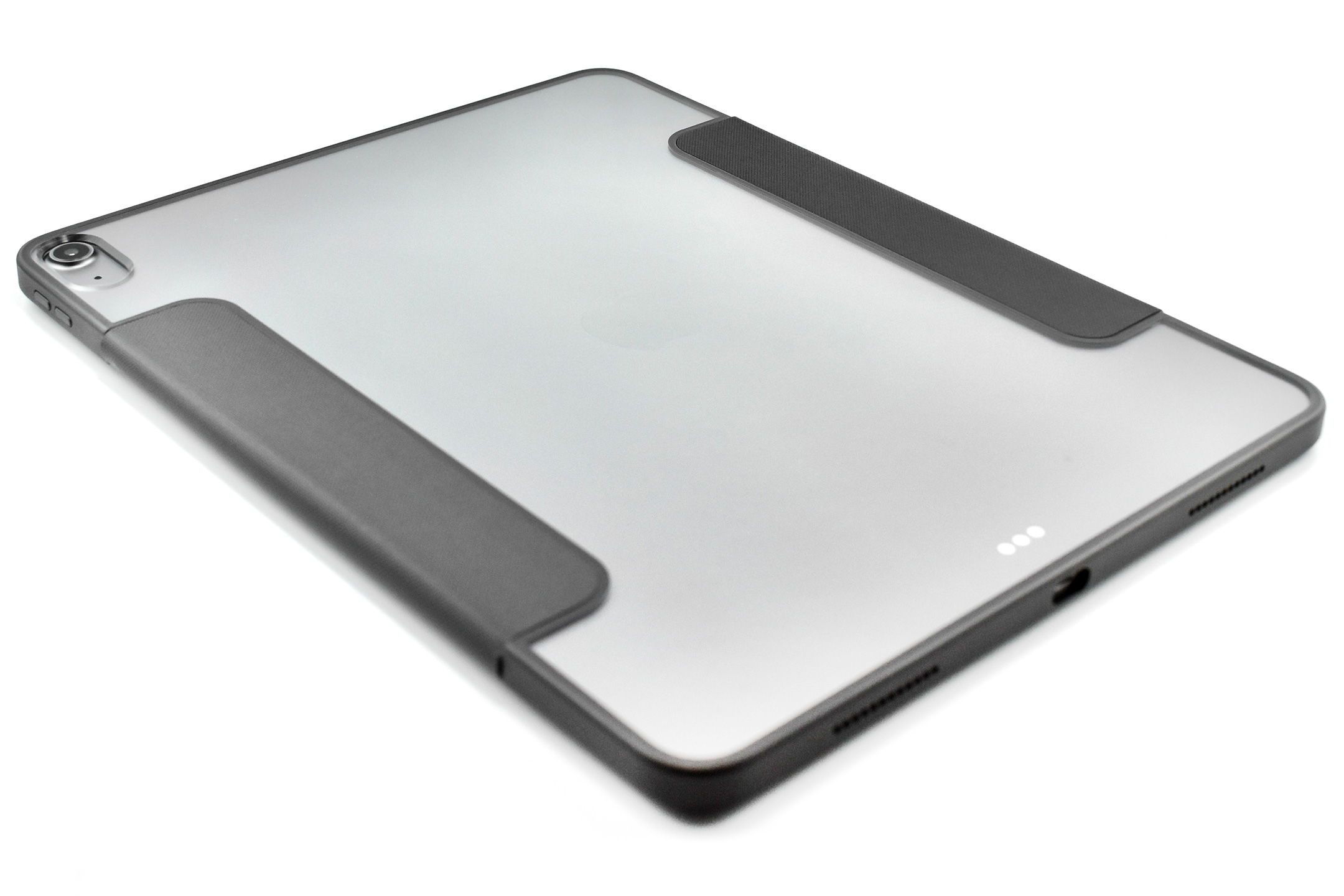
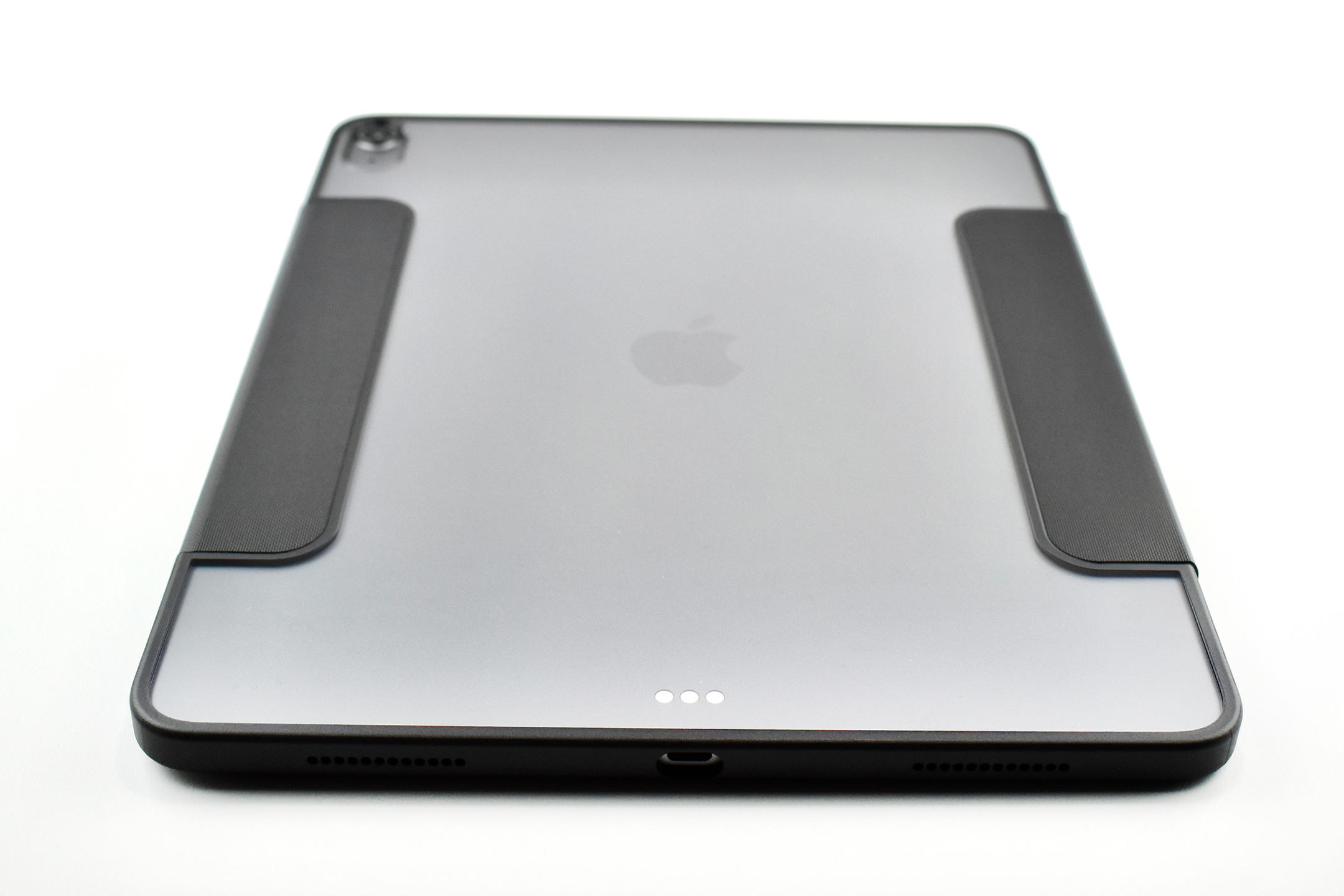
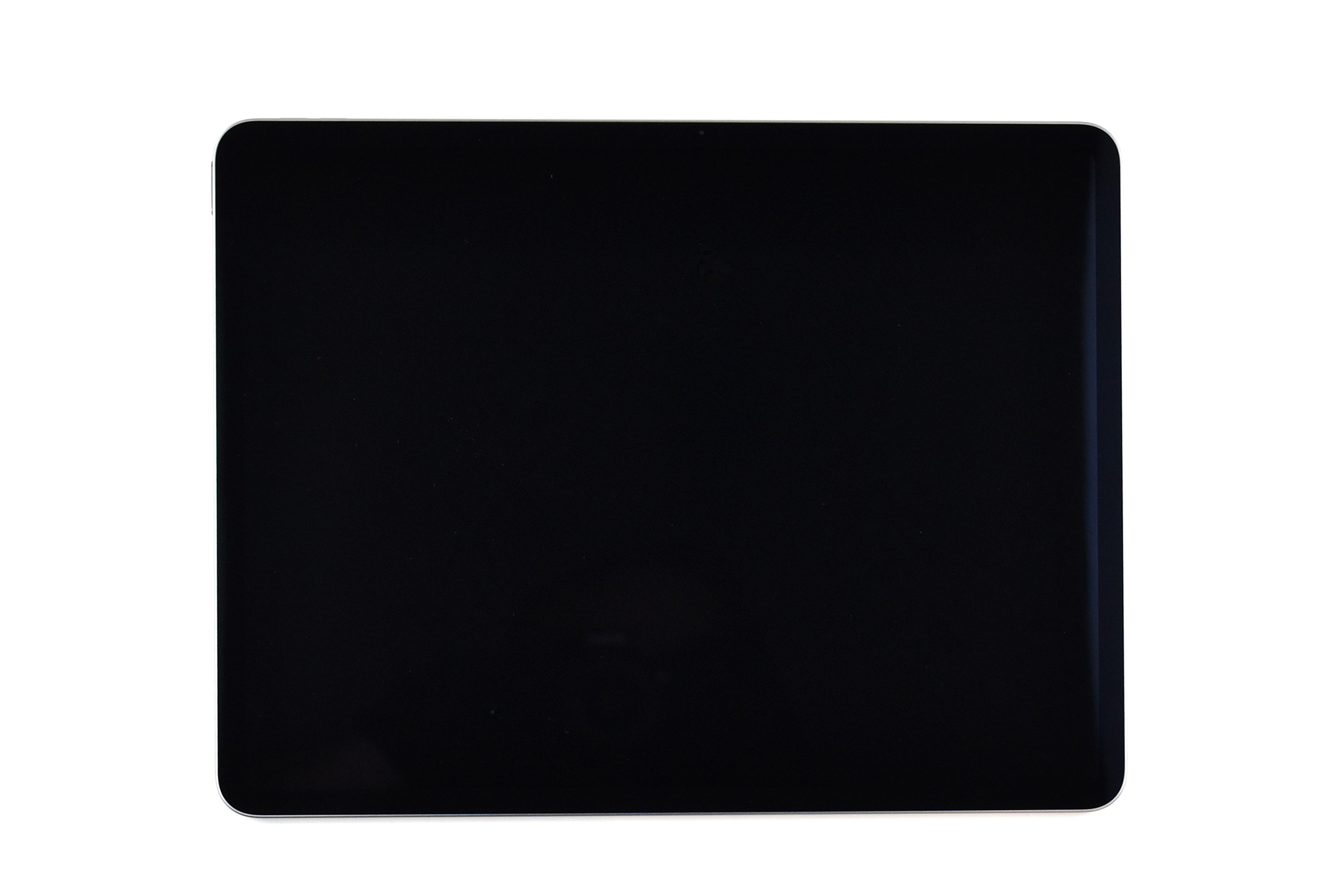
iPad Air 13-inch (Space Gray, M3, Wi-Fi, 128 GB, 2025)

The M3 iPad Air 13-inch was announced on March 4, 2025, and was described as being up to 2x faster than the M1 iPad Air. The press release also touted:

“iPad Air with M3 brings Apple’s advanced graphics architecture to iPad Air for the first time—taking its incredible combination of power-efficient performance and portability to a new level… Available in two sizes and four gorgeous finishes that users love, the 11-inch iPad Air is super portable while on the go, and the 13-inch model provides an even larger display for more room to be creative and productive.”

Apple mentioned that “The faster Neural Engine in M3 means iPad Air [is]…up to 60 percent faster for AI-based workloads…and support for advanced accessories, including the new Magic Keyboard and Apple Pencil Pro.”

The 11-inch and 13-inch M3 iPad Air devices were available in blue, purple, starlight, and space gray, with 128 GB, 256 GB, 512 GB, and 1 TB configurations. This example is the 13-inch version of the iPad Air in Space Gray with 128 GB storage.

This 13-inch iPad Air Wi-Fi is 11.04 inches (280.6 mm) x 8.46 inches (214.9 mm), is 0.24 inch (6.1 mm) thick, and weighs 1.36 pounds (616 grams).

The Liquid Retina display is 2732 x 2048 pixels at 264 ppi and can display up to 600 nits brightness. It is powered by Apple’s M3 chip (8-core CPU with 4 performance cores; 4 efficiency cores; 9-core GPU). It has a 16-core Neural Engine.

The back camera is a 12MP Wide camera with ƒ/1.8 aperture that allows digital zoom up to 5x using a 5-element lens. It can capture Panorama photos up to 63 MP. It can record video up to 4K at 24, 25, 30, or 60 fps. The front camera is a landscape 12 MP Center Stage camera with ƒ/2.0 aperture that can record video at up to 1080p (HD) at 25, 30, or 60 fps.

Its dual microphones can be used for calls, video recording, and audio recording and has landscape stereo speakers.

Wireless connectivity includes Wi-Fi 6E (802.11ax) with 2×2 MIMO5 and Bluetooth 5.3. Its sensors include Touch ID, 3‐axis gyro, accelerometer, barometer, and an ambient light sensor.

This iPad Air is using the Symmetry Series Folio case (for iPad Air 13-inch M2 and M3) by OtterBox in their “Starry Night” (black, clear, grey) color. The hinged folio design provides an adjustable stand, screen protection, magnetic sleep/wake, and protects the Apple Pencil while allowing charging while in storage.

Sources: Apple (newsroom, specs, product page), OtterBox

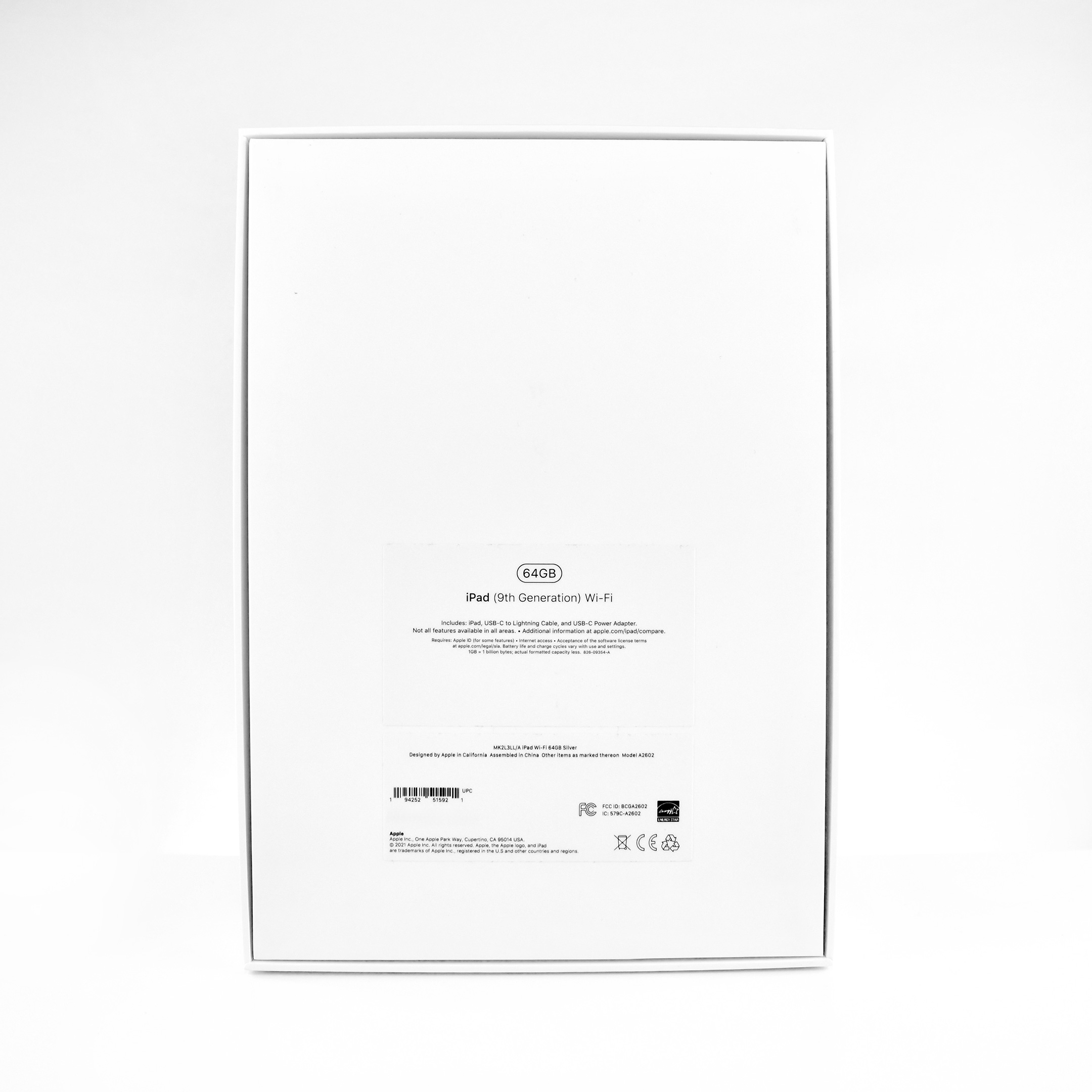
iPad (Generation 9, 64 GB, W-Fi, silver, 2021)

Apple released the iPad Generation 9 on September 14, 2021. The headline in Apple’s Press Release read, “Apple’s most popular iPad delivers even more performance and advanced features,” and listed its features as including “A13 Bionic, Center Stage, True Tone, and now starts with double the storage.”

Greg Joswiak, Apple’s senior vice president of Worldwide Marketing, reported:

“iPad has never been more essential for working, learning, and communicating, and we’re excited to bring one of the biggest updates ever to our most popular iPad… With the powerful A13 Bionic, more engaging video calls with Center Stage, and double the storage, the new iPad delivers advanced capabilities, versatility, and simplicity at an incredible value.”

The A13 Bionic chip with Neural Engine not only boosted performance compared to the previous iPad by 20%, it also allowed “next-level machine learning capabilities, including Live Text…which uses on-device intelligence to recognize text in a photo that users can take action on.” Thus, this iPad was able to use an early version of Apple’s on-device “Artificial Intelligence” capabilities—even if Apple chose not to use the term “AI.”

Apple also touted the iPad Generation 9’s Center Stage capabilities, a feature that enhanced video calls that was on the minds of many users after the worldwide COVID pandemic. The iPad was equipped with a new 12MP Ultra Wide front camera that used the Neural Engine: “Center Stage automatically pans the camera to keep [the user] in view. When others join in, the camera detects them too, and smoothly zooms out to include them in the conversation.” Center Stage worked in FaceTime and third-party video-calling apps such as Zoom.

The iPad Generation 9 was offered in Silver and Space Gray, and in two storage capacities, 64 GB and 256 GB. It measured 9.8 inches (250.6 mm) x 6.8 inches (174.1 mm), and was 0.29 inch (7.5 mm) thick. The Wi-Fi model weighed 1.07 pounds (487 grams), and the Wi-Fi + Cellular model weighed 1.09 pounds (498 grams).

The iPad Generation 9 was the last iPad to use a physical Home button, and it also had Touch ID.

It used a 10.2-inch (diagonal) Retina display that was 2160 x 1620 pixels at 264 pixels per inch. It used a True Tone display that could deliver up to 500 nits brightness. This iPad had both stereo speakers and dual microphones for calls, video recording, and audio recording.

Uncharacteristically, the back camera had lower resolution than the front camera. The back camera was an 8 MP Wide camera with digital zoom up to 5x using a 5-element lens. It could capture Panoramic photos (up to 43MP), and featured HDR, photo geotagging, auto image stabilization, and burst mode. The back camera could record 1080p HD video at 25 and 30 fps.

The front camera was a 12MP Ultra Wide camera with 122° field of view. It could record 1080p HD video at 25, 30, or 60 fps.

Wireless connectivity included Wi-Fi 5 (802.11ac) and Bluetooth 4.2. Its 5 sensors included Touch ID, 3‐axis gyro, accelerometer, barometer, and an ambient light sensor. The iPad Generation 9 charged and transferred data using a Lightning connector and shipped with a Lightning-to-USB-C Cable that connected to its included 20W USB-C Power Adapter.

Interestingly, Apple continued manufacturing and selling the iPad Generation 9 even after they announced the iPad Generation 10 13 months later. The iPad Generation 10 was released with a considerable price increase at $459 for a base iPad—from the iPad Generation 9 base price of $329. Apple noted in the “fine print” of the iPad Generation 10 press release: “iPad (9th generation) will remain in the iPad lineup. Wi-Fi models of iPad (9th generation) are available with a starting price of $329 (US), and Wi-Fi + Cellular models start at $459 (US), in silver and space gray finishes.”

Sources: Apple (Newsroom: Generation 9, Generation 10; Technical Specifications)
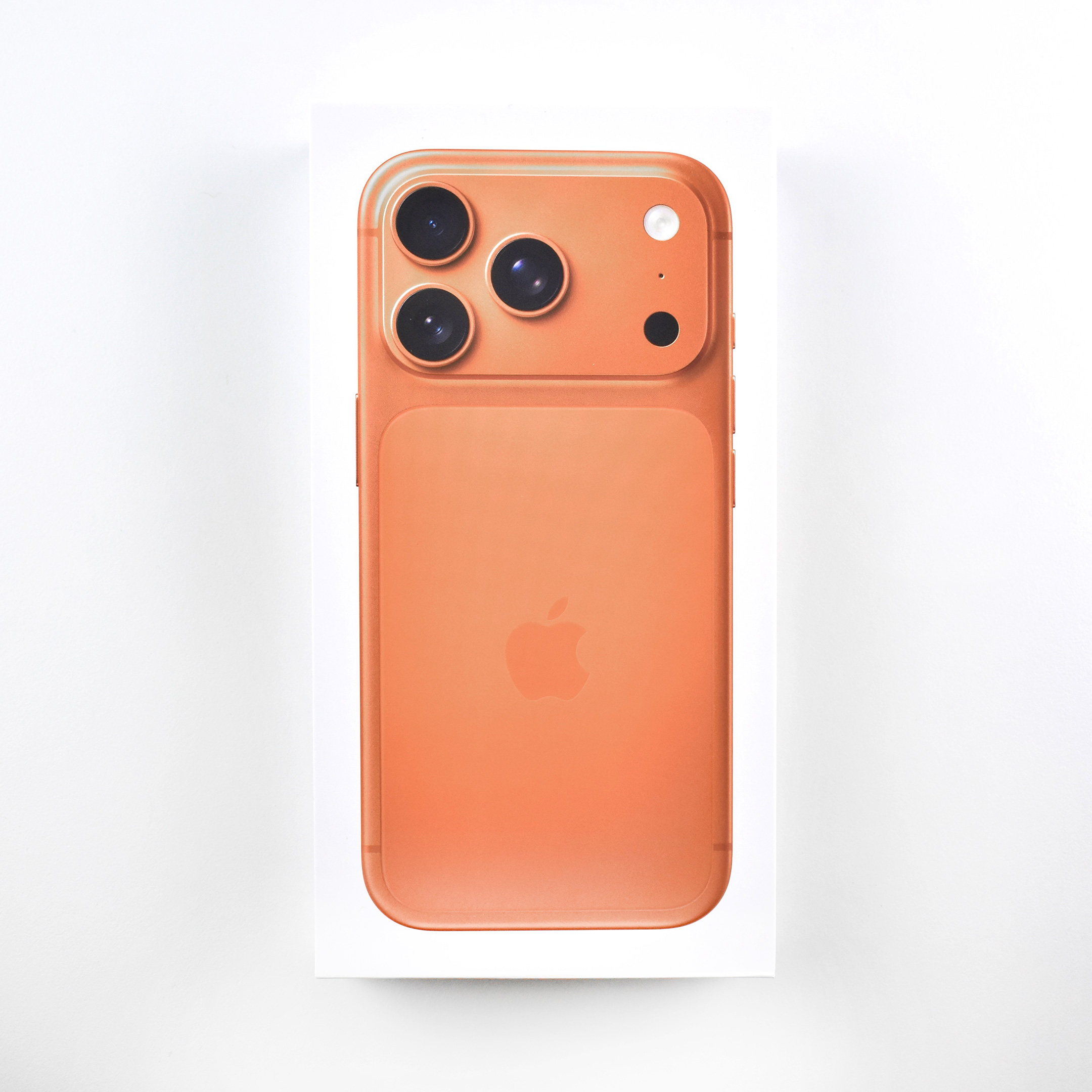
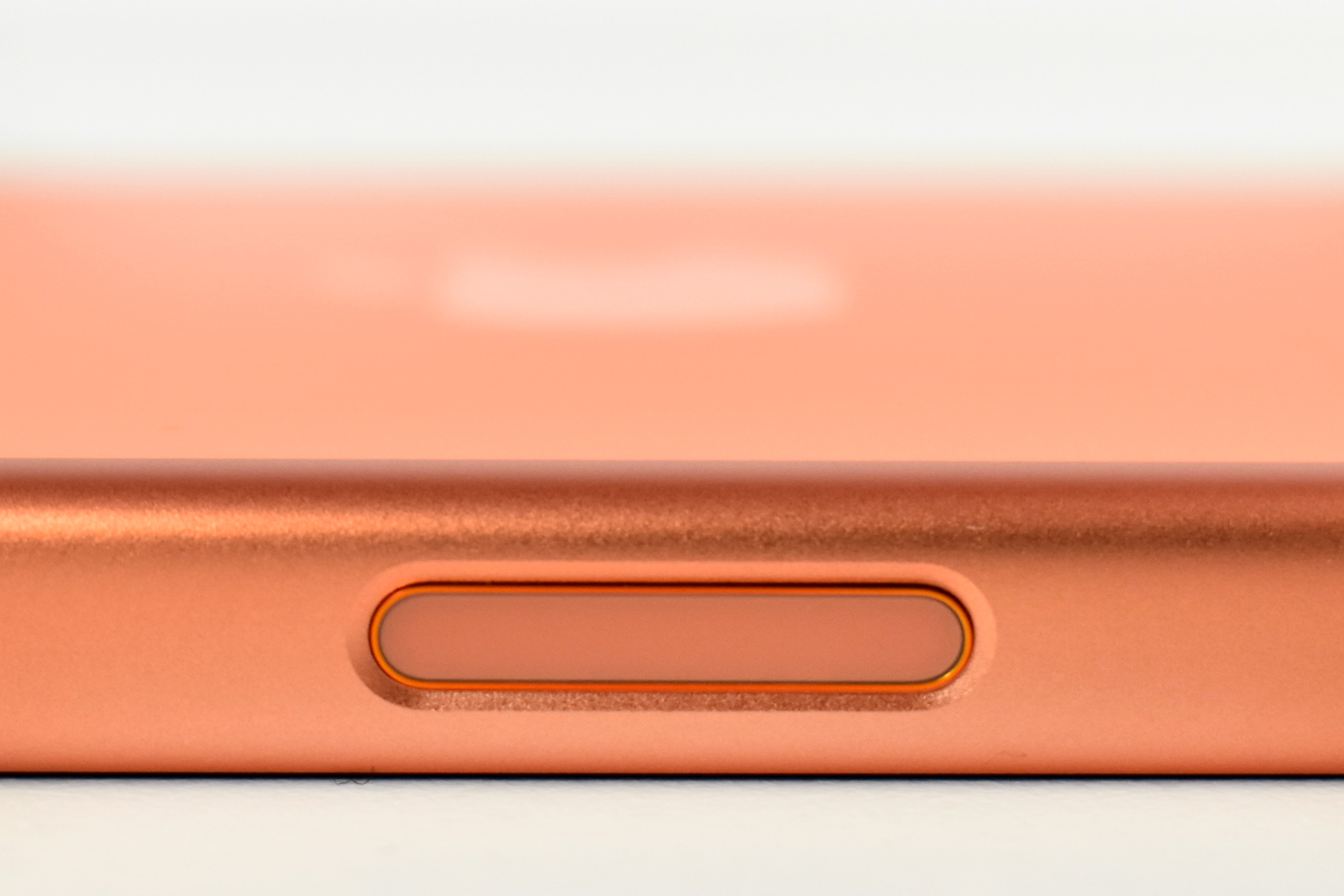
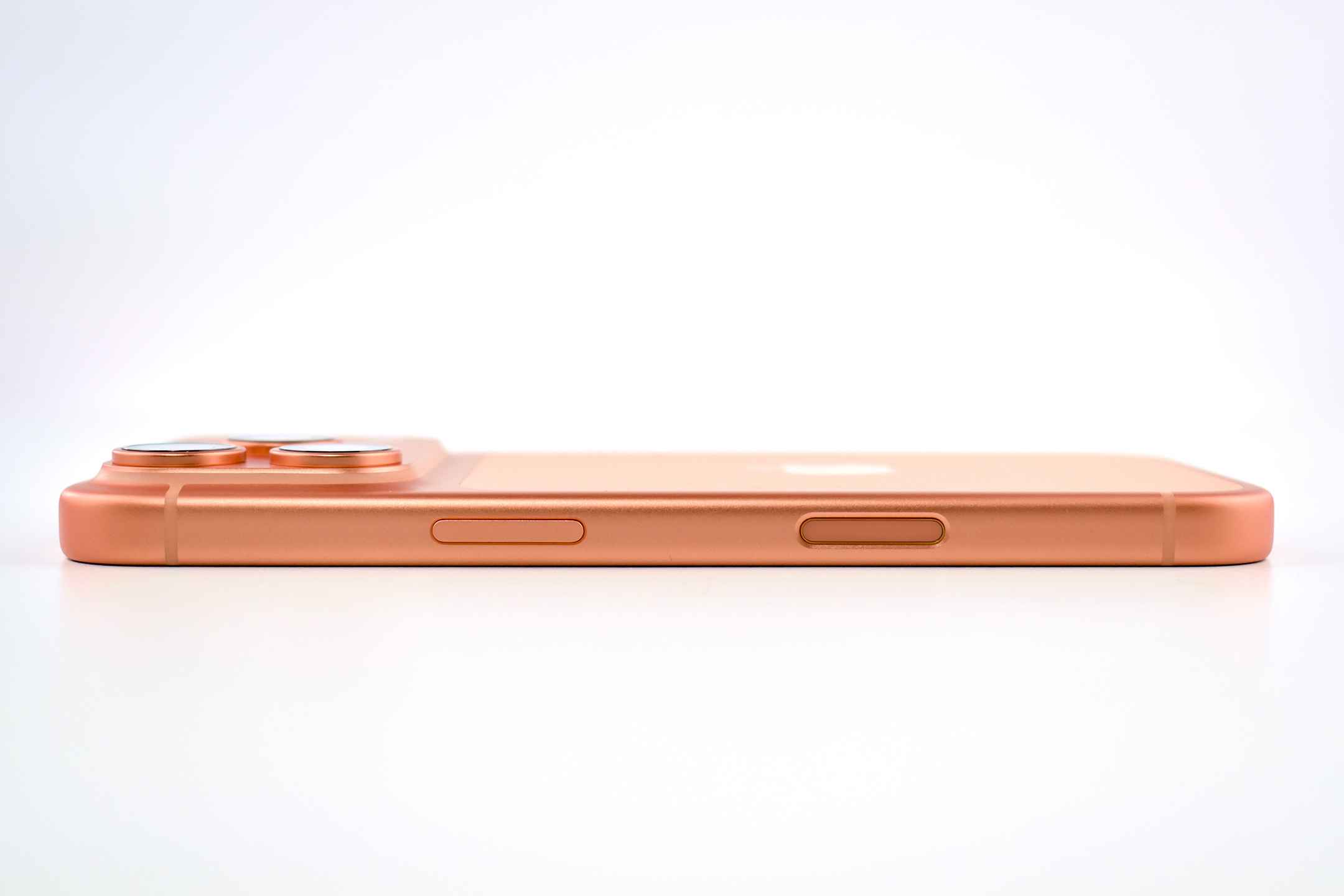
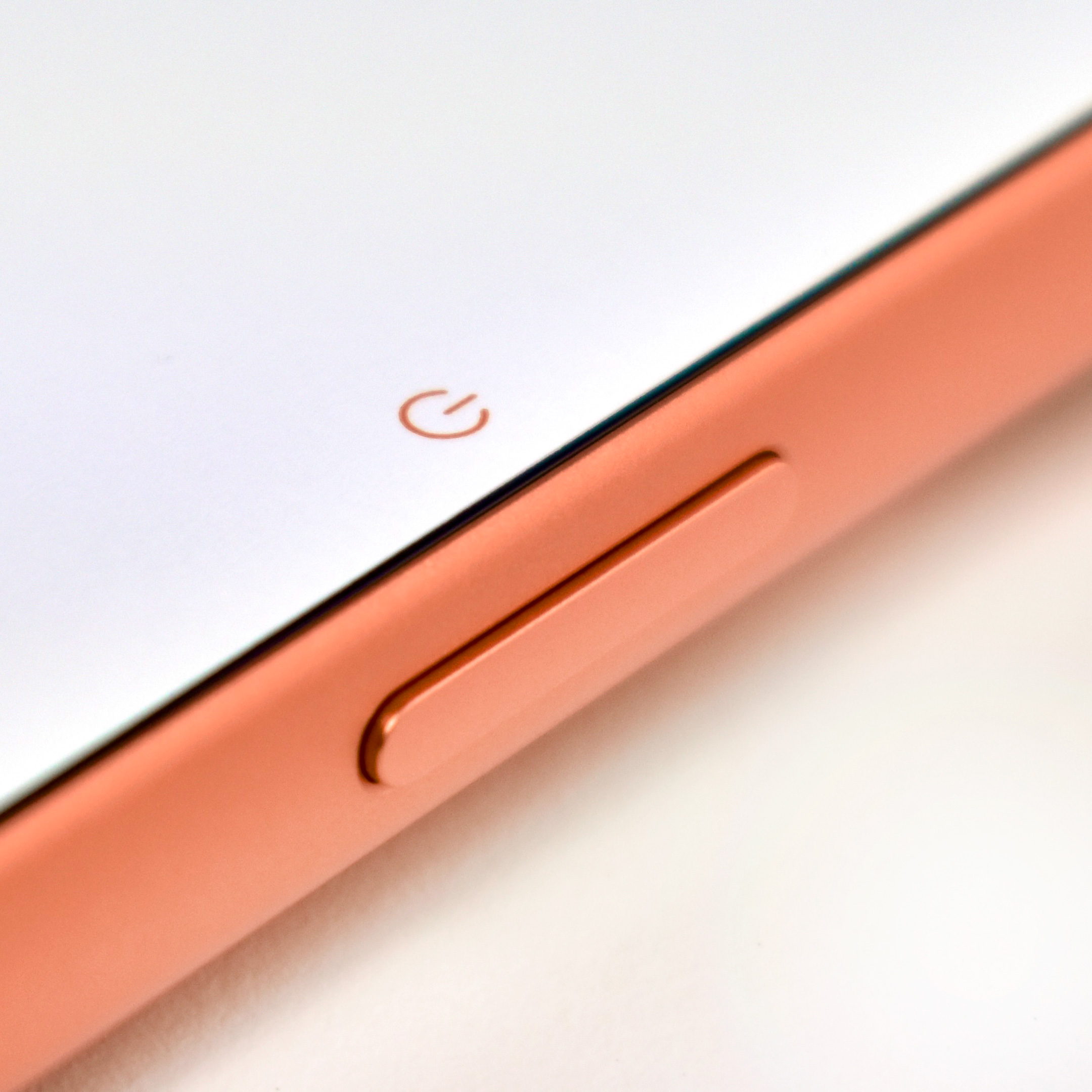
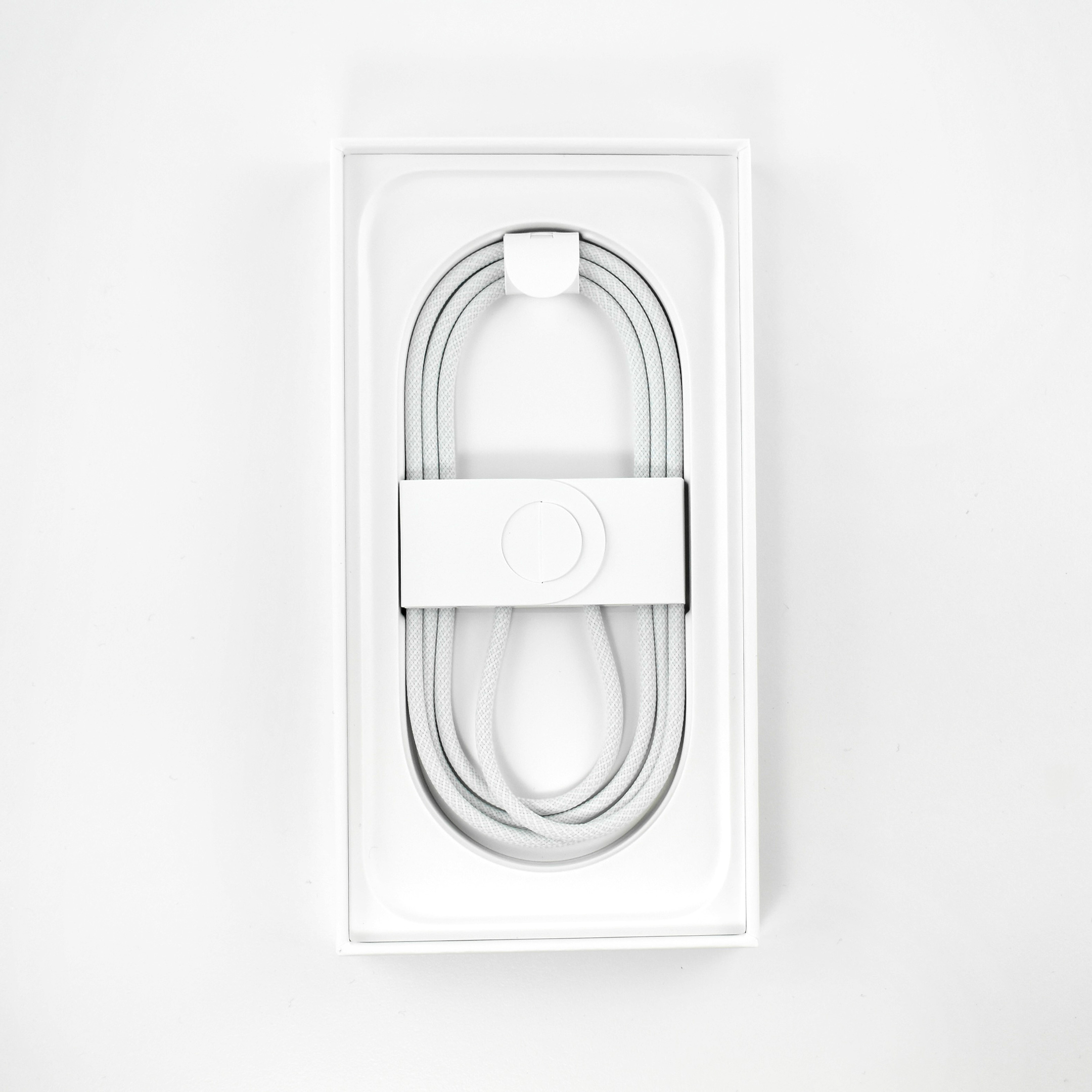
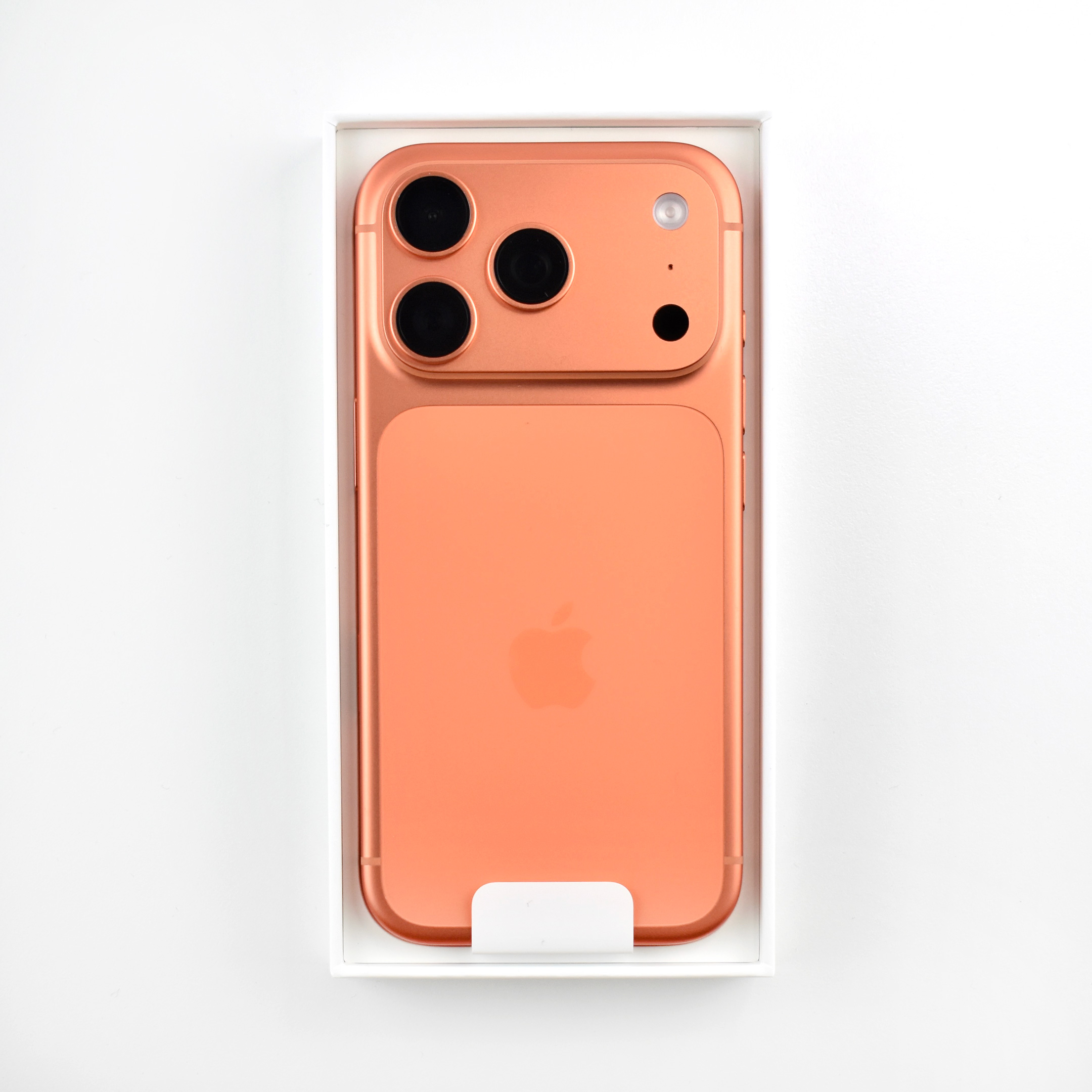
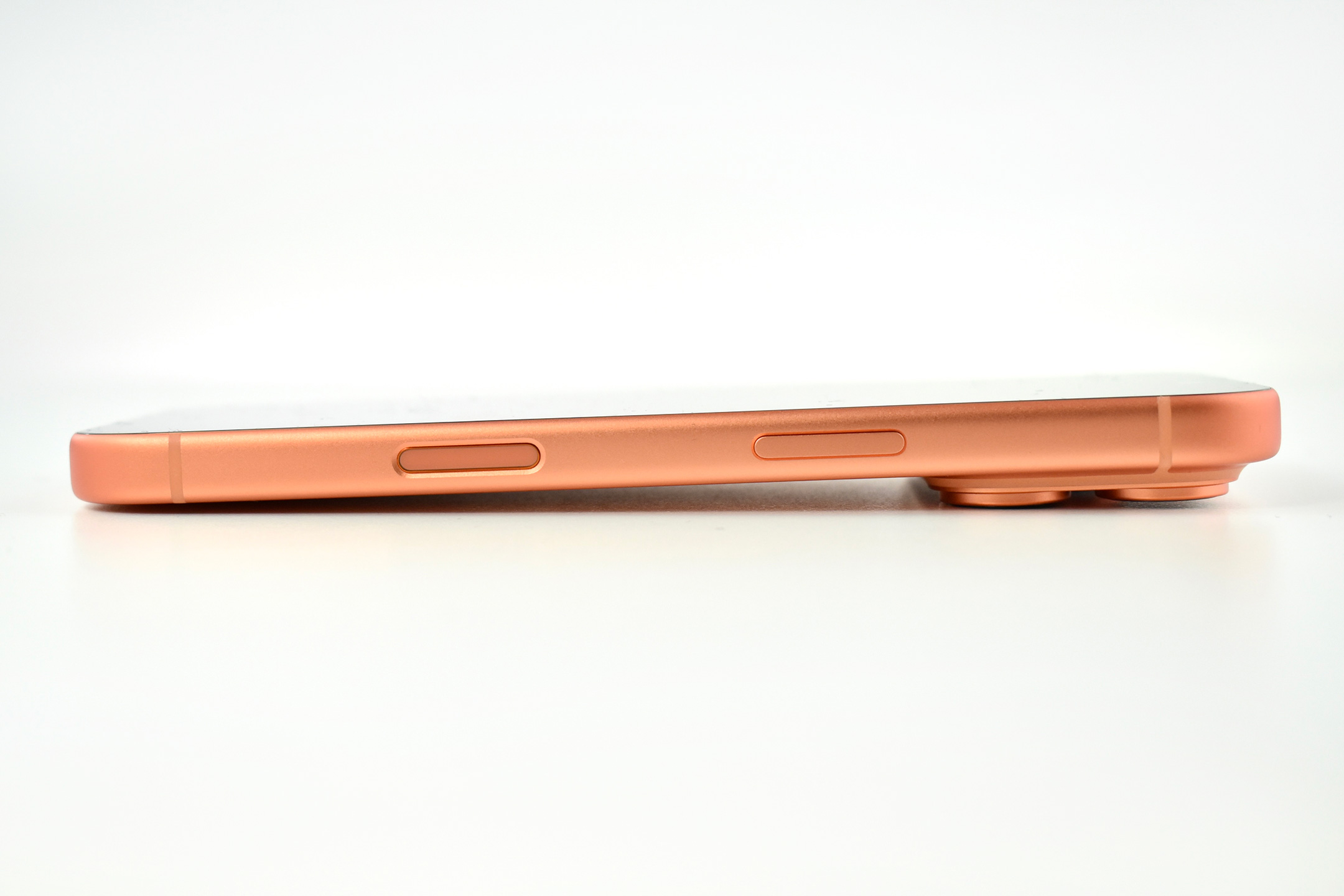
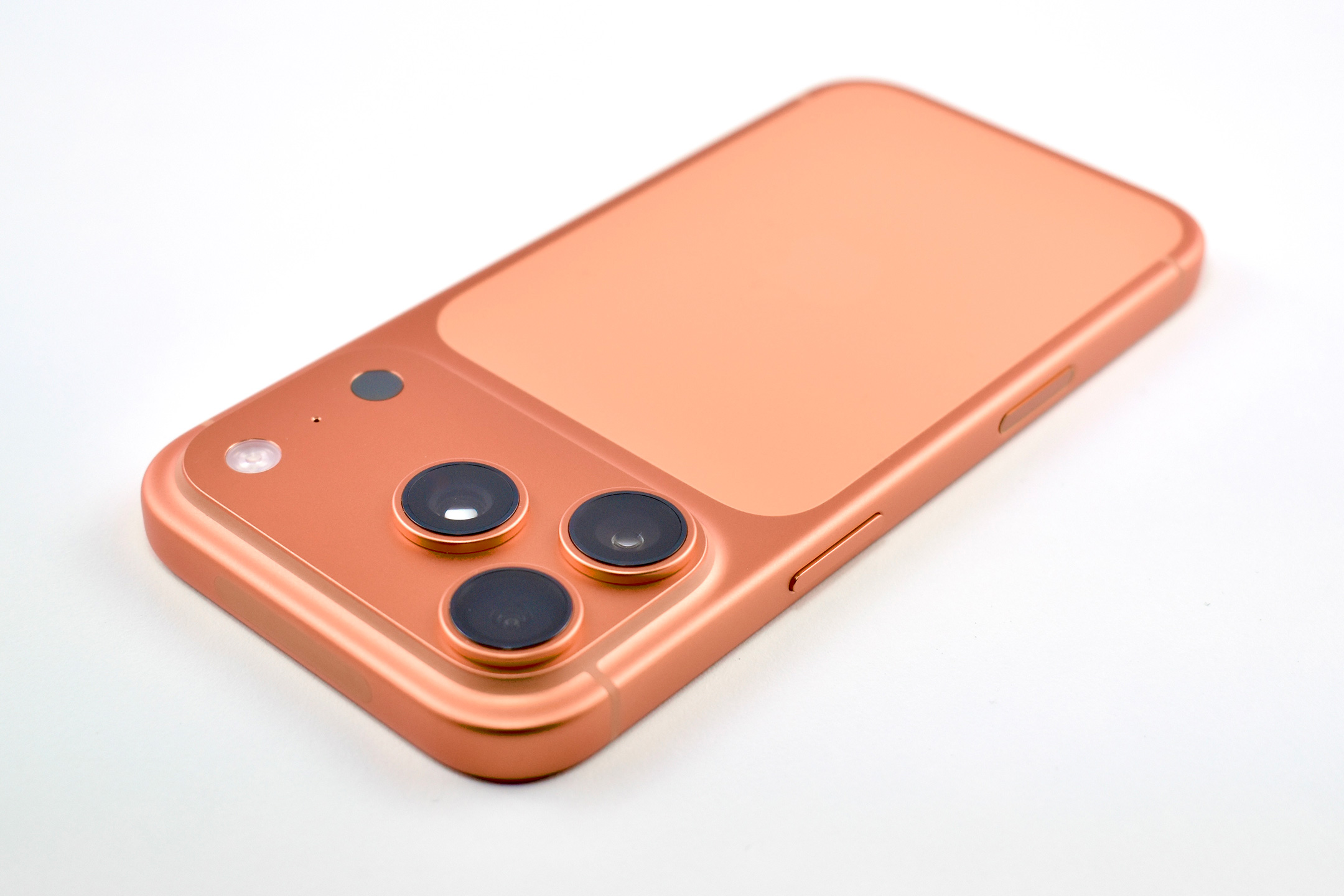
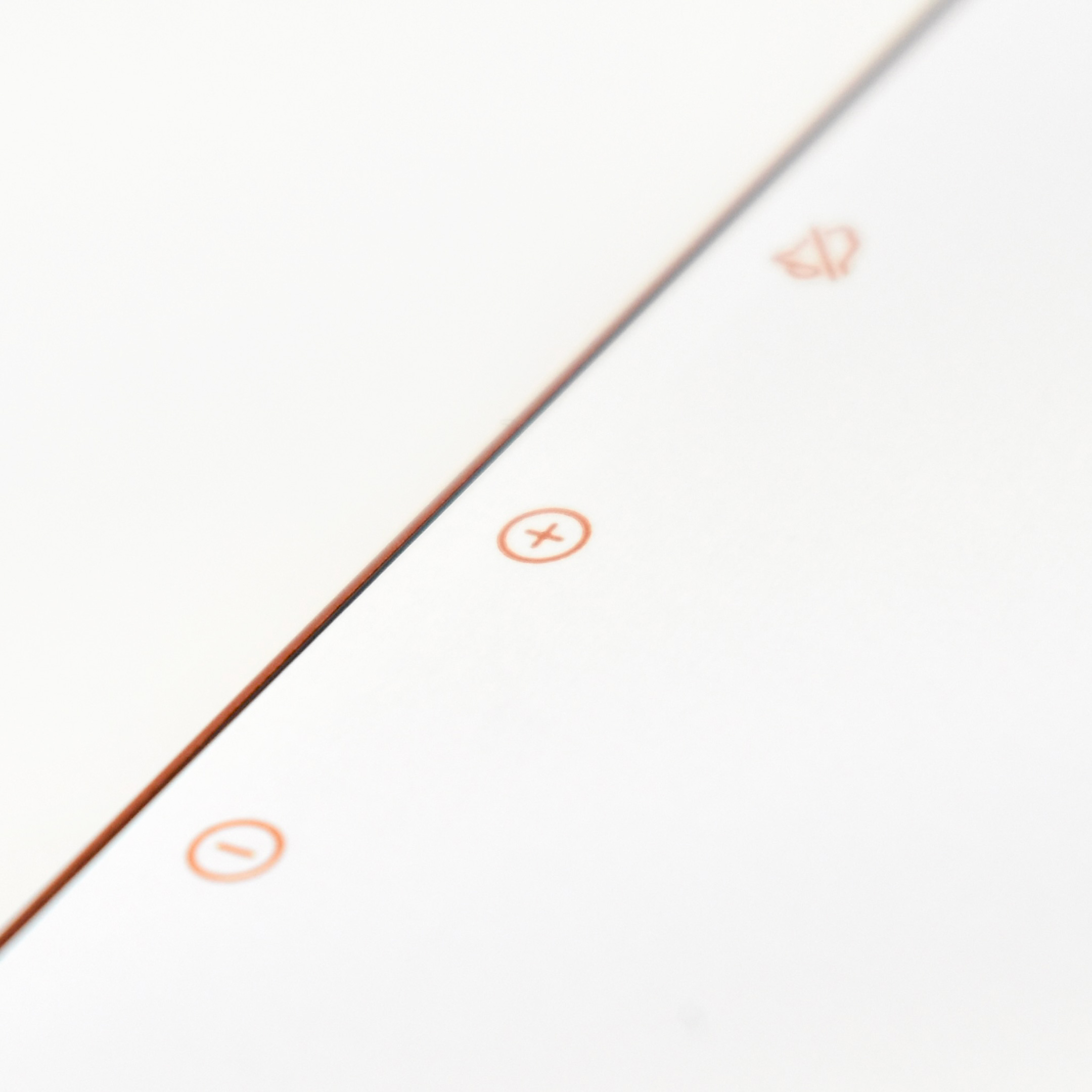
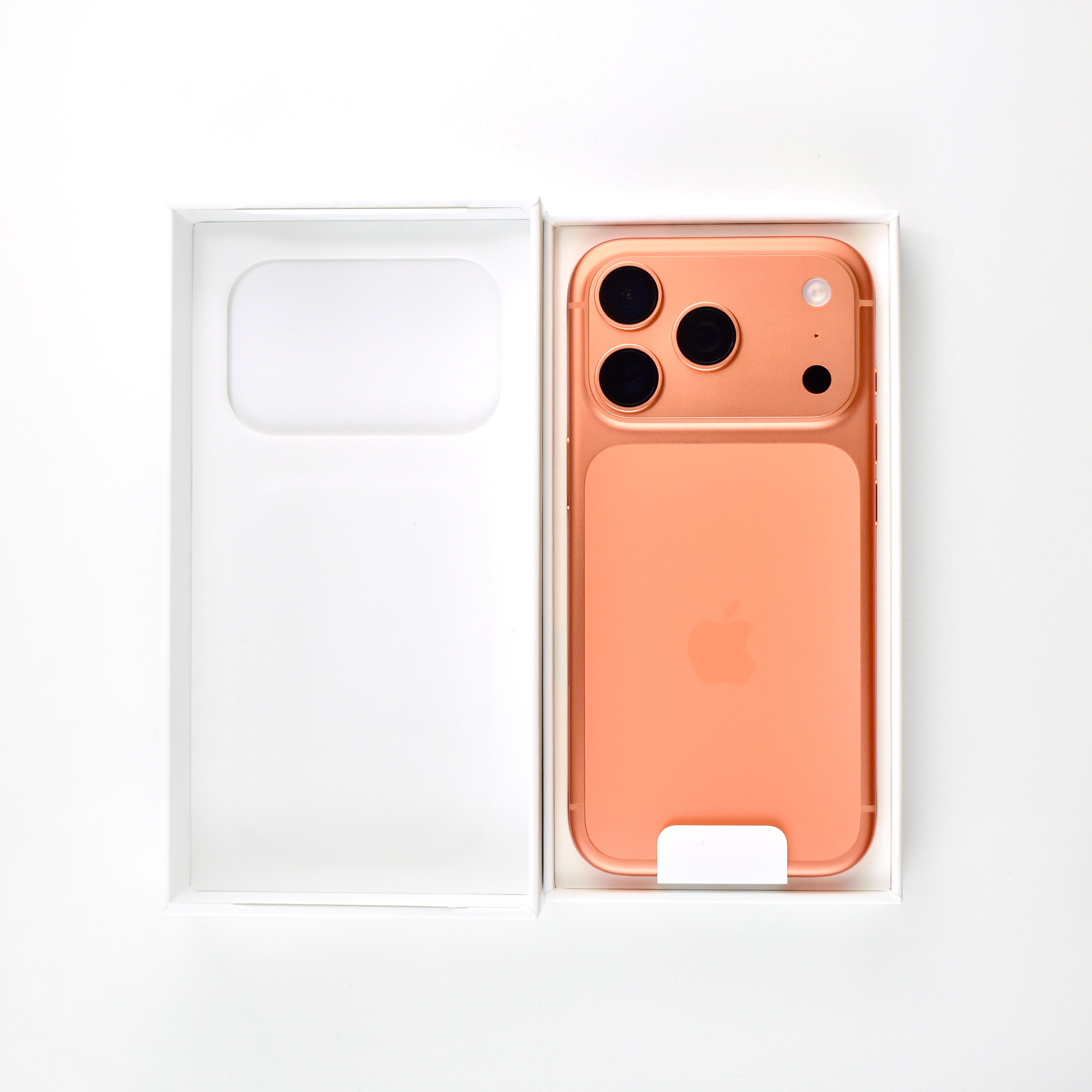
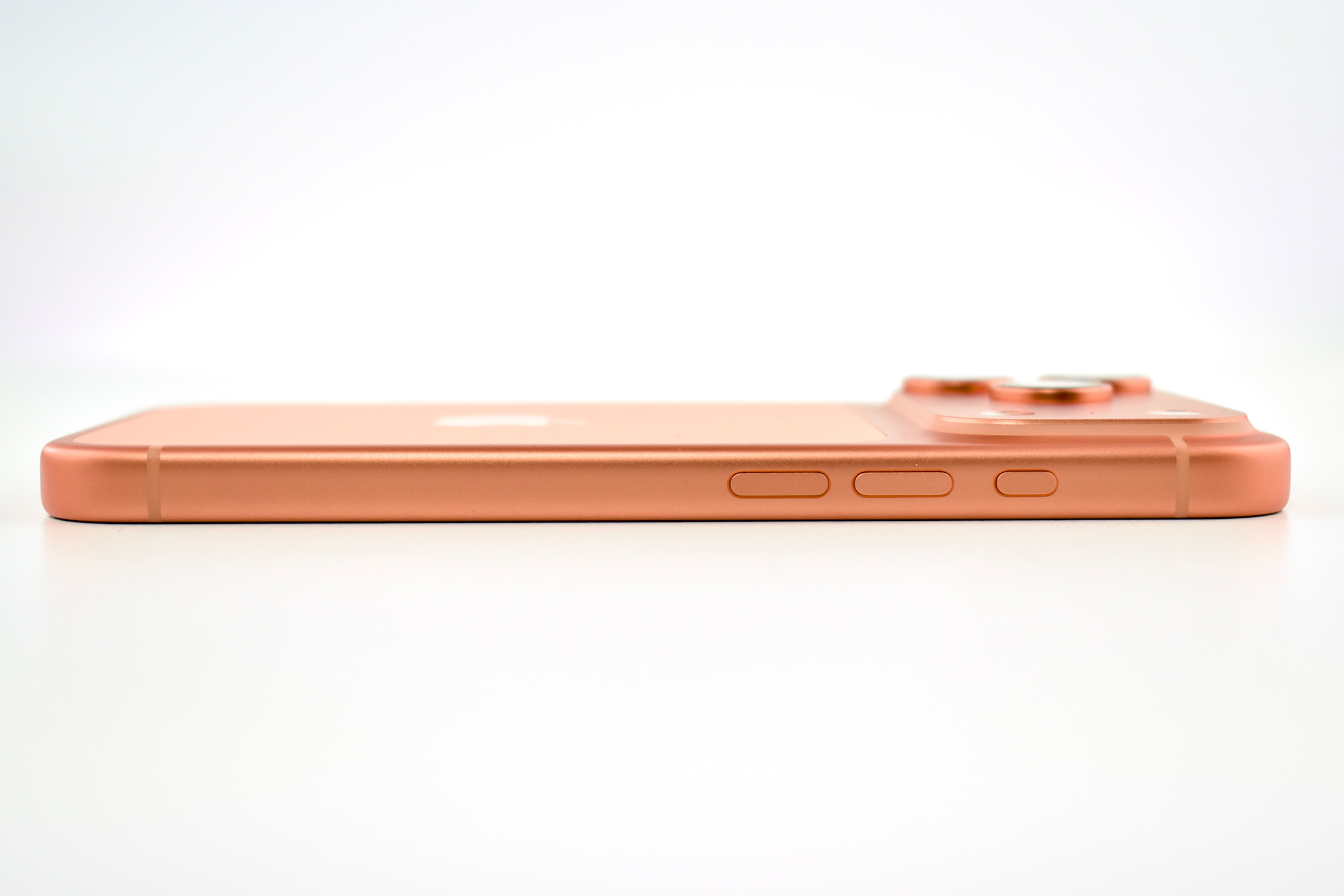
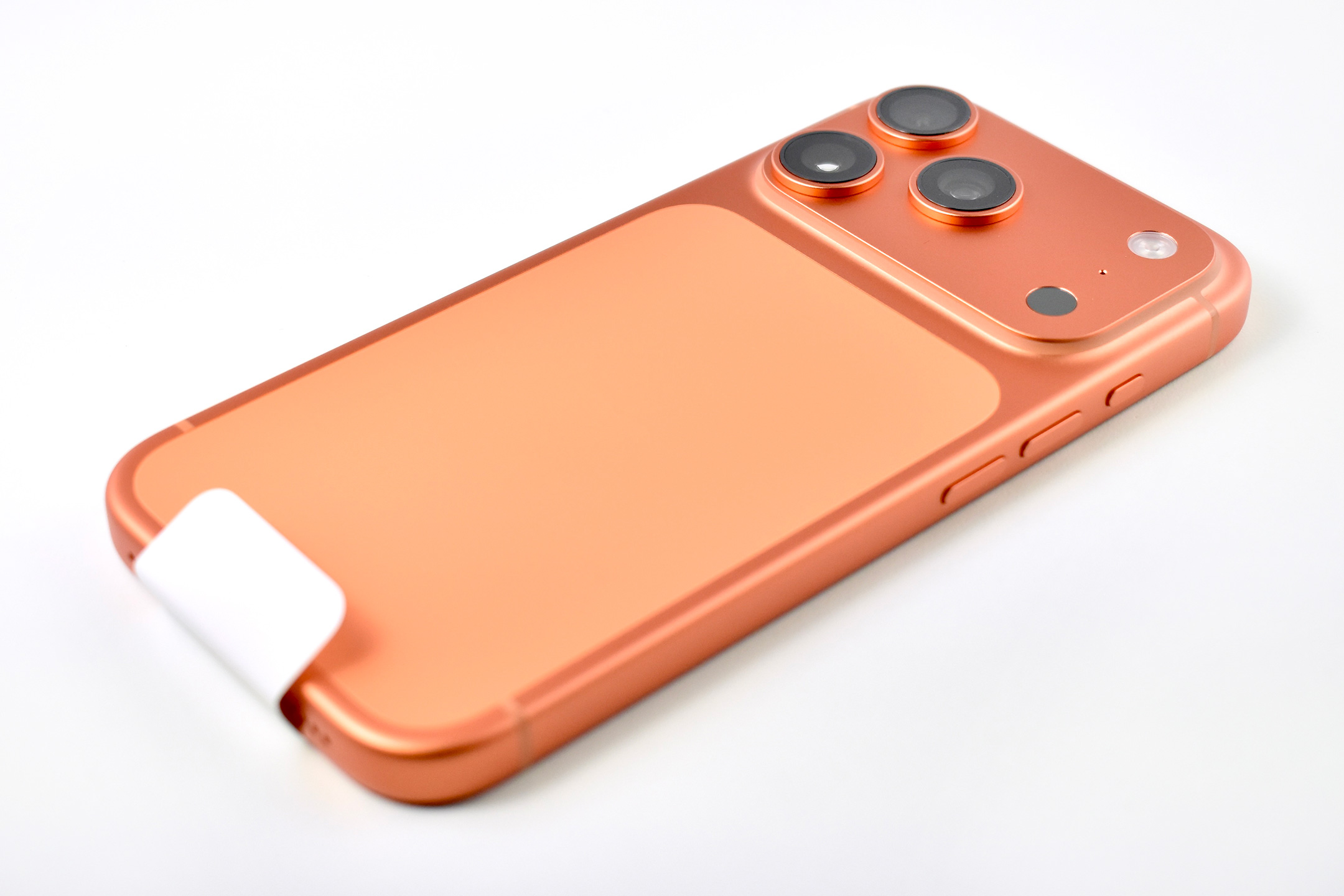
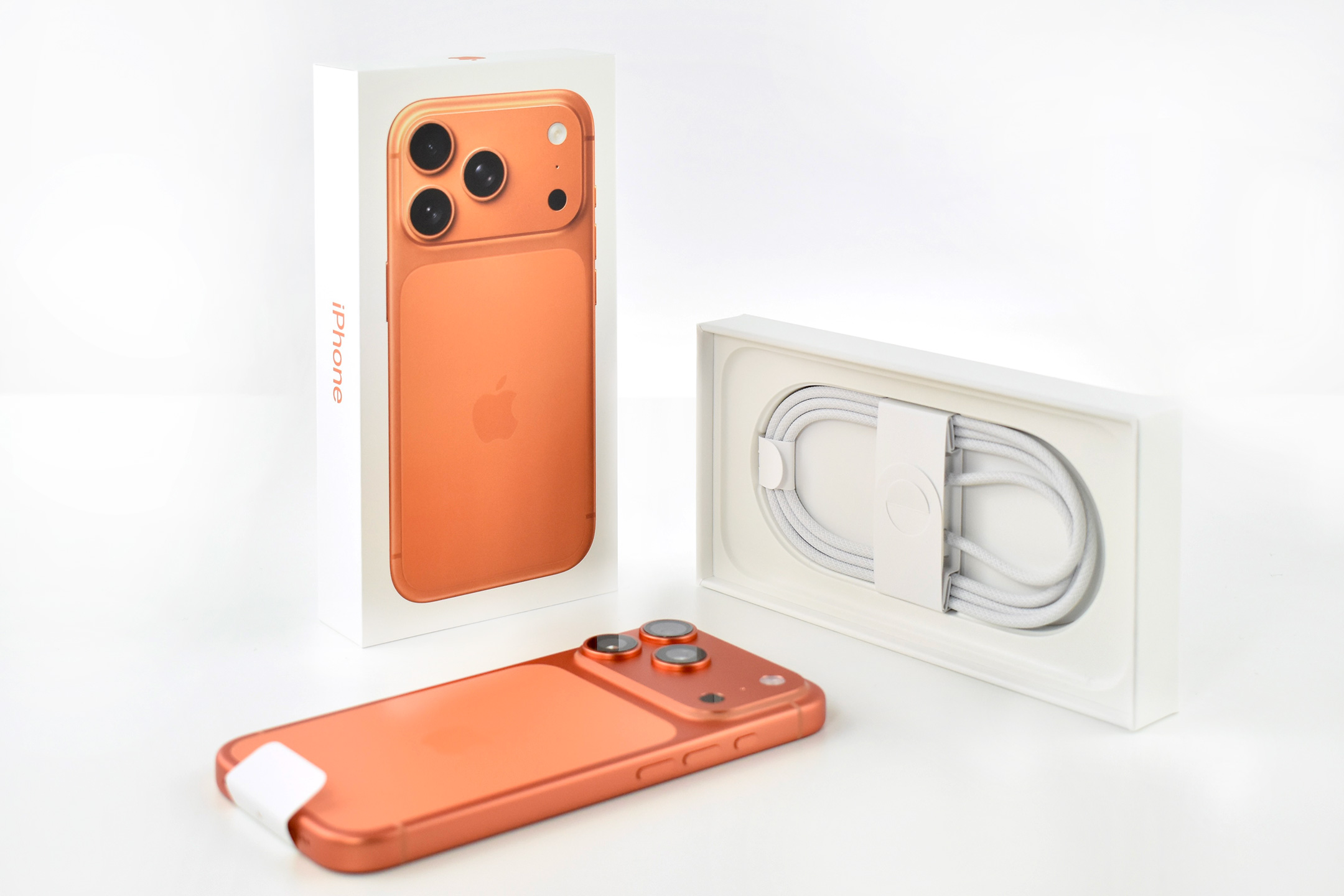
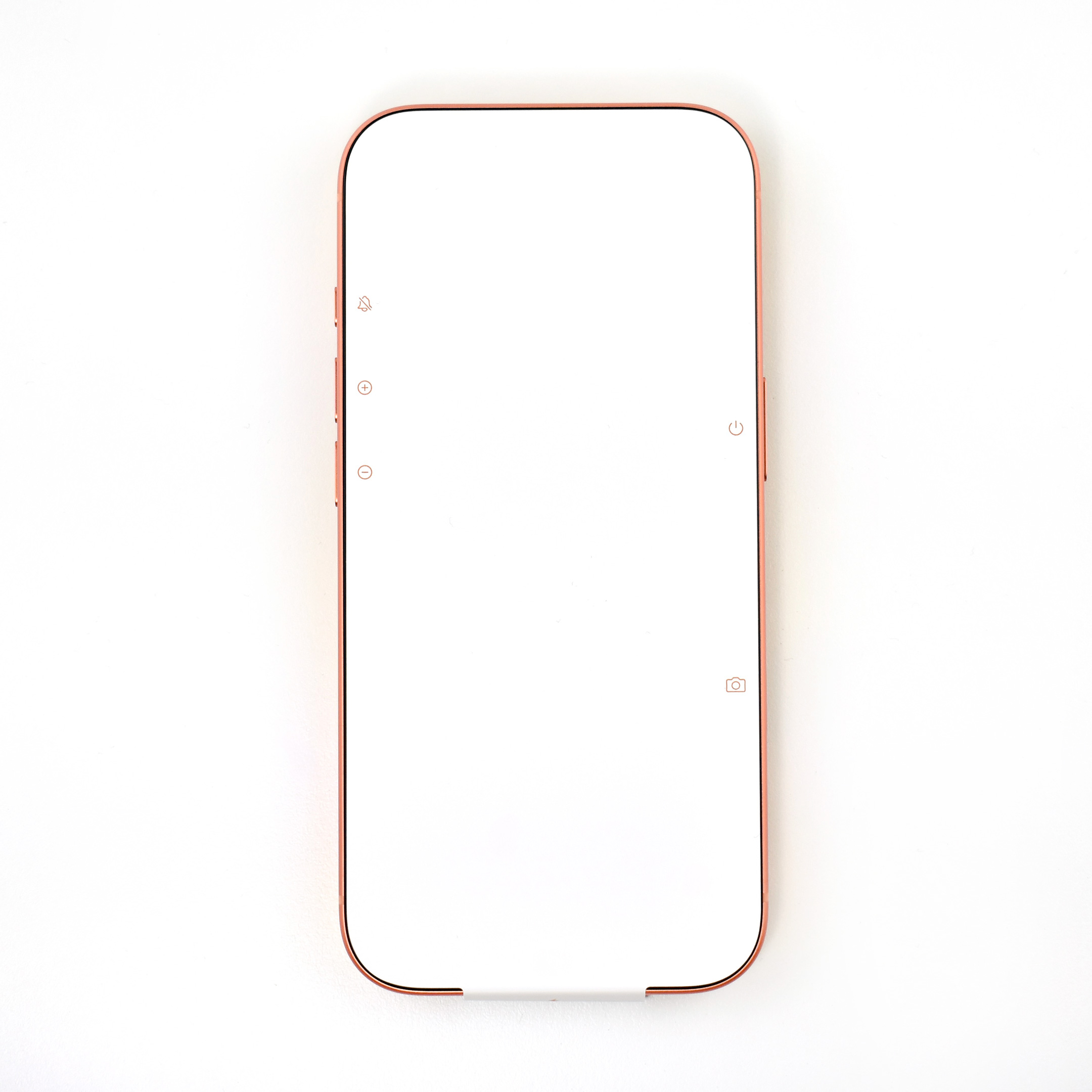
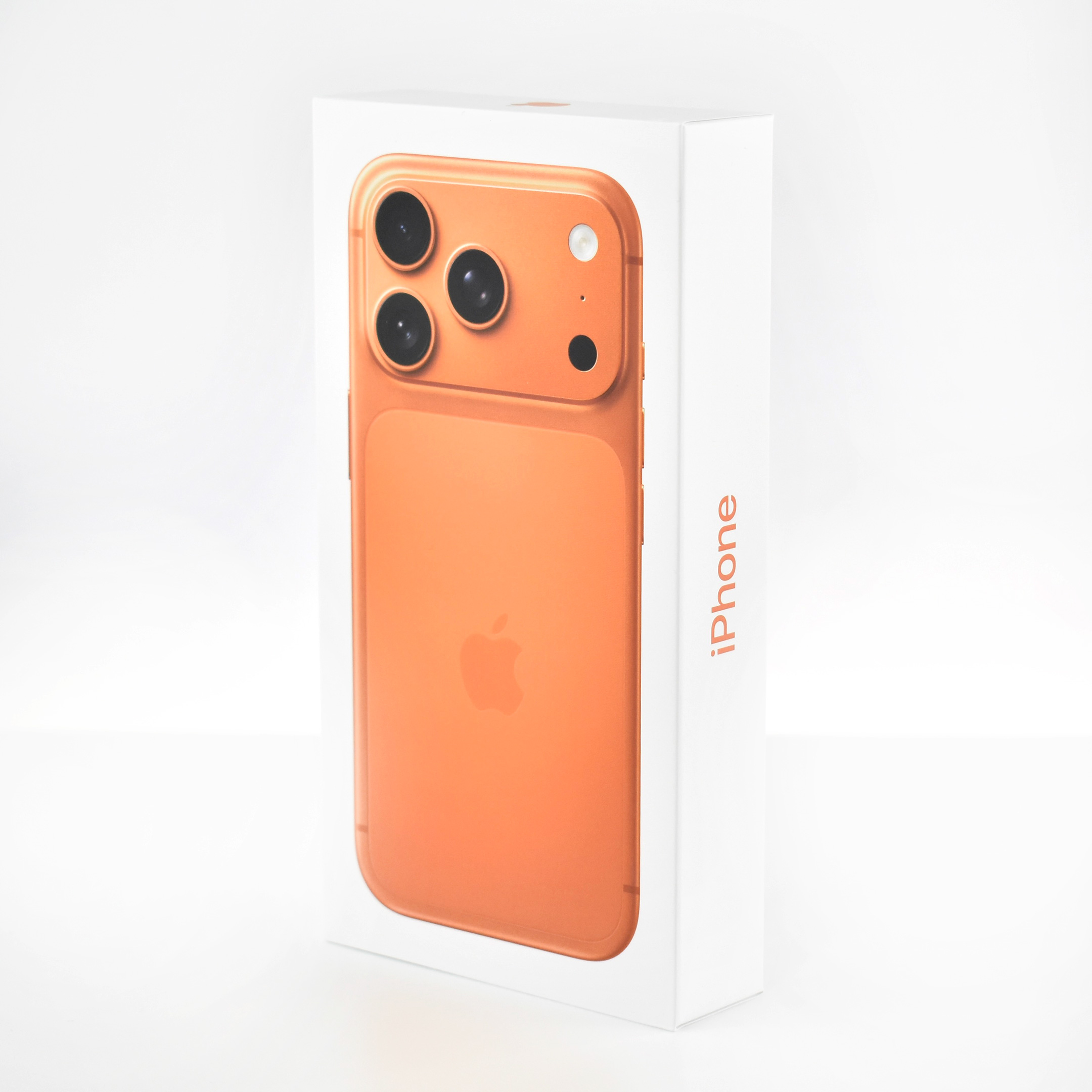
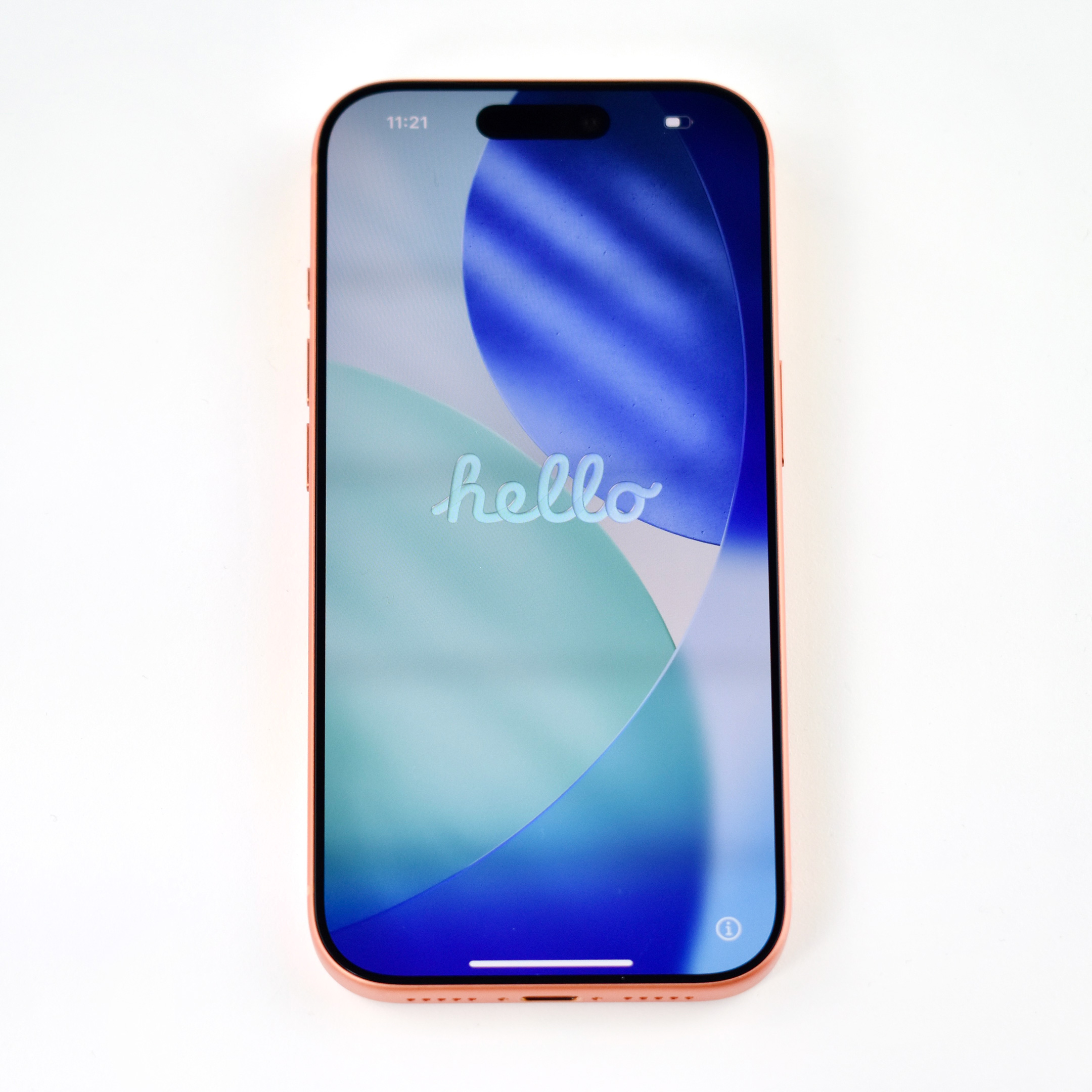
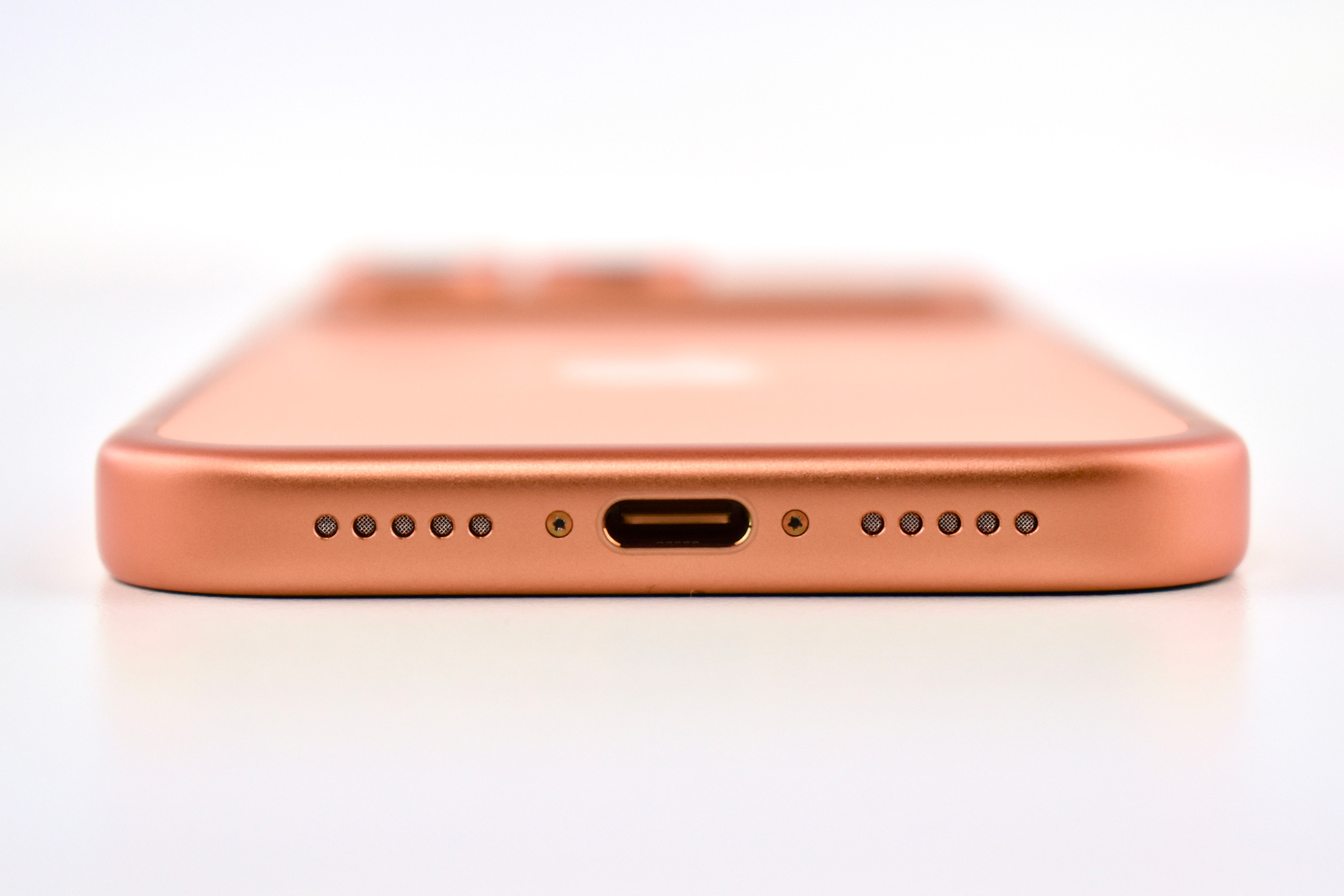
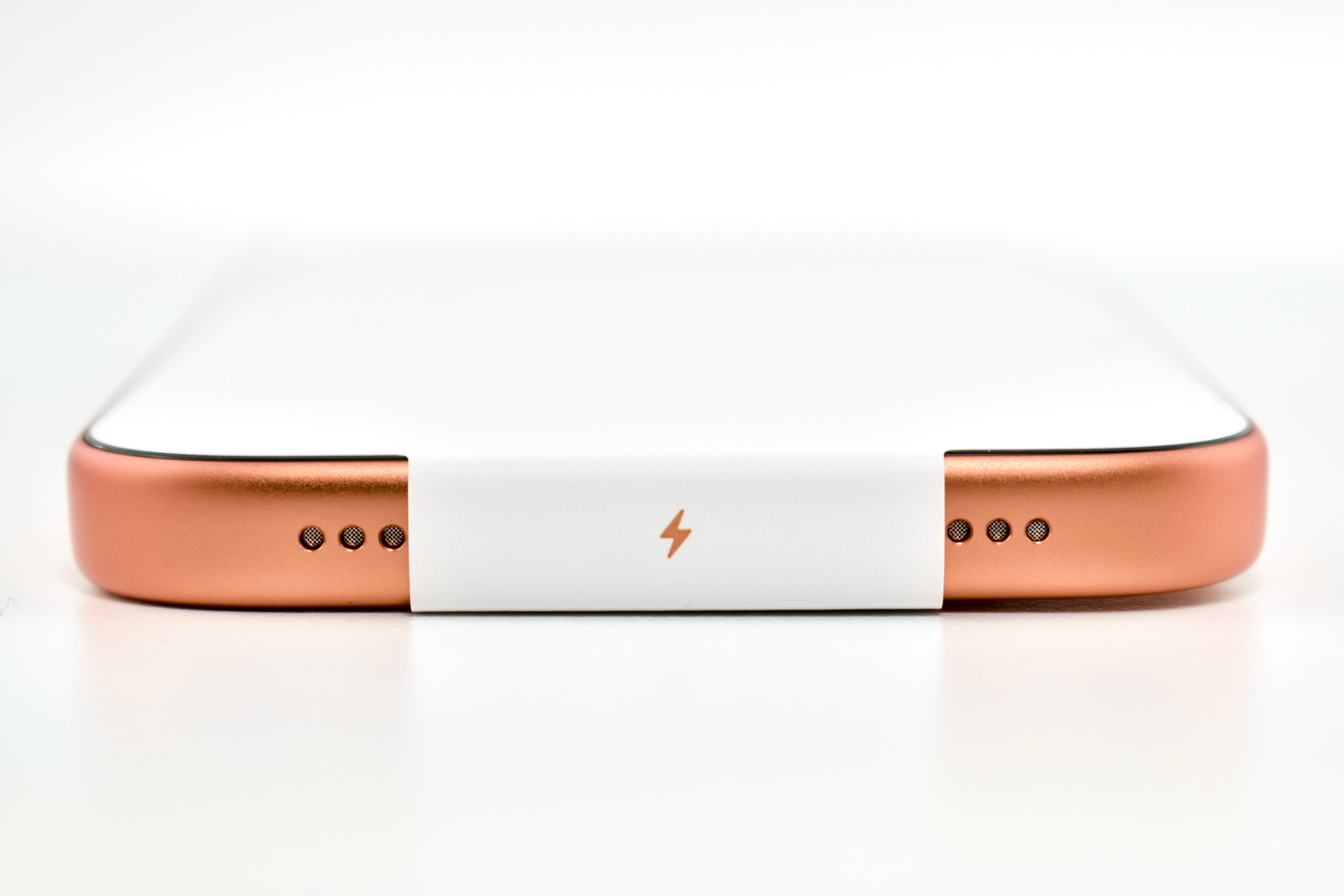
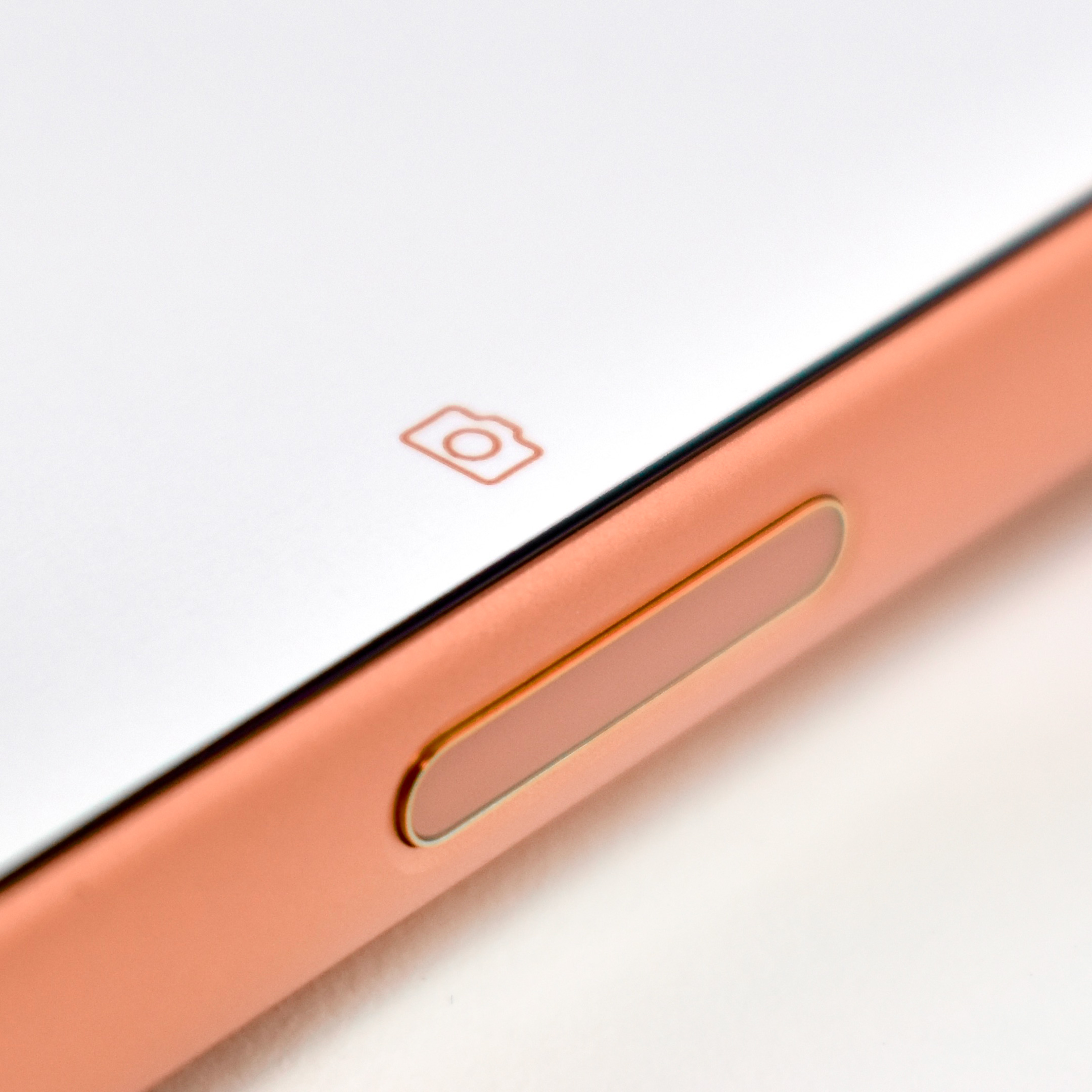
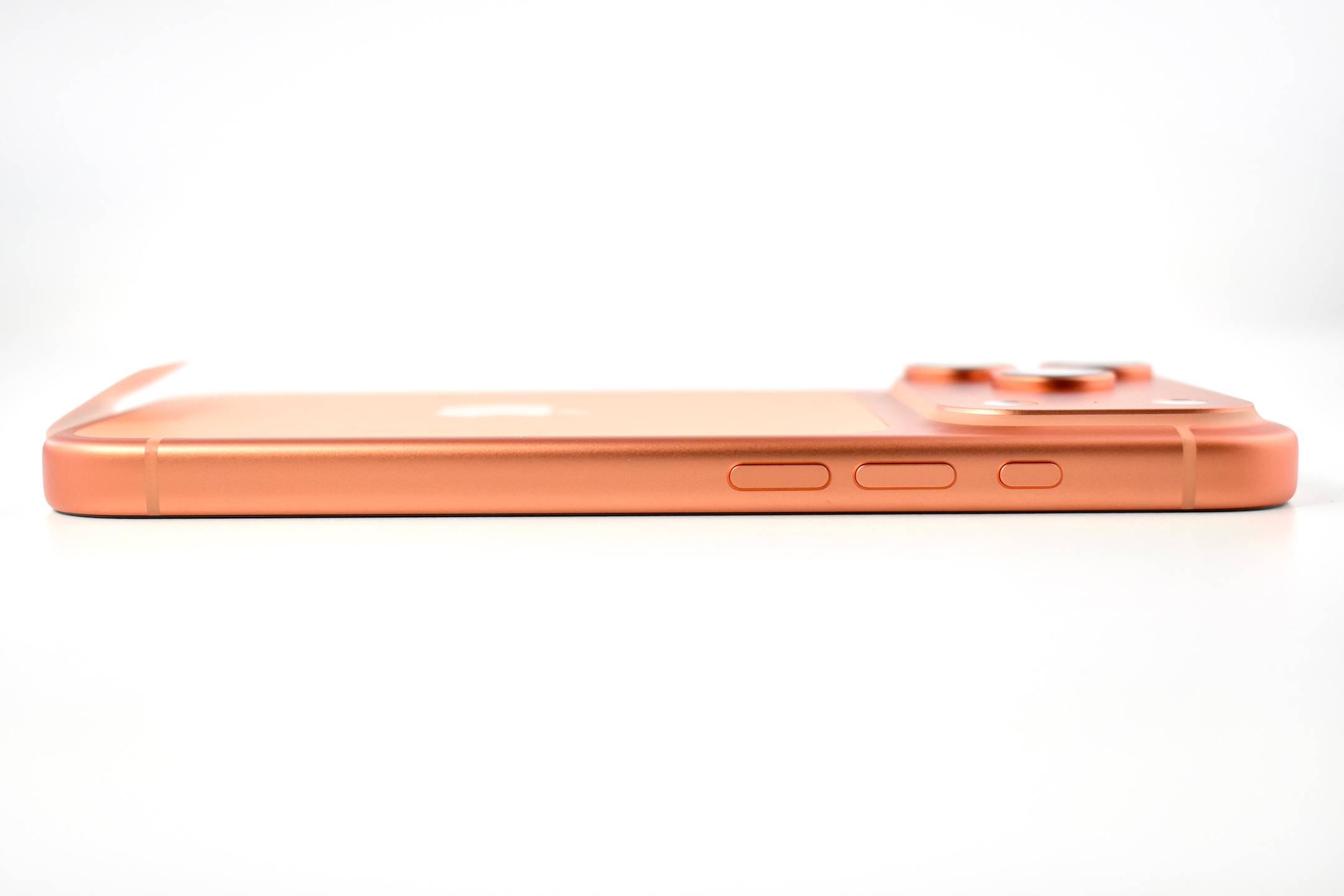
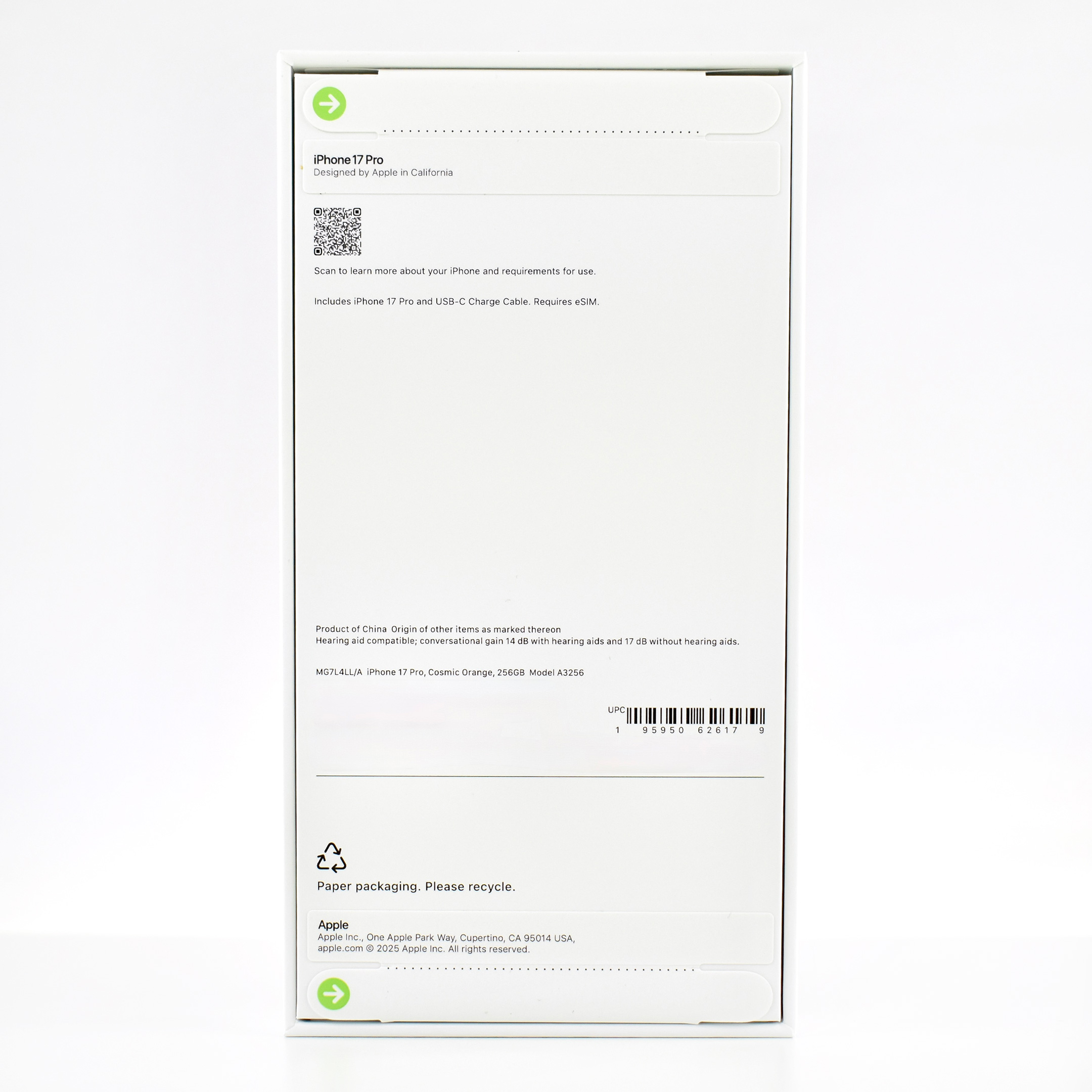
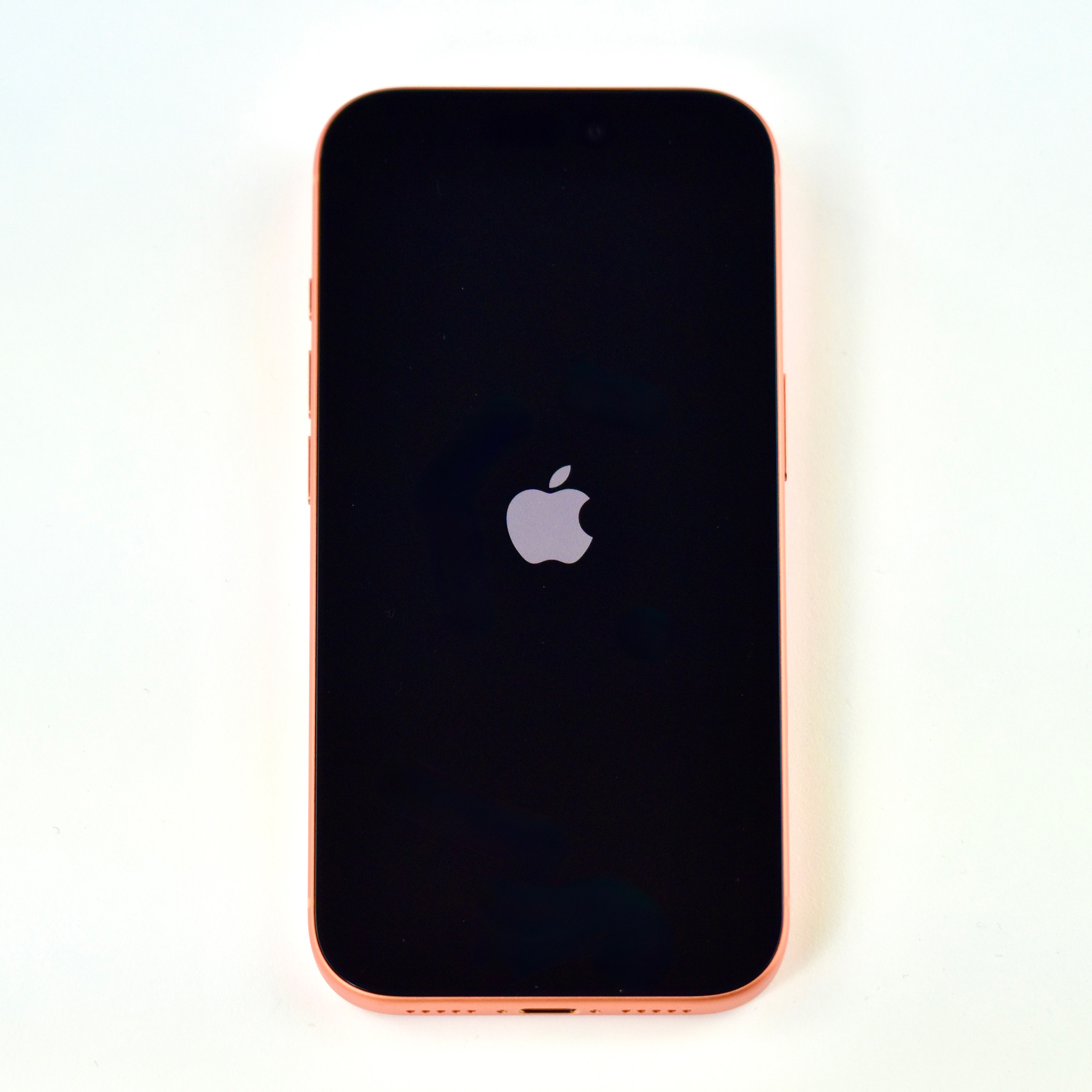
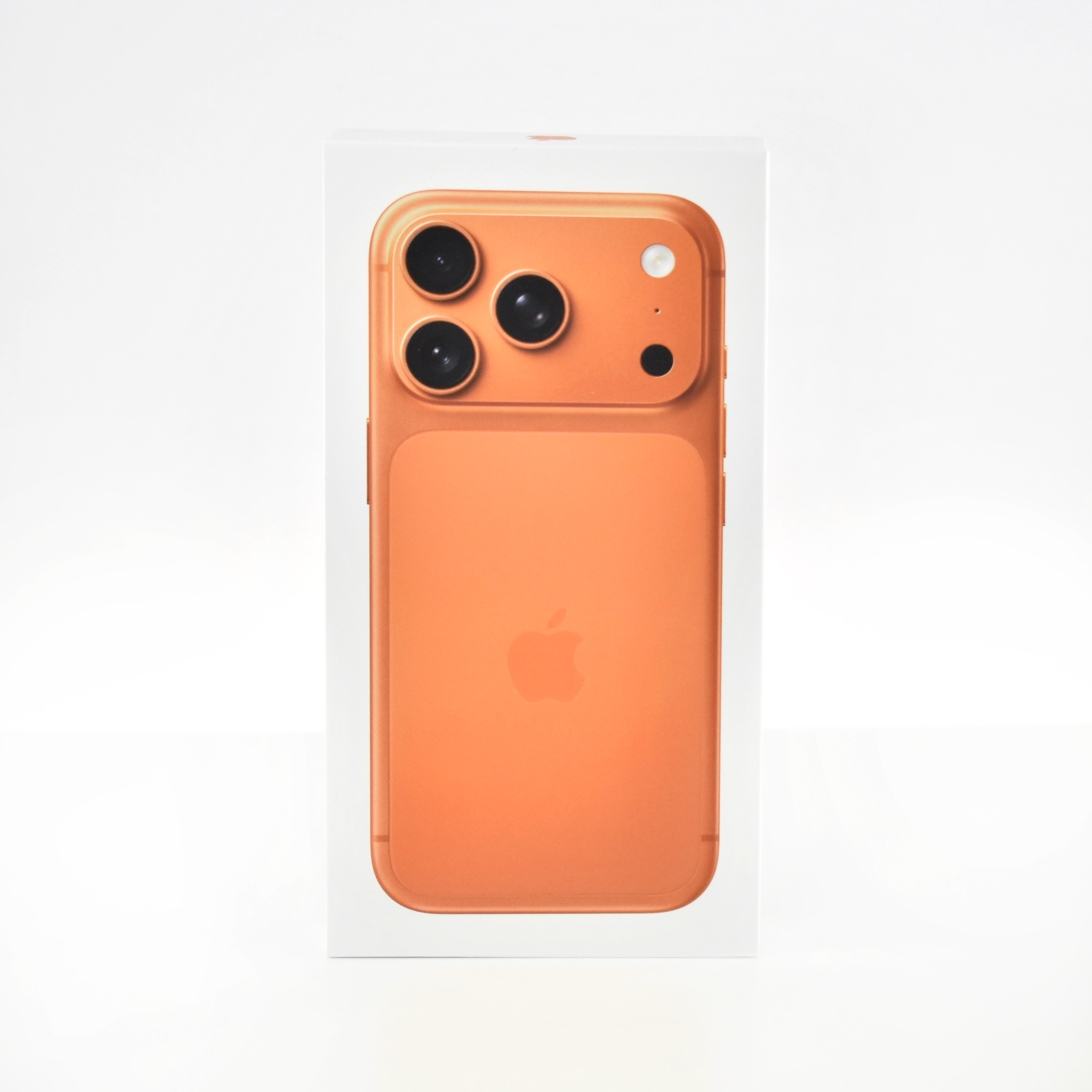
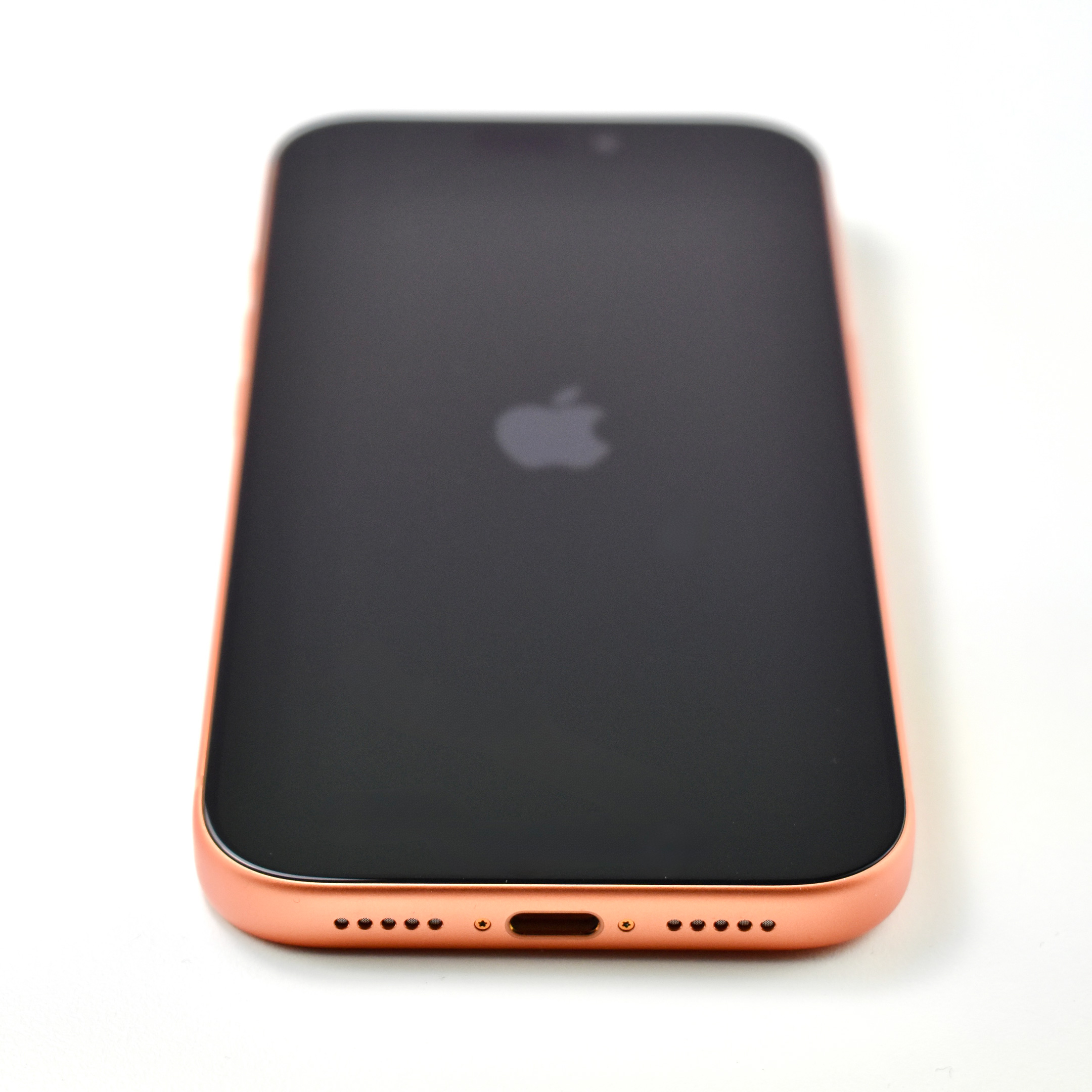
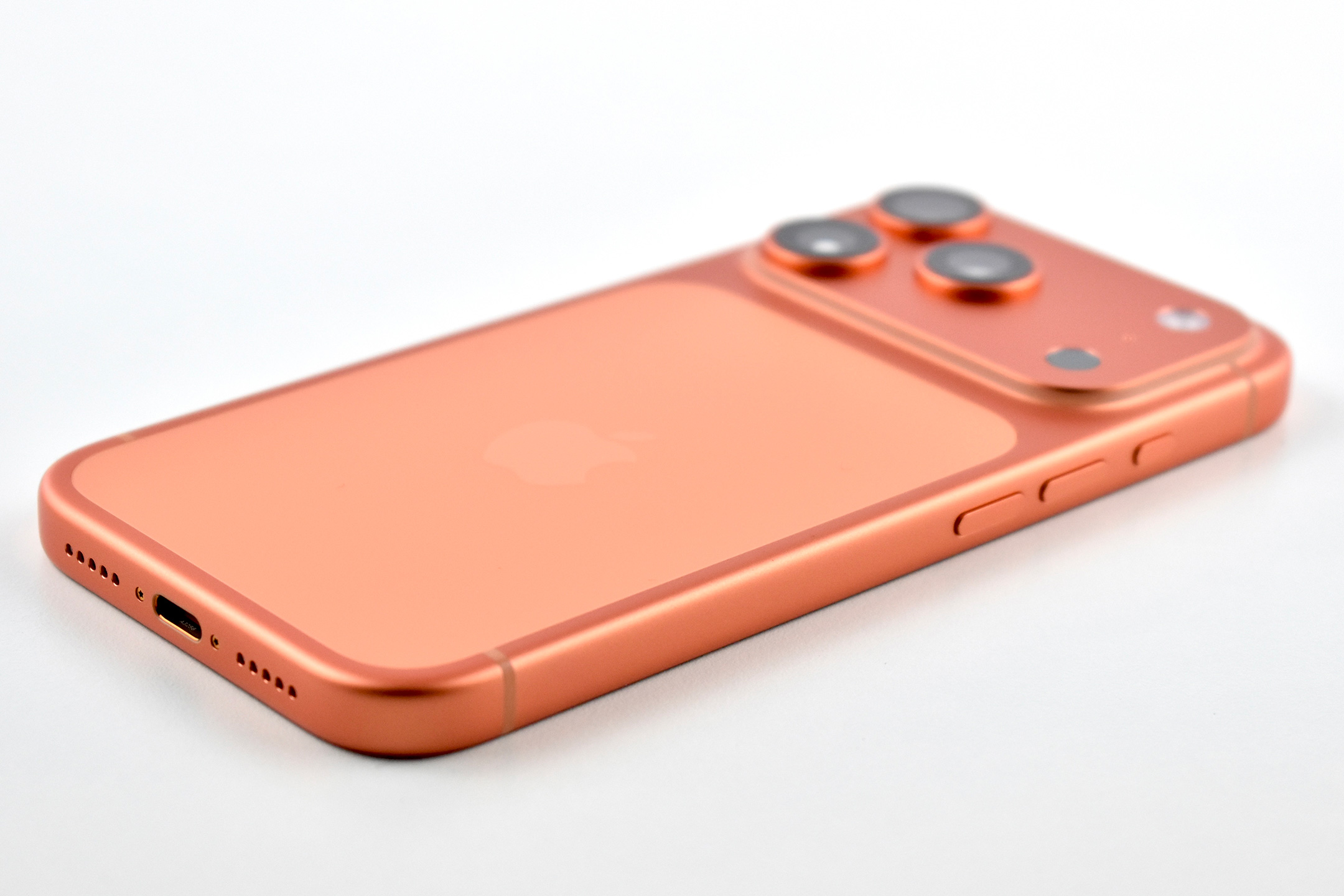
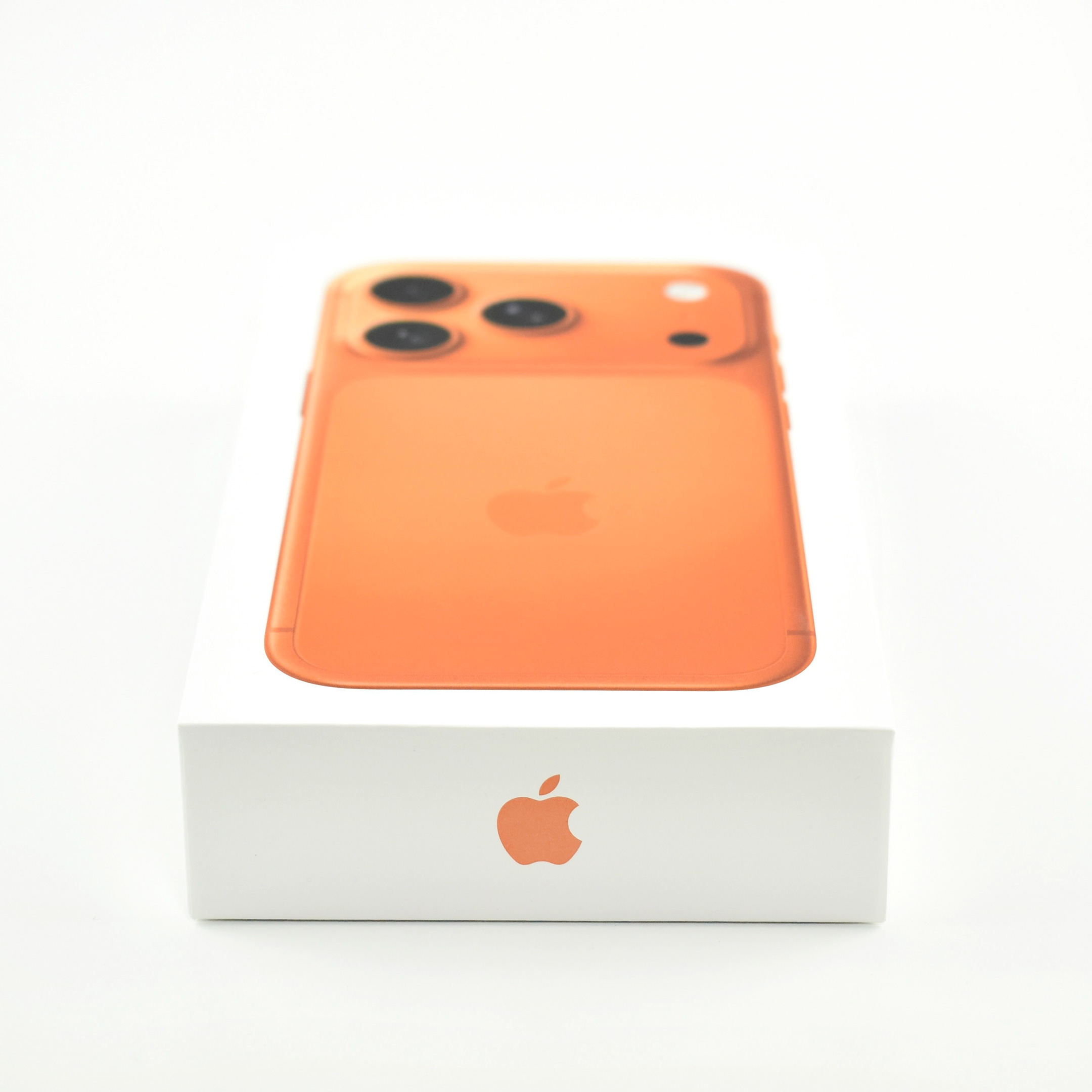
iPhone 17 Pro (Cosmic Orange, 256GB, 2025)
The iPhone 17 Pro was introduced on September 9, 2025, during a pre-recorded Apple event titled “Awe Dropping” that featured an animated/interactive Apple logo on a black background. The Apple logo resembled a thermal image, perhaps hinting that one of the products introduced might feature a new type of cooling system. That idea became a reality with the iPhone 17 Pro’s new “vapor chamber that is laser-welded into a strong, light, and thermally conductive aluminum unibody” was introduced.

Other iPhone 17 Pro features highlighted in the press release included:

  • “Both models feature A19 Pro, the most powerful and efficient chip for iPhone yet, enabling the advanced camera systems, next-level mobile gaming, and Apple Intelligence.”
  • “Three 48MP Fusion cameras — Main, Ultra Wide, and an all-new Telephoto — offer the equivalent of eight lenses, including the longest optical-quality zoom ever on iPhone at 8x, and the innovative 18MP Center Stage front camera takes selfies to the next level.”
  • “Both models feature the Ceramic Shield 2 front cover with 3x better scratch resistance, and for the first time, Ceramic Shield protects the back of iPhone.”

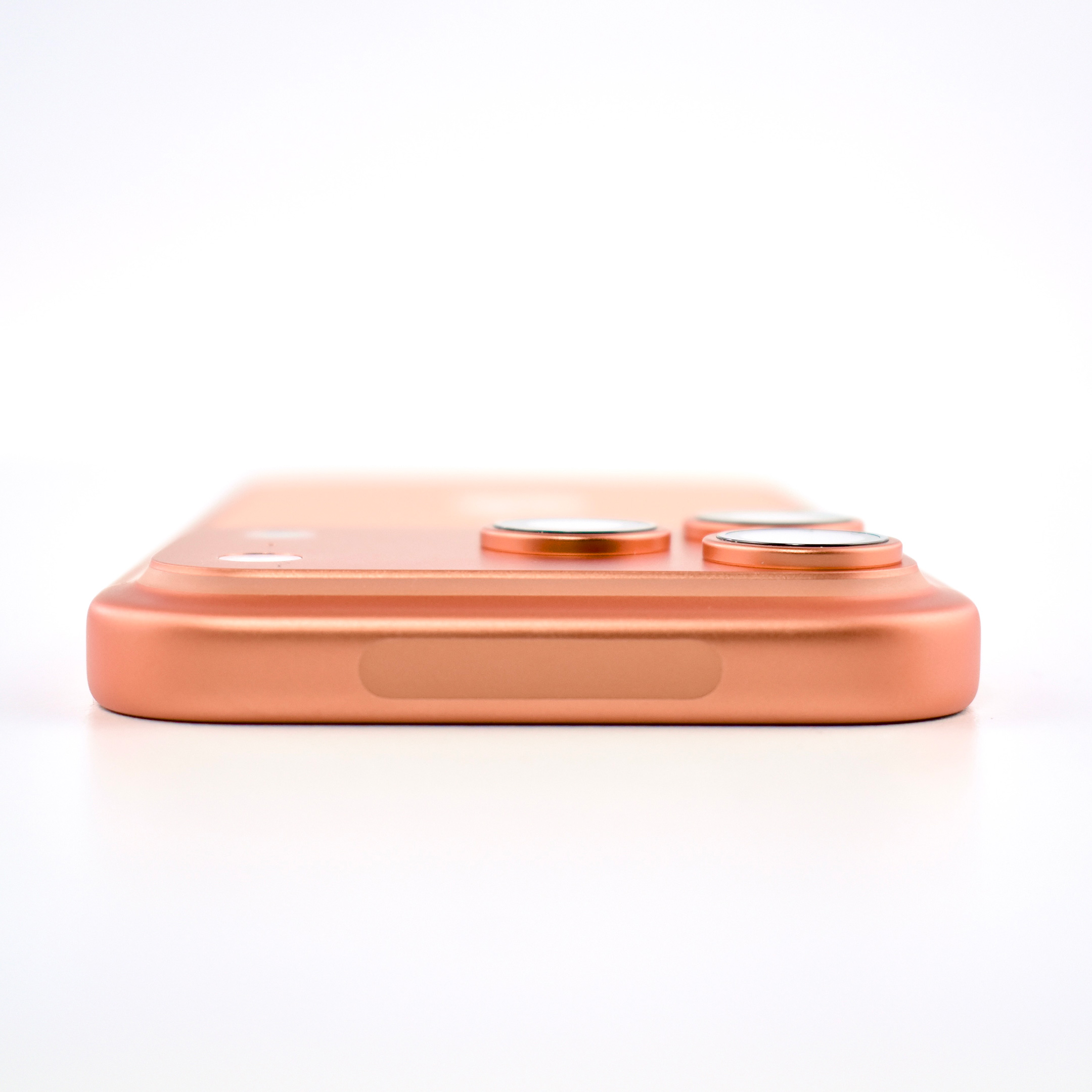
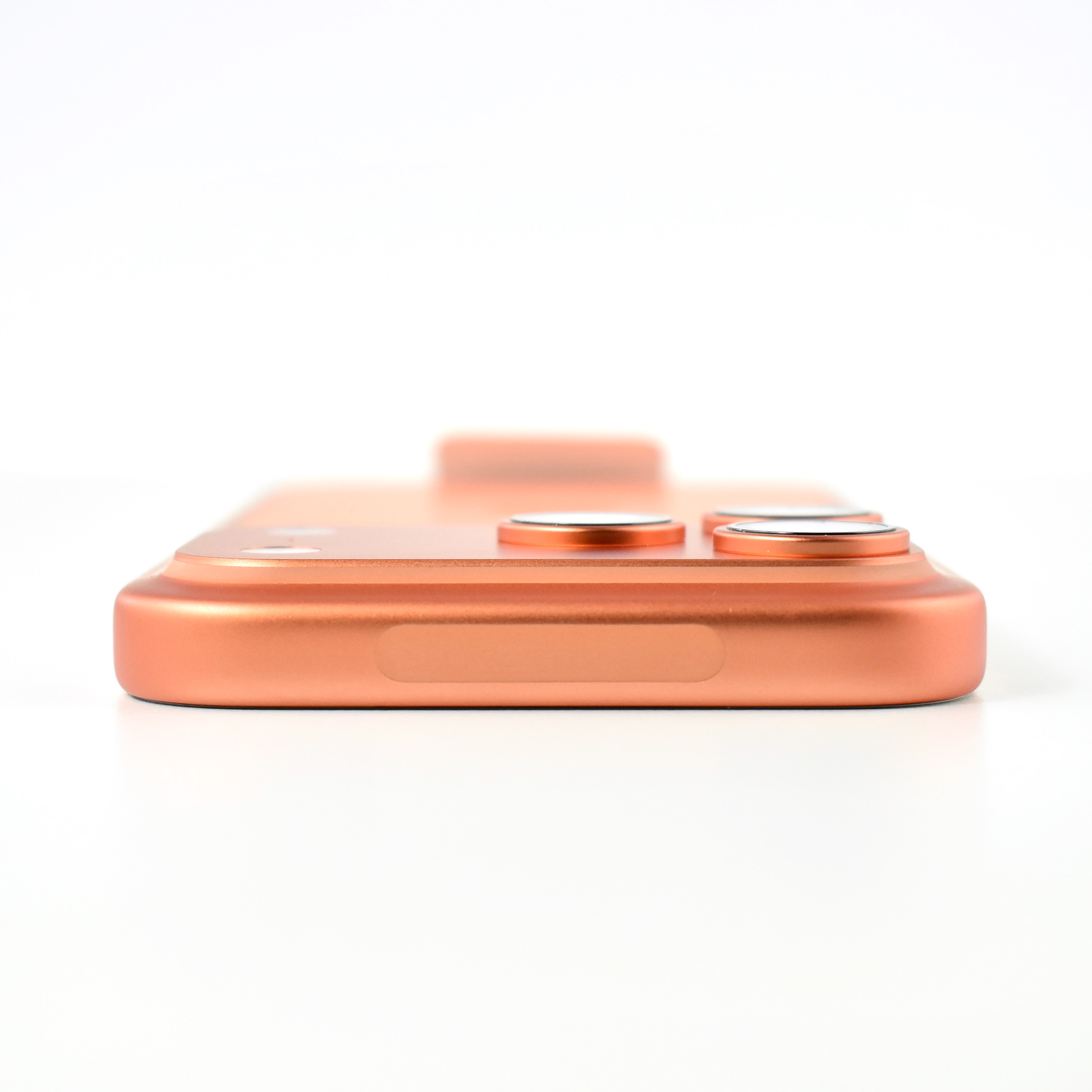
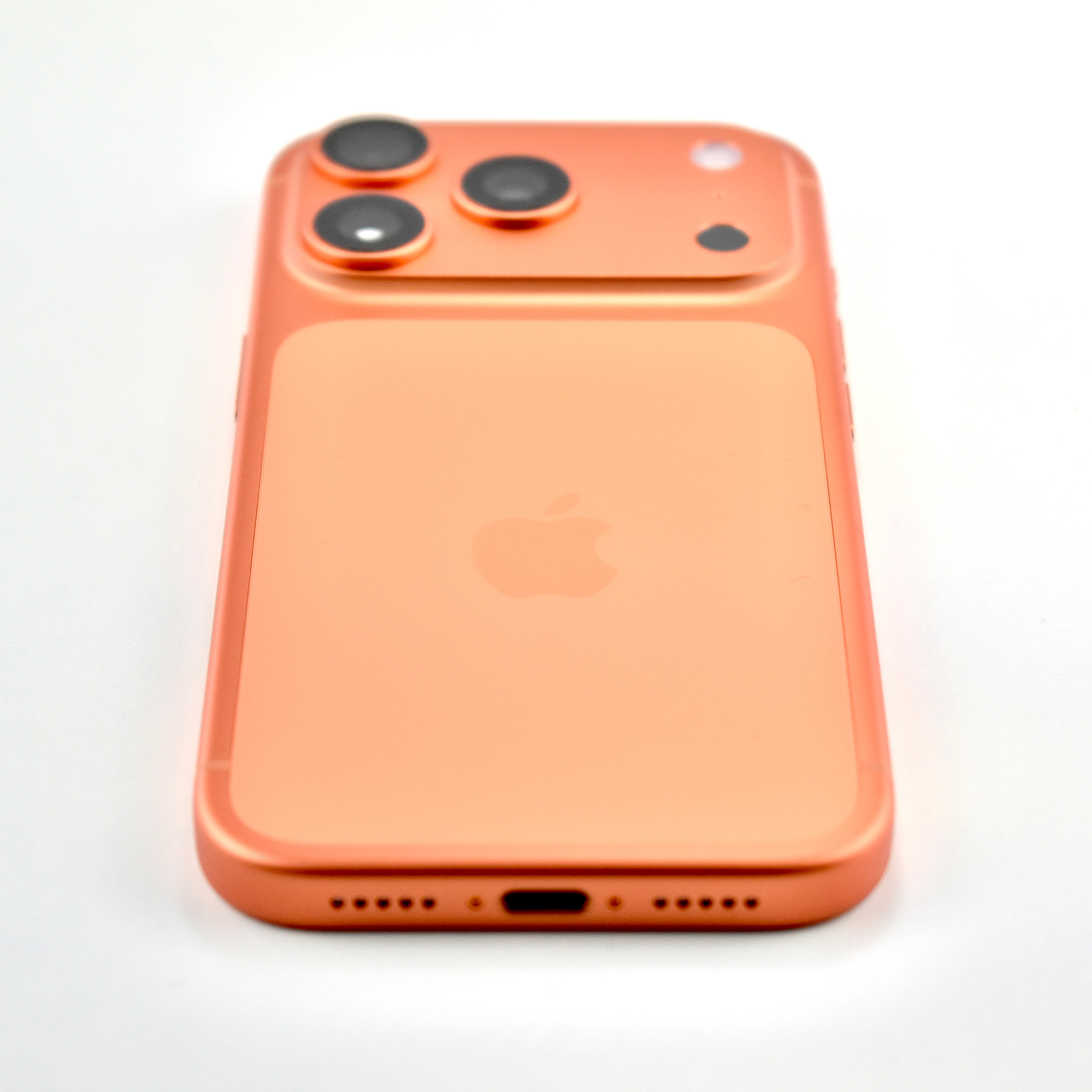
The iPhone 17 Pro (and Pro Max) featured new colors including a silver that uses two “refined” tones with the camera body and ceramic shield, an “elegant” deep blue, and a “bold” cosmic orange.
I found the cosmic orange option difficult to resist because previous Pro-model iPhone devices have not been available in colors that were not dark, desaturated, or otherwise dull.

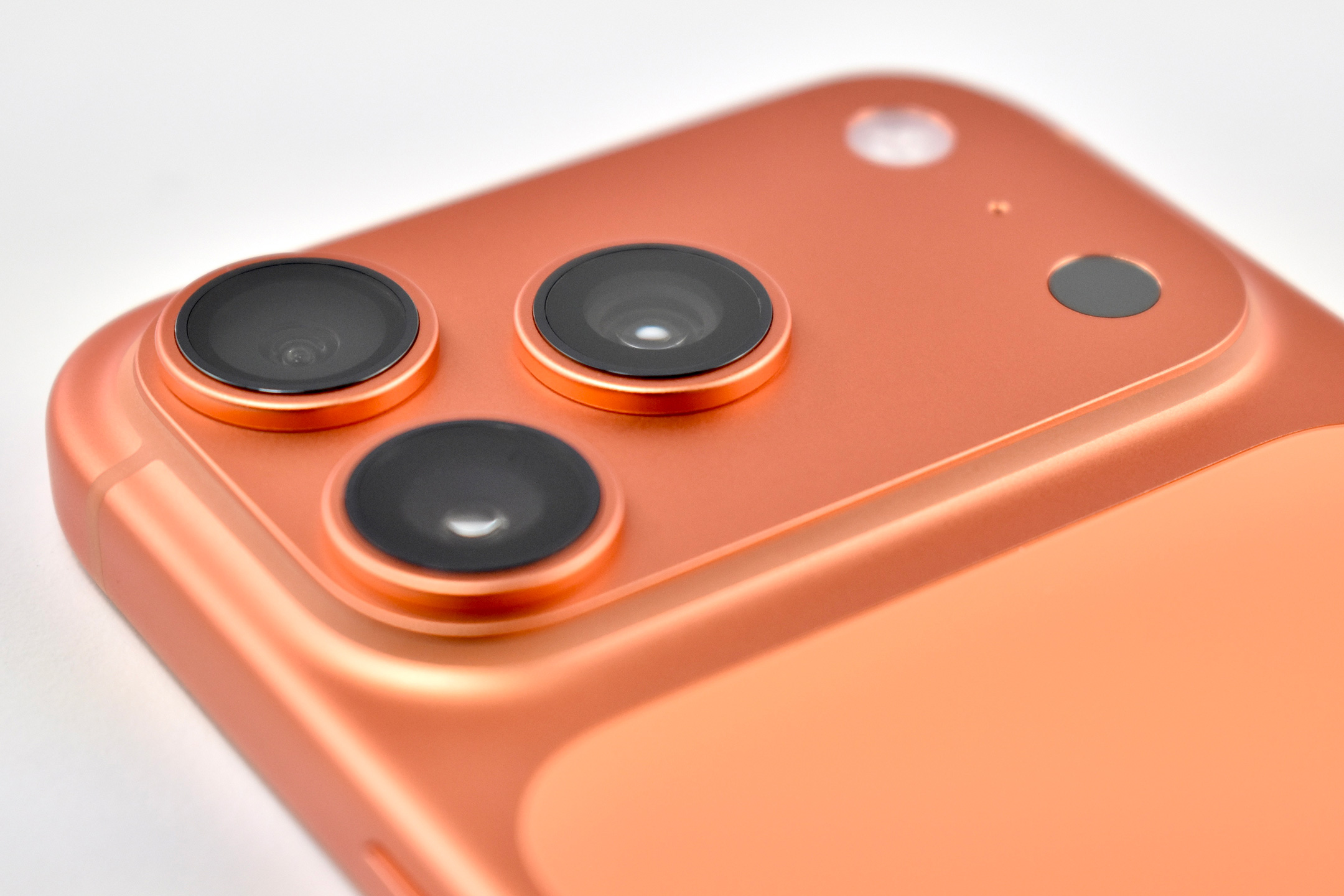
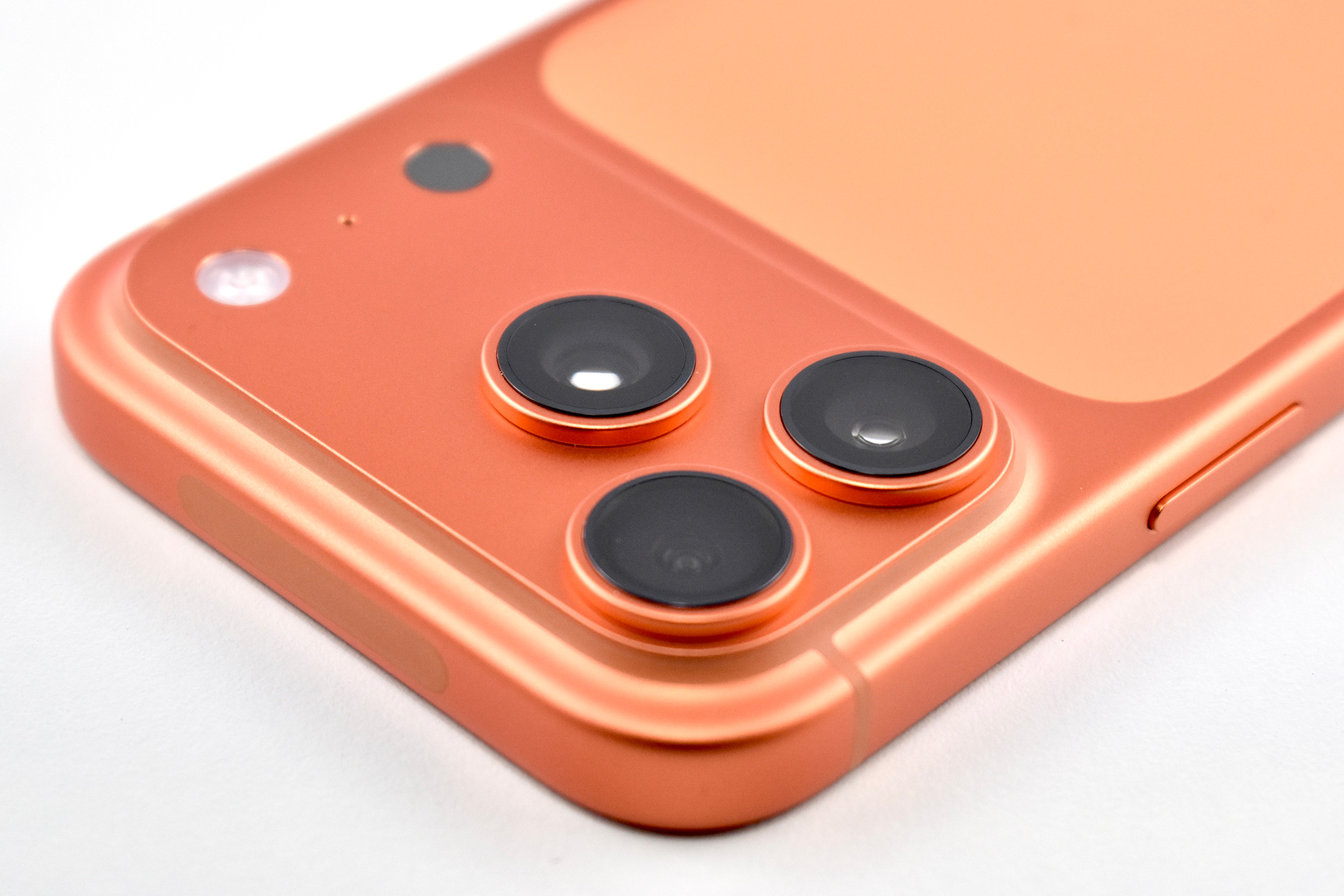
This event included Apple’s first mention of the “plateau” that houses the camera on the back of the phone—previously informally referred to as the “camera bump.” (The plateau was also mentioned in the introduction of the iPhone Air in this Apple event.) Apple explained the protruding feature on the iPhone 17 Pro: “On the back, the plateau creates additional space for internal components — making room for a larger battery.”

Apple further described the vapor chamber cooling system:

“Deionized water is sealed inside the vapor chamber, which is laser-welded into the aluminum chassis to move heat away from the powerful A19 Pro, allowing it to operate at even higher performance levels. The heat is carried into the forged aluminum unibody, where it is distributed evenly through the system, managing power and surface temperatures to deliver incredible performance while remaining comfortable to hold.”

The display of the iPhone 17 Pro is described as a Super Retina XDR display in 6.3-inch and 6.9-inch sizes. It includes a new protective layer called Ceramic Shield 2 that Apple describes as “tougher than any smartphone glass or glass-ceramic, with…3x better scratch resistance and improved anti-reflection to reduce glare.” The display is an Always-On ProMotion (up to 120Hz) delivering up to 3000 nits of brightness. The same Ceramic Shield technology on the display is also on the back of the device, delivering a stronger finish that allows better conductivity for the MagSafe connector.

In addition to the new A19 Pro chip that is up to 40% more powerful than the previous generation Pro chips, the device contains the N1, “a new Apple-designed wireless networking chip that enables Wi-Fi 7, Bluetooth 6, and Thread.”

Like many previous iPhone releases, the camera system was touted significantly throughout the release. Apple noted that the iPhone 17 Pro delivers “eight pro lenses in a user’s pocket.”

Back cameras:

  • 3 48MP Fusion cameras for sharper, more detailed images
  • 1 48MP Telephoto camera with a sensor 56% percent larger than the previous generation for brighter/more detailed photos
  • 1 4x 100mm optical zoom lens
  • 1 8x 200mm optical zoom lens

Front camera:
1 Center Stage front camera with “the first square front camera sensor on iPhone, offering a wider field of view and higher resolution — up to 18MP for photos — to capture more detail.”

Apple’s product website for the iPhone 17 Pro featured an impressive set of photos illustrating the various native zoom levels and equating them with their “8 pro lenses” claim:

  • 8x = 200mm
  • 4x = 100mm
  • 2x = 48mm
  • 1.5x = 35mm
  • 1.2x = 28mm
  • 1x = 24mm
  • 0.5x = 13mm
  • Macro

The iPhone 17 Pro video capabilities were also discussed with features such as Dolby Vision HDR, 4K 120 fps, ProRes, and support for ACES. In addition, the iPhone 17 Pro now adds ProRes RAW, Log 2, and genlock—a technique to precisely synchronize video across multiple cameras by industry leader Blackmagic.

The iPhone 17 Pro measures 5.91 x 2.83 inches, and is 0.34 inch thick. It weighs 7.27 ounces.

Sources: Apple (press release, product page)

iPad packaging (Generation 9, 2021)

The iPad Generation 9 was released on September 14, 2021. Apple described the device: “The 10.2-inch iPad features A13 Bionic, Center Stage, True Tone, and now starts with double the storage, all at an incredible value.”

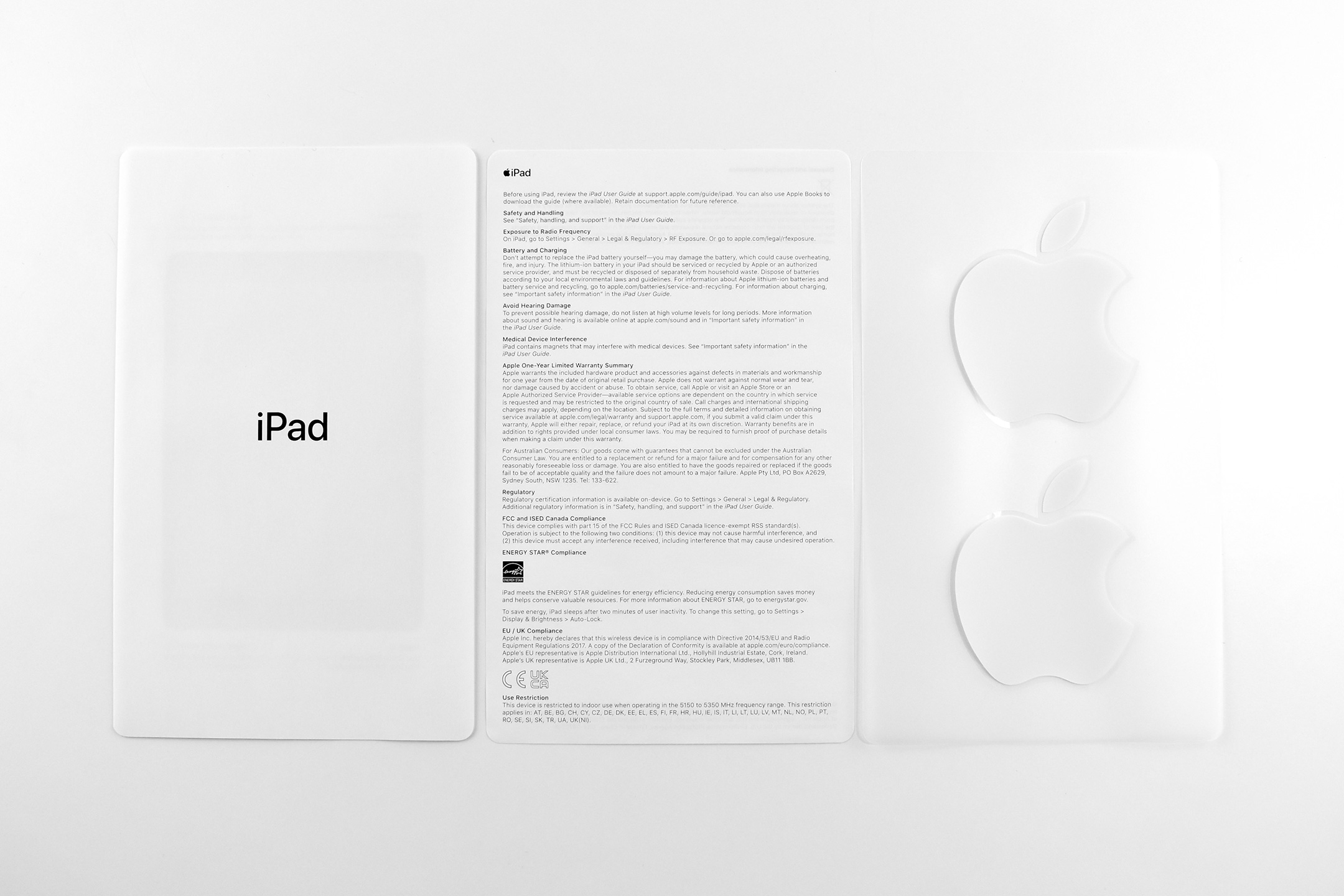
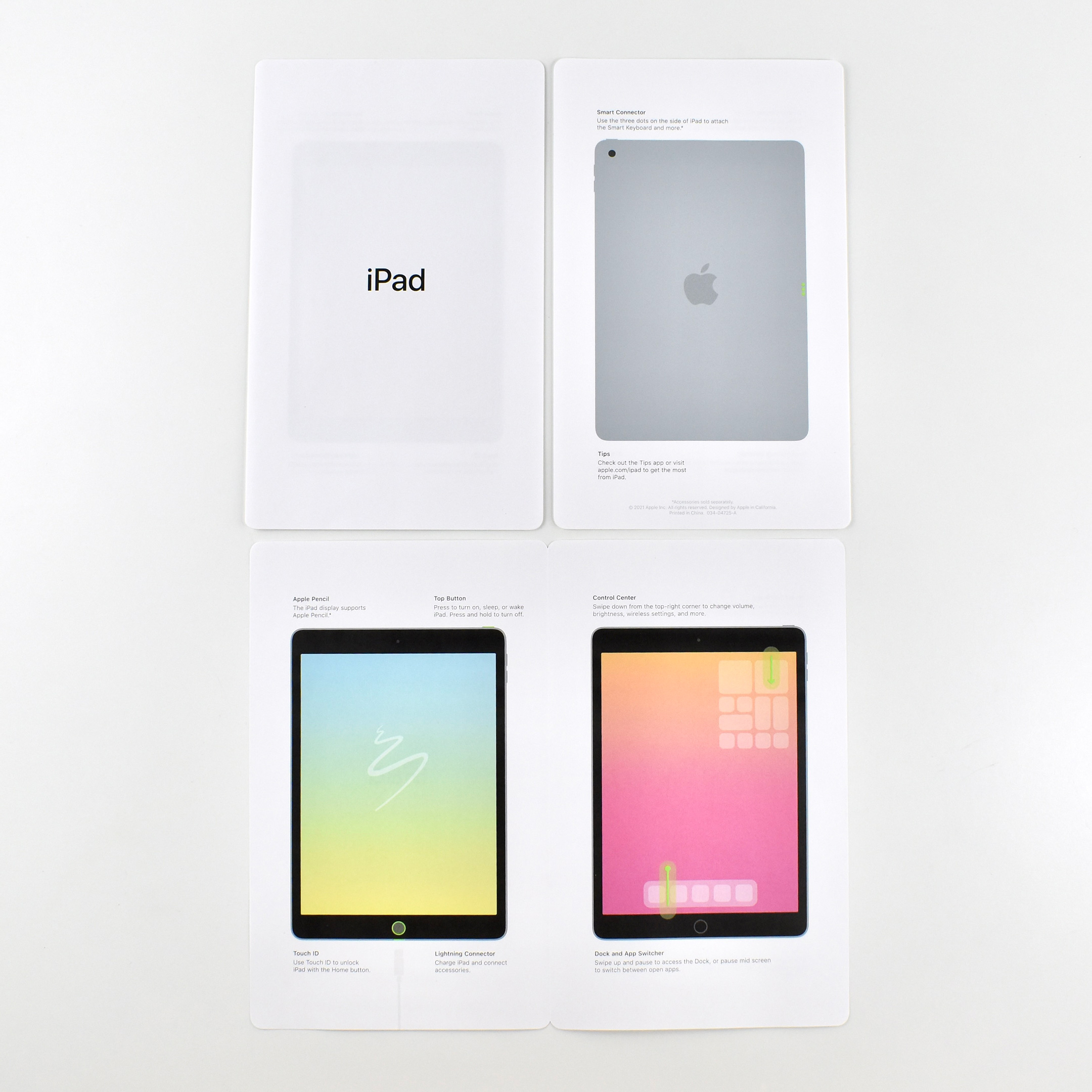
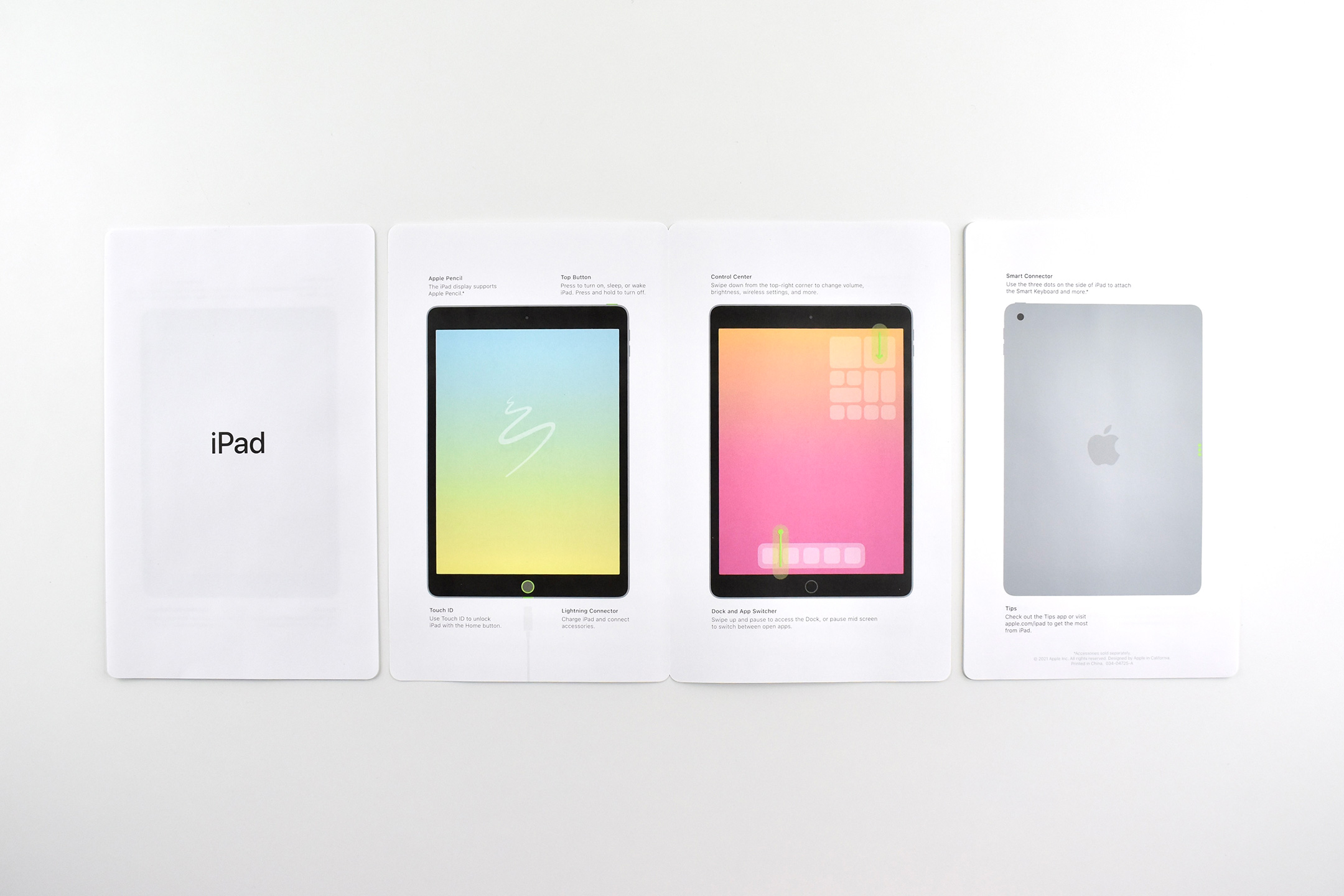
This packaging is from a 10-pack education purchase. It is the same envelope-like container that is included with a single iPad in retail packaging, but only one is included in a bulk 10-pack purchase. The items include the following (all measuring 4 3/16 x 6.75 inches):

  • Cardboard envelope
  • 4-color pamphlet (the inside briefly describes features including Apple Pencil, Top Button, Touch ID, Lightning Connector, Control Center, and Dock and App Switcher; the back describes the Smart Connector and Tips app)
  • 2-sided regulatory sheet
  • Apple stickers (2 white stickers on one sheet)

Sources: Apple (Newsroom)