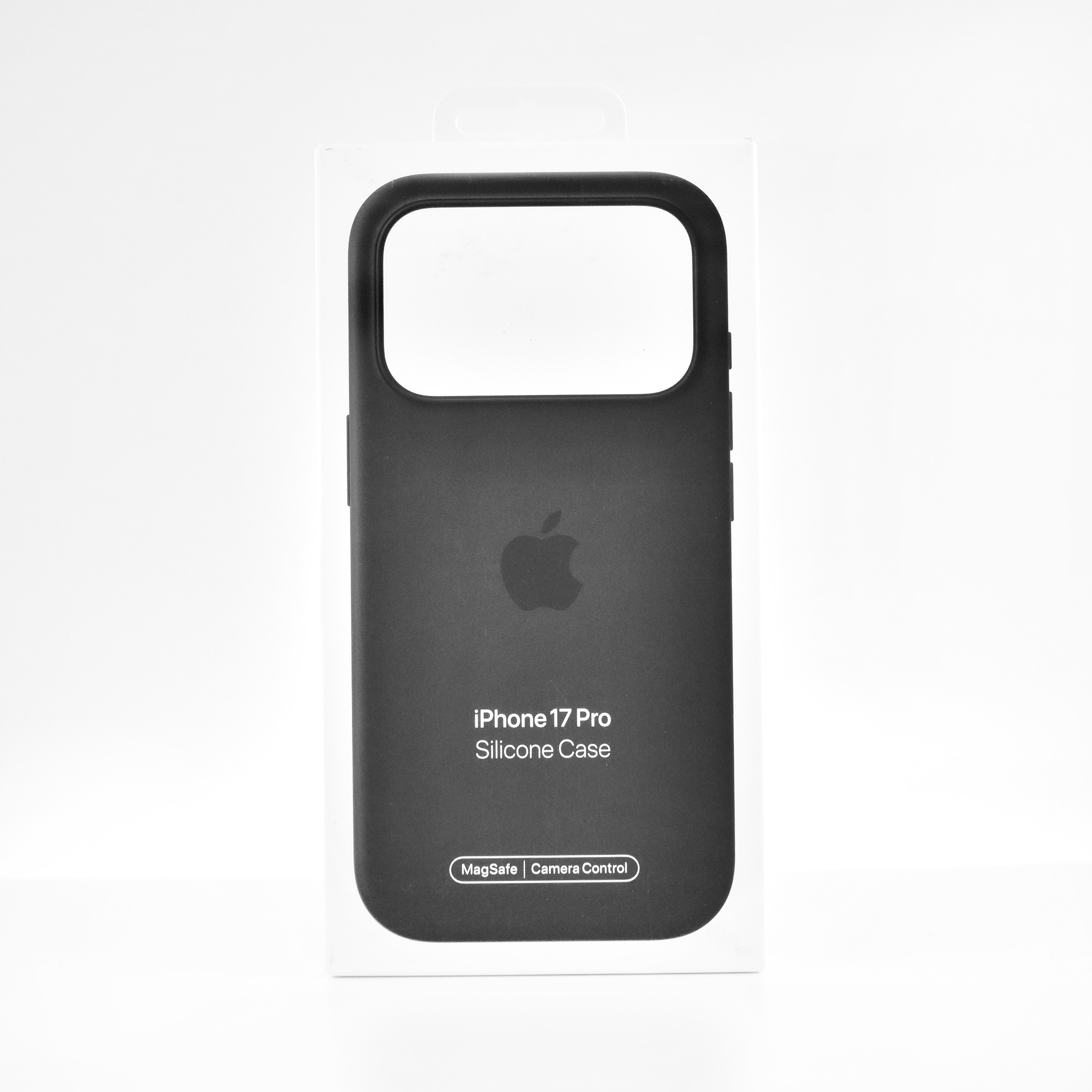
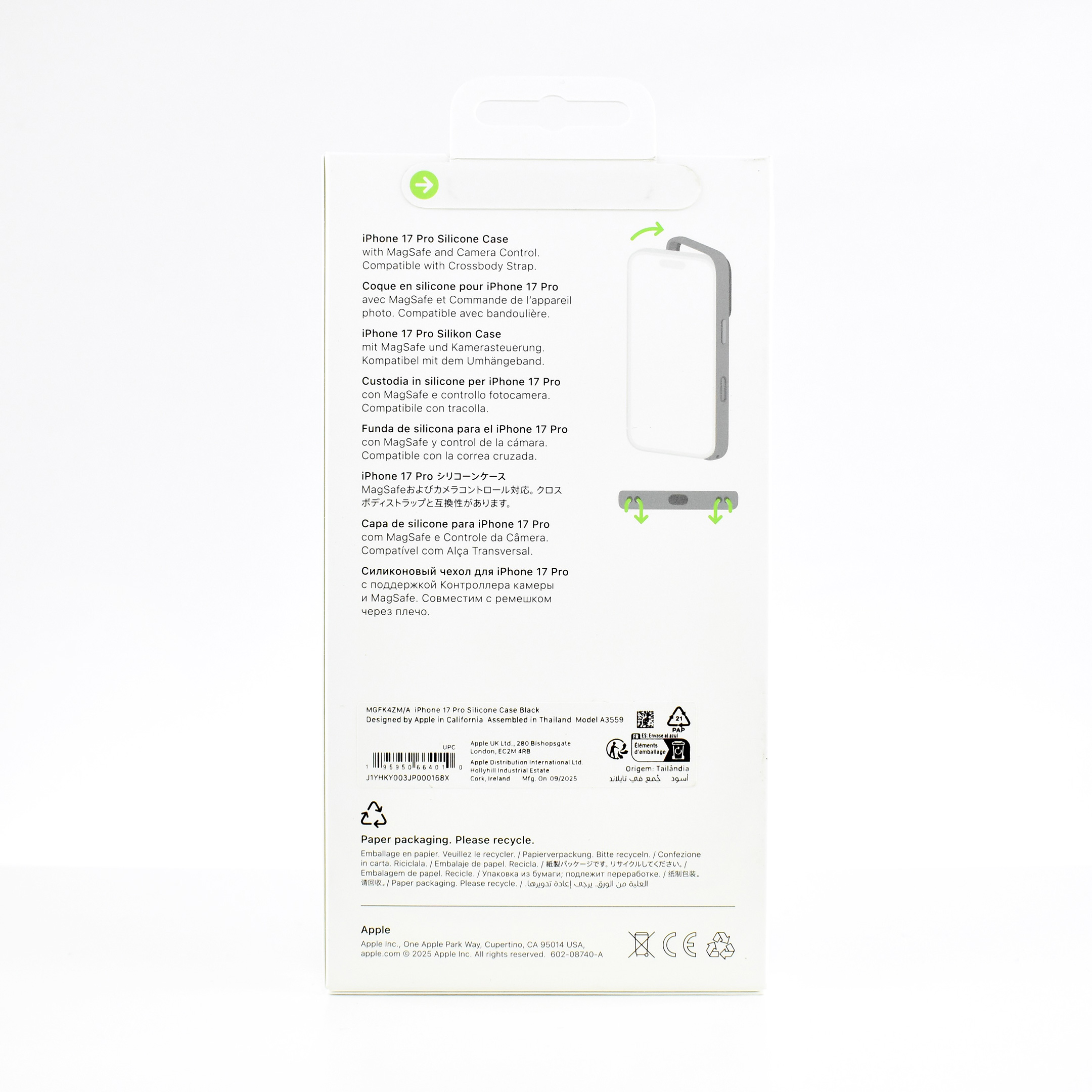
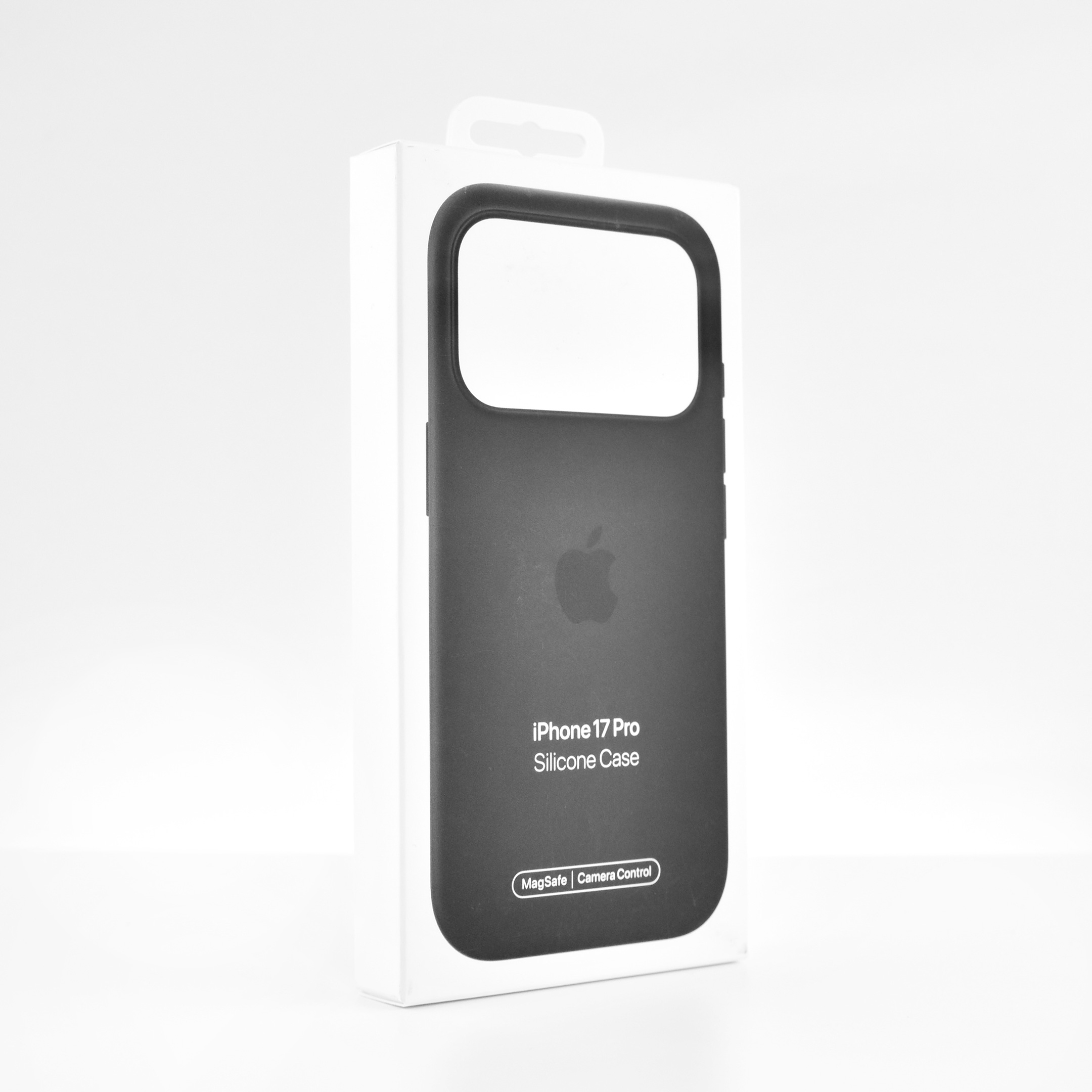
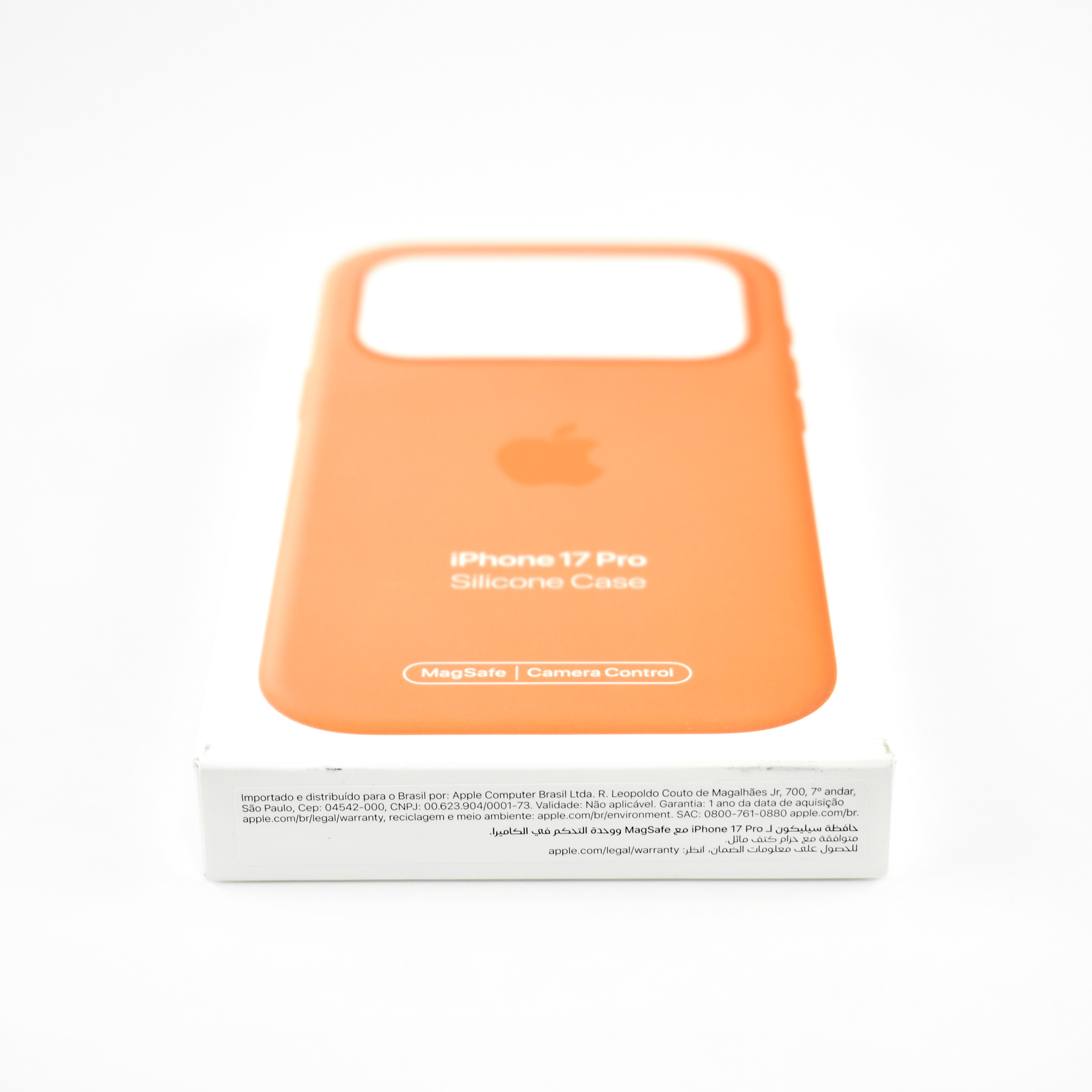
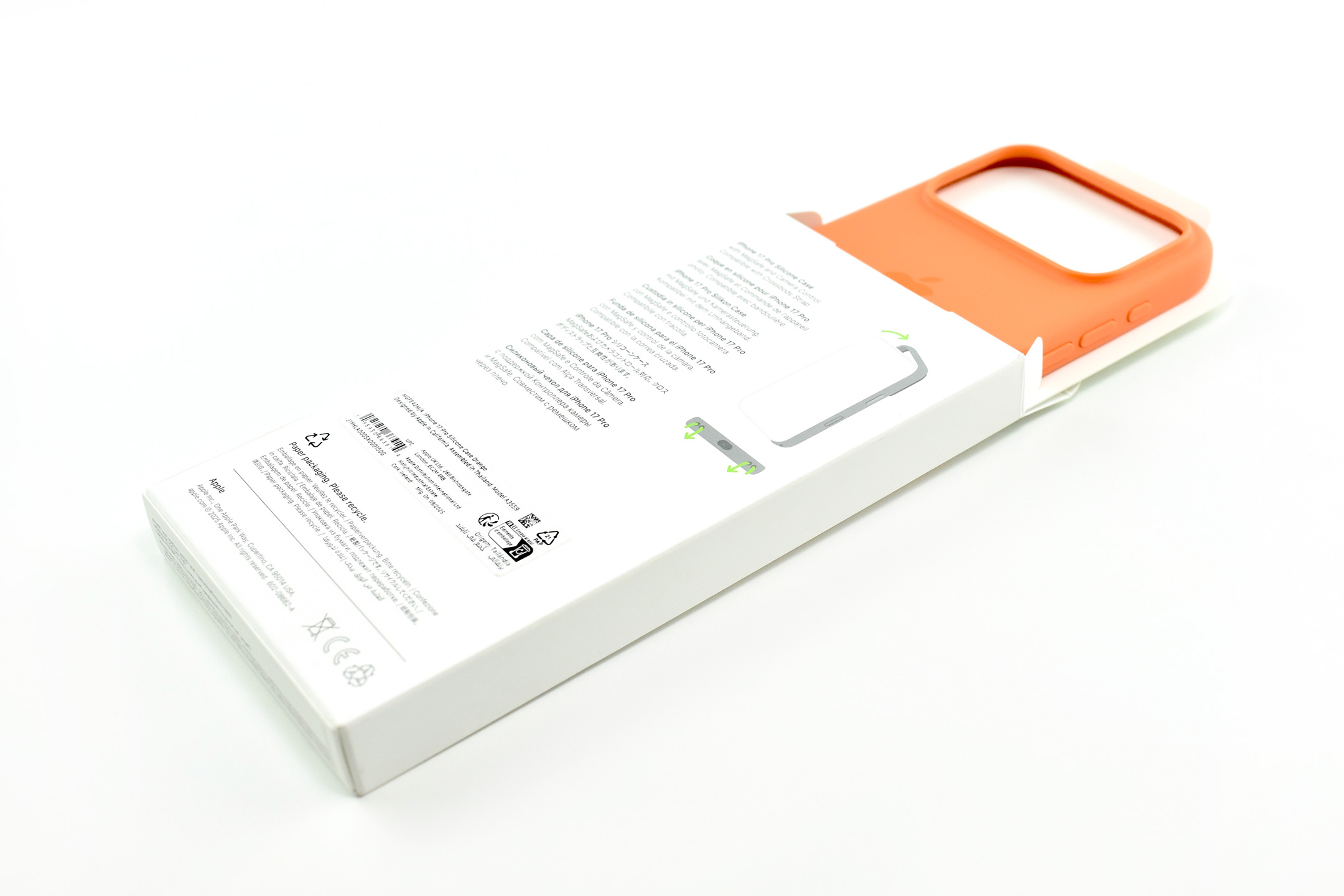
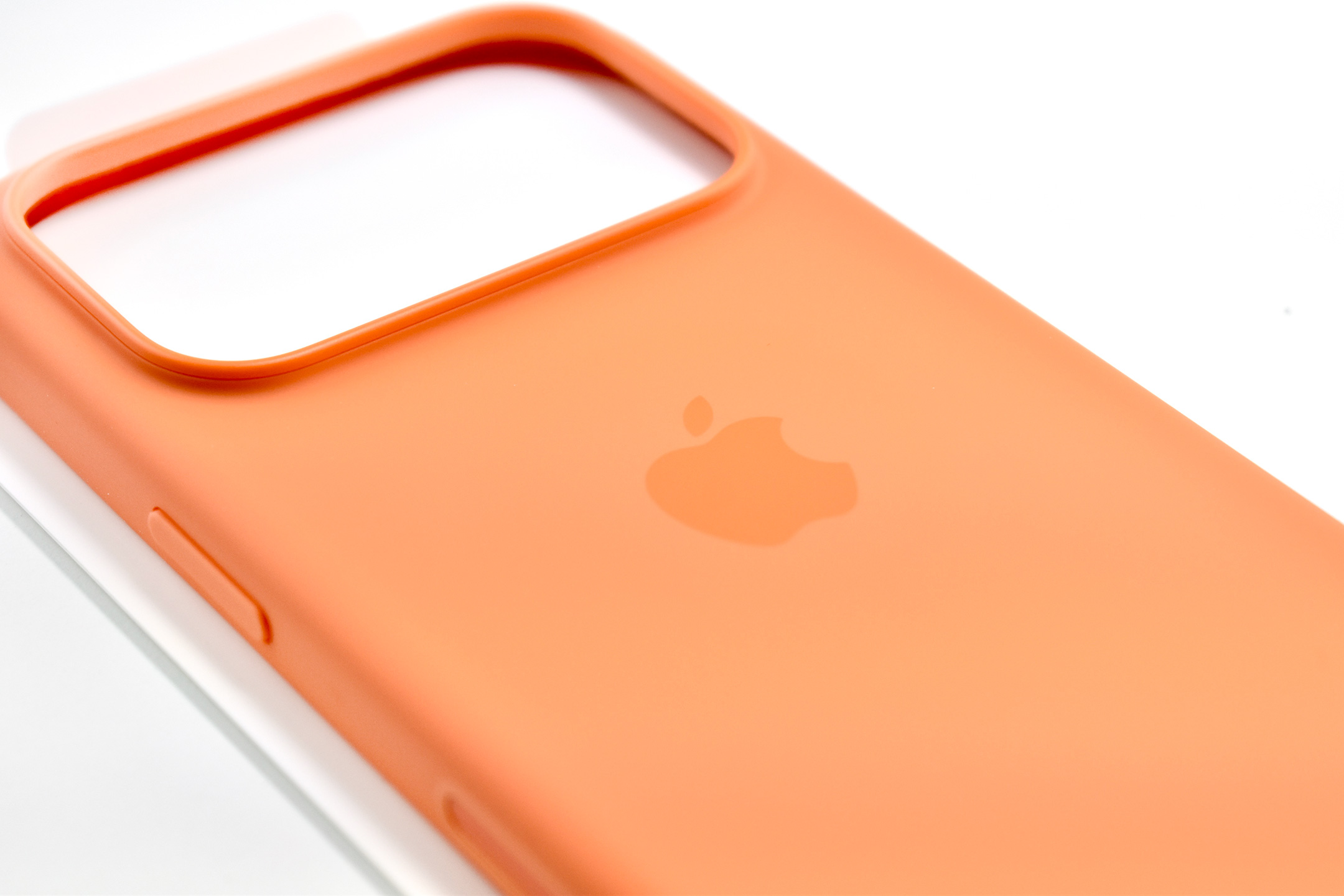
The iPhone 17 Pro Silicone Case was “Designed by Apple to complement iPhone 17 Pro, the Silicone Case with MagSafe is a delightful way to protect your iPhone.” This case also featured a conductive layer to communicate finger movements to the Camera Control button under the volume buttons.
Unlike previous Silicone case models, this one featured two connection points so it could be securely attached to the Crossbody Strap that was introduced at the same time as this case and the iPhone 17 Pro.
Apple also noted that the case was “Made with a 45 percent recycled silicone material” and “has a silky, soft-touch finish on the exterior that feels great in your hand. And on the inside, there’s a soft microfiber lining for even more protection.”
The case also included MagSafe magnets that extended the functionality of MagSafe built into the iPhone through the case. Apple described the charging functionality:
“With built-in magnets that align perfectly with iPhone 17 Pro Max, this case offers a magical attach experience and faster wireless charging, every time. When it’s time to charge, just leave the case on your iPhone and snap on your MagSafe charger, or set it on your Qi2 25W or Qi-certified charger.”
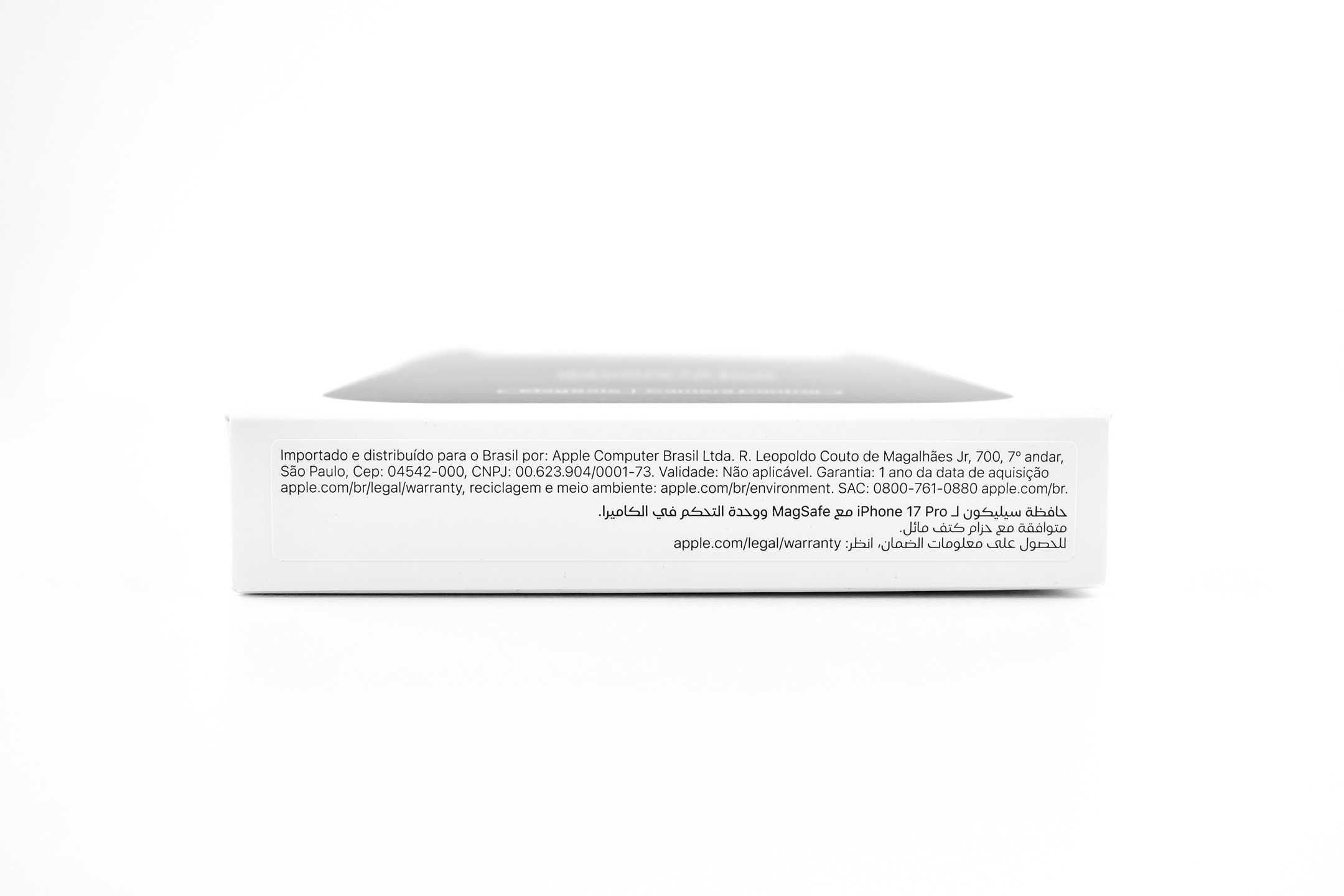
This case was originally offered in six colors. This example is black.
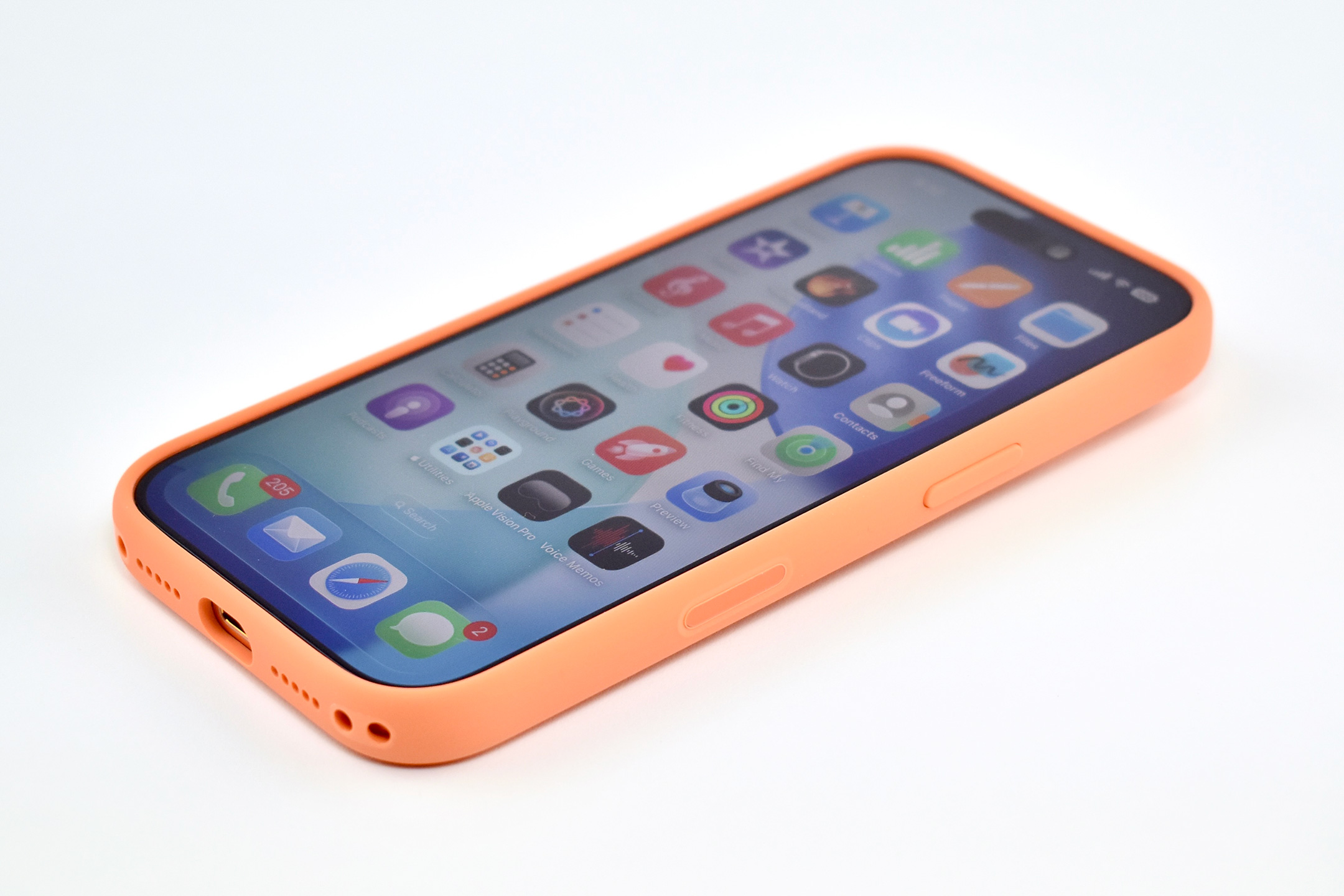
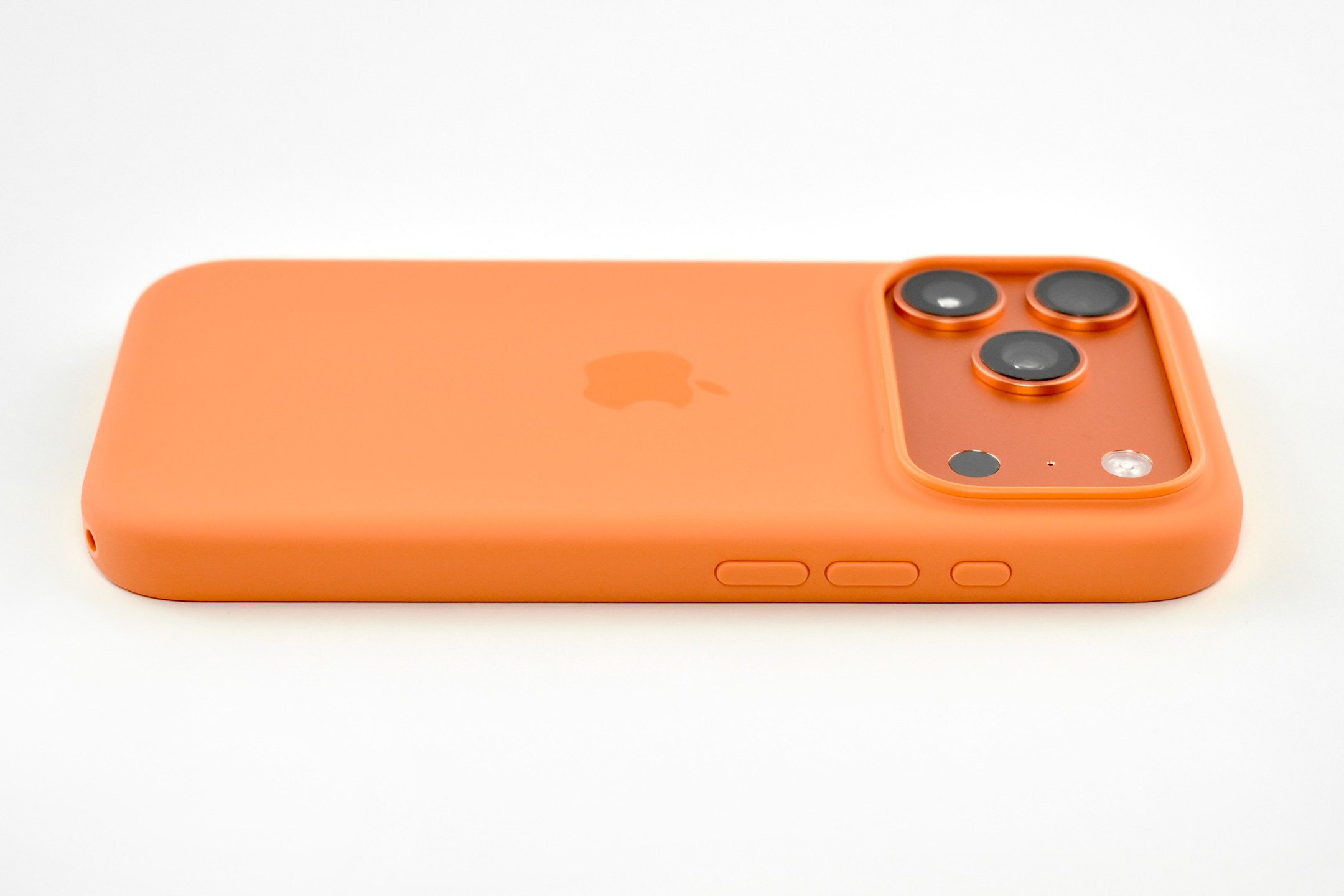
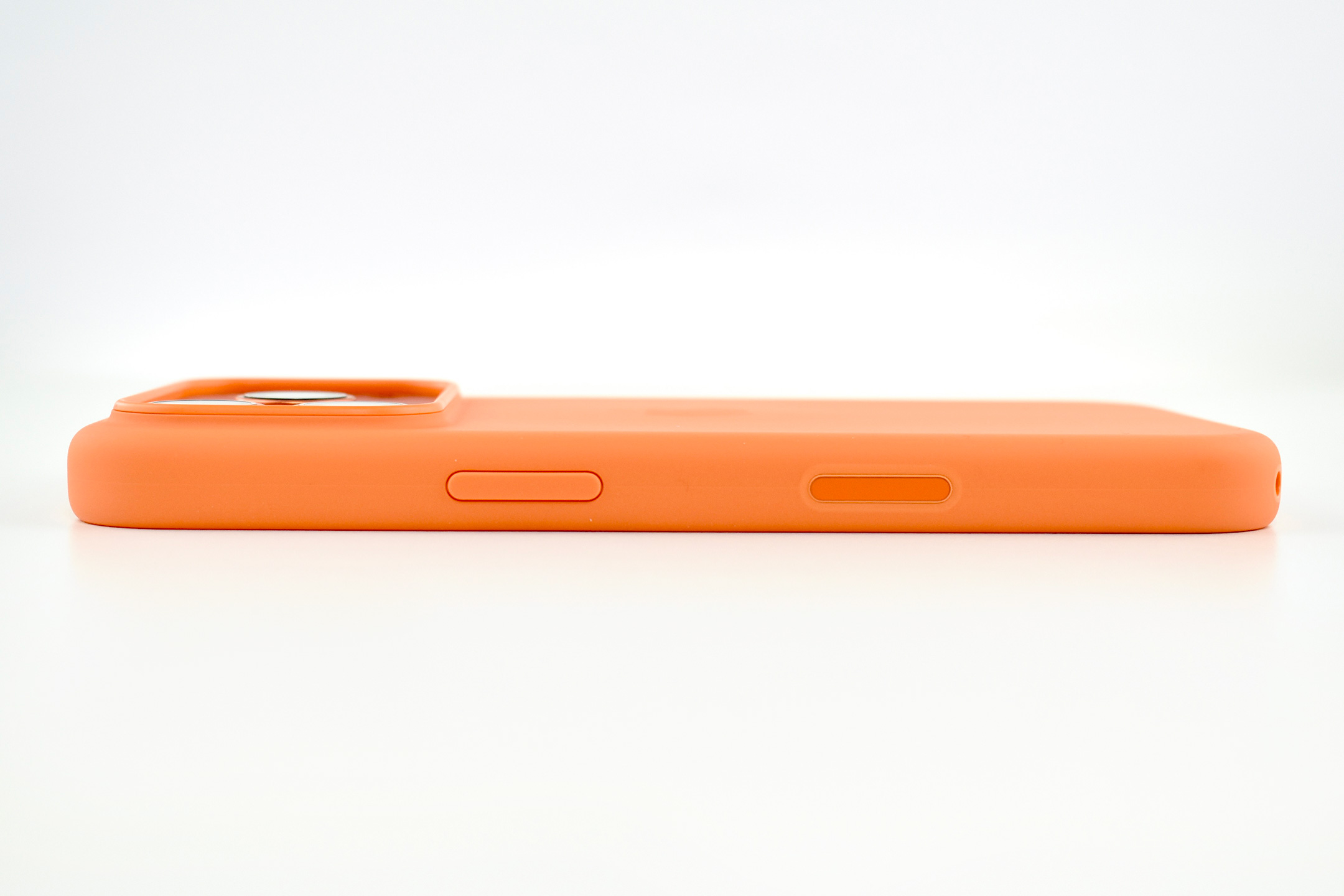
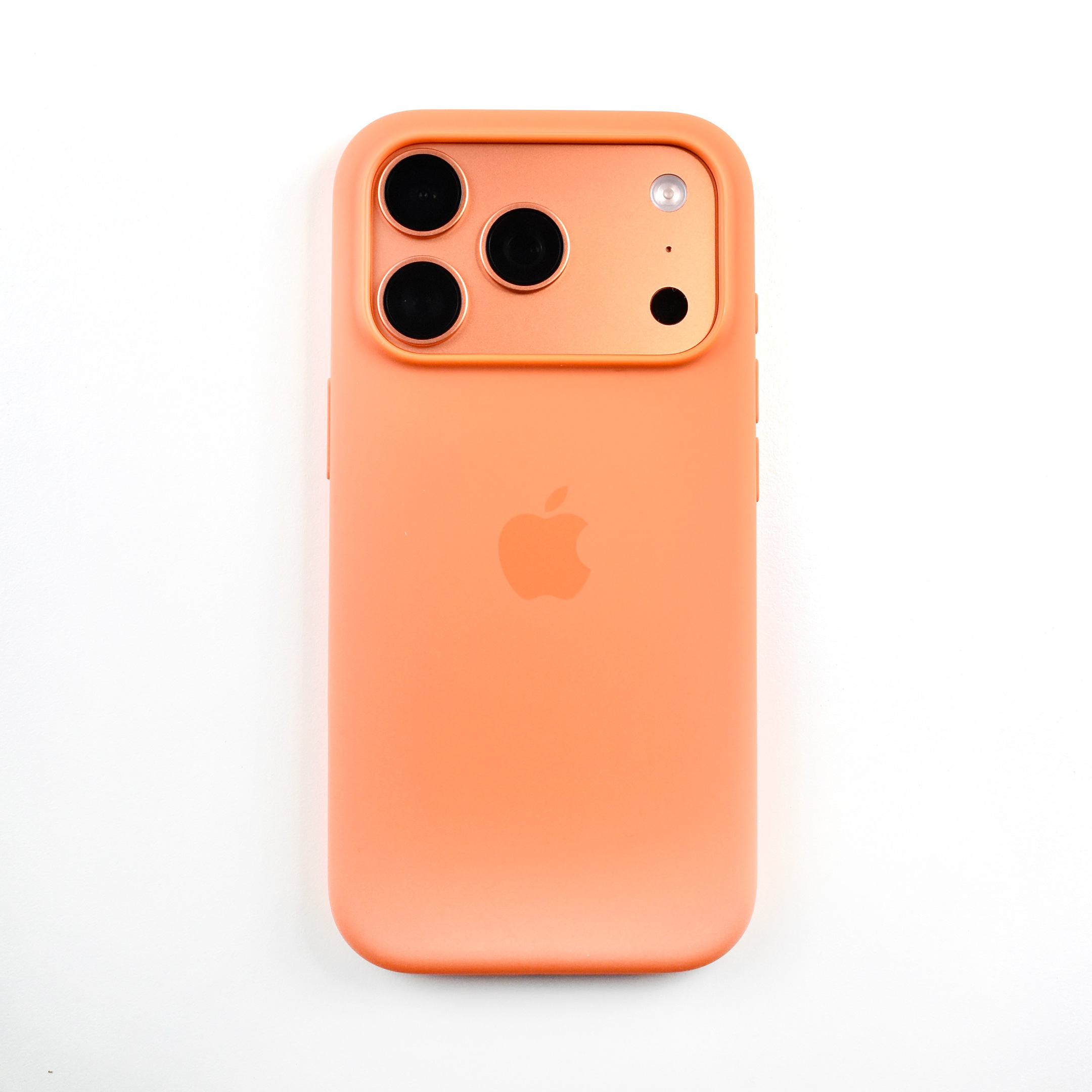
The iPhone 17 Pro Silicone Case was “Designed by Apple to complement iPhone 17 Pro, the Silicone Case with MagSafe is a delightful way to protect your iPhone.” This case also featured a conductive layer to communicate finger movements to the Camera Control button under the volume buttons.
Unlike previous Silicone case models, this one featured two connection points so it could be securely attached to the Crossbody Strap that was introduced at the same time as this case and the iPhone 17 Pro.
Apple also noted that the case was “Made with a 45 percent recycled silicone material” and “has a silky, soft-touch finish on the exterior that feels great in your hand. And on the inside, there’s a soft microfiber lining for even more protection.”
The case also included MagSafe magnets that extended the functionality of MagSafe built into the iPhone through the case. Apple described the charging functionality:
“With built-in magnets that align perfectly with iPhone 17 Pro Max, this case offers a magical attach experience and faster wireless charging, every time. When it’s time to charge, just leave the case on your iPhone and snap on your MagSafe charger, or set it on your Qi2 25W or Qi-certified charger.”
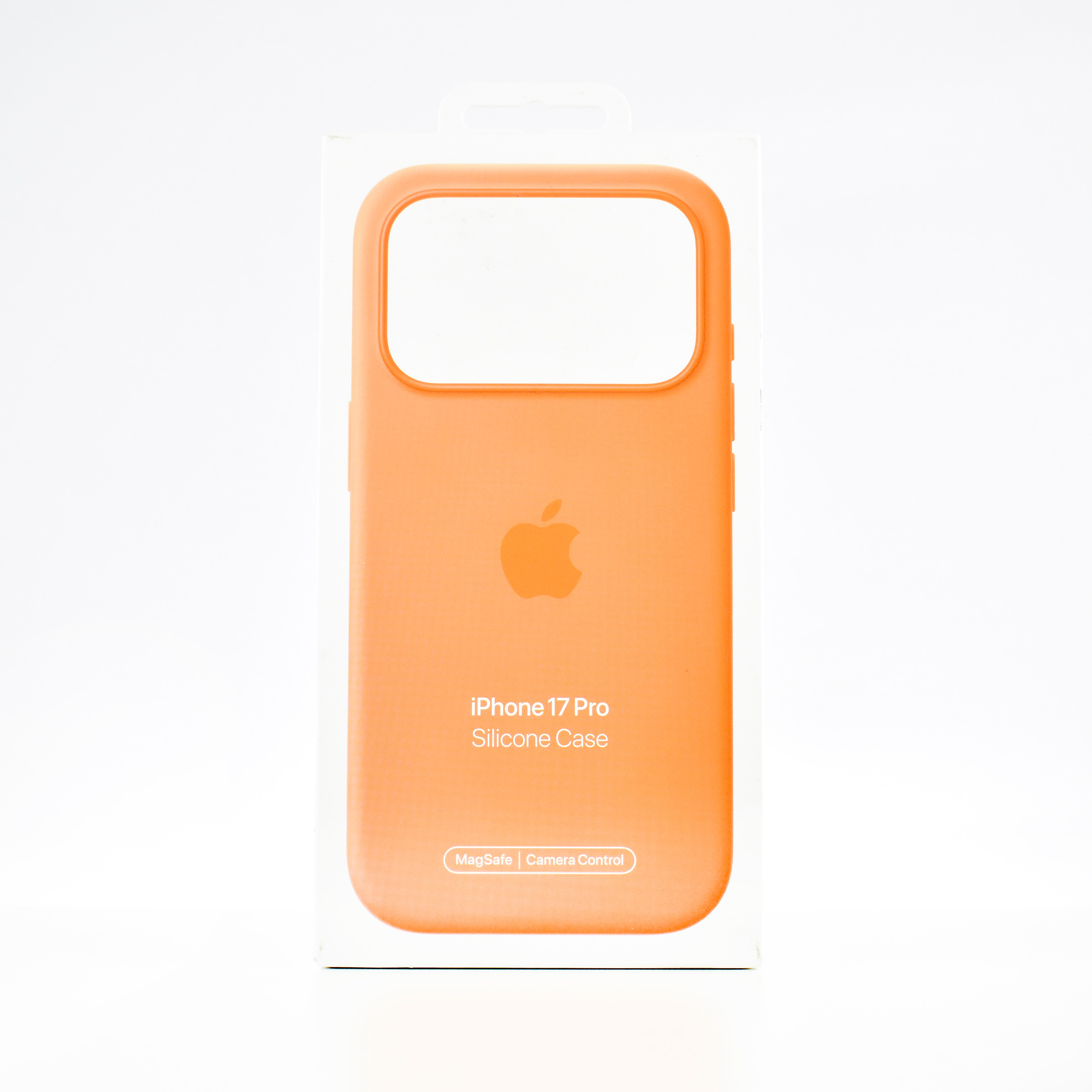
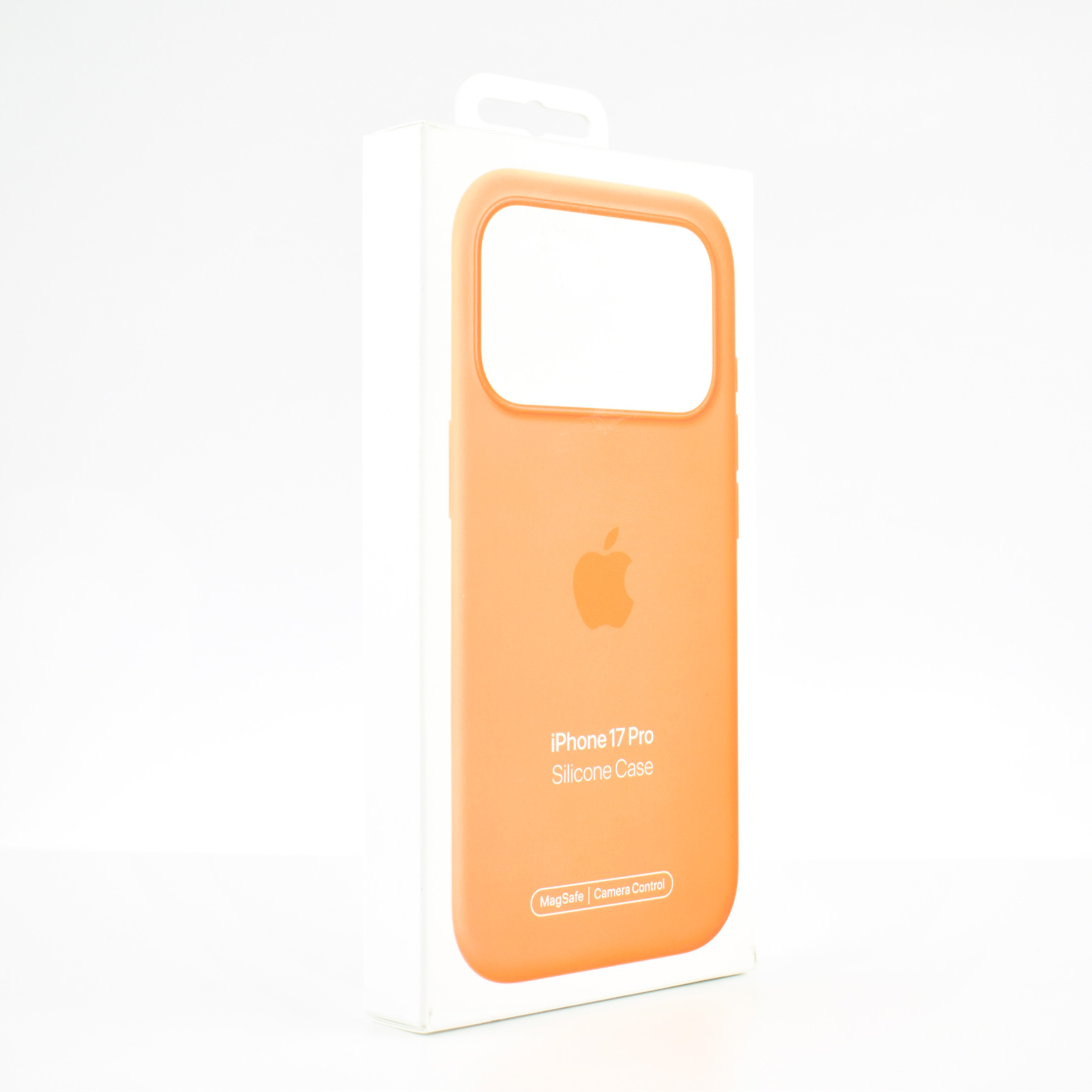
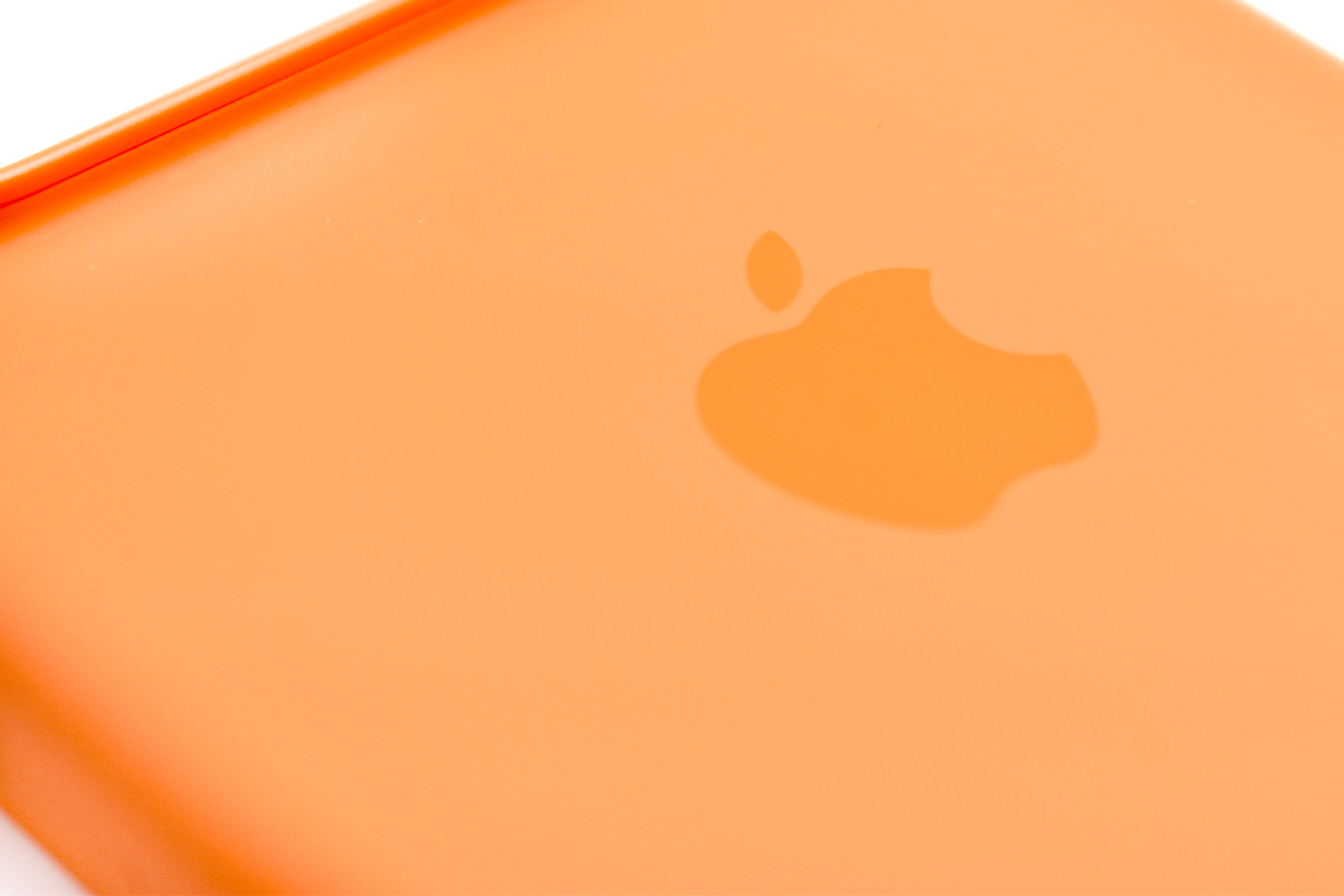
This case was originally offered in six colors. This example is orange.
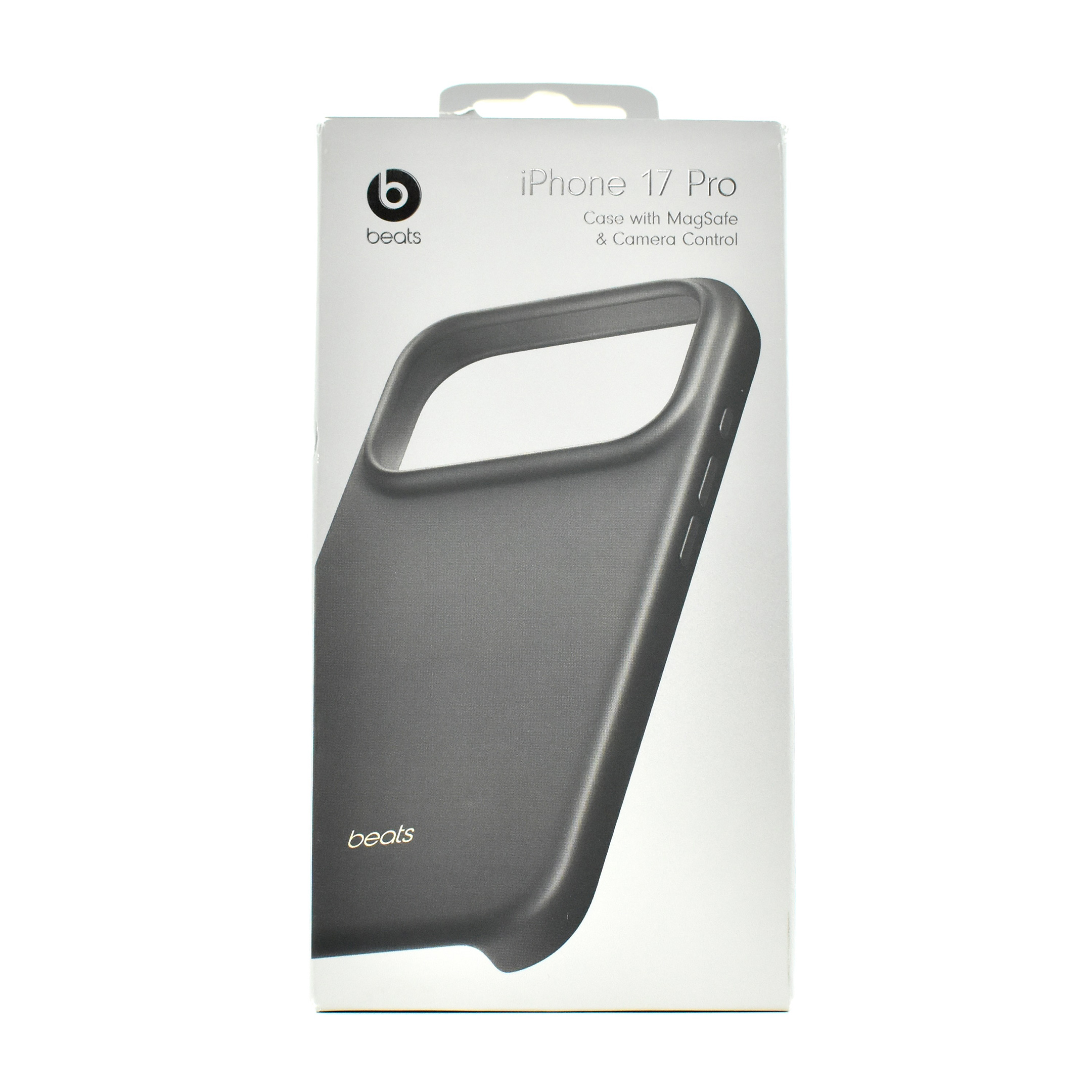
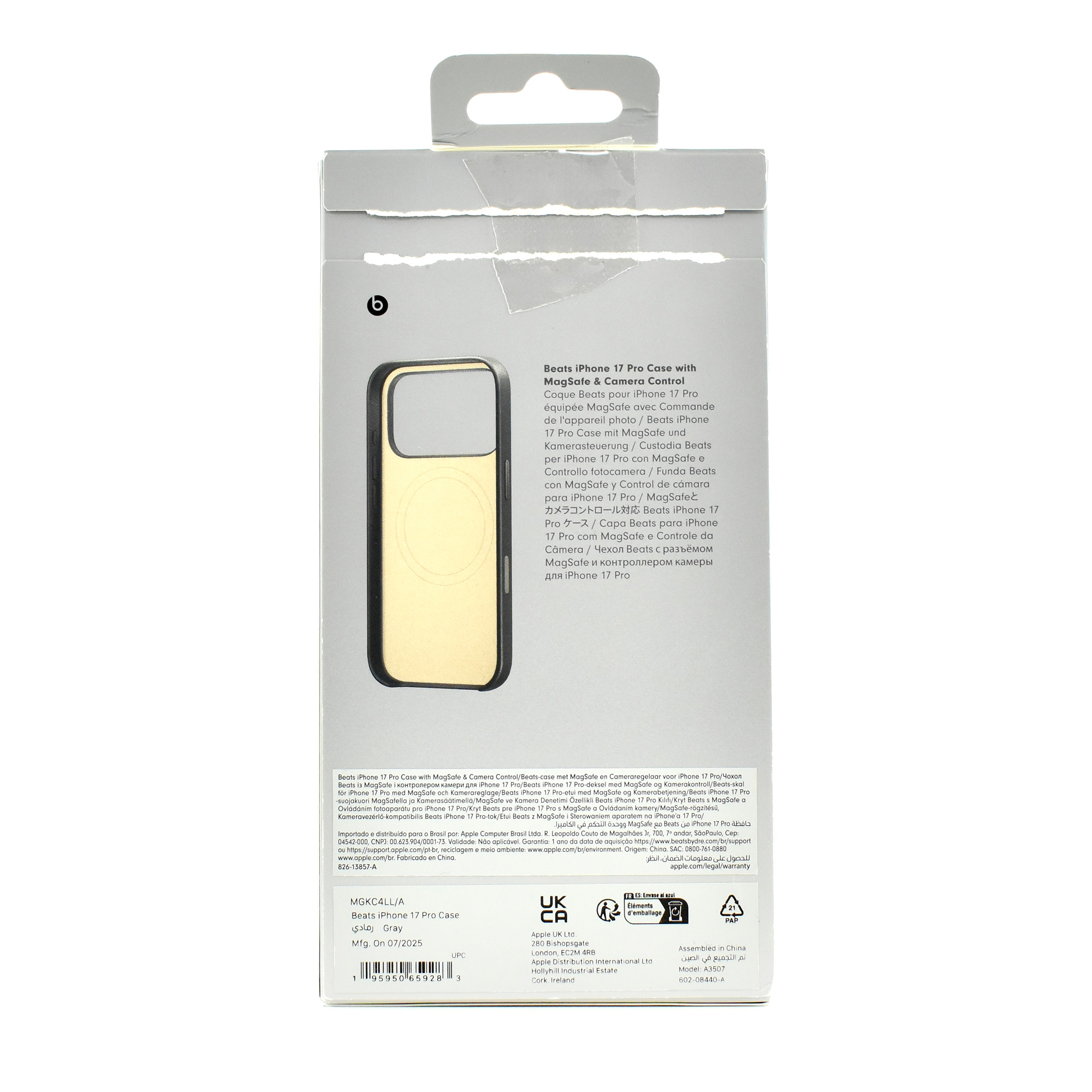
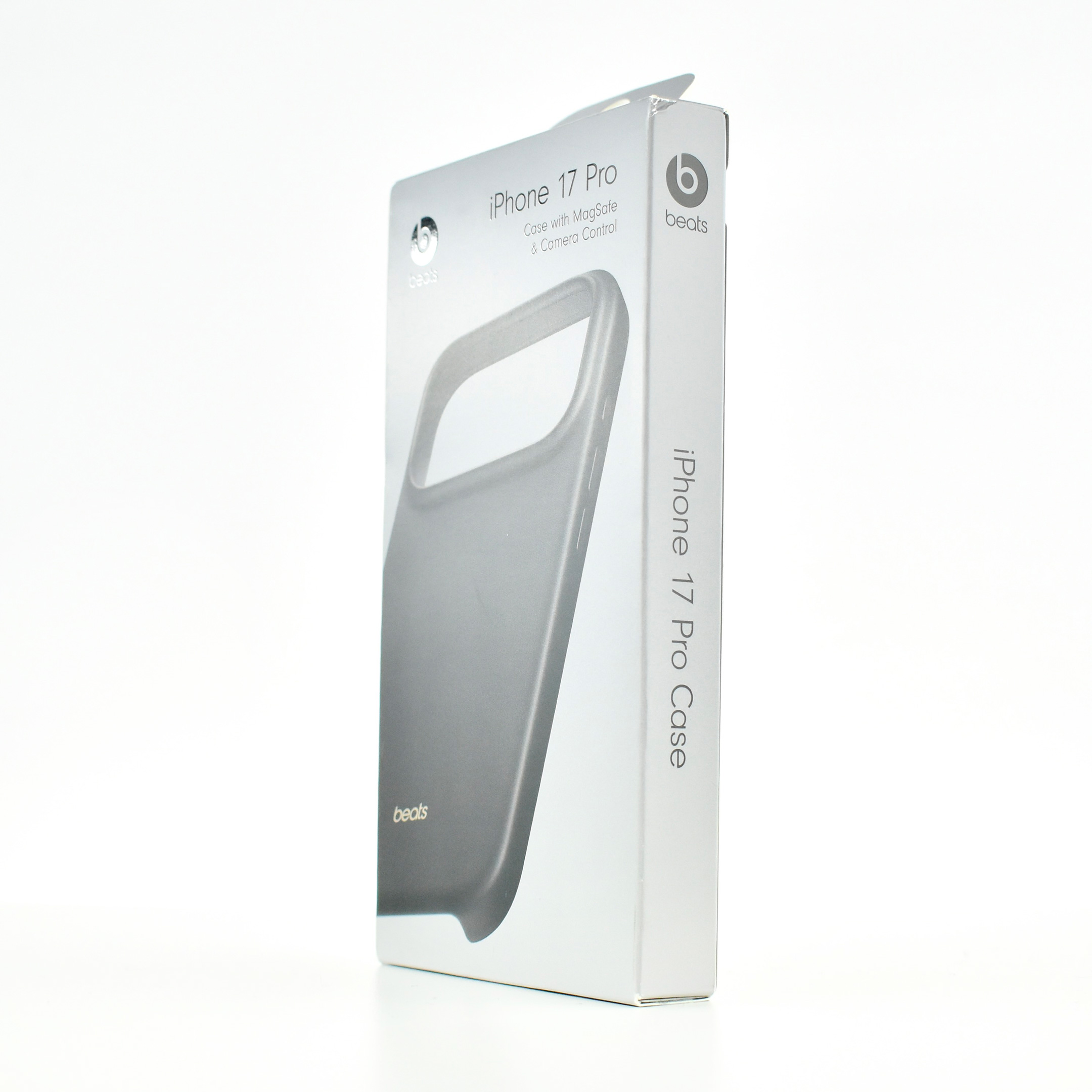
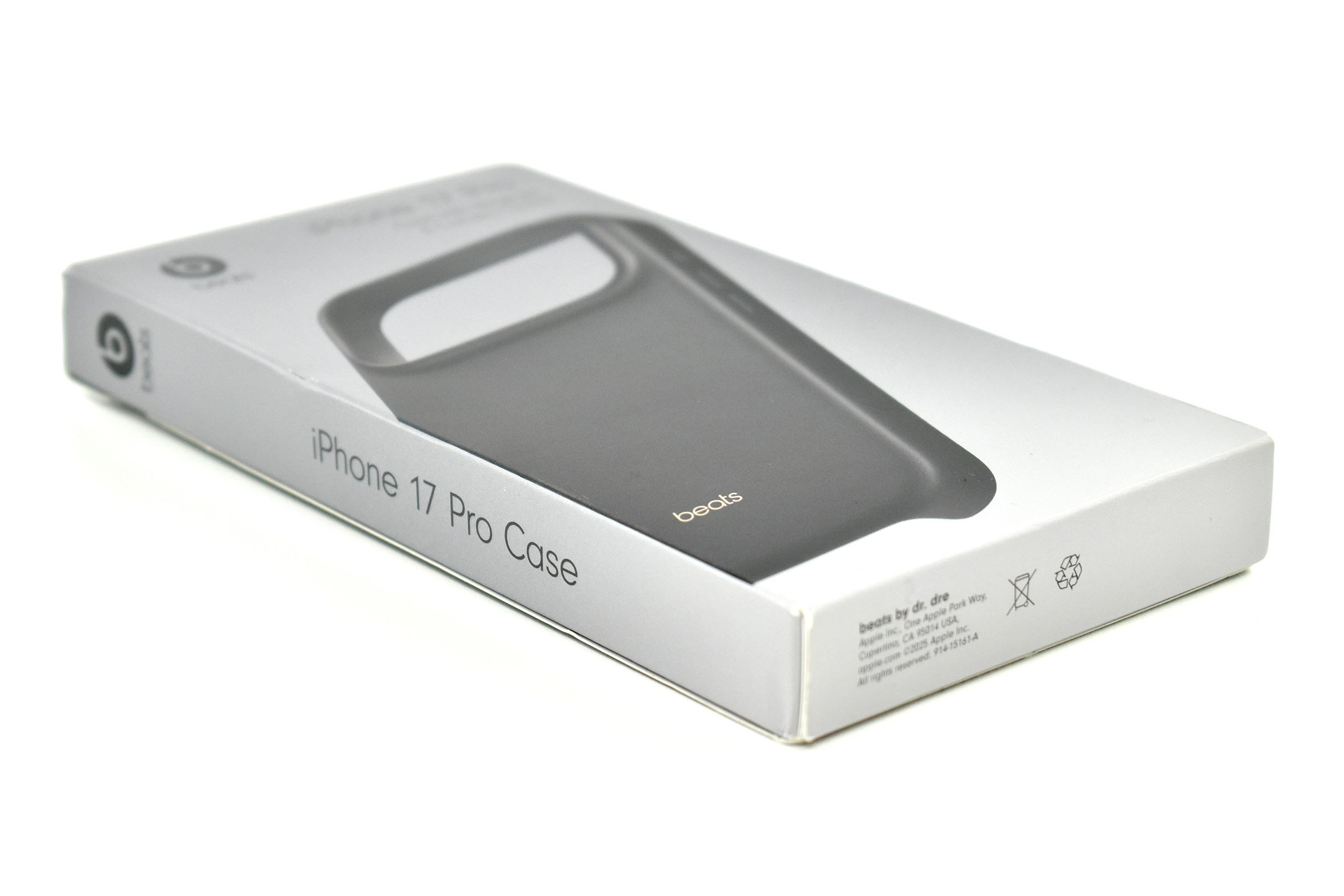
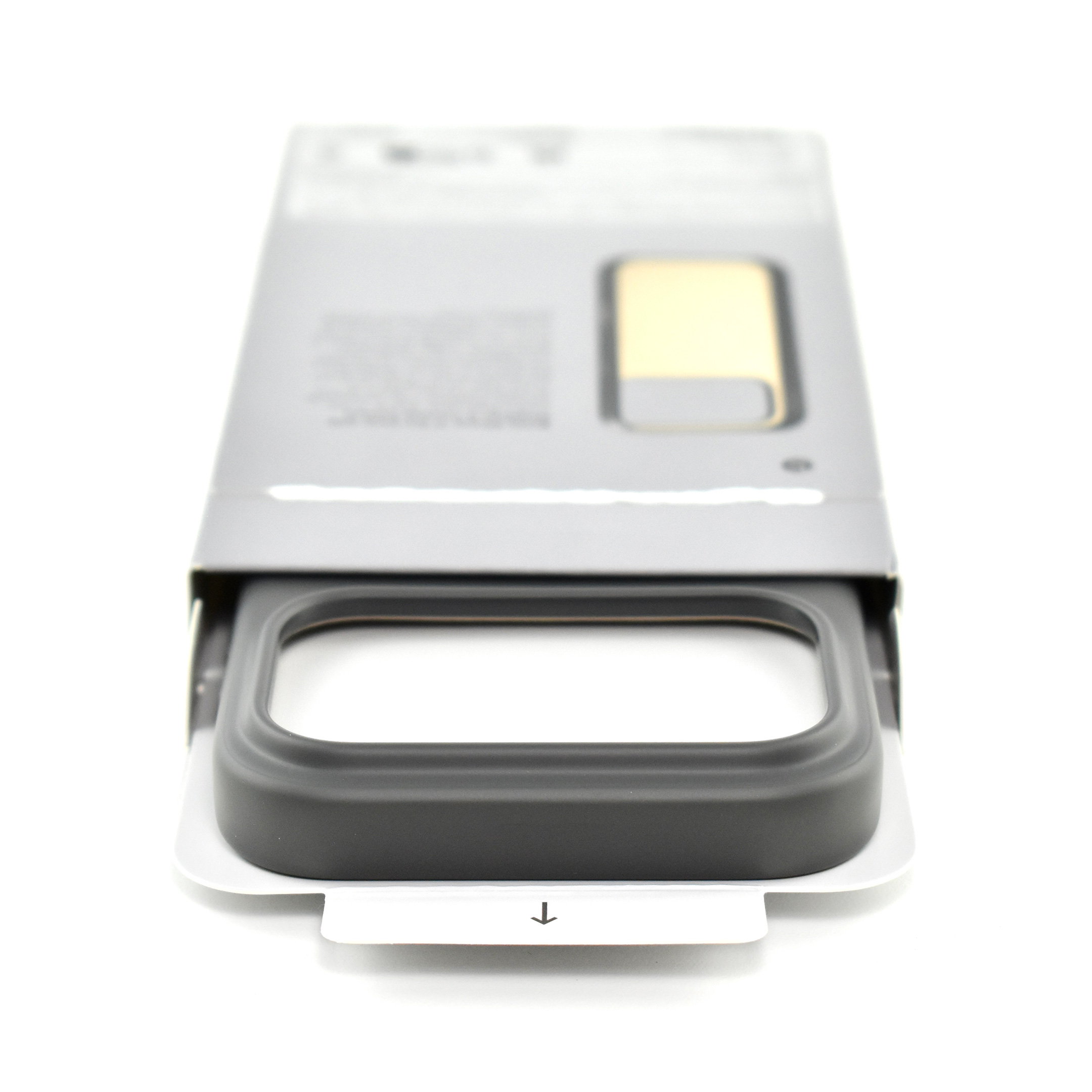
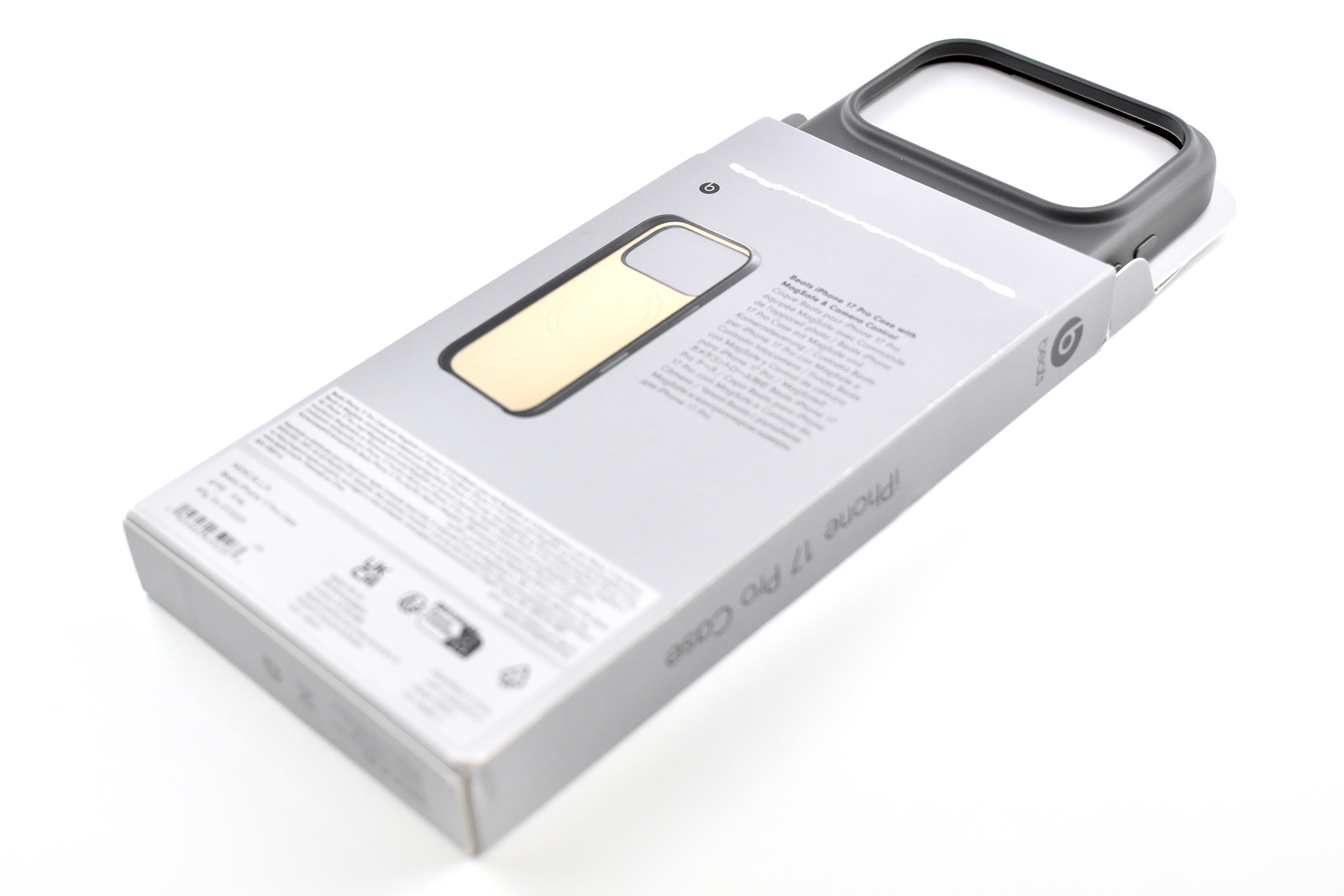
This is a somewhat rare example in my collection of a Beats accessory. Beats has been owned by Apple since 2014 as “a leading audio brand founded in 2006 by Dr. Dre and Jimmy Iovine” that primarily sells “premium consumer headphones, earphones, and speakers,” and now—for some reason—iPhone cases that have nothing to do with audio.
Because Beats is owned by Apple, it is no surprise that the cases feature Apple-specific features such as MagSafe and Camera Control (although third-party accessories also include these features).
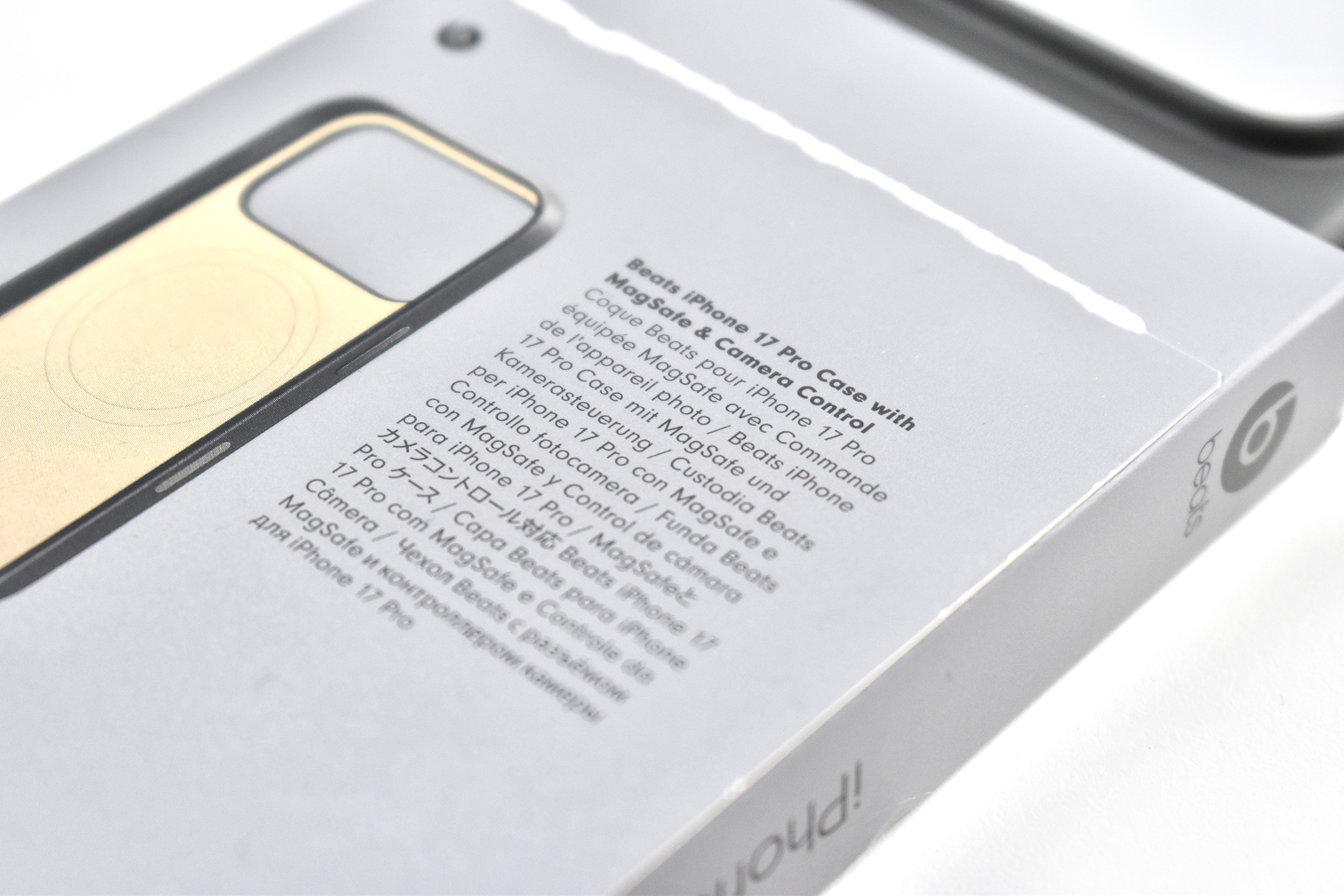
Somewhat unusually, the Apple and Beats websites describe this product differently. Apple followed a format closer to its other case products with descriptions such as:
“The strong polycarbonate back is complemented by flexible sidewalls to optimize shock absorption, while making the case thin and light. The outer matte finish reduces signs of scratches, smudges, and fingerprints, and the inner microfiber lining gently reduces surface scratches and abrasion.”
Apple also noted that “undergone thousands of hours of testing throughout the design and manufacturing process,” a statement similar to the durability statement on Apple-branded cases.
Apple listed highlights as:
Durable double-shot design
Strong hardshell back
Shock-absorbing sidewalls
Soft microfiber lining
Matte finish
Compatible with MagSafe and Camera Control
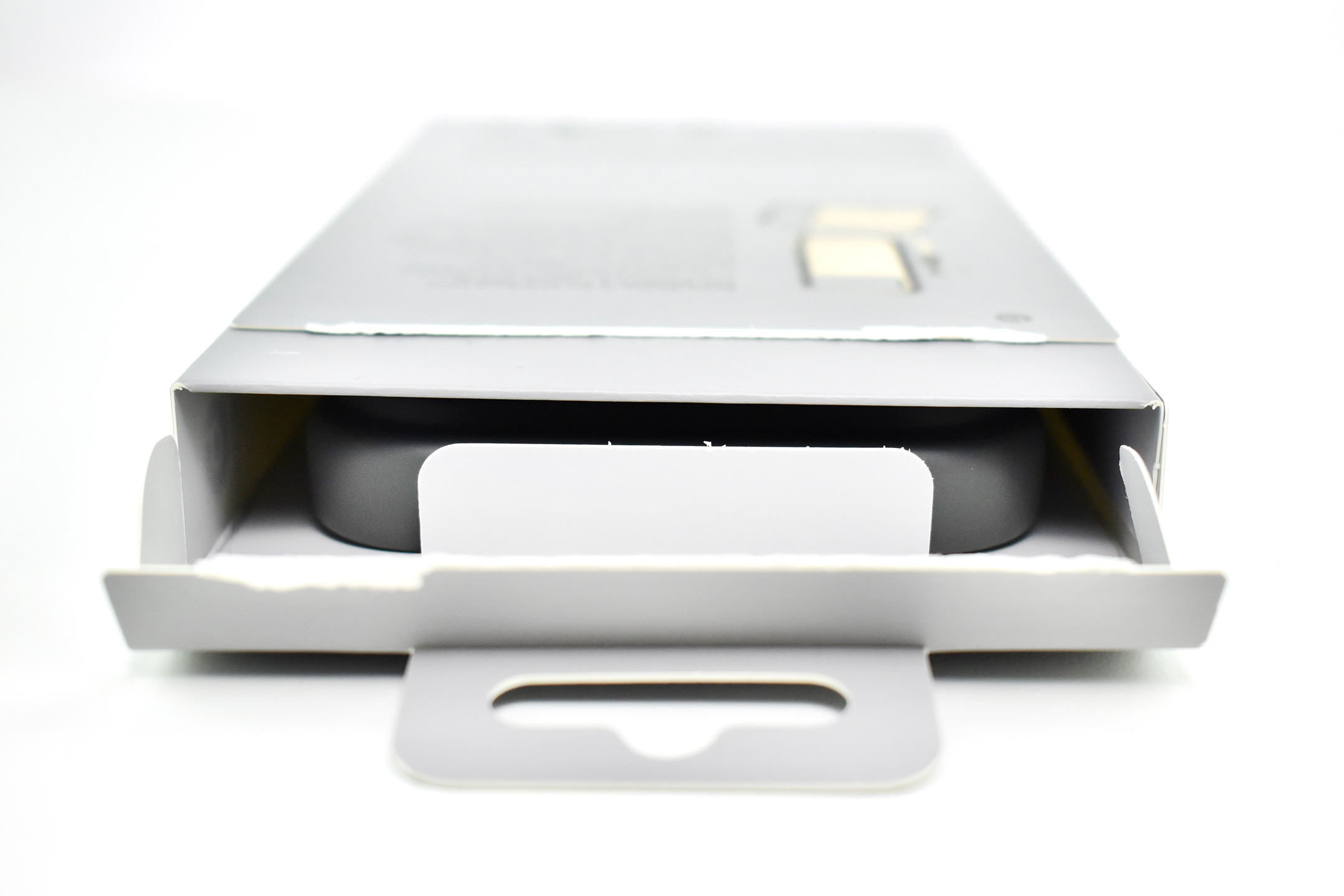
On the other hand, the Beats website described the case primarily through videos, pictures, and short text snippets. For example, the text “Scratch & drop protection. Strong hardshell back with shock-absorbing sidewalls,” and a looping 5-second video showing its durability. 11 photos were included on the Beats website, while Apple only featured 6.
This case was offered in four colors: Bedrock Blue, Lime Stone, Pebble Pink, and the color of this example, Granite Gray.
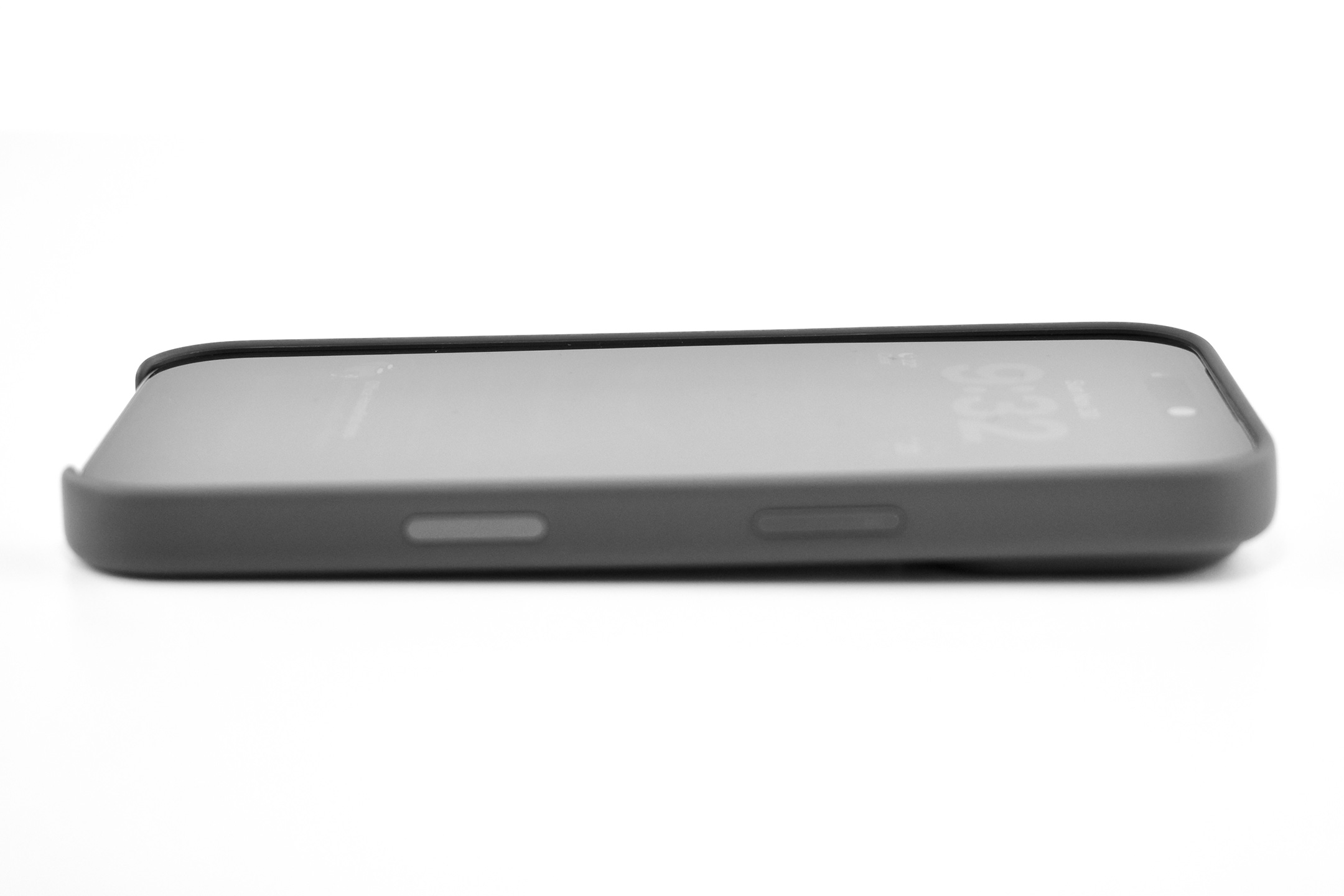
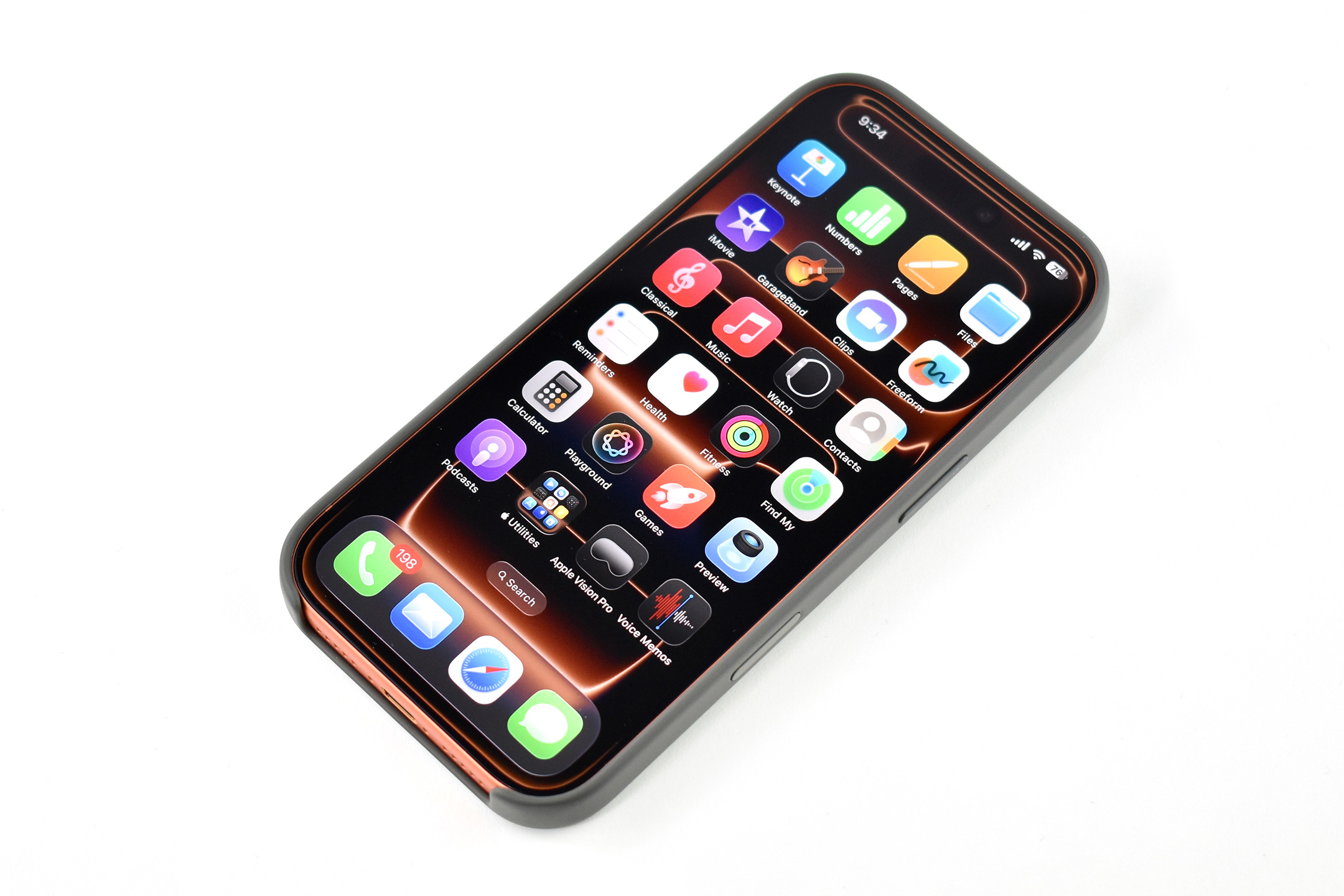
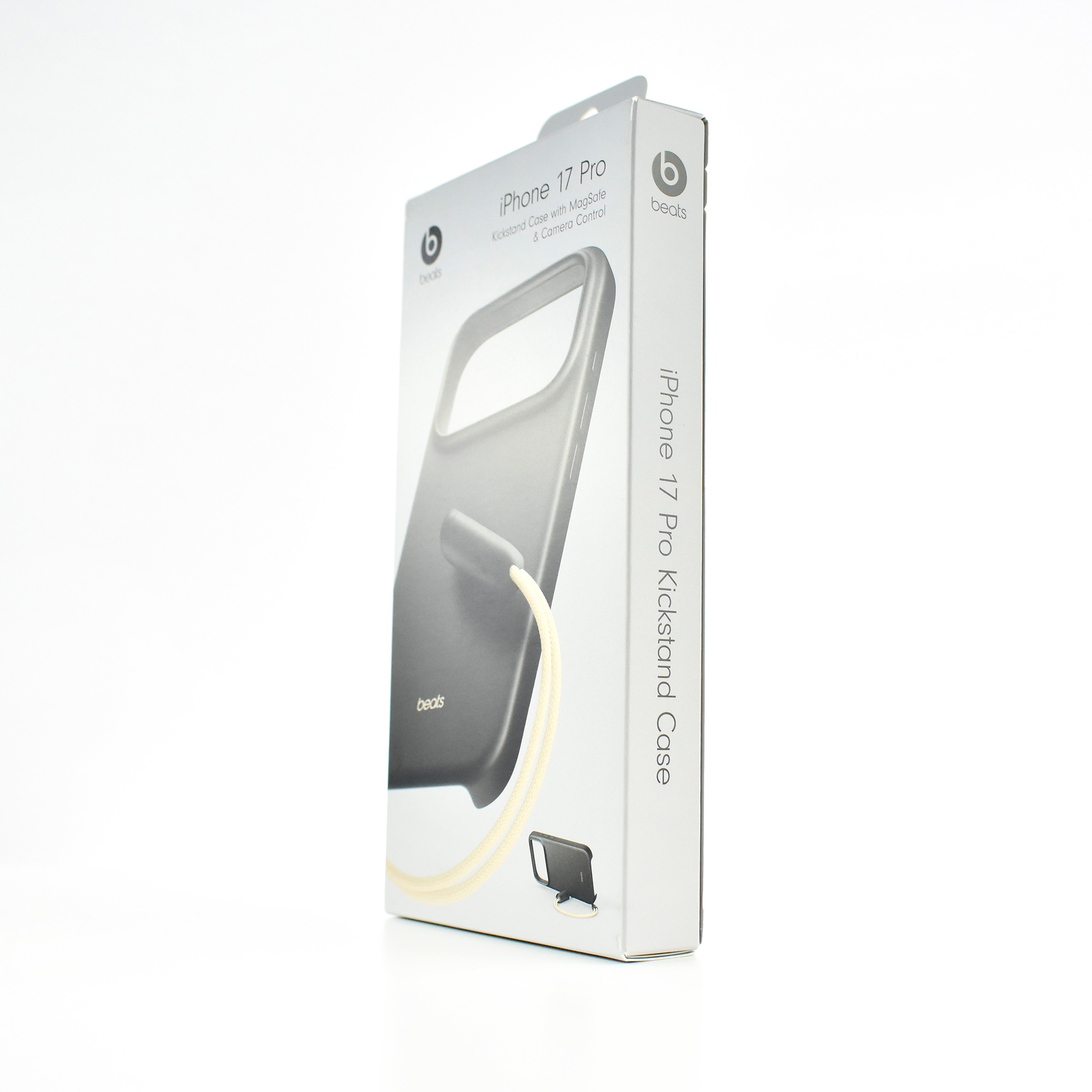
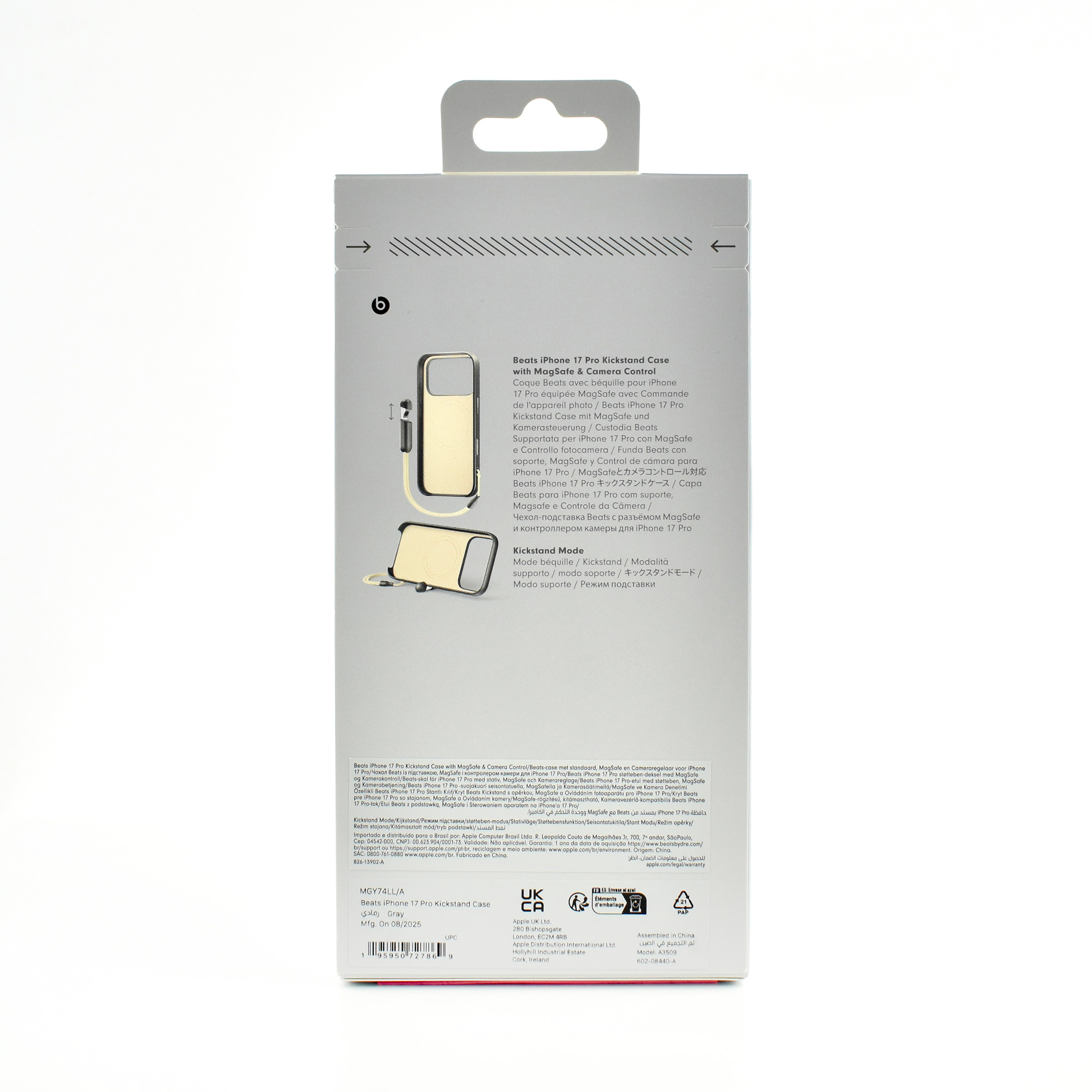
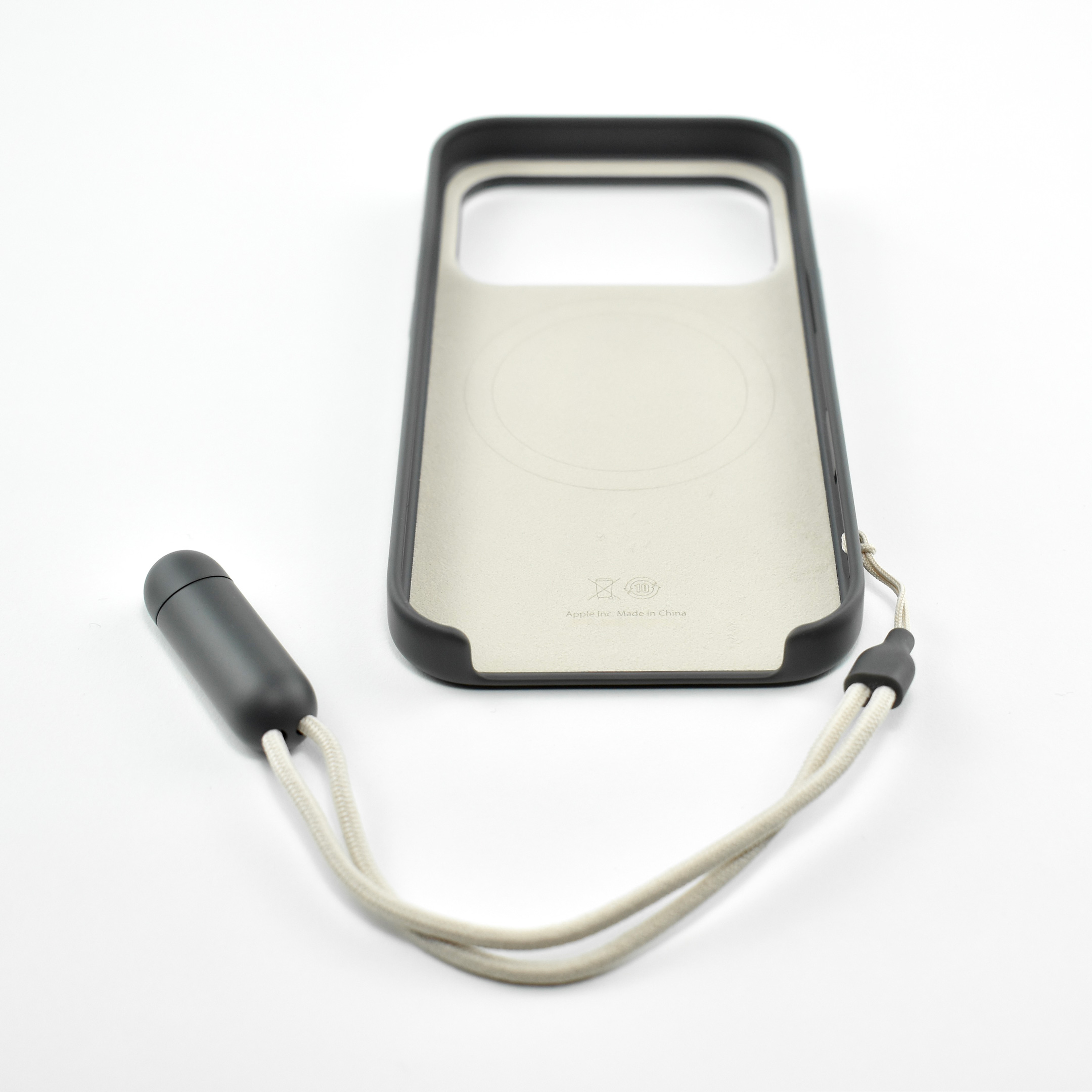
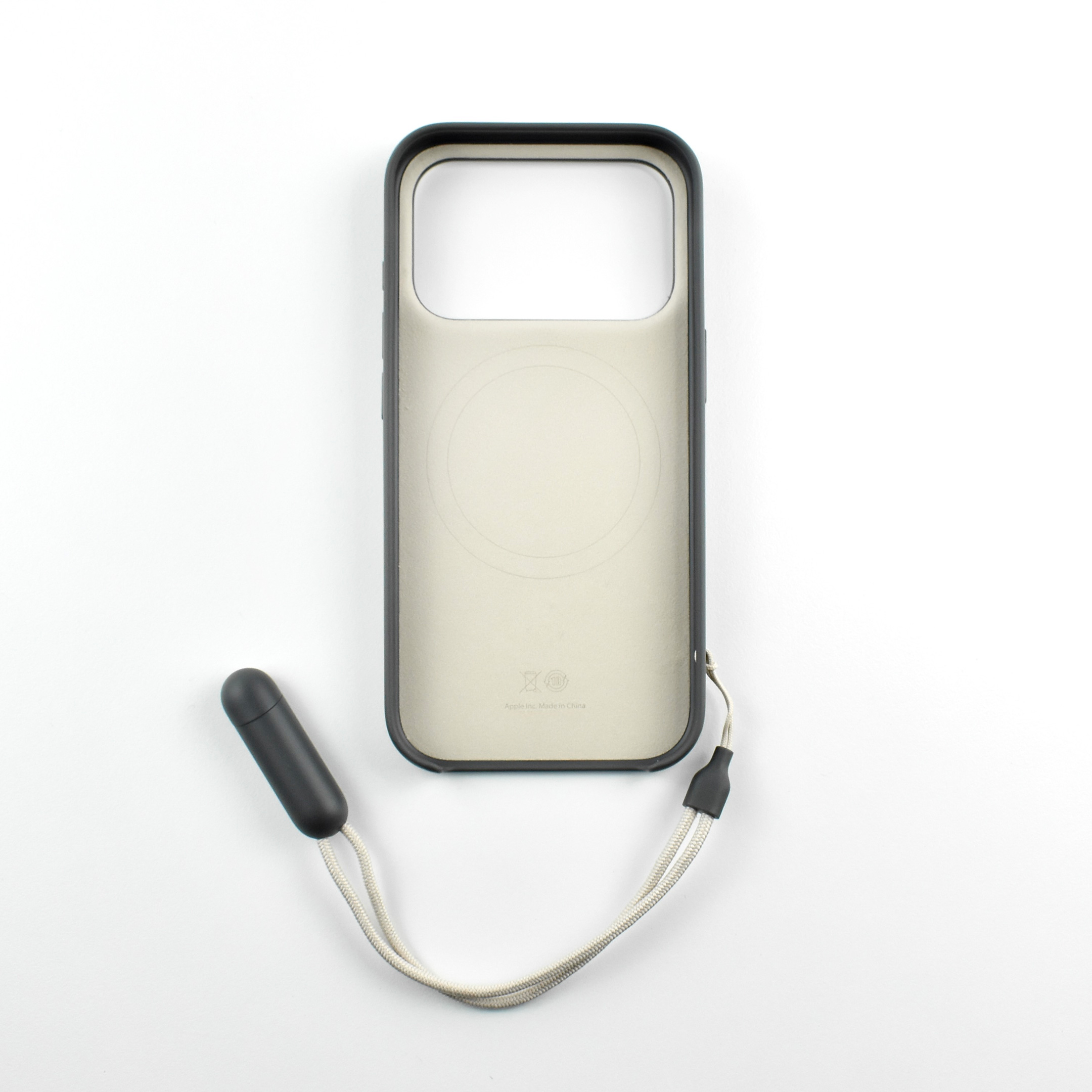
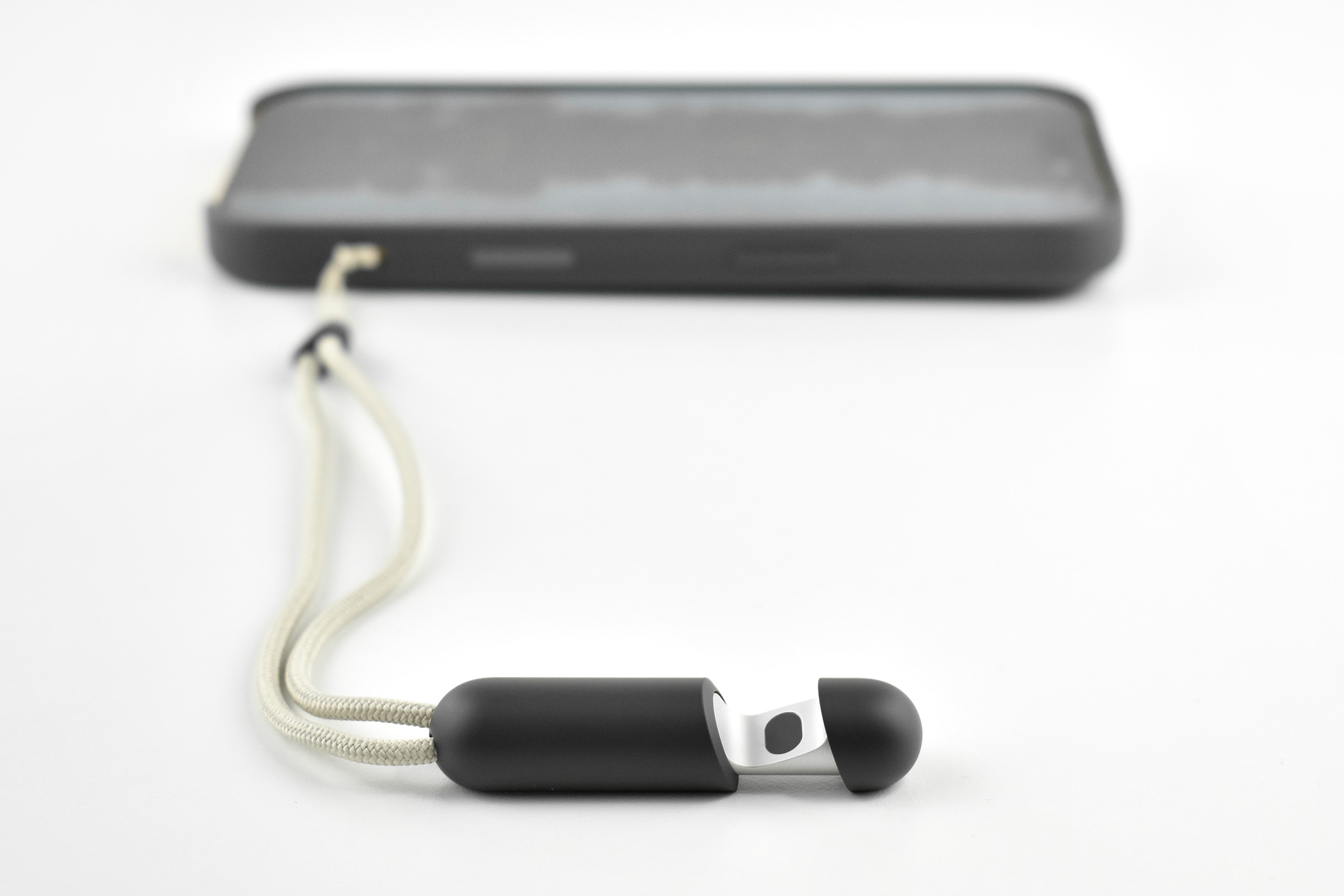
This is a somewhat rare example in my collection of a Beats accessory. Beats has been owned by Apple since 2014 as “a leading audio brand founded in 2006 by Dr. Dre and Jimmy Iovine” that primarily sells “premium consumer headphones, earphones, and speakers,” and now—for some reason—iPhone cases that have nothing to do with audio.
Because Beats is owned by Apple, it is no surprise that the cases feature Apple-specific features such as MagSafe and Camera Control (although third-party accessories also include these features).
Somewhat unusually, the Apple and Beats websites describe this product differently. Apple followed a format closer to its other case products with descriptions such as:
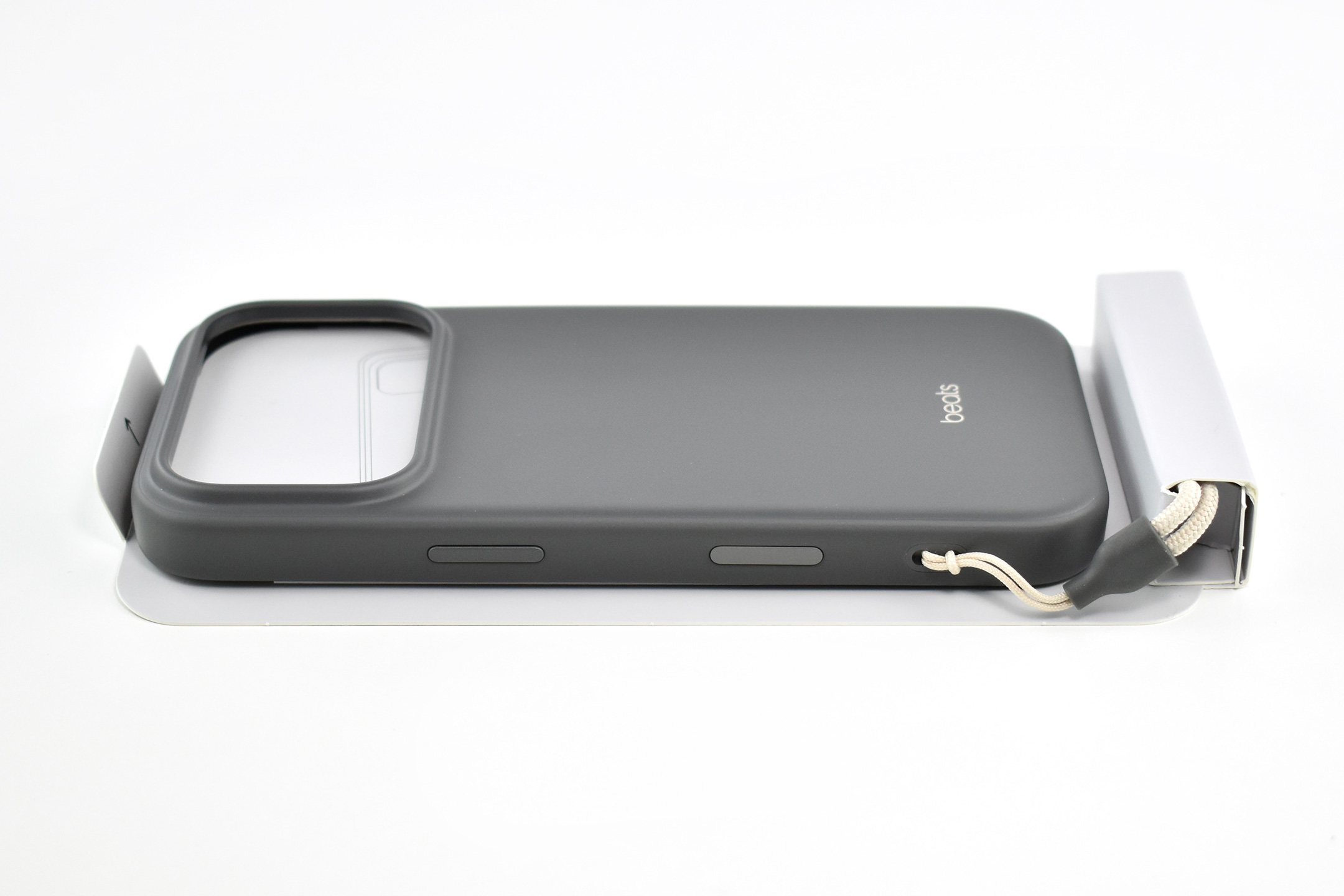
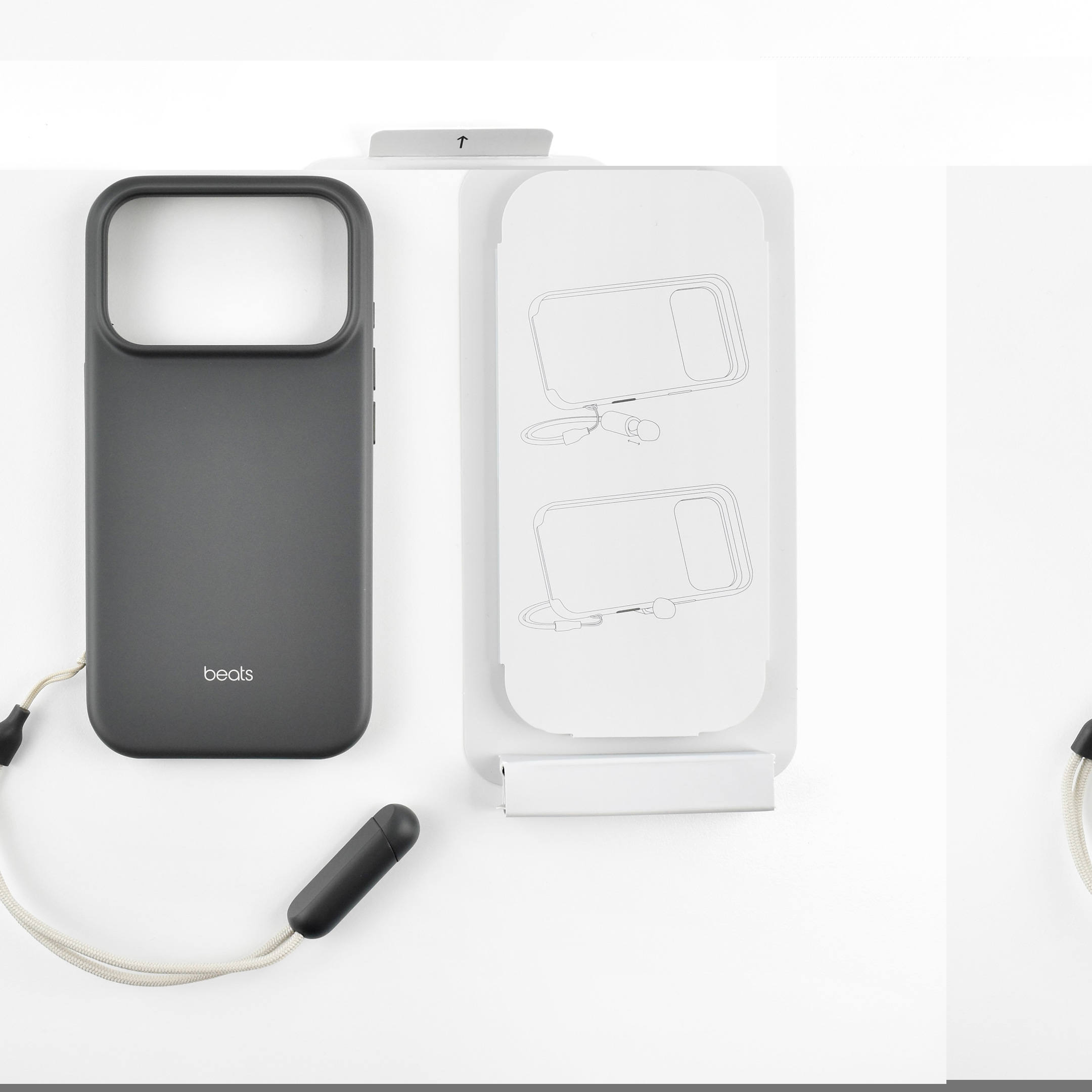
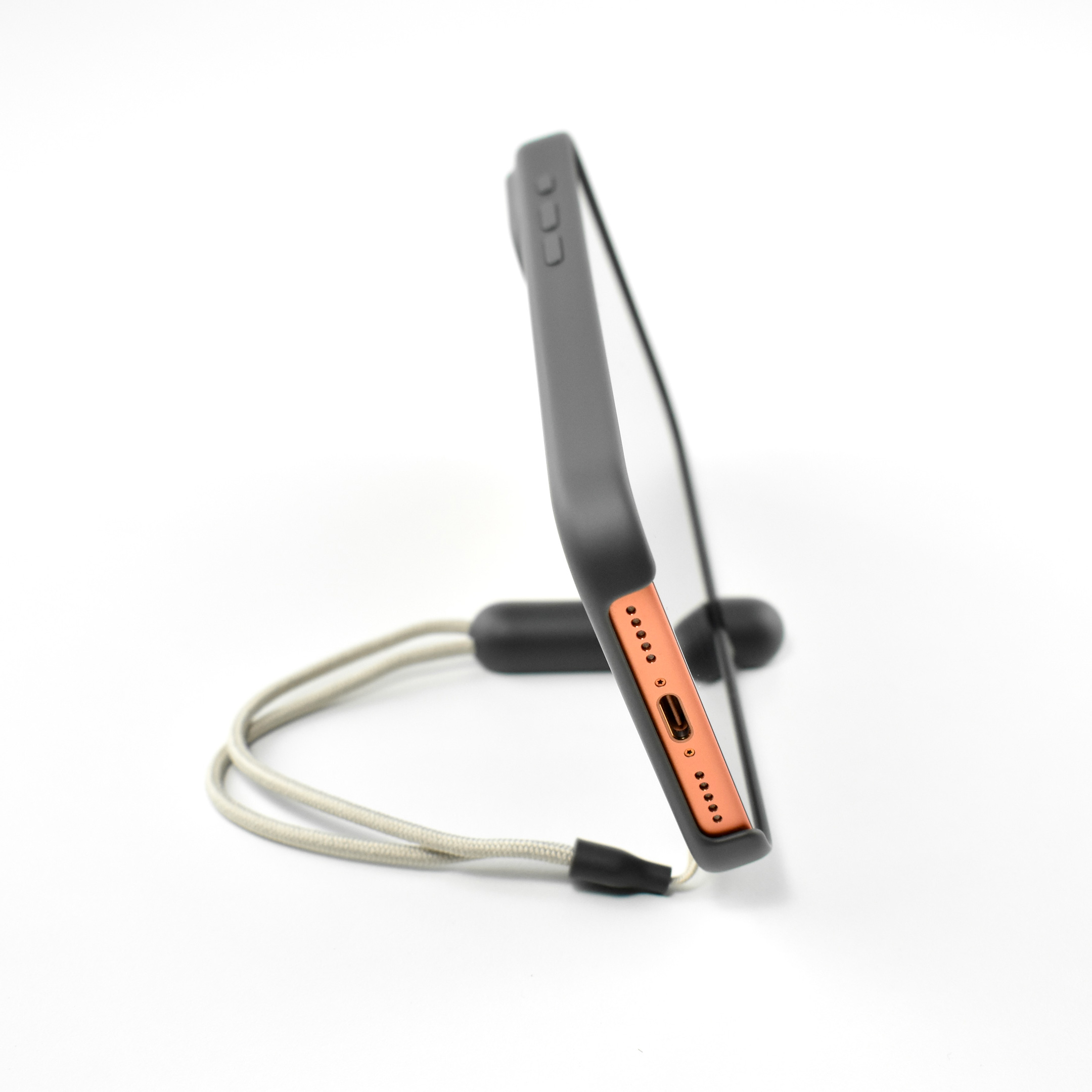
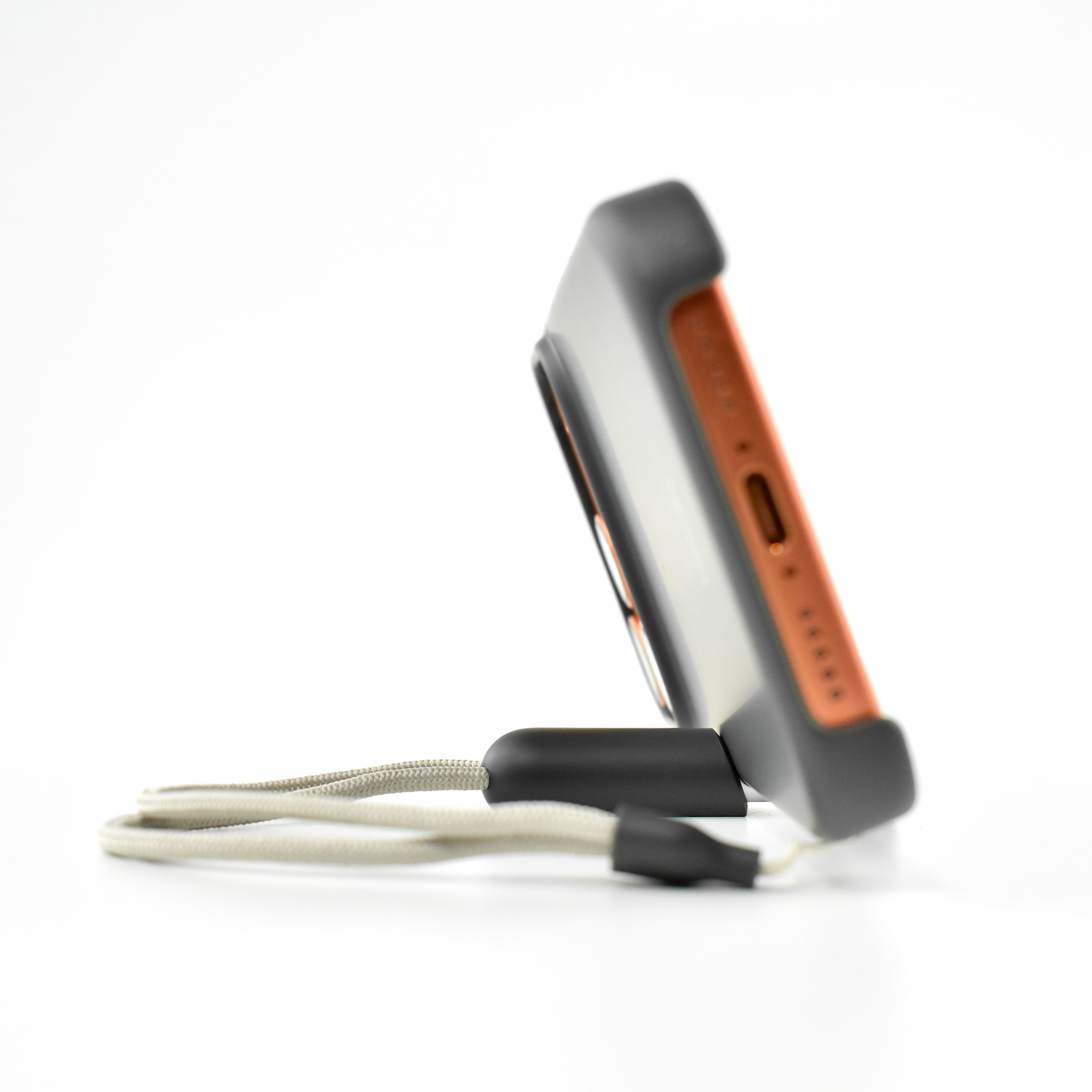
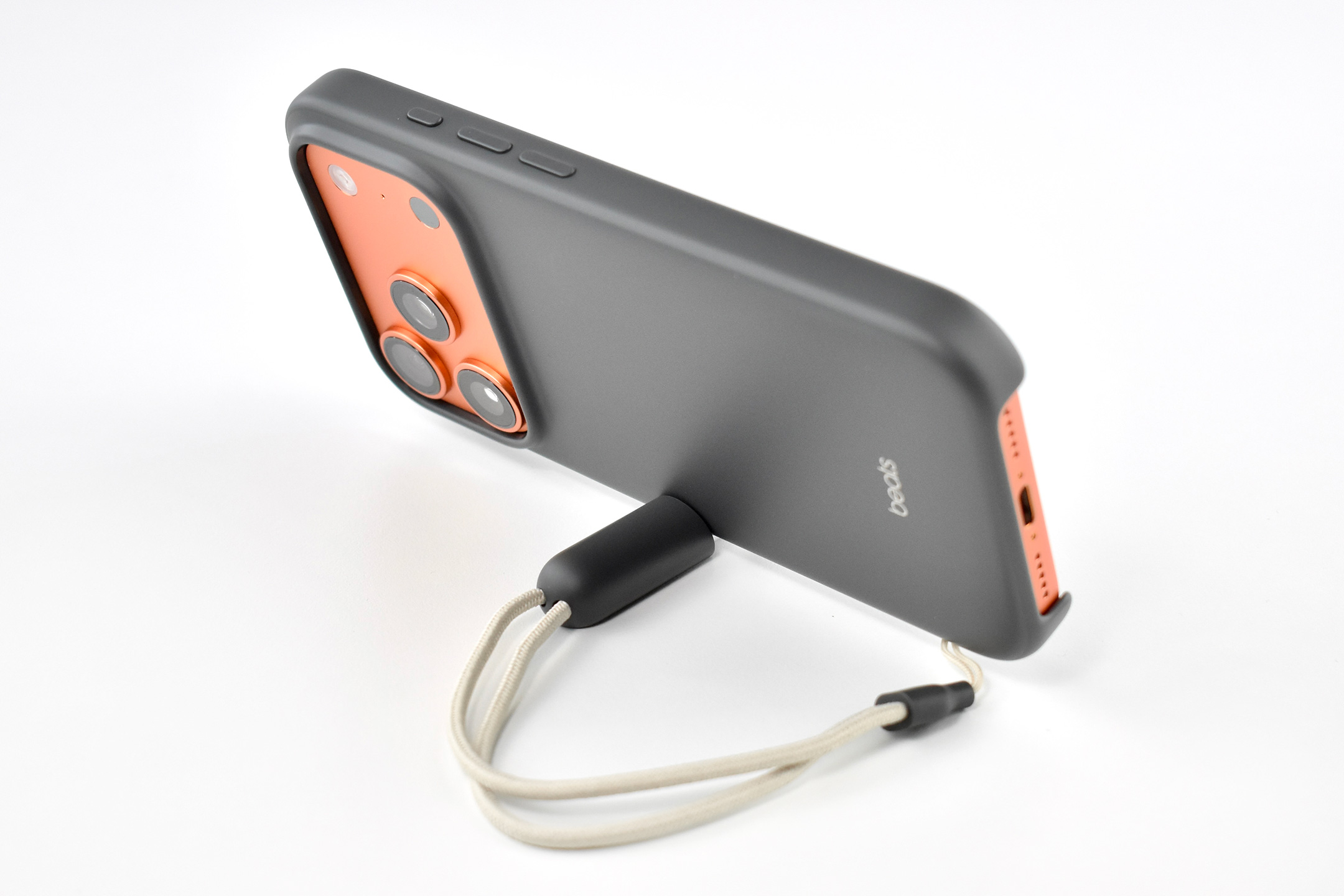
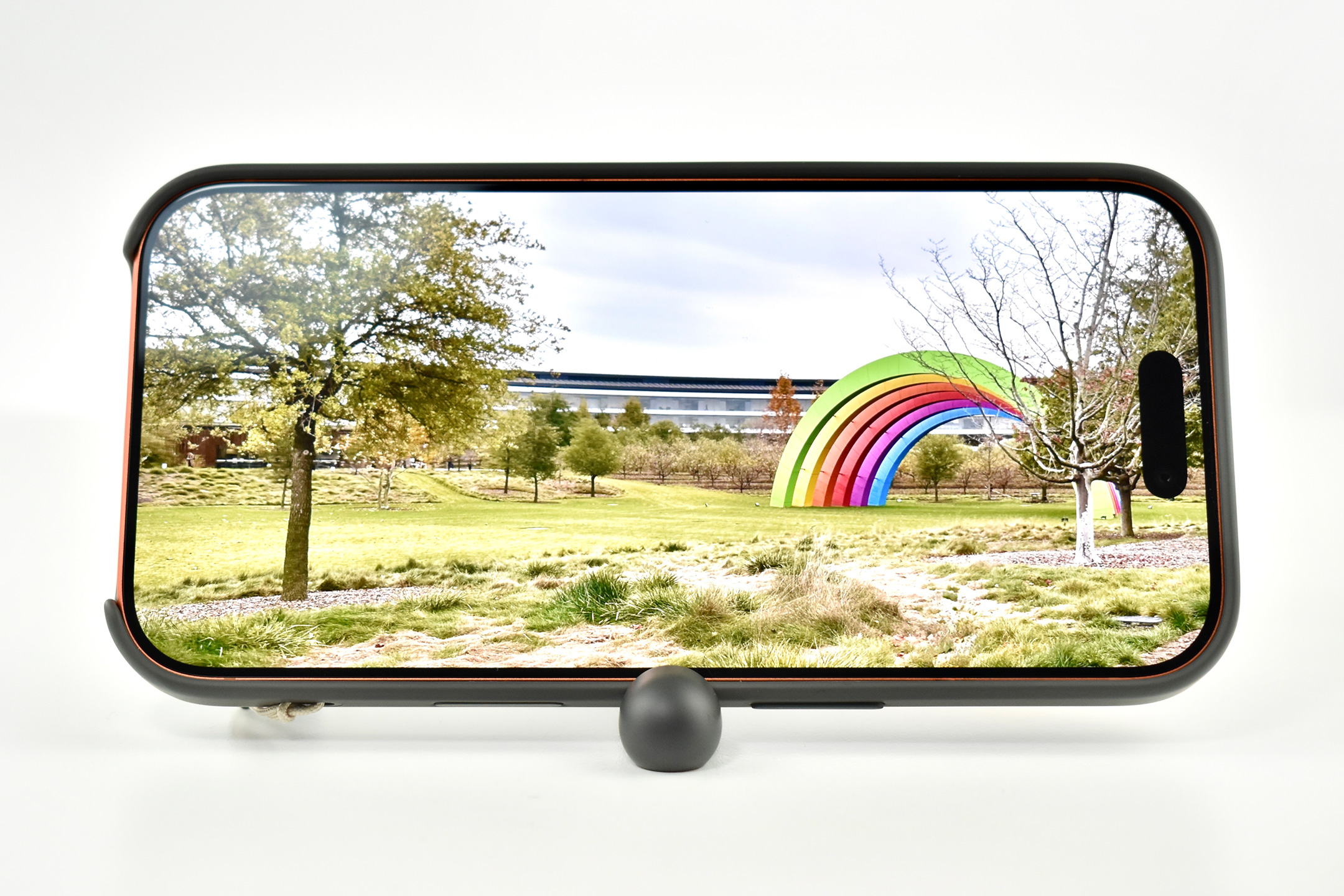
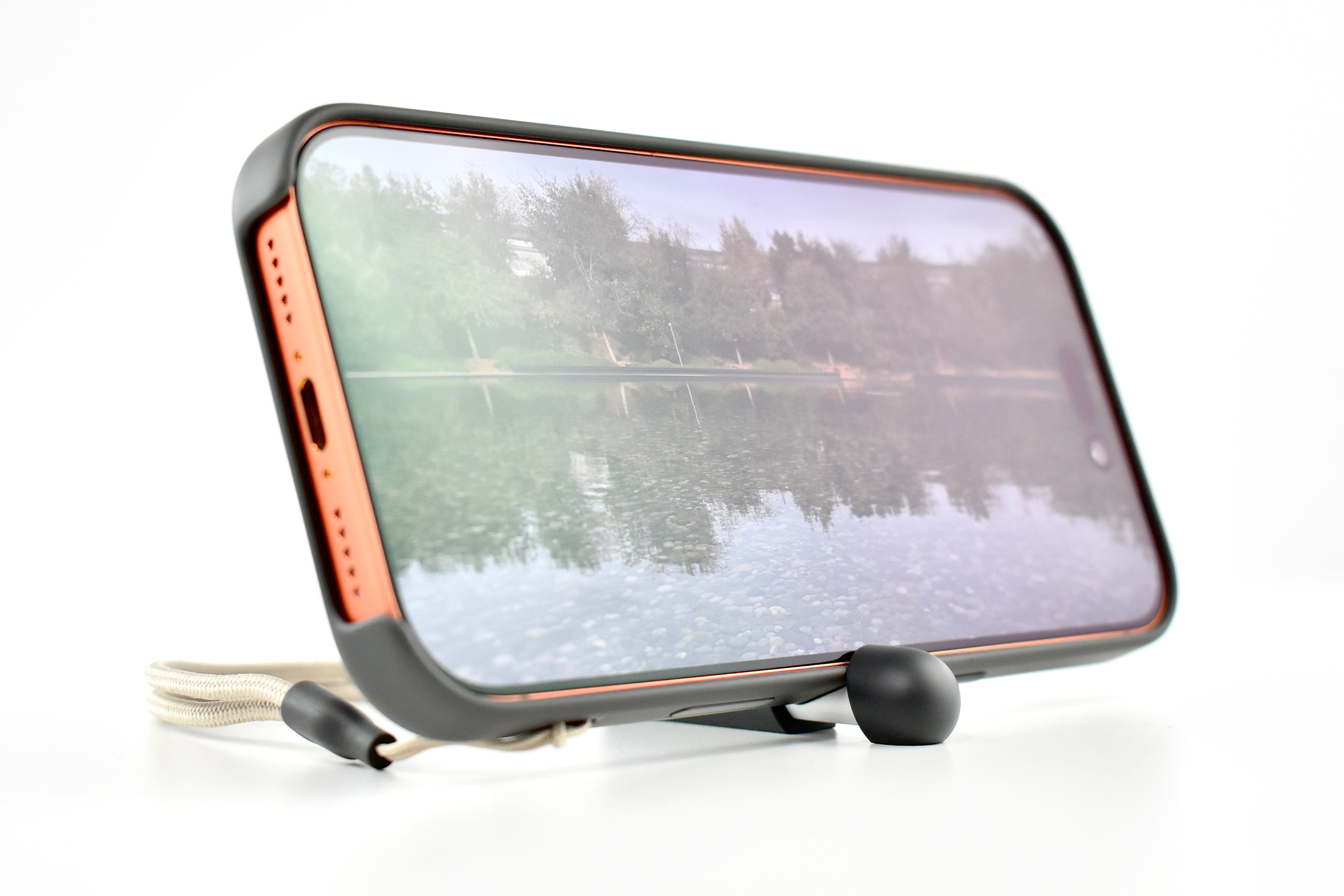
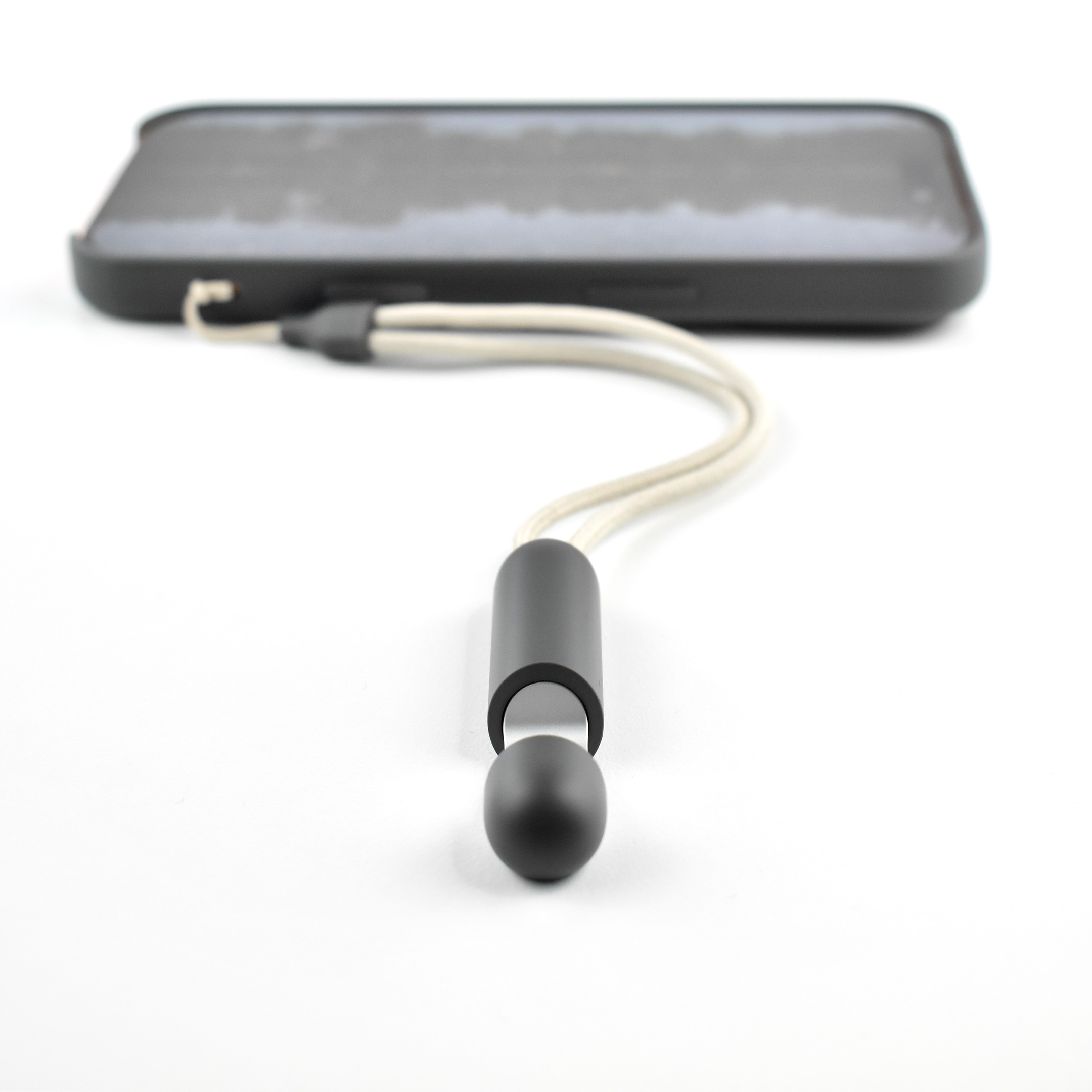
“Built to protect your iPhone from scratches and drops, this case also features a convenient, removable lanyard that doubles as a kickstand for hands-free landscape viewing. To create the kickstand, an adapter at the end of the lanyard slides open and attaches to a magnetic point on the side of the case.”
Apple also noted that “The Beats iPhone 17 Pro Kickstand Case with MagSafe and Camera Control has undergone thousands of hours of testing throughout the design and manufacturing process,” a statement similar to Apple-branded cases.
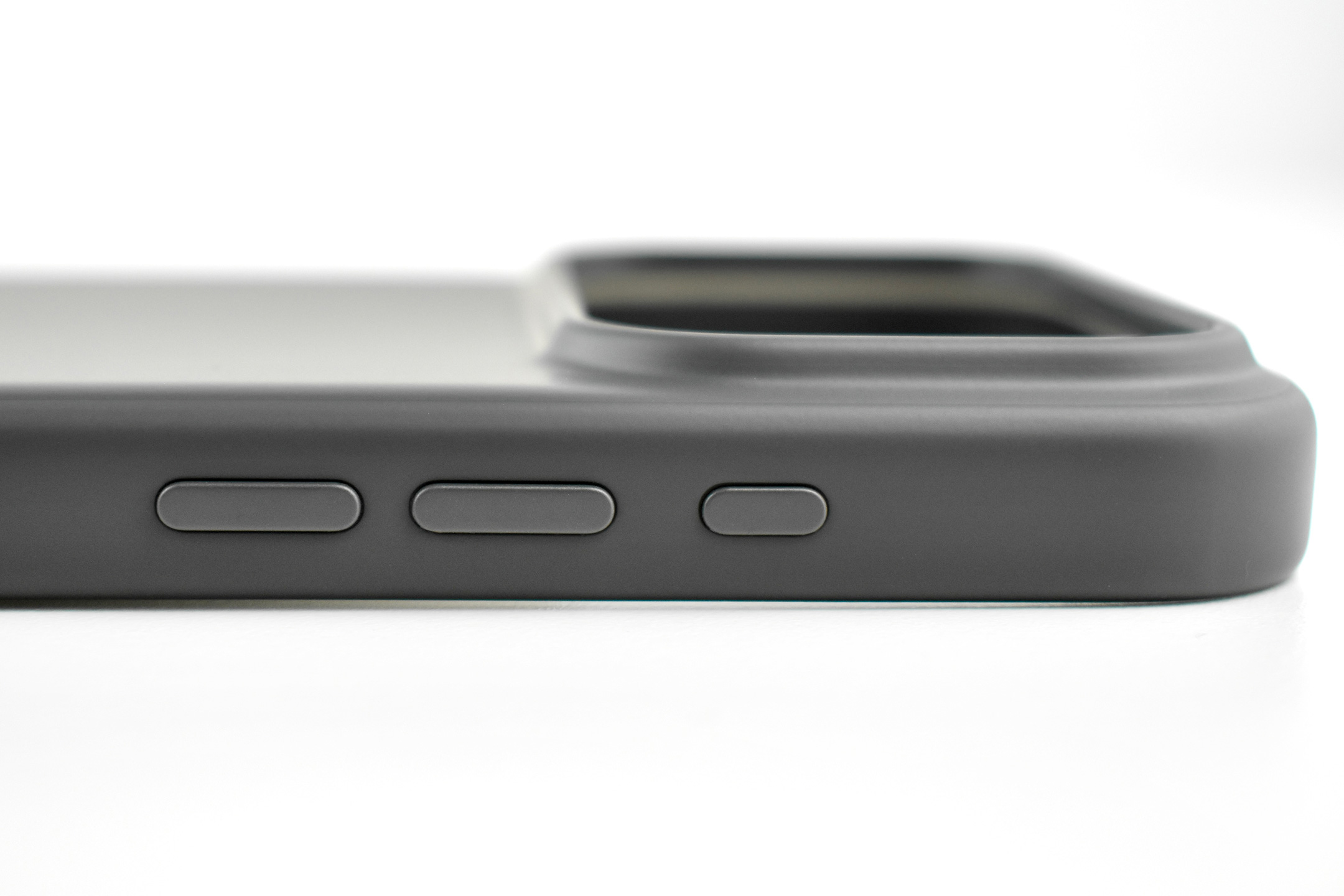
Apple described the case: “The strong polycarbonate back, which is complemented by flexible sidewalls to optimize shock absorption, makes the case thin and light. The outer matte finish reduces signs of scratches, smudges, and fingerprints, while the interior microfiber lining gently reduces surface scratches and abrasion.
On the other hand, the Beats website described the case primarily through videos, pictures, and short text snippets. For example, the kickstand featured the text “Quick stand. The removable lanyard easily converts to a kickstand for hands-free landscape viewing,” and included a looping 5-second video showing the kickstand feature. 11 photos were included on the Beats website, while Apple only featured 6.
This case was offered in four colors: Bedrock Blue, Lime Stone, Pebble Pink, and the color of this example, Granite Gray.
The iPhone 16 Pro Clear Case was released along with the iPhone 16 lineup in September 2024. Apple described the case as “Thin, light, and easy to grip — this Apple-designed case shows off the brilliant colored finish of iPhone 16 Pro while providing extra protection.”
Like the previous versions of Apple’s clear cases, this case uses multiple materials that are molded together to provide protection, grip, and access to buttons, using “a blend of optically clear polycarbonate and flexible materials.”
In addition, this case adds a new button that works “seamlessly with Camera Control. It features a sapphire crystal, coupled to a conductive layer to communicate finger movements to the Camera Control.” Camera Control was a new feature introduced with the iPhone 16 lineup that added one-button access to the camera and its controls using a touch-sensitive side-button. On the Clear Case, the Camera Control button is white (not clear) and made of a conductive material to allow full functionality of the iPhone button.
Like its predecessors, this case has “built-in magnets that align perfectly with iPhone…[offering] a magical attach experience and faster wireless charging, every time. When it’s time to charge, just leave the case on your iPhone and snap on your MagSafe charger.”
Apple also mentions that “all materials and coatings are optimized to prevent yellowing over time,” a claim that, in my experience, has stood the test of time. I first purchased Apple’s Clear Case with my iPhone 11 in September 2019 and it, along with the iPhone 12–15 cases, shows very little evidence of yellowing.
Apple announced the iPhone 16 lineup on September 9, 2024, and the phones were released on Friday, September 20, 2024. In a press release, Apple described the iPhone 16 Pro models:
“Powered by the A18 Pro chip and built for Apple Intelligence, the Pro lineup introduces larger display sizes, Camera Control, innovative pro camera features, and a huge leap in battery life.”
The iPhone 16 Pro, iPhone 16 Pro Max, and also the iPhone 16 and iPhone 16 Max were marketed specifically as “featuring Apple Intelligence.” However, no Apple Intelligence features were available at launch, and no release was was shared. Apple Intelligence, Apple’s name for Artificial Intelligence, was described as different than other versions of AI because it “harnesses the power of Apple silicon and Apple-built generative models to understand and create language and images, take action across apps, and draw from personal context to simplify and accelerate everyday tasks.” Further, Apple Intelligence “maintains the privacy and security of user data with Private Cloud Compute.”
The iPhone 16 Pro (and Pro Max) models were made from titanium with four available finishes: black titanium, natural titanium, white titanium, and desert titanium. The Pro iPhone options offered no colors, just “finishes.” This example is black titanium.
The iPhone 16 Pro featured a 48MP Fusion camera that could record 4K video at 120 fps. The camera was further enhanced with “a new 48MP Ultra Wide camera for higher-resolution photography, including macro; a 5x Telephoto camera on both Pro models; and studio-quality mics to record more true-to-life audio.”
Apple also touted the bezel of the iPhone 16 Pro by saying it had, “the thinnest borders of any Apple product” with sizes including a 6.3 inch display on iPhone 16 Pro and a 6.9 inch display on iPhone 16 Pro Max (“the largest iPhone display ever”). The display on the iPhone 16 Pro was described as the Super Retina XDR display and had 2622 x 1206 pixel resolution at 460 ppi. It used Apple’s “latest-generation Ceramic Shield material that’s two times tougher than any smartphone glass.”
The iPhone 16 line introduced a new Camera Control button on the lower-right side. When turned sideways, the button was positioned in the traditional location of a camera capture button. Pressing the Camera Control button gave immediate access to the camera, and sliding your finger across the surface of the button allowed access to “functions like exposure or depth of field, and toggle through each lens or use digital zoom to frame your shot.” At release, the “two-stage shutter that lets you automatically lock focus and exposure with a light press” was not yet available, but was announced as coming “later this year.”
In addition to advanced camera and video capture, a new Audio Mix technology was also included with three settings that allowed for adjusting the way voices were recorded. According to Apple’s description:
In-frame—Only captures the voices of the people on camera, even if people off-camera are talking during the recording.
Studio—Makes voices sound like you’re recording in a professional studio equipped with sound-dampening walls.
Cinematic—Captures all of the voices around you and consolidates them toward the front of the screen — just like sound is formatted for the movies.
The iPhone 16 Pro measured 5.89 inches high, 2.81 inches wide, and 0.32 inch thick. It weighed 7.03 ounces. All iPhone 16 models used a form of the A18 chip—a major bump from the A16 chip used in the iPhone 15, and an increase from the A17 Pro chip used in the iPhone 15 Pro. Notably, Apple never released an A17 chip (only anA17 Pro)—they apparently skipped it in favor of using A18 generation chips in the iPhone 16 models to power their yet-to-be-delivered-at-launch Apple Intelligence features.