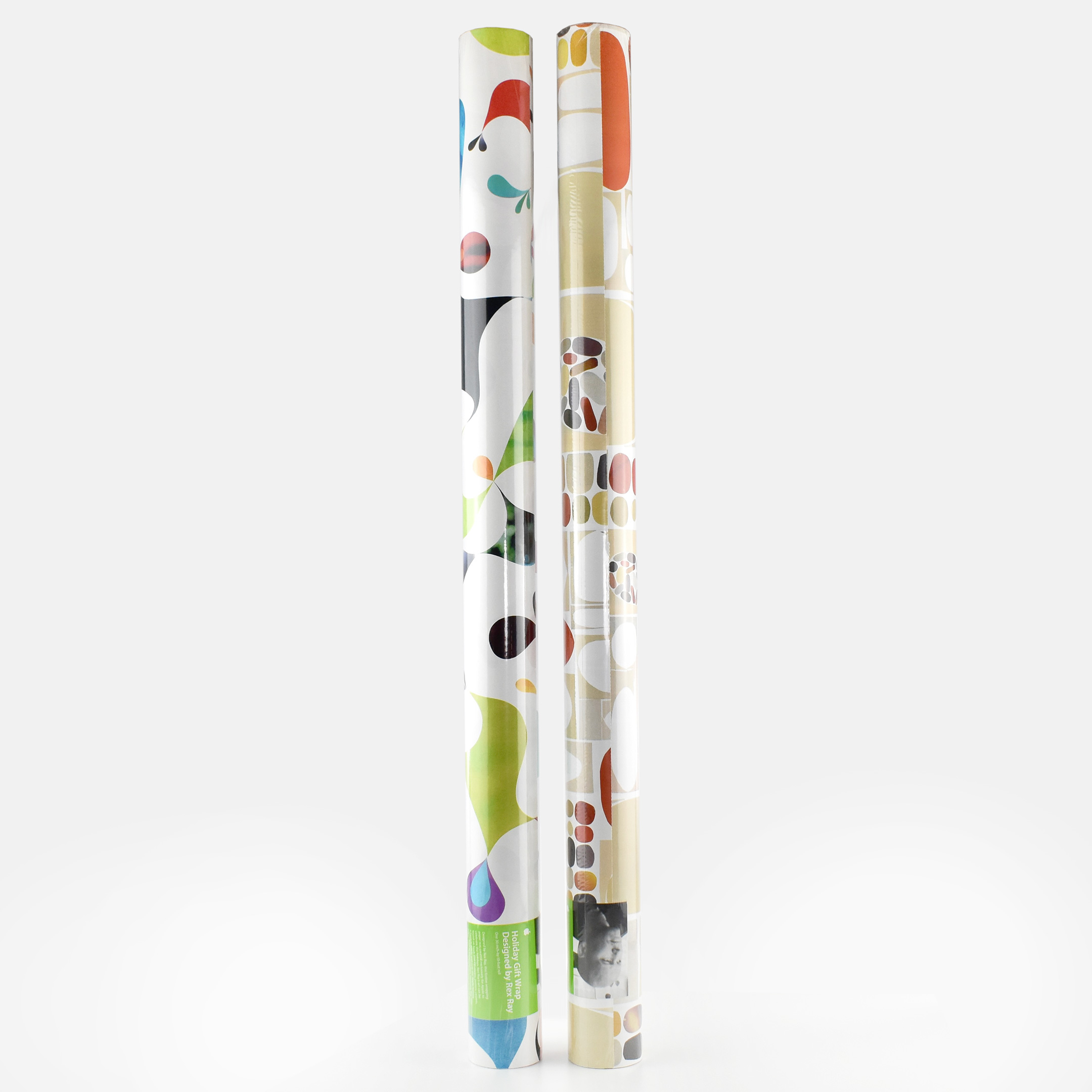
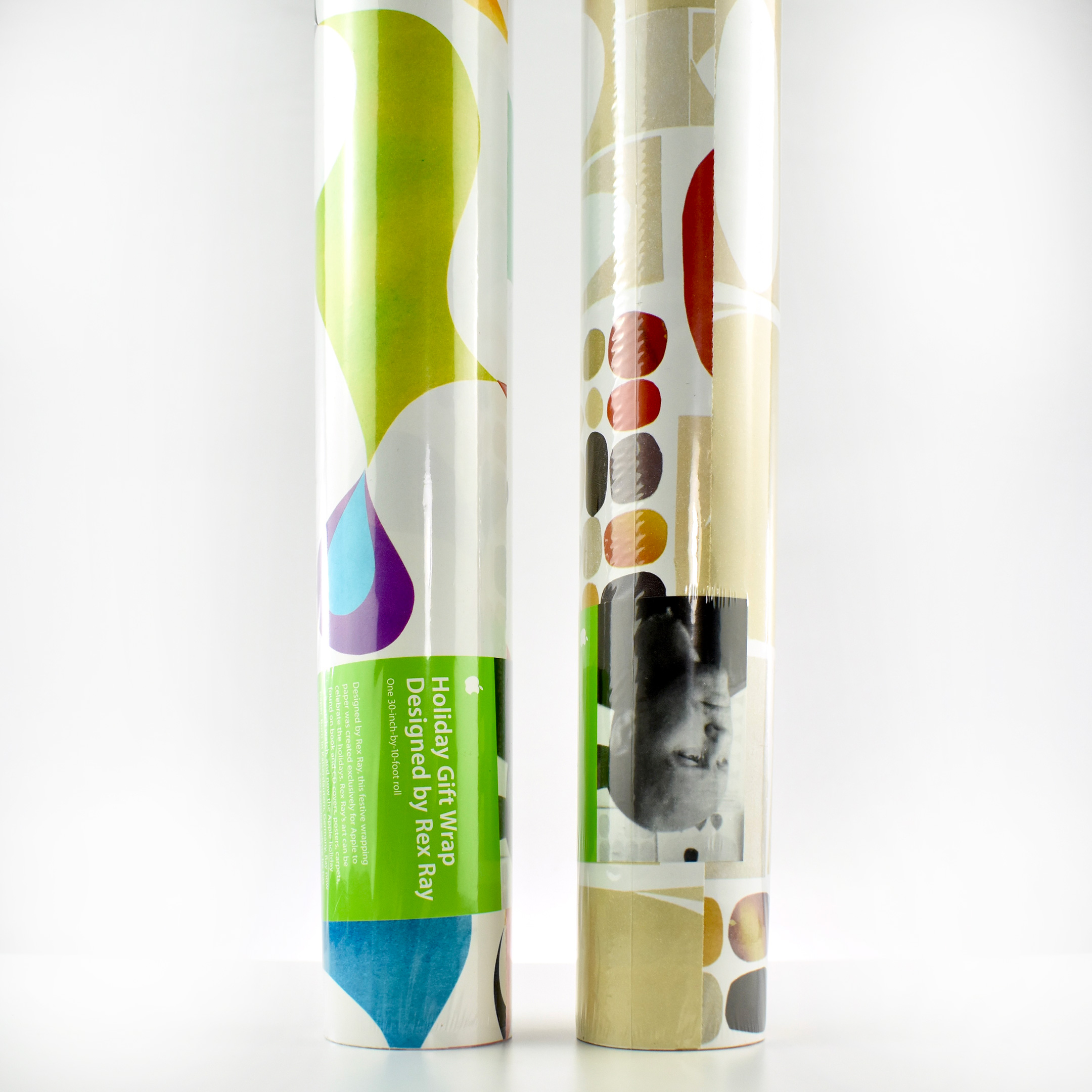
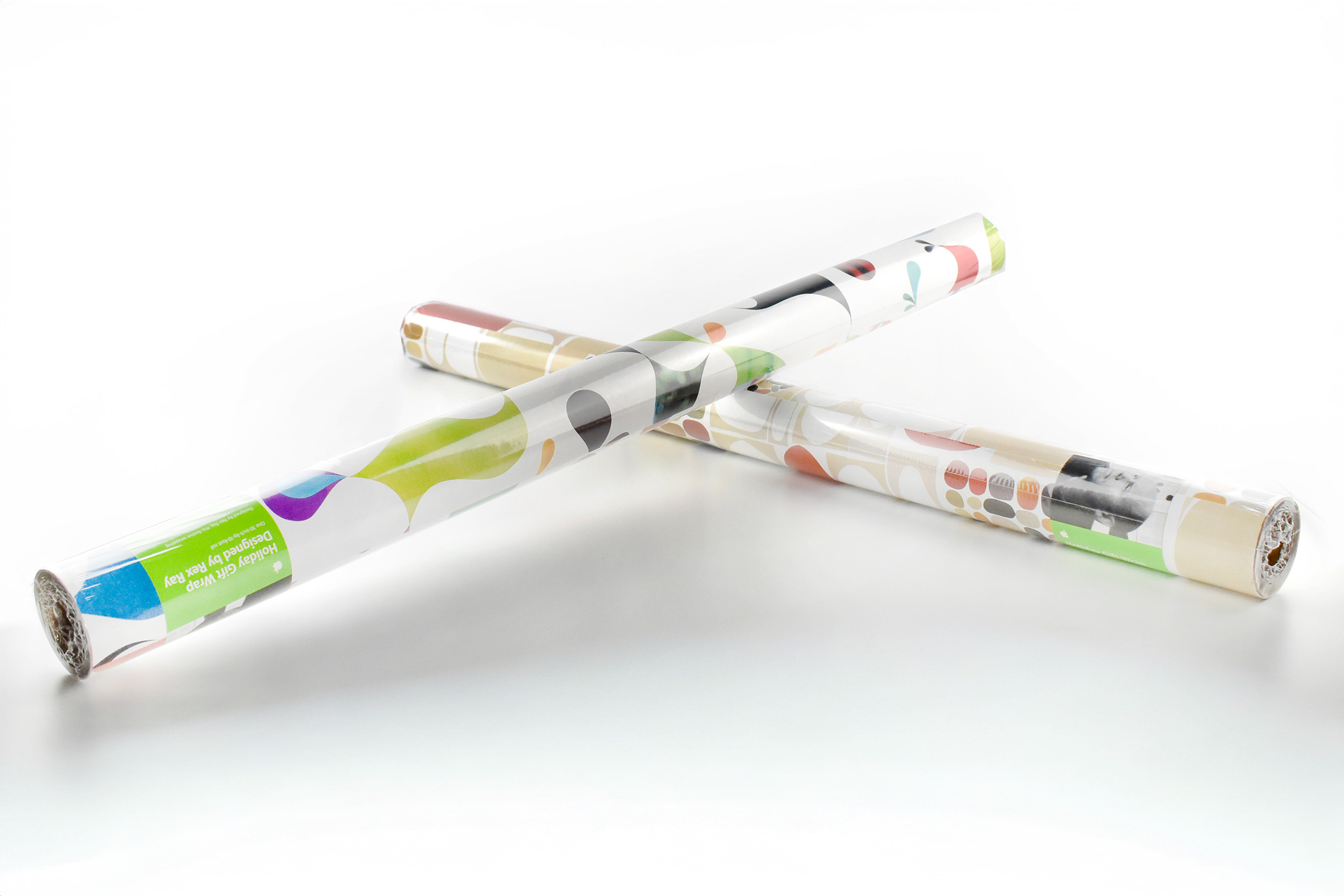
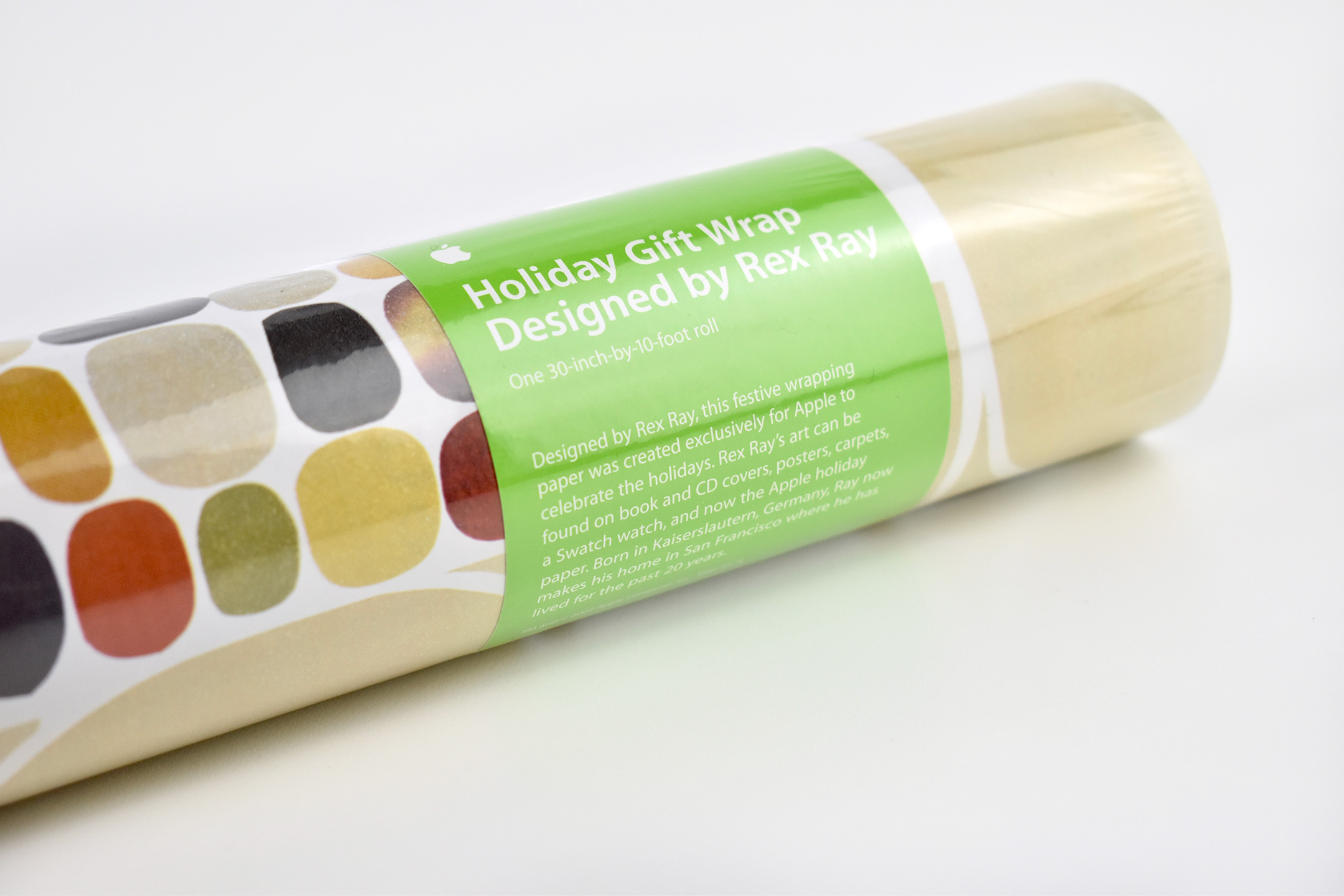
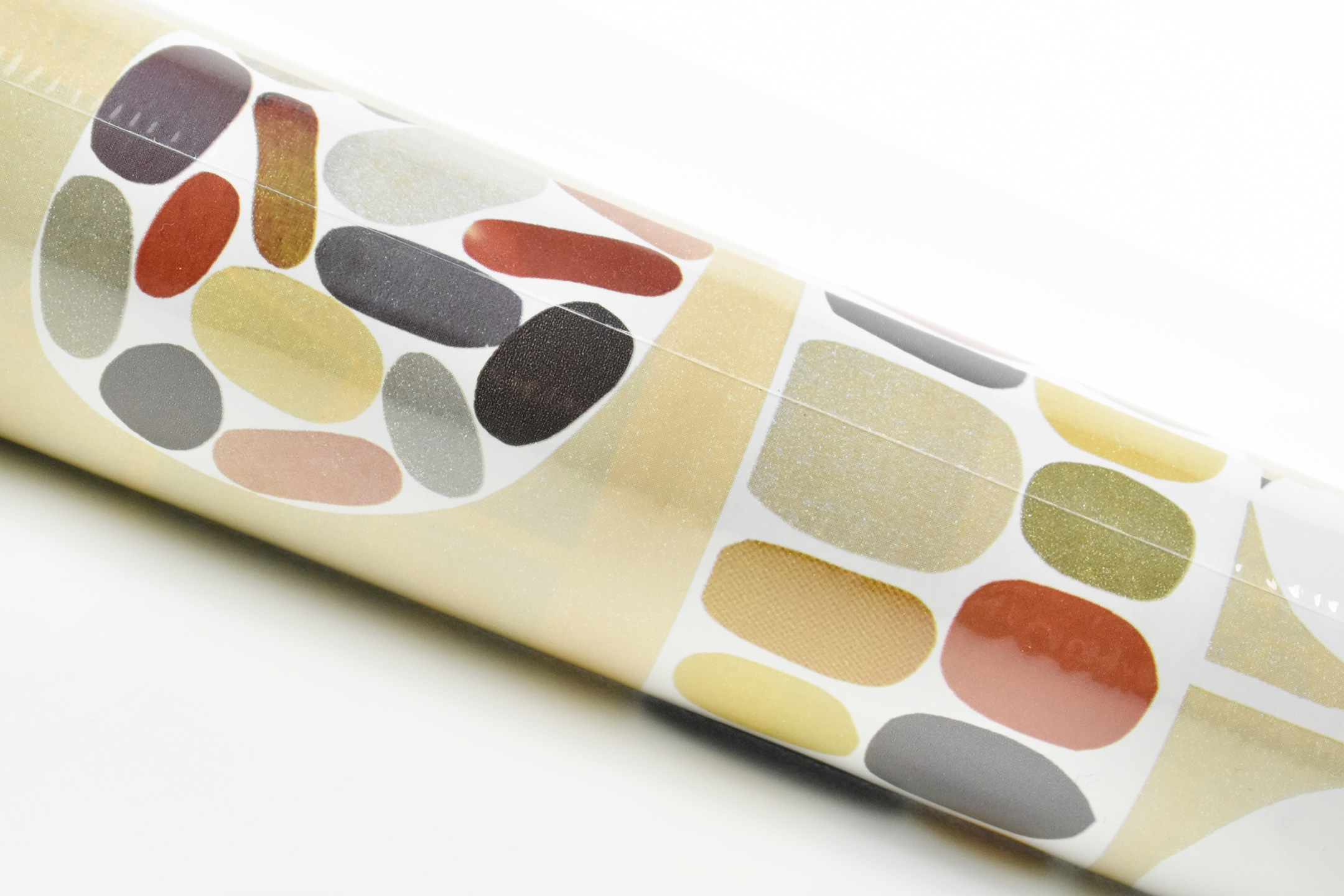
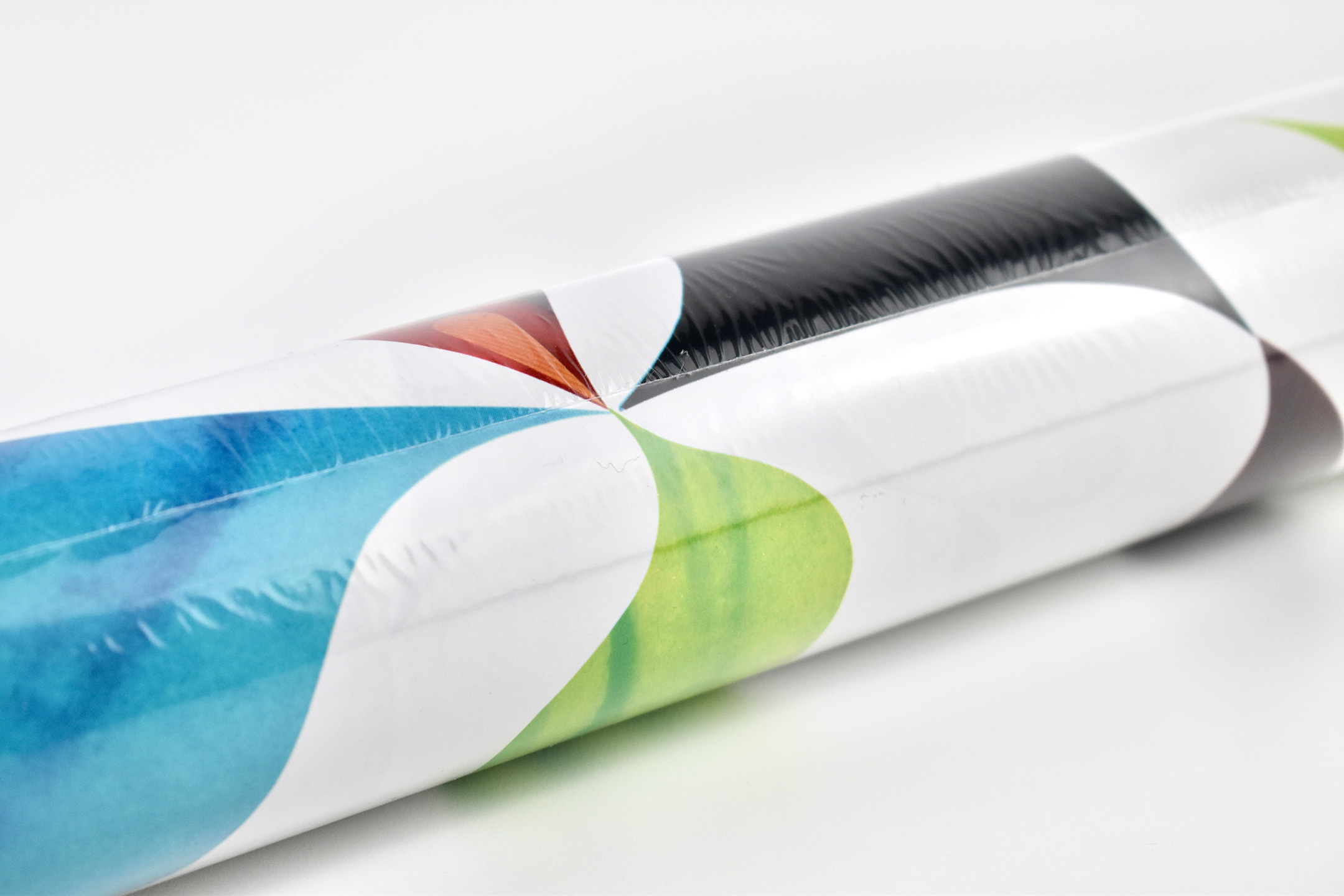
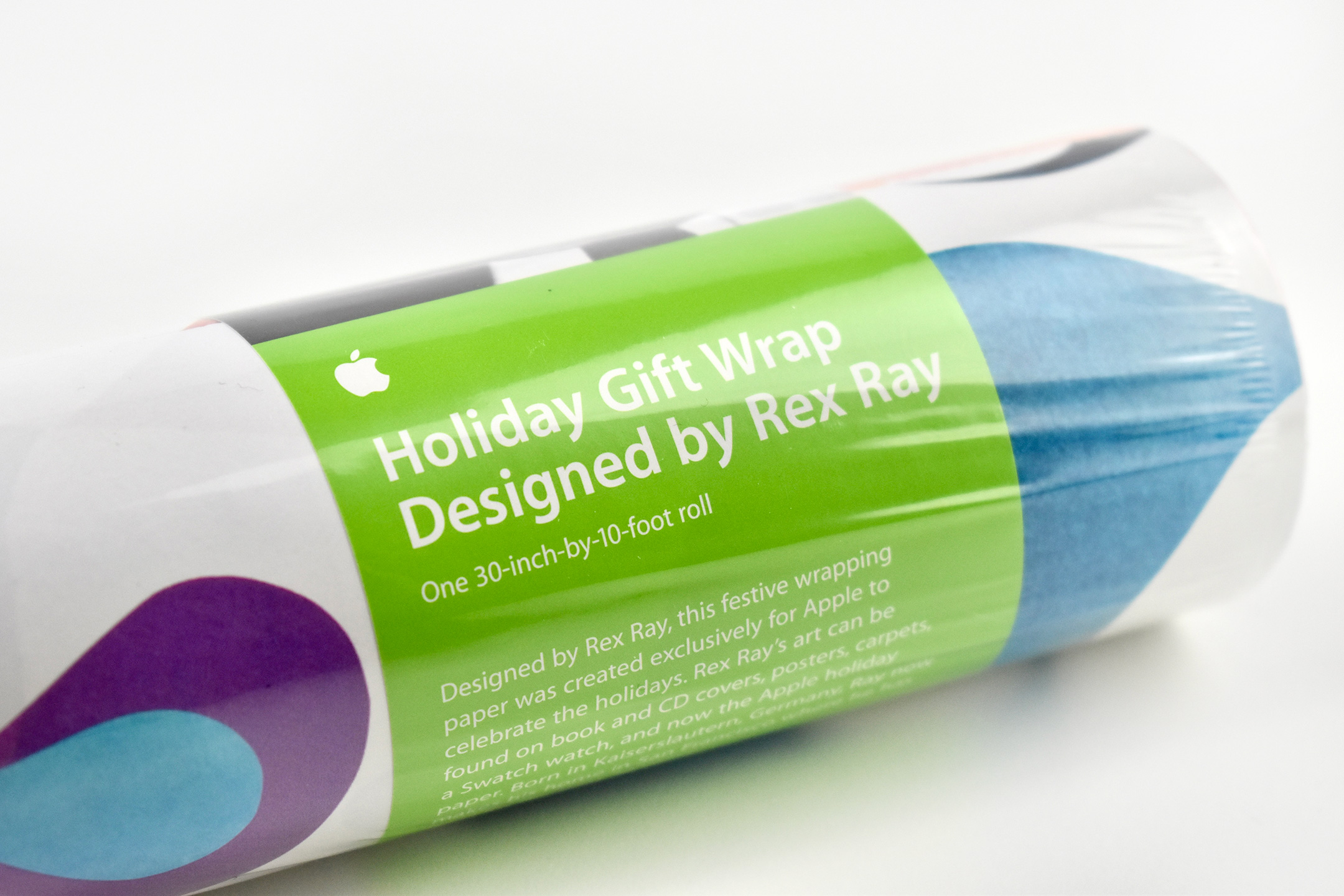
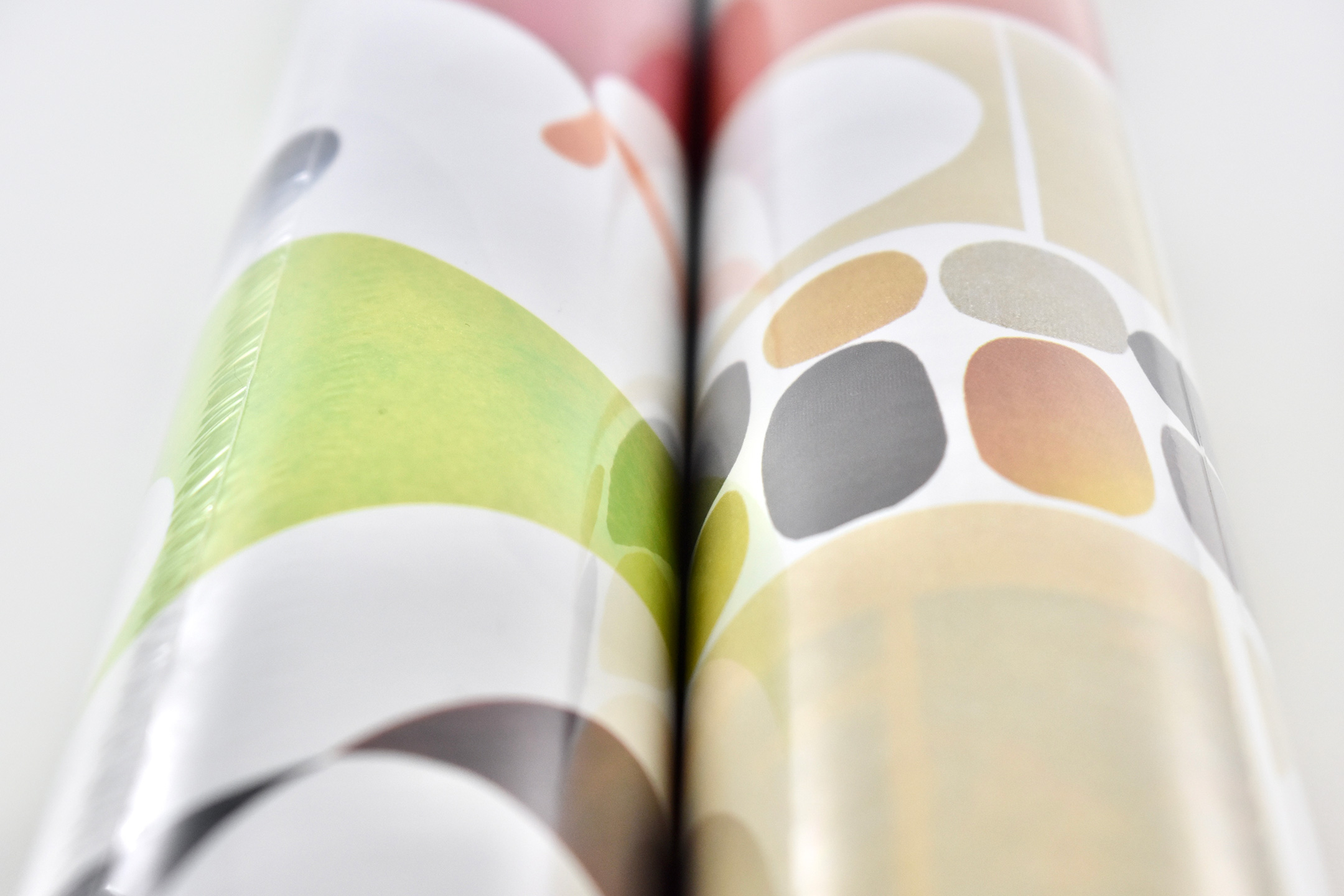
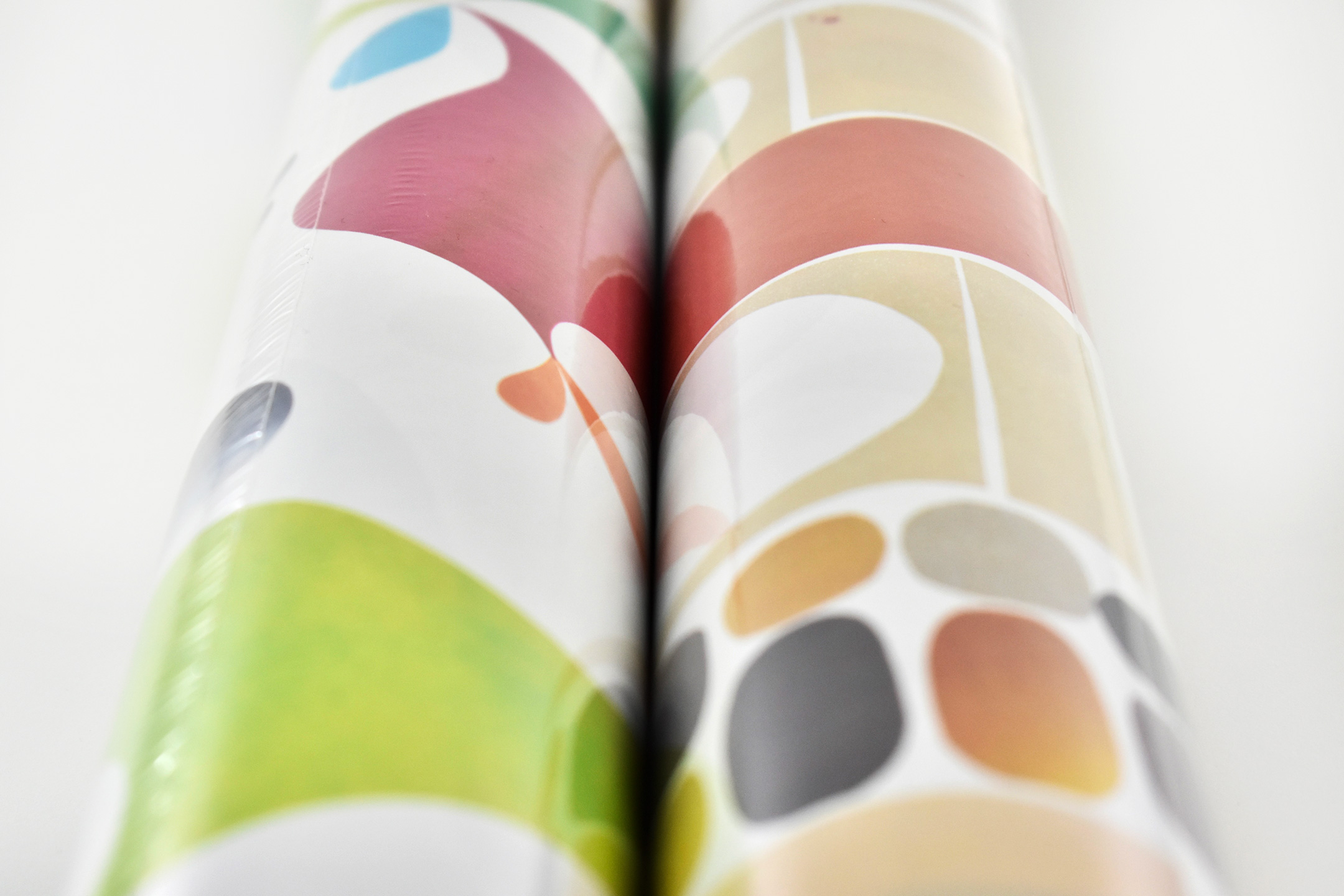
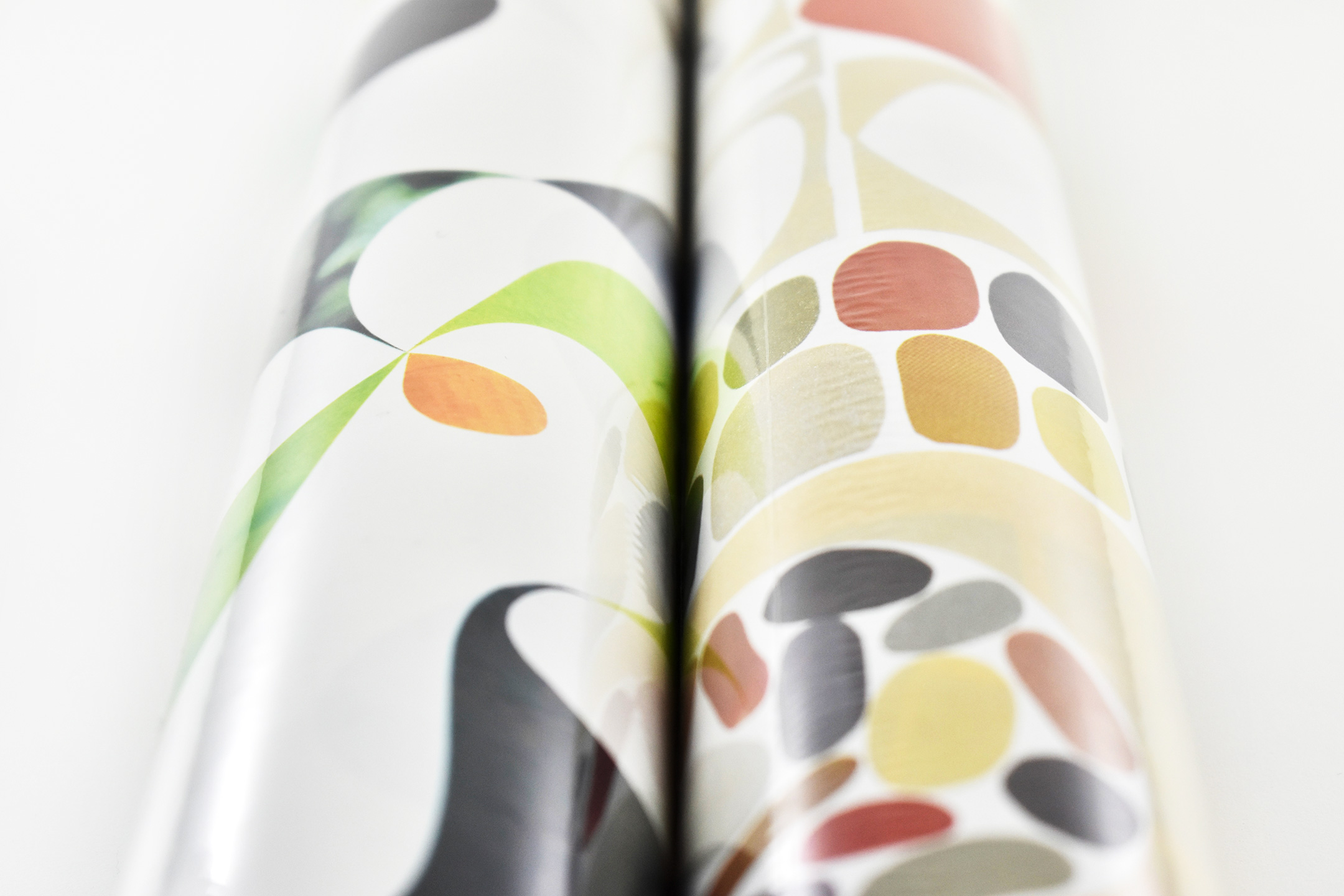
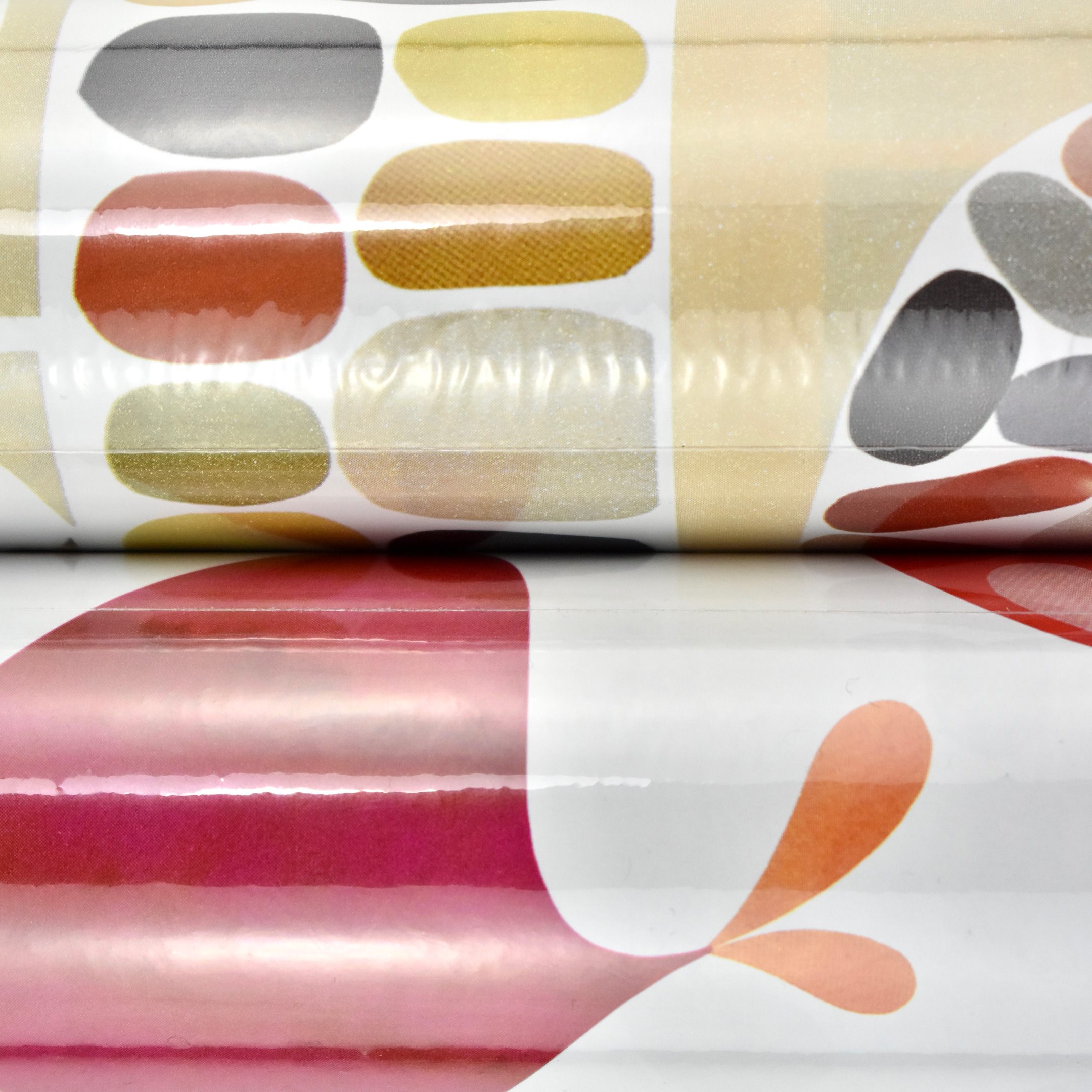
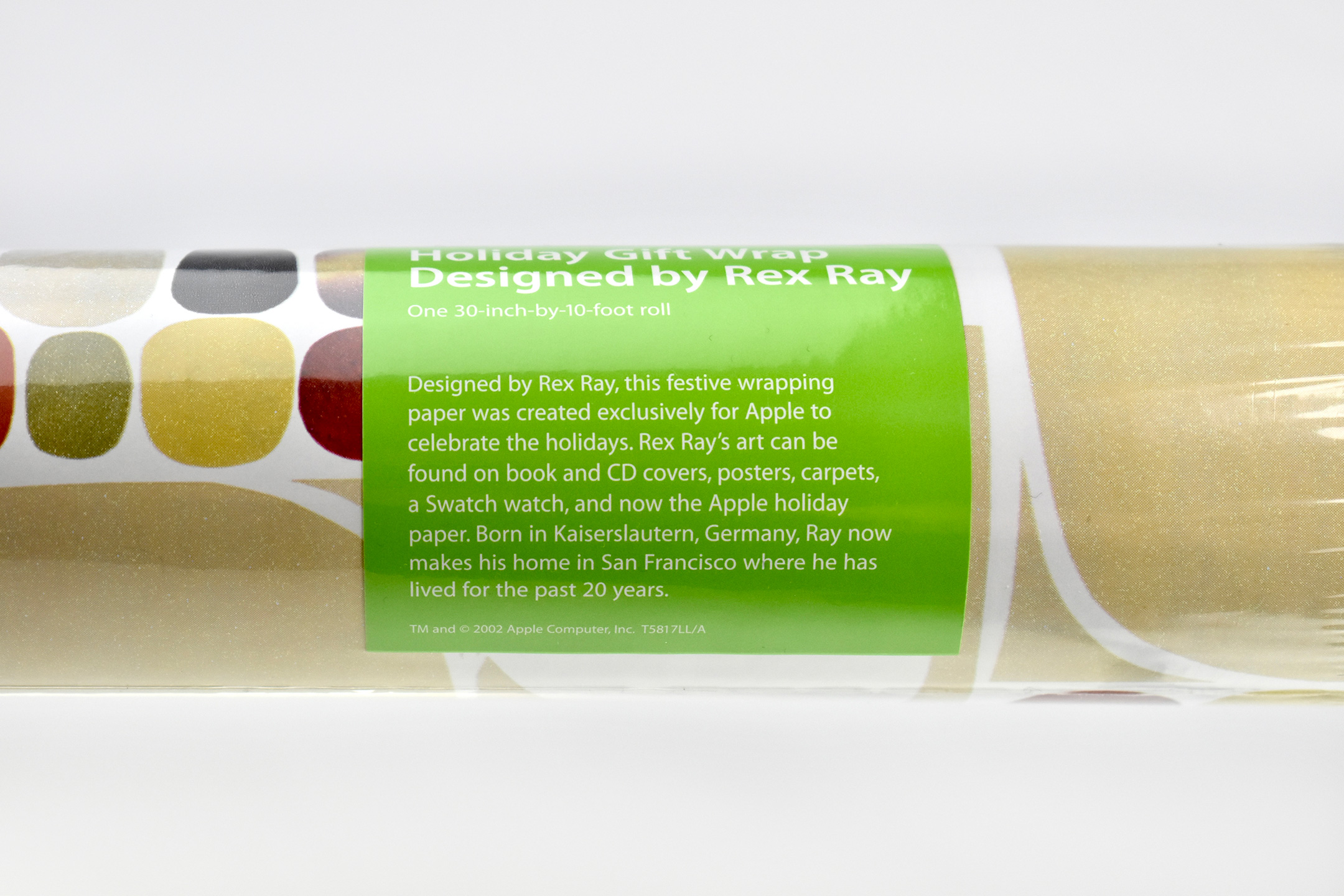
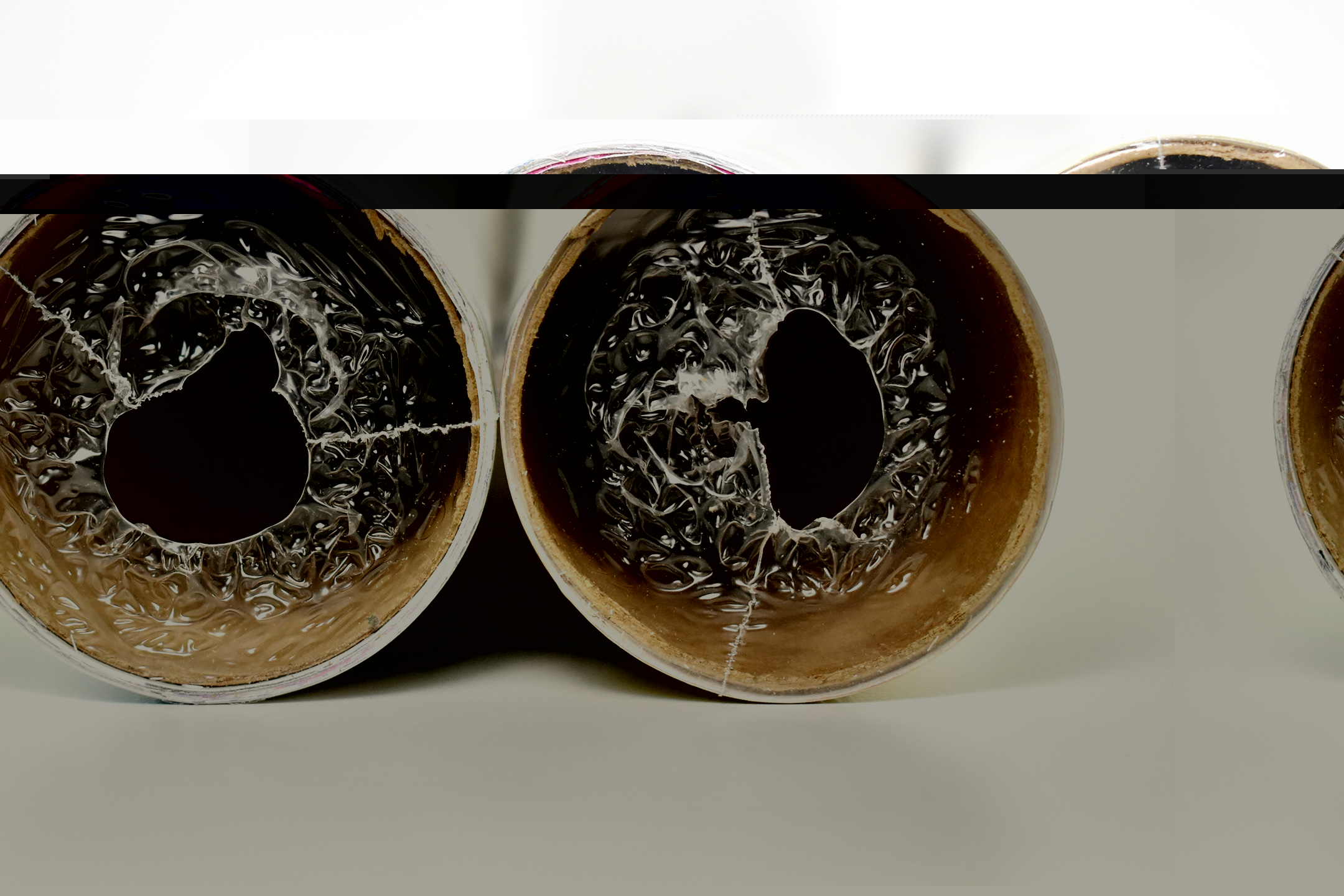
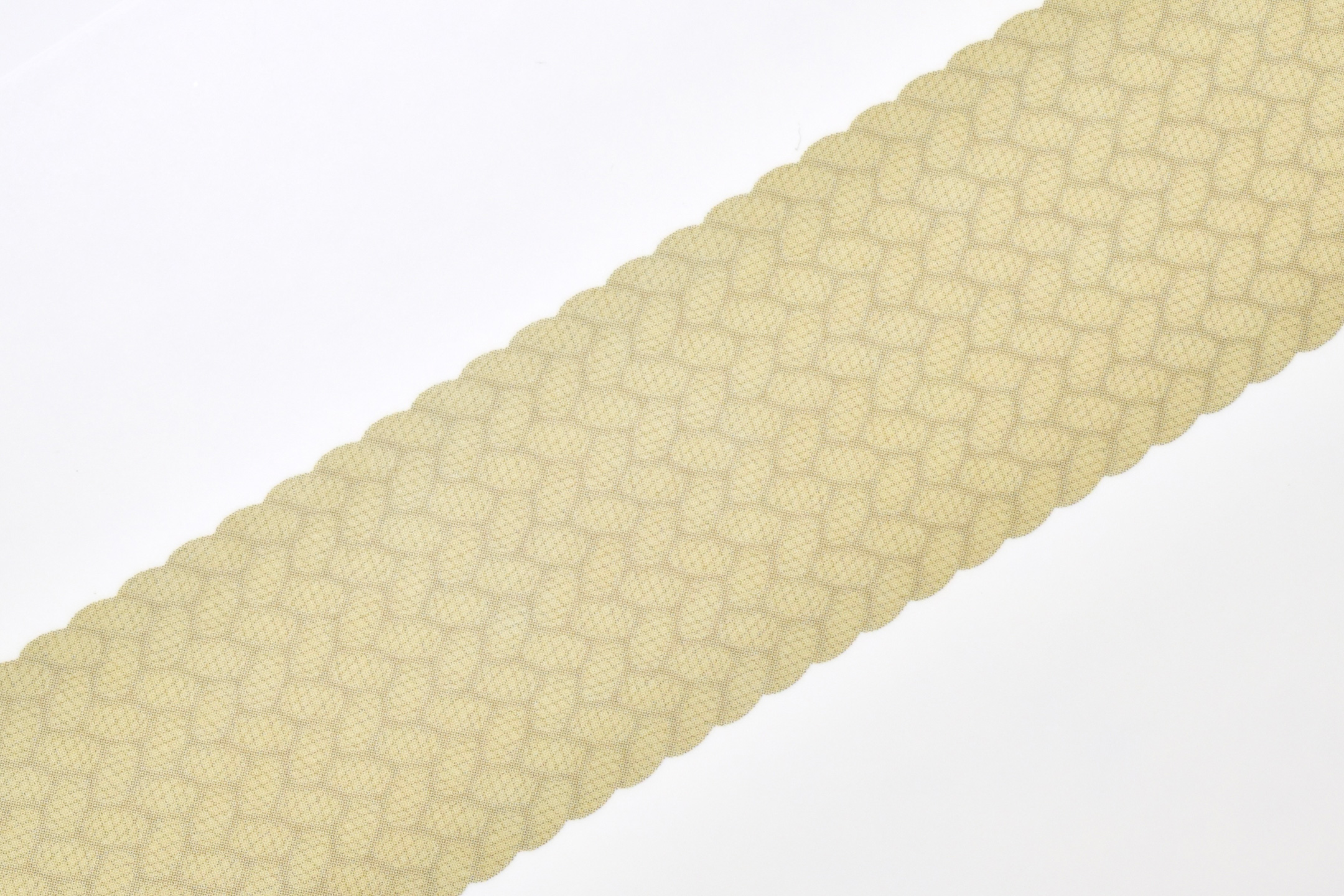
These two gift wrap designs were created for Apple by artist Rex Ray, born September 11, 1956, and died February 9, 2015. He was an “American artist best known for his innovative pop aesthetic in fine and commercial art—on canvases, wood panels, album covers, paper, book jackets, murals, and rock and roll posters.”
The label on the rolls of gift wrap were bright green with white text in the Apple Myriad font and matched Apple’s product packaging at the time. The label included a black-and-white headshot of Rex Ray, and the product description:
“Designed by Rex Ray, this festive wrapping paper was created exclusively for Apple to celebrate the holidays. Rex Ray’s art can be found on book and CD covers, posters, carpets, a Swatch watch, and now the Apple holiday paper. Born in Kaiserslautern, Germany, Ray now makes his home in San Francisco where he has lived for the past 20 years.”
Although the two designs are not named, the beige/brown design has the product number T5817LL/A, and the bright colored design has the product number T5818LL/A.
As a collector, I had no idea this product existed until it appeared on a local Facebook Marketplace post. I had to research it to make sure it was an actual Apple product and found it not only to be legitimate, but Apple had also made a magnetic poetry set with the beige/brown border design the same year (that I also found and acquired on eBay).
The woman from whom I purchased the gift wrap told me she had purchased all the rolls in stock at an Apple Store in 2002 (presumably Woodfield Mall in Schaumburg, IL—the only Apple Store in the Chicago area at the time). We negotiated a price, and I purchased all of 29 rolls she had.
The Apple Worldwide Developers Conference (WWDC) is a meeting held annually in and near Cupertino, California, by Apple. The event gathers thousands of software developers to learn about and discuss the latest software and technologies for Apple operating systems and platforms. Attendees can participate in hands-on labs with Apple engineers and in-depth sessions covering many topics.
Attendees of the 2024 Worldwide Developers Conference expressed their interest to attend by entering an online lottery. Those who were selected and attended were given this canvas bag and some of the items shown in this post.
Canvas Bag
One side of the black canvas bag features a stylized “WW” representing “Worldwide” and printed below are the words “[Apple logo] Worldwide Developers Conference 2024.” The text is printed in light gray in a stylized version of San Francisco, Apple’s Corporate font.
The other side of the bag features the letters “DC” in a bold font representing “Developers Conference.” At the bottom, the location and date of the conference is printed, “Apple Park, June 10–14.”
The upper edge of the bag features a royal blue tag embroidered with “[Apple logo] WWDC24”
The bag measures 15.5 inches tall, 14.75 inches wide, and two loop handles add an additional 9.5 inches to the height of the bag.
Picnic Tarp
Some attendees referred to this item in a cylindrical drawstring bag as a “picnic blanket,” but it is made from a nylon material that more closely resembles a tarp. The cylindrical drawstring carrying bag is dark gray and has the words “Worldwide Developers Conference 2024” printed in black. The bag measures 5 inches tall, 4 inches in diameter, and has a 10-inch drawstring.
Inside the bag is a neatly folded royal blue nylon picnic tarp with a black border, rounded edges, and the designs are printed in black. One side features a single large black WWDC logo and the other side uses the WWDC24 logotype repeated multiple times to create a pattern. Although I did not precisely measure this tarp, I estimate it to be over 6 x 6 feet.
Small Pin PackageFolder
The smaller of two matte black cardboard pin packages is printed on the front in glossy black ink “WWDC24,” and on the back with “[Apple logo] Worldwide Developers Conference 2024.” This cardboard folder package measures 2.5 inches wide and 3.25 inches tall.
Inside is a single lapel-style pin with the year “2024” using a font design similar to the WWDC24 logotype. The back of the pin uses a butterfly clutch pin fastener.
Large Pin PackageFolder
The larger of two matte black cardboard pin packages is printed on the front in glossy black ink “WWDC24” and on the back with “[Apple logo] Worldwide Developers Conference 2024.” This cardboard folder package measures 3.25 inches wide and 4 7/8 inches tall.
Inside is a collection of six lapel-style pins, all using a butterfly clutch pin fastener on the backs. The pins include:
Apple Park—A round silver design in the shape of Apple Park. The center of the pin is black and includes the words “[Apple logo] Park” in Apple’s San Francisco corporate font. This round pin measures 7/8 inches in diameter.
Macintosh 40 YEARS—This rectangular design uses a 4-bit depiction of the original beige Macintosh in icon form with a smiling “face” on the screen. In all caps below is printed “40 YEARS” in Apple’s Chicago bitmap font (designed by Susan Kare) used in the original Macintosh user interface. This pin measures 5/8 inch wide x 7/8 inch tall.
theFuture = Date.now—This rectangular pin has rounded edges with silver text on a bright orange field. The text can be interpreted as “the future is now,” but written in the Swift coding language as “theFuture = Date.now” using a monospaced version of Apple’s San Francisco font. This pin measures 1 1/8 inches wide x 1/2 inch tall.
Dragon Face Memoji—This detailed pin shows a highly stylized and detailed version of the “Dragon Face” Memoji with stars replacing the eyes. This custom-shaped pin measures roughly 7/8 inch wide x 7/8 inch tall.
Vintage Apple logotype—This pin is a version of Apple’s logotype from the 1990s using one of Apple’s former corporate fonts, Apple Garamond, used between 1984–2002. Each letter is a different color from Apple’s original 6-color logo (with no red letter). This pin measures 1 1/8 inches wide x 5/8 inch tall.
Apple Vision Pro—My favorite of the pins is a depiction of the Apple Vision Pro. The pin shows the front view with a black display with sliver edges. A tiny Digital Crown can be seen in its relative position over the left (facing) lens. This pin measures 1 inch wide x 1/2 inch tall.
The swag bag also included a black water bottle with a white WWDC24 logo, but I do not [yet] have this in my collection.
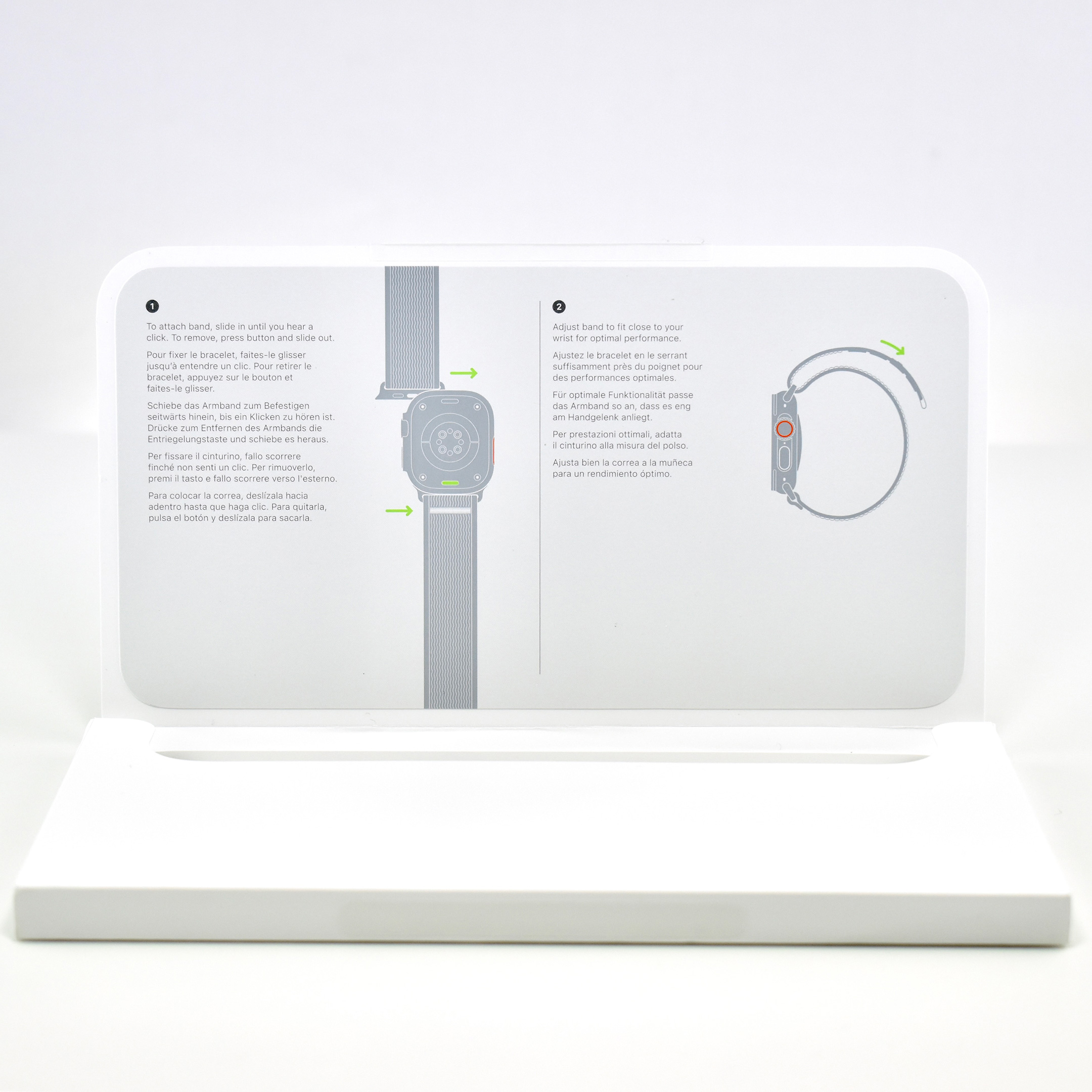
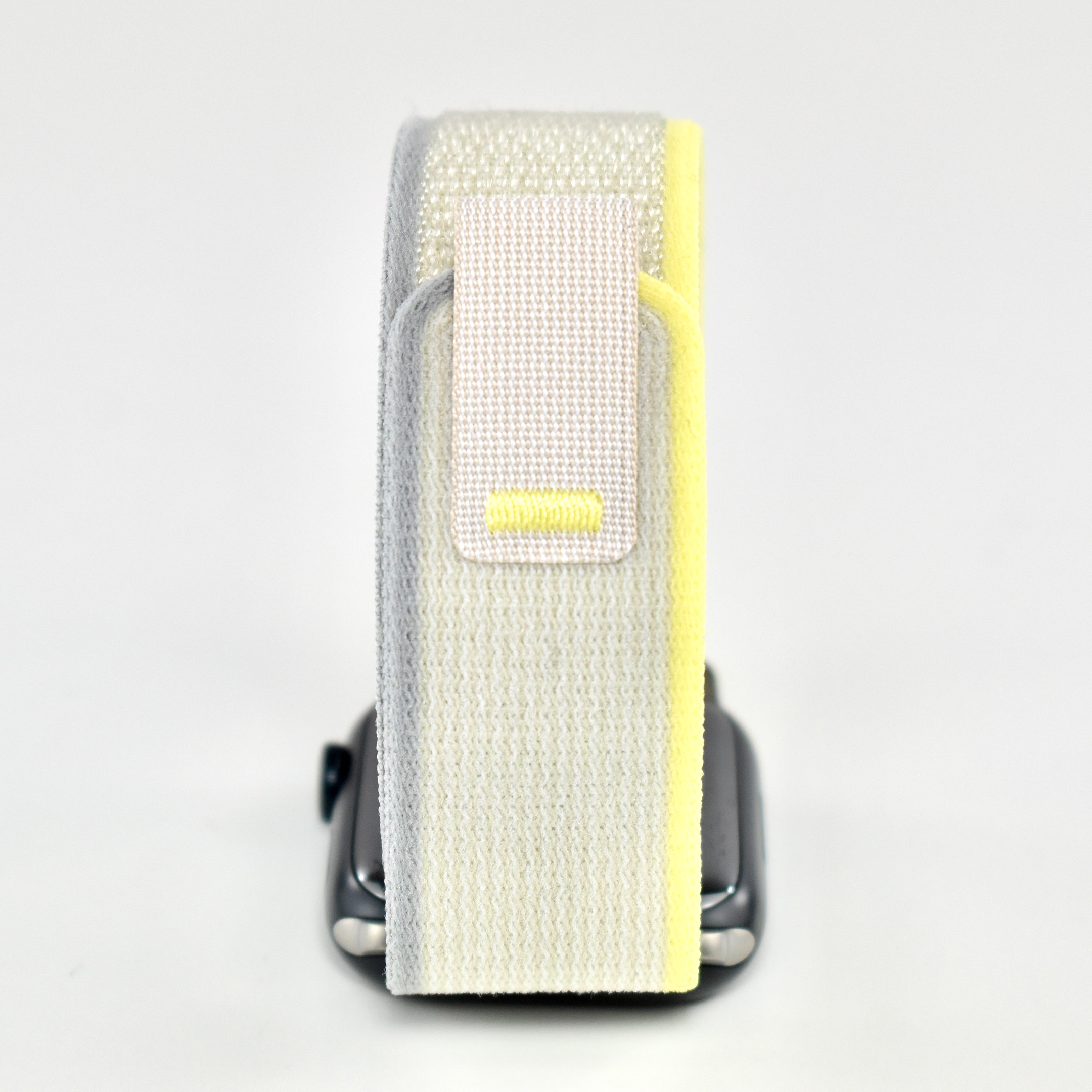
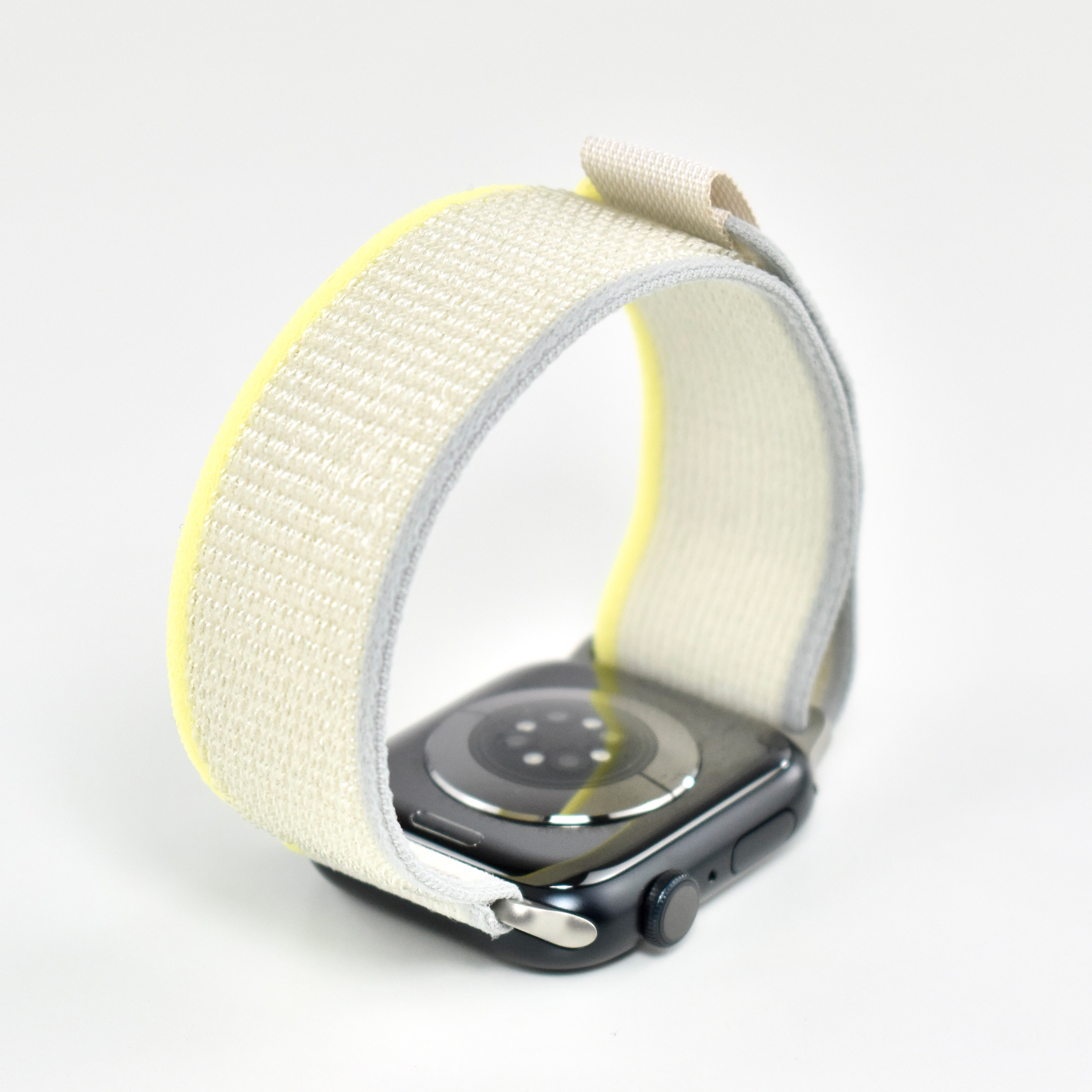
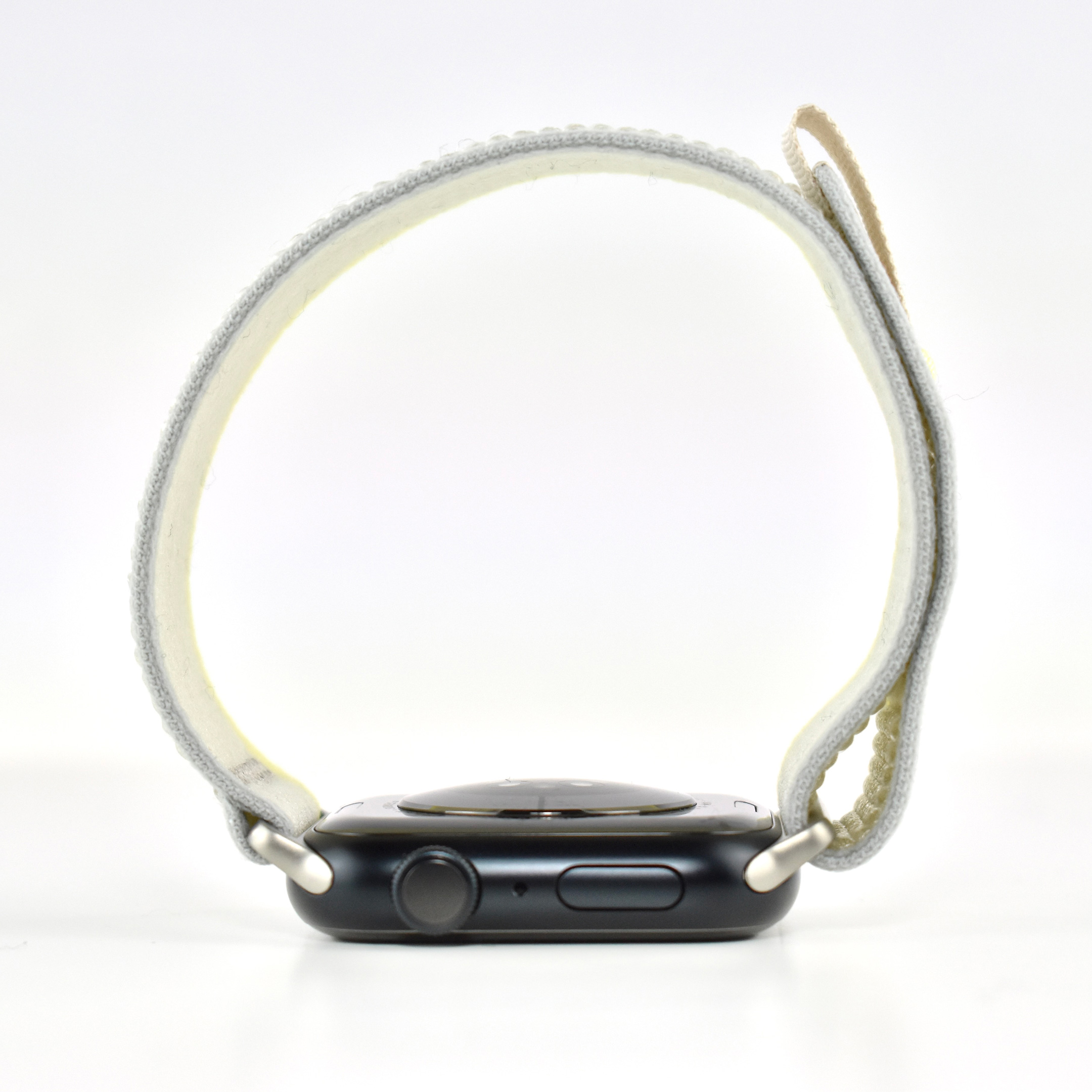
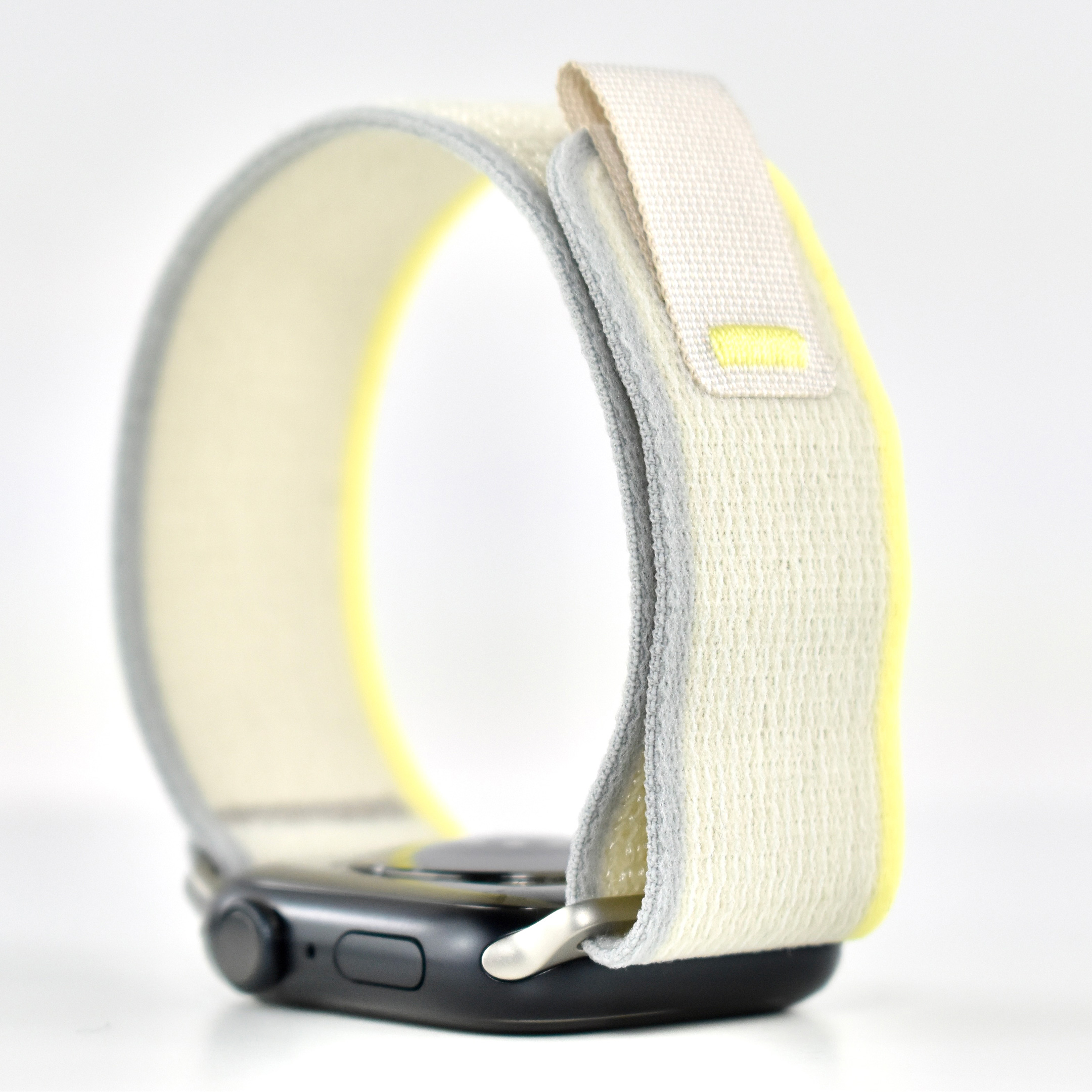
The Apple Watch Trail Loop was released along with the Apple Watch Ultra on September 7, 2022. The Apple Watch Ultra “brings a new bold design and a wide range of features built for endurance, exploration, and adventure.”
In the original press release, Apple described the Trail Loop as one of its “New Bands Designed for the Great Outdoors.” Apple added:
“Designed specifically for endurance athletes and runners, the Trail Loop band is the thinnest Apple Watch band to date. The lightweight woven textile is both soft and flexible, allowing it to cinch to the optimal fit, and the convenient tab is designed for quick and easy adjustment.”
Apple’s product page described the Trail Loop:
“The thin, lightweight Trail Loop is made from a nylon weave creating a soft band with increased elasticity for a comfortable fit. The band is infinitely adjustable with a convenient pull tab for quick adjustments on the go.”
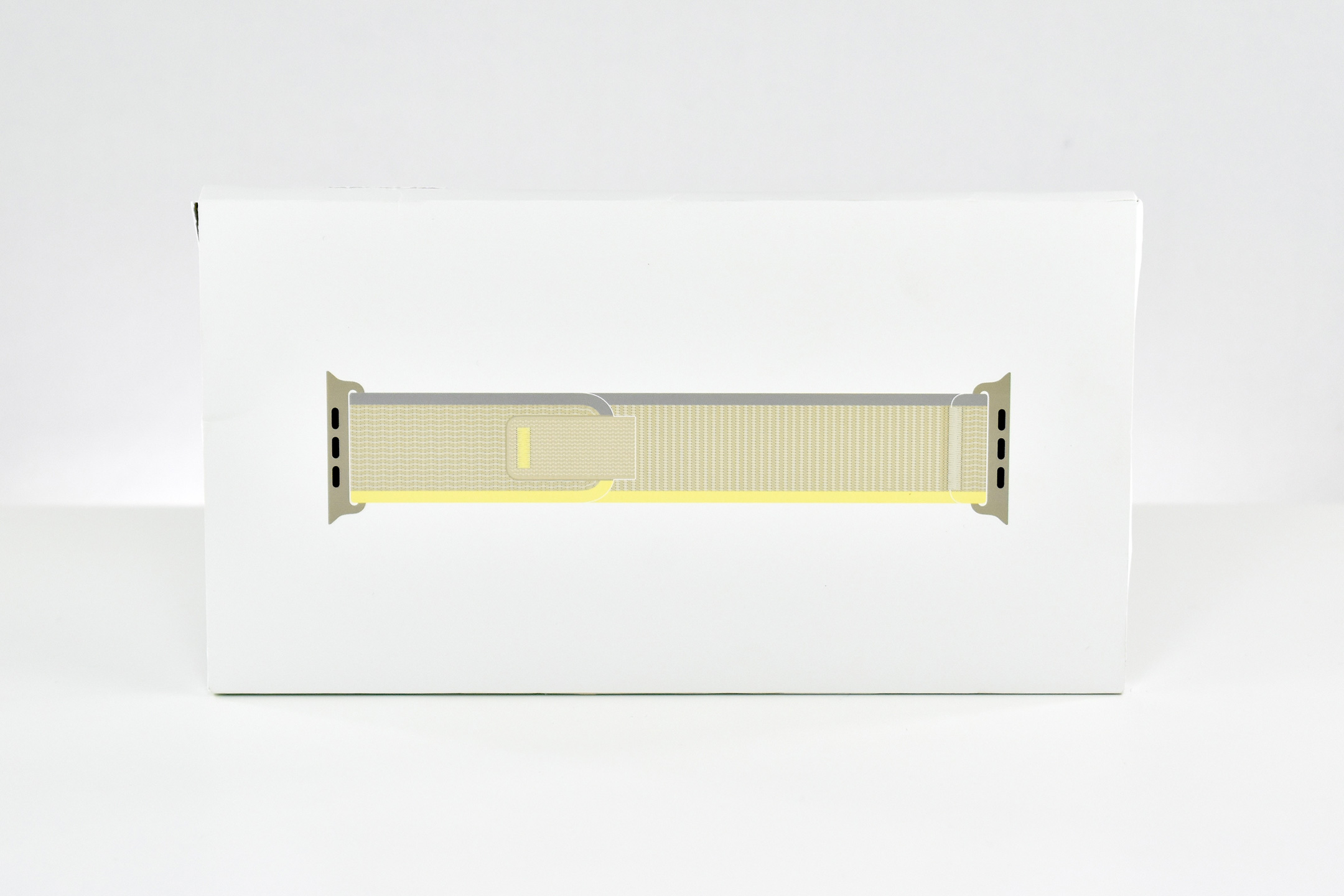
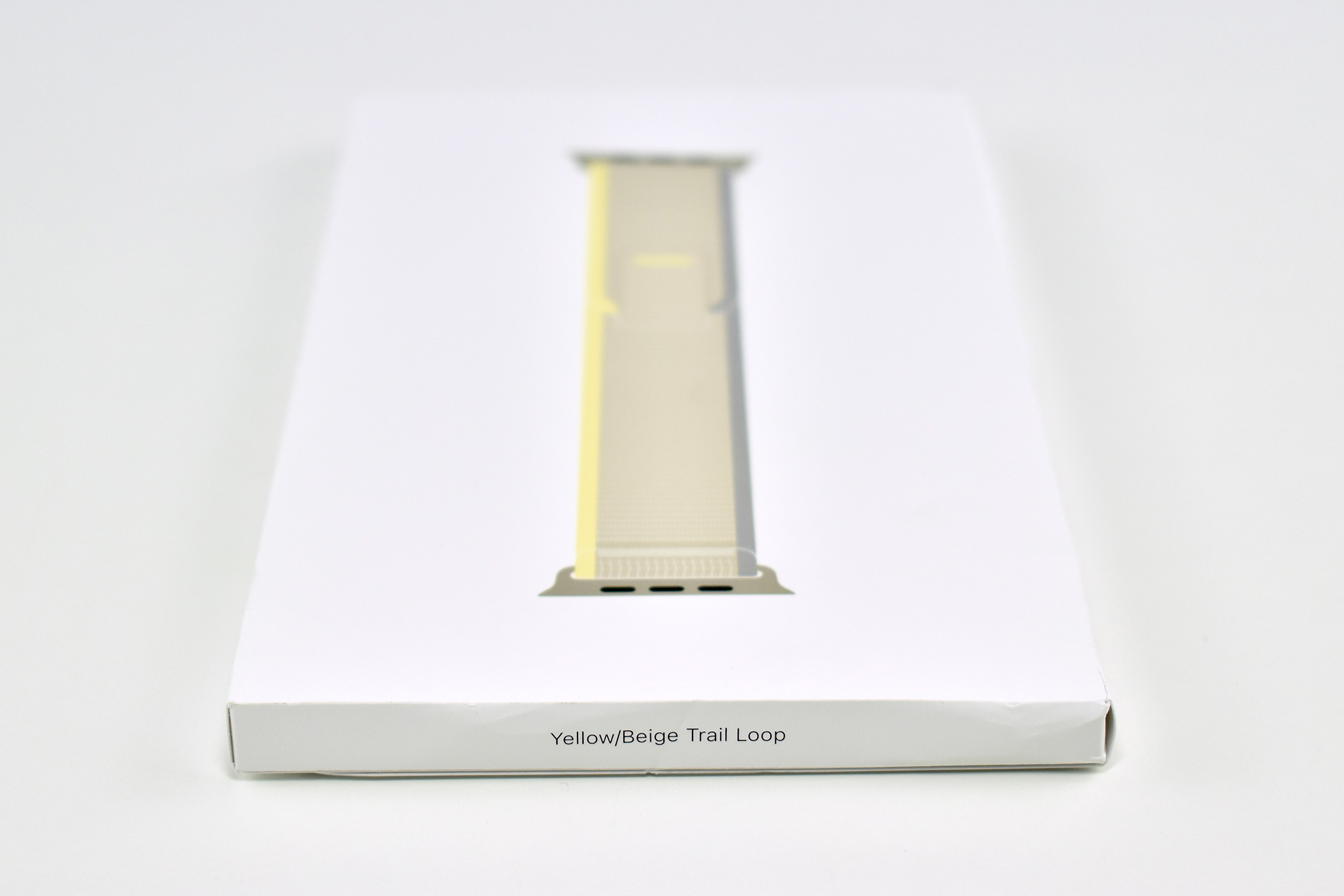
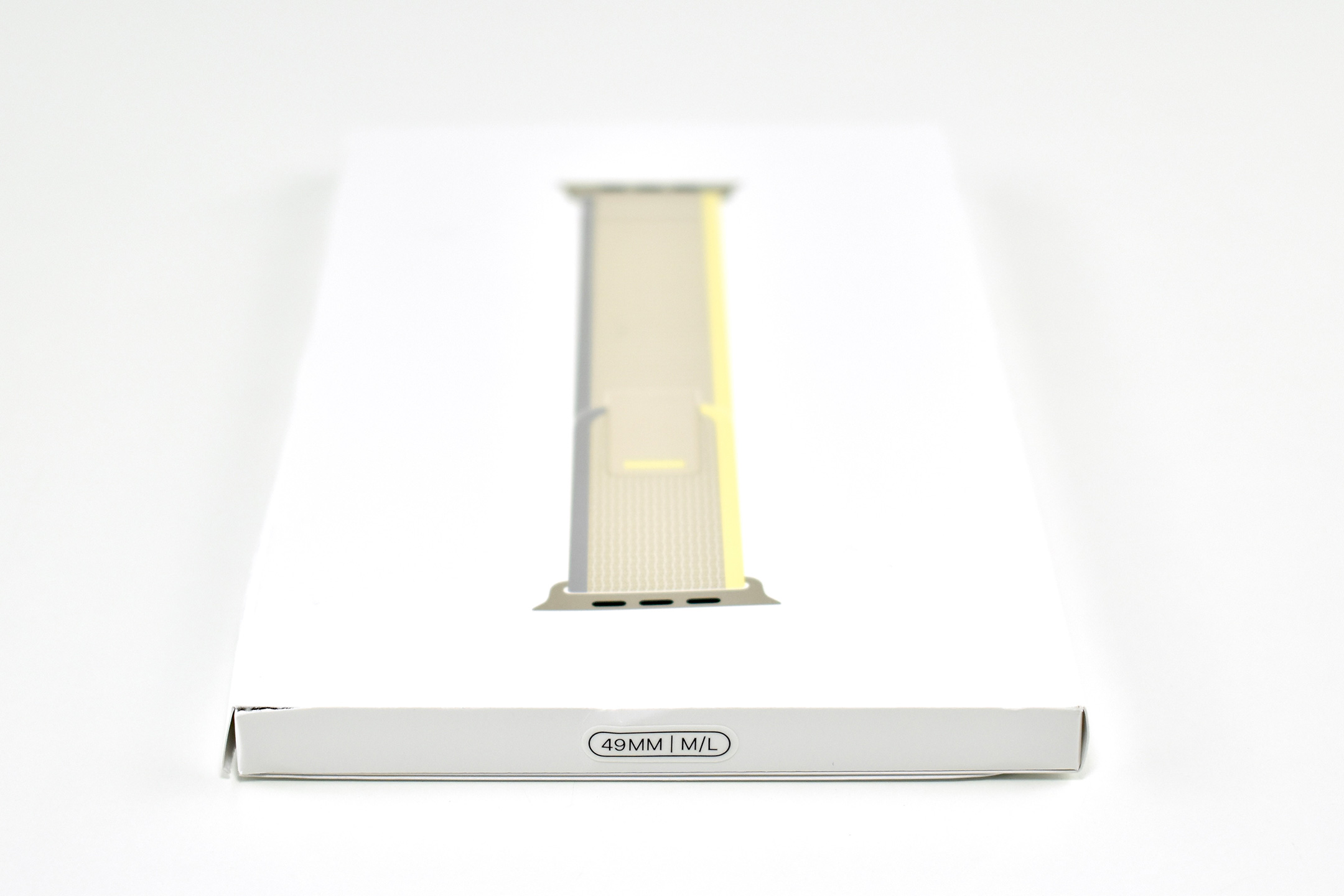
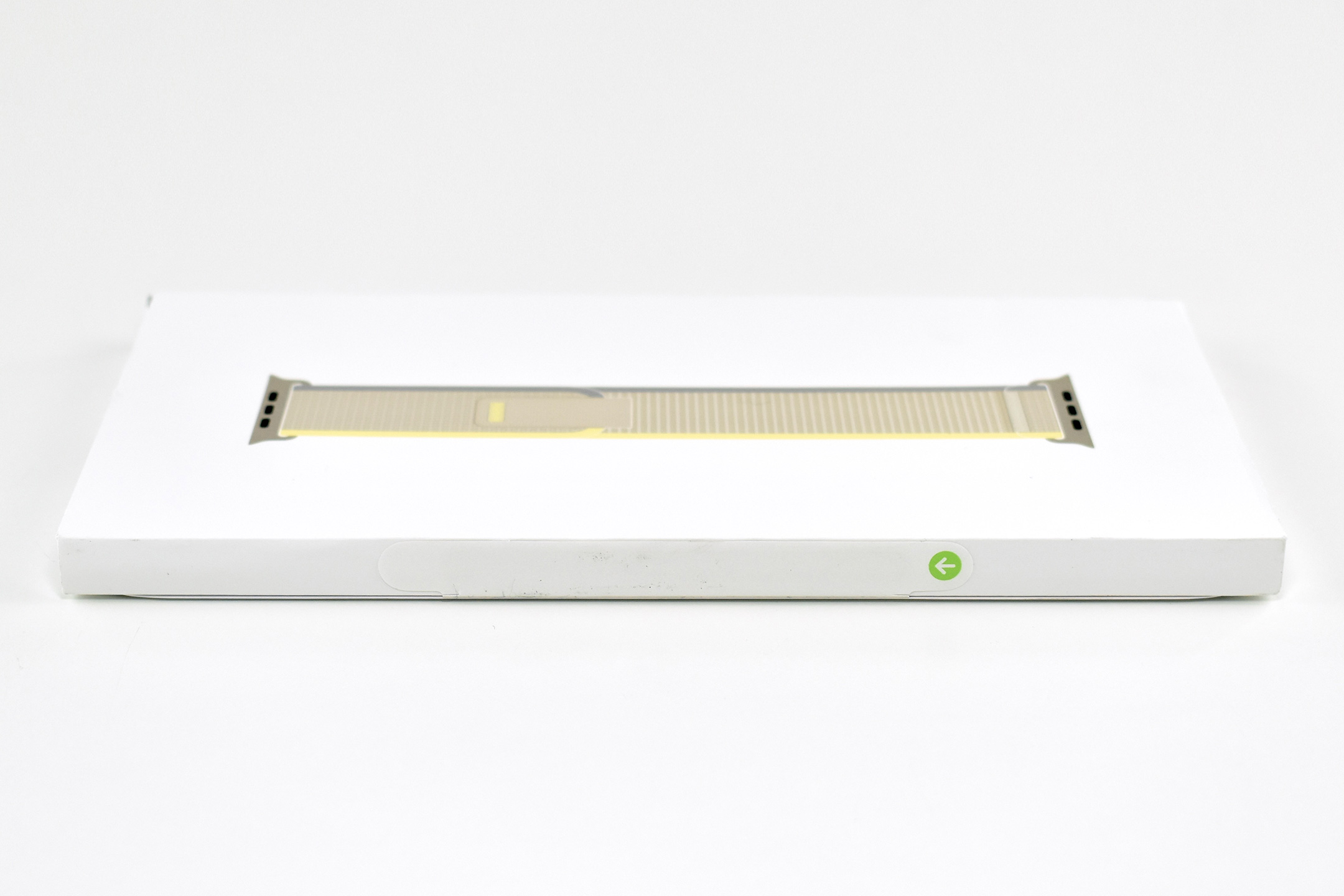
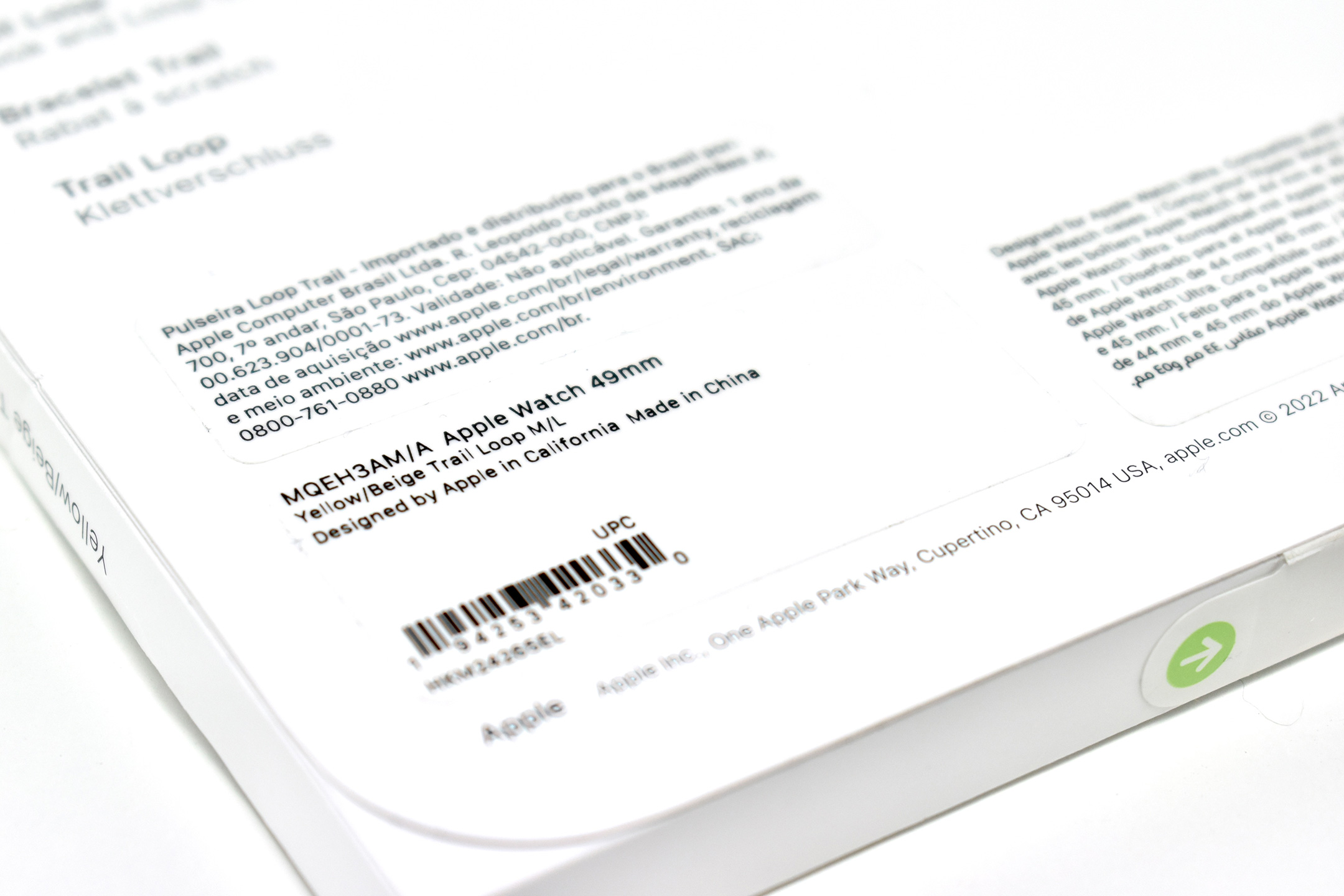
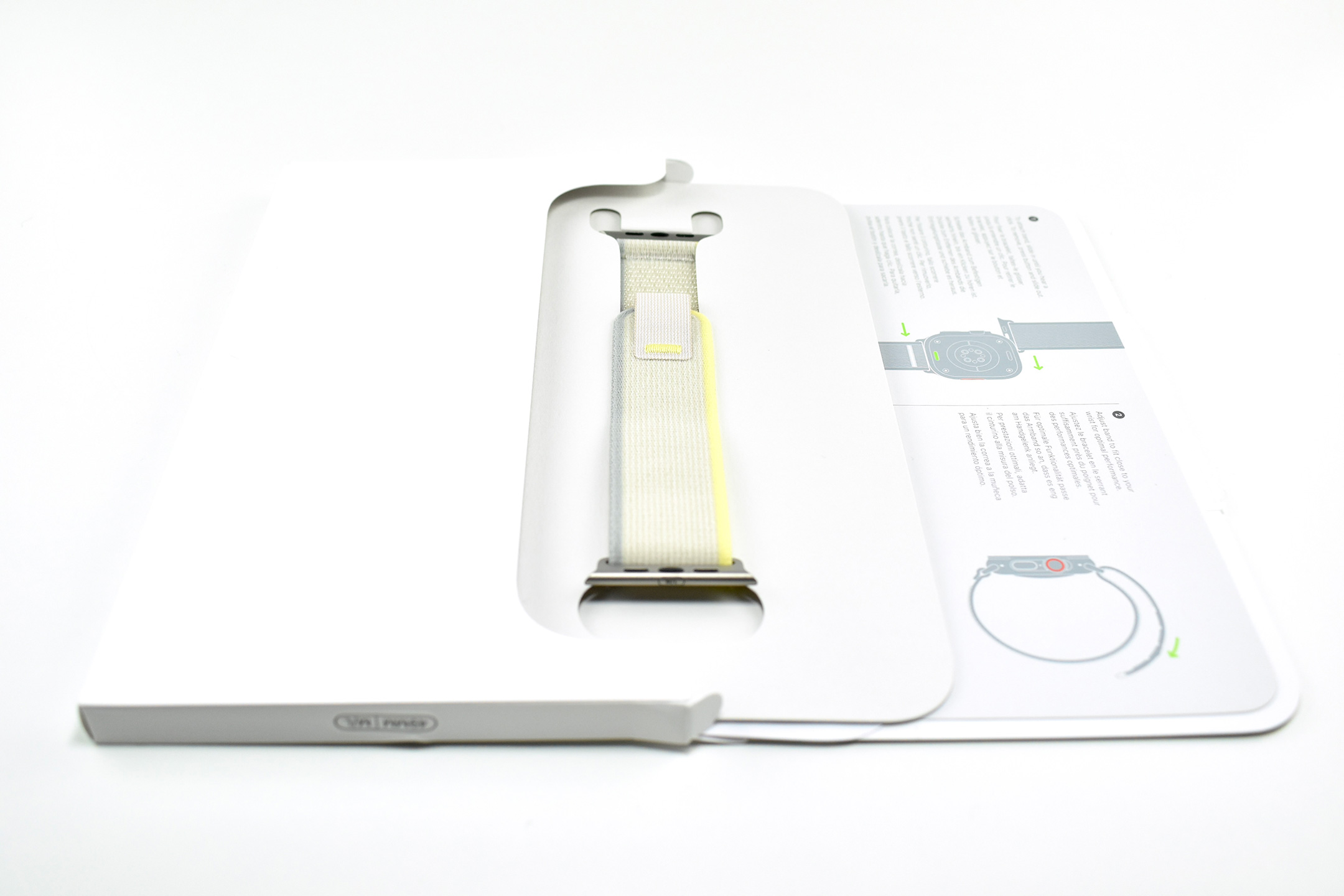
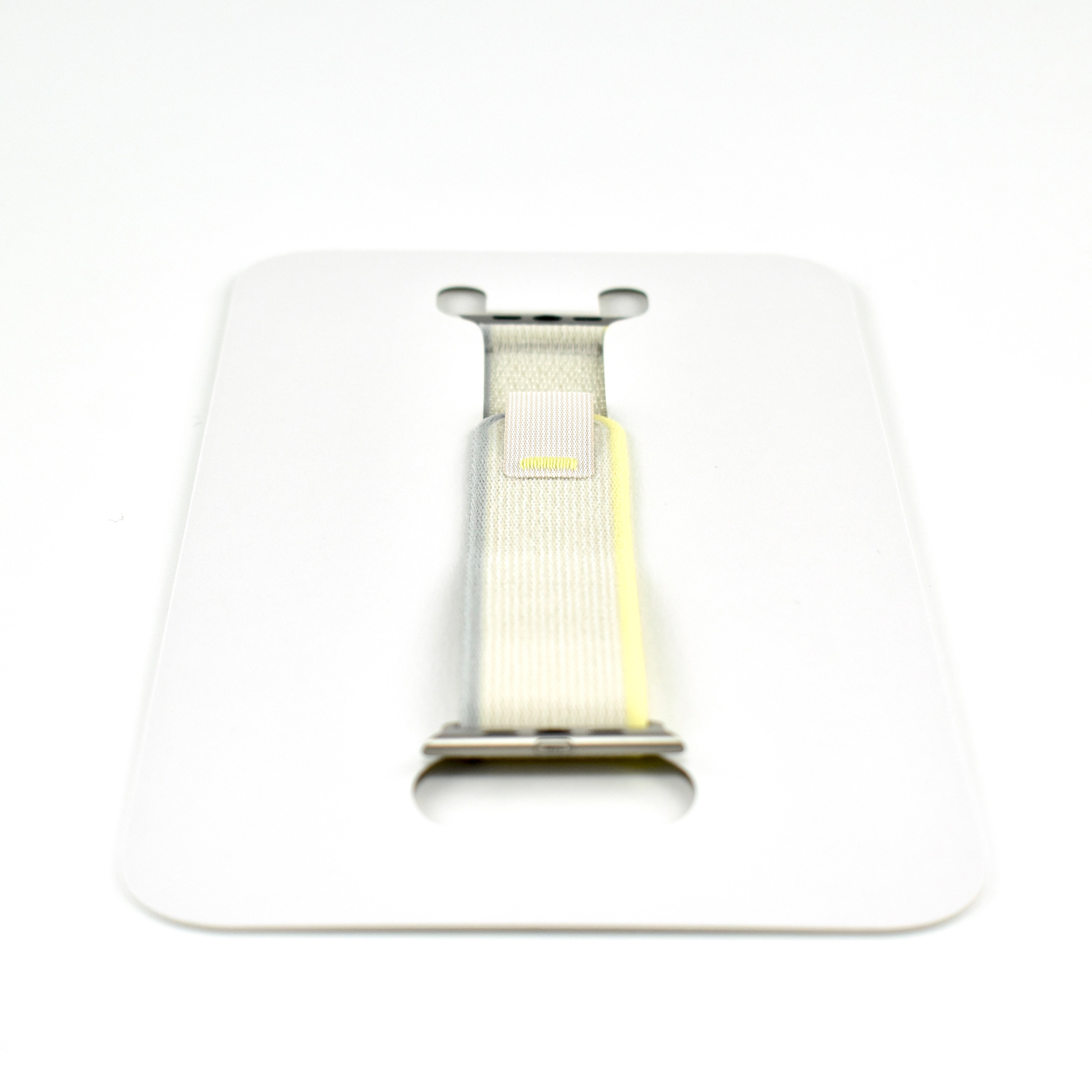
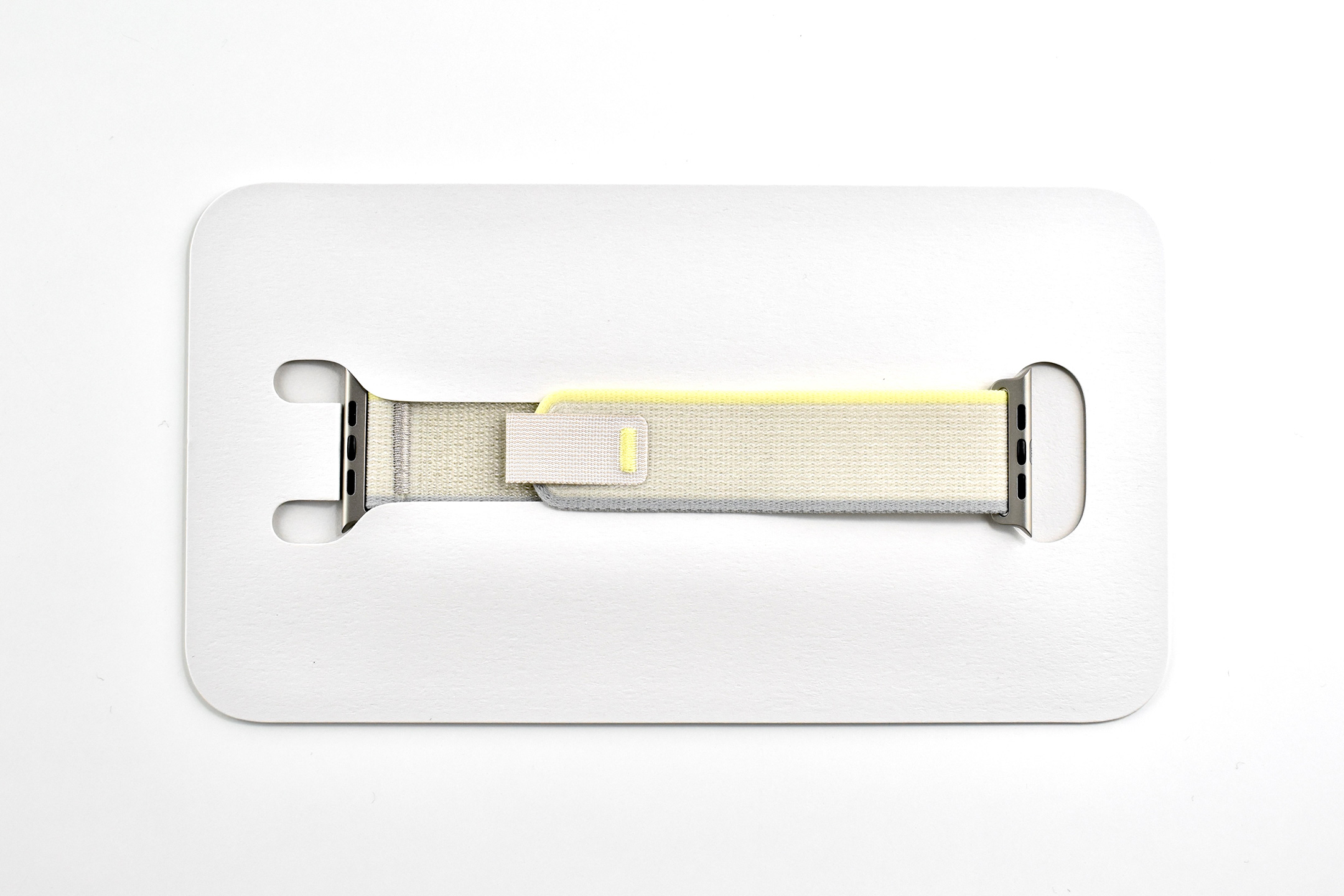
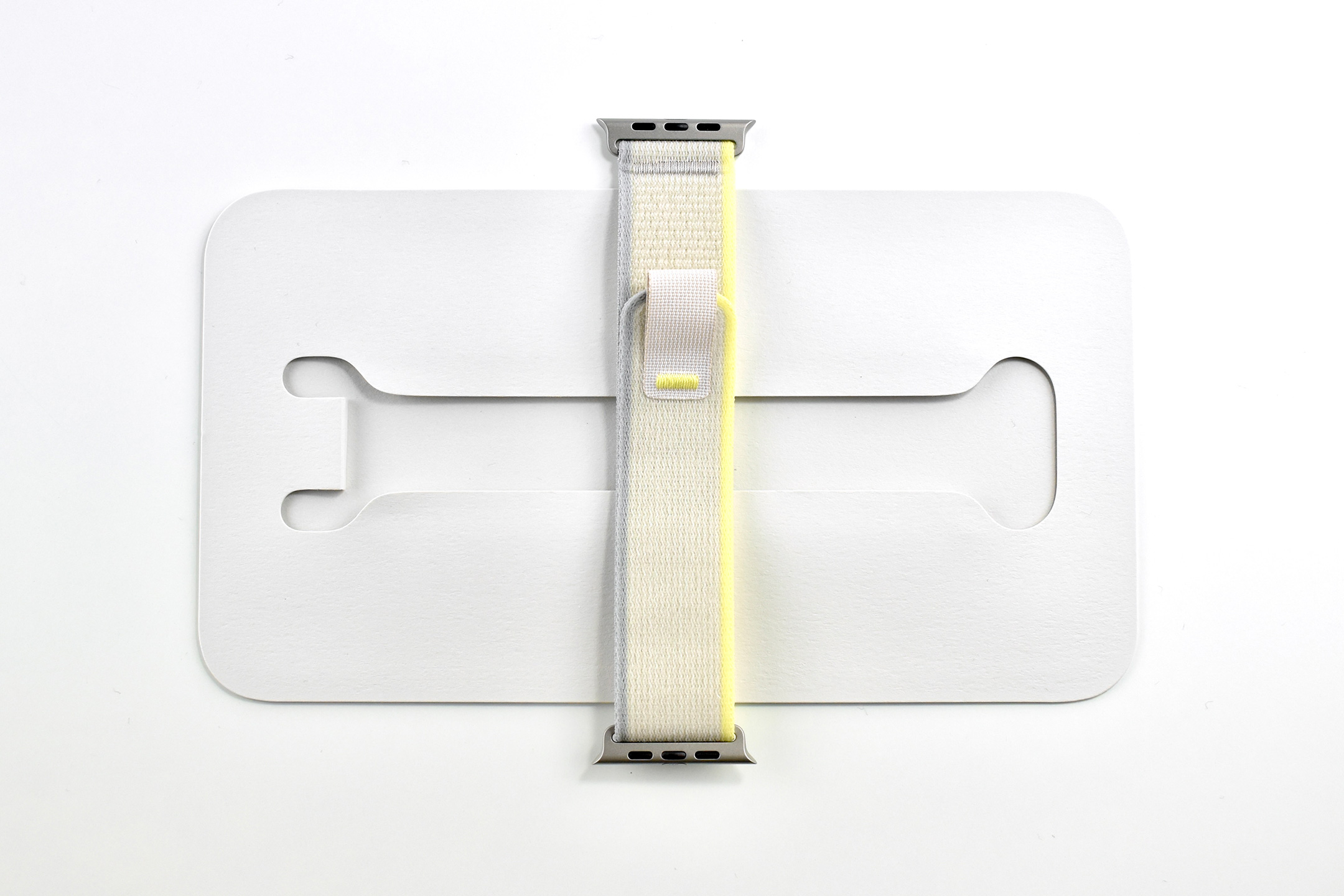
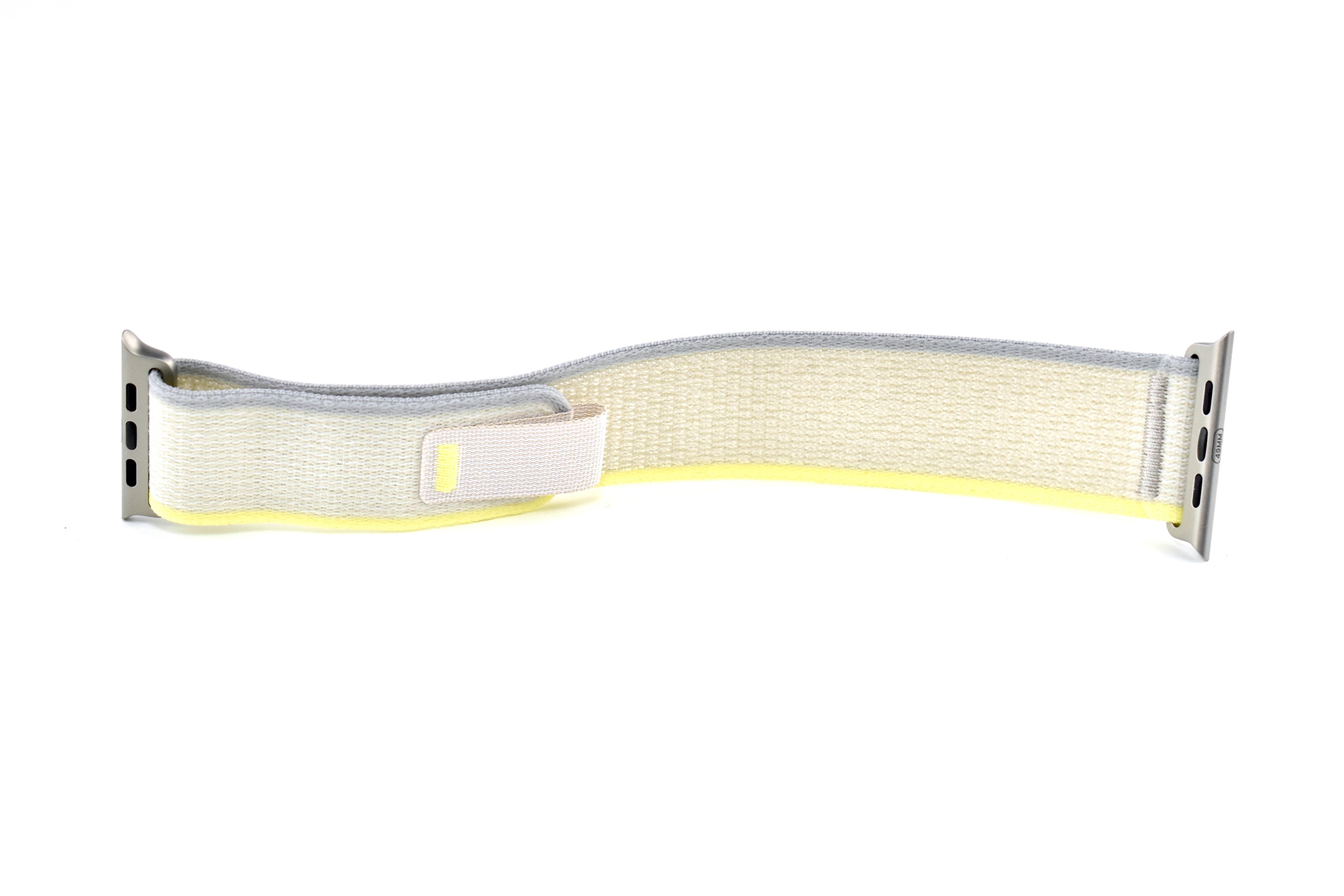
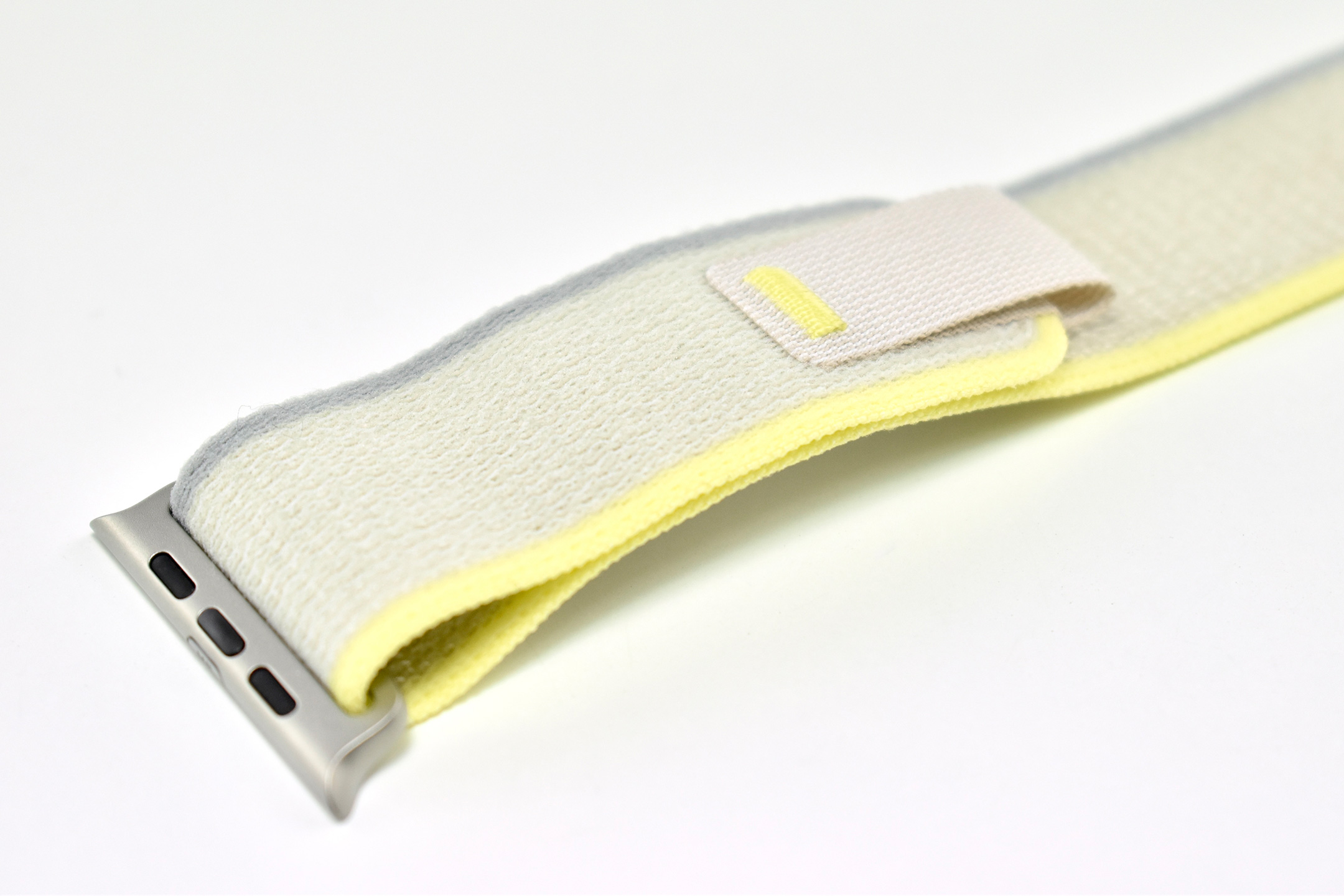
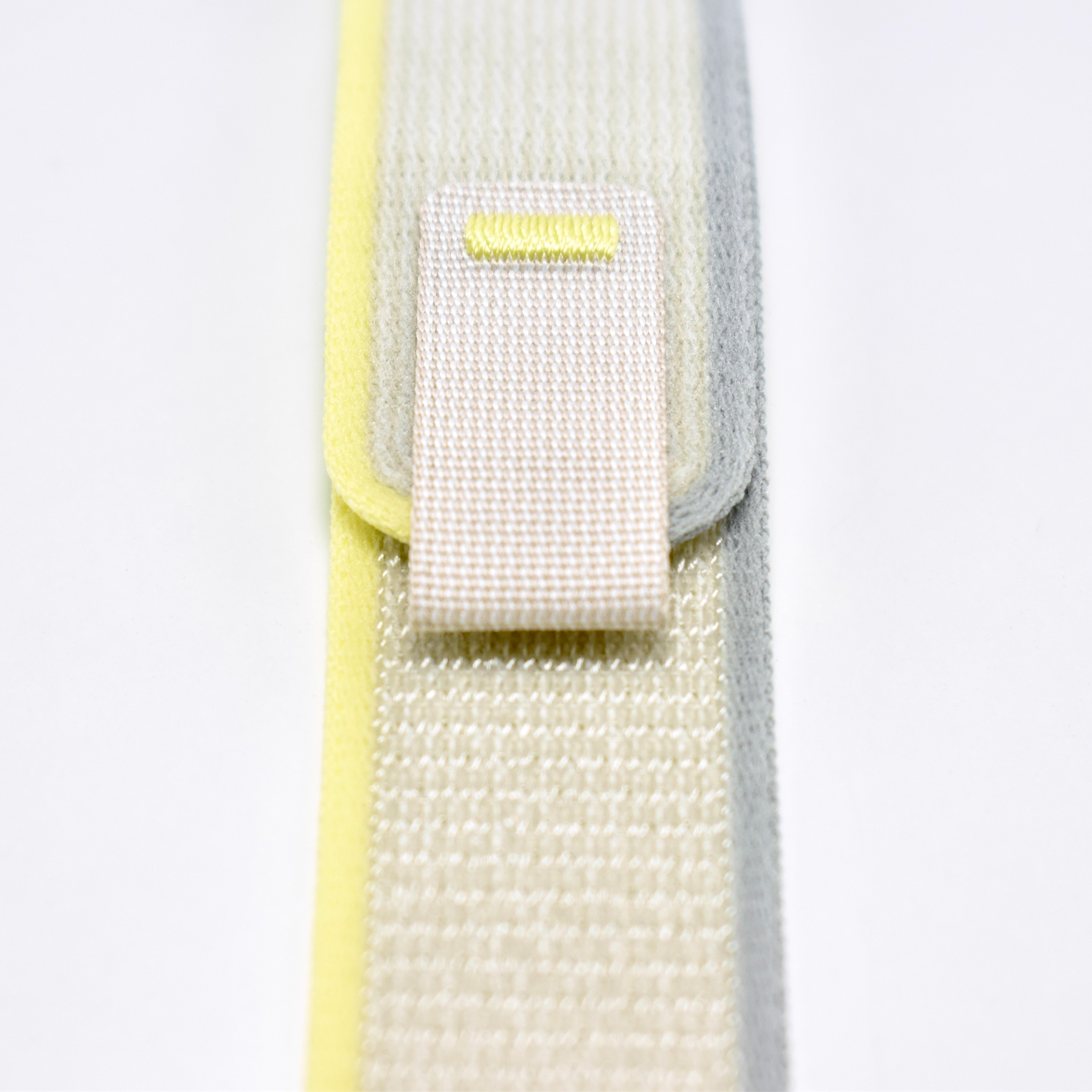
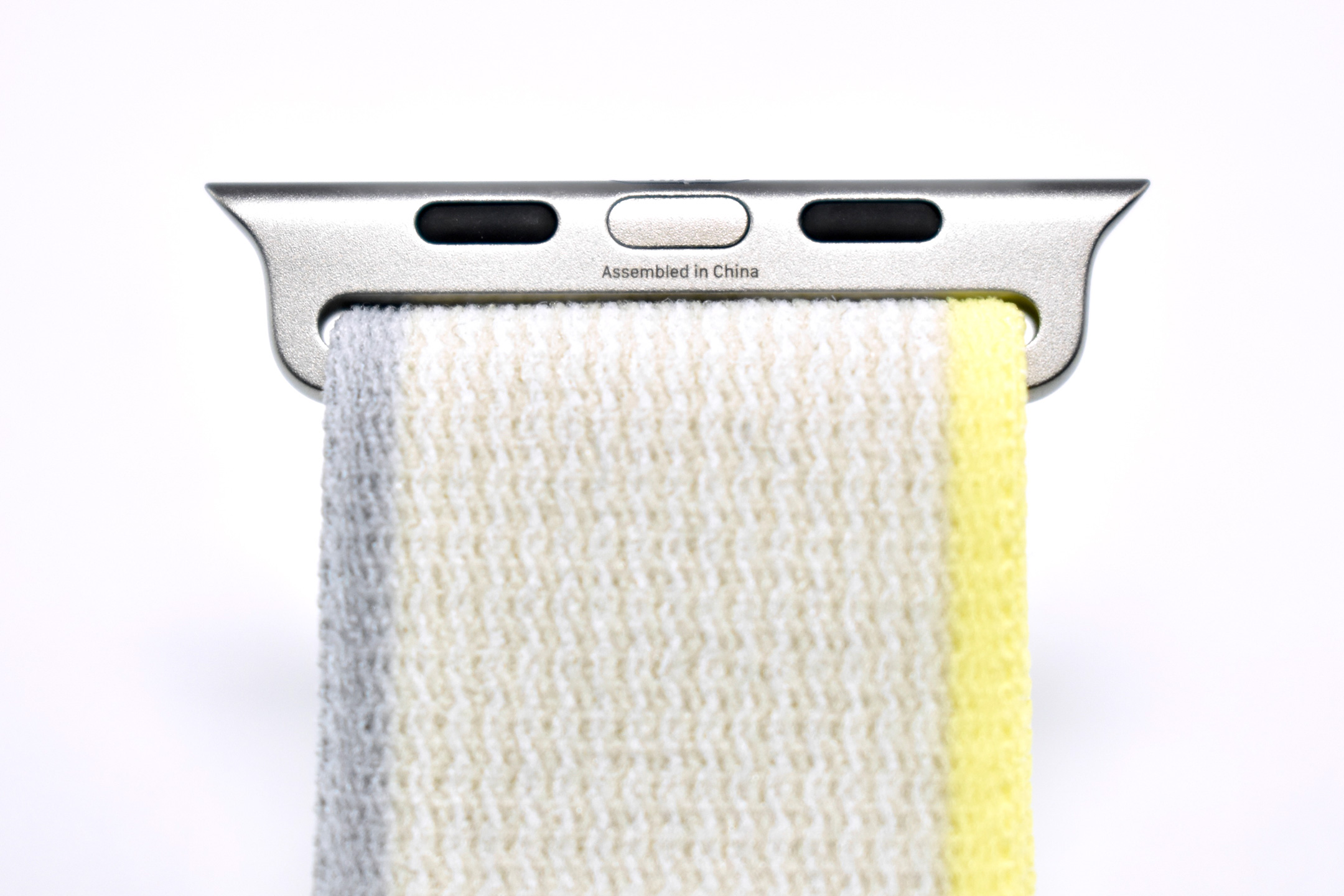
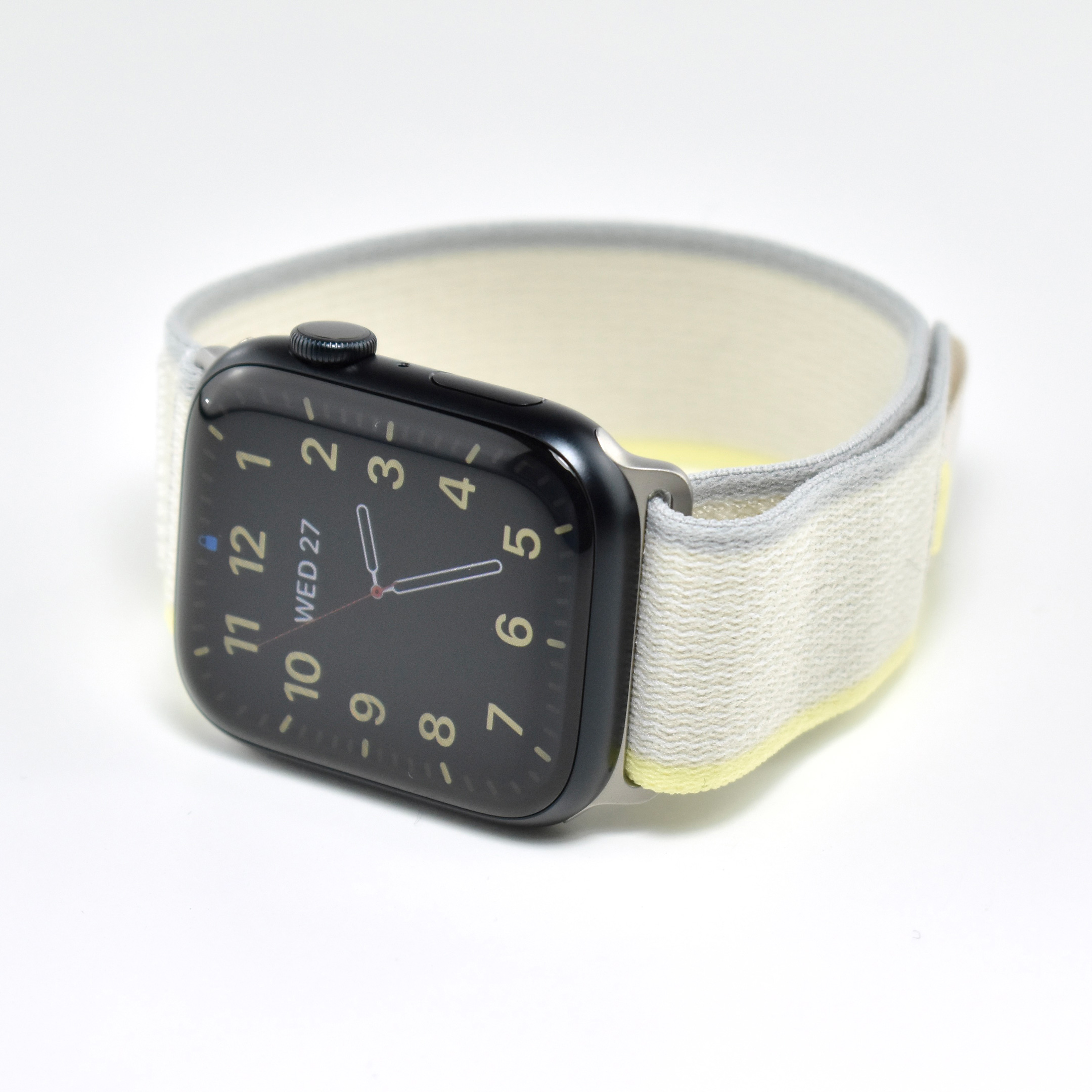
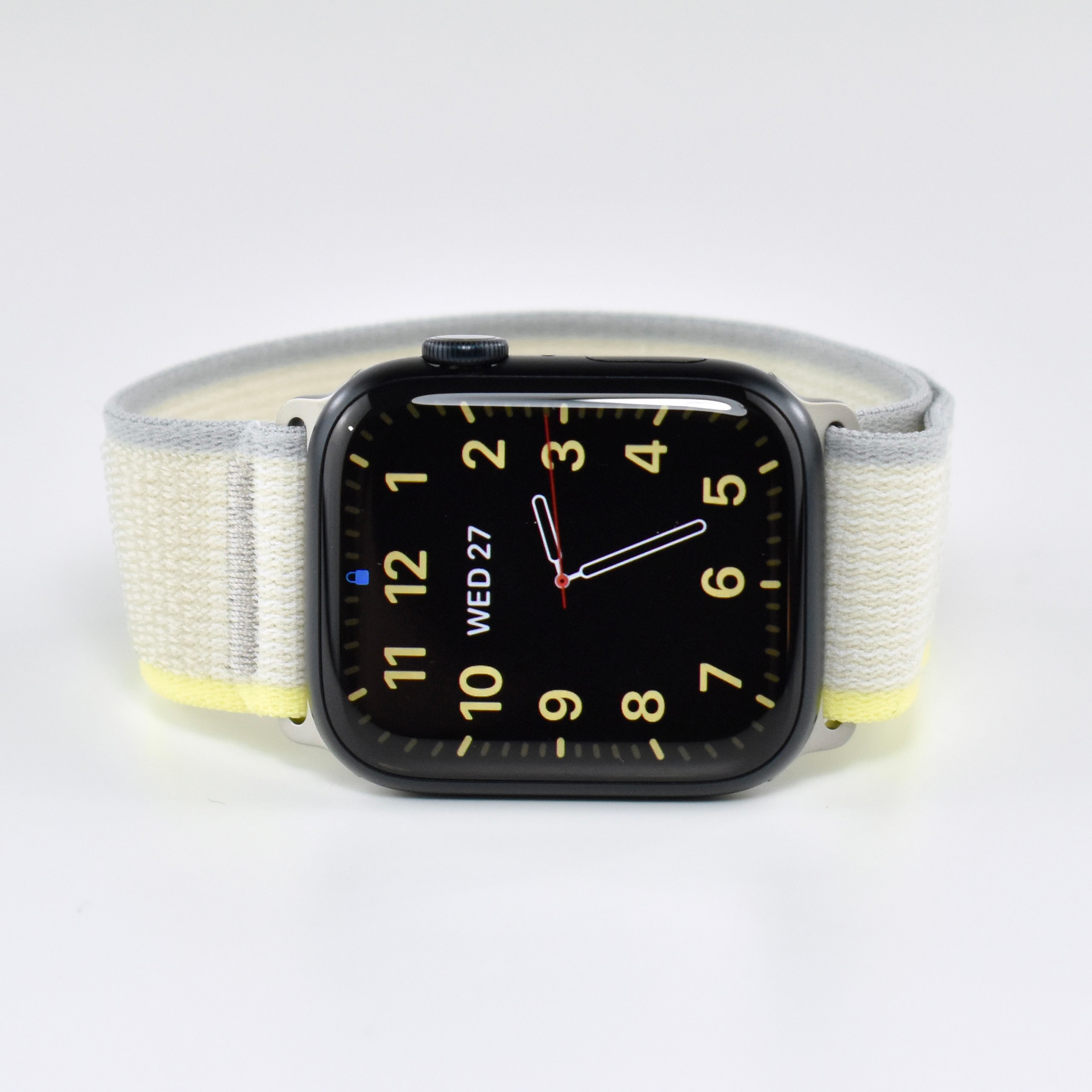
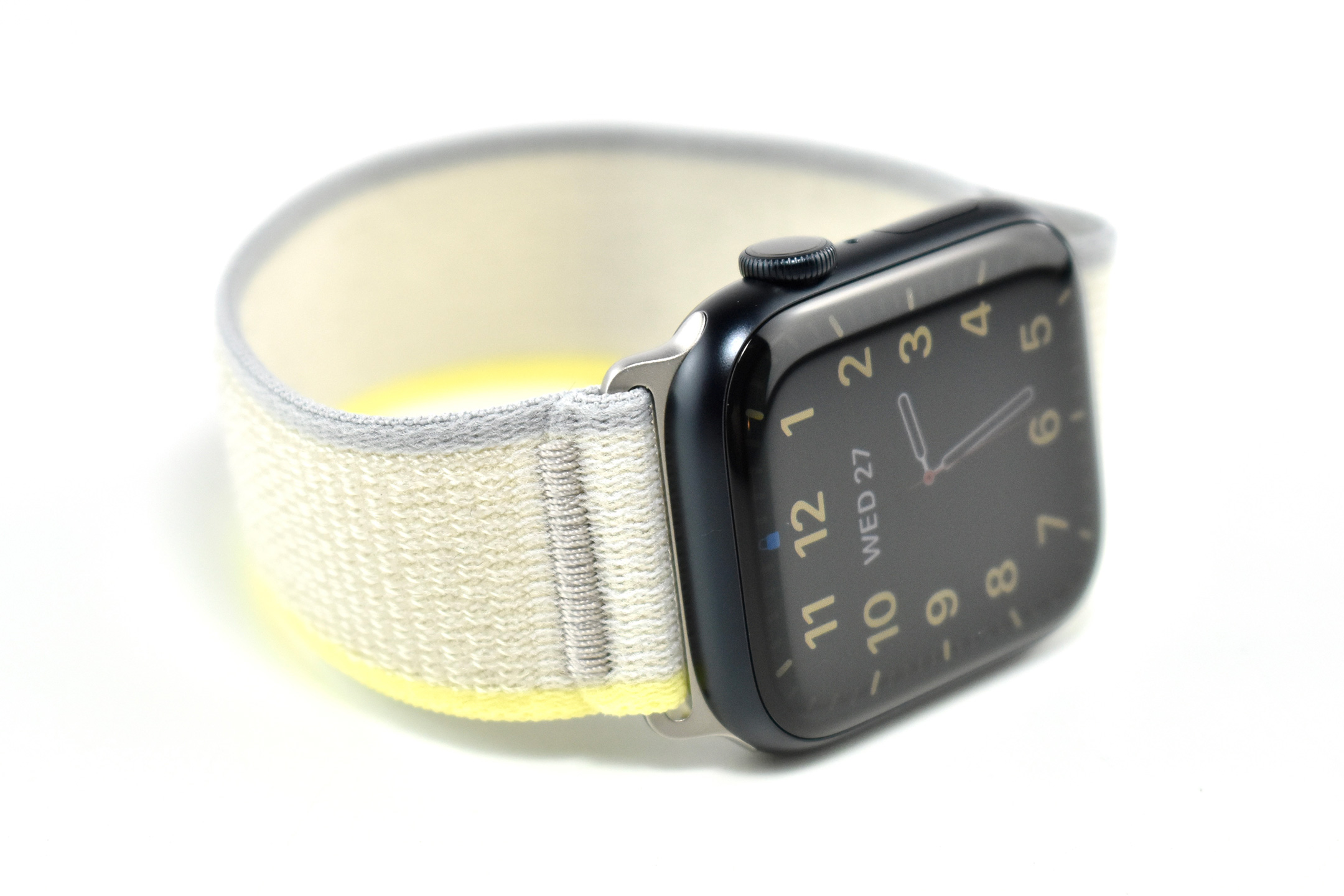
This Trail Loop is Yellow/Beige. The main inner field of the band is beige. One edge of the band is light gray and the other edge is yellow. The connectors are made of the same color titanium as the Apple Watch Ultra. The band has a beige closure tab that is stitched to the main band with yellow thread.
All Apple Watch Ultra models fit the single-size 49mm case. The Trail Loop is made primarily of nylon.
The Apple Watch Alpine Loop was released along with the Apple Watch Ultra on September 7, 2022. The Apple Watch Ultra “brings a new bold design and a wide range of features built for endurance, exploration, and adventure.”
In the original press release, Apple described the Alpine Loop as one of its “New Bands Designed for the Great Outdoors.” Apple adds:
“With explorers in mind, the Alpine Loop band features two integrated layers made from one continuous weaving process that eliminates the need for stitching. The top loops, interspersed with high-strength yarn, provide adjustability and a secure attachment for the titanium G-hook fastener.”
Apple’s product page described the Alpine Loop:
“The rugged Alpine Loop is made from two textile layers woven together into one continuous piece without stitching. High-strength yarns reinforce the top loops, and the corrosion-resistant titanium G-hook slides easily into the loops for secure fit.”
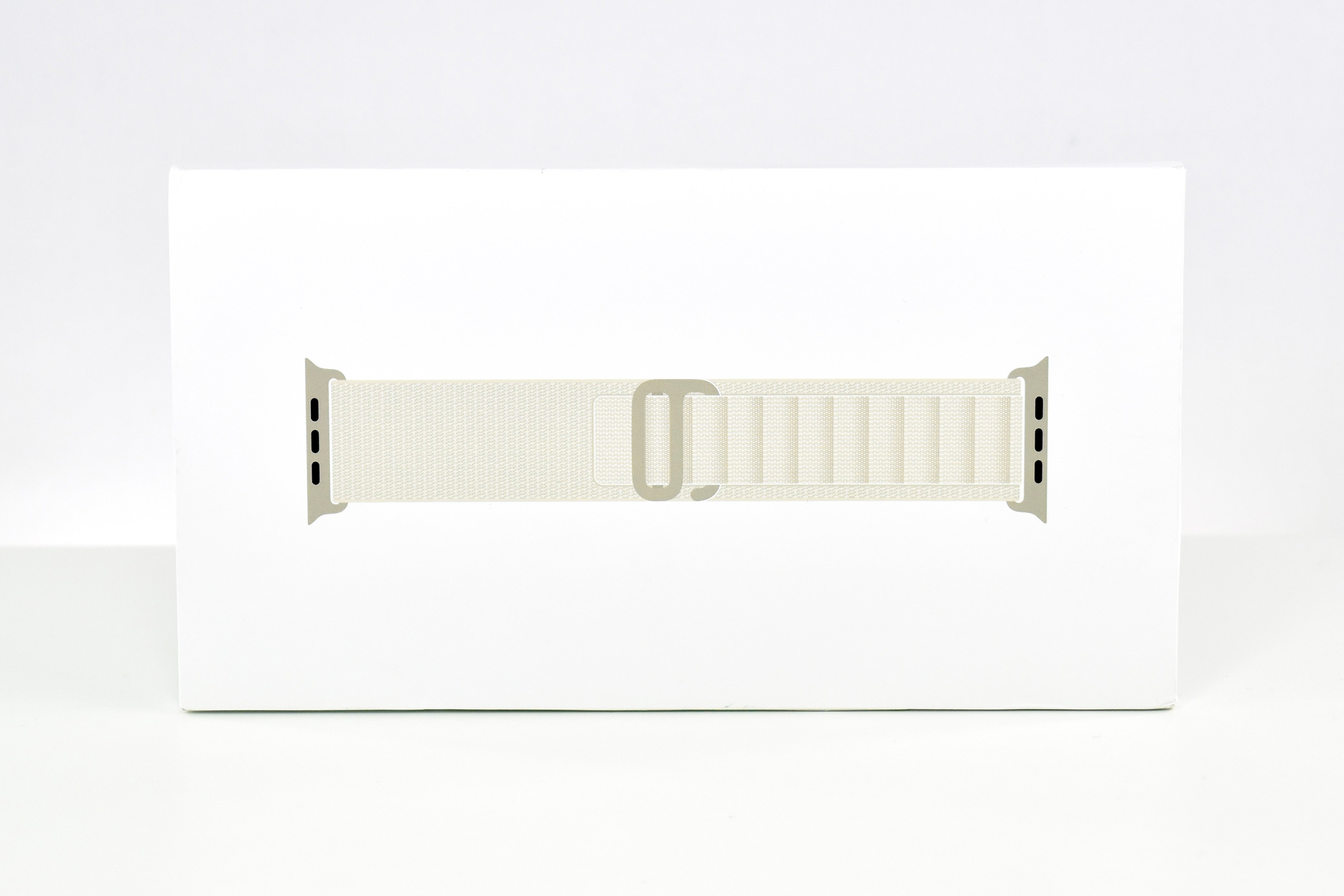
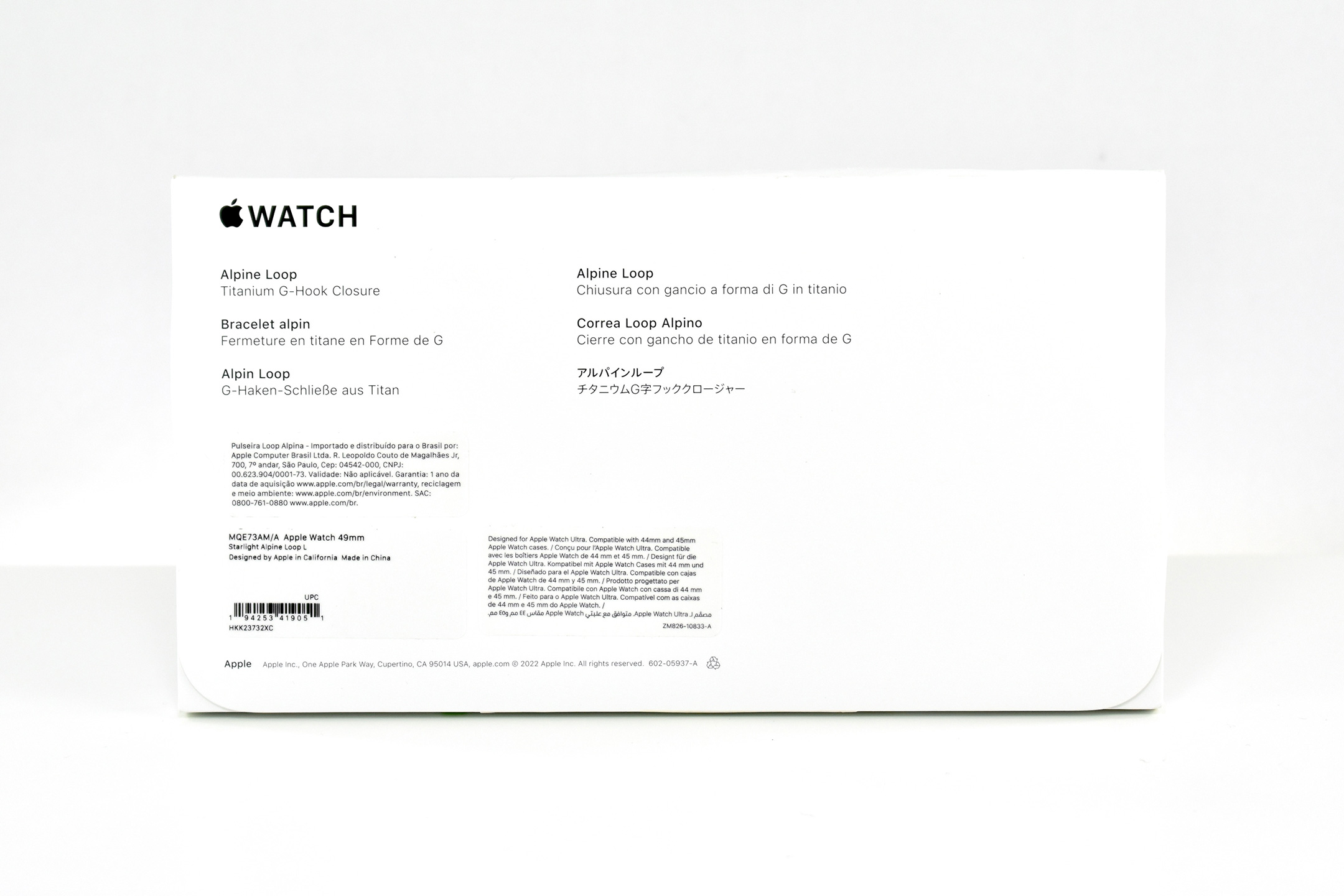
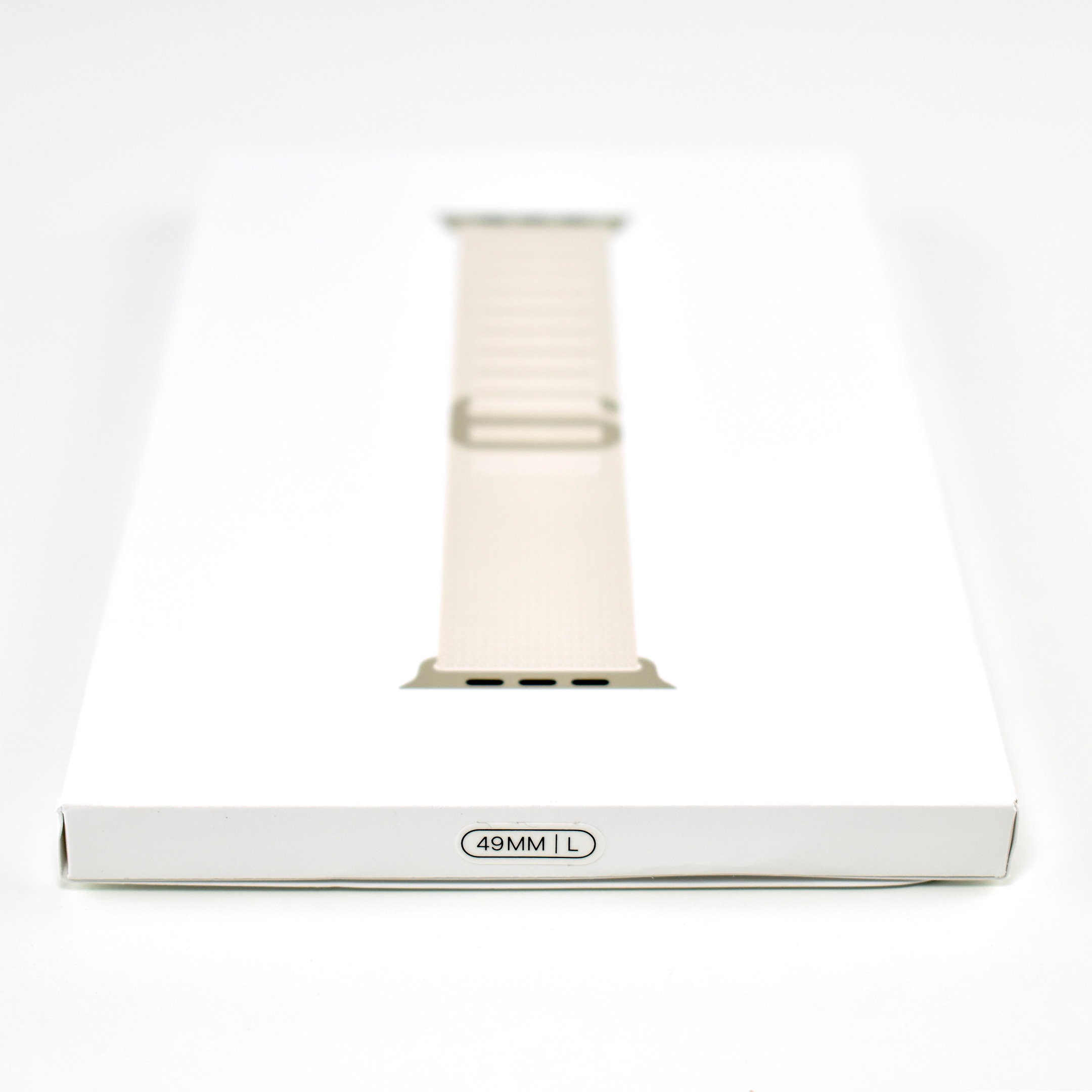
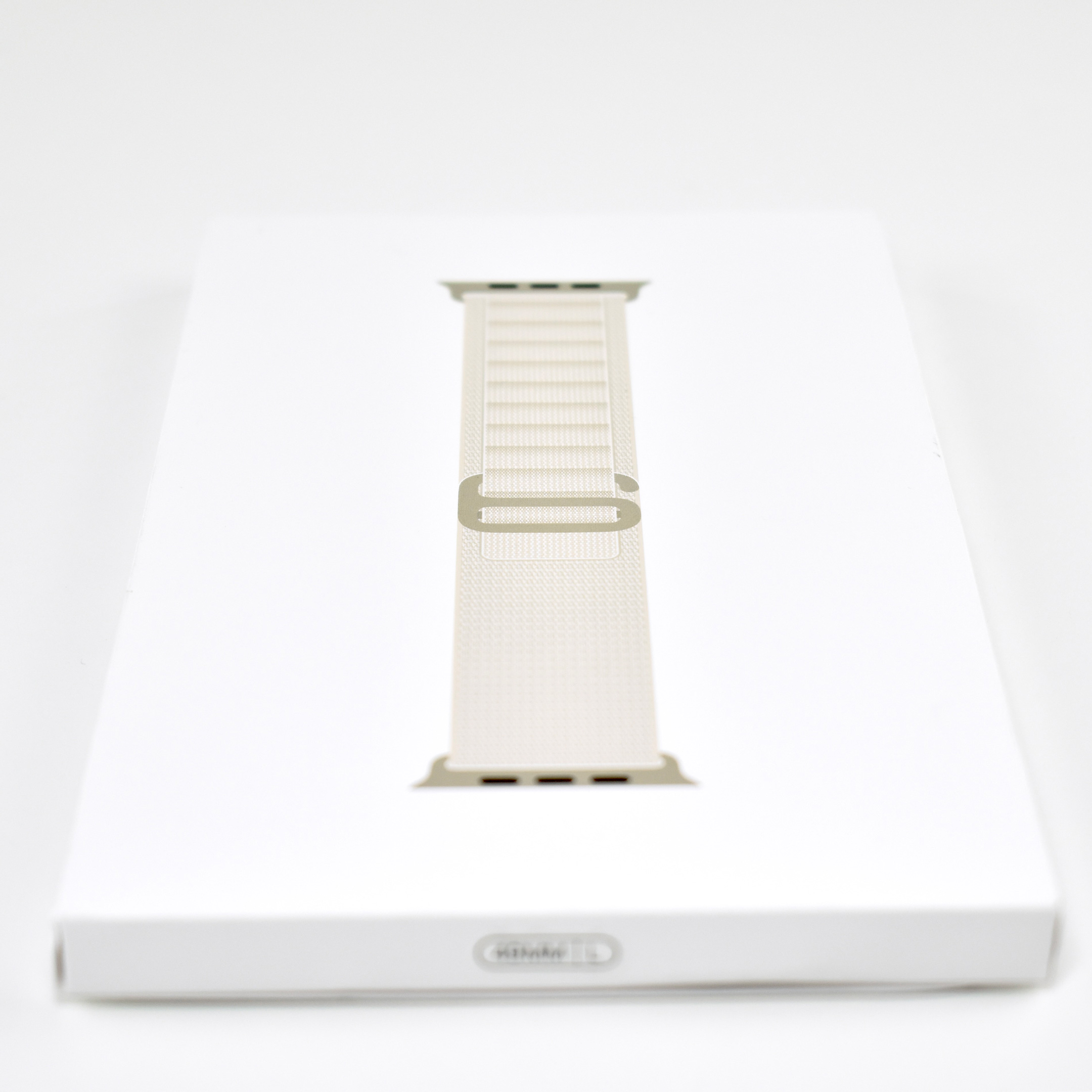
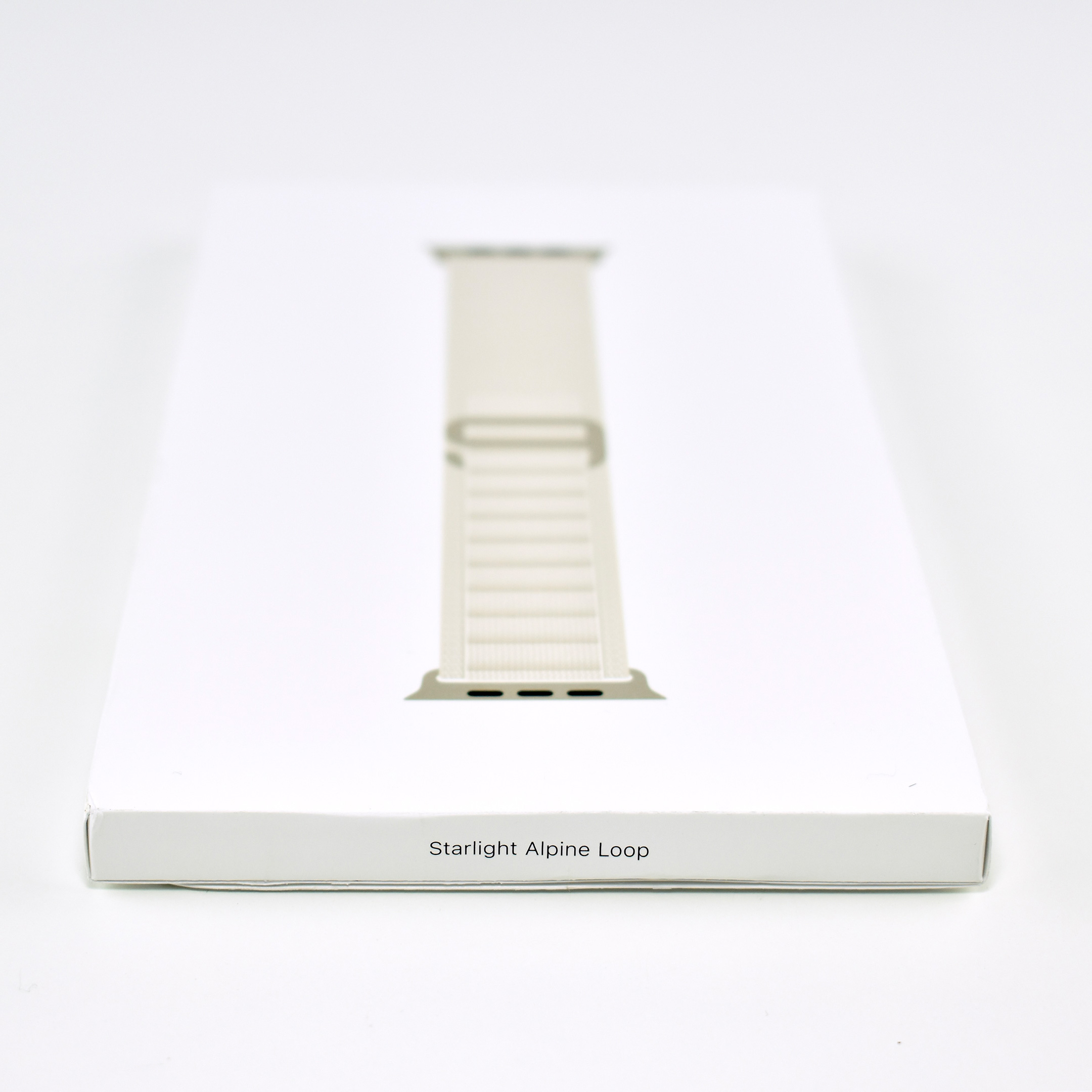
This Alpine Loop is Starlight, a shade of off-white. The connectors and the “G-hook” closure are made of the same color titanium as the Apple Watch Ultra. Although splitting hairs, a more apt name for the hook would be a “g-hook” since it matches the shape of a lowercase—not uppercase—“g.”
All Apple Watch Ultra models fit the single-size 49mm case. The Alpine Loop is made primarily of polyester.
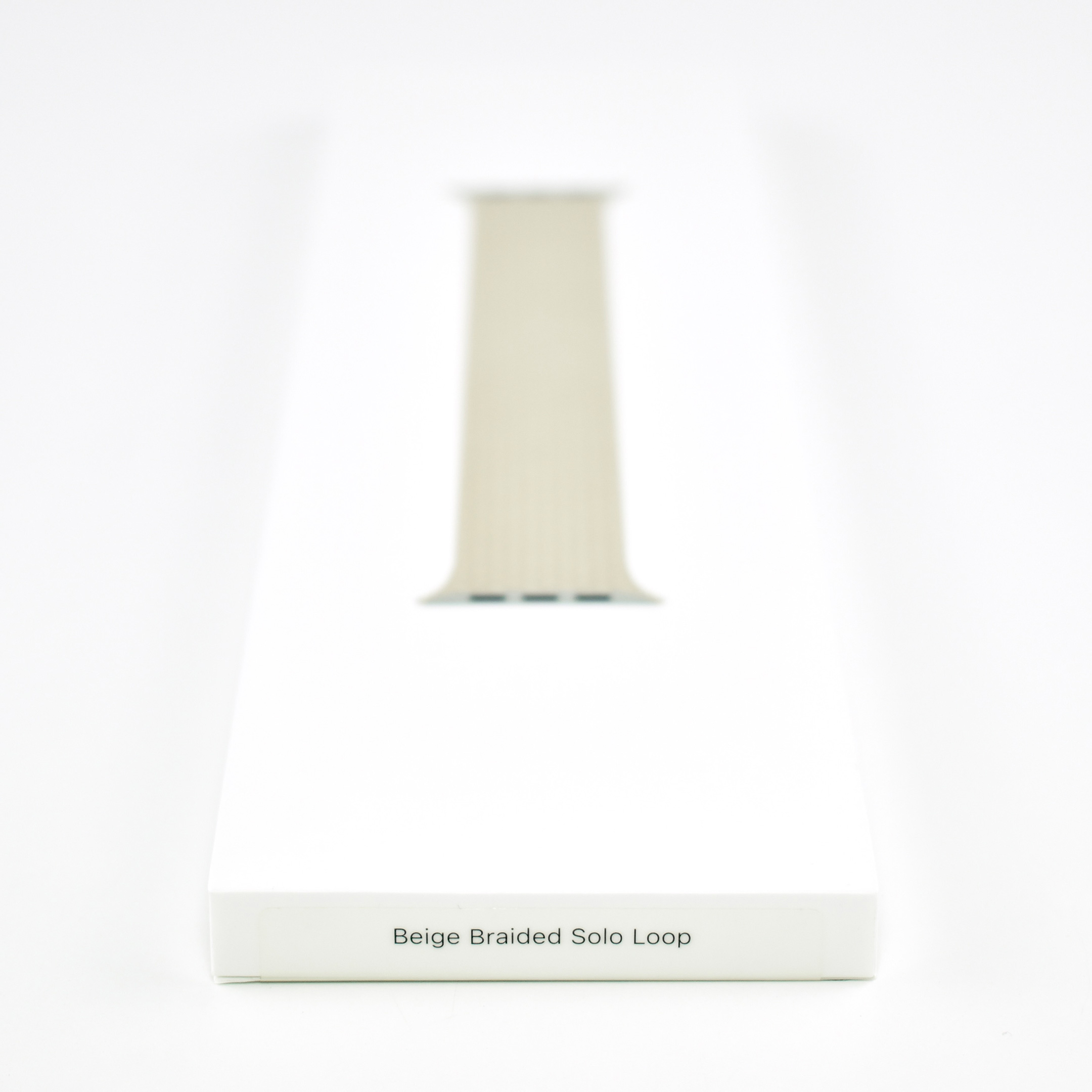
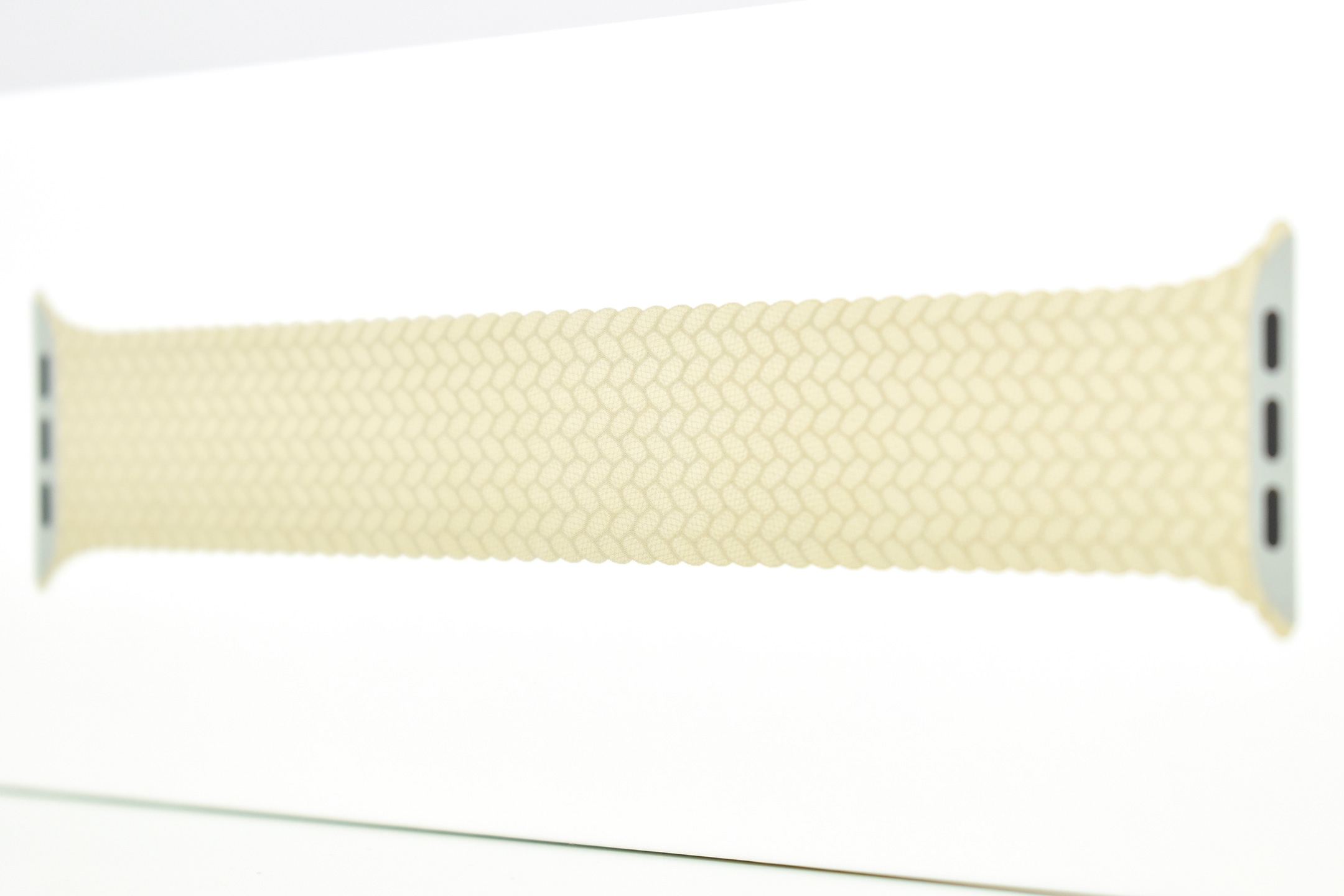
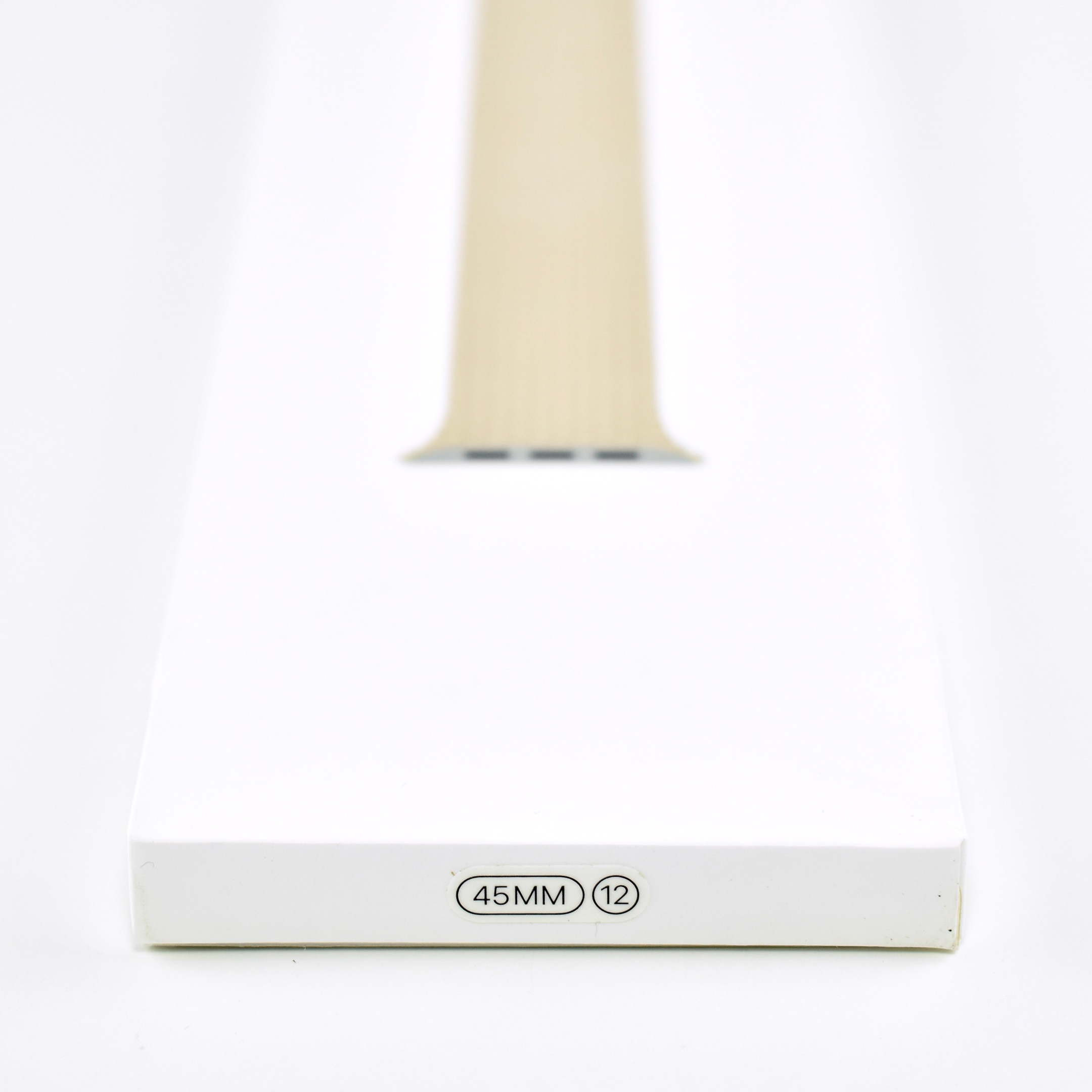
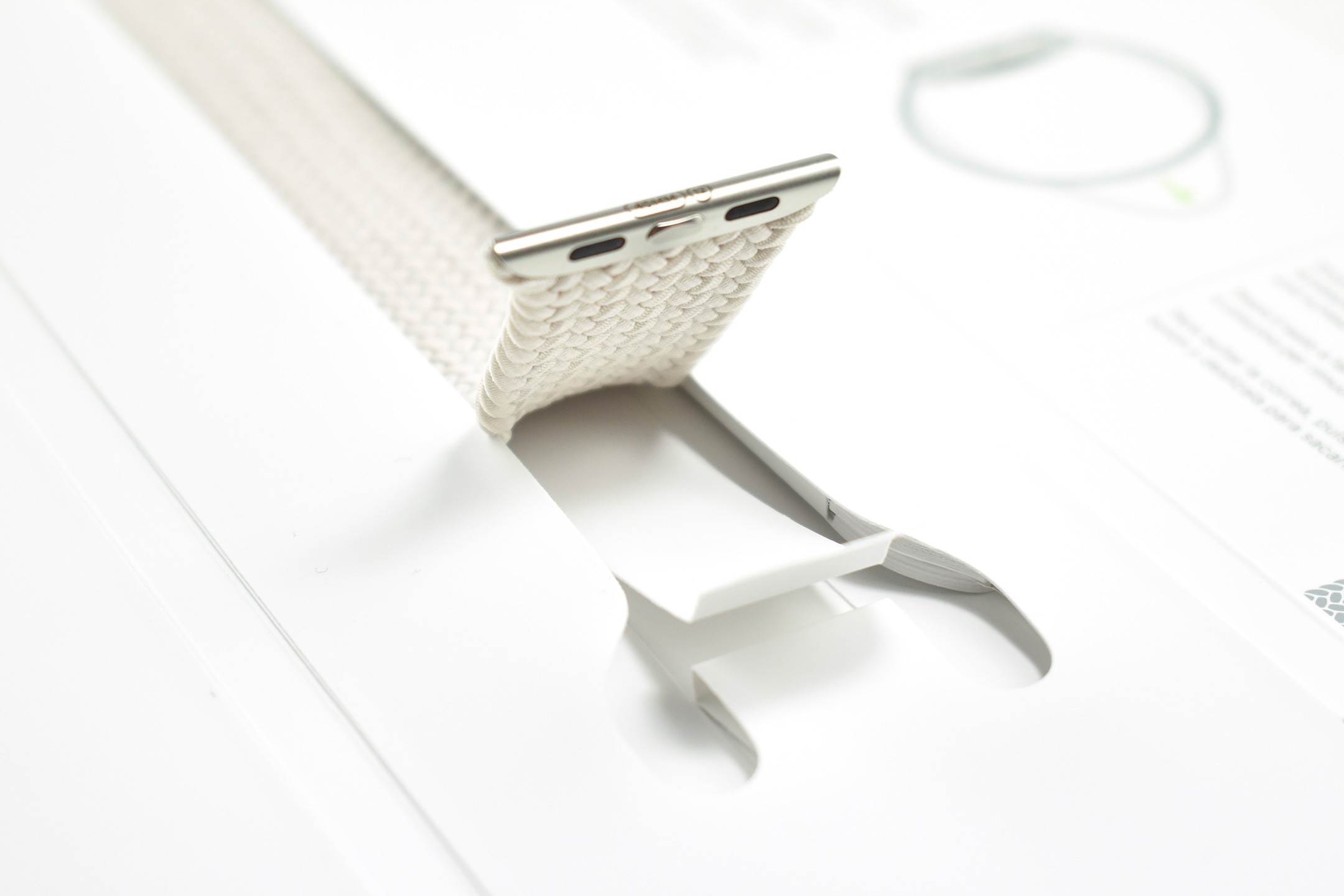
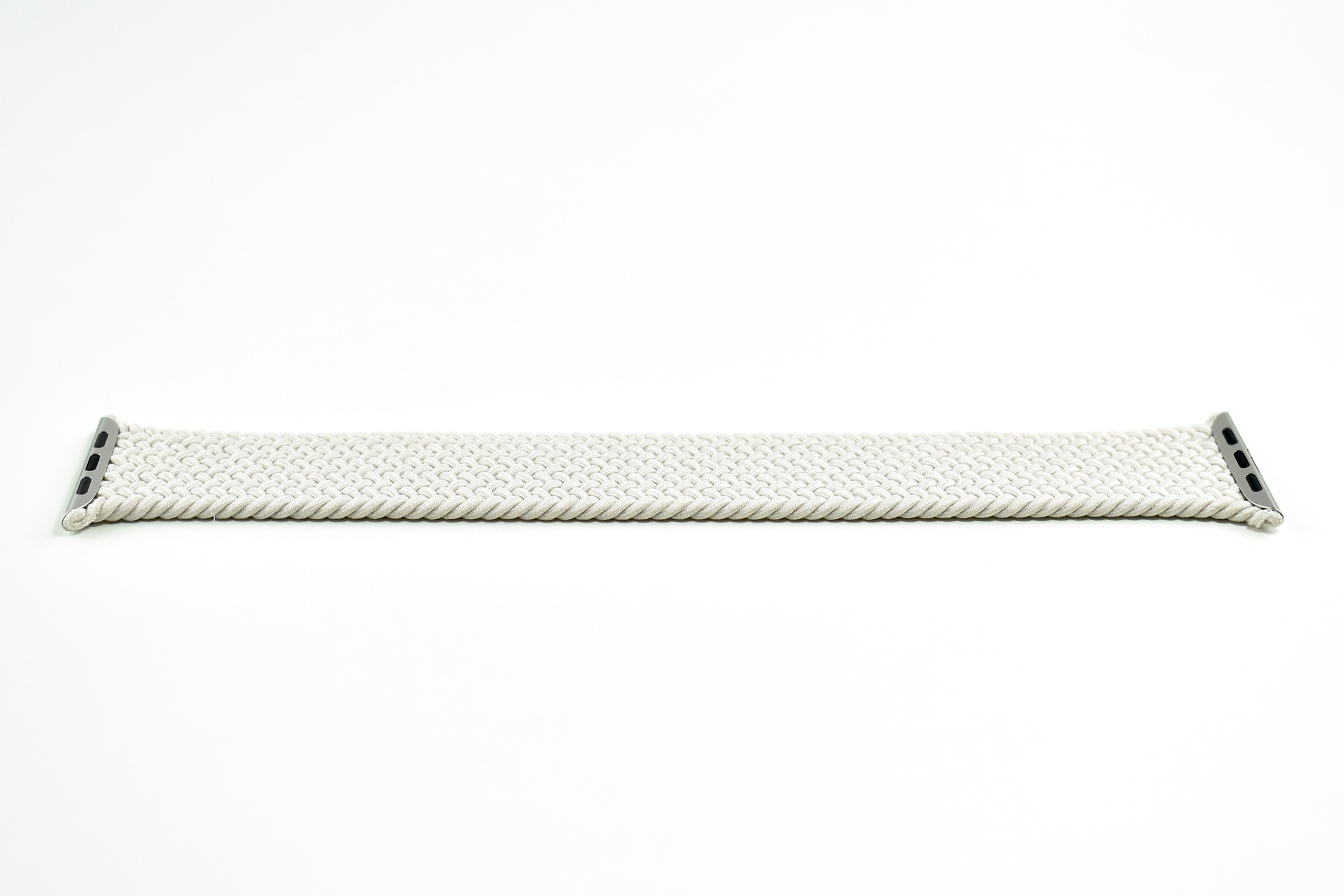
The Braided Solo Loop Apple Watch band was released in 2020 along with the Apple Watch Series 6. The packaging describes this product as a “Textile Fitted Band.” According to Apple’s website:
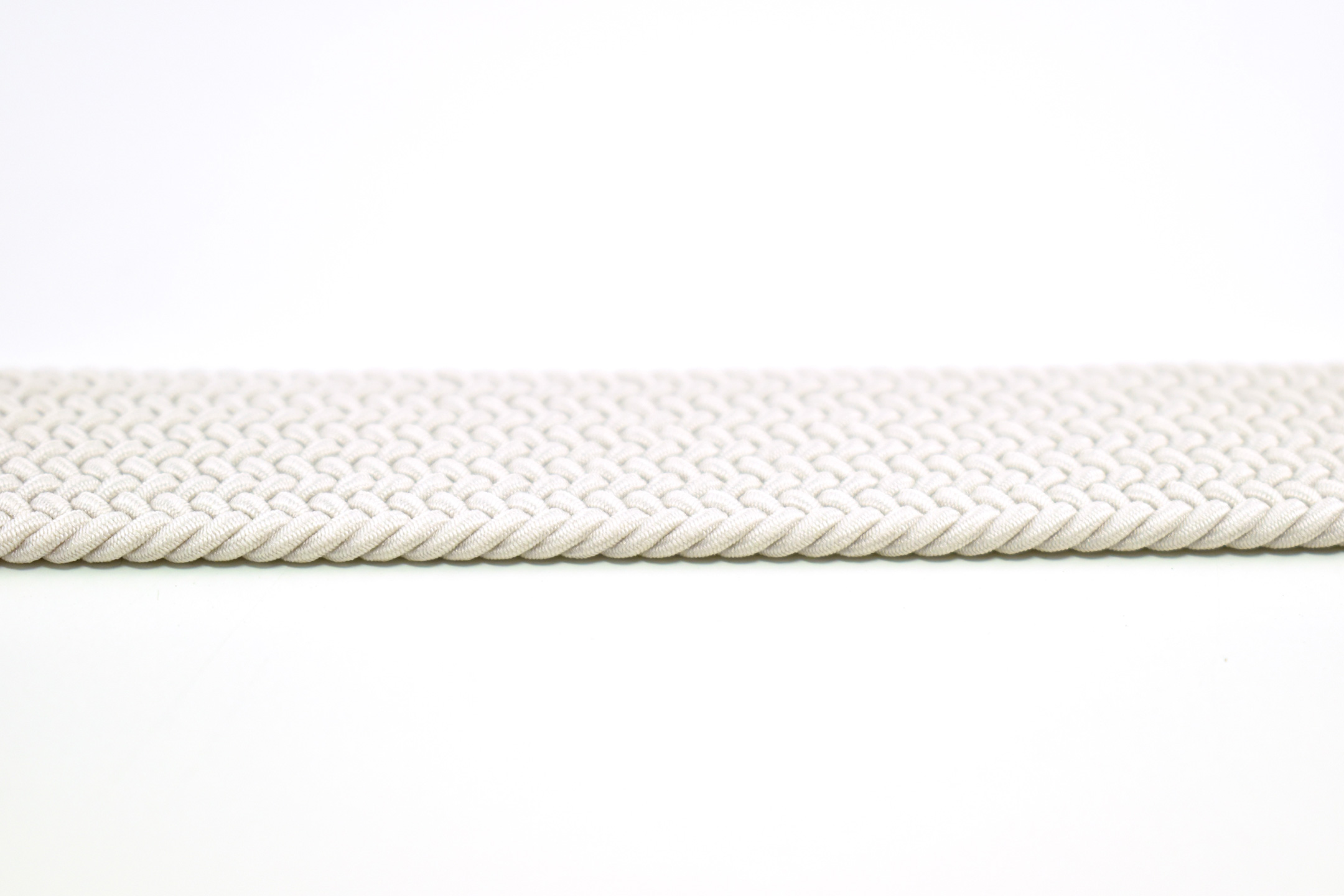
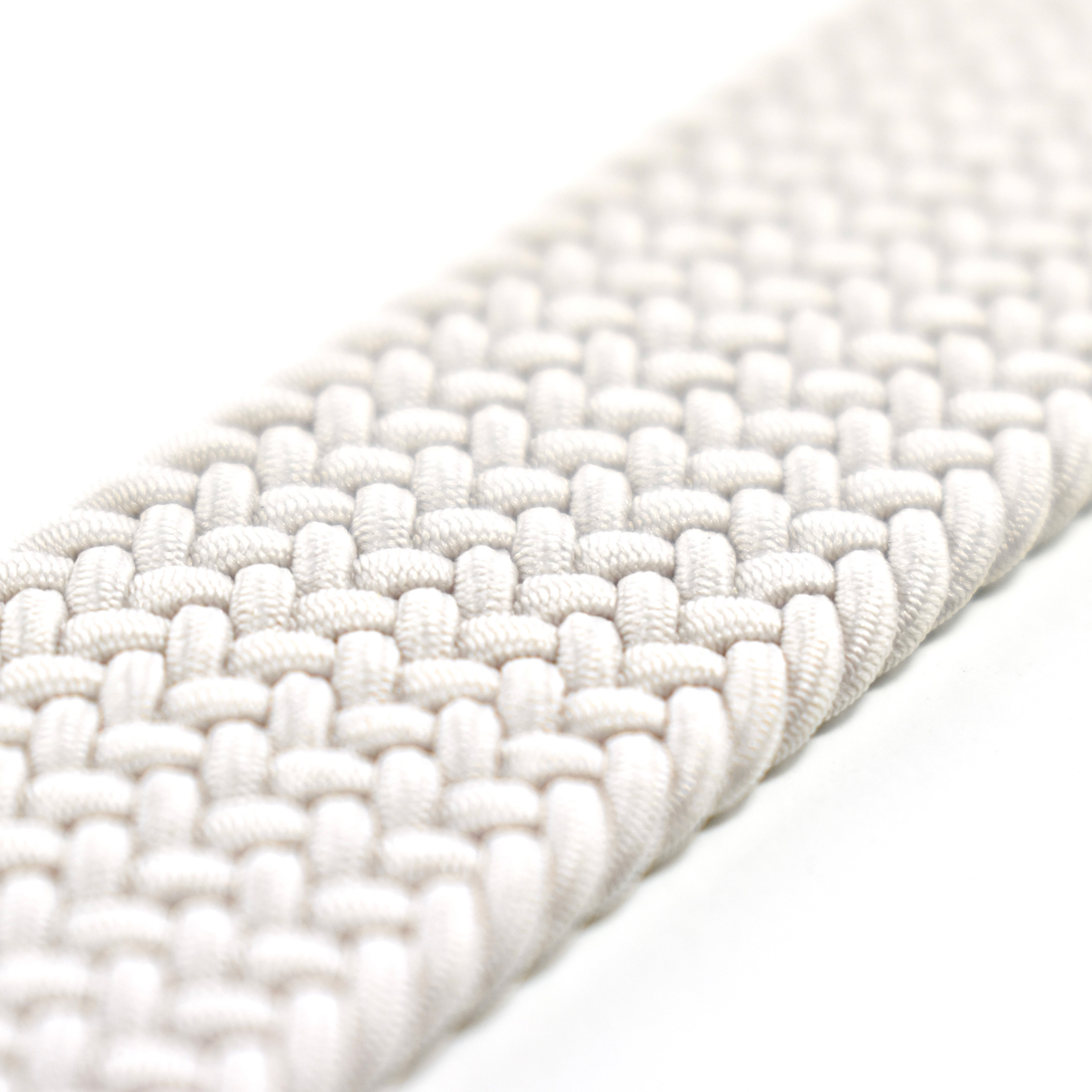
“Each Braided Solo Loop features a unique, stretchable design that’s ultracomfortable and easy to slip on and off your wrist. Made from 100 percent recycled materials, the 16,000 polyester yarn filaments in each band are interwoven with thin silicone threads using advanced braiding machinery then laser cut to an exact length. The 300D construction offers a soft, textured feel and is both sweat-resistant and water-resistant.”
The color of this band is beige. It was available in 41mm and 45mm widths. The 41mm Braided Solo Loop was sold in wrist sizes 1–9, and the 45mm Braided Solo Loop was sold in wrist sizes 4–12.
According to Apple’s website, “This band comes in custom sizes because it’s designed for an ultracomfortable fit. An accurate measurement will help you get the size that’s right for you.” The website allowed buyers to download a PDF and cut out a “tool” that wrapped around the wrist to designate the band size needed.
For the die-hard Apple fans among us, one might mark the release of this band with a bit of melancholy. When the original iMac was introduced in 1998, Steve Jobs said, “Today we brought romance and innovation back into the industry. iMac reminds everyone of what Apple stands for.” The groundbreaking design of the original iMac in translucent Bondi Blue included a series of taglines, including one that has suck with me for the past 24 years—”Sorry, no beige.” I wistfully report that beige is back in an official Apple product.
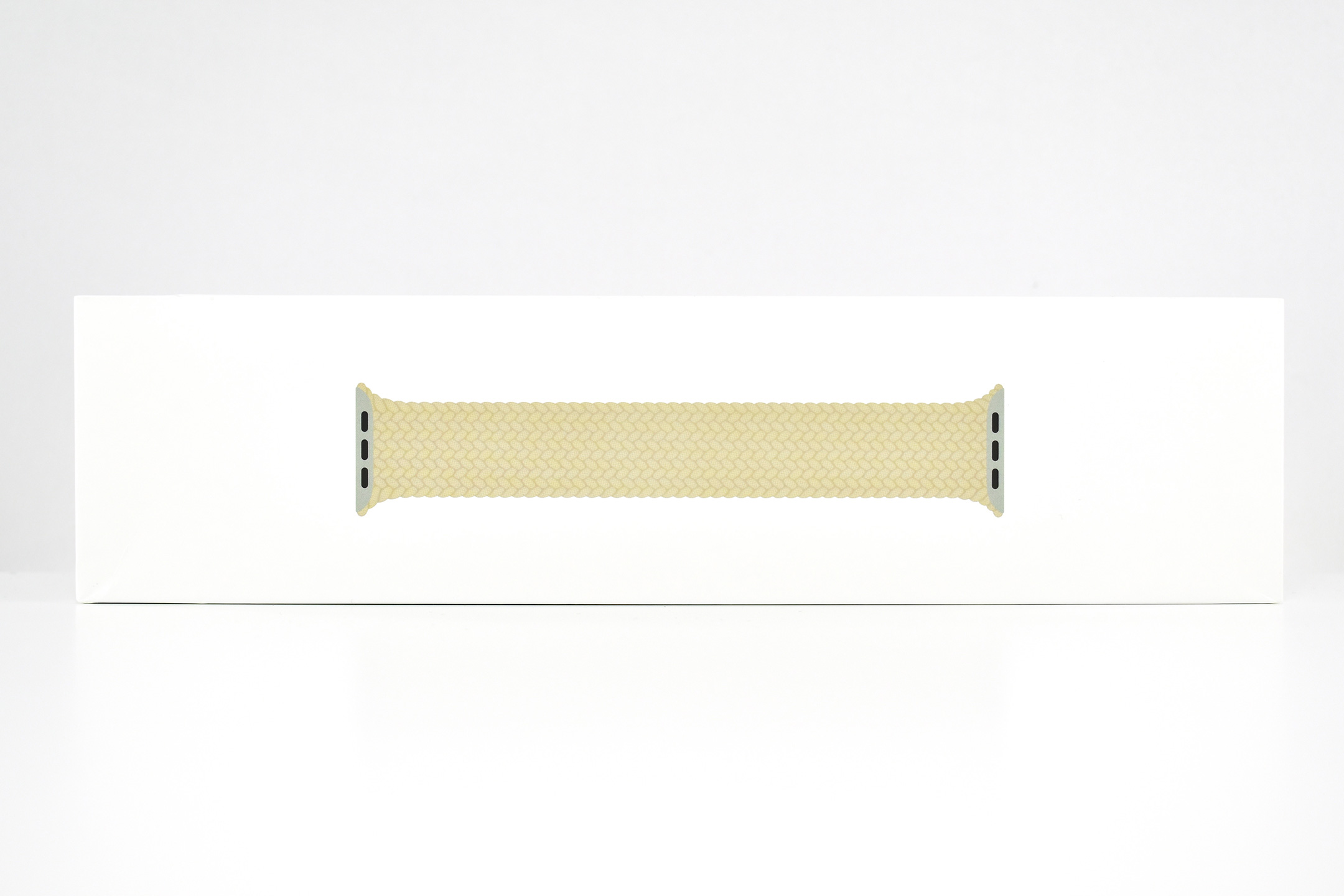
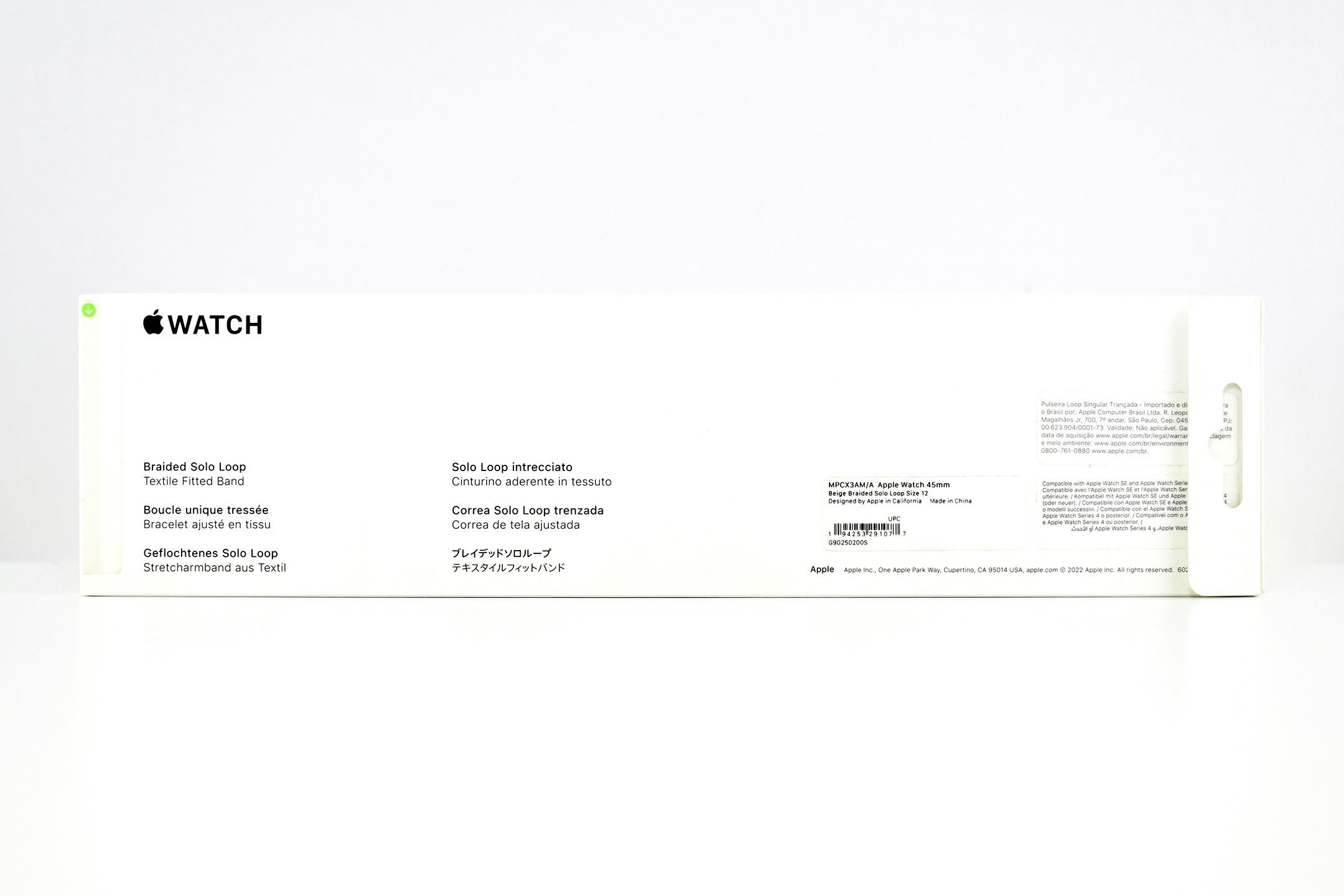
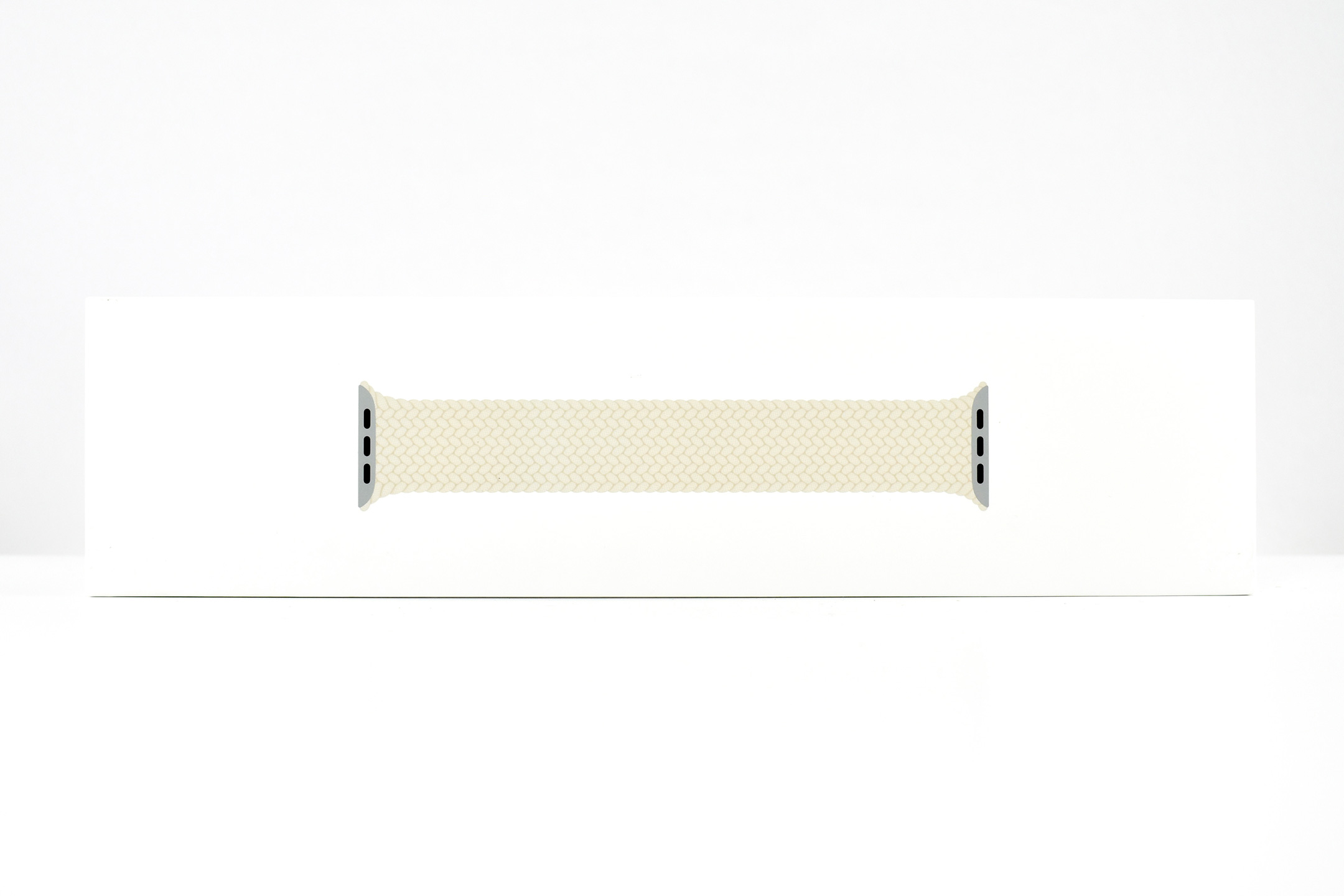
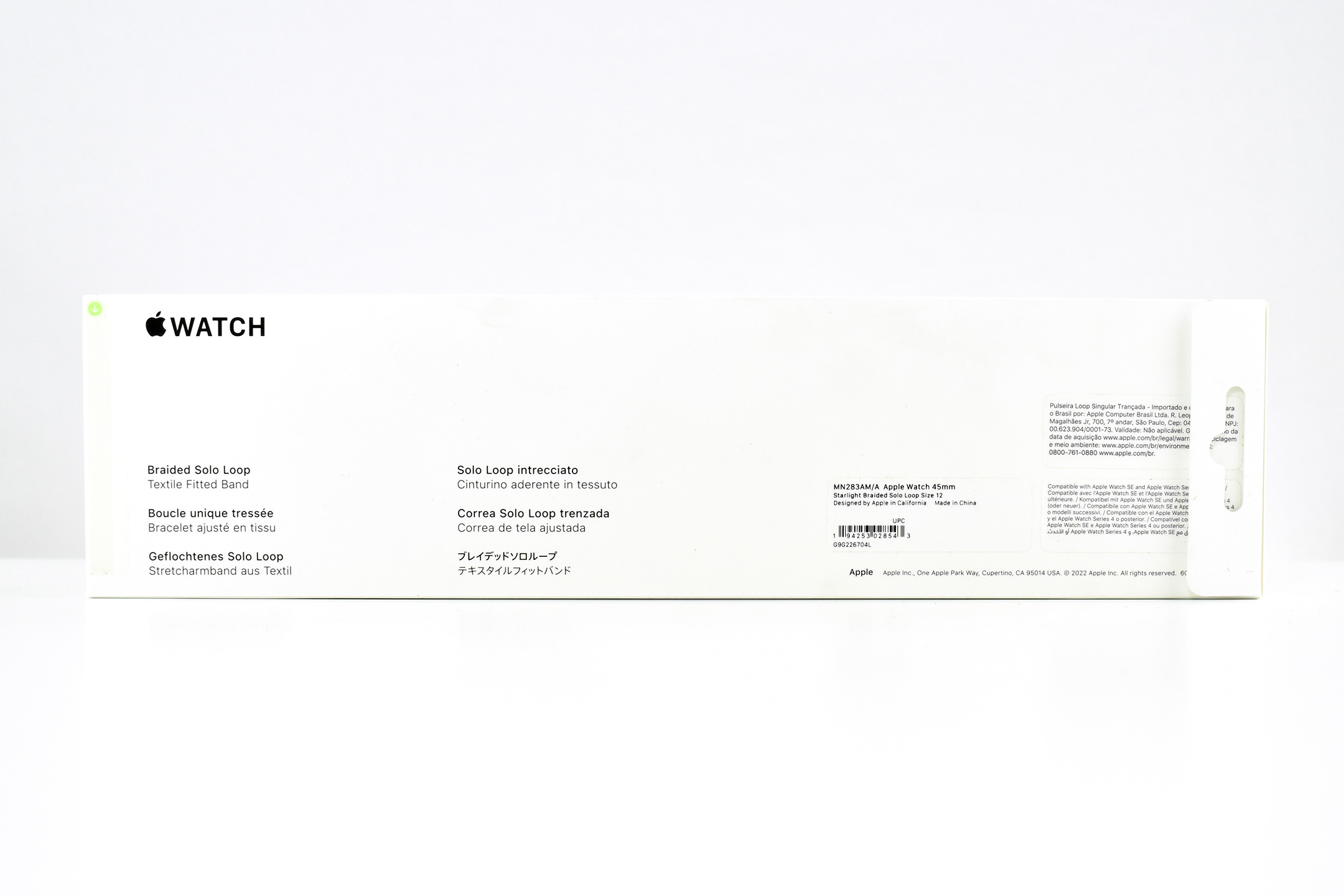
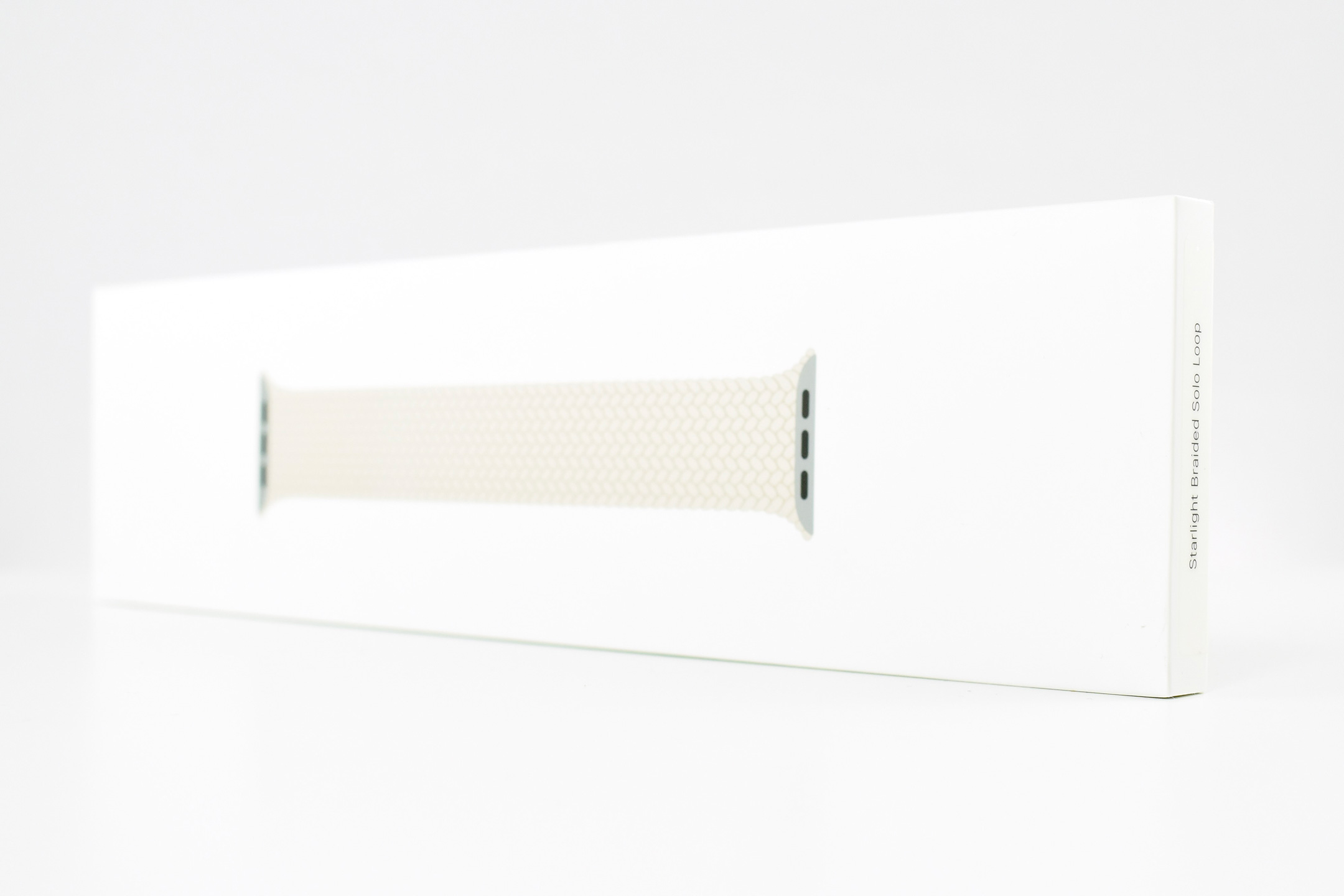
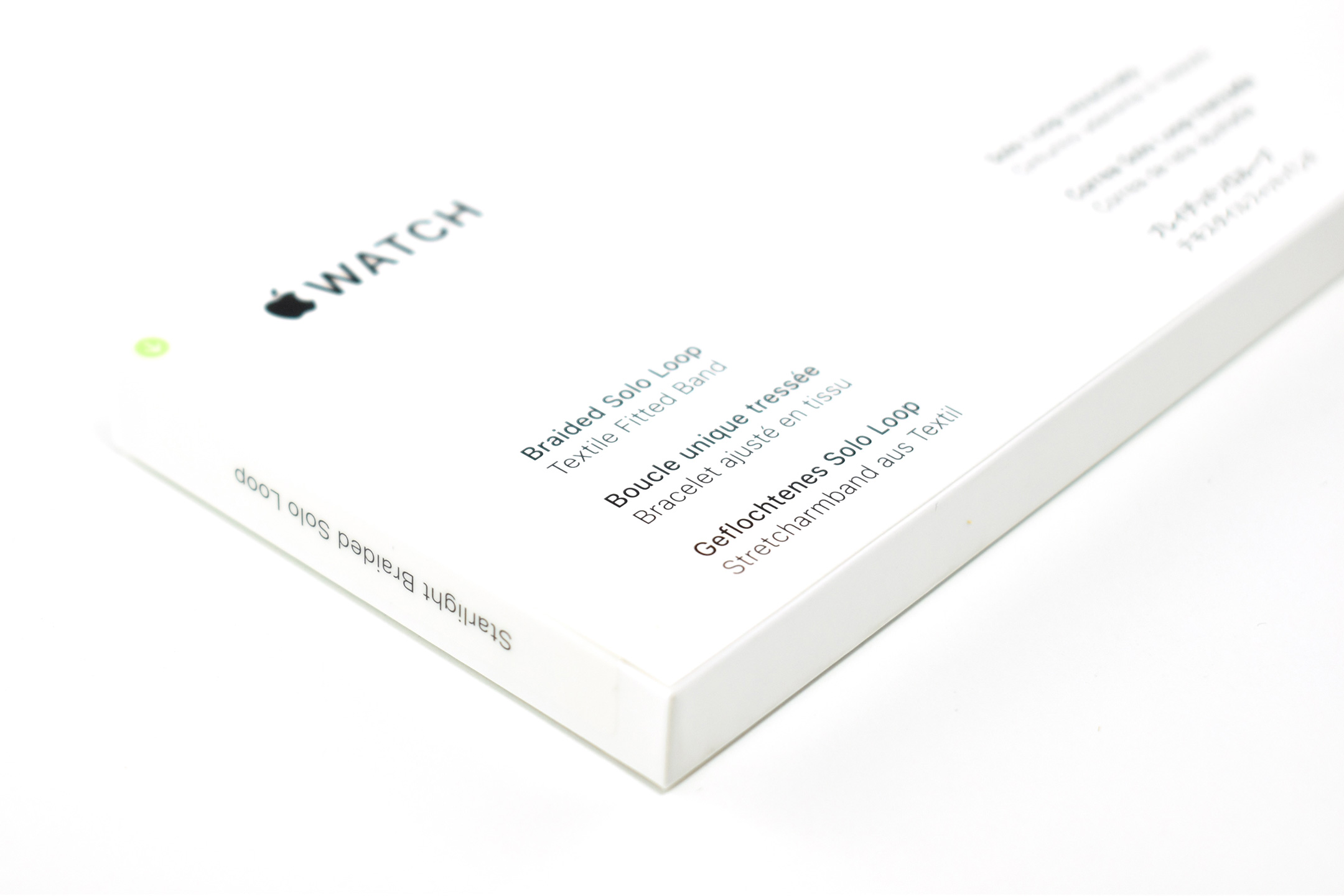
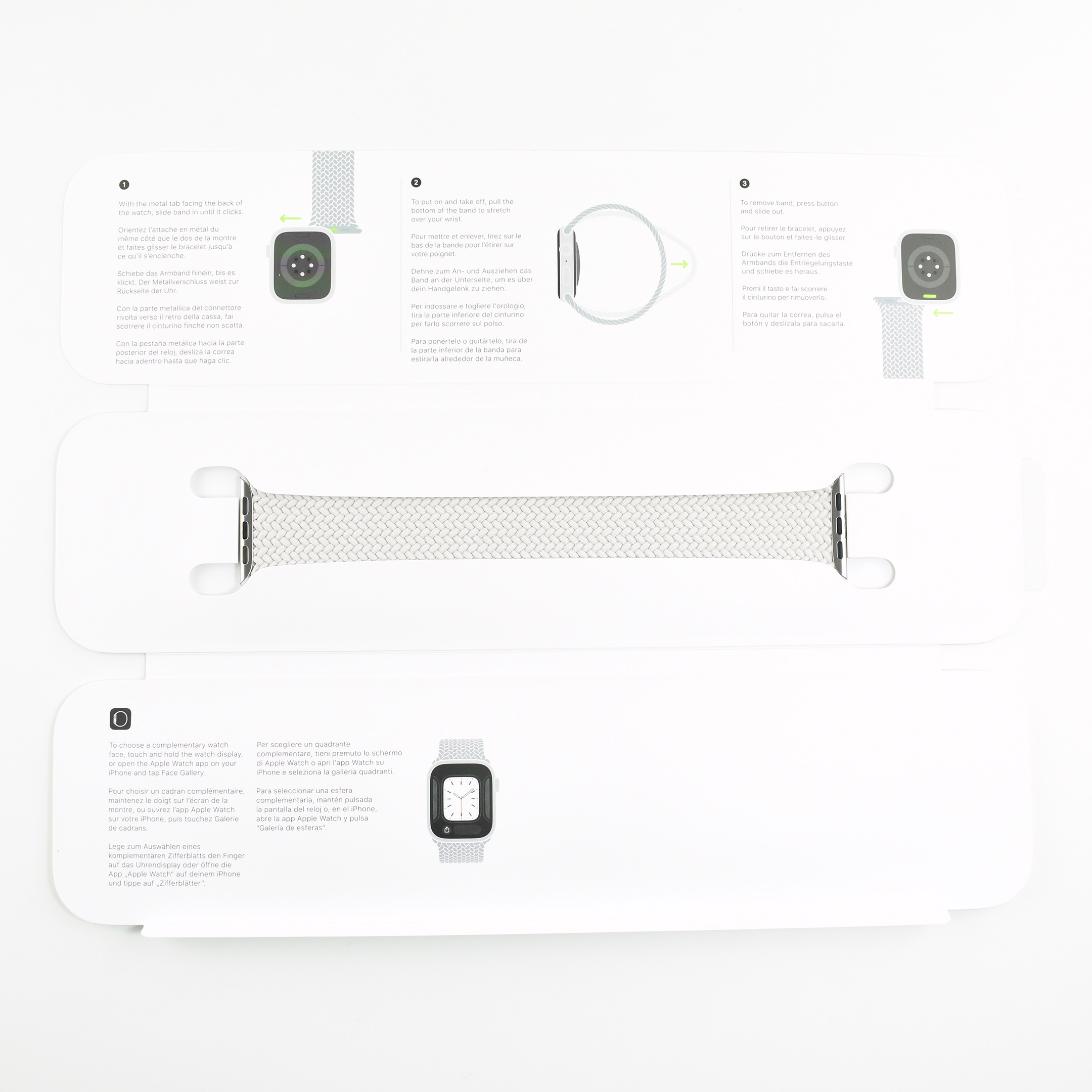
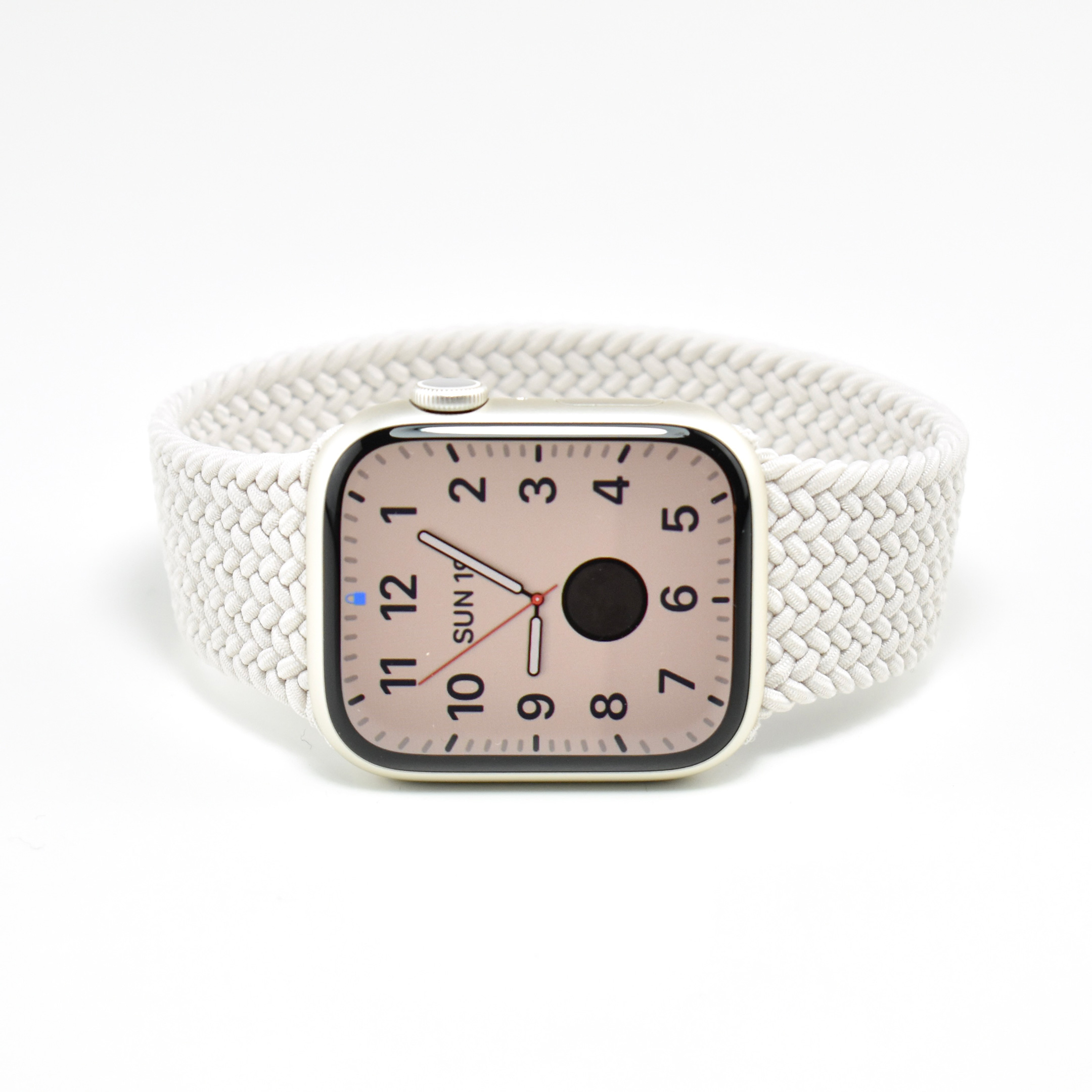
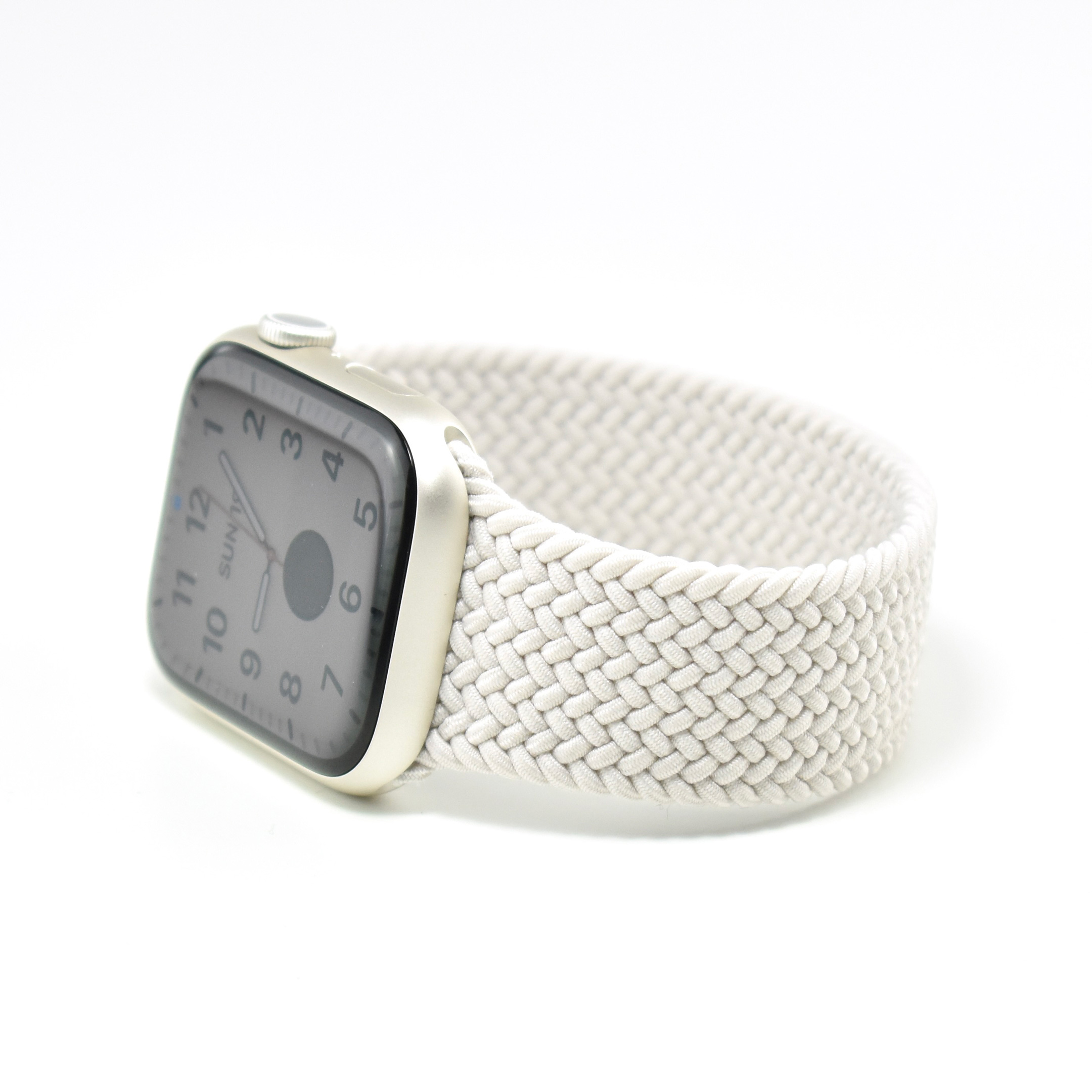
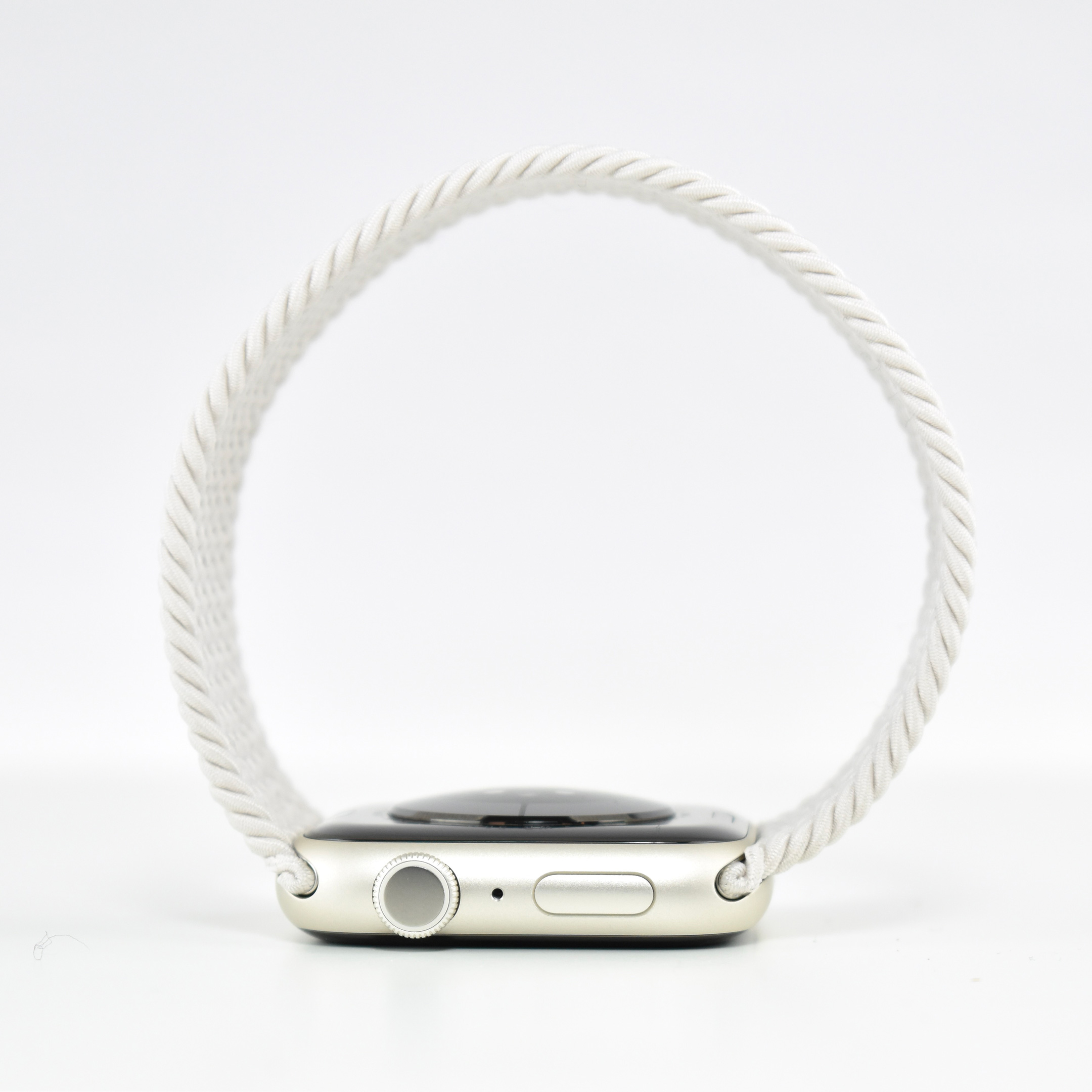
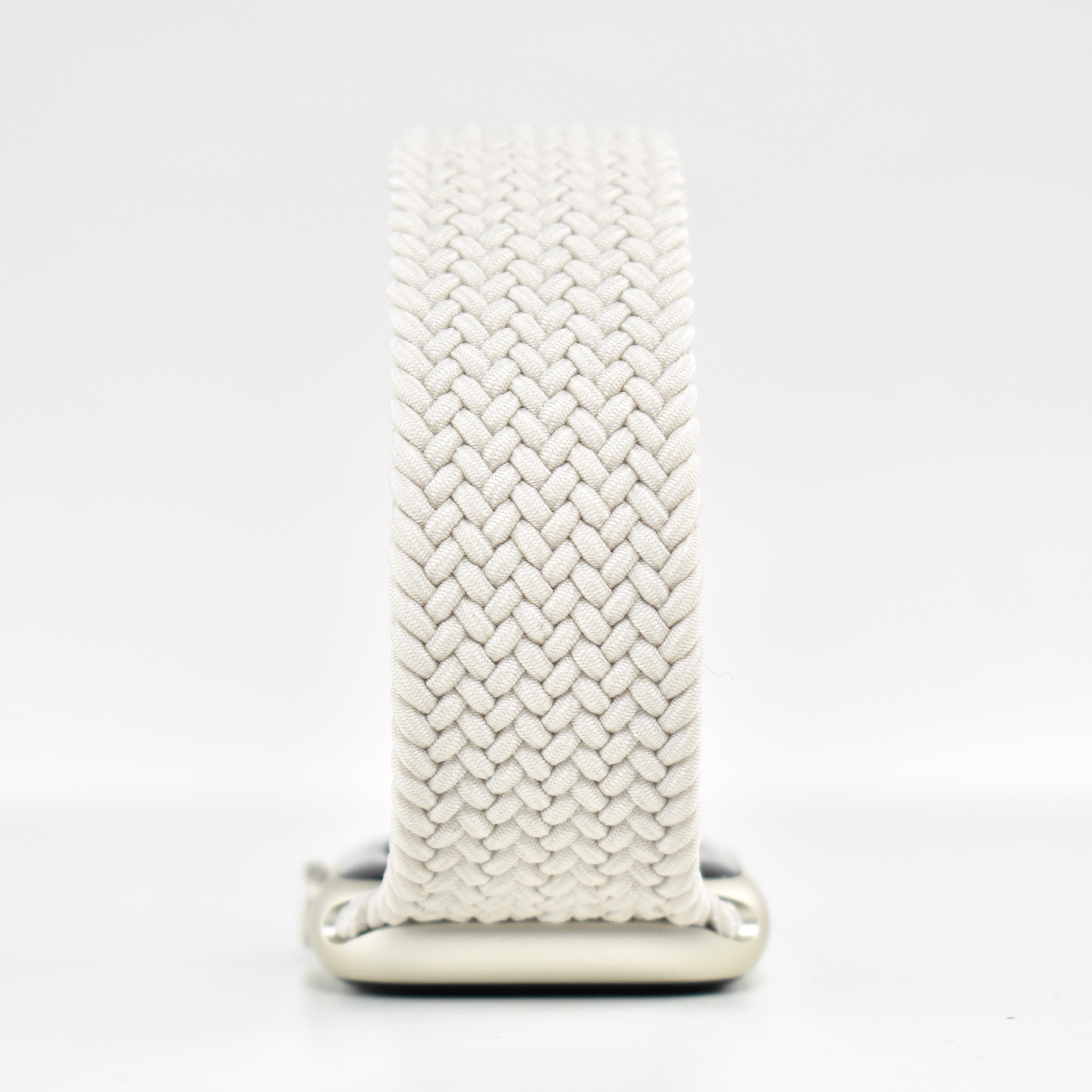
The Braided Solo Loop Apple Watch band was released in 2020 along with the Apple Watch Series 6. The packaging describes this product as a “Textile Fitted Band.” According to Apple’s website:
“Each Braided Solo Loop features a unique, stretchable design that’s ultracomfortable and easy to slip on and off your wrist. Made from 100 percent recycled materials, the 16,000 polyester yarn filaments in each band are interwoven with thin silicone threads using advanced braiding machinery then laser cut to an exact length. The 300D construction offers a soft, textured feel and is both sweat-resistant and water-resistant.”
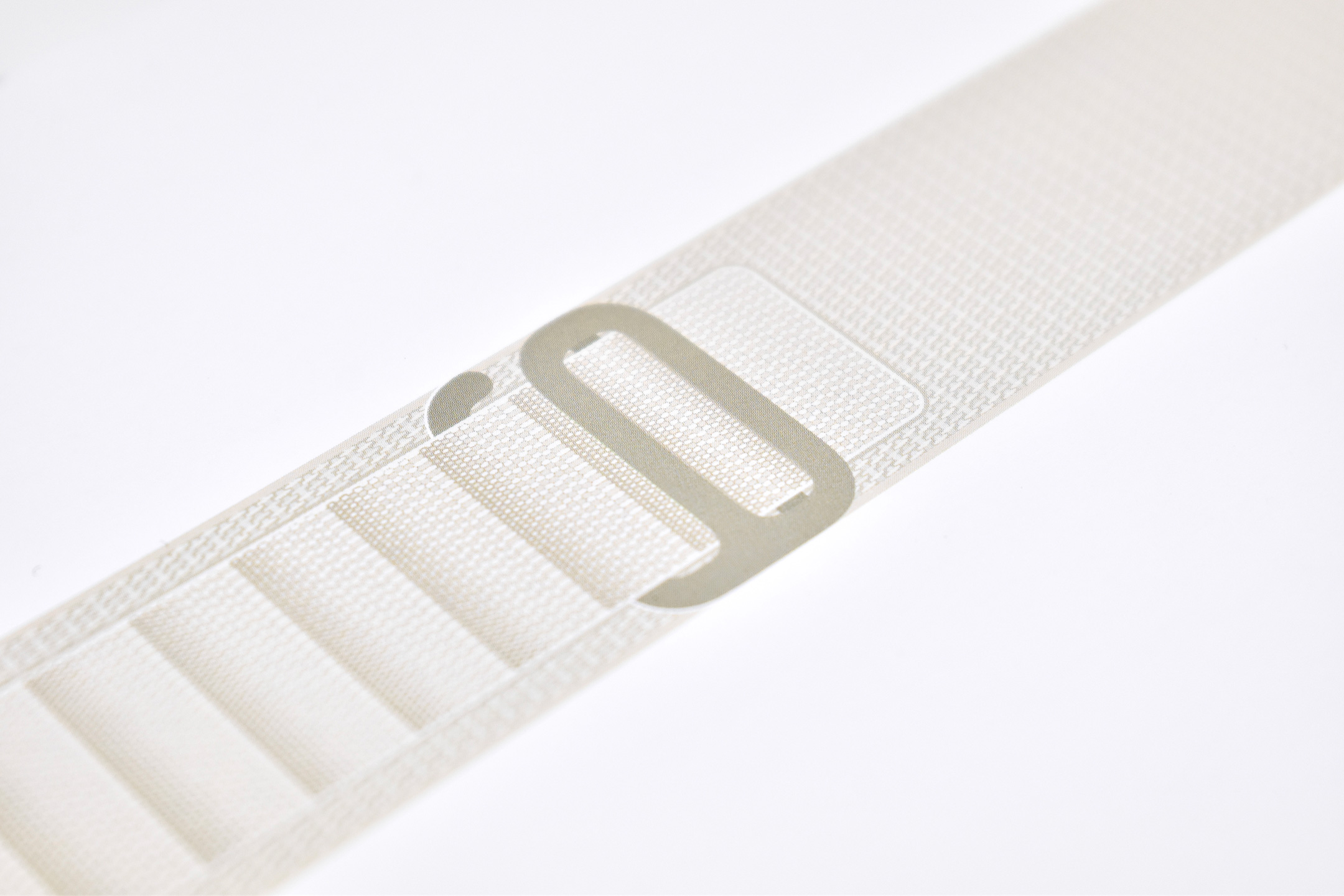
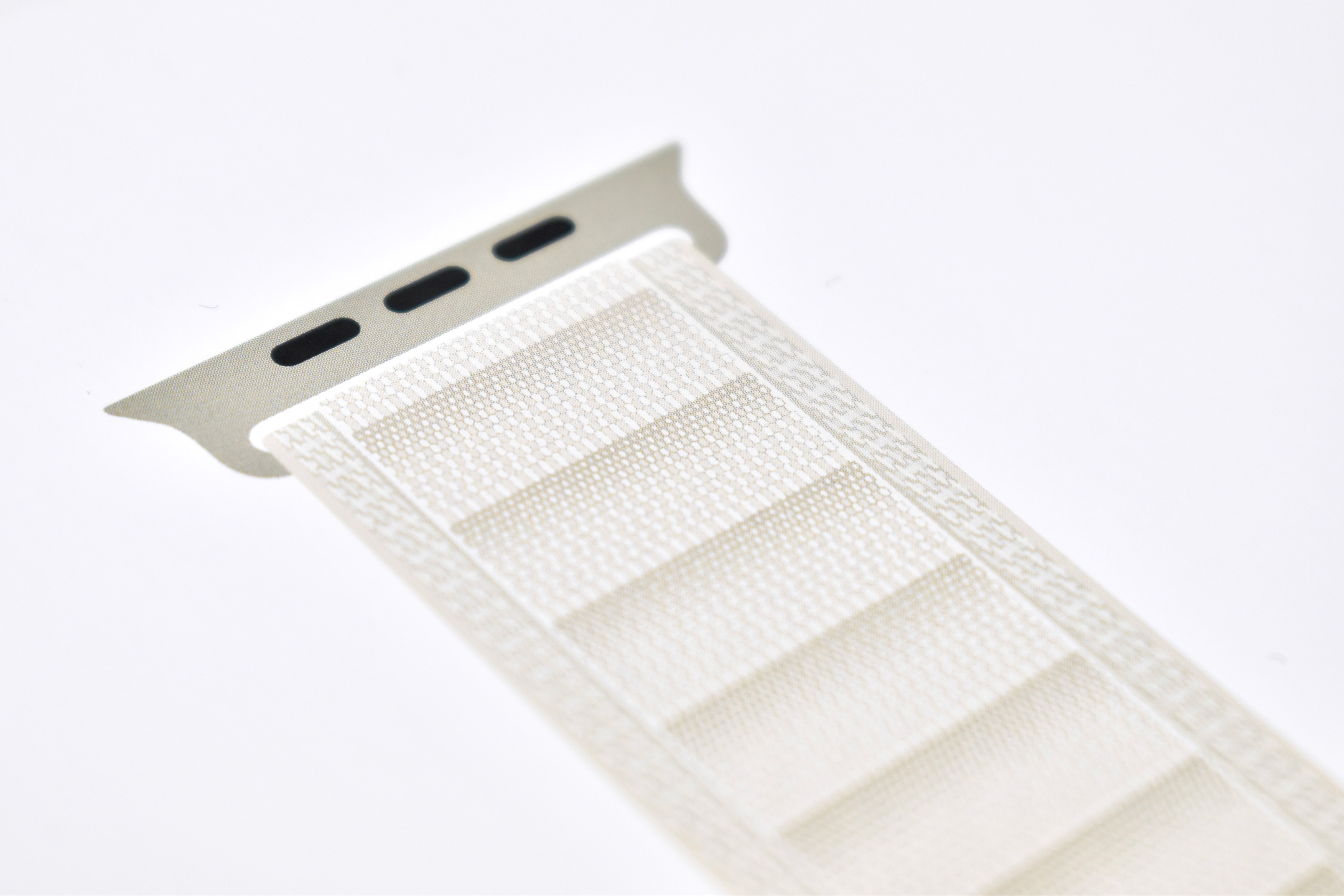
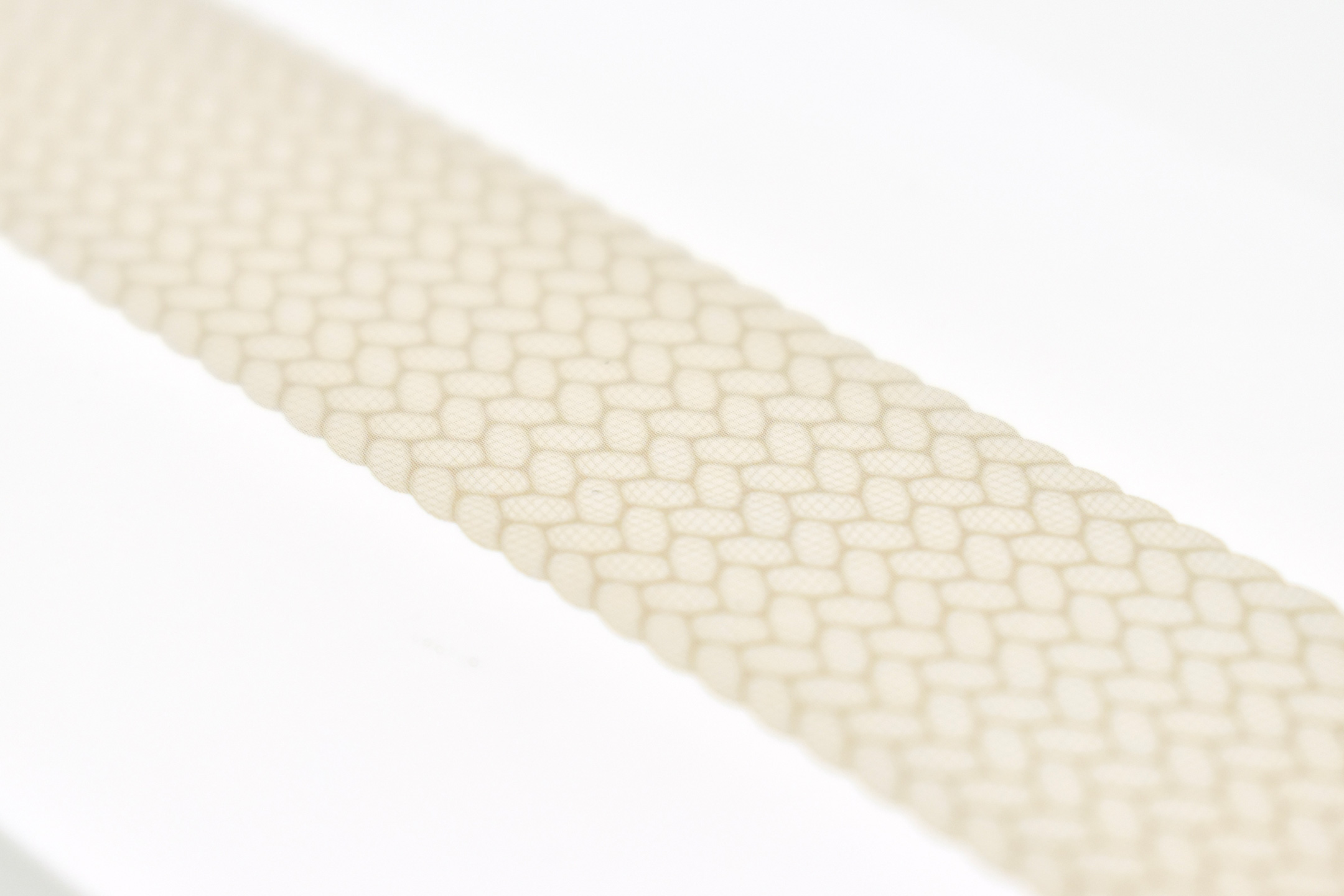
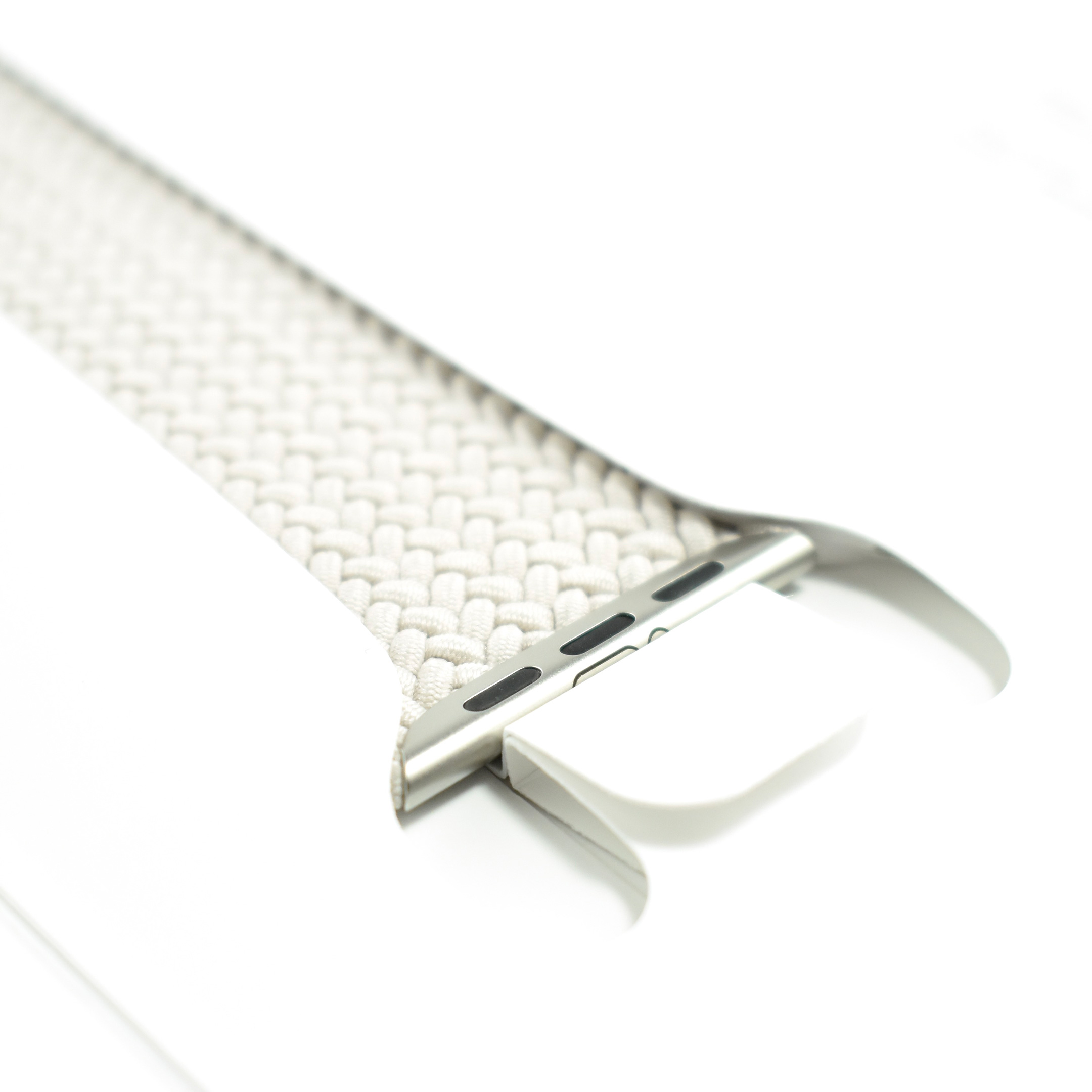
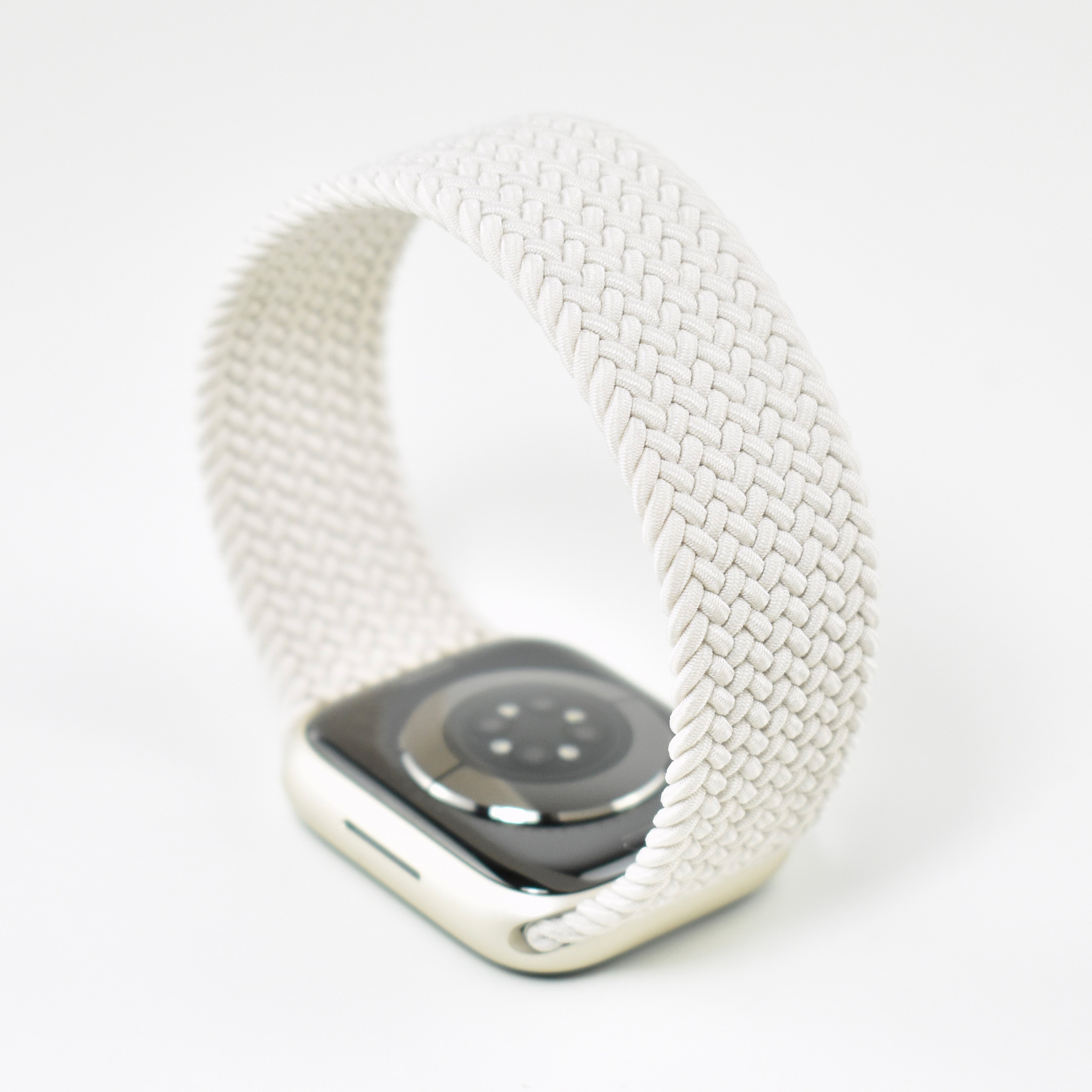
The color of this band is Starlight, a shade of off-white/light tan. It was available in 41mm and 45mm widths. The 41mm Braided Solo Loop was sold in wrist sizes 1–9, and the 45mm Braided Solo Loop was sold in wrist sizes 4–12.
According to Apple’s website, “This band comes in custom sizes because it’s designed for an ultracomfortable fit. An accurate measurement will help you get the size that’s right for you.” The website allowed buyers to download a PDF and cut out a “tool” that wrapped around the wrist to designate the band size needed.
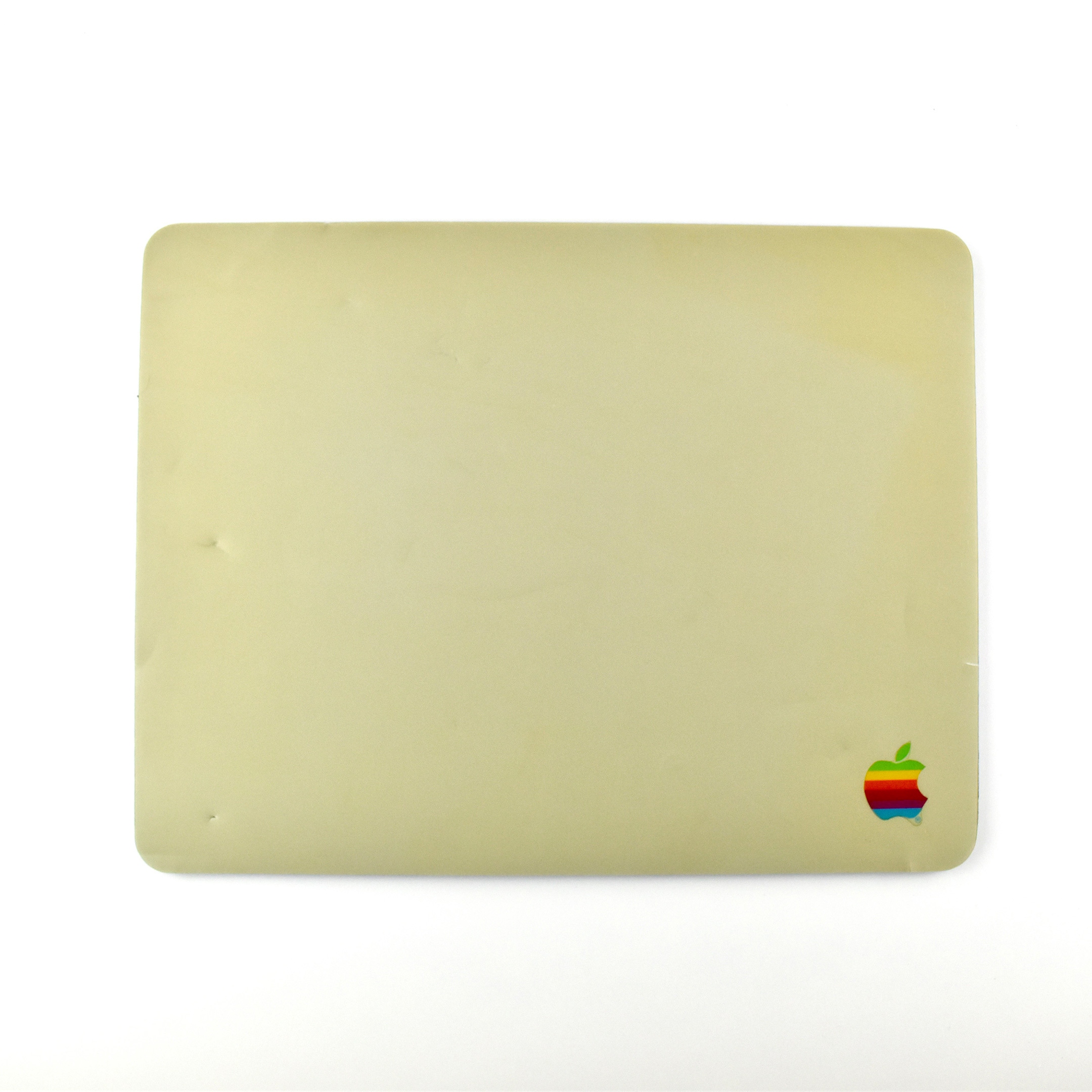
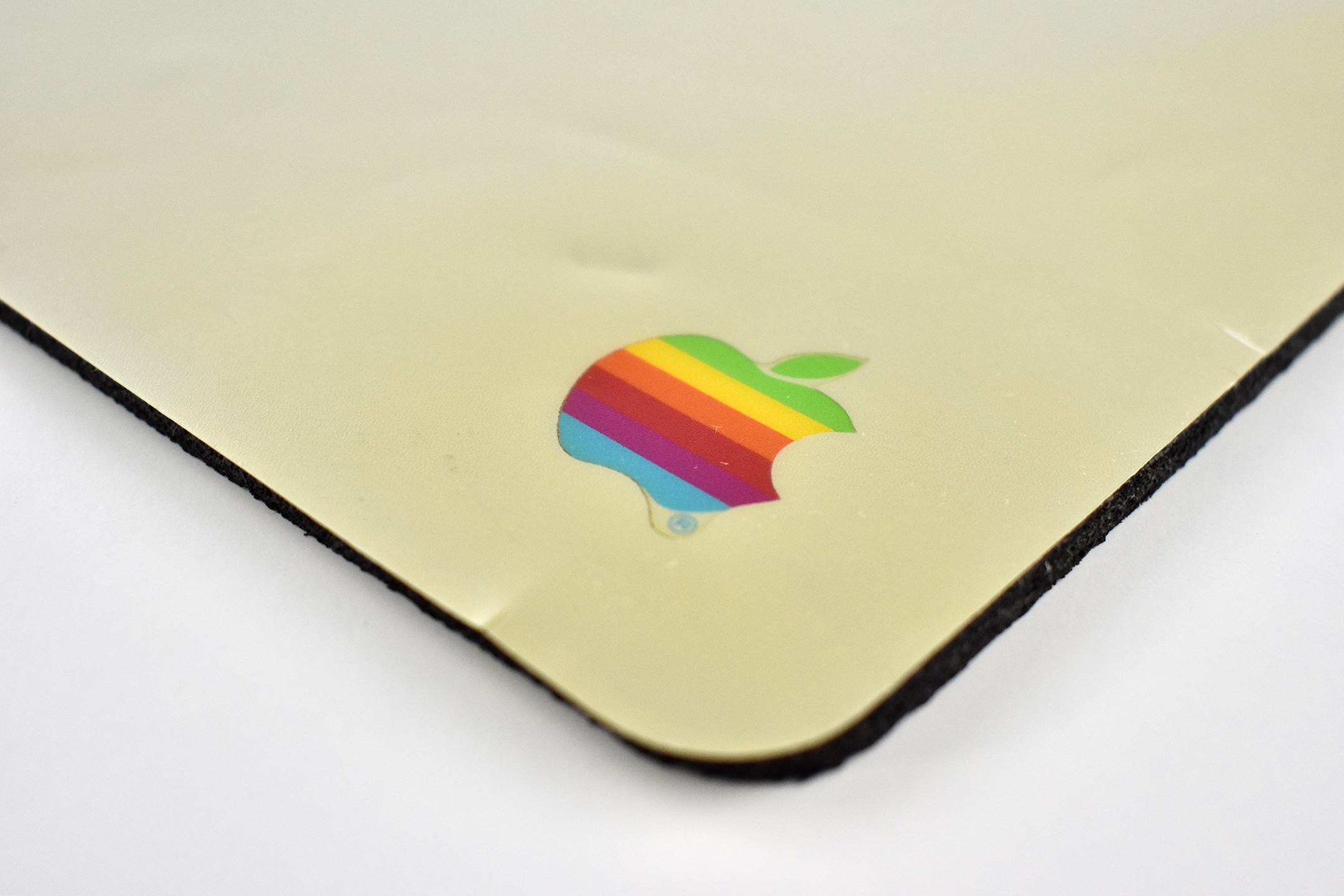
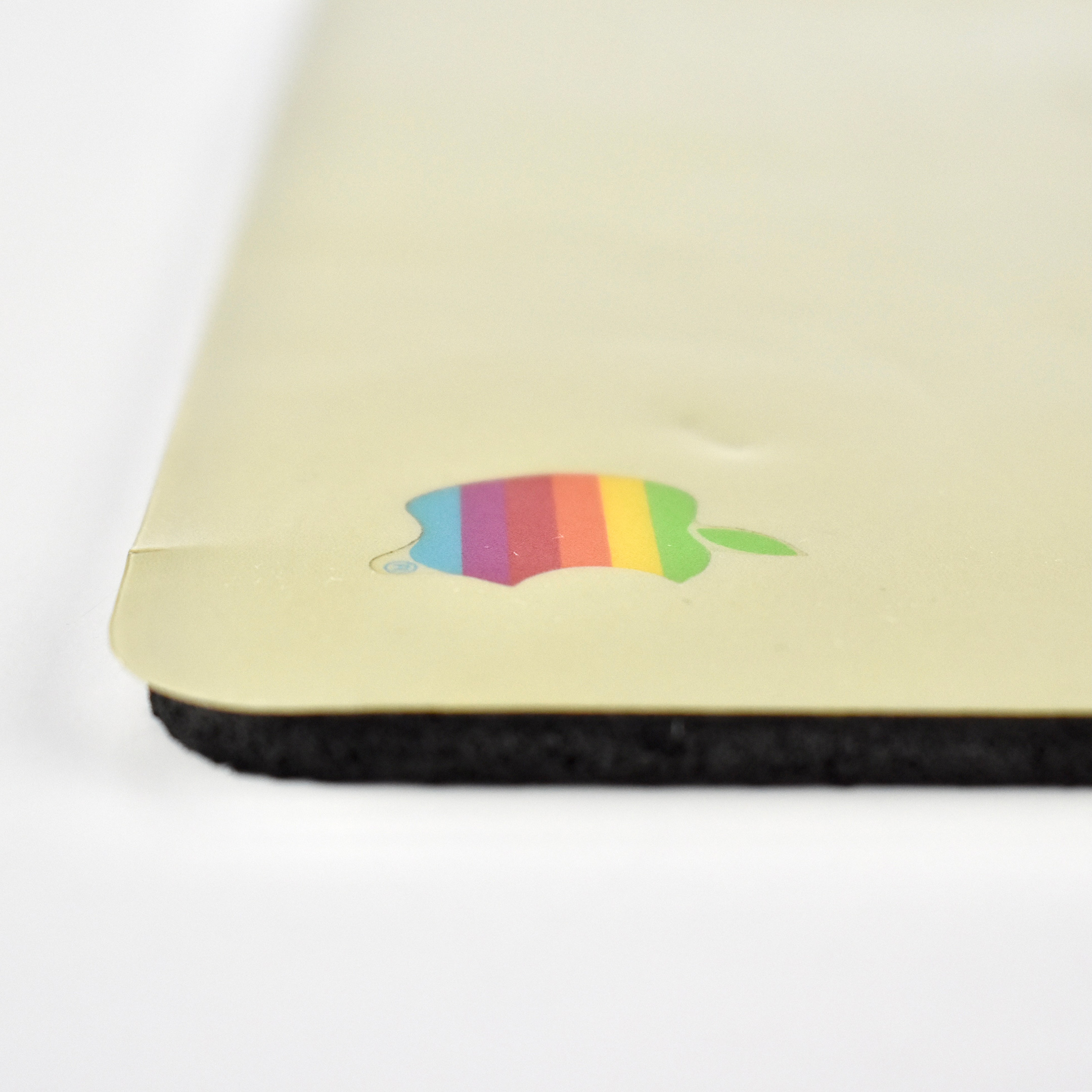
This early Apple mousepad matches the beige plastics of the original Macintosh used from 1984 to approximately 1990 (Apple changed the Macintosh to to Platinum in 1990). The mousepad measures 8.5 x 11 inches with rounded edges and is 3/16 inch (0.1875) thick.
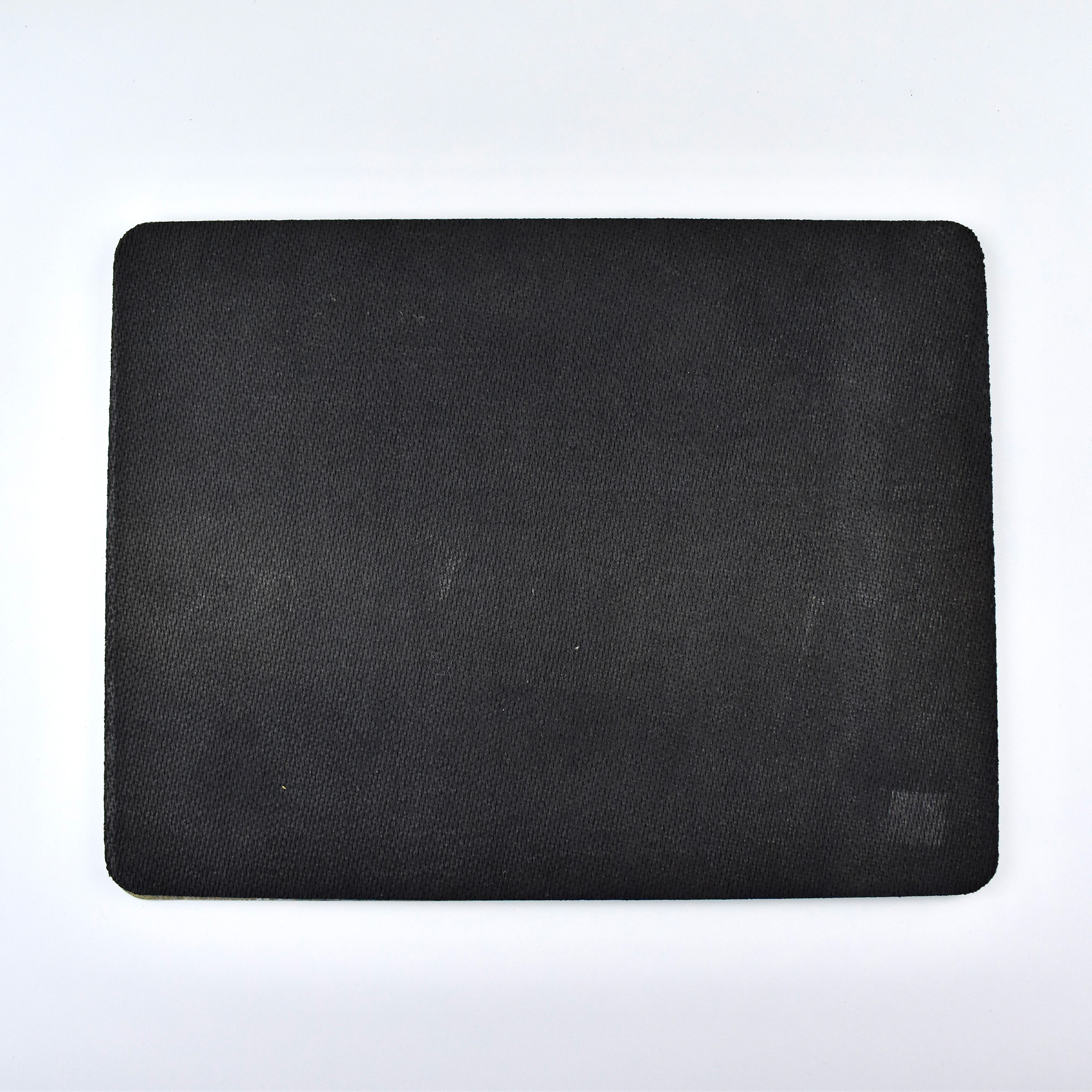
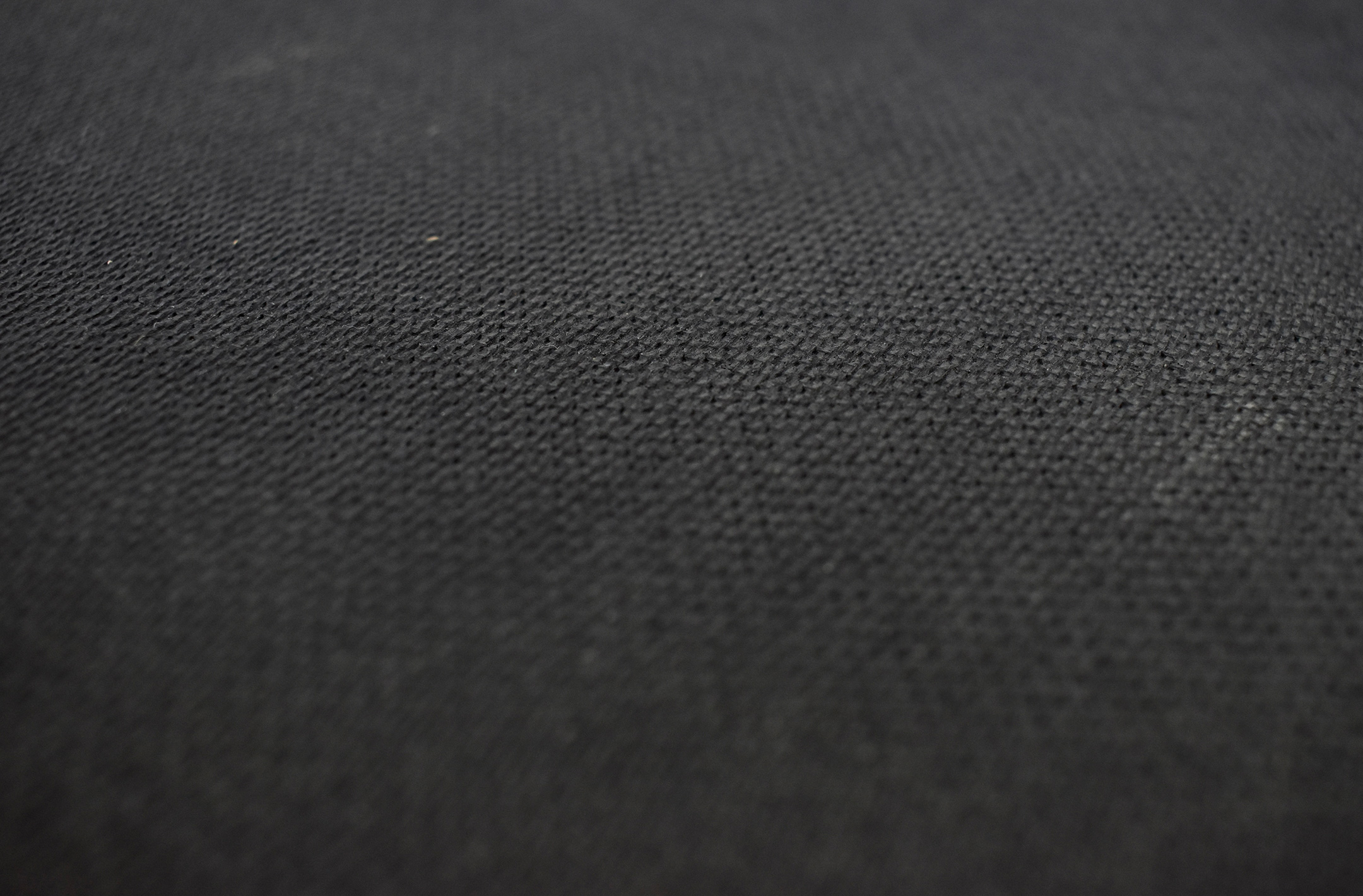
The mouse surface is a textured plastic that is showing some discoloring due to its age. It features a classic Apple multicolor logo in the lower-right corner. The bottom of the mousepad uses a rubber textured material.
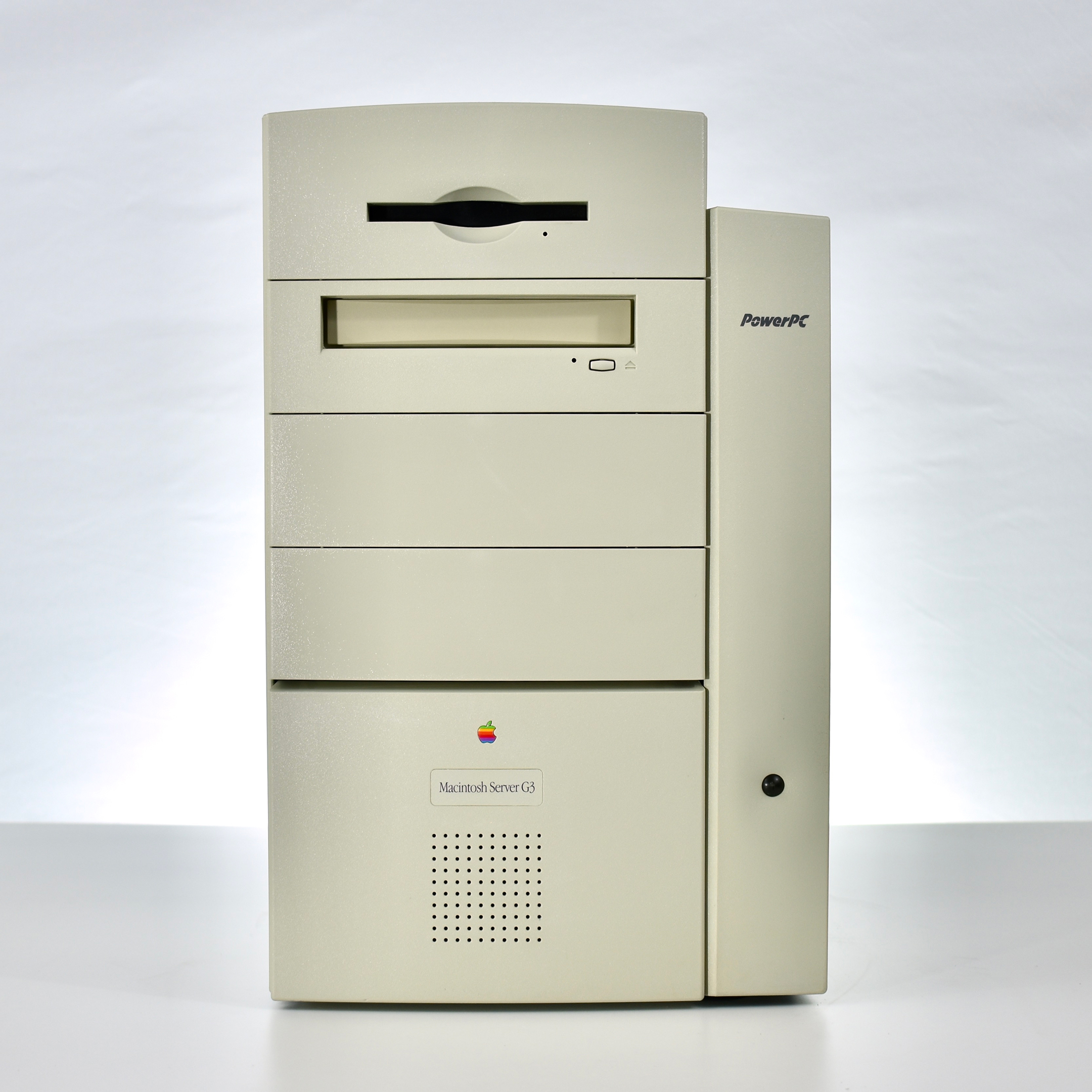
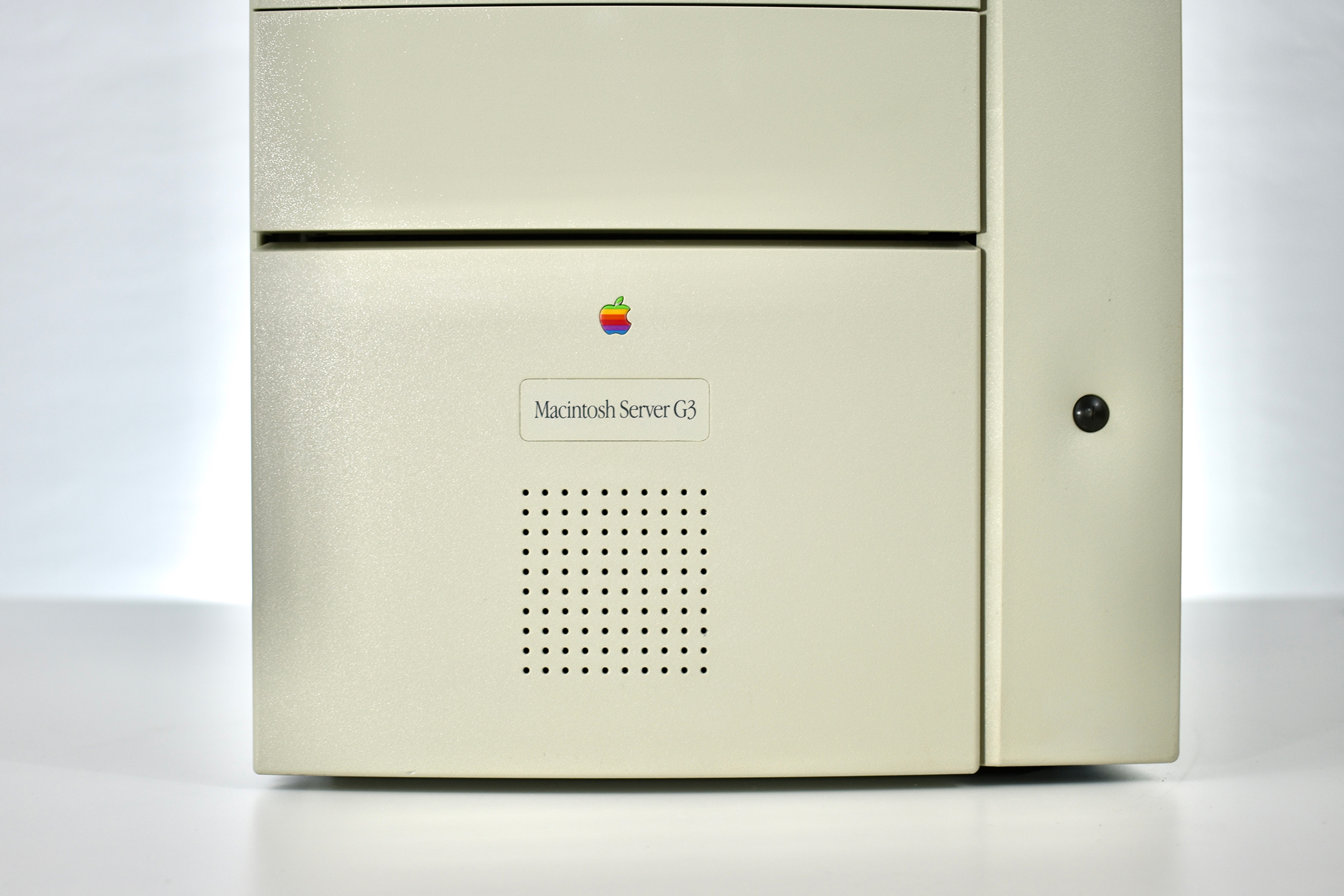
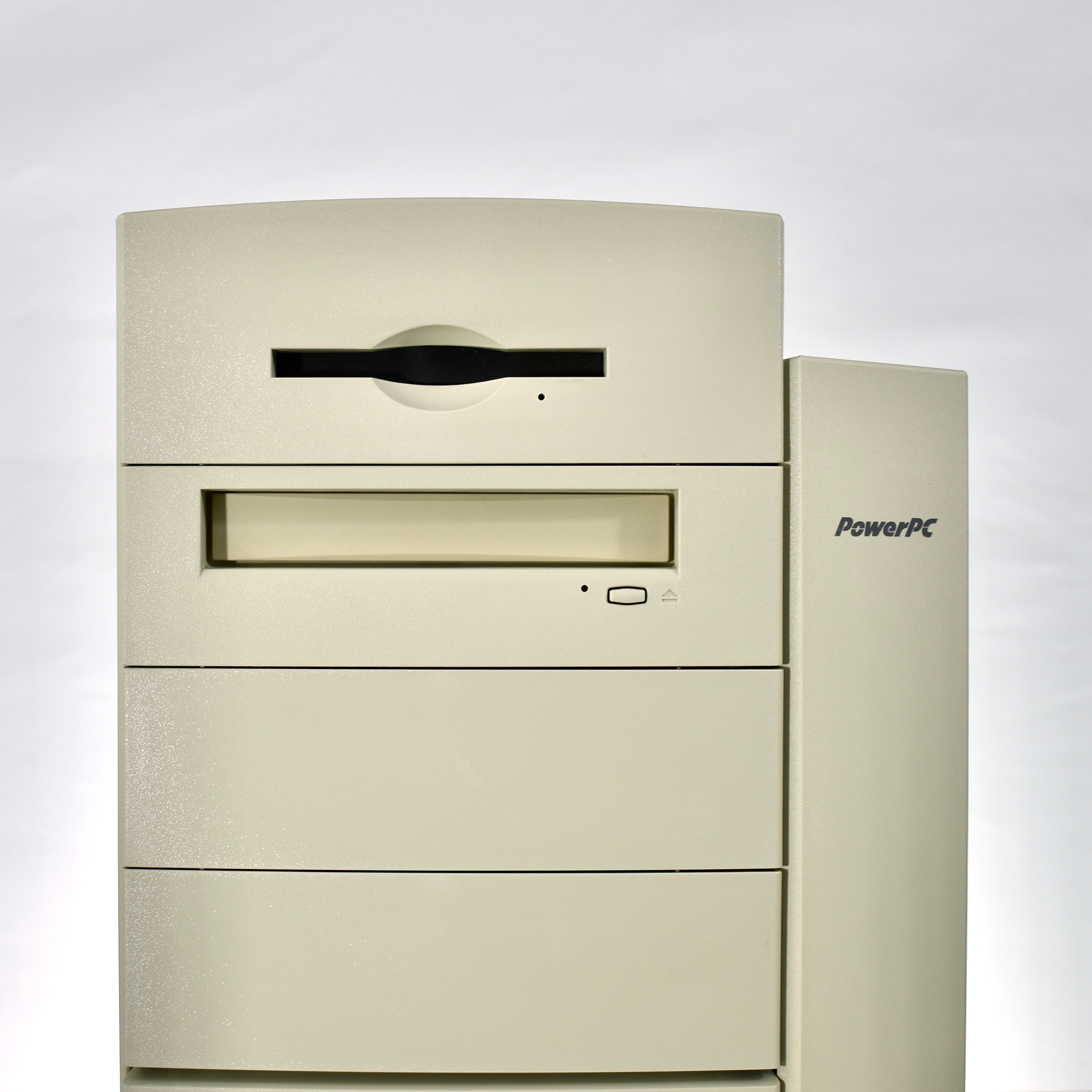
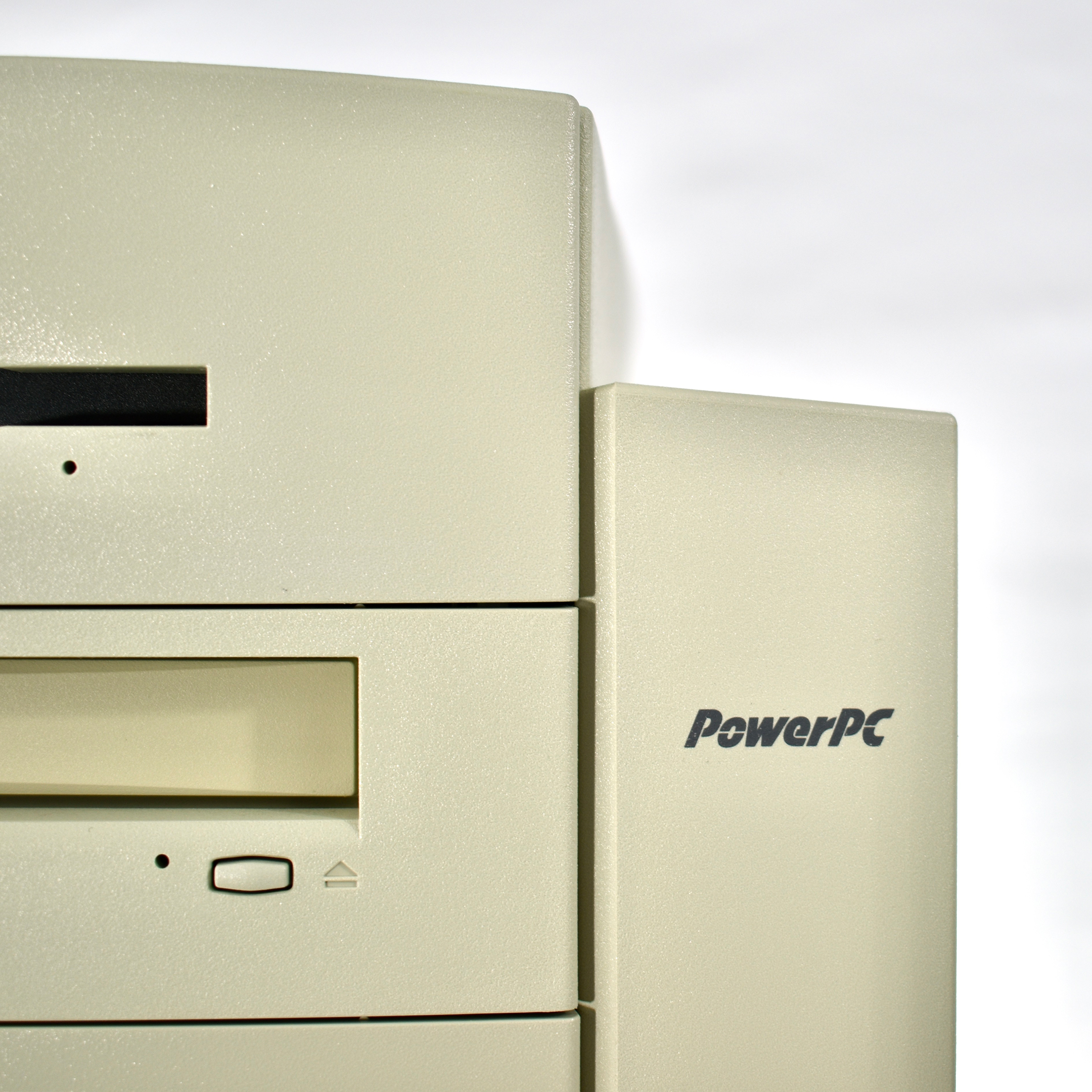
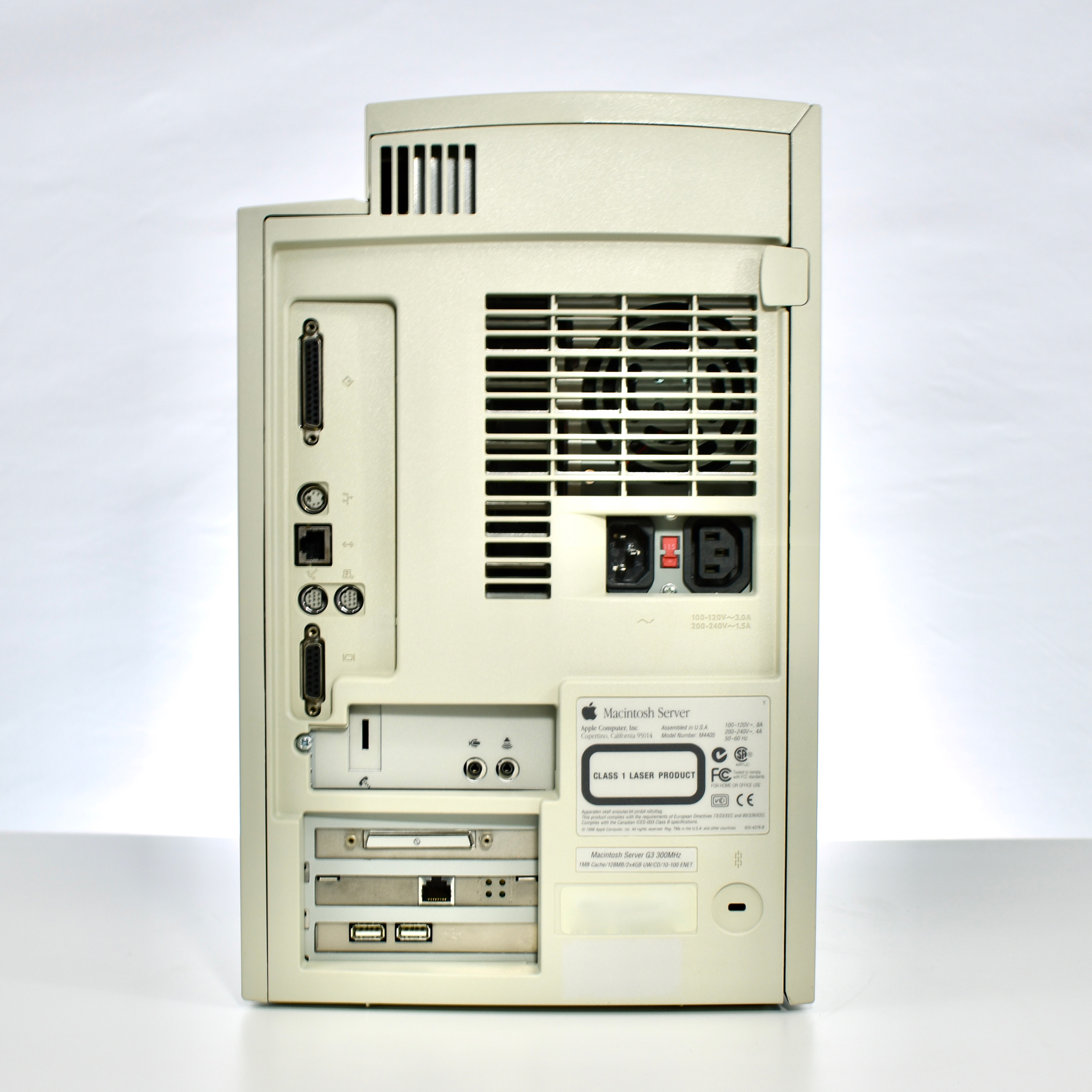
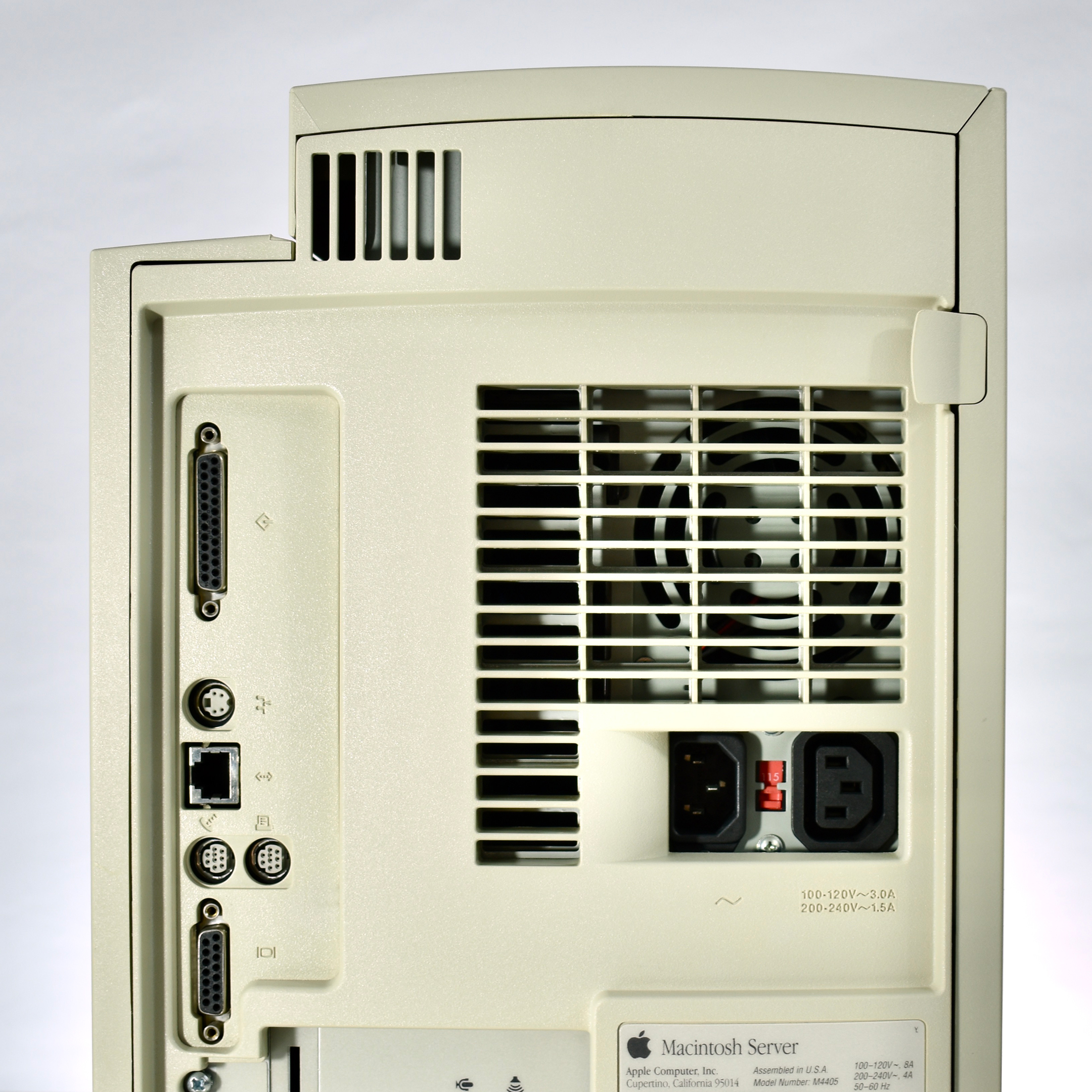
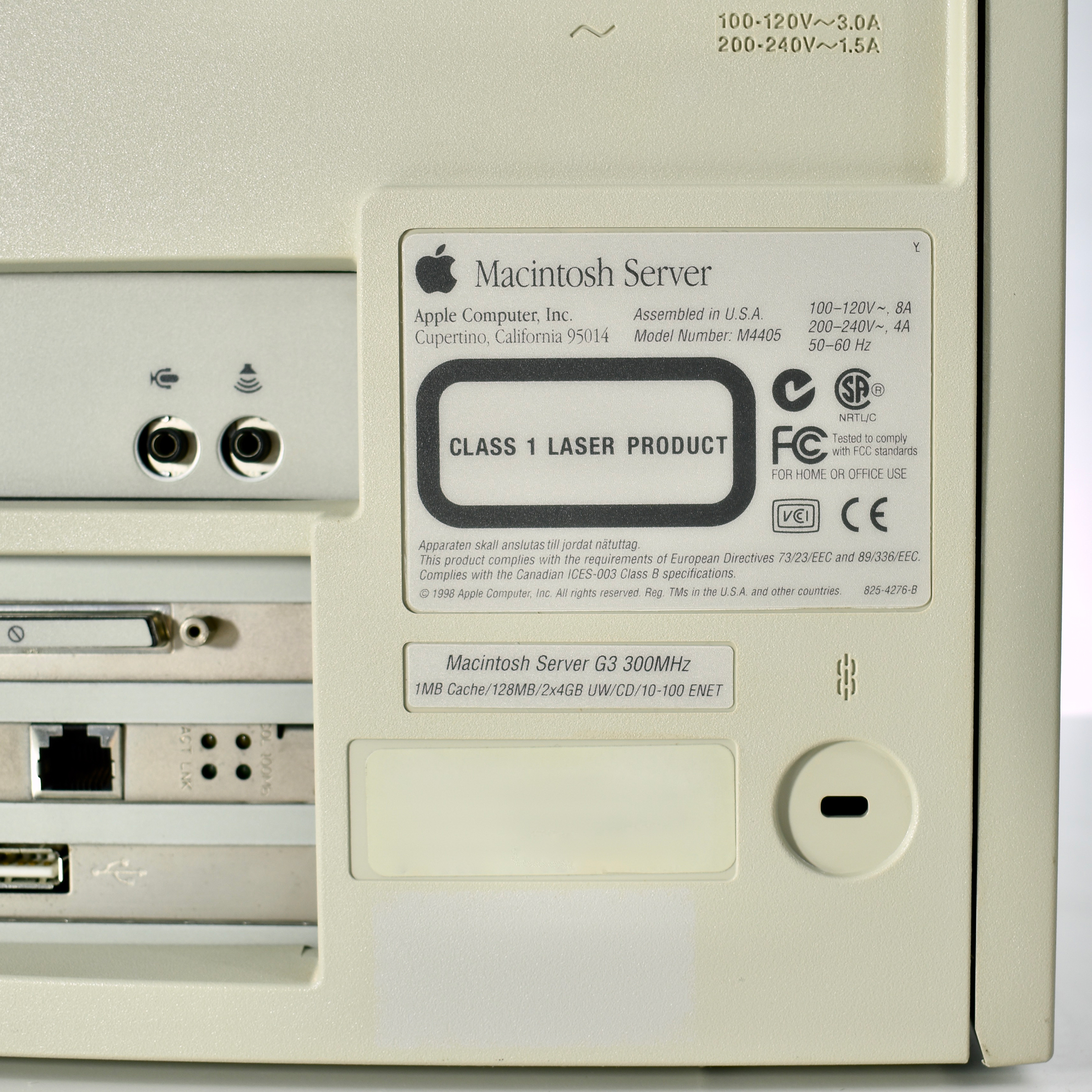
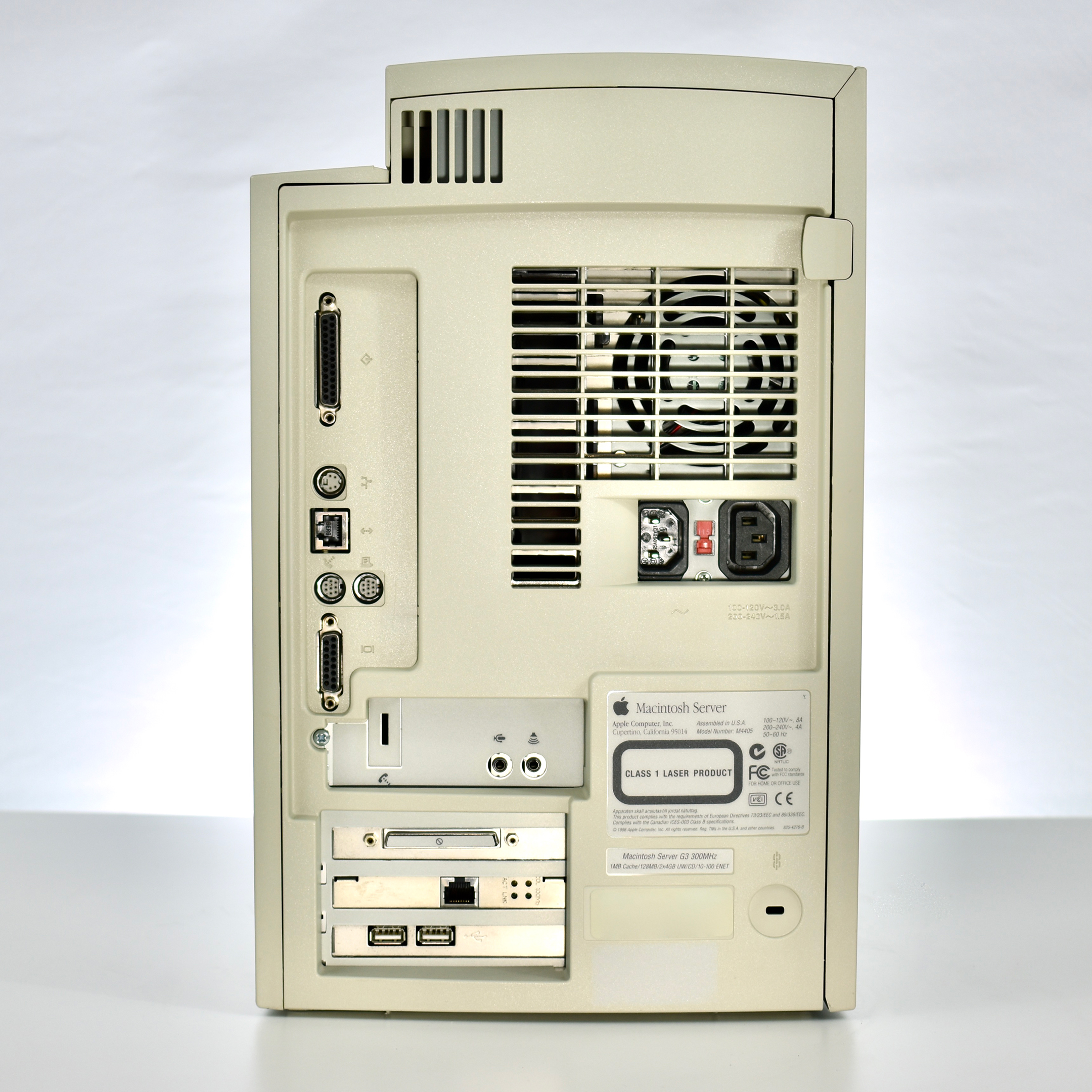
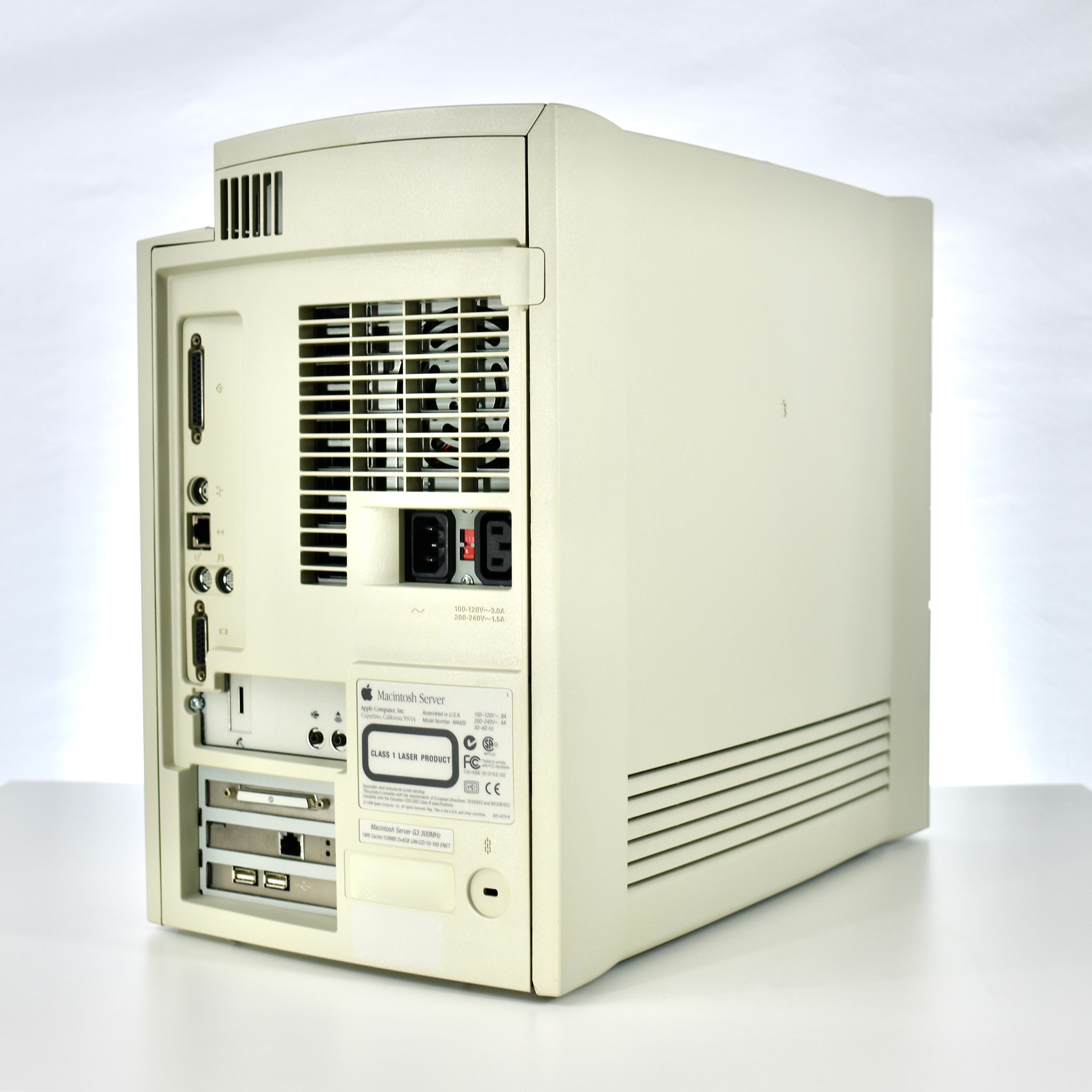
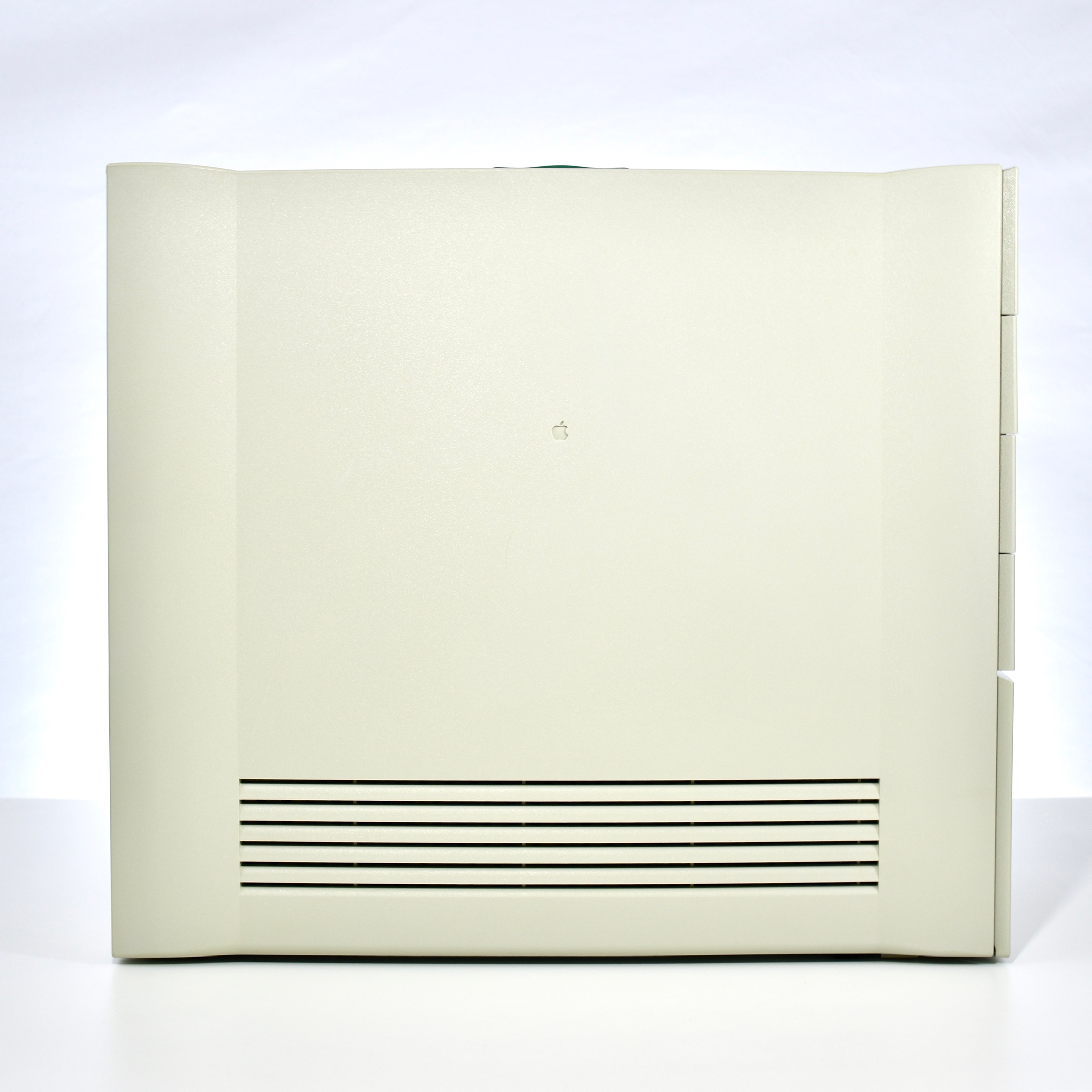
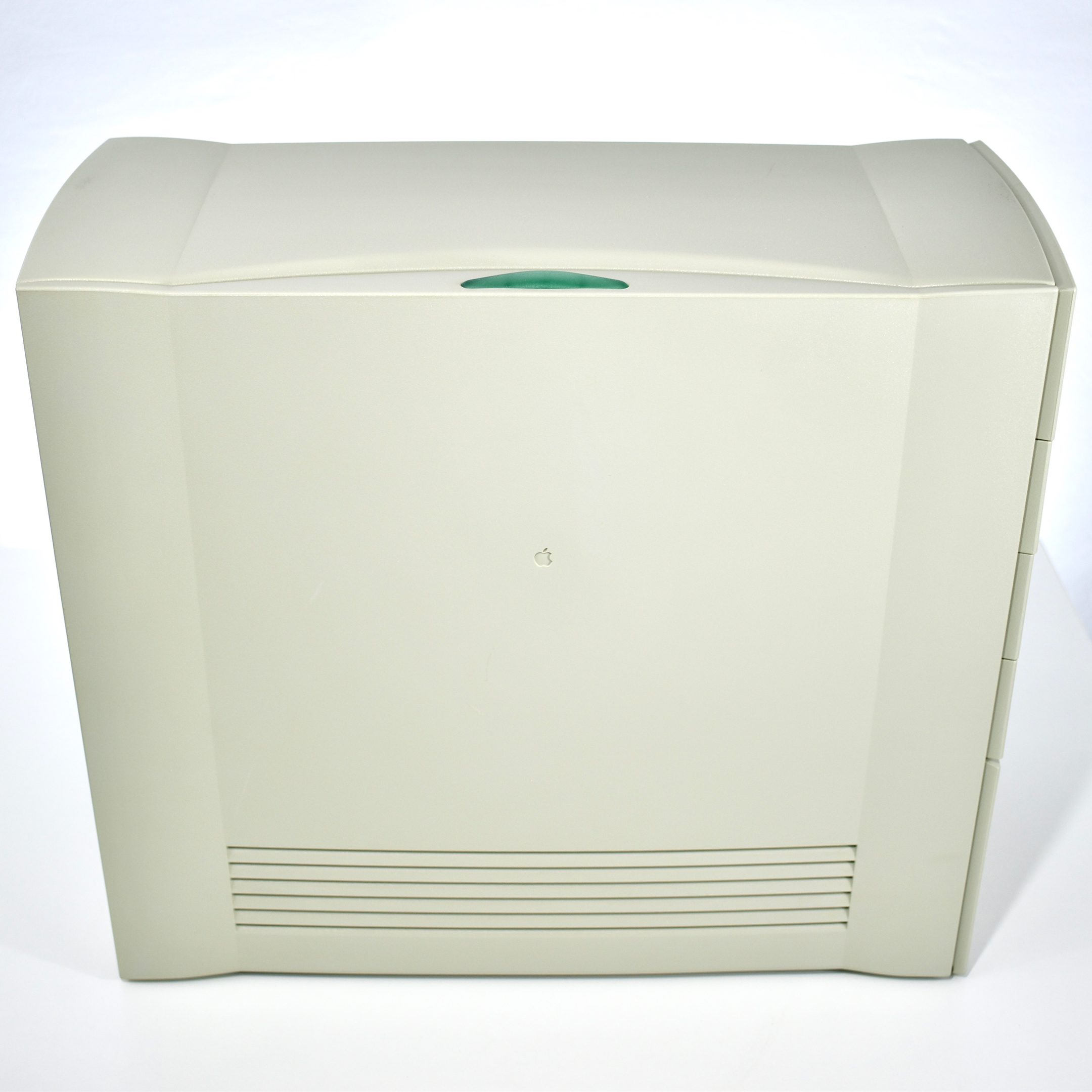
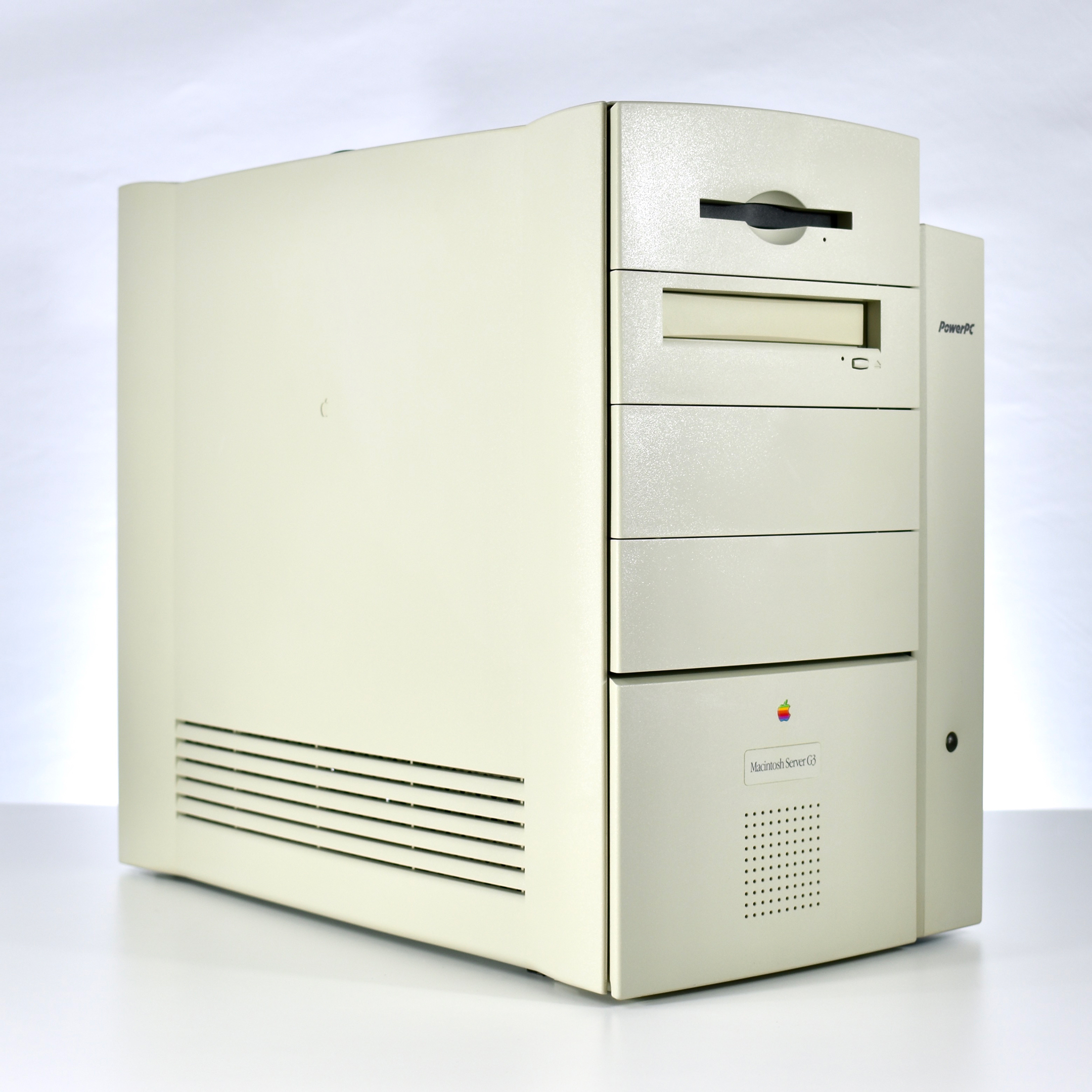
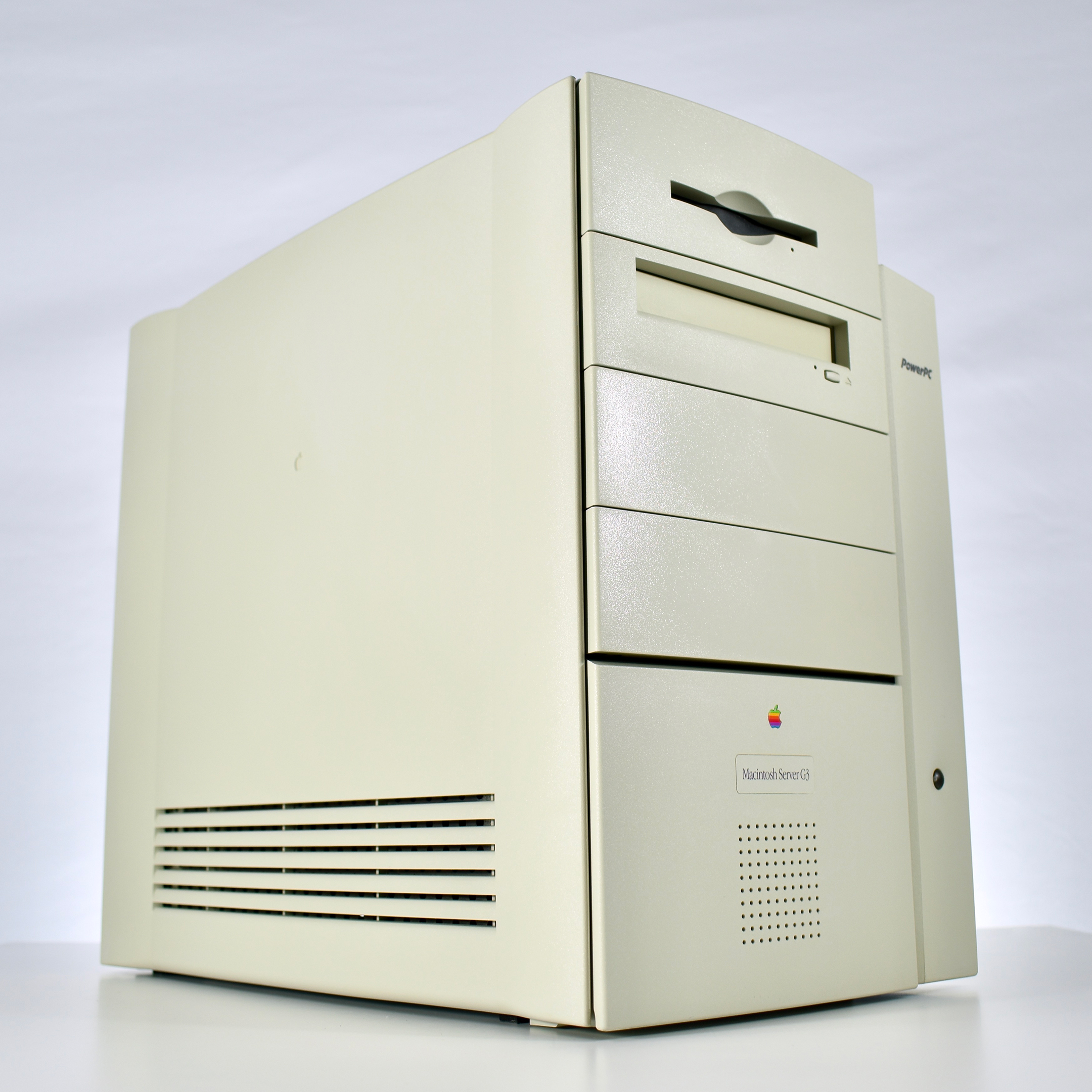
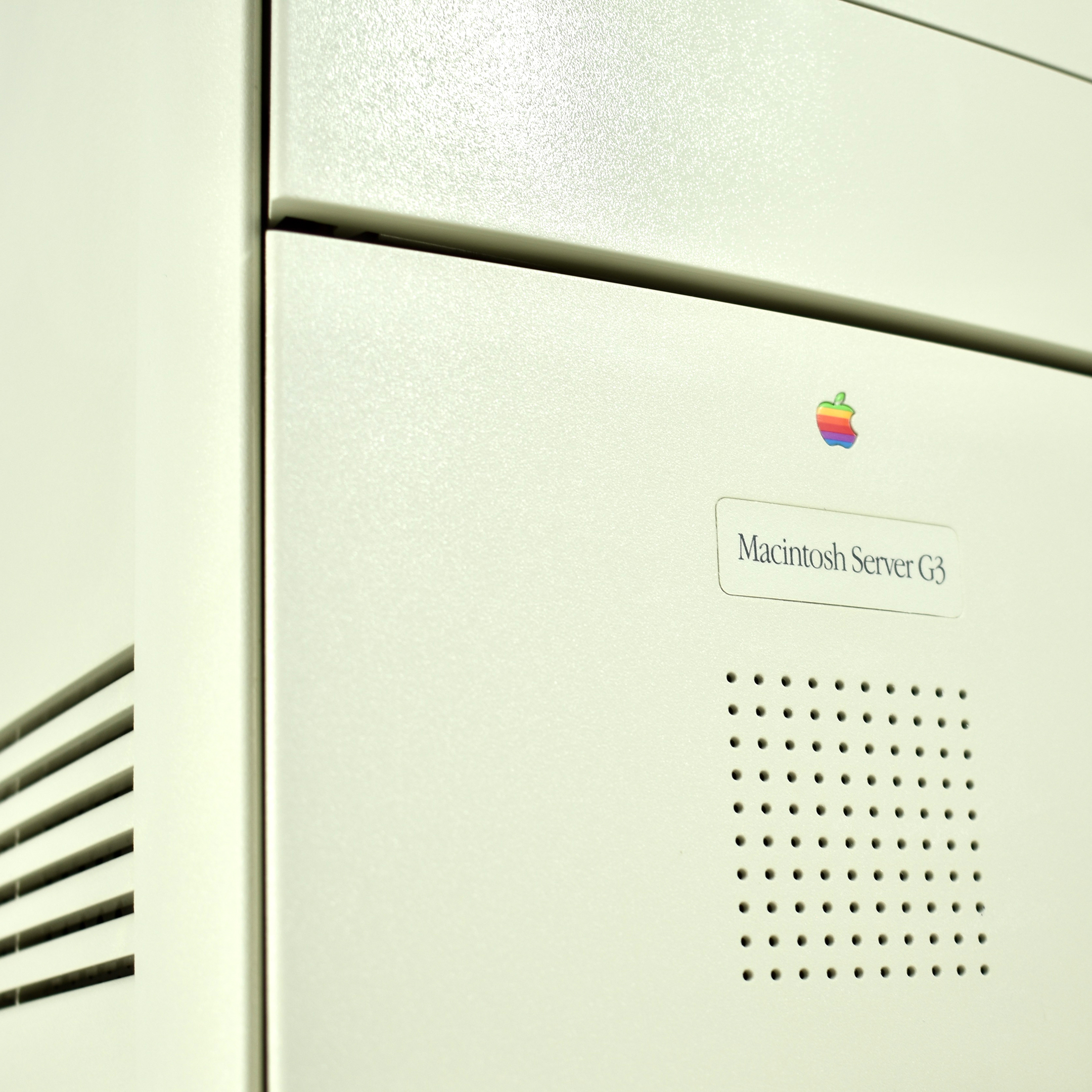
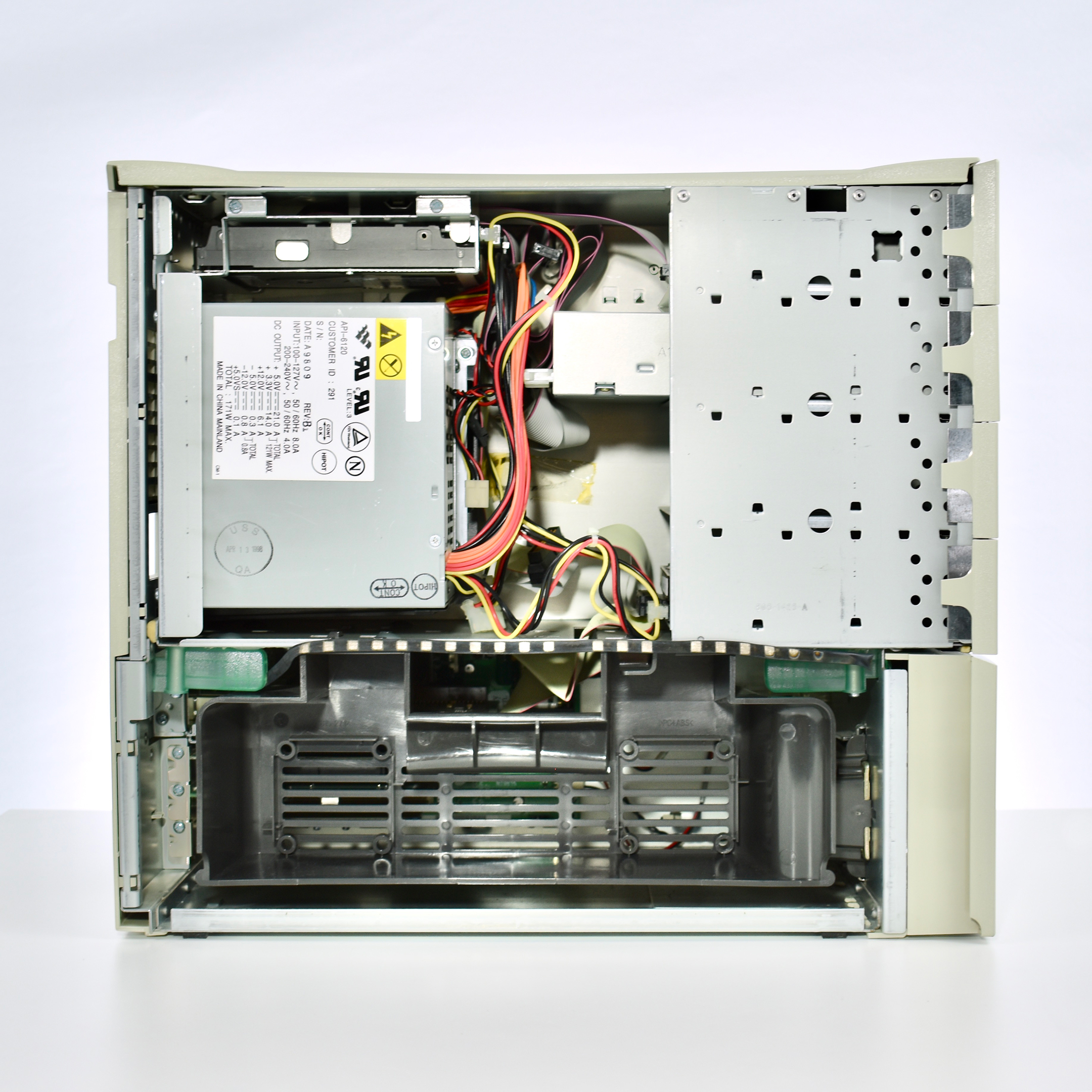
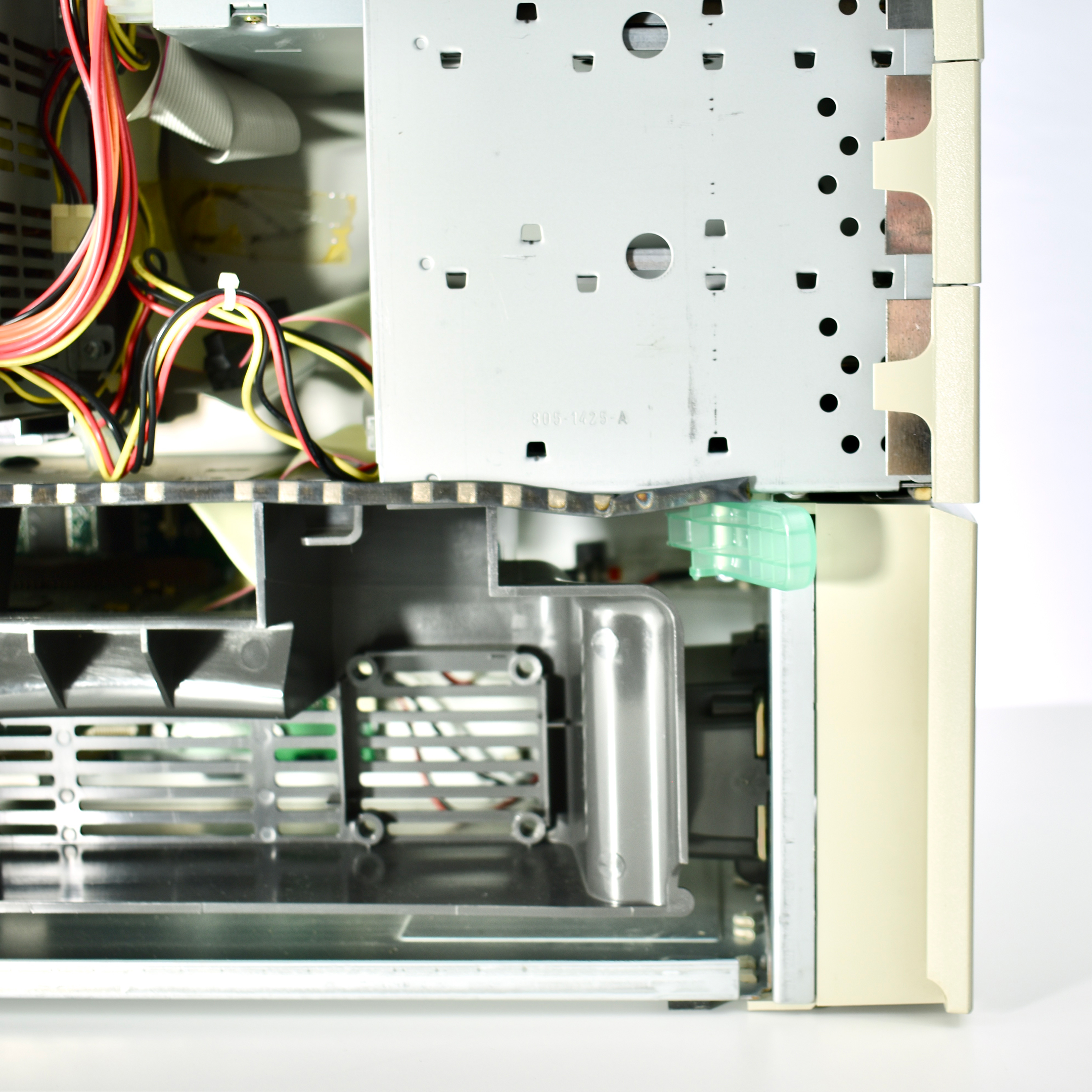
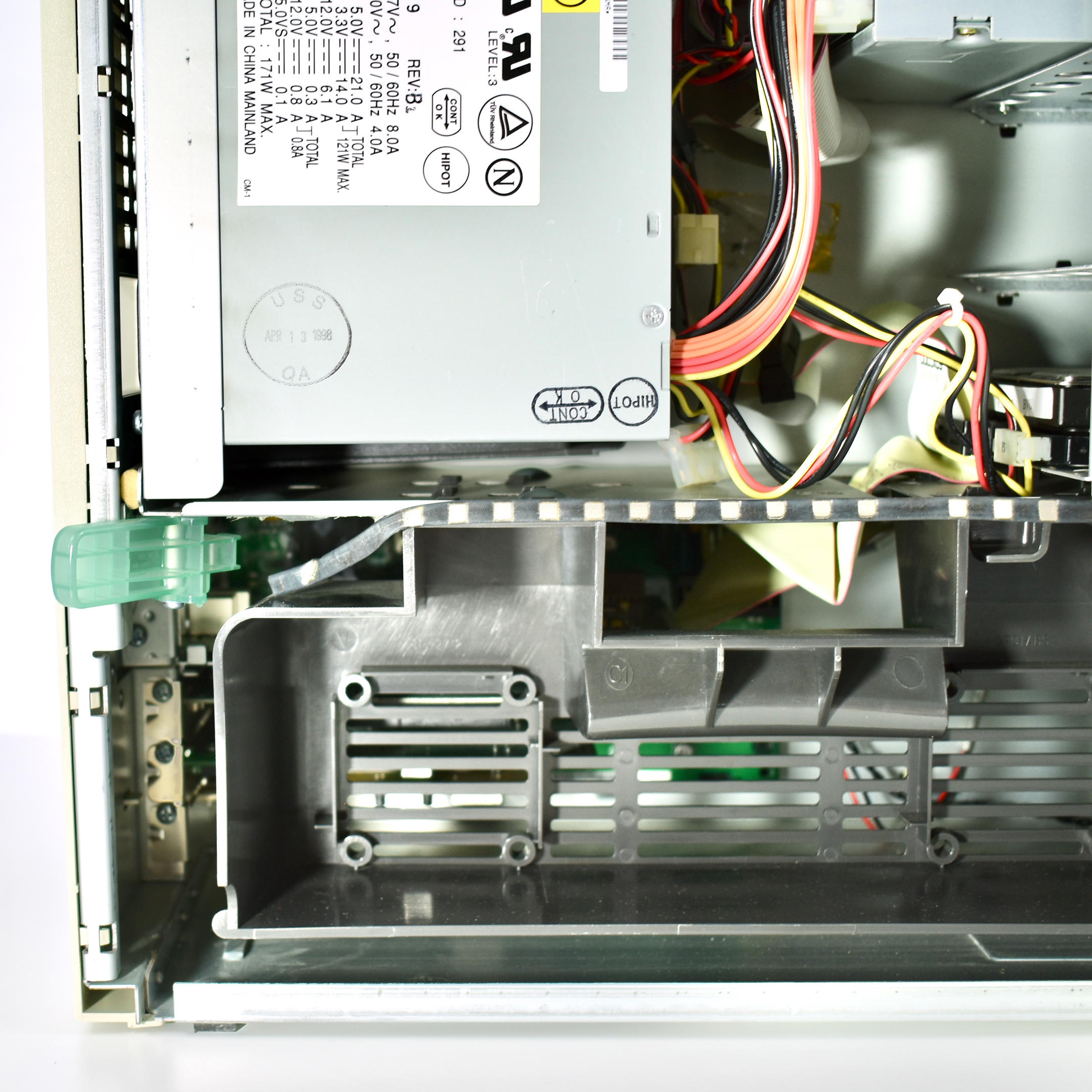
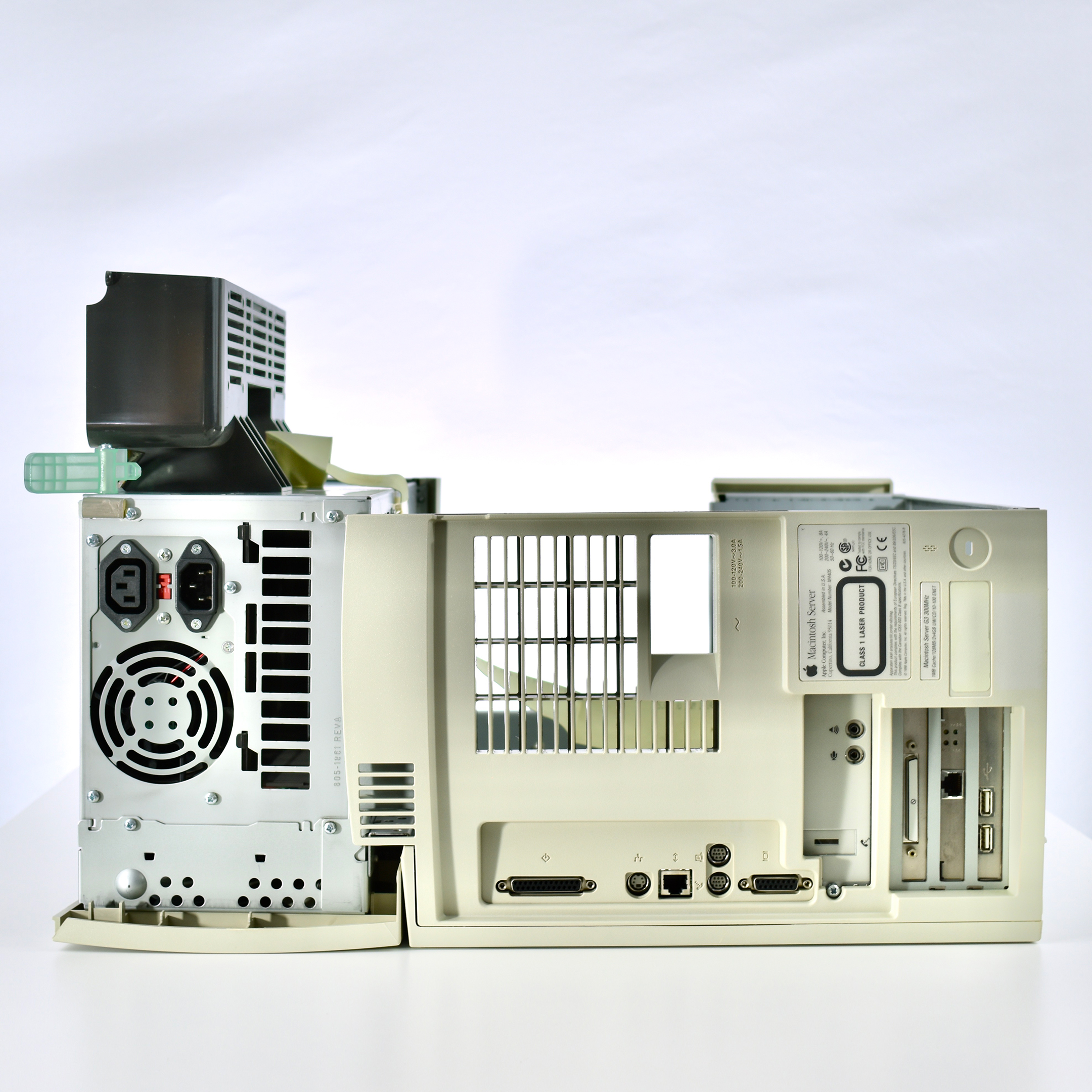
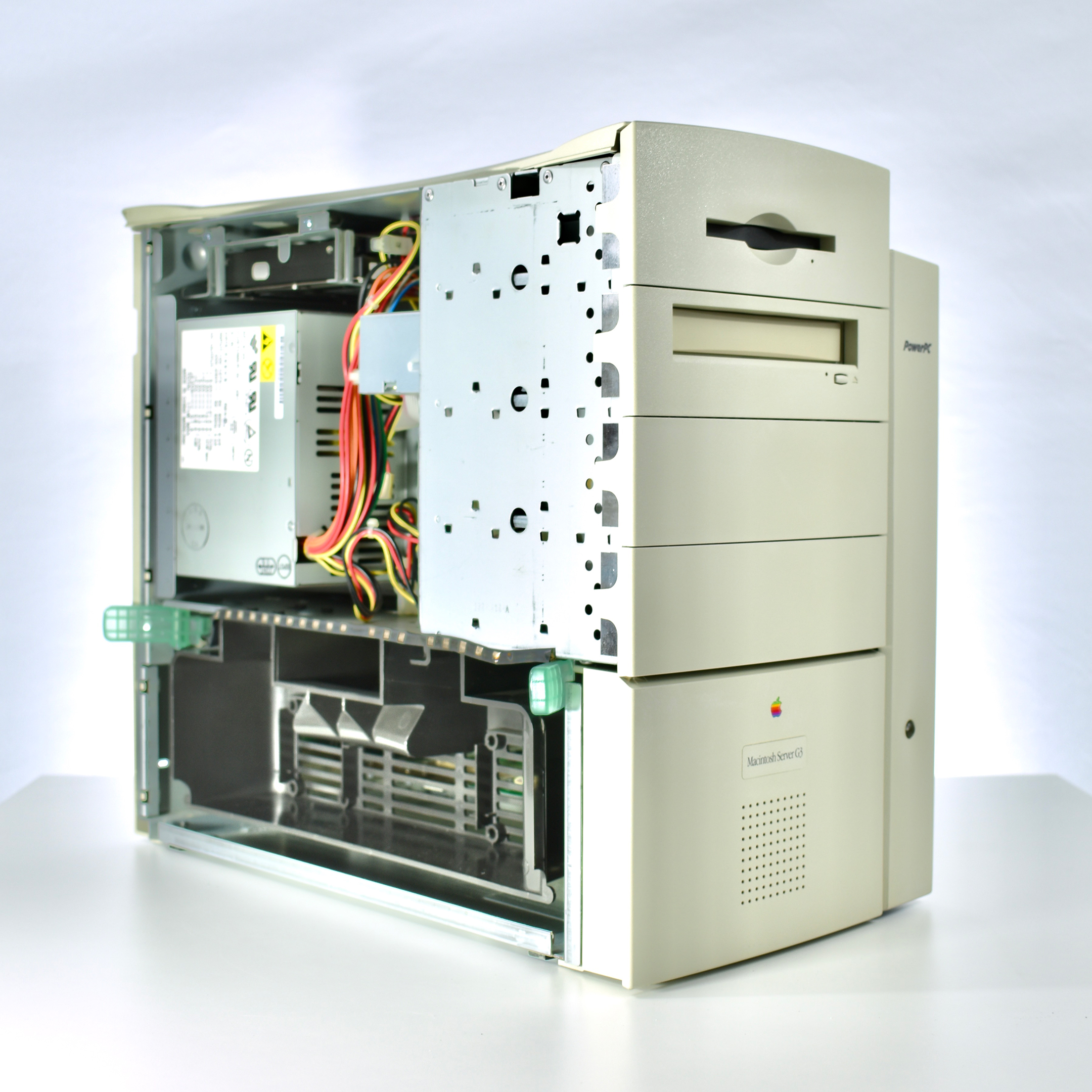
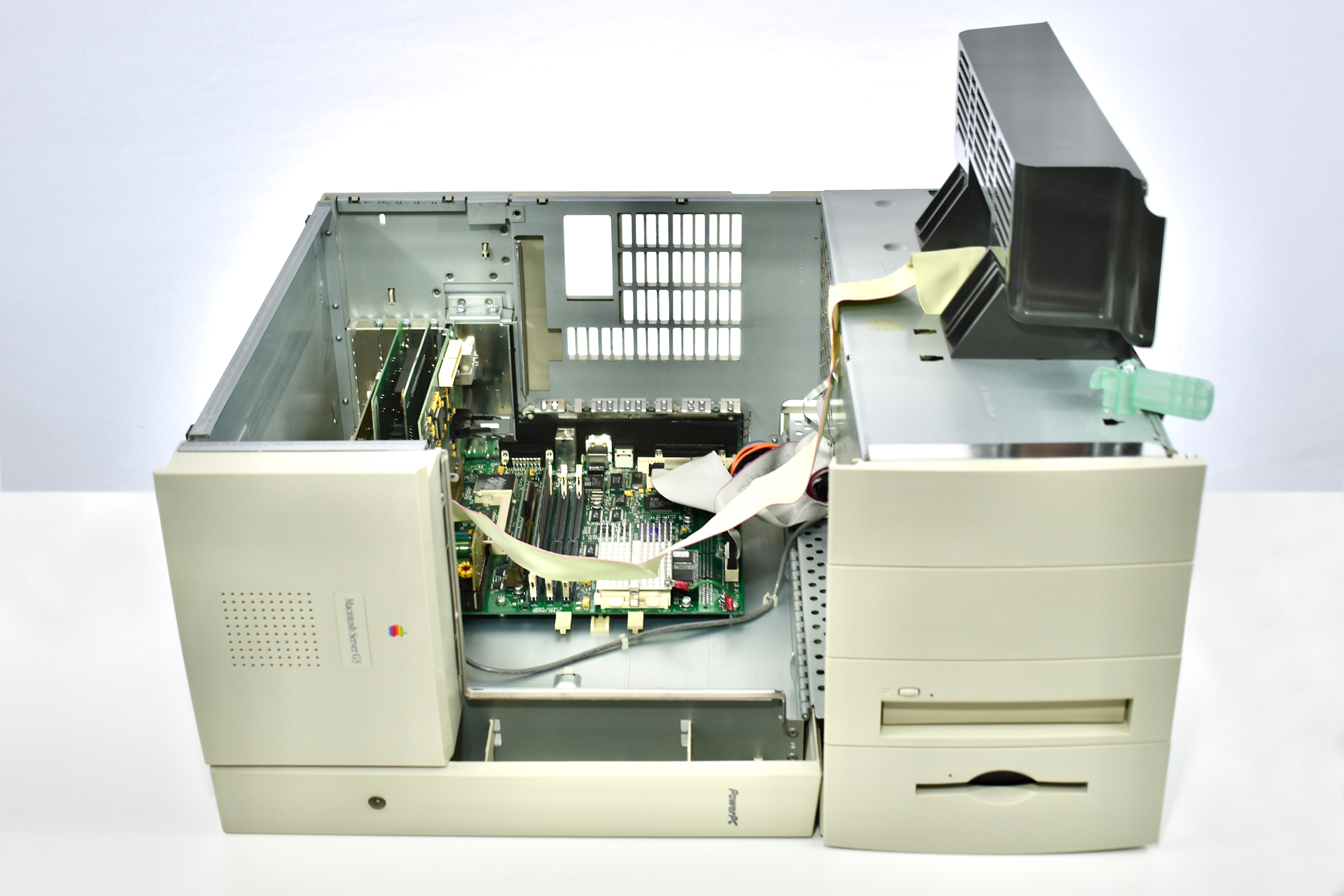
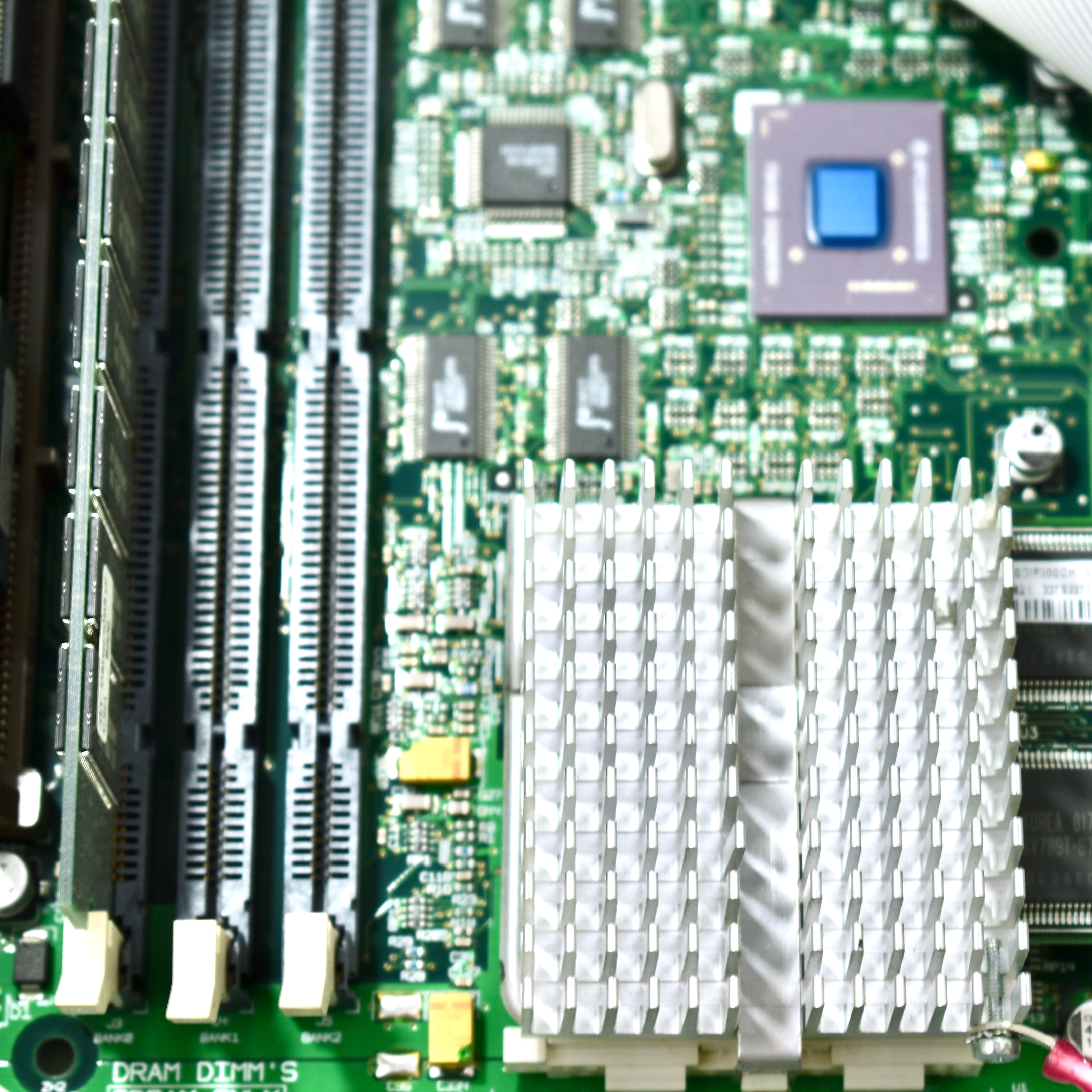
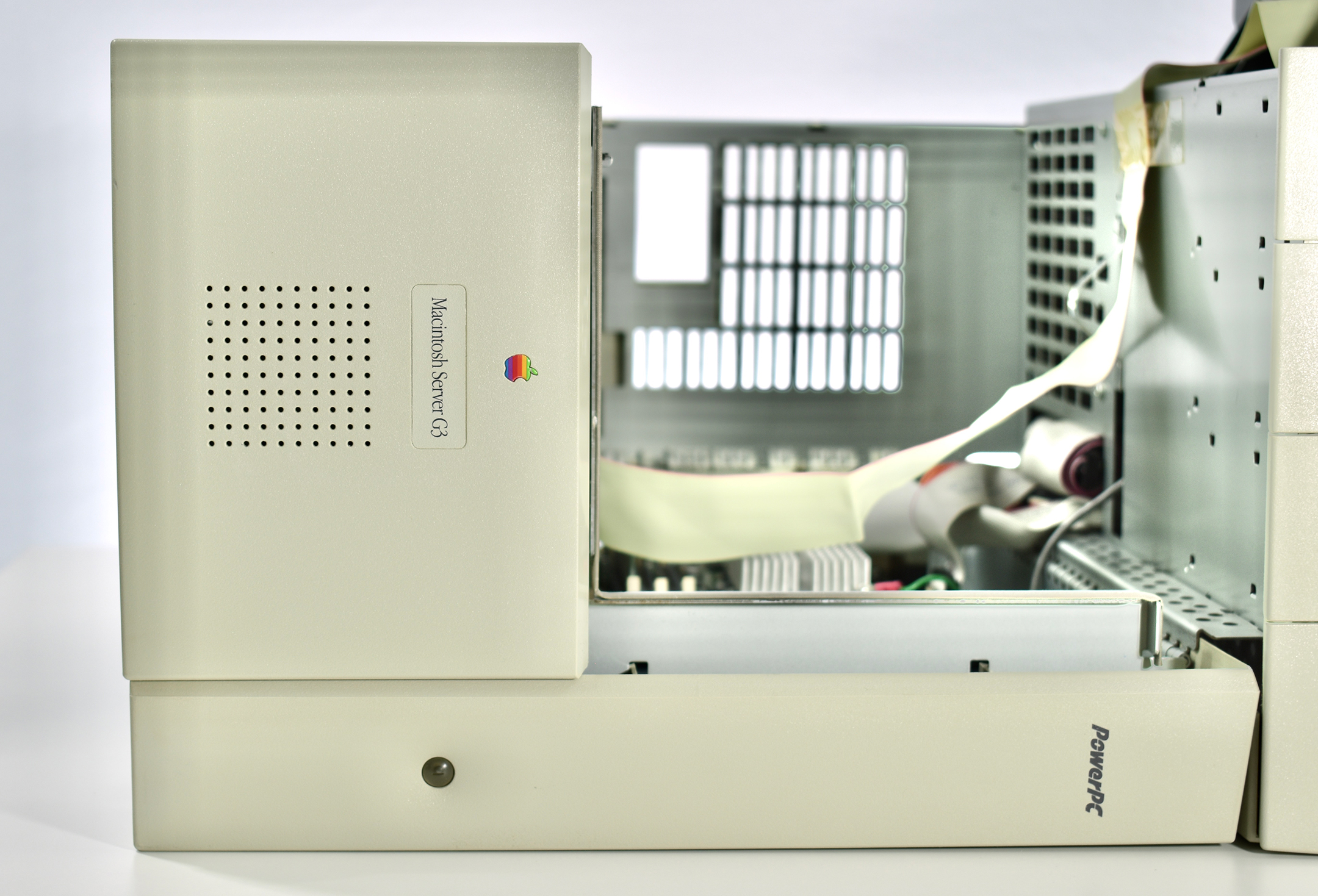
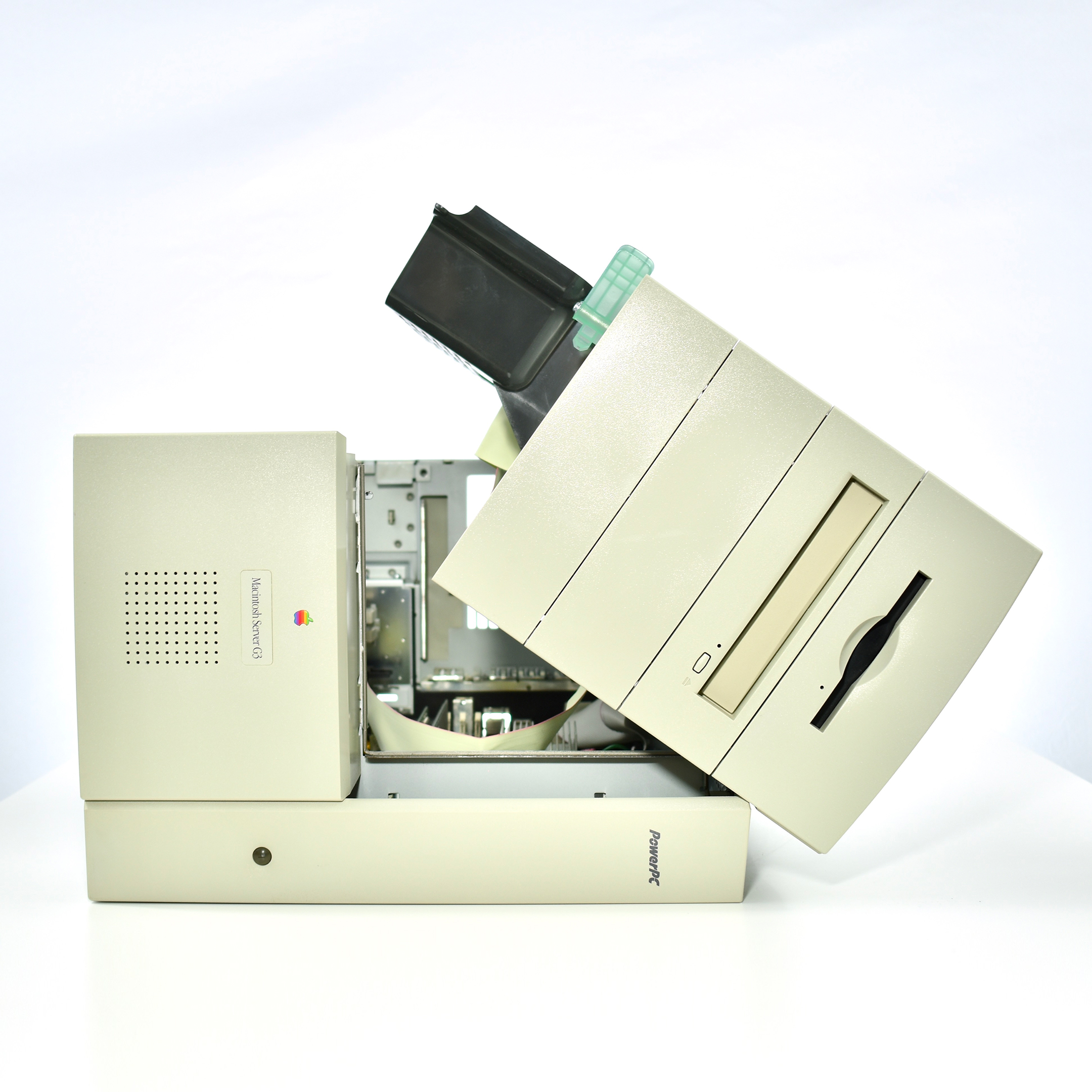
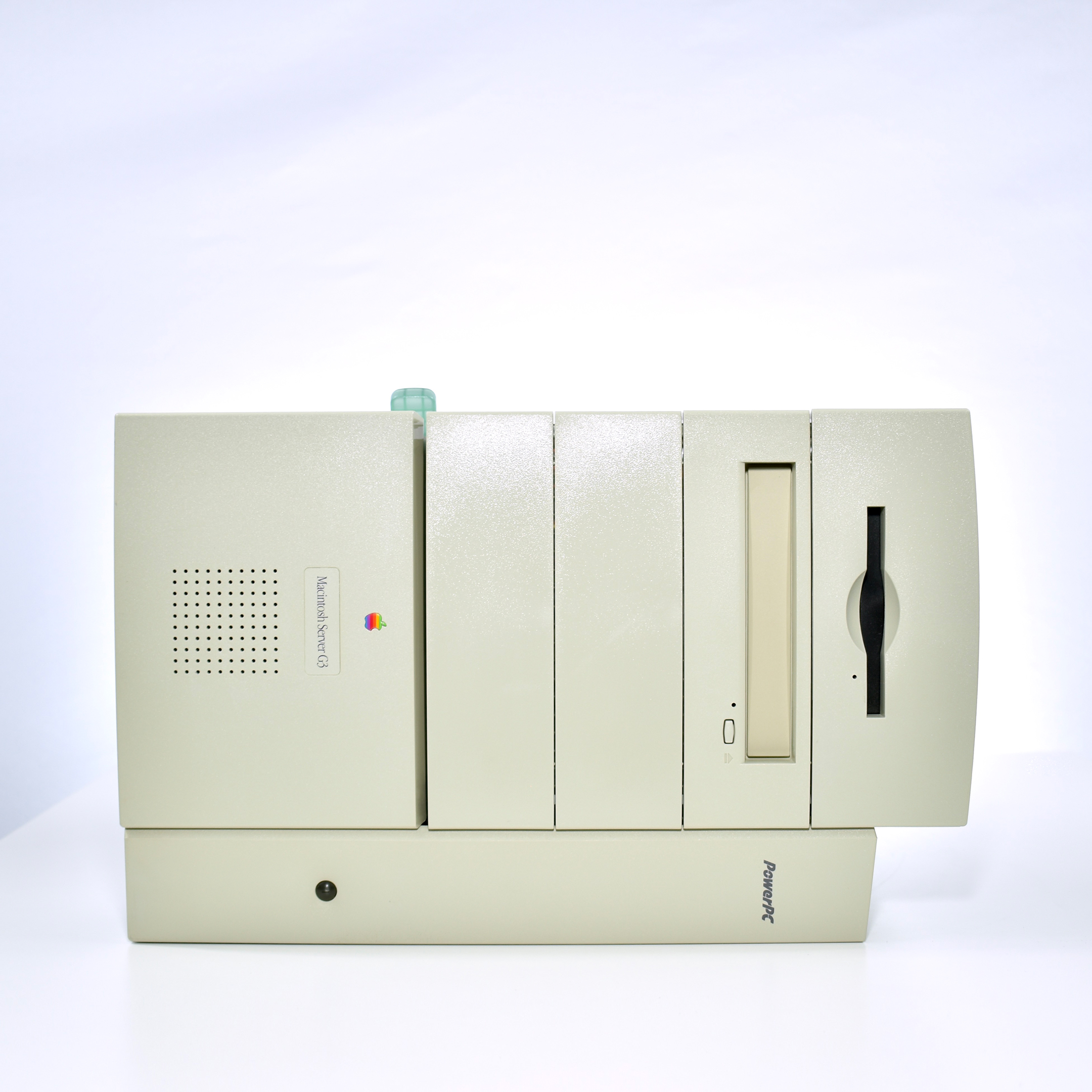
The Macintosh Server G3/300 Minitower was released in 1998 as the final beige tower design by Apple. This G3 Server used a 300 MHz PowerPC 750 G3 processor, a single 4.0 GB SCSI hard drive (with space for a second drive), and a 24x CD-ROM drive.
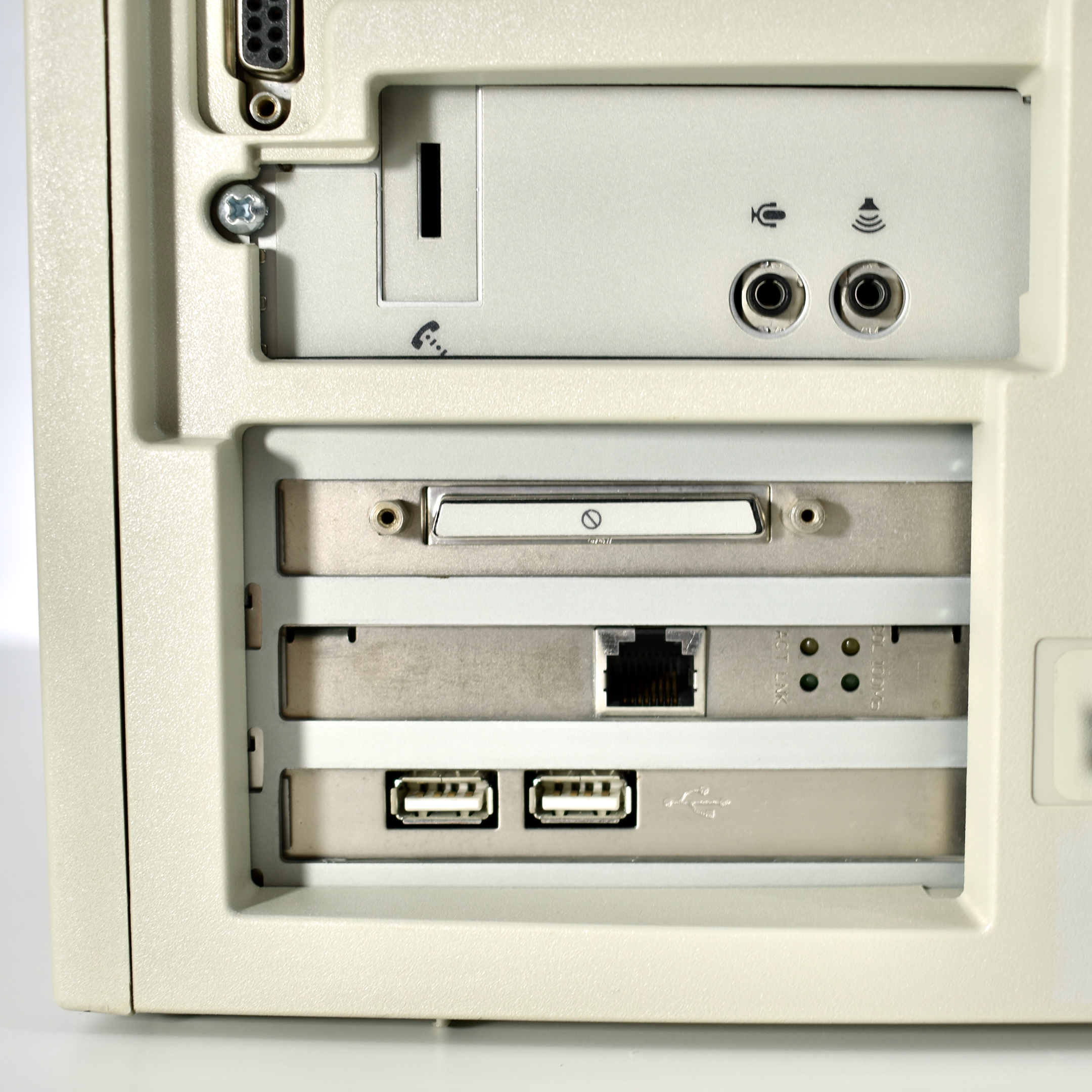
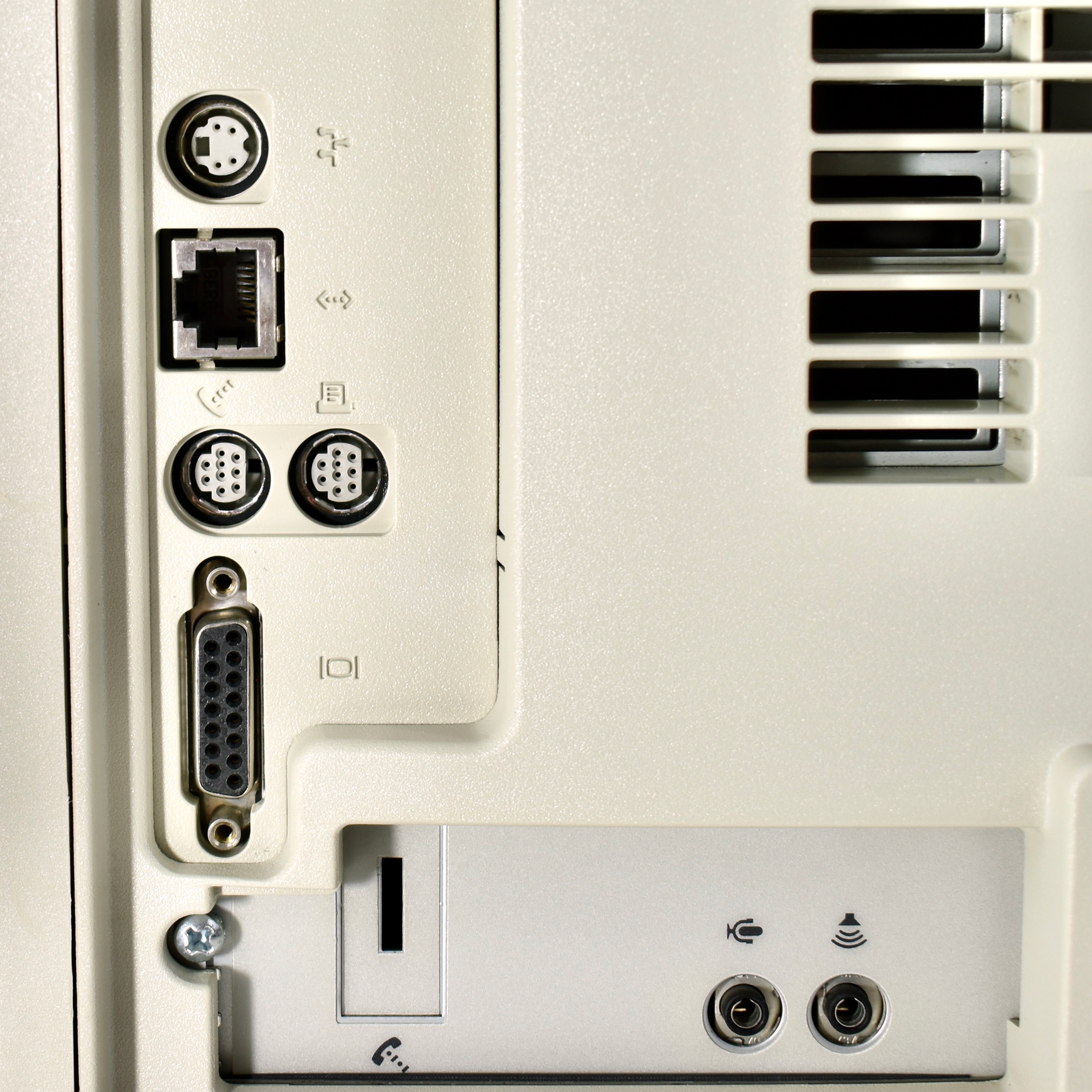
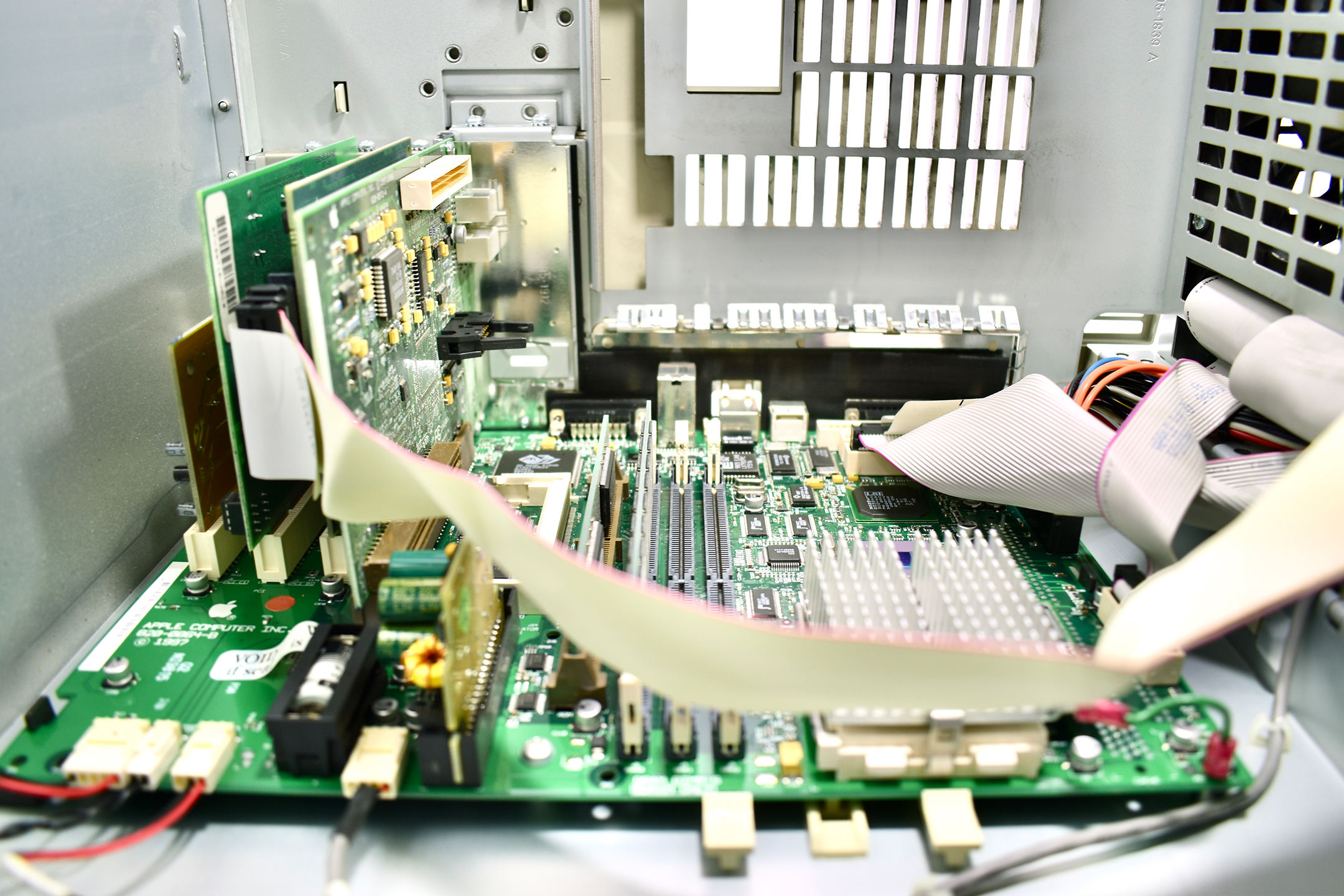
This minitower also contained a “Whisper personality card” that added audio input and output ports. According to LowEndMac, Apple had planned various “personality cards,” but only audio (“Whisper”), audio/video (“Wings”), and audio/video/DVD playback (“Bordeaux”) were ever produced.
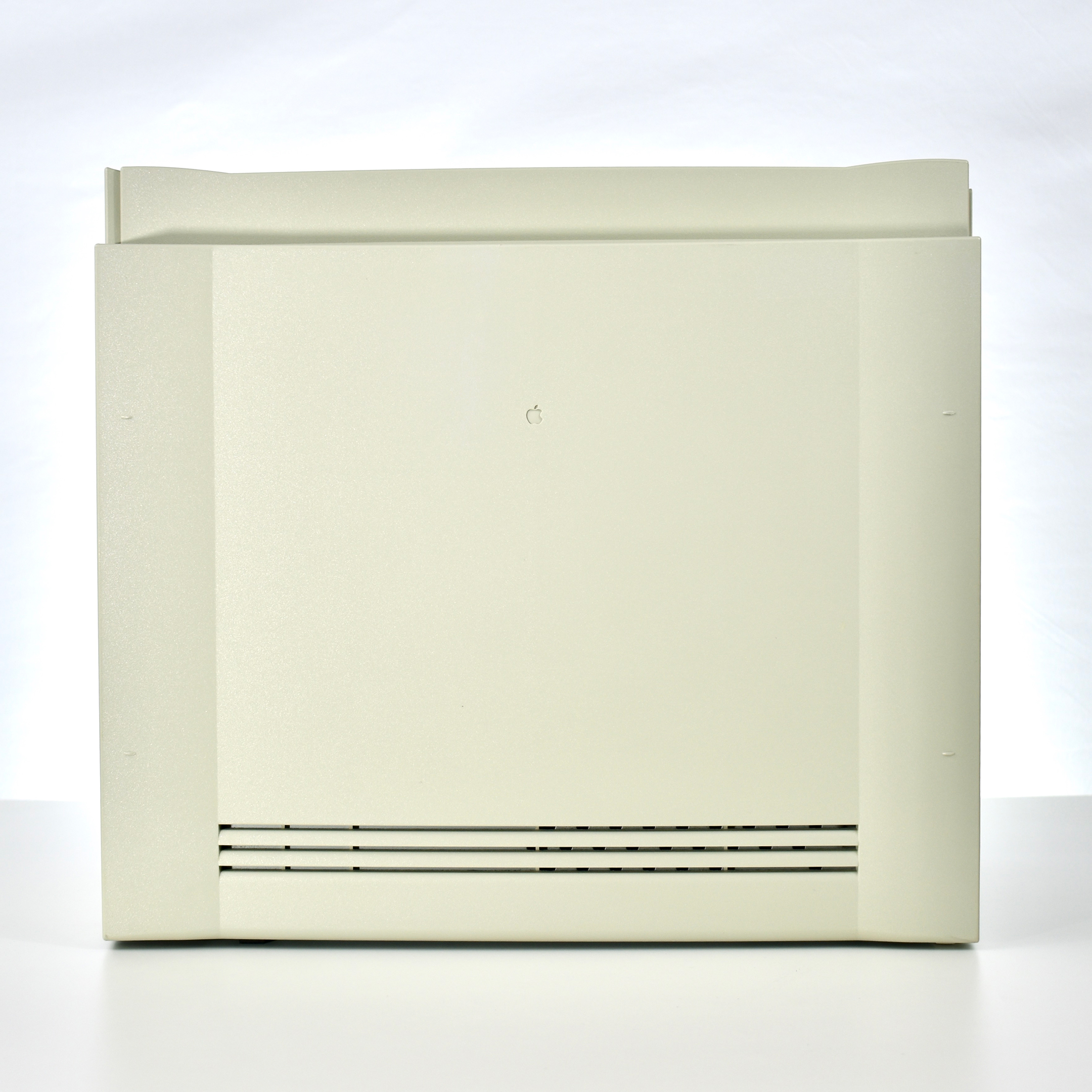
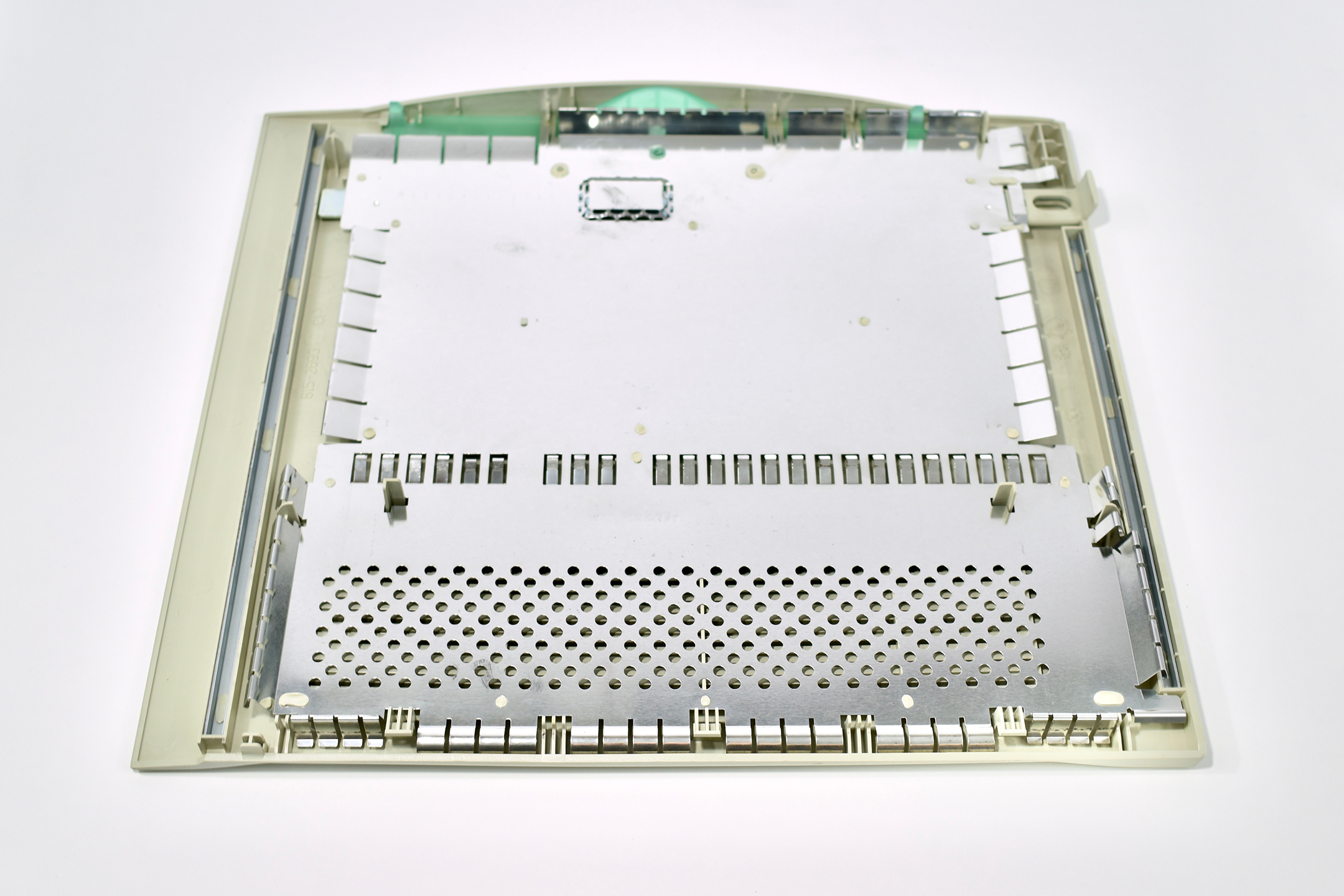
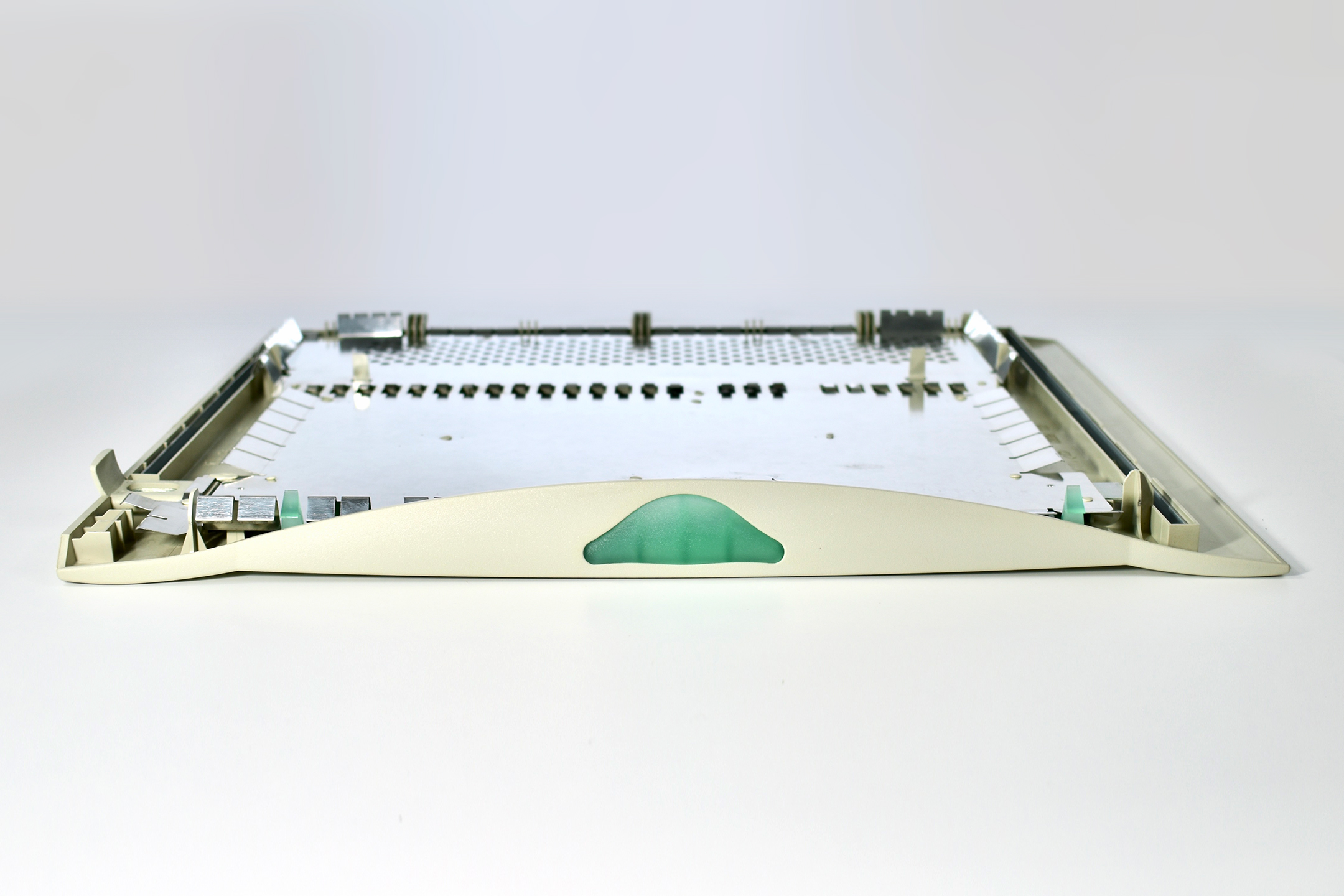
The case design of this minitower includes a removable side panel and two internal tabs that, when released, allow the entire tower to tilt 90 degrees on a hinge allowing easy access to all internal components. Interestingly, the side door panel latch and internal tabs are made from translucent blue-green plastic, a design aesthetic that would soon become the Mac design norm that same year when the original iMac was released.
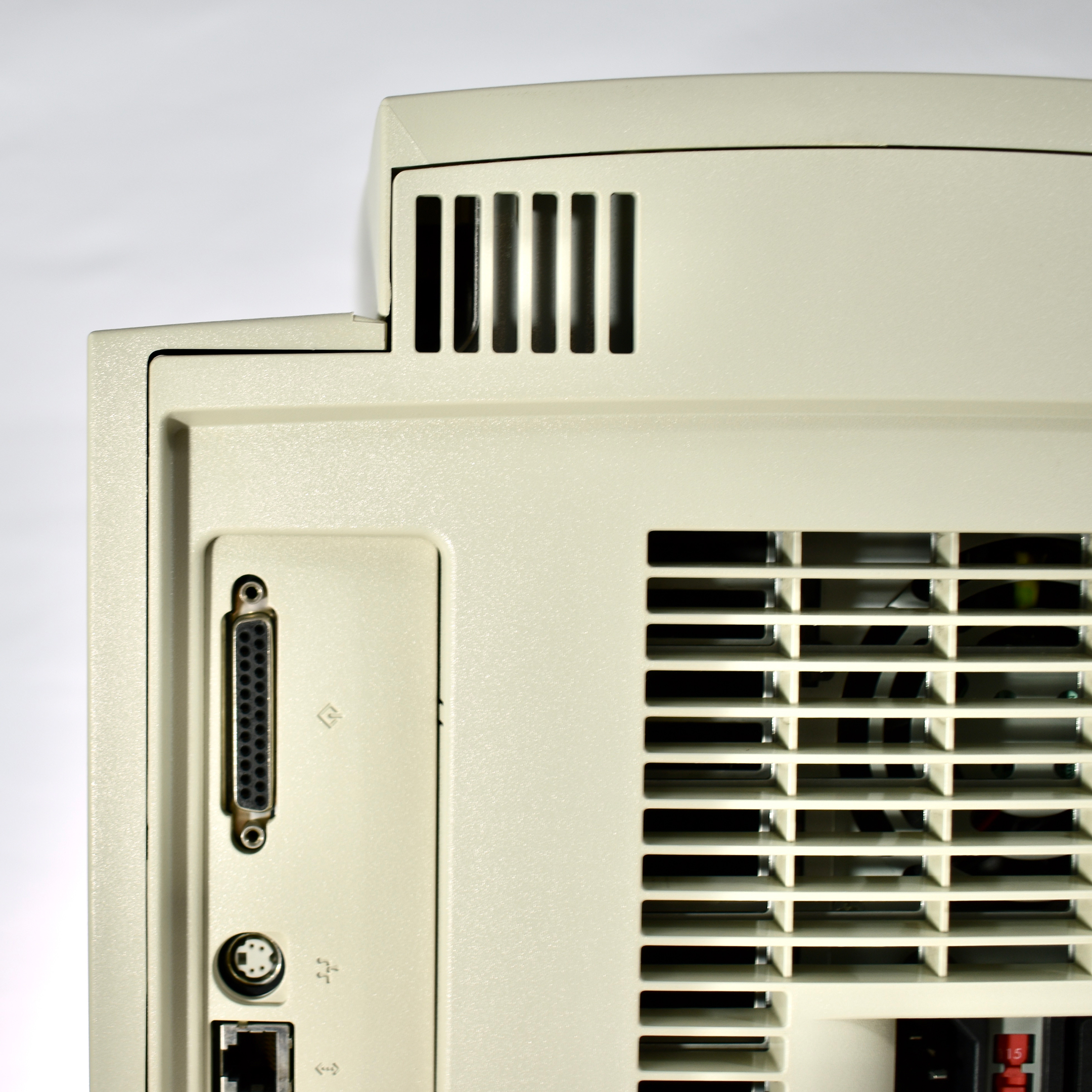
Ports on this computer include SCSI; ADB (Apple Desktop Bus); Ethernet (10-100); Mac serial and printer ports; Apple Video (DB-15), line-out and microphone 3.5 mm jacks. Three card slots are available: the first is empty, but ready for a high-speed SCSI port; the second slot has a second high-speed ethernet port; and the third slot adds two USB ports.
The exact factory configuration of the server is shown as: 1MB Cache/128MB/2x4GB UW/CD/10-100 ENET. The model is M4405, and the serial number area specifies a production date of May 27, 1998, at 3:30 PM.
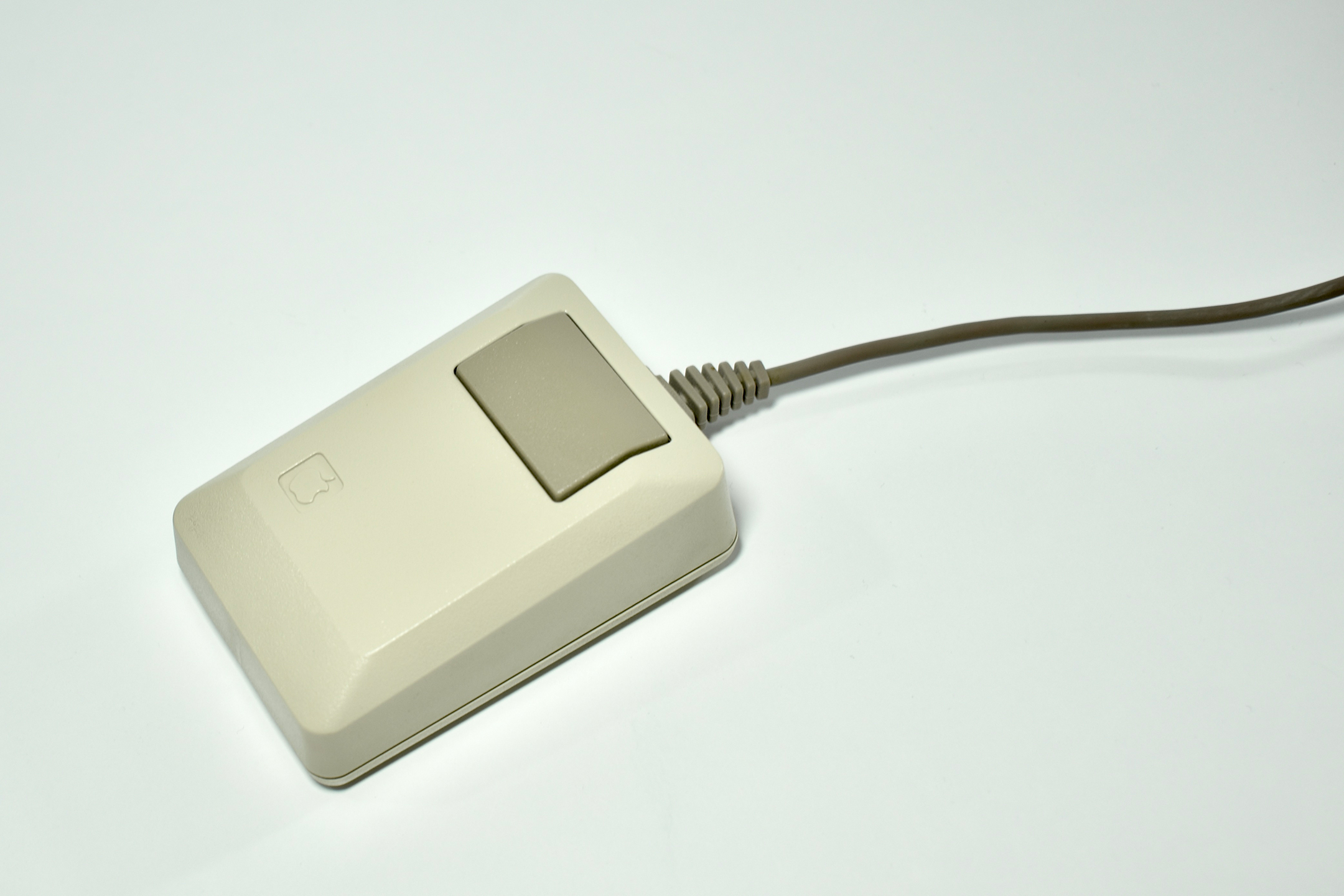
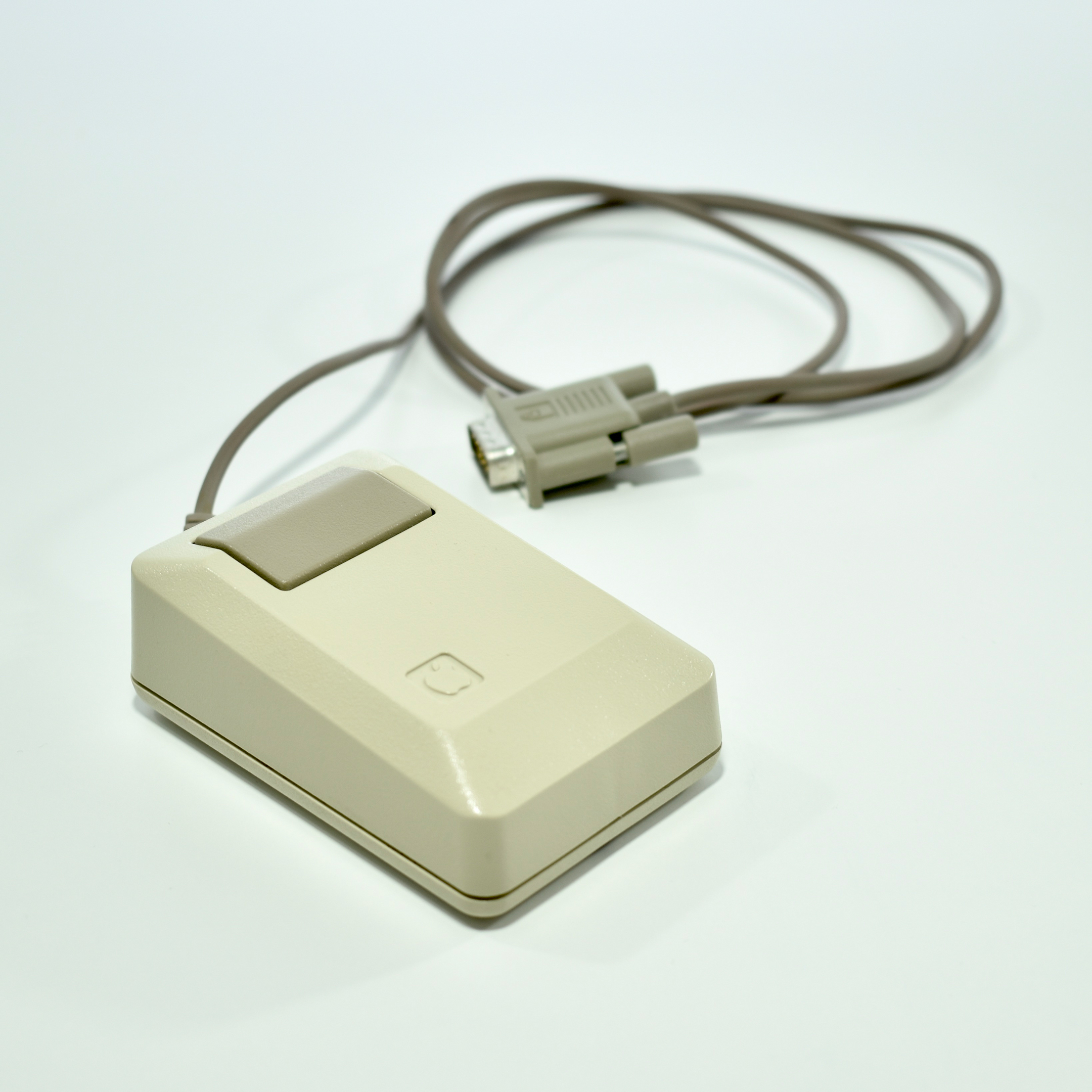
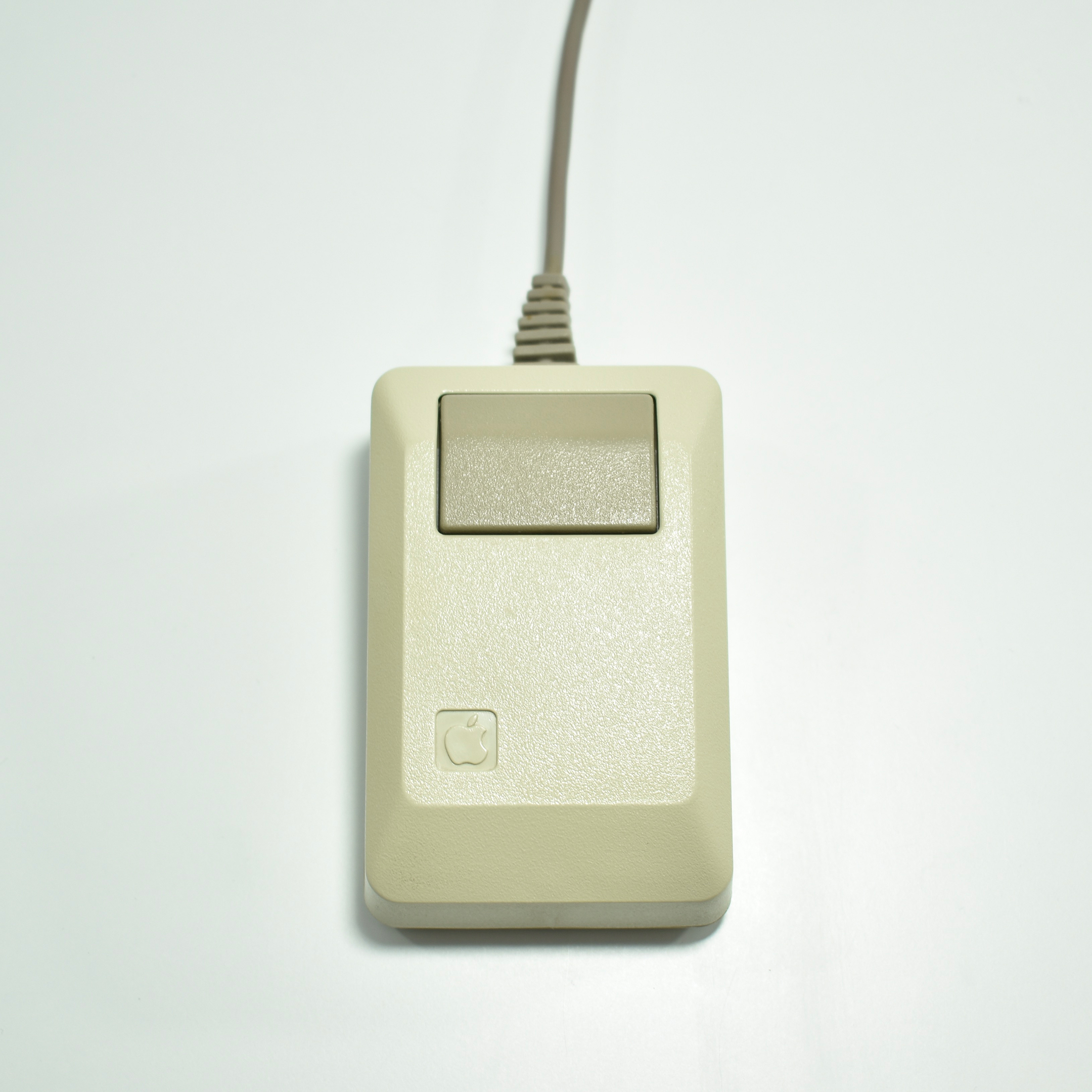
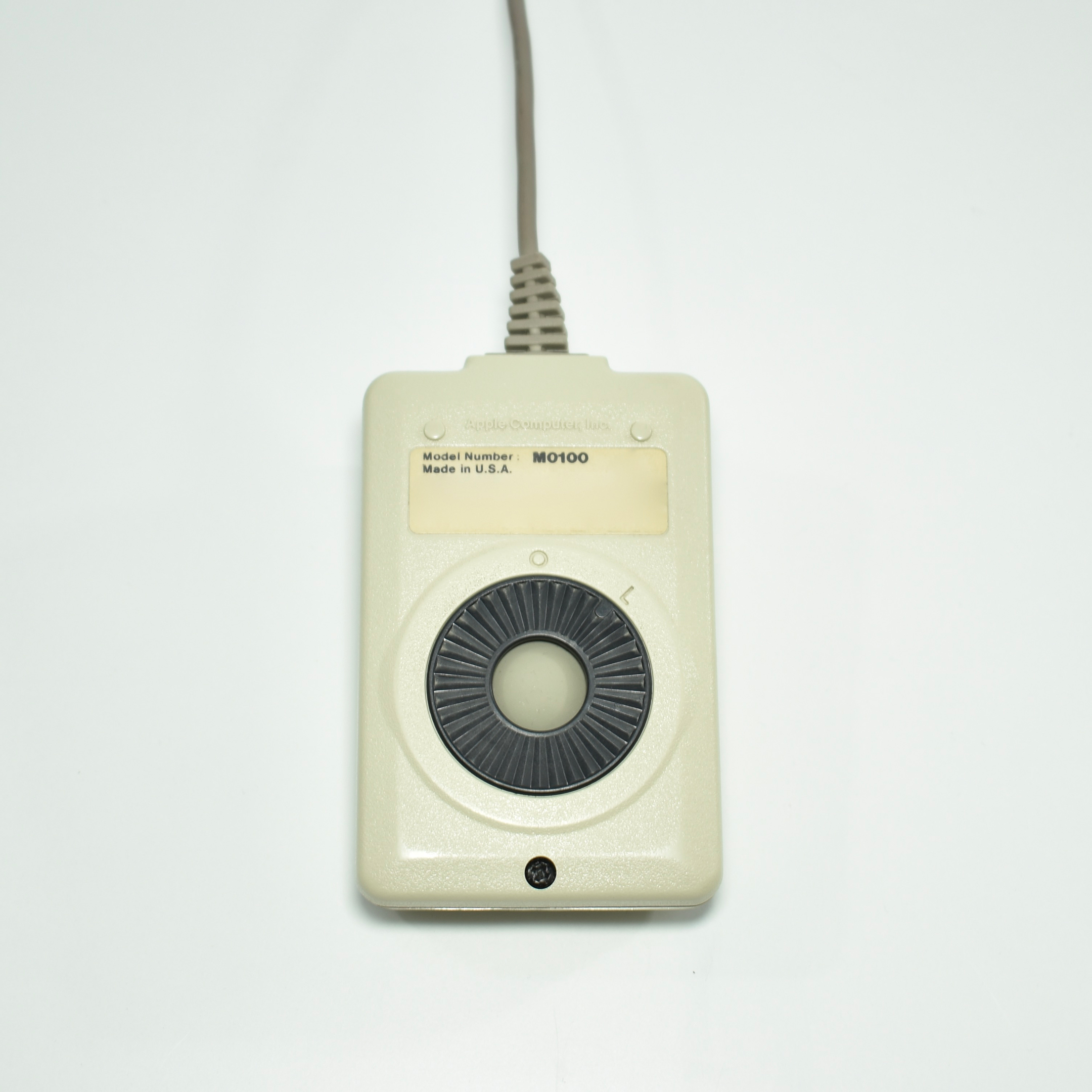
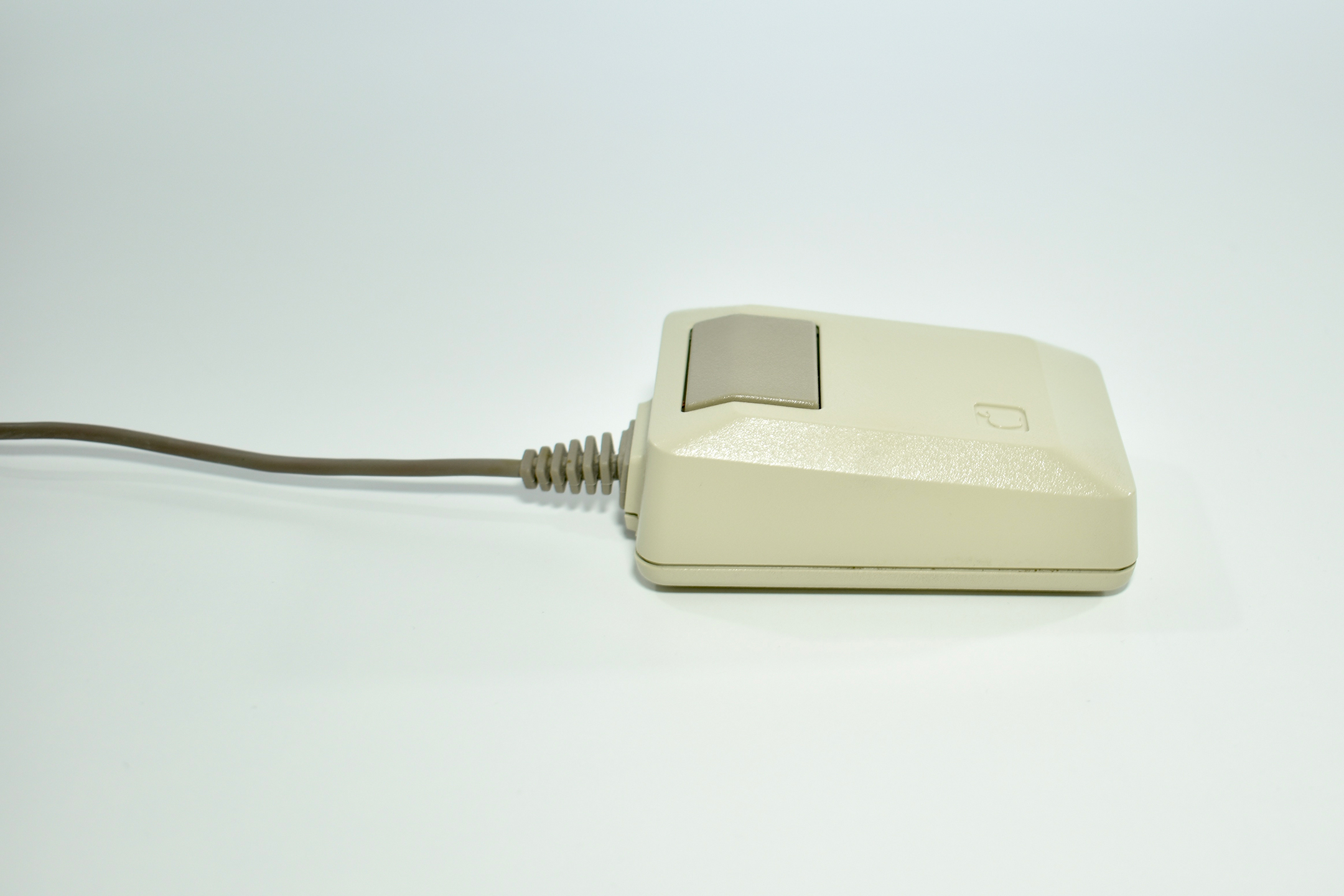
This original Macintosh Mouse, Model M0100, shipped with a Macintosh 512K. This mouse was compatible with the Apple Lisa and was the same mouse that shipped with the original Macintosh.
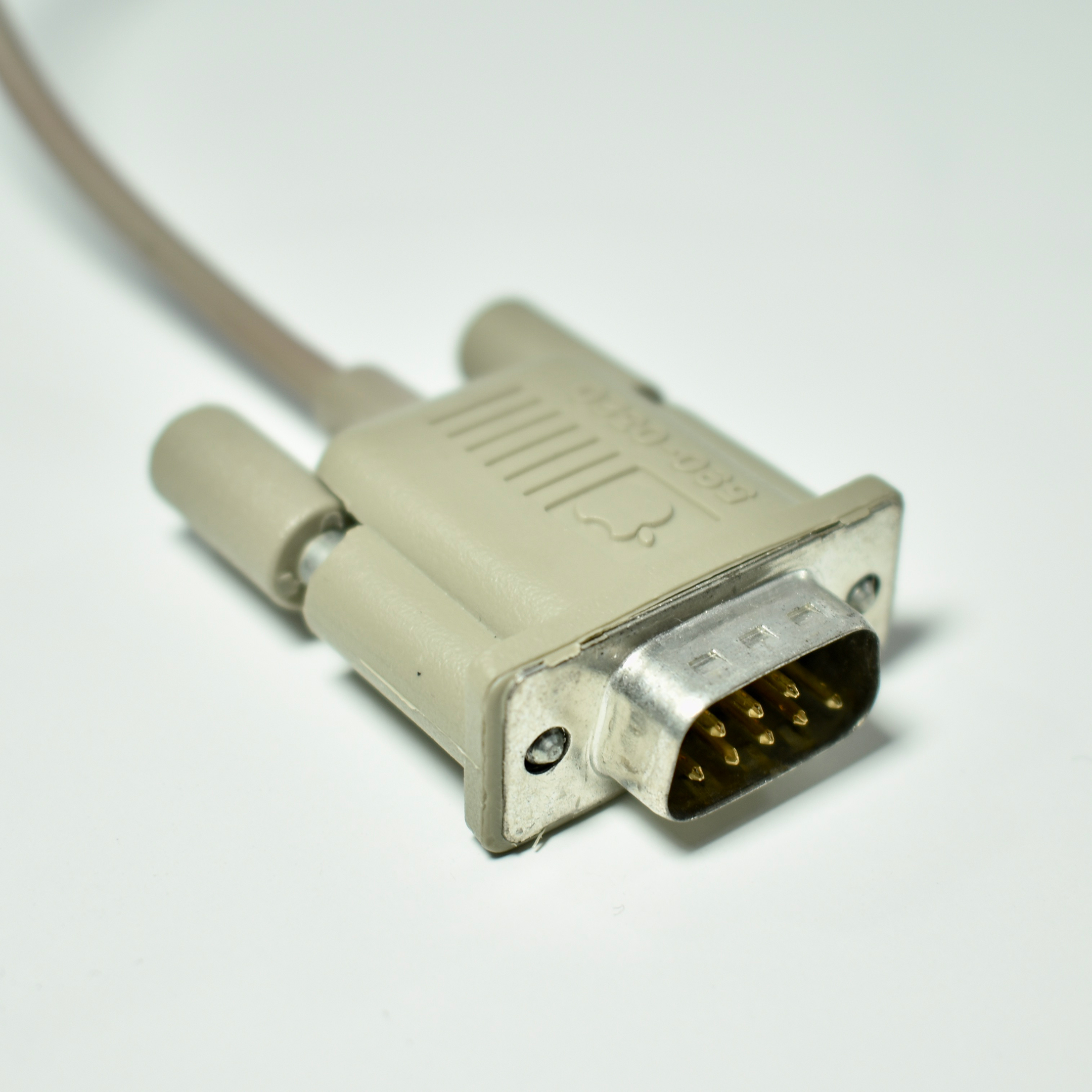
The original Macintosh Mouse used a DE-9 connector and remained unchanged until 1987 when its color was altered to Platinium (with Smoke accents) to match the Macintosh Plus. Like all early Macintosh mouse designs, it used only one button to control the famously easy-to-use Macintosh operating systems of the time.
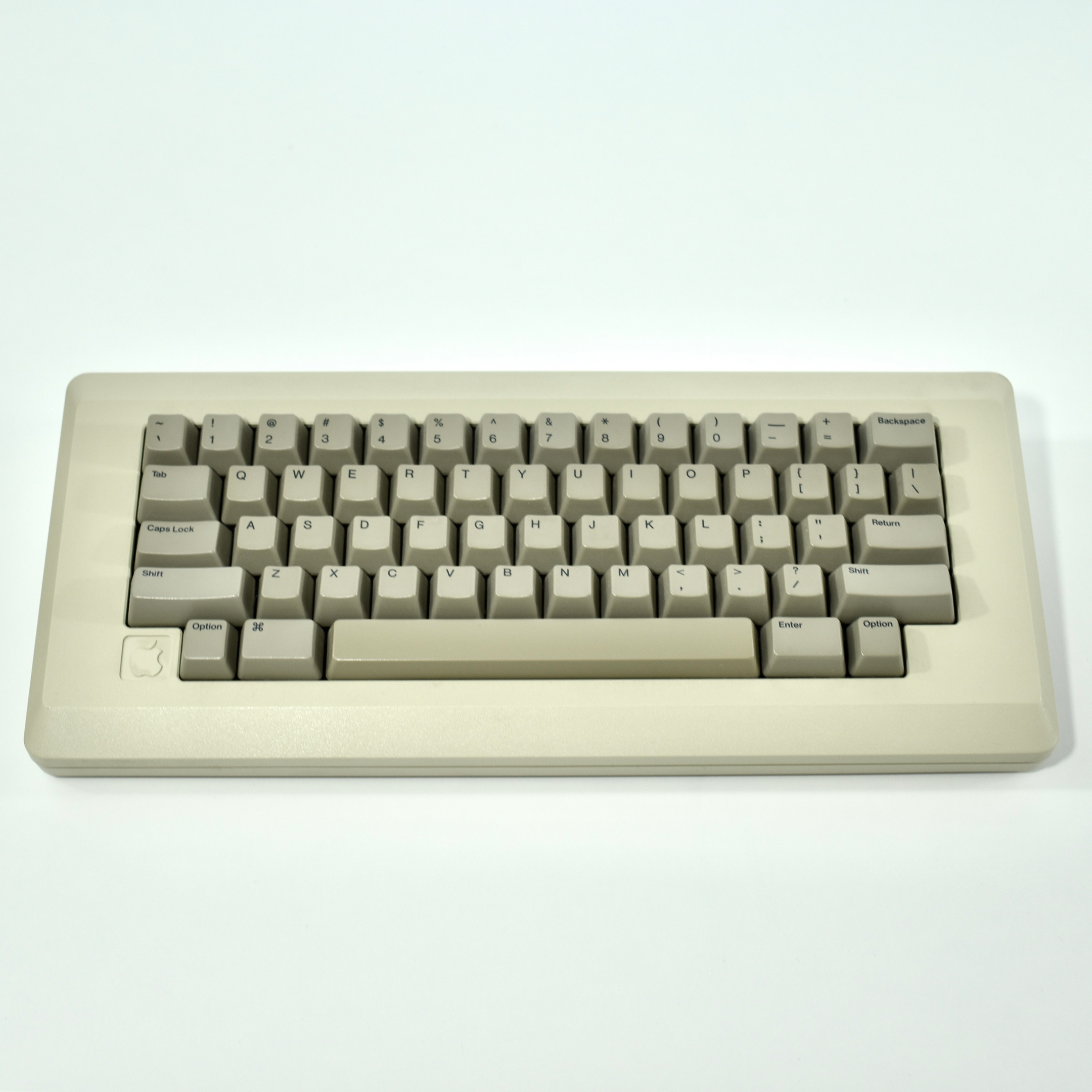
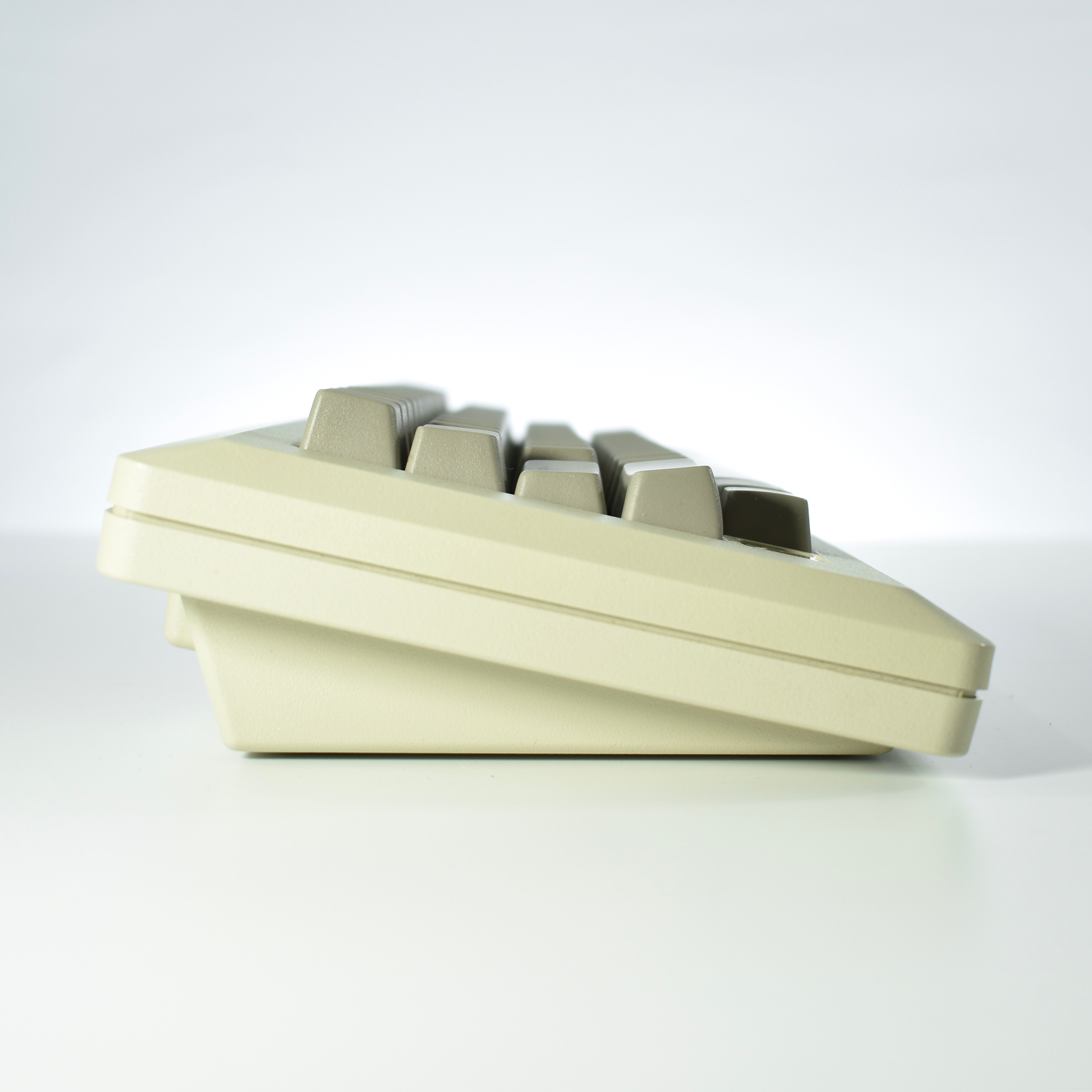
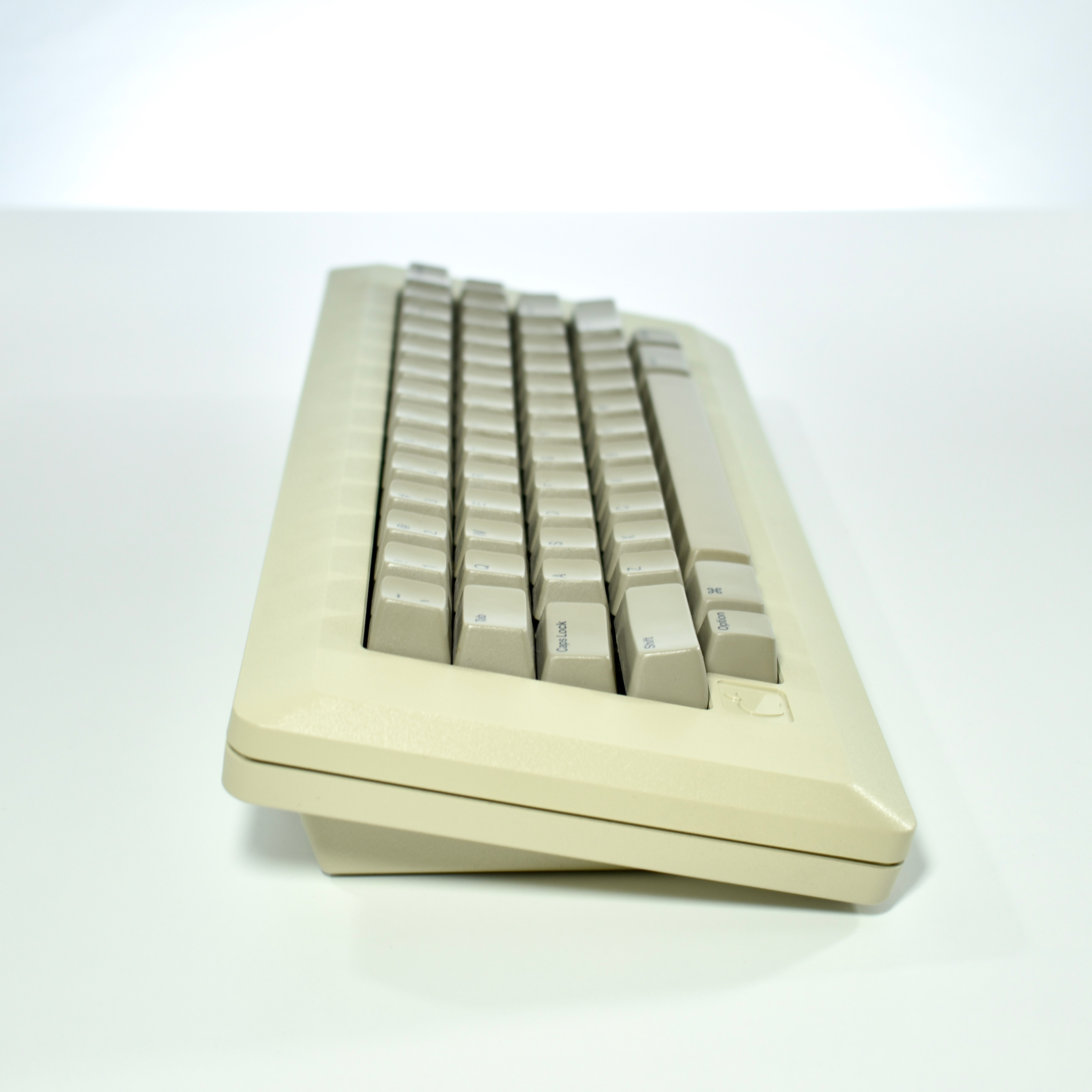
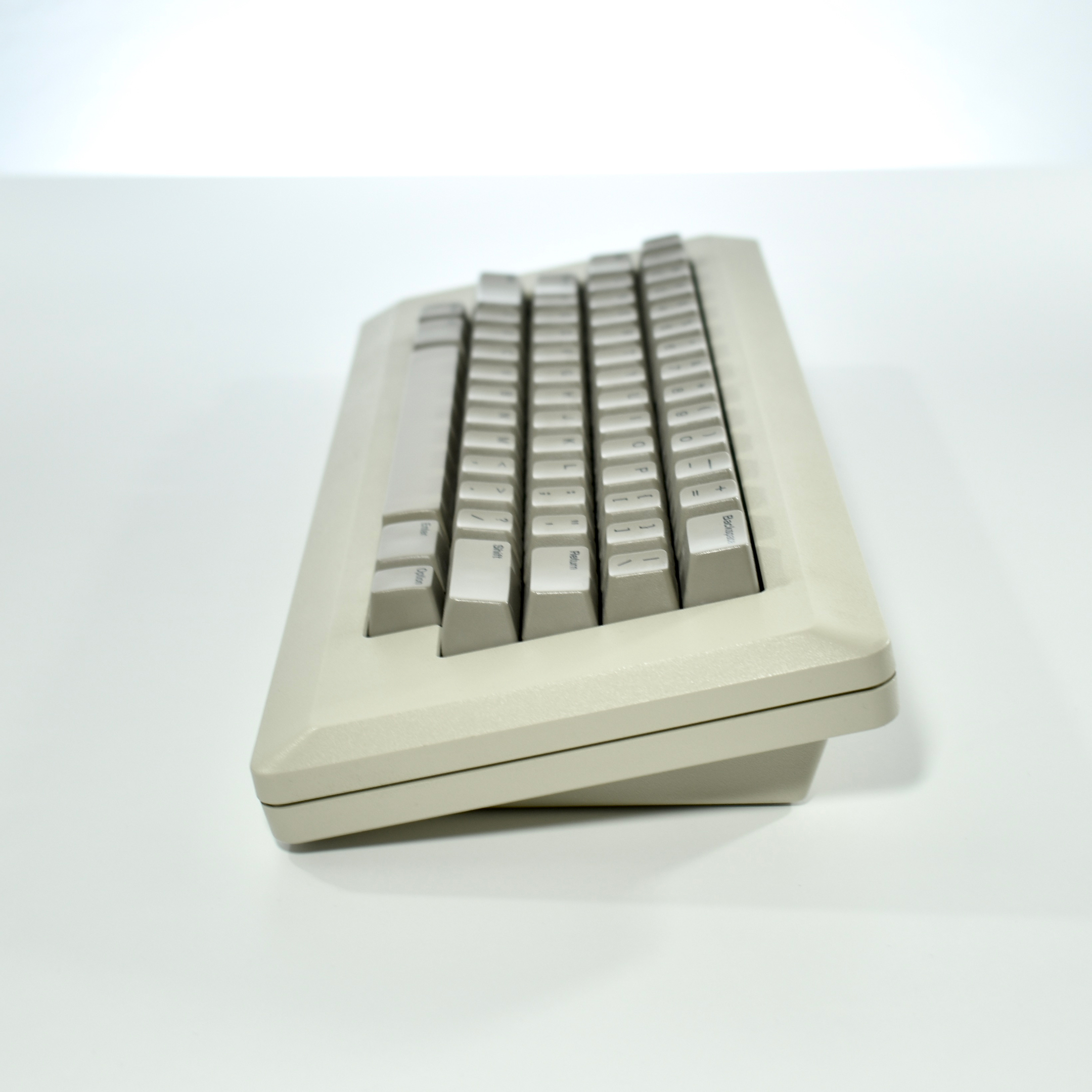
The Macintosh Keyboard, Model M0110, was included with the original Macintosh. This keyboard was also shipped with the Macintosh 512K.
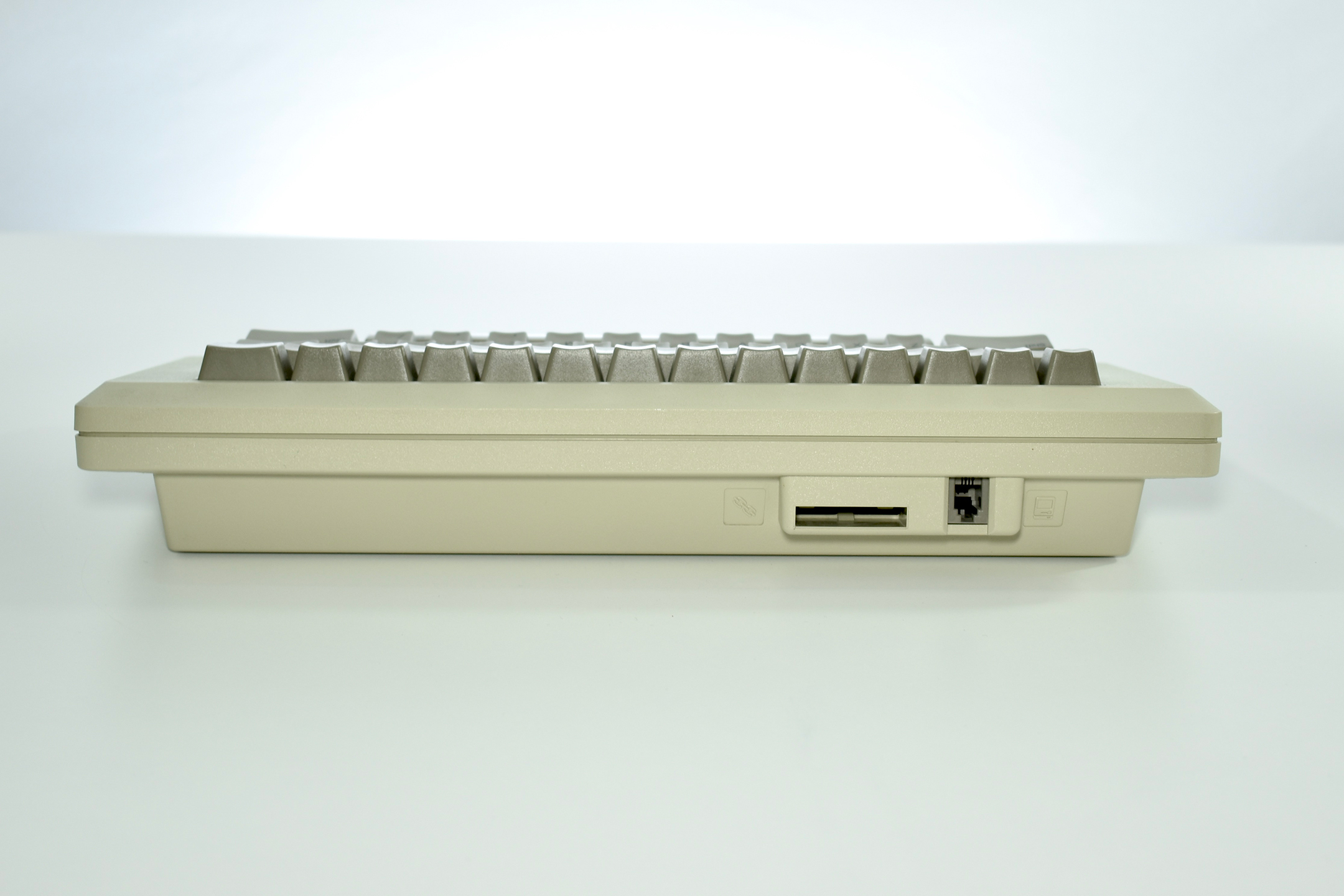
This keyboard may be the simplest of all Apple keyboards because it lacks arrow keys and a numeric keypad. It used a telephone-style connector (RJ-10) to connect to the Macintosh, but the cable was wired differently than a standard telephone cord (a telephone cord is not interchangeable and will result in device damage).
This keyboard also introduced the “Command” key and symbol to the world. Apple II computers were in wide use at the time and included the “open Apple” key (a key with the outline of the Apple logo) and a “closed Apple” key (a key with a solid Apple logo), both used for shortcut and other functions before the Macintosh. (The Open- and Closed-Apple keys were also used on the Apple Lisa.) The “Command” key and symbol were used on this original Macintosh Keyboard and functioned similarly to the “Open Apple” key on the IIe. The keyboard that replaced this original Macintosh Keyboard design, the Apple Desktop Bus Keyboard, continued the tradition of the “Open-Apple” symbol by printing the Open-Apple on the same key as the Command symbol.
For years, users (especially teachers, including me) referred to keyboard shortcuts using the “Open-Apple” terminology, such as “Open-Apple-C” (for Edit > Copy) or “Open-Apple-P” (for File > Print), instead of using the arguably more elegant, and now standard term, “Command.”