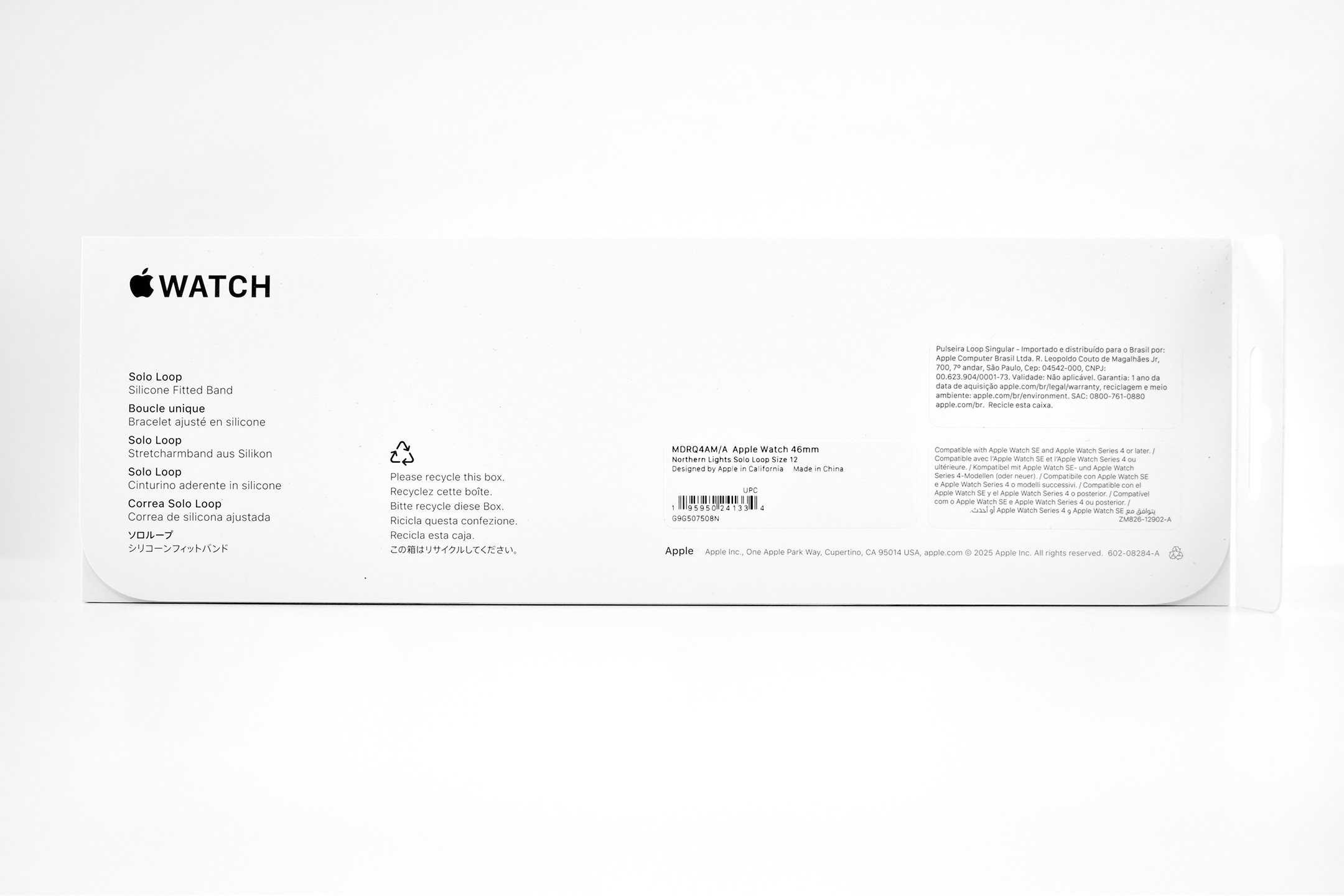
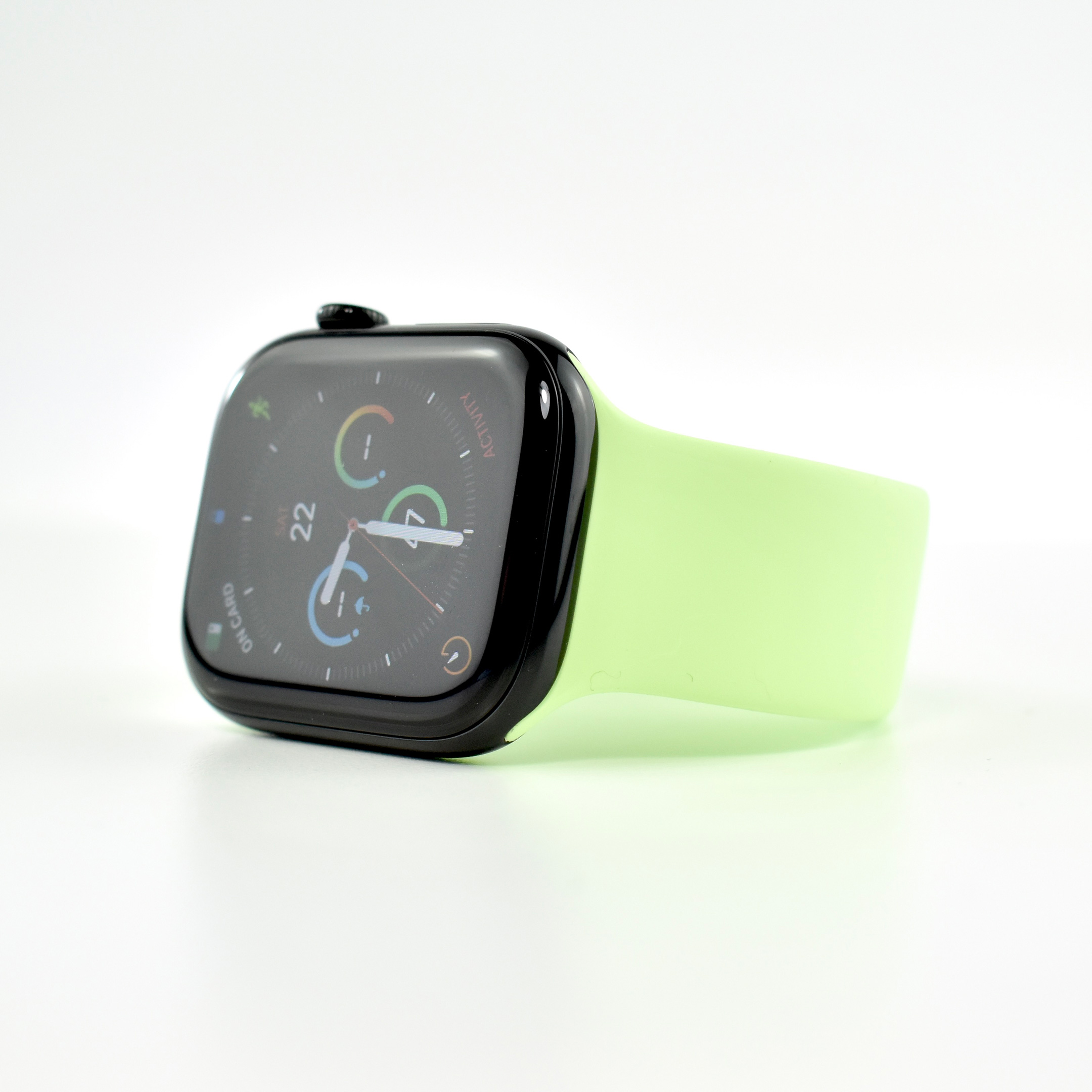
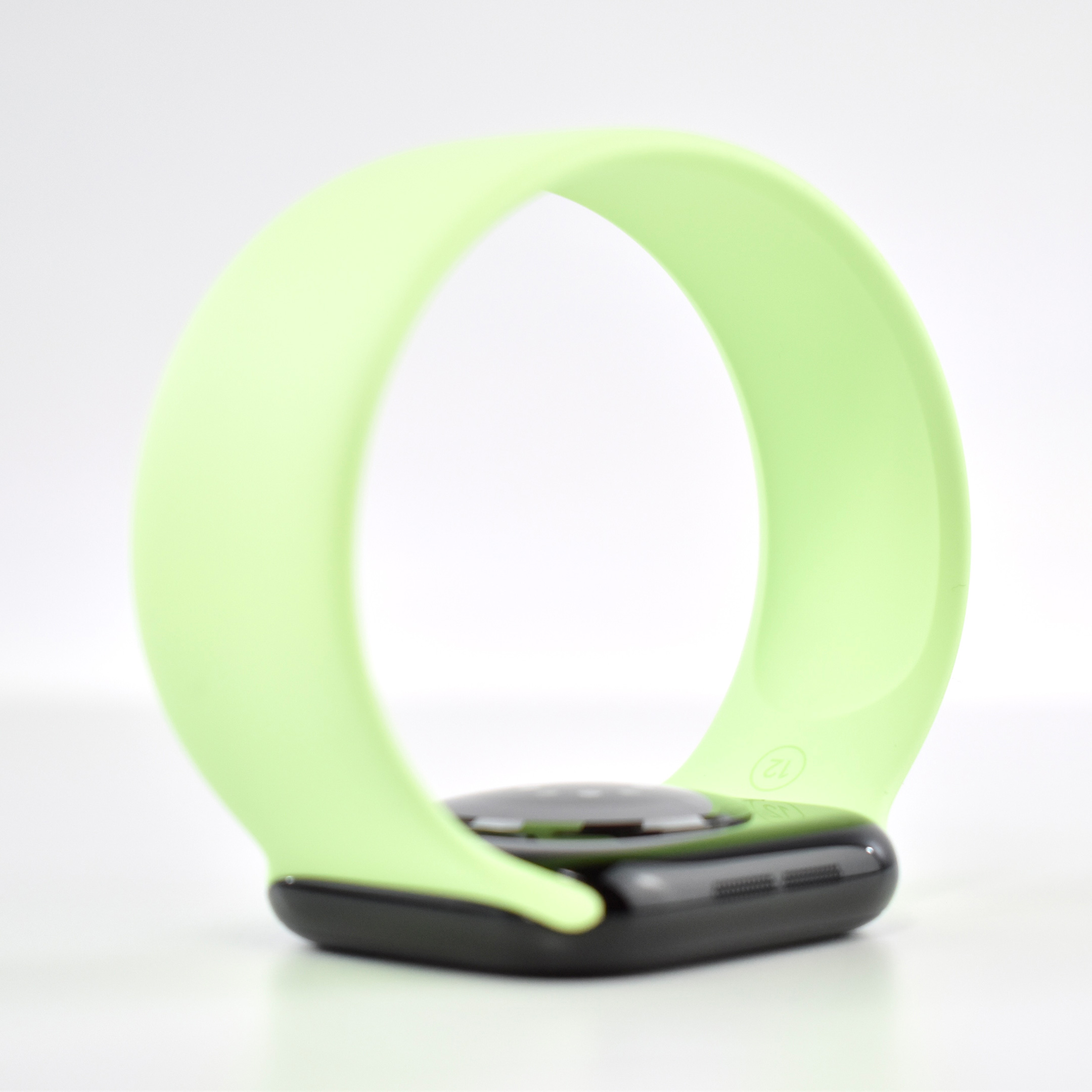
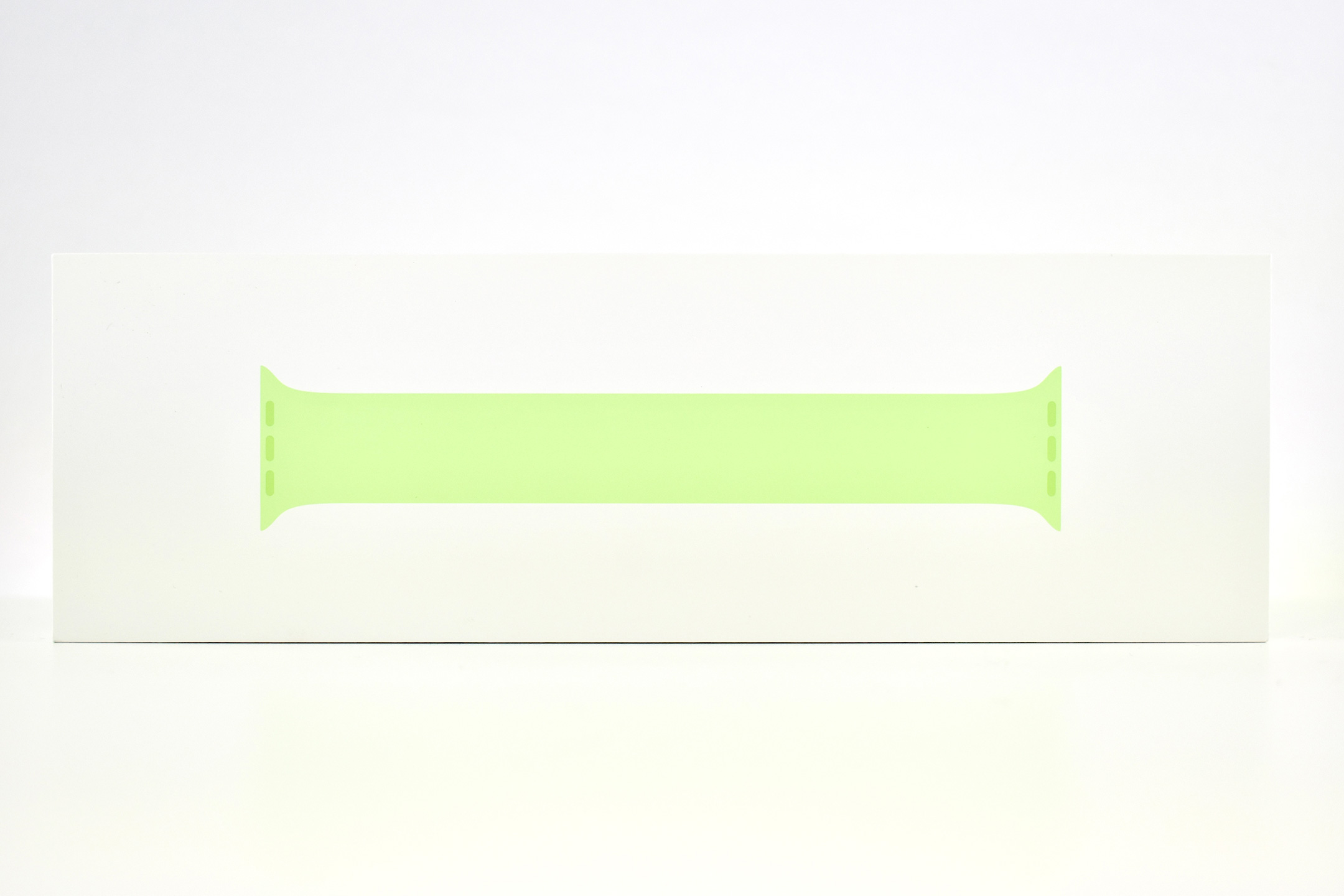
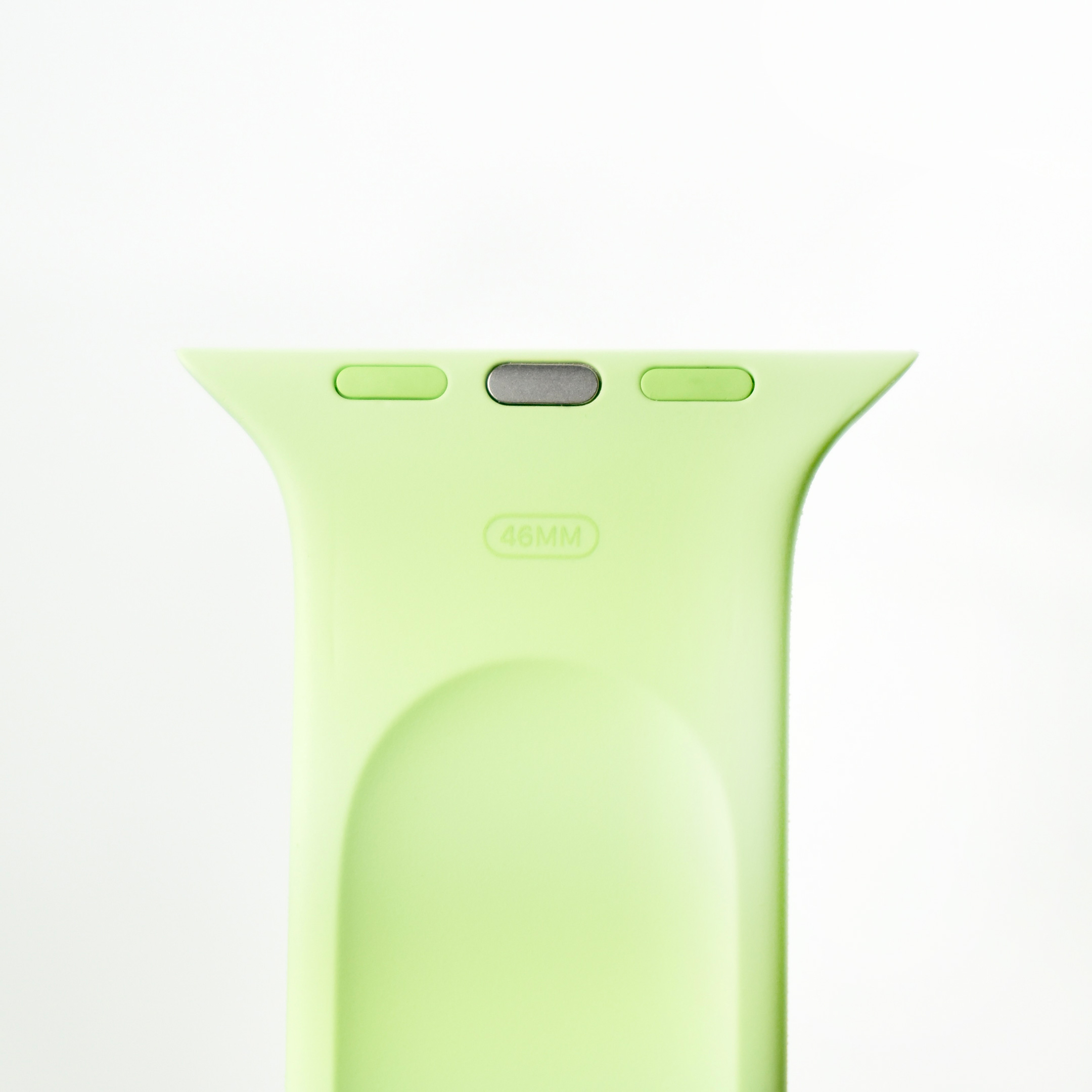
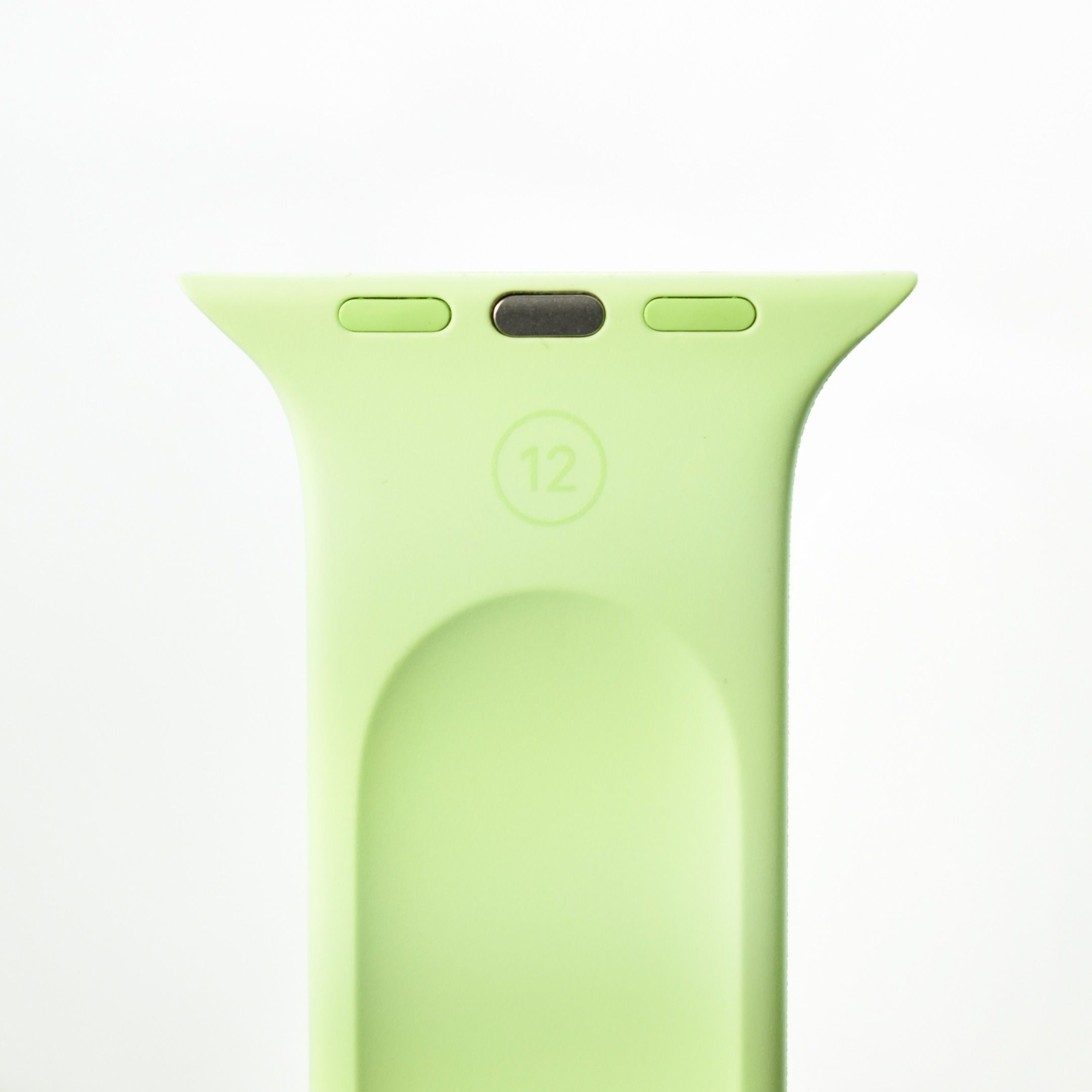
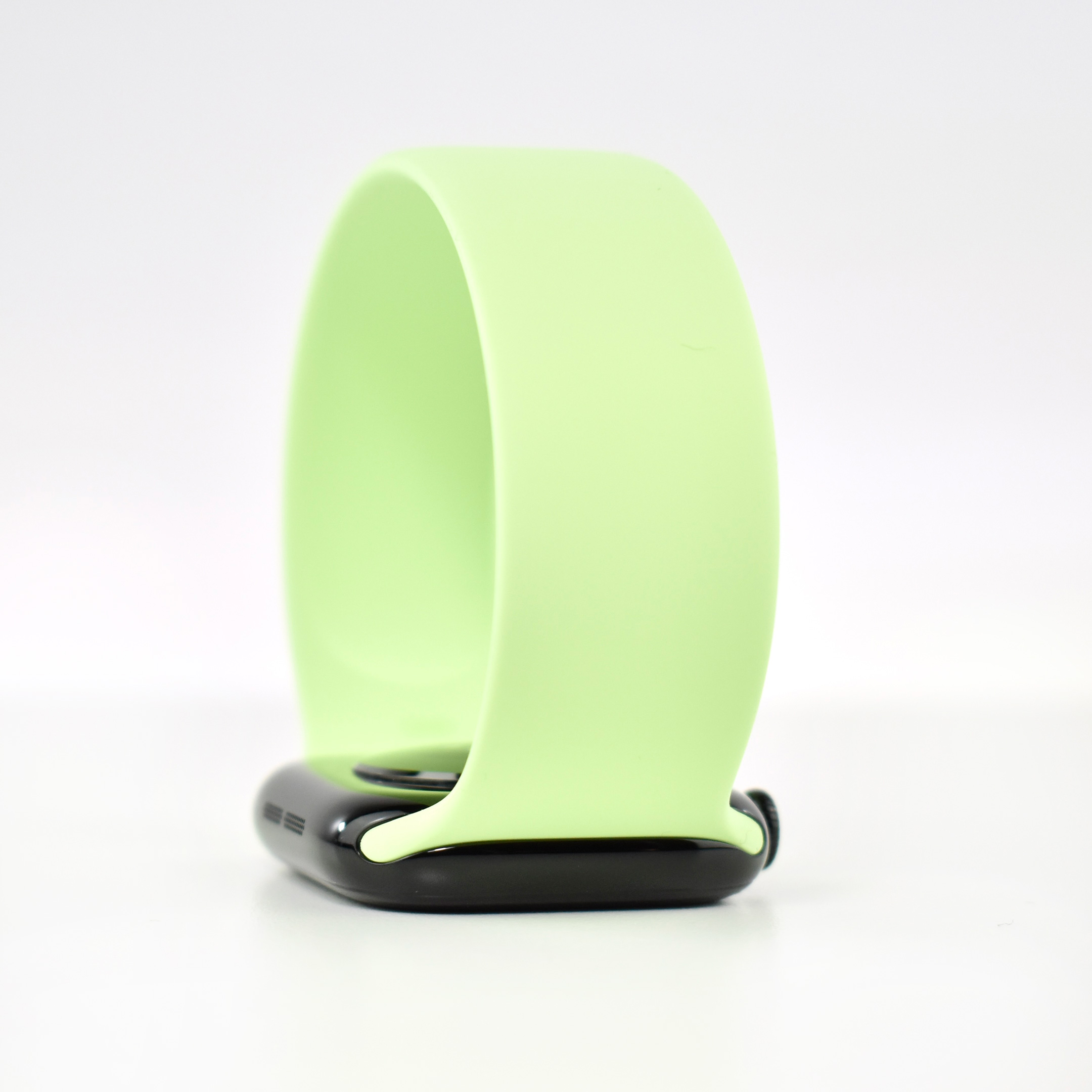
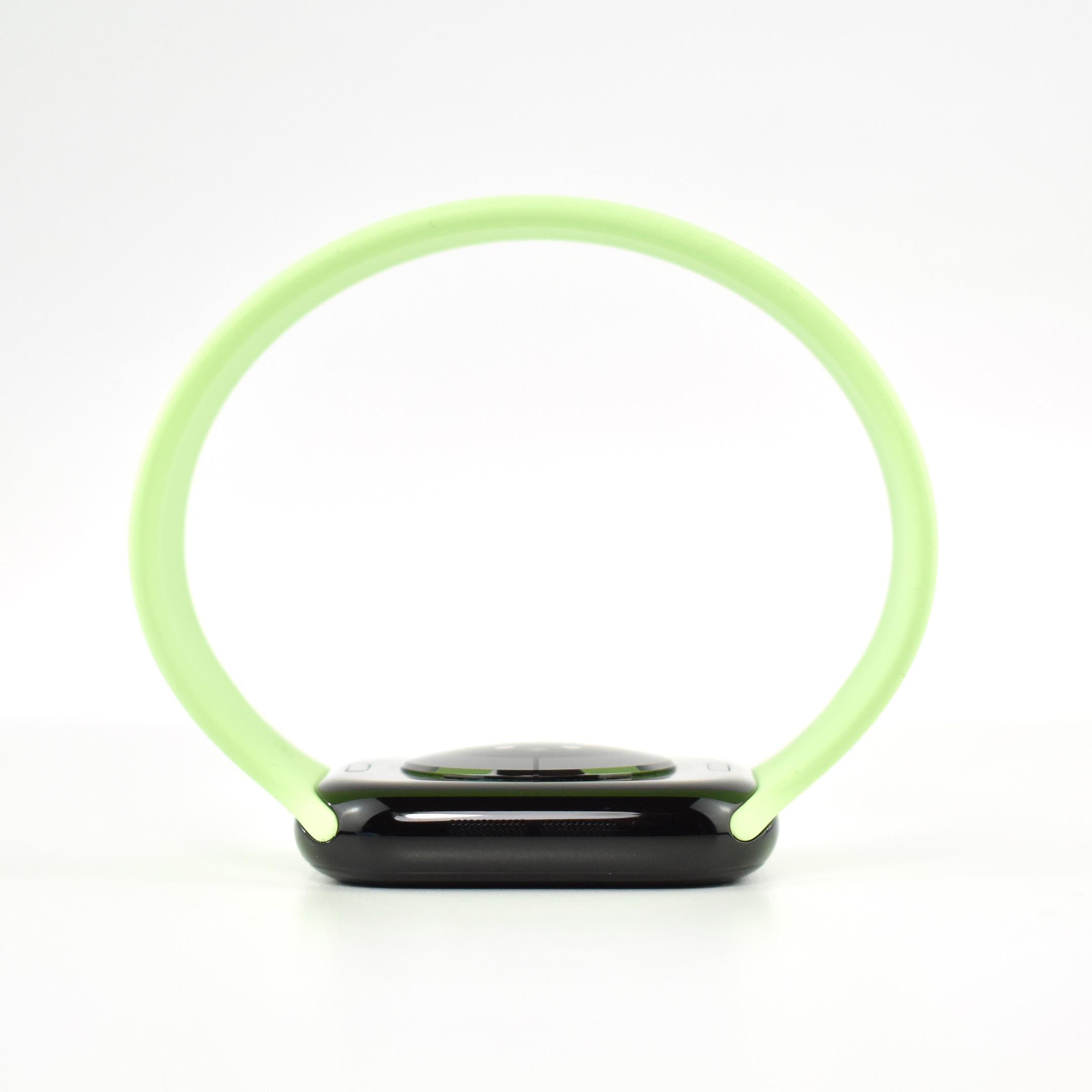
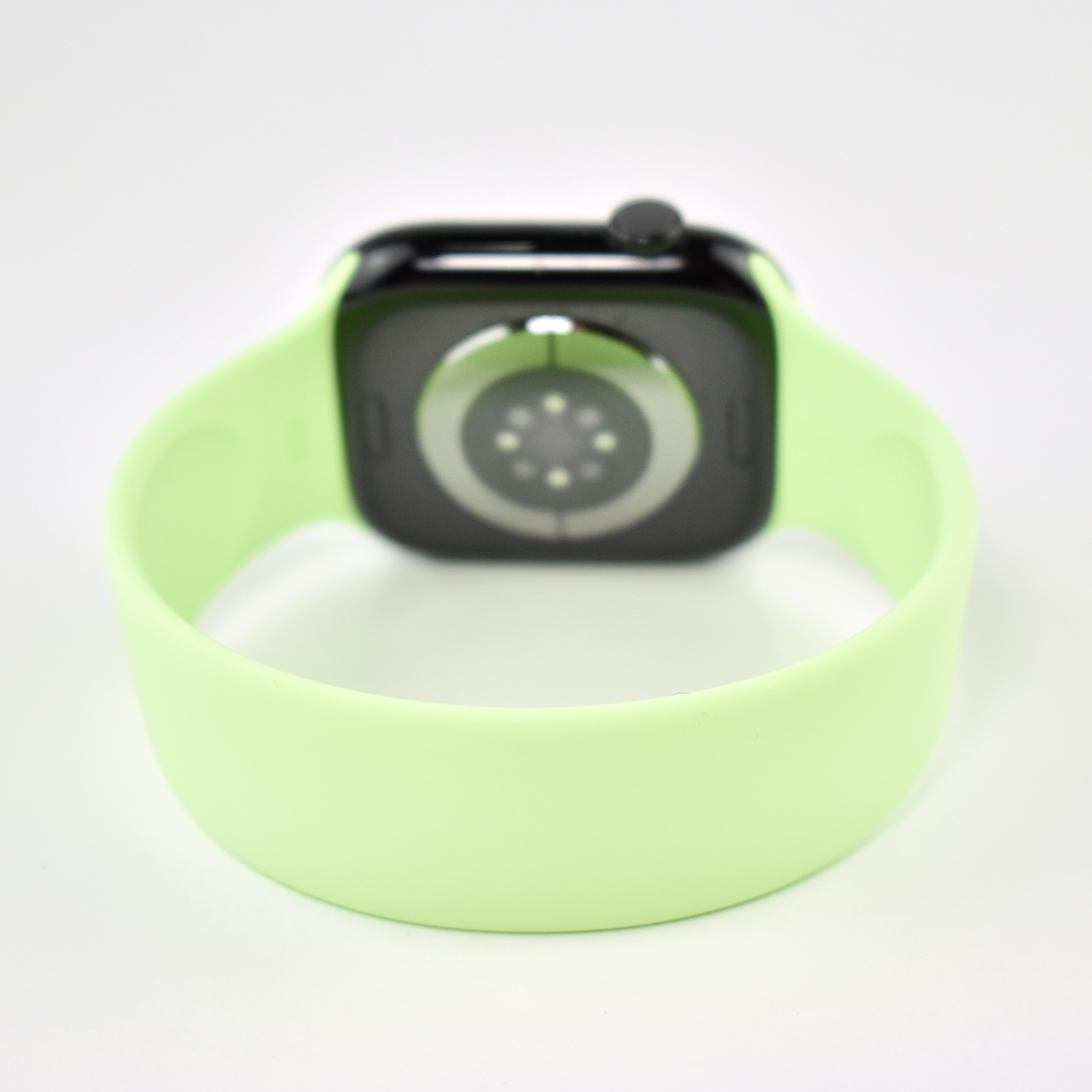
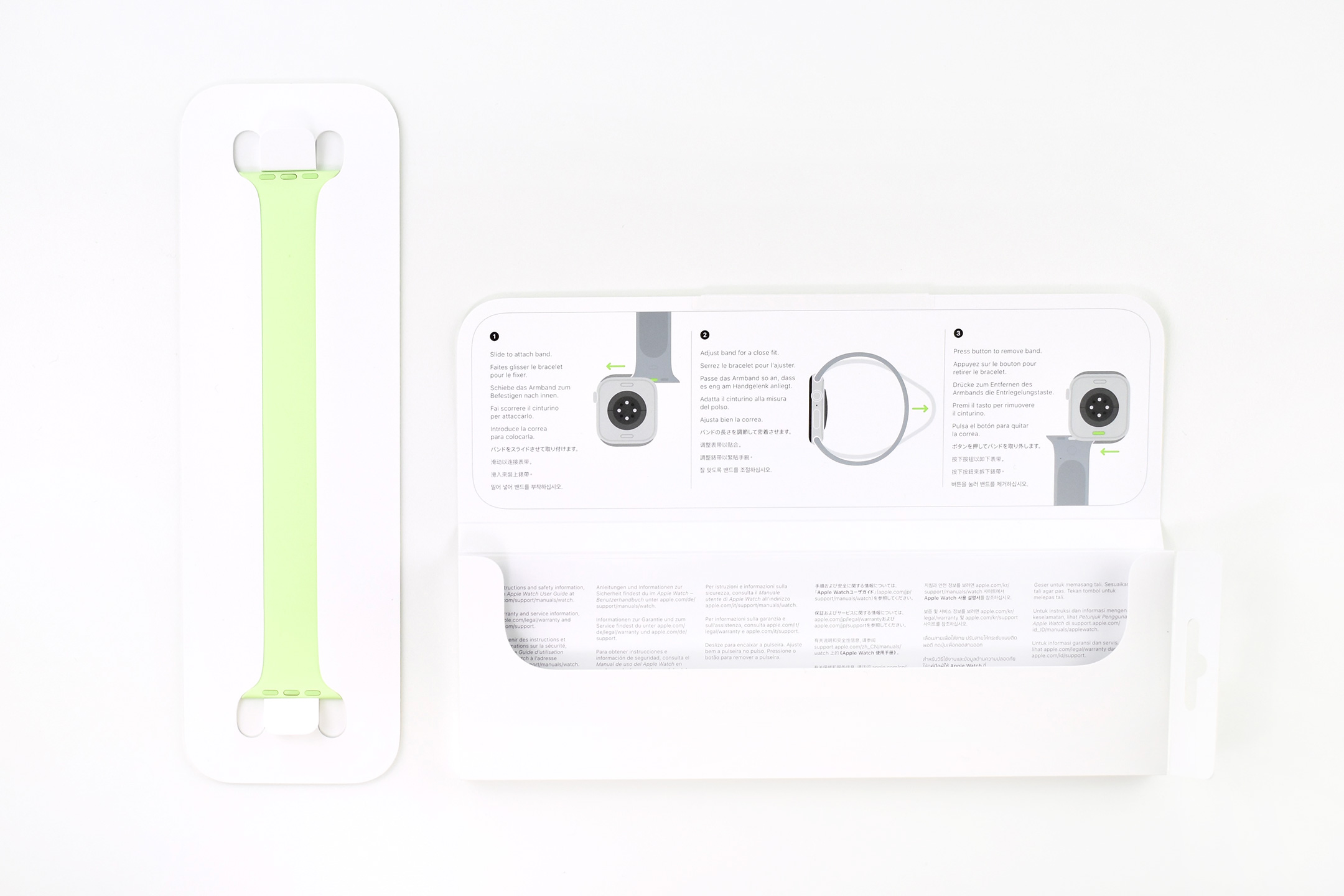
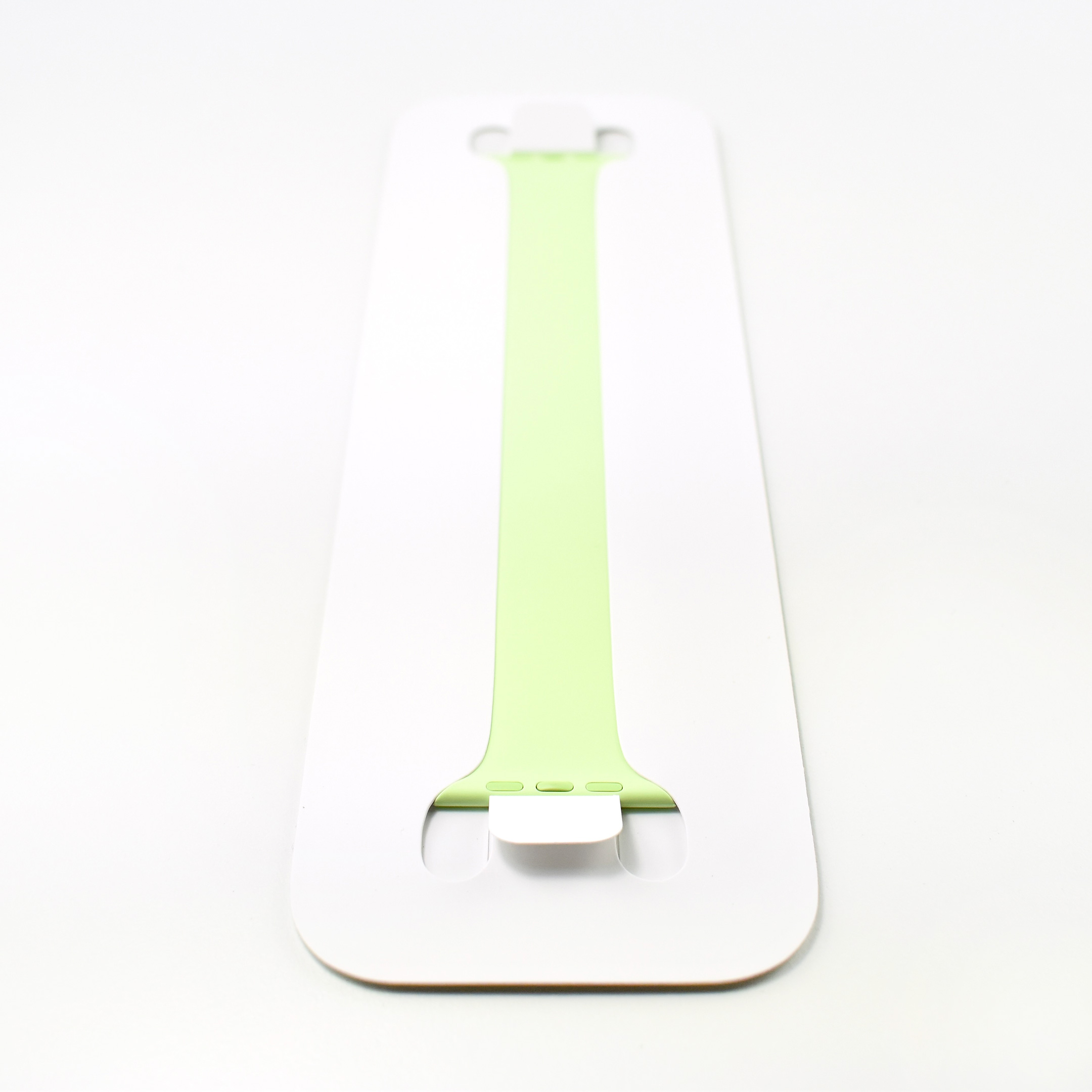
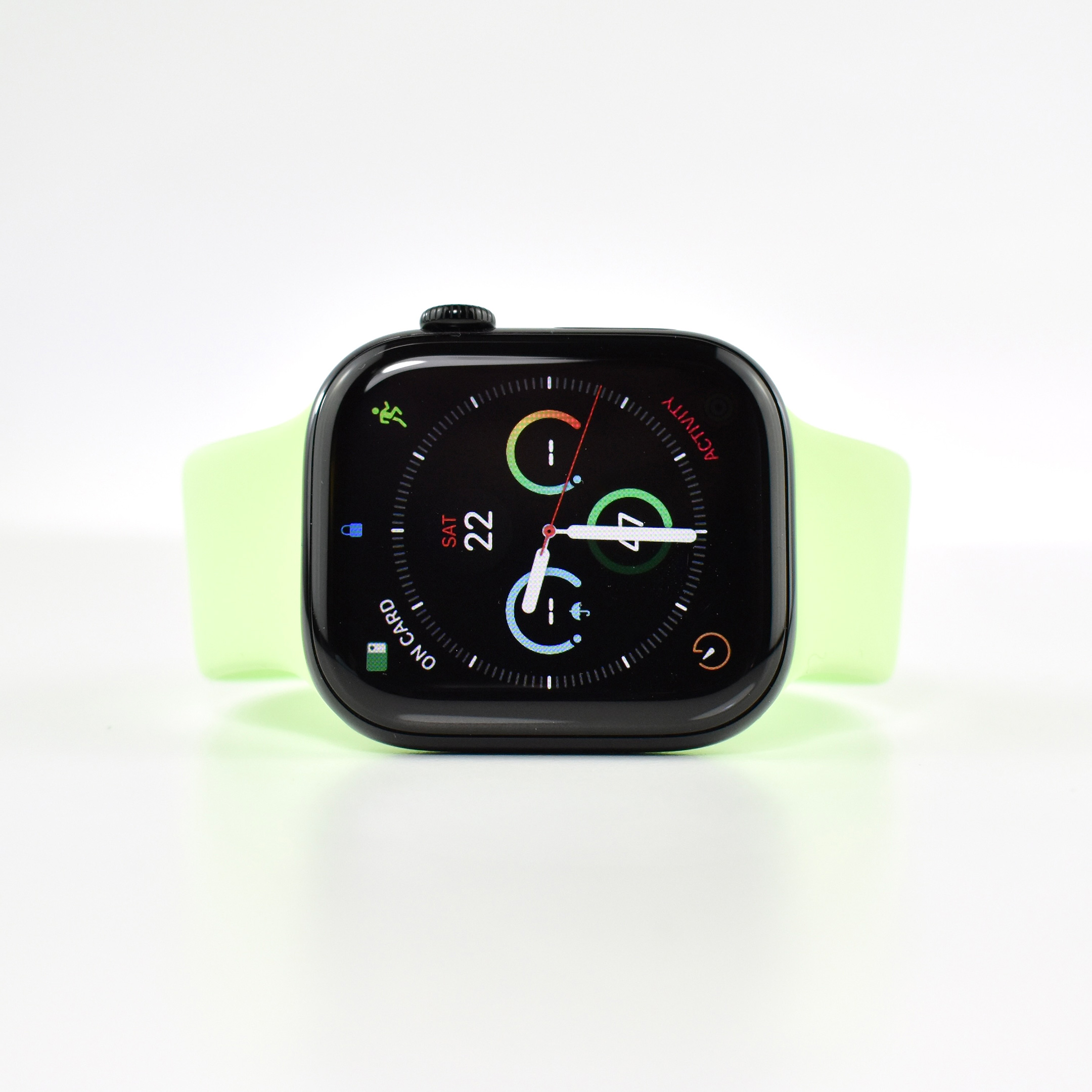
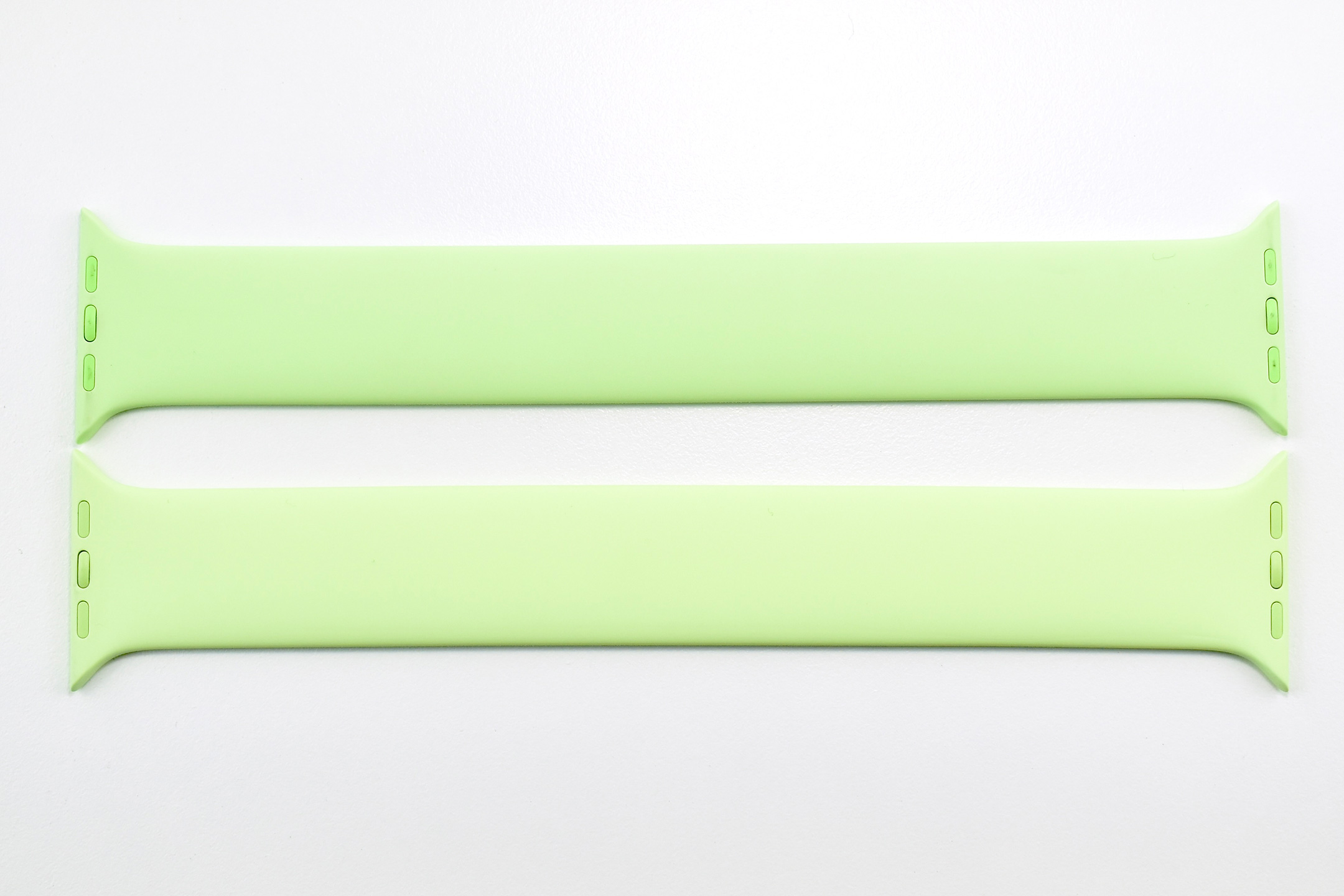
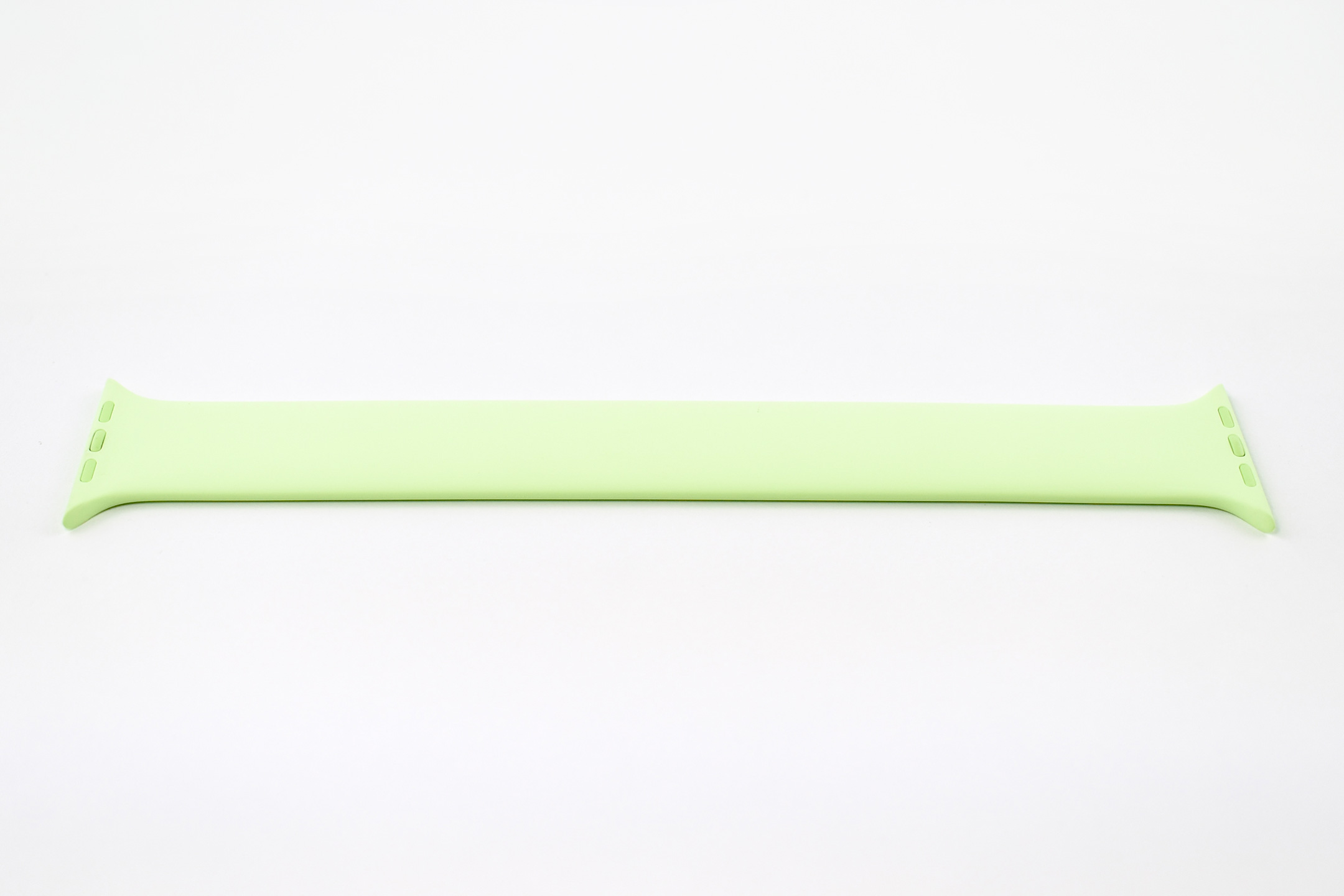
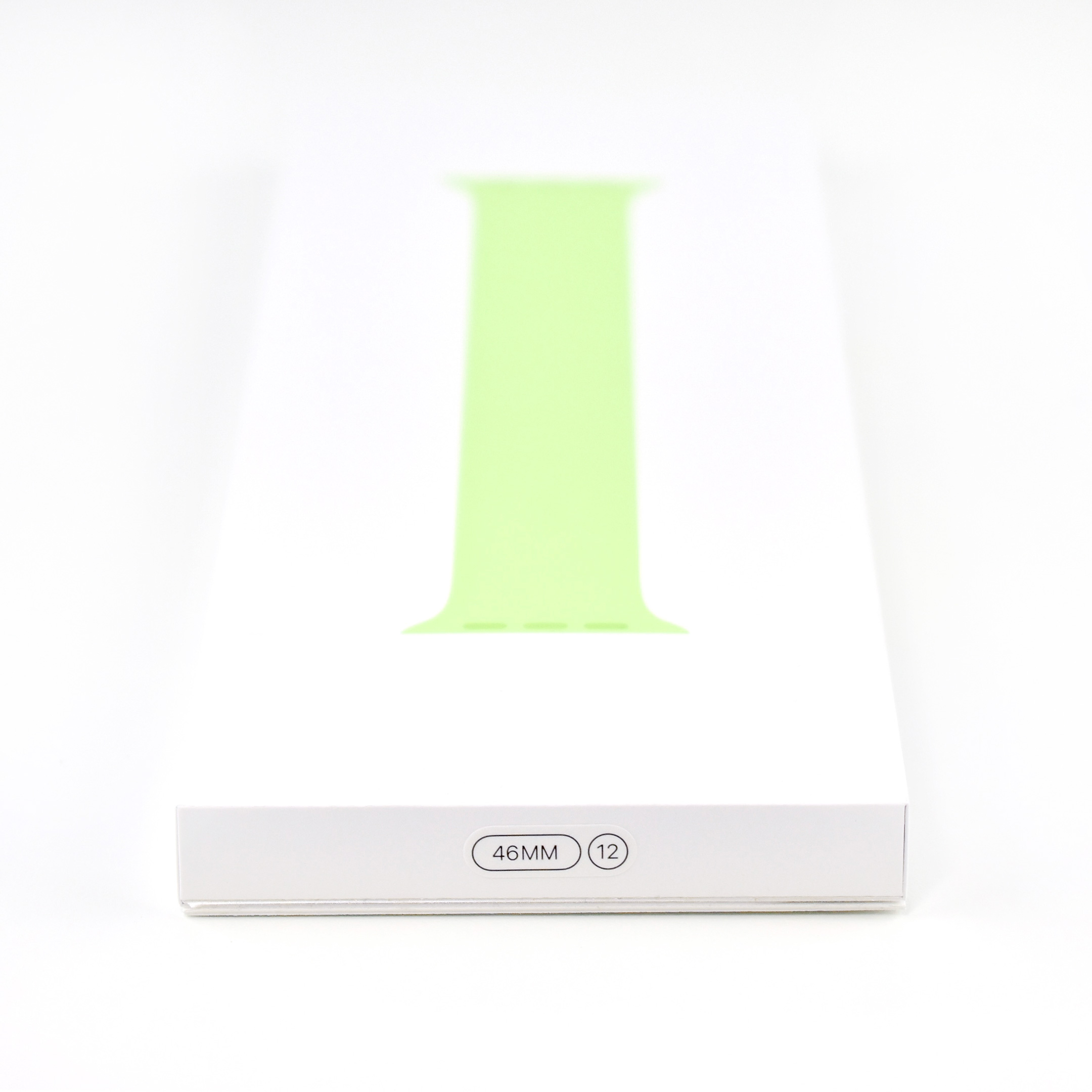
The Solo Loop Apple Watch band was released in 2020 along with the Apple Watch Series 6. The packaging describes this product as a “Silicone Fitted Band.” According to Apple’s website:
“Made from liquid silicone rubber, the Solo Loop features a unique, stretchable design with no clasps, buckles, or overlapping parts that’s ultracomfortable to wear and easy to slip on and off your wrist. Each band is specially treated with UV to give the band a silky, smooth finish. It’s also swim proof and sweat proof so it can go just about anywhere you want to wear it.”
The color of this band is Northern Lights, a shade of bright green (almost neon). The color was very close to the Sprout Green Solo Loop from Spring 2023, as pictured in the accompanying photos. It was available in 41 mm and 45 mm widths, and was sold in specific wrist sizes. The 41 mm Solo Loop was sold in wrist sizes 1–9, and the 45 mm Solo Loop was sold in wrist sizes 4–12.
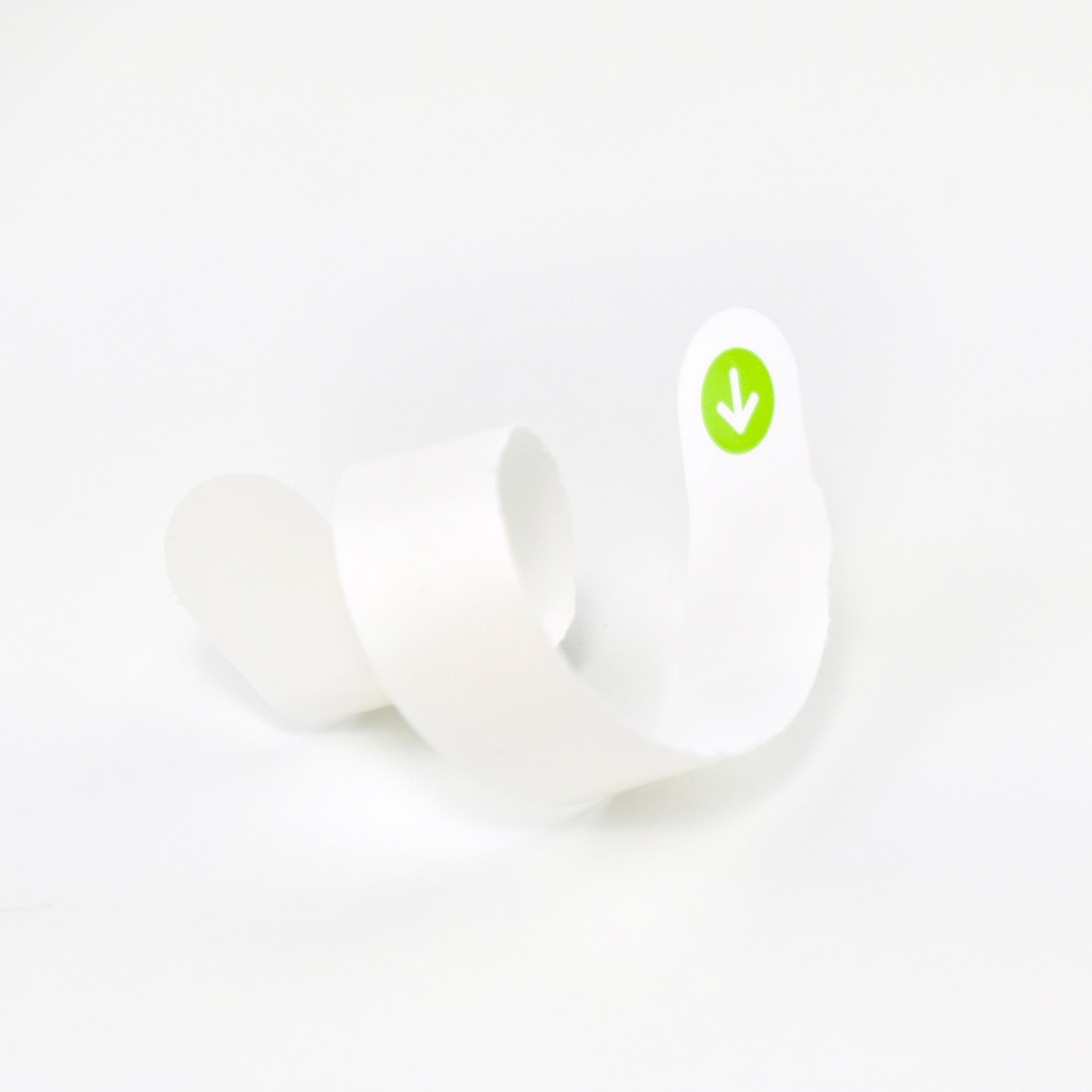
According to Apple’s website, “This band comes in custom sizes because it’s designed for an ultracomfortable fit. An accurate measurement will help you get the size that’s right for you.” The website allowed buyers to download a PDF and cut out a “tool” that wrapped around the wrist to designate the band size needed.
This snug-fitting design allowed Apple Watch sensors to retain constant and consistent skin contact, allowing accurate blood oxygen and heart rate measurements to be maintained.
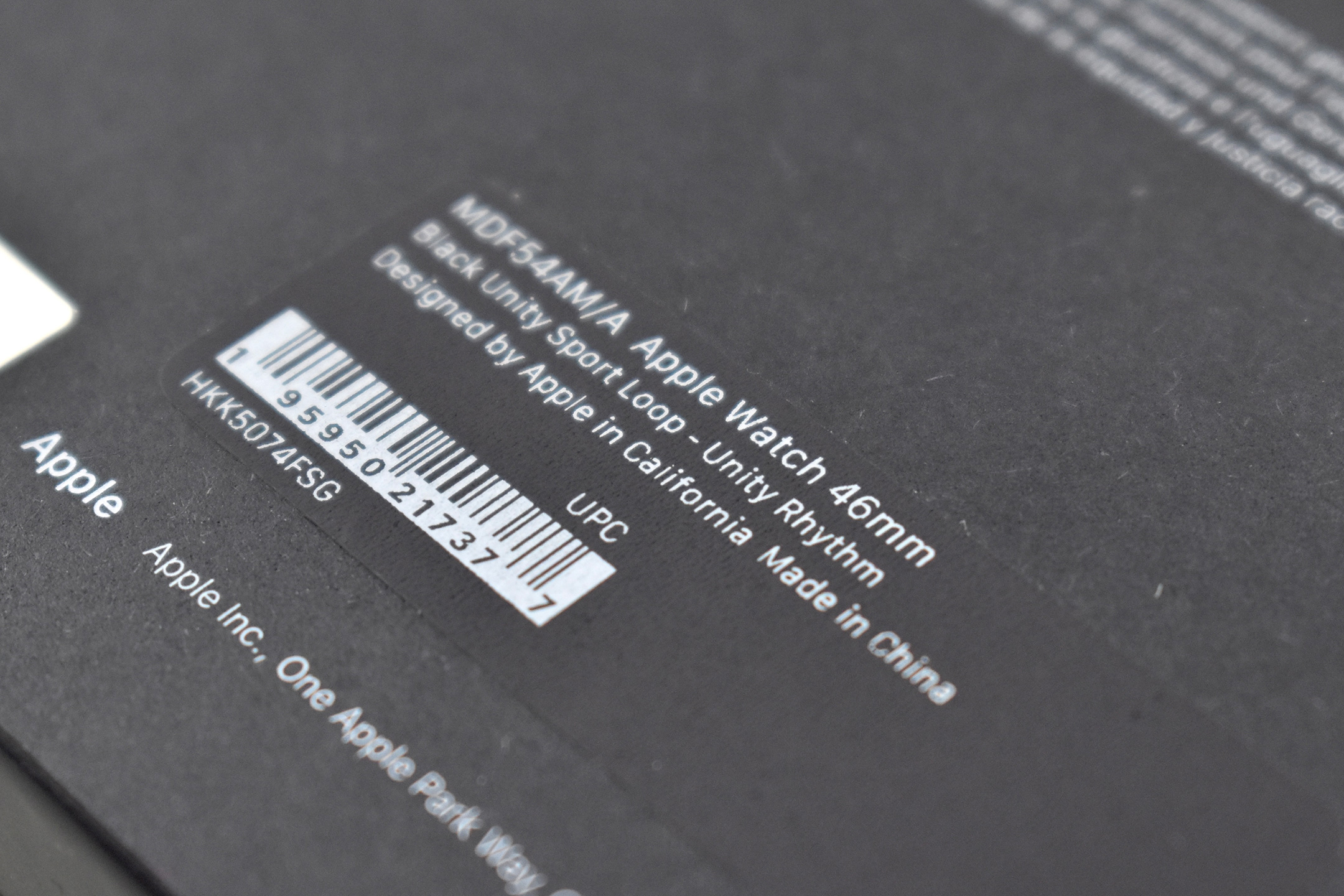
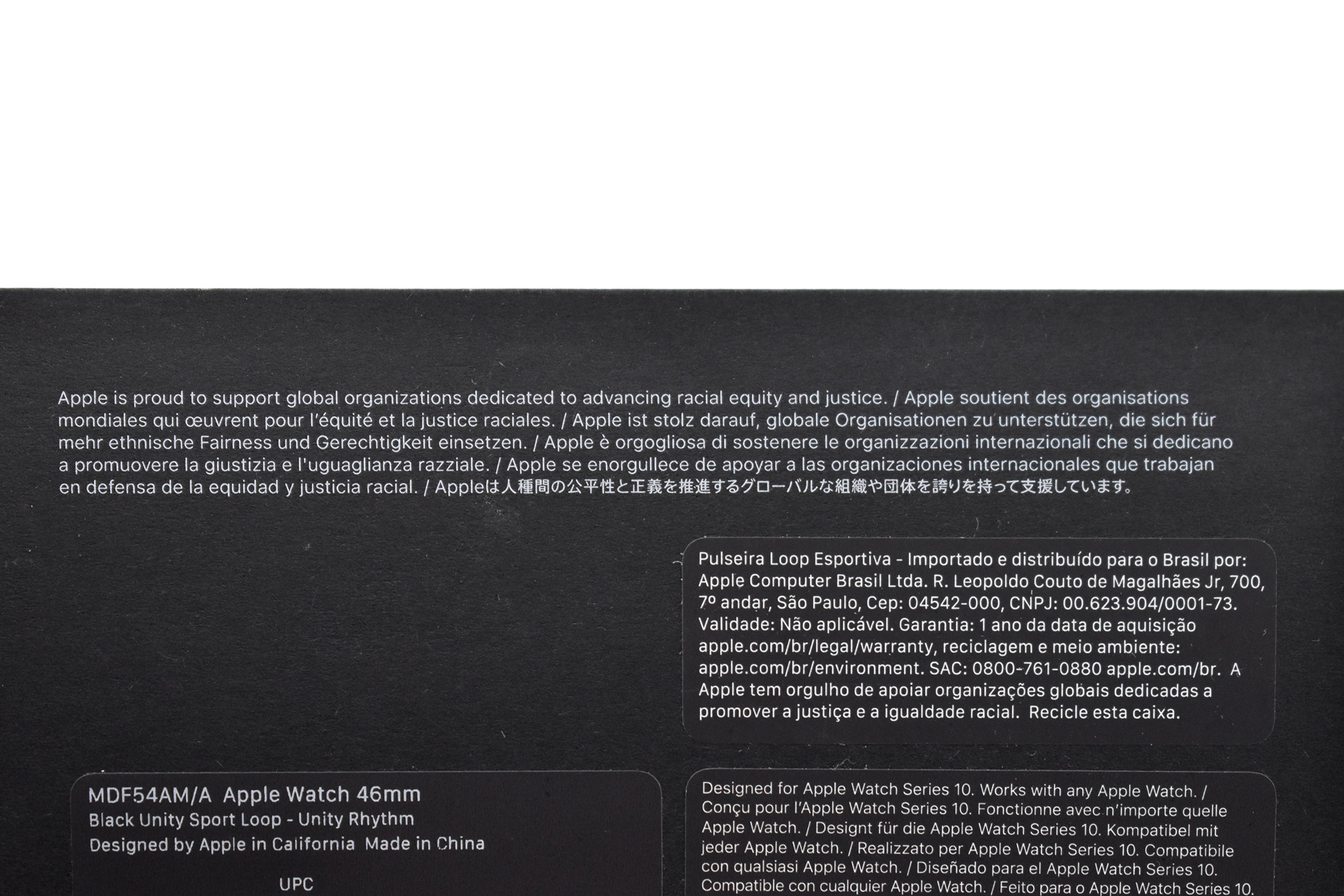
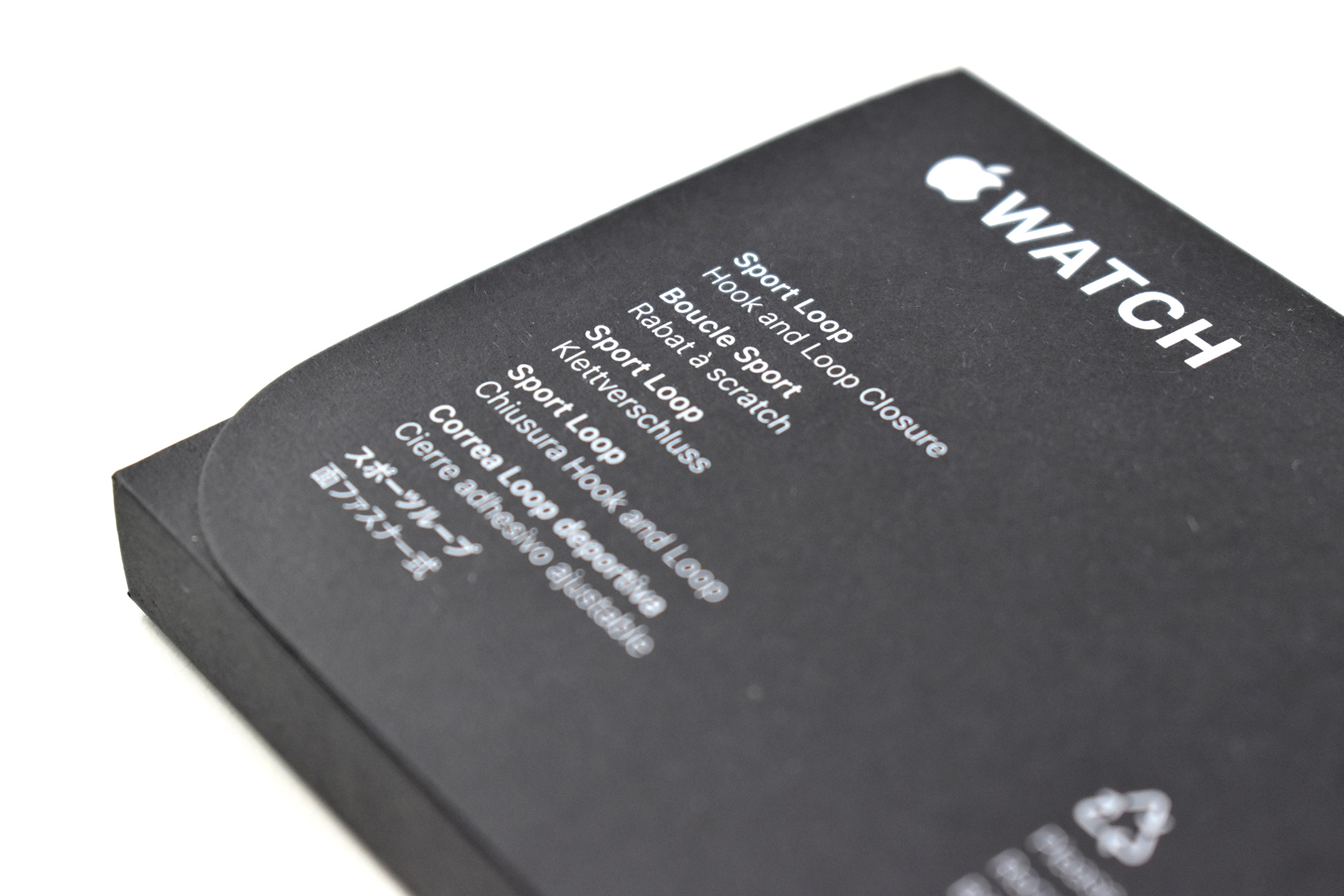
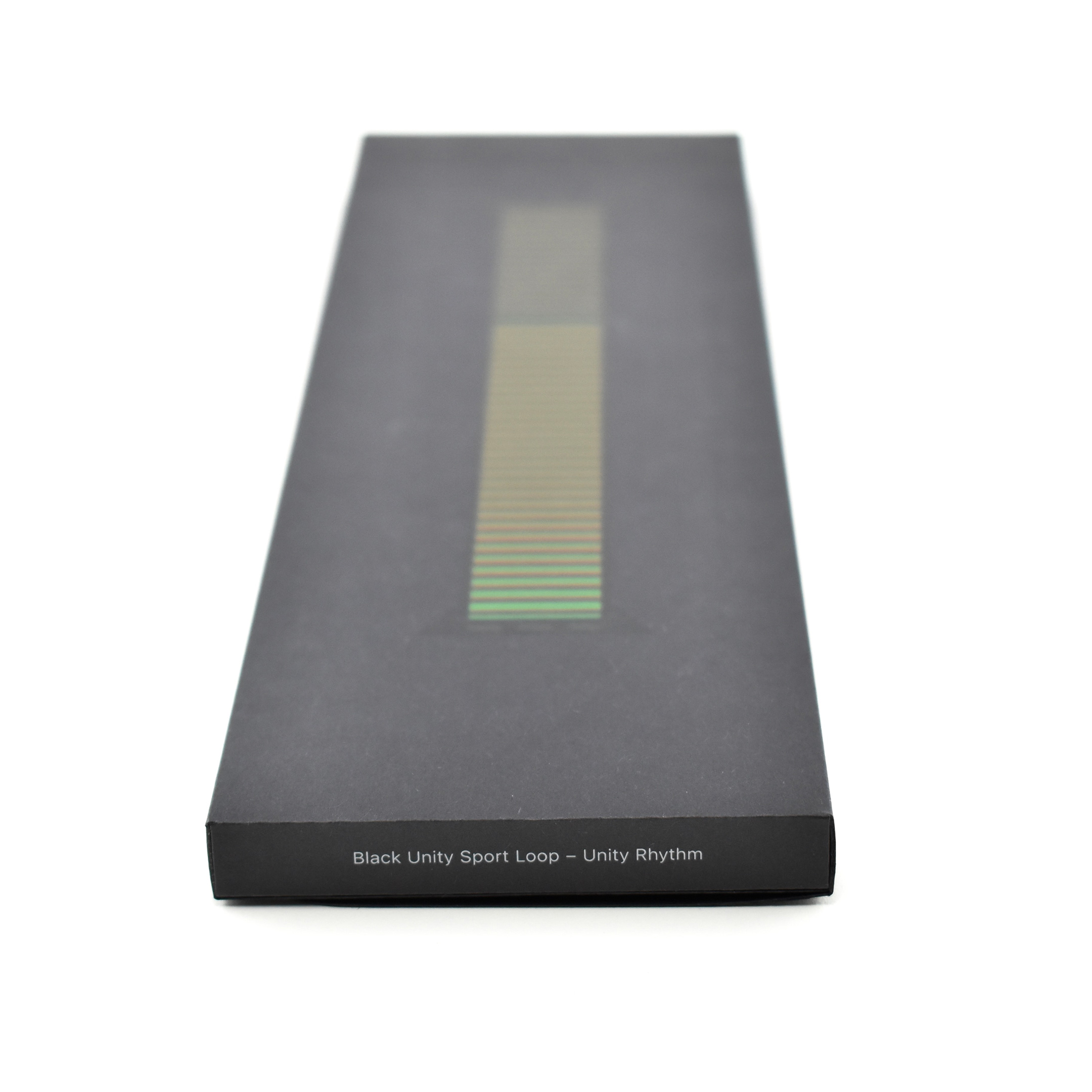
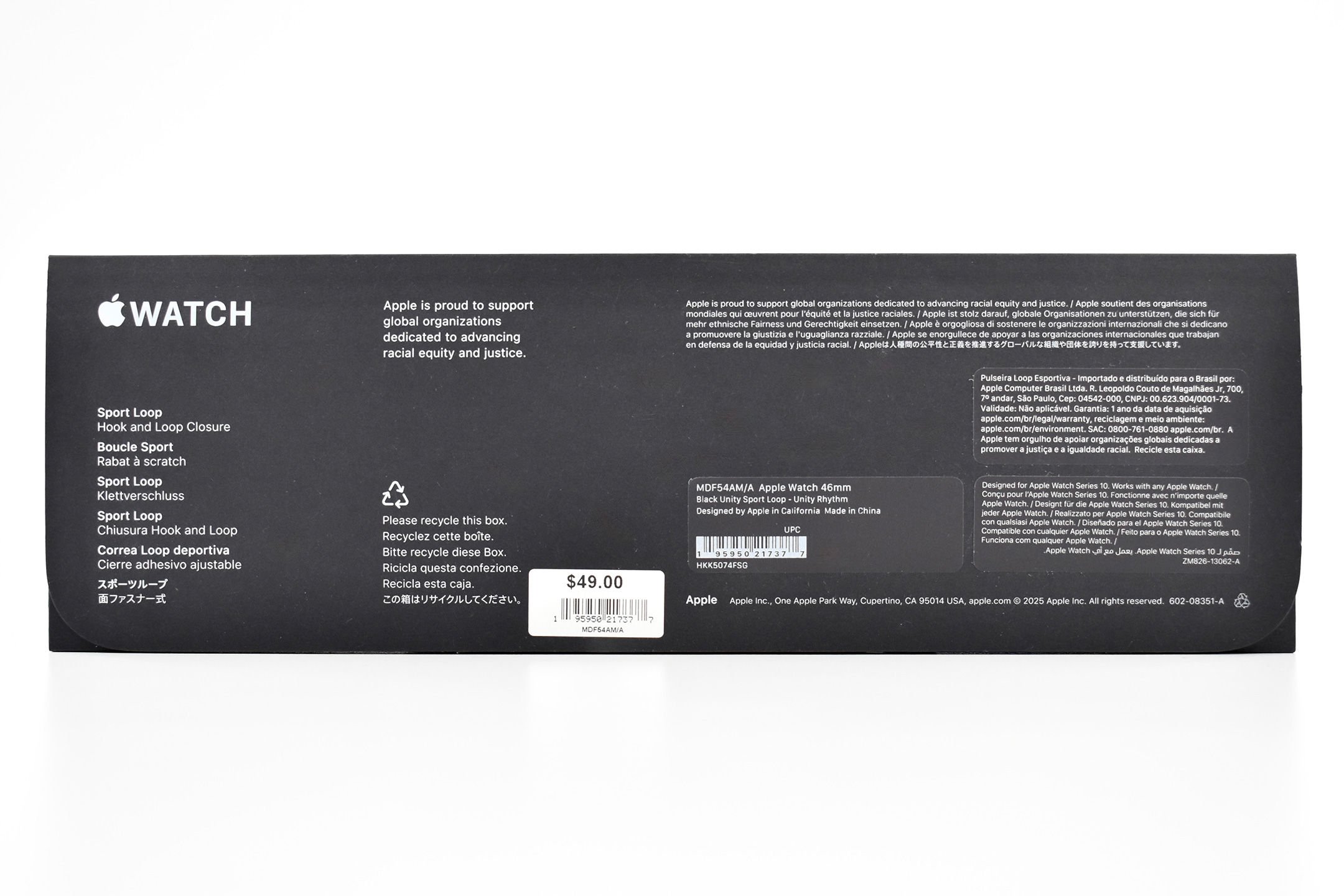
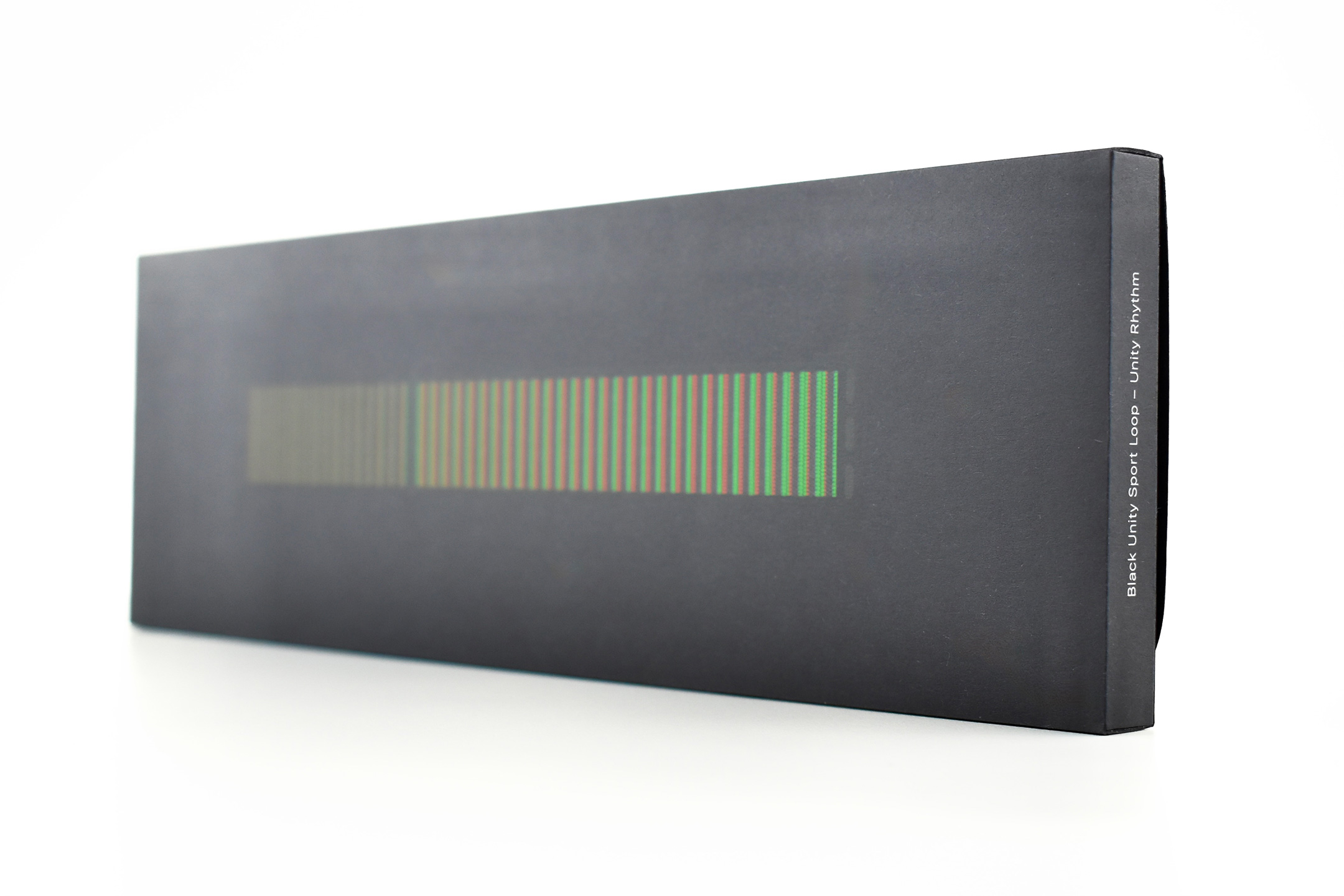
This Sport Loop is Apple’s fifth design in the Black Unity collection. With this watch band purchase, “Apple is supporting five global organizations that focus on elements of rhythm, creativity, and community through meaningful mentorship of underrepresented artists or musicians.” The five organizations include:
The National Museum of African American Music
Art Gallery of New South Wales
Music Forward Foundation
Battersea Arts Centre
Ellis Marsalis Center for Music
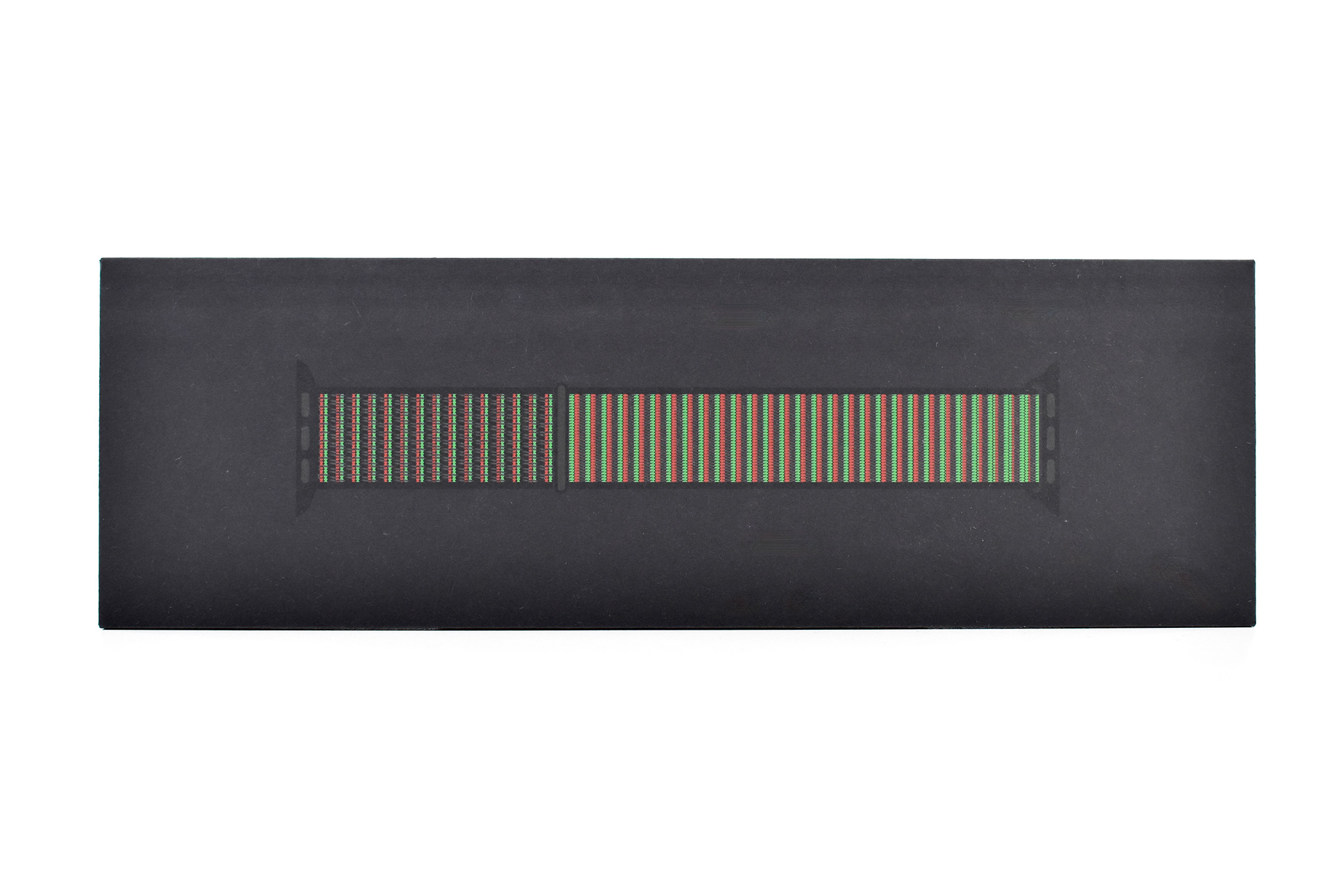
This was the first Apple Sport Loop to use a lenticular design. Apple described the effect: “Celebrating the unifying power of rhythm, this unique band is woven together to create a beautiful depth effect. In motion, Pan-African colors of red and green shift to reveal a hint of yellow — as if by magic.” In addition, “From the beat of a heart to the flow of creativity, rhythm is a universal element of the human experience.”
This band includes a matching watch face. Apple states, “The band is complemented by the Unity Rhythm watch face, which animates to tell the time when you raise your wrist. Distinctive rhythmic chimes mark every hour and half hour.”
Like all Sport Loop bands, Apple describes the style: “Soft, breathable, and lightweight, the Sport Loop features a hook-and-loop fastener for quick and easy adjustment. The double-layer nylon weave has dense loops on the skin side that provide soft cushioning while allowing moisture to escape.”
This One Size (Fits Most) band fits 145–220mm wrists.
This t-shirt is black and features the Apple Distinguished Educator logotype in the top-right front of the shirt. The words are printed in white in the San Francisco font, Apple’s official corporate font since 2017.
The shirt was made by BELLA+CANVAS, a “premium basics” apparel company based in Los Angeles.
Several Apple Distinguished Educators (ADEs) wore these shirts when presenting at the IDEAcon (Illinois Digital Educators Alliance) education conference in Schaumburg, IL, in February 2025. We presented several sessions regarding Apple’s many Accessibility features used in schools.
Susan Kare (born 1954) was the designer who created the icons, graphics, and fonts for the original Macintosh. Kare graduated from New York University with a Ph.D. in fine arts in 1978. After graduating she moved to California and worked at the Fine Arts Museums of San Francisco. Her high school friend and member of the original Macintosh development team, Andy Hertzfeld, called her in 1982 and asked her to draw icons and text elements for the Macintosh project.
Kare’s original drawings for Apple were created in 32×32-pixel grids. AIGA documented her original work for Apple and acknowledged that Kare “created some of the most recognizable icons, typefaces, and graphic elements in personal computing: the command symbol (⌘), the system-failure bomb, the paintbrush, and, of course, ‘Clarus the Dogcow.’” Her work was characterized as “a canvas of approachable visual metaphors that are instantly recognizable decades later.”
Some of Kare’s work can be found in the Museum of Modern Art in New York City. According to Kare’s website:
“Kare believes that good icons should be more like traffic signs than illustrations; easily comprehensible and not laden with extraneous detail. She has observed that just because millions of colors are available, maximizing their use in an icon does not necessarily improve it. When symbols (icons or logos) are meaningful and well-crafted, they need not be frequently redesigned.”
This print, “Hello on Blue,” is a limited edition, numbered 27/200, and signed and dated by Susan Kare. It is a giclée fine art print that is 25 inches wide x 17 inches tall. The work is printed using archival ink on acid-free Hahnemühle Photo Rag paper. Although this is not an “official” Apple product, I am proud to feature Kare’s work among my Apple collection.
This iconic “hello” cursive script image that was originally designed by Kare has been used by Apple numerous times over the years, beginning with the introduction of the original Macintosh on January 24, 1984 during Apple’s Annual Shareholders Meeting. After Steve Jobs showed the Macintosh live on stage, he played a TV commercial that shows a carrying case being unzipped, the Macintosh lifted onto a table, and the black-and-white screen displayed the “hello” cursive design. A few other uses of the “hello” design include:
May 6, 1998: Steve Jobs introduced the original translucent Bondi blue iMac with the screen displaying “hello (again)”—with “hello” in the original cursive script and “(again)” in Apple Garamond.
December 2022: During my own visit to Apple Park in Cupertino, visitors to the Apple Briefing Center were greeted with a sculpture approximately 4 feet wide of “hello” that is airbrushed in the colors of Apple’s original multicolor logo.
2023: Apple Developer provided “Hello Developer” online, described as “A monthly guide to the latest developer activities, stories, and news” that features the original “hello” image in different formats in different editions from October 2023–June 2024.
October 28, 2024: Apple releases an iMac Announcement video that begins with the cursive script “hello” and then expands to “hellllllo” with each “l” in a different color of the original Apple logo; in the presentation the iMac is updated to the M4 chip and is available in “new vibrant colors.”
October 29, 2024: The Mac mini is updated in a video announcement using the “hello” image stylized with the Apple Intelligence logo, emoji, the Jolly Roger flag (a nod to the original Macintosh team), and a 3D wire frame.